
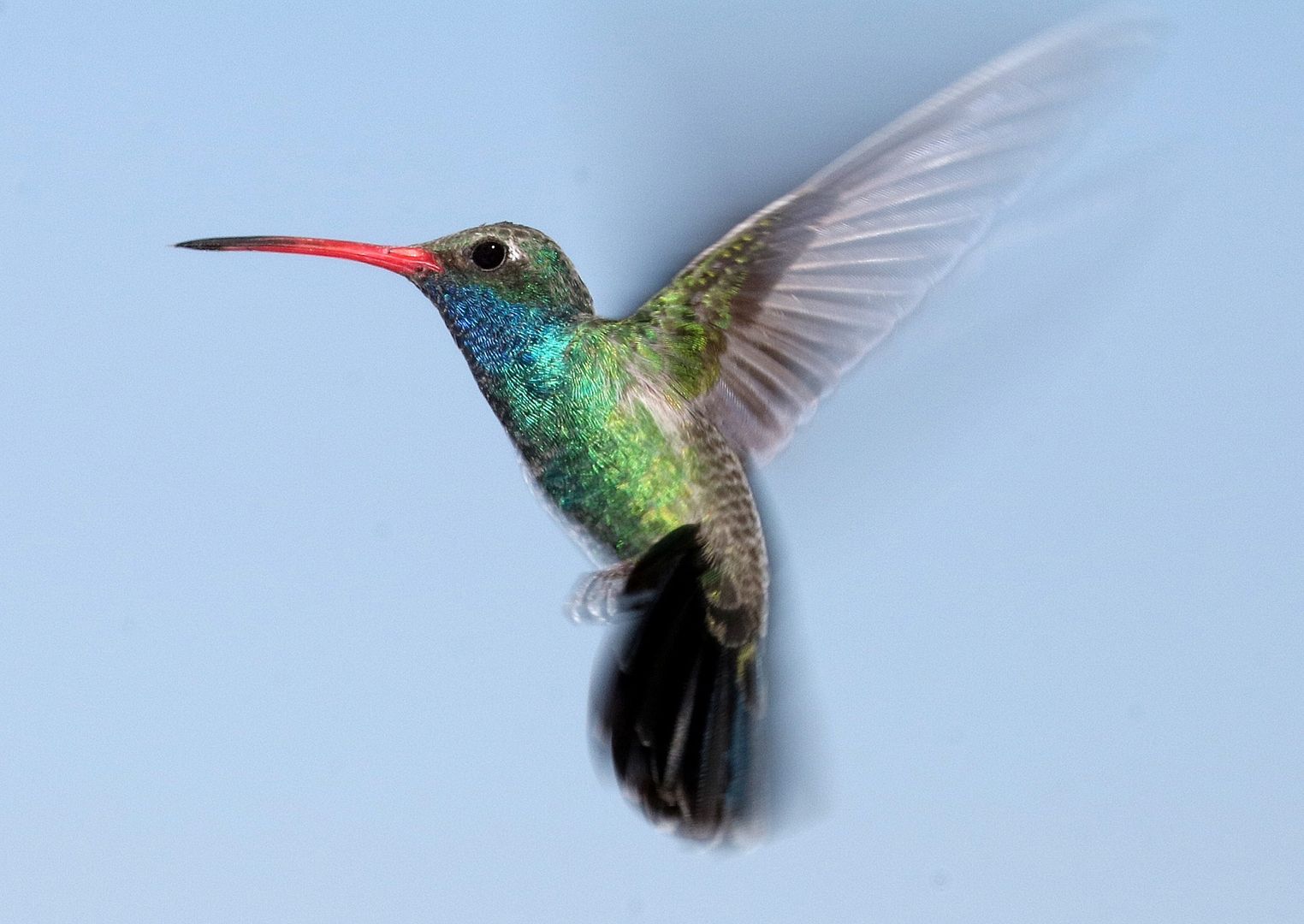
Hummingbirds are tiny, territorial, and apparently unaware they weigh about as much as a penny. They'll defend a feeder from birds ten times their size with the energy of someone who's been waiting for this moment their entire (albeit short) life.
These hummingbird facts are kid-friendly, birder-approved, and checked against sources like the Smithsonian, the U.S. Fish and Wildlife Service, and Cornell's All About Birds. (A lot of hummingbird "facts" floating around the internet are a few years stale. We'll flag those as we go.)
1. How Small Are Hummingbirds?
The Bee Hummingbird of Cuba is the smallest bird in the world, at about 2¼ inches long and under 2 grams. In the U.S., the title goes to the Calliope Hummingbird, which the U.S. Fish and Wildlife Service calls the smallest long-distance migratory bird in the world.
Your backyard Ruby-throated Hummingbird is about 3 inches long and weighs around 3 grams, roughly the weight of a penny. At the other extreme, the Giant Hummingbird of South America is about 7 to 8 inches long, which is basically a hummingbird that got a gym membership.
2. How Many Hummingbird Species Are There?
More than 360. Counts run from about 363 to 368 depending on the checklist, and the Fish and Wildlife Service puts it at 366. Every one of them lives in the Americas, from Alaska to the tip of South America. Only about 15 species breed regularly in the U.S. and Canada, and most of those are in the Southwest.
3. Why Are They Called Hummingbirds?
Because of the sound their wings make. A Ruby-throated Hummingbird beats its wings about 53 times per second, fast enough to make a steady hum.
The motion is unusual, too. Instead of flapping straight up and down, a hummingbird's wings sweep in a figure-eight, which the National Park Service notes gives them lift on both the downstroke and upstroke. That's what lets them hover in place like a tiny, judgmental drone.
4. Can Hummingbirds Fly Backwards?
Yes, and they're the only birds that can do it in sustained, controlled flight. By tilting that figure-eight wing motion, they can fly forward, backward, sideways, and briefly even upside down. Other birds can hover in a strong wind. Hummingbirds can reverse out of a flower like they're parallel parking.
5. How Fast Can Hummingbirds Fly?
In normal flight, about 20 to 30 mph, according to the Smithsonian's National Zoo. Courtship dives are another story. A study by UC Berkeley's Christopher Clark clocked male Anna's Hummingbirds diving at about 60 mph and pulling roughly nine times the force of gravity, more than most fighter pilots experience in a hard turn.
This is from a bird that weighs about 4 grams. I need a nap after carrying groceries up one flight of stairs.
6. What Is a Hummingbird's Heart Rate?
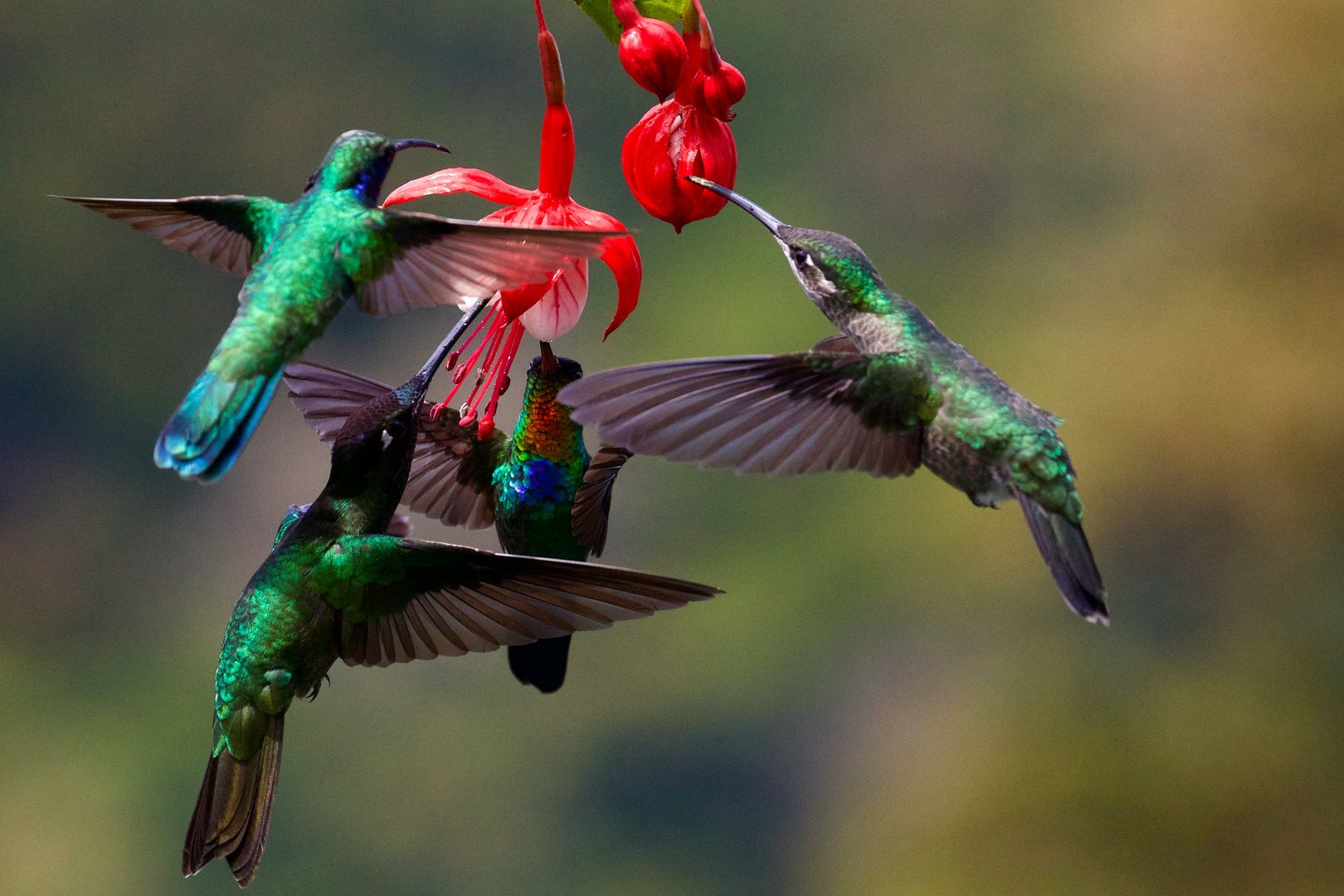
A Ruby-throated Hummingbird's heart beats about 225 times a minute at rest and more than 1,200 times a minute in flight, according to the Smithsonian. A resting human heart beats about 60 to 100 times a minute, so even a relaxed hummingbird is running at twice our top speed.
7. Do Hummingbirds Sleep?
They do, and they do it dramatically. Hummingbirds prefer to sleep alone on a tree branch, feet locked around a twig. They don't use bird houses.
On cold nights, many slip into torpor, a deep sleep where their body temperature and heart rate drop sharply to save energy. Audubon notes their metabolism can drop by as much as 95 percent. A hummingbird in torpor can look lifeless and may even hang upside down from its perch. If you find one like that, leave it alone. It'll warm up and wake on its own as the morning heats up.
8. How Much Do Hummingbirds Eat?
A lot. The National Park Service says hummingbirds drink up to two times their body weight per day (nectar is mostly water), and a single hummingbird can visit up to 1,000 flowers in a day.
Nectar isn't the whole menu. Hummingbirds also eat small insects and spiders for protein, including mosquitoes, gnats, and fruit flies. Think of nectar as the energy drink and bugs as the protein bar.
If you're filling a feeder, here's our hummingbird food recipe. It's just sugar and water, no red dye.
9. How Do Hummingbird Tongues Work?
Not like a straw, which is what scientists believed for a long time. A hummingbird's tongue is forked and lined with hair-like fringes. It flicks into nectar about 14 to 20 times a second, and the tongue springs open to pull nectar in like a tiny pump.
10. Can Hummingbirds Smell?
Yes, and plenty of sites still get this one wrong. For years, people assumed hummingbirds had almost no sense of smell and found flowers by color alone. A 2021 study from UC Riverside found they can smell chemicals released by aggressive insects and will avoid feeders where they detect them.
So they're not just looking for red. They're checking whether the restaurant has difficult clientele before committing to a table.
11. Do Hummingbirds Have Big Brains?
For their size, yes. A hummingbird's brain is about 4 percent of its body weight, proportionally the largest of any bird. Much of that brainpower goes to memory, which is how they keep track of where the good flowers (and feeders) are. If your nectar goes moldy, assume they've noticed.
12. How Long Do Hummingbirds Live?
Most wild hummingbirds live about 3 to 5 years. The records are much longer, and they've been updated recently, so ignore the "up to 9 years" figure you'll find on a lot of older sites. According to the USGS Bird Banding Laboratory's longevity records:
- Broad-tailed Hummingbird: 12 years, 2 months, the oldest hummingbird on record
- Ruby-throated Hummingbird: 11 years, 1 month
- Rufous Hummingbird: 8 years, 11 months
Getting through the first year is the hard part. Birds that make it past that can live surprisingly long lives for something that weighs as much as a paperclip.
13. How Far Do Hummingbirds Migrate?
The Rufous Hummingbird makes the longest migration of any bird measured in body lengths: about 4,000 miles one way, between Alaska or Canada and Mexico. That's roughly 78 million body lengths.
Ruby-throated Hummingbirds, the ones most of us see in the East, fly up to 500 miles nonstop across the Gulf of Mexico in about 18 to 22 hours. To fuel the trip, they nearly double their body weight beforehand. Our hummingbird migration guide covers when they arrive and leave where you live.
14. How Big Is a Hummingbird Egg?
About the size of a jelly bean. Females usually lay two tiny white eggs, and Cornell's All About Birds describes the nest as the size of a large thimble, about 2 inches across. She builds it from plant down and holds it together with spider silk, so it stretches as the chicks grow.
15. Are Hummingbirds Territorial?
Very. Cornell notes that male Ruby-throated Hummingbirds aggressively defend flowers and feeders. If one bully is keeping everyone else away from your feeder, hang a second feeder out of his line of sight. He can't guard both. Our guide on how to attract hummingbirds has more tricks.
16. What Do You Call a Group of Hummingbirds?
The internet will tell you a bouquet, a shimmer, a glittering, a hover, or a tune. None of them are official (collective nouns rarely are), but birders use them because no single word was extravagant enough.
When was the last time you saw a glittering of anything that wasn't Edward Cullen?
17. Are Hummingbirds Endangered?
Some are. American Bird Conservancy reports that nearly 60 hummingbird species are listed as Near Threatened or worse. In the U.S., a 2021 study in Scientific Reports found that Rufous, Allen's, and Broad-tailed Hummingbirds have declined since 1970, and Ruby-throated numbers have dipped more recently.
The biggest threats are habitat loss and a warming climate shifting when flowers bloom. You can't fix the climate from your backyard, but you can plant native flowers, skip the pesticides that wipe out the insects hummingbirds eat, and keep a clean feeder. Our list of plants that attract hummingbirds is a good place to start.
Hummingbird Facts FAQ
What is the smallest hummingbird in the United States?
The Calliope Hummingbird, at about 3 inches and around 2.5 to 3 grams. It's also the smallest long-distance migratory bird in the world.
Is the Bee Hummingbird the smallest bird in the world?
Yes. The Bee Hummingbird, found only in Cuba, is the world's smallest bird at about 2¼ inches long and under 2 grams.
How much does a hummingbird weigh?
Most North American hummingbirds weigh about 3 to 4 grams. A Ruby-throated weighs about 3 grams, roughly the same as a penny.
Do hummingbirds eat anything besides nectar?
Yes. They eat small insects and spiders, which give them the protein nectar lacks. That's one reason pesticides are bad news for hummingbirds.
Why do hummingbirds fight at feeders?
They're territorial, especially males, which defend good food sources from every other hummingbird in the neighborhood. Spreading out two or three feeders keeps the peace.
Seen Any Hummingbirds Lately?
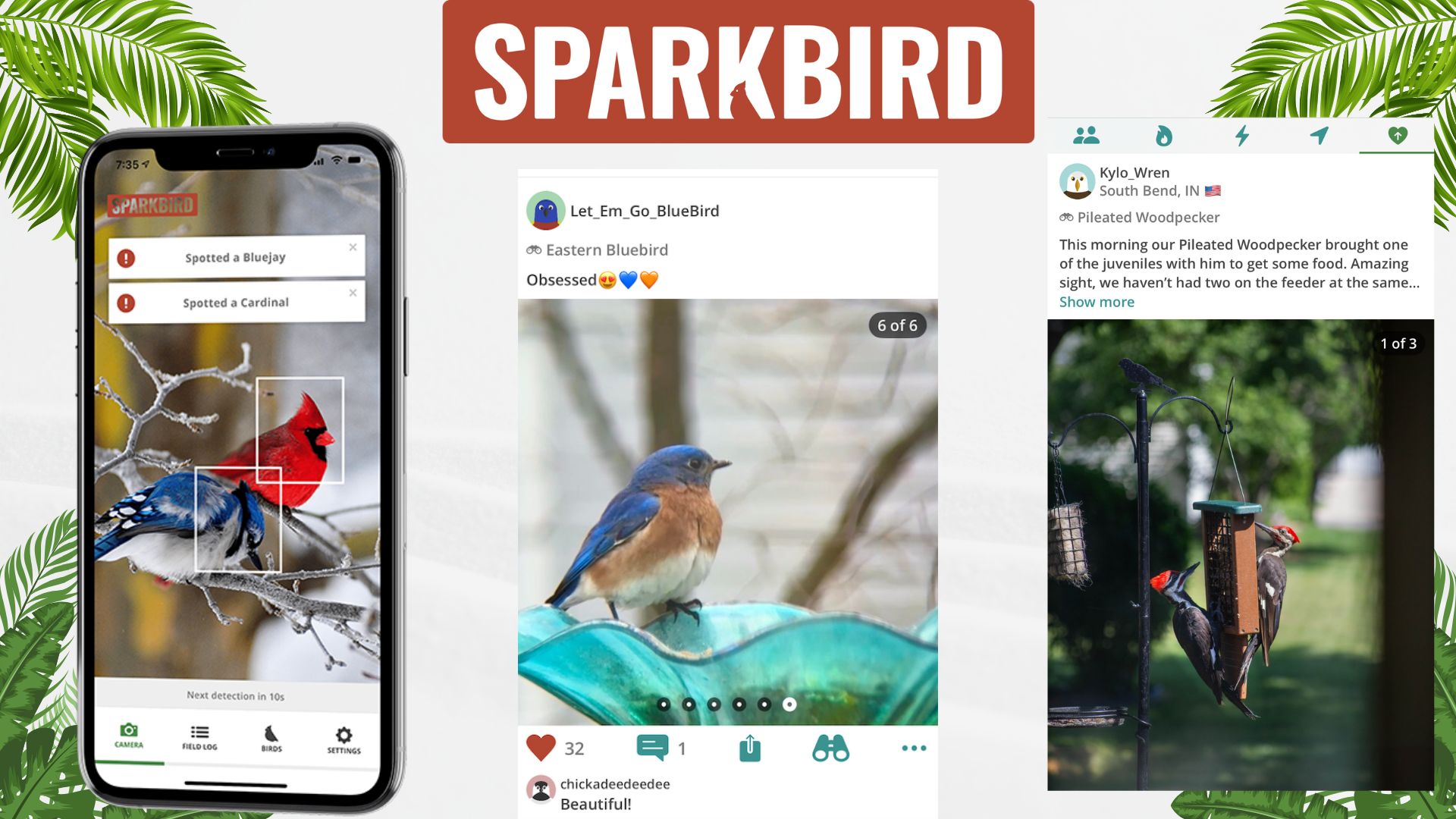
The hummingbird that keeps visiting your yard may well be the same one coming back each year, and it probably knows your yard better than most of your guests do. Share your sightings on the Sparkbird App, and if one buzzes your head on the way to the feeder, don't take it personally. You're just standing in his airspace.

No comments yet.