
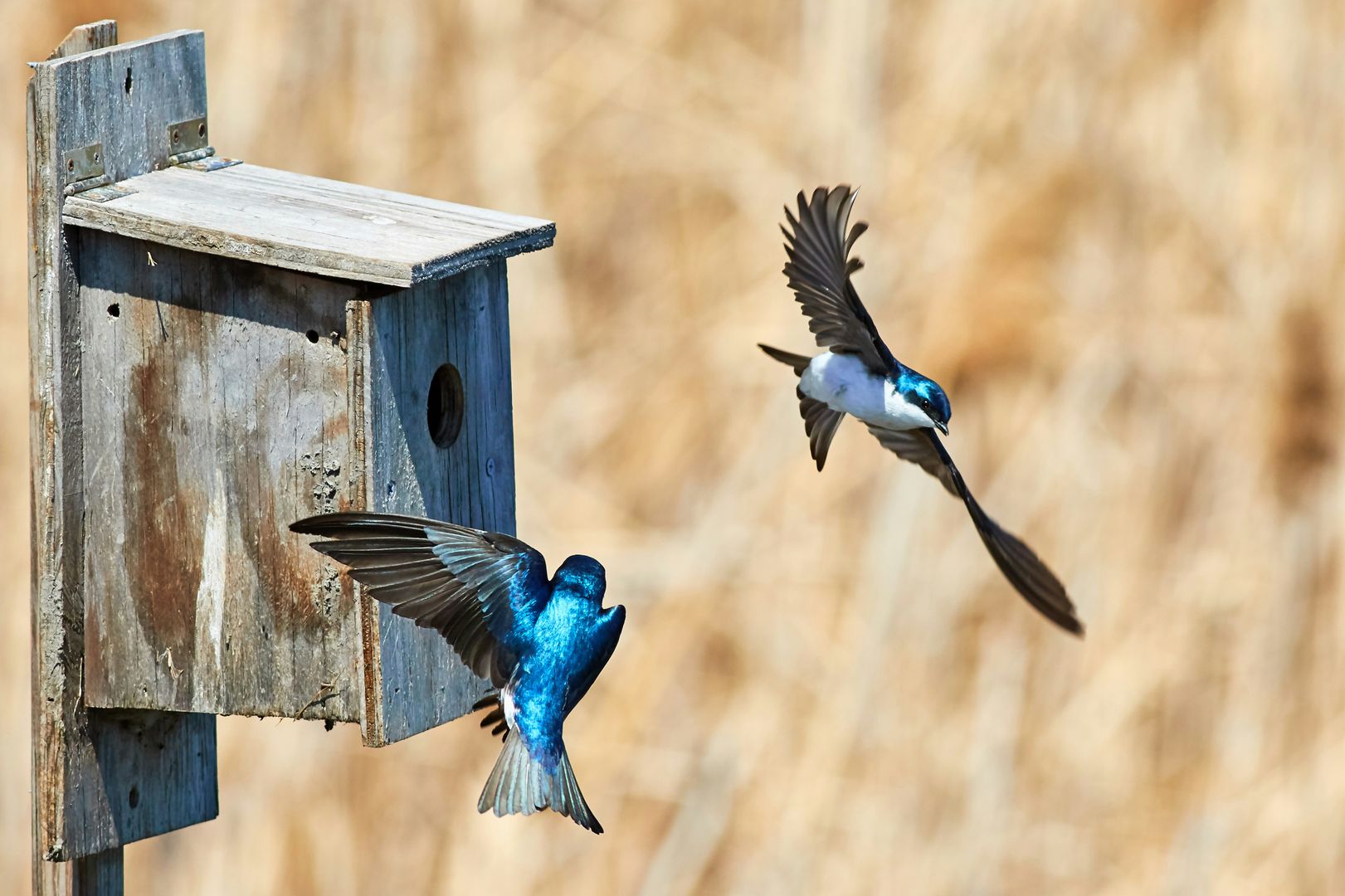
Choosing a birdhouse shouldn't be complicated.
And yet here we are, standing in a garden center, staring down a row of decorative cottages wondering why none of this feels quite right.
It's because it isn't. We'll get to that.
The 9 Features That Make a Bird House Great
A good birdhouse is made of untreated, unpainted wood with thick walls, a sloped overhanging roof, drainage holes, ventilation near the top, and no external perch. The entrance hole has to match the species you're trying to attract — everything else is secondary.
There are roughly 85 cavity-nesting species in North America, and about three dozen of them will readily use a nest box if you give them a reason to. The issue is that most commercially available birdhouses are designed to look good on a porch, not to function as a working nest site.
1. The Material Has to Be Wood
This is the non-negotiable starting point. According to Mass Audubon, metal and plastic birdhouses can reach dangerously high internal temperatures in summer, potentially killing nestlings.
Moisture and excess heat can escape through wood. Not in plastic or metal.
The best choices for the best wood for a birdhouse are cedar, pine, and cypress. For larger boxes (owl territory), non-pressure-treated exterior-grade plywood works well. The wood should be untreated and unpainted on the inside.
One more thing: use galvanized screws, not nails.
NestWatch, through Cornell Lab of Ornithology, points out that nails loosen over time and let rain into the box. Screws hold better.
2. Walls Should Be at Least ¾ Inch Thick
Thin walls don't insulate. NestWatch specifies a minimum of ¾" thickness for proper temperature regulation. It keeping nestlings cool in July heat and insulated against cold spring nights.
Boards sold as "1 inch" are actually ¾" thick once they're milled, so standard lumber does the job.
3. Drainage and Ventilation
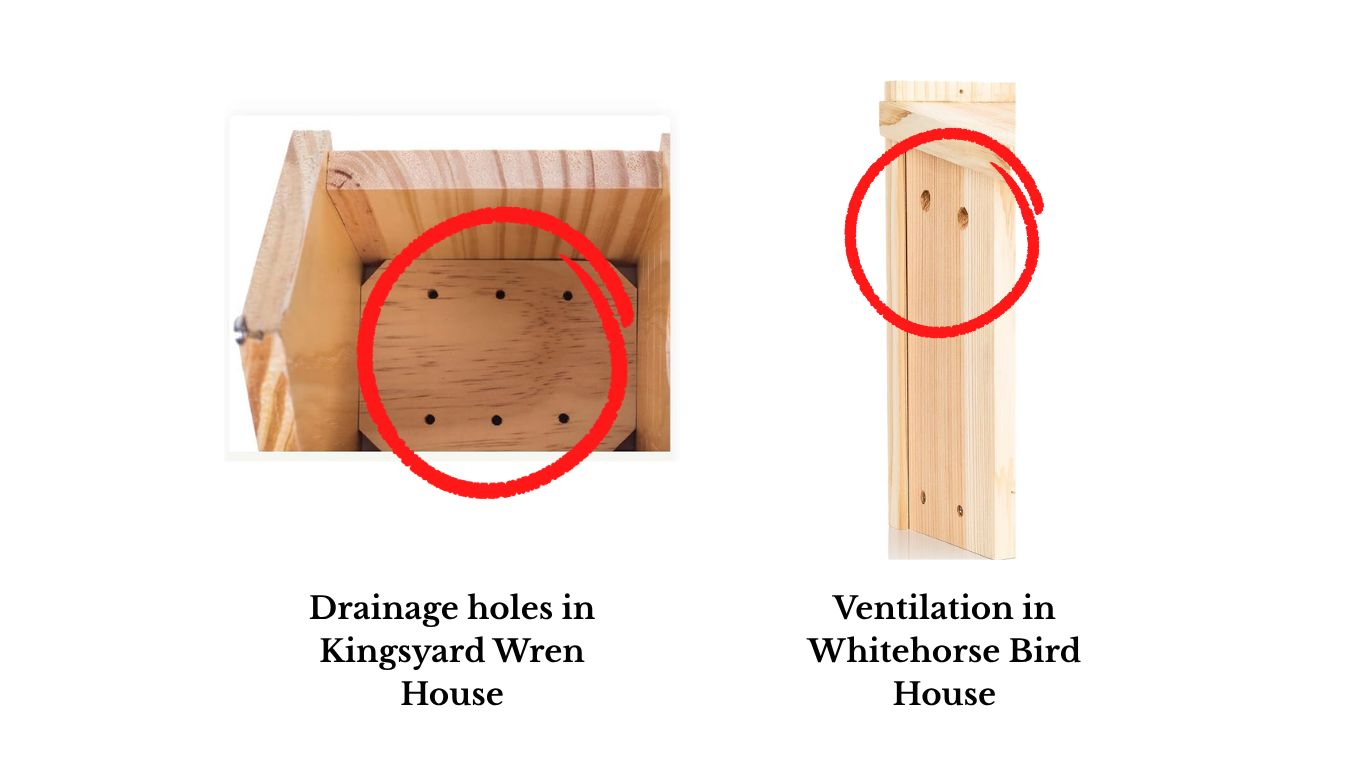
Water finds a way in regardless. Even a well-designed box will take on some moisture during heavy rain, and a floor with nowhere for that water to go means wet, moldy nesting material, which means sick or dead chicks.
Drill at least four drainage holes ⅜ to ½ inch in diameter into the floor of the box (like this Kingsyard Bird House). Alternatively, cut away the corners of the floorboard slightly so water drains at the edges.
Either approach works.
Birdhouse ventilation serves a different purpose: heat management in summer. Two holes on each side wall, about ⅝ inch in diameter near the top of the wall, is the standard NestWatch recommends. That's four total.
Don't skip them.
A sealed box in August sun can become dangerous very quickly.
4. A Sloped, Overhanging Roof
The roof should extend 2 to 4 inches over the front of the box and about 2 inches over the sides. It deflects driving rain away from the entrance hole and makes it harder for aerial predators to get a foothold on top.
For extra credit, add shallow ¼-inch cuts along the underside edge of the roof to act as drip grooves. They're the birdhouse equivalent of rain gutters, and well worth the extra five minutes.
5. The Entrance Hole Has to Match Your Target Species
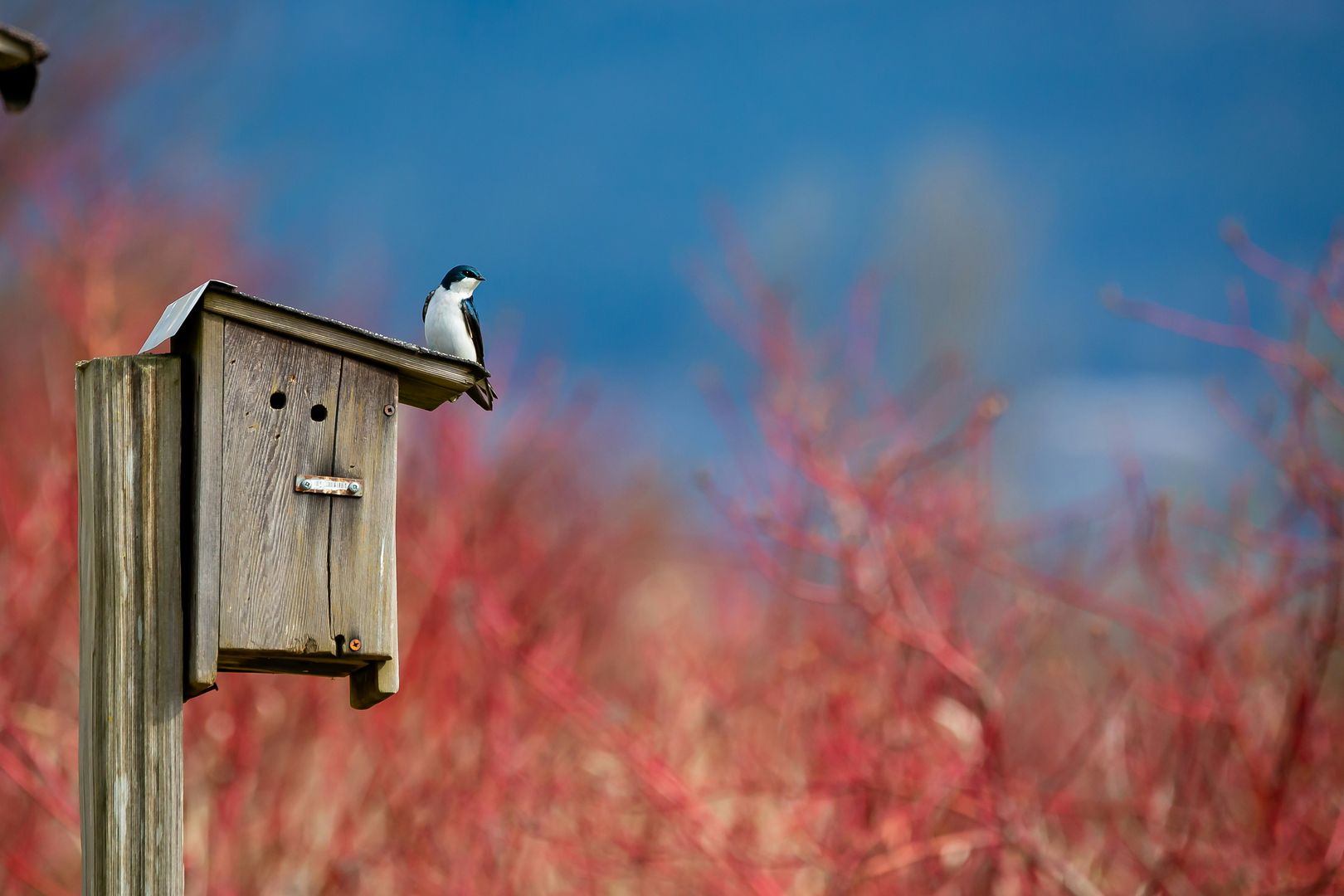
This is where most birdhouses go wrong, and where the stakes are highest. A hole that's too large invites predators and invasive species. A hole that's too small means the birds you want simply can't get in.
Here are the correct birdhouse hole sizes for common North American cavity-nesting species:
- House and Carolina Wrens: 1⅛ inch
- Chickadees and Titmice: 1¼ inch
- Eastern Bluebirds and Tree Swallows: 1½ inch
- Downy Woodpeckers: 1¼ inch
- Red-headed Woodpeckers: 2 inches
- Northern Flickers: 2½ inches
- Eastern Screech-Owls: 3 inches
- Wood Ducks: 4 x 3 inch elliptical
There are two invasive species worth deterring. European Starlings can fit through any opening 1⅝ inches or larger. House Sparrows can enter at 1¼ inches.
According to the National Wildlife Federation, if you're in a developed area and trying to attract chickadees or wrens without also attracting house sparrows, keep the hole at 1⅛ inches. That single sixteenth of an inch matters quite a bit.
6. No Perch — Remove It If There Is One
Every birdhouse at every craft store has a small perch below the entrance hole. Every credible ornithology source agrees: cavity-nesting birds don't need it, and it actively helps predators and invasive species gain access to the box. A perch gives a house sparrow or a raccoon a convenient place to stand while it harasses or evicts the birds inside.
If the birdhouse you're considering has a perch, that's fine — just remove it before mounting. It takes about 30 seconds with pliers, and it's one of the higher-return decisions you can make for your nesting birds.
7. Predator Guards Are Worth Adding
Even a well-placed birdhouse is more exposed than a natural tree cavity. Raccoons are intelligent and have genuinely good spatial memory, they'll return to a productive nest site year after year.
Snakes climb. Cats jump.
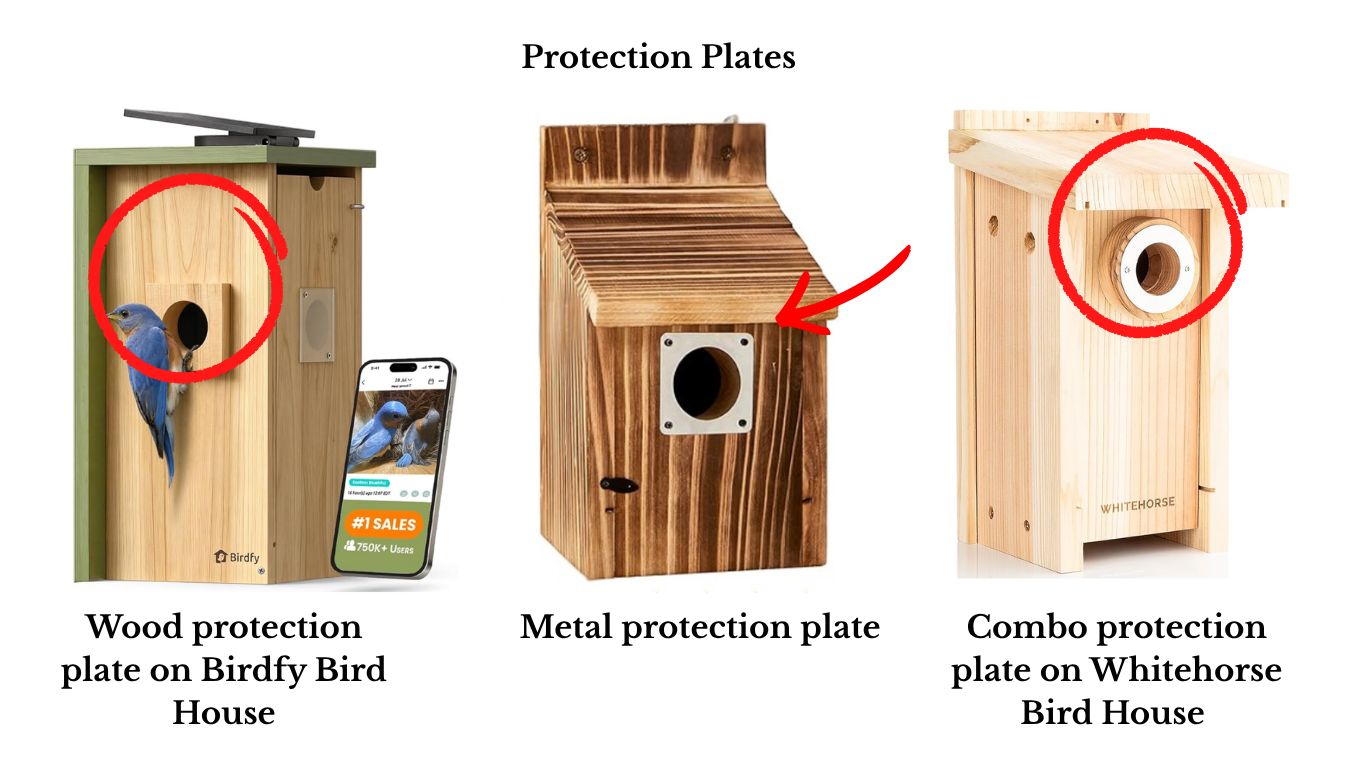
Protection plates are the most common and come on many bird houses. They make it difficult for predators to chew around the entrance to make it bigger.
Mounting the box on a metal pole with a baffle is the most effective solution. A cone baffle is a metal collar about 3 feet in diameter surrounding the pole beneath the box. A stovepipe baffle is more involved but generally considered the most reliable option.
Avoid mounting boxes on wooden fence posts or tree trunks if mammalian predators are a concern in your area, which, if you have neighbors with outdoor cats, they almost certainly are.
8. Rough Interior Walls Help Fledglings Leave
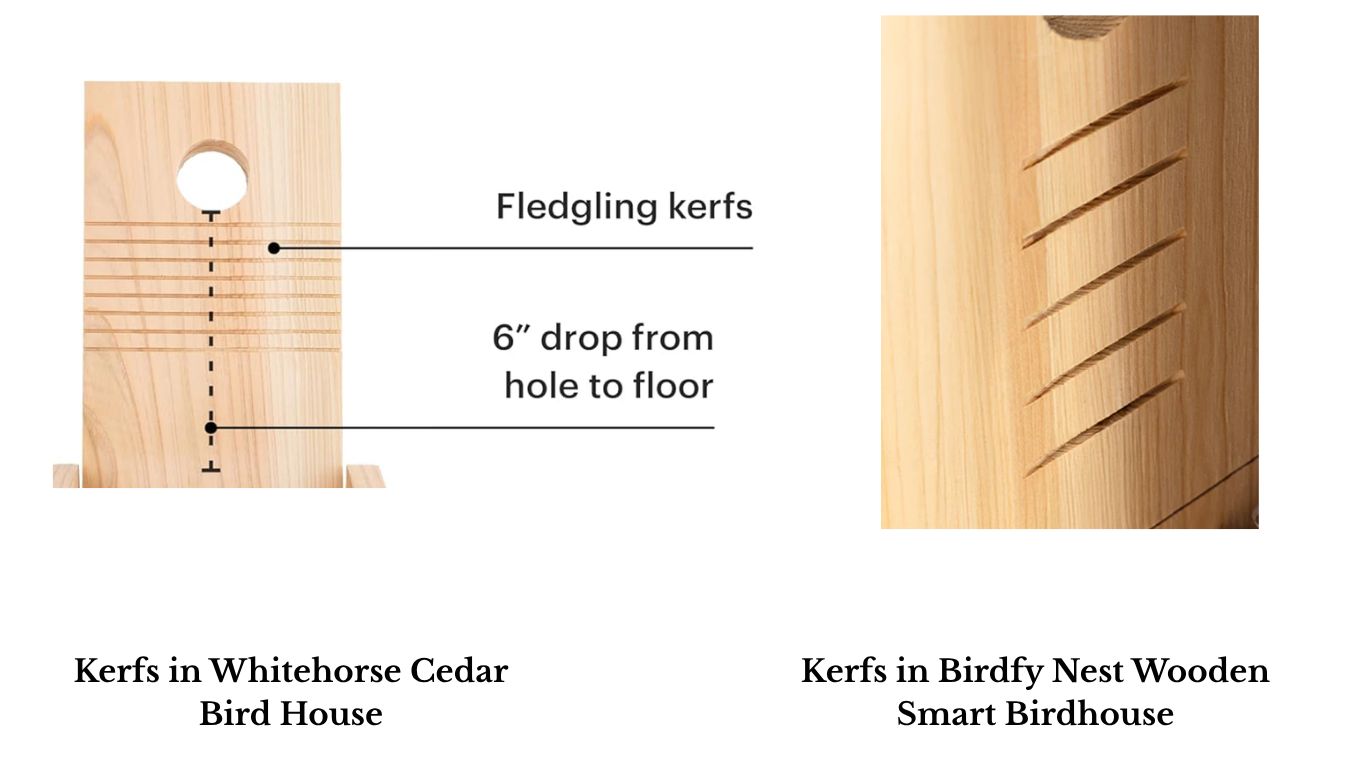
Once nestlings are ready to leave the box, they need to climb up to the entrance hole and exit on their own. A smooth interior wall below the entrance makes this significantly harder, particularly for species like tree swallows.
Roughen the interior front wall with coarse sandpaper before assembling or buying the box. Better still, look for a box with shallow horizontal grooves cut below the entrance — they function as a small ladder, and they genuinely help.
9. Access for Cleaning
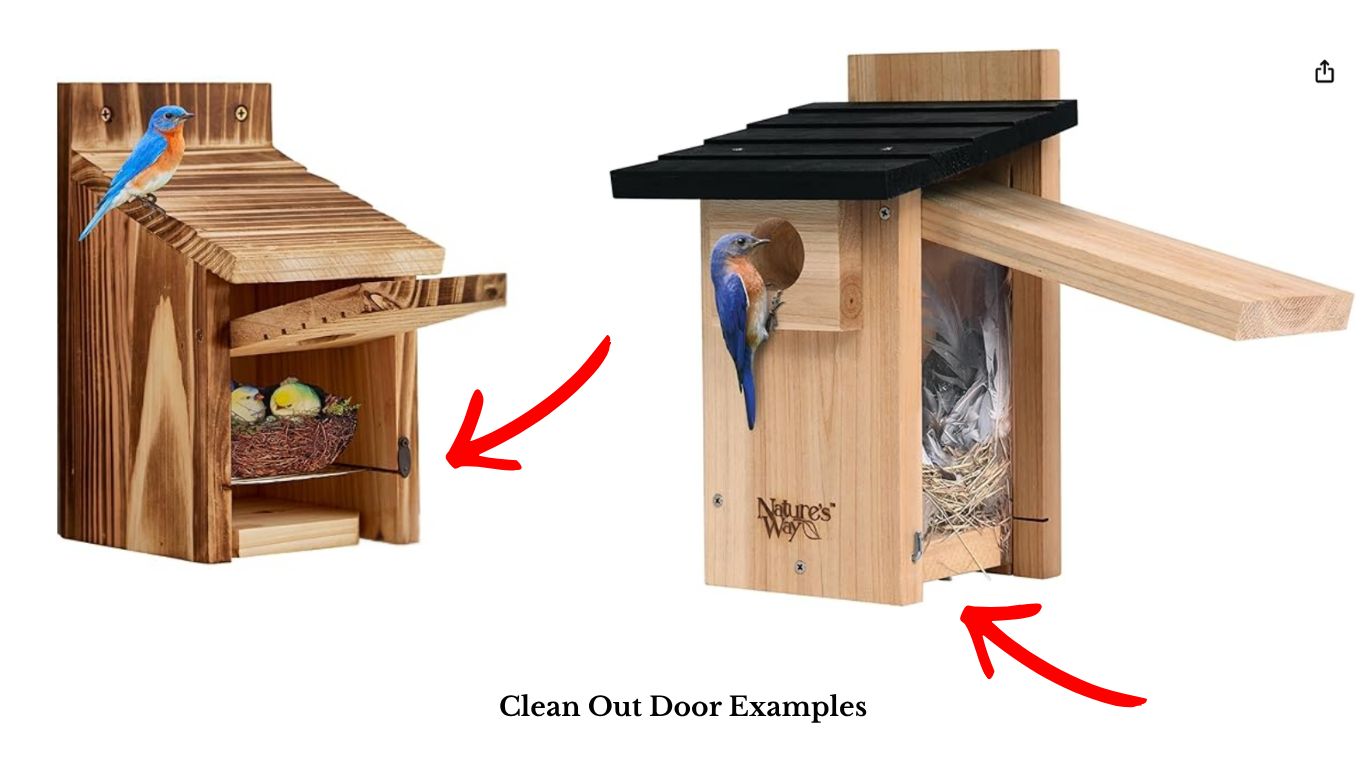
A birdhouse you can't open is one you can't maintain. It deteriorates, accumulates parasites, and becomes less useful to birds over time. Look for a hinged side panel or a removable side wall like Nature's Way Cedar Viewing House.
Stay away from a decorative latch that snaps shut and requires a crowbar to open.
Old nesting material should be removed after each breeding season, typically by mid-August. The interior should be scrubbed with a diluted bleach solution (1 part bleach, 9 parts water), rinsed thoroughly, and left to dry completely before the box goes back up.
For multi-brood species like Eastern Bluebirds, clean out the box between each clutch but wait until you're certain all chicks have fully fledged before opening it.
Growing up in New England, my dad once discovered what a poor housing decision looks like for birds firsthand.
He'd sealed the busted accordion panels on our window air conditioners with duct tape and the warm air pouring from the outside unit attracted a sparrow. The bird found the tape before it found its way out, and ended up stuck.
Dad gloved up and carefully peeled it free and put it in our chokecherry tree to recover. Birds will try to nest in almost any warm, enclosed space, regardless of whether it's actually good for them. A properly designed birdhouse is the appropriate answer to that instinct.
A Word on Decorative Birdhouses
This is just my opinion, but the miniature painted cottages sold at craft stores are not birdhouses. They're decorative objects, and there's nothing wrong with using them as decorative objects.
But mounting one and expecting cavity-nesting birds to successfully raise young in it is setting everyone up for disappointment.
Thin, treated wood that gets dangerously hot in summer. Entrance holes sized for aesthetics rather than any real bird species. Zero drainage or ventilation. These products are not designed for birds.
Don't buy the decorative one if your goal is nesting birds. Use the NestWatch offers free, species-specific nest box plans that actually work. Buy the cute ones it if your goal is a charming porch.
Both are valid goal, they're just different goals.
- Related: The 6 Best Wood Bird House Kits for DIY fun
Who's nesting in your bird house this season?
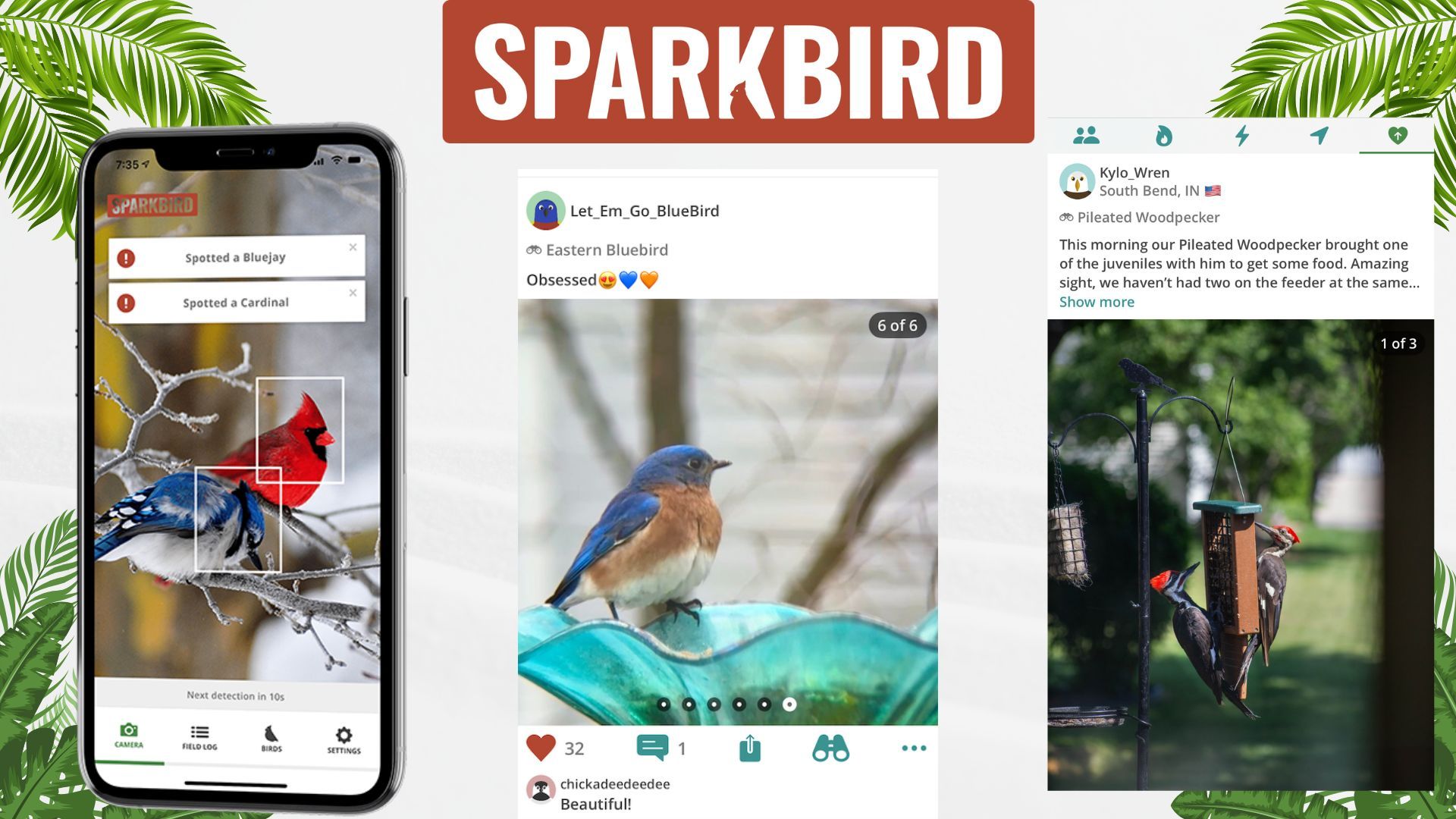
Share it on the Sparkbird App!

No comments yet.