
Winter in Alabama is mostly a rumor. A dusting of snow can close the whole state for a day, and the rest of the season is a light jacket and coffee on the porch (as a New England kid who shoveled her way through childhood, I find this deeply unfair). That's what makes winter birds in Alabama such a good show. The state doesn't lose birds when it gets cold. It gains them, as sparrows, kinglets, warblers, ducks, pelicans, and thousands of cranes fly south to spend the season here. Of the roughly 433 species on the state list, the Encyclopedia of Alabama counts about 175 as winter residents.
The state bird is around all winter, too. The Northern Flicker, better known here as the Yellowhammer, was adopted as Alabama's state bird in 1927, and it's actually most abundant in winter, when northern flickers come south to join the locals. So the Yellowhammer State really hits the nail on the head from December to February.
Types of Winter Birds in Alabama
There are 3 types of winter birds in Alabama you'll see on this list:
- Resident Alabama Birds – species that live here year-round and make up most of the backyard feeder crowd
- Winter Migrants / Visitors – birds that breed farther north or west and arrive for the cold months, from juncos and Yellow-rumped Warblers to Ring-necked Ducks, American White Pelicans, and cranes. The headline act is at Wheeler National Wildlife Refuge near Decatur, where thousands of Sandhill Cranes, a small number of Whooping Cranes, and tens of thousands of ducks and geese spend the winter
- Irruptive Species – finches like Purple Finches and Pine Siskins that show up in good numbers some winters and barely at all in others, depending on seed crops up north
Each entry covers ID, male vs female, calls, where to find the bird in Alabama, and its feeder favorites if it visits feeders.
1. Northern Cardinal
- Family – Cardinalidae
- Species – Cardinalis cardinalis
- Primary Activity Time – Dawn and Dusk
- Diurnal
- Resident Alabama Bird
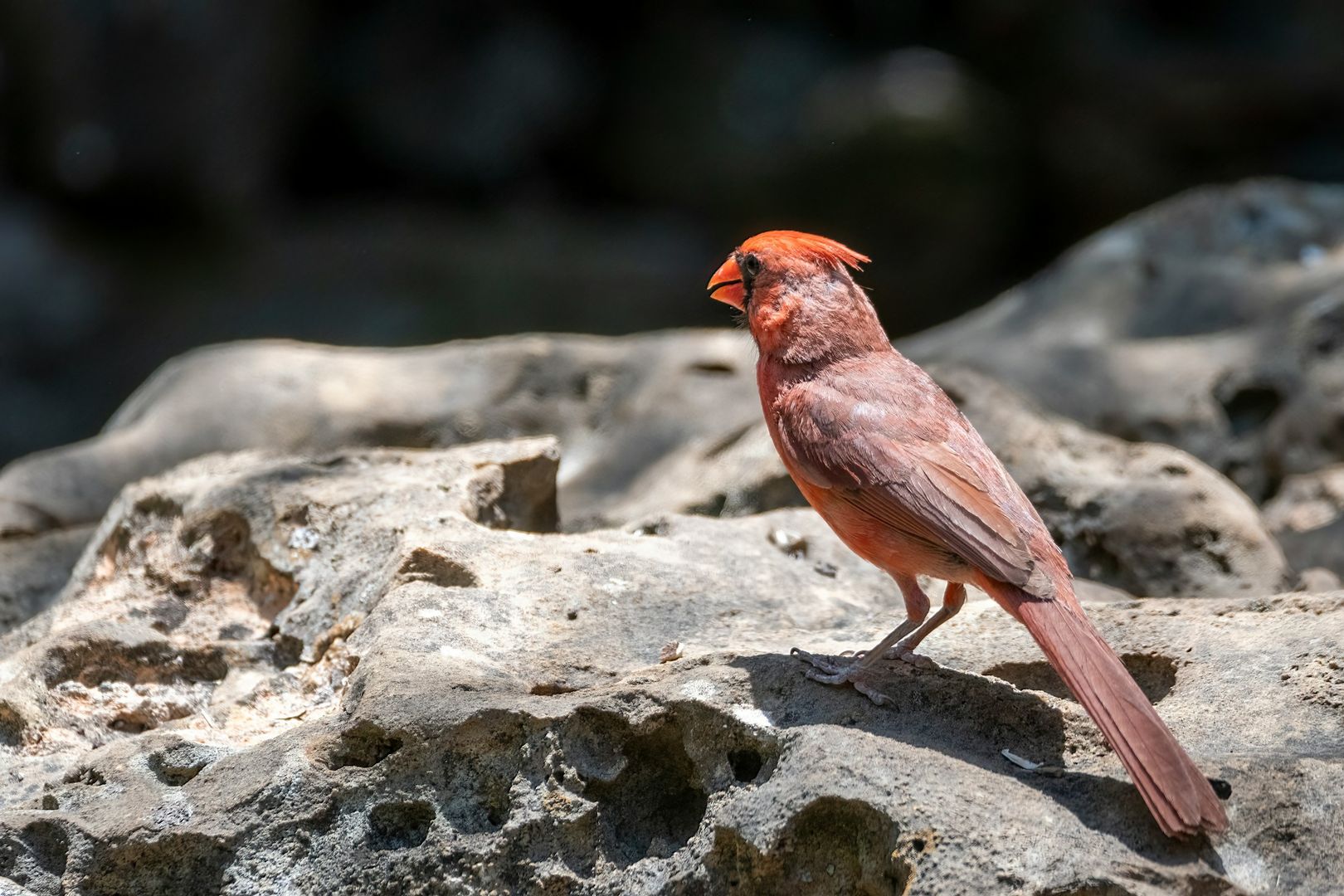
The Northern Cardinal is the most reliable backyard bird in the state. In Project FeederWatch's Southeast data it shows up at nearly every feeder site, and it's usually the first bird in and the last bird out, since it feeds heavily at dawn and dusk.
Males are bright red with a black face and a red crest. Females are warm tan-brown with reddish tinges on the wings, tail, and crest, and both have a thick orange-red bill built for cracking seeds.
The Northern Cardinal song is a loud, clear whistle, often written as cheer-cheer-cheer or birdie-birdie-birdie, and the call is a sharp metallic chip. Cardinals sing on mild winter days, so in Alabama you may hear them in January.
In Alabama winters, cardinals are found statewide in yards, thickets, woodland edges, and parks. Dense shrubs near the feeder help a lot. For more on keeping them around, see Cardinals in Winter: Where They Go, What They Eat, and How to Attract Them.
Feeder favorites: black oil sunflower, safflower, cracked corn
2. Mourning Dove
- Family – Columbidae
- Species – Zenaida macroura
- Primary Activity Time – Daytime
- Diurnal
- Resident Alabama Bird
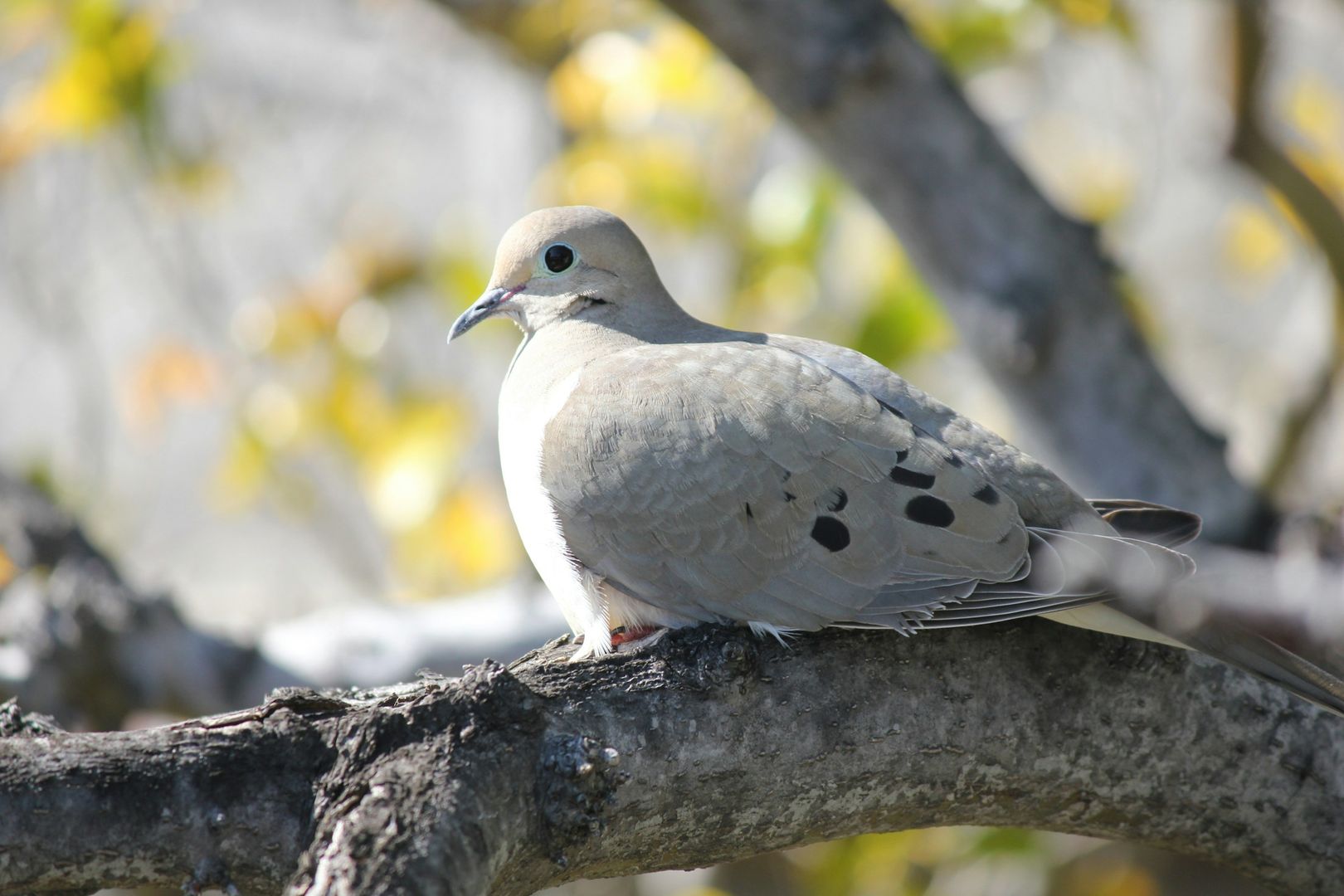
The Mourning Dove is a slim, ground-feeding seed eater that turns up in flocks under feeders all winter. It swallows seeds fast, stores them in its crop, and then flies off to a wire to digest, which is the bird version of eating standing up at the kitchen counter.
It's soft buffy gray-brown with black spots on the wings and a long, pointed, white-edged tail. Males have a faint pink wash on the breast and a bluish-gray crown, while females are a little browner.
The Mourning Dove call is a slow, mournful coo-OO-oo-oo-oo that people often mistake for an owl. Their wings make a whistling twitter when they burst into flight.
In Alabama winters, Mourning Doves are common statewide, especially in farm country, suburbs, and anywhere seed hits the ground.
Feeder favorites: millet, cracked corn, black oil sunflower on a platform or the ground
3. Tufted Titmouse
- Family – Paridae
- Species – Baeolophus bicolor
- Primary Activity Time – Daytime
- Diurnal
- Resident Alabama Bird
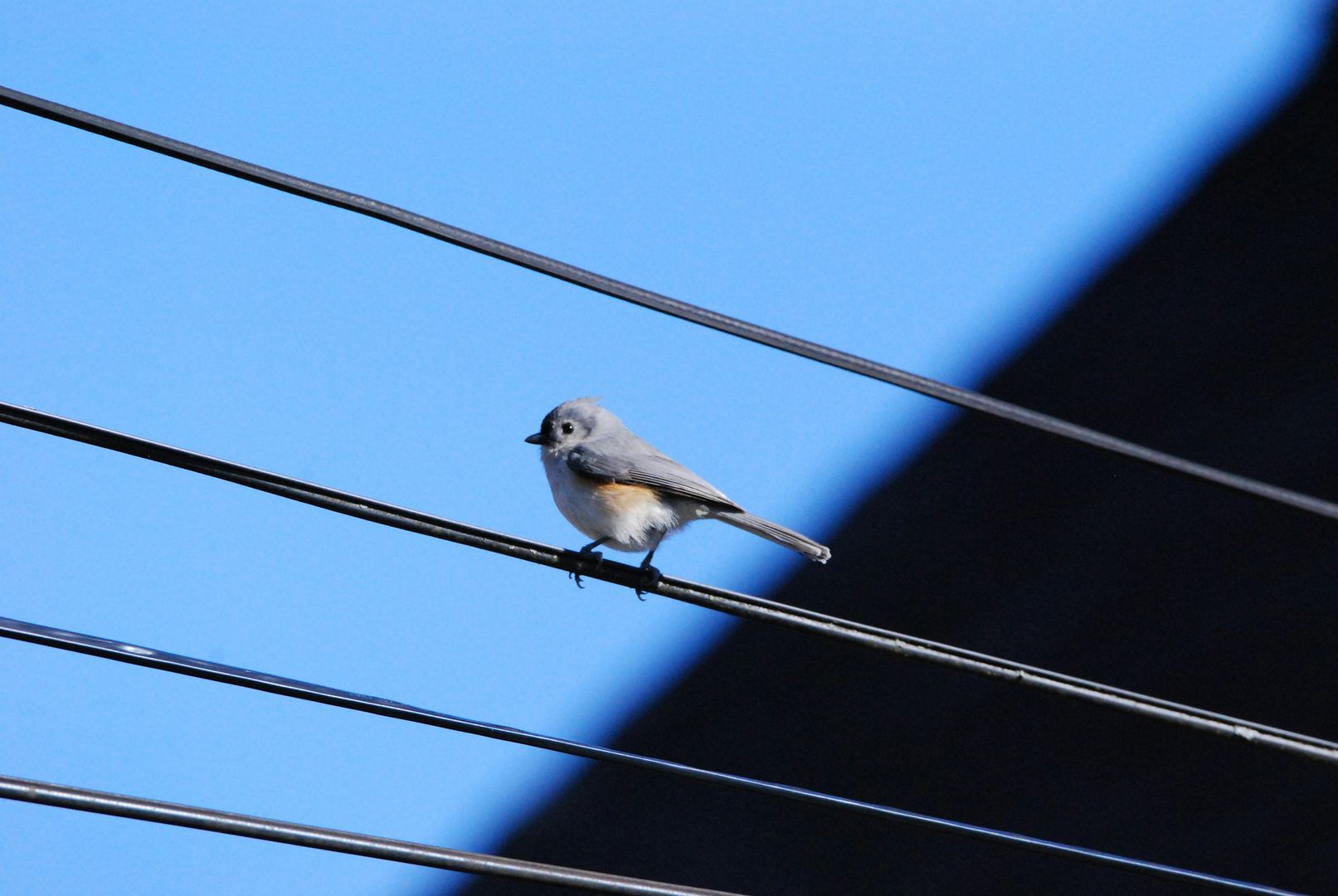
The Tufted Titmouse is the small gray bird with the crest that grabs one sunflower seed, flies to a branch, and hammers it open before coming back for another. It often travels in winter flocks with chickadees, nuthatches, and kinglets.
It's soft gray above and pale below, with a pointed crest, large black eyes, a black patch just above the bill, and peachy flanks. Males and females look alike.
The Tufted Titmouse song is a clear, whistled peter-peter-peter, and it scolds with a harsh, chickadee-like tsee-day-day-day.
In Alabama winters, titmice are common statewide in deciduous and mixed woods, wooded neighborhoods, and parks.
Feeder favorites: black oil sunflower, peanuts, suet
4. Carolina Wren
- Family – Troglodytidae
- Species – Thryothorus ludovicianus
- Primary Activity Time – Daytime
- Diurnal
- Resident Alabama Bird
The Carolina Wren is a tiny bird with an enormous voice. It pokes through brush piles, porches, and garages looking for insects and spiders, and it has a real talent for nesting or roosting in the one place you didn't expect, like an old boot or a hanging planter.
It's warm rusty brown above and buffy orange below, with a long white eyebrow stripe and a tail it often cocks upward. Males and females look alike.
The Carolina Wren song is a loud, rolling teakettle-teakettle-teakettle, and males sing all year, winter included. Pairs also give a chattering rattle.
In Alabama winters, Carolina Wrens are common statewide in thickets, yards, and woodland edges. A brush pile in the corner of the yard is basically a hotel for them.
Feeder favorites: suet, peanut pieces, mealworms
5. Red-bellied Woodpecker
- Family – Picidae
- Species – Melanerpes carolinus
- Primary Activity Time – Daytime
- Diurnal
- Resident Alabama Bird
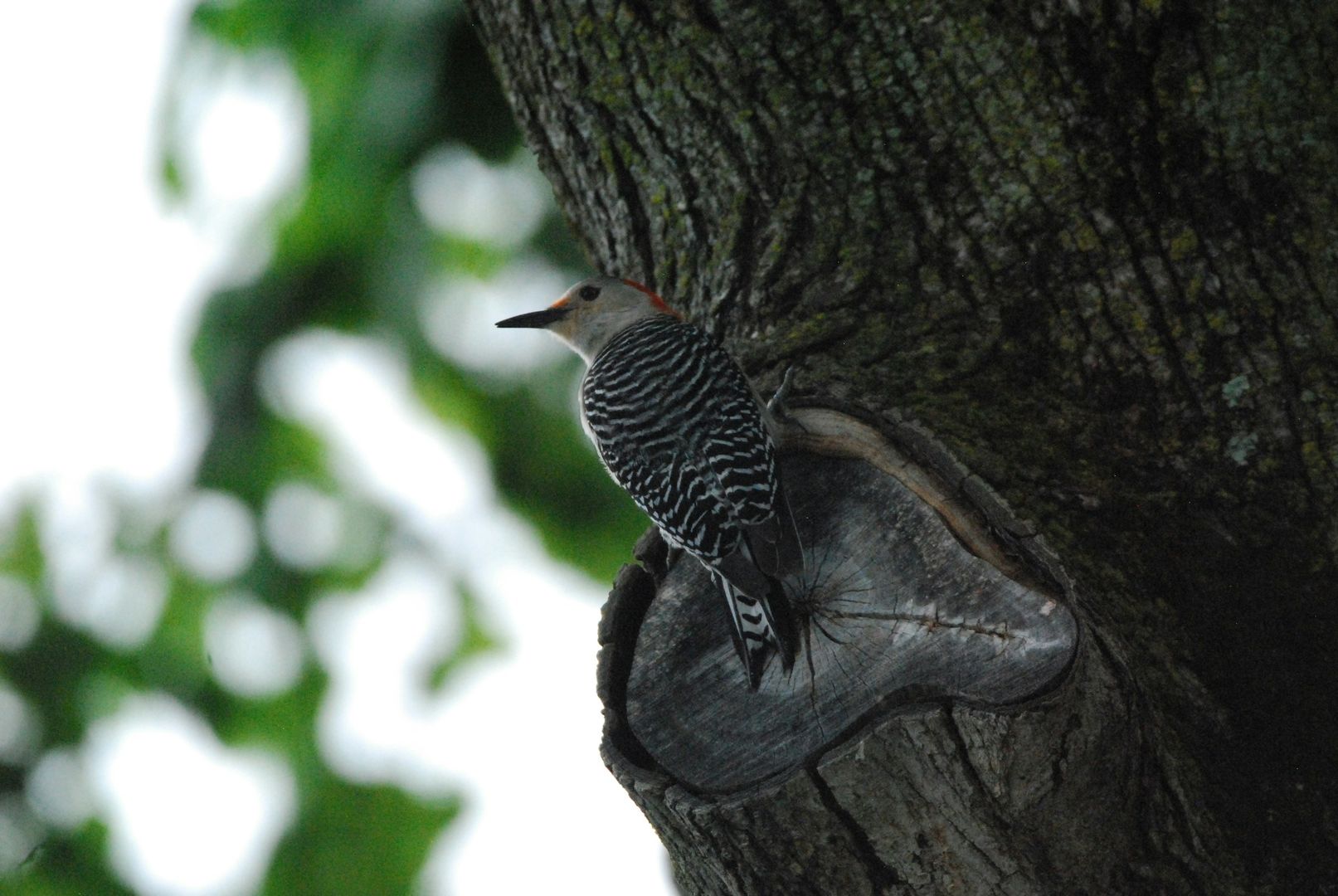
The Red-bellied Woodpecker is one of the most common woodpeckers at Alabama feeders. It eats insects, acorns, nuts, and fruit, and in winter it stores food in bark cracks to come back to later.
Its name is a bit of a letdown, since the reddish wash on the belly is faint and rarely visible. Look instead for the black-and-white barred back and the red on the head. Males have red from the bill all the way over the crown to the nape, while females have red only on the nape, with a gray crown.
The Red-bellied Woodpecker call is a rolling kwirr or churr, plus a quick chiv-chiv. It's one of the noisier birds in a quiet winter woodlot.
In Alabama winters, it's common statewide in woods, river bottoms, parks, and suburbs with mature trees.
Feeder favorites: suet, peanuts, black oil sunflower
6. American Goldfinch
- Family – Fringillidae
- Species – Spinus tristis
- Primary Activity Time – Daytime
- Diurnal
- Resident Alabama Bird (much more numerous in winter)
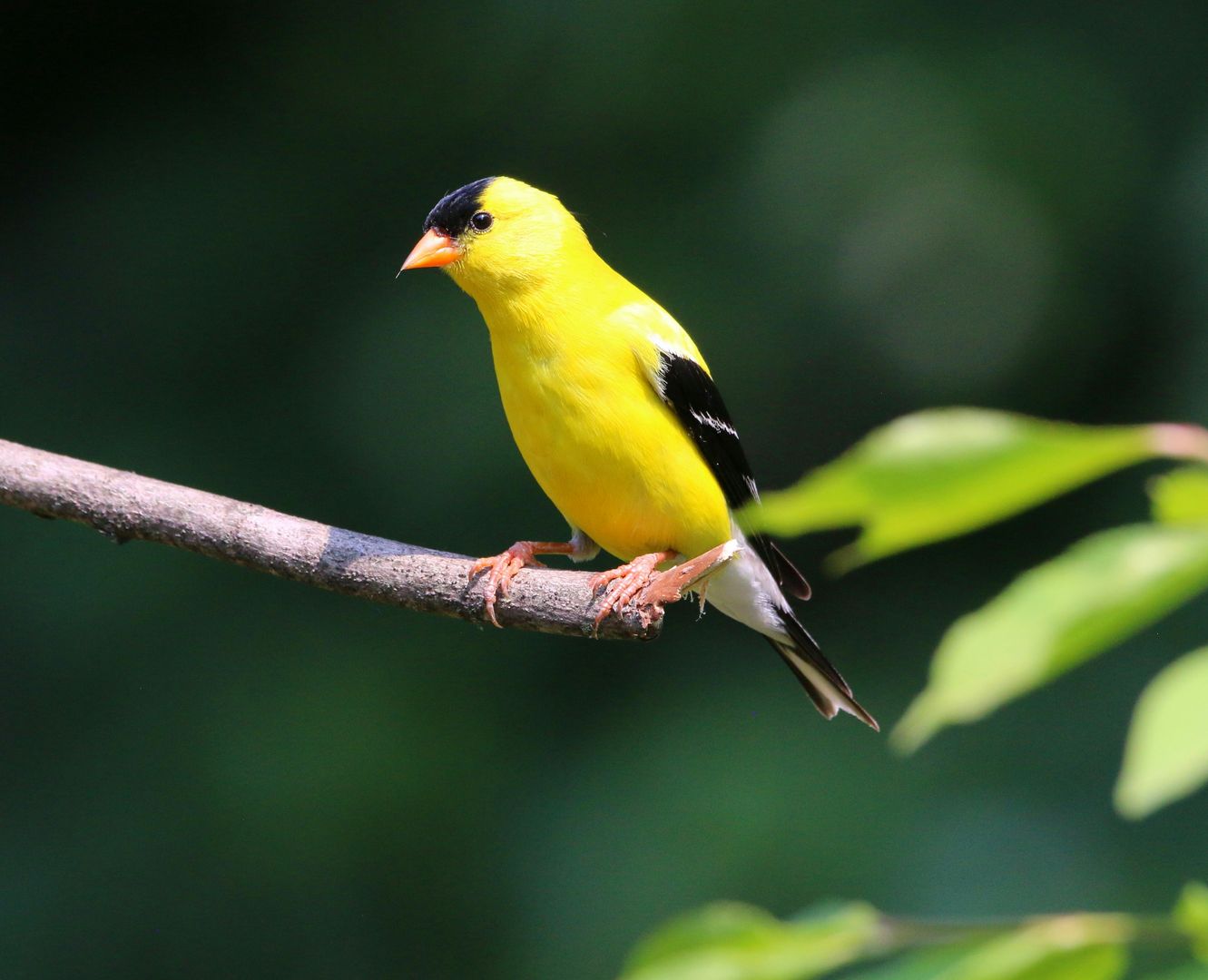
The American Goldfinch is a small seed-eating finch that breeds in parts of Alabama but floods in from the north for winter, so feeder flocks get much bigger from November on. It's a strict vegetarian and one of the pickiest eaters on the list.
Winter goldfinches look nothing like their summer selves. Males lose the lemon yellow and turn olive-brown, with a yellowish face and throat and black wings with white bars. Females are duller and grayer. Both have a small, pale, cone-shaped bill.
The American Goldfinch call is a bouncy po-ta-to-chip, given in flight as the birds dip up and down like they're on a roller coaster.
In Alabama winters, goldfinches are common statewide in weedy fields, woodland edges, and yards with tube feeders.
Feeder favorites: nyjer, sunflower chips, black oil sunflower
7. Downy Woodpecker
- Family – Picidae
- Species – Dryobates pubescens
- Primary Activity Time – Daytime
- Diurnal
- Resident Alabama Bird
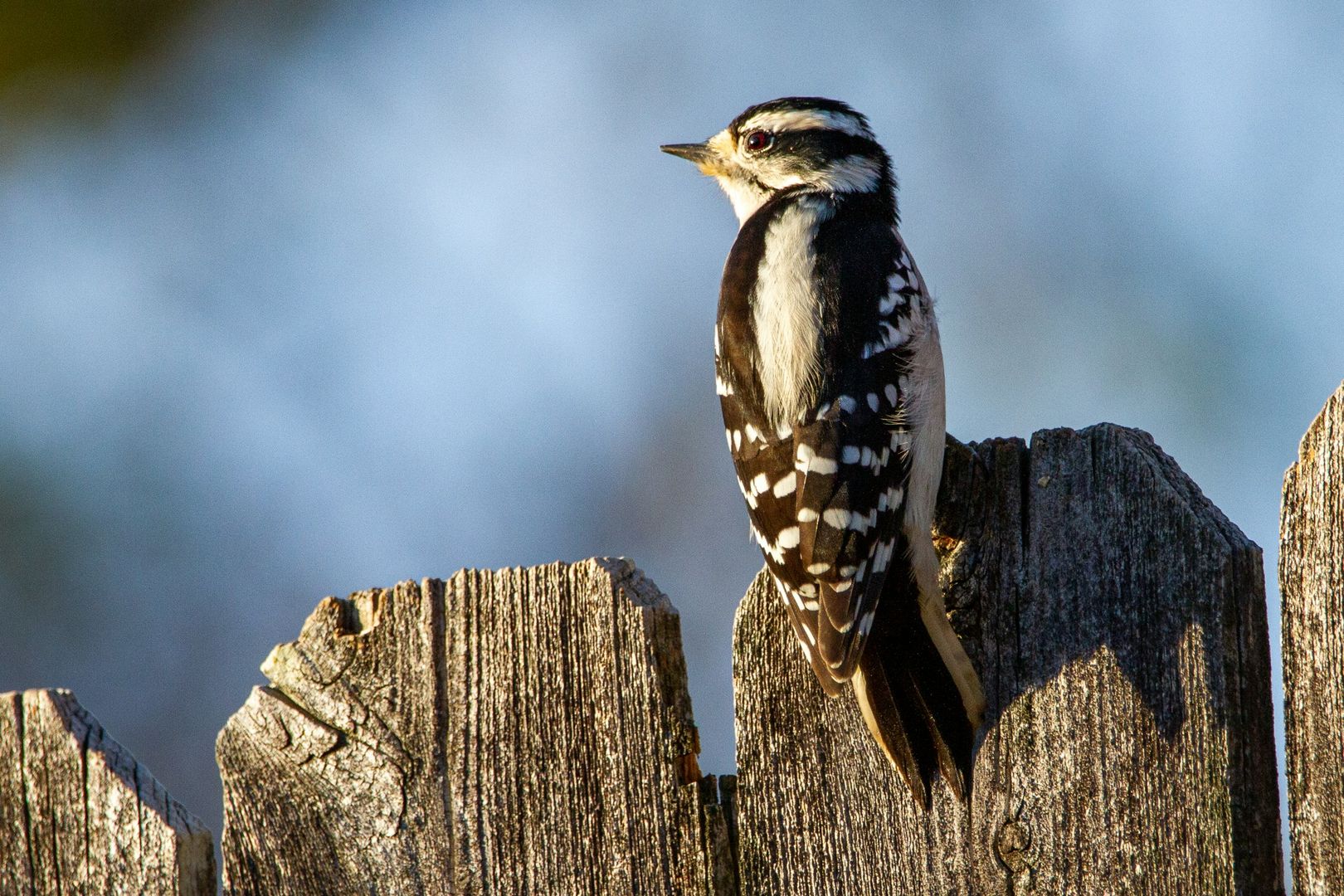
The Downy Woodpecker is the smallest woodpecker in North America and a regular at suet feeders. It picks insects and larvae from small branches and even weed stems, places bigger woodpeckers can't manage.
It's black and white with a white stripe down the back and a short, stubby bill. Males have a small red patch on the back of the head, while females don't.
The Downy Woodpecker call is a soft pik and a high, descending whinny that sounds like it's running out of steam.
In Alabama winters, Downies are common statewide in woods, parks, and wooded neighborhoods, often in mixed flocks with chickadees and titmice.
Feeder favorites: suet, black oil sunflower, peanuts
8. Blue Jay
- Family – Corvidae
- Species – Cyanocitta cristata
- Primary Activity Time – Daytime
- Diurnal
- Resident Alabama Bird
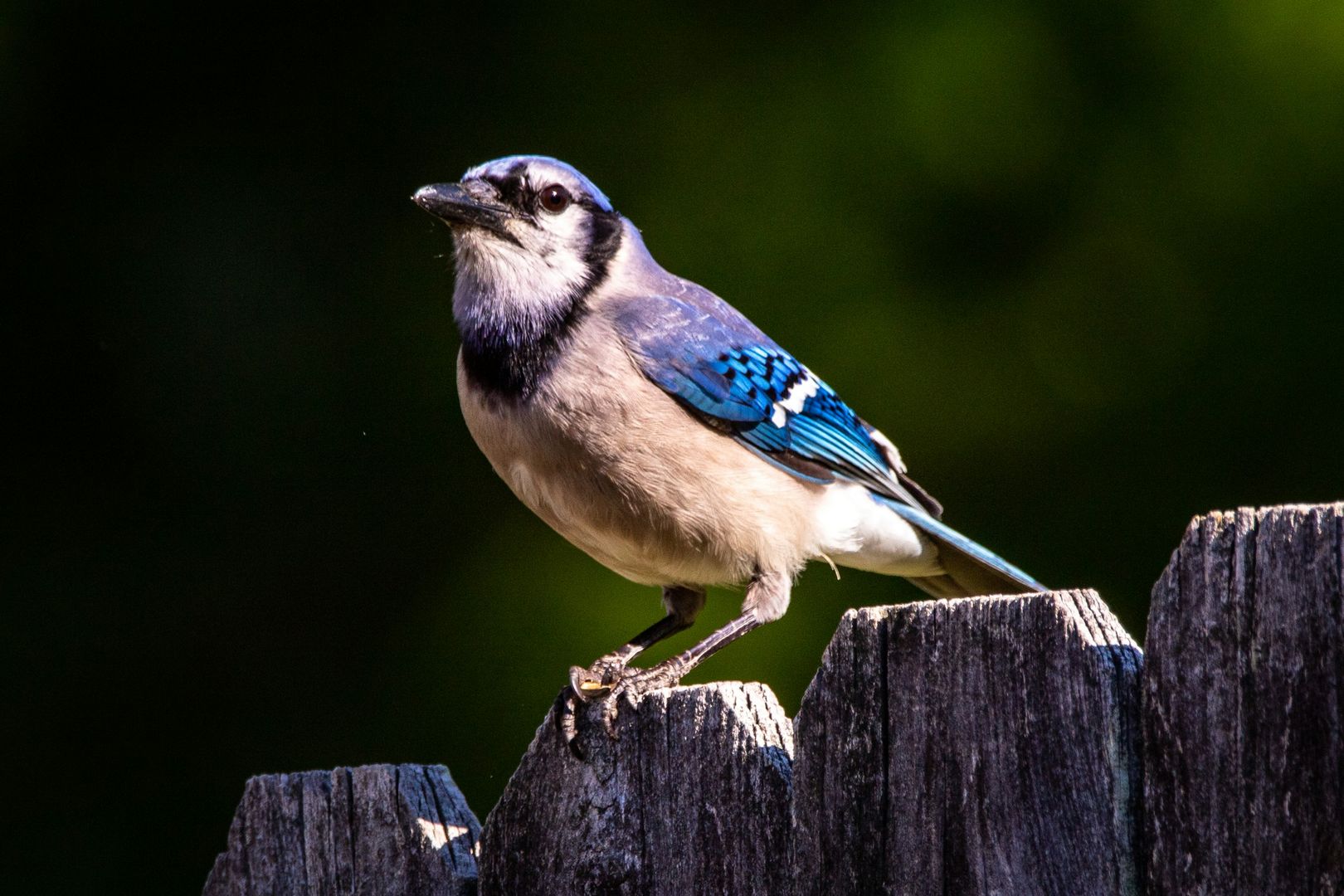
The Blue Jay is smart, loud, and very good at clearing out a feeder. It eats acorns, nuts, seeds, and insects, and it buries acorns to eat later, which means some of Alabama's oaks were probably planted by jays that forgot where they left lunch.
It's bright blue above and white below, with a crest, a black necklace, and black bars on the wings and tail. Males and females look alike, though males average slightly larger.
The Blue Jay call is a harsh jay-jay, but it also makes soft clicks, whistles, and a spot-on Red-shouldered Hawk impression that fools plenty of birders.
In Alabama winters, Blue Jays are common statewide in oak woods, towns, and suburbs.
Feeder favorites: peanuts, black oil sunflower, suet
9. House Finch
- Family – Fringillidae
- Species – Haemorhous mexicanus
- Primary Activity Time – Daytime
- Diurnal
- Resident Alabama Bird
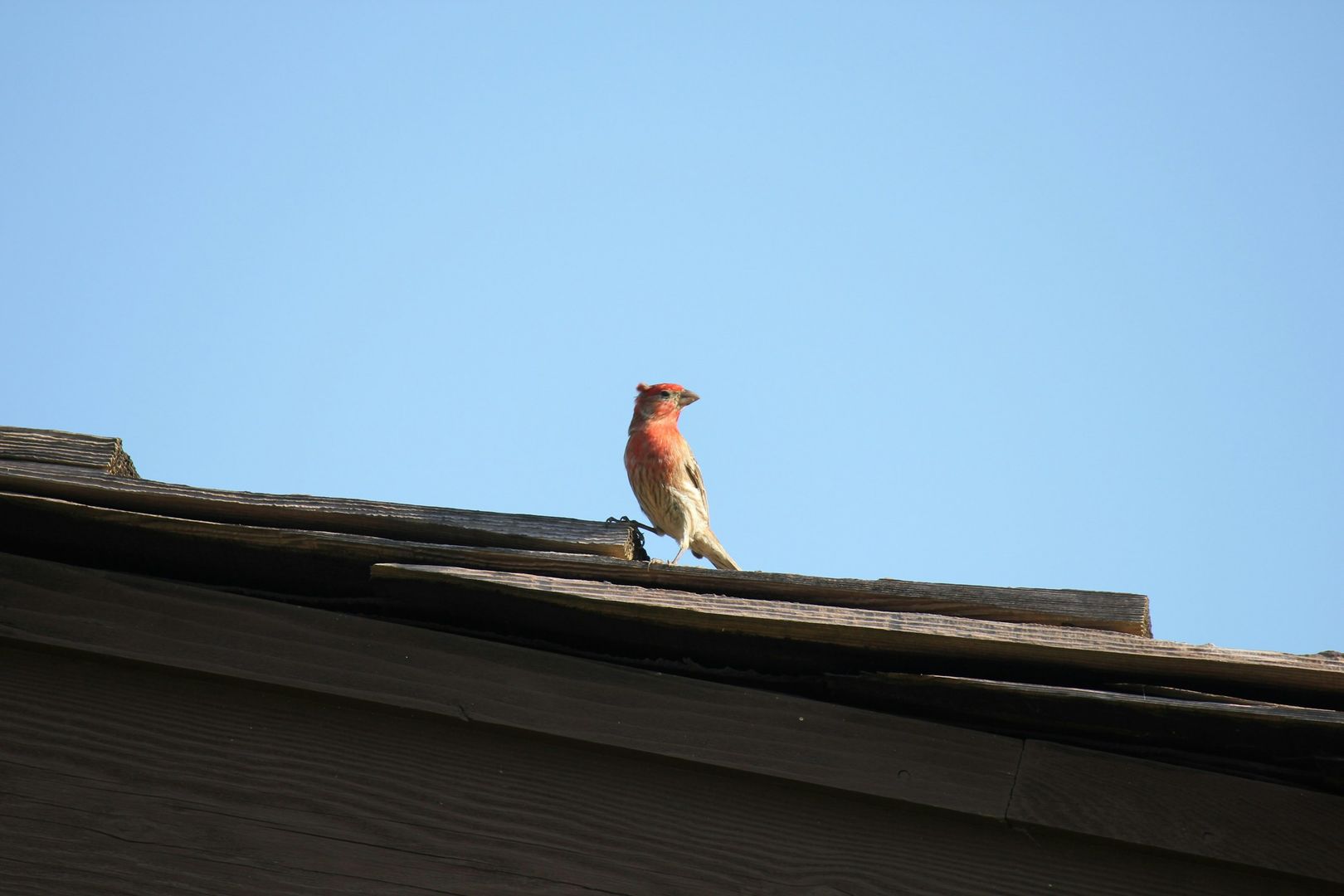
The House Finch is originally a western bird that spread across the East after being released on Long Island in the 1940s, and it's now a fixture at Alabama feeders. It eats almost entirely seeds, buds, and fruit.
Males have a rosy-red head, breast, and rump (the shade varies with diet, from orange to deep red), and blurry brown streaks on the belly. Females are plain grayish-brown with blurry streaks and no strong face pattern.
The House Finch song is a long, jumbled warble that often ends on a buzzy, rising note, and the call is a cheerful cheep.
In Alabama winters, House Finches are common in towns and suburbs statewide, usually in noisy little groups.
Feeder favorites: black oil sunflower, sunflower chips, nyjer
10. Carolina Chickadee
- Family – Paridae
- Species – Poecile carolinensis
- Primary Activity Time – Daytime
- Diurnal
- Resident Alabama Bird
The Carolina Chickadee is Alabama's only chickadee, so you don't have to worry about the Black-capped ID headache northern birders deal with. It's often the bird that leads winter mixed flocks, with kinglets, titmice, and warblers tagging along.
It has a black cap and bib, white cheeks, a gray back, and buffy flanks. Males and females look alike.
The Carolina Chickadee call is a quick, high chick-a-dee-dee-dee, and the song is a four-note whistle, often written fee-bee, fee-bay. More dee notes in the call usually means a bigger threat nearby.
In Alabama winters, it's common statewide in woods, parks, and backyards.
Feeder favorites: black oil sunflower, suet, peanuts
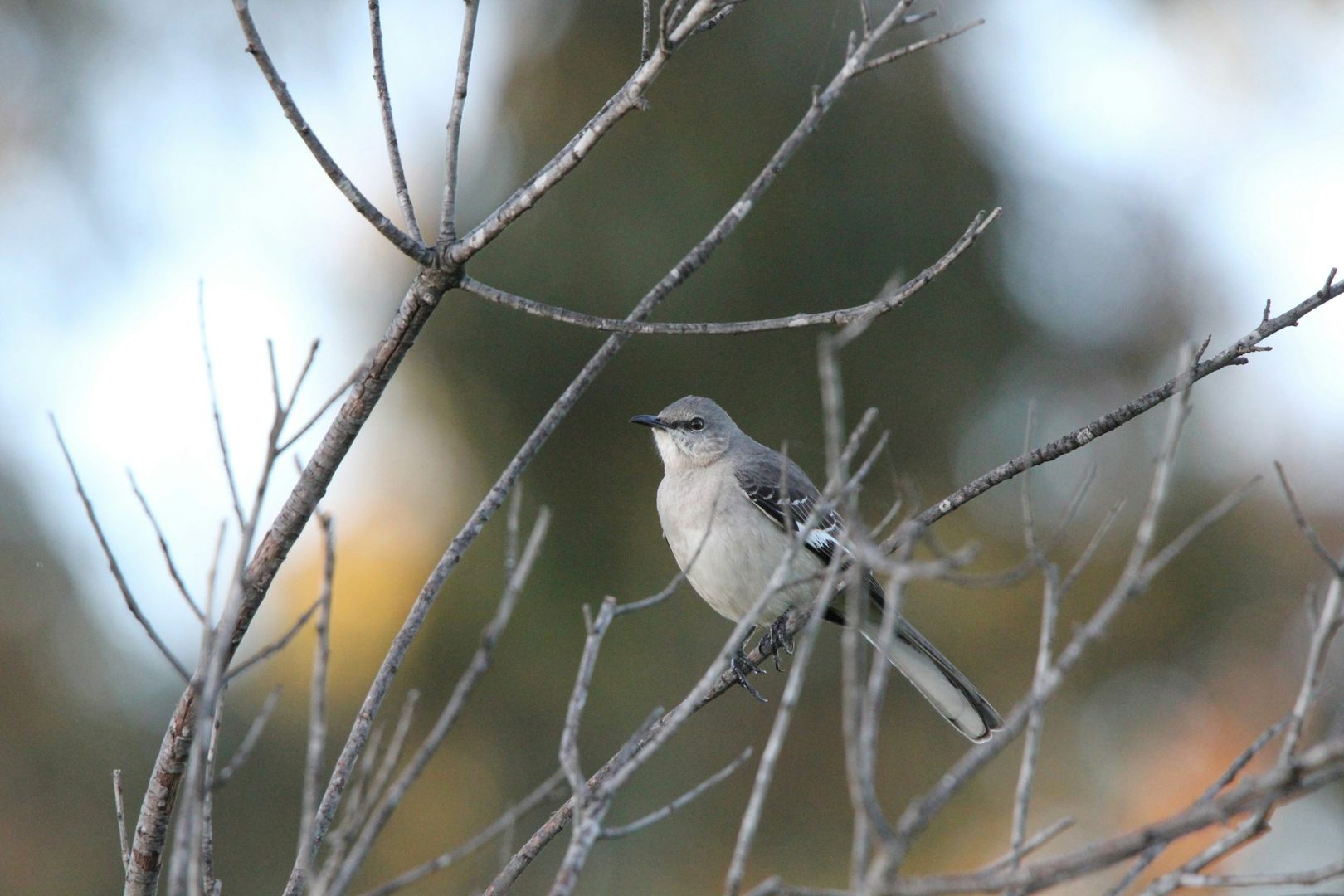
11. Northern Mockingbird
- Family – Mimidae
- Species – Mimus polyglottos
- Primary Activity Time – Daytime
- Diurnal
- Resident Alabama Bird
The Northern Mockingbird spends winter guarding fruit. Both males and females set up their own winter territories around holly, pyracantha, or other berry bushes and chase off anything that tries to eat there, including robins twice their size.
It's gray above and pale below, with a long tail and big white wing patches that flash when it flies. Males and females look alike.
The Northern Mockingbird song is a long medley of other birds' songs, car alarms, and squeaky gates, each phrase repeated several times. The winter call is a harsh chack.
In Alabama winters, mockingbirds are common statewide in towns, farms, and open areas with shrubs.
Feeder favorites: suet, chopped fruit, mealworms
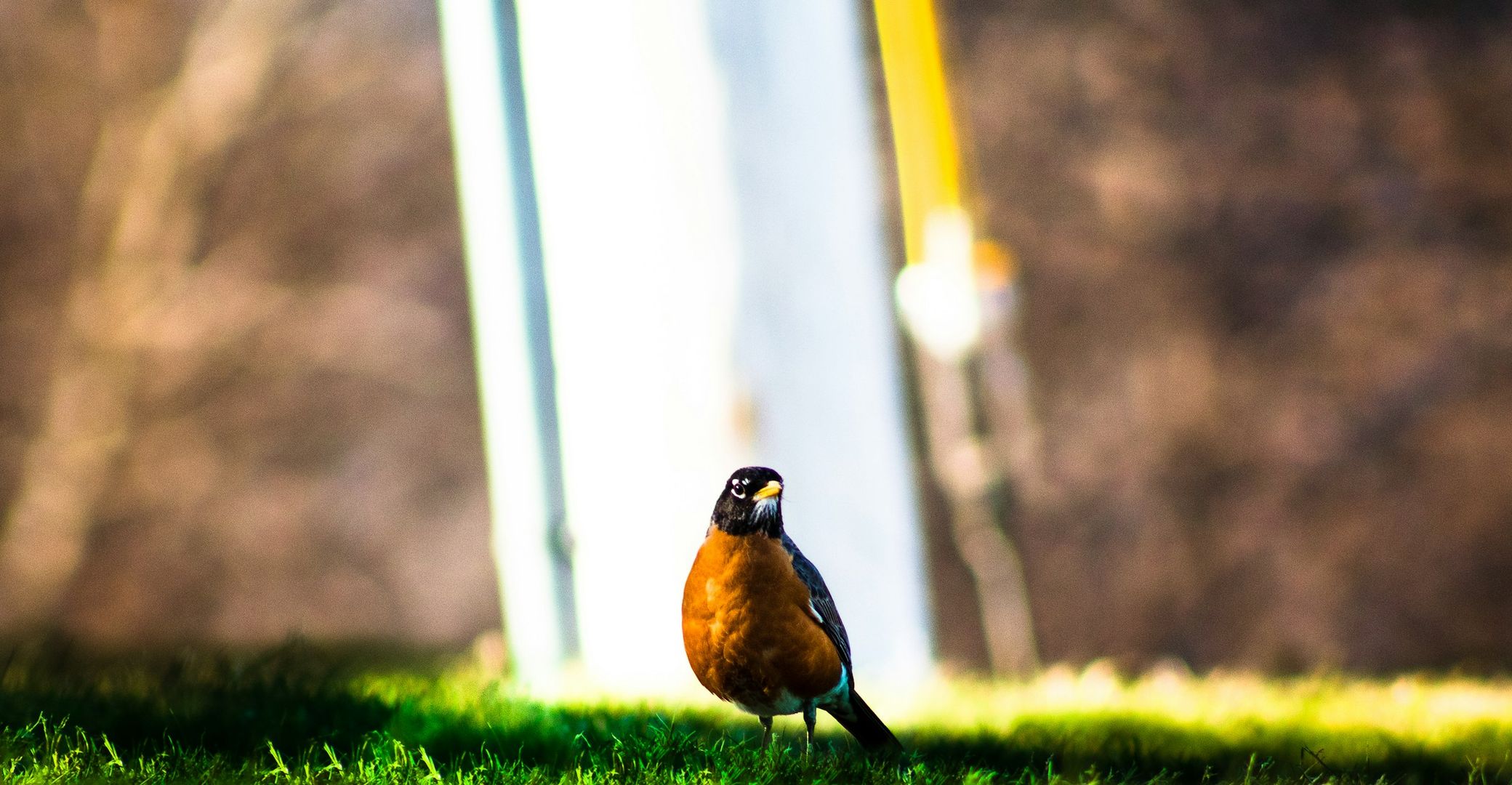
12. American Robin
- Family – Turdidae
- Species – Turdus migratorius
- Primary Activity Time – Daytime
- Diurnal
- Resident Alabama Bird (much more numerous in winter)
The American Robin is not a sign of spring in Alabama. It's a sign of winter, when big flocks of northern robins arrive and roam the state looking for berries. They switch from worms to fruit and can strip a holly tree in an afternoon.
Robins have a gray-brown back and a warm orange breast. Males have a darker, almost black head and richer orange, while females are paler overall.
The American Robin call in winter is a sharp tut-tut or a high seeee alarm. The full cheerily-cheer-up song mostly waits for late winter.
In Alabama winters, robin flocks are found statewide in woods, river bottoms, and neighborhoods with fruiting trees.
Feeder favorites: chopped apples, softened raisins, mealworms
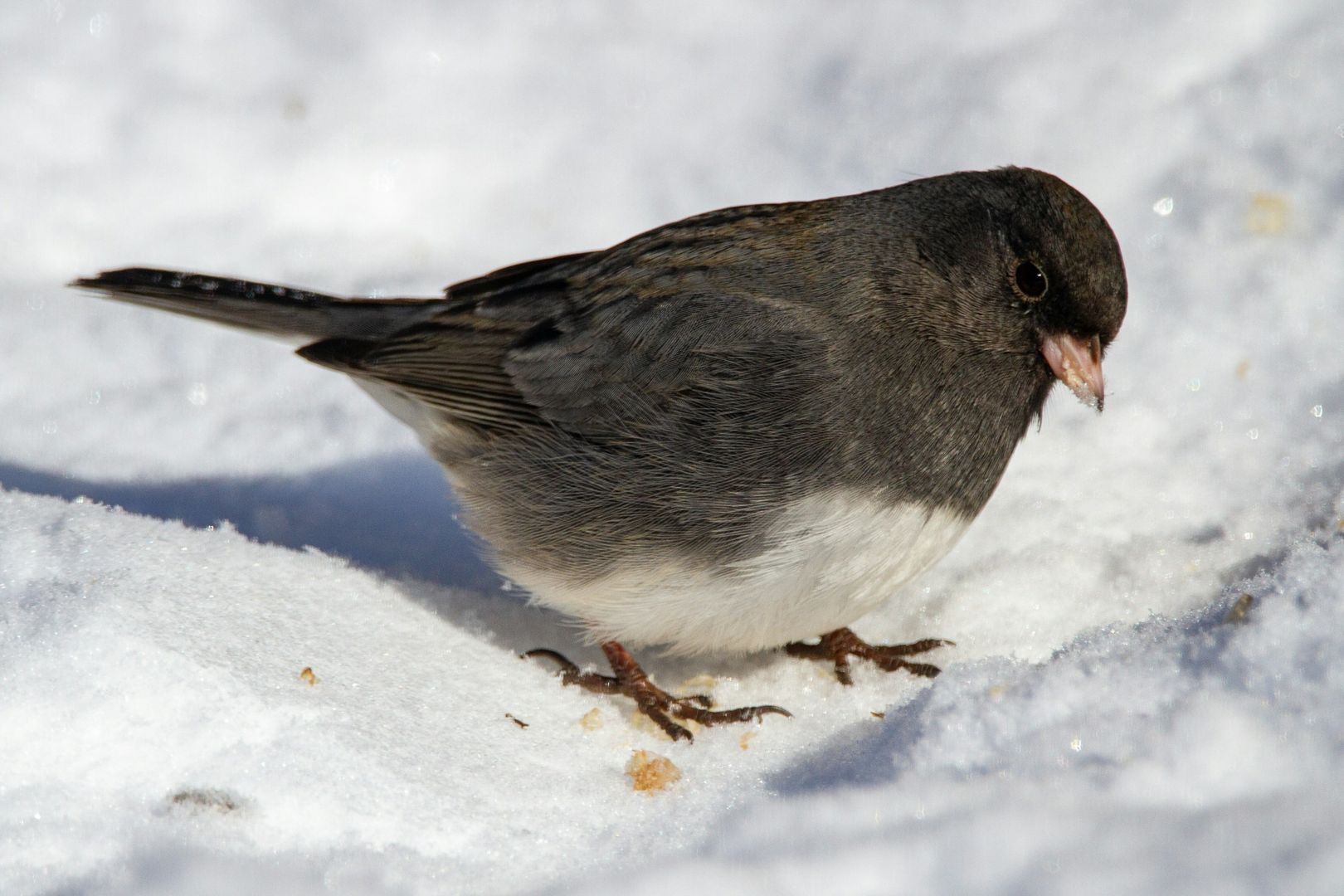
13. Dark-eyed Junco
- Family – Passerellidae
- Species – Junco hyemalis
- Primary Activity Time – Daytime
- Diurnal
- Winter Migrant / Visitor
The Dark-eyed Junco is the classic "snowbird," which is a funny name for a bird that comes to Alabama for the winter. Juncos breed in Canada and the northern mountains and arrive in fall to hop around under feeders in small flocks.
Alabama's juncos are the "slate-colored" type: dark gray above, white belly, and a pale pink bill. Males are a crisp, darker slate, while females are softer gray with a brownish wash. Both flash white outer tail feathers when they fly.
The Dark-eyed Junco call is a sharp tack or smack, and flocks give a twittering chatter as they flush.
In Alabama winters, juncos are most numerous in the northern half of the state and get scarcer toward the coast, so if you're in Mobile and never see one, it isn't your feeder.
Feeder favorites: millet, cracked corn, sunflower chips scattered on the ground
14. White-throated Sparrow
- Family – Passerellidae
- Species – Zonotrichia albicollis
- Primary Activity Time – Daytime
- Diurnal
- Winter Migrant / Visitor
The White-throated Sparrow is one of the most common winter sparrows in Alabama. It breeds in northern forests, shows up in October, and spends winter scratching in leaf litter under shrubs with a two-footed hop-and-kick.
Look for a bright white throat, a yellow spot between the eye and bill, and a striped head. Adults come in two forms, one with crisp white head stripes and one with tan stripes, and both forms include males and females, so the stripes don't tell you the sex.
The White-throated Sparrow song is a thin whistle, often written Oh-sweet-Canada-Canada-Canada, which is a little rude to sing in Alabama. The call is a sharp pink.
In Alabama winters, it's found statewide in thickets, brushy edges, and yards with dense cover.
Feeder favorites: millet, sunflower chips, cracked corn on the ground
15. Eastern Bluebird
- Family – Turdidae
- Species – Sialia sialis
- Primary Activity Time – Daytime
- Diurnal
- Resident Alabama Bird
The Eastern Bluebird stays in Alabama all year, but in winter it gathers in small family flocks and switches from insects to berries like dogwood, holly, and sumac. On cold nights, several bluebirds sometimes pack into a single nest box to share warmth.
Males are deep sky-blue above with a rusty-orange throat and breast. Females are grayer with blue in the wings and tail and a paler orange breast.
The Eastern Bluebird call is a soft, musical tu-a-wee, and the song is a gentle, warbling cheer-cheerful-charmer.
In Alabama winters, bluebirds are common statewide in open country, pastures, golf courses, and yards with scattered trees.
Feeder favorites: mealworms, suet nuggets, chopped berries
16. Yellow-rumped Warbler
- Family – Parulidae
- Species – Setophaga coronata
- Primary Activity Time – Daytime
- Diurnal
- Winter Migrant / Visitor
The Yellow-rumped Warbler is the warbler you'll actually see in an Alabama winter, and plenty of them. It's one of the few warblers that can digest the waxy berries of wax myrtle and bayberry, which lets it winter farther north than most of its relatives.
In winter it's a fairly plain brown-gray bird with faint streaks, a bit of yellow on the sides, and a bright yellow rump patch that birders lovingly call the "butter butt." Males are a little crisper and brighter, and females are browner, but the difference is subtle until spring.
The Yellow-rumped Warbler call is a sharp, flat check that you'll hear all day once you know it.
In Alabama winters, it's common statewide and especially abundant along the coast and in the southern Coastal Plain, in woodland edges, thickets, and wax myrtle stands.
Feeder favorites: suet, peanut butter mixes, mealworms
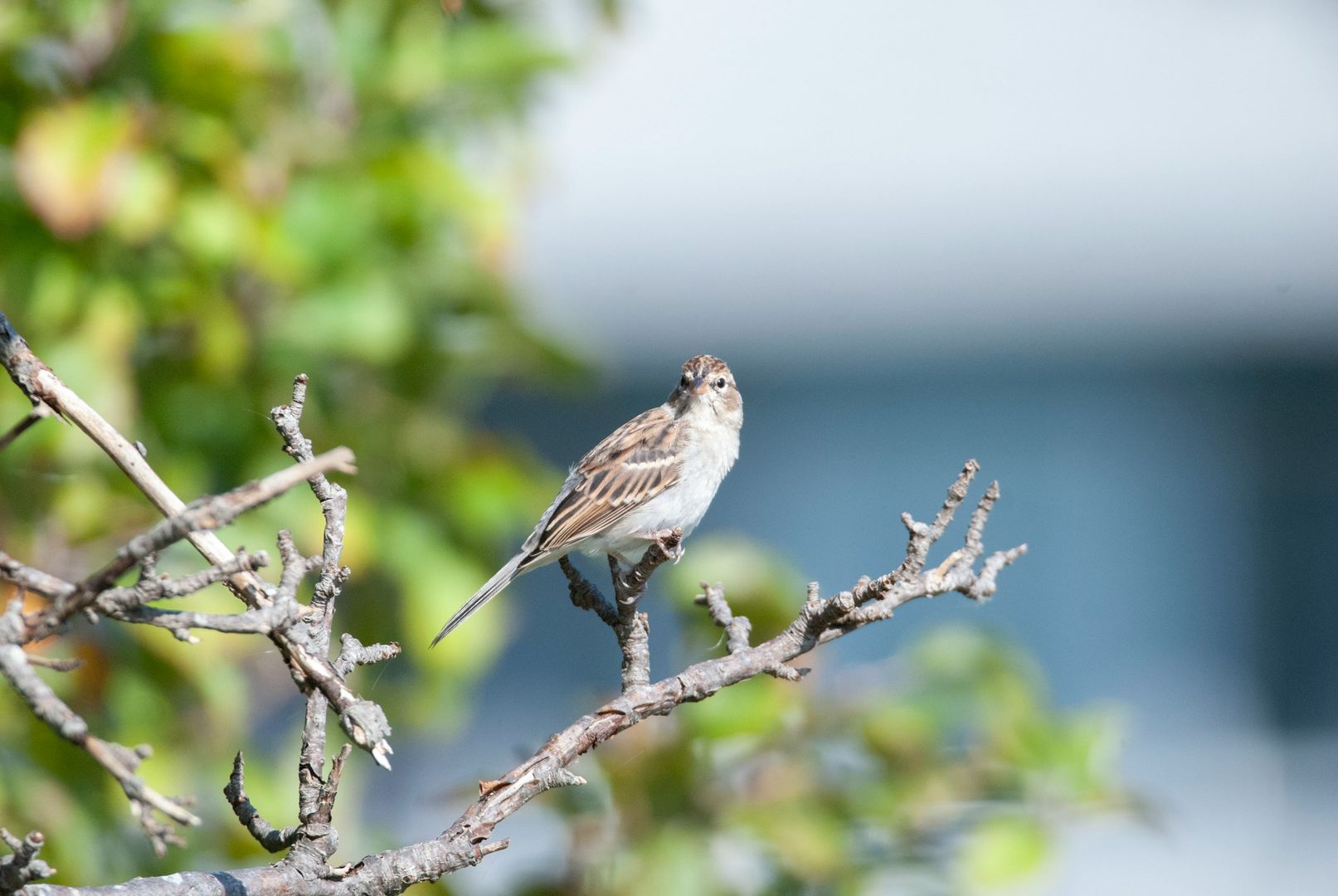
17. Chipping Sparrow
- Family – Passerellidae
- Species – Spizella passerina
- Primary Activity Time – Daytime
- Diurnal
- Resident Alabama Bird (more numerous in winter)
The Chipping Sparrow nests in Alabama, but winter flocks get a lot bigger as northern birds come south. It feeds on the ground in loose groups on lawns, pastures, and the edges of parking lots.
In winter it loses the bright rusty cap of summer and turns plainer, with a brownish crown, a pale eyebrow, a dark line through the eye that reaches the bill, and a plain gray-buff breast. Males and females look alike.
The Chipping Sparrow call is a thin tsip, and the song, mostly saved for spring, is a dry, mechanical trill.
In Alabama winters, Chipping Sparrows are found statewide in open, grassy areas with scattered trees, including yards and farms.
Feeder favorites: millet, cracked corn, sunflower chips on the ground
18. Eastern Towhee
- Family – Passerellidae
- Species – Pipilo erythrophthalmus
- Primary Activity Time – Daytime
- Diurnal
- Resident Alabama Bird
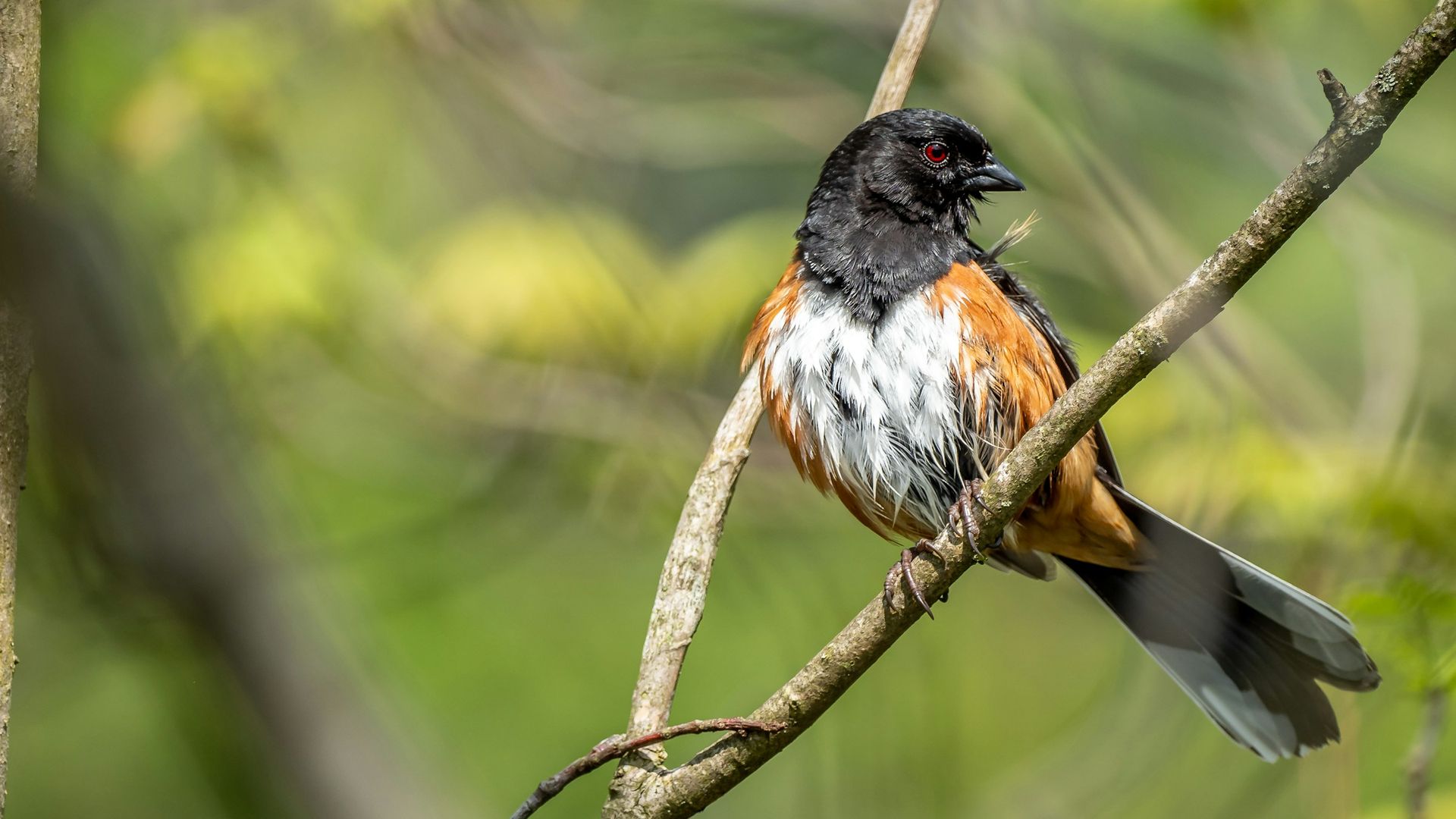
The Eastern Towhee is a big, flashy sparrow that you'll often hear before you see, because it rakes through dead leaves with a noisy double-footed kick. Under a shrub, it can sound like something much bigger.
Males have a black hood, back, and tail, rusty sides, and a white belly. Females have the same pattern, but rich brown replaces the black.
The Eastern Towhee song is the famous drink-your-tea, and the call is a rising chewink or tow-hee, which is where the bird gets its name.
In Alabama winters, towhees are common statewide in thickets, brushy woodland edges, and overgrown fields.
Feeder favorites: millet, cracked corn, sunflower chips scattered on the ground
19. Brown Thrasher
- Family – Mimidae
- Species – Toxostoma rufum
- Primary Activity Time – Daytime
- Diurnal
- Resident Alabama Bird
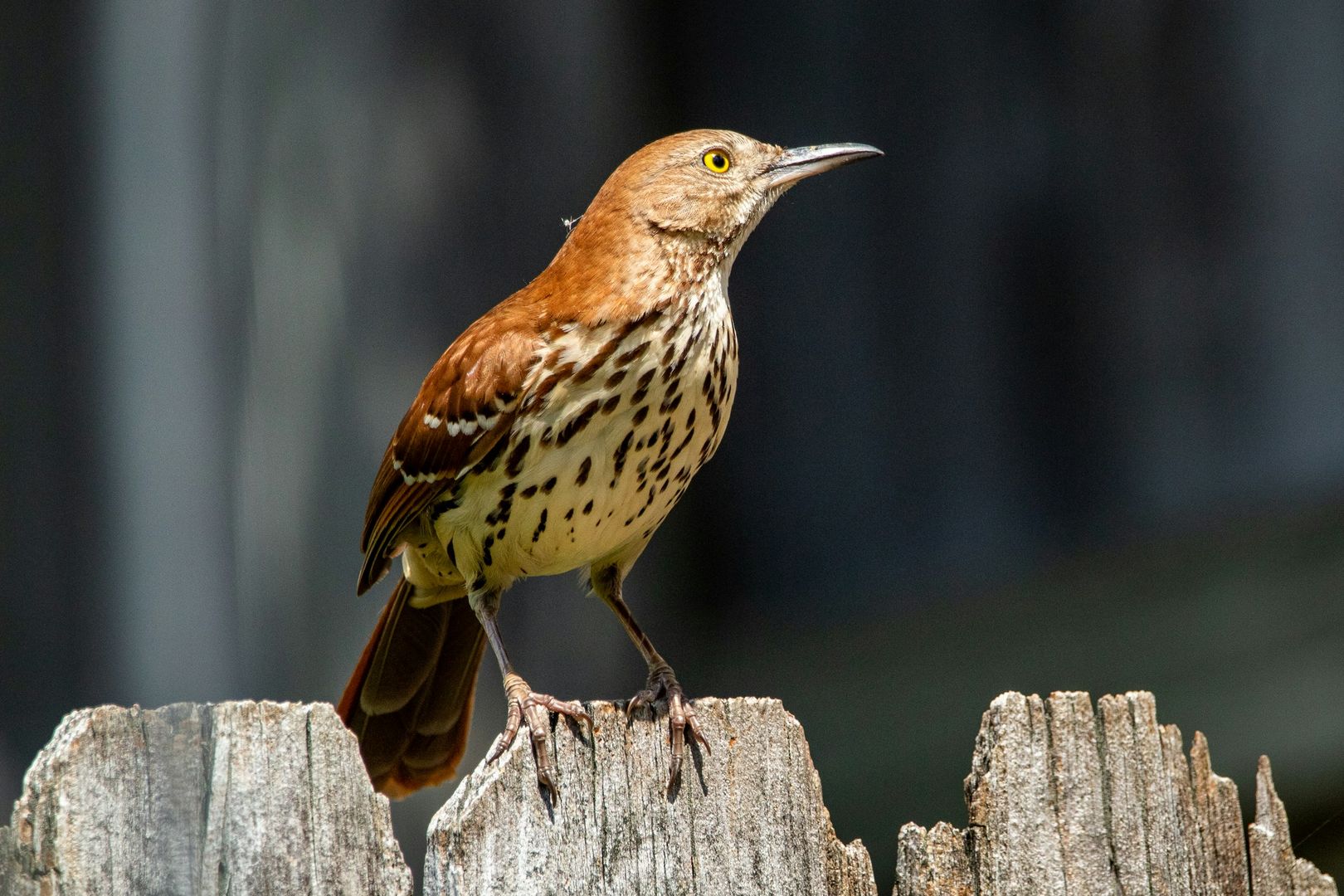
The Brown Thrasher is a long-tailed, foxy-red bird that sweeps its bill through leaf litter like a tiny leaf blower. It lives in Alabama year-round, but in winter it keeps a low profile in dense cover.
It's rich rufous-brown above with two white wing bars, a pale breast with bold dark streaks, a long curved bill, and striking yellow eyes. Males and females look alike.
The Brown Thrasher song is a long string of phrases, usually each one sung twice, and it has one of the largest song repertoires of any North American bird. In winter, you'll mostly hear its loud smack call.
In Alabama winters, thrashers are found statewide in thickets, hedgerows, and yards with thick shrubs.
Feeder favorites: suet, cracked corn, millet on the ground
20. Pine Warbler
- Family – Parulidae
- Species – Setophaga pinus
- Primary Activity Time – Daytime
- Diurnal
- Resident Alabama Bird
The Pine Warbler is one of the only warblers that eats a lot of seeds, which is why it's also one of the only warblers that visits feeders. Alabama's pine forests let it stay year-round, and winter numbers grow as northern birds join the locals.
Males are bright yellow on the throat and breast, with olive backs, white wing bars, and faint streaks on the sides. Females are duller and grayer, and young birds can be so drab they're easy to mistake for something else entirely (if it's confusing you, it's probably a Pine Warbler).
The Pine Warbler song is a musical trill that's softer and sweeter than a Chipping Sparrow's, and it starts singing in late winter.
In Alabama winters, it's found statewide wherever there are pines, from backyards to the big piney woods of the Coastal Plain.
Feeder favorites: suet, sunflower chips, peanut butter mixes
21. Brown-headed Nuthatch
- Family – Sittidae
- Species – Sitta pusilla
- Primary Activity Time – Daytime
- Diurnal
- Resident Alabama Bird
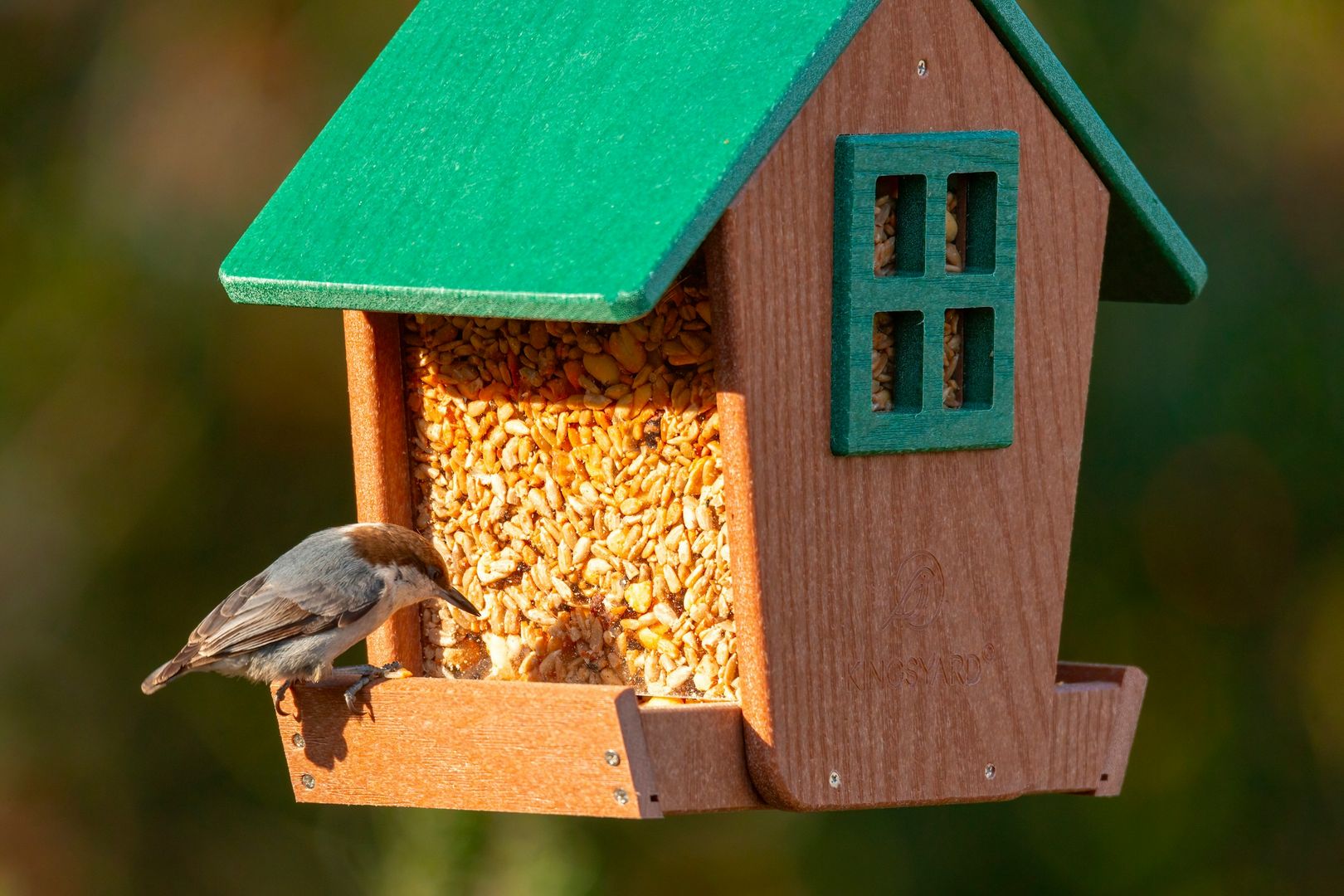
The Brown-headed Nuthatch is a small southern pine specialist and one of the few birds known to use tools. It holds a flake of bark in its bill and uses it to pry up other bark scales to get at insects underneath, which is more DIY than I manage most weekends.
It's tiny and short-tailed, with a brown cap, a white throat and cheek, and a blue-gray back. Males and females look alike.
The Brown-headed Nuthatch call sounds like a squeaky dog toy, given in a chattering series as a family group works through the treetops.
In Alabama winters, it's found in open pine woods across much of the state, most reliably in the southern half, including longleaf forests like Conecuh National Forest. It'll visit feeders in yards with tall pines.
Feeder favorites: sunflower chips, suet, shelled peanuts
22. Northern Flicker
- Family – Picidae
- Species – Colaptes auratus
- Primary Activity Time – Daytime
- Diurnal
- Alabama State Bird (resident, more numerous in winter)
The Northern Flicker is the Yellowhammer, Alabama's state bird, and it's a woodpecker that would rather be on the ground. Ants are its main food, which it digs out of lawns and fields with its long bill, and it switches to berries and seeds when it's cold.
Flickers are brown with black bars on the back, a black crescent on the chest, black spots below, and a white rump that flashes in flight. In Alabama, you'll see the "yellow-shafted" form with bright yellow under the wings and tail, a gray crown, and a red patch on the nape. Males have a black "mustache" stripe, while females don't.
The Northern Flicker call is a loud, piercing kyeer, and it also gives a long, rolling wick-wick-wick and a softer wicka-wicka when two birds meet.
In Alabama winters, flickers are found statewide in open woods, parks, golf courses, and big lawns with scattered trees.
Feeder favorites: suet, peanuts, black oil sunflower
23. Yellow-bellied Sapsucker
- Family – Picidae
- Species – Sphyrapicus varius
- Primary Activity Time – Daytime
- Diurnal
- Winter Migrant / Visitor
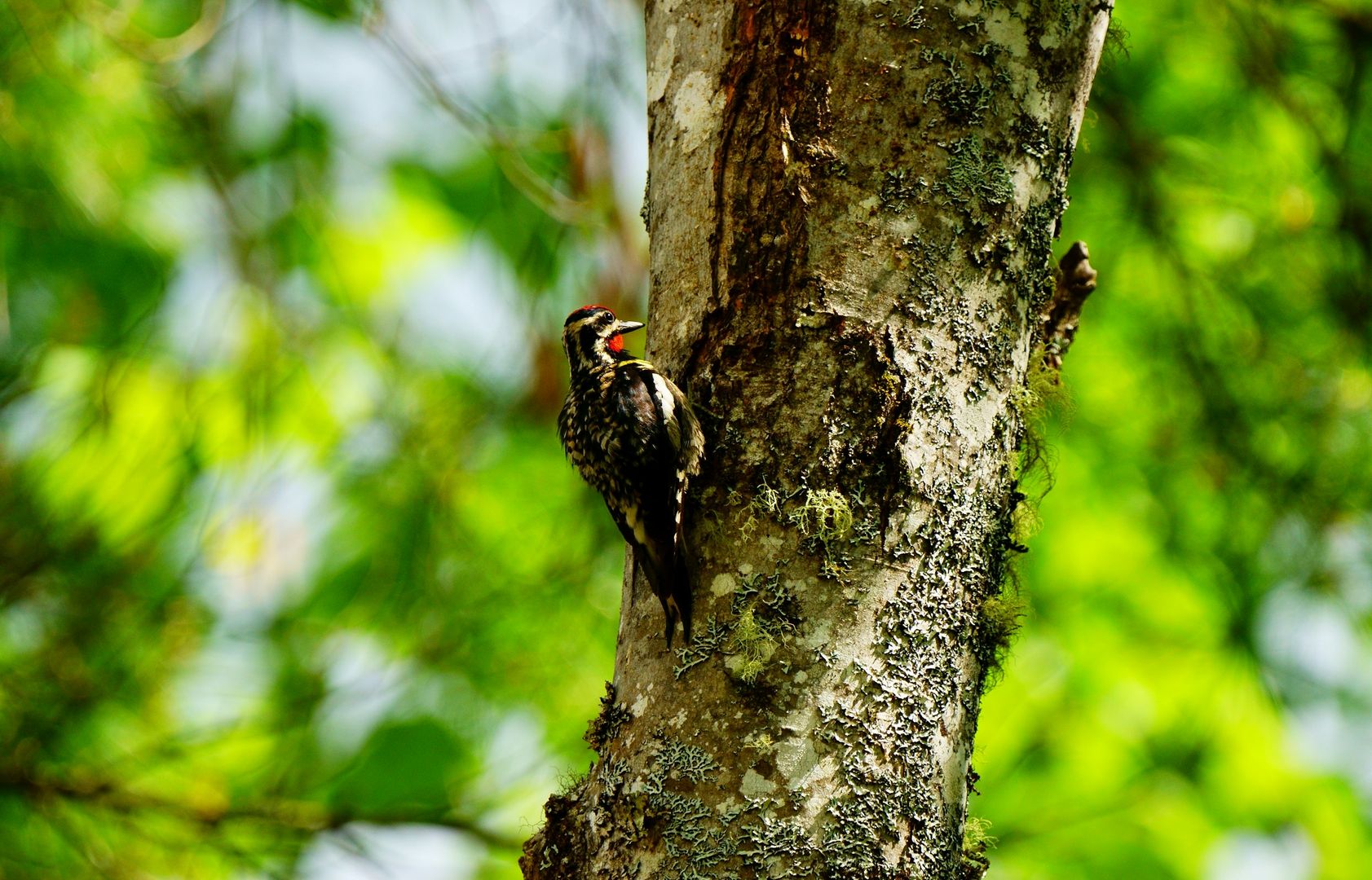
The Yellow-bellied Sapsucker is a woodpecker that drills neat horizontal rows of small holes in tree bark, then comes back to drink the sap and eat the insects it attracts. Those sap wells feed a whole crowd of other birds, including wintering hummingbirds.
Both sexes have a red forehead, a bold black-and-white face, a black chest patch, and a long white stripe on the folded wing. Males have a red throat, while females have a white throat. Many young birds still look brownish and smudgy well into winter.
The Yellow-bellied Sapsucker call is a nasal, cat-like mewing neeah, and its drumming starts fast and then slows into a few irregular taps, like someone tapping out Morse code.
In Alabama winters, it's found statewide in woods, orchards, and yards with mature trees. Look for those rows of holes on pecans, maples, and pines.
Feeder favorites: suet
24. Ruby-crowned Kinglet
- Family – Regulidae
- Species – Corthylio calendula
- Primary Activity Time – Daytime
- Diurnal
- Winter Migrant / Visitor
The Ruby-crowned Kinglet is a tiny, hyperactive insect-eater that breeds in northern conifer forests and spends winter flitting through Alabama's shrubs and trees. It nervously flicks its wings almost constantly, which is the easiest way to spot it.
It's olive-green with a white eye-ring broken at the top and bottom, a white wing bar, and a thin bill. Males have a red crown patch that's usually hidden and only pops up when they're excited. Females don't have the red.
The Ruby-crowned Kinglet call is a dry, husky ji-dit. The surprisingly loud, bubbly song sometimes starts in late winter.
In Alabama winters, it's common statewide in woodland edges, thickets, and backyard shrubs, often with chickadees and Yellow-rumped Warblers.
Feeder favorites: suet, peanut butter mixes, mealworms
25. Hermit Thrush
- Family – Turdidae
- Species – Catharus guttatus
- Primary Activity Time – Daytime
- Diurnal
- Winter Migrant / Visitor
The Hermit Thrush is the only spotted brown thrush you're likely to see in an Alabama winter. It breeds in northern and mountain forests and comes south to eat berries and insects in the understory, living up to its name by staying quiet and out of the way.
It's brown above with a reddish tail, a pale eye-ring, and a pale breast with dark spots. Its habit of slowly raising its tail and then lowering it is a good giveaway. Males and females look alike.
The Hermit Thrush call is a soft chuck, and the gorgeous flute-like song is rarely heard here until it gets back north.
In Alabama winters, it's found statewide in shady woods, thickets, and wooded yards with fruiting shrubs. Winter woods at Wheeler are a good place to look, along with Winter Wrens and Brown Creepers.
Feeder favorites: mealworms, suet nuggets, chopped berries
26. Cedar Waxwing
- Family – Bombycillidae
- Species – Bombycilla cedrorum
- Primary Activity Time – Daytime
- Diurnal
- Winter Migrant / Visitor
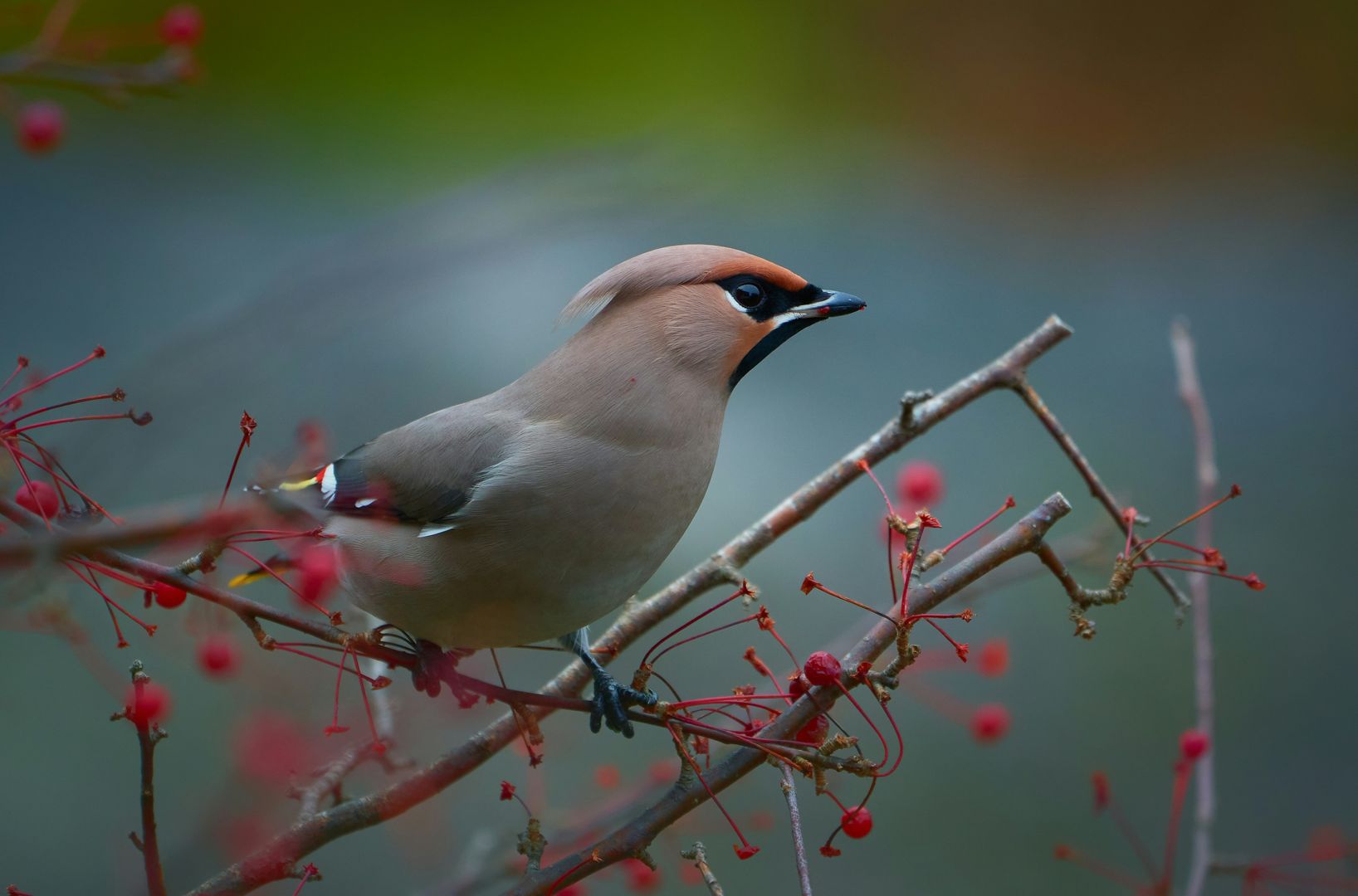
The Cedar Waxwing travels in tight, nomadic flocks that drop into a fruit tree, clean it out, and vanish. It eats mostly berries, and when the fruit has started to ferment, waxwings have been known to get a little tipsy (no judgment, it's been a long winter for all of us).
It's silky brown and gray with a crest, a black mask, a yellow tip on the tail, and waxy red tips on some wing feathers. Males and females look alike.
The Cedar Waxwing call is a thin, high sreee, so high that some people can't hear it at all.
In Alabama winters, waxwings are found statewide wherever there's fruit, including holly, cedar, and ornamental trees in parking lots and neighborhoods, and many stay well into spring.
Feeder favorites: chopped apples, softened raisins, and a bird bath
27. Purple Finch
- Family – Fringillidae
- Species – Haemorhous purpureus
- Primary Activity Time – Daytime
- Diurnal
- Irruptive Species (uncommon most winters)
The Purple Finch comes to Alabama in irregular numbers, plentiful some winters and almost absent in others, depending on seed crops in the north. To borrow a line from the state's most famous fictional son, Forrest Gump, winter finches are like a box of chocolates. You never know what you're going to get.
Despite the name, males are more raspberry than purple, with that color washed over the head, back, and breast. Females are brown and heavily streaked, with a bold white eyebrow and a dark cheek patch, which separates them from the plainer female House Finch.
The Purple Finch call is a sharp, dry tick in flight, and the song is a fast, rich warble.
In Alabama winters, they're most likely in the northern half of the state, in mixed woods and at feeders.
Feeder favorites: black oil sunflower, sunflower chips
28. Pine Siskin
- Family – Fringillidae
- Species – Spinus pinus
- Primary Activity Time – Daytime
- Diurnal
- Irruptive Species
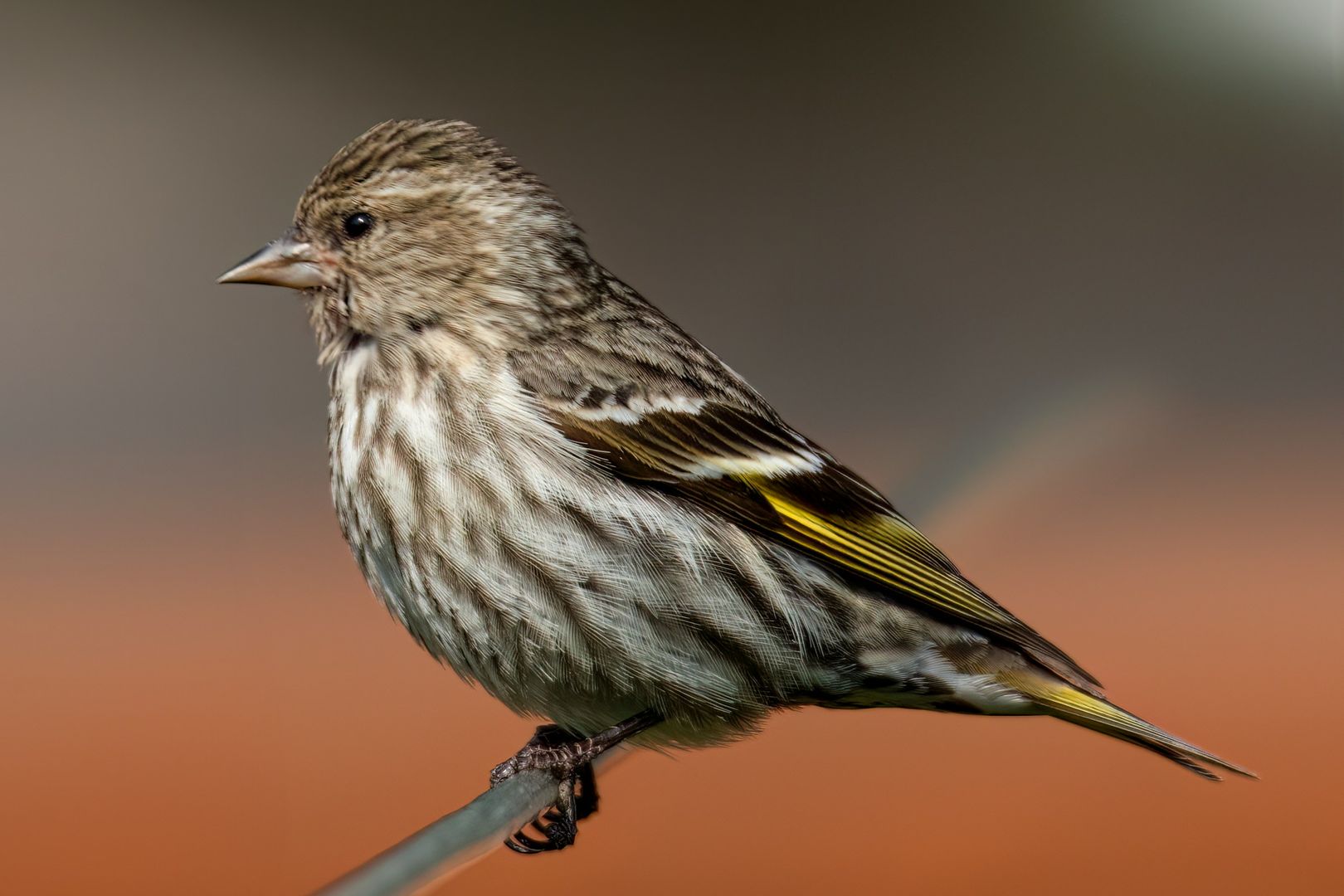
The Pine Siskin is a small, streaky finch that shows up in Alabama during irruption years when seed crops fail up north. When siskins do arrive, they come in bunches and can empty a nyjer feeder in record time.
It's brown with heavy streaking, a thin pointed bill, and yellow edges on the wings and tail that flash in flight. Males and females are similar, though some males show more yellow.
The Pine Siskin call is a rising, buzzy zreeee, like someone slowly zipping a jacket.
In Alabama winters, siskins can turn up statewide in irruption years, in pines, sweetgums, and at feeders. Clean feeders often, since siskins are prone to salmonella outbreaks when they crowd together.
Feeder favorites: nyjer, sunflower chips
29. Rufous Hummingbird
- Family – Trochilidae
- Species – Selasphorus rufus
- Primary Activity Time – Daytime
- Diurnal
- Winter Migrant / Visitor (uncommon, statewide)
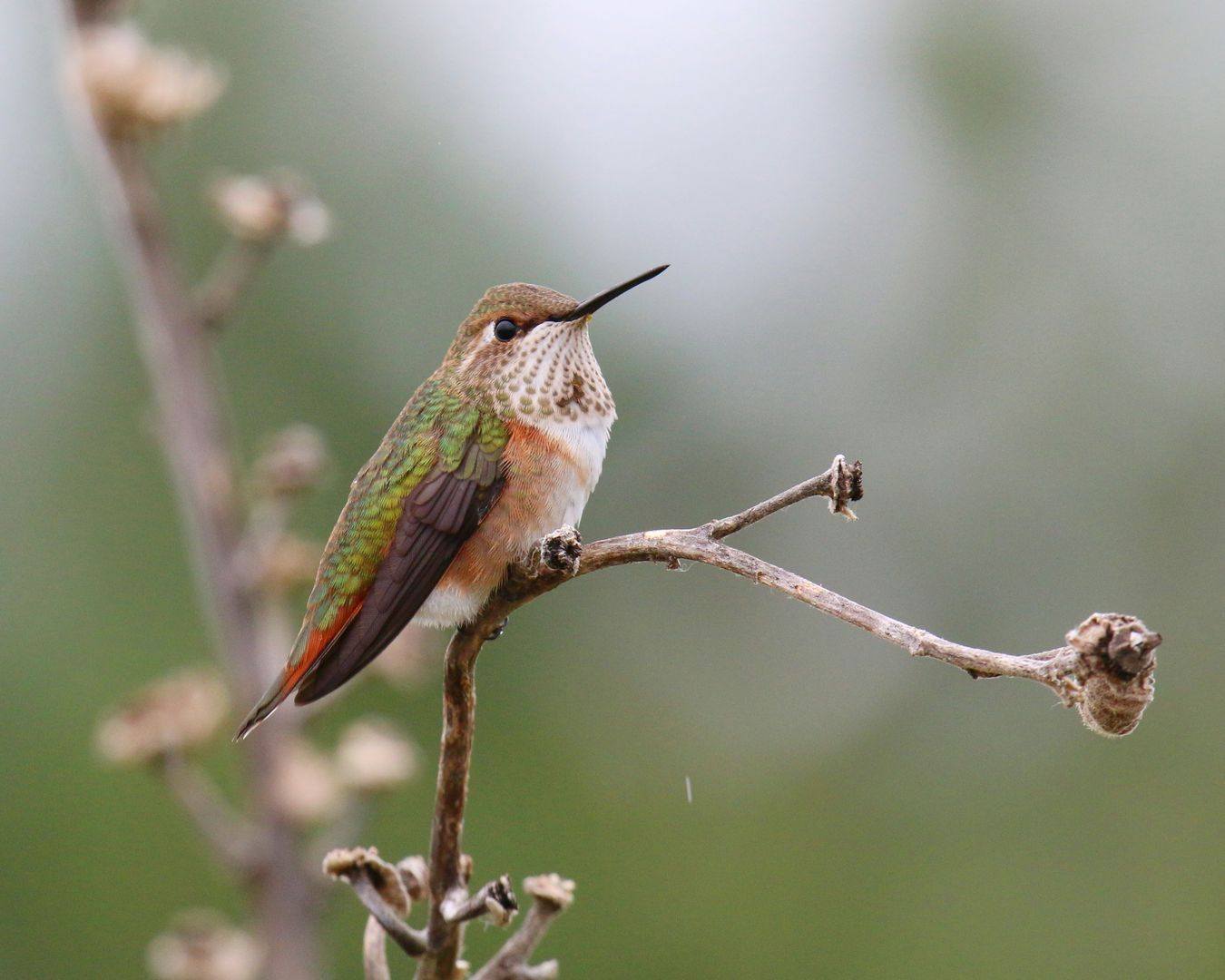
Yes, Alabama gets hummingbirds in winter, and the state is a big reason we know that. Bob and Martha Sargent's Hummer/Bird Study Group, based in Clay, Alabama, started looking for wintering hummingbirds in the Southeast in the 1980s, and according to the National Wildlife Federation's report on winter hummingbirds, almost half of the nearly 2,000 winter hummingbirds one Montgomery-based bander caught from Mobile Bay to Tampa were Rufous Hummingbirds.
Adult males are bright orange-rufous on the back and sides with a glowing orange-red throat. Females and young birds, which make up most winter visitors, are green above with rusty flanks, rufous at the base of the tail, and a spotted throat.
The Rufous Hummingbird call is a hard chup, and adult males make a buzzy trill with their wings.
In Alabama winters, Rufous Hummingbirds turn up at backyard feeders statewide, most often near the coast. They also drink from sapsucker wells and eat tiny insects. Keeping one feeder up from November through February gives you a real shot.
Feeder favorites: sugar water (1 part sugar to 4 parts water), changed every few days
30. Sandhill Crane
- Family – Gruidae
- Species – Antigone canadensis
- Primary Activity Time – Daytime
- Diurnal
- Winter Migrant / Visitor
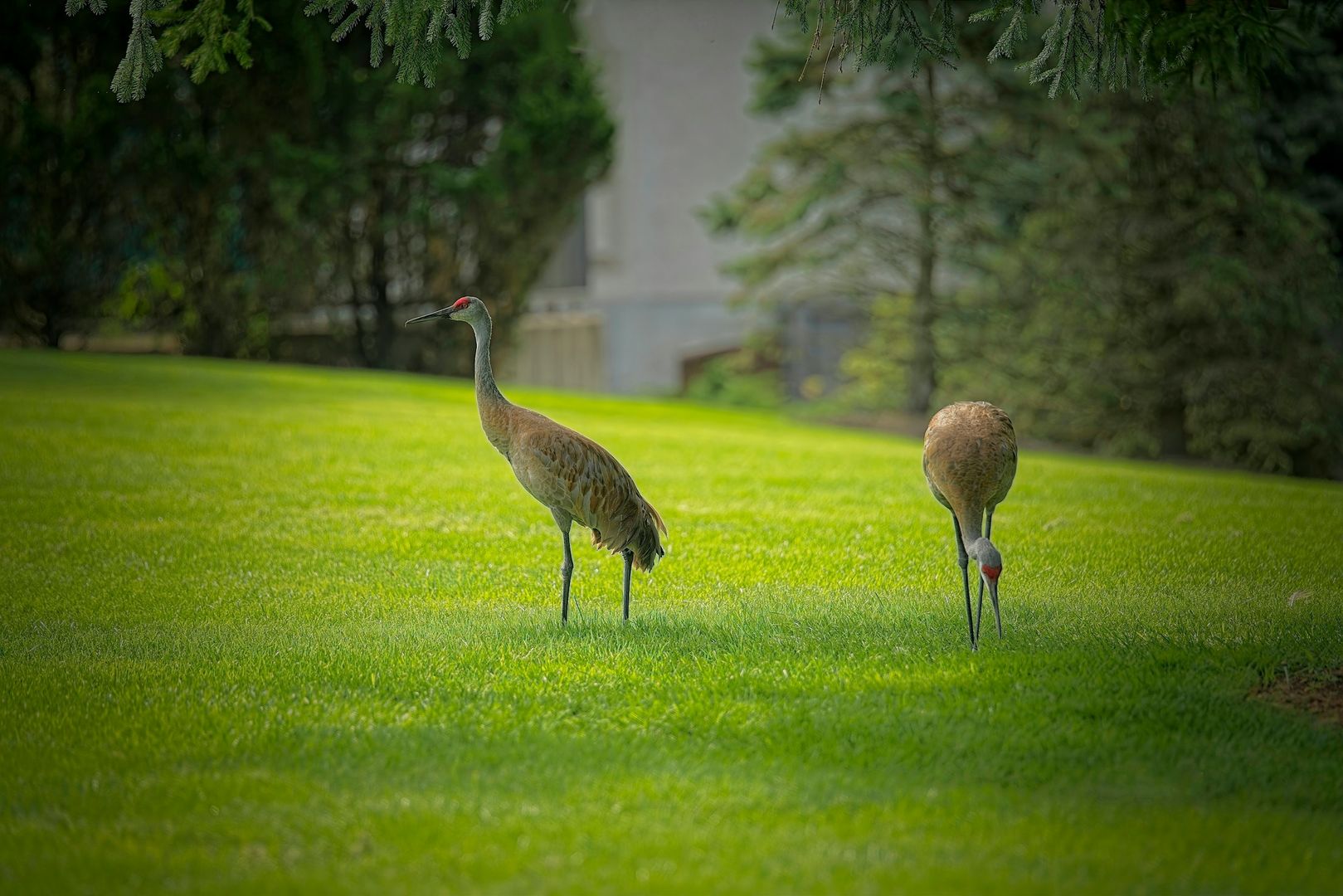
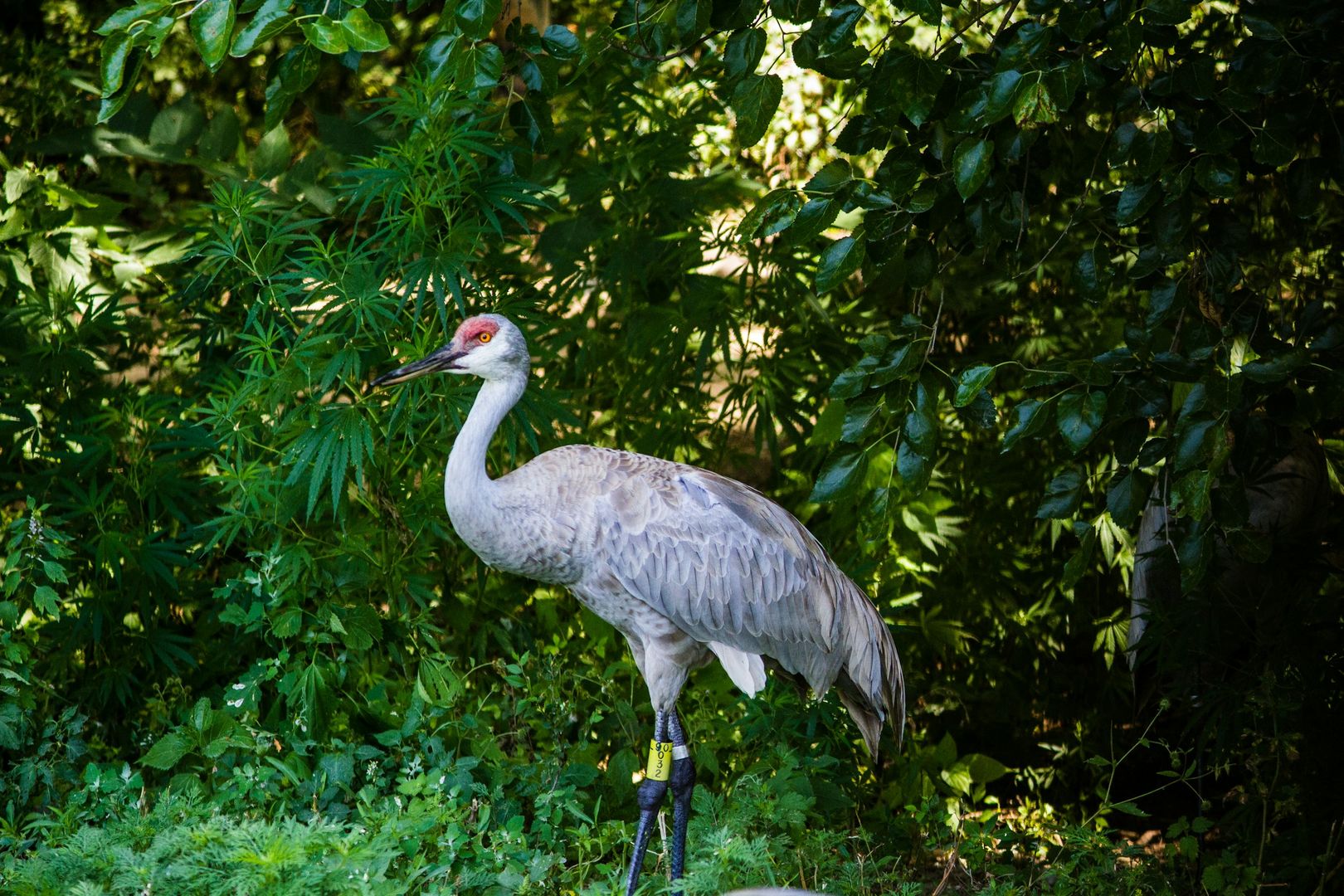
The Sandhill Crane was a rare sight in Alabama before the 1990s. Now about 20,000 spend the winter at Wheeler National Wildlife Refuge, according to Alabama Birding Trails, feeding in harvested corn fields and roosting in shallow water. If you want to see a crowd, this is it.
It's a tall gray bird, around four feet tall, with a red crown and a white cheek. Some birds look rusty because they preen iron-rich mud into their feathers. Males and females look alike, though males are a little larger.
The Sandhill Crane call is a loud, rolling, trumpeting rattle that carries for a long way, so you'll usually hear a flock long before you spot it.
In Alabama winters, the big show is at Wheeler near Decatur, where the visitor center has an indoor observation room with glass windows, plus outdoor platforms and boardwalks. Smaller numbers turn up in fields elsewhere in the Tennessee Valley.
31. Whooping Crane
- Family – Gruidae
- Species – Grus americana
- Primary Activity Time – Daytime
- Diurnal
- Winter Migrant / Visitor (rare, Wheeler NWR)
The Whooping Crane is one of the rarest birds in North America and the tallest, standing about five feet. Fewer than 1,000 exist worldwide, counting birds in captivity, and each winter a small number from the reintroduced eastern population joins the Sandhills at Wheeler. Finding one there is a genuine reason to whoop it up.
It's bright white with a red crown, a black "mustache," and black wingtips that show only in flight. Males and females look alike, with males slightly larger.
The Whooping Crane call is a loud, clear bugle, higher and more trumpet-like than a Sandhill's rattle.
In Alabama winters, look for them among the Sandhills at Wheeler National Wildlife Refuge, usually from the observation building. The refuge's Festival of the Cranes is held each January. Please give them plenty of room and stay on roads and trails. These birds need every advantage they can get.
32. American White Pelican
- Family – Pelecanidae
- Species – Pelecanus erythrorhynchos
- Primary Activity Time – Daytime
- Diurnal
- Winter Migrant / Visitor
The American White Pelican is a huge white waterbird with a wingspan of about nine feet. Unlike Brown Pelicans, it doesn't dive. Instead, groups swim together and herd fish into the shallows before scooping them up, the bird version of a group project where everyone actually helps.
It's all white with black flight feathers that show in flight, and a big orange-yellow bill and pouch. Males and females look alike, though males are larger. In late winter, breeding adults grow a flat "horn" on the top of the bill.
The American White Pelican is mostly silent away from its breeding colonies.
In Alabama winters, flocks have grown and gather on the Tennessee River, including Limestone Bay at Wheeler, the Elk River in Limestone County, and below Wheeler Dam and Wilson Dam. They also winter along Mobile Bay and the coast.
33. Bald Eagle
- Family – Accipitridae
- Species – Haliaeetus leucocephalus
- Primary Activity Time – Daytime
- Diurnal
- Resident Alabama Bird (plus winter visitors)
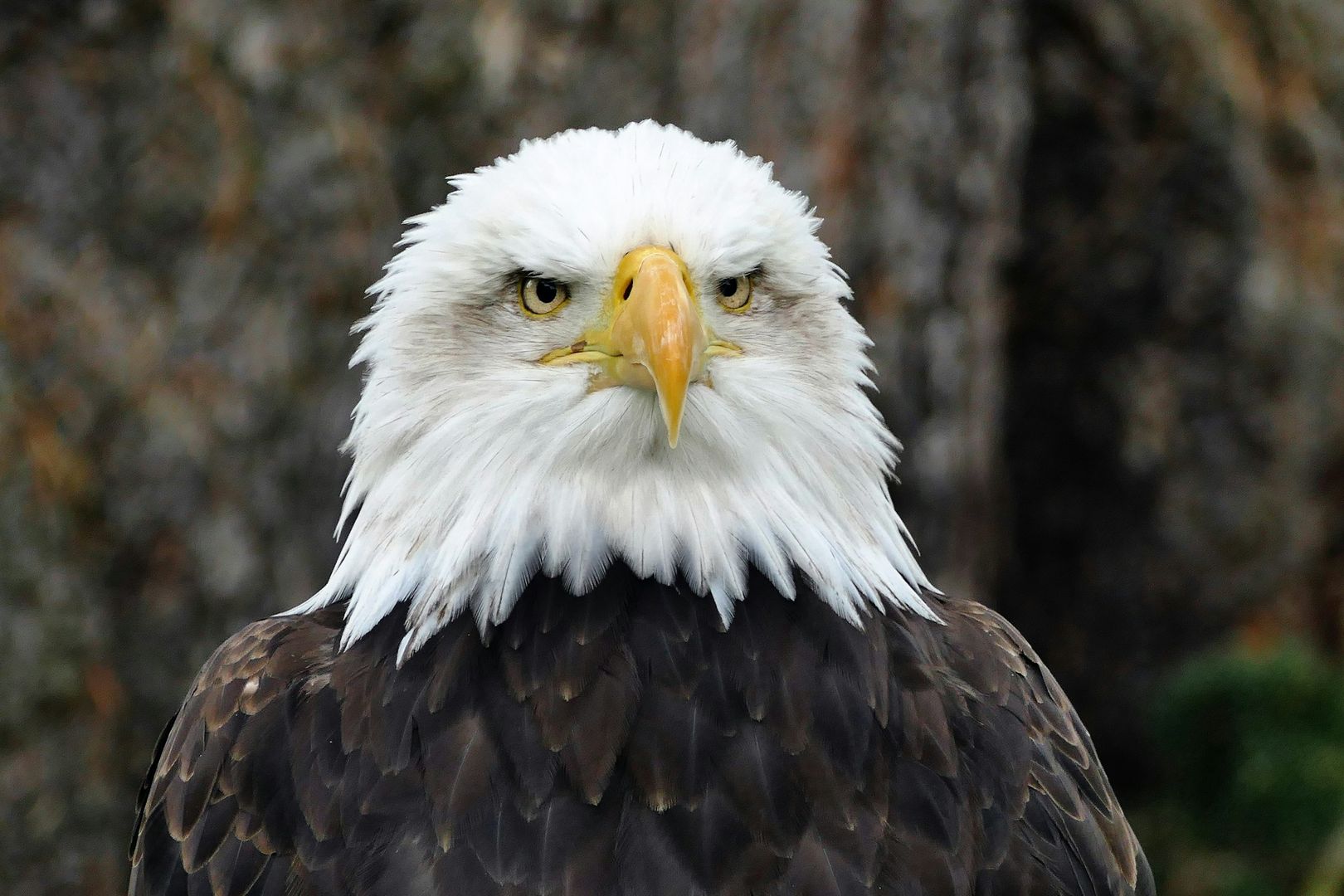
The Bald Eagle nests in Alabama, but winter brings more birds down from the north to fish the state's big reservoirs. Lake Guntersville State Park has run its Eagle Awareness Weekends since 1985, when the event started alongside Alabama's Bald Eagle Restoration Program.
Adults have a dark brown body, white head and tail, and a big yellow bill. Young eagles are mottled brown and white and take about five years to get the full adult look. Males and females look alike, but females are noticeably larger.
The Bald Eagle call is a surprisingly weak, high-pitched chittering. Movie eagles usually borrow a Red-tailed Hawk's scream instead.
In Alabama winters, the biggest concentrations are on Pickwick Lake in the northwest and Lake Guntersville in the northeast, with smaller numbers at Lake Eufaula on the Chattahoochee.
34. Ring-necked Duck
- Family – Anatidae
- Species – Aythya collaris
- Primary Activity Time – Daytime
- Diurnal
- Winter Migrant / Visitor
The Ring-necked Duck is one of the most common wintering ducks in Alabama, and it may be the worst-named bird on this list. The chestnut ring on the male's neck is so faint you'll basically never see it. The white ring on the bill, on the other hand, is obvious. (Whoever named it was clearly standing a lot closer than I ever get.)
Males have a black head, chest, and back, gray sides with a white spur in front of the wing, a peaked head, and a gray bill with a white ring near the tip. Females are brown with a gray face, a white eye-ring, and a fainter bill ring.
The Ring-necked Duck is mostly quiet in winter, though females give a low, growly purr.
In Alabama winters, it's found statewide on lakes, reservoirs, farm ponds, and beaver swamps, often in large flocks. It's a diving duck, so it'll disappear underwater and pop up somewhere else entirely.
Birds of Alabama in Winter: FAQ
What birds stay in Alabama in the winter?
Year-round residents like the Northern Cardinal, Carolina Chickadee, Tufted Titmouse, Carolina Wren, Blue Jay, Northern Flicker, and Brown-headed Nuthatch stay put. They're joined by winter visitors such as Dark-eyed Juncos, White-throated Sparrows, Yellow-rumped Warblers, Ruby-crowned Kinglets, Yellow-bellied Sapsuckers, ducks, pelicans, and cranes. If you're heading north, our guide to winter birds in Tennessee covers who shows up there, and east of the state line there's winter birds in Georgia.
What are the most common birds in Alabama in winter?
At feeders, the most common birds in Alabama are the Northern Cardinal, Mourning Dove, Tufted Titmouse, Carolina Wren, Red-bellied Woodpecker, American Goldfinch, Downy Woodpecker, Blue Jay, House Finch, and Carolina Chickadee. That's the top 10 in Project FeederWatch's Southeast rankings, and black oil sunflower plus a suet cake will cover nearly all of them. You don't need a heated bird bath south of the Tennessee Valley, either. A regular bath refilled on cold mornings is plenty, and these easy ways to keep a bird bath from freezing handle the occasional hard freeze.
How many birds of Alabama are winter visitors?
Alabama has about 433 species on its official list, and around 175 of them are classified as winter residents. Almost all of the state's ducks and geese are winter visitors, along with most of its gulls.
Where can I see Whooping Cranes in Alabama?
Wheeler National Wildlife Refuge near Decatur is the place. A small number of Whooping Cranes winter there with thousands of Sandhill Cranes, and you can watch from the visitor center's indoor observation room. The refuge holds its Festival of the Cranes every January.
Do hummingbirds stay in Alabama in winter?
Some do. Most winter hummingbirds in Alabama are Rufous Hummingbirds from the West, and banders have documented several other species too. Leave a feeder up through winter and check it often.
Where can I see Bald Eagles in Alabama in winter?
Pickwick Lake and Lake Guntersville have the largest winter concentrations, and Lake Eufaula has a smaller group. Lake Guntersville State Park's Eagle Awareness Weekends are an easy way to see them with a guide.
What Alabama Birds Have You Seen This Winter?
An Alabama winter is the best time of year to go birding here, since the sparrows, ducks, and cranes are in town and you don't need three layers to enjoy them. Share what's visiting your yard, or what you spotted from the Wheeler observation room, on the Sparkbird App, and find other birders nearby to swap sightings with.
And if a Whooping Crane doesn't show up on your first trip to Wheeler, don't take it personally. There are a few thousand Sandhills standing in front of it, and they all want to be in the picture.
No comments yet.