
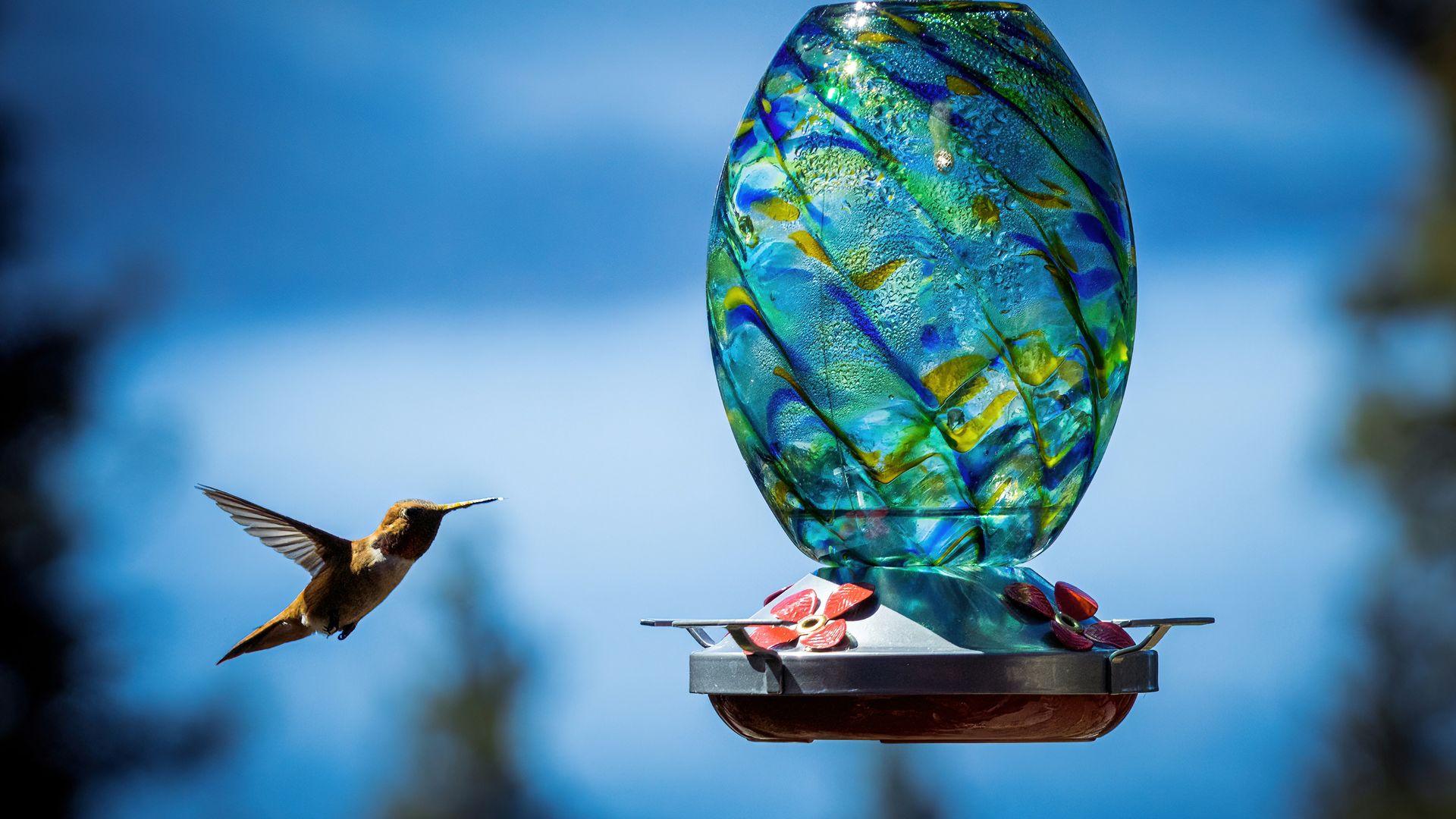
A glass hummingbird feeder is, in the best possible way, something you will emotionally invest in.
You'll hang it in a spot where you can see it from the kitchen window. You'll admire the way morning light comes through the glass.
You will also, at some point, watch it fall from its hook and shatter.
... and immediately know which feeder you're going to replace it with. (The same one, obviously.)
But which is the best?
The best glass hummingbird feeder for most people is the hand-blown glass feeder with built-in ant moat. It's beautiful, functional, and has two practical features you'll be glad you have.
Why Glass Over Plastic?
The short version is that glass wins on almost every measure except the one that matters most when it falls: survivability.
Glass is better for the nectar. Glass is non-porous, so mold and bacteria have nowhere to hide between cleanings. Plastic develops microscopic surface scratches over time that harbor bacteria even after washing. Glass doesn't.
Glass doesn't degrade in sunlight. UV radiation breaks down plastic over 1–3 seasons, turning it cloudy, brittle, and harder to clean. Glass just sits there, looking good, indifferent to the sun.
Glass doesn't leach chemicals. In hot summer temperatures, low-quality plastic can leach BPA and other compounds into nectar. Glass is chemically inert. It's why we use it for food storage and medicine bottles, and it applies to hummingbird nectar too.
Glass is easier to clean thoroughly. Smooth surface, visible when clean, often dishwasher-safe on the glass portion.
The honest case for plastic: It doesn't shatter. It's lighter. It's cheaper. If you're placing a feeder somewhere it might get knocked around by wildlife (or you just learned that you refill feeders somewhat erratically) plastic is a genuinely fine choice.
Don't let anyone make you feel bad about it.
What to Look for in a Glass Hummingbird Feeder
Before the product list, here's what separates a feeder that hummingbirds actually use from a pretty garden ornament that sits empty:
Red is the dominant color. Hummingbirds see in wavelengths that extend into the ultraviolet, and red registers as a high-priority signal for nectar. It's why virtually every effective feeder has red ports, a red base, or a red body. That said — hummingbirds visit plenty of orange, pink, and purple flowers too. A stunning blue or green glass feeder can work fine once local birds associate the location with nectar. The key is getting them to notice it initially.
No yellow parts. Yellow attracts bees. This is not a suggestion. If your feeder has yellow flowers or yellow accents, paint them with a durable non-toxic paint or nail polish. Every feeder on this list was selected partly because it doesn't have yellow components.
Ant moat. Ants find nectar feeders reliably and will contaminate the nectar. An ant moat — a small water-filled reservoir between the hanging hook and the feeder — stops them completely. Fill the moat with water and refresh it weekly. Feeders with built-in moats are significantly more convenient than adding an aftermarket one.
Clean-out access. Every feeder needs to be disassembled and cleaned regularly. Wide-mouth designs, removable bases, and parts that separate cleanly make this a five-minute job rather than a twenty-minute one.
Enough ports for the traffic. Male hummingbirds are notoriously territorial and will guard a feeder aggressively. Multiple ports, or multiple feeders spaced at least 10 feet apart, reduces the drama.
The 10 Best Glass Hummingbird Feeders
Best Red Vintage Glass Hummingbird Feeder
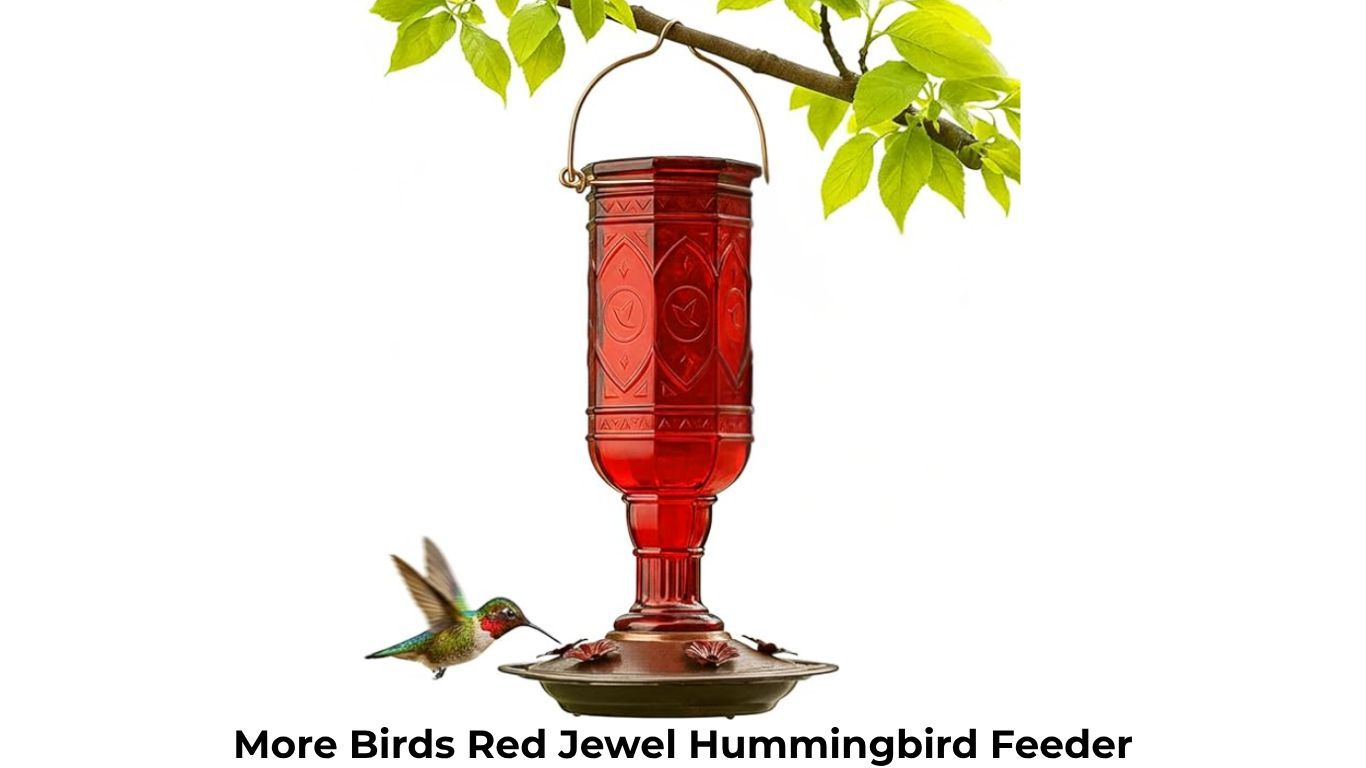
The vintage bottle silhouette does what it promises: it looks like something you'd find at an estate sale, and hummingbirds do not care at all.
They're there for the nectar, not the provenance.
The deep red color is ideal for visibility, the design is simple to fill and clean, and the price makes it an easy choice for a first glass feeder or a backup.
No ant moat, which is a mild strike, but the clean design and reliable performance keep it at the top of the list.
Best Hand Blown Glass Hummingbird Feeder
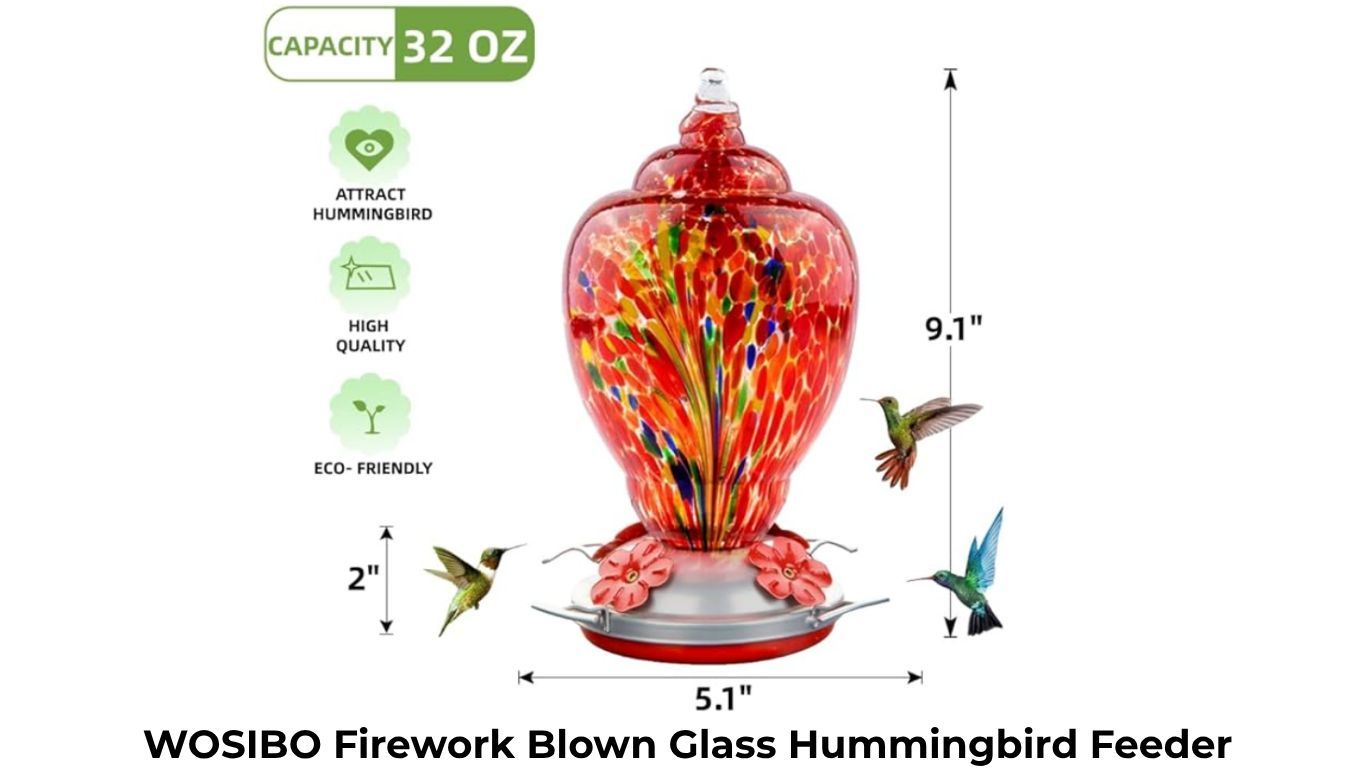
Perches, an ant moat, and hand-blown glass that looks genuinely different from every other feeder in your yard — this one hits all three marks. The ant moat is built in, which is the practical detail I appreciate most.
The hand-blown process means each piece is slightly unique.
If you're the kind of person who notices that the iridescent patch on a ruby-throated hummingbird looks different in afternoon light than it does at noon, this is the feeder that matches that energy.
Best Mason Jar Hummingbird Feeder
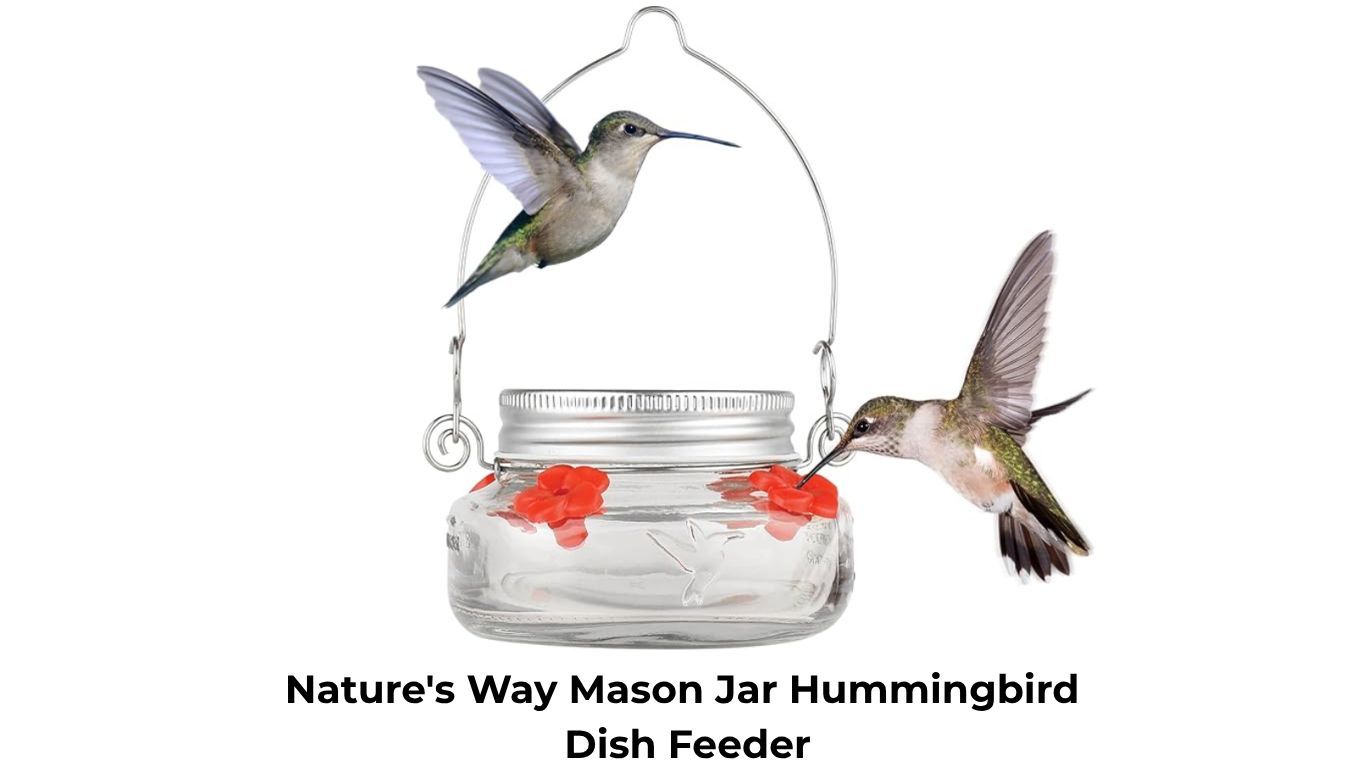
The mason jar aesthetic has colonized roughly 40% of all farmhouse décor since 2015, and hummingbird feeders were apparently not immune.
This Nature's Way version is a legitimate performer: minimalist, easy to fill, inexpensive enough that you won't lose sleep if something happens to it.
You can DIY a mason jar hummingbird feeder, but the effort-to-savings ratio doesn't quite add up. This costs about the same and takes thirty seconds to set up.
Best Overall Vintage Glass Hummingbird Feeder
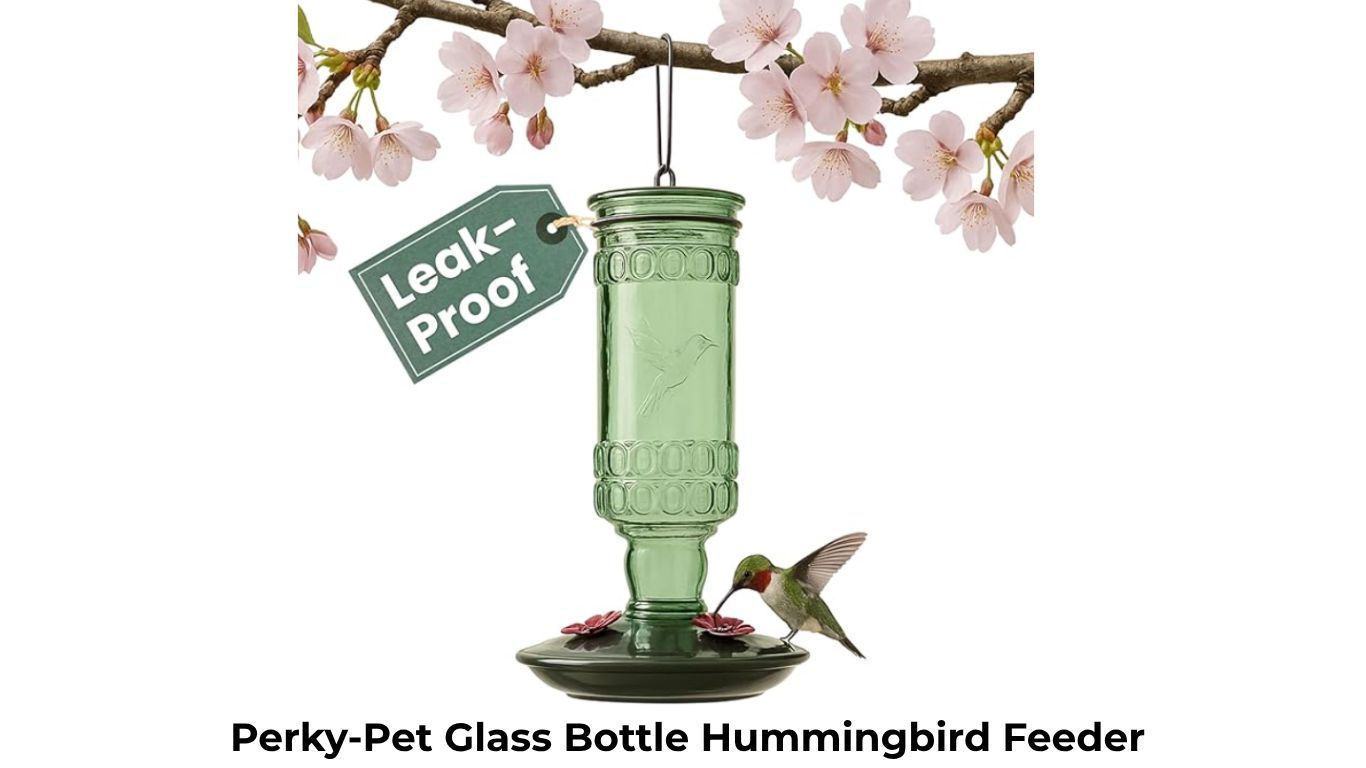
The antique green glass is the move if you want something that looks genuinely old-fashioned rather than intentionally rustic-adjacent.
There's even a hummingbird embossed in the glass, which is either charming or redundant depending on how you feel about themed kitchenware.
(I think it's charming.)
Simple, reliable, and good-looking in garden settings where you don't want the feeder to shout its presence.
- Related: 5 Steps to Clean Hummingbird Feeders
Regardless of which feeder you choose, cleaning frequency matters more than material.
Most Unique Glass Hummingbird Feeder
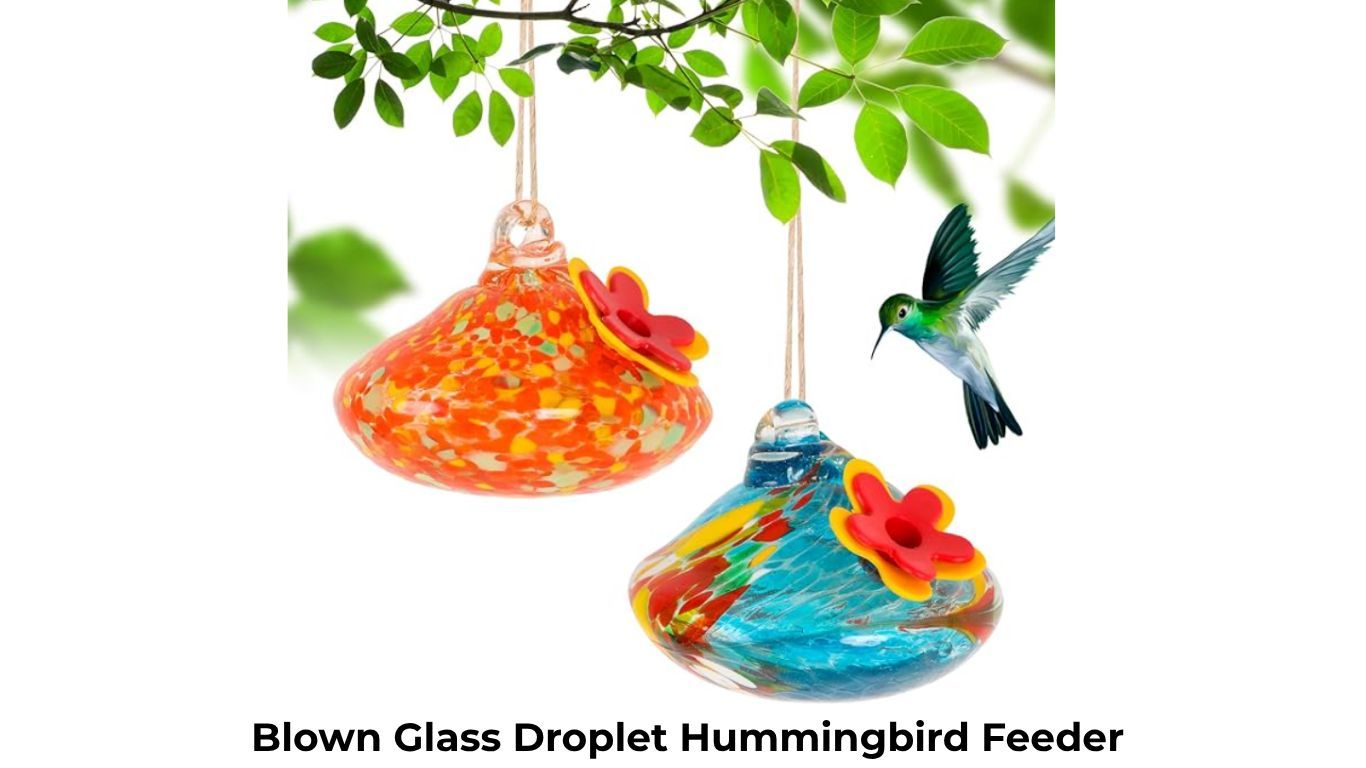
Genuinely sculptural, unlike anything else on this list.
Every piece comes out slightly different from the last, which means yours is actually unique and not just marketed as such.
If you appreciate the visual relationship between hand-blown glass and the iridescent bird it's designed to attract, this is the feeder for you. If you're primarily focused on maximizing nectar capacity, look at the mason jar option.
Best Novelty Glass Hummingbird Feeder — Cactus
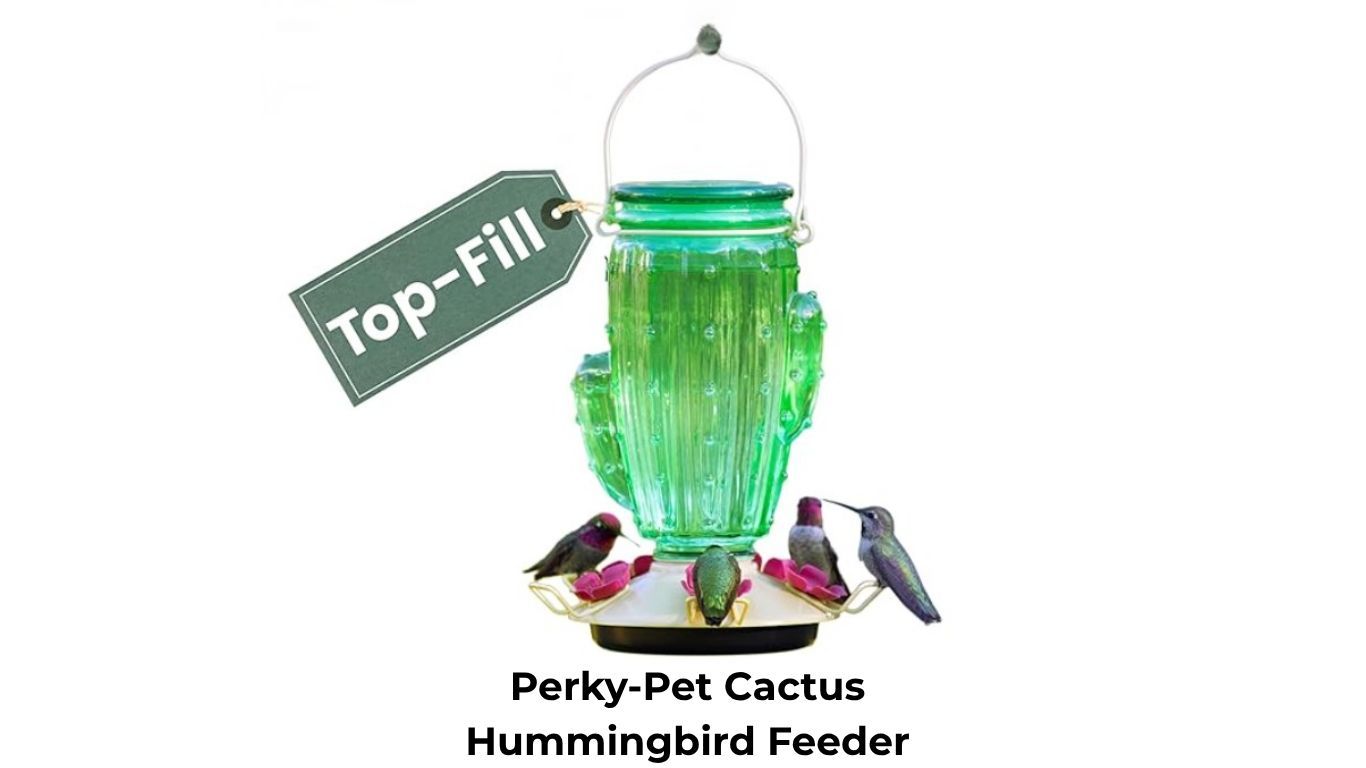
A cactus-shaped hummingbird feeder is, objectively, extremely good.
Multiple ports, perches for your visitors, and an easy top-fill design that makes refilling significantly less messy than bottom-fill alternatives.
It's fun, it's functional, and it doesn't take itself too seriously which, honestly, is the right disposition for a piece of garden furniture shaped like a succulent.
Best Quaint Glass Hummingbird Feeder
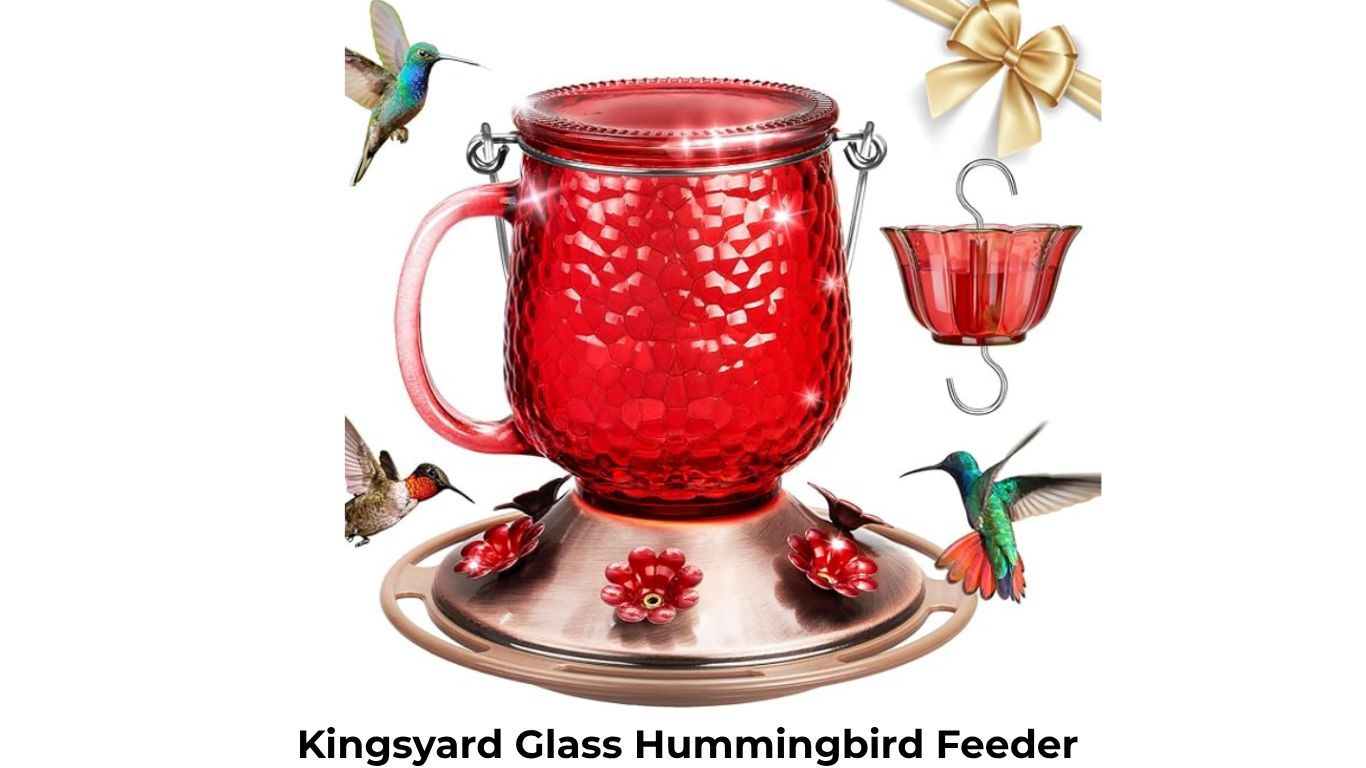
Mug-shaped, cottagecore-adjacent, and equipped with both an ant moat and perches. Kingsyard consistently builds feeders with the practical details that less thoughtful brands skip.
The handle makes this one of the easiest feeders to take down, carry to the sink, and refill without spillage.
I also find Kingsyard genuinely sustainable in their manufacturing approach, which is not something you can say about every brand on Amazon.
Best Glass Globe Hummingbird Feeder
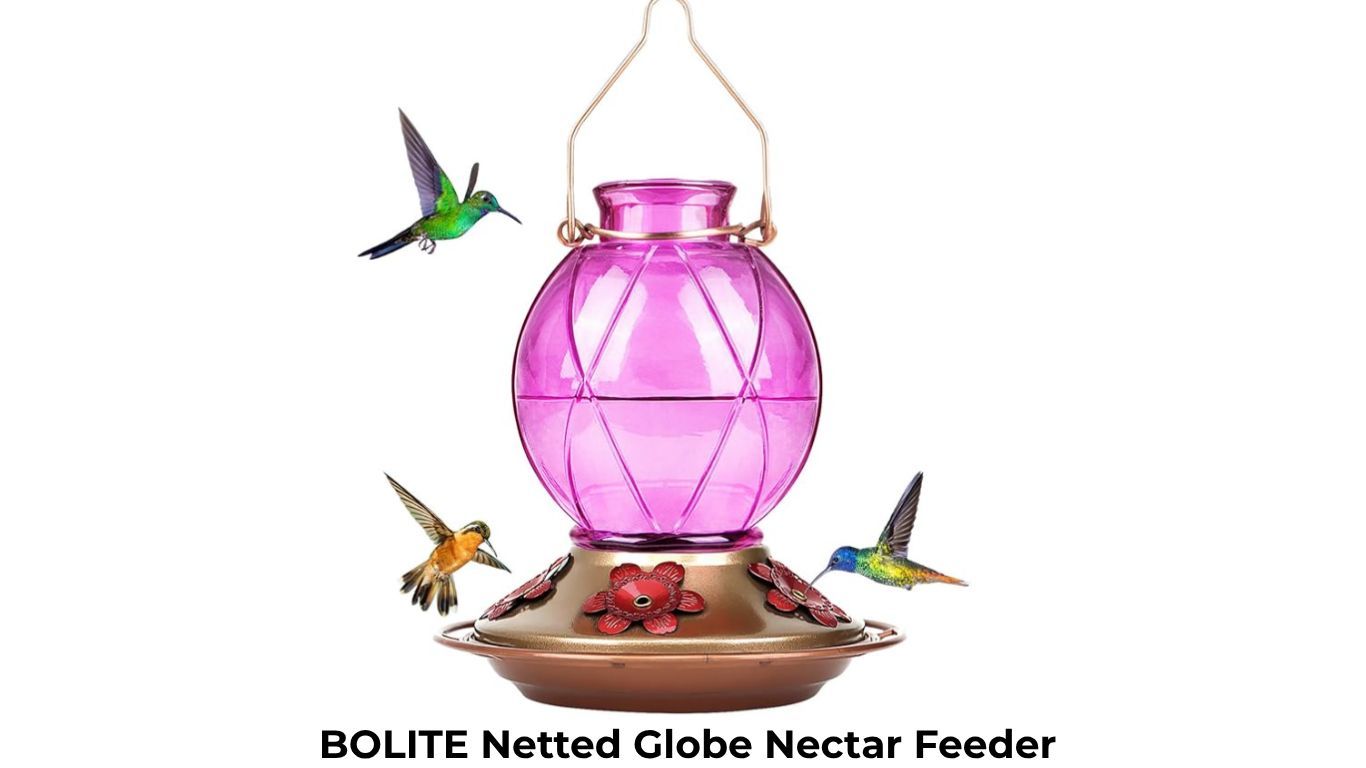
The textured etched pattern gives this globe feeder a netting or weave appearance without the actual rope maintenance that a cord-wrapped feeder would require.
The pink-lavender colorway is not red, but hummingbirds visit purple and pink flowers routinely.
Once they associate the location with nectar, color becomes less critical.
A genuinely distinctive shape for anyone who finds the standard bottle designs a bit predictable.
Best Non-Red Blown Glass Hummingbird Feeder
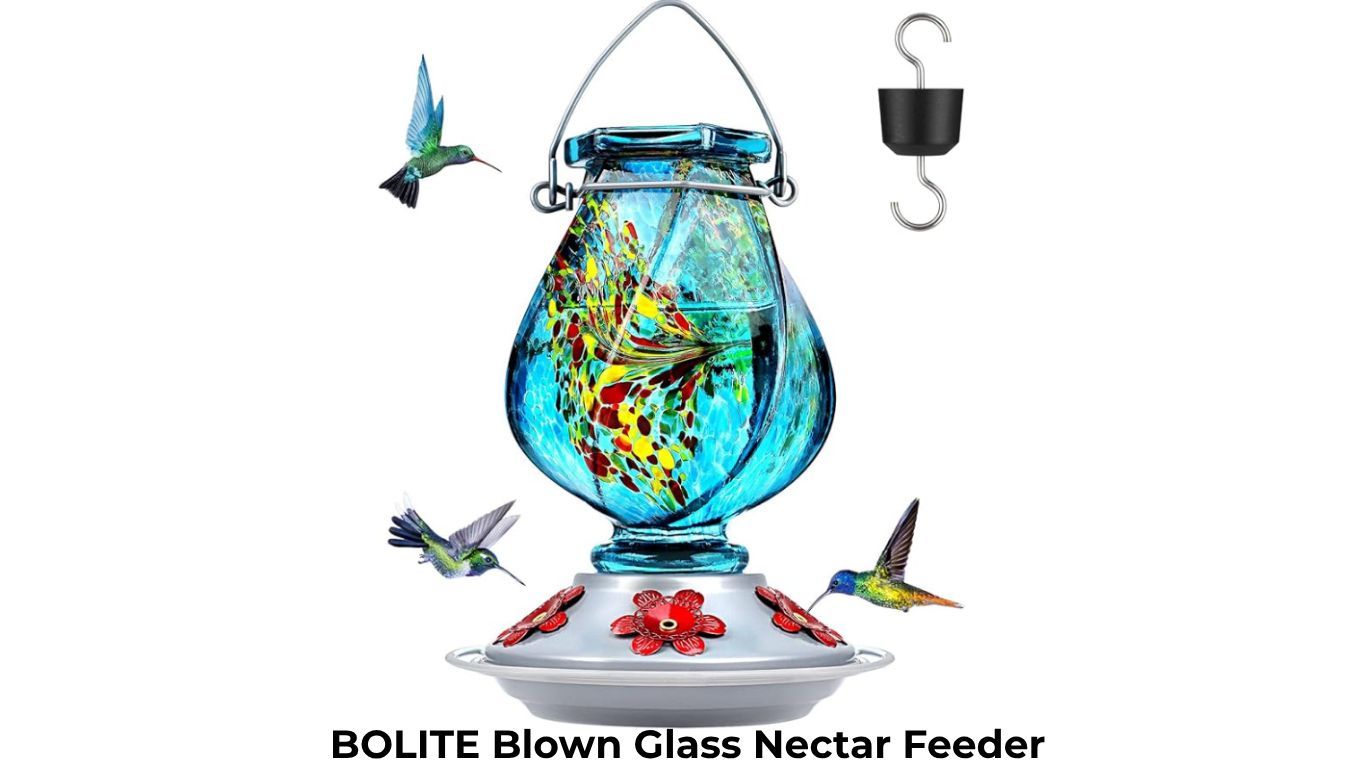
Perches and an ant moat in a bright multicolor blown glass body.
The color story here isn't red, but it's vivid. And vivid is what matters for initial discovery.
Hummingbirds are attracted to warm-spectrum colors primarily, but they're curious enough to investigate anything bright and unusual.
If your garden already has a lot of red and you want something that reads differently while still doing its job, this works.
Best Neutral Vintage Glass Bottle Hummingbird Feeder
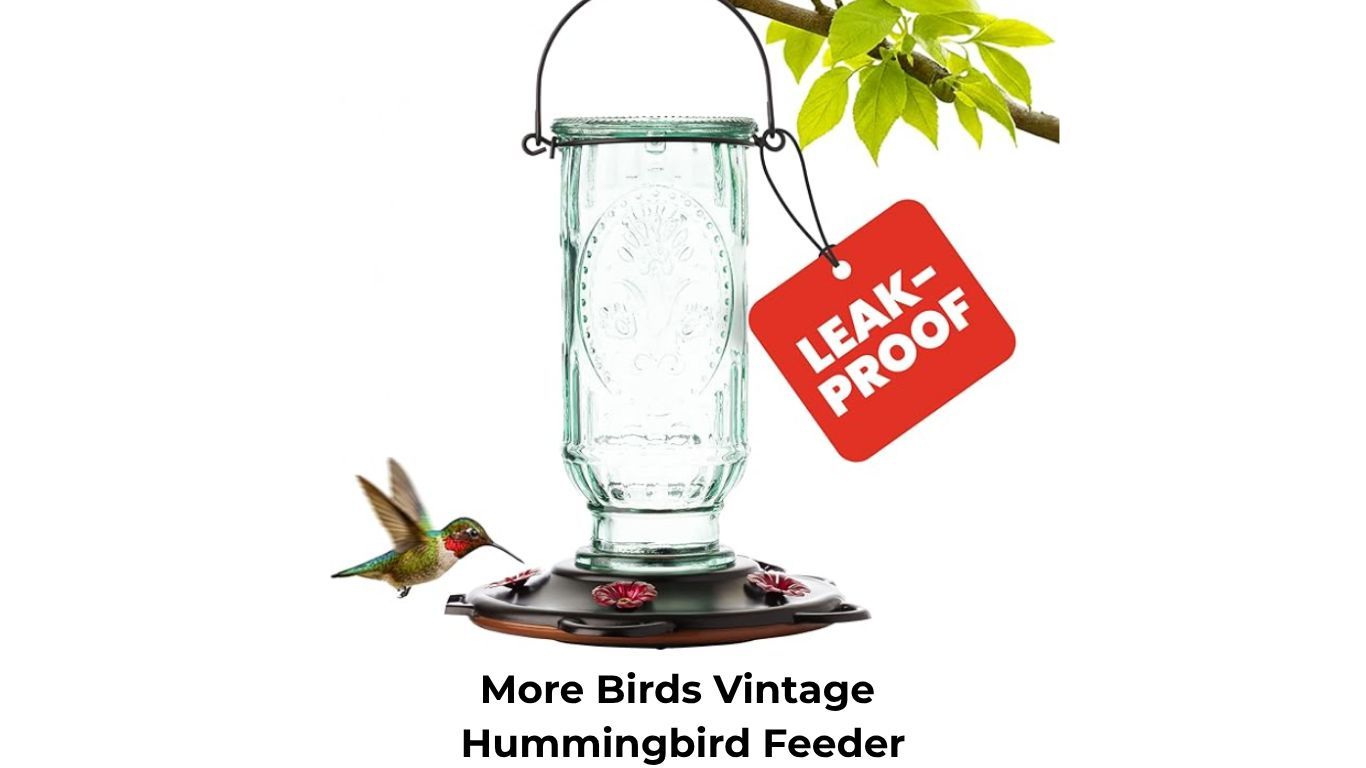
Clear glass, clean design, completely undemanding aesthetically — this one disappears into a landscape without competing with anything around it.
If you have a garden with strong visual character already and don't want a feeder fighting for attention, this is the choice.
Four feeding stations and a simple design make it practical as a primary feeder or a quiet backup.
What to Fill It With
Hummingbird nectar is not a product worth buying if you can avoid it. The recipe is: one part white granulated sugar to four parts water. Bring to a boil, stir until dissolved, cool completely, fill.
That's it.
The commercial versions are the same recipe, sometimes with added dye, which you don't want. Red dye is not harmful at low concentrations but it's unnecessary.
Plus there's no evidence it attracts more birds and some evidence it isn't great for them long-term.
Skip it.
Never use:
- Honey (ferments rapidly and promotes a dangerous fungal infection in hummingbirds)
- Brown or raw sugar (molasses content is harmful)
- Artificial sweeteners (zero caloric value — you'd be offering birds the equivalent of diet soda)
- Store-bought nectar with red dye (just make it yourself) Our top pick for anyone who prefers pre-made: Perky-Pet canned nectar in aluminum — dye-free and aluminum is infinitely recyclable, which matters if you go through a lot of it.
How Often to Clean
Fermented nectar is dangerous for hummingbirds — it causes liver damage — and it happens faster than most people expect in warm weather. The cleaning schedule is temperature-driven, not convenience-driven:
| Temperature | Change nectar every |
|---|---|
| Below 60°F | 5–7 days |
| 60–80°F | 3–4 days |
| 80–90°F | 2 days |
| Above 90°F | Daily |
Signs to change immediately regardless of schedule: cloudy nectar, floating particles, fermented smell, black spots anywhere inside the feeder.
To clean:
dDsassemble completely, wash with hot water and a bottle brush, rinse thoroughly. A diluted white vinegar solution (1:4 vinegar to water) is effective for stubborn residue and is safe for birds.
Avoid dish soap — residue can make nectar unpalatable and deter visits.
Where to Hang It
Height: 4–6 feet from the ground — roughly eye level, which also happens to be where hummingbirds naturally seek out nectar sources.
Shade: Morning sun is fine. Afternoon shade is important. Direct afternoon sun in summer accelerates nectar fermentation and raises the feeder temperature enough to deter visits. East-facing or north-facing placements generally work best.
Nearby cover: 10–15 feet from trees or shrubs gives hummingbirds approach and retreat cover. They're small and fast but they're also constantly evaluating predator risk. A feeder in the middle of an open lawn with no cover nearby will get fewer visits than the same feeder near vegetation.
Away from other feeders: Male hummingbirds are territorial to a degree that is genuinely impressive for a bird weighing three grams. Space multiple feeders at least 10 feet apart — ideally out of line of sight from each other — so one bird can't guard all of them simultaneously.
When NOT to Buy a Glass Hummingbird Feeder
Our yard growing up was reliably visited by squirrels that had absolutely no respect for property. They chewed through plastic bird feeders, dismantled suet cages, and once moved into our attic where they proceeded to live rent-free for far too long
Glass is harder to chew but no more secure on its hook, and a glass feeder hit by a squirrel or knocked in high wind becomes a much messier problem than a plastic one.
Skip the glass feeder if:
- Your yard has aggressive squirrel activity — the heavier glass feeder will do more damage falling
- You're in a high-wind area where feeders swing regularly
- You're new to hummingbird feeding and not sure how often you'll maintain it — fermentation in glass is no less harmful than in plastic, and a neglected glass feeder is worse than no feeder
- You have strong opinions about your hands near shattered glass — this is a legitimate concern and plastic is a sensible answer to it The glass feeders on this list are worth buying if you're going to actually use them. A beautiful hand-blown feeder collecting dust while you forget to refill it is a worse outcome for the hummingbirds than a plastic one you check every few days.
FAQ
Do hummingbirds prefer glass feeders over plastic?
No. Hummingbirds respond to color, nectar quality, and location — they don't have material preferences.
The advantage of glass is for the person maintaining it (easier to clean, more visible, no chemical degradation), not for the birds using it.
How long do glass hummingbird feeders last?
With reasonable care, the glass reservoir of a quality feeder can last indefinitely. The parts that wear out are plastic components — bases, rubber gaskets, feeding ports — which can typically be replaced separately. This is one of the genuine long-term value arguments for glass over plastic.
Why does my glass hummingbird feeder have black spots?
Black spots are mold. Clean the feeder immediately with a bottle brush and diluted vinegar solution. Rinse thoroughly.
If the mold is inside a crevice you can't reach, the feeder needs to be replaced. Prevent recurrence by shortening your cleaning schedule.
Should I use red nectar in my glass hummingbird feeder?
No, it's unnecessary. The feeder's appearance is enough of a visual cue.
Use plain white sugar and water (1:4 ratio).
How do I stop ants from getting into my glass hummingbird feeder?
An ant moat, i.e. a small water-filled cup between the hook and the feeder, is the best solution. Fill it with water; ants can't cross standing water.
Several feeders on this list have built-in moats. For feeders without one, add-on ant moats are inexpensive and widely available.
When should I put out my hummingbird feeder?
1–2 weeks before hummingbirds are expected in your area.
For the southern US: early to mid-March. Northern states: mid to late April. Leave it up until 2 weeks after your last fall sighting — late migrants appreciate the food even after breeding season ends.
Which glass feeder are you using?
If you hang a glass feeder and a squirrel destroys it within a week, it's normal & not a judgment on your choices.
Eventually you'll figure out which locations are squirrel-proof.
The hummingbirds will wait.
The above article may include sponsored content or product affiliate links for which Sparkbird may earn a commission.

No comments yet.