
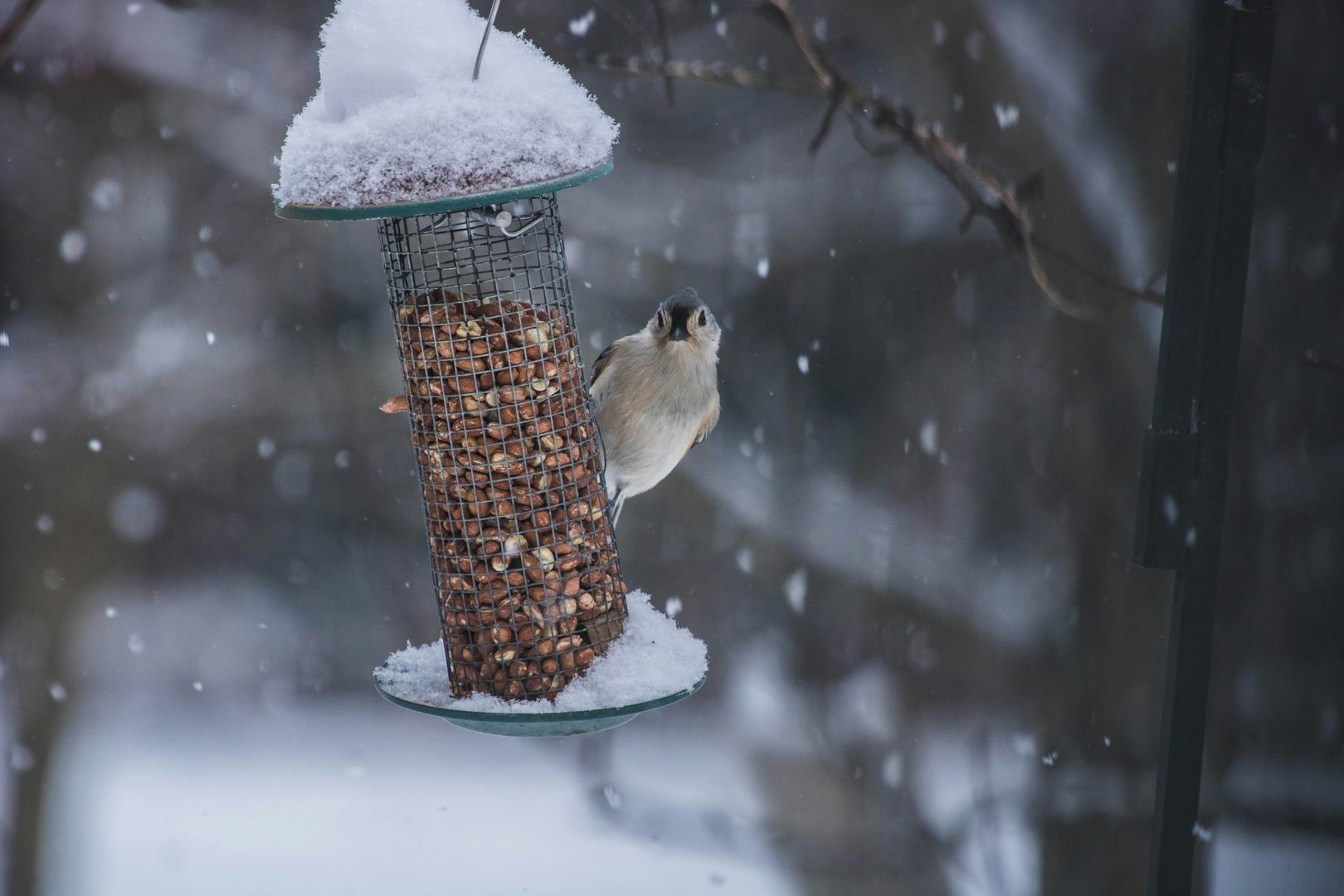
Hanging a bird feeder is a great way to attract local birds. It’s also not as simple as setting it and forgetting it. It involves taking responsibility for their health and safety, too.
This guide covers everything you need to know about feeders:
- 5 types of feeders
- deterring predators
- feeder placement
- tips for success
Why feed birds?
Many people use bird feeders because they enjoy bird watching. Here are a few other reasons to use a bird feeder:
- feel connected to nature
- helps food supply during crop failures
- positive impact on mental health
Humans evolved to feel safe when birds sing
That’s because birds only sing when they’re safe– from natural disasters, weather, predators, and more.
Bird song is an indicator that you can relax.
Chickens remember who they like or dislike. Some people even befriend crows. There's a lot of communion with nature through birds that just feels right.
Whatever your reason for feeding the birds you're on track for living a balanced life.
Types of Feeders
Bird feeders can be broken down based on design or function— either it’s the type of food they hold or they offer some kind of unique feature.
Some may even be hybrid feeders that hold more than 1 kind of bird food.
For the most part you’ve got 5 types of bird feeders:
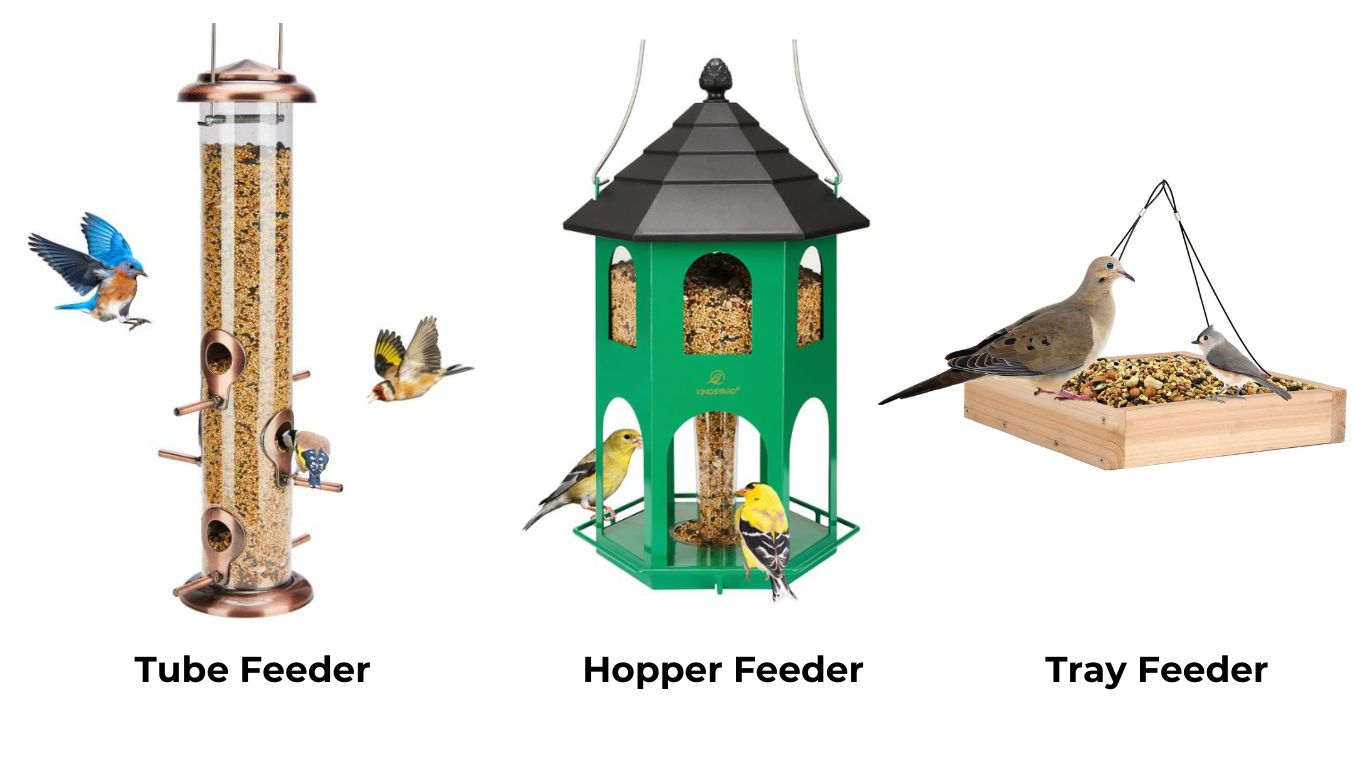
- Tube Feeders: Tube shaped gravity feeder for a variety of seed mixes. Nyjer feeders are a special kind of tube feeder with a mesh bag. Mention "anti-clinging" versions for smaller species.
- Hopper Feeders: gravity feeders that often, but not always, look like a small house. These keep seed enclosed and dry in a compartment (the hopper), has a roof, and dispense seed to a tray. Smart feeders are in this category, too. Great for a variety of birds.
- Platform (Tray) Feeders: a shallow tray that can be hung up or sat on the ground. Ground placement has the caveat of being exposed to the elements and pests. Window-mounted feeders are also a type of platform feeder. These are ideal for ground-feeders like doves and sparrows.
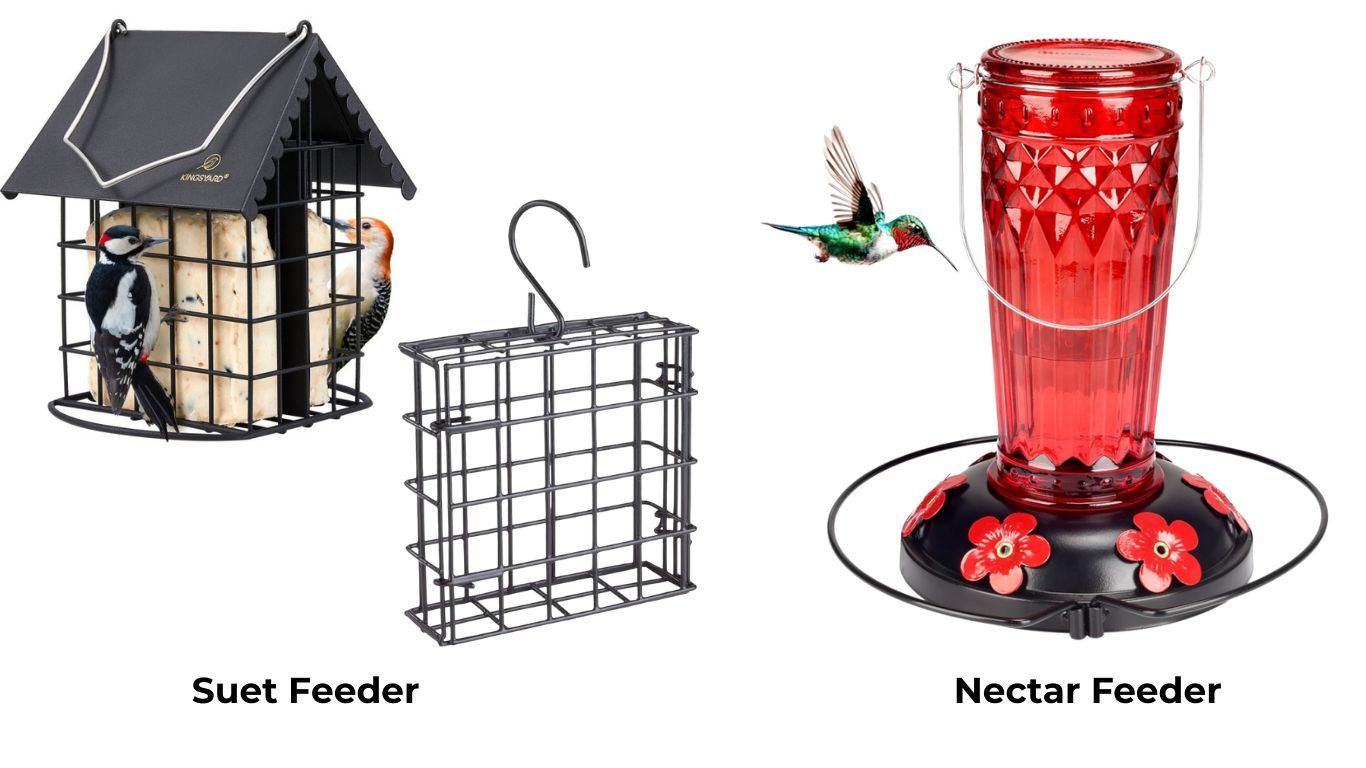
- Suet Feeders: Suet is a high fat bird food in cake or dough form. On its own, suet is a common cooking fat made from beef, lamb, or mutton. Suet bird food is often hard and combined with seed or nuts and can sometimes be made of nuts instead of suet fat. Birds that eat suet include woodpeckers, nuthatches, and starlings.
- Nectar Feeders: some birds’ diet consists of nectar, or a sugar water. They need to metabolize the food quickly for energy due to high activity and calorie burn. These birds are mostly hummingbirds and orioles.
Choosing a Feeder
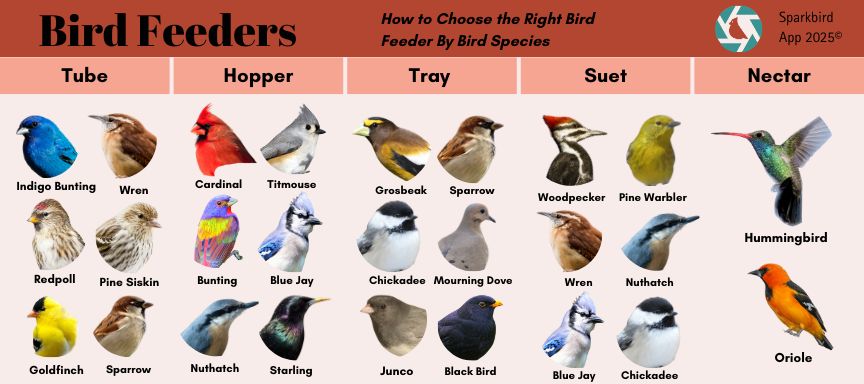
There's plenty of overlap of which birds will visit your feeders. Since native birds vary by region use this as a non-exhaustive list.
Tube Feeders: Small songbirds like finches, juncos, chickadees, jays, grosbeaks, sparrows, doves, blackbirds
Hopper Feeders: Cardinals, buntings, grosbeaks, jays, nuthatches, titmice, sparrows, chickadees
Tray Feeders: Blackbirds, pigeons, jays, juncos, doves, grosbeaks, sparrows, towhees, quail
Suet Feeders: Woodpeckers, chickadees, nuthatches, wrens, warblers, jays, goldfinches, redpolls, buntings
Nectar Feeders: Hummingbirds, orioles, mockingbirds, waxwings, tanagers, warblers
Feeder Placement
You can have the best feeder and food but if you place it wrong your results will be amiss.
There are 3 Keys to Bird Feeder Placement:
1. Cater to Existing Birds
Pick a spot where birds already hang out. There’s no sense deviating from what works if there are hot spots in your yard.
Got ground feeding birds like doves, juncos, sparrows, and thrushes? Put your feeder low or on the ground, under the cover of small shrubs.
Want to target chickadees, robins, waxwings, titmice, jays, and woodpeckers? Hang higher up and near natural cover.
2. Preventing Window Collisions
Place feeders within 3 feet of a window (to prevent high-speed collisions) or more than 15 feet away.
Birds can’t tell what windows are. They often fly into them leading to injury or death.
Try adding window decals. They use UV reflection to give warnings to birds that there’s something there.
3. Protect Feeders from Predators
Squirrels are public enemy #1 for bird feeders. They steal your birds’ food and scare them off.
Other predators like raccoons, snakes, cats, and birds of prey will scare birds away from using your feeders or houses.
Place your feeder where its hard for prey and pests to reach.
A. The 5-7-9 Rule
Squirrels can jump 5 feet up, 7 feet across, and drop from 9 feet above.
Following the placement rules from above, keep feeders away from natural perches.
B. Incorporate predator guards
- PVC pipe, stovepipe, or a slinky on the bird feeder pole → keeps animals from getting a grip
- Cones or baffles on poles under or over feeders → blocks predators
- Mesh or wire halos (for bully birds like Starlings or House Sparrows) → barrier for larger birds
C. Birds of Prey
Sometimes feeders close to large, dense trees makes it easy for birds of prey to target your feeder. This can also be the case for feeders out in the open.
A sweet spot that's close to natural cover like shrubs and bushes.
D. Hot Pepper Seeds
Birds can’t taste capsaicin, the spicy part of hot peppers, but mammals find it painful.
Sprinkle in some spicy pepper or hot pepper seeds with the bird food to deter squirrels.
8 Tips for Success
Creating an inviting and safe environment is essential for birds to visit your feeder.
Here's how you can prime yourself for success:
1. Use a bird bath
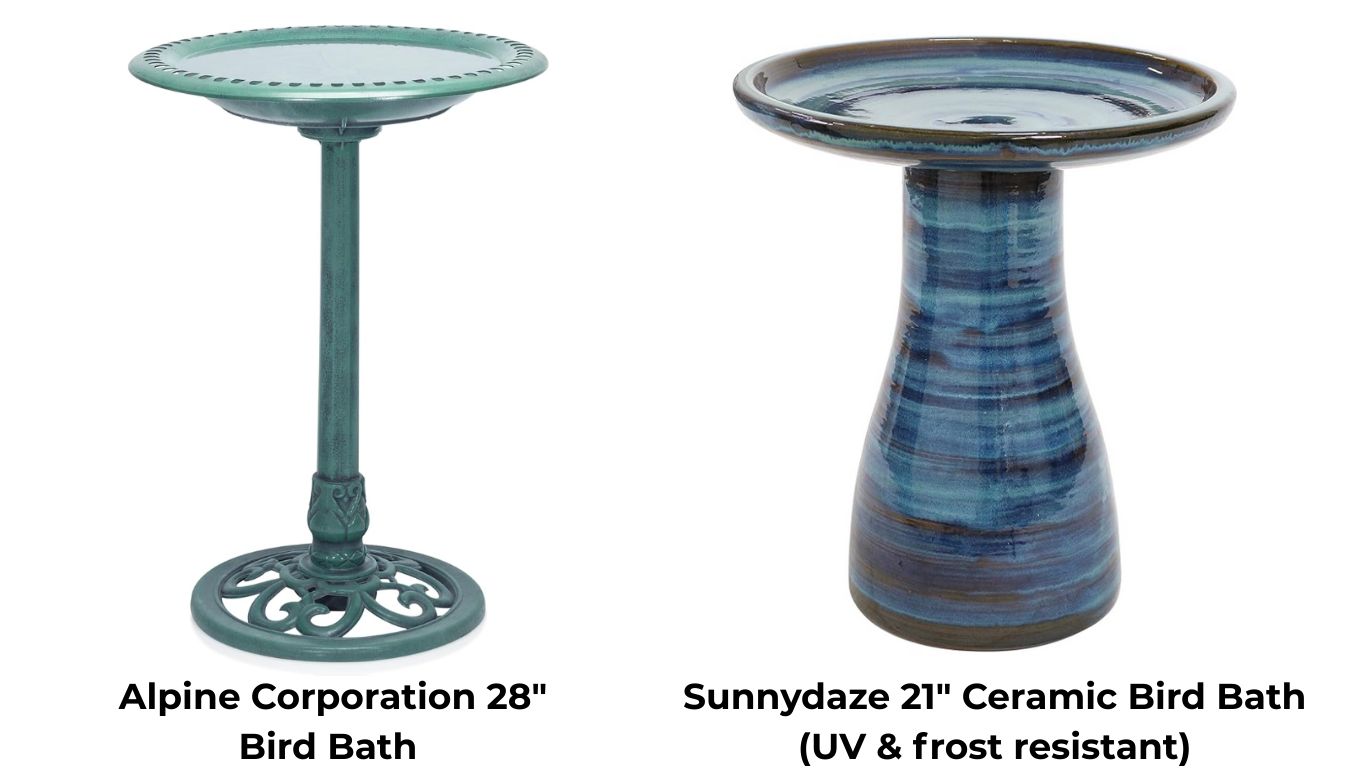
Birds need water year round for drinking and bathing. A bird bath will keep birds around since they don't have to leave for water.
Pedestal bird baths make bird watching easier. Stone or ceramic bird baths are less likely to fall over.
2. Avoid weed killers and pesticides
Many chemicals directly harm birds, wildlife, and insect populations, a core food group for birds. Yard treatment chemicals have a direct effect on birds' ability to feed and reproduce.
Take bees for example. Pesticides are linked to early death and birth cohorts almost have the size as bees not exposed-- producing around 42% less larvae.
Pollinators are necessary for many bird's food and the human food supply chain.
3. Leverage Bird Houses
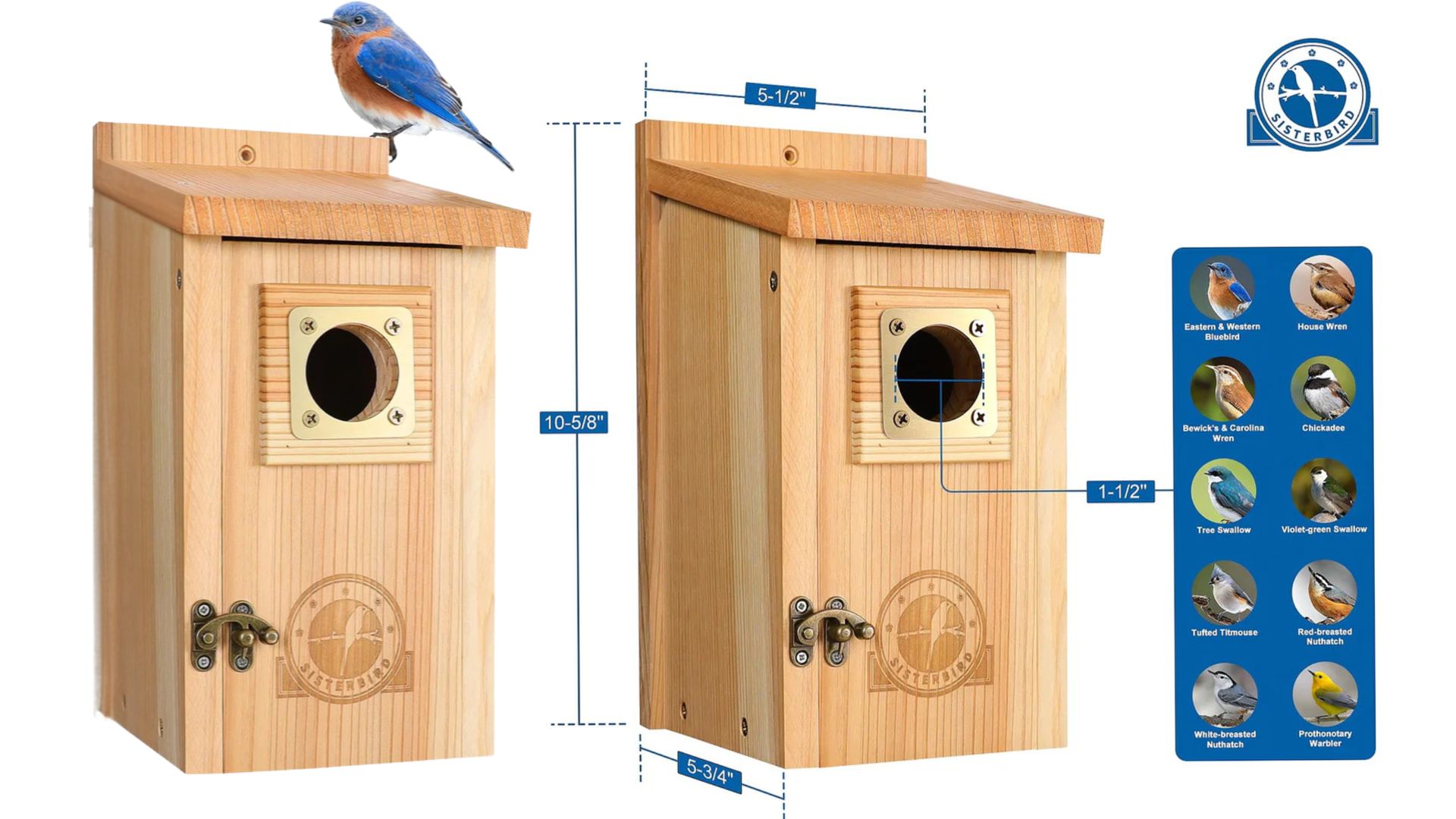
Giving them nearby shelter with a bird house helps keep them close.
Place it at least 5 ft away from the feeder since birds don't eat and sleep in the same area.
- Related: 5 Best Winter Bird Houses
4. Clean your feeders
Clean feeders help keep House Finch Eye Disease and Salmonellosis at bay.
Feeders are best cleaned between refilling during dry conditions. Consider changing bird seed more frequently with higher humidity and dampness to keep bird seed safe.
Nectar feeders need more frequent cleanings.
- Related: 5 Steps to Clean Hummingbird Feeders
5. Choose a sturdy pole
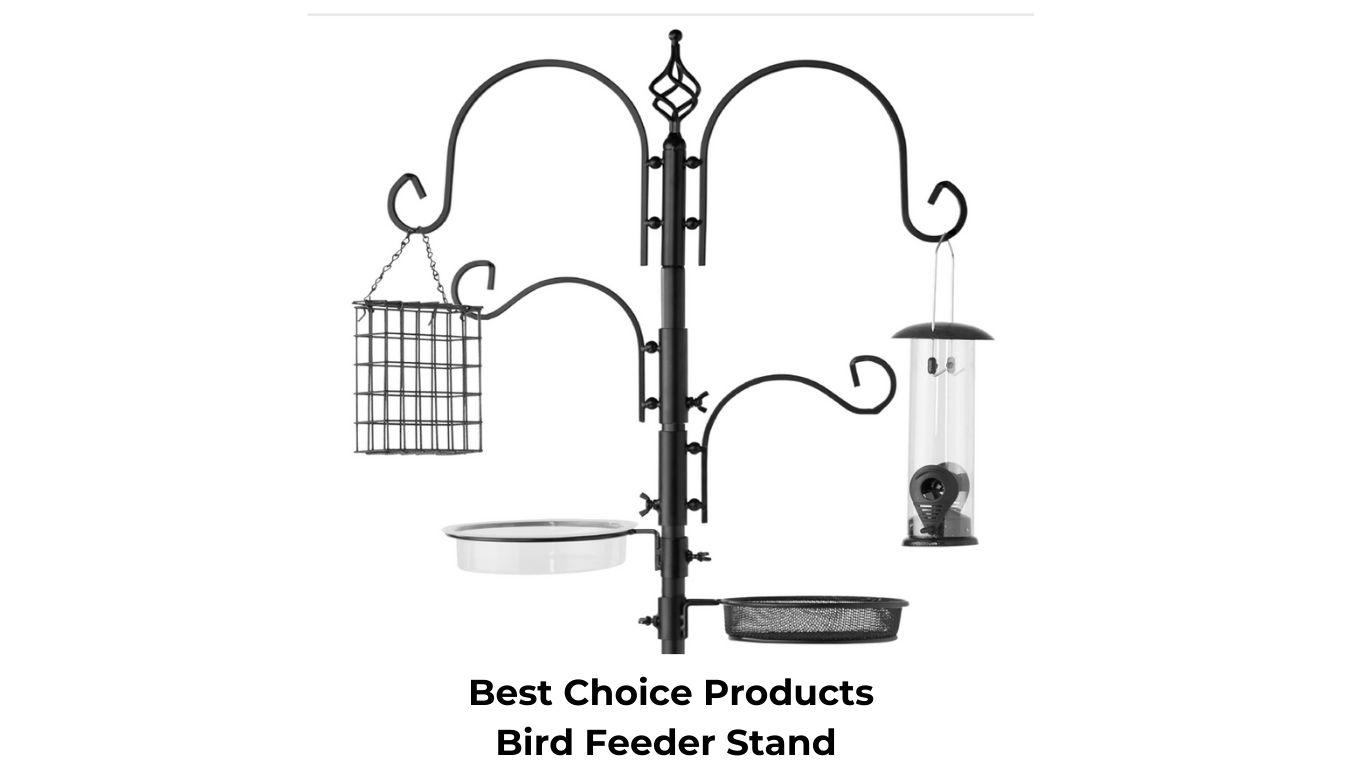
Choose a sturdy connection to secure your feeder of choice. Bird feeding poles are a popular way to hang feeders, bird baths, and birdhouses.
The base should be at least one foot in diameter with 3 or more prongs that are 6 inches long.
You can add weights like a cinder block on top of the anchors or sand bags if your pole is prone to leaning.
7. Never feed birds bread.
It lacks nutrition for birds but makes them feel full, causing malnourishment. It can even cause death in cold climates or winter when calories are necessary to keep body heat up.
Stale bread or crackers for ducks is terribly bad for them! Toss them frozen peas, plain raw oats, or leafy greens.
8. Keep native plants in your yard
Natural food sources and shelter from shrubs, trees, and the like creates a habitat birds want to be in.
Consider adding berry bushes that have mulberry or juniper.
What birds have been to your feeders lately?
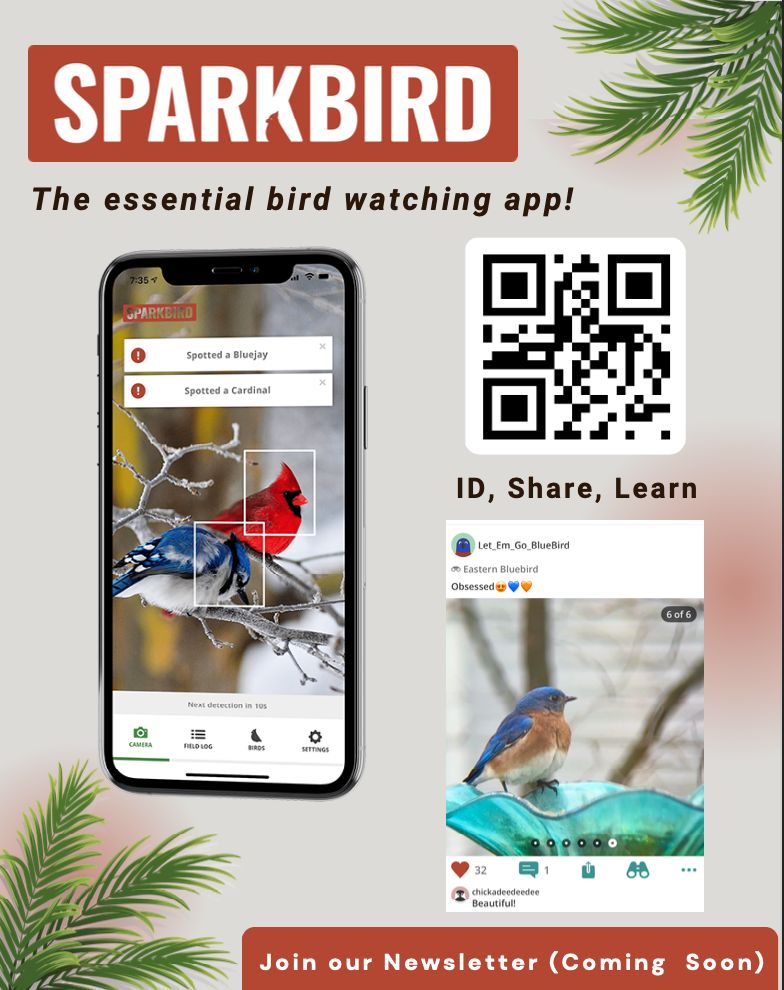
Share them on the Sparkbird App! Available in the Apple App Store.
No comments yet.