
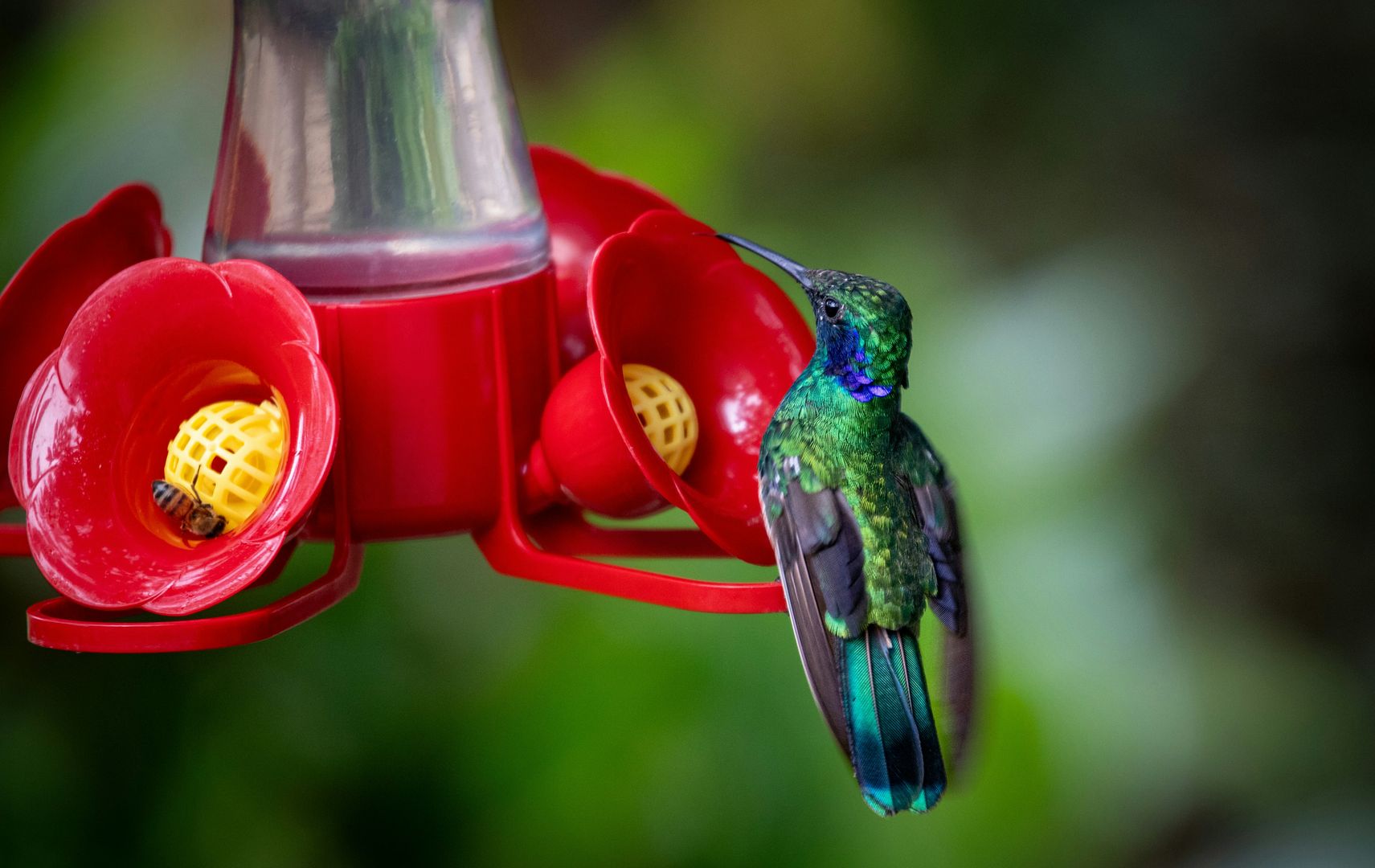
There are about 10,000 hummingbird feeders online.
The difference between the good ones & the ones that sit in a garage comes down to just four features:
Feature 1: Red Coloring
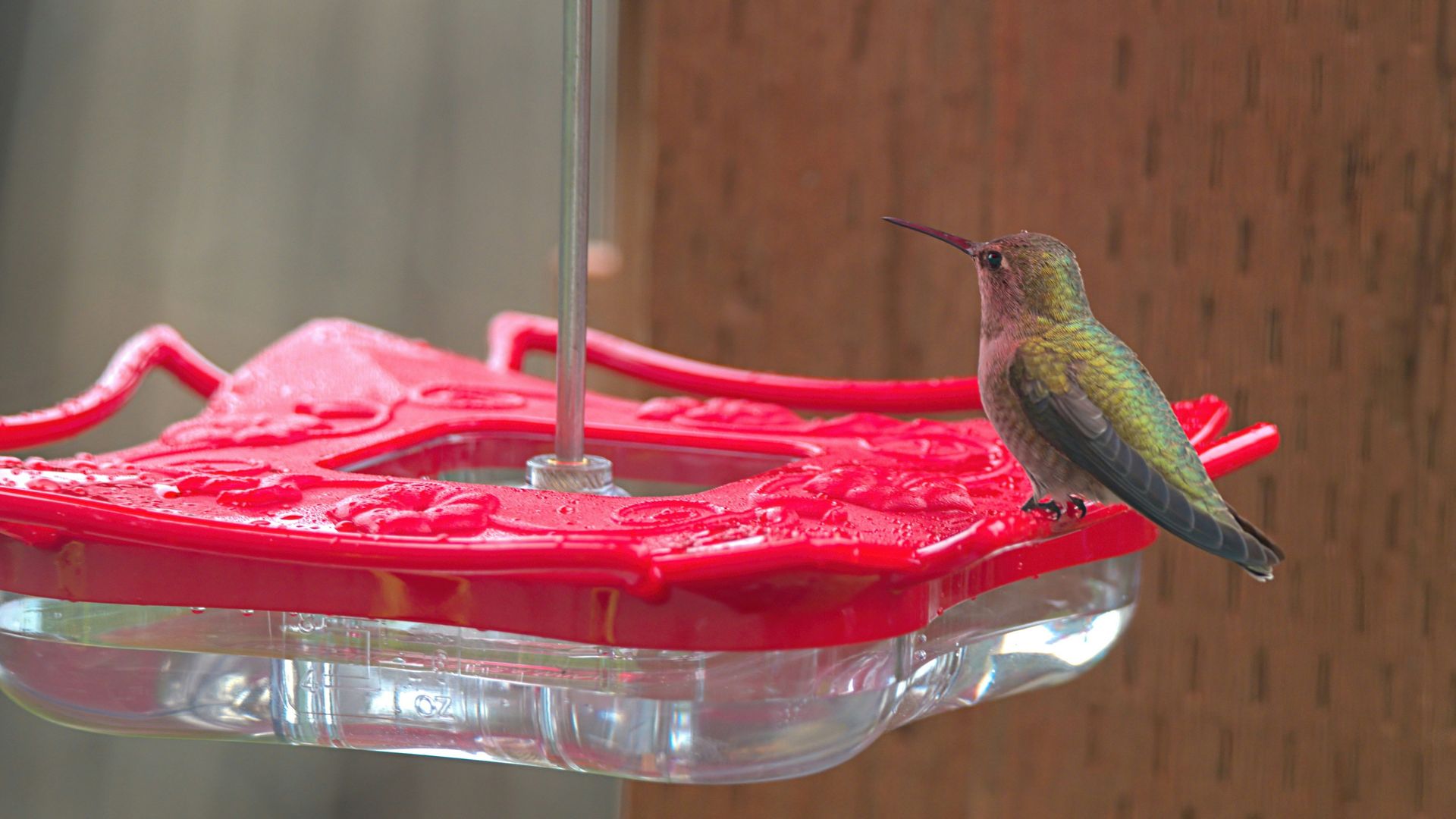
Hummingbirds have dense concentrations of cones in their retinas and are highly sensitive to red and orange wavelengths. As Audubon explains, the color filters in their eyes heighten sensitivity in the red-to-yellow range while muting blues.
They've learned that red objects often means nectar.
A clear or blue feeder with a red accessory will work once the birds know the location, but red gets their attention faster.
Do Not use Red Nectar
Red dye in hummingbird food carries real risks. Hummingbirds consume up to twice their body weight in nectar daily, which means ingesting the dye at concentrations higher than what's safe. The feeder itself is red visual cue.
The nectar should be plain.
Feature 2: Ant Moat
Hummingbird nectar is sugar water. Ants also find sugar water tasty.
They'll locate your feeder, climb the pole or hook, and make their way into the nectar spout where drown & contaminating the nectar. You need to clean it every time this happens.
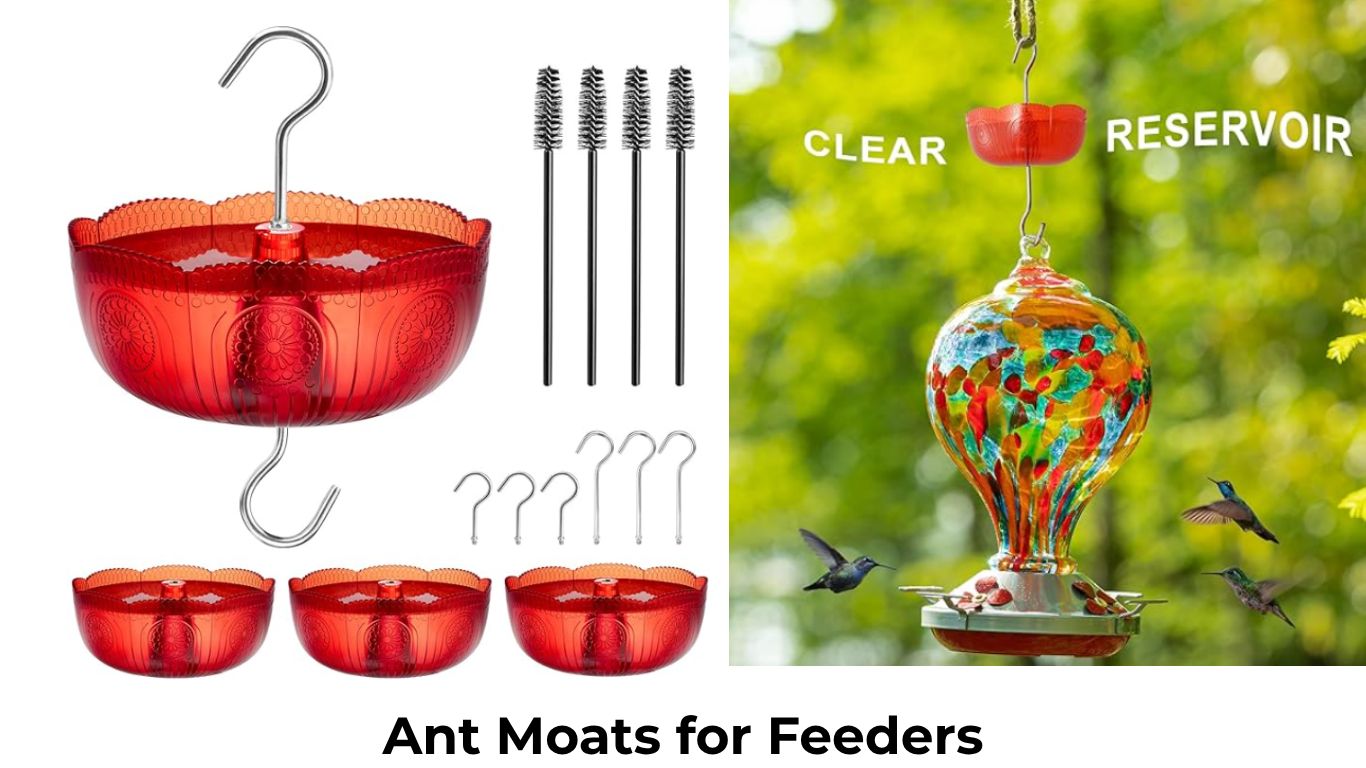
An ant moat is a small cup with water that sits between the hanging point and the feeder. Ants can't cross it.
Some feeders include a built-in moat. If yours doesn't, add-on ant moats are inexpensive and work with any feeder. Fill the moat with water and refresh it whenever it evaporates.
Feature 3: Bee Guards (or Recessed Ports)
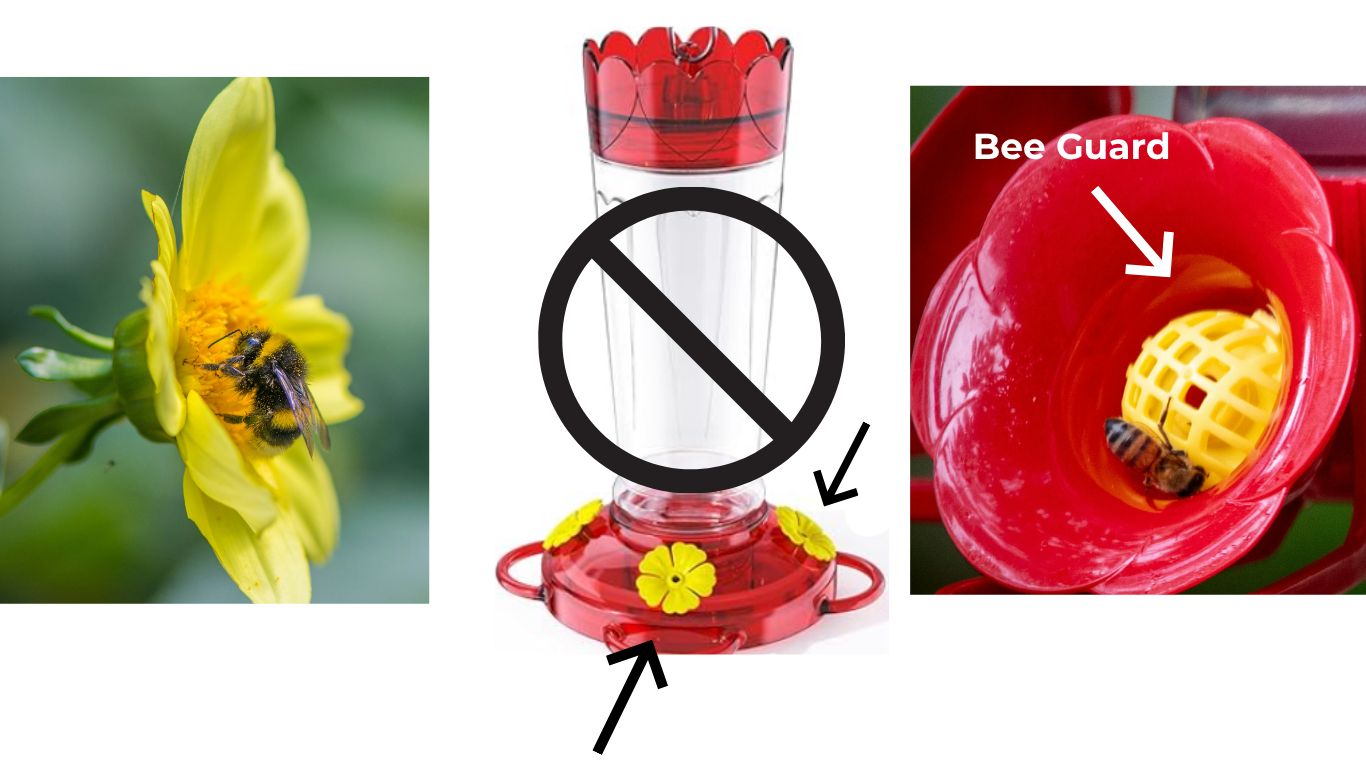
Bees are sensitive to yellow. Many hummingbird feeders include yellow flowers or ports. Bees LOVE yellow. They can't resist it and they'll crowd out the feeder.
Bee guards are perforated domes that sit over each feeding port. The holes are large enough for a hummingbird's long bill but too small for bees to access the nectar directly.
Some feeders solve the same problem with recessed ports that push the nectar surface back beyond bee reach. Either approach works.
If your feeder has yellow accents and no bee guards, paint the yellow parts with non-toxic paint or nail polish. The bees will find the nectar regardless but the color change will slow them down.
Removing the yellow cue or adding guards significantly reduces bee activity.
Feature 4: Perches
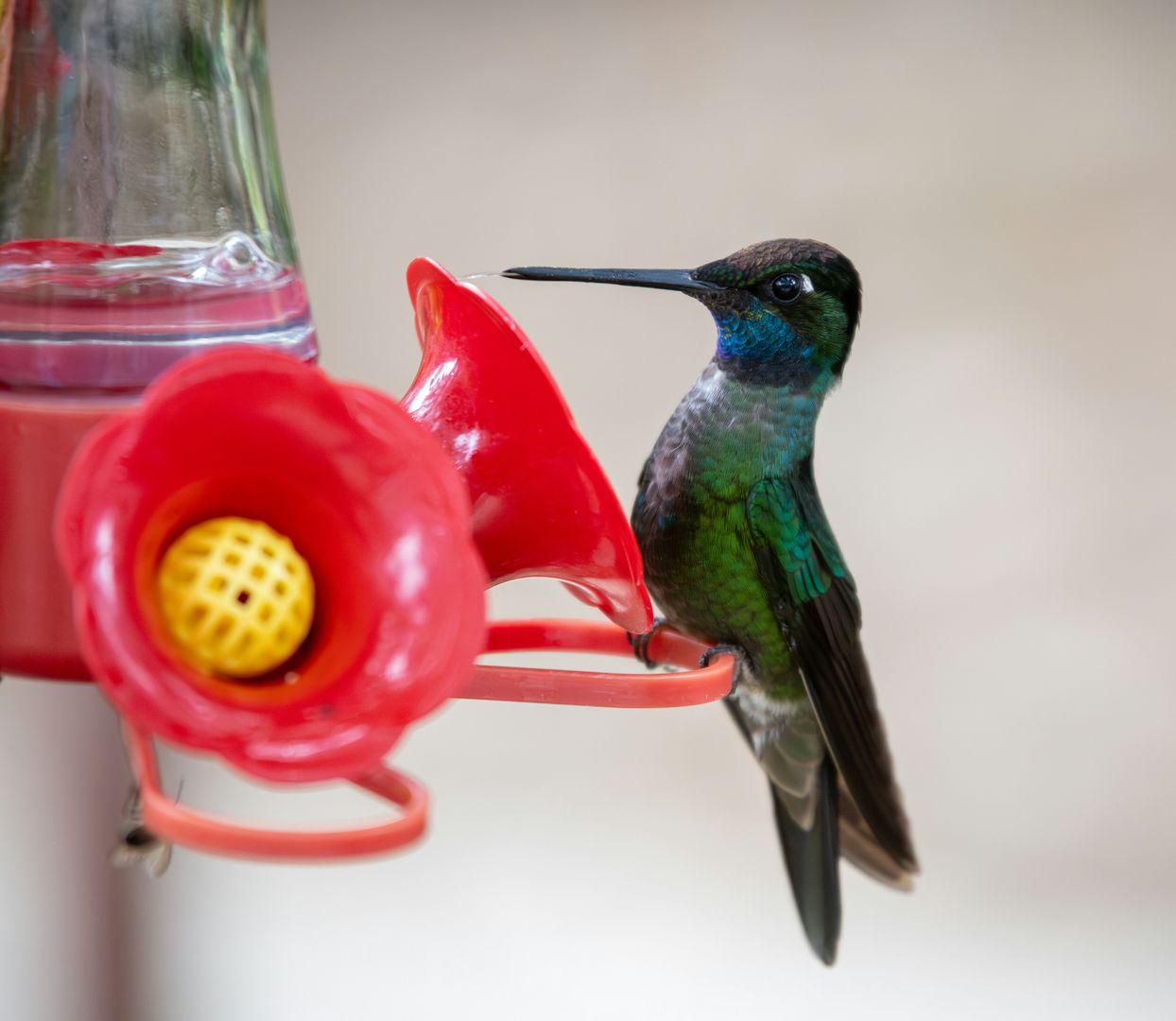
Hummingbirds hover. That's their famous trick. But hovering burns considerable energy, and they don't do it continuously. They rest frequently between feedings.
Perches also make it much easier to watch the birds up close, since they're stationary rather than hovering. If you're going to the trouble of setting up a feeder, perches are what convert it from a functional refueling station into something you'll actually enjoy watching.
The Feature Most Hummingbird Feeders Lack: Ease of Cleaning
Nectar spoils. In temperatures above 90°F, it can ferment in less than 24 hours. In moderate weather (70–80°F), it should be changed every 2–3 days. Fermented nectar causes liver damage in hummingbirds — it is genuinely harmful, not just unpleasant.
The cleaning schedule you'll actually maintain is determined by how annoying cleaning is, not by what the instructions say. This is not a judgment; it's just how humans work.
Before buying a feeder, evaluate honestly:
- Can it be fully disassembled?
- Can a bottle brush reach every interior surface?
- Are there narrow corners where nectar can pool and grow mold?
- Is it dishwasher-safe (for the glass or plastic reservoir)? A beautiful feeder with a complicated base that requires a dental pick to clean will stop being cleaned on schedule by week three. A simpler feeder you can rinse in two minutes will be maintained properly all season.
Signs to clean immediately regardless of schedule: cloudy nectar, floating particles, fermented smell, any black spots inside. Clean with hot water and a bottle brush; a diluted white vinegar solution handles stubborn residue. Rinse thoroughly before refilling.
- Related: 5 Steps to Clean Hummingbird Feeders — the full cleaning protocol.
Capacity: Match the Feeder to Your Traffic
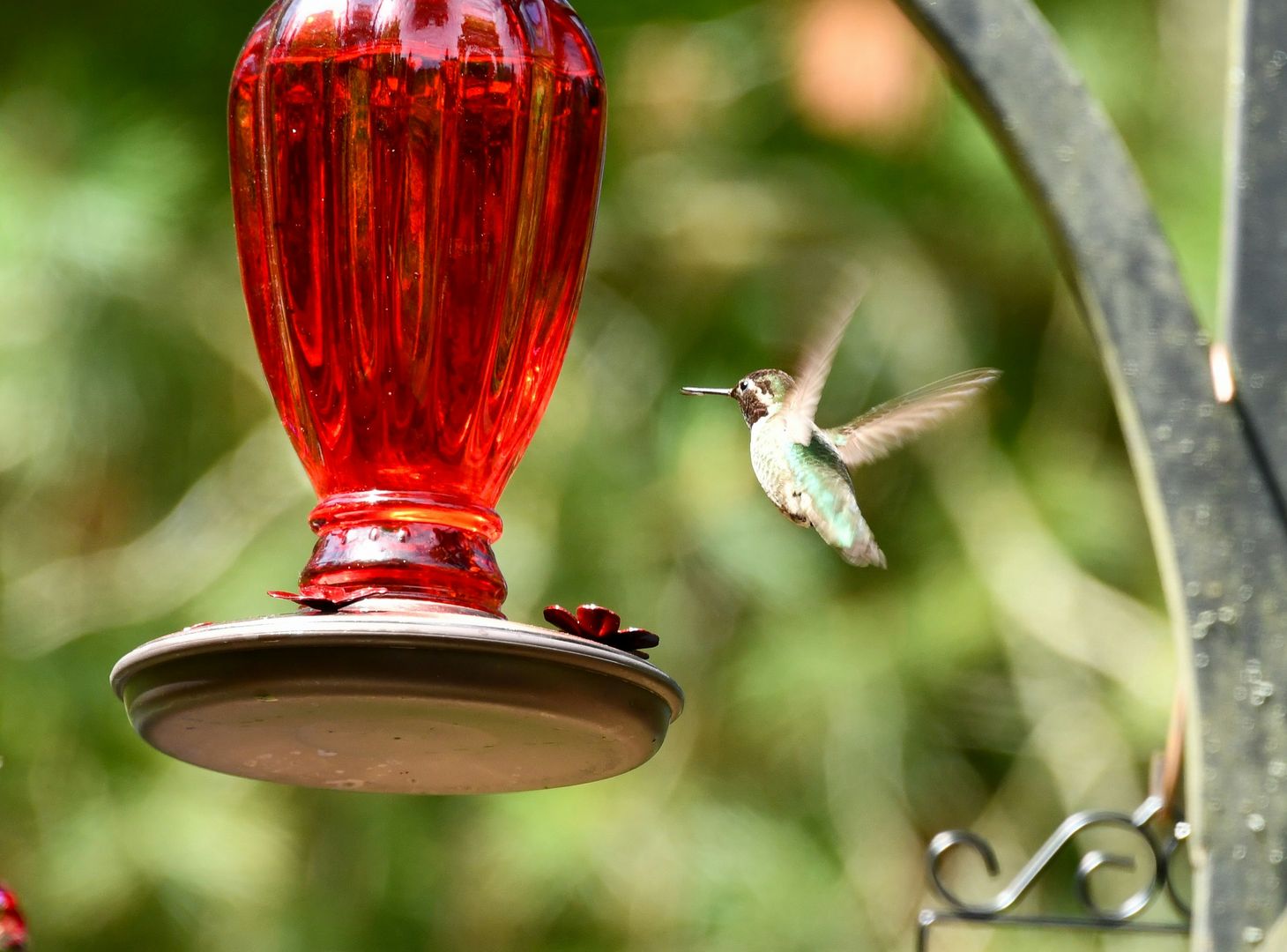
Small (4–8 oz): good for starting out or single-visitor yards. You'll change nectar often, but waste is minimal.
Medium (12–16 oz): the most common size, suitable for average backyard traffic.
Large (24–32 oz): only useful if you have genuinely high traffic. An oversized feeder in a low-traffic yard means nectar sitting too long before it's consumed.
The goal is to size the feeder so the nectar gets used within 2–3 days before it can spoil. Better to have a small feeder you refill every two days than a large one where nectar sits for a week.
When NOT to Buy a New Feeder
If you already have a feeder that the hummingbirds are using, don't replace it purely for aesthetics during active season. Disrupting a working setup mid-season can cause birds to abandon the location while they relearn.
The best time to upgrade is late fall after your birds have departed, so the new feeder is in place and familiar-looking before spring arrivals.
If you're just starting, a single simple red feeder with a moat in a good location is more valuable than an elaborate setup.
Placement matters more than appearance: morning sun, afternoon shade, near trees or shrubs for cover, 10–15 feet from other feeders.
- Related: 9 Ways to Attract Hummingbirds — everything that goes around the feeder.
FAQ
Do I need multiple hummingbird feeders?
Males are territorial and will guard a single feeder from other hummingbirds. Multiple feeders spaced 10+ feet are a good idea.
Should hummingbird feeders be in sun or shade?
Morning sun is fine; afternoon shade is preferable.
Why aren't hummingbirds using my new feeder?
New feeders typically take 1–2 weeks for local birds to discover. Make sure nectar is fresh, position the feeder near flowers or existing hummingbird activity, and give it time. Moving a new feeder often before birds find it resets that discovery period.
Can I use honey instead of sugar?
No. Honey ferments and can cause a dangerous fungal infection in hummingbirds called aspergillosis.
When in doubt a simple feeder near some flowers will do
Hummingbirds are creatures of habit. The spot matters as much as the feeder.
They'll find it eventually, and then you'll wonder why you waited so long.

No comments yet.