
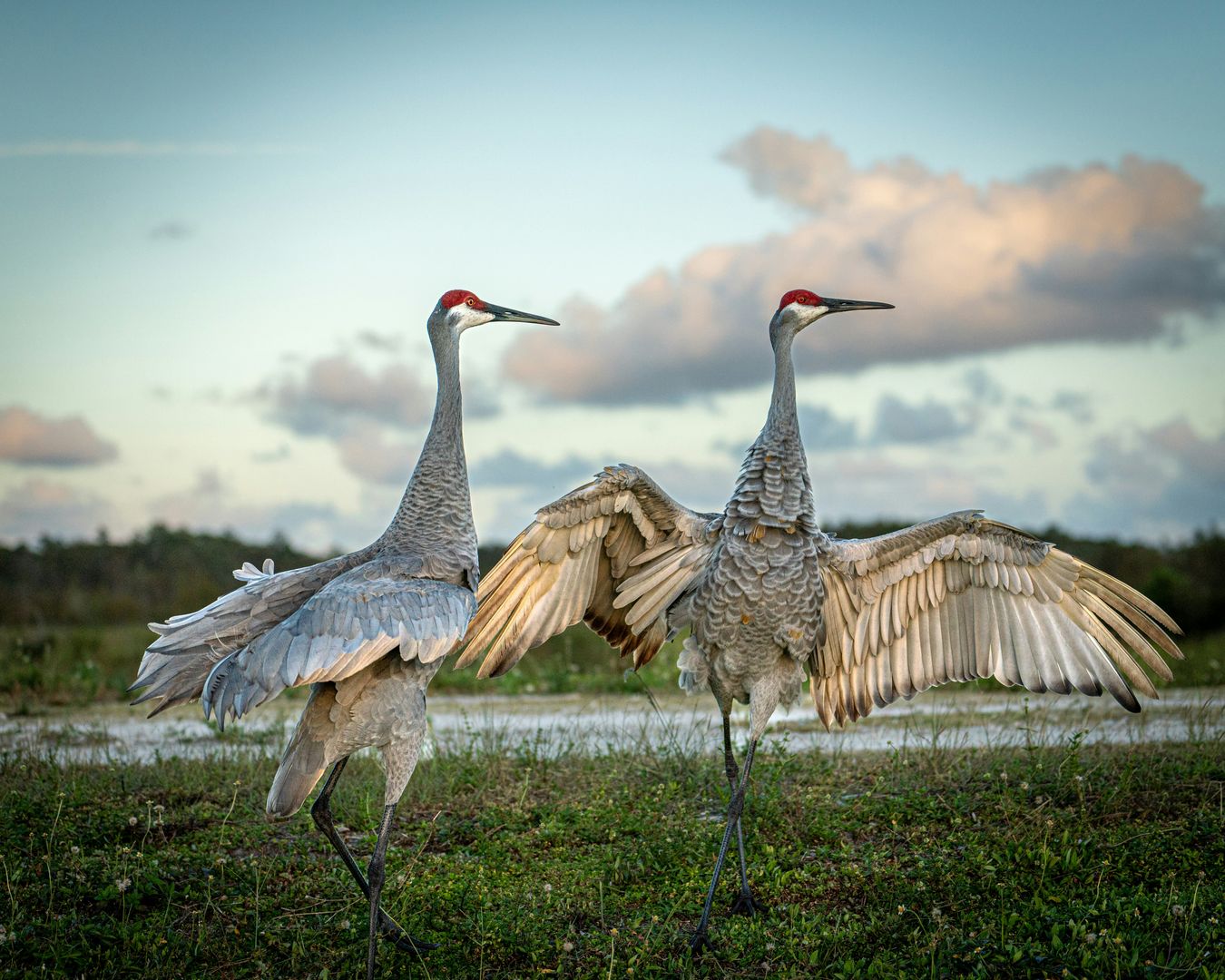
If you've never heard a flock of sandhill cranes overhead, it sounds like a hundred wooden rattles arguing about directions. You'll crane your neck before you even know what it is.
Sandhill cranes are one of the best fall migration shows in North America, and unlike warblers, they don't require you to stare into a treetop at 6 a.m. while questioning your life choices. They're enormous, they travel in huge flocks, and they gather at the same reliable spots every year.
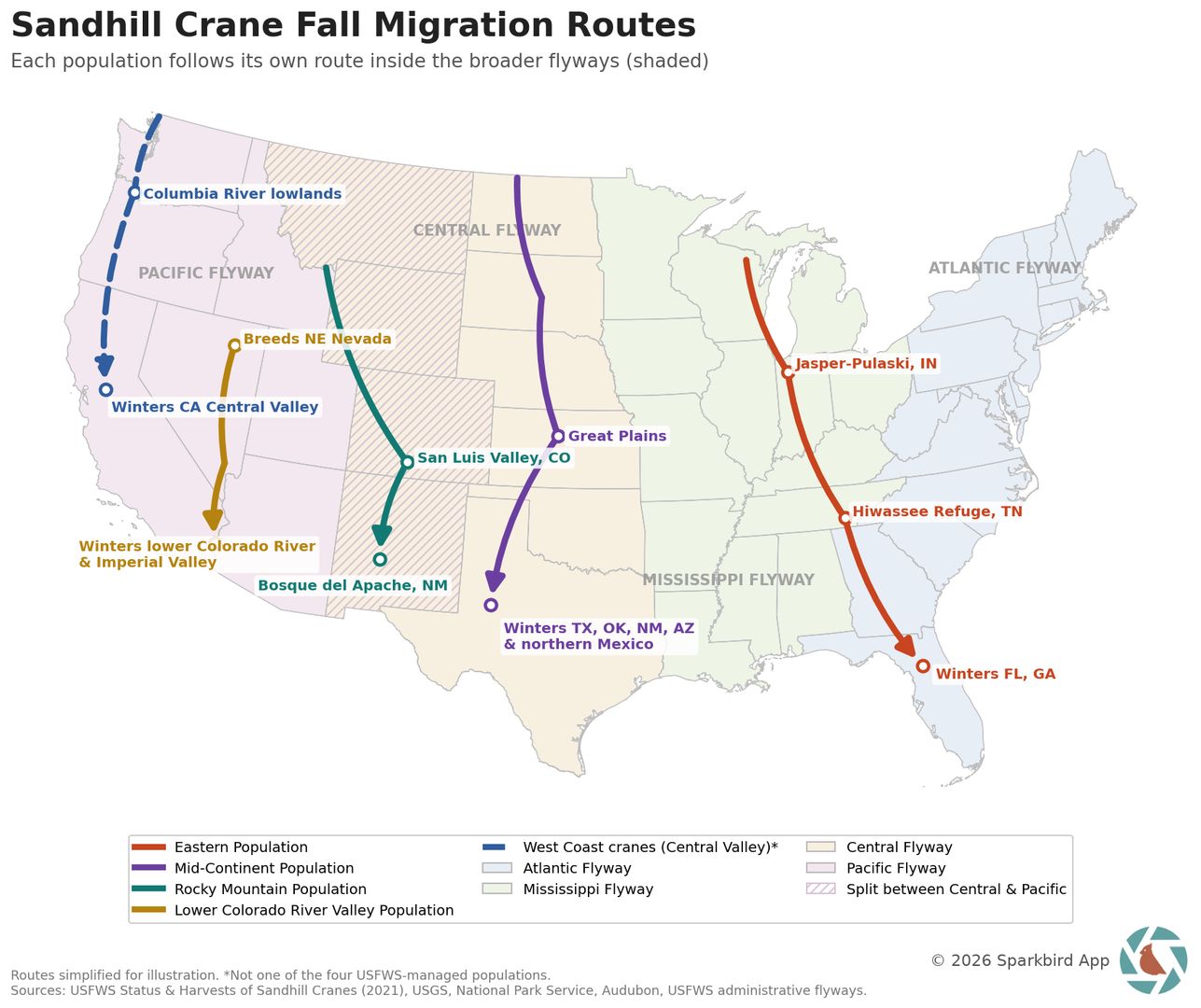
Sandhill Crane Migration Map: Routes by Population
A single crane migration map can be misleading, because there isn't one sandhill crane migration. There are several populations, and each has its own route, timing, and favorite rest stops.
Cornell's All About Birds says sandhill cranes winter in the southern U.S. and northern Mexico, roosting on shallow lakes or rivers at night and spending the day in fields and wetlands. Here's how the main groups get there:
Eastern Population: Great Lakes to Tennessee and Florida
The Eastern Population is the one most Midwesterners and Southerners will see. A USGS tracking study found these cranes summer in Ontario (38 percent), Wisconsin (29 percent), Michigan (21 percent), and Minnesota (7 percent), then start arriving at their winter terminus in mid-December in Tennessee (45 percent), Florida (32 percent), Indiana (15 percent), Georgia (5 percent), and Kentucky (3 percent).
They take their time in autumn. Audubon notes that the Eastern Population makes a businesslike spring migration but lingers in massive flocks on the way south. That lingering is great news for us, because it creates some of the best fall crane viewing in the country.
Mid-Continent Population: Through the Great Plains
The Mid-Continent Population is the giant. These cranes breed across Canada, Alaska, and even Siberia, and Audubon says they move "briskly" in fall to wintering areas on the Gulf Coast and across the Southwest into Mexico. Their famous gathering on Nebraska's Platte River is a spring event, which we'll get to in a minute.
Rocky Mountain Population: Colorado to New Mexico
These greater sandhill cranes nest in Wyoming, Idaho, Montana, and Colorado. In fall, they stop in Colorado's San Luis Valley, where the National Park Service says more than 20,000 cranes spend part of their spring and fall, with fall migration starting in late September and some birds staying through mid-November. Monte Vista National Wildlife Refuge is the usual hotspot. From there, many continue to Bosque del Apache in New Mexico.
Pacific Cranes: Along the Columbia River to California
On the West Coast, Audubon points to the Columbia River lowlands of Oregon and Washington, including Ridgefield National Wildlife Refuge and Sauvie Island Wildlife Area, as fall stopovers for cranes heading to California's wintering grounds.
The Cranes That Don't Migrate
Not every sandhill crane goes anywhere. All About Birds lists three isolated, nonmigratory populations in Florida, Mississippi, and Cuba. The Mississippi and Cuban populations are endangered. The Florida cranes are simply home, enjoying the weather like a retiree on a golf cart.
6 Best Spots to See Sandhill Cranes This Fall
Here are the best fall and early-winter crane spots, east to west.
1. Jasper-Pulaski Fish and Wildlife Area, Indiana
When: October to December
This is the headliner for sandhill crane fall migration in the East. The Indiana DNR says thousands of cranes use the area's shallow marshes from mid-October through mid-December, with numbers peaking in late November or early December. Audubon puts the crowd at up to 30,000 cranes. Staff count them most Tuesdays and post the numbers online, so you can time your trip to the peak. The 2025 peak was 16,400 cranes on December 2.
The best show is at sunrise, when huge flocks rise off their roosting marshes, or starting about an hour before sunset, when they "kite" back into the refuge. Watch from the observation platform at the Sandhill Crane Observation Area.
2. Aldo Leopold Shack and Farm, Wisconsin
When: mid-October through Thanksgiving
Audubon says several thousand cranes gather here in fall, and there's a crane festival on the second weekend of November. Bring a real jacket. Wisconsin in November isn't kidding.
3. Southern Michigan
When: fall evenings
The Michigan DNR recommends watching at dusk, when cranes settle in to feed and rest. Its top spots include the Haehnle Sanctuary next to Waterloo Recreation Area, Kensington Metropark, and the Bernard W. Baker Sanctuary.
4. Hiwassee Refuge, Tennessee
When: November through February
Tennessee's Hiwassee Refuge has the largest winter flock of sandhill cranes in the Southeast outside of Florida, with peak numbers in January. The refuge itself closes from November 15 through February, but the observation platform stays open year-round. The Tennessee Sandhill Crane Festival is held each January, and its 35th edition in 2026 drew nearly 5,200 people.
5. Wheeler National Wildlife Refuge, Alabama
When: late November into winter
Audubon says about 10,000 cranes winter at Wheeler, which has an observation room with a speaker system so you can hear them without freezing. Midday works fine here.
6. Bosque del Apache National Wildlife Refuge, New Mexico
When: late October to January
The refuge says sandhill cranes typically arrive at the end of October, and the biggest bird numbers are present from early November to late January. Cranes and geese roost in the ponds overnight and fly out to feed at dawn. Crane numbers here have dropped in recent years as some Rocky Mountain birds winter farther north in Colorado and Utah corn country, but it's still one of the most beautiful crane mornings you'll ever see. It's also prime [snow goose migration] territory, so you get two spectacles for one alarm clock.
Sandhill Cranes in Nebraska: Fall vs. Spring
Here's the thing a lot of people get wrong. Nebraska's legendary crane show is in spring. The Crane Trust says more than 500,000 sandhill cranes gather in the Platte River valley on their way north, and roughly 80 percent of all sandhill cranes come to the Platte every spring. They arrive by mid-February and peak in the second half of March.
In fall, mid-continent cranes pass through Nebraska too, but they don't put on the same weeks-long show. If your heart is set on the Platte, plan for March. If you want cranes this fall, head to Indiana, Wisconsin, Colorado, or New Mexico instead.
Live Crane Migration Maps and Trackers
You can follow the cranes in near real time with a few free tools:
- Audubon's Bird Migration Explorer: Shows sandhill crane migration routes from GPS-tracked birds, plus eBird weekly abundance, banding data, and seasonal ranges.
- International Crane Foundation's Sandhill Crane Finder: An interactive map built on eBird sightings and Important Bird Area data that helps you find cranes near you.
- eBird Status and Trends: Animated weekly abundance maps. eBird defines the sandhill crane's fall migration season as roughly August 23 to December 13.
- Jasper-Pulaski's weekly counts: The Indiana DNR posts its Tuesday census numbers during fall migration.
For geese, ducks, and swans traveling the same routes, our guide to [waterfowl migration and the four flyways] covers the best migration maps and state reports. And for everything else heading south, here's our big guide to [fall bird migration in the U.S.]
Don't Buy a Scope Before Your First Crane Trip
Cranes are big, but crane viewing is often far away. The Indiana DNR says that while cranes sometimes gather close to the observation platform, they're usually several hundred yards away. That's where people start shopping for spotting scopes.
My advice: hold off. Jasper-Pulaski has a few stationary viewing scopes right on the platform, and many refuge visitor centers and crane festivals have them too. Use those first. Then ask someone in your local birding group if you can peek through theirs (birders love showing off their scopes, it's practically a love language).
If you still want one after a season, buy it then. Meanwhile, the binoculars already sitting in your closet will do just fine, and if you want photos, try phone photography tips through someone else's scope. The best scope for your first crane trip is a borrowed one.
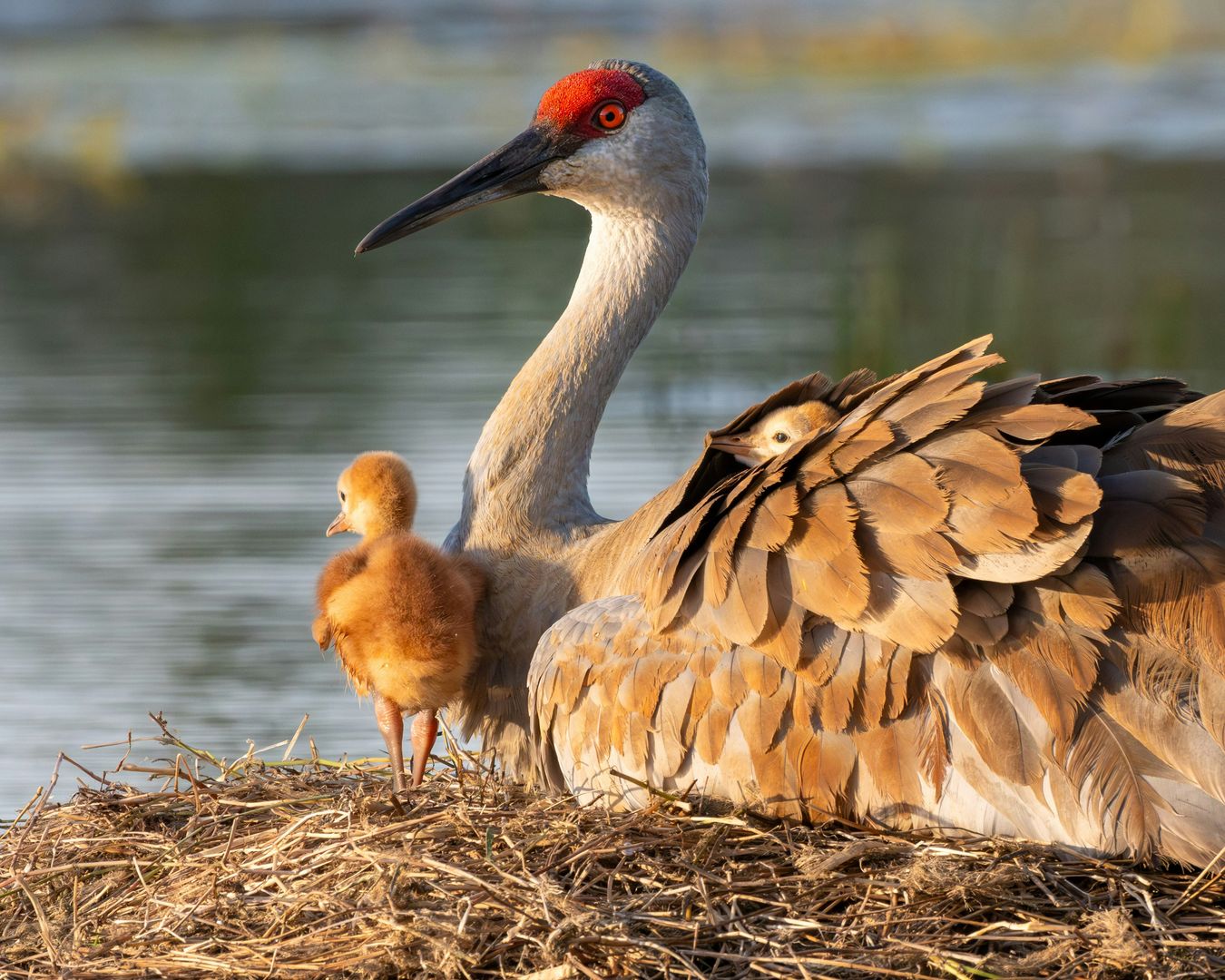
Frequently Asked Questions
Do sandhill cranes stop in Nebraska in the fall?
Some pass through, but Nebraska's famous Platte River gathering happens in spring, from mid-February into April, with the peak in the second half of March.
How long do sandhill cranes live?
They can live a long time. Cornell reports that the oldest known sandhill crane was at least 37 years and 3 months old. It was banded in Florida in 1982 and found in Wisconsin in 2019.
Do sandhill cranes mate for life?
Yes. That can mean two decades or more, and pairs stay together year-round, including migration.
Are sandhill cranes endangered?
Not as a species. Migratory sandhill cranes are abundant, but the nonmigratory Mississippi and Cuban populations are endangered.
What have you seen this migration season?
Tell us in the comments or through the Sparkbird App, available in the Apple App Store.
- Related: How to Use the Sparkbird App

No comments yet.