
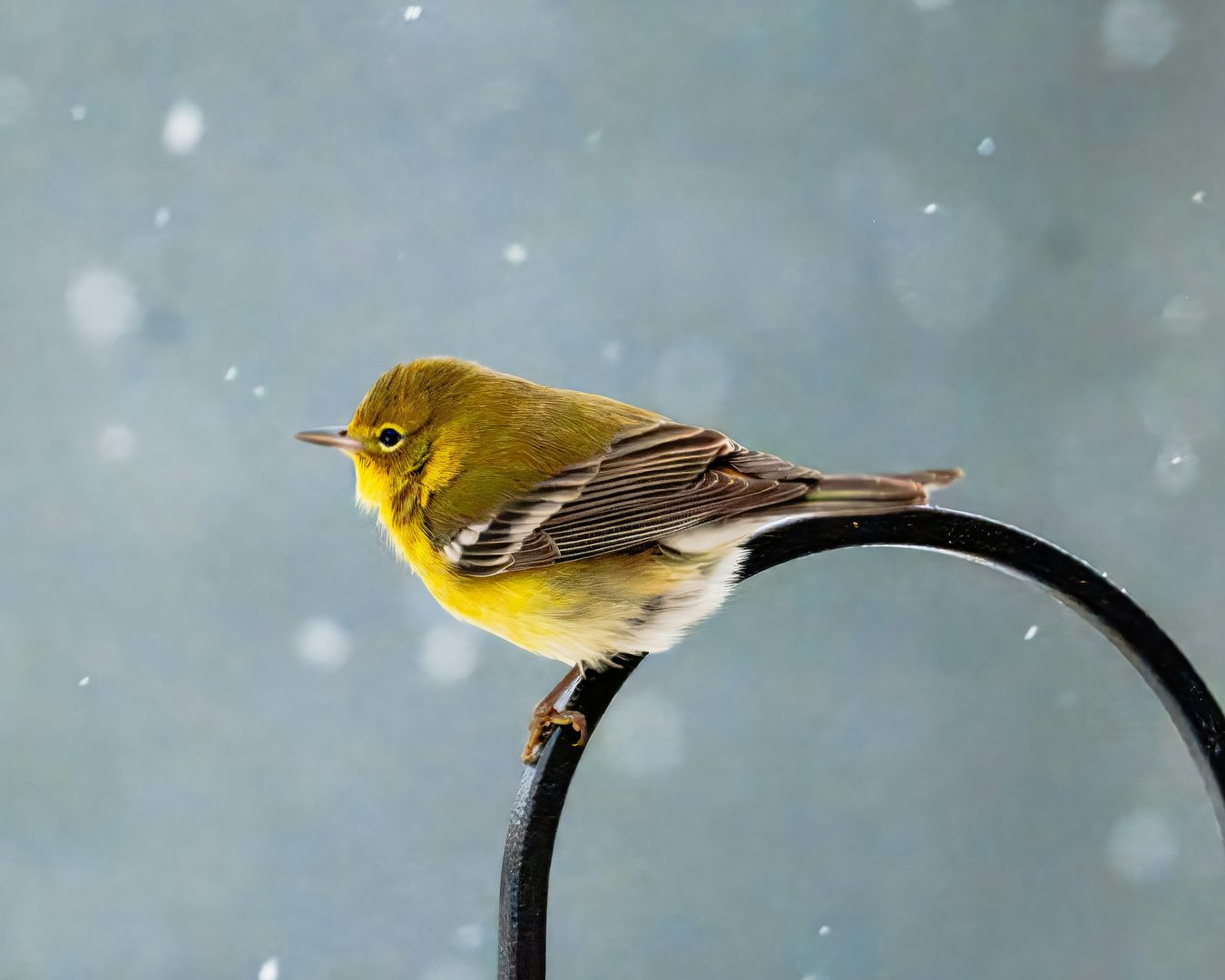
In spring, warblers dress like they're headed to a wedding. By September, half of them have changed into the same olive sweatpants. Even Roger Tory Peterson titled an entire plate "Confusing Fall Warblers" in his 1960 Texas field guide.
Part of the problem is who's flying. Fall flocks are full of young birds that hatched that summer, and many adults have molted out of their breeding colors. Audubon's study of 43 species found that fall migration is the most dangerous season for warblers, partly because so many of those travelers are inexperienced youths, as New Girl's Schmidt would call them.
How to Identify Fall Warblers: The Checklist
Audubon's fall warbler identification tips suggest starting with behavior, then working through the face, wings, back and belly, and finally the bill and feet. In practice, that means checking:
- Undertail coverts. White, buff, or yellow? This one mark solves more fall warbler puzzles than any other.
- Wingbars. Bold, thin, or missing.
- Streaking. Crisp, blurry, or none, and whether it's on the back, breast, or flanks.
- Eye-ring or eyeline. A full white ring, broken arcs, or a dark line through the eye.
- Legs and feet. Yes, really. Feet are the fine print.
- Tail spots and tail behavior. Wagging, fanning, or flashing color.
Focus on one bird at a time. Chasing six at once is how you end up with zero.
Difficult to Decipher Warblers
Blackpoll vs. Bay-breasted vs. Pine Warbler
The big three. According to Cornell's Blackpoll Warbler ID guide, fall Blackpolls are washed in pale yellow with blurry flank streaks, two white wingbars, and orange-yellow legs.
Fall Bay-breasted Warblers look shockingly similar, but Cornell notes the following:
- buff-olive (not white) undertail coverts
- a plainer face
- often a faint wash of bay on the flanks
- dark feet without bright yellow soles
Pine Warblers have:
- an unstreaked back (the other two are streaked)
- a stout bill
- less contrast in the wings, per the Audubon
Dwight Schrute said identity theft isn't a joke. Bay-breasted Warblers disagree.
Cape May Warbler
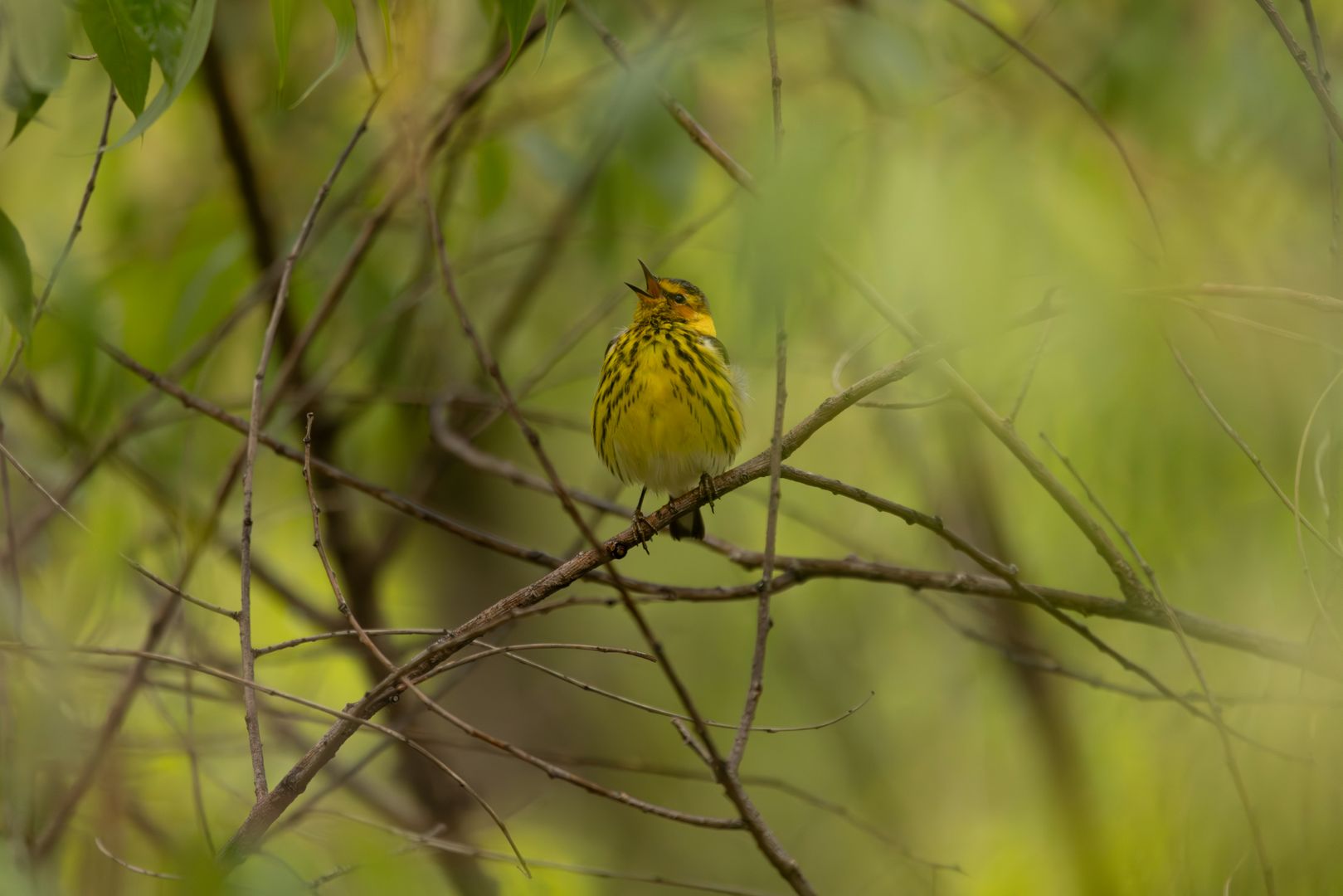
Fall Cape Mays are grayish, with blurry streaking down the breast and flanks, a yellowish-green rump, and thin wingbars. Cornell's best tell is the bill, which stays slender and slightly decurved at every age.
Adult males have a chestnut colored ear patch and are heavily streaked. Females and juvenile cape may warblers have a more olive or gray crown and soft streaks.
Tennessee vs. Orange-crowned Warbler
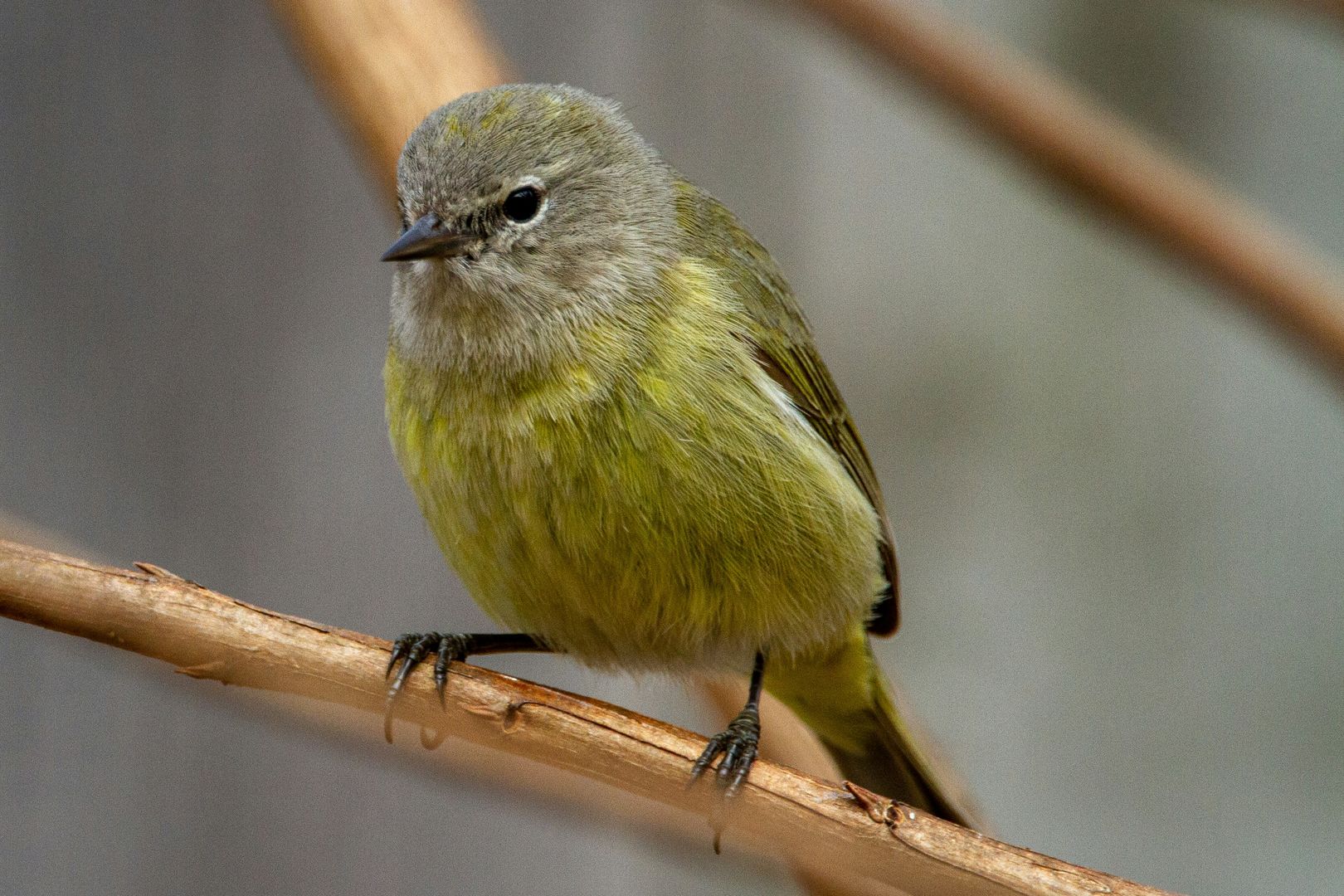
Both are plain yellow-green birds with no strong wingbars. Check underneath. Cornell says Tennessee Warblers always have white under the tail, while Orange-crowned Warblers have bright yellow undertail coverts.
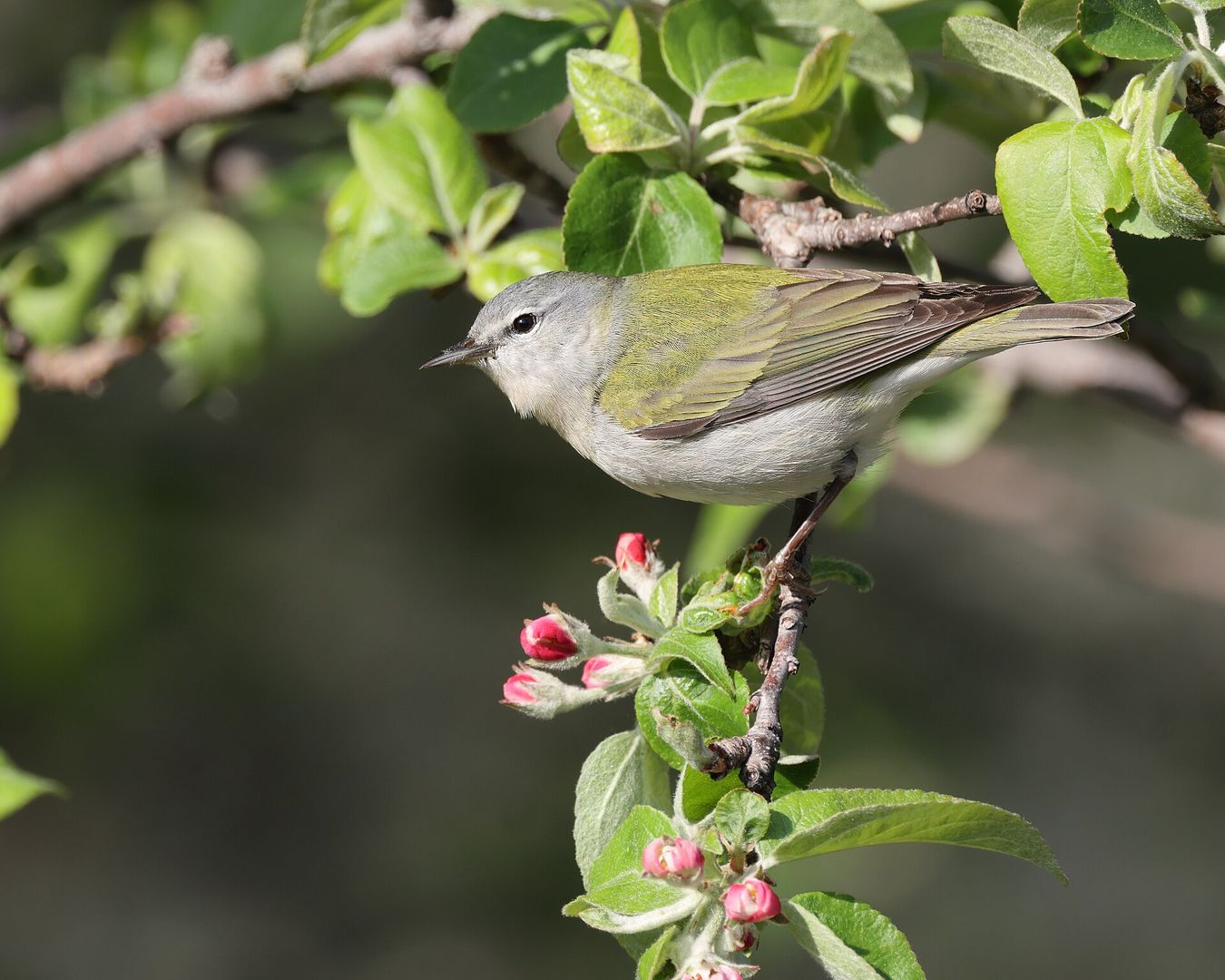
Their coverts are often the brightest part of the bird.
Orange-crowneds also show a dark line through the eye. Their famous orange crown is something you'll never see.
Yellow-rumped vs. Palm Warbler
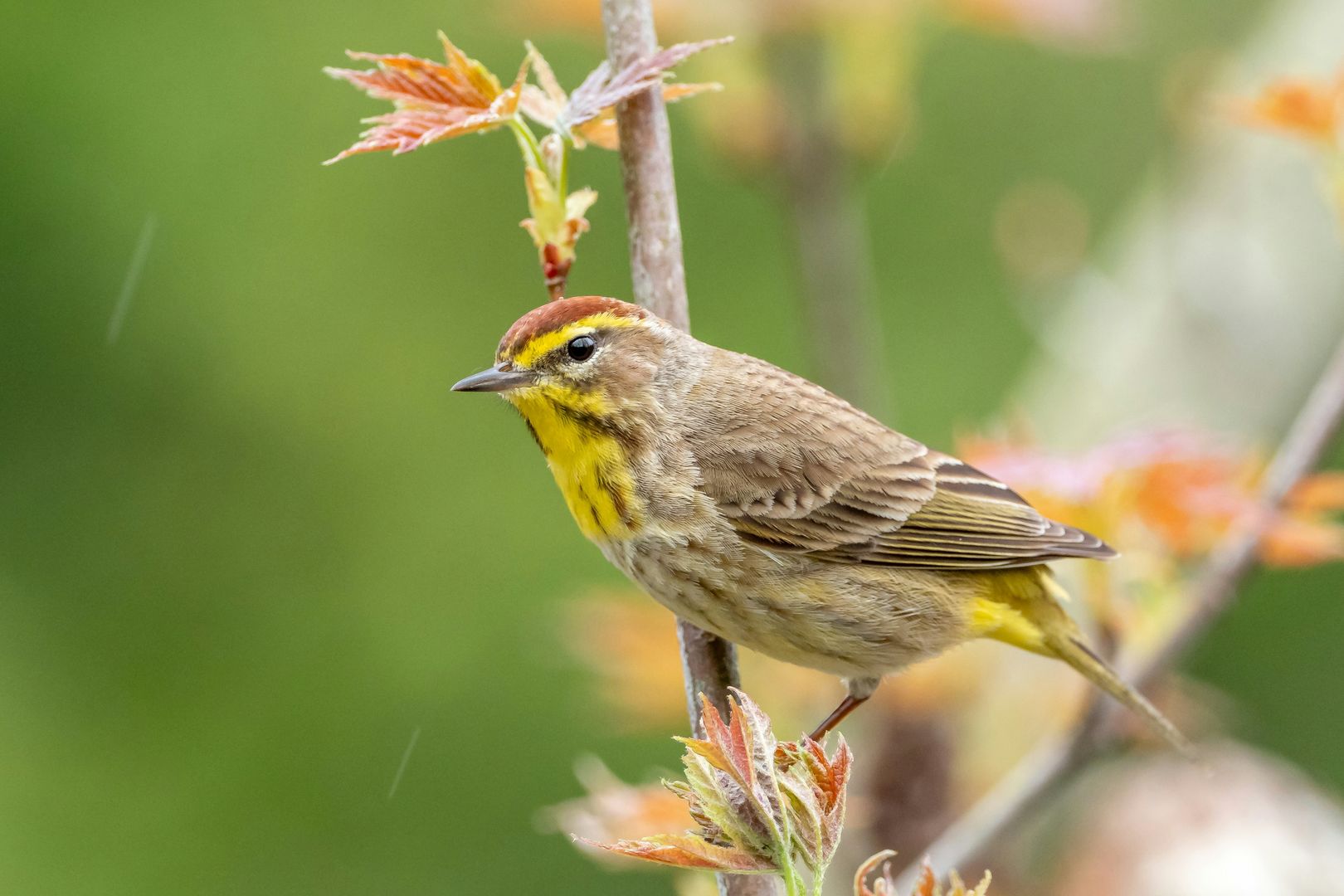
The late-season brown birds. Fall Yellow-rumped Warblers are paler brown with a bright yellow rump and usually yellow patches on the sides.
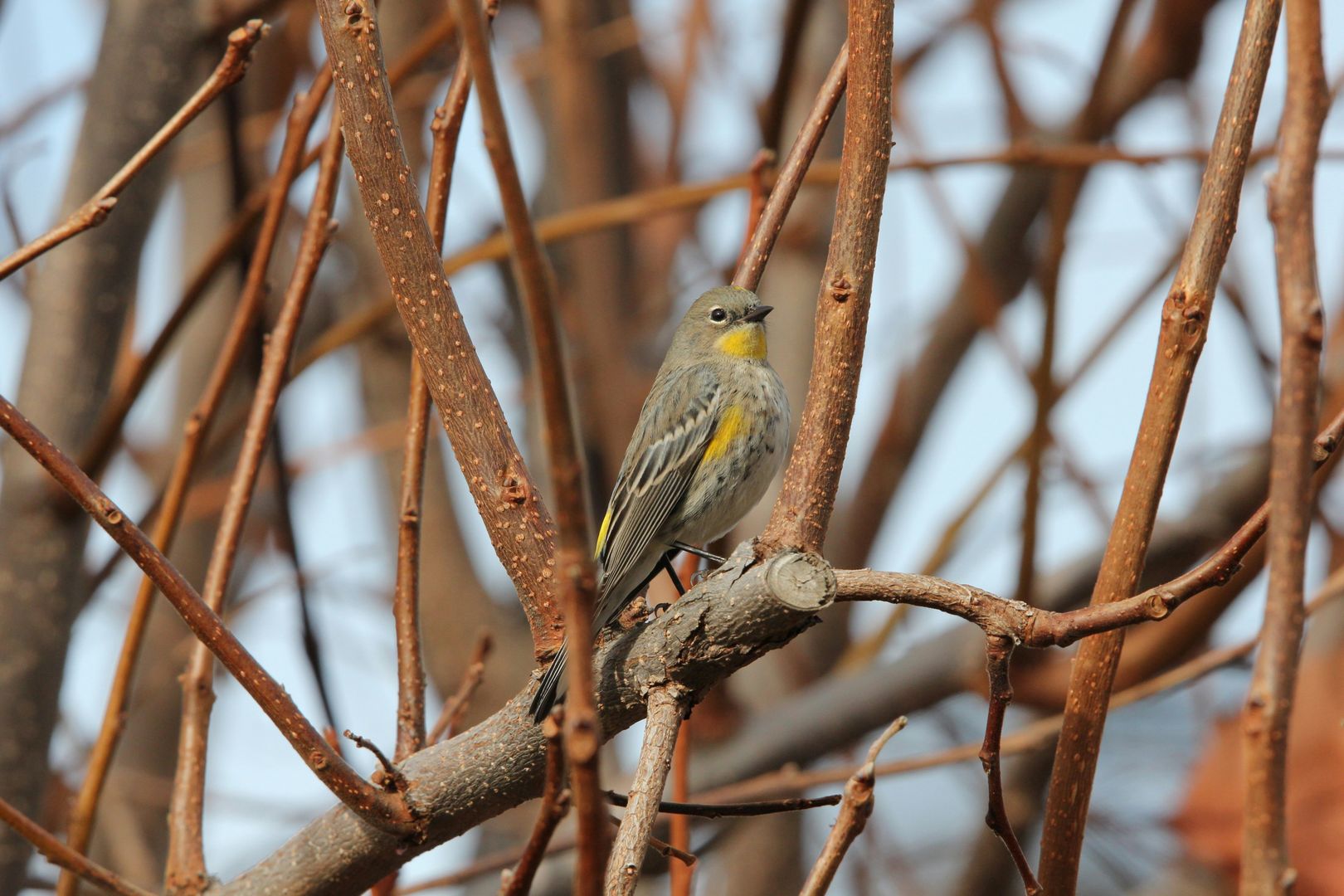
Palm Warblers wag their tails nearly constantly, often feed on the ground, and have yellow undertail coverts in every plumage, per Cornell's Palm Warbler guide.
If it's bobbing like it has a song stuck in its head, it's a Palm.
Magnolia Warbler
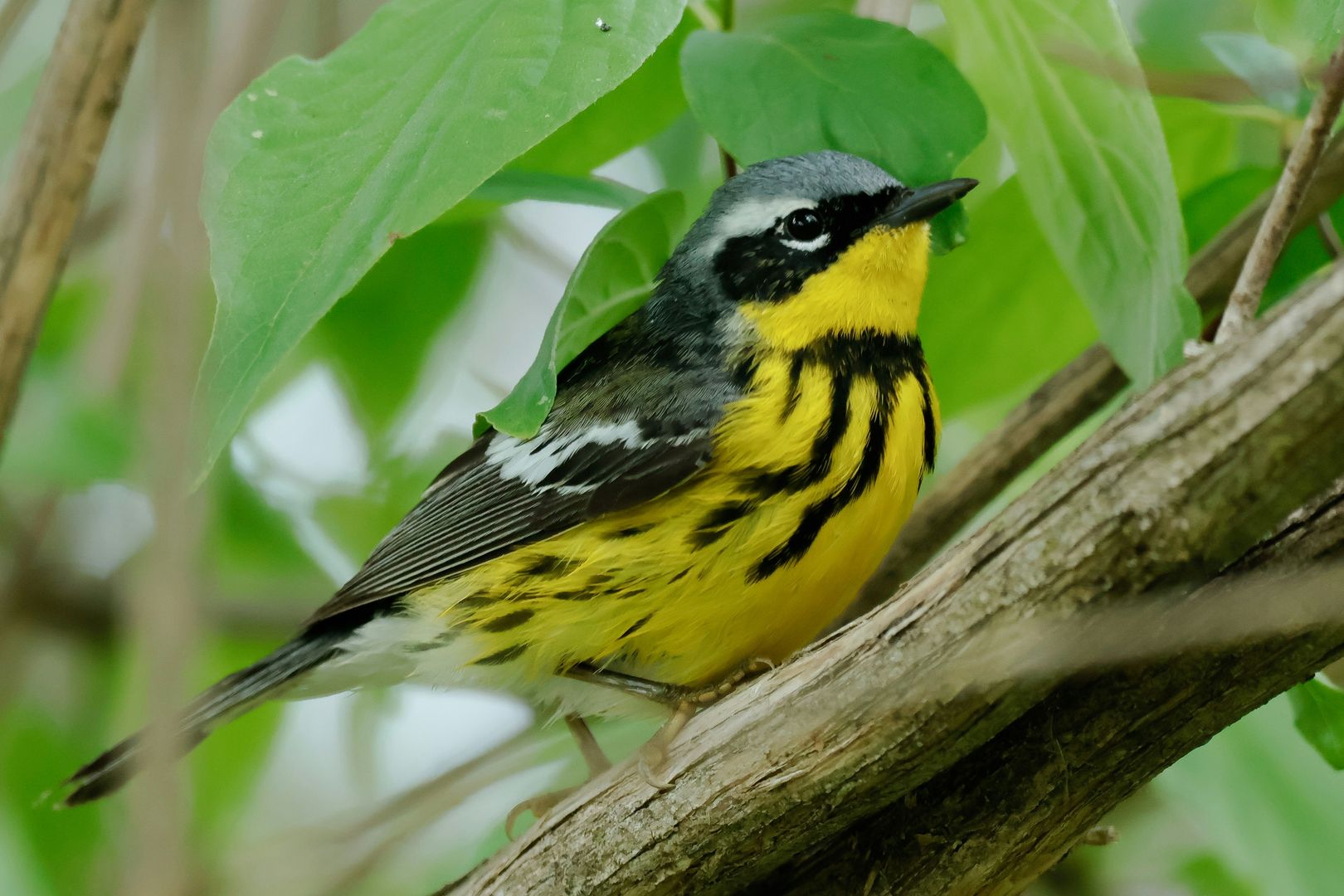
The easy win. Fall Magnolias have a gray head, white eye-ring, and a faint gray band across the neck, but the clincher is the tail. From below, Audubon says it looks like it was dipped in black ink: white at the base, black at the tip.
Call it a tell-tail.
Common Yellowthroat (female and immature)
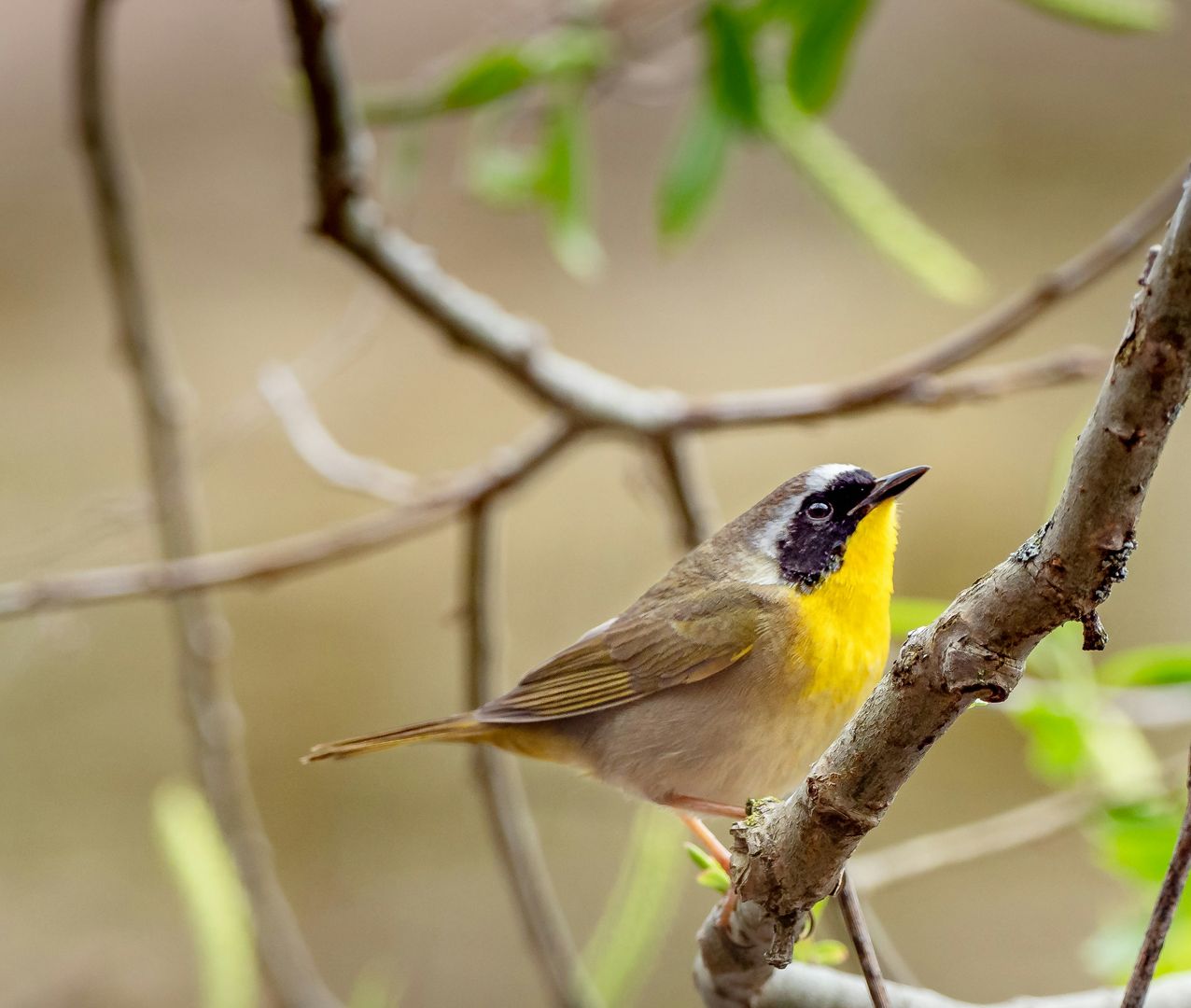
No mask, no wingbars, just an olive-brown bird with yellow on the throat and undertail, skulking low in thickets.
If it's acting like it owes you money, it's probably a yellowthroat.
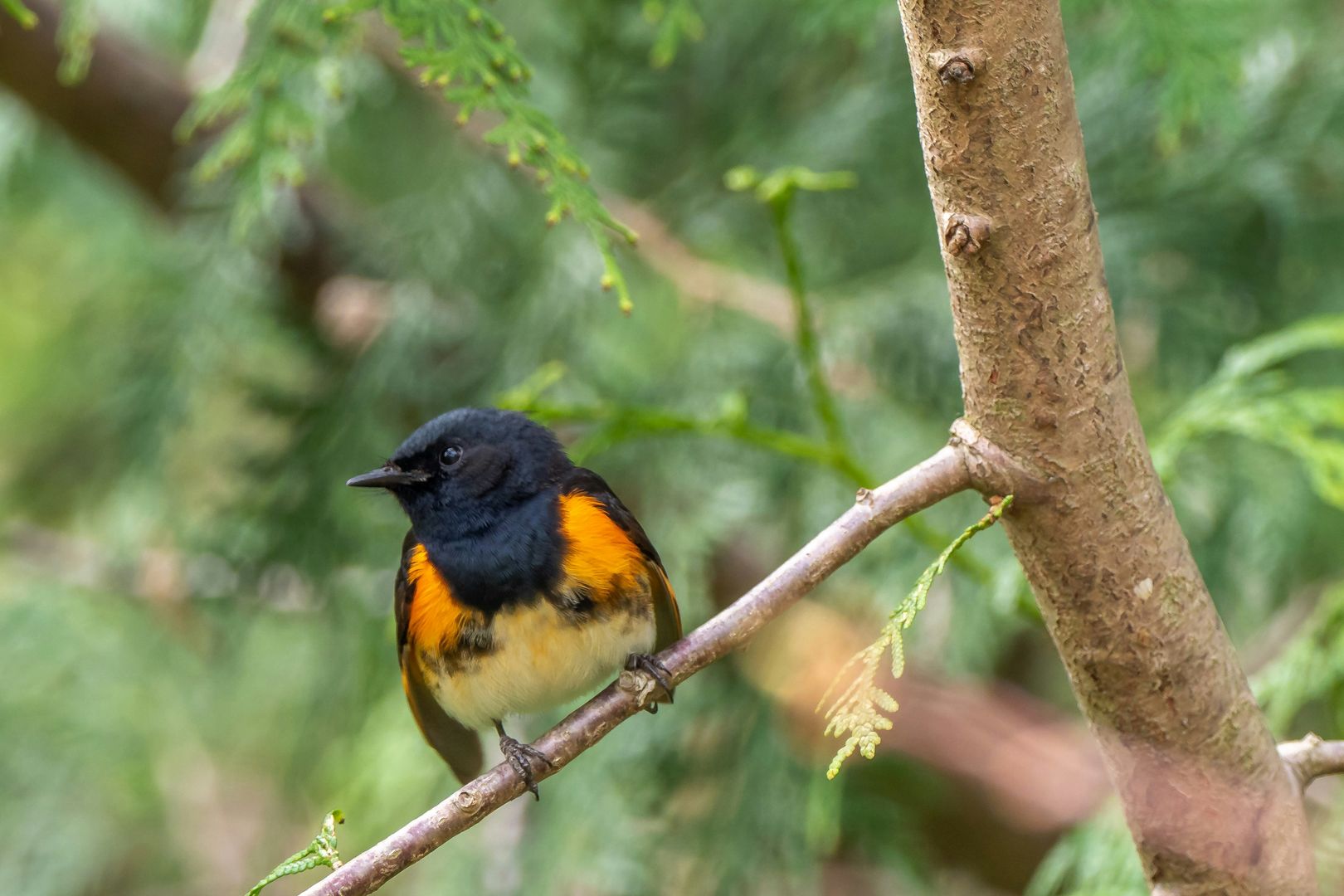
Female and immature American Redstart
Gray head, olive back, and yellow patches on the sides, wings, and tail.
Redstarts fan their tails constantly, flashing those yellow "windows" like tiny turn signals.
The Best Thing You Can Do for Fall Warblers
Those inexperienced young warblers stop in yards, parks, and hedges to refuel, which puts them right at cat level. American Bird Conservancy estimates outdoor cats kill 2.4 billion birds in the U.S. each year, making them the top direct human-caused threat to birds.
A catio or a harness gives your cat fresh air without the body count. Catios are a great way to let your feline have some outdoor time without worry about them becoming the next coyote's meal, too.

Aivituvin Catio Outdoor Cat Enclosure with Scratch Post, Hammock, Large Window Cat House for 2-6 Mulitiple Cats Walk in Kitty Cage with Tarp Roof 70" Black
Aivituvin
Warblers in Fall
If you're new to identifying anything, start with [the four questions birders ask first]. For timing and the best places to find big mixed flocks, see our guide to [warbler migration] and head to our fall migration guide for what else is moving this fall.
Frequently Asked Questions
When do fall warblers migrate?
In northwest Ohio, the Black Swamp Bird Observatory says warbler migration is strongest in the first three weeks of September. Yellow-rumped, Palm, and Orange-crowned Warblers come through later, into October.
Why do warblers look different in fall?
Many fall warblers are young birds in their first plumage, and many adults have molted into duller nonbreeding feathers. Bright breeding colors fade to olive, gray, and buff.
How do you tell a Blackpoll from a Bay-breasted Warbler in fall?
Check the undertail coverts and feet. Blackpolls have white undertails and orange-yellow legs; Bay-breasted Warblers have buffy undertails and dark feet.
Do warblers come to bird feeders?
Rarely, but Pine Warblers are the exception. Cornell notes they'll visit feeders for seeds and suet, especially in winter.
What have you seen this migration season?
Tell us in the comments or through the Sparkbird App, available in the Apple App Store.
- Related: How to Use the Sparkbird App

No comments yet.