
Put your knowledge to the test! Do you know these fun facts about wild turkeys?
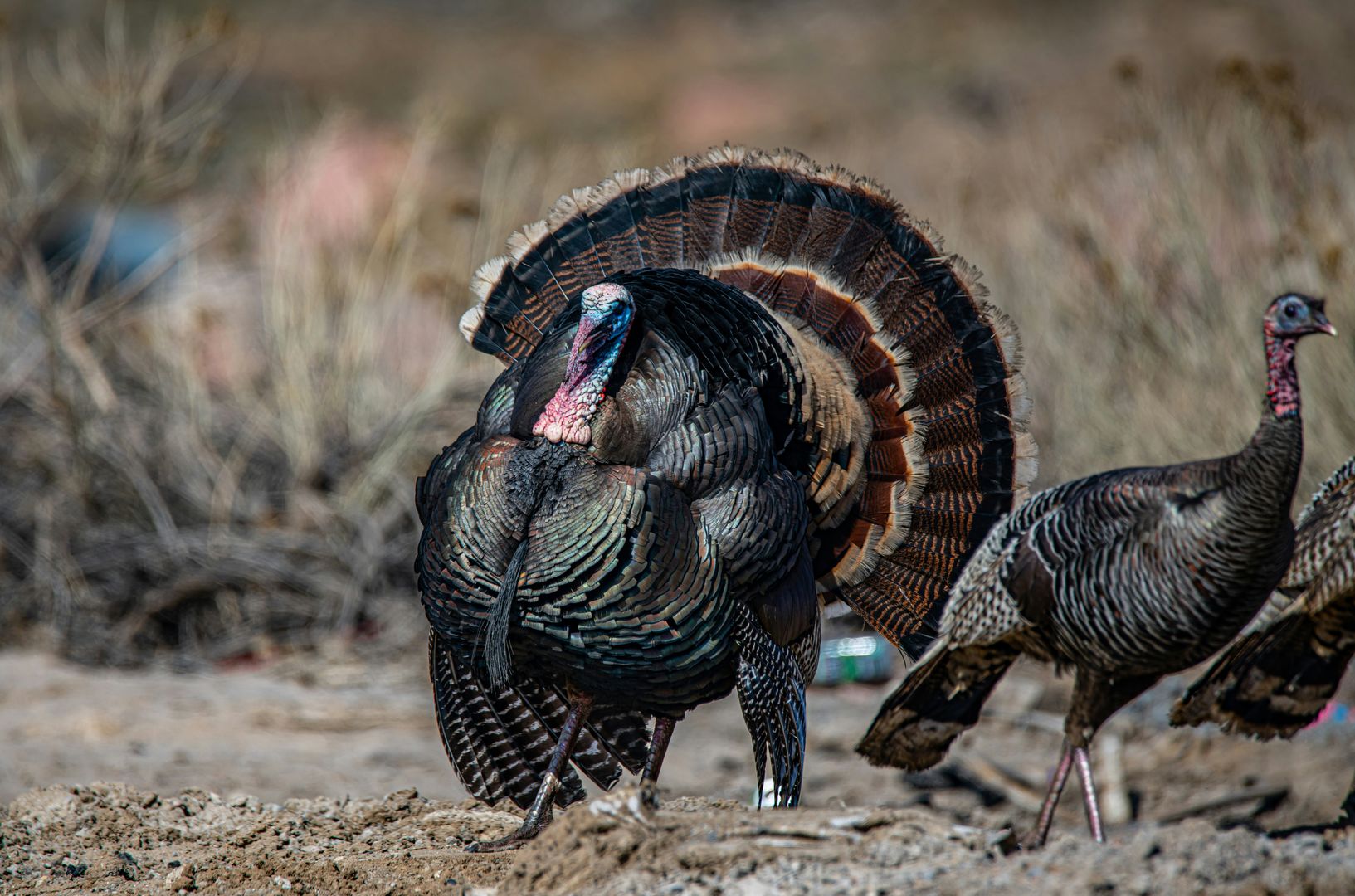
1. They run up to 25 mph and fly up to 55 mph
That’s faster than most human runners! Think your Turkey Trot can compare?
They can also fly in short bursts at 55 mph.
4. They can detect ultraviolet light
Wild turkeys also see in colors, both of which help them detect predators and find food.
They also have a 270-degree field of view because their eyes are on the side of their head. The downside is they need to adjust their head to judge depth and distance.
5. Wild Turkeys have many nicknames
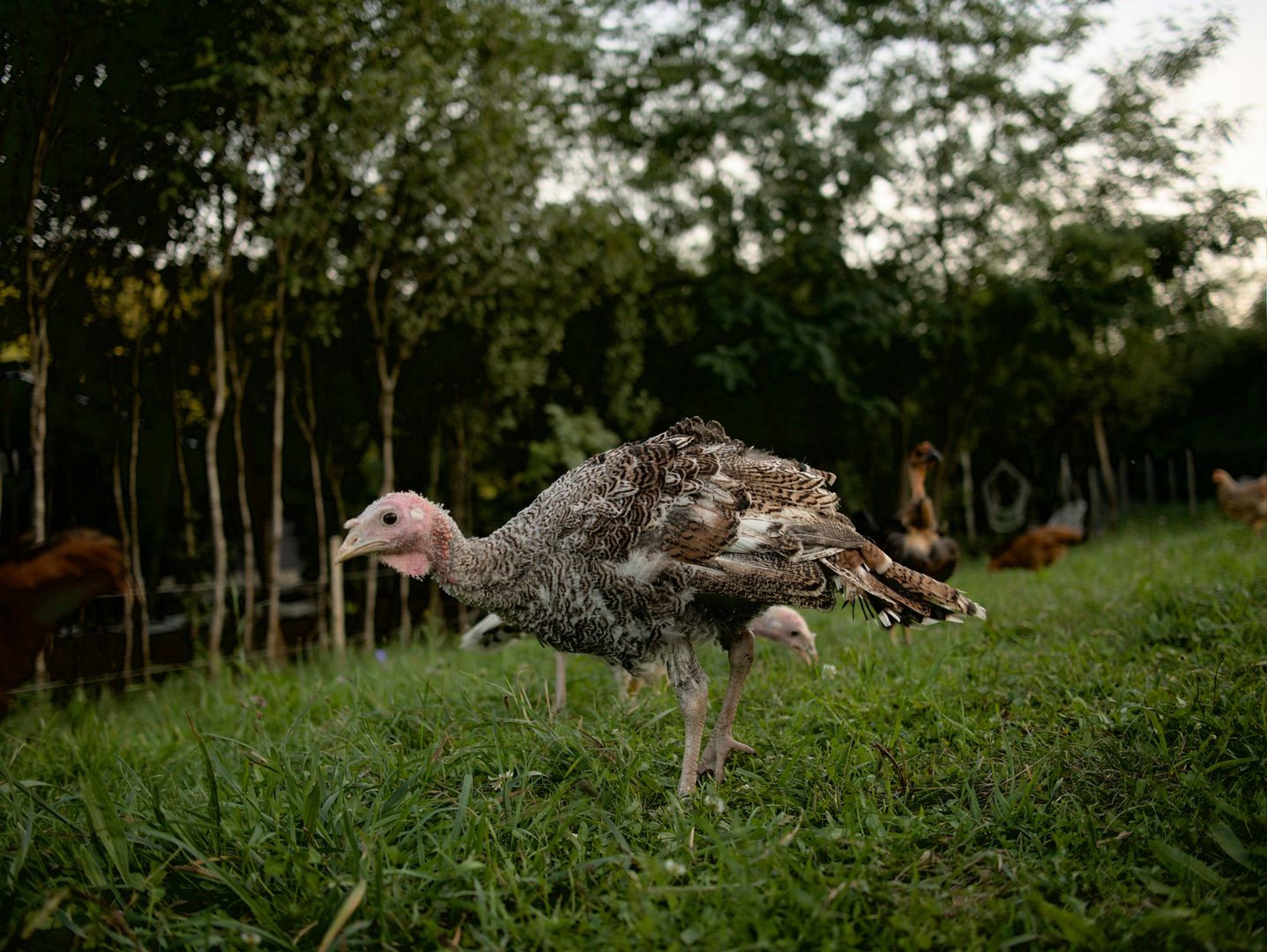
Adult male turkeys are often called Tom or Gobbler, and young males are called Jake. Adult female turkeys are called hens, like many other adult female birds, but a young female is a Jenny.
“Jake and Jenny sitting in a tree. K-i-s-s-i-n-g…”
2. Wild turkeys have better than hearing than people
Their acute hearing is roughly 4 times better than humans, allowing them to detect where sounds come from with pinpoint accuracy.
Don’t think they won’t hear you talking about your stuffing recipe!
3. They sleep in trees
Wild turkeys roost, or settle in an area for rest, in trees. It keeps them safe from predators like coyotes and foxes.
Seeing such a large bird in the trees is kind of odd but completely normal for them.
6. Turkeys have 5,000 to 6,000 feathers
While that may seem like a lot, that’s the average number of feathers for many birds.
Other large birds like Swans can have 25,000 feathers and Emperor Penguins upwards of 80,000.
Tip: Make wild turkey sightings into a fun game by gobbling at them!
9. Wild turkey is an uncommon food in Europe
It's rare to see a whole turkey in the grocery store in places like Germany, Netherlands, or France.
Most of the turkey available is farm raised instead of wild.
7. Their wattle and snood are like mood rings
The wattle is the red skin hanging below its chin, and the snood is the skin that hangs from the beak. Both will change size and color with mood.
And yes, the women prefer males with larger snoods.
In fact, male wild turkeys with bigger snoods have less parasites on average than males with smaller snoods, so this is an instance where size really does matter.
8. The men spar with each other
This thanksgiving day turkey fact surprised me! Toms have spurs on the back of their legs and will use them to spar with other males.
You hear of stags or roosters fighting each other but never turkeys.
10. A cookbook is how turkey on Thanksgiving became tradition
Sarah Josepha Hale featured turkey as the main dish in her 1827 novel, Northwood, before promoting it in her magazine for its’ practicality in size and availability.
Thanksgiving wasn’t even a National Holiday until 1863 but she advocated for that, too.
Got any cool turkey pictures?
Share them on the Sparkbird App! Available in the Apple App Store.
- Related: How to Use the Sparkbird App
No comments yet.