
There are 4 types of winter birds in Minnesota you’ll see on the list:
- Irruptive Species – irregular migration of a large number of birds outside their normal winter range. Typically driven by a "boom-and-bust" cycle in food resources
- Resident Minnesota Bird – native or non-native species that stay year-round instead of migrating
- Native Minnesota Bird - birds that evolved or originated from Minnesota
- Migratory / Visitor – birds that migrate to Minnesota to and from breeding grounds
The formal term for birds whose origin to a region is natural while living there year round is a Resident Bird but for the sake of this guide we don’t distinguish between native and resident birds.
1. Pileated Woodpecker
- Family – Picidae
- Species – Dryocopus pileatus
- Primary Activity Time – Day (Diurnal)
- Native Minnesota Bird
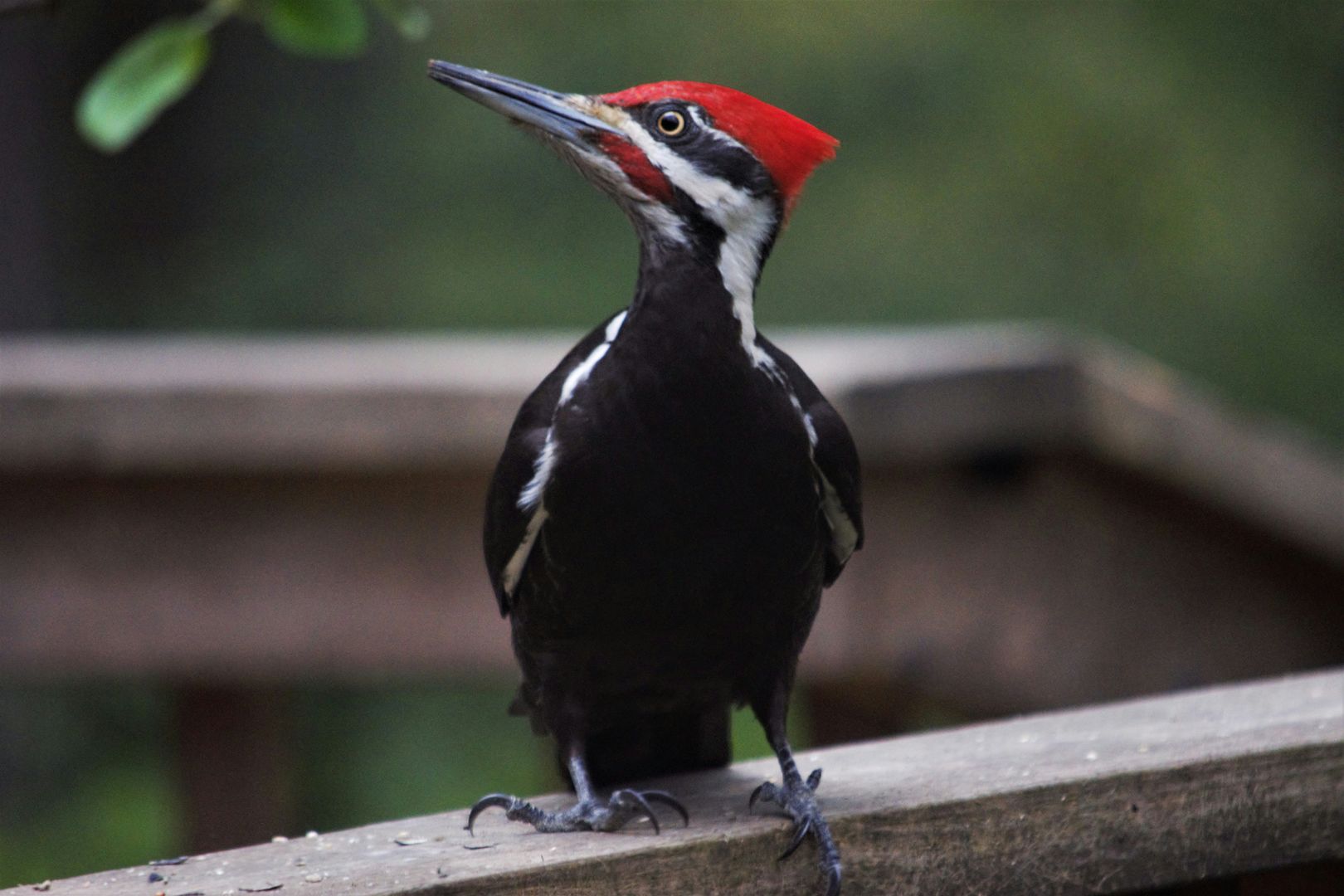
The Pileated Woodpecker is the largest woodpecker in North America outside the Ivory-billed.
They feed heavily on carpenter ants, beetle larvae, and other wood-boring insects, but will also visit suet feeders in winter. Their dramatic excavations create important cavities for owls, ducks, and small mammals.
Pileated Woodpecker - Male vs Female
Both have bold black plumage with white wing patches and a prominent red crest (how you’d think a stereotypical woodpecker looks). A male Pileated Woodpecker has a red stripe on its cheek, though, whereas a female Pileated Woodpecker has a black one.
A Pileated Woodpecker sounds like a ringing “kuk-kuk-kuk-kuk” that’s reminiscent of a monkey. Similarly, a Pileated Woodpecker drumming sound on hollow trees is slower and more resonant than other woodpeckers.
In winter the Pileated Woodpeckers’ range will span the state where there are mature forests, wooded river corridors, and suburban areas with large trees.
2. Pine Grosbeak
- Family – Fringillidae
- Species – Pinicola enucleator
- Primary Activity Time – Dawn and Dusk
- Crepuscular
- Irruptive
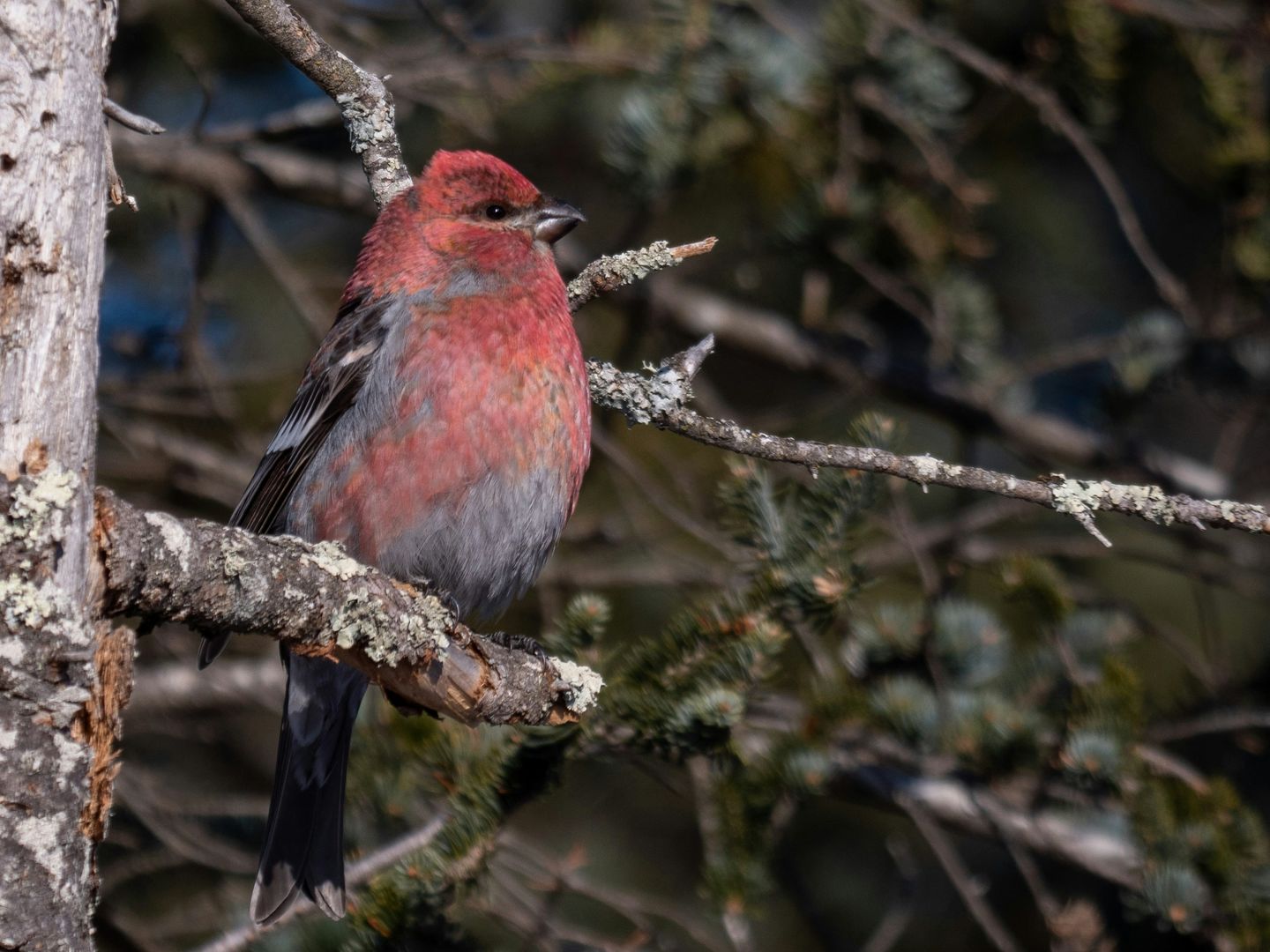
The Pine Grosbeak is one of many irruptive winter birds in Minnesota. It’s a stout finch that favors a granivorous and frugivorous diet, taking seeds, buds, and winter berries.
Its calm demeanor and slow feeding pace make it approachable in winter towns.
Males show a rosy‑red wash over gray wings and tail, while females are olive‑yellow with the same gray patterning. This Irruptive Minnesota bird sounds like a mellow, whistled tee‑tee‑tew that carries on cold air.
In Minnesota winters the Pine Grosbeak range is across northern Minnesota, especially near conifer forests and towns with mountain-ash or crabapple trees.
3. Trumpeter Swan
- Family – Anatidae
- Species – Cygnus buccinator
- Primary Activity Time – Day (Diurnal)
- Native Minnesota Bird (some migrate short distances)
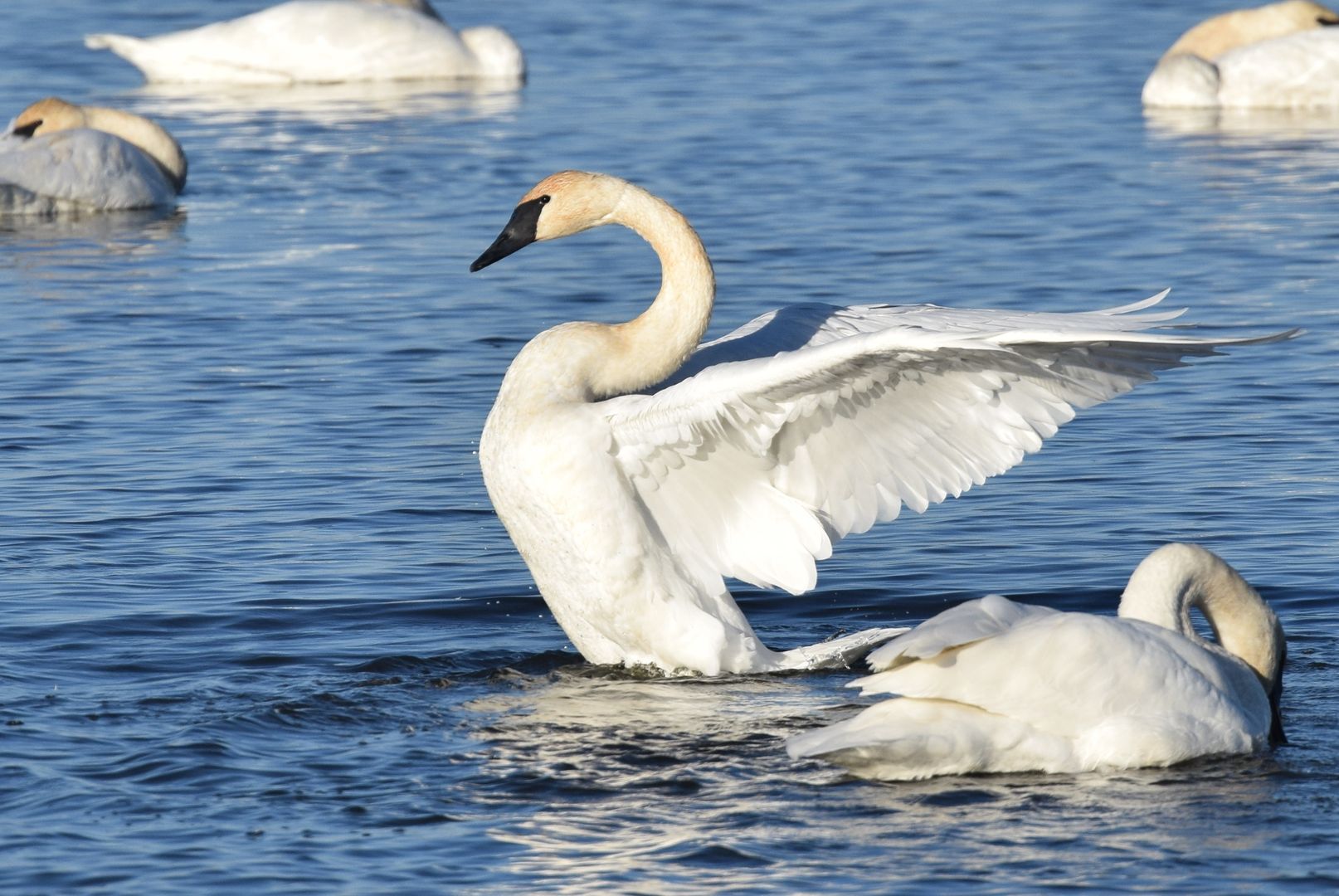
The Trumpeter Swan is North America’s largest native waterfowl species. They’re known for their dramatic recovery after near-extirpation. Extirpation is like extinction in a specific area, and for the trumpeter swan, it was due to unregulated hunting and habitat loss in the 1800s Iowa and Wisconsin.
Hence, why Trumpeter Swan hunting is illegal.
They’re bright white with long necks and a stately silhouette. Their black bills distinguish them from Mute Swans who have orange bills. Trumpeter Swan size is between 20 to 30 lbs with wingspans of 4 to 5 feet, also making them easy to tell apart from geese in flight.
A Trumpeter Swan call is a trumpet-like “honk” or “oooohp” thus giving it its name.
Their winter range in Minnesota is relegated mostly to Southern and central Minnesota where waters are partially unfrozen.
4. White-winged Crossbill
- Family – Fringillidae
- Species – Loxia leucoptera
- Primary Activity Time – Dawn and Dusk (Diurnal)
- Irruptive
(PIC)
Also a granivorous cone specialist, the White Winged Crossbill targets spruce and tamarack cones extracting seeds with their crossed bills. It may feed continuously through short winter days.
Males are pinkish‑red with striking white wing bars with females displaying yellowish feathers with the same bold wing pattern.
The White Winged Crossbill call is a short and shallow “jip jip jip”. Some have even likened it to the sound of a cartoon laser beam. It’s another distinct song among the Minnesota bird sounds that make it an easy bird to ID by sound.
A White Winged Crossbill’s range during irruption is irregular but around conifer bogs, spruce stands, and tamarack swamps.
5. European Starling
- Family – Sturnidae
- Species – Sturnus vulgaris
- Primary Activity Time – Day (Diurnal)
- Native Minnesota Bird (Non-Native)
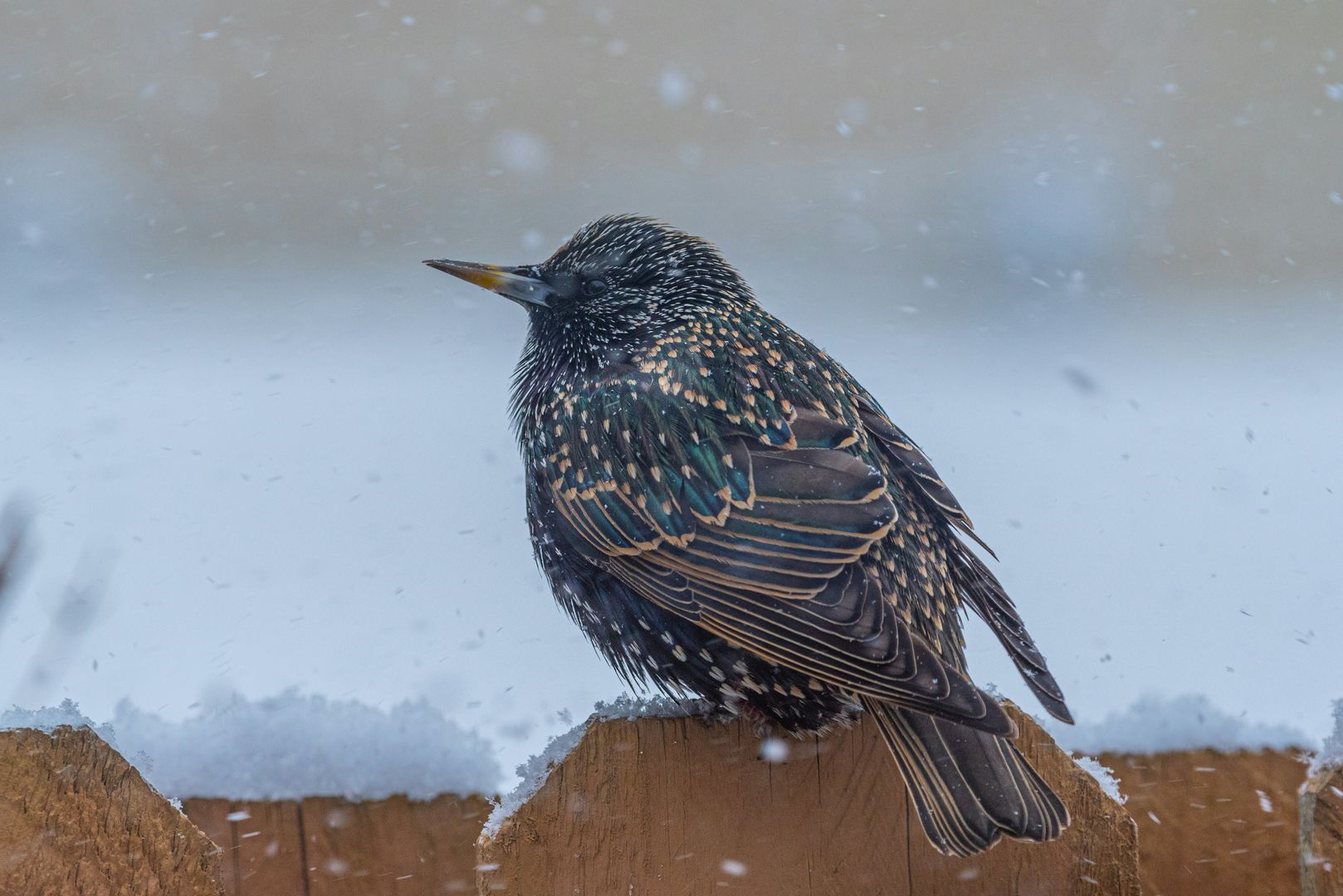
The European Starling is an introduced species that has spread widely as an invasive species that outcompetes other native birds for nesting spots. These omnivores feed on insects, fruits, grains, and human refuse.
Starlings show iridescent dark plumage with speckled patterns in winter and pointed yellow bills in breeding season. Their triangular wings and rapid flight make them easy to identify in flocks.
A female European Starling is more brown than black on its back and may have a red spot near the base of its bill compared to a male European Starling.
The European Starling bird call is extensive—whistles, clicks, harsh notes, and even mimicry of other birds. Winter flocks constantly chatter especially around roosts.
European Starlings remain in Minnesota year-round throughout the state.
6. Ruffed Grouse
- Family – Phasianidae
- Species – Bonasa umbellus
- Primary Activity Time – Day (Diurnal)
- Native Minnesota Bird
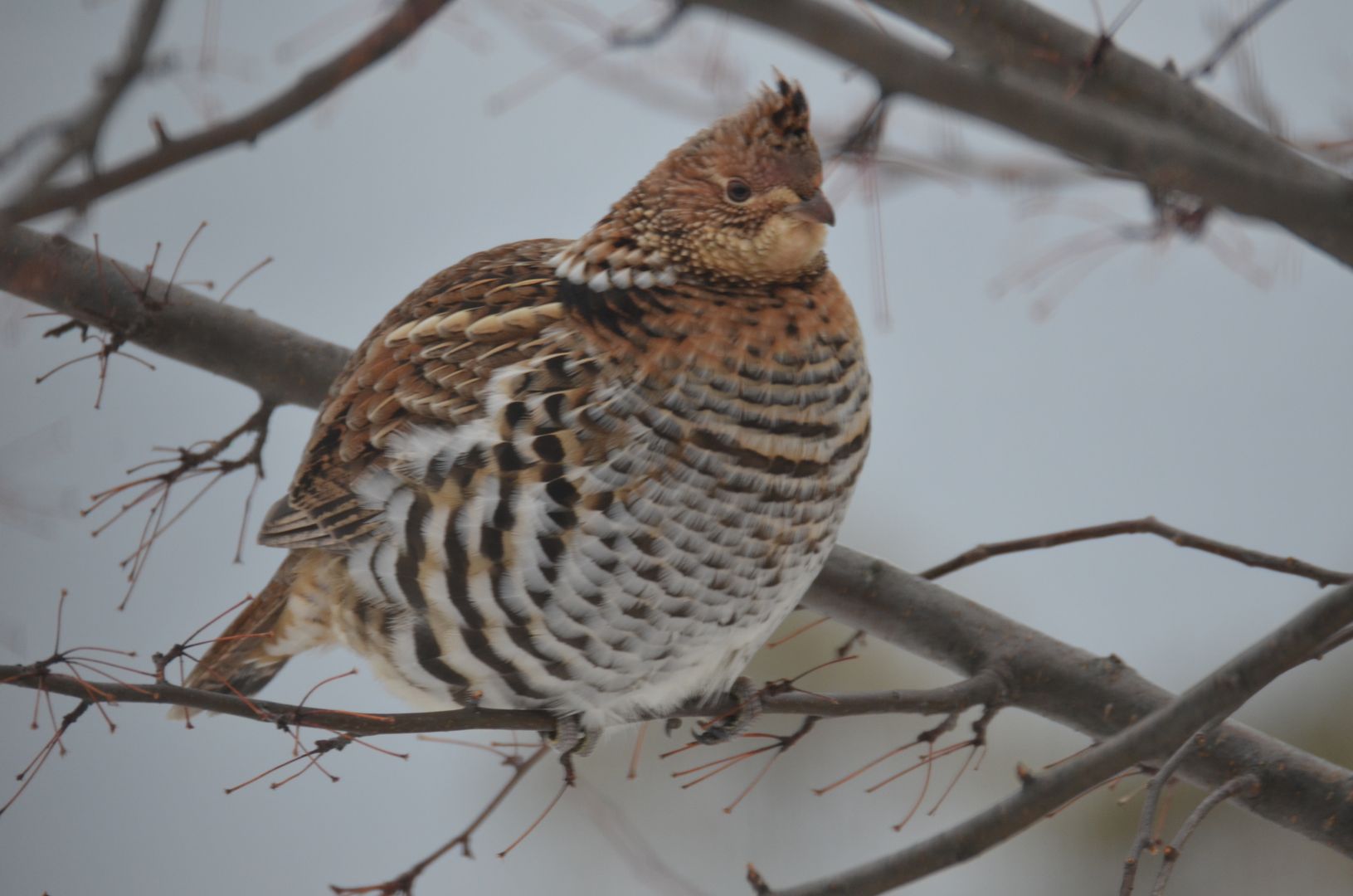
The Ruffed Grouse is known for its remarkable snow-roosting behavior and its preference for young aspen forests.
Its' cryptic brown or gray plumage blends seamlessly with leafless woodlands and snowy forest floors. Sharp Tailed Grouse vs Ruffed Grouse: the difference is in the tail.
A Ruffed Grouse call is soft clucks, low grunts, and sudden, powerful wingbeats as it bursts from cover. These explosive flushes are often the primary cue to its presence but the ruffed grouse call is not loud enough to ID by sound per se.
Ruffed Grouse range in northern and central Minnesota is among aspen forests, mixed woodlands, and brushy uplands.
7. Pine Siskin
- Family – Fringillidae
- Species – Spinus pinus
- Primary Activity Time – Dawn and Dusk (Diurnal)
- Irruptive
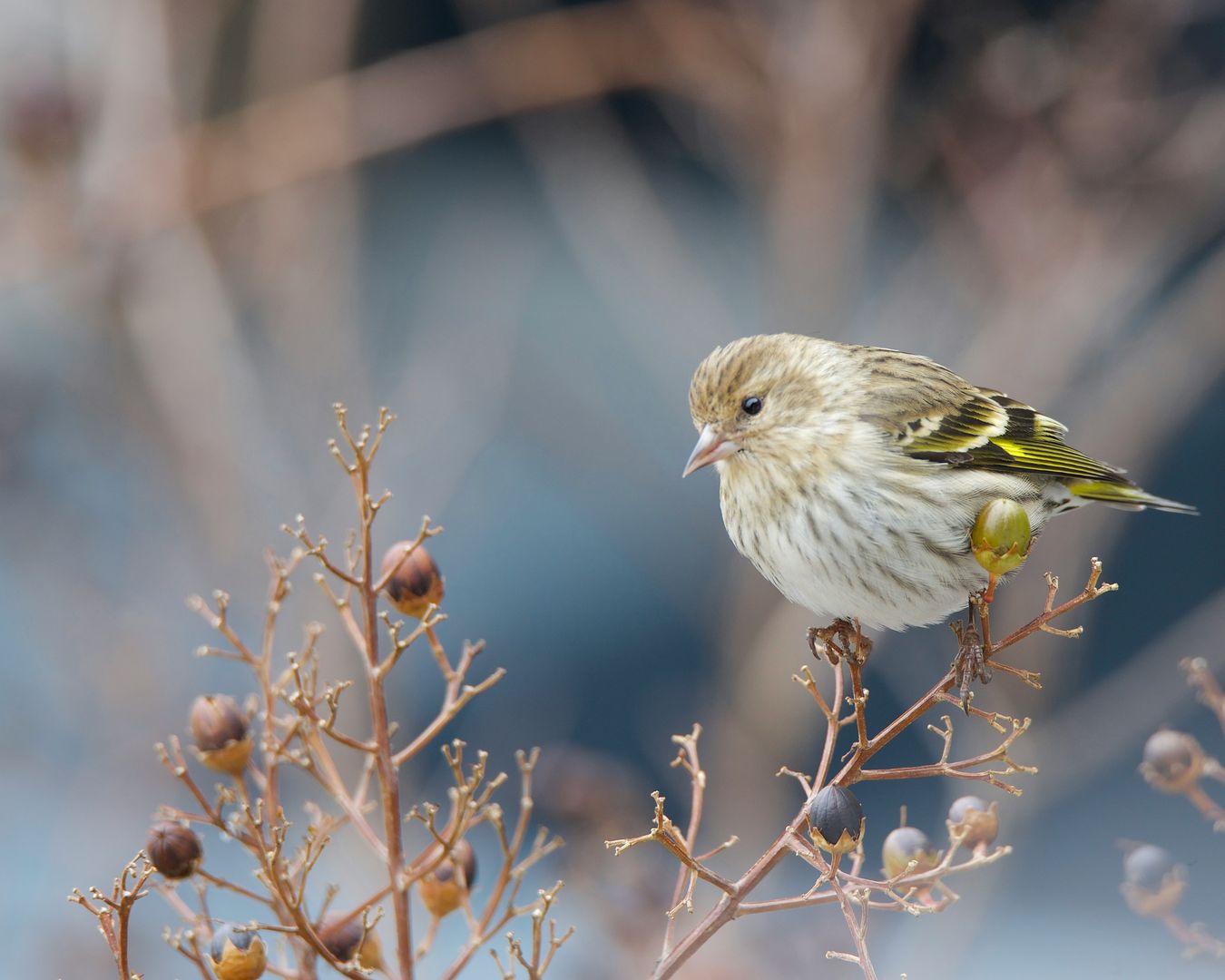
The Pine Siskin is a strongly granivorous bird with a fine bill. It often feeds on conifer seeds, alders, and birches, and readily visits nyjer seed and sunflower chips at feeders. It supplements with small insects in mild spells.
They’re streaky brown with subtle yellow flashes in the wings and tail.
A Pine Siskin call is buzzy, often giving rising “zreee” sounds and chatter. They roam widely with cone availability. Their appearance won’t make them easy amidst Minnesota bird identification but their call makes them a slightly easier bird to ID by sound.
Numbers can build statewide in irruption winters making the Pine Siskin range quite expansive around conifer stands and well‑stocked feeders.
8. Purple Finch
- Family – Fringillidae
- Species – Haemorhous purpureus
- Primary Activity Time – Dawn and Dusk (Diurnal)
- Irruptive
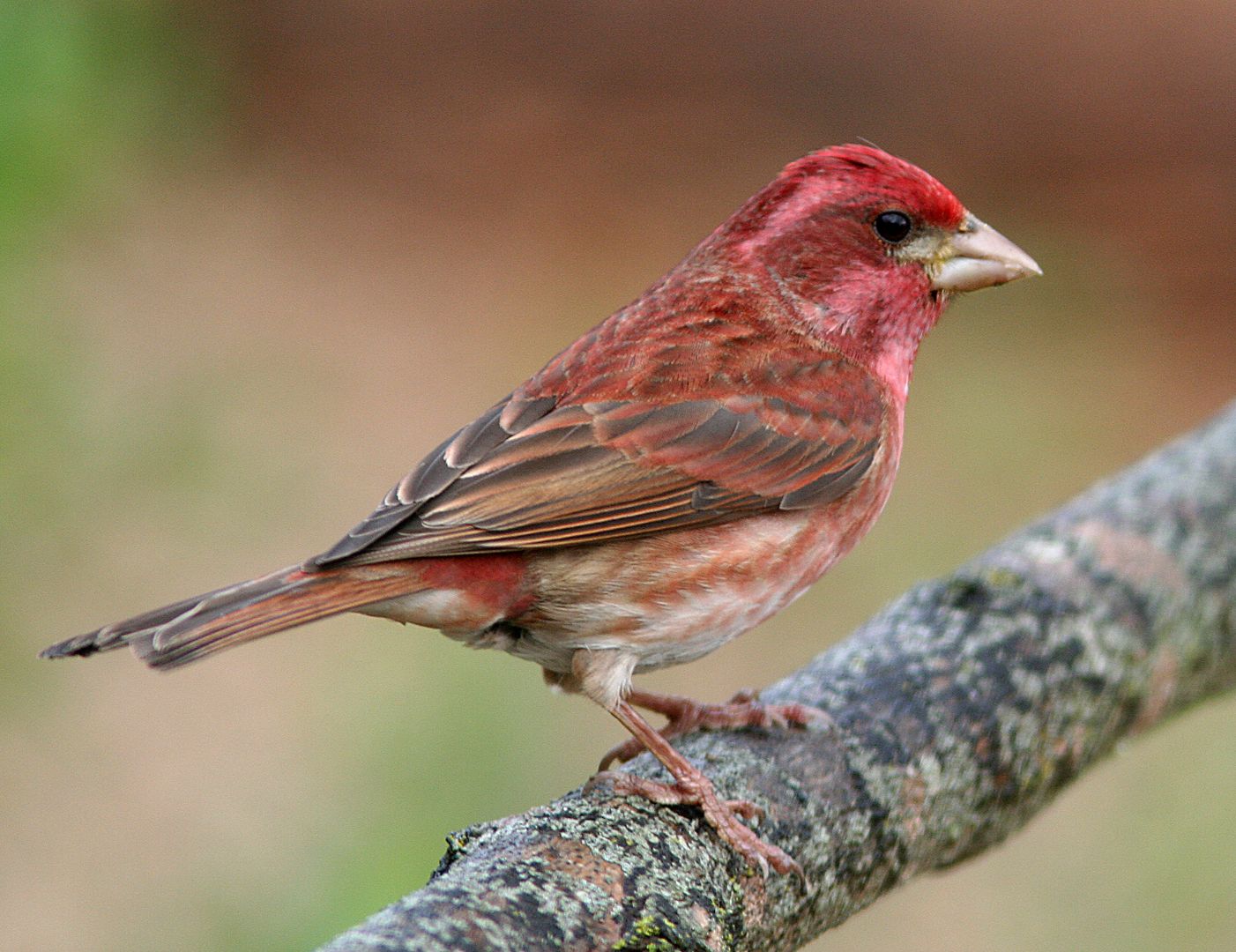
A robust finch that is largely granivorous and frugivorous, the Purple Finch feeds on tree seeds and winter fruit and readily visits sunflower feeders. Buds and blossoms are taken when available.
Males are raspberry‑washed over the head and breast without strong streaking, and females are brown with bold facial lines. The males are one of the prettiest winter birds in Minnesota during irruption, in my opinion.
The Purple Finch call sounds like a rich, rolling warble of soft “pik” and “tek” sounds. It’s bird call reminds me of a loquacious busy-body you run into while doing errands.
Irruptions bring this species into the northern forests of Minnesota but can also show up at feeders statewide.
- Related: 34 Winter Birds in Michigan
9. Blue Jay
- Family – Corvidae
- Species – Cyanocitta cristata
- Primary Activity Time – Dawn and Dusk (Diurnal)
- Native & Resident Minnesota Bird
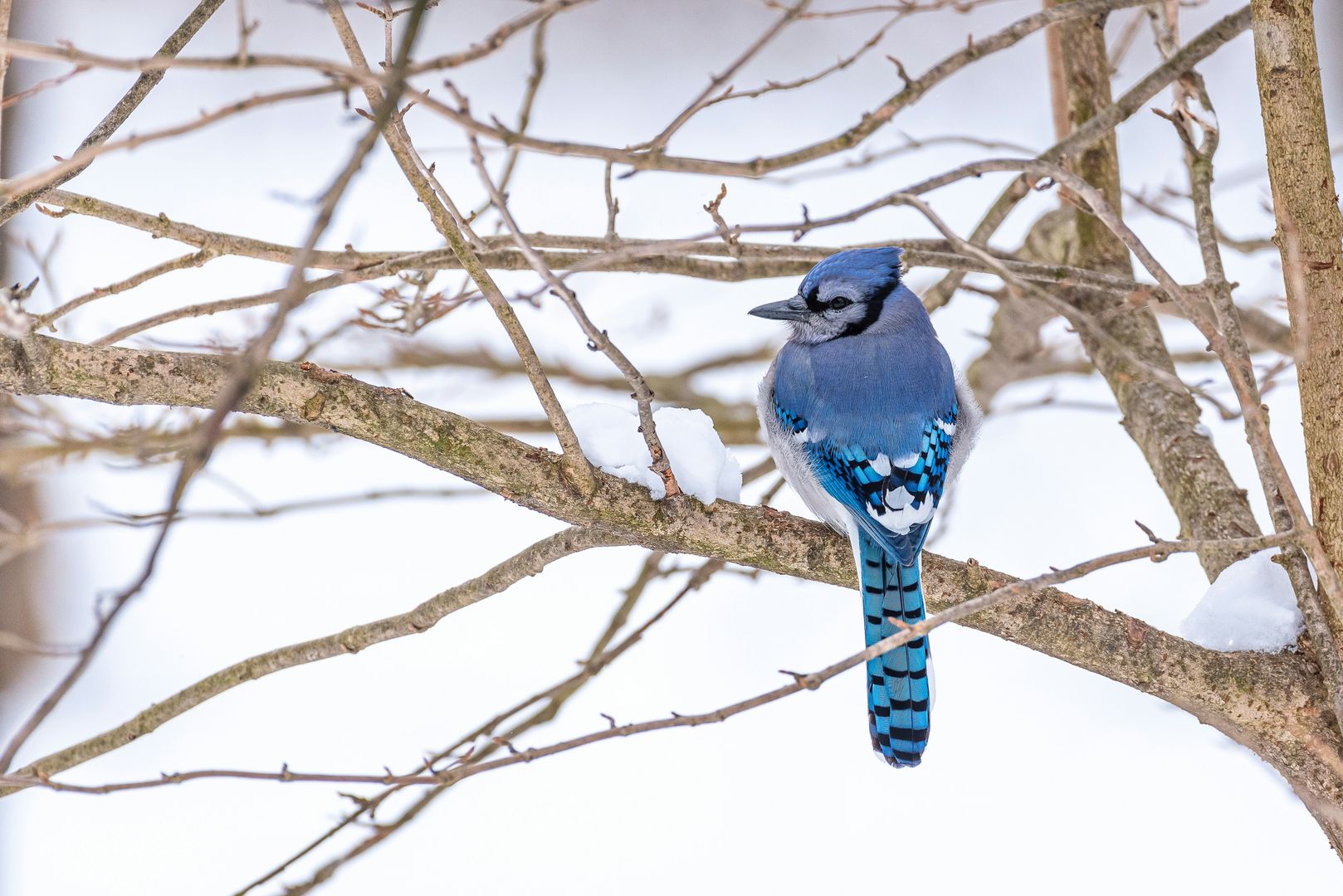
An omnivorous corvid that eats acorns, seeds, fruits, and insects. It is a regular at peanut and sunflower feeders. Jays cache nuts and broadcast alarm calls around predators.
Female vs Male Blue Jay: both are nearly identical with bold blue plumage and a black necklace with crisp white underparts. Male and female Blue Jay birds are bold, noisy, and social.
One difference to tell apart the males from females is their slightly larger size. They also share domestic duties (i.e. building the nest).
A Blue Jay call ranges from jeer alarms to soft whistles and uncanny hawk imitation– all with a flat or falling call pattern. To the novice birder a Blue Jay call can sound like a crow. The Blue Jay mating call is more melodic and cheery.
Year‑round native can be found mingling with winter birds in Minnesota everywhere.
10. Bohemian Waxwing
- Family – Bombycillidae
- Species – Bombycilla garrulus
- Primary Activity Time – Dawn and Dusk (Diurnal)
- Irruptive
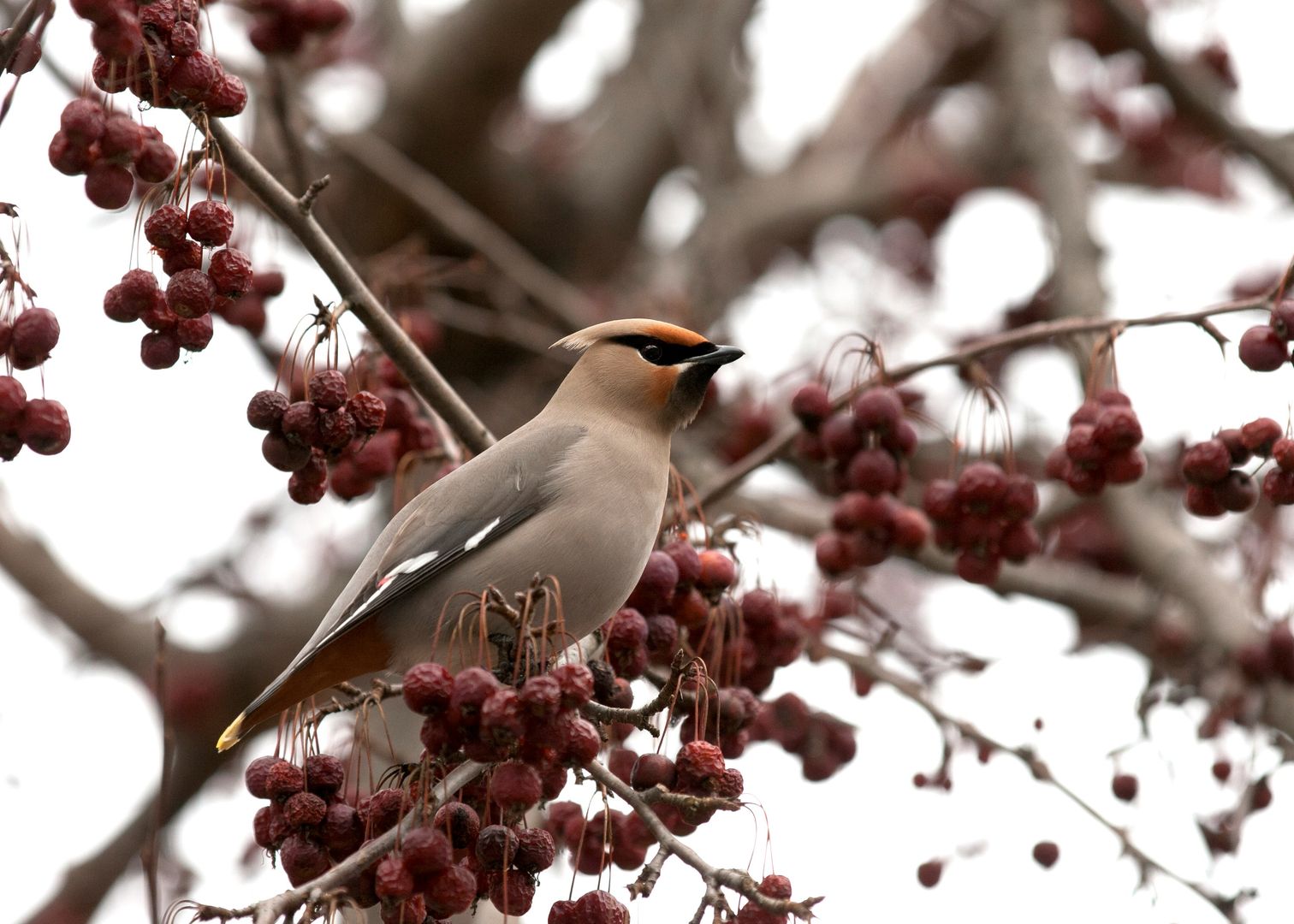
A silky, crested songbird, the Bohemian Waxwing is primarily frugivorous in winter, flocking to mountain‑ash, crabapple, and cedar berries. It also eats insects when thaw allows. Its communal feeding can strip fruiting trees rapidly.
Males are larger and duskier than Cedar Waxwings with chestnut undertail coverts, yellow‑tipped tail, a slicked back mohawk, and neat black mask that looks like winged eyeliner. Females look nearly identical.
The Bohemian Waxwing call is like high-pitched ringing trills that sound like a “sreeee”. Their song has also been likened to a toy laser sound.
As far as Minnesota bird identification in the winter goes, the striking appearance and bird call alike make the Bohemian Waxwing easy to ID.
Occasional irruptions reach Minnesota’s northern towns and boreal regions.
11. Snowy Owl
- Family – Strigidae
- Species – Bubo scandiacus
- Primary Activity Time – Dusk (Nocturnal)
- Irruptive
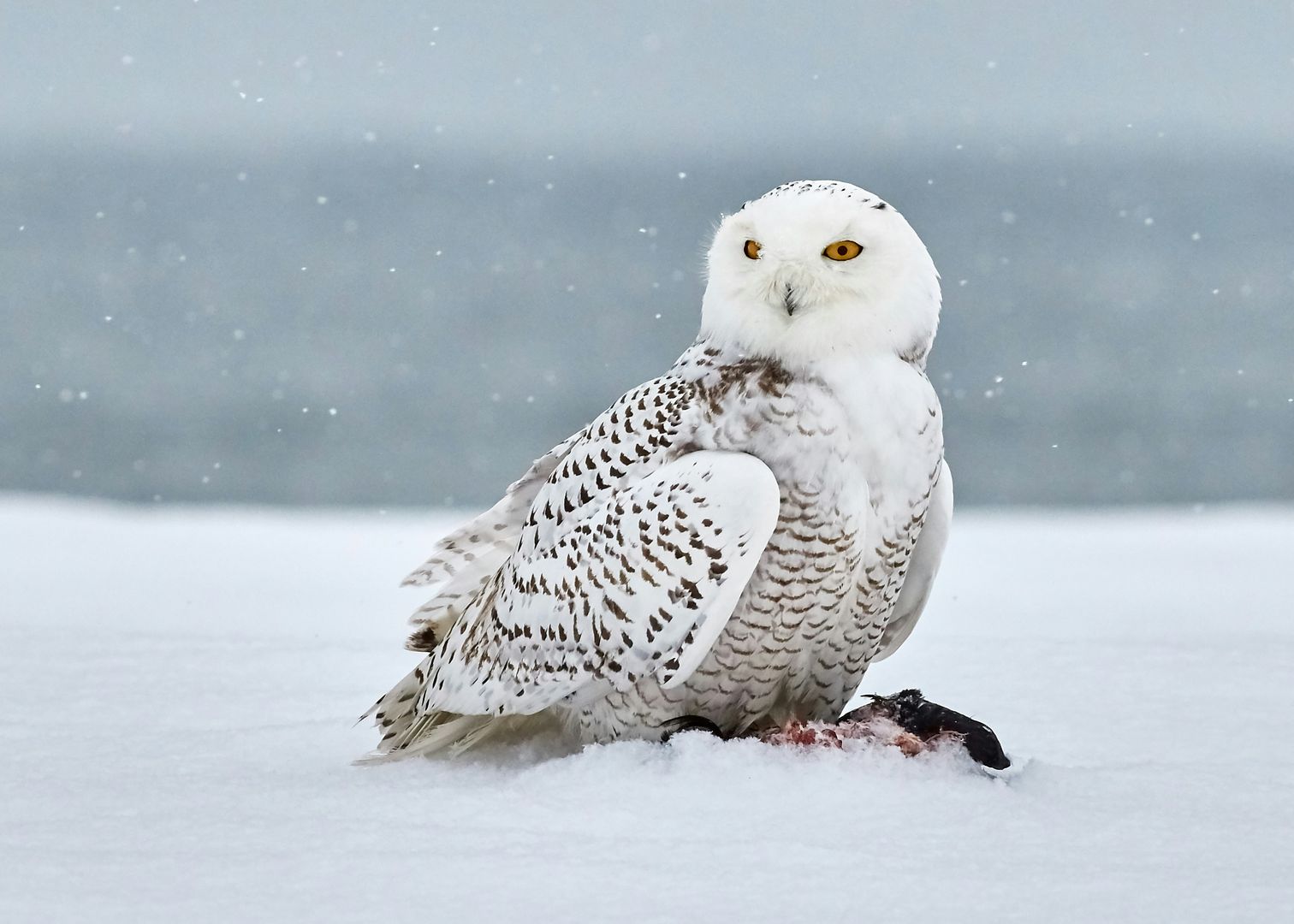
The Snowy Owl is a powerful arctic owl is a bird of prey that mainly eats small mammals especially lemming‑like rodents. Along coasts it will also take waterfowl and shorebirds but in wintering areas it hunts from open perches and ground vantage points.
They’re a large pale white owl– easy to miss against a snowy background. You may know the Snowy Owl from Harry Potter named Hedwig. Hedwig is actually a female Snowy Owl in the books but is portrayed by a male Snowy Owl in the Harry Potter movies! Young or female Snowy Owls show heavier dark barring, whereas adult males can appear nearly pure white.
Snowy Owl size varies in that females are usually larger than males, and their wingspan can reach near 5.5 feet. The call is a booming double hoot despite many winter birds being often silent and relying on visual hunting at low light.
In Minnesota, Snowy Owl range spans the open shorelines, airports, and farm fields in Northern and Central Minnesota.
12. Mallard
- Family – Anatidae
- Species – Anas platyrhynchos
- Primary Activity Time – Day (Diurnal)
- Native & Resident Minnesota Bird
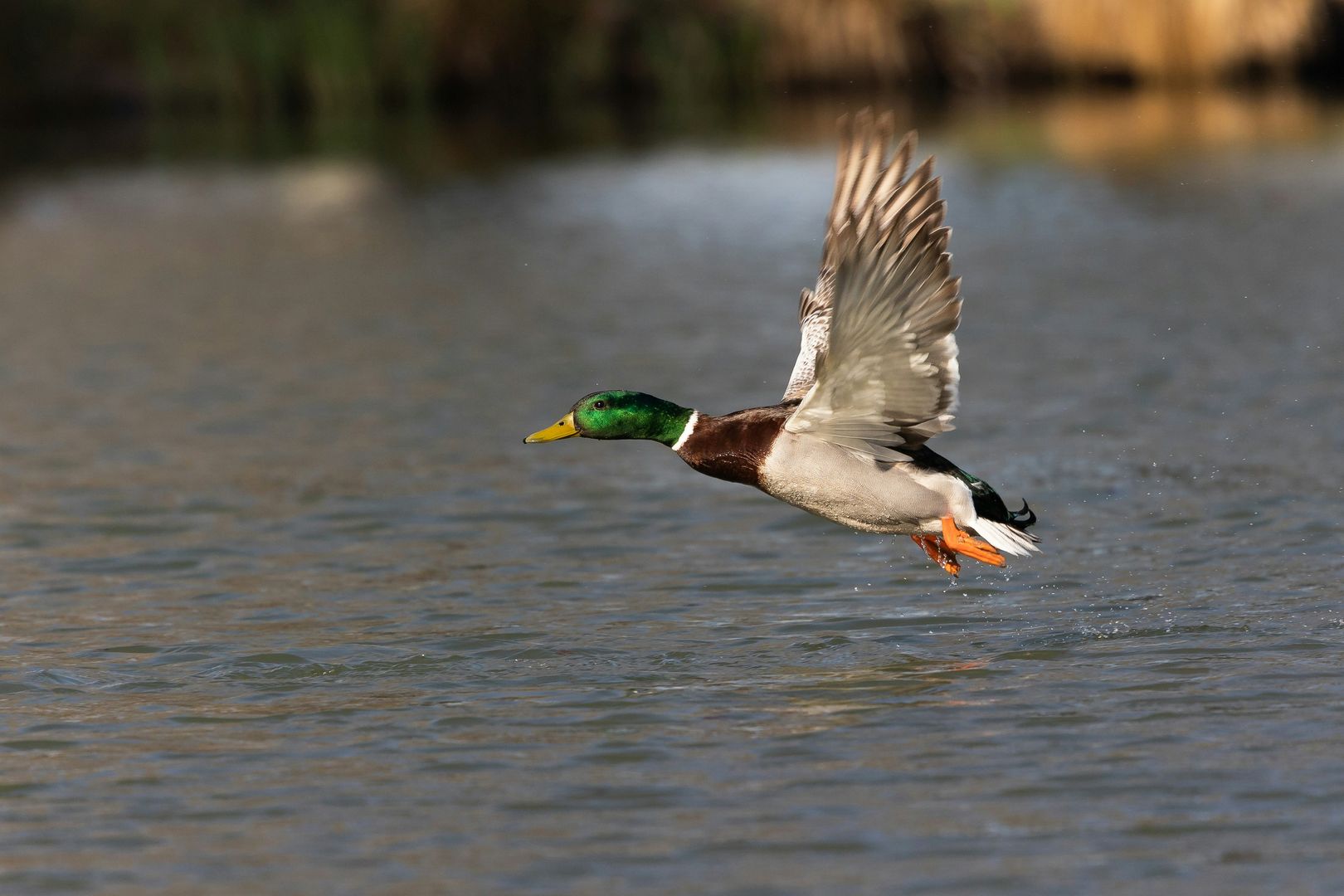
The Mallard duck is a common dabber. They feed on plans, seeds, and small invertebrates. Their adaptability enables them to remain in heavily populated areas year-round.
A Mallard duck’s colors are the quintessential glossy green head and yellow beak for males. A mallard hen, or female, are mottled brown with orange bills. Both show blue wing patches, or speculums, in flight.
Mallards are the stereotypical Barbie of the duck world– the Mallard Duck call is merely a simple “quack”. This Barbie is actually the reason behind Weird Duck Season.
They overwinter across Minnesota making the Mallard duck’s range as widespread as there are unfrozen waters.
13. Great Gray Owl
- Family – Strigidae
- Species – Strix nebulosa
- Primary Activity Time – Dusk (Nocturnal)
- Irruptive
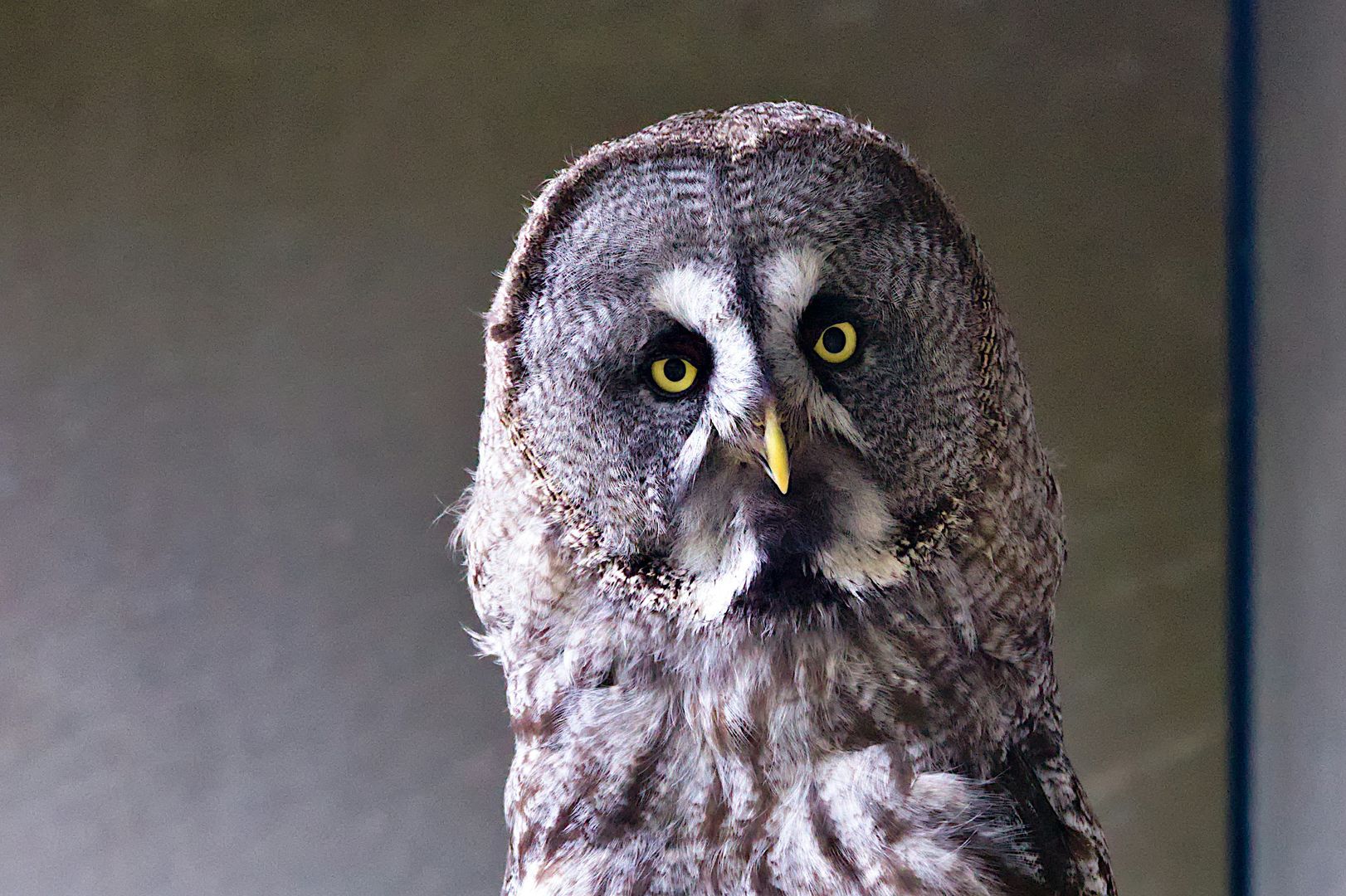
This carnivorous owl specializes on small mammals taken by plunging through snow after pinpointing movement with exceptional hearing. It hunts from low perches at forest edges and meadows.
The Great Grey Owl sports an enormous facial disk with concentric rings, yellow eyes, and a long tail. Its plumage is silver‑gray and finely barred.
A Great Grey Owl call is a deep, muffled yet resonant series of hoots. It's usually quiet but when vocal the Great Grey Owl call is unmistakable.
A rare irruptive visitor amidst the winter birds of Minnesota, The Great Grey Owl’s range is mostly northeastern Minnesota’s bogs and boreal forests, especially around Sax-Zim Bog.
14. Canada Goose
- Family – Anatidae
- Species – Branta canadensis
- Primary Activity Time – Day (Diurnal)
- Native Minnesota Bird
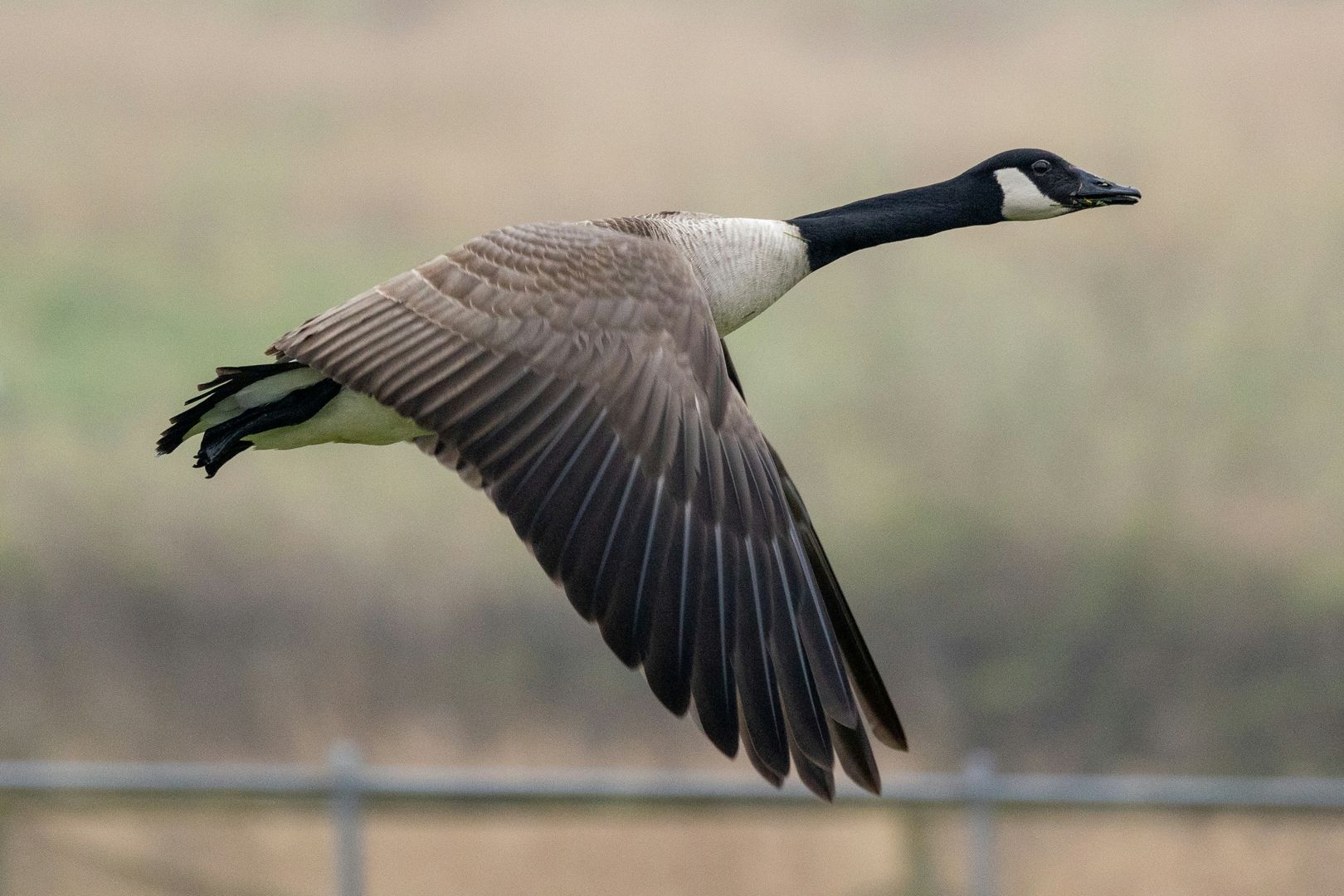
Canada Geese, or the Canada Goose, feed on grasses, grains, aquatic vegetation, and waste grain in harvested fields. They’re what I call the ankle biters of birds— despite not having teeth— because they’re known to bite and attack people when threatened.
Recognized by their black heads and necks they also have a bold white chinstrap with gray-brown bodies. Their V-shaped migratory flocks are iconic across the Midwest.
There are 7 subspecies of canada geese: Atlantic, Dusky, Giant, Interior, Lesser, Moffitt’s, and Vancouver. Minnesota is home to Giant and Interior Canada Geese.
A Canada Goose call sounds like a resonant “honk honk”.
Many Canada Geese overwinter in Minnesota in cities, farm fields, river valleys, and open-water lakes throughout southern and central Minnesota.
15. Common Goldeneye
- Family – Anatidae
- Species – Bucephala clangula
- Primary Activity Time – Dawn and Dusk (Diurnal)
- Irruptive
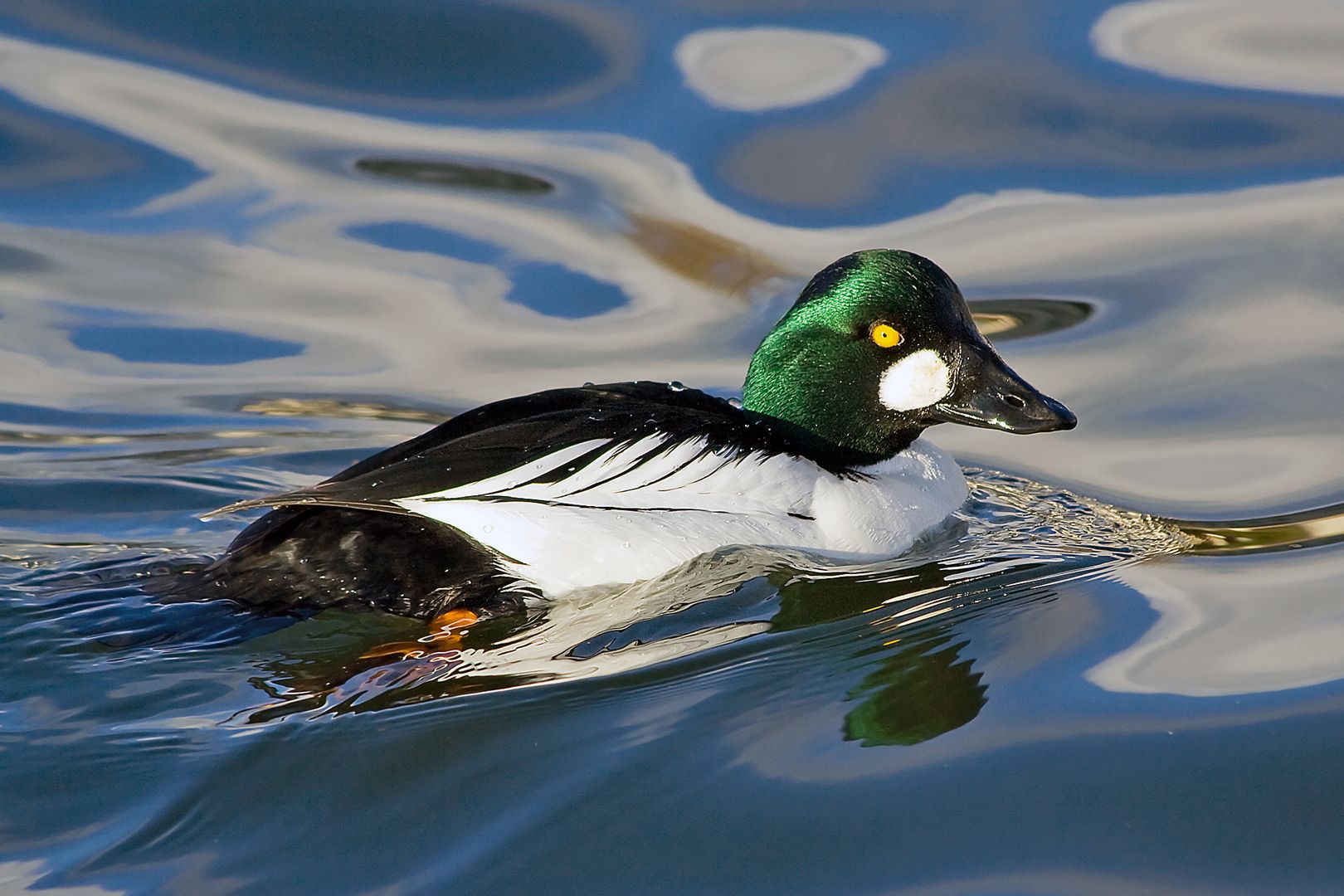
The Common Goldeneye Duck is a diver that’s chiefly piscivorous and invertivorous, taking small fish, aquatic insects, and mussels. It forages underwater and often gathers in rafts on open water.
Males show a dark green head with a round white cheek spot and crisp black‑and‑white body. Females are brown‑headed with gray bodies. Common Goldeneye Duck has a yellow-gold eye which will help with your Minnesota bird identification this winter.
A Common Goldeneye Duck sounds like a brief, sharp “peent” or “gack”.
Its wingbeats are notably whistling in flight which makes it an easier bird to ID by sound (video warning: hunter generated content).
Goldeneye Ducks can be seen on large rivers, Lake Superior shoreline, and other major waters that remain partially open.
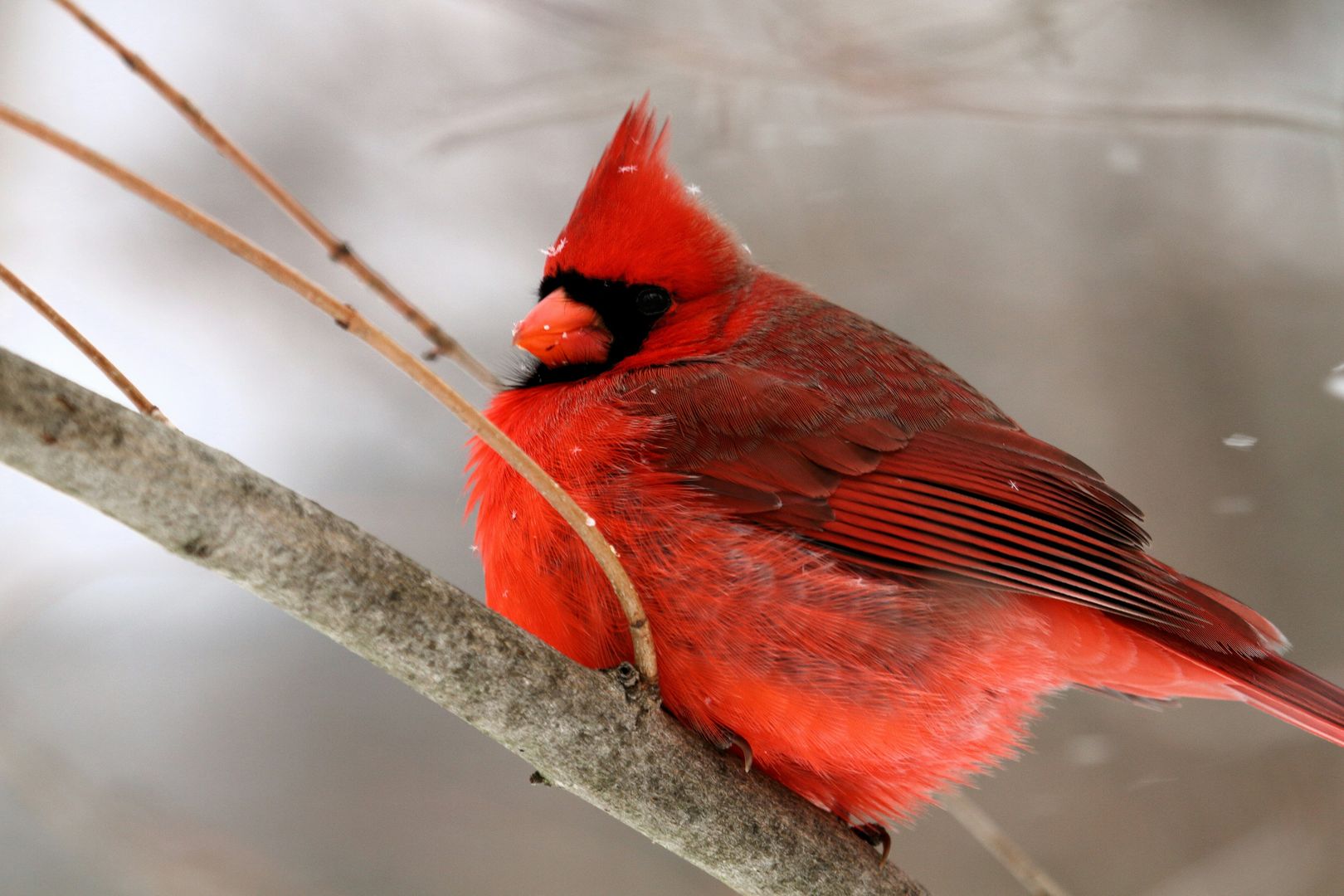
16. Northern Cardinal
- Family – Cardinalidae
- Species – Cardinalis cardinalis
- Primary Activity Time – Dawn and Dusk (Diurnal)
- Native Minnesota Bird
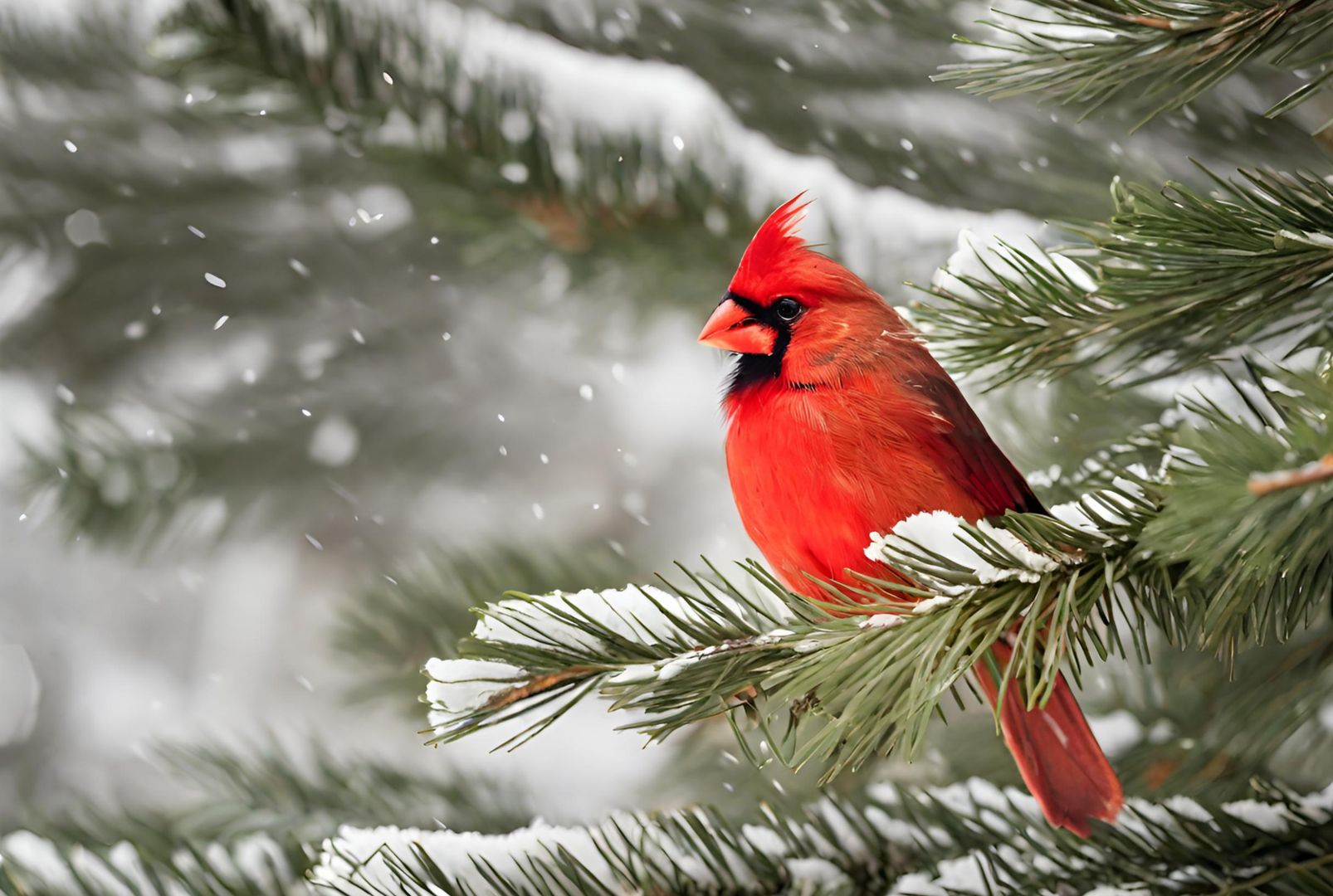
The Northern Cardinal is an omnivore that eats seeds, fruits, and insects. This canonical winter bird relies heavily on sunflower, safflower, and berries, often foraging low in shrubs and at platform feeders.
Males are vivid red with a black mask and crest. A female Northern Cardinal, on the other hand, is warm brown with orange bills and subtle red highlights. Both the male and female Northern Cardinal have a tuft of hair that looks like an expertly styled mohawk.
The Northern Cardinal sounds like a clear, whistled cheer‑cheer‑cheer with varied phrases. Some of the Northern Cardinal sounds and calls are to the tune of a cartoon plane dropping bombs, making it recognizable among other Minnesota bird species.
Found statewide in Minnesota settled areas— It's hard to miss if you’re bird watching in Minnesota.
17. Wild Turkey
- Family – Phasianidae
- Species – Meleagris gallopavo
- Primary Activity Time – Day (Diurnal)
- Native Minnesota Bird (reintroduced)
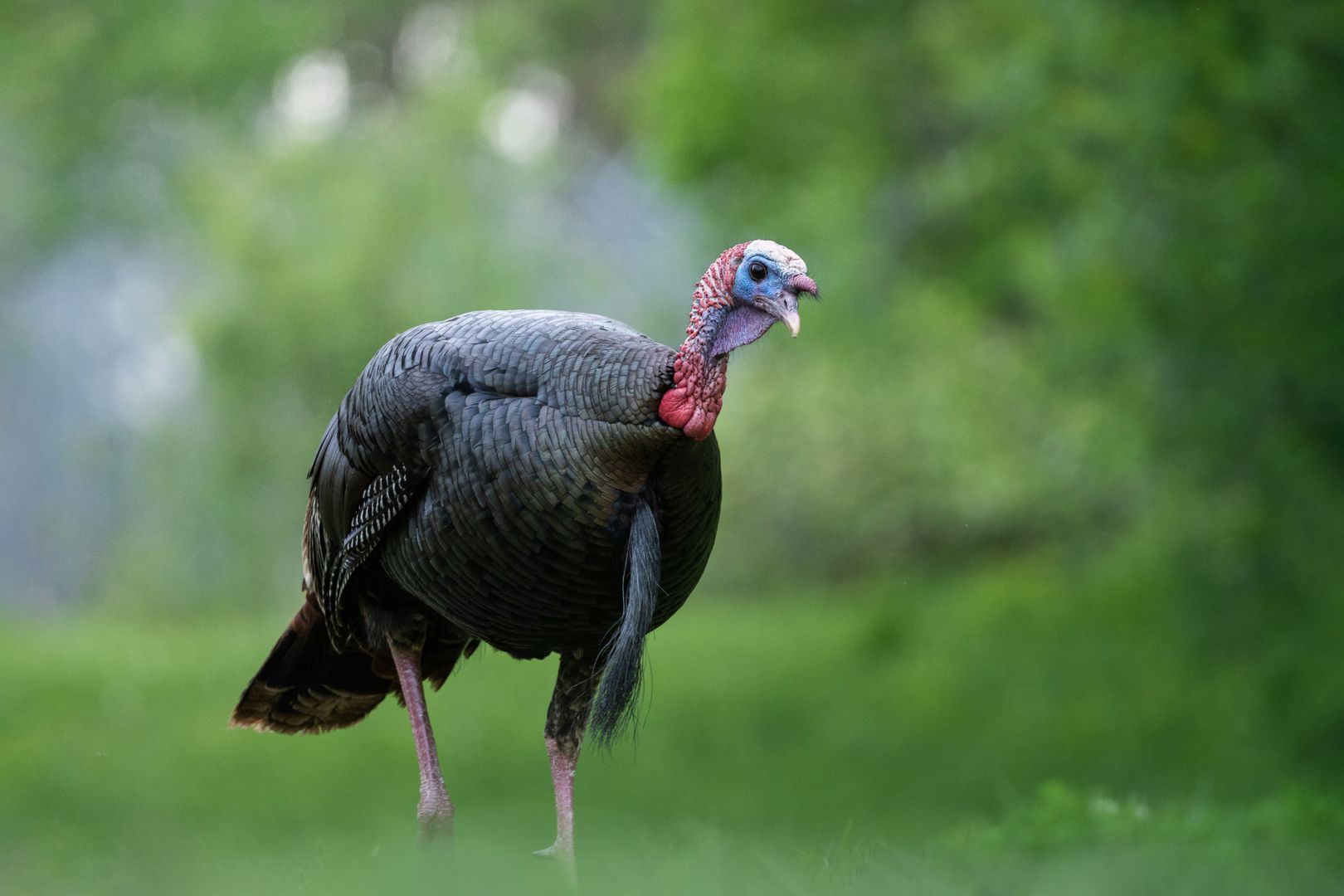
Wild Turkeys are large, ground-dwelling birds that forage on seeds, nuts, insects, and plants.
A Male Wild Turkey, a.k.a “Tom” or “Gobbler”, has an iridescent bronze body, long legs, beard feathers, and a fan-shaped tail, while females are smaller and duller.Wild Turkey calls include yelps, clucks, purrs, and gobbles.
They overwinter throughout much of Minnesota and rely on shelter provided by woodlots, thick cover, and reliable food sources like nut-bearing trees.
- Related: 10 Wild Turkey Facts
18. Hairy Woodpecker
- Family – Picidae
- Species – Dryobates villosus
- Primary Activity Time – Dawn and Dusk (Diurnal)
- Native Minnesota Bird
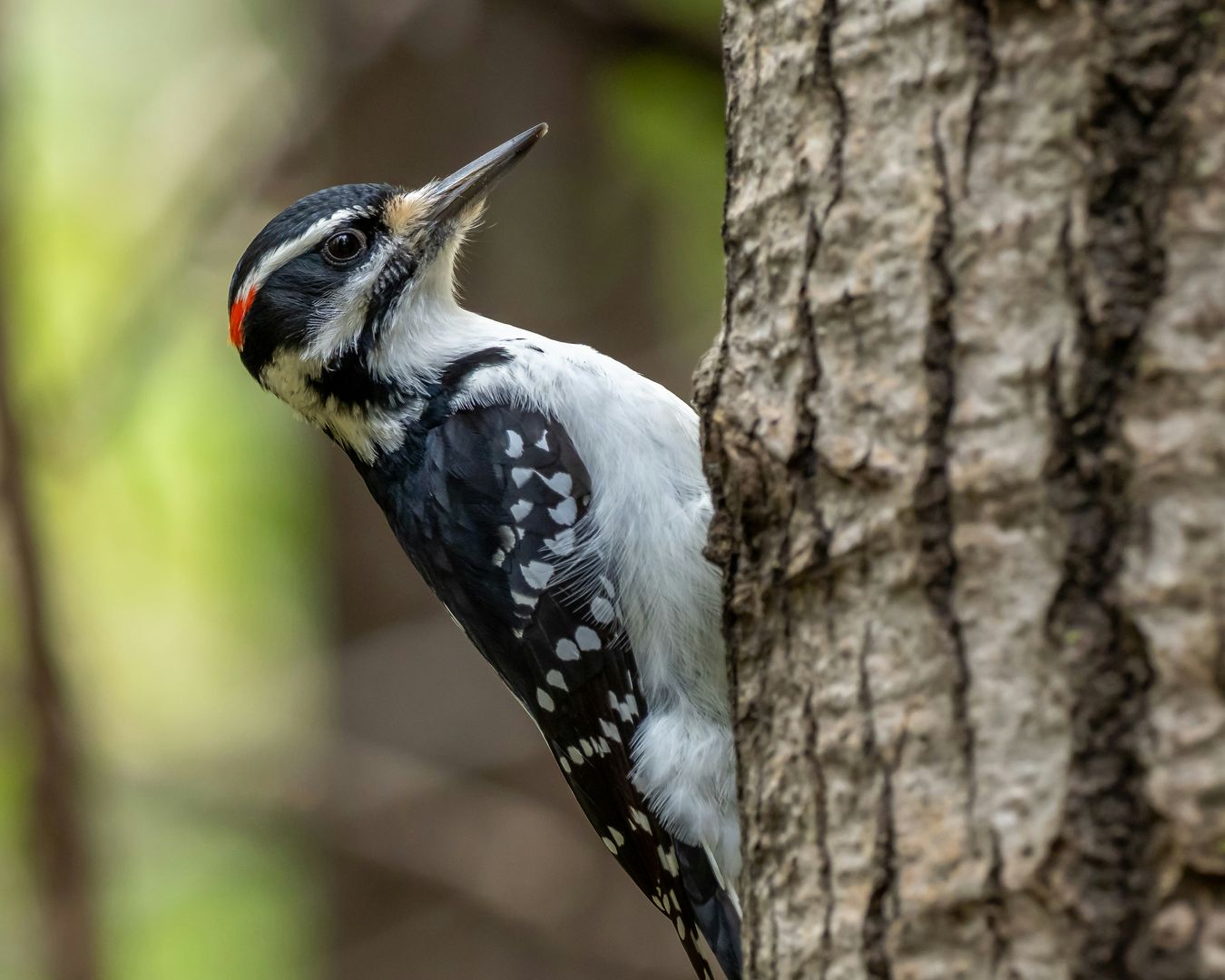
A larger cousin of the Downy, this omnivorous woodpecker consumes beetle larvae and other insects, and readily takes suet and nuts. It forages on larger trunks and limbs.
Hairy Woodpecker vs Downy Woodpecker: Longer bill and larger size than Downy, but similarly patterned in black and white. The male Hairy Woodpecker also has a black apostrophe mark on its breast.
It’s also larger with a bigger beak-to-head ratio. A Female Hairy Woodpecker is identical to the male except for its red nape patch.
A Hair Woodpecker sounds like a sharp “peek” and a rattly, longer whinny.
Common across Minnesota’s mature woodlands, parks, and yards in winter.
19. American Crow
- Family – Corvidae
- Species – Corvus brachyrhynchos
- Primary Activity Time – Dawn and Dusk (Diurnal)
- Migratory/Visitor
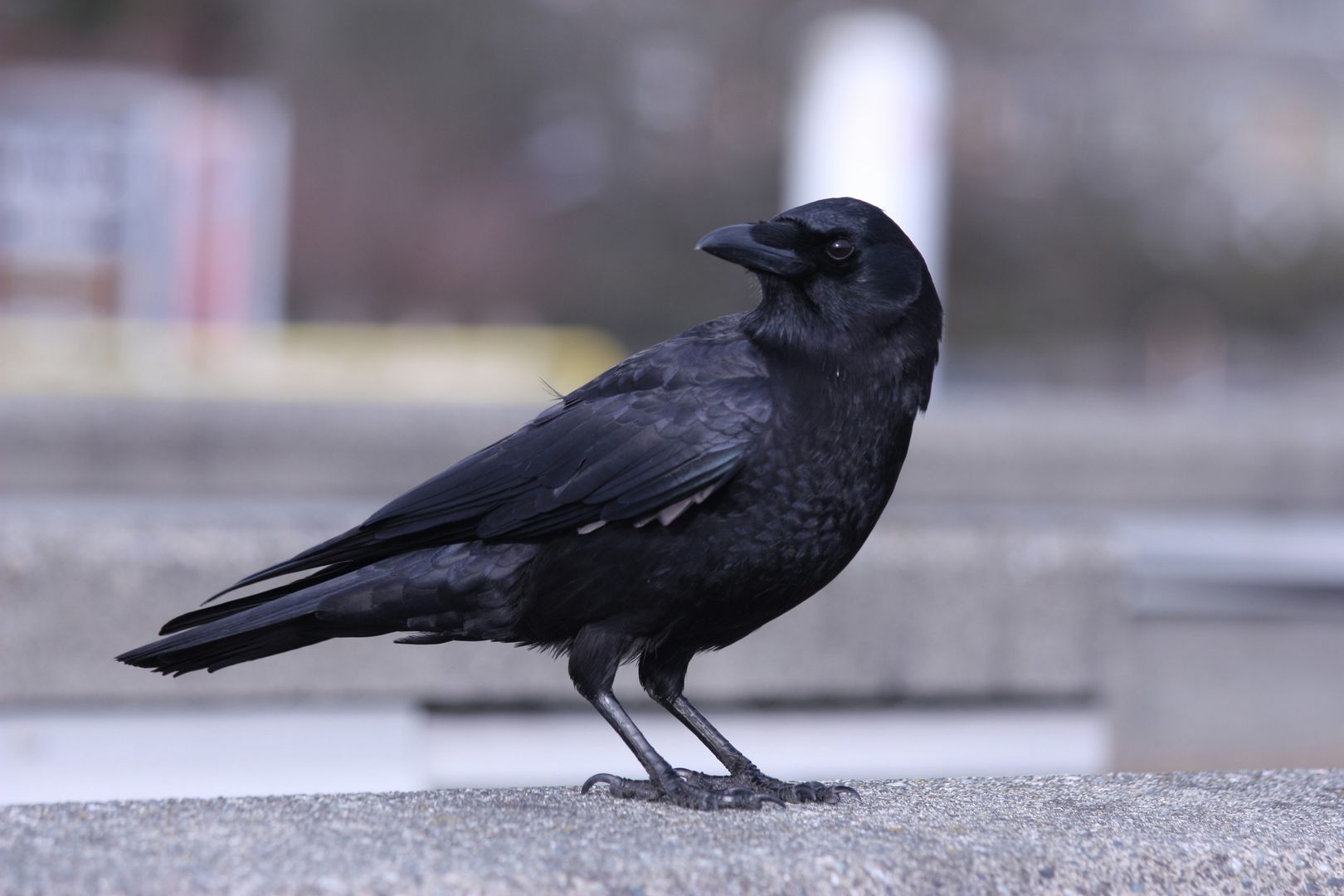
An omnivore that consumes seeds, carrion, invertebrates, and human refuse. Winter roosts can number in the thousands near cities as it’s highly adaptable and social.
An American Crow diet consists of almost everything from frogs, to bugs and seeds. It’s an opportunistic feeder whose diet reflects its city roots.
The American crow is entirely black with a heavy bill and broad wings. Not to mention it’s often mistaken for a raven which can make for difficult bird identification.
American Crow calls are prolific and have about 20 or so calls. Their coos and caws make the American Crow call unmistakable yet harsh on the ears.
They’re common statewide through winter in Minnesota, although local movements occur. Look for evening flights to communal roosts in urban areas while bird watching in Minnesota.
20. Dark-eyed Junco
- Family – Passerellidae
- Species – Junco hyemalis
- Primary Activity Time – Dawn and Dusk (Diurnal)
- Migratory/Visitor
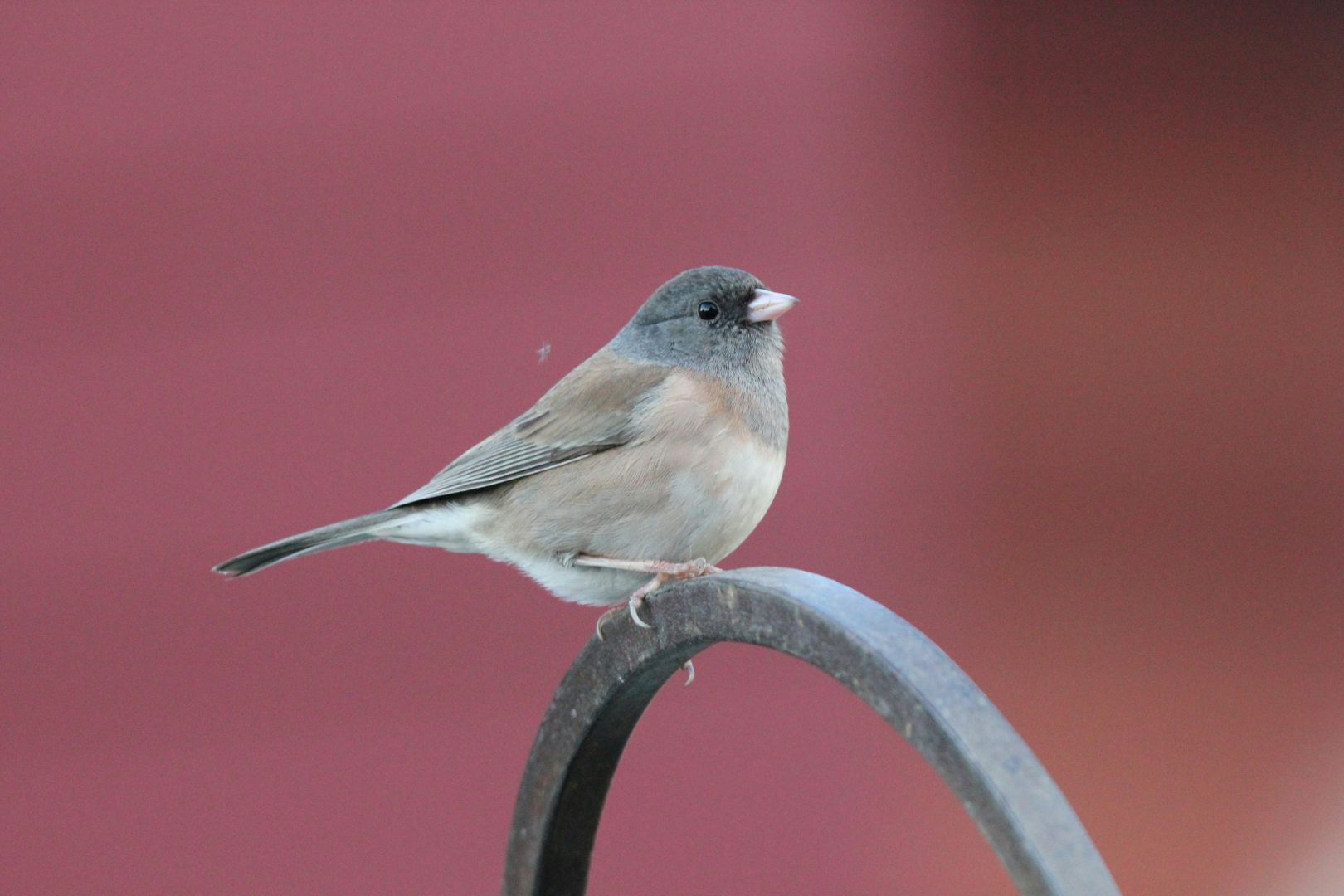
The Dark Eyed Junco granivorous sparrow that favors millet and mixed seeds on the ground or low trays. It also picks weed seeds in winter fields. Flocks often include other sparrows and finches.
They have clean gray slate‑colored upperparts with white belly and distinctive flashing white outer tail feathers.
Calls are soft “tiks” and a musical trilling song in mild spells. It’s soft and song-like which can make it tricky to ID by sound alone.
They’re abundant winter visitors statewide in Minnesota, from forest edges to yards and parks. This adorable winter bird is readily attracted to ground‑level feeding areas.
21. American Tree Sparrow
- Family – Passerellidae
- Species – Spizelloides arborea
- Primary Activity Time – Dawn and Dusk (Diurnal)
- Migratory / Visitor
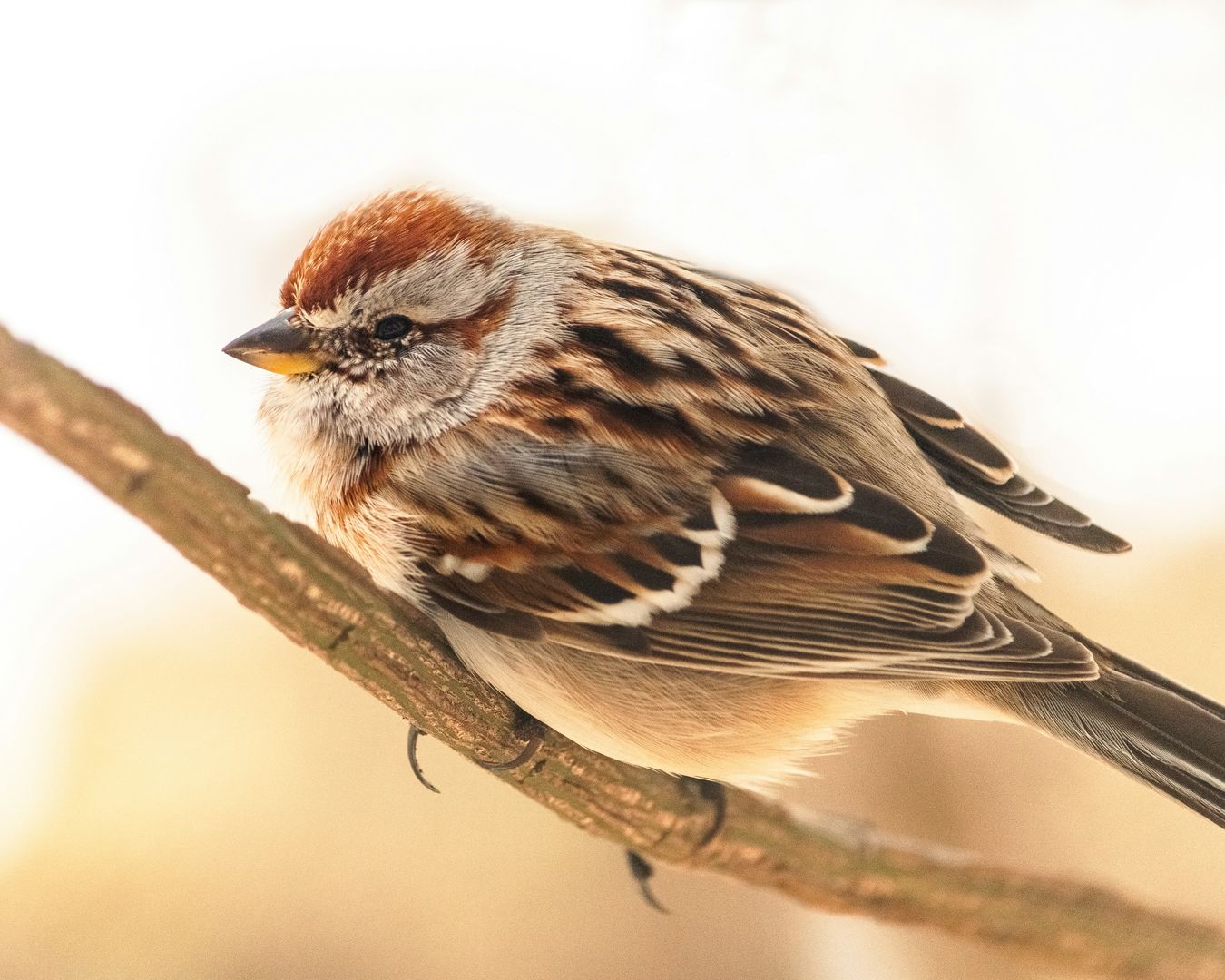
A granivorous sparrow that gleans seeds from grasses and forbs and visits low platform feeders for millet and mixed seed. Insects are added in thaws.
The American Tree Sparrow has a rufous crown and eyeline with a gray face and breast, a central dark breast spot, and bicolored bill. It sort of looks like a stereotypical light brown bird with a rust orange cap.
An American Tree Sparrow call includes musical tink and sweet, clear notes.
Regular in winter across open country in Minnesota in brushy fields, hedgerows, and weedy ditches. You can pay a visit to Agassiz National Wildlife Refuge to see many of the birds on this list.
22. Northern Shrike
- Family – Laniidae
- Species – Lanius borealis
- Primary Activity Time – Dawn and Dusk (Diurnal)
- Migratory/Visitor
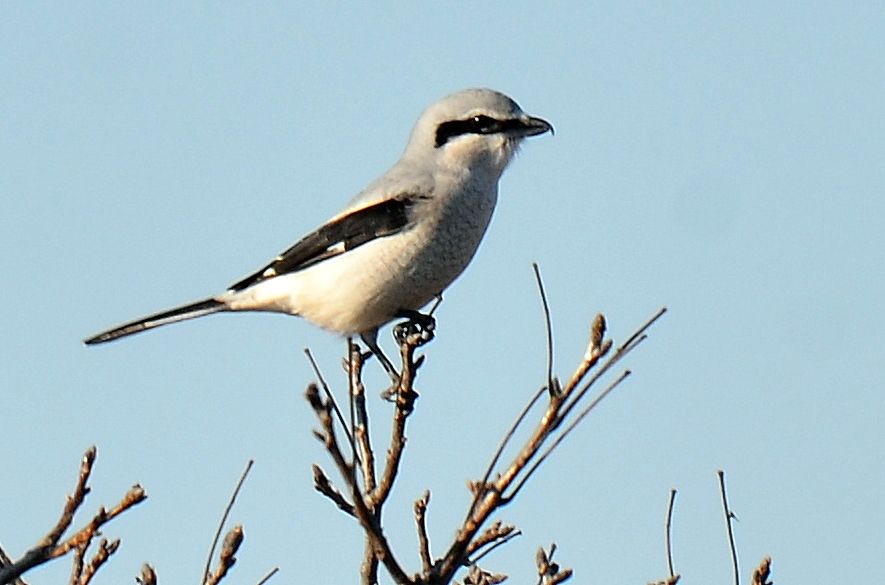
The Northern Shrike is a predatory, carnivorous songbird that hunts small birds and mammals known to impale prey on thorns for later feeding.
They’re gray above with a black mask and hooked bill. Their flight is buoyant with shallow wingbeats. Its gray-white coloring can make it difficult to tell apart from other winter birds in Minnesota.
North Schrike calls are harsh scolds with occasional varied whistles and mimicry. Some of its’ sounds are melodic, while others are short cheeps like a squeaker toy.
Their range is northern and central Minnesota in open country, wetlands, and shrubby hedgerows.
23. Red-headed Woodpecker
- Family – Picidae
- Species – Melanerpes erythrocephalus
- Primary Activity Time – Daytime
- Diurnal
- Resident & Partial Migrant
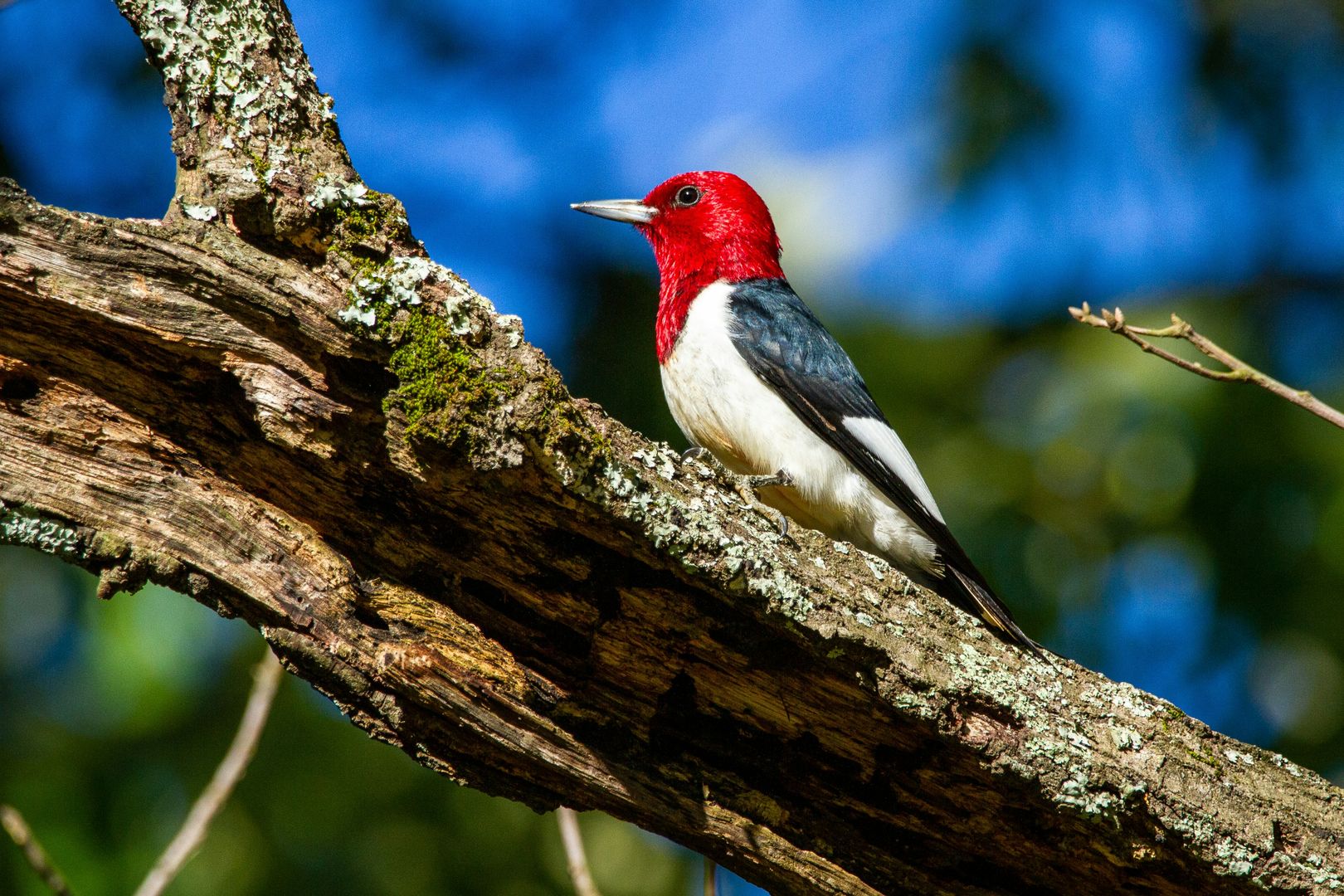
The Red-headed Woodpecker is a striking and bold winter bird in Minnesota. It is an omnivore that is unique for its habit of caching acorns and beech nuts in tree cavities to survive the winter. Unlike many other woodpeckers, its winter presence in the state depends heavily on the success of the autumn "mast" (nut) crop.
Adults are unmistakable with a completely crimson head, a snow-white belly, and large white wing patches that flash brilliantly in flight. This social Minnesota bird sounds like a harsh, raspy kwrr or chur call that carries well through leafless winter woods.
In Minnesota winters, the Red-headed Woodpecker range is most visible in the southern half of the state.
24. White-breasted Nuthatch
- Family – Sittidae
- Species – Sitta carolinensis
- Primary Activity Time – Dawn and Dusk
- Diurnal
- Native and Resident Minnesota Bird
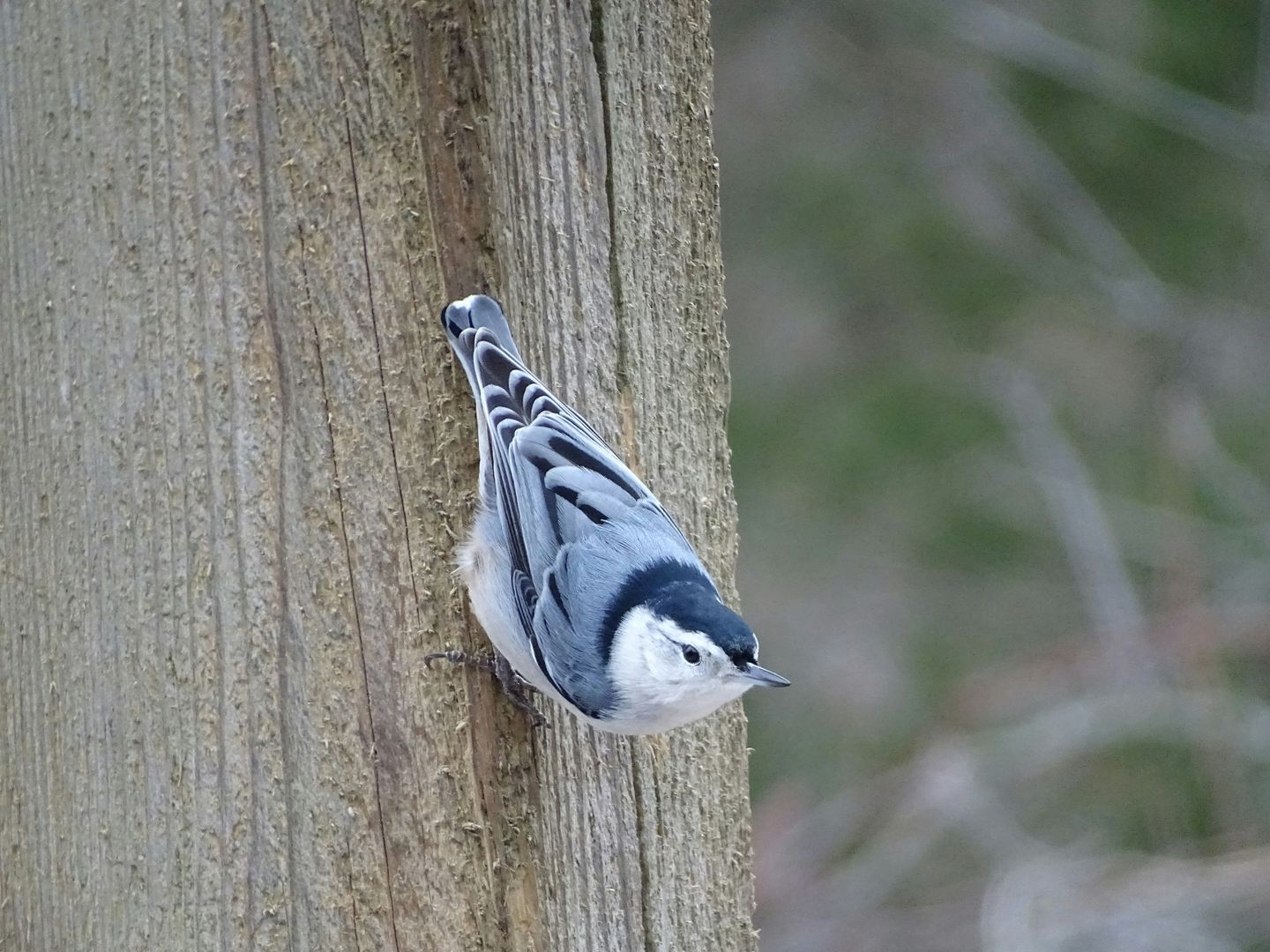
The White-breasted Nuthatch diet consists of insects, seeds, and nuts. It frequently visits suet and sunflower feeders, too, making this winter bird an omnivore. White-breasted Nuthatch size varies quite little from 0.6 to 1 ounce. Despite its tiny size, they have a strong backward hallux, or toe, allowing it to climb head first downwards on trees.
White Breasted Nuthatch male vs female: the male is a slate blue with white face and underparts, and a black cap connecting its bill to its back. The female White Breasted Nuthatch has a gray cap.
A White-breasted Nuthatch call is a nasal yank‑yank note. Of the winter birds in Minnesota, it sings in late winter, and the male White-breasted Nuthatch sounds like a “wha-wha-wha”. Some have also compared their call to an old school car horn honking.
Among other native birds, this Minnesota bird species is widespread in mature woods, parks, and yards, and is commonly seen at feeders and tree trunks around homes.
25. Black-capped Chickadee
- Family – Paridae
- Species – Poecile atricapillus
- Primary Activity Time – Dawn and Dusk
- Diurnal
- Native Minnesota Bird
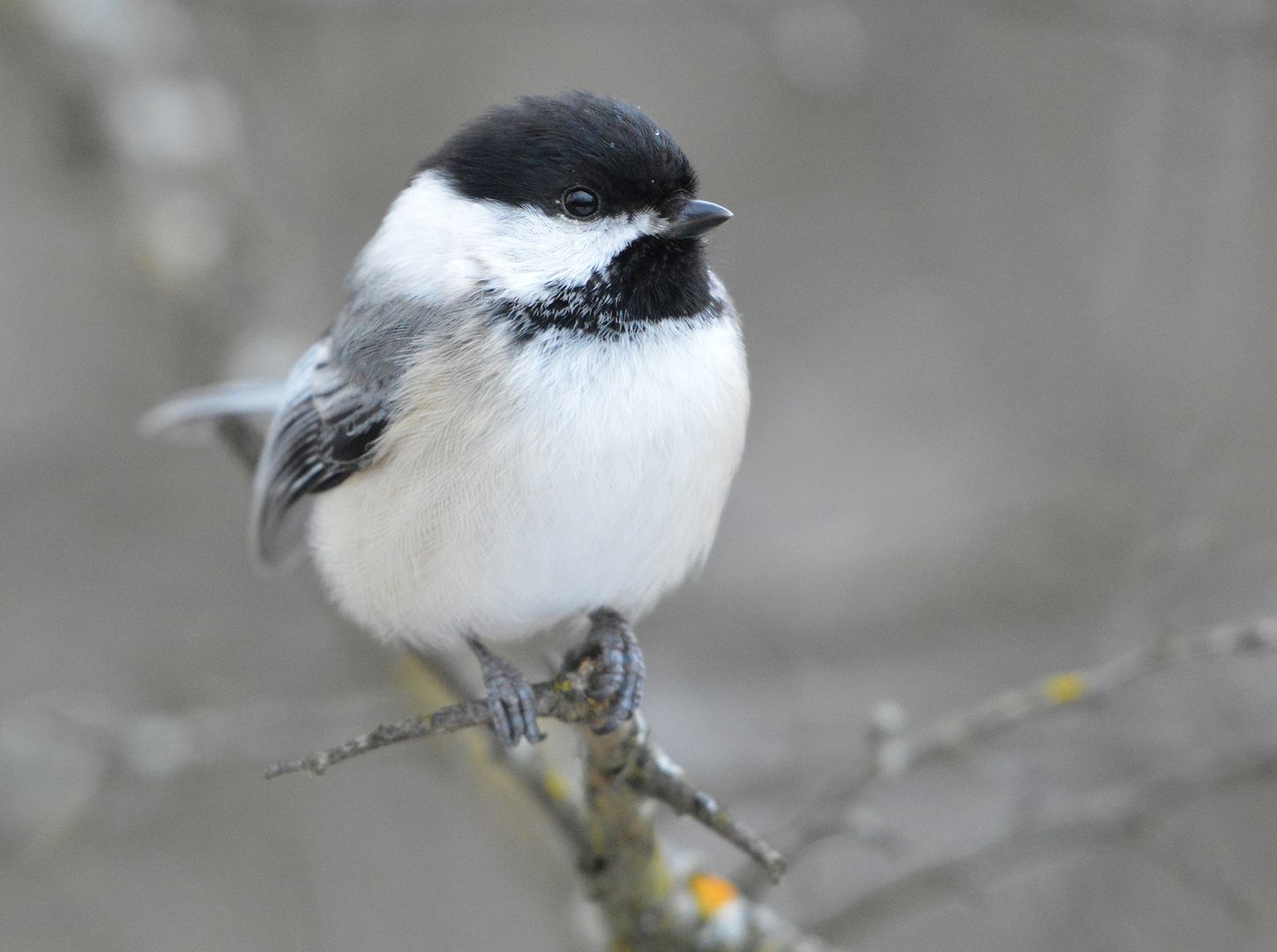
The Black-capped Chickadee is a tiny omnivore that favors seeds, suet, and dormant insects, caching food in bark crevices. It adapts well to winter with high metabolism and flock foraging.
It's got a distinctive black cap and bib with white cheeks, soft gray body, and is constantly active.
The Black-capped Chickadee song sounds like chick‑a‑dee‑dee‑dee notes and a clear fee‑bee song on mild days. In fact, the Black-capped Chickadee call is highly varied and includes other sounds and phrases like "cheeseburger" and “hey sweetie” along with its trademark chick‑a‑dee song.
This chickadee is abundant statewide with other winter birds in Minnesota in woodlands, parks, and neighborhoods– and quick to find feeders with sunflower seed and suet.
26. White-throated Sparrow
- Family – Passerellidae
- Species – Zonotrichia albicollis
- Primary Activity Time – Daytime
- Diurnal
- Migrant & Winter Resident
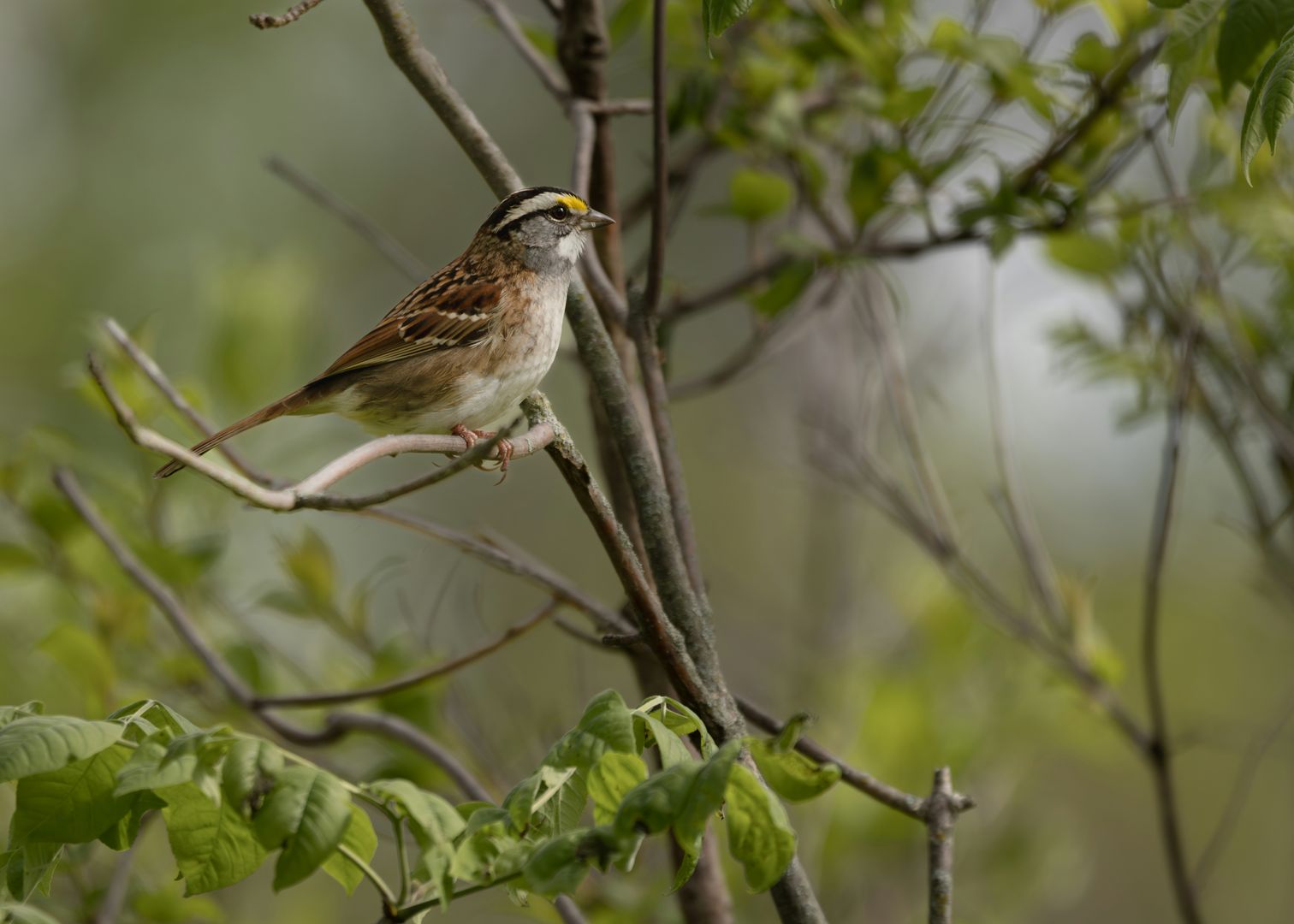
The White-throated Sparrow is a standard winter bird in Minnesota. It is primarily granivorous during the winter, scratching through leaf litter or snow for fallen seeds. They are frequent visitors to platform feeders or ground-feeding stations.
These birds are distinguished by a bright white throat patch and yellow "lores" (the area between the eye and beak). This melodic Wisconsin bird sounds like a clear, whistled song often described as Old-Sam-Peabody-Peabody-Peabody, or Oh sweet Canada, Canada, Canada
In Wisconsin winters, the White-throated Sparrow range is typically restricted to the southern half of the state, where they frequent brush piles and thickets that offer protection from the wind.
27. Common Merganser
- Family – Anatidae
- Species – Mergus merganser
- Primary Activity Time – Daytime
- Diurnal
- Resident & Winter Migrant
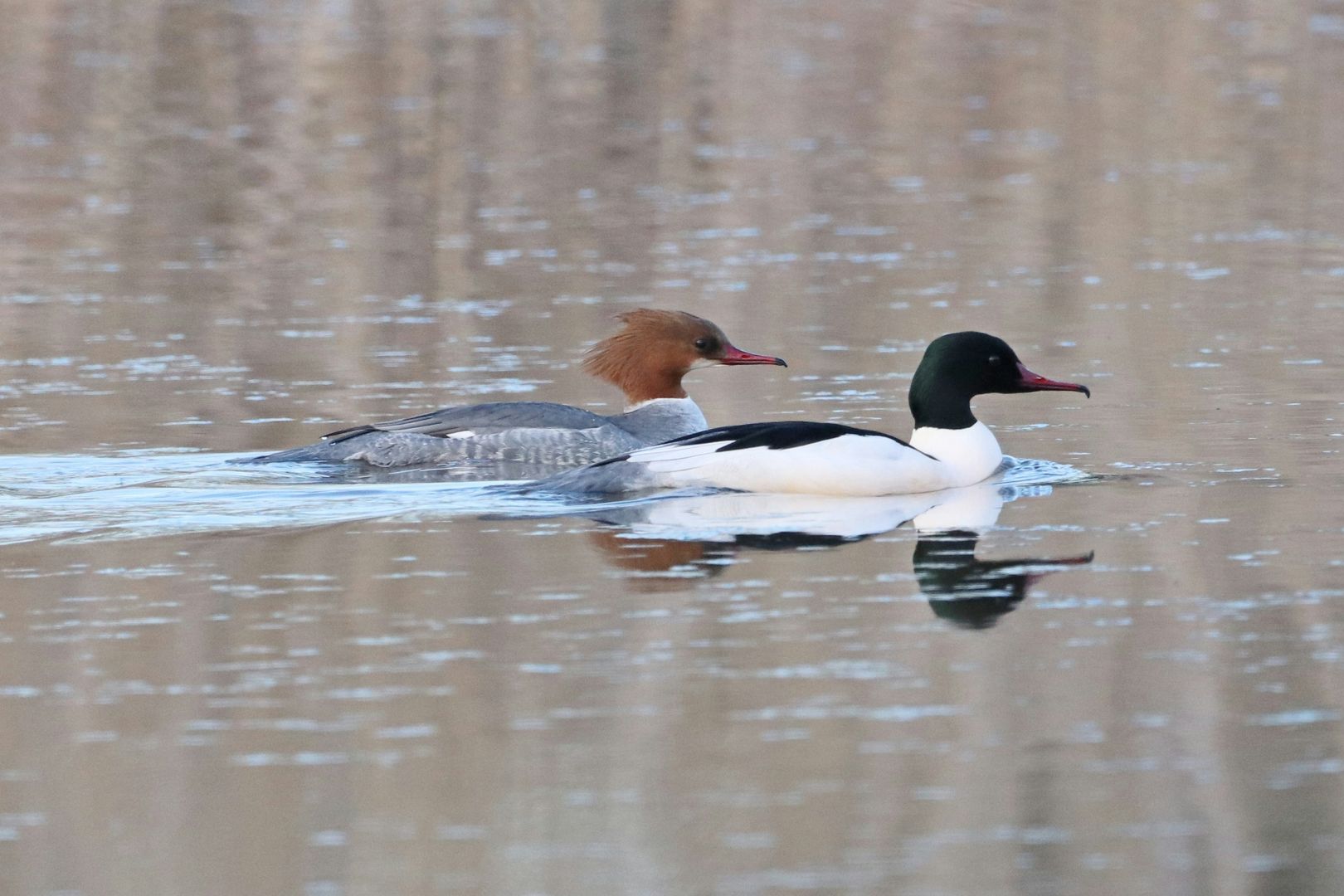
The Common Merganser is a sleek, "saw-billed" winter bird in Wisconsin. It's a piscivorous diving duck that hunts fish in the frigid, open currents of rivers and the Great Lakes. They're often seen floating in long lines or "rafts" in the middle of moving water.
Males are striking with crisp white bodies and dark, iridescent green heads while females (often called "red-heads") have shaggy cinnamon crests. They couldn't look more opposite. This hardy Wisconsin bird's call sounds like a low, harsh croak, though they are generally silent during the winter months.
In Minnesotan winters, the Common Merganser's range is restricted to any ice-free water including the Mississippi.
28. American Kestrel
- Family – Falconidae
- Species – Falco sparverius
- Primary Activity Time – Daytime
- Diurnal
- Resident & Partial Migrant
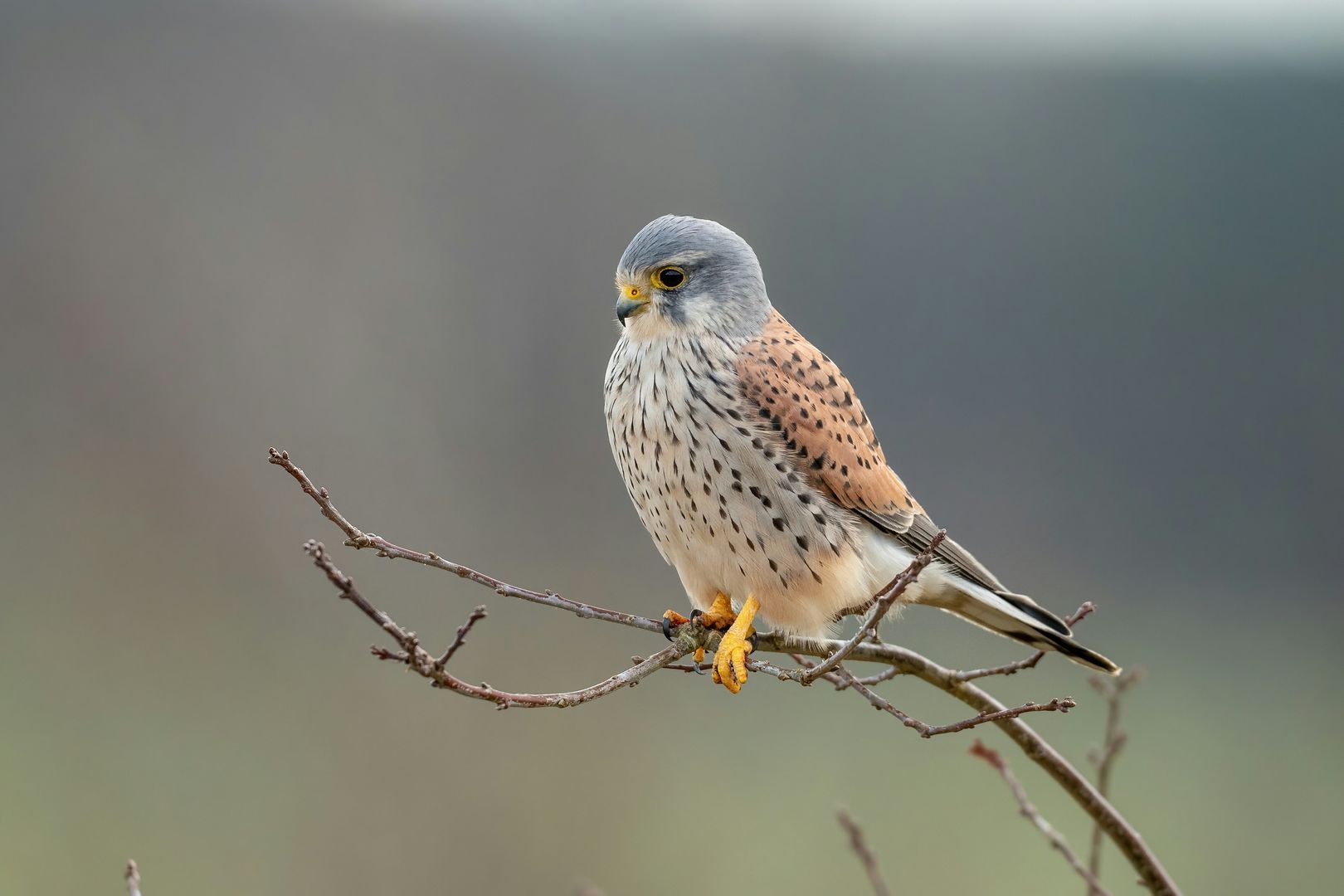
The American Kestrel is the smallest falcon and a colorful winter bird in Wisconsin. It is a carnivorous hunter that "hovers" over open ground to spot large insects and small rodents in the snow. While many migrate, some individuals remain in southern Wisconsin throughout the winter if food is available.
Males feature slate-blue wings and a rusty back, while females are reddish-brown throughout; both sexes have bold black "mustache" stripes on their faces. This tiny but fierce Wisconsin bird sounds like a rapid, shrill klee-klee-klee call.
In Minnesota winters this bird of prey's range is most common in southern agricultural counties, often seen perched on power lines along rural roadsides. You can see these birds of prey at Hawk Ridge Nature Reserve (Duluth).
29. Golden-Crowned Kinglet
- Family – Regulidae
- Species – Regulus satrapa
- Primary Activity Time – Daytime
- Diurnal
- Resident & Short-distance Migrant
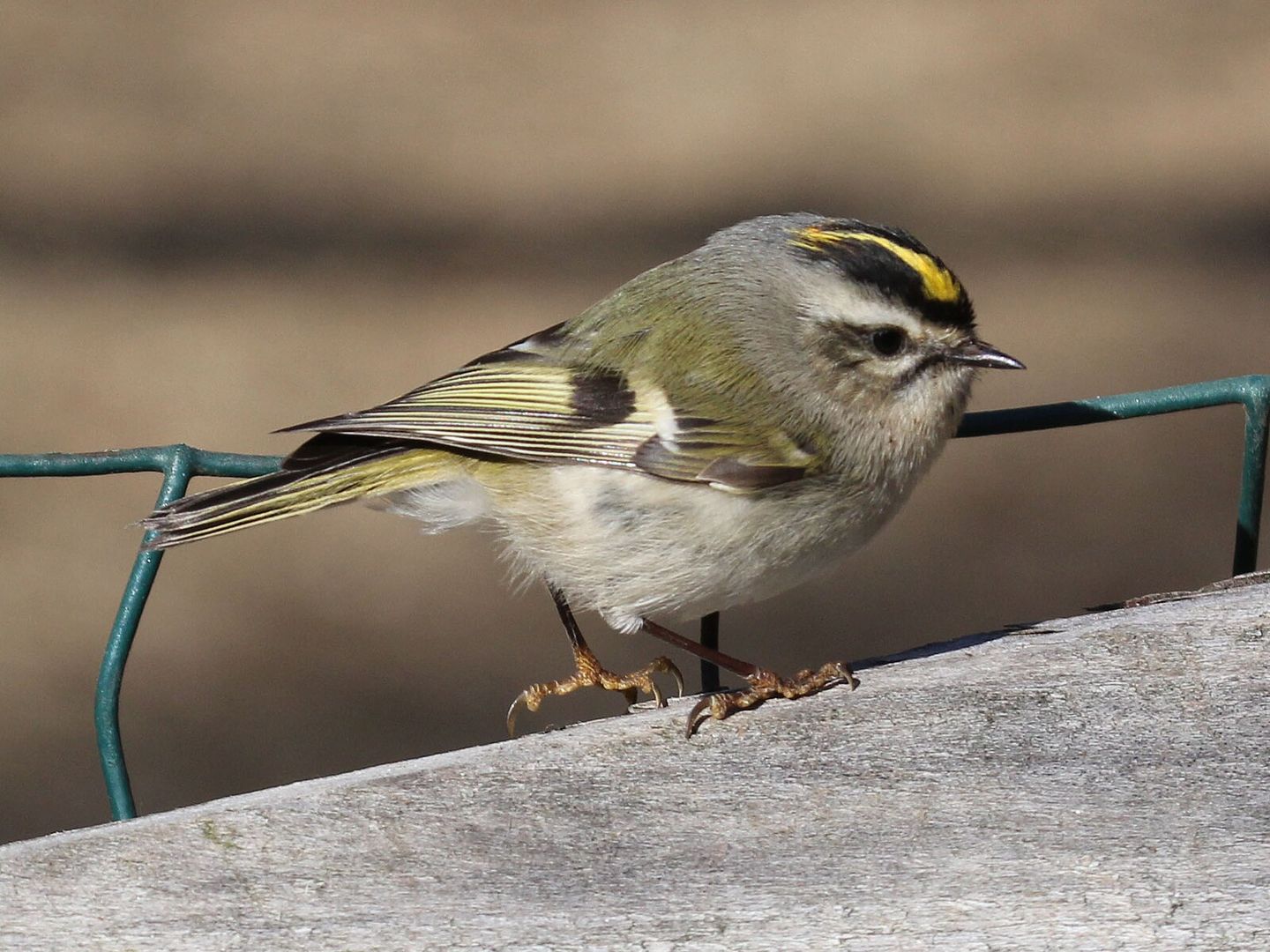
The Golden-crowned Kinglet is a tiny, high-energy winter bird in Minnesota. It is a primarily insectivorous species, which is remarkable for its ability to survive sub-zero temperatures by foraging for insect eggs and dormant spiders hidden in conifer needles. They are frequently seen flitting nervously in spruce or pine groves, often flicking their wings rapidly.
These birds are distinguished by a bright yellow crown patch (which also has an orange center in males) bordered by black with a bold white eyebrow. This tiny Minnesota bird sounds like a series of very high-pitched, thin tsee-tsee-tsee notes that can be difficult for some humans to hear.
In Minnesota winters, the Golden-crowned Kinglet range is most common in the southern and central parts of the state where they seek shelter in dense evergreen stands, though they can be found sparingly in the north as well.
No comments yet.