
Connecticut has 8 bird clubs and Audubon chapters running their own websites, plus a dozen or more staffed nature centers and sanctuaries that put public bird walks on a calendar. For the third-smallest state in the country, that is a lot of people willing to meet you in a parking lot at 7 a.m.
It is also a state small enough that you can stand on a salt marsh at sunrise and be in the Litchfield hills by lunch. Residents will still tell you that drive is too far.
The bird watching groups in Connecticut are cheap. The statewide ornithological society costs $35 a year, most chapter programs and walks are free to anyone who turns up, and the best birding here is on land you can walk onto for nothing. If you are visiting, read the access terms below: Connecticut charges out-of-state vehicles at state parks.
Why Join a Bird Watching Group at All
Solo birding is fine. You set the pace, and nobody watches you spend a quarter of an hour on a sparrow that resolves into a House Sparrow.
What a club gives you is the thing no app has: somebody who already knows which morning is producing. Connecticut concentrates migration hard, funnelling birds down the Connecticut River valley and along the Long Island Sound shoreline, and knowing which point is worth the drive this week is knowledge that lives in people, not databases. Clubs are also the door into community science: the Christmas Bird Count runs December 14 to January 5, costs nothing, and nearly every Connecticut count circle is organized by a group listed below.
One opinion before you spend money. A decent pair of binoculars for birding runs from $150 to well past $500, and you should borrow before you buy. That is easy here: the Coastal Center at Milford Point keeps spotting scopes set up indoors at no charge, and any guided walk below puts you next to people carrying more optics than they can use. Go on three walks first.
Statewide Bird Watching Groups in Connecticut
Connecticut Ornithological Association (COA)
Founded in 1984 and the only statewide organization devoted specifically to Connecticut birds, with more than 500 members. Membership is $15 for students, $35 individual, $45 family, and includes the quarterly journal The Connecticut Warbler. COA also runs workshops, the CTBirds email list, and a statewide birding events calendar aggregating other groups' walks. The first membership to buy in this state.
Connecticut Audubon Society
Read this one carefully, because two organizations here have nearly the same name. Connecticut Audubon Society was founded in 1898 and states on its own site that it "is an independent organization, not affiliated with any national or governmental group." It manages 22 sanctuaries covering more than 3,400 acres, plus the staffed centers listed below at Milford Point, Fairfield, Pomfret, Old Lyme, and Sherman.
Audubon Connecticut
The National Audubon Society's Connecticut state program, and a different body entirely from the one above. It operates the Sharon, Greenwich, and Bent of the River centers. The chapters listed by region below are National Audubon chapters, so a Connecticut Audubon Society membership does not make you a member of any of them, and the reverse is equally true.
Avian Records Committee of Connecticut (ARCC)
The state records committee, run under COA. It maintains the official Checklist of the Birds of Connecticut, publishes the review list of species requiring documentation, and adjudicates rare bird reports. No membership needed.
Bird Watching Groups in Fairfield County and Southwest Connecticut
Southwest Connecticut is unusual: the state's best-funded birding infrastructure and almost no dues-paying clubs, just staffed centers with paid educators and daily access.
Greenwich Audubon Center - Greenwich
613 Riversville Road. Opened in 1943 as National Audubon's first environmental education center, now steward of 686 acres across seven Greenwich sanctuaries. Nature center open 10 a.m. to 4 p.m., trails sunrise to sunset. Hawk watch season opens in late August and Hawk Watch Fest runs 7 a.m. to 4 p.m. in late September. Programs are ticketed in advance.
Connecticut Audubon Center at Fairfield and Larsen Sanctuary - Fairfield
2325 Burr Street. Free, building open Monday to Saturday 10 a.m. to 3 p.m., trails dawn to dusk year round. Seven miles of trails across 155 acres, including the mile-long Chiboucas Special Use Trail built for strollers and wheelchairs, which makes this the most accessible birding site in the southwest corner.
Connecticut Audubon Deer Pond Farm - Sherman
850 acres straddling the New York line, with 15 miles of trails between 900 and 1,200 feet. Free, dawn to dusk. Guided walks and birding programs run through the season; 158 species logged.
Bent of the River Audubon Center - Southbury, on the Fairfield County line
Roughly 700 acres bequeathed by Althea Clark and opened to public trails in the early 2000s. Trails and the birding balcony open sunrise to sunset; fall migration hikes are posted to the COA calendar.
Bird Watching Groups in New Haven and the Central Shore
New Haven Bird Club - New Haven and the central shoreline
Founded in 1907, one of the oldest continuously running bird clubs in the country. A heavy field trip schedule to shoreline sites like Harkness Memorial State Park, plus indoor meetings, a book club, a Big Sit, and the daily hawk watch and bird count at Lighthouse Point Park from September into December. All levels are invited and the club says every effort is made to help beginning birders. A few trips require registration.
Menunkatuck Audubon Society - Guilford, serving twelve towns
More than 600 members across Derby, Ansonia, Seymour, Orange, West Haven, New Haven, Woodbridge, East Haven, Branford, North Branford, Guilford, and Madison. Monthly programs and field trips open to the public, streaming wildlife cameras, and a native plant nursery. Menunkatuck also founded Lights Out Connecticut, and its who's who page is the clearest explanation anywhere of how this state's tangle of Audubon bodies fits together.
Connecticut Audubon Coastal Center at Milford Point - Milford
1 Milford Point Road. Free. Building open Tuesday to Friday 10 a.m. to 4 p.m., Saturday 10 a.m. to 1 p.m., Sunday noon to 4 p.m., closed Mondays; the sanctuary is open dawn to dusk year round. More than 300 species on an 8.4-acre barrier beach, with a 70-foot tower and scopes indoors. The fenced nesting areas are enforced: anyone entering them will be reported to state police.
Quinnipiac Valley Audubon Society (QVAS) - Cheshire, serving twelve towns
Established in 1971, covering Bethany, Berlin, Cheshire, Hamden, Meriden, Northford, North Haven, Prospect, Southington, Wallingford, Waterbury, and Wolcott. One caveat: the chapter's own site carries no current event listings, so contact the chapter or watch the COA calendar instead.
Bird Watching Groups in Hartford and Central Connecticut
Hartford Audubon Society - Greater Hartford
Founded in 1909 as the Hartford Bird Study Club and renamed in 1965. It owns four sanctuaries worth birding in their own right: Station 43 in South Windsor, Greenstone Hollow in East Granby, Lewis Farm in Suffield, and the Tobacco Valley Wildlife Refuge. Field trips are open to non-members and beginners are explicitly welcomed. One caveat: the events listing on the club's homepage has not been refreshed in years, so email before planning around a date you find there.
Mattabeseck Audubon Society - Middletown and the lower Connecticut River valley
A National Audubon chapter based at the deKoven House, 27 Washington Street. Field trips are open to the public, including an autumn Sparrow Crawl at Middletown's bean field in October. Its Wingbeat newsletter is current.
Connecticut Audubon Greater Hartford Region - Hartford and surrounding towns
Not a building. Connecticut Audubon runs the Hartford area as a traveling center, with educators meeting groups at schools, libraries, parks, and conservation properties across the region. Bird walks and family programs are the public-facing part; call 860-633-8402 for what is scheduled.
Bird Watching Groups in the Northwest Hills and Litchfield County
Litchfield Hills Audubon Society (LHAS) - Litchfield County
The best-maintained chapter website in the state. Meetings are the first Monday of the month, or the second when the first is a holiday, at the Litchfield Community Center, 421 Bantam Road, refreshments 6:45 p.m. and business 7:00 p.m. The chapter describes its programs, bird walks, and environmental events as free and open to the public.
Sharon Audubon Center - Sharon
325 Cornwall Bridge Road. Trails open sunrise to sunset; the visitor center and store keep limited seasonal hours, so check first. Guided hikes and camps run year round, and the center operates a wildlife rehabilitation clinic. Phone (860) 364-0520.
White Memorial Conservation Center - Litchfield
80 Whitehall Road, a nature museum inside the 4,000-acre White Memorial Foundation, the largest nature preserve in the state. Open Tuesday to Saturday 9 a.m. to 5 p.m. and Sunday noon to 5 p.m., with admission at $6 for adults and $3 for children 6 to 12.
Bird Watching Groups in the Quiet Corner and Northeast Connecticut
The northeast is the thinnest part of the state for clubs and the best of it for grassland birds. Two Connecticut Audubon properties carry the region.
Connecticut Audubon Center at Pomfret and Bafflin Sanctuary - Pomfret Center
218 Day Road. Center open Tuesday to Sunday noon to 4 p.m.; trails dawn to dusk year round, suggested donation $2. Seven hundred acres, seven miles of trails, 200-plus species, and the state's grassland stronghold: Eastern Meadowlark, Bobolink, Savannah Sparrow, and American Kestrel.
Trail Wood and the Edwin Way Teale Memorial Sanctuary - Hampton
93 Kenyon Road. 168 acres, four miles of trails, beaver ponds, 147 recorded species. Trails dawn to dusk, suggested donation $2; the 1806 house and Teale's study, left as he had it, open by appointment. Teale finished Wandering Through Winter here and it took the 1966 Pulitzer Prize.
Bird Watching Groups in Southeast Connecticut, New London and Mystic
Potapaug Audubon Society - The towns around the mouth of the Connecticut River
Serves Niantic, East Lyme, Old Lyme, Lyme, East Haddam, Salem, Colchester, Old Saybrook, Essex, Deep River, Chester, Haddam, Westbrook, Clinton, and Killingworth, with a season running October through June. A note on links: the chapter holds two domains, and the .com address above is the one it calls its working site.
Denison Pequotsepos Nature Center - Mystic
109 Pequotsepos Road, with a second property at Coogan Farm. Open Sunday to Friday 10 a.m. to 4 p.m., Saturday 9 a.m. to 4 p.m. Admission $10 for adults, $7 for seniors and children 3 to 12. It also runs the region's wildlife rescue service.
Connecticut Audubon Roger Tory Peterson Estuary Center - Old Lyme
100 Lyme Street. Free, education center open weekdays 9 a.m. to 4 p.m., sanctuary dawn to dusk. It focuses on the Connecticut River estuary and runs the autumn Tree Swallow Cruises with Connecticut Audubon's EcoTravel program. Phone 860-598-4218.
Other Ornithology and Research Groups in Connecticut
Birdcraft Museum and Sanctuary - Fairfield
314 Unquowa Road. Established in 1914 by Mabel Osgood Wright, a co-founder of Connecticut Audubon, and one of the first private songbird sanctuaries in the country. A National Historic Landmark, and still a federally licensed banding station. Free, open Thursday, Saturday, and Sunday 10 a.m. to 3 p.m.
CTBirds email list
Connecticut's rare bird pipeline, run free by COA. Moderated and text only: email the list request address with "join" in the subject and wait for approval. You can read the archive without subscribing, but must subscribe to post. For a same-day chase it beats any app going.
Lights Out Connecticut
A Menunkatuck Audubon initiative backed by Audubon Connecticut and COA, asking people to switch off unnecessary lighting from 11 p.m. to 6 a.m. during peak migration: August 15 to November 15 in autumn, April 1 to May 31 in spring. Take the pledge, or report birds found under buildings.
Sparkbird App - Community
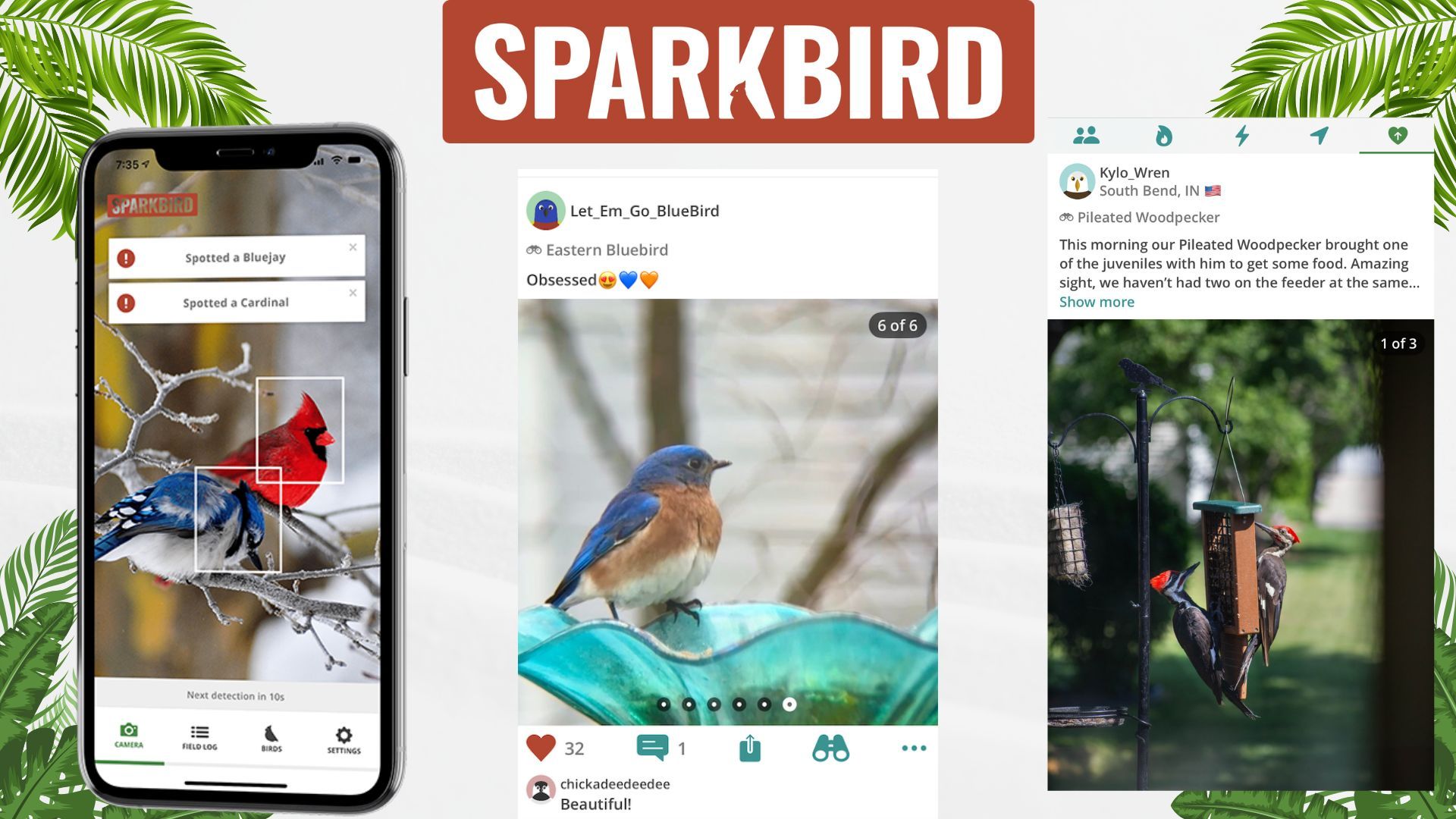
We built Sparkbird for people who want a friendly community of birders and none of the rest of it. Track your life list, get identification help, and meet people who also stop mid-sentence to look at a tree.
Where to Go Birding in Connecticut
These seven produce reliably. Access terms are stated for each, because Connecticut charges out-of-state vehicles at state parks.
- Hammonasset Beach State Park (Madison, New Haven County) — Connecticut's biggest shoreline park and a Globally Significant Bird Area, with beach, salt marsh, and scrub. Open daily 8 a.m. to sunset. Free for Connecticut-registered vehicles; out-of-state vehicles pay $22 weekends and holidays, $15 weekdays, $7 after 4 p.m., or $112 a season. Meigs Point Nature Center is at the east end.
- Coastal Center at Milford Point (Milford, New Haven County) — The best shorebird site in the state: 300-plus species, a 70-foot tower, scopes indoors. Free, sanctuary open dawn to dusk year round, building closed Mondays. Stay out of the fenced nesting areas.
- Bluff Point State Park and Coastal Reserve (Groton, New London County) — 800 acres and the last substantial undeveloped stretch of Connecticut coast, with more than 200 species across salt marsh, woodland, and bluff. Open daily 8 a.m. to sunset. Free for in-state vehicles; out-of-state pay $10 weekdays, $15 weekends and holidays, $112 season. The bluff is on foot or by bicycle only, so budget the walk.
- White Memorial Foundation (Litchfield, Litchfield County) — 4,000 acres of the inland northwest and the largest trail network of any preserve in the state, which makes it the best chance of a forest morning without hearing a road. Trails free; museum $6, or $3 for children 6 to 12.
- Bafflin Sanctuary at the Center at Pomfret (Pomfret Center, Windham County) — Seven hundred acres of managed grassland, and the most dependable place in the state for Bobolink, Eastern Meadowlark, and Savannah Sparrow. Trails dawn to dusk, suggested donation $2.
- Connecticut River mouth tree swallow roost (Essex, Middlesex County) — In late summer, vast numbers of Tree Swallows funnel into the phragmites on Goose Island at dusk and drop out of the sky in a single column. It is the best wildlife spectacle in the state, and you want a boat. RiverQuest runs sunset cruises from the Connecticut River Museum at Steamboat Dock, Wednesday through Sunday into late September; Connecticut Audubon's EcoTravel program books its own dates on the same water.
- Lighthouse Point Park (New Haven, New Haven County) — The state's great autumn hawk watch, counted daily September into December by the New Haven Bird Club. Check before you go: an August 2026 storm brought down more than 90 trees and shoved the historic carousel building off its foundation, and the city has closed the park indefinitely. Normally gates run 7 a.m. to sunset, with out-of-state vehicles paying $30 a day in the April to November fee season.
If you would rather start from your own window while you wait for spring, our guide to hummingbird plants for Connecticut gardens covers what actually works in this climate.
Connecticut Bird Books and Field Guides
Connecticut is small and well documented, so the state-specific books beat the regional ones.
Birding in Connecticut
Frank Gallo, Wesleyan University Press, 2018. The definitive book on where and when to bird this state: site accounts, seasonal abundance charts for every species on the state list, and a cumulative rare-sightings record.

Birds of Connecticut Field Guide
Stan Tekiela, Adventure Publications. 121 Connecticut species organized by color, the right structure for someone who has just seen a yellow bird and has nothing else to go on.

The Sibley Field Guide to Birds of Eastern North America
Second edition, Knopf, 2016. 650 species east of the Rockies and more than 4,600 illustrations, and the standard portable guide once you outgrow a state list.

The Sibley Field Guide to Birds of Eastern North America: Second Edition (Sibley Guides)
Knopf
Checklist of the Birds of Connecticut
Free, maintained by COA and its records committee, and the authority on what has actually occurred here. Read it before you talk yourself into something unlikely.
Connecticut Bird Rescue and Rehabilitation
Always call first. Intake capacity, hours, and permitted species vary enormously, and several centers below take raptors only.
Connecticut DEEP: Dealing with Distressed Wildlife
Start here. DEEP authorizes roughly 300 volunteer wildlife rehabilitators and routes you by animal type from this page. Connecticut does not publish a browsable county list the way some states do, and several older DEEP rehabilitation URLs now 404 after a site reorganization, so use this page as the entry point. Wildlife Division 860-424-3011, Emergency Dispatch 860-424-3333.
Connecticut Wildlife Rehabilitators Association (CWRA)
The rehabilitators' own association, with a triage flow that asks what you found before telling you what to do. Its songbird pages lead with the point most people need: a fully feathered fledgling on the ground is usually not abandoned, and picking it up makes it worse.
Wildlife in Crisis - Weston, Fairfield County
More than 200 native species including songbirds, raptors, and waterfowl, open 9 a.m. to 5 p.m. daily. Call (203) 544-9913 and speak to a volunteer before bringing anything in.
Christine's Critters - Fairfield County
Birds of prey only: hawks, owls, falcons, eagles, and osprey. Permitted by DEEP, US Fish and Wildlife Service, and USDA, and taking more than 100 injured raptors a year.
A Place Called Hope - Killingworth, Middlesex County
Eagles, hawks, owls, falcons, harriers, kites, osprey, and both vultures. Call or text 203-804-3453, 8 a.m. to 6 p.m. Monday through Saturday. Tours by appointment only, because of avian influenza precautions.
Sharon Audubon Center Wildlife Rehabilitation Clinic - Sharon, Litchfield County
The northwest corner's clinic, taking injured and orphaned wildlife including birds. Phone (860) 364-0520 first; visitor center hours and clinic intake are not the same thing.
Horizon Wings Raptor Rehabilitation and Education - Ashford, Windham County
Founded in 2001 and the eastern half of the state's raptor specialist: owls, hawks, falcons, and ravens. Phone (860) 474-3737.
Denison Pequotsepos Nature Center Wildlife Rescue - Mystic, New London County
The southeast corner's rescue and rehabilitation service, with a dedicated line at (860) 980-3731. Use that number, not the main center line.
Frequently Asked Questions
What is the difference between Connecticut Audubon Society and Audubon Connecticut?
They are two separate organizations with confusingly similar names. Connecticut Audubon Society, founded 1898, is independent of any national body and runs the centers at Milford Point, Fairfield, Pomfret, Old Lyme, and Sherman. Audubon Connecticut is the National Audubon Society's state program and runs Greenwich, Sharon, and Bent of the River.
Chapters such as Hartford and Menunkatuck are National Audubon chapters, so a Connecticut Audubon Society membership does not cover them.
When is the best time of year for bird watching in Connecticut?
Mid-May is the peak of spring migration and the shoreline parks are as good then as anywhere in the Northeast. Autumn is longer and arguably better value: shorebirds at Milford Point from July, the tree swallow roost in late August, hawk flights September into November, then a strong winter for sea ducks and gulls on Long Island Sound.
Do you need a parking pass to bird Connecticut state parks?
Vehicles registered in Connecticut park free at state parks. Everyone else pays by park and by day: Hammonasset charges out-of-state vehicles $22 on weekends and holidays and $15 on weekdays, Bluff Point $15 and $10, and both sell a $112 out-of-state season pass.
Municipal parks set their own rates, which is how Lighthouse Point Park reaches $30 a day for an out-of-state car.
Got a Connecticut birding group to recommend?
Clubs start, merge, and quietly rename themselves, and this state carries more Audubon-adjacent organizations per square mile than almost anywhere. If we missed yours, tell us in the comments or on the Sparkbird App.
Our goal is a birding community that connects people to nature and to each other. Connecticut clubs are unusually good at this, possibly because standing in a salt marsh at dawn with strangers requires no small talk whatsoever.
- Related: How to Use the Sparkbird App
No comments yet.