
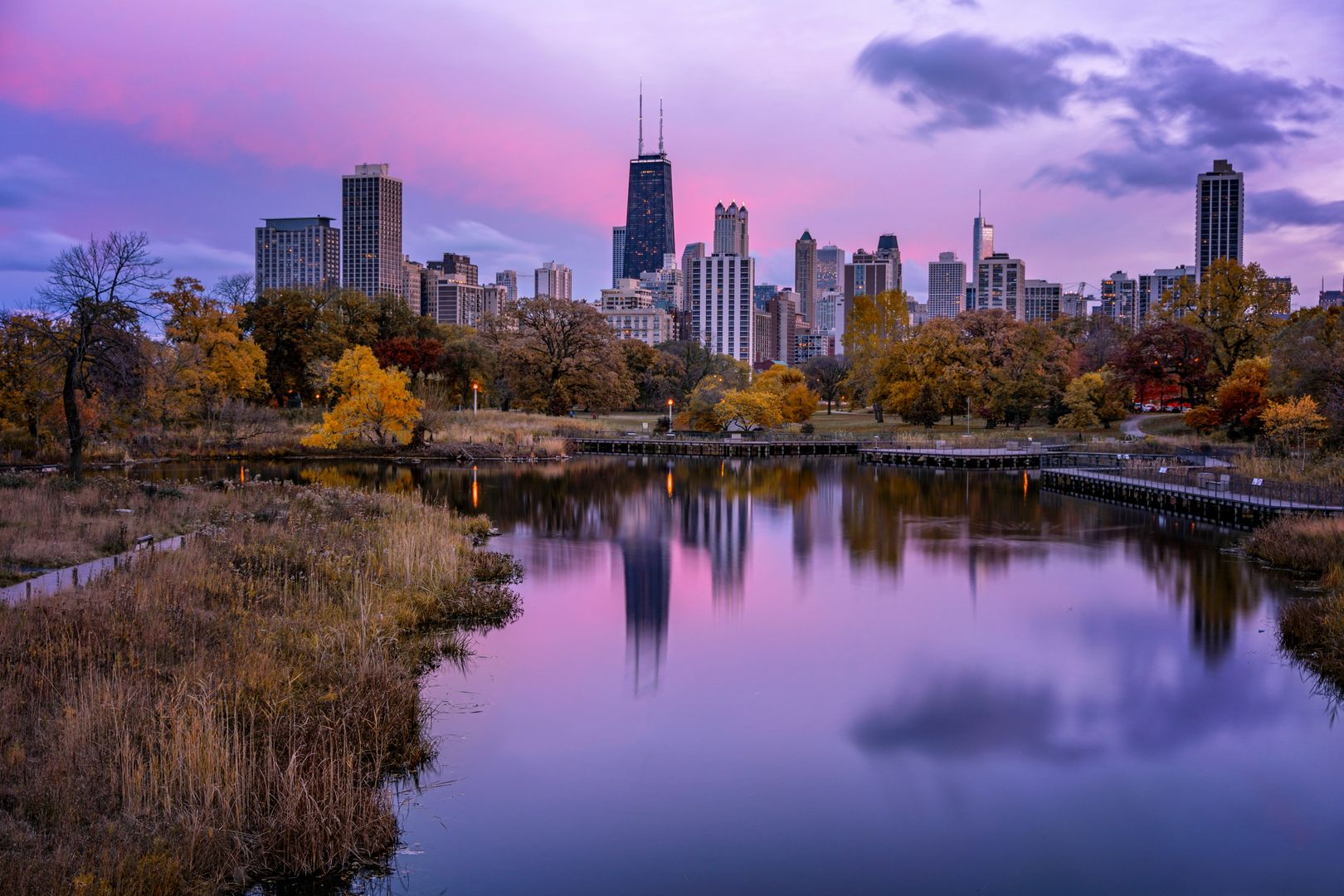
Illinois has close to 20 active bird clubs and chapters, spread across a state where nobody can agree on where downstate begins. It begins wherever you're not currently standing.
Most groups cost nothing. And whether you are in a hedge at Montrose waiting on a Connecticut Warbler or scanning a drained pool at Chautauqua, there's a group nearby that already knows what's what this week.
Why Join a Bird Watching Group at All
Solo birding has genuine advantages.
A club gives you what no app can— a person who knows which spot is producing this particular morning. Migration here concentrates along the Lake Michigan shoreline and the Illinois River valley, and the difference between a good day and a great one is a choice made at 5 a.m.
Clubs are also the front door into community science. The Christmas Bird Count has run since 1900, and the Illinois Spring Bird Count, run by the Illinois Natural History Survey, puts volunteers in every county on the Saturday between May 4 and May 10. Both are organized locally by the clubs below.
A practical opinion before you spend anything. A decent pair of binoculars for birding runs from about $150 to well past $500, and the fastest way to waste that money is to buy before you know what you like. Go on a few walks and ask to peek through someones binoculars.
Statewide Bird Watching Groups in Illinois
Illinois Audubon Society
The one to understand first, because readers routinely confuse it with National Audubon. It is independent, described on its own site as the state's oldest private nonprofit conservation group, and not a branch of the national body. It owns sanctuaries, pre-acquires land for state and federal agencies, publishes a quarterly magazine, and runs guided Adventures field trips, at least 16 from March through October 2026, open to members and non-members alike. It has 14 chapters, several of them below.
Illinois Ornithological Society
Now part of the Illinois Audubon Society, following a merger in early 2025. The old IOS web address redirects to the Illinois Bird Records site, launched March 31, 2026, which holds the archive of Meadowlark, the IOS quarterly, from 1992 to 2026.
Illinois Ornithological Records Committee
Founded in 1985, now a standing committee of the Illinois Audubon Society. A volunteer panel of regional experts reviewing rare bird occurrences, with accepted records going back to 1857. Where documentation goes if you find something the state has barely seen.
Audubon Great Lakes
A regional conservation office of the National Audubon Society covering five states, not a walk-leading club. Its main Illinois work is in the Calumet region on the far south side of Chicago, restoring hemi-marsh habitat at sites including Big Marsh for Black Terns, Least Bitterns and Common Gallinules. Follow it for habitat news, not for a Saturday walk schedule.
Audubon Council of Illinois
The coalition of Illinois chapters of the National Audubon Society, a separate structure from the Illinois Audubon Society's chapters. Useful mainly for working out which parent a given local group belongs to.
Bird Watching Groups in Chicago and Cook County
Chicago Ornithological Society (COS)
Founded in 1912 and still the hub of Chicago birding. Bird walks at Humboldt Park, North Pond and Montrose Point plus stewardship workdays at LaBagh Woods, with events through August and September 2026. Some outings ask for an RSVP. Membership is offered, but the walks are the reason to come.
Chicago Bird Alliance (formerly Chicago Audubon Society)
Renamed in October 2023. Bird walks, field trips, native plant and seed sales, habitat workdays and advocacy across the city. Its own site says the walks are free and open to all, newcomers warmly welcomed, membership not required. Note the name change when searching: plenty of city and partner pages still print the old one.
Chicago Bird Collision Monitors (CBCM)
Not a walking club, and arguably the most useful volunteer group in the state. CBCM volunteers patrol downtown Chicago between 5 and 9 a.m. in spring and fall, collecting birds that have struck windows and getting survivors to licensed rehabilitators. Previous experience is not required; a training session, registered through the site, is. The commitment is early. Volunteers logged over 15,000 hours in 2024. If you find an injured bird downtown, call 773-988-1867.
Evanston North Shore Bird Club (ENSBC)
A north suburban club that passed its centenary in 2019 and still publishes its Bird Calls newsletter, most recently in February 2026. Field trips and programs along the north lakefront. Public listings are thin and some archived pages date to 2023, so email them rather than trusting the calendar.
Fort Dearborn Chapter
Established in 1973 as the Illinois Audubon Society's Chicago chapter. Field trips to Montrose Point, Wooded Island, Lincoln Park and out to Starved Rock, scheduled into 2026. Most walks are free; the annual Gull Frolic is $35 with breakfast and lunch and advance registration. Old cancelled entries are still on the page, so check the date before you drive.
Bird Watching Groups in the Collar Counties
DuPage Birding Club (DBC)
One of the busiest clubs in Illinois, with more than a hundred field trips a year and monthly meetings held both at the College of DuPage and on Zoom. Their membership page states it directly: non-members are welcome at meetings and field trips. Individual trips may require registration. In the western suburbs, start here.
Lake-Cook Audubon
An Illinois Audubon Society chapter covering northern Cook and Lake Counties, with field trips to Waukegan Beach, the Skokie Lagoons, Ryerson and Montrose. Unless a trip says otherwise there is no charge, and you need not belong to the state society or the chapter for most events. Registration is requested so leaders can send weather updates.
Kane County Audubon
More than 200 members, monthly meetings on the second Wednesday from September through May at 7 p.m. at the Hickory Knolls Discovery Center in St. Charles, summer field trips at 6 p.m., and activities their own site describes as open to the public. Important detail: the current site is the .com address linked here. The old kanecountyaudubon.org is still online but its copyright line stops at 2021.
McHenry County Audubon
General membership meetings at 7:00 p.m. on the second Thursday, February through April and September through November, in the Dorr Township Community Room at 1039 Lake Avenue, Woodstock, with an annual meeting on the third Saturday of September. Guests and new members are always welcome, and their bird walks are open to the public.
Will County Audubon Society
An Illinois Audubon Society chapter serving Will County, publishing The Chickadee newsletter. The clearest access statement of any club in this directory: all events are free and open to the public.
Bird Watching Groups in Rockford and Northwest Illinois
Sinnissippi Audubon
The Sinnissippi Chapter of the National Audubon Society, covering Rockford and northern Illinois. Recent programming includes a May 2026 peregrine banding session, the Rockton Pelican Fest for World Migratory Bird Day, and the Audubon Mural Project's expansion into northern Illinois. The calendar empties between seasons, so email rather than assume they have gone quiet.
Northwest Illinois Bird and Nature Alliance (formerly Northwest Illinois Audubon Society)
Based in Freeport, more than 300 member families, and it owns and manages two biodiversity preserves totalling over 80 acres. The calendar is genuinely active, with field trips to Amboy Marsh and a full moon campfire at Silver Creek Biodiversity Preserve in late September 2026. Search under the new name.
Bird Watching Groups in Central Illinois
Peoria Audubon Society
Monthly meetings at the Forest Park Nature Center in Peoria Heights, in person and on Zoom. Their site says it twice: meetings are free and open to the public. The chapter also holds property in Peoria and Marshall Counties.
Grand Prairie Bird Alliance (formerly John Wesley Powell Audubon Society)
The Bloomington-Normal club, renamed and now covering central Illinois generally. Trips and bird walks run through the year for beginners and experts, and most are free to attend. If you find the old JWP Audubon site, it no longer resolves.
Springfield Audubon Society
An Illinois Audubon Society chapter stewarding the Adams Wildlife Sanctuary at 2315 Clear Lake Avenue in Springfield, 40 urban acres of woodland, wetland and prairie. Programs on natural history and conservation, field trips and national bird counts, all levels welcome. The chapter's subdomain on the state society's site is broken; the address linked here works.
Bird Watching Groups in East Central Illinois
Champaign County Audubon Society (CCAS)
Free guided Sunday morning bird walks at 7:30 a.m., all ages and skill levels, plus monthly programs at 7:00 p.m. on the first Thursday in Robeson Pavilion Room C at the Champaign Public Library, skipping June, July and December. The events calendar is filled in well into 2027, which in club-website terms is close to a miracle. Board meetings are members only.
Bird Watching Groups in Southern Illinois
Southern Illinois Audubon Society (SIAS)
The main option below Springfield, with monthly natural history programs and outings around the region, all free of charge and open to the public in their own words. They also monitor bluebird trails from March through August and organize Christmas and Spring Bird Counts across the southern counties.
Other Ornithology and Research Groups in Illinois
These mostly do not run walks, but several are worth your time anyway.
Bird Conservation Network (BCN)
A coalition of more than twenty bird clubs, ornithological societies and conservation groups in the Chicago region. Its BCN Survey asks volunteers to visit assigned points at least twice in June and record what they find; the 2026 season opened in April. The easiest way to turn casual birding into data land managers use.
Illinois Spring Bird Count
Run by the Illinois Natural History Survey, held on the Saturday between May 4 and May 10, with the 2026 count on May 9. Volunteers record everything seen or heard in an assigned county. Some counties still need compilers, and the site lists which.
IBET, Illinois Birders Exchanging Thoughts
The statewide email list, now a Google Group, and still busy with multiple posts a day through August 2026. Where rarities get reported and then argued about, and the fastest way to learn what turned up this morning.
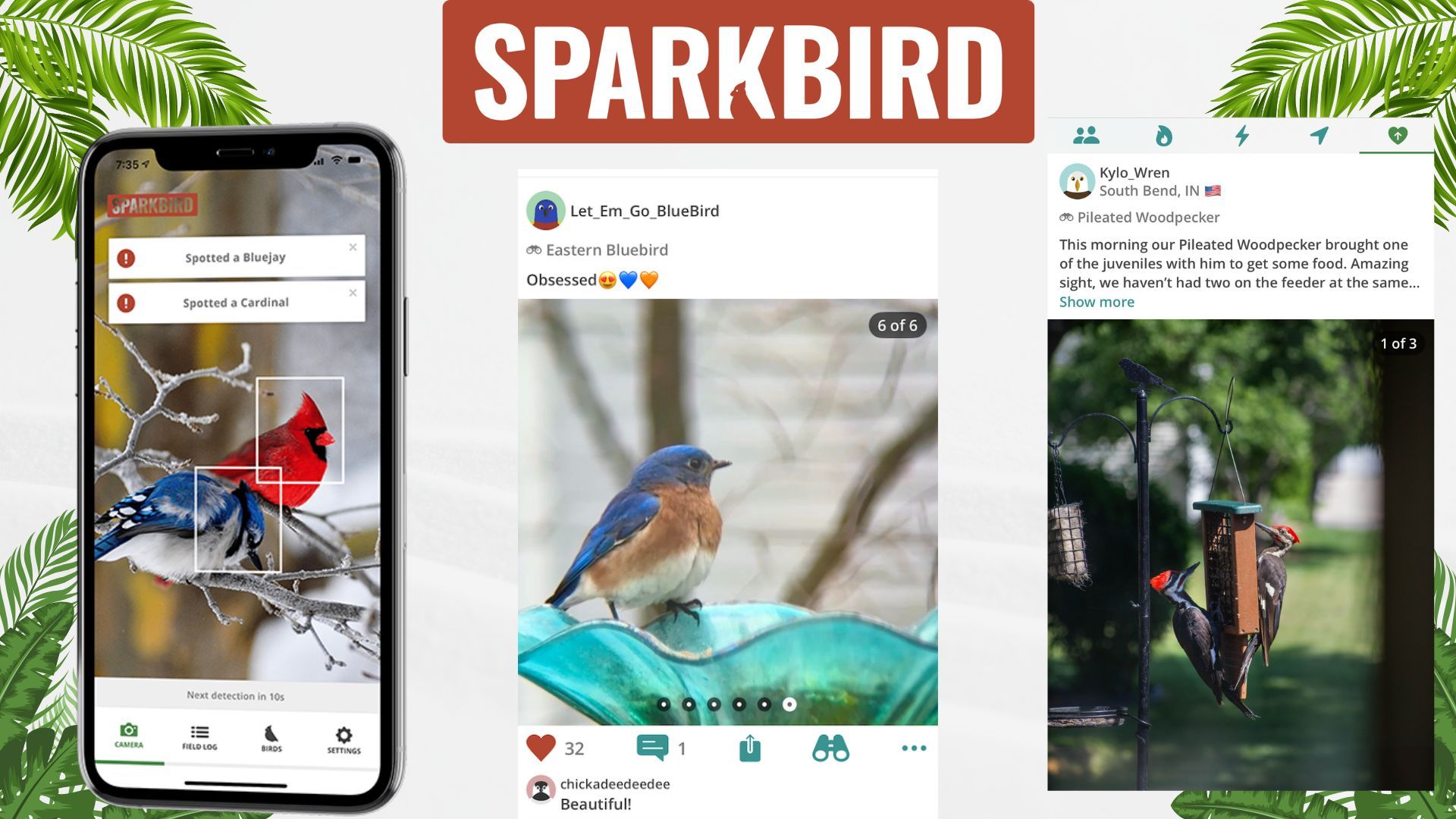
Sparkbird App
We built Sparkbird for people who want a friendly community of fellow birders. Track your life list, get help with identification, and meet people who also stop mid-sentence to look at a tree. Like Instagram, but for bird watchers, without the shady algorithms.
Where to Go Birding in Illinois
Worth knowing before you plan anything: the Illinois DNR charges no entrance fee at any state-owned or state-operated site, except Wildlife Prairie Park and sites with beaches, where beach use is $1 per person per day. Almost everything below is free.
- Montrose Point Bird Sanctuary (Cook County) — The Magic Hedge, a 150-yard run of shrubs and trees on a spit of Chicago lakefront, and one of the best urban migrant traps in North America, with over 300 species recorded. Free, dawn to dusk, at 200 W. Montrose Harbor Dr, with an eight-foot paved loop through the natural area. No pets, stay on the trails: exhausted migrants and dune vegetation both suffer otherwise.
- Illinois Beach State Park (Lake County) — Officially the Adeline Jay Geo-Karis Illinois Beach State Park: 4,160 acres of dunes and swales, marsh, oak forest and the Dead River, with more than 650 plant species recorded. Free, in Zion, 847-662-4811. Check the DNR closures page before a long drive.
- Chautauqua National Wildlife Refuge (Mason County) — A Western Hemisphere Shorebird Reserve Network site since February 1997, near Havana, with a fall peak of around 150,000 shorebirds. Free, sunrise to sunset; headquarters open weekdays 7:30 a.m. to 4:00 p.m., 309-535-2290. Critically: on October 16 each year portions close as waterfowl sanctuary and stay closed until January 31, though the east bluff trails stay open. River levels here have risen more than 5 feet in a century, and high water drowns the mudflats shorebirds need, so call ahead in a wet year.
- The Emiquon Preserve (Fulton County) — The Nature Conservancy's 6,000-acre floodplain restoration near Lewistown, an hour southwest of Peoria, holding hundreds of thousands of migratory birds including pelicans, geese and eagles. Trails and observation areas are free, sunrise to sunset; lake access for fishing or boating needs a permit. The adjacent Emiquon National Wildlife Refuge adds 2,631 acres at the Illinois and Spoon river confluence.
- Goose Lake Prairie State Natural Area (Grundy County) — A large remnant prairie at 5010 N. Jugtown Rd. in Morris, reliable for Henslow's Sparrow. Free. Two things to know: the site closes to the public during all firearm deer hunting seasons, and the visitor center is closed indefinitely, with intermittent construction closures elsewhere.
- Crab Orchard National Wildlife Refuge (Williamson, Jackson and Union Counties) — The big one in southern Illinois, five miles west of Marion, and the rare Illinois site with a real fee: $2 for a one-day vehicle pass, $5 for seven days, $15 annual for a vehicle or $10 for watercraft, with six fee-free days a year. Visitor center open Monday through Saturday, 8:00 a.m. to 4:00 p.m.; trails open to foot traffic year round.
- Horseshoe Lake State Fish and Wildlife Area (Alexander County) — Established in 1927 as a Canada goose sanctuary, with a twenty-mile shoreline ringed by bald cypress, tupelo gum and swamp cottonwood, which is to say it looks like Louisiana and is legally Illinois. Free. A different Horseshoe Lake in Madison County shares the name and currently has bridge and campground closures, so confirm which one your directions mean.
If you would rather start from your own window while you wait for May, our guide to hummingbird plants for Illinois covers what actually works here.
Illinois Bird Books and Field Guides
Birds of Illinois Field Guide
Stan Tekiela's Illinois-only guide, organized by color. See a yellow bird, turn to the yellow section. Hard to beat as a first book.

Birds of Illinois Field Guide (Bird Identification Guides)
Adventure Publications
American Birding Association Field Guide to Birds of Illinois
Michael Retter's text with Brian Small's photographs, built around what you will actually meet in the state rather than everything that ever wandered through.

Birding Illinois
Sheryl DeVore's site-by-site Falcon Guide. Older than the others, and still the book to read before driving somewhere new in the state.

Illinois Birds: A Century of Change
Not a field guide. An Illinois Natural History Survey account of how the state's avifauna shifted over a hundred years. Read it to understand why the grassland birds are where they are.

Illinois Birds A Century of Change
Brand: University of Illinois, Illinois Natural History Survey
The Sibley Field Guide to Birds of Eastern North America
The most authoritative portable guide to eastern birds; the second edition is the one you want.

The Sibley Field Guide to Birds of Eastern North America: Second Edition (Sibley Guides)
Knopf
Illinois Bird Rescue and Rehabilitation
Always call first. Intake capacity, hours and species restrictions change constantly, and several centers take birds by appointment only.
Find a Wildlife Rehabilitator, Wildlife Illinois
The official starting point, built by the National Great Rivers Research and Education Center with the Illinois DNR. Search by zip code or animal. The printable state list is a PDF from the IDNR Office of Law Enforcement.
Chicago Bird Collision Monitors - Chicago
For window strikes in the city, call 773-988-1867. Their instructions matter: put the bird in a clean unwaxed paper bag or cardboard box with paper towel flat on the bottom, no holes, no food, no water, and do not open it to check.
DuPage Wildlife Conservation Center (formerly Willowbrook Wildlife Center) - Glen Ellyn, DuPage County
Run by the Forest Preserve District of DuPage County, rehoused in a new 27,000-square-foot facility in January 2026. Native Illinois wildlife, but not skunks, bats, deer or raccoons. Call 630-942-6200 before arriving.
Flint Creek Wildlife Rehabilitation - Chicago and Barrington
Birds including raptors, plus mammals and turtles, by appointment only. The Linn White Drive facility in Chicago is temporarily closed after a fire, with a satellite operating daily 8:30 to 10:30 a.m. Text or call 847-842-8000; do not email about an injured animal.
Oaken Acres Wildlife Center - Sycamore, DeKalb County
Federally and IDNR licensed, operating since 1984. Hours by appointment. Call 815-895-9666 rather than using the website contact form.
Hoo Haven Wildlife Rehabilitation - Durand, Winnebago County
North American wildlife including hawks, owls, eagles, loons and wood ducks. Call 815-629-2212.
Illinois Raptor Center - Decatur, Macon County
Rehabilitation, education and research on the Sangamon River, focused on birds. To report a bird in trouble, text a photograph and your county to 217-963-6909. Their site also carries a county-by-county rehabilitator map and conservation police contacts.
Wildlife Medical Clinic, University of Illinois - Urbana, Champaign County
A student-run clinic under faculty veterinary supervision at 2100 S. Goodwin Ave, which treated over 2,200 native wildlife patients in 2025. Open 7:30 a.m. to 8:00 p.m. daily. Call 217-244-1195 first, and never bring animals to the Veterinary Teaching Hospital after hours.
TreeHouse Wildlife Center - Dow, between Alton and Grafton
Native wildlife on eight and a half acres at 23956 Green Acres Rd. Intakes daily 8 a.m. to 5 p.m., though hours shift around veterinary appointments, so call 618-466-2990 first.
Frequently Asked Questions
What is the best place to go bird watching in Chicago?
Montrose Point Bird Sanctuary, and it's not close. The Magic Hedge is a 150-yard strip of shrubs on a lakefront point, with over 300 species recorded, including some of the rarest birds ever found in Illinois. Free, open dawn to dusk, reachable by bus. Jackson Park, LaBagh Woods, Humboldt Park and North Pond all reward regular visits, and the Chicago Ornithological Society leads walks at several of them.
When does spring migration peak at Montrose Point?
The first half of May, which is why the statewide Spring Bird Count is scheduled for the Saturday between May 4 and May 10. Late April brings the first big waves of warblers and sparrows; the last week of May is when the Connecticut Warblers and flycatchers move. Get there at first light, because the crowds and the joggers build fast.
Where can you see Sandhill Cranes in Illinois?
The famous staging site is not in Illinois. Jasper-Pulaski Fish and Wildlife Area, where numbers peak in late November or early December and topped 16,000 in 2025, is in Indiana, roughly 80 miles from Chicago.
Within Illinois, cranes can be found in northeastern counties, with McHenry, Winnebago, Stephenson, Kane and Lake holding the most, and have nested as far south as Midewin National Tallgrass Prairie in Will County.
What is the difference between the Illinois Audubon Society and Audubon Great Lakes?
Two unrelated organizations. The Illinois Audubon Society is an independent statewide nonprofit while the Audubon Great Lakes is a regional office of the National Audubon Society covering five states. If a local group calls itself a chapter, check which parent it means.
Got an Illinois birding group to recommend?
Clubs form, rename themselves, and forgot to tell the internet. If yours is missing, or a link here has gone stale, tell us in the comments or through the Sparkbird App, available in the Apple App Store.
- Related: How to Use the Sparkbird App

No comments yet.