
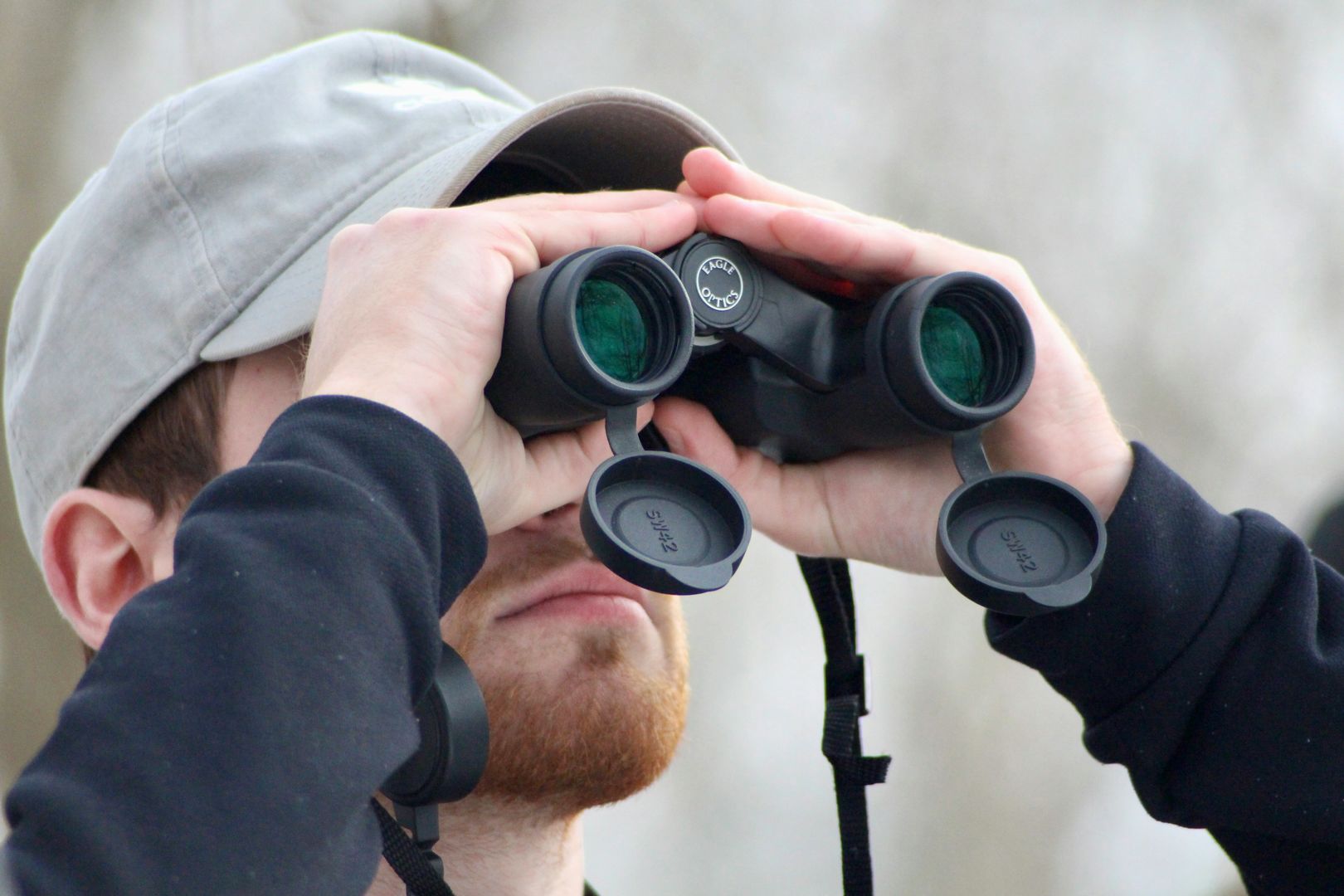
There are two ways to get into birding. One involves $400 of optics, a vest with more pockets than you have possessions, and a book heavy enough to be a legal weapon.
The other involves walking outside.
This guide is about the second one, because learning how to start bird watching should cost roughly nothing, and because the first way is how people quit in March.
Start With Nothing
Almost every beginner's guide opens with a shopping list. That's partly because gear is easy to write about and partly because a lot of those guides earn a commission on the binoculars. It also gets the order backwards.
Birding is one of the last hobbies with a zero-dollar entry point.
The U.S. Fish and Wildlife Service counts 96 million American birders, and 95% of them do it from home, which means the overwhelming majority of birding in this country happens through a window with no equipment involved at all. You do not need a permit, a license, a membership, or a single purchase to participate.
If you want the wider context on why this hobby suddenly has a waiting list, we covered why bird watching got so popular separately. For now, the useful thing to know is that you're not late.
How to Start Without Buying Anything
Easier said than done, I know.
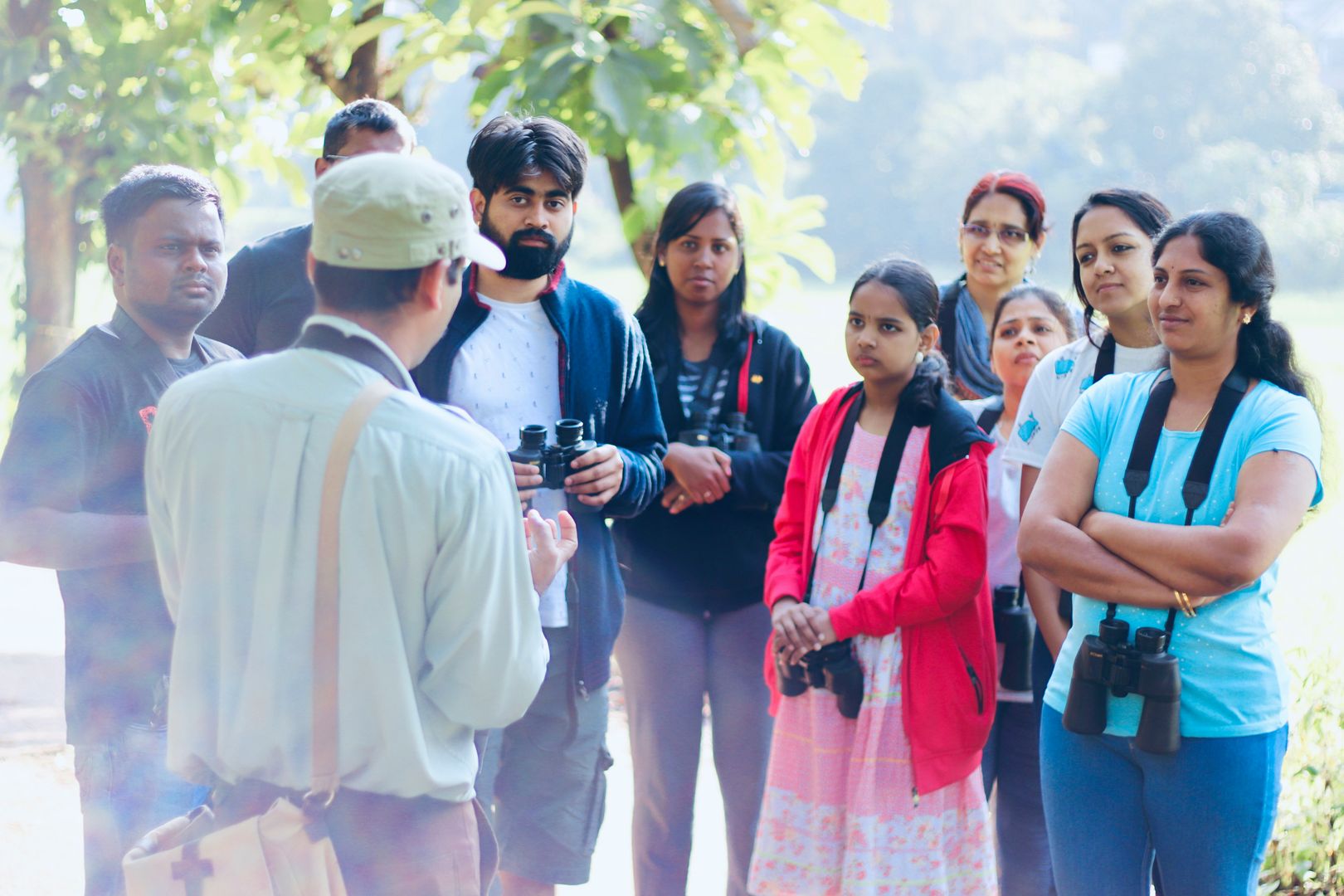
Honestly find a local bird walk first, show up, and ask to look through somebody's binoculars. Birders are pathologically generous with their optics, partly out of kindness and partly because they want you to see the thing they're excited about. You'll learn more about what magnification actually feels like in ten minutes of borrowing than in a week of reading spec sheets. Once you know you're in, our roundup of the best budget binoculars for birding will get you sorted for far less than the internet thinks you need to spend.
The rest of the on-ramp:
- Start where you already are. A parking lot has birds. So does a bus stop. You do not need a wildlife refuge to begin.
- Go early. Birds are loudest and least cautious in the first two hours after sunrise, which is also, conveniently, a low-commitment window for a first date.
- Use an app for ID, then look up. The point is the bird, not the screen.
- Find the group. This is the step people skip and the one that actually changes things. Local Audubon chapters run free walks in most states.
- Log what you see. Not for the leaderboard. For the pleasant shock of realizing, four months in, that you know sixty birds by name.
What to Actually Look At When You See a Bird
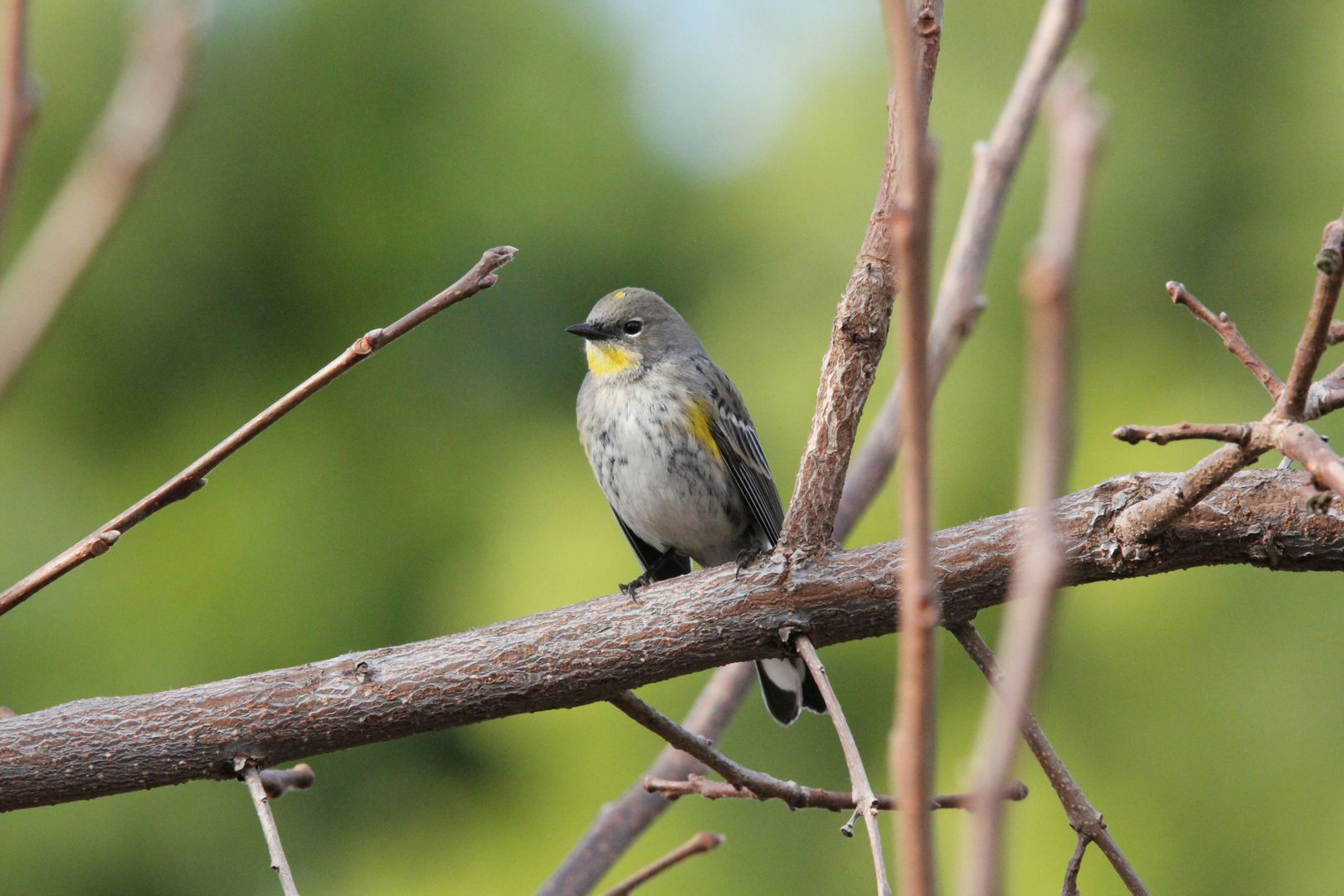
Beginners tend to look at a bird and try to retrieve a name, like it's a vocabulary test they didn't study for. That's the wrong move. You can't recall a name you never learned. What you can do is describe.
The Cornell Lab's nine tips for beginning birdwatchers lay out a four-step habit that does most of the work, and it's worth burning into muscle memory:
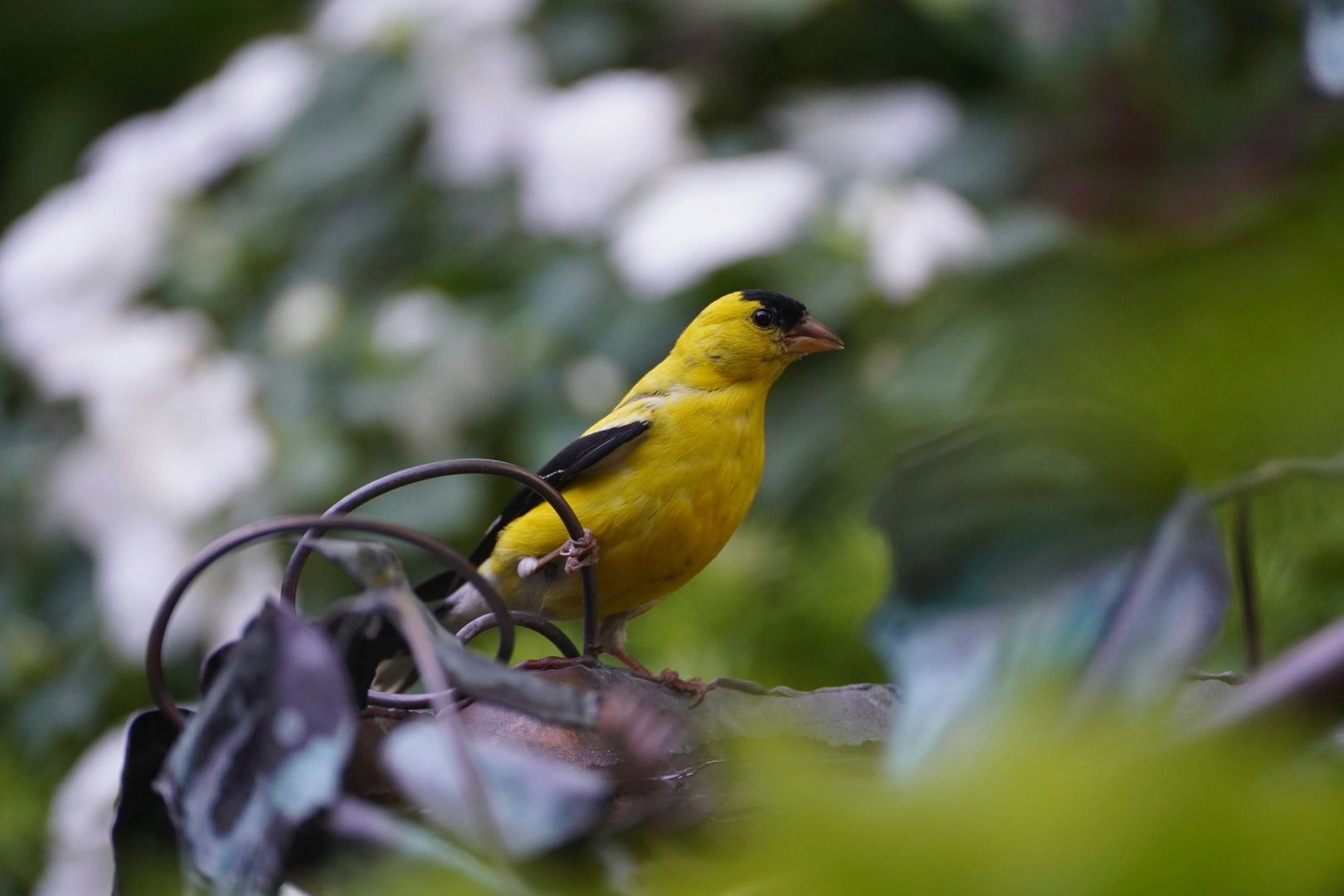
- Size and shape. Is it sparrow-sized, robin-sized, or crow-sized? Long tail or stubby? Thin pointed bill or thick cone-shaped one? Shape survives bad lighting, which color does not.
- Color pattern. Not "brown." Where is it brown? Streaked chest or plain? Wing bars? A stripe through the eye? The pattern is the fingerprint.
- Behavior. Is it hopping on the ground, creeping up a tree trunk, hovering, or sitting on a wire flicking its tail? Behavior narrows the field faster than color does.
- Habitat. A bird in a marsh is a different set of options than the same silhouette in a parking lot.
Get in the habit of running those four before you reach for the phone. The app will tell you what it is; the four questions are what make it stick.
Sound is the other half, and it's the half that separates people who bird from people who own binoculars. Most experienced birders identify far more by ear than by eye, because a bird you can hear behind sixty feet of leaves is a bird you'd otherwise never count. Start with three or four species you hear constantly. Learn the robin, the cardinal, the blue jay, the chickadee. Once those four are automatic, everything unfamiliar starts standing out by contrast.
Where and When to Go
Start where you already are. This is not a modesty thing. It's actually really efficient! Your yard, your block, the scruffy park with the broken drinking fountain: all of it has birds, and the birds there are the common species you most need to learn first. Beginners who drive two hours to a wildlife refuge on their first outing usually come home overwhelmed and disappointed, having seen forty species they couldn't identify instead of six they could.
Water is the cheat code. A pond, a creek, a drainage retention basin behind a strip mall: anywhere with water and a bit of edge habitat will out-produce a large stretch of uniform lawn or dense woods. Edges in general are good, meaning the places where one habitat meets another.
The first two or three hours after sunrise are worth more than the rest of the day combined. Birds feed hardest in the early morning and sing most persistently while establishing territory. Early evening is a distant second. Midday in midsummer is when birds do what any sensible creature does in the heat, which is nothing, somewhere shady, out of sight.
Spring and fall migration will hand you the widest variety, but don't wait for a season to start.
Gear: What to Buy, and When Not to Bother
Now the shopping list, deliberately late.
Binoculars, eventually
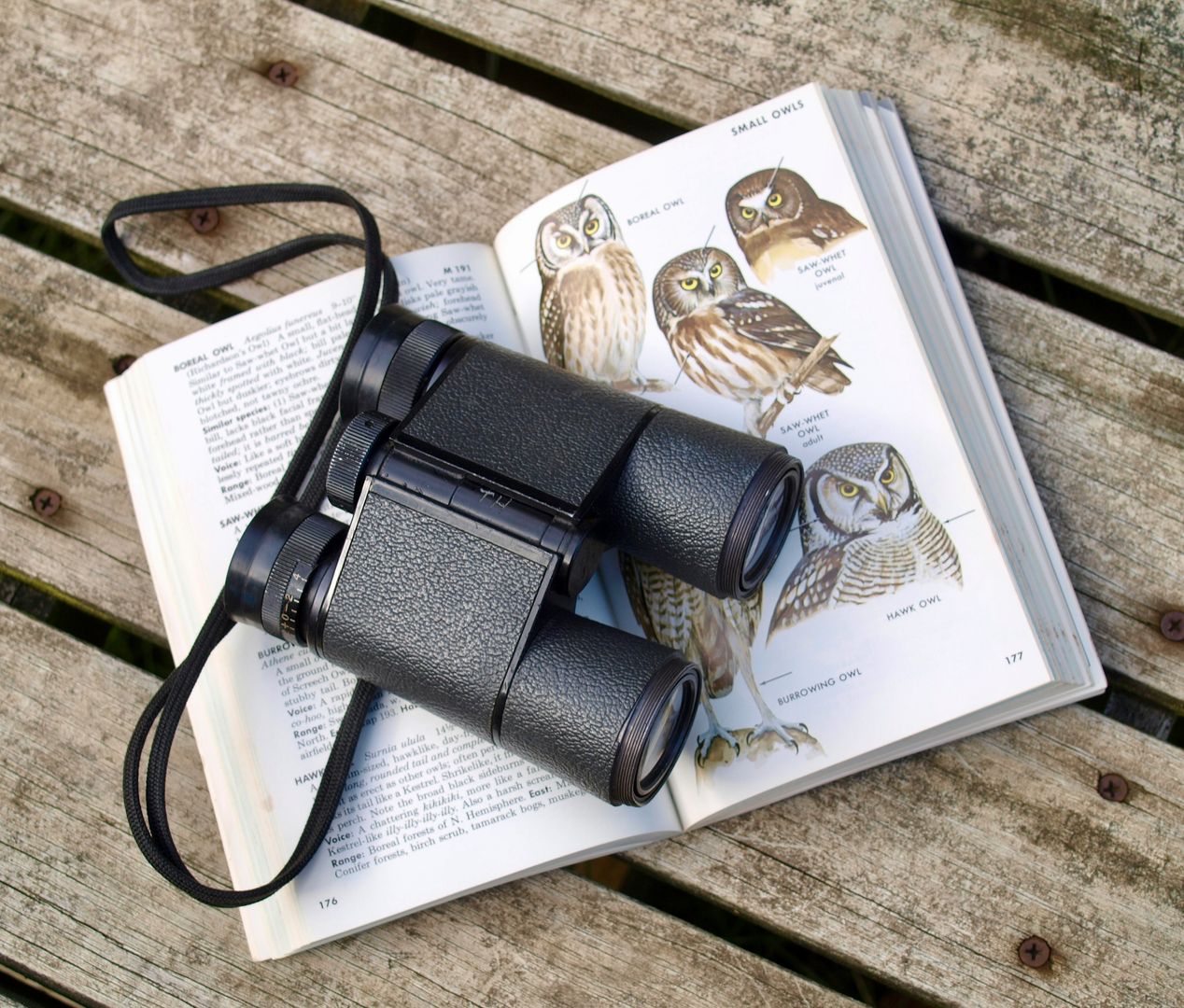
Cornell recommends 8-power as the sweet spot for beginners, because higher magnification narrows your field of view and turns every bird into a thing that keeps hopping out of frame. The standard beginner spec is 8x42. Here's the part most guides won't say: do not buy a pair in your first month.
Go on a free bird walk and ask to look through two or three people's. Birders are almost aggressively generous with their optics, partly out of kindness and partly because they want you to see the thing they're excited about. Ten minutes of borrowing teaches you more about what feels right than a week of reading specifications.
When you're ready the best budget binoculars for birding covers the range where price and quality actually meet.
An ID app
Free, immediate, and the single biggest reason this hobby stopped being hard to enter. Sound ID in particular does something no book has ever done for a beginner, which is answer the question you're actually asking.
A field guide
A regional paper guide is better than a national one, because half of a national guide is birds you will never see. But apps have made this optional rather than essential for a first-year birder.

A feeder - optional but effective
If you've got a window and a bit of outdoor space, a feeder brings the classroom to you. Just get the food right, because the wrong seed attracts nothing but disappointment and grackles. Our guide to the best types of bird food for feeders sorts out what actually works.
One rule with no exceptions attached to it: never feed bird bread. Bread has no nutritional value for birds, and a diet of it causes real malnutrition.
Skip the camera
Photography is a second hobby wearing the first one as a coat. It will happily eat your budget and your attention, and it makes you worse at looking, because you spend the encounter fussing with settings. If you want to document what you see, your phone through one barrel of your binoculars works better than you think.
We've also got five iPhone photography tips for bird feeder pictures if you want to try it.
Keep a List, Even a Bad One
Write down what you see. Not for a leaderboard, and not because anyone will check.
The reason is that birding improves through repetition you can't feel happening. Logging turns a vague sense of "I saw some birds" into a record, and four months in you get the genuinely pleasant shock of realizing you know sixty species by name. It also makes patterns visible: the same warbler showing up in the same week two years running is the kind of thing you only notice on paper.
A notes app is fine. eBird is the standard if you want your sightings to contribute to actual science, since checklists submitted by ordinary birders feed the datasets researchers use to track population trends.
Find Other Birders
This is the step almost everyone skips, and it's the one that changes the trajectory.
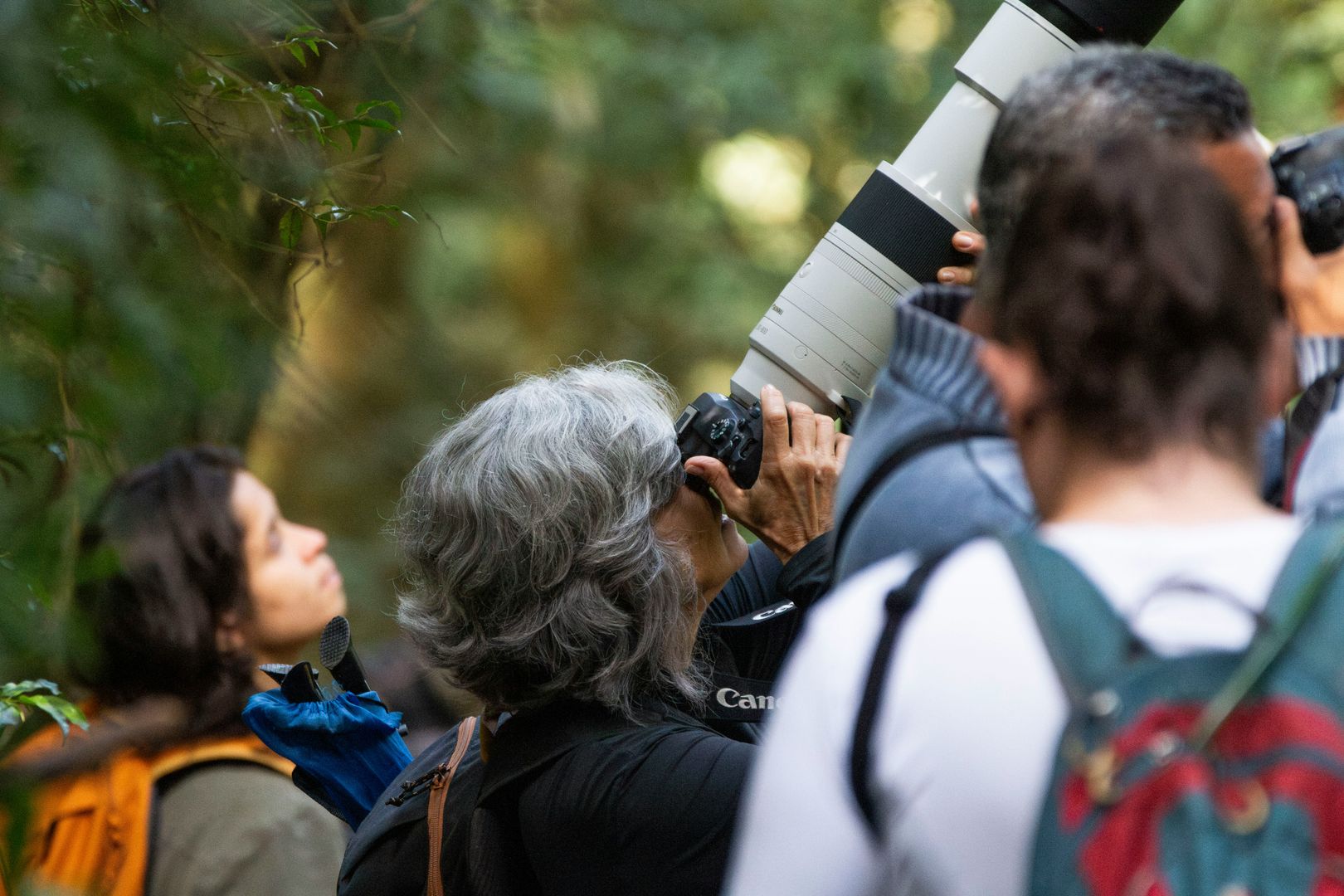
Birding alone is pleasant. Birding next to someone who's been doing it for fifteen years is an education you cannot buy. They'll identify by ear things you didn't know were making noise, and they will tell you, unprompted, exactly how they knew. Most local Audubon chapters run free public bird walks that don't require membership. Nature centers and county parks run them too.
That's also where the borrowed binoculars come from.
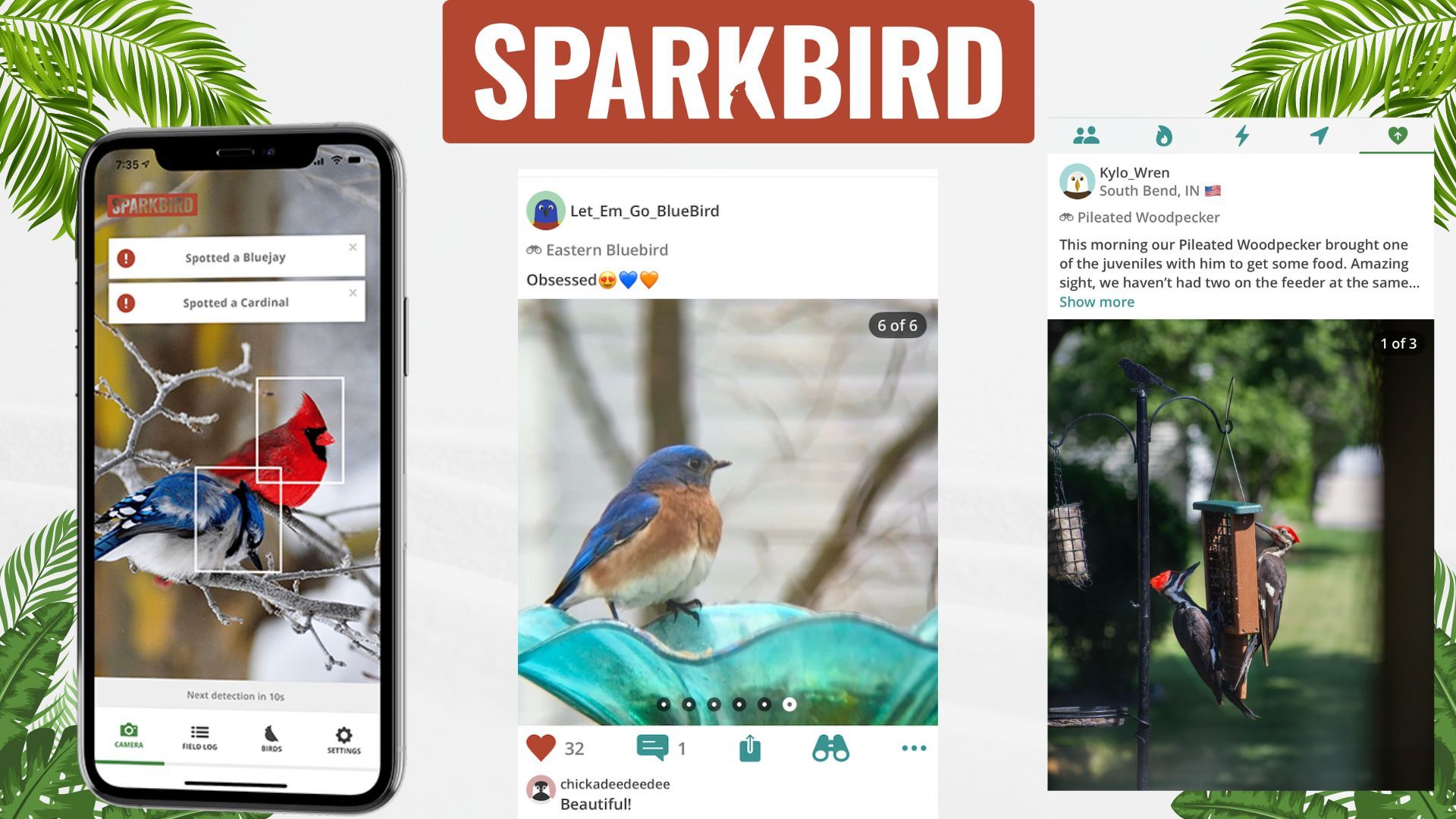
The apps are excellent at identifying and logging birds, but almost none of them will introduce you to the person standing forty feet away with the same binoculars. Fixing that is why Sparkbird exists, and how to use the Sparkbird app walks through the community side.
Bird Watching Ethics Most Beginner Guides Skip
The American Birding Association's Code of Birding Ethics leads with bird welfare for a reason, and its core instruction is worth memorizing on day one rather than year three: birders should always give back more than they take.
In practice that means:
- keeping your distance from nests and roosts
- pack it in, pack it out
- staying on established trails instead of trampling through habitat for a better angle
- don't interfere with nature
- going easy on playback
Playing a recording of a species' call makes it come investigate but it's a false alarm that pulls a bird off its territory and away from feeding. Once or twice in a quiet place is one thing. In a heavily birded spot, or with a species that's rare or threatened, it's hinders an animal that's already having a hard century.
Audubon's guide to getting started puts safety and ethics ahead of gear, and that ordering is correct.
You can start birding with no equipment. You can't start birding without respecting the birds.
What Goes Wrong in Your First Month of Birding
You'll misidentify things, confidently, in front of people. You will spend forty minutes seeing nothing but a house sparrow and a plastic bag. You will look at a bird for a full six seconds and be unable to say one useful thing about it afterward.
All of this is normal and none of it means you're bad at this.
When I was a kid we spent summers at a lake house where a Great Horned Owl had achieved legendary status for snatching a fish straight out of a friend's hand. The next morning we woke up to an enormous shadow projected onto the sheer sliding door of the bedroom. Convinced the owl had gotten inside and was now holding us hostage, we refused to open the door. We were fairly sure it could work a handle. This went on for what felt like hours until my aunt walked in, glanced at it, and pointed out that our terrifying captor was the outline of the trash bin.
That's birding. The gap between what you think you're looking at and what's actually there is the entire skill, and it closes slowly. The fastest way through it is volume: more short outings, more often, beats one heroic expedition a season. Fifteen minutes in your own yard four times a week will make you a better birder by August than a single weekend trip in May.
Frequently Asked Questions
What do you need to start bird watching?
Functionally, nothing. Your eyes, a free ID app, and somewhere outside. Binoculars help a great deal once you know what you're doing, and a regional field guide is a nice addition, but neither is required to start and neither should be your first purchase.
How long does it take to get good at bird watching?
You'll recognize your ten most common local birds within a few weeks of regular practice, and that's the hump. Reliable identification of tricky groups like sparrows, gulls, and fall warblers takes years, and plenty of experienced birders still quietly give up on a distant gull. Short, frequent outings build the skill much faster than occasional long ones.
What should I do if I find an injured bird?
Don't try to treat it yourself. Contain it somewhere dark and quiet if you safely can, keep it away from pets, and call a licensed wildlife rehabilitator in your area. Well-meaning home care kills more birds than it saves, and in most states rehabilitating wildlife without a permit is illegal anyway.
Go Stand Outside
That's it. That's the whole method.
Go early, go often, and borrow the binoculars before you buy them. And when you eventually find yourself narrating a sparrow's behavior out loud to a stranger in a parking lot, don't panic. That's just week six.
Share your progress in the Sparkbird App for like-minded community, trivia, and more!

No comments yet.