
Maine has fewer bird clubs than its coastline would suggest-- 7 Audubon chapters, 1 independent, and a research community that punches well above the state's population.
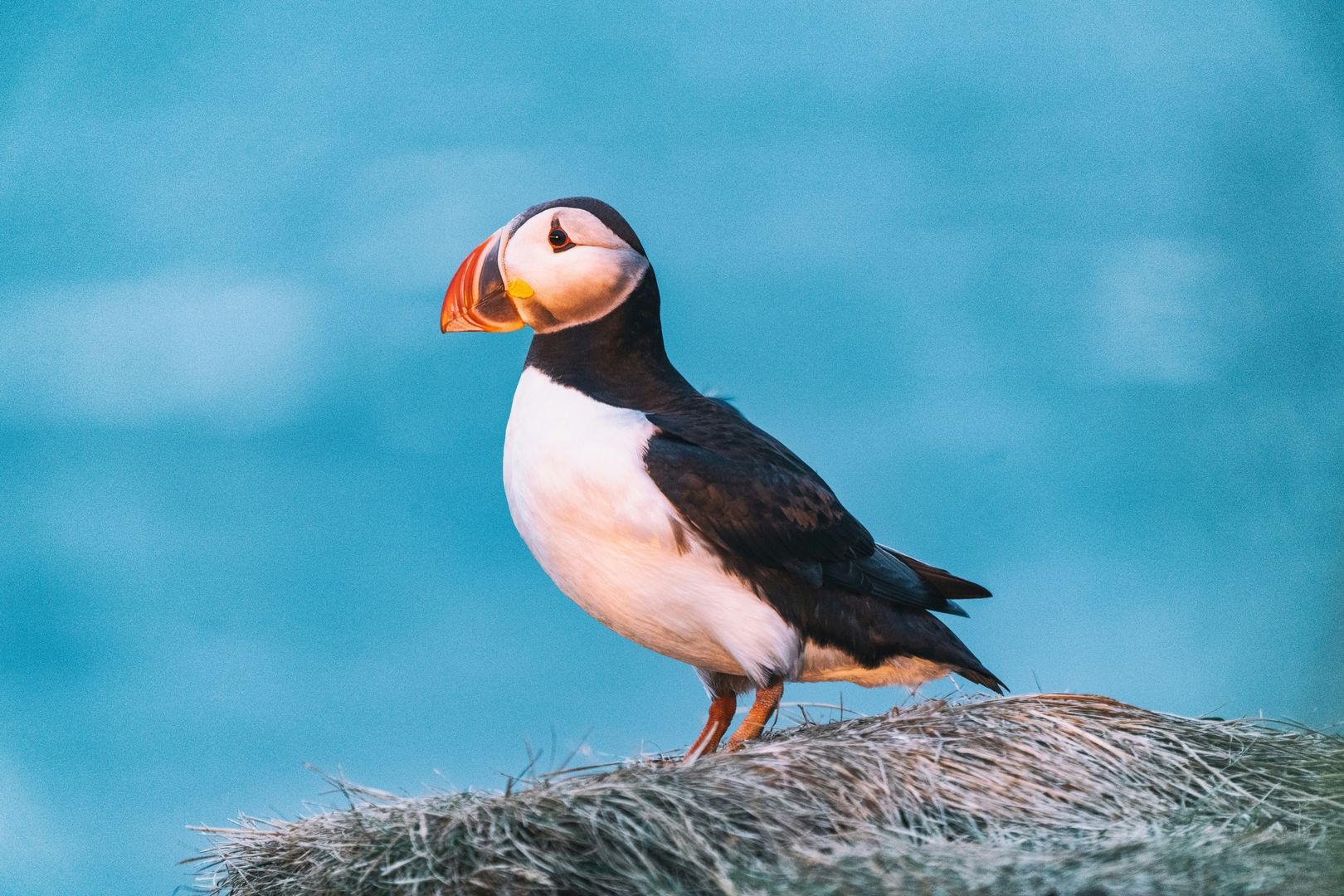
Almost everything in this directory is free except the boat ticket. The bird everyone came to see can't be reached by any road.
Why Join a Bird Watching Group at All
Solo birding has obvious appeal in a state with this much empty shoreline. Nobody rushes you off a mudflat.
What a club adds is a person who already knows which point is producing this week. Maine's migration funnels through a small number of headlands, islands, and river mouths. That knowledge lives in people rather than databases.
FYI borrow binoculars before you buy them. Several Maine groups keep loaners, and a season of trying other people's optics teaches you more than any spec sheet. When you're ready, our guide to the best budget binoculars for birding covers what matters. Clubs are also the front door to community science. The Christmas Bird Count has run every year since 1900, always between December 14 and January 5.
Statewide Bird Watching Groups in Maine
Maine Audubon - Statewide, headquartered in Falmouth
Read this part carefully, because it trips up almost everyone. Maine Audubon's own site puts it plainly: "An independent organization, Maine Audubon is not a chapter of National Audubon. We have an independent, collaborative relationship, and share conservation goals."
It traces its founding to 1843 and counts more than 10,000 members. It runs eight sanctuaries and centers, including Gilsland Farm in Falmouth, a free 65-acre headquarters with 2.5 miles of trails, a visitor center open 10 to 5 daily, and no dogs anywhere on the property.
Joining Maine Audubon enrolls you automatically in the chapter for your zip code.
Hog Island Audubon Camp - Bremen, Lincoln County
This one is National Audubon, which is exactly why the two get confused. Hog Island has hosted residential nature camps since 1936 and now runs under National Audubon's Seabird Institute, with multi-day sessions from May through September for adults, teens, and families. They sell out early; 2026 was full by mid-year.
Audubon Seabird Institute and Project Puffin - Bremen and Rockland
The restoration program that gave Maine its puffins back. Atlantic Puffins were hunted off Eastern Egg Rock by the 1880s, and by 1902 the state was down to two birds on Matinicus Rock. Beginning in the 1970s, chicks were translocated from Newfoundland and coaxed into recolonizing.
In summer 2026 crews counted a record 200 active burrows on Eastern Egg Rock, beating the 188 counted in 2019. Roughly 1,400 pairs now nest across several Maine islands.
Landlubbers can visit the Project Puffin Visitor Center at 311 Main Street in Rockland, open daily 10 a.m. to 5 p.m. May through October, Thursday to Sunday in November and early December, and closed December 15 through April.
Maine Bird Records Committee - Statewide
Established in 2005, among the last state records committees to form. It maintains the official list of Maine birds, at 475 accepted species through September 13, 2025. Review-list species need written documentation and, ideally, photos or audio.
Maine Bird Atlas - Statewide, fieldwork concluded
Run by the Maine Department of Inland Fisheries and Wildlife with Maine Audubon, Biodiversity Research Institute, and the Maine Natural History Observatory in Gouldsboro.
Field seasons ran 2018 through 2022 and data collection closed March 15, 2023, so there's nothing left to volunteer for. The payoff is the book, which went to the University of Maine Press at the end of 2025 with publication expected in late 2026.
Bird Watching Groups in Greater Portland and Southern Maine
York County Audubon - York County
The busiest chapter in southern Maine and the most beginner-friendly in the state. Weekly bird walks, explicitly free and requiring no registration, plus a newsletter called the Harlequin. Membership is automatic for anyone with a York County zip code who joins Maine Audubon.
Maine Young Birders Club - Southern Maine, ages 11 to 18
Sponsored by York County Audubon and the first youth birding club in the state, with 2026 trips to Stratton Island and the Kennebunk Plains. If you've got a kid who narrates the feeder, this is the on-ramp.
Freeport Wild Bird Supply - Freeport, Cumberland County
Not a club, but it functions as one. The shop at 541 Route One runs free bird walks, workshops, and private guiding, and sponsors the Bradbury Mountain Spring Hawkwatch, founded in 2007 by Jeannette and Derek Lovitch.
The count runs daily March 15 through May 15, 9 to 5, with an official counter on the summit who's glad of company.
Bird Watching Groups in the Midcoast and Penobscot Bay
Mid-Coast Audubon - Knox, Lincoln, and Waldo Counties
Covers a wide arc, from Boothbay Harbor west to Windsor and China and east along the coast to Bucksport. Programs are free at the Camden Public Library, and there's a steady schedule of field trips.
Merrymeeting Audubon - Brunswick, Bath, and the Merrymeeting Bay towns
Established in 1970, with a newsletter called The Call and a downloadable map of the towns it serves. Guided walks are posted on its own events calendar, including a shorebird walk at Wharton Point in Brunswick on August 29, 2026.
Penobscot Valley Audubon - Bangor area, Bucksport to Millinocket
Established in 1970 and covering an unusually long stretch of river valley. It runs Neighborhood Bird Walks around greater Bangor through May and bi-weekly Friday walks at Fields Pond, 8:00 to 9:30 a.m. Activities are open to non-members.
Fields Pond Audubon Center - Holden and Orrington, Penobscot County
Maine Audubon's eastern center, seven miles southeast of Bangor: a 229-acre sanctuary around a 191-acre pond, six trails, a 300-foot boardwalk. Trails open sunrise to sunset, visitor center Tuesday through Saturday 10 to 4, no pets.
Bird Watching Groups Downeast and Around Acadia
Downeast Audubon - Hancock County
A chapter of Maine Audubon since 1971, covering the Acadia region. Be warned that the chapter's own website hasn't been meaningfully updated since 2022, so treat everything on it as historical.
Maine Audubon credits Downeast with dozens of programs a year and a bluebird trail of more than 230 boxes, so the chapter is plainly more active than its web presence. Confirm trips through Maine Audubon's chapter page instead.
Fundy Audubon - Washington County
Formerly the Schoodic chapter, and the one rename in this directory. Its site was current as of July 2026 and lists field trips through the year, including April woodcock walks and nature walks at Moosehorn National Wildlife Refuge.
Washington County also hosts the Down East Spring Birding Festival, run out of the Cobscook Institute every Memorial Day weekend since 2003, next on May 28 through 31, 2027. The 2026 fee was $165 with a sliding scale for local residents.
Acadia Birding Festival - Southwest Harbor, Mount Desert Island
Four days of walks, workshops, talks, and pelagic boat trips based on Mount Desert Island. The 28th annual festival runs June 3 through 6, 2027; 2026 registration has closed. Maine Audubon members get 10 percent off.
Bird Watching Groups in Central Maine
Stanton Bird Club - Lewiston, Androscoggin County
Founded in 1919 and named for Dr. Jonathan Y. Stanton, a Bates College professor who taught ornithology and dragged students out to look at birds.
One of the oldest bird clubs in the country, it owns more than 850 acres across Androscoggin and Kennebec counties: Thorncrag Nature Sanctuary in Lewiston, 450 acres with roughly 3.5 miles of blazed trails, and the 401-acre Woodbury Bird Sanctuary in Monmouth. Programs and walks are open to the general public. No pets in either sanctuary since 2010.
Central Maine has no Audubon chapter of its own. Birders around Augusta and Waterville generally fall in with Stanton, Merrymeeting, or Mid-Coast, all within an hour's drive.
Bird Watching Groups in the Western Mountains and Lakes
Western Maine Audubon - Western Maine
Formerly the Western Maine Audubon Society, now the Western Maine Chapter of Maine Audubon. It posts bird walks on a chapter calendar and runs local monitoring work, including a cliff swallow project written up in April 2026. Joining Maine Audubon from a western Maine address enrolls you here automatically.
The western mountains are also Maine's Bicknell's Thrush country. The bird breeds only in dense, stunted spruce and fir above roughly 3,000 feet, which means a pre-dawn hike and a lot of listening.
Mountain Birdwatch, run by the Vermont Center for Ecostudies, sends volunteers up about 100 montane routes across northern New England each June, Maine included. It's the most reliable way to get on the bird without guessing.
Bird Watching Groups in Aroostook and the North Woods
There's no dedicated bird club in Aroostook County or the North Woods, and pretending otherwise would waste your time. Penobscot Valley Audubon reaches as far north as Millinocket, the statewide listserv carries the sightings, and the birds are the reason people drive up.
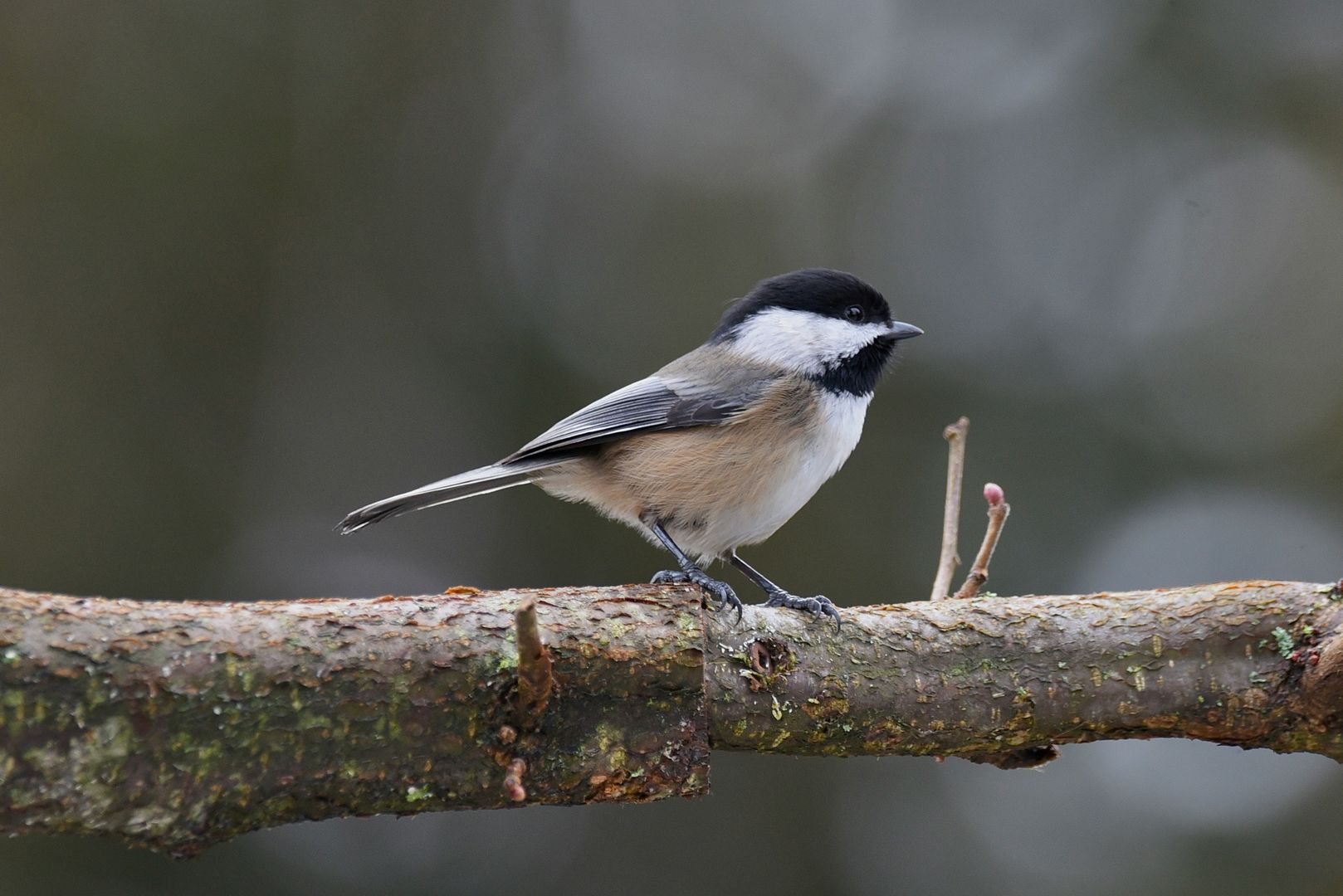
What draws listers is the boreal set: Spruce Grouse, Canada Jay, Black-backed Woodpecker, and Boreal Chickadee, none of them reliable in southern Maine.
Much of the best habitat sits inside North Maine Woods, a cooperatively managed block of private timberland with staffed and automated checkpoints. Expect a per-person day-use fee, higher for non-residents, with visitors under 18 and over 70 free, and a separate per-night camping fee. Automated checkpoints take cash and checks only.
Borestone Mountain Audubon Sanctuary - Elliotsville, Piscataquis County
Maine Audubon's northern outpost and the most accessible boreal habitat in this directory: nearly 1,600 acres on the edge of the Hundred Mile Wilderness. Trails open sunrise to sunset, suggested donation $3 to $5 for non-members, summer visitor center Tuesday through Sunday 9 a.m. to 4 p.m., closed to trail access in winter.
The access road climbs 1.3 miles, and the summit push involves 130 stone steps and two steel handholds. No pets.
Other Ornithology and Research Groups in Maine
Biodiversity Research Institute - Portland, Cumberland County
A serious research shop at 276 Canco Road with 25 years of Bald Eagle work behind it, plus loon, songbird, shorebird, and marine bird programs. It operates River Point Bird Observatory, was a core partner on the Maine Bird Atlas, and turns up at public events around Portland.
Maine Birds listserv - Statewide
The Google Group where Maine sightings land first, and still very much alive: weekly highlights posts were running as of August 21, 2026. It's the fastest way to hear that something rare has turned up.
Sparkbird App - Community
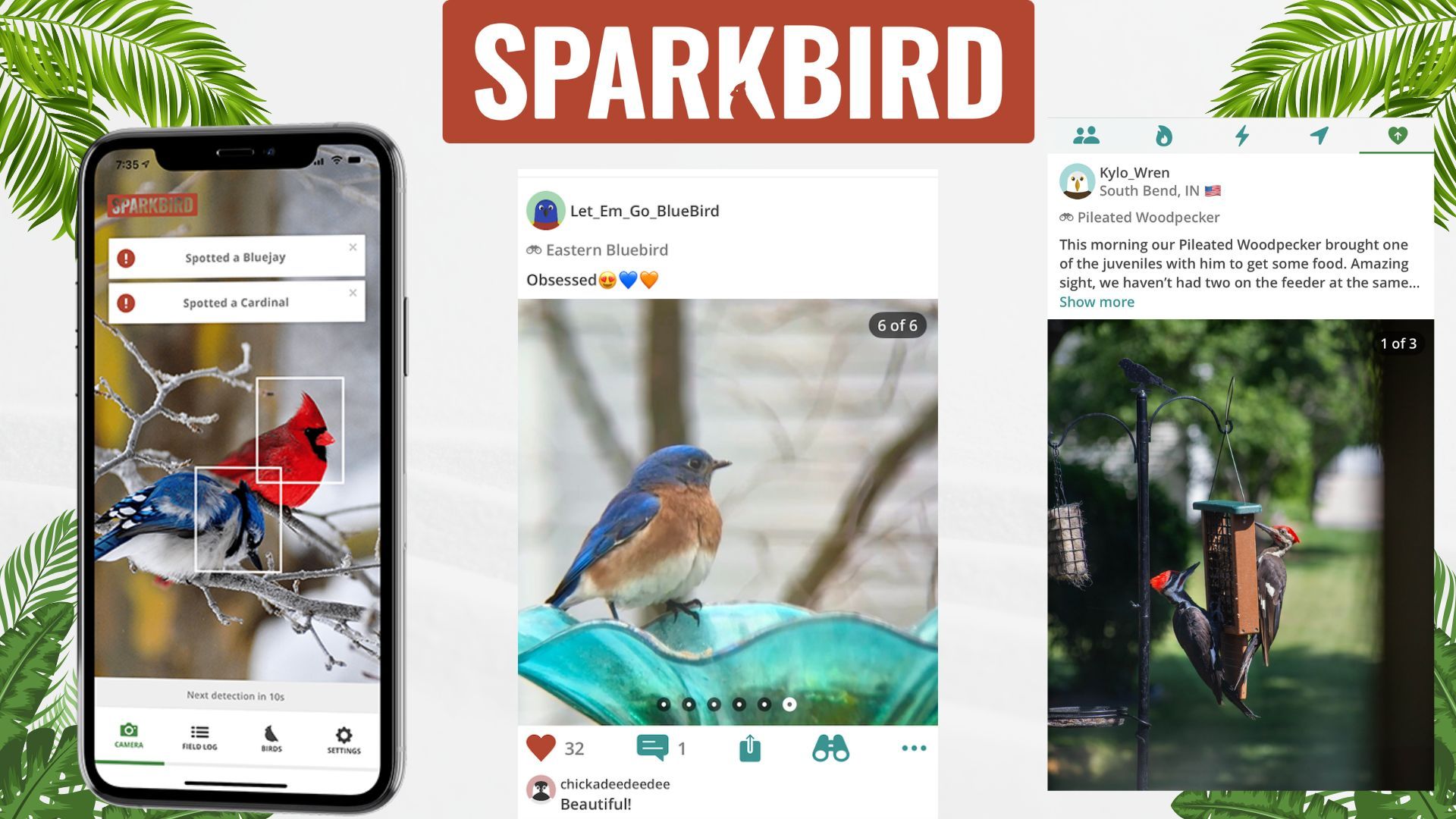
We built Sparkbird for people who want a friendly community of fellow birders. Track your life list, get help with identification, and find people who also stop mid-sentence to look at a spruce.
Where to Go Birding in Maine
Joining a group is the fastest route to local knowledge. But these are the sites that reliably deliver, and what it costs to get in. A word of caution— Maine birders spend every summer explaining that Down East means northeast, so you drive up the coast to get down there.
-
Eastern Egg Rock puffin cruises (Lincoln and Knox Counties) — The classic Maine puffin trip, and nobody lands: the island is a closed seabird sanctuary, so every operator views from the water. Hardy Boat Cruises sails from New Harbor, 1.5 hours with an Audubon Project Puffin naturalist aboard, $71 adults. Cap'n Fish's runs 2.5 hours from Boothbay Harbor at the same price, daily from June. Monhegan Boat Line runs 2.5 hours from Port Clyde, mid-June to mid-August, $55 adults and $25 children. All of them cancel for weather.
-
Machias Seal Island (Washington County) — The only place in Maine where you can stand a few feet from a puffin, and the hardest ticket in the state. Bold Coast Charter Company sailed from Cutler May 25 to August 10 in 2026 at $275 to $325 per person, about five hours for a landing trip. Only about 15 people a day go ashore, in blinds holding three or four each, and landings are not guaranteed. The island is administered by Canada but claimed by both countries, which is why the lighthouse is Canadian and the birds don't care. Book in January.
-
Acadia National Park (Hancock County) — Peregrine Falcons on the cliffs, warblers along the carriage roads, eiders and Black Guillemots offshore. Entrance is $35 per private vehicle for seven days, $20 on foot or bike, $70 for an Acadia annual pass. Cadillac Summit Road additionally requires a $6 vehicle reservation from May 20 through October 25, sold in advance on Recreation.gov and never at the gate.
-
Monhegan Island (Lincoln County) — A legendary migration trap where exhausted songbirds pile into a square mile of spruce and apple trees. Ferry from Port Clyde, 55 to 70 minutes depending on the boat, $52 adults and $35 children round trip, advance reservations required, dock parking $10 a day. Boats run daily in July and August and drop to three days a week in winter. Island lodging books out months ahead for the migration weeks, so sort the bed before the boat.
-
Scarborough Marsh Audubon Center (Cumberland County) — Maine's largest salt marsh at 3,100 acres, and the best place in the state for saltmarsh sparrows, egrets, and shorebirds. The center at 92 Pine Point Road is open daily June 15 through September 7, 9 a.m. to 5:30 p.m., free. Canoe rentals start at $25 an hour, walk-in and first-come.
-
East Point Sanctuary (York County) — Twenty-seven acres at Biddeford Pool with more than 260 species recorded, and one of the best seawatches in southern Maine for scoters, Razorbills, and Long-tailed Ducks. Open dawn to dusk year round, free. Parking is the catch: about six cars on the shoulder at the end of Lester B. Orcutt Boulevard. No dogs, leashed or otherwise.
-
Baxter State Park (Piscataquis County) — Not a typical state park: it's governed separately from Maine's park system by its own three-member Authority under Percival Baxter's deeds of trust. Gates open at 6 a.m. for day use. Non-Maine vehicles pay an entrance fee, and pets, drones, and parties larger than twelve are prohibited outright. Katahdin trailhead parking requires a reservation if you're not camping in the park the night before, bookable from April 1. Birders mostly don't need those trailheads, which is a quiet advantage.
If you'd rather start from your own yard while you wait for the boat to sail, our guide to hummingbird plants for Maine gardens covers what actually works in a short northern season.
Maine Bird Books and Field Guides
Three books and two free lists cover Maine better than a shelf of general guides will.
Birds of Maine
The definitive state reference, published in 2020. Peter D. Vickery started it and didn't live to see it finished; Charles Duncan, Jeffrey Wells and William Sheehan carried it through.
Six hundred and sixty-four pages, all 464 species then recorded in the state, paintings by Lars Jonsson and Barry Van Dusen. Not a field guide. A book you read at the kitchen table in February.

The Sibley Field Guide to Birds of Eastern North America
Sibley's second edition, the guide most Maine trip leaders carry, and the one that handles the state's alcids, eiders and fall shorebirds without sending you to a second volume.

The Sibley Field Guide to Birds of Eastern North America: Second Edition (Sibley Guides)
Knopf
Birds of Maine Field Guide
Stan Tekiela's beginner guide, sorted by color rather than taxonomy. Not the book for a pelagic trip, but the right first book for a camp shelf where guests keep asking what that loud bird was.

The Maine Bird Atlas
Five field seasons of statewide breeding and wintering data and more than 1,600 maps and photographs, delivered to the University of Maine Press at the end of 2025 and expected in print late in 2026. If you want to know where a species actually breeds in Maine rather than where it might, that's the answer.
Official List of Maine Birds
Free, and the only list that counts for a state record: 475 species accepted through September 13, 2025, with review species flagged. Check it before you announce anything unusual.
Maine Bird Rescue and Rehabilitation
Always call first. Intake capacity changes daily, and some centers take only songbirds while others take only mammals.
Maine Department of Inland Fisheries and Wildlife Rehabilitator Directory
The official state list, by county, with phone numbers and the species each rehabilitator may accept. Start here, because permits change.
That list makes one thing obvious: bird rehabilitation in Maine is concentrated in the middle and south. No licensed bird rehabilitator is currently listed for Hancock, Washington, or Aroostook counties, so a bird found Downeast or up north is headed for a long drive.
Avian Haven - Freedom, Waldo County
The state's main wild bird hospital and the place other rehabilitators refer to. Licensed for small and large raptors, passerines, waterbirds, and turkeys, open daily 9 a.m. to 5 p.m., emergency hotline 207-382-6761. Call before transporting anything.
The Center for Wildlife - Cape Neddick, York County
Takes all birds plus mammals, bats, reptiles, and amphibians, roughly 2,500 patients a year, at no cost to the finder. Hotline 207-361-1400. Nature center and trails open Thursday through Sunday, 10 to 4.
Flight Plan Rehab - Freedom, Waldo County
Licensed for passerines, other small birds, reptiles, and amphibians. Reachable at 207-382-3013, per the state directory.
Maine Wildlife Rehabilitation - Old Town, Penobscot County
Licensed for small raptors, passerines, and other small birds along with small and medium mammals. Reachable at 207-814-8980, per the state directory. The closest bird option to Bangor.
Katrina Carstensen - Otisfield, Oxford County
Licensed for large and small raptors, passerines, waterbirds, turkeys, and several mammal groups. Reachable at 207-583-2105, per the state directory. The best western Maine option.
Frequently Asked Questions
When and where can you see puffins in Maine?
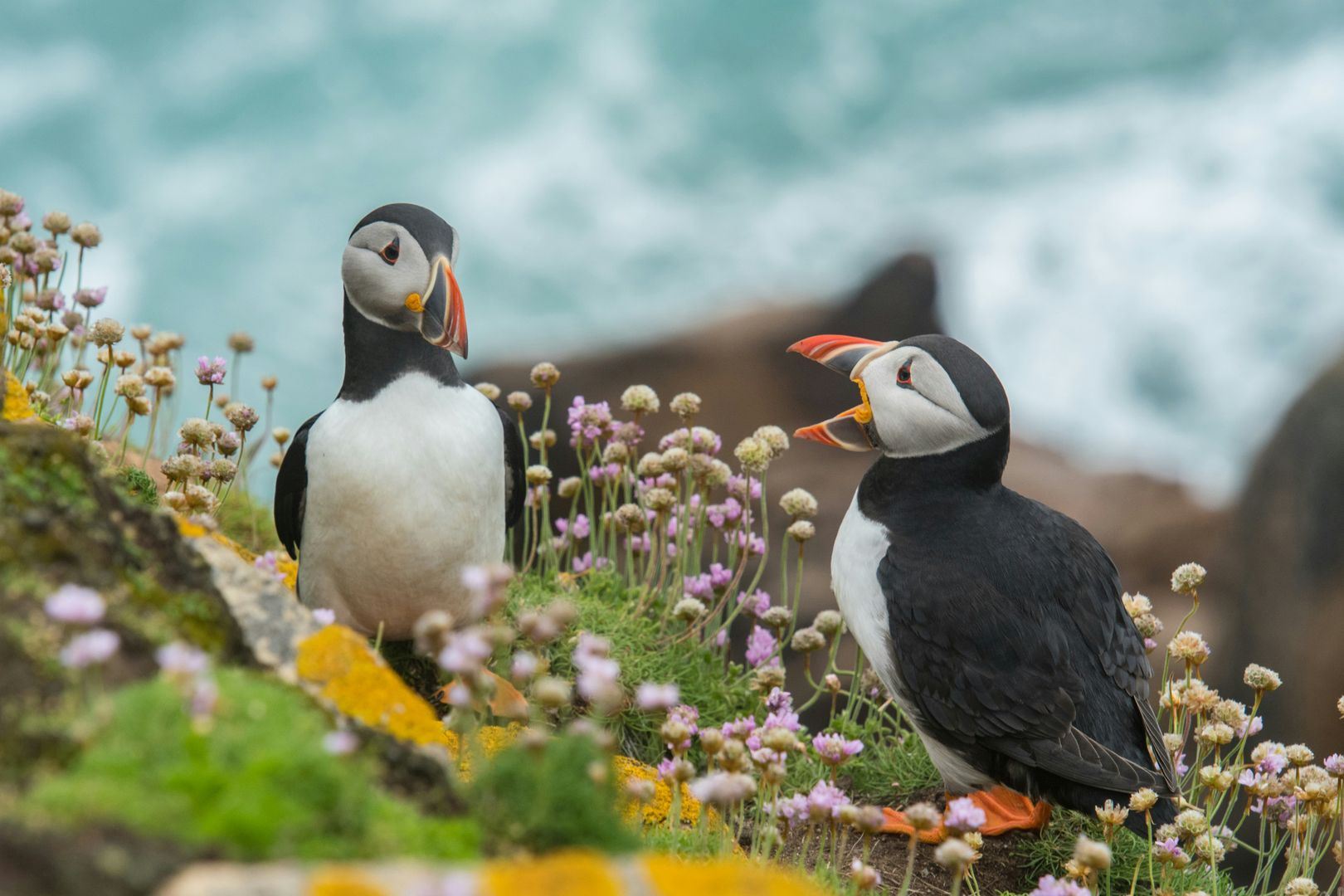
Roughly late May through mid-August, and only by boat. Atlantic Puffins nest on a handful of offshore islands, chiefly Eastern Egg Rock, Machias Seal Island, Matinicus Rock, Petit Manan, and Seal Island. Tours run from New Harbor, Boothbay Harbor, Port Clyde, and Cutler, and all of them cancel in bad weather.
Can you see puffins from shore in Maine?
Essentially no. The colonies sit several miles offshore, and the birds spend the rest of the year far out at sea. A scope from the mainland gets you eiders, guillemots, and disappointment. The closest free look is the Project Puffin Visitor Center in Rockland and its live colony cameras.
When is the best time for fall migration on Monhegan Island?
Late September through mid-October is the window most Maine birders aim for, when northwest winds drop songbirds and the occasional vagrant onto the island. Ferry service from Port Clyde thins after Labor Day, and island lodging for those weeks books months ahead. Reserve the room first and the boat second.
Is Maine Audubon part of the National Audubon Society?
No, and this catches people constantly. Maine Audubon states on its own site that it isn't a chapter of National Audubon, though the two collaborate. Hog Island Audubon Camp in Bremen is National Audubon, run through its Seabird Institute along with Project Puffin. Two organizations, one name, different phone numbers.
Got a Maine birding group to recommend?
Clubs start and quietly stop, chapters rename themselves, and websites go dormant while the walks keep happening. If you run a group we missed, or a listing here has drifted, tell us in the comments or through the Sparkbird App.
Our aim is a birding community that connects people to nature and to each other. Maine birding groups make that easy.
- Related: How to Use the Sparkbird App

No comments yet.