
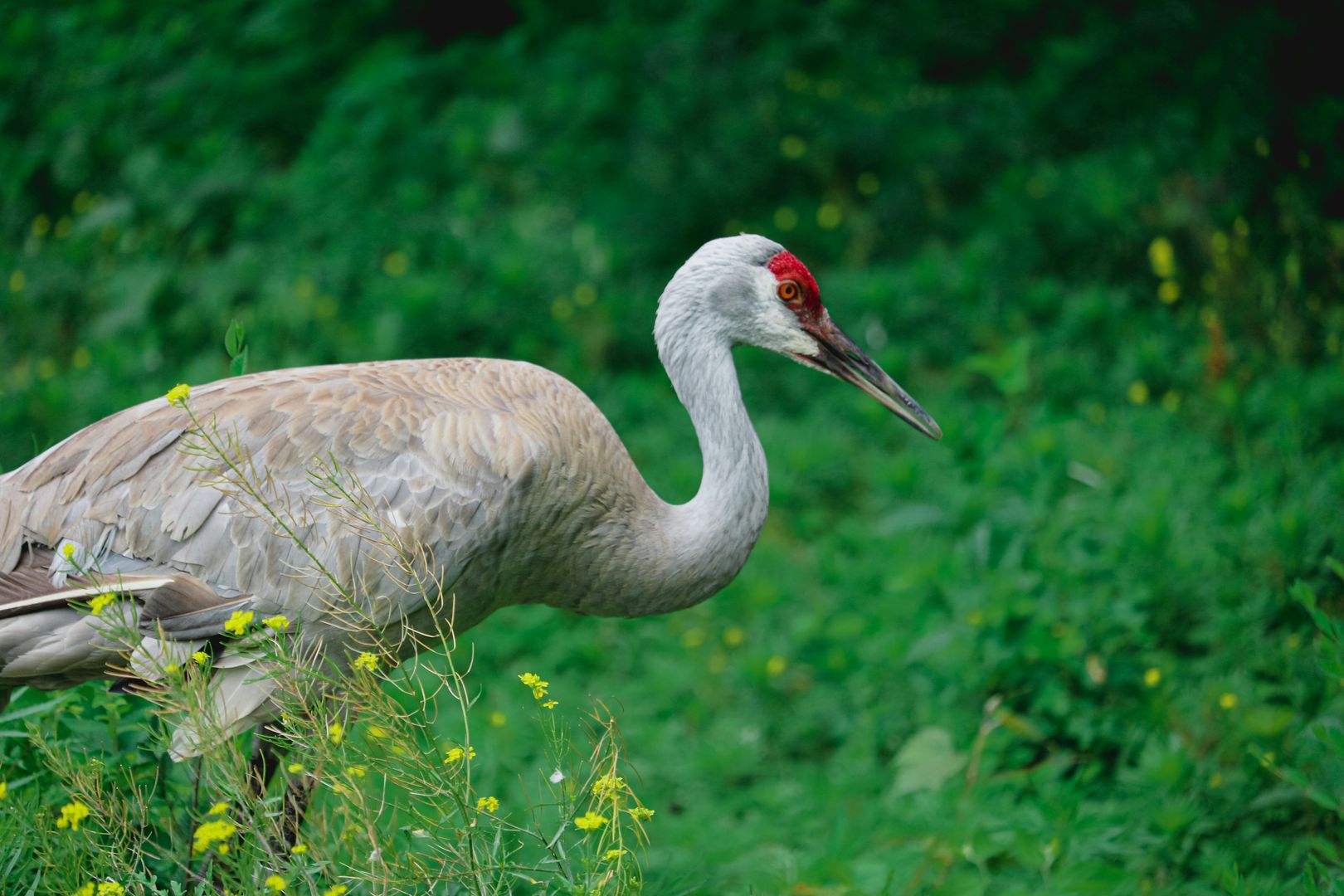
Nebraska has one of the oldest ornithological societies in the country. Most Americans only experience this state going 78 miles an hour on I-80. Hopefully you're about to change that.
Why Join a Bird Watching Group at All
Solo birding is fine. But a club gives you people who already knows where the birds are this week. In Nebraska that matters more than usual. The state is 430 miles wide and the good stuff moves.
Whether the cranes are in, whether the Sandhills lakes have thawed, whether the Pine Ridge is holding crossbills. All of it lives in people rather than in a database.
Groups are also the front door to community science. The Christmas Bird Count runs every year between December 14 and January 5, and the Nebraska Ornithologists' Union keeps the state's schedule of count circles. Beginners get paired with an experienced counter.
Try before you buy
One practical opinion before you spend money. A decent pair of binoculars for birding runs from about $150 to well past $500, and you don't need to make that call before your first walk. Borrow some from the library or ask to peek through a club member's 'binos a few times.
Statewide Bird Watching Groups in Nebraska
Nebraska Ornithologists' Union (NOU)
Founded in 1899 and one of the oldest natural science organizations in the state. NOU meets twice a year, in mid-May and again in September or October, rotating locations. Each meeting pairs evening presentations with guided field trips. The site is explicit that you don't need to be a member to attend.
Membership is $10 for students and $25 for a household. It includes The Nebraska Bird Review, the quarterly journal, whose back issues are archived free at DigitalCommons at the University of Nebraska-Lincoln.
NOU Records Committee
Established in 1986, this is the body that decides what counts. It maintains the official Nebraska list, currently 472 species, and reviews documentation for anything out of range, out of season, or new to the state.
Audubon Great Plains
National Audubon's regional office for Nebraska, North Dakota, and South Dakota. A conservation and science operation rather than a walk-leading club, but it runs two of the best birding facilities in the state: the Iain Nicolson Audubon Center at Rowe Sanctuary near Gibbon and Spring Creek Prairie Audubon Center near Denton, both listed under their regions below.
Bluebirds Across Nebraska
A statewide volunteer group working on Eastern Bluebirds and other native cavity nesters through county coordinators and nest box trails, with quarterly meetings that move around the state. Good if you'd rather build and monitor boxes than chase rarities.
Bird Watching Groups in Omaha and Eastern Nebraska
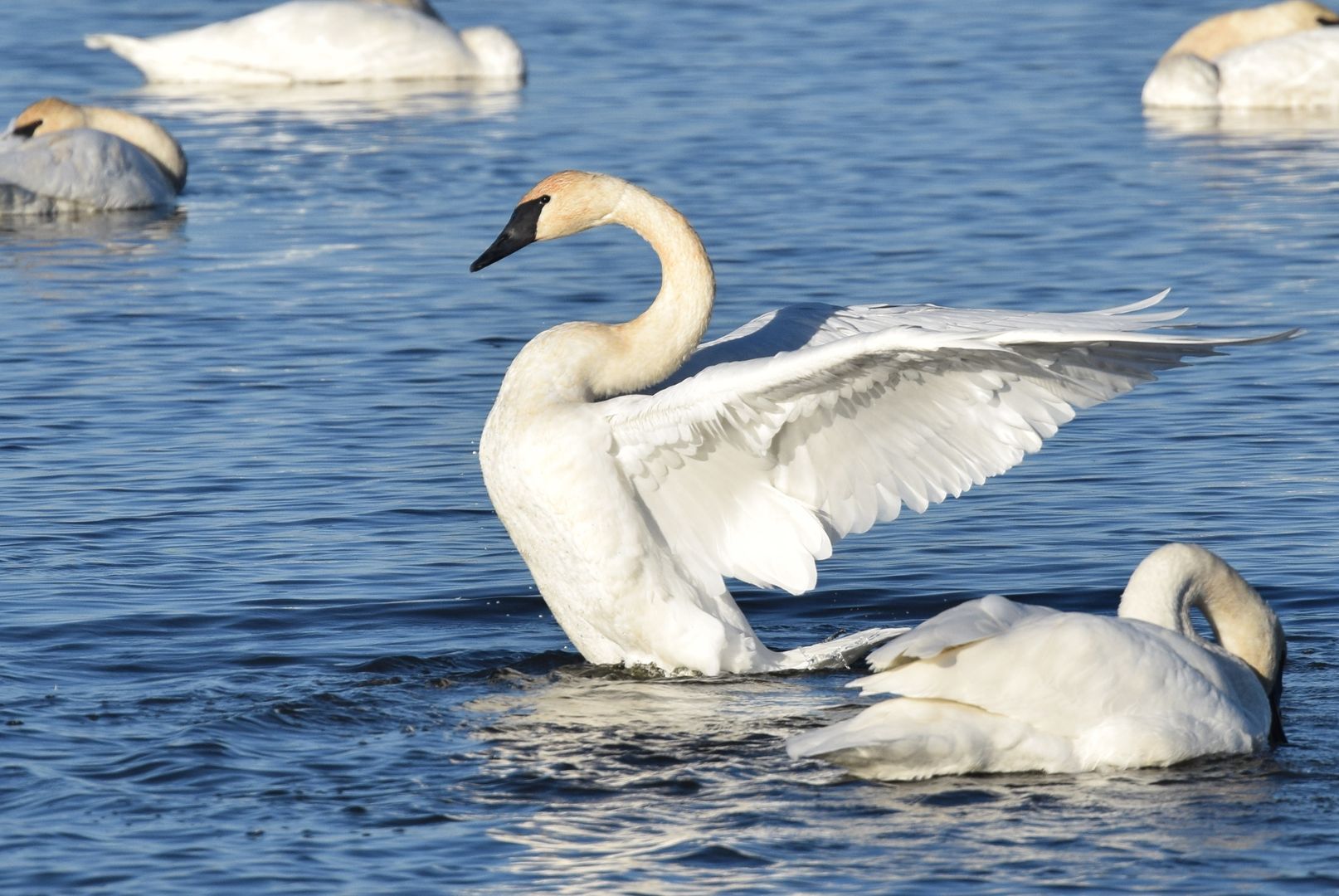
Audubon Society of Omaha (ASO) - Douglas and Sarpy Counties
The main club for the Omaha metro. ASO runs one chapter field trip a month from September through April, skipping December because of the bird counts. Trips are open to birders of all ages and skill levels with no chapter fee, though admission at the destination is noted where it applies.
Separate youth and family trips run alongside. Dates live on the chapter calendar rather than a fixed night.
Fontenelle Forest - Bellevue, Sarpy County
Nearly 2,000 acres of Missouri River bluff forest, wetland, and prairie, and one of Nebraska's oldest conservation organizations. It's a paid nature center rather than a club: admission is $15 adults, $13 seniors 62 and over, $9 children 2 to 17, free for members.
Nature Center open daily 8 a.m. to 5 p.m., trails sunrise to sunset. The Raptor Woodland Refuge of non-releasable eagles, hawks, owls, and vultures opens at 10 a.m. Guided spring hikes are public. The bird club is members only.
Bird Watching Groups in Lincoln and Southeast Nebraska
Wachiska Audubon Society - 17 Southeast Nebraska Counties
Serving 17 counties since 1973 and the most active club in the state outside Omaha. Monthly meetings run at the Unitarian Church, 6300 A Street in Lincoln, at 7:00 p.m., with the speaker series streamed on YouTube.
The chapter states that members and the general public are invited to participate in all Wachiska events. That's the sentence a beginner wants to read. Wachiska also owns nine tallgrass prairie properties open to the public.
Spring Creek Prairie Audubon Center - Denton, Lancaster County
Audubon Great Plains' 1,160-acre tallgrass prairie preserve twenty minutes southwest of Lincoln, with more than 235 species recorded and free admission. Four miles of trail, mostly mowed, with crushed limestone accessible paths near the visitor center. It's open 8:30 a.m. to 4:30 p.m. weekdays and shorter hours on weekends, trails sunrise to sunset.
Henslow's Sparrow and Bobolink are the draw. Plus Oregon Trail wagon ruts you'll walk straight past if nobody tells you.
Bird Watching Groups in the Platte River Valley
Iain Nicolson Audubon Center at Rowe Sanctuary - Gibbon, Buffalo County
The single most important birding address in Nebraska, at 44450 Elm Island Road near Gibbon, phone (308) 468-5282. Audubon runs guided crane viewing from riverside blinds through the spring migration, plus photography experiences and overnight blind stays. Outside crane season the center is open 10 a.m. to 5 p.m. and the trails are free.
Crane Trust - Wood River, Hall County
The other major blind operator on the central Platte, at 9325 S. Alda Road. The Nature and Visitor Center, ten miles of prairie and riverside trail, the observation tower, and the footbridges over the north channel are all free. Open 9 a.m. to 4 p.m. Monday through Saturday, and 8 a.m. to 6 p.m. daily in March.
Crane Trust also flies the aerial survey behind the season's crane counts, an 85-mile route from Chapman to Overton starting half an hour before sunrise.
Bird Watching Groups in the Sandhills and North Central Nebraska
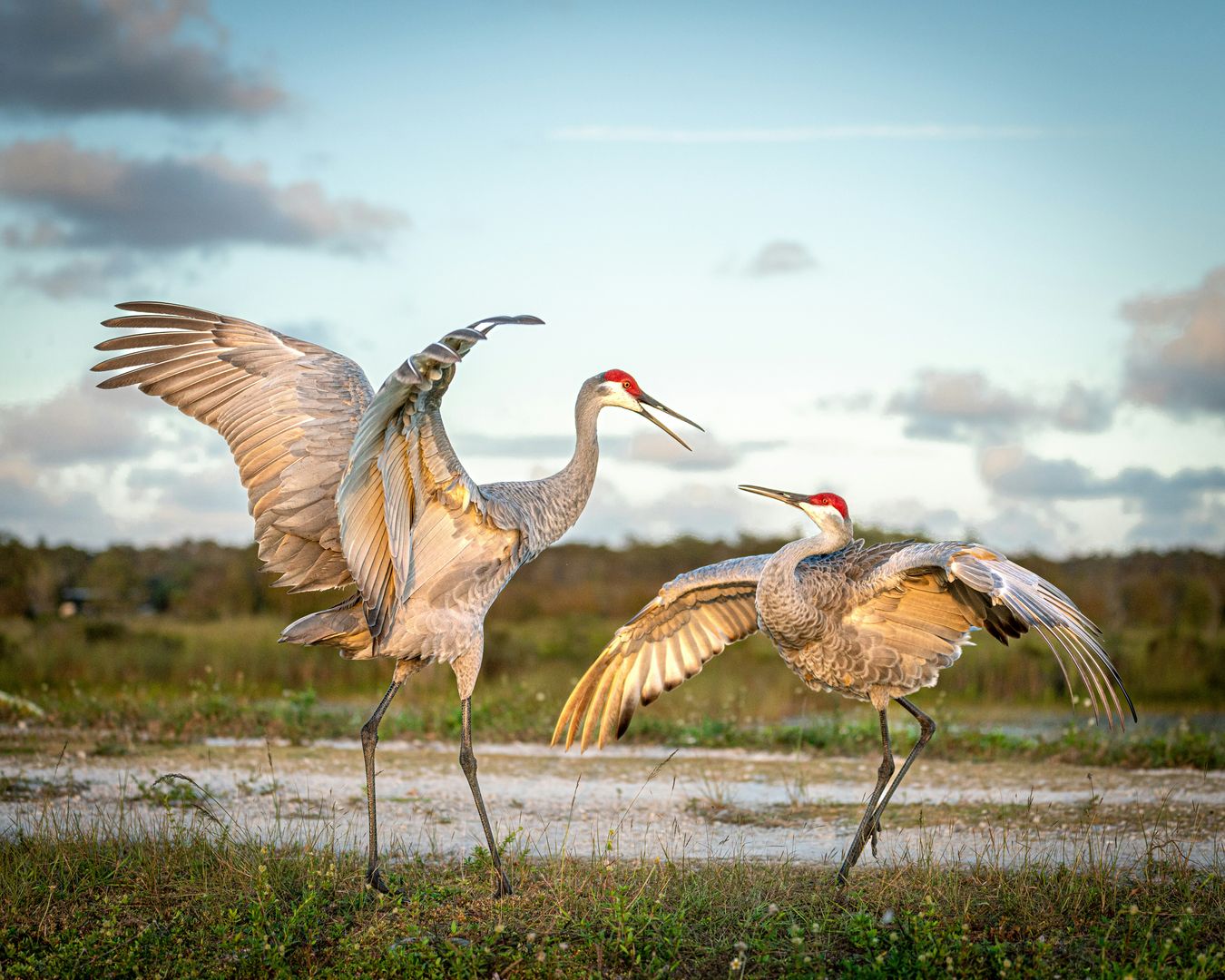
This is the emptiest quarter of the state and there's no local bird club in it. What there is instead is the best prairie grouse viewing in the Great Plains, run out of refuges and public blinds.
Valentine National Wildlife Refuge - Cherry County
71,516 acres of Sandhills lakes and grassland, 30 miles south of Valentine on US 83 then a mile east on Pony Lake Road, with 270 species recorded. Free, office open weekdays 8:00 a.m. to 4:30 p.m. The refuge runs a Sharp-tailed Grouse lek blind for the April displays, reservation required from April 1, phone (402) 376-3789.
Fort Niobrara National Wildlife Refuge, five miles east of Valentine, is the other anchor up here and is covered in the hotspot list below.
A note on lek tours
Switzer Ranch and Calamus Outfitters near Burwell was for years the answer everyone gave when asked where to watch prairie chickens dance. Their own site now says they no longer offer guided lek tours. If you read that recommendation elsewhere, it's out of date.
Nebraska Game and Parks lists three free public blinds instead: Burchard Lake Wildlife Management Area in Pawnee County, two blinds, first come first served March through May, (402) 335-2534; N-CORPE near North Platte, one blind by reservation March 18 to May 3, (308) 534-6752; and Valentine NWR from April 1.
Arrive 45 minutes before sunrise and stay until the birds leave on their own.
Bird Watching Groups in Western Nebraska and the Panhandle
Wildcat Hills State Recreation Area and Nature Center - Gering, Scotts Bluff County
1,094 acres of ponderosa escarpment at 210615 Highway 71, phone (308) 436-3777. The Nature Center's feeder-viewing area over the North Platte River valley is the most reliable place in the Panhandle to see Pygmy Nuthatch and Red Crossbill without hiking.
Hours are 8 a.m. to 5 p.m. daily from mid-May to mid-November, and 8 a.m. to 4 p.m. weekdays otherwise. A park entry permit is required.
Tout Bird Club - North Platte
Listed as an active local club by both NOU's local clubs page and Nebraska Game and Parks' birding resources page, neither of which gives a URL. We didn't find a website or a current meeting schedule, so treat this as a lead rather than a listing and ask on the NEBirds list first.
Bird Watching Groups in Norfolk and Northeast Nebraska
Loess Hills Audubon Society - Siouxland, including Northeast Nebraska
Based across the river in Sioux City, Iowa, and covering the tri-state Siouxland region including northeast Nebraska. Meetings run the first Thursday of the month, September through May, at 7:00 p.m. at the Dorothy Pecaut Nature Center, 4500 Sioux River Road. Outings are posted on the site, which was publishing in August 2026.
Note that NOU's club list still points at an old tripod.com address for this chapter. The link above is the live one.
Ponca State Park - Ponca, Dixon County
Not a club, but the anchor for birding in the northeast corner, at 88090 Spur 26E, phone (402) 755-2284. 22 miles of trail through Missouri River bluff forest, and the eastern gateway to the 59-mile stretch of the Missouri National Recreational River.
Marsh Madness runs late February through March with guided blind tours and unguided waterfowl viewing. Park entry permit required.
Sandhill Crane Season on the Platte River
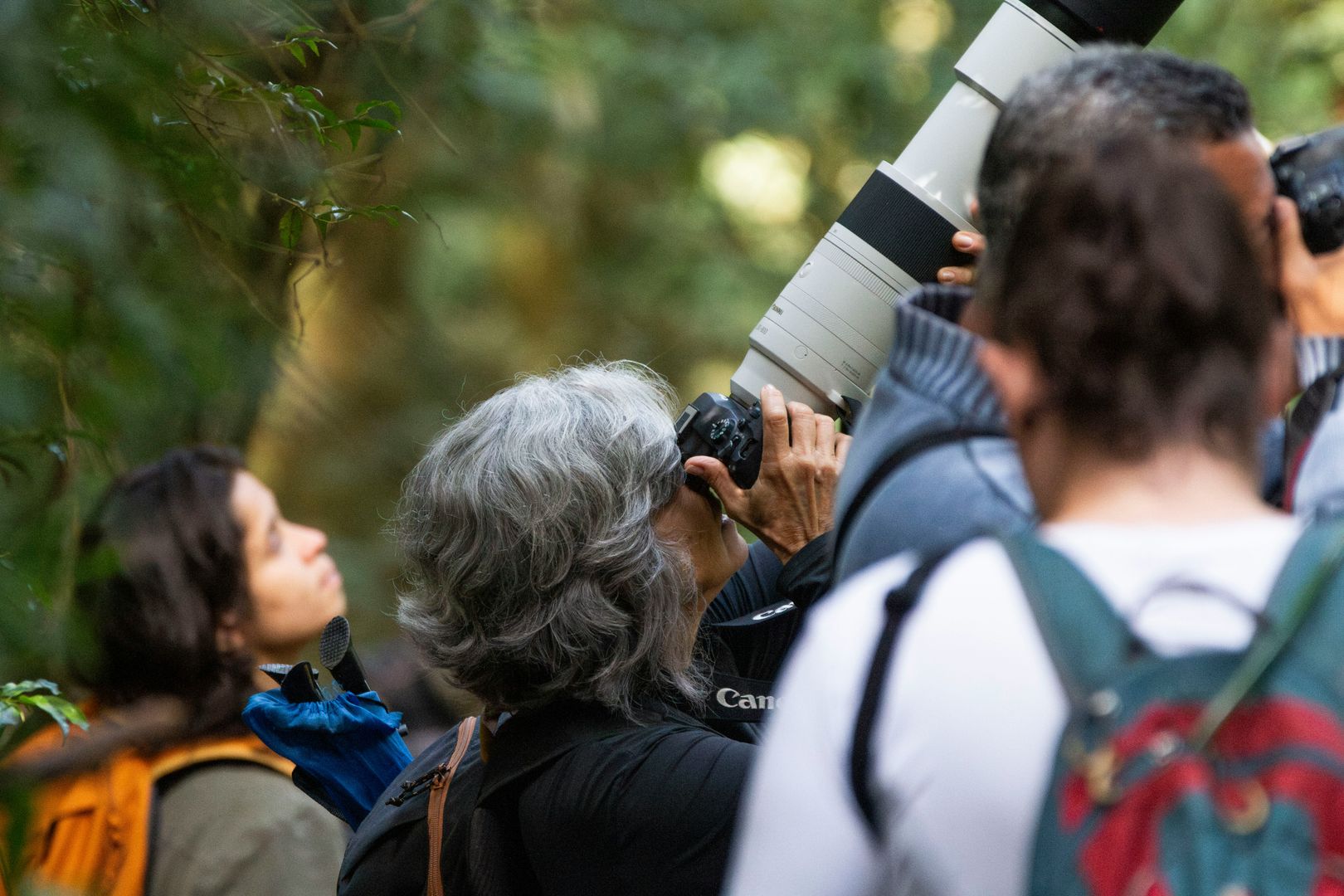
This is why people fly to Nebraska. Over 80 percent of the world's Sandhill Cranes funnel through the central Platte valley each spring, and Audubon's own account puts it at over a million birds in March and April, with millions of geese alongside them.
Timing. Rowe Sanctuary brackets its season as February 17 to April 10, and the birds run roughly Valentine's Day to Tax Day. Peak is mid-to-late March. If you can pick only one week, pick the third.
Reservations. Rowe's guided blind experiences are reservation only, and they go on sale all at once, months ahead: registration for the 2027 season opens January 7, 2027 at 9 a.m. Central. Book on opening day for a specific late-March morning. Book Kearney lodging at the same time, because Rowe warns that the town fills.
Crane Trust sells separately, with member priority in early October and public booking in November. Its riverfront blind tours are $65 per person for ages 12 and up, daytime driving tours $45 for ages 6 and up, and evening footbridge tours $15.
If you didn't book. Show up anyway. The best free viewing in the state is the old railroad bridge at Fort Kearny State Recreation Area, where a paved hike-bike trail crosses the Platte 1.8 miles from the recreation area. The sunrise and sunset flights off the roost are as good as anything you can pay for.
A park permit is required to park. The bridge is free. Nebraska Tourism also lists free riverside viewing decks at Alda and Gibbon plus daytime pullouts on Platte River Drive.
Etiquette, which isn't optional. Game and Parks puts it simply: use your vehicle as a blind, stay quiet, never approach the cranes, and use designated sites rather than trespassing for a better angle. A flushed roost costs the birds fat they need for a flight to Siberia.
Other Ornithology and Research Groups in Nebraska
Birds of Nebraska Online
Free species accounts for every bird recorded in the state, hosted by Nebraska Game and Parks and written by the authors of the standard state reference, with distribution and timing detail well past what a field guide carries. Pair it with the agency's Nebraska Birding Trail, twenty top sites by habitat with access terms.
Hitchcock Hawk Watch - Honey Creek, Iowa
Twenty minutes northeast of Omaha and staffed by volunteers from both sides of the river, which is why NOU counts it as a Nebraska institution despite the address. The count runs September 1 through mid-December, averaging around 13,000 raptors a season, and the 45-foot tower is open to visitors 9 a.m. to 4 p.m. daily during it.
NEBirds Discussion Group
The statewide listserv, hosted on groups.io, carrying rare bird alerts, eBird digests, and the daily traffic of people asking whether the cranes are in yet. It's linked from both NOU and Nebraska Game and Parks. Its own pages block automated access, so we verified it through those.
Sparkbird App - Community
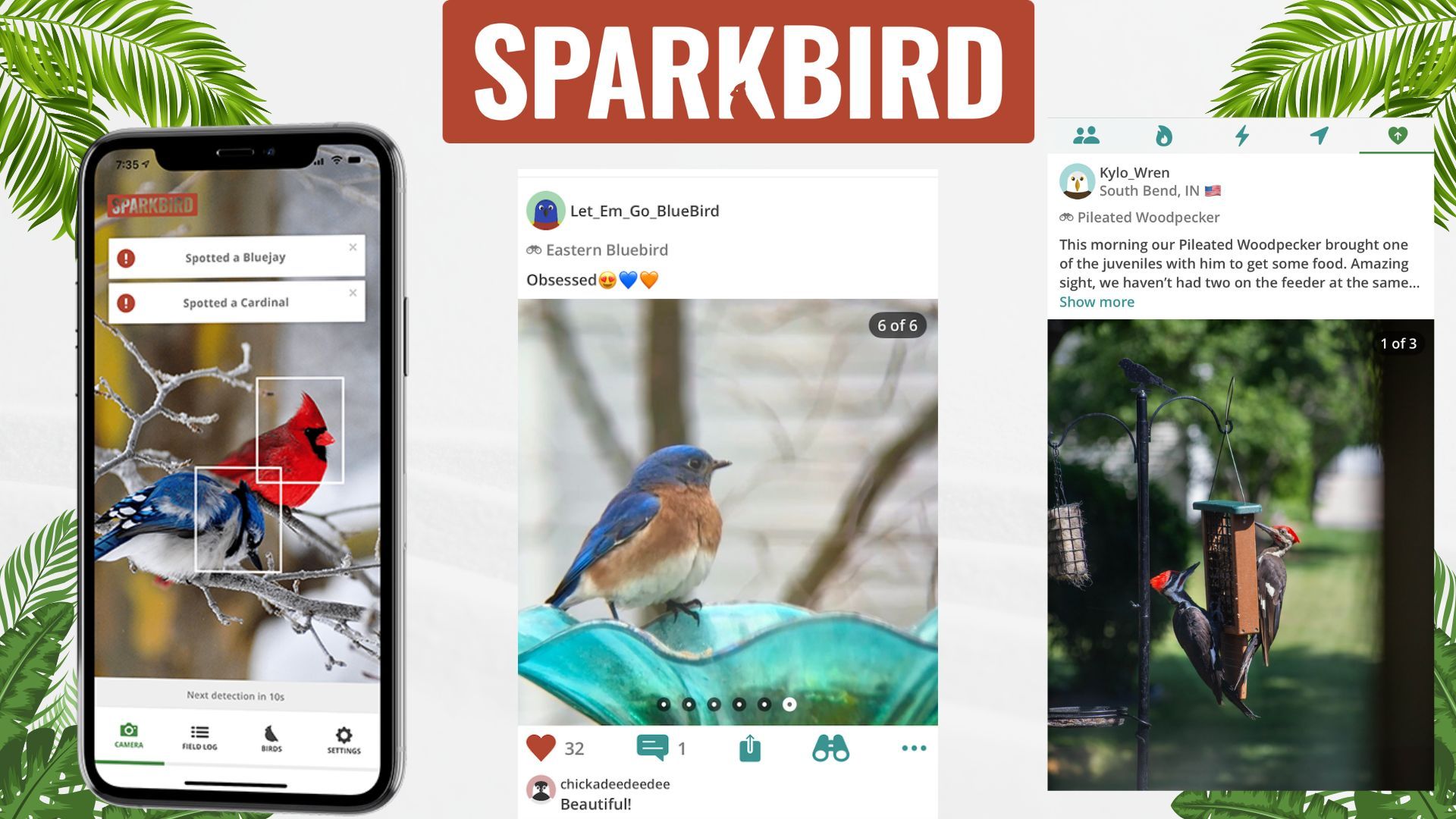
We built Sparkbird for people who want a friendly community of fellow birders. Track your life list, get help with identification, and meet people who also stop mid-conversation to look at a tree. Instagram for bird watchers, without the shady algorithms.
Where to Go Birding in Nebraska
A club is the fastest route to local knowledge, but these seven sites carry the state.
- Rowe Sanctuary and the central Platte (Buffalo and Hall Counties) — The crane epicenter. Trails and center free outside guided programs; blind tours by advance reservation only. February through mid-April for cranes.
- Fontenelle Forest (Sarpy County) — The best spring migrant trap in eastern Nebraska. $15 adults, $13 seniors, $9 children 2 to 17, free for members. Nature Center 8 a.m. to 5 p.m. daily, trails sunrise to sunset.
- Indian Cave State Park (Nemaha and Richardson Counties) — 3,052 acres of mature hardwood on the Missouri bluffs, and the reliable Nebraska spot for Kentucky Warbler, Summer Tanager, and Chuck-will's-widow. 22 miles of trail, May and June the window. Park entry permit required.
- Fort Niobrara National Wildlife Refuge (Cherry County) — Sandhills, pine ridge, and scenic river five miles east of Valentine. Free, visitor center weekdays 8 a.m. to 4 p.m. Prairie grouse, grassland birds, and a bison herd of about 350.
- Crescent Lake National Wildlife Refuge (Garden County) — Sandhills wetland complex 28 miles north of Oshkosh. Free, sunrise to sunset. Trumpeter Swans, American Bitterns, Short-eared Owls. Read the road warning first: the refuge advises that after recent wildfire and dry conditions its roads may be impassable even in four-wheel drive. Call (308) 762-4893 before committing to the drive.
- Lake McConaughy State Recreation Area (Keith County) — Nebraska's largest reservoir, about 340 species, and the state's gull and grebe headquarters. Bald Eagles below the spillway in winter, Western and Clark's Grebes in season. Bring a scope. Park entry permit required.
- Wildcat Hills State Recreation Area (Scotts Bluff County) — Ponderosa escarpment south of Gering with a nature center whose feeder window does most of the work. Pygmy Nuthatch, Red Crossbill, Golden Eagle, Prairie Falcon. Park entry permit required.
Park entry permits are $7 daily or $35 annually for a Nebraska-plated vehicle and $14 or $70 otherwise, and the annual pass covers more than 76 areas. If you'd rather start from your own window, our guide to hummingbird plants for Nebraska covers what works in a short growing season.
 How to Find Birding Hotspots Near YouLearn how to leverage eBird, local clubs, and one underrated trick: the best spot is usually closer than you think(opens in a new tab)
Nebraska Bird Books and Field Guides
Birds of Nebraska Field Guide
Stan Tekiela's Nebraska volume, sorted by color and covering only birds that actually occur here. See a yellow bird, turn to the yellow section. Hard to beat as a first guide and small enough to live in the glovebox.

Birds of Nebraska Field Guide (Bird Identification Guides)
Adventure Publications
Birds of Nebraska: Their Distribution and Temporal Occurrence
Sharpe, Silcock, and Jorgensen's University of Nebraska Press reference, the standard account of what occurs where and when. Not a field guide and not portable: this is the book you open to find out whether your date is plausible.

Birds of Nebraska: Their Distribution & Temporal Occurrence
University of Nebraska Press
Kaufman Field Guide to Birds of North America
Nebraska sits on the seam between eastern and western avifaunas, which makes single-region guides awkward. Kaufman covers the continent in one photographic volume and is the friendliest national guide for anyone still learning to sort a flycatcher.

Kaufman Field Guide To Birds Of North America: A compact, easy-to-use field guide with official names and range maps for fast bird identification in North America
Mariner
Sandhill and Whooping Cranes
Paul Johnsgard's account of both species, from the biologist who spent a career on the Platte. Read it before March and the cranes staging on the river stop being a spectacle and start making sense.

Sandhill and Whooping Cranes: Ancient Voices over America's Wetlands
Bison Books
A Nebraska Bird-Finding Guide
Paul Johnsgard's site guide, region by region and season by season, free as a PDF from the University of Nebraska-Lincoln. A 2009 printing, so check access details before you drive, but as a picture of where the birds are it has aged well.
Nebraska Bird Rescue and Rehabilitation
Always call first. Hours and intake capacity change constantly, and Nebraska's rehabbers are strongly specialized: one takes raptors only, one takes almost everything else.
Unlike many states, Nebraska Game and Parks doesn't publish a public directory of licensed rehabilitators, so there's no official list to start from. Use the three hotlines below instead. All cover the whole state by phone and will refer you onward if the bird is outside their permit.
1) Nebraska Wildlife Rehab, Inc. - Omaha, Douglas County
The largest rehabilitation operation in the state, at 9777 M Street, taking roughly 8,000 animals a year including songbirds, raptors, and waterfowl. Hotline (402) 234-2473, staffed 10 a.m. to 8 p.m. Read their found-an-animal guidance first: line a container with cloth, keep the bird dark, quiet, and away from pets, don't feed it, and call.
2) Raptor Conservation Alliance - Eagle, Cass County
Raptors only, no songbirds. Operating since 1976 and taking injured and orphaned eagles, hawks, falcons, owls, and vultures statewide. Hotline (866) 888-7261; leave a voicemail if nobody answers, and don't handle a raptor unless they tell you to. Fontenelle Forest routes its own injured-raptor reports to this number.
3) Wildlife Rescue Team, Inc. - Lincoln, Lancaster County
All-volunteer and running since 1979, taking waterfowl along with small mammals and other native wildlife statewide. The 24-hour line is (402) 473-1951, with volunteers reachable 9 a.m. to 9 p.m. daily. They ask that you call for advice before moving an animal.
Frequently Asked Questions
When do the Sandhill Cranes arrive in Nebraska?
The first birds reach the Platte mid-to-late February. They peak mid-March. Most are gone by mid-April. Aim for the third week of March.
Do you need a reservation to see the Sandhill Cranes?
For a riverside blind, yes, and you should book the day reservations open. Rowe's guided experiences go on sale in early January; Crane Trust opens member booking in October and public booking in November. You don't need one to see cranes at all, though. Public bridges and roadside pullouts deliver plenty of it for free.
Where can you see the cranes for free in Nebraska?
The hike-bike bridge at Fort Kearny State Recreation Area is the best of them, an old railroad crossing with clear views of birds leaving and returning to the roost. A park entry permit is required to park, $7 for the day. Free viewing decks at Alda and Gibbon round it out.
Are there many bird watching clubs in Nebraska?
Not quite. NOU's own list names four local clubs, and the Omaha and Lincoln chapters do most of the field-trip work. Outside those metros it's refuges, state parks, and nature centers rather than clubs.
Got a Nebraska birding group to recommend?
If your county has a group we missed, or you're thinking about starting one, tell us in the comments below or come find us on the Sparkbird App.
- Related: How to Use the Sparkbird App

No comments yet.