
The New York State Ornithological Association lists more than 40 member clubs, which is a lot of birders for a state whose residents can't agree on where "upstate" begins.
The good news is that bird watching groups in New York are cheap. Dues run $6 to $30 a year, and a large share of walks and monthly programs are free and open to anyone who turns up. This is a curated list, not the full roster. For the rest, the NYSOA member club directory is the authoritative statewide list.
Why Join a Bird Watching Group at All
Solo birding has its pleasures. But a club connects you with somebody who already knows what's happening this week. New York birding runs on timing. A warbler wave in Central Park lasts a morning. A hawk flight at Derby Hill depends on which way the wind came off the lake overnight. That knowledge lives in people, not databases.
Clubs are also the front door to community science, and here it's the local clubs who organize the Christmas Bird Count circles.
FYI before you spend money
A decent pair of binoculars for birding runs from about $150 to well past $500. You don't need to buy any of them yet. Go on three free walks first, look through what other people are carrying, and ask them what they hate about it. Borrow before you buy.
Statewide Bird Watching Groups in New York
New York State Ornithological Association (NYSOA)
The statewide federation, formerly the Federation of New York State Bird Clubs. Not a walk-leading club. It's the body the clubs belong to. NYSOA maintains the official state checklist, publishes the quarterly journal The Kingbird, runs the records committee, and holds an annual meeting each autumn. Its member club list follows the ten reporting regions.
Audubon New York
The National Audubon Society's state office, and a conservation and policy operation rather than a field trip club. Named focal species include American Oystercatcher, Wood Thrush, and Cerulean Warbler. Follow it for advocacy; for a walk on Saturday, use a local chapter.
New York State Avian Records Committee (NYSARC)
A NYSOA committee since 1977, reviewing rare bird documentation and maintaining the state checklist, now at 518 accepted species. Reports go in by mail, email, or its form, and the committee wants photos, audio, or detailed notes rather than a bare claim.
Christmas Bird Count
December 14 to January 5 every season, organized locally by the clubs below. Beginners get paired with experienced counters, and it's the fastest way to meet twenty birders at once.
Bird Watching Groups in New York City and on Long Island
NYC Bird Alliance (formerly NYC Audubon) - Five Boroughs
NYC Audubon became NYC Bird Alliance in June 2024, so older listings are out of date. More than 300 education programs a year across all five boroughs, including outings, lectures, classes, seasonal surveys, and accessible and bilingual walks in Spanish and Mandarin. Most are free.
Queens County Bird Club - Queens
Monthly meetings on Wednesdays, 7:30 to 9:30 p.m., at the Alley Pond Environmental Center in Douglaston, plus field trips from half a day to a full weekend.
The Linnaean Society of New York - Manhattan
Founded in 1878 and still meeting. Programs fall on second Tuesdays, September through May excluding March, at venues including the American Museum of Natural History, and are free and open to the public. Field trips take non-members as guests when space permits.
South Shore Audubon Society - Nassau County
The most reliable walk schedule here— nearly every week, Saturday or Sunday at 9:00 a.m., late August through early June, and the club states plainly that walks are open to the public and free. The rotation includes Massapequa Preserve, Jones Beach, and Jamaica Bay.
North Shore Audubon Society - Northern Nassau County
Guided walks Wednesdays and Saturdays, September through November and March through June, free and open to all skill levels, with leaderless walks filling the gaps. A few destinations charge their own parking fee, including $15 per car at Sands Point.
Eastern Long Island Audubon Society - Patchogue to Montauk
Covers the East End, with monthly programs on the first Monday and Friday morning walks at spots like Cupsogue County Park. The website runs on an older platform, so confirm by email before driving out.
Bird Watching Groups in the Hudson Valley
Saw Mill River Audubon - Westchester County
Owns eight sanctuaries totaling over 300 acres, including Brinton Brook and Pinecliff. Field trips, workshops, and programs are free, though most field trips require free registration.
Bedford Audubon Society - Katonah, Westchester County
Runs a First Wednesday and a Third Thursday bird walk, both free and open to non-members, plus priced workshops at roughly $25 for members and $40 for non-members. Sanctuaries include Bylane Farm and the Arthur W. Butler Memorial Sanctuary.
Putnam Highlands Audubon Society - Putnam and Dutchess Counties
Bird walks, field trips, and guest lectures, plus sanctuaries in Philipstown and New Hamburg. Its Constitution Marsh migration walk is a free event.
Ralph T. Waterman Bird Club - Dutchess County
Founded in 1958, with bird walks every Wednesday morning and on selected weekend days, free and open to the public, plus monthly evening programs. If you're near Poughkeepsie, this is your club.
Edgar A. Mearns Bird Club - Orange, Sullivan, Ulster, Rockland, and Westchester Counties
Founded in 1959, with monthly meetings and field trips open to non-members. Dues are $20 individual, $30 family, $8 student.
Bird Watching Groups in the Capital Region
Hudson-Mohawk Bird Club - Albany, Schenectady, and Troy
The main Capital District club, with a calendar that includes things most clubs skip, such as evening common nighthawk counts in late August. Dues are $20 active, $30 sustaining, and $6 for full-time students. There is also a $1,000 life membership, payable in four installments, for the seriously committed.
Audubon Society of the Capital Region - Albany, Schenectady, Rensselaer, Columbia, Fulton, Montgomery, Schoharie, and southern Saratoga Counties
A volunteer chapter running eagle nest monitoring, bird population studies, nest box building, and native plant consulting, with its annual meeting at the Albany Pine Bush Preserve. Space on walks is limited, so register ahead.
Alan Devoe Bird Club - Columbia County
Founded in 1957 and covering the quieter country east of the Hudson. Publishes its calendar months ahead and stamps the site with a last-updated date, which is more than most.
Bird Watching Groups in the Adirondacks and North Country
The Adirondack Park is enormous, thinly populated, and short on formal clubs. Coverage here is genuinely thinner than downstate. That's the honest answer rather than a gap in the research.
Southern Adirondack Audubon Society - Warren, Washington, northern Saratoga, and southern Hamilton Counties
The main birding organization for the southeastern Adirondacks. It has field trips, evening programs at venues including Crandall Public Library in Glens Falls, habitat restoration, and a Christmas Bird Count.
Adirondack Center for Loon Conservation - Saranac Lake, Franklin County
Not a bird club, but the closest thing the central Adirondacks has to a public bird organization. Its Loon Center at 75 Main Street is open daily 10 a.m. to 5 p.m., and the annual Loon Census is an easy way to contribute a morning's work.
NYSOA also lists Northern New York Audubon and the North Country Bird Club as member organizations up here. Both operate through Facebook rather than a website, so we couldn't verify their current schedules.
Bird Watching Groups in Central New York
Onondaga Audubon Society - Central and Northern New York
The most consequential club in the region, because it owns and operates Derby Hill Bird Observatory. Field trips are free and open to the public, novices included, though you're asked to contact the trip leader two days ahead. Monthly programs, usually the second Wednesday, are also free.
Delaware-Otsego Audubon Society - Otsego and Delaware Counties
Based near Oneonta and running the Franklin Mountain Sanctuary, which has a hawkwatch station and marked trails.
Bird Watching Groups in the Finger Lakes and Ithaca
Cayuga Bird Club - Ithaca and the Cayuga Lake Basin
Meets the second Monday of the month, September through May, at 7:30 p.m., free and open to the public, with field trips likewise free, dedicated beginner walks, and Thursday meetups. Being the local club for Ithaca means the expertise in the room is absurd; it also means nobody makes a thing of it.
Chemung Valley Audubon Society - Chemung and Steuben Counties
The southern Finger Lakes around Elmira and Corning. Monthly meetings at Appleridge, 168 Miller Street in Horseheads, identification workshop at 7:00 p.m. and program at 7:30, all free and open to the public.
Bird Watching Groups in Western New York
Buffalo Ornithological Society - Niagara Frontier
Founded in 1929, covering western New York plus adjacent Ontario, meeting September through June on Wednesday evenings at the Buffalo Museum of Science. The society puts it plainly. You don't have to be a member to join their field trips or meetings.
Rochester Birding Association - Rochester and the Genesee Valley
A large club with a heavy calendar, including trips billed specifically as beginner trips to places like Montezuma and Turning Point Park. Trips go rain or snow or shine unless there's a travel advisory, and run two to four hours.
Other Ornithology and Research Groups in New York
Cornell Lab of Ornithology - Ithaca, Tompkins County
New York's best birding asset and arguably the world's, at 159 Sapsucker Woods Road. Part of Cornell University, the Lab runs eBird, Merlin Bird ID, the Macaulay Library, and Bird Academy. Most of the tools in your pocket were built here.
The visitor center is free, open Tuesday through Sunday 10 a.m. to 4 p.m. and closed Mondays, with exhibits, an observatory window over the pond, and live feeder cams.
Derby Hill Bird Observatory - Oswego County
Onondaga Audubon's sanctuary on the southeastern corner of Lake Ontario, and one of the premier hawk watches in the northeastern United States, counting every spring since 1979. An average spring produces about 40,000 raptors.
Franklin Mountain Hawkwatch - Oneonta, Otsego County
Delaware-Otsego Audubon's fall hawkwatch above the Susquehanna valley, known for late-season Golden Eagles and Red-tailed Hawks. Open to the public, with marked trails. Park on the left of the driveway and walk to the barn, where maps are posted.
The Kingbird - Statewide
NYSOA's quarterly journal, devoted entirely to New York birds with regional field reports, rarity accounts with photographs, site guides. It comes with membership, and the searchable archive of every issue back to 1950 is one of the more remarkable free resources in American birding.
New York rare bird alerts and listservs
NYSOA keeps the current list of ways to hear about a rarity fast: eBird alerts, the statewide NYSBIRDS-L list, Cayugabirds-L for the Finger Lakes, and HMBirds for the Albany area. There's still a telephone hotline for New York City and Long Island at 212-979-3070.
Sparkbird App - Community
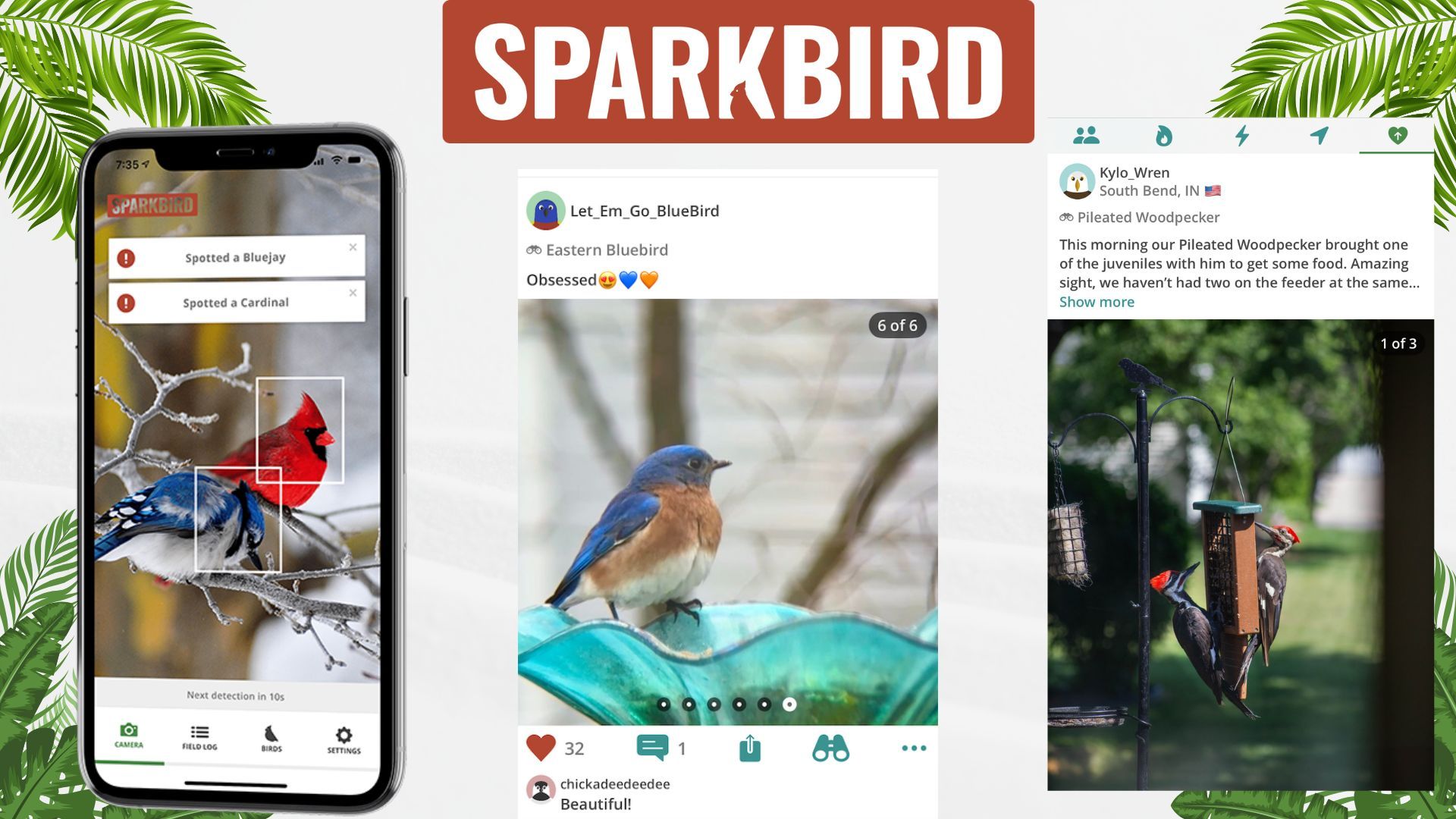
We built Sparkbird for people who want a friendly community of fellow birders. Track your life list, get help with identification, and meet people who also stop mid-sentence to look at a tree. Like Instagram for bird watchers, minus the algorithm.
Where to Go Birding in New York
Access terms are current as of this writing; fee schedules change annually.
- Central Park and the Ramble (Manhattan) — Thirty-six acres of designed woodland mid-park between 73rd and 79th Streets, and one of the most famous migrant traps on earth. More than 210 species turn up in the park each year. Open daily 6:00 a.m. to 1:00 a.m., no admission fee. The North Woods and the Hallett Nature Sanctuary are quieter on a crowded May morning.
- Jamaica Bay Wildlife Refuge (Queens) — A nationally significant shorebird and waterbird site inside city limits, part of Gateway National Recreation Area. Gateway charges no entrance fee, and the Park Service lists permits only for fishing, filming, research, and organized events, so no visitor permit is required to bird here. The unit is open daily 6 a.m. to 9 p.m.; the refuge visitor center Friday through Monday, 10 a.m. to 4 p.m. Reachable by subway, which is most of the point.
- Montauk Point State Park (Suffolk County) — The eastern tip of Long Island and the winter seawatch that justifies the drive with stunning views of eiders, scoters, alcids, seals on the rocks. Open year round, sunrise to sunset. Vehicle use fee $8 per car and $35 per bus, collected 8 a.m. to 4 p.m. on weekends from April 4, daily May 23 through October 12, then weekends and holidays to November 8. An Empire Pass starts at $80 and covers most State Parks and DEC sites.
- Derby Hill Bird Observatory (Oswego County) — The spring hawk watch on the southeastern shore of Lake Ontario, run by Onondaga Audubon. Counts run March 1 through May 31, April is the best month, and signs direct visitors to parking and to the north and south lookouts. Trails are open year round.
- Braddock Bay Wildlife Management Area (Monroe County) — The other great Lake Ontario raptor funnel, 2,125 acres in Parma and Greece, with an observation tower and a designated Bird Conservation Area. Free, open year round, peaking in late April. Stay on marked trails, and wear orange in autumn hunting seasons. One warning: the old web addresses for the Braddock Bay raptor research and banding groups no longer belong to those organizations and now redirect to offshore gambling sites. Ignore your search results and use the DEC page.
- Sapsucker Woods Sanctuary (Tompkins County) — The Cornell Lab's own sanctuary in Ithaca. Five miles of trails, dawn to dusk, free, no bicycles and no dogs. Pair it with the free visitor center and you've got a day that costs nothing.
- Montezuma National Wildlife Refuge (Seneca, Wayne, and Cayuga Counties) — The great marsh at the north end of Cayuga Lake, and the state's premier waterfowl and shorebird concentration. Open half an hour before sunrise to half an hour after sunset. The 3-mile Wildlife Drive is one-way, motor vehicles only, no bicycles or pedestrians, running April 1, weather permitting, through November 30, as does the visitor center, daily 10 a.m. to 3 p.m. Esker Brook and South Spring Pool trails close November 1 to January 1, and the Seneca Trail closes January 1 to August 31 for nesting Bald Eagles.
If you'd rather start from your own yard while you wait for May, our guide to the plants that attract hummingbirds in New York covers what actually works here.
New York Bird Books and Field Guides
A regional guide plus a state guide is the standard pairing. Your local club often has a county checklist worth asking about too.
Birds of New York Field Guide
Stan Tekiela's New York volume from AdventureKEEN, organized by color and limited to birds actually recorded in the state. Hard to beat as a first guide, because it never shows you a bird you can't see here.

Birds of New York Field Guide (Bird Identification Guides)
Adventure Publications
The Sibley Field Guide to Birds of Eastern North America
The second edition, from Knopf. The most authoritative portable guide to eastern birds, and the one most New York trip leaders are carrying.

The Sibley Field Guide to Birds of Eastern North America: Second Edition (Sibley Guides)
Knopf
Peterson Field Guide to Birds of Eastern and Central North America
The seventh edition. Peterson's arrows pointing at the field marks that matter are still one of the best teaching devices ever put in a bird book.
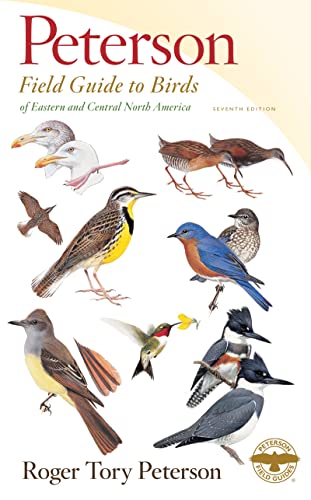
Peterson Field Guide To Birds Of Eastern & Central North America, Seventh Ed.: The Classic Birdwatching Guide with Updated Range Maps
Mariner
Checklist of the Birds of New York State
Not a field guide, and free. NYSOA's pocket checklist covers all 518 species accepted by the records committee, and the printable version on the same page is the one to fold into a pocket before a big day.
New York Bird Rescue and Rehabilitation
Always call first. Intake capacity changes daily, and some centers take songbirds only while others take raptors only.
NYSDEC Find a Wildlife Rehabilitator
Start here. Every wildlife rehabilitator in New York is licensed by the Department of Environmental Conservation, which maintains the searchable list. DEC notes plainly that not every rehabilitator can accept every animal, which is why you call before you drive.
Wild Bird Fund - Manhattan
New York City's wild bird hospital, at 565 Columbus Avenue between 87th and 88th Streets. Intake 9 a.m. to 7 p.m., seven days a week, at 646-306-2862. NYC Bird Alliance also keeps a triage guide and a metro-area referral list.
Wildlife Center of Long Island (formerly Volunteers for Wildlife) - Huntington
Serving Nassau and western Suffolk. Hotline (516) 674-0982.
Sweetbriar Nature Center - Smithtown, Suffolk County
Native wildlife rehabilitation alongside a public nature center. Call 631-979-6344.
Ravensbeard Wildlife Center - Saugerties, Ulster County
Treats all species of birds and places other native animals with permitted facilities. Call 914-359-4444.
North Country Wild Care - Capital Region and eastern Adirondacks
A hotline and referral network covering Albany, Schenectady, Rensselaer, Saratoga, Warren, Washington, Montgomery, Fulton, and Essex Counties, at (518) 964-6740.
Janet L. Swanson Wildlife Hospital - Ithaca, Tompkins County
Cornell's veterinary wildlife hospital, treating ill and injured native wild animals, open 8 a.m. to 6 p.m. weekdays, with after-hours phone help at 607-253-3060. It doesn't accept healthy orphaned wildlife.
SPCA Serving Erie County - West Seneca, Erie County
At 300 Harlem Road, open 8 a.m. to 6 p.m. daily including holidays, at (716) 875-7360 extension 247. Admits songbirds, waterfowl, and birds of prey including Bald Eagles. No deer, and no healthy babies whose parents are still around.
Frequently Asked Questions
When is the best time for spring migration in Central Park?
The first 3 weeks of May, usually peaking between about May 5 and May 15. Go early. The Central Park Conservancy says early morning is the most active, and the Ramble is at its best 2 hours after sunrise. Fall passage, late August into October, is longer and far less crowded.
Where can you go birding in New York City without a car?
Almost everywhere. Central Park, Prospect Park, and Inwood Hill are all a short subway walk. Jamaica Bay Wildlife Refuge is reachable by subway and bus, charges no entrance fee, and needs no permit. NYC Bird Alliance runs free outings across all five boroughs.
What does the Cornell Lab of Ornithology actually offer a visitor?
More than most people expect. And it's free. The visitor center in Ithaca is open Tuesday through Sunday, 10 a.m. to 4 p.m., with exhibits, an observatory window over the pond, and live feeder cams. Outside, five miles of trails run dawn to dusk at no charge, no bicycles or dogs.
Are there beginner-friendly bird watching groups in New York?
Yes. Rochester Birding Association, Cayuga Bird Club, and Onondaga Audubon states that its free field trips welcome novices and non-birders alike. Nobody's going to quiz you at the trailhead.
Got a New York birding group to recommend?
New clubs form all the time, and if there's none near you, starting one takes roughly one persistent person. Tell us about your group in the comments or on the Sparkbird App.
Our goal is a birding community that connects people to nature and to one another. Bird clubs turn out to be unreasonably good at this.
- Related: How to Use the Sparkbird App

No comments yet.