
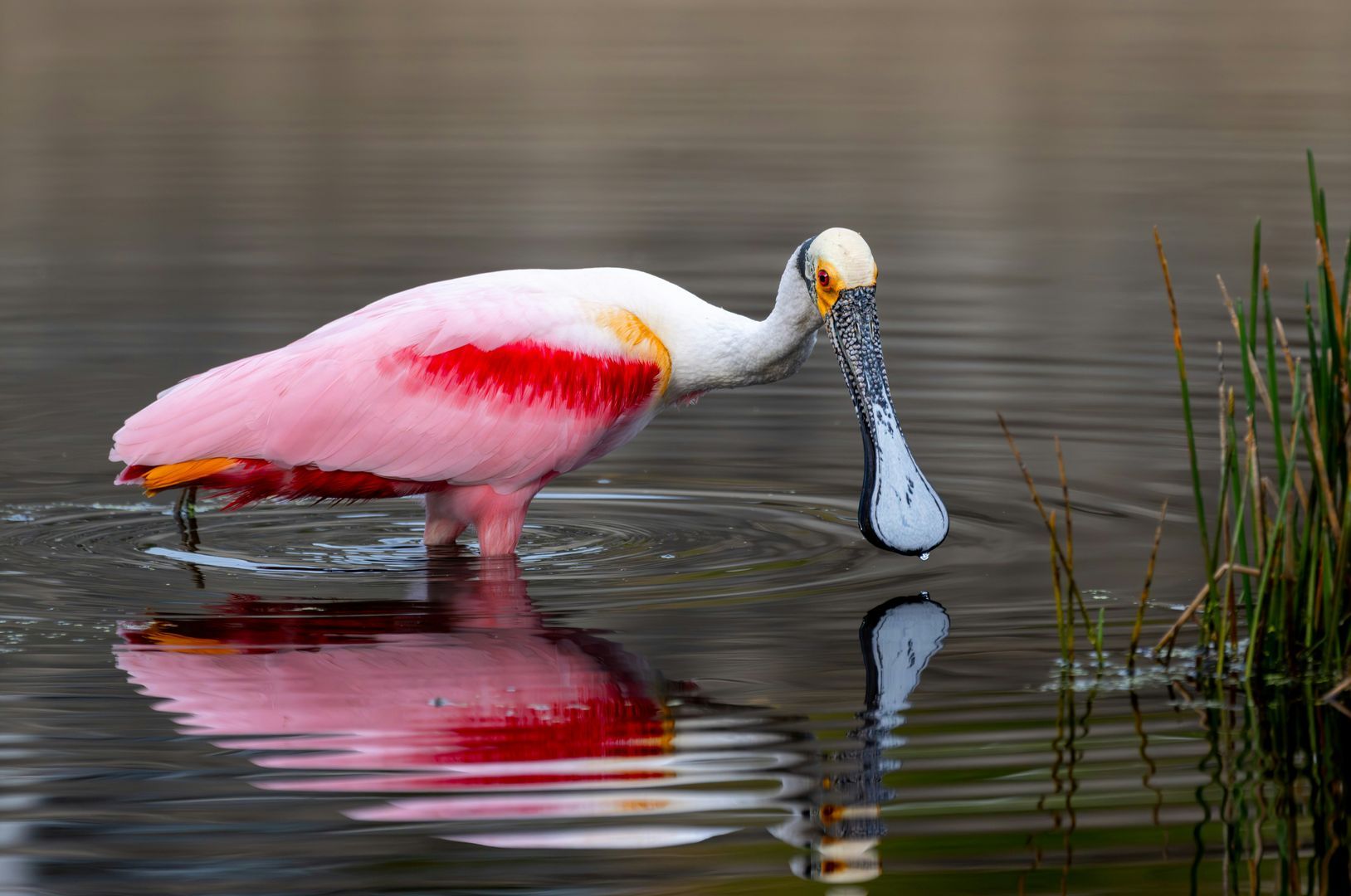
South Carolina has about a dozen bird clubs and Audubon chapters running public outings with a working website behind them, plus one club covering both Carolinas that quietly does most of the heavy lifting.
That's a shorter list than the quality of the birding suggests.
Why Join a Bird Watching Group at All
Solo birding has real advantages. But a club gives you somebody who knows which impoundment was drawn down last week. So much of the good habitat here is managed habitat. Flooded and drained on schedules that have nothing to do with the calendar in your head.
Clubs are also the front door to community science. The Christmas Bird Count has run since 1900 and is one of the longest continuous wildlife datasets anywhere. South Carolina's circles are organized locally and listed centrally by the Carolina Bird Club, there's no fee, and beginners get paired with someone experienced.
FYI before you buy
One practical note before you spend money. A decent pair of binoculars for birding runs from about $150 to well past $500, and you don't need to solve that before your first walk. Go on a few outings, ask the trip leader what they use and why, look through a couple of pairs, then buy. Borrow before you buy is the least profitable advice on this website. It's also the advice we'd give a friend.
This is a state where residents long ago agreed to call a three-inch flying cockroach a palmetto bug and get on with the day, so nobody's going to turn nose up at your binoculars.
Statewide Bird Watching Groups in South Carolina
Carolina Bird Club
The Carolina Bird Club covers both North and South Carolina. It isn't a North Carolina club with a regional name. It's the closest thing this state has to a state ornithological society.
Three meeting weekends a year, in winter, spring and fall, rotate between the two states, each built around guided field trips. Dues are $30 individual, $35 family, $15 student, $50 patron, and free for anyone 18 or younger. The fall 2026 weekend runs September 24 to 27 in Hickory, North Carolina.
Audubon South Carolina
The state office of the National Audubon Society, representing roughly 30,000 members and supporters and working with what it describes as ten chapters and bird club partners.
It manages more than 30,000 acres, including two sanctuaries: the Audubon Center at Beidler Forest in Harleyville and Silver Bluff Center and Sanctuary in Jackson. It's a land-management and advocacy office rather than a walk-leading club.
South Carolina Bird Records Committee
A standing committee of the Carolina Bird Club rather than a state agency body, maintaining the official state list and voting on records. Decisions are posted as they happen, with the full reasoning appearing annually in The Chat, the club's journal.
Christmas Bird Count in the Carolinas
The Carolina Bird Club maintains the count directory for both states, with compilers, contacts, and circle maps for roughly eighty counts including Charleston, Columbia, and Hilton Head Island. The period runs December 14 through January 5. No fee, and it's still the fastest way to meet twenty local birders in one morning.
South Carolina Association of Naturalists
Founded in 1976 by the naturalist Rudy Mancke, SCAN gathers monthly to explore a different natural area of the state and publishes a newsletter of what everyone found. Not strictly a bird club, which is the point: trips cover plants, herps and insects alongside birds. The event calendar was current through August 2026.
Bird Watching Groups in Charleston and the Lowcountry
Charleston Natural History Society (CNHS) - Berkeley, Charleston, and Dorchester Counties
Founded in 1905 and a National Audubon chapter since 1970, which makes it one of the oldest natural history organizations in the Southeast still running field trips.
Its field trips are open to the public, but each is capped at twenty, requires registration with the named leader, and involves signing a waiver. The autumn 2026 schedule runs from the Orangeburg sod farms in September to Fort Moultrie in November.
Bird Watching Groups in Columbia and the Midlands
Columbia is the gap here. The Midlands has no local chapter with a website we could load. The practical options are a chapter on the Savannah River, a sanctuary open every day, and the statewide groups above.
Augusta-Aiken Audubon - Aiken County and the Central Savannah River Area
An Audubon chapter straddling the state line, serving Aiken County on the South Carolina side and Augusta on the Georgia side. Birding and field trips are free and open to the public, and the events calendar is genuinely current, running from September outings to the Augusta Christmas Bird Count in December 2026.
Audubon's Silver Bluff Center and Sanctuary - Jackson, Aiken County
Not a club, but 3,410 acres of longleaf pine, hardwood, grassland and wetland along the Savannah River, with more than 25 miles of trails and over 200 recorded bird species. Open daily, sunrise to sunset.
Bird Watching Groups in the Upstate
Greenville County Bird Club - Greenville County and the Upstate
The most active club in the Upstate, and one of the friendliest entry points in the state, because it says so in writing. Non-members are always welcome, and outings are typically free with any exception clearly flagged.
The standing monthly outing is at Conestee Nature Preserve on the third Saturday, a longer walk from 7:00 a.m. April through September and 8:00 a.m. October through March, plus a shorter 8:00 to 10:30 a.m. option year round.
Piedmont Audubon Society - Spartanburg
Piedmont Audubon is the Spartanburg chapter. Meetings are listed for the fourth Thursday at 7:30 p.m., September through April excluding November and December, at St. Francis Episcopal Church on Webber Road. Its website hasn't been meaningfully updated since 2020, so confirm before you drive over.
Bird Watching Groups in Myrtle Beach and the Grand Strand
Waccamaw Audubon Society - Horry and Georgetown Counties, plus adjacent North Carolina
The chapter for the Grand Strand, covering Myrtle Beach, Conway, Surfside Beach, Murrells Inlet and Georgetown, and reaching across the line into Calabash and Carolina Shores.
The public is invited to programs and field trips. The chapter also runs a free guided bird walk every Wednesday, year round, at Huntington Beach State Park, which is the best standing offer in South Carolina birding. Monthly programs begin at 6:30 p.m. with the talk at 7:00.
Bird Watching Groups in Beaufort and the Sea Islands
Hilton Head Audubon - Hilton Head Island and southern Beaufort County
Established in 1974 and the main conservation voice on the island. Free guided walks run at the Audubon Newhall Preserve on Tuesday and Thursday mornings at 8:30 with no reservation needed, which is the easiest way in as a visitor.
Members get first notification and first crack at registration for chapter field trips, so if you plan to travel for one, join first.
Sun City Bird Club - Bluffton and Okatie
Active, well organised, and closed to you unless you live there. Membership is open only to residents of Sun City Hilton Head.
The club meets the first Wednesday of each month at 3:00 p.m. in the Hidden Cypress Ballroom, with field trips, nest box monitoring and classes. Listed here so nobody drives to Bluffton on the strength of a Google result.
Fripp Island Audubon Club - Fripp Island
Founded in 1978 and focused on the flora and fauna of the Lowcountry, currently collecting swallow-tailed kite sightings. The website is a period piece with no current trip calendar, so contact the club directly rather than planning around it.
Bird Watching Groups in the Pee Dee
The Pee Dee has no bird club of its own with a live website, and pretending otherwise would send you somewhere that doesn't exist. The region gets covered from its edges. Waccamaw Audubon reaches inland from Horry and Georgetown, and the Charleston Natural History Society runs trips as far up as the Orangeburg sod farms and Santee.
On your own, Woods Bay State Park near Olanta is free, open 9 a.m. to sunset, and its 1,150-foot boardwalk crosses a cypress-tupelo swamp inside a Carolina bay.
Other Ornithology and Research Groups in South Carolina
Carolina Bird Club South Carolina site guide
Roughly a hundred site descriptions covering the coast, coastal plain, piedmont and mountains, free to read and better than most printed guides because they're maintained. Pair them with SCDNR's wildlife management area pages, which say whether a property is about to close for a hunt.
Carolinabirds mailing list
The long-running Carolinas discussion list, hosted at Duke since 1996, with more than 1,500 subscribers and archives back to 1999. Rare birds, bird finding, identification arguments, trip reports, count results. It works as well as it always has, which is to say very well and not prettily.
Sparkbird App - Community
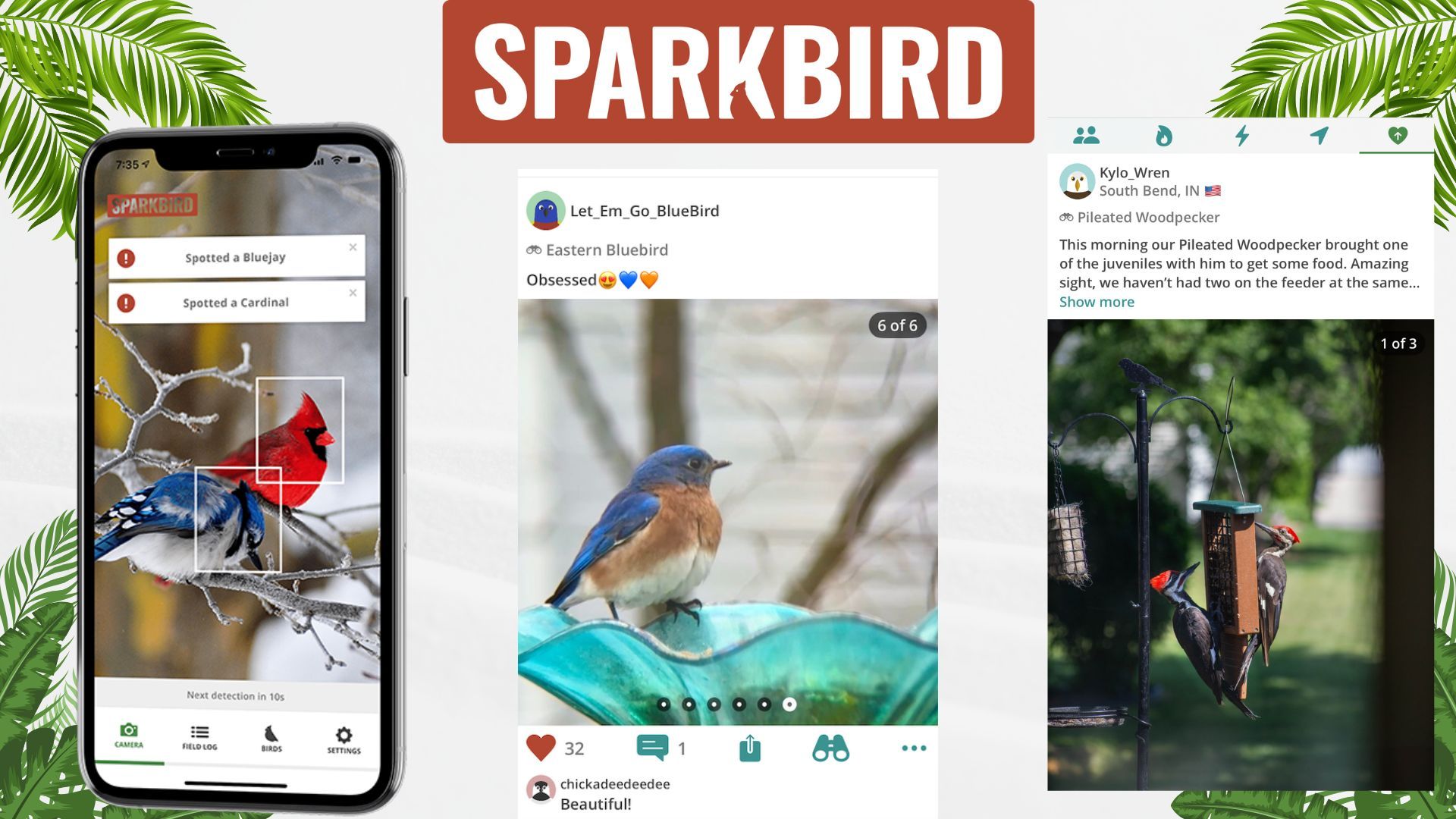
We built Sparkbird for people who want a friendly community of fellow birders. Track your life list, get help with identification, and meet people who also stop mid-sentence to look at a tree. Like Instagram for bird watchers, without all the other content.
Where to Go Birding in South Carolina
Joining a club is the fastest route to local knowledge, but these are the sites that produce reliably. Access terms are stated for each, because here they vary wildly.
State parks charge per person at the gate. The national park is free. Refuges are free but close units seasonally, WMAs close for hunts, and one of the best sites is reachable only by a boat you have to book.
- Huntington Beach State Park (Georgetown County) — Widely considered the best birding site in the state, with more than 300 recorded species and a causeway between salt marsh and freshwater lagoon that puts waders, wintering ducks and alligators within absurdly close range. Admission is per person: $8 adults, $5 SC seniors, $4 ages 6 to 15, free under 6. Open 6 a.m. to 6 p.m., extended to 9 p.m. during Daylight Saving Time. The nature centre marsh boardwalk is closed for construction, and the park sometimes shuts to new arrivals when weekend parking fills.
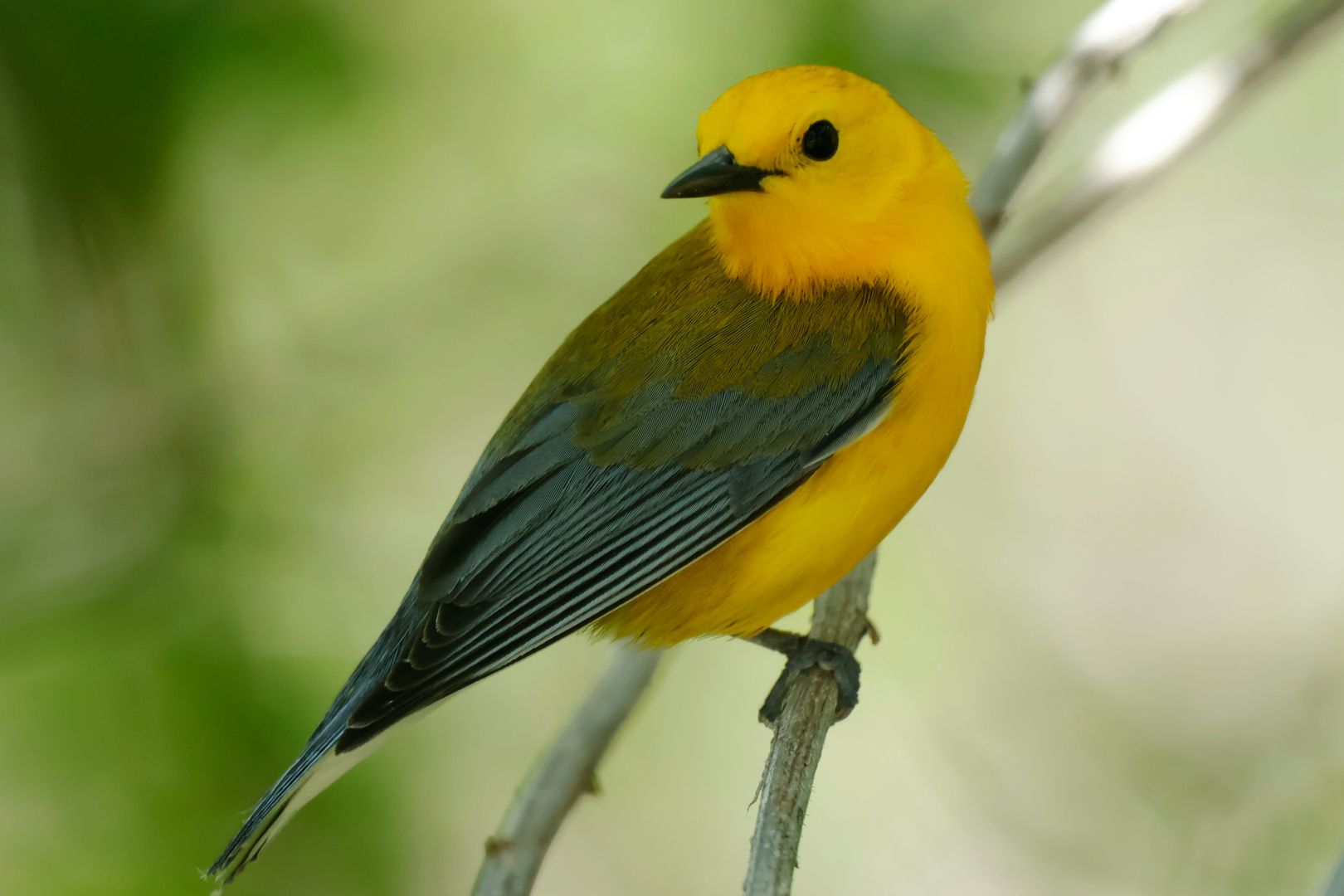
- Audubon Center and Sanctuary at Francis Beidler Forest (Harleyville, Dorchester County) — The largest remaining stand of virgin blackwater cypress-tupelo swamp anywhere, crossed by a 1.75-mile elevated boardwalk that's wheelchair and stroller accessible and takes most people 90 minutes to two hours. Prothonotary Warblers in spring, barred owls all year. Open Wednesday to Saturday 9 a.m. to 5 p.m. and Sunday 11 a.m. to 4 p.m., closed Monday, Tuesday and several holidays. Admission $12 for ages 13 up, $7 for ages 6 to 12, free under 6, and free for everyone on second Saturdays.
- Cape Romain National Wildlife Refuge and Bulls Island (Charleston County) — Twenty-two miles of barrier islands, reachable only by boat. The refuge concession, Coastal Expeditions, runs the Bulls Island ferry from Garris Landing in Awendaw at $55 adults, $35 for ages 3 to 12, free under 3. Sailings are Tuesday, Thursday, Friday and Saturday at 9:00 a.m. in summer, plus a 12:30 p.m. departure in spring and fall, dropping to Saturdays only at 10:00 a.m. in winter. Book ahead. The mainland Sewee Visitor Center on Highway 17 opens Wednesday to Saturday, 9 a.m. to 5 p.m.
- Congaree National Park (Hopkins, Richland County) — The largest old-growth bottomland hardwood forest left in the Southeast, and no entrance pass is required. One caveat ruins spring trips every year: the synchronous firefly event takes the park over for a week each May on a $25 lottery, and on those days all day-use visitors must be off the trails and out of the parking lots by 4:30 p.m., with the visitor center, boardwalk, trails and campgrounds closed. In 2026 that was May 13 to 20.
- Caesars Head State Park (Greenville County) — The autumn hawk watch runs from the overlook, staffed by the park with Greenville County Bird Club volunteers, September 1 through November 30; on a good September day the count reaches hundreds or thousands of raptors. Trail access is $3 adults, $1.50 SC seniors, $1 for ages 6 to 15. Open 9 a.m. to 6 p.m., extending to sunset during Daylight Saving Time, trails closing an hour before dark.
- Donnelley Wildlife Management Area (Green Pond, Colleton County) — Managed impoundments, marsh and hardwood swamp in the heart of the ACE Basin, reliable for wood storks, purple gallinules, black-bellied whistling-ducks and wintering waterfowl, with a three-mile nature trail. The entrance is off US 17 near the SC 303 junction. Closed on Sundays and during special hunts. No permit is needed to look at birds on a WMA, but a licence and WMA permit are required to hunt, and hunt-day closures are what will turn you around at the gate.
- Santee National Wildlife Refuge (Clarendon County) — More than 15,000 acres in four units along Lake Marion, with a 7.5-mile wildlife drive and around 40 miles of trails, roughly 13 open to bicycles. No entrance fee. Visitor center open Tuesday to Friday, 8 a.m. to 4 p.m. A waterfowl sanctuary closure from November 1 to March 1 shuts Cantey Bay, Savannah Branch and Black Bottom along with roads on the Pine Island and Cuddo units, so check the map first.
Two more deserve a mention. The Ernest F. Hollings ACE Basin National Wildlife Refuge charges no entrance fee, with its contact station at the Grove Plantation manor house in Hollywood, Monday to Friday 8:30 a.m. to 4:00 p.m. Some dikes and nesting areas close seasonally, and the refuge closes during scheduled hunts.
Santee Coastal Reserve in Charleston County has longleaf pine, freshwater swamp and brackish marsh, red-cockaded woodpeckers, Bachman's Sparrows, and a boardwalk to a heron rookery. Bring repellent you believe in.
If you'd rather start from your own garden, our guide to the plants that draw hummingbirds in South Carolina covers what works in this climate.
South Carolina Bird Books and Field Guides
There's no current printed site guide to the whole state, which is why the Carolina Bird Club's free site descriptions do so much work. For identification, these four.
Birds of the Carolinas Field Guide
Stan Tekiela's guide from AdventureKEEN, organised by colour rather than taxonomy. See a yellow bird, turn to the yellow section. It covers both Carolinas, which suits birds that never respected the state line.

Birds of the Carolinas Field Guide (Bird Identification Guides)
Adventure Publications
The Sibley Field Guide to Birds of Eastern North America
Second edition, and the guide most South Carolina trip leaders keep in a pocket.

The Sibley Field Guide to Birds of Eastern North America: Second Edition (Sibley Guides)
Knopf
Peterson Field Guide to Birds of Eastern and Central North America
Seventh edition, 2020. Peterson's arrows pointing at field marks are still one of the best teaching devices anyone has invented for this.
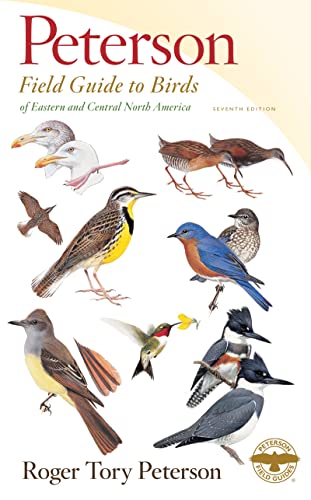
Peterson Field Guide To Birds Of Eastern & Central North America, Seventh Ed.: The Classic Birdwatching Guide with Updated Range Maps
Mariner
Kaufman Field Guide to Birds of North America
Photographic rather than painted, and edited so the images look the way birds look in poor light. The right one for anyone who finds illustrated plates hard to match.

Kaufman Field Guide To Birds Of North America: A compact, easy-to-use field guide with official names and range maps for fast bird identification in North America
Mariner
South Carolina Bird Rescue and Rehabilitation
Always call first. Hours and intake capacity change constantly. Some centres take only raptors and some can't take birds at all, and a wrong drive costs a bird hours it may not have.
SCDNR Wildlife Rehabilitators Registry
The official starting point. The agency publishes a separate list of rehabilitators who take birds by county, and tells the public to find an experienced rehabilitator or call SCDNR at 803-734-3886 weekdays, or the Radio Room at 803-955-4000 after hours.
Avian Conservation Center and Center for Birds of Prey - Awendaw, Charleston County
The state's specialist bird hospital, taking injured birds of prey and shorebirds and treating 800 to 1,000 patients a year. The medical clinic runs 365 days a year on 843-971-7474, 9 a.m. to 9 p.m. weekdays and 9 a.m. to 5 p.m. at weekends. Visitors are welcome Thursday to Saturday, 10 a.m. to 4 p.m.
Carolina Wildlife Center - Columbia, Richland County
Formerly Carolina Wildlife Care, and the change isn't only the name. As of 1 August 2026 intake is limited to birds and reptiles, with other native wildlife case by case. That narrowing makes it more useful to bird people, not less. The injured animal hotline is 803-772-3994.
Wildlife Rehab of Greenville - Upstate
An all-volunteer nonprofit founded in 1993, covering seven Upstate counties and handling more than 2,200 animals a year. Make contact before transporting anything.
Carolina Wildlife Rehabilitation Center - Grand Strand and Charleston
An all-volunteer group covering the Myrtle Beach area alongside Charleston, and one of the few in the state's northeast corner that lists birds first among the species it takes. The line is 1-800-388-2972.
One correction worth carrying. Keeper of the Wild in Walterboro appears on the state's bird rehabilitator list, but its own site says plainly that it isn't permitted to accept birds, ducks, or geese. It's an excellent mammal rehabilitator. Don't drive a gull there.
Frequently Asked Questions
Where can you see Painted Buntings in South Carolina?
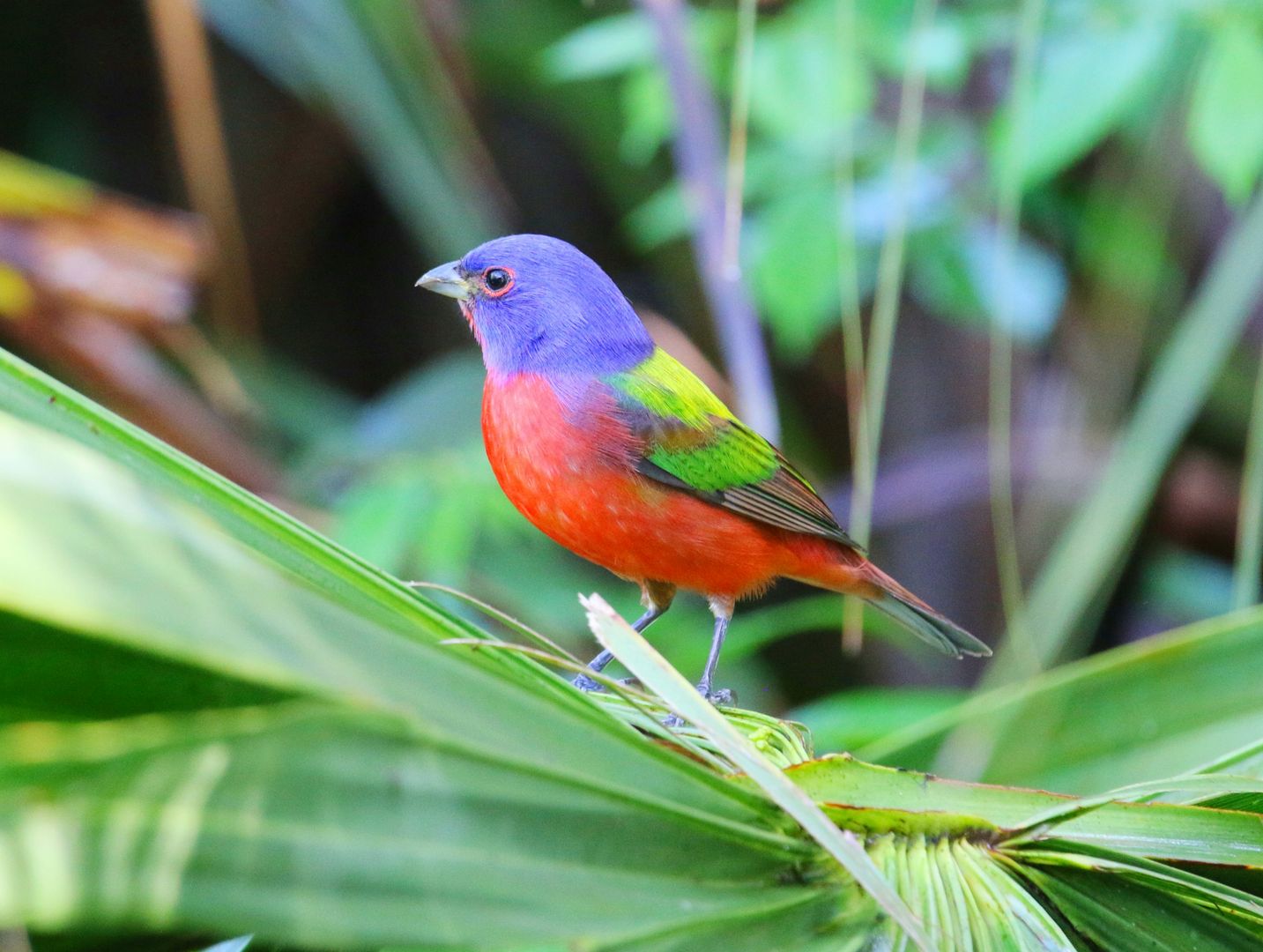
On the coast, in a narrow window. They breed along the coastal plain and the Sea Islands, arriving in spring and largely finished singing by late July. May through July is the reliable stretch. Huntington Beach State Park, the preserves around Hilton Head, and coastal feeders in Beaufort and Charleston counties are the usual bets.
What is the best place to go birding in South Carolina?
Huntington Beach State Park near Murrells Inlet, by broad agreement. The causeway alone puts salt marsh on one side and a freshwater lagoon on the other, with more than 300 species recorded. Admission is $8 for adults, and Waccamaw Audubon leads a free walk there every Wednesday of the year.
Do you need a permit to bird a South Carolina wildlife management area?
Not to look at birds. SCDNR's public lands regulations require a South Carolina licence and a WMA permit to hunt or take wildlife, and say nothing about birdwatching or photography. Properties close for special hunts, and Donnelley WMA is closed every Sunday.
When is the best time of year for bird watching in South Carolina?
Winter is the best-kept secret. Coastal impoundments fill with ducks, wading birds, and shorebirds, and the count period from December 14 to January 5 puts you next to people who know where everything is. Spring migration peaks in April and early May. September through November is raptor season at Caesars Head.
Got a South Carolina birding group to recommend?
If your club is missing here, it's almost certainly because we couldn't load a working website for it. Tell us about yours in the comments or through the Sparkbird App.
- Related: How to Use the Sparkbird App

No comments yet.