
Texas has more recorded bird species than any other state, and the club scene is roughly proportional. So, the directory is organized by region.
Every group below has a working website and outings a stranger can turn up to. Most run field trips free and open to non-members. The expensive part of birding here is the gas and the sanctuary admissions, not the membership. For a full roster, the Texas Ornithological Society keeps the master list.
Why Join a Bird Watching Group at All
Birding alone has obvious appeal. What a club gives you is a person who knows which patch of oaks is producing this week. In Texas that knowledge has a short shelf life, and the people who reliably catch a spring fallout are already on somebody's text thread.
Clubs are also the front door to community science. The Christmas Bird Count runs every year between December 14 and January 5, and most Texas count circles are organized by the chapters below.
And here's the opinion, offered free. Don't buy binoculars first. Valley state parks rent them by the day for a few dollars, and plenty of trip leaders carry a spare pair.
Spend a season looking through other people's glass and you'll know what you want. When you're ready, our guide to the best budget binoculars for birding covers what's worth paying for.
Statewide Bird Watching Groups in Texas
Texas Ornithological Society (TOS)
Founded in 1953 and the most useful single membership in Texas birding. Spring and winter meetings with field trips, organized weekender trips, a magazine and a bulletin. It also owns three sanctuaries, and members get in free.
Texas Bird Records Committee (TBRC)
The TOS committee that validates records from Texas and the adjacent Gulf. If you photograph something that doesn't belong, this is where the documentation goes.
Audubon Texas
Worth understanding correctly: it's a program office, not a club you join locally. It runs four centers and sanctuaries, at Trinity River in Dallas, Dogwood Canyon in Cedar Hill, Mitchell Lake in San Antonio and Sabal Palm in Brownsville. It also works with about 20 independent chapters. The old tx.audubon.org address redirects to the national site.
Christmas Bird Count
The longest-running community science bird project in the country, held between December 14 and January 5. Beginners are paired with experienced counters, and you sign up through the count circle nearest you, which in practice means asking one of the chapters below.
Bird Watching Groups in Houston and the Upper Texas Coast
This is the region that makes Texas famous in April. The chenier woodlands at High Island are the first dry land migrants reach after crossing the Gulf. When a north wind meets them over water, the result is what people plan vacations around.
It can't be scheduled. A fallout is a weather event. Book several days in mid-April and accept that some will be quiet.
Houston Audubon
The heavyweight, with 18 sanctuaries across the Houston and Galveston region. It owns the High Island sanctuaries, open dawn to dusk 365 days a year for $10 a day or a $35 patch good for the year, students free.
Read the access terms first. Their Member Field Trips are restricted to members and their guests, and were on a summer break through fall 2026 at the time of writing. The free public option is the Bolivar Rambles, a guided walk at Bolivar Flats on the first Saturday of each month at 10 a.m., suitable for all ages.
Galveston County Audubon Group (GCAG)
A local group under Houston Audubon, formed in 1998 so island birders wouldn't have to drive to Houston for a speaker. Membership is free and everything's open to the public. Monthly field trips run September through March, replaced in December by Christmas Bird Counts. Meetings are at the Rosenberg Library, 2310 Sealy Street in Galveston, 6:30 to 7:30 p.m.
Golden Triangle Audubon Society
The Beaumont and Port Arthur chapter, covering the far Upper Coast. Membership meetings are Thursdays at 7:00 p.m. at the Garden Center in Tyrrell Park, Beaumont, with a speaker and a member-provided meal. Monthly field trips work the coast, marshes and prairies around Sabine Woods.
Bird Watching Groups in Dallas-Fort Worth and North Texas
Audubon Dallas
A National Audubon chapter working across North Texas, with a busy calendar at Cedar Ridge Preserve including Thursday volunteer days and Wild Wednesdays walks. Field trips and Birding in the Metroplex programming are open to the public.
Fort Worth Audubon Society (FWAS)
General meetings the second Thursday, September through May, programs at 7:00 p.m. at the UNT Health Fort Worth MET building, Room 124, 1000 Montgomery Street, with a Zoom option. Monthly bird walks and overnight trips are open to non-members.
Prairie and Timbers Audubon Society (PTAS)
Collin County and neighbors. Meetings the fourth Tuesday at 6:45 p.m., September through November and January through May, at the Nature Place in McKinney. Identification walks and field trips are the core of it.
Trinity River Audubon Center
Not a club, but the easiest first outing in Dallas. Free with online registration, open 9 a.m. to 4 p.m., nearly five miles of trails across 120 acres that used to be the largest illegal landfill in Texas. Weekend morning bird walks run regularly, including a Spanish-language Caminata de Aves.
Bird Watching Groups in Austin and the Hill Country
Travis Audubon
The largest club in Central Texas, with an unusually welcoming policy stated plainly on its own site: membership isn't required, beginners are welcome, most trips are free. They also run classes, a Birdathon, Birdability programming for birders with disabilities, and three sanctuaries.
Friends of Balcones Canyonlands National Wildlife Refuge
The refuge's nonprofit partner, based in Lago Vista. Volunteer-led hikes run October through May, with songbird tours added in spring. If you want Golden-cheeked Warbler with someone who knows where the territories are, this is the shortest route.
Bastrop County Audubon Society
Meetings the first Tuesday at 7 p.m. at the Bastrop Public Library, 1100 Church Street. Bird outings to local parks are posted through the season and open to the public.
Bird Watching Groups in San Antonio and South Central Texas
Bexar Audubon South Central Texas (BASCTX)
The San Antonio chapter, covering a ten-county region. New memberships are $20 a year, monthly meetings run in person and online, and outings are open to visitors as well as members.
Mitchell Lake Audubon Center
An Audubon Texas center on San Antonio's south side at 10750 Pleasanton Road, open Tuesday through Sunday, 7 a.m. to 3 p.m. More than 300 species use the restored wetlands each year, and the pelican flocks convert non-birders.
Coastal Bend Audubon Society (CBAS)
Corpus Christi and the Coastal Bend. Seminar meetings September through May on the first Tuesday, Zoom available, plus a sanctuary of their own. The natural companion to a Whooping Crane trip out of Rockport.
Bird Watching Groups in the Rio Grande Valley
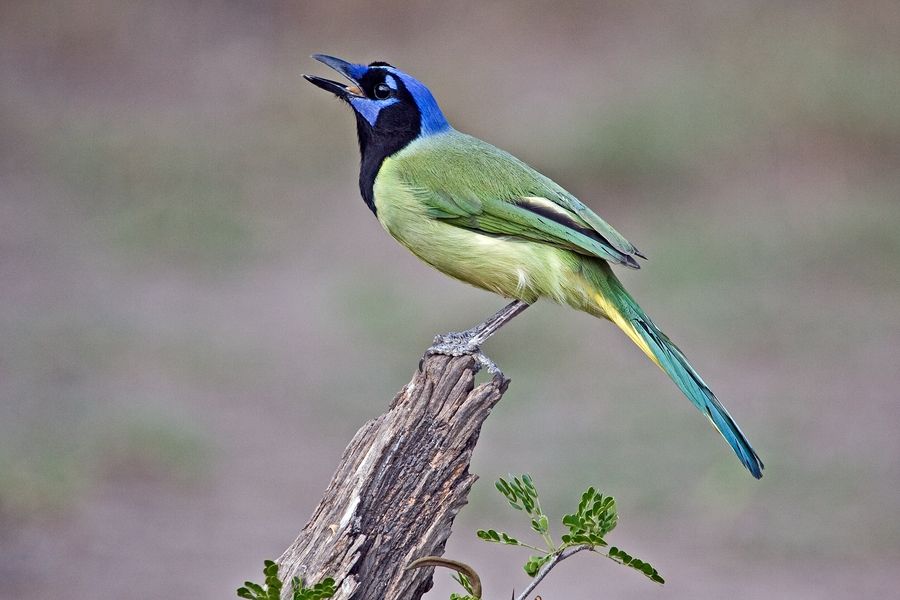
The Valley is why birders from everywhere else eventually buy a plane ticket to Texas. Plain Chachalaca, Green Jay, Great Kiskadee, Altamira Oriole and Common Pauraque are ordinary here and essentially unavailable anywhere else in the country.
The club scene is thinner than the birding, because public sites do the work clubs do elsewhere. The World Birding Center is the network to know: nine sites along a 120-mile stretch of river road, with Bentsen-Rio Grande Valley State Park as headquarters.
Access here is variable and worth checking the week you travel. Santa Ana National Wildlife Refuge currently has its levee closed to bicycle and pedestrian traffic, with Bobcat Trail signed as the detour.
Resaca de la Palma State Park in Brownsville charges $4 for adults and carries active alerts of its own. Laguna Atascosa National Wildlife Refuge has 417 species recorded, more than any other national wildlife refuge, but its Bahia Grande unit is closed.
Rio Grande Valley Birding Festival
Held in Harlingen at the Harlingen Convention Center, 701 Harlingen Heights Drive. Registration opens August 29 at noon Central, with a $75 base fee covering keynotes, seminars, workshops and evening events. Field trips cost extra and the popular ones sell out on day one.
Quinta Mazatlan
A World Birding Center site in McAllen, open Tuesday, Wednesday, Friday and Saturday 8 a.m. to 5 p.m., Thursday until 7 p.m., closed Sunday and Monday. A new 15-acre center is due to open in fall 2026.
Monte Mucho Audubon Society (MMAS)
Upriver in Laredo, Webb County. All levels of birder are welcome on their outings, and they're the group behind the Laredo Birding Festival, already scheduled for February 3 to 6, 2027. Reach them at 956-964-4102.
Bird Watching Groups in West Texas, Big Bend and the Trans-Pecos
West of the Pecos the club map thins to a single chapter, and the birding gets better anyway. The headline is Big Bend National Park, where roughly 450 species have been recorded and exactly one of them draws people from three continents. The Colima Warbler nests in the high Chisos and essentially nowhere else in the United States.
The Park Service is blunt about the effort. Hike to Boot Canyon or along the Laguna Meadows trail, which is "4.5 miles of steep, rugged terrain," carry plenty of water, and plan on making a day of it.
The birds arrive in late April and are gone by August. Lucky people pick one up on the Lost Mine Trail, but that's luck, not a plan.
El Paso/Trans-Pecos Audubon Society
Covers all of Texas west of the Pecos River, concentrated in El Paso. General meetings are Mondays at 7:00 p.m. at the El Paso Zoo with a Zoom option, and birding field trips are posted alongside them. The only Audubon chapter for a stretch of country larger than several countries.
Bird Watching Groups in the Texas Panhandle
An honest note instead of a list. The Panhandle has historically had two Audubon chapters, in Amarillo and Lubbock, and neither currently has a website that resolves. The domain long associated with the Amarillo group now serves unrelated content, so it isn't linked here. Contact the Texas Ornithological Society for a current local contact rather than trusting a stale chapter list.
The birding is still there. Palo Duro Canyon State Park in Randall County charges $8 for adults, free for children 12 and under, gate hours 7:30 a.m. to 10 p.m. Reservations are strongly recommended because it fills, and trails close for wet weather and heat.
Buffalo Lake National Wildlife Refuge is dry, as in the lake no longer holds water, but the grasslands still produce Burrowing Owl, Cassin's and Lark Sparrows, and both eagles.
Other Ornithology and Research Groups in Texas
Gulf Coast Bird Observatory (GCBO)
Headquartered at 299 Highway 332 West in Lake Jackson, with sites at Quintana and Anahuac. Banding, hawk watches, shorebird studies and land protection, plus public field trips. The Quintana Neotropical Bird Sanctuary and Smith Point Hawk Watch are open to visitors. Call 979-480-0999.
Texas Master Naturalist Program
Run jointly by Texas A&M AgriLife Extension and Texas Parks and Wildlife, with chapters statewide and a county map to find yours. Training is a real commitment, but a Master Naturalist chapter is often the most active natural history group in a county with no bird club at all.
Great Texas Coastal Birding Trail
A Texas Parks and Wildlife program covering 308 wildlife viewing sites in three sections: Upper Coast from the Louisiana border to Brazosport, Central Coast from Matagorda Bay to Kingsville, and Lower Coast from South Padre toward Laredo. The listings are online at no cost. The printed maps are sold rather than given away.
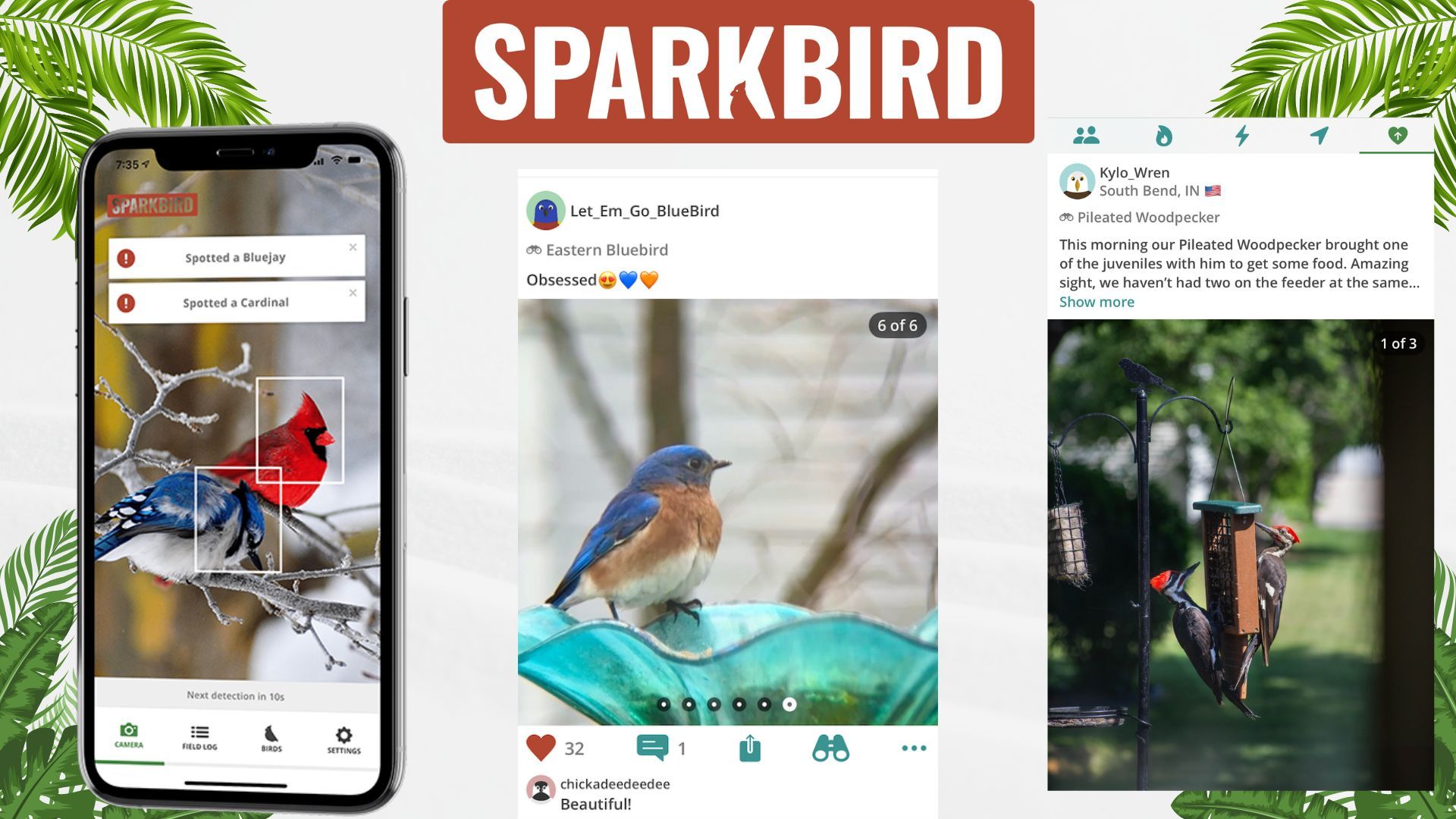
Sparkbird App
We built Sparkbird for people who want a friendly community of fellow birders. Track your life list, get help with identification, and meet people who also stop mid-sentence to look at a tree. It's like Instagram for bird watchers, minus the shady algorithms.
Where to Go Birding in Texas
A club is still the fastest route to local knowledge, but these seven sites carry the state.
- High Island (Galveston County) — Four Houston Audubon sanctuaries on a salt dome: Boy Scout Woods, Smith Oaks, Eubanks Woods and S.E. Gast Red Bay. Dawn to dusk, 365 days a year, $10 a day or a $35 patch good all year, which also covers Hooks Woods next door. Kiosks aren't staffed after May 3, so bring cash or a check for the honor box. The Smith Oaks rookery nests from March, with egrets, herons and spoonbills at close range from the platforms and canopy walkway.
- Bolivar Flats Shorebird Sanctuary (Galveston County) — A globally Important Bird Area and a Western Hemisphere Shorebird Reserve Network site, reached by the Galveston ferry or Highway 87. Drive the beach to the vehicular barricade and walk from there. A $10 beach parking sticker is required, sold by local vendors. Stay out of the vegetated dunes: hidden nests, and snakes.
- Santa Ana National Wildlife Refuge (Hidalgo County) — 2,088 acres of thorn forest, sunrise to sunset, $5 per vehicle daily or $10 annually, payable on Recreation.gov. Green Jay, Plain Chachalaca, Hook-billed Kite and Gray Hawk, plus more than 35 warbler species in spring. The levee is closed to bicycles and pedestrians; use Bobcat Trail.
- Bentsen-Rio Grande Valley State Park (Hidalgo County) — World Birding Center headquarters, open 7 a.m. to 10 p.m. Adults $5, children 12 and under free. Cars aren't allowed past headquarters, so walk, bike or take the tram. Reservations are recommended to guarantee entry, especially September through April. About 360 species recorded, and the hawk tower is wheelchair accessible.
- Aransas National Wildlife Refuge (Aransas County) — Winter home of the last wild flock of Whooping Cranes, across 115,000 acres with over 400 species recorded. A 16-mile auto tour loop, observation towers and miles of trails, sunrise to sunset. Gates lock 30 minutes after sunset, strictly enforced. Visitor center Tuesday to Saturday, 9 a.m. to 4 p.m. Pay at the kiosk or on Recreation.gov.
- Big Bend National Park (Brewster County) — Around 450 species, only 56 of them year-round residents, across river corridor, desert, grassland and mountain woodland. $30 per vehicle for seven days or $55 annual, card only, no cash, no entrance reservation required. For the Colima Warbler, budget a full day in the Chisos between late April and July.
- Balcones Canyonlands National Wildlife Refuge (Burnet and Travis Counties) — Established for the Golden-cheeked Warbler and Black-capped Vireo, and free to visit. Only three areas are open to the general public: Warbler Vista, Doeskin Ranch and the Shin Oak Observation Deck, all dawn to dusk year round. Headquarters is open weekdays 8 a.m. to 4:30 p.m. No dogs, no bikes on trails, no drones. Plan around those three sites, not the boundary on a map.
If you'd rather start from your own yard while you wait for April, our guide to hummingbird plants for Texas gardens covers what actually works in a state with four distinct climates.
Texas Bird Books and Field Guides
A continental guide plus one Texas book is the combination that works here. The state list is long enough that a national guide alone leaves you flipping.
Birds of Texas Field Guide
Stan Tekiela's Texas volume from AdventureKEEN, organized by color. That sounds like a gimmick until you're standing in front of an unfamiliar yellow bird.

The TOS Handbook of Texas Birds
Lockwood and Freeman's second edition from Texas A&M University Press. It's not a field guide but a status and distribution handbook: what occurs where, when, and how often. The book that tells you whether what you saw was plausible.

The TOS Handbook of Texas Birds, Second Edition (Volume 47) (Louise Lindsey Merrick Natural Environment Series)
Texas A&M University Press
Kaufman Field Guide to Birds of North America
Kenn Kaufman's photographic guide, digitally edited so the images behave like illustrations. Covers the whole continent, which matters in a state that collects eastern and western strays alike.

Kaufman Field Guide To Birds Of North America: A compact, easy-to-use field guide with official names and range maps for fast bird identification in North America
Mariner
The Sibley Field Guide to Birds of Western North America
Sibley's western volume, second edition, more than 777 species. The right Sibley for most of Texas, though Piney Woods birders may prefer the eastern one.

Texas Bird Rescue and Rehabilitation
Always call first. Intake capacity, hours and permits vary, and a center that takes raptors often can't take songbirds.
TPWD Wildlife Rehabbers by County
The official state list, county by county. Texas Parks and Wildlife advises checking adjacent counties too, and warns that rehabilitators might not answer immediately. Start here.
TWRC Wildlife Center - Houston / Harris County
Houston's original urban wildlife hospital, founded 1979, at 10801 Hammerly Blvd #200. Call 713-468-8972 before bringing anything in.
Rogers Wildlife Rehabilitation Center - Hutchins / Dallas County
Specializes in federally protected migratory birds and has treated more than 120,000 of them. Call 972-225-4000 before you arrive.
Blackland Prairie Raptor Center - Lucas / Collin County
Raptors only, including owls, hawks, falcons, eagles, vultures and caracaras. Drop-offs seven days a week, 9 a.m. to 3 p.m., call ahead required at 469-964-9696. Public site access is the first Saturday of the month.
Austin Wildlife Rescue - Austin / Travis County
Songbirds, raptors and most native wildlife, intake 9 a.m. to 4 p.m. daily except Thanksgiving and Christmas. No appointment needed, but they can't collect animals for you. Call 512-472-9453.
Wildlife Rescue and Rehabilitation (WRR) - Kendalia / Kendall County
Takes around 10,000 animals a year, including more than 100 bird species. Open seven days. Call 830-336-2725.
Last Chance Forever, The Bird of Prey Conservancy - San Antonio
Birds of prey only, since 1978. Call 210-499-4080 first and mention your route: they're coordinating screwworm inspection requirements for birds moved across quarantine-zone county lines.
Texas Sealife Center - Corpus Christi / Nueces County
Coastal and aquatic wildlife, birds included alongside sea turtles. Call 361-589-4023.
Frequently Asked Questions
When is the best time to go to High Island?
Mid-March to mid-May, with the second and third weeks of April as the sweet spot. Nesting at the Smith Oaks rookery starts in March and holds through spring regardless of weather. A fallout can't be booked, so give yourself several mornings rather than one.
Where can you see a Whooping Crane in Texas?
At Aransas National Wildlife Refuge and the bays around it, where the last wild migratory flock winters. From land, the observation towers on the 16-mile auto tour loop give you a chance. For a closer look, winter boat tours run from Fulton with Rockport Birding and Kayak Adventures, starting at $125 for three hours.
If I only have one day in the Rio Grande Valley, where should I go?
Santa Ana National Wildlife Refuge, and it isn't close. For $5 a vehicle you get the Valley's signature thorn forest species in a walkable 2,088 acres. Bentsen is the better pick if you want the World Birding Center headquarters and the hawk tower.
Are there beginner-friendly bird watching groups in Texas?
Yes, and several say so on their own pages. Travis Audubon explicitly welcomes beginners on free trips, and Monte Mucho in Laredo welcomes all levels. The Bolivar Rambles are led by a sanctuary manager and described as suitable for all ages.
Got a Texas birding group to recommend?
This list is deliberately curated, which means somebody's excellent county club is missing. Tell us about it in the comments or through the Sparkbird App.
Panhandle and West Texas groups, we're especially looking at you.
- Related: How to Use the Sparkbird App

No comments yet.