
Utah has five standing bird watching clubs. Four are National Audubon chapters, and one is an independent group in Provo that has quietly run the state's main birding website for decades.
This is also a state where every street address is a set of coordinates, so at least you'll have no trouble finding the meeting.
Why Join a Bird Watching Group at All
Solo birding has real advantages. Utah, though, has the clearest argument in the country for why organized birders matter. Clubs track where birds will be based on their food supply, which is fickle in Utah.
The Utah Division of Wildlife Resources counts over 12 million birds of 339 species using Great Salt Lake and its wetlands. As many as five million Eared Grebes, at times half to 90 percent of the North American population, feeding almost entirely on brine shrimp. More than 600,000 Wilson's Phalaropes, the largest staging concentration of that species on earth.
The Western Hemisphere Shorebird Reserve Network gave the lake its highest designation, Hemispheric, in March 1991. That system has been under real strain. The Great Salt Lake Commissioner's Office records a historic low in November 2022, when the lake covered roughly 800 square miles. Two strong snowpack years then brought it back up about 6.5 feet through May 2024.
The birds don't track elevation. They track what lives in the water. DWR's drought briefing is blunt about the chain— less water means higher salinity, 18 percent is the ceiling for brine shrimp to hatch, and less water also means less algae for the shrimp and flies to eat.
The same page notes biologists counted roughly a million Eared Grebes a decade ago and now average about 3.25 million. The birds have nowhere else to go.
Clubs are the part of that story you can join. They run the counts that produce those numbers, they turn up at hearings, and they know which stretch of shoreline is holding birds this week.
FYI before you buy
Don't buy binoculars first. Most chapters have members carrying spares who'll hand you a pair for a morning, and will let you look through theirs for a bit. Getting a feel for them in the field teaches you more than any spec sheet.
When you're ready, our guide to the best budget binoculars for birding covers what matters.
Statewide Bird Watching Groups in Utah
Utah Ornithological Society (dissolved January 2011)
Utah has no state ornithological society. The UOS announced it would stop publishing the Utah Birds journal, stop holding its yearly conferences and be legally dissolved as of January 1, 2011. Don't go looking for a membership form.
Utah Bird Records Committee
The one piece of the old society that survived. It publishes reports of rare sightings, maintains the list of roughly 125 species requiring written documentation and keeps the official state checklist. It operates alongside the Utah Birds website hosted by the Utah County Birders.
The state list stood at 465 species when a Great Black-backed Gull was accepted from Flaming Gorge in January 2019.
Audubon Rockies
National Audubon's regional office rather than a club that leads walks. It covers Colorado, Utah and Wyoming, working on sagebrush steppe management, rivers and wetlands, and policy across the arid interior. Utah's four Audubon chapters sit under this office, and there are no National Audubon centers or sanctuaries in the state.
Christmas Bird Count
Running since 1900, held between December 14 and January 5 each season and organized circle by circle by the chapters below. Beginners are paired with experienced counters, so no skill threshold applies. The easiest way to meet a dozen Utah birders in one morning.
Bird Watching Groups in Salt Lake City and the Wasatch Front
Great Salt Lake Audubon - Salt Lake City
The chapter for the central Wasatch Front, working to protect habitat for birds, animals and plants across Utah. Field trips run to places like the Antelope Island causeway and the Farmington Bay trails around the Eccles Center.
The chapter also runs the GSLA Fledglings Club for younger birders, informal Birds 'N Bites gatherings and a small grants program covering Utah, Idaho and Nevada. Memberships are optional. Check the events calendar to see whether an outing needs a signup.
Tracy Aviary - Salt Lake City
One of only two accredited standalone aviaries in the country. There's a Liberty Park campus at 589 East 1300 South and a second site, the Nature Center at Pia Okwai, at 3310 South 1000 West on the Jordan River.
Beyond the collection birds it runs a community science operation on local habitat. That's the part to look at if you want to contribute data rather than just visit. Check current admission before you go.
Bird Watching Groups in Utah Valley and Provo
Utah County Birders - Provo / Utah County
An independent club rather than an Audubon chapter, and the group that maintains the Utah Birds website as a public service. Meetings are at BYU's Bean Museum in Provo with a Zoom option. Field trips run well outside the county, including Ouray National Wildlife Refuge and the Provo River Delta.
One caution. The front page hasn't been refreshed in a while, so check the newsletter rather than planning around a date you find there.
Bird Watching Groups in Ogden and Northern Utah
Wasatch Audubon - Ogden
The clearest access terms of any club in the state. Wasatch covers Weber, North Davis, Morgan and Box Elder counties, meets the third Tuesday of each month except July, runs at least one Saturday outing a month except July, and adds Wednesday half day bird walks.
Anyone may attend any of the chapter's activities, and no fees are charged except where noted on the calendar. They've led guided walks at the Ogden Nature Center, a 152 acre preserve at 966 W. 12th Street that's the north's most reliable venue.
Bridgerland Audubon - Logan / Cache Valley
Centered on Logan and covering Cache Valley across the Utah and southern Idaho line. Outings are advertised as "Birding with Bridgerland Audubon" and run to places like Tony Grove up Logan Canyon and Benson Marina on the Cache trails, which gives you a mountain option and a wetland option most months.
Bird Watching Groups in St. George and Southwest Utah
Red Cliffs Audubon - St. George / Washington County
Southwest Utah's chapter, running Wednesday bird walks, longer field trips and indoor meetings, all open to the public. Membership isn't required to join a walk. Dues are a $20 minimum donation covering an individual or a family. The newsletter archive hasn't been updated recently, so confirm dates against the calendar.
Bird Watching Groups in Moab and Southeast Utah
Southeast Utah is the gap in this directory. The Utah Birds site names a Moab bird club, but no live website for it could be reached. It's left out rather than sent to you as a dead link.
For current conditions on public land, the Canyonlands Natural History Association runs the Moab Information Center at 3015 South Highway 191.
Scott and Norma Matheson Wetlands Preserve - Moab / Grand County
894 acres of Colorado River wetland managed by The Nature Conservancy with Utah DWR, holding over 200 species including Yellow Warbler, Common Yellowthroat and Lazuli Bunting. Best March to mid November.
Read this before driving over. The main visitor area is closed after flood damage in August 2022 and June 2024, and access is through an undeveloped back entrance where 400 North dead ends at a gate near 1070 W. 400 N. Dawn to dusk when accessible, no fee.
Bird Watching Groups in Central Utah
Central Utah has no standing bird club that could be verified. If you live in Juab, Millard, Sanpete or Sevier county, the realistic route in is the UBIRD listserv, the Utah County Birders trip schedule, which regularly heads south and west, and the DWR Central Region office in Springville at 801-491-5678 for questions about state land.
Fish Springs National Wildlife Refuge, below, is the region's headline site, and it's easier to reach from Delta than from the Wasatch Front.
Other Ornithology and Research Groups in Utah
HawkWatch International - Salt Lake City
Headquartered in Salt Lake County and now 40 years old, HawkWatch monitors raptor migration as an indicator of ecosystem health and runs long term count sites including the Goshute Mountains in western Utah. It takes volunteers and its migration sites can be visited during count season.
Great Salt Lake Ecosystem Program - Utah DWR
The state program managing the lake's avian and aquatic communities and running an annual waterbird survey since 1997. Its pages on brine shrimp, brine flies and birds explain better than anything else why the lake's chemistry and its bird numbers are one subject.
Eccles Wildlife Education Center - Farmington / Davis County
A DWR facility on the Robert N. Hasenyager Great Salt Lake Nature Reserve, with exhibits, programs and nature trails aimed at people new to this. The WMA access permit described below isn't required here.
Sageland Collaborative - Salt Lake City
A conservation nonprofit at 824 S. 400 W. running hands on community science, including a Great Salt Lake and shorebirds project alongside riverscape restoration and pollinator work. Volunteers are the point rather than an afterthought. For the policy side of the lake, Friends of Great Salt Lake has been at it for thirty years.
Utah Birders and the UBIRD listserv
A statewide mailing list for rare bird alerts, trip reports and identification help, run through Google Groups and open to any email address. The closest thing Utah has to one statewide birding conversation.
Sparkbird App - Community
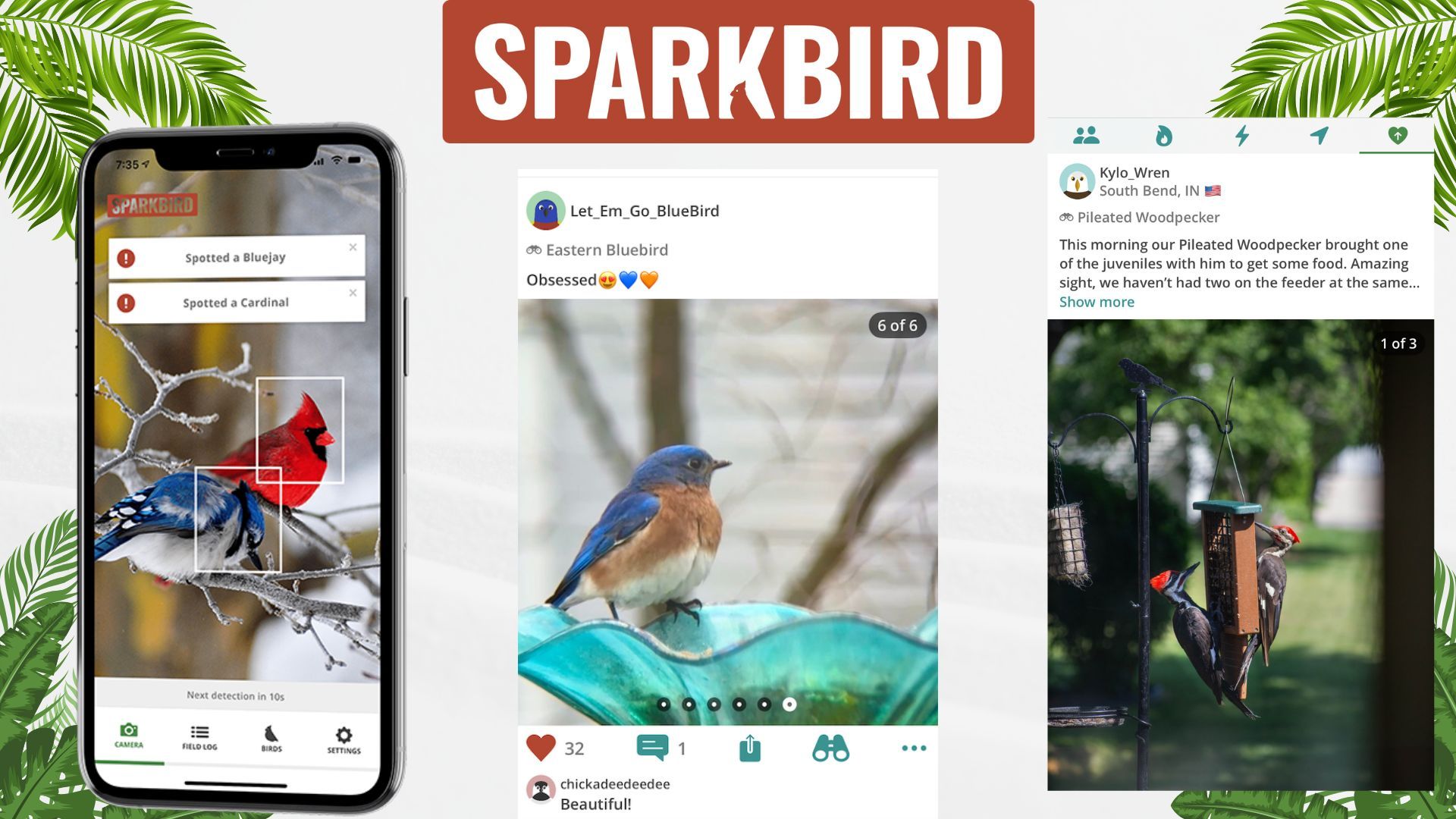
We built Sparkbird for people who want a friendly community of fellow birders. Track your life list, get help identifying birds, and meet people who also stop mid conversation to look at a tree. Like Instagram for bird watchers, without the shady algorithms.
Where to Go Birding in Utah
Access terms vary more in Utah than in most states, so the fee, the permit and the road surface are listed for every site.
- Bear River Migratory Bird Refuge (Box Elder County) — The big one, where the Bear River meets the northeast arm of Great Salt Lake, a quarter mile off I-15 at exit 363. Over 250 species, 67 of them nesting, including white-faced ibis colonies of 10,000 birds and tens of thousands of Tundra Swans on migration. No entrance fee. Visitor center open Tuesday to Saturday, 10am to 4pm; trails sunrise to sunset daily. The 12 mile auto tour route is the main event, but check the refuge page first, because the regular route has been closed for water control work with an alternate route in its place.
- Antelope Island State Park (Davis County) — The causeway is one of the great shorebird drives in North America. Day use is $15 per vehicle for up to eight people, $10 for a senior driver, $5 per motorcycle, $3 per pedestrian or cyclist. Read this twice: the $125 statewide Utah State Parks annual pass doesn't cover the Davis County causeway fee, while the park's own $65 annual pass does. Open daily 6am to 10pm, visitor center 9am to 5pm. Egg Island and White Rock are closed year round for nesting birds, and the boat ramp is closed because of low water.
- Farmington Bay Waterfowl Management Area (Davis County) — Dikes and impoundments minutes from the freeway, the closest big wetland to Salt Lake City. As of July 1, 2026 anyone 18 or over needs either a free digital WMA access permit, obtained by watching a short educational video, or a valid hunting, fishing or combination license. That permit isn't required at the Eccles Wildlife Education Center or the Hasenyager Reserve. Portions of Utah WMAs close seasonally for nesting and during waterfowl hunting, so check before committing to a dike road.
- Fish Springs National Wildlife Refuge (Juab County) — Spring fed marshes in the southern Great Salt Lake Desert, one of the most remote refuges in the lower 48. No entrance fee, auto tour route open during daylight hours. The refuge sits 75 miles from the nearest services and is reached entirely on gravel, 25 to 80 miles of it, roughly three hours from Salt Lake City by the Pony Express road. There's no cell service, GPS units have sent people onto unmaintained military roads, and the refuge tells visitors to carry a full tank, a second spare tire and two liters to a gallon of water per person per day. Restrooms and drinking water on site were unavailable at last check.
- Ouray National Wildlife Refuge (Uintah County) — Green River bottomland in the Uinta Basin, 14 miles west of Vernal on US 40, then 14 miles south on State Highway 88 and a last mile of gravel to the visitor center. No entrance fee. Open one hour before sunrise to one hour after sunset, extended to 90 minutes either side during hunting seasons. An auto tour road with interpretive signs, plus a 1.3 mile loop at Sheppard Bottom from the observation tower.
- Zion National Park (Washington County) — 291 species, a globally recognized Important Bird Area, and the most accessible California Condor viewing in Utah, alongside Peregrine Falcon, Mexican Spotted Owl and American Dipper. Entrance is $35 per private vehicle, $30 per motorcycle or $20 per person on foot or bicycle, valid one to seven days, with a $70 Zion annual pass. From March through November the Zion Canyon Scenic Drive is closed to private vehicles and you ride the park shuttle, which is free and needs no ticket or reservation. In winter you can drive the canyon yourself.
- Silver Lake, Big Cottonwood Canyon (Salt Lake County) — The easy high elevation stop from Salt Lake City, a flat boardwalk loop that gets you montane species without a climb. Salt Lake Ranger District; the visitor center runs 11am to 4:30pm daily through August, and there's no drinking water. The rule that catches visitors out: Big Cottonwood is protected drinking water watershed, so dogs are prohibited in the canyon entirely, along with swimming and wading.
If you'd rather start from your own window, our guide to hummingbird plants for Utah covers what works in a dry climate at altitude.
Utah Bird Books and Field Guides
A state guide sorts the species you might plausibly see from the 900 in a continental book, which is most of year one's battle.
Birds of Utah Field Guide
Stan Tekiela's Utah volume from AdventureKEEN, organized by color. That sounds simplistic until you're standing in front of a yellow bird with no idea what family it is.

Birding Utah
D.E. McIvor's Falcon site guide, still the only book length treatment of where to bird in Utah rather than what you might see. It dates from 1998, so verify access and roads with the managing agency, but the site selection has aged well.

The Sibley Field Guide to Birds of Western North America
The second edition covers 777 species west of the Rockies, and remains the most authoritative portable guide for this half of the continent.

Kaufman Field Guide to Birds of North America
Photographic rather than painted, and the friendliest continental guide for a beginner who finds painted plates hard to match against a real bird.

Kaufman Field Guide To Birds Of North America: A compact, easy-to-use field guide with official names and range maps for fast bird identification in North America
Mariner
Utah Bird Rescue and Rehabilitation
Always call first. Capacity and hours change constantly, and Utah's rehabilitators are specialized. Several take raptors only, and none take raccoons, red foxes or striped skunks.
Utah DWR Licensed Wildlife Rehabilitators
The official state list, with names, towns, species accepted and phone numbers. Start here. If nobody answers, call a DWR regional office: Ogden 801-476-2740, Vernal 435-781-9453, Springville 801-491-5678, Price 435-613-3700, Cedar City 435-865-6100.
Wildlife Rehabilitation Center of Northern Utah - Ogden / Weber County
At 332 S. Washington Boulevard, taking migratory birds including eagles plus small mammals, with nearly 38,000 patients since 2009. Call 801-814-7888, and note the discrepancy: the state list flags this center as temporarily closed while its own site shows open hours. Which is exactly why you phone before you drive.
Wildlife Center of Salt Lake - Salt Lake City
Small mammals, hummingbirds, other migratory birds and bats. 801-800-1776.
Wasatch Wildlife Conservation Center - Park City / Summit County
The broadest bird intake on the state list— all migratory birds including hummingbirds, plus birds of prey, bats and small mammals. 801-228-0831.
Great Basin Wildlife Rehabilitation and Education - Mapleton / Utah County
Raptors only, plus some small mammals. Don't bring songbirds here. 801-310-0186.
Second Chance Wildlife Rehabilitation - Price / Carbon County
All birds and small mammals, and the only listed option across a wide stretch of southeastern Utah. 435-650-3441.
Uintah Raptor Rehab - Vernal / Uintah County
Birds and small mammals for the Uinta Basin. 435-781-2404.
Best Friends Animal Sanctuary - Kanab / Kane County
Songbirds, doves, roadrunners and raptors including eagles, plus reptiles, amphibians and small mammals. 435-274-2192.
Enoch Wildlife Rescue - Enoch / Iron County
All birds and small mammals, covering the Cedar City area. 435-590-1618.
Justin Neighbor - Hurricane / Washington County
A licensed individual taking raptors only, and the closest raptor option to St. George. 435-635-4494.
Frequently Asked Questions
Where can you see the Great Salt Lake shorebirds?
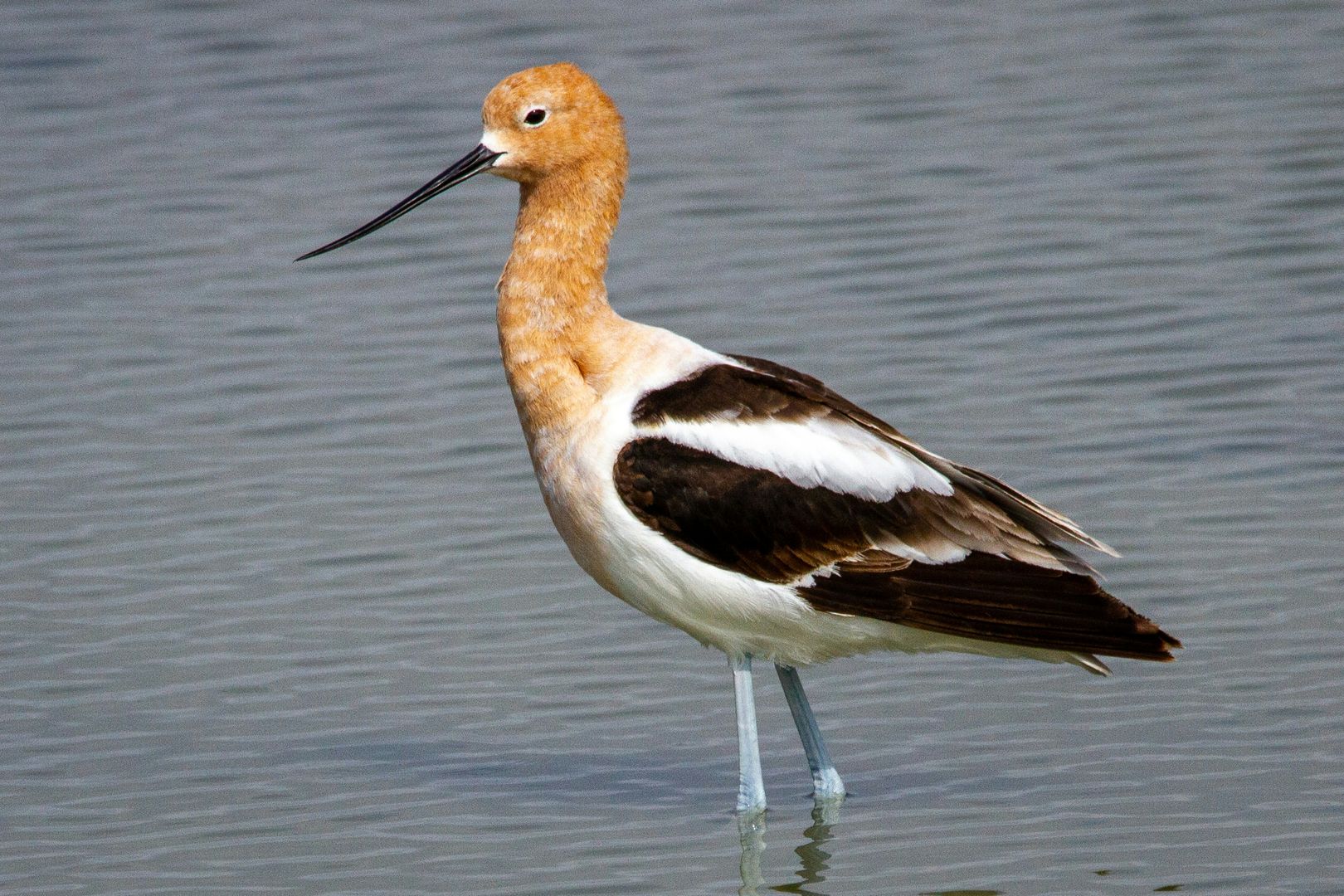
The Antelope Island causeway in Davis County is the classic drive, with avocets, stilts and phalaropes often feeding within a few yards of the road. Bear River Migratory Bird Refuge near Brigham City is the other essential stop. Late summer into early fall is peak staging.
Is Great Salt Lake still worth visiting given the falling water levels?
Yes, and it's in better shape than it was. The lake hit a record low in November 2022 at roughly 800 square miles, then rose about 6.5 feet through May 2024 on strong snowpack. Expect exposed lakebed and a closed boat ramp at Antelope Island, but the bird numbers remain extraordinary.
When is the Great Salt Lake Bird Festival?
Mid May, organized by Discover Davis in Davis County, which has run it since 1999. The 2026 edition ran May 14 to 17 with headquarters at Western Sports Park near Farmington. Next year's dates go up on the Davis County festival page.
Are there bird watching groups in southern and eastern Utah?
Southwest Utah is covered by Red Cliffs Audubon in St. George. Eastern and central Utah have no club with a working website. If you bird Moab, Price, or Vernal, the UBIRD listserv and the Utah County Birders trip schedule are the practical substitutes.
Got a Utah birding group to recommend?
Five clubs across 85,000 square miles leaves a lot of open ground, and if there's nothing near you, starting a group is less work than it sounds. Tell us about yours in the comments or on the Sparkbird App.
Our goal is to build a birding community that connects people to nature and to each other. Utah makes that easy, because on a causeway in September nobody needs small talk.
- Related: How to Use the Sparkbird App

No comments yet.