
South Dakota has three standing bird clubs. Not thirty. Three, plus a statewide ornithological society that's been running since 1949. This is a state that divides itself into East River and West River and treats that as sufficient geographic detail, so a short club list should surprise nobody.
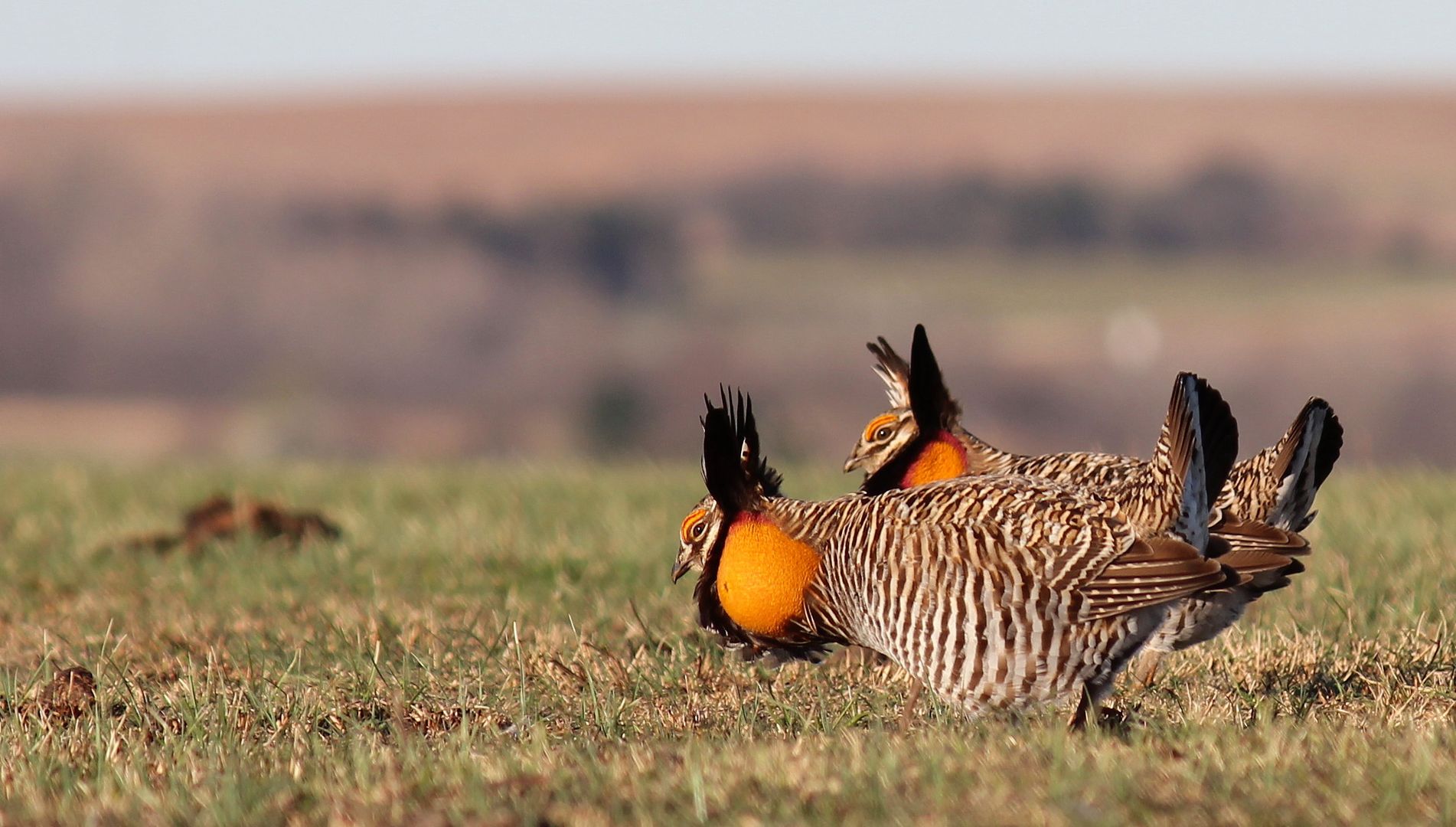
Joining is cheap. What the bird watching groups in South Dakota lack in numbers, the state makes up for in birds. Prairie grouse dance on leks an hour south of the capital every April, in blinds you can reserve for free.
Why Join a Bird Watching Group at All
Solo birding has real advantages. You set the pace, nobody rushes you, and no one watches you spend eleven minutes on a sparrow that turns out to be a leaf.
A club gives you somebody who already knows which gravel road is passable this week. The distances are long. Access is scattered across refuges, grasslands and game production areas, and a wet spring closes roads that maps still show as open. That knowledge lives in people, not databases.
Clubs are also the front door to community science. The Christmas Bird Count runs December 14 through January 5, it's free, and beginners get paired with somebody experienced.
FYI before you buy
One practical note before you spend money. A decent pair of binoculars for birding runs from about $150 to well past $500, and you don't need to decide today. Good Earth State Park outside Sioux Falls will check a pair out to you at the visitor center for free.
Borrow before you buy. This is the part where a normal blog tells you to purchase the most expensive option available. We're telling you to go on three walks first.
Statewide Bird Watching Groups in South Dakota
South Dakota Ornithologists' Union (SDOU)
The main statewide body, founded in 1949 and still the organization holding the state's avian records. SDOU meets twice a year in rotating locations. Autumn leans toward presentations, spring toward field trips. The 2026 fall meeting is set for November 6 in Yankton.
Membership is $20 regular, $25 family, $10 student, $30 library. The membership year runs January 1 to December 31, and anyone joining after September 30 is rolled into the following year. New members get a shoulder patch.
SDOU also maintains the official state checklist, which currently stands at 440 species with status categories for each.
South Dakota Bird Notes
SDOU's quarterly journal, published in March, June, September and December, running continuously since July 1949. The full archive is online and browsable back to the first issue, which is genuinely useful if you want to know what a county looked like ornithologically in 1963. Current issues require a member login. Older ones don't.
Rare Bird Records Committee (RBRC)
The SDOU committee that reviews documentation for rare and vagrant birds and maintains the review list. Report forms are downloadable as Word or PDF, and the page includes guidance on writing documentation that will actually be accepted. If you find something unusual in South Dakota, this is where the report goes.
Audubon Great Plains
National Audubon's regional office covering North Dakota, South Dakota and Nebraska. A conservation and habitat office, not a walk-leading club, and its two nature centers and its sanctuary are in Nebraska and North Dakota rather than South Dakota.
It's the right contact for regional grassland and prairie conservation work, and the wrong one if you want somebody to take you birding on Saturday. The older Audubon Dakota web address now redirects here.
Christmas Bird Count
The oldest community science program in North America, running mid-December to early January and organized locally rather than nationally. South Dakota's count circles are run by SDOU members and the local clubs. Free, no experience required, and still the easiest way to meet a dozen South Dakota birders in one morning.
Bird Watching Groups in Sioux Falls and the Southeast
Sioux Falls Bird Club - Sioux Falls / Minnehaha and Lincoln Counties
The most active local club in the state. It maintains a wildlife blind at Dewey Gevik Nature Area and an observation area at Good Earth State Park, runs a field trip schedule, and welcomes non-members. Membership is a $5 annual donation sent to the treasurer, which also gets you the free club patch (non-members pay $5 for one). Members join a listserv used for sightings and field trip notices.
The club runs the Sioux Falls and Canton Christmas Bird Counts, with the 2026 Sioux Falls count set for December 19. The 2024 count turned up 9,303 birds of 56 species with 14 field observers and three feeder watchers, which gives a fair sense of the scale.
Their birding locations page is a useful local reference on its own, covering Fensterman's Wetland Complex, Wall Lake and Makoce Washte Prairie.
Brookings Birding Club - Brookings County
Active and meeting monthly, but with no website of its own, which makes it the one entry here you can't look up. Evening meetings at the Larson Nature Center at Dakota Nature Park in Brookings, open to all interested people.
The Brookings Register previews each one, which is currently the most reliable way to find out what's coming.
Good Earth State Park - Harrisburg / Lincoln County
Not a club, but the easiest first outing in the southeast corner. Day use only, open 6 a.m. to 11 p.m. year round, with a staffed visitor center that lends binoculars and a Sioux Falls Bird Club observation area. A park entrance license is required per vehicle.
Bird Watching Groups in Rapid City and the Black Hills
Prairie Hills Audubon Society (PHAS) - Black Hawk / Western South Dakota
The only National Audubon chapter in South Dakota, certified in 1994 and covering the Black Hills, roughly an hour's drive around them, and the belt of the state south of Interstate 90 east to Todd and Mellette Counties. Membership is $20 a year, $10 low income. It's entirely volunteer run with no paid staff.
Set expectations before you join. PHAS is primarily a conservation and advocacy chapter, and its events calendar runs heavier on public comment deadlines for Forest Service, BLM and state highway proposals than on bird walks. It does turn out for regional events such as the Spearfish Watershed Festival.
If you care what happens to western South Dakota habitat, this is the group. If you want a guided walk, the Black Hills trail guide below serves you better.
A warning worth stating plainly, because the search results are a trap. Black Hills Audubon Society is in Washington state, not South Dakota. That chapter covers Lewis, Mason and Thurston Counties in Washington. There's no Black Hills Audubon chapter in South Dakota.
Black Hills Raptor Center - Rapid City / Pennington County
An all-volunteer nonprofit running educational programs with live resident raptors across the Black Hills, plus rehabilitation work. No location is open to the public, so you encounter it at events rather than by dropping in. Reachable at 605-519-2008.
Bird Watching Groups in Pierre, the Northeast and West River South Dakota
There's no standing bird club in Pierre, none in Aberdeen, and none in the West River ranch country outside the Black Hills. That isn't an oversight. Checks against live sites turned up nothing currently operating, and the American Birding Association's own directory lists exactly two organizations for the entire state. Here's what works in those regions instead.
SD-Birds Listserv
The statewide discussion list, hosted on groups.io with 193 members. It carries bird club meeting and field trip announcements, trip reports, and observations from South Dakota plus relevant sightings just over the borders. New subscriptions and first posts are moderator approved, which keeps it clean. If you live somewhere without a club, this is your club.
South Dakota Game, Fish and Parks Birding Trails
Four self-guided driving trails cover the state and do much of the work a local club otherwise would. The Glacial Lakes and Prairies trail runs 38 sites across the northeastern pothole counties, from Brookings and Codington up through Roberts, Day, Marshall and Brown.
The Black Hills, Badlands and Lakes trail covers 38 sites in three loops across the western third. The Southeast South Dakota trail covers 33. A fourth follows the Missouri River. All four guides are free PDFs.
SDOU Spring and Fall Meetings
Because SDOU rotates its two annual meetings, a Pierre or Aberdeen birder gets a proper multi-day field weekend with experienced company every few years without driving to Sioux Falls. Check the SDOU calendar for the next location.
Other Ornithology and Research Groups in South Dakota
South Dakota Birds and Birding
Terry Sohl's personal site, and the most detailed free birding resource for the state by a wide margin. Species accounts for more than 900 North American birds, thousands of photographs, a state checklist, and site-by-site hotspot writeups. Not a club, but South Dakota birders send each other links to it constantly, which is its own endorsement.
Sand Lake Wetland Management District
Beyond the refuge itself, this US Fish and Wildlife Service office manages roughly 43,000 acres of waterfowl production areas across eight north-central counties. Those WPAs are open to walk-in public access and are badly underbirded. Staff can be reached at (605) 546-8157.
Fort Pierre National Grassland Lek Surveys
The Forest Service has run sunrise lek routes here every spring for about 50 years, mid-March to mid-May. The 2025 survey counted 1,221 displaying males, a 40 percent jump on the previous year and the highest total in the survey's history.
Sparkbird App - Community
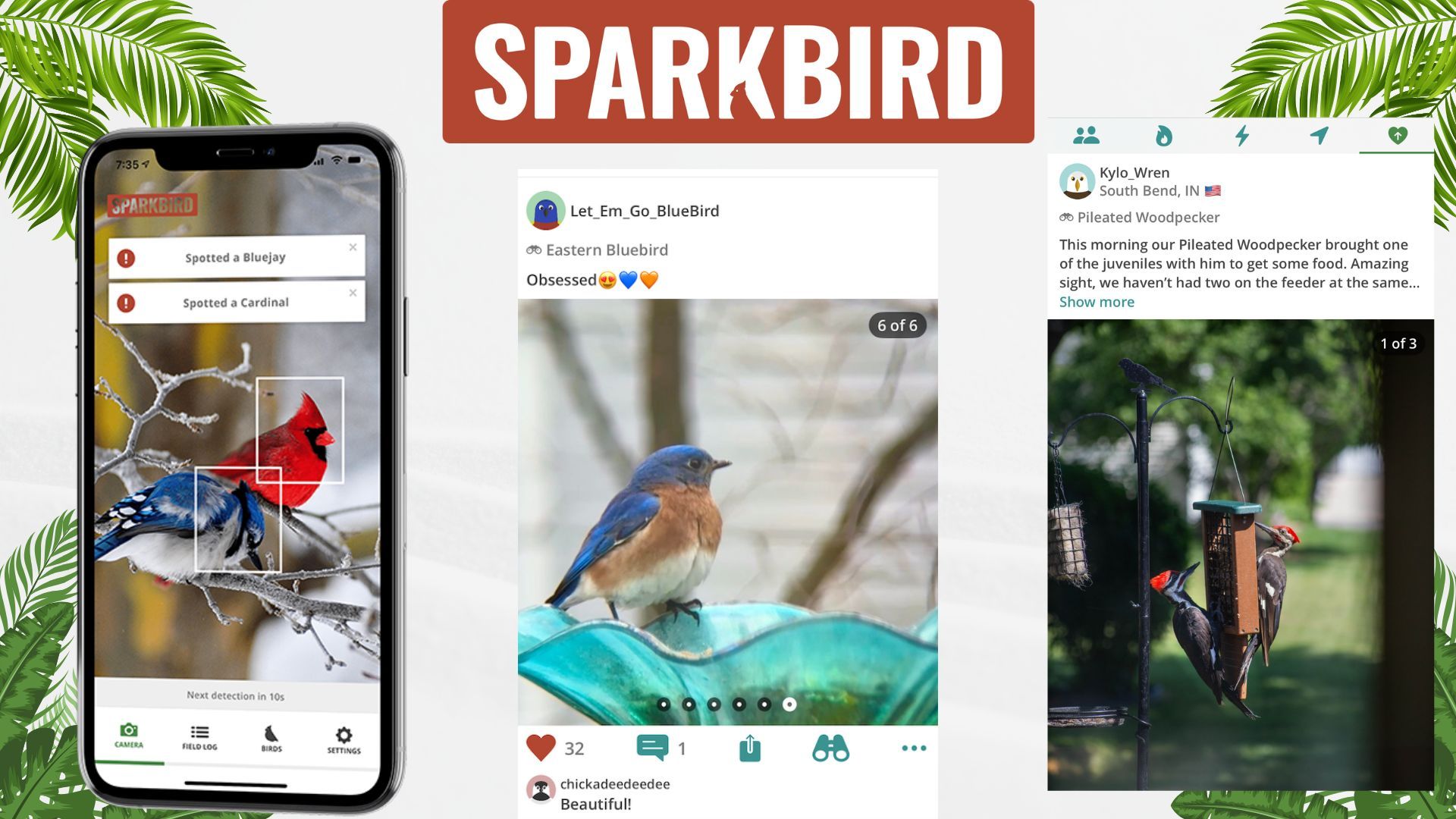
We built Sparkbird for people who want to connect with a friendly community of fellow birders. Track your life list, get help identifying birds, and meet people who also stop mid-conversation to look at a tree. It's like Instagram but for bird watchers, and without the shady algorithms.
Where to Go Birding in South Dakota
With a club list this short, the sites carry the weight. These 7 are worth planning a drive around, and the access terms matter more here than in most states because half of them are down gravel.
- Fort Pierre National Grassland (Lyman, Stanley and Jones Counties) — 116,000 acres of mixed-grass prairie south of Pierre, split by US Highway 83, and the classic public place to watch Greater Prairie-Chickens and Sharp-tailed Grouse display. No fee or permit, open year round. The Forest Service runs free viewing blinds April 1 to May 15, reserved by phone at 605-224-5517, with reservations opening February 1. Each blind is an unheated 4 by 8 by 5 foot plywood box with an open floor. Be in the blind an hour before sunrise and stay at least an hour after, so scout your parking spot in daylight the day before. Bring blankets, and bring four-wheel drive: Forest Service roads here turn impassable when wet.
- Sand Lake National Wildlife Refuge (Brown County) — 21,498 acres around an 11,450-acre lake, 27 miles northeast of Aberdeen, and a Globally Important Bird Area and Wetland of International Importance. More than 266 species recorded, 123 of them nesting, Franklin's Gulls colonially in the cattails, and spring snow goose migration documented above 1.2 million birds. Free, open sunrise to sunset. The 13.5-mile gravel Wildlife Drive and interior gates are open April 1 to mid-October and close any time conditions turn hazardous; from February 1 to April 1 it's walk-in access only. The 108-foot CCC observation tower is the view worth the drive.
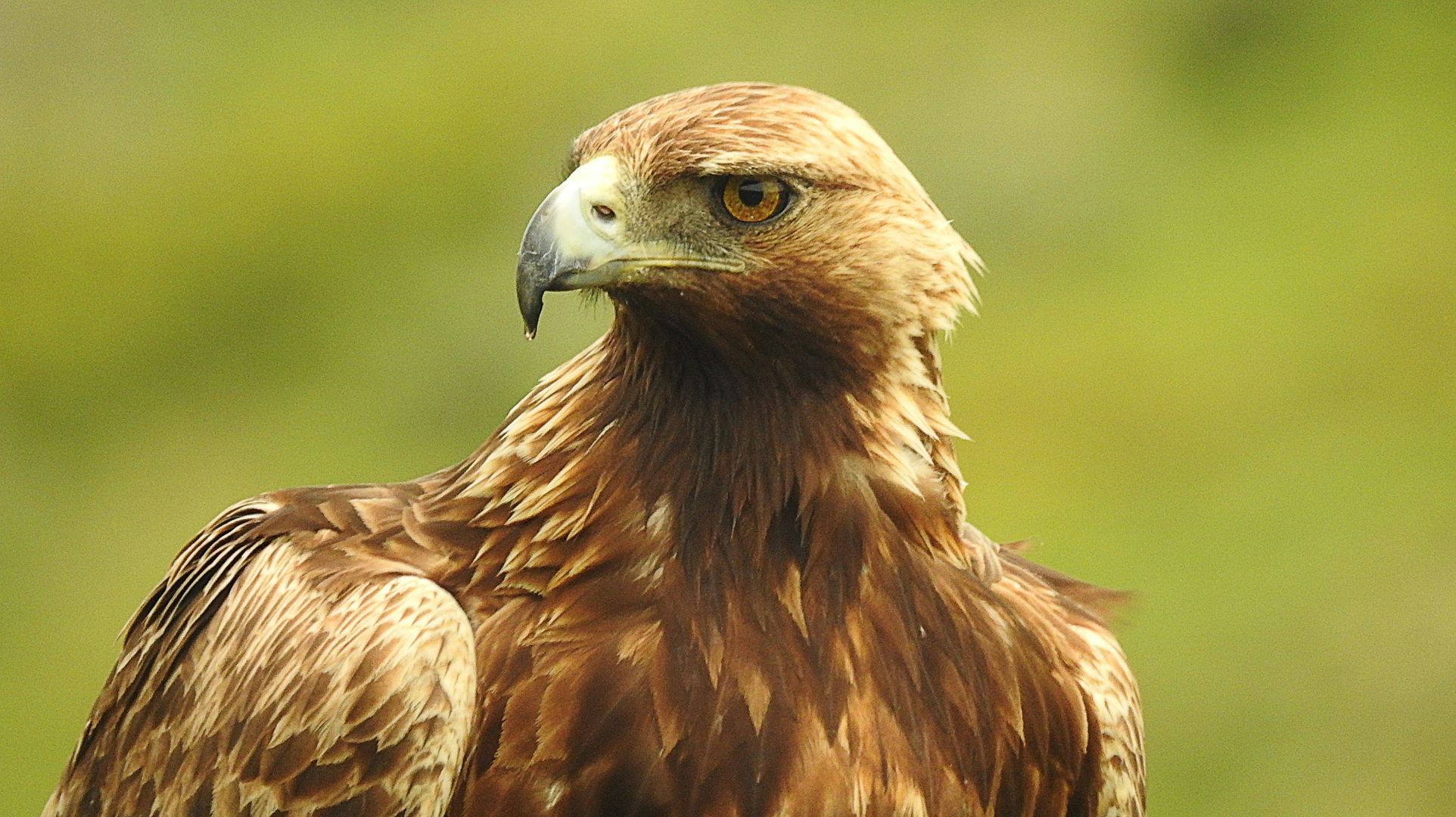
- Badlands National Park (Jackson and Pennington Counties) — 206 species recorded and 67 nesting, at a genuine avian crossroads where eastern and western species meet. Golden Eagles, Northern Harriers and Short-eared Owls are the headline residents. Entrance is $30 per private vehicle, $25 per motorcycle or $15 per person on foot or bicycle, each valid seven days, or $55 for the park annual pass. The park is card only and takes no cash. Open 24 hours a day year round. Sage Creek Rim Road is gravel and closes temporarily after heavy rain or snow.
- Custer State Park (Custer County) — 71,000 acres of the southern Black Hills, open year round, with the Wildlife Loop Road as the standard circuit. Custer charges its own entrance license rather than the ordinary daily state park fee: $25 per vehicle valid up to seven days, $20 per motorcycle, or the $40 resident and $60 nonresident annual license. Non-stop through-traffic on US Highway 16A is exempt. Stay in your vehicle or 100 yards from bison and elk, which is advice about bison, not birds.
- Lacreek National Wildlife Refuge (Bennett County) — 13 miles southeast of Martin in the far south, 120 miles from Rapid City, and the wintering ground for the High Plains trumpeter swan population. 281 species recorded since 1959, including American White Pelicans, Golden Eagles and Burrowing Owls. Free, with a 4.5-mile self-guided auto tour route starting at the visitor center. Staff are often out in the field, so call (605) 910-7086 before counting on anyone being there.
- Newton Hills State Park (Lincoln County) — Six miles south of Canton in the Coteau des Prairies, a block of dark deciduous forest sitting in open prairie, which is why more than 200 species turn up each year. Best eastern woodland migration in the state. Open year round, though between October 1 and April 30 showers, flush toilets and other water systems may be shut off. A park entrance license is required per vehicle: $10 daily resident, $15 daily nonresident, $40 or $60 annual.
- Spearfish Canyon Nature Area (Lawrence County) — A mile west of Savoy on Forest Development Road 222, covering Roughlock Falls, Spearfish Falls and Savoy Pond. This is where South Dakota keeps its American Dippers, working the stream bottoms year round. No day use fee. Open year round, but FS Road 222 to Roughlock Falls closes December 15 through March 31 for snowmobile season, when the trail from Spearfish Canyon Lodge is the way in.
If you'd rather start from your own yard while you wait for lek season, our guide to hummingbird plants for South Dakota covers what actually works in a short northern growing season.
South Dakota Bird Books and Field Guides
South Dakota straddles the eastern and western avifaunas, which is exactly why a single continental guide leaves you stuck. One state guide plus one regional guide is the sensible combination here.
Birds of the Dakotas Field Guide
Stan Tekiela's guide to the two Dakotas, published by AdventureKEEN. Organized by color, which sounds simplistic until you're standing in a shelterbelt with a yellow bird and forty seconds. The best first guide for the state.

Birds of the Dakotas Field Guide (Bird Identification Guides)
Adventure Publications
South Dakota Birds: A Folding Pocket Guide to Familiar Species
Waterford Press's laminated fold-out for the common species. It fits in a jacket pocket, survives rain, and costs about what a sandwich does. Good for kids and for glovebox duty.

South Dakota Birds: A Folding Pocket Guide to Familiar Species (Wildlife and Nature Identification)
Globe Pequot Press
The Sibley Field Guide to Birds of Western North America
The second edition, from Knopf. This is the one to carry West River and in the Black Hills, where the birds start behaving like Rocky Mountain birds. Sibley's plates remain the standard for a portable guide.

Kaufman Field Guide to Birds of North America
Kenn Kaufman's photographic guide, digitally edited so the images behave like illustrations. Covers the whole continent, which matters in a state where the eastern and western guides each stop halfway across.

Kaufman Field Guide To Birds Of North America: A compact, easy-to-use field guide with official names and range maps for fast bird identification in North America
Mariner
South Dakota Bird Rescue and Rehabilitation
Always call first. And be honest with yourself about the odds, because South Dakota is thin on rehabilitators in a way most states aren't.
South Dakota Game, Fish and Parks Wildlife Rehabilitation
Start here, but know what you're getting. GFP doesn't publish a public directory of licensed wildlife rehabilitators, and the agency states plainly on this page that South Dakota has very few of them.
The page lists regional GFP contacts for Central, Northeastern, Southeastern and Western South Dakota. The agency's standing guidance is to contact the nearest GFP Wildlife Division office, conservation officer or wildlife damage specialist rather than to pick the animal up yourself.
Their phrase for young animals that are probably fine is "if you care, leave it there." For fledglings on the ground in June, that's usually the correct answer.
Black Hills Raptor Center - Rapid City area / Pennington County
Birds of prey only. Hawks, eagles, owls and falcons. All volunteer, with no facility open to the public, so call 605-519-2008 or use the contact form before you drive anywhere. Mail goes to PO Box 48, Caputa, SD 57725. They won't take songbirds or waterfowl.
If your bird isn't a raptor and you're not in the Black Hills, your realistic route is the regional GFP contact above. Or a veterinarian willing to stabilize the bird while GFP finds a permitted rehabilitator. That's a thinner safety net than we'd like to report, and it's the accurate one.
Frequently Asked Questions
Where can you see a prairie grouse lek in South Dakota?
Fort Pierre National Grassland, 24 miles south of Pierre on US Highway 83, for both Greater Prairie-Chicken and Sharp-tailed Grouse. The Forest Service runs free viewing blinds from April 1 to May 15, reserved at 605-224-5517, with reservations opening February 1. Be in the blind an hour before sunrise and stay an hour after.
When is the best time to visit the Black Hills for birding?
Late May through July, when the breeding birds are on territory and White-winged Juncos, Red-naped Sapsuckers and Western Tanagers are all findable. American Dippers hold Spearfish Canyon year round, so a winter trip isn't wasted. Just note that FS Road 222 to Roughlock Falls closes December 15 to March 31.
Do you need a park pass to go bird watching in South Dakota?
It depends on who manages the land. State parks including Newton Hills and Good Earth require an entrance license per vehicle, $10 daily for residents and $15 for nonresidents. Custer State Park charges its own higher license, and Badlands charges $30 per vehicle, cards only. Refuges and national grasslands are free.
Why are there so few bird clubs in South Dakota?
Population, mostly. Fewer than a million people are spread over 77,000 square miles, and a club needs a critical mass of members within a reasonable drive. What the state has instead is one strong statewide society, one very active club in its largest city, and free agency-published trail guides.
Got a South Dakota birding group to recommend?
If your town is one of the many in this state without a club, starting one is a lot less work than it sounds. The entry requirements are a coffee pot and two other people willing to get up before sunrise.
Tell us about your group in the comments or on the Sparkbird App, available in the Apple App Store.
- Related: How to Use the Sparkbird App

No comments yet.