
Tennessee's birding runs through one statewide organization. The Tennessee Ornithological Society's ten chapters, plus a long-standing independent Audubon society in Chattanooga, are the eleven clubs verified for this directory.
Joining is cheap. But a Memphis birder and a Bristol birder are the better part of a day's drive apart, and each will tell you, politely, that they live in the good part of the state. (Tennessee puts three stars on its flag for its three Grand Divisions, and birders keep those divisions about as faithfully as everyone else does.)
Why Join a Bird Watching Group at All
Birding alone is genuinely good. A club connects you with people who already knows where the birds are this week. That matters more here than in a flatter state, because Tennessee birding is stacked vertically as well as horizontally.
One weekend can offer wintering waterfowl in the Mississippi flyway and breeding warblers at 6,000 feet in spruce-fir forest. Knowing which is worth the drive is knowledge that lives in people, not databases.
Clubs are also the front door to community science. The Christmas Bird Count runs from December 14 to January 5, and in Tennessee its count circles are organized by the chapters below.
FYI before you buy
One piece of advice before you spend money. Don't buy binoculars yet. A decent pair of budget binoculars for birding starts around $150 and climbs fast, and Tennessee makes it easy to try the hobby without any.
Trip leaders bring spotting scopes. At the state's biggest bird event the wildlife agency and its partners set up scopes so the public can watch ten thousand cranes without owning a thing. Go out a few times on borrowed glass first.
Statewide Bird Watching Groups in Tennessee
Tennessee Ornithological Society (TOS)
The independent statewide society, organized into the ten local chapters listed by region below. Membership runs $18 individual, $22 family, $30 sustaining, $10 student and $450 life, and includes the quarterly journal The Migrant and the newsletter The Warbler.
Join a chapter directly or join at large. Its membership page was updated in July 2026, a better sign of life than most state societies manage.
Tennessee Bird Records Committee (TBRC)
Established in 1981 to maintain the official state list, with six voting members and one alternate. A record needs five of six votes to be accepted, and the committee assigns the status codes that tell you how likely a species really is here.
If you photograph something that shouldn't be in Tennessee, the documentation goes here. The current list is dated December 2024.
Christmas Bird Count
Mid-December to early January, organized locally by the chapters. No experience required, and the fastest way to meet a dozen Tennessee birders at once.
National Audubon in Tennessee
National Audubon has no state office, center or sanctuary in Tennessee. It has three independent chapters, and its Audubon Near You directory lists them as Chattanooga Audubon Society, Cumberland-Harpeth Audubon Society in Nashville and Warioto Audubon Society in Clarksville.
Only Chattanooga's website loads, and it appears below. The other two domains no longer resolve, so reach those chapters through Audubon's finder.
Bird Watching Groups in Nashville and Middle Tennessee
Nashville Chapter of the Tennessee Ornithological Society (NTOS) - Nashville / Davidson County
Meetings on the third Thursday at Radnor Lake State Park, plus monthly outings, seasonal counts and Wednesday morning migration walks in spring and fall. Those Wednesday walks are the easiest entry point in the state's largest city.
John W. Sellars Lebanon Chapter of the Tennessee Ornithological Society - Lebanon / Wilson County
Birding Lebanon, Wilson County and Middle Tennessee for more than six decades, with a public calendar of outings around Old Hickory Lake. Their listings were current in August 2026 when this was checked, which isn't true of every club calendar. Membership forms are on the site.
Buffalo River Chapter of the Tennessee Ornithological Society - Lawrence County
Covers Lawrence County with members from Giles, Lewis and Maury. Meets monthly, generally the second Thursday, for a combined field trip and business meeting, none in August, several a year at David Crockett State Park.
Dues are $20 individual and $24 family, novices are explicitly welcome, and there's an annual two-night trip to a state park. No separate website, so the society page is the current source.
Bird Watching Groups in Memphis and West Tennessee
West Tennessee is thin on clubs and rich on birds. There's one chapter, and it's a good one.
Memphis Chapter of the Tennessee Ornithological Society - Memphis / Shelby County
Founded in January 1930. Meetings run September through May at 7:00 pm on the third Wednesday at St. George's Episcopal Church in Germantown, and visitors are always welcome.
Field trips go out several times a month to Shelby Farms Park, Meeman-Shelby Forest State Park and Ensley Bottoms, the best shorebird and gull ground in the western half of the state. No independent website; the society page carries current contacts.
Bird Watching Groups in Knoxville and East Tennessee
Knoxville Chapter of the Tennessee Ornithological Society (KTOS) - Knoxville / Knox County
Founded in 1924, one of the oldest bird clubs in the South. Meetings on the first Wednesday at 7:00 pm in the Community Room at the City of Knoxville Public Works Service Center on Morris Avenue, none in July or August, potlucks in June and September.
Monthly field trips, spring and fall counts, Christmas Bird Counts, and a site that says plainly anyone can join even if they've never birded before.
Ijams Nature Center - Knoxville / Knox County
Not a bird club, but home of the East Tennessee Young Birders Club, the only youth birding group this directory found in the state, at a nonprofit nature center on Island Home Avenue in South Knoxville. If you're trying to get a teenager into birding rather than yourself, start here.
Knox County also holds Seven Islands State Birding Park, 416 acres on the French Broad with more than 190 species recorded, free to walk into.
Bird Watching Groups in Chattanooga and the Southeast
Chattanooga Chapter of the Tennessee Ornithological Society - Chattanooga / Hamilton County
Founded in August 1953 as the Chattanooga Bird Study Group. Meetings on the second Thursday at 7:00 pm at Ascension Lutheran Church on Germantown Circle, with monthly field trips, bird surveys and speakers. Members wear name tags so newcomers can find someone to talk to.
The old chattanoogatos.org address now redirects to this page, so the society page is the live home.
Chattanooga Audubon Society - Chattanooga / Hamilton County
An independent National Audubon chapter, the city's oldest conservancy organization, and unusually for a bird club, a landowner. It runs Audubon Acres, Maclellan Island, Audubon Mountain and Mackey Branch Wetland.
Audubon Acres at 900 N Sanctuary Road is open Monday to Saturday, 9:00 am to 5:00 pm. Admission is $6 adults, $5 seniors and students, $3 children 5 to 12, free under 5 and free for members. No pets, in capital letters on their own site.
Bird Watching Groups in the Tri-Cities and Northeast Tennessee
Three of the state's ten chapters sit in this corner, which makes the Tri-Cities the densest birding neighbourhood in Tennessee.
J. Wallace Coffey Chapter of the Tennessee Ornithological Society (Bristol Bird Club) - Bristol / Sullivan County
Meets the third Tuesday at 7:00 pm at The Summit on Volunteer Parkway, with a Zoom option, and everyone is welcome. Recent trips have gone to Roan Mountain, Whitetop Mountain and Steele Creek Park. Dues are $28 individual and $32 family including society dues, collected in January and February.
Birding Kingsport, the Fred J. Alsop III Chapter - Kingsport / Sullivan County
Monthly meetings the fourth Tuesday at 7:00 pm in the fellowship hall at St. Christopher's Episcopal Church, with guest speakers, open to the public. Local walks plus longer trips to places like Wheeler National Wildlife Refuge. Dues are $28 individual, $32 family and $10 student.
Lee and Lois Herndon Chapter of the Tennessee Ornithological Society (Elizabethton Bird Club) - Elizabethton / Carter County
Meets the first Tuesday at 7:00 pm, skipping July and August, and welcomes members and non-members from across Northeast Tennessee. Around fifty members, quarterly counts, regular outings, a spring banquet and a summer picnic. No separate website, so the chapter page above is the link to keep.
Bird Watching Groups on the Cumberland Plateau
The Plateau has no chapter of its own. Crossville and Jamestown birders drive to Knoxville or Chattanooga, and the southern Plateau is covered by the chapter below.
Highland Rim Chapter of the Tennessee Ornithological Society - Manchester / Coffee County
Named for the Highland Rim rather than the Plateau and organized in Manchester in 1974, but its territory runs onto the Plateau proper: Bedford, Coffee, Franklin, Grundy, Lincoln, Moore and Warren Counties.
Meetings are the first Tuesday at 6:00 pm from September through May, and the chapter runs 12 to 14 field trips a year, including a hawk watch, a roadside raptor survey, a Christmas count, an eagle count and spring and fall counts. Dues are $23 individual and $27 family.
Friends of the Parks of the South Cumberland - Grundy, Marion and Franklin Counties
A volunteer nonprofit supporting Fiery Gizzard, Savage Gulf and Head of the Crow State Parks, with a trails team maintaining roughly 85 miles of trail and a ten-class Tennessee Naturalist Program series, the best structured natural history teaching on the Plateau.
Other Ornithology and Research Groups in Tennessee
Tennessee Birding Trail - Statewide
The wildlife agency's site-by-site birding guide, built with the Tennessee Ornithological Society and Tennessee State Parks, searchable by Grand Division, habitat, season and target species. The most useful free planning tool going.
American Eagle Foundation - Kodak / Sevier County
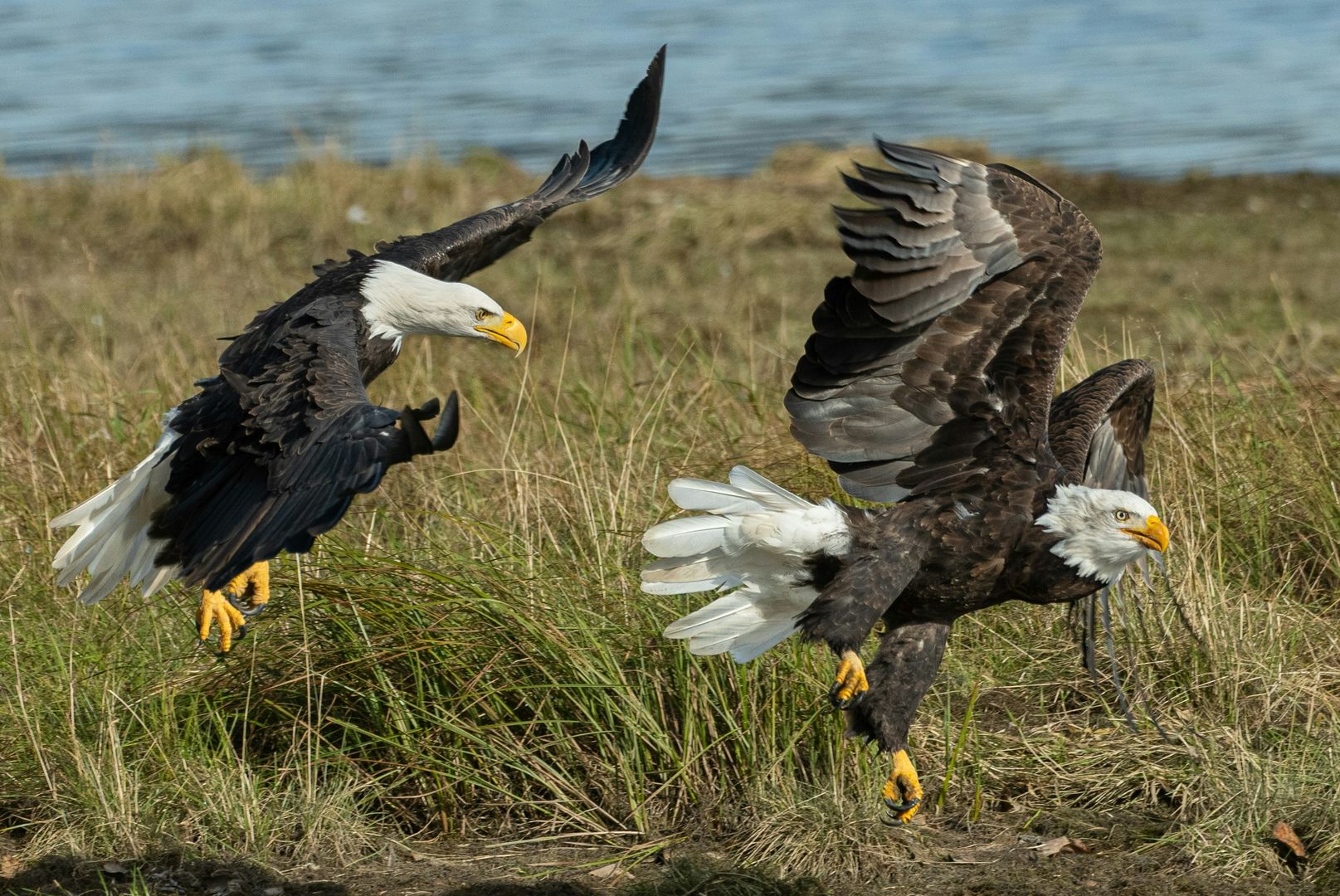
A raptor conservation nonprofit at 510 Kodak Road caring for more than 70 non-releasable birds of prey, including what it calls the world's largest collection of Bald Eagles.
Guided tours run Monday, Wednesday and Friday at 9:00 am by advance booking; self-guided visits are Monday to Friday 10:00 am to 3:00 pm and Saturday 10:00 am to 2:00 pm. It also runs four nest cams and helps put on the crane festival.
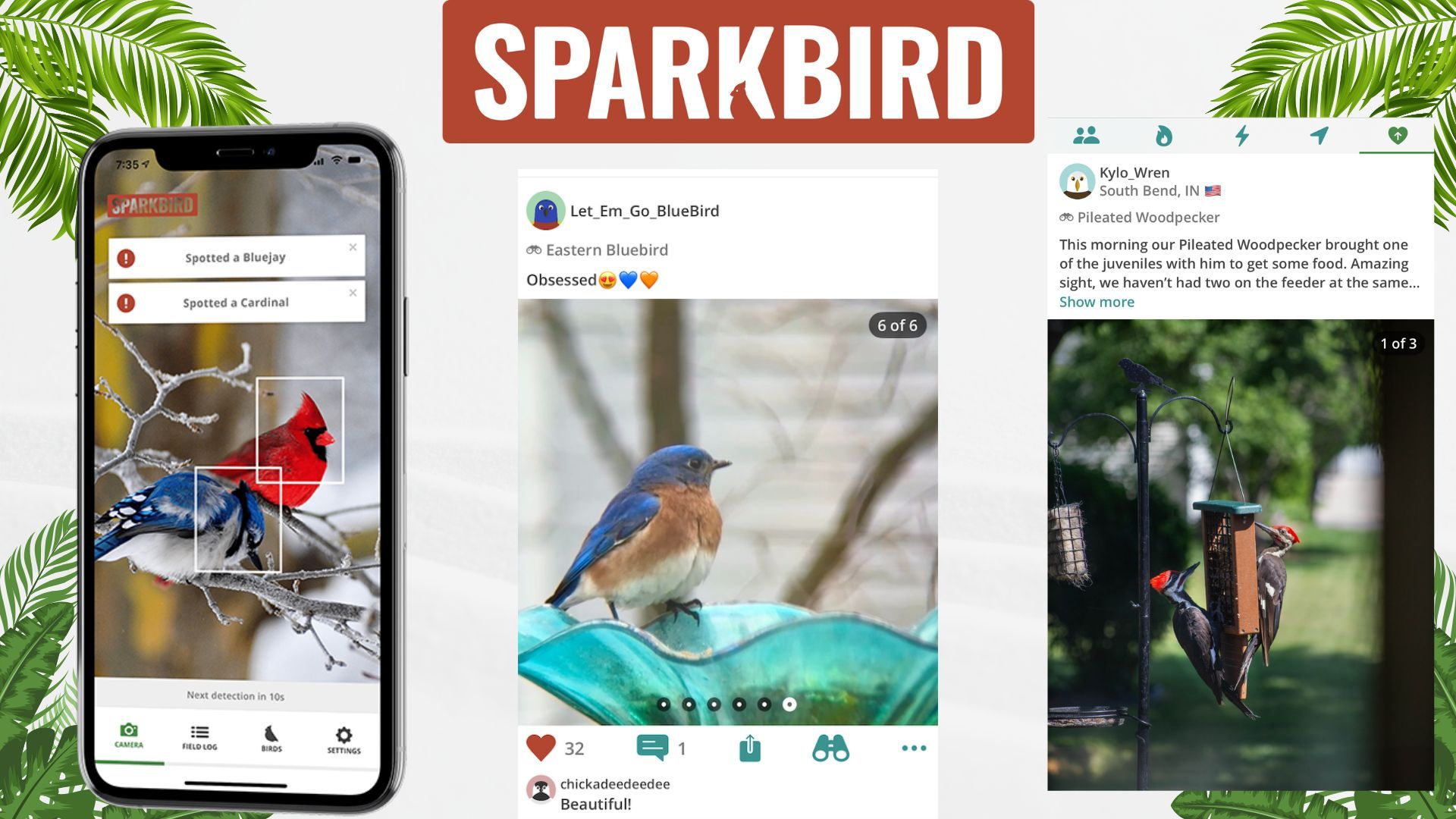
Sparkbird App - Community
We built Sparkbird for people who want a friendly community rather than a leaderboard. Track your life list, get identification help, and meet people who also stop mid-sentence to look at a tree.
Where to Go Birding in Tennessee
A club gives better local knowledge than any list can. These are the sites that reliably produce, with what it takes to get onto each one.
- Reelfoot Lake State Park (Lake and Obion Counties) — A cypress swamp lake that didn't exist before the New Madrid earthquakes of 1811 and 1812 rearranged the Mississippi River. Enormous wintering waterfowl numbers, and the park describes Bald Eagles as present year round. The R.C. Donaldson Memorial Museum and Nature Center runs interpretive programs all year at no charge, and the current calendar lists guided canoe floats through the cypress on March and April weekends, by donation. No winter eagle tour was posted when this was checked, so call 731-253-9652 for that schedule. The upper third of the lake is Reelfoot National Wildlife Refuge, with a 3.5-mile auto tour route, observation towers and a free visitor center in Union City, open Monday to Saturday 8:00 am to 4:00 pm, where quota hunts and seasonal closures apply.
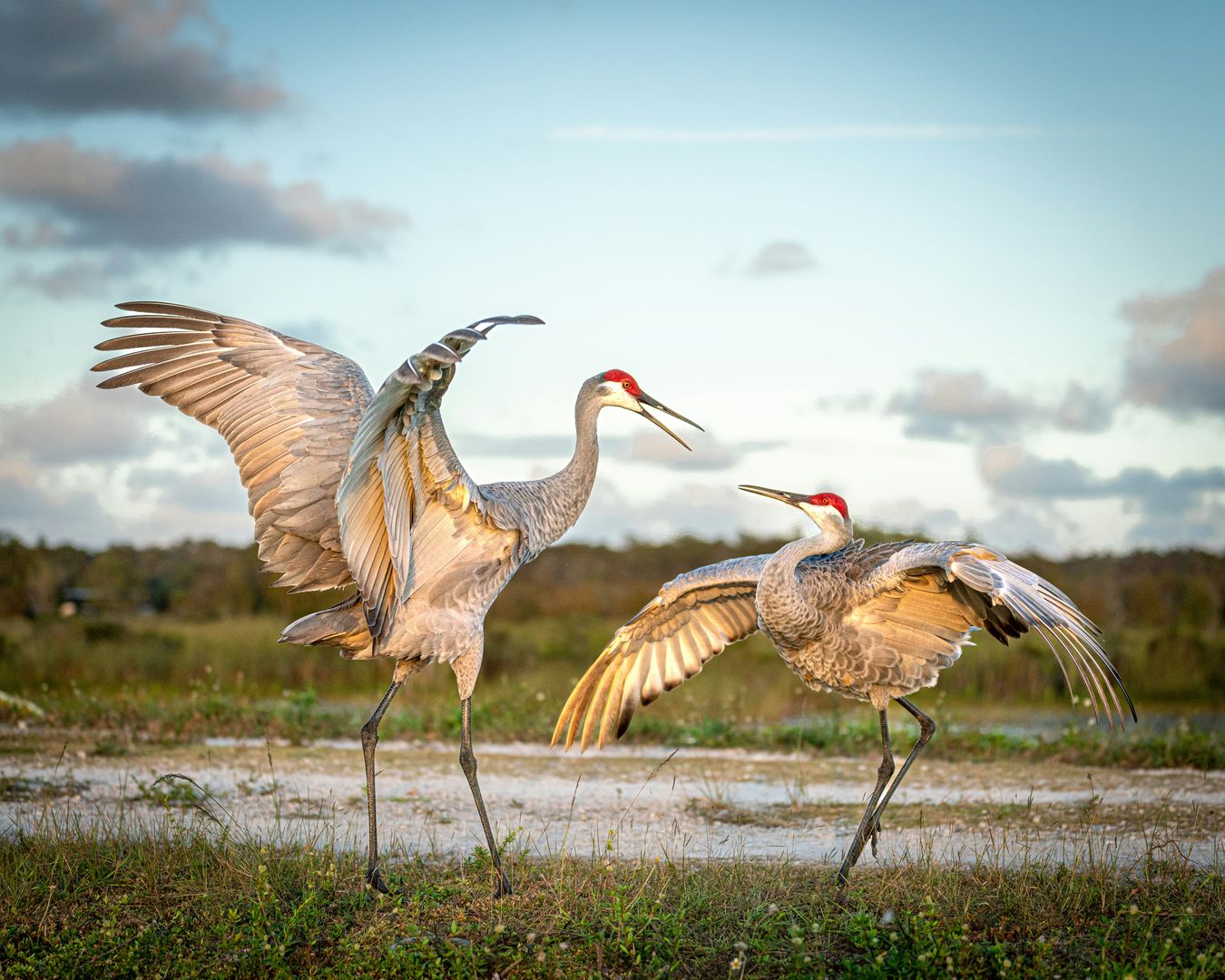
- Hiwassee Wildlife Refuge (Meigs County) — The Sandhill Crane site, at Birchwood. The wildlife agency puts more than ten thousand cranes at the refuge and more than 20,000 across the wider Hiwassee River area, gathering near the Watchable Wildlife observation platform from mid-October through February and sometimes into March. It's an agency refuge with waterfowl hunting closures, so check current area rules first. During the January festival no parking is permitted at the refuge unless someone in the vehicle holds a disability placard, and free shuttles run from Birchwood School instead.
- Great Smoky Mountains National Park (Sevier and Blount Counties) — More than 240 species recorded and around 120 nesting, including high-elevation breeders such as Blackburnian and Chestnut-sided Warblers. The park points birders at Cades Cove, Cataloochee Valley, the Kuwohi road, the Newfound Gap overlooks and the Appalachian Trail, early. There's no entrance fee, but every vehicle parked longer than 15 minutes needs a parking tag: $5 daily, $15 weekly, $40 annually, physical only and matching your plate. Cades Cove Loop Road runs sunrise to sunset and closes to vehicles every Wednesday, typically May through September, which is the best birding morning of the week.
- Tennessee National Wildlife Refuge (Henry, Benton and Humphreys Counties) — Over 51,000 acres in three units, Big Sandy, Duck River and Busseltown, along 65 miles of the Tennessee River, with more than 300 species recorded. The visitor center at 1371 Wildlife Drive, Springville, is free and open Monday to Friday, 8:00 am to 4:00 pm. The catch. Some areas close from November 15 to March 15 as sanctuary for waterfowl, exactly when you most want to be there, so plan around the open units.
- Radnor Lake State Natural Area (Davidson County) — Nashville's best birding is 20 minutes from downtown and comes with the strictest rules in the state, which is why it still has birds on it. Dogs are prohibited on the trails and the lake and allowed only on Otter Creek Road, leashed. Running, jogging and bicycles are prohibited on the trails, and bicycles are limited to paved and gravel surfaces at 10 mph. Swimming, wading, personal watercraft, all food, picnicking and wildlife feeding are prohibited. Parking on Otter Creek Road is prohibited unless signed as overflow, and vehicles must be gone before dark.
- Roan Mountain State Park (Carter County) — Over 2,000 acres of hardwood forest on Highway 143 at the foot of 6,285-foot Roan Mountain, and the jumping-off point for the spruce-fir forest and grassy balds along the Appalachian Trail above, where the breeding bird list reads more like New England than the South. The road to the Miller Farmstead is closed through October, and fire restrictions are currently posted for Roan Mountain in the surrounding Cherokee National Forest.
- Shelby Farms Park (Shelby County) — 4,500 acres inside Memphis at 6903 Great View Drive North, with lakes, woodland, grassland and more than ten miles of trail, run by a nonprofit conservancy. Open sunrise to sunset, with exact times posted daily rather than fixed hours, so a winter afternoon shuts earlier than you expect.
If you'd rather start from the kitchen window while you wait for spring, our guide to hummingbird plants for Tennessee covers what actually works through the state's long, humid summer.
Tennessee Bird Books and Field Guides
Four books cover almost everything a Tennessee birder needs, and your chapter may sell a local checklist worth asking about.
Birds of Tennessee Field Guide
Stan Tekiela's second edition, 328 pages covering 125 Tennessee species organized by colour. See a yellow bird, turn to the yellow section. Hard to beat as a first guide because it refuses to show you anything that doesn't occur here.

Birds of Tennessee Field Guide (Bird Identification Guides)
Adventure Publications
Birds of the Smokies
Alsop's pocket guide to the park's birds, published by the park's own nonprofit partner. A hundred colour photographs, notes on where to find birds, suggested trips and a full checklist, in a book measuring 4.5 by 6 inches. Alsop has a Tennessee bird club chapter named after him, which tells you something.

The Sibley Field Guide to Birds of Eastern North America
The second edition of the standard portable eastern guide, for when a state guide can no longer answer your questions.

The Sibley Field Guide to Birds of Eastern North America: Second Edition (Sibley Guides)
Knopf
Peterson Field Guide to Birds of Eastern and Central North America
The seventh edition, revised in 2020. Peterson's little arrows pointing at field marks remain one of the best teaching devices in any bird book.

Peterson Field Guide To Birds Of Eastern & Central North America, Seventh Ed.: The Classic Birdwatching Guide with Updated Range Maps
Mariner
Tennessee Bird Rescue and Rehabilitation
Always call first. Capacity, hours and permits vary, several of these centres take raptors only, and no Tennessee rehabilitator will collect the bird for you.
TWRA Wildlife Rehabilitator List - Statewide
The official state directory, organized by species and then county, with a searchable table at the bottom. Start here. It also states the thing people get wrong most often. Rehabilitators don't pick animals up. Every centre below comes from this directory, and for waterfowl the agency points you to your regional office.
Walden's Puddle - Joelton / Davidson County
Middle Tennessee's main wildlife rehabilitation centre, licensed for songbirds and raptors, on 615-559-9453. Calls and texts are returned daily between 9:00 am and 4:00 pm, everything goes to voicemail first, and you must leave a message for them to help. Text photos rather than emailing.
Harmony Wildlife - Nashville / Davidson County
Songbirds and owls along with a long list of mammals, on 615-266-5701 by phone or text. They ask for details and a photograph, and refer on when full.
Middle Tennessee Raptor Center - Tullahoma / Franklin County
Raptors only, at 931-273-6629. Ziggy's Tree Wildlife, also in Tullahoma, is listed for raptors and songbirds at 931-841-9781.
Chattanooga Zoo - Chattanooga / Hamilton County
Listed for raptors and songbirds at 423-697-1322. Also in Hamilton County: Camp Wilderness Wildlife for songbirds at 423-593-3932 and HappiNest Raptor Rescue on Signal Mountain for raptors at 423-847-5757.
Owl Ridge Raptor Center - Washburn / Grainger County
Raptors only, at 865-964-8714, the nearest listed raptor centre to Knoxville.
Wynnwood Wildlife Foundation - Elizabethton / Carter County
Songbirds, at 423-474-6220, and the only one the state directory lists in Northeast Tennessee.
Mid-South Raptor Center - Memphis / Shelby County
Raptors, at 901-685-8827. The Memphis Zoo is also listed for raptors at 901-725-3419, and Paris Landing State Park on Kentucky Lake at 731-641-4465.
Frequently Asked Questions
When can you see the Sandhill Cranes at Hiwassee Refuge?
They gather near the observation platform at Birchwood from mid-October through February, sometimes into March, peaking in midwinter. More than ten thousand birds at the refuge, and more than 20,000 across the wider Hiwassee River area. The Tennessee Sandhill Crane Festival is the organized version, most recently held January 17 and 18, 2026.
Does Great Smoky Mountains National Park charge admission?
No, and yes. There's no entrance fee to drive in. But any vehicle parked longer than 15 minutes inside the park needs a parking tag, at $5 for a day, $15 for a week or $40 for a year. Tags are physical and can't be moved between vehicles.
Where can you see wintering Bald Eagles in Tennessee?
Reelfoot Lake in the northwest corner is the classic destination, and the adjoining national wildlife refuge manages the upper third of the lake as wintering habitat. Tennessee National Wildlife Refuge along Kentucky Lake is the other reliable option. The Highland Rim chapter also runs an annual eagle count.
Are there beginner-friendly bird watching groups in Tennessee?
Yes. Knoxville's chapter states that anyone can join even if they've never birded before, and Chattanooga's has members wear name tags so newcomers can find someone to talk to. Nashville's Wednesday morning walks are about as low-commitment as birding gets.
Got a Tennessee birding group to recommend?
Clubs start and change more often than directories update. And if your corner of the Plateau has none yet, founding one is less work than it sounds.
Tell us about yours in the comments or through the Sparkbird App.
- Related: How to Use the Sparkbird App

No comments yet.