
Vermont has five Audubon chapters. Not thirty. Five. That's the entire organized club scene in a state of roughly 620,000 people, and this directory isn't going to pad the list with committees that met twice in 2019.
The birding calendar here runs winter and then about six perfect weeks. People plan around it.
Almost everything below is free. Chapter walks cost nothing, Wildlife Management Areas cost nothing, and the one genuinely world-class bird in Vermont lives on a mountaintop you reach on foot. The bird watching groups in Vermont are small, welcoming, and easier to join than you think.
Why Join a Bird Watching Group at All
Birding alone is fine. But what a group gives you are people who know where the birds were on Tuesday. In Vermont that matters more than usual, because the state is narrow, vertical, and full of microclimates.
The difference between a good May morning and a wasted one is often 400 feet of elevation and a dirt road Google won't recommend.
Groups are also the front door to community science. The Christmas Bird Count runs December 14 through January 5 every winter, it's organized locally by the chapters below, and beginners get paired with experienced counters rather than handed a clipboard.
FYI before you buy
One piece of advice before you spend anything. Don't buy binoculars first. Good binoculars for birding run from about $150 to well past $500, and you should borrow a pair before buying one.
The Green Mountain Audubon Center in Huntington lists binoculars to borrow or rent, and Green Mountain Bird Alliance provides them on family birding outings. Most blogs would recommend the most expensive option available. We're recommending three free walks first.
Statewide Bird Watching Groups in Vermont
Vermont Center for Ecostudies (VCE)
The most important bird organization in the state, and not a club. VCE is a research nonprofit based in White River Junction with more than 900 participating volunteer scientists across projects including Vermont eBird, the Vermont Atlas of Life, Mountain Birdwatch, and LoonWatch.
You don't join VCE the way you join a chapter. You participate by adopting a survey route, submitting checklists, or volunteering on a project. The training materials are published openly.
Audubon Vermont
The National Audubon Society's Vermont state office, with more than 10,000 members and five local chapters. It operates the Green Mountain Audubon Center at 255 Sherman Hollow Road in Huntington, described as Vermont's oldest operating nature center.
Programming leans toward families and forest education alongside bird monitoring walks. The state office runs the center. The chapters run most of the walks.
Vermont Bird Records Committee (VBRC)
A panel of experienced birders that meets annually to vote on rare bird reports, out-of-season reports, and rare nesting reports. It also maintains the official Vermont list. Its 40th annual meeting reviewed 76 records covering 45 species, one subspecies, and one hybrid.
Find something unusual, submit it to Vermont eBird, and expect a request for a written description.
Christmas Bird Count
The hemisphere's longest-running community science bird project, held between December 14 and January 5. Vermont's count circles are organized by individual chapters: Southeastern Vermont Audubon runs the Brattleboro count, Rutland County Audubon runs its own. No fee, no experience required, and the easiest way to meet a dozen local birders in one morning.
Bird Watching Groups in Burlington and the Champlain Valley
Green Mountain Bird Alliance (formerly Green Mountain Audubon Society) - Chittenden and Franklin Counties
The state's largest and busiest chapter, founded in 1962 and renamed in the recent wave of Audubon chapters dropping the Audubon name. Its events calendar is the most reliable in Vermont: free outings, open to all, with registration opening about a week ahead for trips that cap at twenty people.
Recent listings include a birdwalk at the Missisquoi Wildlife Fair, autumn birding at Cold Hollow Sculpture Park, and family birding at Burlington's Intervale with binoculars provided for kids aged 7 and up. The monthly monitoring walk at the Green Mountain Audubon Center needs no registration and has been collecting the same data for decades.
Otter Creek Audubon Society - Addison County
The Addison County chapter, based in Middlebury and covering the richest birding real estate in Vermont, Dead Creek included. Monthly wildlife walks are listed publicly with start times, usually early morning, and nothing indicates membership is required. The quarterly newsletter is Otter Tracks.
Note that the chapter's old ottercreekaudubon.org domain wouldn't load for us at all. The site linked here is the working one, and the one National Audubon points to.
Bird Watching Groups in Central Vermont
North Branch Nature Center - Montpelier
Not a chapter, and the best birding option in the Montpelier and Barre area by a wide margin. NBNC at 713 Elm Street runs a monthly birding outing billed as a casual morning for all interests and experience levels.
There's also Friday Morning Fall Birding, every Friday in September at rotating central Vermont locations, including the south end of Berlin Pond. Check current listings for pricing, since programs are ticketed individually.
Bird Watching Groups in the Green Mountains and Rutland County
Rutland County Audubon Society - Rutland County
The chapter covering Rutland County and the spine of the southern Green Mountains. Its events have historically been open to the public with no fee, board meetings included, and the long-running West Rutland Marsh monitoring walk starts at the Marble Street boardwalk.
The site hosts a useful list of fourteen county birding hotspots, from Bomoseen State Park to Kent Pond. It's worth reading even if you never attend a walk. Public event listings hadn't been refreshed recently when we checked, so contact the chapter before driving to a walk.
Bird Watching Groups in Southern Vermont
Southeastern Vermont Audubon Society (SEVTAS) - Windham County
The Brattleboro-area chapter, with monthly meetings at Brooks Memorial Library and a wider program list than its size suggests: bird walks, field trips, workshops, Birding on the Farm, a Hogback banding program, and Birds and Brews.
Walks visit sites such as the Hinsdale Setbacks, Whetstone Woods, and the Brattleboro cemeteries, some requiring registration and some not. SEVTAS also organizes the Brattleboro Christmas Bird Count.
Important: the similar-looking sevtaudubon.org domain is now a placeholder page full of Lorem Ipsum and has nothing to do with the chapter. The address above is the one National Audubon lists.
Bonnyvale Environmental Education Center (BEEC) - West Brattleboro
A nature center at 1221 Bonnyvale Road whose 60 wild acres host several SEVTAS bird walks a year. Trails are open year round, sunrise to sunset, and free to walk. Its own programming runs broader than birds, with prices listed per event.
Bird Watching Groups in the Upper Valley
Ascutney Mountain Audubon Society (AMAS) - Windsor County and western New Hampshire
A cross-border chapter serving 18 Vermont towns around Springfield and Chester plus 8 towns in New Hampshire. That makes it the natural home for anyone birding the Connecticut River valley.
AMAS runs field trips and programs, and has long driven the Herricks Cove Wildlife Festival, the biggest public wildlife event in southeastern Vermont. Festival leadership is currently transferring to the Great Falls Regional Chamber of Commerce.
Vermont Institute of Natural Science (VINS) - Quechee
Not a club either, but the Upper Valley's anchor institution for birds. The VINS Nature Center at 149 Natures Way in Quechee is open 10am to 5pm daily: adults $20, ages 4 to 17 $17, under 4 free, members free, with discounted rates for visitors holding Medicaid, EBT, or a library card.
Live raptor programs run daily and the trails include a forest canopy walk. VINS also operates the state's main wild bird rehabilitation center, covered below.
Bird Watching Groups in the Northeast Kingdom
There isn't one. The Northeast Kingdom has no Audubon chapter and no independent bird club we could verify against a live website, which is an odd fact about the part of Vermont with the best boreal birding in New England.
What the Kingdom has instead is habitat, and two ways in. Vermont eBird hotspot pages are a decent substitute for a trip leader, and VCE's Mountain Birdwatch has routes on Kingdom peaks.
Up here the fastest way to bird with other people is to volunteer for a survey rather than look for a walk. If you run a Kingdom birding group and we've missed you, tell us.
Other Ornithology and Research Groups in Vermont
Mountain Birdwatch and Bicknell's Thrush
Vermont's signature bird is Bicknell's Thrush, and Mountain Birdwatch is how the state keeps track of it. The thrush breeds only in dense, stunted, high-elevation montane fir forest and winters in the Greater Antilles, and VCE puts the entire world population at fewer than 120,000 birds.
It's Vulnerable on the IUCN Red List and Threatened in Canada. Vermont's high summits are core breeding habitat, and VCE has worked on the species for 34 years.
Mountain Birdwatch has now run 25 seasons. Roughly 100 volunteers a year hike more than 100 routes across northern New England and eastern New York in June, surveying around 800 points in the spruce-fir zone for ten species.
Those range from montane specialists such as Blackpoll Warbler down to Black-capped Chickadee, which is expected to move upslope as the climate warms. The 2026 season finished with 85 percent of routes completed. You adopt a route through the project's website and work through the published training first.
The honest part: participating means being on a mountain, in the dark, in June, to reach your first survey point before dawn. There's no roadside version of this bird, which is the whole reason it needs a monitoring program.
Vermont eBird and the Vermont Atlas of Life
Vermont eBird launched in 2003 as the first state or provincial portal on eBird anywhere, run by VCE as part of the Vermont Atlas of Life. Across two decades more than 15,000 people have filed over 693,000 complete checklists covering all 392 species ever recorded in the state.
The Atlas of Life gathers that alongside iNaturalist Vermont, which passed one million research-grade records. Records flagged as rare go to the Bird Records Committee.
Birds of Vermont Museum - Huntington
At 900 Sherman Hollow Road, next door to the Green Mountain Audubon Center, a museum of more than 500 life-sized bird woodcarvings, with trails and a viewing window. Open Wednesday through Sunday, 10am to 4pm, May through October, and by appointment or for special events November through April.
Admission is $9 for adults, $6 for seniors, $4.50 for ages 3 to 17, free for members. Monthly bird walks year round, weekly in late spring.
Vermont Fish and Wildlife bird watching resources
The agency's birding pages: checklists sorted by experience level, birding ethics guidance, and a ranked list of the top ten Wildlife Management Areas for birding, the most useful state-produced birding document in Vermont and free.
Sparkbird App - Community
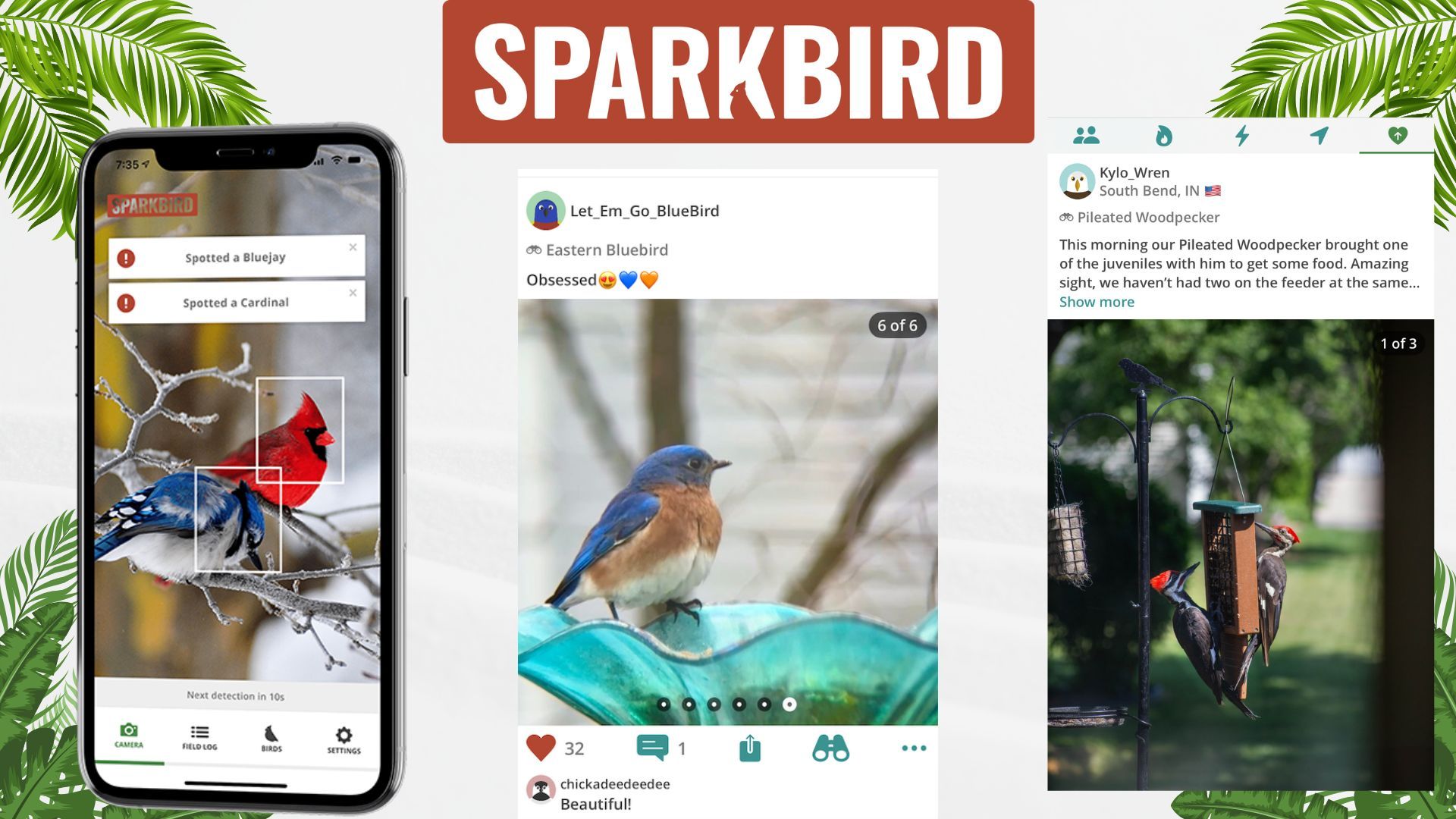
We built Sparkbird for people who want a friendly community of fellow birders. Track your life list, get identification help, and find people who also stop mid-sentence to look at a tree. Like Instagram for bird watchers, minus the algorithm.
Where to Go Birding in Vermont
Vermont Wildlife Management Areas are free and open to the public. State parks charge a day-use fee. Everything else varies, so the access terms are stated for each site below.
- Dead Creek Wildlife Management Area (Addison County) — The best birding site in the state: more than 200 species across ducks, shorebirds, hawks and falcons, plus the Snow Geese that stage here in fall. Trails and viewing platforms; a canoe or kayak opens up much more. Free, no permit, on VT Route 17 about a mile west of the Route 22A junction. The Dead Creek Visitor Center is also free, on weekends in spring and summer and Wednesday to Sunday in fall, though the posted hours were last updated for the previous season, so call ahead on (802) 759-2398.
- Missisquoi National Wildlife Refuge (Franklin County) — Delta wetlands on the eastern shore of Lake Champlain near the Canadian border, holding Vermont's only population of Black Terns, a state endangered species, plus heavy waterfowl numbers. No fee to use the refuge. Five foot trails totaling 7.5 miles, open sunrise to sunset year round, foot traffic only, leashed dogs allowed. The Jeep Trail is open August 1 to April 1 only, closed the rest of the year to protect nesting birds. Visitor center on Tabor Road, six miles west of Swanton, weekdays 7am to 3:30pm.
- Mount Mansfield (Chittenden and Lamoille Counties) — Vermont's highest peak and its most accessible high-elevation spruce-fir habitat, which is to say Bicknell's Thrush country. From the west, Underhill State Park at 352 Mountain Road sits at about 2,000 feet with four trails to the summit ridge, the 3-mile Sunset Ridge Trail being the popular one. The park runs from the Friday of Memorial Day weekend through the second Monday in October, day use 8am to sunset, and Vermont State Parks day-use fees are $5 for ages 14 and up and $2 for ages 4 to 13. Parking is limited, so carpool. From the east, Stowe Mountain Resort's auto toll road drives you to the summit ridge for a per-vehicle toll in a summer and early-autumn season, with no trailers, RVs, motorcycles, or bicycles. The resort's posted dates and prices are several years out of date, so confirm both before you drive.
- Victory Basin Wildlife Management Area (Essex County) — The Northeast Kingdom's classic boreal wetland, managed within the Victory Management Unit alongside the 16,272-acre Victory State Forest and Darling State Park. Free, no permit, dispersed recreation only, no facilities of any kind. Access is by gravel roads that are rough in spots and worse in mud season. The St. Johnsbury district office answers questions on 802-751-0110.
- Wenlock Wildlife Management Area and Moose Bog (Ferdinand, Essex County) — The most reliable place in Vermont for boreal specialties: Canada Jay, Boreal Chickadee, Black-backed Woodpecker, and Spruce Grouse. The state describes easy footpaths and a new boardwalk at Moose Bog. Free, open year round, surrounding roads unpaved.
- Herrick's Cove (Rockingham, Windham County) — An Important Bird Area on the Connecticut River and the best migration watching in southeastern Vermont. Host site of the Herricks Cove Wildlife Festival each spring, most recently on May 3, which drew more than 1,500 people. The surrounding Great River Hydro recreation lands are day use only with no overnight camping, no posted use fee, and some facilities open only Memorial Day to Columbus Day.
- Green Mountain Audubon Center (Huntington, Chittenden County) — 255 Sherman Hollow Road, and the gentlest introduction to Vermont birding there is. Trails open sunrise to sunset daily with no posted admission fee, visitor center weekdays 8am to 4pm, binoculars available to borrow or rent. Green Mountain Bird Alliance's free monthly monitoring walk starts here and needs no registration.
If you'd rather start from your own yard while you wait for May, our guide to hummingbird plants for Vermont covers what actually works in a short northern season.
Vermont Bird Books and Field Guides
Vermont has no current state-specific field guide we could confirm in print. The standard local reference, Birdwatching in Vermont by Ted Murin and Bryan Pfeiffer, is out of print and circulates secondhand, as Green Mountain Bird Alliance notes on its own resources page.
For everything else, a good regional guide does the job.
The Sibley Field Guide to Birds of Eastern North America
The second edition, and the one most Vermont birders are actually carrying. Portable, accurate, and organized so you can find a bird before it leaves.

The Sibley Field Guide to Birds of Eastern North America: Second Edition (Sibley Guides)
Knopf
Peterson Field Guide to Birds of Eastern and Central North America
The seventh edition of the guide that invented the format in 1934. Peterson's arrows pointing straight at the field marks are still one of the best teaching devices in birding.
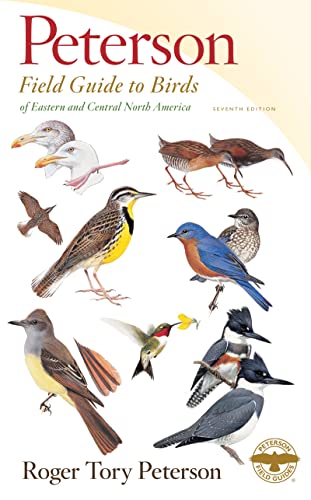
Peterson Field Guide To Birds Of Eastern & Central North America, Seventh Ed.: The Classic Birdwatching Guide with Updated Range Maps
Mariner
Kaufman Field Guide to Birds of North America
Photograph-based rather than painted, which many beginners find easier to match against the bird in front of them. A good first guide for anyone who bounces off illustrated plates.

Kaufman Field Guide To Birds Of North America: A compact, easy-to-use field guide with official names and range maps for fast bird identification in North America
Mariner
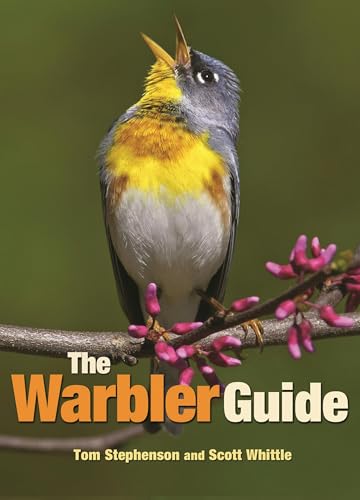
The Warbler Guide
Worth it specifically because of where you live. Vermont's May and June warbler list is long, and this book covers the songs and the maddening overhead views no general guide has room for.
Vermont Bird Rescue and Rehabilitation
Always call first. Intake capacity changes weekly, avian influenza restrictions limit which species can be accepted, and driving an injured bird to a center that can't take it wastes time the bird doesn't have.
Vermont Fish and Wildlife: Injured and Orphaned Wildlife
Start here. The department's guidance is to contact your local state game warden directly or through State Police dispatch, and the page links the official Wildlife Rehabilitator Locator, the only complete roster of Vermont's licensed rehabilitators. Only licensed rehabilitators may legally care for wildlife in Vermont. The department's general number is 802-828-1000.
VINS Center for Wild Bird Rehabilitation - Quechee, Windsor County
Vermont's main wild bird rehabilitation center, treating more than 1,000 injured, orphaned, and ill birds a year from across Vermont and New Hampshire. Open 8am to 4:30pm daily. Call 802-359-5000 extension 212, or extension 510 after hours. Because of Highly Pathogenic Avian Influenza they can currently accept only certain species, so the phone call genuinely matters.
Beyond VINS, Vermont's rehabilitation network is made up largely of individually licensed rehabilitators rather than public centers, and they appear only in the state locator linked above. Call a warden or work from that list rather than whichever center a search engine offers first.
Frequently Asked Questions
Where can you see a Bicknell's Thrush in Vermont?
On a mountaintop, at dawn, in June, and nowhere else. The species breeds only in dense high-elevation montane fir forest, so the realistic locations are the upper elevations of peaks like Mansfield, Camel's Hump, and Stratton. There's no roadside or feeder version of this bird.
When are the Snow Geese at Dead Creek?
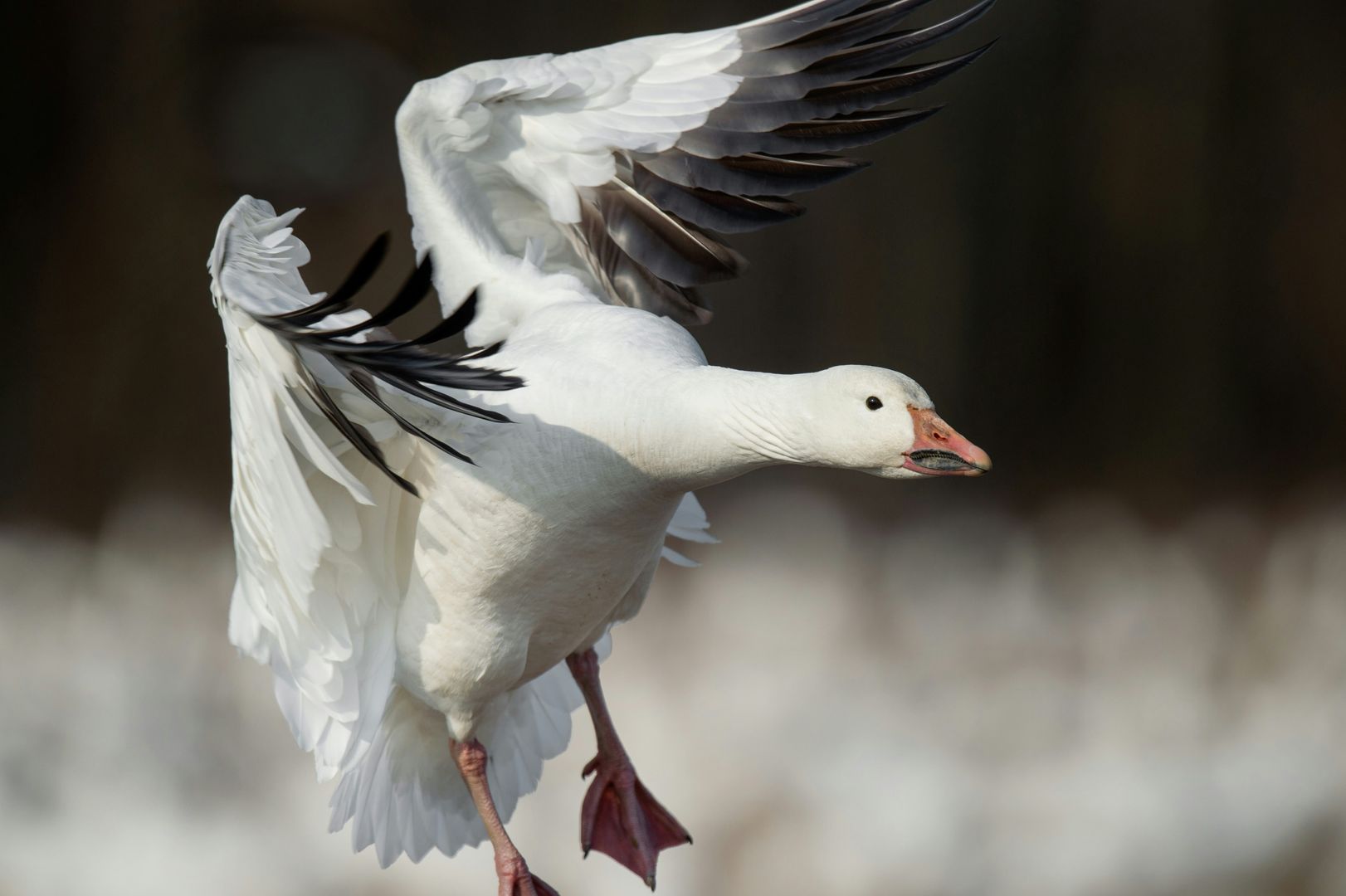
Fall, with October the peak month for staging birds in the fields around the Dead Creek Wildlife Management Area in Addison. That's why Dead Creek Wildlife Day, the free state festival of guided walks and live raptors, lands in early October. Confirm the date on the Fish and Wildlife site first.
Where do you find boreal species in Vermont?
The Northeast Kingdom, specifically Wenlock Wildlife Management Area in Ferdinand, where Moose Bog has easy footpaths and a boardwalk. The state lists Canada Jay, Boreal Chickadee, Black-backed Woodpecker, and Spruce Grouse there. Victory Basin nearby holds similar habitat with rougher access.
What is the best time of year for bird watching in Vermont?
Mid-May through mid-June is the peak, when warblers arrive and the high-elevation breeders settle in. October is the other great month, with Snow Geese at Dead Creek and raptors moving down the Champlain Valley. Winter is quieter but productive on Lake Champlain, where waterfowl concentrate in open water.
Got a Vermont birding group to recommend?
Five chapters is a short list, and short lists have gaps. If your group meets in a church basement in Hardwick or a diner in Bennington and never got around to building a website, that's exactly what this directory is missing.
Tell us in the comments or through the Sparkbird App, available in the Apple App Store.
- Related: How to Use the Sparkbird App

No comments yet.