
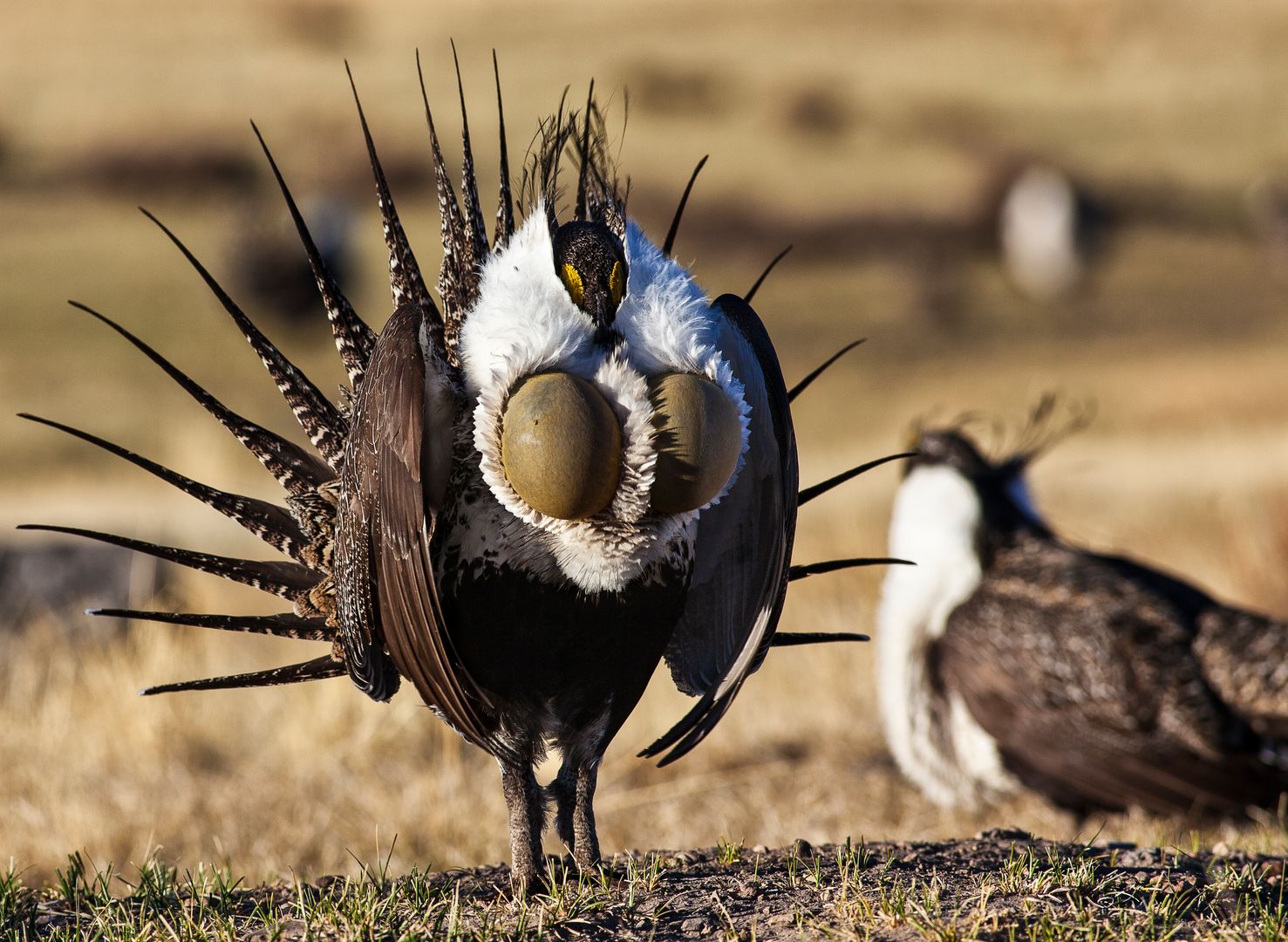
Wyoming has six active bird watching clubs. The state also holds 37 percent of North America's greater sage-grouse population, which is a fair summary of the ratio of birds to birders out here.
The bird watching groups in Wyoming are cheap to join, when they charge at all. Dues run $10 to $12 a year at the chapters that collect them, and the Jackson Hole club collects nothing.
The catch is distance, not money. If you live in Sweetwater County, the nearest club is in Lander.
Why Join a Bird Watching Group at All
Solo birding works fine in most places. In Wyoming it works fine right up until you're on a county road at 5 a.m. in April, wondering whether the lek is over that rise or the next one, and whether the road turns to gumbo if it rains.
Wyoming birding is a geography problem before it's an identification problem. The good spots are far apart, seasonal, sometimes on private land, and often reached by roads that are fine in July and impassable in May.
A trip leader who has driven that road forty times beats any app. And the Christmas Bird Count is how most Wyoming birders met in the first place.
FYI before you buy
One note before you spend money. A decent pair of binoculars for birding runs from about $150 to well past $500, and you don't need to own a pair for your first walk.
Ask the trip leader whether anyone has a spare. On a Wyoming field trip somebody almost always does, because half the group brought a scope as well. Borrow before you buy.
Statewide Bird Watching Groups in Wyoming
Wyoming has no state ornithological society. The Ornithological Council's state and provincial directory lists Wyoming with nothing beside it, which is accurate rather than an oversight. The statewide layer here is a records committee, a regional Audubon office shared with two other states, and the count season.
Audubon Rockies
The National Audubon Society's regional office for Colorado, Utah and Wyoming, and a conservation and education office rather than a club. It works on sagebrush steppe, shortgrass prairie and river restoration, and keeps Wyoming-based staff.
It also runs a Community Naturalist program delivering education programs in Wyoming and Colorado. There's no published Wyoming walk calendar, so contact staff directly.
Wyoming Bird Records Committee
The WBRC reviews documentation of rare birds and maintains the official Wyoming state bird list, with accepted records feeding eBird, the Wyoming Natural Diversity Database, and the Game and Fish wildlife atlas.
Two lists govern what needs documenting: an all-sightings list for species rare statewide, and a first-latilong list for species needing documentation only in new areas or when breeding. Useful detail if you're new. Post a review-list species to eBird with clear diagnostic photos or audio and no separate rare bird form is needed.
Christmas Bird Count in Wyoming
Roughly a dozen Wyoming towns run a count each December, including Cheyenne, Casper, Sheridan, Lander, Cody, Green River, Jackson Hole, and an Albany County circle. Local chapters organize them, beginners get paired with an experienced counter, and the Cheyenne circle typically finds around 50 species.
It's the easiest way to meet Wyoming birders, since for one weekend they're all outside at once.
Bird Watching Groups in Cheyenne and Southeast Wyoming
Cheyenne-High Plains Audubon Society - Cheyenne / Southeastern Wyoming
A National Audubon chapter serving southeastern Wyoming since 1974, and the most consistently programmed club in the state. Field trips are free and open to the public, with recent destinations including Curt Gowdy State Park and Table Mountain Wildlife Habitat Management Area.
Monthly programs run the third Tuesday, September through April, at 6:00 p.m. at the Laramie County Public Library, 2200 Pioneer Avenue, free and open to all with a virtual option. Local membership is $12 a year and optional. National Audubon membership doesn't make you a chapter member.
Their southeast Wyoming birding locations page is a good county reference on its own, and flags which sites charge.
Bird Watching Groups in Laramie and the Snowy Range
Laramie Audubon Society - Albany County
Active and posting, with a field trip report from the Laramie Plains lakes dated August 2026. The chapter runs field trips, evening programs with wildlife speakers, family programming, quarterly birding hikes with seniors, and a small grants program.
Activities are open to the public, and trip details including meeting points go up on the blog. The site is a Blogspot rather than a modern chapter website, so it looks dormant at a glance. It isn't.
Bird Watching Groups in Casper and Central Wyoming
Murie Audubon Society - Casper / Natrona County
Named for the Murie family, also known as the Casper Audubon Bird Club, and central Wyoming's only chapter. Meetings run the second Thursday at 7 p.m., September through May, at the Fort Caspar Campground IWL Lodge, 4205 Fort Caspar Road. Membership is $10 a year, $30 joint with National Audubon, or $50 for five years.
The chapter organizes the Casper Christmas Bird Count and the long-running Bates Hole count south of town. Field trips, classes and presentations fill the calendar, though the site frames these around membership, so ask before you assume an outing is open to non-members.
Bird Watching Groups in Jackson and Northwest Wyoming
Jackson Hole Bird & Nature Club - Jackson / Teton County
Often still called the Jackson Hole Bird Club, and the best value in the state for a simple reason. There are no dues. Programs are free, held at the Teton County Library on the second Tuesday of the month at 6 p.m., and the standing invitation on their site is that everyone is welcome.
Recent talks have covered avian research in the Greater Yellowstone Ecosystem. They also run a Birds and Buildings window-collision project, rare for a club this small.
Teton Raptor Center - Wilson / Teton County
Not a club, but the most reliable place in northwest Wyoming to see raptors closely. Onsite programs run most weekdays at 11 a.m. and require advance booking. The center states plainly that it isn't a walk-through facility, so you can't simply turn up.
It also runs free summer community programs at Teton Village, the Jackson Hole Airport, and two Jackson venues.
Bird Watching Groups in Sheridan and the Bighorns
Bighorn Audubon Society - Sheridan / Northeast Wyoming
Serving the Bighorn Mountains region since 1970, across Campbell, Crook, Johnson, Sheridan, Big Horn, Weston and eastern Washakie Counties. One chapter, a territory the size of a small country.
Their events calendar shows a standing bird walk every third Saturday at 9 a.m. from the parking lot at The Brinton, roughly a mile of easy walking, plus seasonal walks at the Story Fish Hatchery and Fort Phil Kearny.
Most are free. The Fort Phil Kearny walks sit inside a state historic site, so admission applies there, children 17 and under free. The chapter runs both Christmas and spring counts.
The Bighorn Basin on the western slope, meaning Cody, Powell and Worland, has no club of its own. Bighorn Audubon's stated territory reaches into Big Horn and eastern Washakie Counties, which is the closest thing to coverage the Basin has.
Bird Watching Groups in the Green River Basin and Southwest Wyoming
Red Desert Audubon Society - Lander / West-Central and Southwest Wyoming
The chapter covering the Green River Basin is based in Lander, several hours from it, which is the clearest illustration in this directory of how thin the ground is. Red Desert Audubon serves west-central and southwestern Wyoming with outreach, education and community science.
Programming includes spring Saturday bird walks meeting at 8 a.m. at the Fremont Street parking lot in Lander's City Park, World Migratory Bird Day and the Global Big Day, a Christmas Bird Count, and the Great Backyard Bird Count.
It also runs the annual Red Desert Audubon Art Show with the Lander Art Center, now in its fifth decade. All levels of experience are welcome.
Sweetwater County itself, meaning Rock Springs and Green River, has no bird club. What it has is Seedskadee National Wildlife Refuge, which is better than most clubs.
Other Ornithology and Research Groups in Wyoming
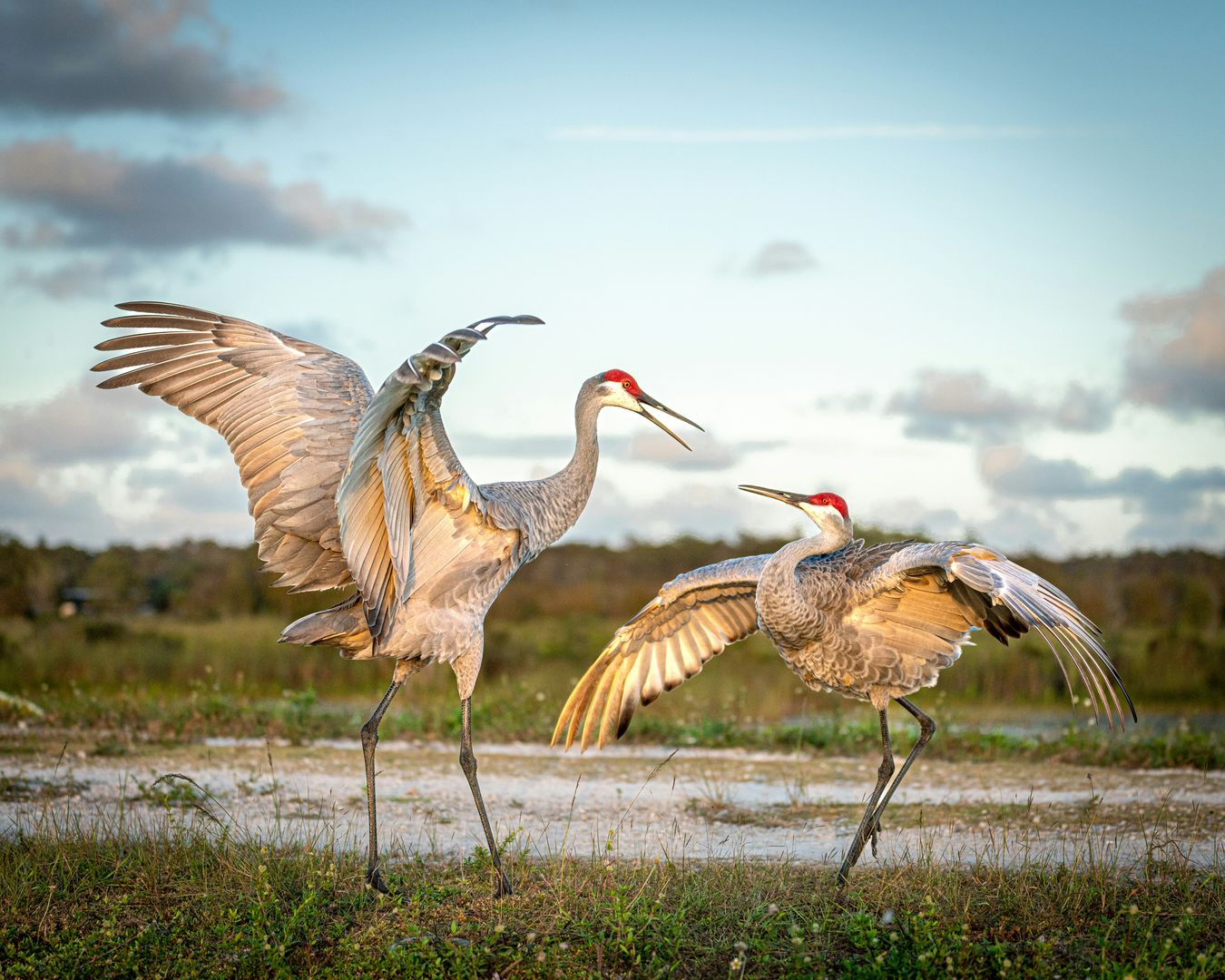
These don't lead field trips, but they're where Wyoming bird data lives. Craighead Beringia South in Kelly belongs here too, a research nonprofit working on golden eagles and raptor migration in the Greater Yellowstone area, though it takes no visitors.
Wyoming Game and Fish Nongame Bird Program
The state agency side of Wyoming ornithology. The program supports the North American Breeding Bird Survey and Integrated Monitoring in Bird Conservation Regions surveys, both of which lean on volunteer observers, and routes rare bird reports to the records committee. It also links species accounts, range maps, and a songbird feeding guide.
Wyoming Natural Diversity Database - University of Wyoming, Laramie
Housed at the Berry Biodiversity Conservation Center, WYNDD holds more than six million species observation records, with a public Data Explorer for mapping and downloading spatial data, plus a field guide with photos and range maps.
If you want to know what's been recorded in a given corner of the state before driving four hours to it, start here.
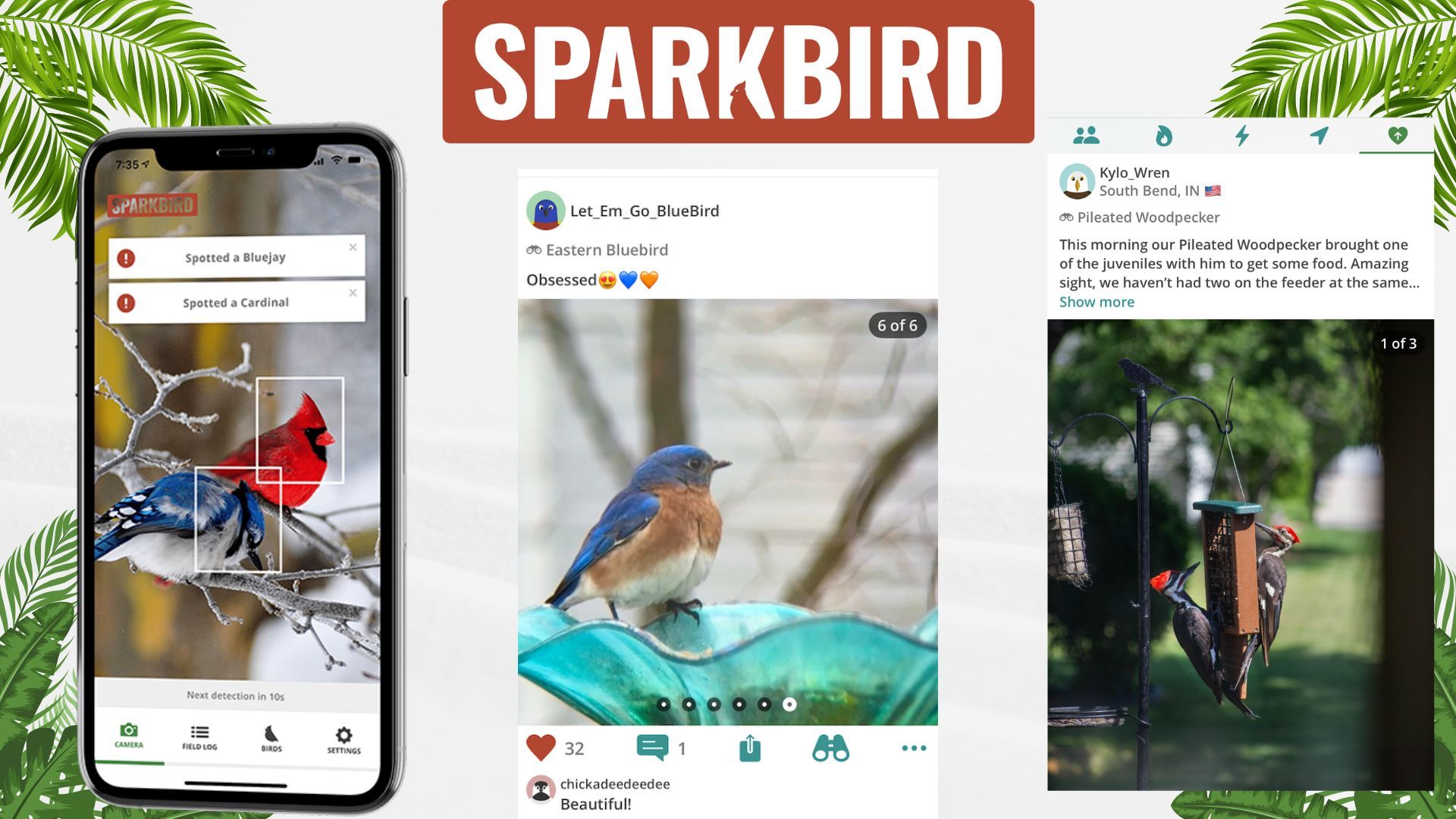
Sparkbird App - Community
We built Sparkbird for people who want a friendly community of fellow birders. Track your life list, get identification help, and find people who also pull over on a two-lane highway because something large was on a fence post.
Where to Go Birding in Wyoming
Read the access terms before you drive. The two national parks charge, the national wildlife refuges are free, and Wyoming State Parks charge a day-use fee of $7 per vehicle for residents and $12 for non-residents, covering Curt Gowdy, Glendo and Guernsey.
Many access roads are gravel and turn to grease minutes after rain, and high-country roads open late. Game and Fish also closes 30 of its 46 wildlife habitat management areas seasonally, most reopening between late April and May 31.
- Yellowstone National Park (Park and Teton Counties) — 96 percent of Yellowstone lies in Wyoming, which makes it the main event here rather than a Montana day trip. Nearly 300 species recorded and about 150 nesting, including trumpeter swans, one of the southernmost common loon populations, and 19 breeding raptor species, with Hayden Valley the standout for water birds and raptors. Entry is $35 per private vehicle for seven days, $30 by motorcycle, $20 per person on foot or bicycle, or $70 annual, and non-US residents aged 16 and over pay an extra $100 unless they hold an annual or America the Beautiful pass. Only the North Entrance road, Gardiner through to Cooke City, stays open to regular vehicles year round; most other park roads close from early November to late April, with oversnow travel mid-December to mid-March. The Beartooth Highway on US 212 opens the Friday of Memorial Day weekend and closes mid-October.
- Grand Teton National Park (Teton County) — Trumpeter swans, ospreys, bald eagles, calliope hummingbirds, and sage-grouse on the flats, with Oxbow Bend and Swan Lake the classic stops. Same fees as Yellowstone at $35 per vehicle for seven days or $70 annual, no reservation required, and the park takes no cash. The Moulton East lek near Mormon Row is on Game and Fish's public lek list, and the park has run ranger-led sage-grouse viewing there in past springs, so check the park calendar in March rather than assuming.
- National Elk Refuge (Teton County) — On the edge of Jackson, and the most reliable winter trumpeter swan viewing in the state, with bald eagles alongside. No fee, open sunrise to sunset year round, visitor center daily 9 a.m. to 5 p.m. Watch from the Flat Creek observation deck or Refuge Road. The seasonal detail that catches people out: from December 1 through April 30 public travel on Refuge Road stops at the Twin Creek subdivision, three and a half miles in, and from November 1 through April 30 the pathway closes between the Flat Creek and Gros Ventre bridges. Sleigh rides are ticketed separately.
- Seedskadee National Wildlife Refuge (Sweetwater County) — A long stretch of the Green River corridor through high desert sagebrush steppe, holding more than 300 species of resident and migrant wildlife, trumpeter swans and sage-grouse among them. Free, open from a half hour before sunrise to a half hour after sunset. The visitor center is weekdays only, 8 a.m. to 4 p.m. in winter and 7:30 a.m. to 4 p.m. in summer, staffing permitting, closed federal holidays. The entrance road is two and a half miles of gravel off Highway 372, and cell service is too weak for navigation, so load your map first.
- Hutton Lake National Wildlife Refuge (Albany County) — Alkaline lakes, wetland, and grassland on the Laramie Plains southwest of Laramie, now also home to the Wyoming Toad Conservation Area. Free, open from a half hour before sunrise to a half hour after sunset, an hour either side during the September to March hunting season. Getting there means Wyoming Highway 230 to Brubaker Lane, then Sand Creek Road, then Hutton Lakes Road, all county gravel. Motor vehicles are allowed on improved refuge roads only, and the ponds freeze, so treat it as a spring through autumn site.
- Ocean Lake Wildlife Habitat Management Area (Fremont County) — 11,288 acres about 17 miles northwest of Riverton, off US 26 or Wyoming Highway 134 and Eight Mile Road, and the best waterbird site in central Wyoming, with waterfowl, sandhill cranes, three miles of improved roads, and boat ramps. Unlike most Game and Fish areas it stays open year round, but one restriction matters: no human presence within half a mile of the aerator from December 15 through March 10. Pheasants are released through November, so expect hunters then.
- Snowy Range Scenic Byway and the Medicine Bow (Albany and Carbon Counties) — Wyoming Highway 130 climbs from Laramie to 10,800 feet and drops toward Saratoga through the Medicine Bow National Forest: spruce-fir forest, alpine lakes, and tundra across 29 paved miles, with no fee for the byway itself. The catch is the season. A 12-mile stretch closes every winter, and while the target is Memorial Day weekend, snow years push it later; it closed on November 19 in 2024 and reopened on May 22.
If you'd rather start from your own yard while the byway melts out, our guide to hummingbird plants for Wyoming covers what survives a short high-altitude season.
Wyoming Bird Books and Field Guides
A state guide plus one regional guide covers nearly everything you'll see. The Wyoming titles earn their place because regional guides carry hundreds of species that never occur here.
Birds of Wyoming Field Guide
Stan Tekiela's Wyoming volume, organized by color and explicitly covering Yellowstone and Grand Teton. See a yellow bird, turn to the yellow section. Hard to beat as a first guide, and small enough for a glovebox.

Birds of Wyoming Field Guide: Includes Yellowstone & Grand Teton National Parks (Bird Identification Guides)
Adventure Publications
Birds of Wyoming
Doug Faulkner's 2010 state avifauna, the reference work for Wyoming. Not a field guide, and not portable. This is the one you consult at home to learn whether a species has any business being where you saw it.

Sibley Birds West
The most authoritative portable guide to western birds, and the western volume is the right half of the country here.

Kaufman Field Guide to Birds of North America
Photograph-based rather than illustrated, and the guide most often handed to beginners who find painted plates hard to match against a live bird.

Kaufman Field Guide To Birds Of North America: A compact, easy-to-use field guide with official names and range maps for fast bird identification in North America
Mariner
Wyoming Bird Rescue and Rehabilitation
Always call first. Capacity and permits vary, and Wyoming's legal position is stricter than most people expect. State law prevents anyone without a rehabilitation licence from having wildlife in their custody for any reason, so scooping up an injured bird isn't neutral.
Wyoming Game and Fish Department
Wyoming doesn't publish a public directory of licensed wildlife rehabilitators, which is unusual.
The agency's route for injured or orphaned wildlife is the 24-hour hotline on 1-877-WGFD-TIP, where a dispatcher contacts a biologist or game warden in your area. Game and Fish advises against approaching or capturing the animal, and notes that young birds which look abandoned usually aren't.
Teton Raptor Center - Wilson / Teton County
Raptors only, serving Wyoming and eastern Idaho, staffed 9 a.m. to 5 p.m. daily, year round, at 5450 Wyoming Highway 22. The fastest route is their online emergency form. The phone line is 307-203-2551 extension 1. Photograph the bird, note the location, offer no food or water, and keep contact to a minimum.
The Broken Bandit Wildlife Center - Hillsdale / Laramie County
A centre east of Cheyenne that rescues, raises, rehabilitates and releases native Wyoming wildlife, with site content current to mid-2026. One warning before you need it. Their contact page still carries unedited website-template placeholders, including a California address and phone number. Use the site's message form, not the number printed there.
Southeast Wyoming readers should also know what won't work. The Rocky Mountain Raptor Program in Fort Collins is the nearest large raptor hospital to Cheyenne and Laramie, and it doesn't take birds from Wyoming, citing the custody law above. Calling the hotline beats driving to Colorado to be turned away.
Frequently Asked Questions
Where can you see a greater sage-grouse lek in Wyoming?
Wyoming Game and Fish publishes a sage-grouse lek viewing guide naming 8 leks with driving directions, near Kemmerer, Worland, Big Piney, Casper, Saratoga, Pinedale, Cody, and inside Grand Teton at Moulton East.
March and April are the season. Arrive an hour before sunrise, stay in your vehicle, and don't leave until the birds do.
When are Yellowstone's roads open?
Only one road is open to regular vehicles year round, from the North Entrance at Gardiner through Tower Junction to Cooke City. Most other park roads close from early November to late April and reopen in stages. From mid-December to mid-March the interior is reachable only by snowcoach or snowmobile.
Where can you see Trumpeter Swans in Wyoming?
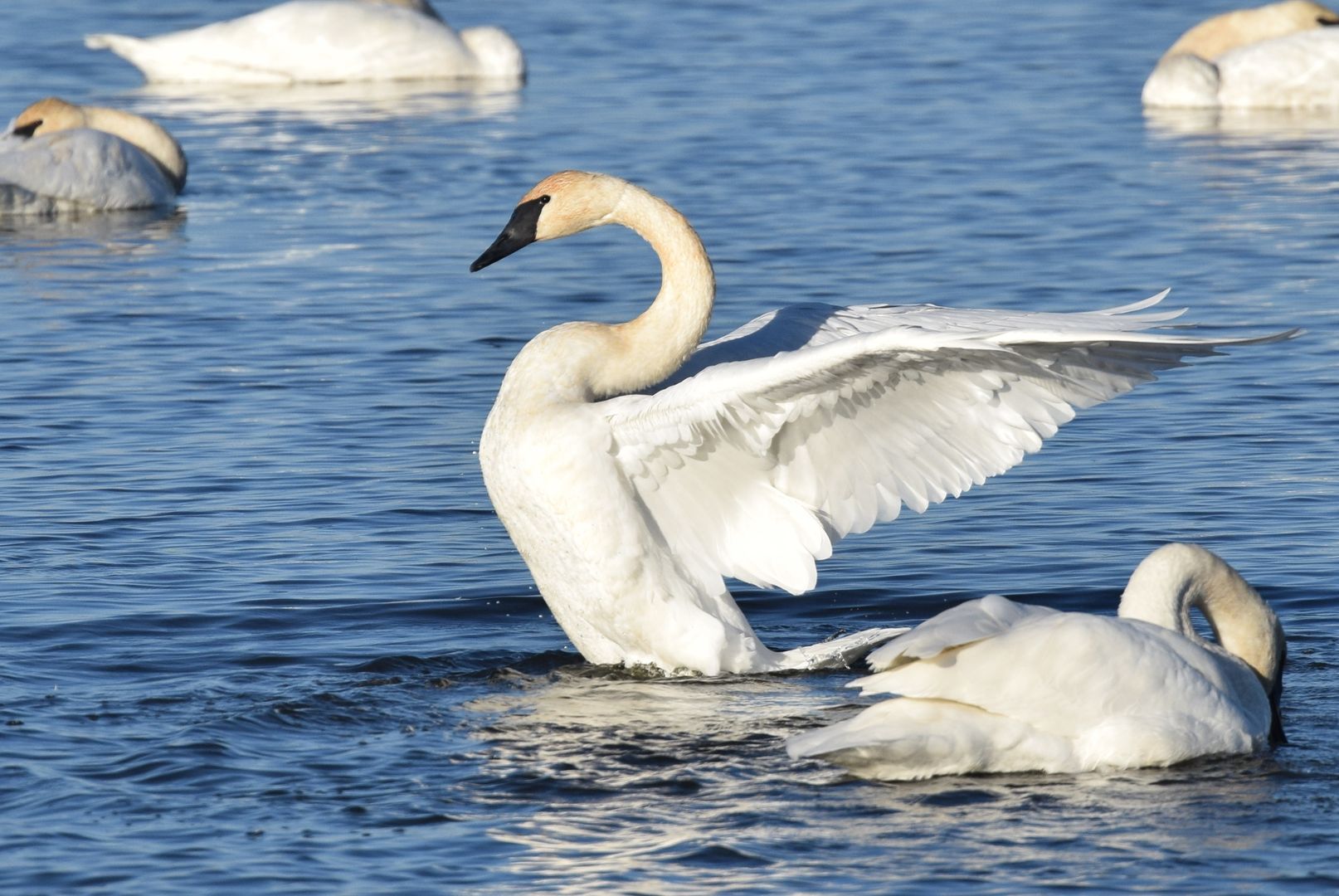
The National Elk Refuge outside Jackson is the most reliable winter site, watched from the Flat Creek observation deck or the open section of Refuge Road. Swan Lake and Oxbow Bend in Grand Teton are the classic summer spots, and Seedskadee holds them too.
What is the best time of year for bird watching in Wyoming?
Late April through early June is the peak: sage-grouse leks in April, songbird migration in May, mountain species arriving as the snow retreats. Summer is excellent at elevation once the high roads open, usually not before late May. Winter's genuinely good too, with swans and eagles at the National Elk Refuge.
Got a Wyoming birding group to recommend?
Six clubs isn't many, and the map has obvious holes. Starting a bird watching group of is easier than it sounds.
Let us know about your group in the comments or on the Sparkbird App.
- Related: How to Use the Sparkbird App

No comments yet.