
Wisconsin has roughly two dozen bird clubs, Audubon chapters and bird alliances with a working website, and the Wisconsin Society for Ornithology counts more than 30 statewide.
They're scattered across a state whose residents divide the map into exactly two regions, here and up north, and who've never agreed on where up north begins.
The good news is the bird watching groups in Wisconsin are mostly free to walk with.Whether you're watching geese pile into Horicon Marsh in October or all fifteen crane species on one afternoon in Baraboo, there's a group nearby that has already solved the parking.
Why Join a Bird Watching Group at All
Solo birding has obvious advantages. But a club connects you with people who know where the birds were yesterday. In Wisconsin that knowledge is unusually perishable, because migration funnels down two Great Lakes shorelines and pools in a handful of marshes. Which marsh is producing this week lives in people, not databases.
Clubs are also the front door to community science. The Great Wisconsin Birdathon has raised more than $1 million for the state's Bird Protection Fund since 2012, and the second Wisconsin Breeding Bird Atlas put over 2,000 volunteers into 1,283 survey blocks. Almost all of that recruiting runs through the clubs below.
FYI before you buy
One practical note before you spend money. A decent pair of binoculars for birding runs from $150 to well past $500, and in Wisconsin you can borrow a pair for nothing while you decide.
The BIPOC Birding Club of Wisconsin supplies binoculars at every event, and Madison Public Library lends free birding backpacks with an adult pair, a kids' pair and two field guides. Borrow first, go on three walks, then buy what you wish you had.
Statewide Bird Watching Groups in Wisconsin
Wisconsin Society for Ornithology
The state ornithological society, founded in 1939 and based in Grafton. WSO sponsors field trips year round and says plainly that members and non-members can attend freely, members registering a month early.
It publishes the quarterly journal The Passenger Pigeon, the Badger Birder newsletter and an annual convention. Household membership is $40, with a $25 introductory rate good for two years.
WSO Records Committee
Wisconsin's bird records committee, established in 1978. It rules on rare sightings, sets reporting standards and maintains the official state list, which stands at 441 species. Documentation goes through eBird or the committee's form. Check the WSO review list first.
Audubon Great Lakes
National Audubon's regional office for Wisconsin and four neighboring states. It isn't a walk-leading club, but its Green Bay work is worth following: 6,500 acres of coastal wetland restoration, Piping Plover monitoring on the Cat Island chain where the species renested in 2016, and the Oneida Bird Monitoring Program.
Christmas Bird Count
Running since 1900, mid-December into early January, organized locally by individual chapters. The easiest way to meet a dozen birders at once and get a proper look at the winter birds of Wisconsin. Beginners are paired with an experienced counter. Hoy Audubon runs the Racine count on December 19.
BIPOC Birding Club of Wisconsin
Statewide, most active around Madison and Milwaukee. Trips are open to BIPOC birders and allies at all skill levels, binoculars are provided, and the club won a 2026 Big Tent Award at the Governor's Outdoor Industry Awards.
Bird Watching Groups in Milwaukee and Southeastern Wisconsin
Milwaukee Birders
The most active walk calendar in Wisconsin, full stop. Their own line is that nearly every morning there's a free bird walk somewhere in Milwaukee, and the weekly walks page is the master schedule. Always free, all levels, no membership.
Milwaukee Audubon Society
Running continuously since 1897, and now weighted toward habitat work rather than walks. The events calendar leans on prairie weeding, seed collecting and oak restoration at Buffalo Speaks Reserve. Come here to put your hands in the dirt.
Wisconsin Metro Audubon Society
Based in Franklin, running educational and conservation programs it describes as free and open to the public, typically Wednesdays at 7:00 pm at Wehr Nature Center. The chapter breaks for summer, and email is the reliable way to get program links.
Hoy Audubon Society - Racine and Kenosha Counties
The busiest traditional chapter in the southeast, with a dozen events booked through December 2026: walks at Wind Lake Sod Farms and Petrifying Springs, an October hawkwatch at Chiwaukee Prairie, a November owl prowl at Bong State Recreation Area and the Racine Christmas Bird Count.
Meetings are open to the public, and the annual Big Sit at Samuel Myers Park is free.
Lakeland Audubon Society - Walworth County
Easy to just show up for. Bird walks run at 11:00 am Saturdays at Big Foot Beach State Park and Sundays at White River County Park. Meetings are the fourth Tuesday at 7:00 pm at the Lions Field House, 270 Elkhorn Road in Williams Bay, in person and on Zoom.
Schlitz Audubon Nature Center - Milwaukee County
An independent partner of National Audubon rather than a chapter, at 1111 E. Brown Deer Road. Admission is $10 adults, $7 for ages 3 to 17, free for members. The resident raptor program and Birding Academy classes make it a good place to learn hawks.
Bird Watching Groups in Madison and South Central Wisconsin
Southern Wisconsin Bird Alliance (formerly Madison Audubon) - Dane County and beyond
Read the name twice, because this chapter has changed it twice. Madison Audubon voted unanimously to become Badgerland Bird Alliance in September 2023 and made the change legally that month, then reversed course in October after objections. In February 2024 it voted just as unanimously to become Southern Wisconsin Bird Alliance.
Any list showing either older name is out of date. The chapter runs field trips, adult classes and volunteer days, registration opening six weeks ahead, and manages its own sanctuaries.
Horicon Marsh Bird Club - Dodge County
Based in Beaver Dam and built around the best marsh in the state. Activities run from owl prowls to evening marsh watches, pitched at novice and expert birders alike. The club also runs the Horicon Marsh Bird Festival, whose 28th edition ran May 8 to 10, 2026.
Green-Rock Audubon Society - Green and Rock Counties
The Janesville-area chapter, working on education, activism and conservancy. Its site is thin on published dates, so contact them before planning a drive around an outing.
Bird Watching Groups in Green Bay and Northeastern Wisconsin
Northeastern Wisconsin Bird Alliance (formerly NEW Audubon Society)
The Green Bay chapter, renamed from Northeastern Wisconsin Audubon. Programs welcome beginning birders and seasoned ornithologists alike in its own words, and it runs a long-term owl survey, the Tracking the Phantoms reports.
Winnebago Audubon - Oshkosh and the Fox Valley
Short and useful. All activities are free and open to the public, stated plainly on the homepage. The calendar isn't always current, so confirm before you drive out.
Fond du Lac Area Bird and Nature Alliance (formerly Fond du Lac County Audubon Society)
Another rename, and the chapter's own pages still carry the older name in places. Programs are open to the public with no admission fee, held monthly at Moraine Park Technical College. The newer fdlbirdnature.org domain blocks automated access, so use the one above.
Northeast Wisconsin Birding Club - Outagamie County and neighbors
Independent of the Audubon network and running since 2003, covering four counties, with monthly meetings at Mosquito Hill Nature Center in New London. All events are free and open to the public, and membership is $10 per household, the cheapest here.
The Ridges Sanctuary - Door County
The best organized nature center on the Door Peninsula, at 8166 Highway 57 in Baileys Harbor. It holds 1,700 acres of ridge-and-swale habitat and 2,600 feet of boardwalk. Trails open dawn to dusk, adults need a trail pass, kids hike free.
Bird Watching Groups in the Driftless Area and Southwestern Wisconsin
Coulee Region Audubon Society - La Crosse and the tri-state Driftless
The main organized birding presence in the Driftless, covering southwestern Wisconsin plus southeastern Minnesota and northeastern Iowa. Meetings are the third Wednesday at 7:00 pm September through June, skipping December, at The Nature Place, 789 Myrick Park Drive in La Crosse, free and open to the public, and field trips are free too.
The southwest is thin on clubs. If you live in Grant, Crawford, Iowa or Richland County, follow WSO's statewide trip calendar and treat Wyalusing as your home patch.
Bird Watching Groups in Northern Wisconsin
Chequamegon Bird Club - Taylor, Marathon and Clark Counties
Based in Medford, despite the name pointing at Lake Superior. Monthly meetings on birding skills and trip reports, guests welcome, membership $18 a year. The club's links page is a decent north-central resource on its own.
Chequamegon Bay Birding and Nature Festival - Ashland
Run by the Ashland Chamber of Commerce on the south shore of Lake Superior and timed to peak spring migration. The 2026 edition ran May 21 to 23 with guided trips, workshops and speakers, in a region with close to 300 species on record.
National Audubon also lists a Chequamegon Audubon Society in Washburn, but that chapter has no website of its own, so we haven't published details we couldn't verify.
Bird Watching Groups in the Central Sands
Aldo Leopold Audubon Society - Stevens Point and central Wisconsin
The central Wisconsin chapter, running field trips, programs and conservation work out of Stevens Point, with a calendar current into late 2026. Stevens Point is itself a recognized Bird City.
Aldo Leopold Foundation - Sauk County
The Shack, at E13701 Levee Road near Baraboo, sits in the literal sand counties that gave A Sand County Almanac its title. That makes it a pilgrimage rather than a detour. The Leopold Center is open May through October, and again for November crane tours.
Self-guided Shack and farm tours are $10 per person, free under 11, no reservation needed. Guided tours run Saturdays at 10:00 am, about two hours, $15 adults and $10 seniors and ages 11 to 17.
Other Ornithology and Research Groups in Wisconsin
International Crane Foundation - Baraboo, Sauk County
Beyond the exhibits, ICF has spent nearly 50 years on crane reintroduction and is a core partner in the Whooping Crane Eastern Partnership, which put a migratory Whooping Crane population back into central Wisconsin. Season and admission are below.
Lake Michigan Bird Observatory (formerly Western Great Lakes Bird and Bat Observatory) - Ozaukee County
Founded in 2010 as WGLBBO and renamed by 2025. Their story page explains it. Based in Port Washington with field operations at Forest Beach Migratory Preserve, running songbird banding, waterbird monitoring, bat surveys and Motus tracking.
LMBO also runs Bird City Wisconsin, the recognition program that joined the observatory in fall 2024.
WISBIRDN
The Wisconsin Birding Network email list, created by Tom Sykes and now hosted by WSO. Rare bird sightings, trip reports and the usual list arguments. It's free, and WSO's own page carries the signup instructions. For planning drives, the DNR's Great Wisconsin Birding and Nature Trail guides are free PDFs.
Sparkbird App - Community
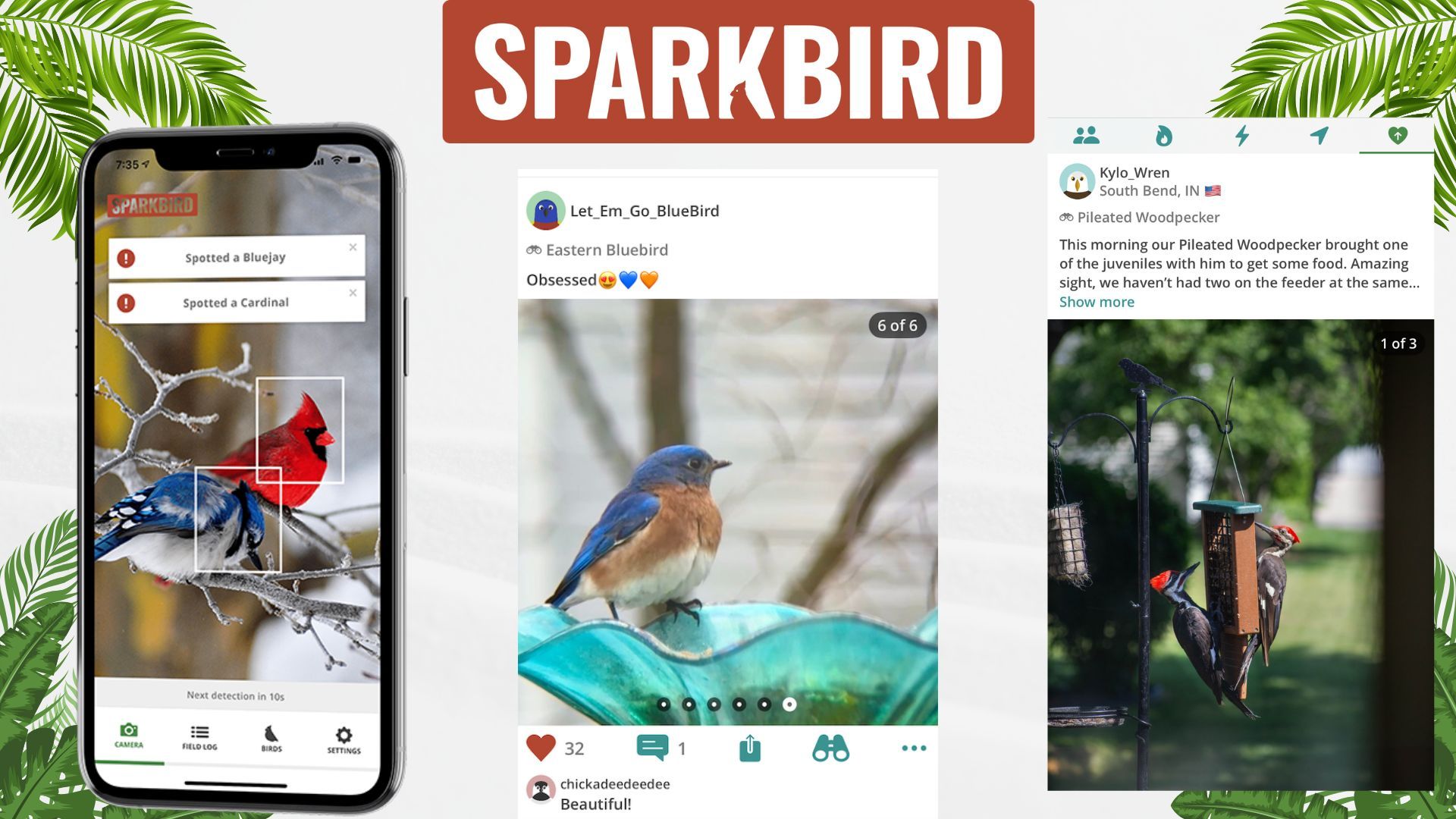
We built Sparkbird for people who want a friendly community of fellow birders. Track your life list, get identification help, and meet people who also stop mid-sentence to look at a tree.
Where to Go Birding in Wisconsin
A club is the fastest route to local knowledge, but these sites reliably deliver. Access terms differ at every one. State parks need a vehicle sticker, state wildlife areas are free but have hunting seasons, federal refuges set their own rules, and the crane foundation charges at the gate.
- Horicon Marsh (Dodge and Fond du Lac Counties) — One of the largest freshwater cattail marshes in the United States, about 33,000 acres, and split administratively. The northern two-thirds is the 22,000-acre federal Horicon National Wildlife Refuge; the southern 11,000 acres is Horicon Marsh State Wildlife Area under the DNR, open to waterfowl, pheasant, deer, turkey and small game hunting in season. Rules differ between the halves, so know which one you are standing on. The refuge side is free; its three-mile auto tour runs March 16 to late November, closing the day before deer gun season. The DNR's Education and Visitor Center at N7725 Highway 28 opens weekdays 9:00 am to 4:00 pm and weekends 10:00 am to 4:00 pm April through October; the Explorium exhibit is $8, $6 seniors, $5 students.
- International Crane Foundation (Sauk County) — All fifteen crane species at E11376 Shady Lane Road, open daily May 1 through October 31, 9:00 am to 5:00 pm, last entry 4:30. Admission is $14.50 adults, $12.00 seniors 65 and over, $7.50 youth 6 to 17, free under 6 and for members. Guided tours at 10:00 am, 1:00 pm and 3:00 pm, weekends in May, September and October, daily June through August.
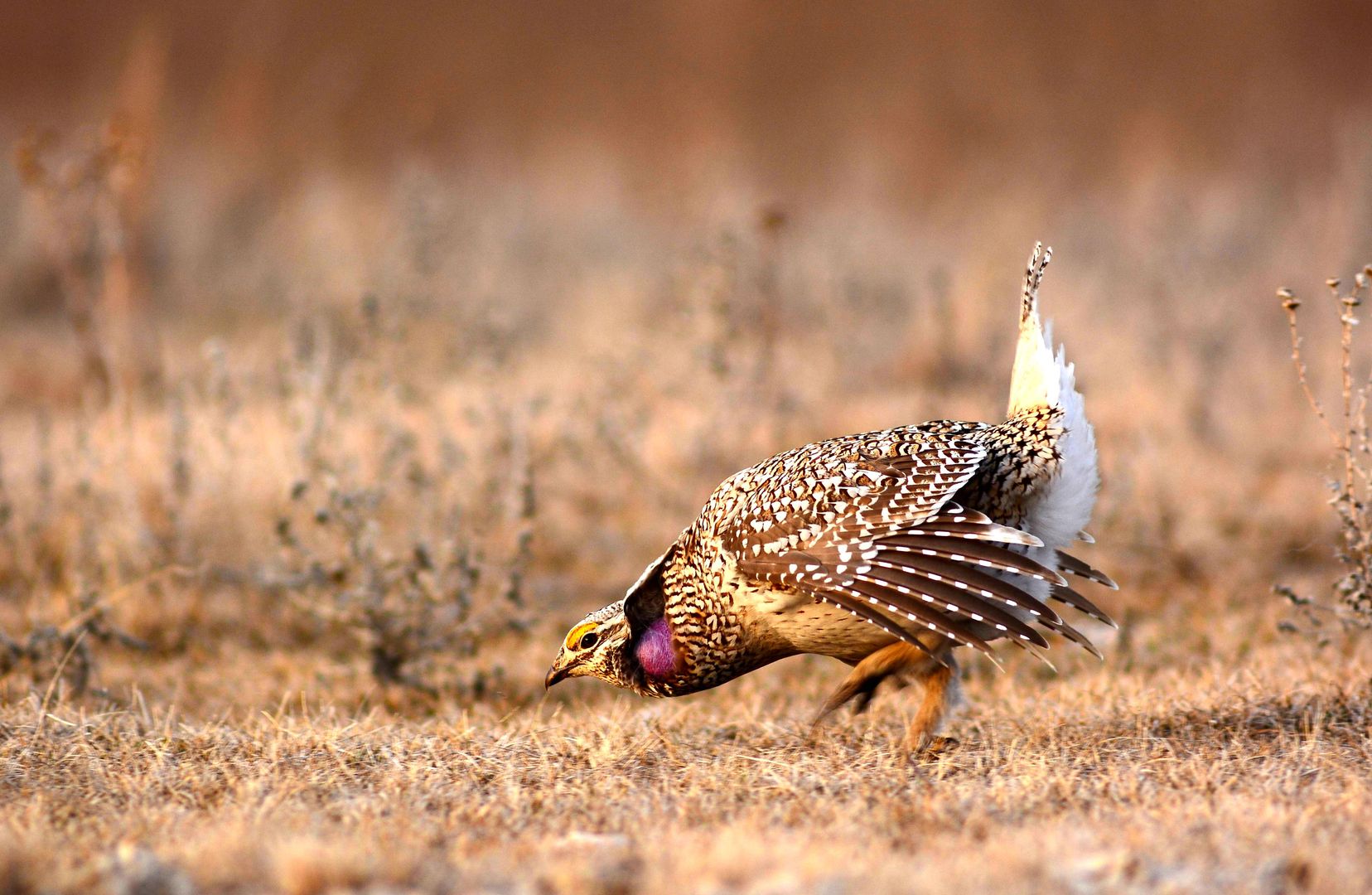
- Crex Meadows Wildlife Area (Burnett County) — 30,000 acres of wetland and pine-oak barrens, free to enter, and the best Sandhill Crane and Sharp-tailed Grouse site in the state, with 15,000 to 20,000 Greater Sandhill Cranes staging from mid-October into November. The Friends of Crex visitor center near Grantsburg opens weekdays 8:00 am to 4:30 pm and weekends 10:00 am to 4:00 pm, mid-March to mid-November. A 2,400-acre refuge portion is closed, and deer, bear, turkey and waterfowl seasons run here, so wear orange in fall.
- Wyalusing State Park (Grant County) — 2,628 acres on 500-foot bluffs at the confluence of the Wisconsin and Mississippi rivers, open 6:00 am to 11:00 pm year round, sticker required. Yellow-throated and Prothonotary Warblers, Bell's Vireo and Henslow's Sparrow. On Sentinel Ridge stands the Passenger Pigeon monument, raised by WSO and dedicated May 11, 1947, the first American monument to an extinct species and the occasion for Aldo Leopold's essay On a Monument to the Pigeon.
- Harrington Beach State Park (Ozaukee County) — 715 acres near Belgium with more than a mile of Lake Michigan shoreline, cedar swamp and a 26-acre quarry lake, open 6:00 am to 11:00 pm year round. Park passes run $28 annual resident, $50 nonresident, $13 senior resident, $13 and $16 daily. Same lakeshore corridor the bird observatory bands at Forest Beach a few miles south.
- Necedah National Wildlife Refuge (Juneau County) — Off Highway 21 four miles west of Necedah, no entrance fee, open dawn to dusk, visitor center Monday to Friday 9:00 am to 3:00 pm May through November and Tuesday to Thursday the rest of the year. Six trails, a CCC-built observation tower and several photo blinds. Whooping Cranes, Sandhill Cranes, Trumpeter Swans and Bald Eagles are all regulars, and the refuge's own advice is to treat your car as the blind.
- Apostle Islands National Lakeshore (Bayfield County) — No entrance fee anywhere in the park. Mainland access is free, Meyers Beach parking is $5 to $8 daily or $25 to $40 annually and takes digital payment only, and camping is $15 a night plus a $10 reservation fee. Headquarters is 415 Washington Avenue in Bayfield. The Bayfield Peninsula and Chequamegon Bay shoreline make the best spring migration corridor in the far north.
If you'd rather start from your own yard while the marshes thaw, our guide to hummingbird plants for Wisconsin covers what actually works in a short northern season.
Wisconsin Bird Books and Field Guides
A good state guide narrows 441 recorded species to the ones you'll plausibly see.
Birds of Wisconsin Field Guide
Stan Tekiela's Wisconsin volume from AdventureKEEN, organized by color. A gimmick until you're staring at a yellow bird and want an answer before it leaves.

Birds of Wisconsin Field Guide (Bird Identification Guides)
Adventure Publications
Wisconsin's Favorite Bird Haunts
Daryl Tessen's site guide, fifth edition, published by WSO in 2009 and covering roughly 1,100 Wisconsin birding locations with maps. Still the most thorough where-to-go book the state has.

Wisconsin's Favorite Bird Haunts, Fifth Edition
The Sibley Field Guide to Birds of Eastern North America
The second edition of David Sibley's eastern guide, Knopf, 2016. The most authoritative portable book for anything you'll find here.

The Sibley Field Guide to Birds of Eastern North America: Second Edition (Sibley Guides)
Knopf
Peterson Field Guide to Birds of Eastern and Central North America
Seventh edition, 2020. Peterson's arrows pointing straight at the field marks remain the best teaching device birding has produced.
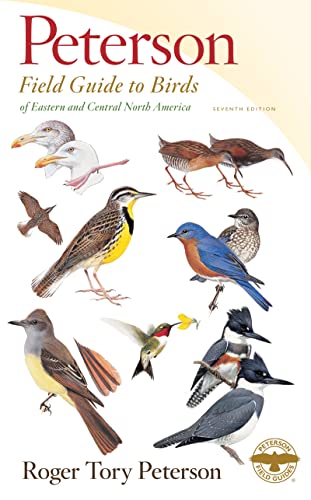
Peterson Field Guide To Birds Of Eastern & Central North America, Seventh Ed.: The Classic Birdwatching Guide with Updated Range Maps
Mariner
Wisconsin Bird Rescue and Rehabilitation
Always call first. Intake capacity, hours and permitted species change constantly, and some centers take only raptors while others take everything but.
Wisconsin DNR Wildlife Rehabilitation Directory
The official starting point. A clickable county map, plus a statewide list with contacts and the species each rehabilitator may admit. Bird intake can be restricted during avian influenza events.
Wisconsin Humane Society Wildlife Rehabilitation Center - Milwaukee, Ozaukee and Racine Counties
4500 W. Wisconsin Avenue in Milwaukee, 9:00 am to 4:00 pm daily, 414-431-6204. Most wild animals, but no non-native birds.
Dane County Humane Society Wildlife Center - Dane County
5132 Voges Road in Madison, 9:00 am to 5:00 pm daily by appointment, 608-287-3235. More than 150 species and no admission fee, but no House Sparrows, starlings or pigeons.
Wildlife In Need Center - Waukesha County
W349 S1480 S. Waterville Road in Oconomowoc, 262-965-3090. Birds, mammals, reptiles and amphibians since 1994. Their "I Found An Animal" pages tell you what to do first.
Fellow Mortals Wildlife Hospital - Walworth County
W4632 Palmer Road in Lake Geneva, 262-248-5055, visits by appointment. Raptors, waterfowl and general wildlife. Observe first, act second.
Hoo's Woods Raptor Center - Rock County
Milton, 608-883-2795. Birds of prey only, founded in 1998, and one of the better live-raptor education programs in the south.
Bay Beach Wildlife Sanctuary - Brown County
1660 East Shore Drive in Green Bay, 920-391-3671. The largest rehabilitation program in the state, more than 6,500 animals a year. The 535-acre sanctuary around it is free year round and good birding itself.
Raptor Education Group Inc. - Langlade County
Antigo, clinic line 715-623-4015, 8:00 am to 4:00 pm daily. Native birds only, emphasis on raptors. No public drop-ins, so call first.
Wild Instincts - Oneida County
4621 Apperson Drive in Rhinelander, 715-362-9453. The main option for the Northwoods. Note that the similar-sounding wildinstincts.org isn't them any more, it's an unrelated counseling practice.
Frequently Asked Questions
When do the geese peak at Horicon Marsh?
Mid-October in most years. Geese start arriving in mid-September and build through the month, and the Friends of Horicon Marsh call it the largest migratory Canada goose flock in the world, peaking above 200,000 birds.
Can you see Whooping Cranes in Wisconsin?
Yes, though never reliably on demand. Central Wisconsin is the breeding range for the reintroduced Eastern Migratory Population, and Necedah National Wildlife Refuge is where that effort centered. Necedah is free, dawn to dusk. The crane foundation in Baraboo is the guaranteed option, for $14.50.
Where can you see Sharp-tailed Grouse in Wisconsin?
Northwestern Wisconsin, on the pine and oak barrens. The DNR manages two properties for the species, Crex Meadows in Burnett County and Namekagon Barrens, and both offer reservable viewing blinds on active leks. At Crex the ticket is $5 for a blind holding six, and you must be seated 45 minutes before sunrise.
What is the best time of year for bird watching in Wisconsin?
May is the peak, with warbler migration along both Great Lakes shorelines and the festival calendar built around it. October is the other great month: cranes at Crex, geese at Horicon, hawks on the lakefront. Lek season in late March and April is worth a special trip.
Got a Wisconsin birding group to recommend?
Chapters here rename themselves with unusual enthusiasm, so this directory will drift. If your club's missing, has changed its name for the second time, or has finally posted a fall schedule, tell us in the comments or on the Sparkbird App, available in the Apple App Store.

No comments yet.