
Bird watching in the Badger State? Look no further for all you need to know about the top winter birds to peep this winter in Wisconsin.
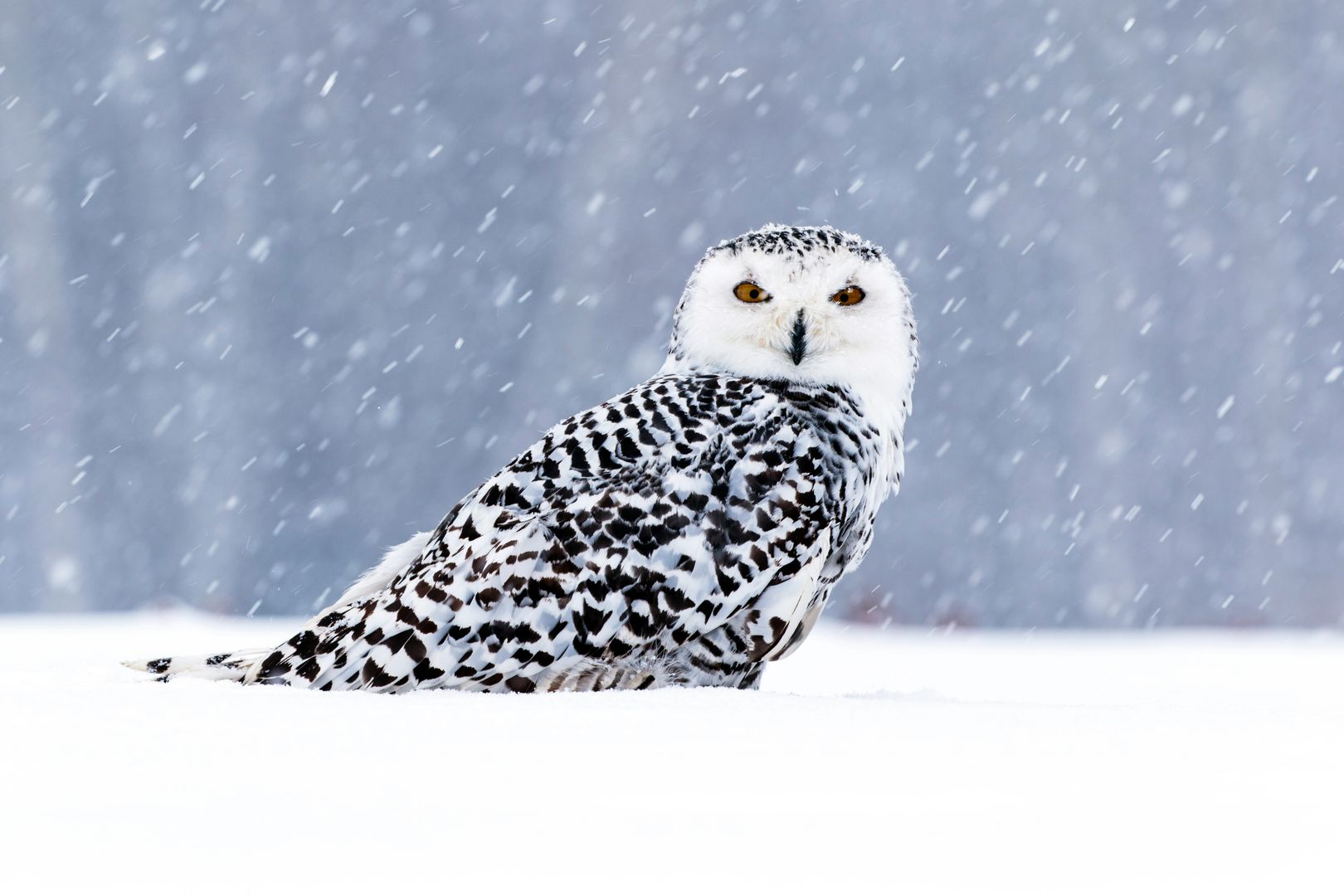
There are 3 types of winter birds in Wisconsin you’ll see on the list:
- Irruptive Species – irregular / unpredictable movement of a large number of birds outside their normal winter range.
- Resident Wisconsin Birds – Found year-round, commonly visit feeders
- Winter Migrants / Visitors – birds that migrate to Wisconsin for the Winter. Found in migration hot spots like Necedah National Wildlife Refuge (Necedah NWR)
1. Northern Cardinal
- Family – Cardinalidae
- Species – Cardinalis cardinalis
- Primary Activity Time – Dawn and Dusk
- Diurnal
- Resident Wisconsin Bird
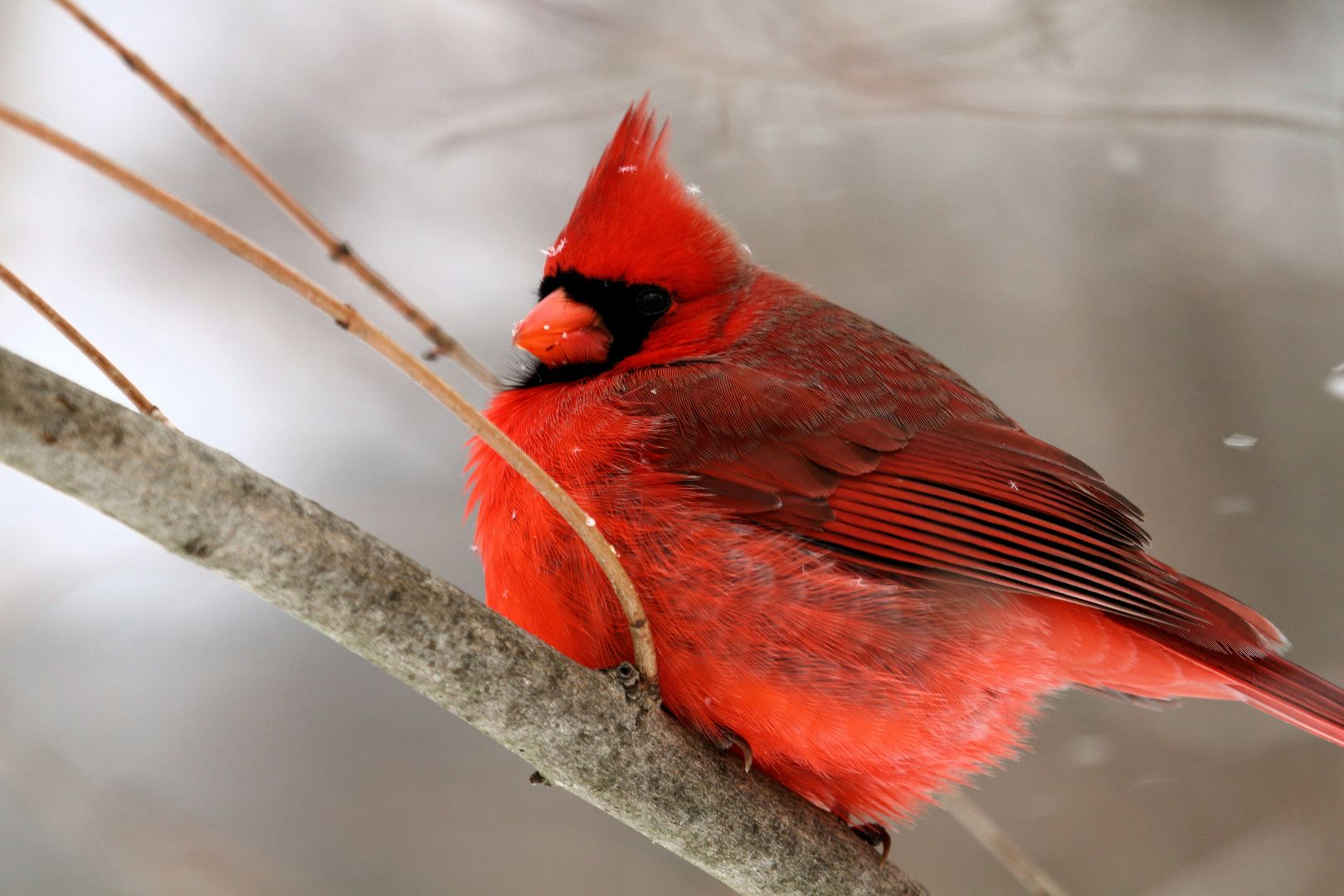
The Northern Cardinal is an omnivore that eats seeds, fruits, and insects. This canonical winter bird relies heavily on sunflower, safflower, and berries, often foraging low in shrubs and at platform feeders.
Males are vivid red with a black mask and crest. A female Northern Cardinal, on the other hand, is warm brown with orange bills and subtle red highlights. Both the male and female Northern Cardinal have a tuft of hair that looks like an expertly styled mohawk.
The Northern Cardinal sounds like a clear, whistled cheer‑cheer‑cheer with varied phrases. Some of the Northern Cardinal sounds and calls are to the tune of a cartoon plane dropping bombs, making it recognizable among other Wisconsin bird species.
Found statewide in Wisconsin’s settled areas, woodlots, and brushy edges through winter, especially where feeders and dense cover are present. It's hard to miss if you’re bird watching in Wisconsin. You can easily attract it to your yard with a simple feeder.
2. Downy Woodpecker
- Family – Picidae
- Species – Dryobates pubescens
- Primary Activity Time – Dawn and Dusk
- Diurnal
- Resident Wisconsin Bird
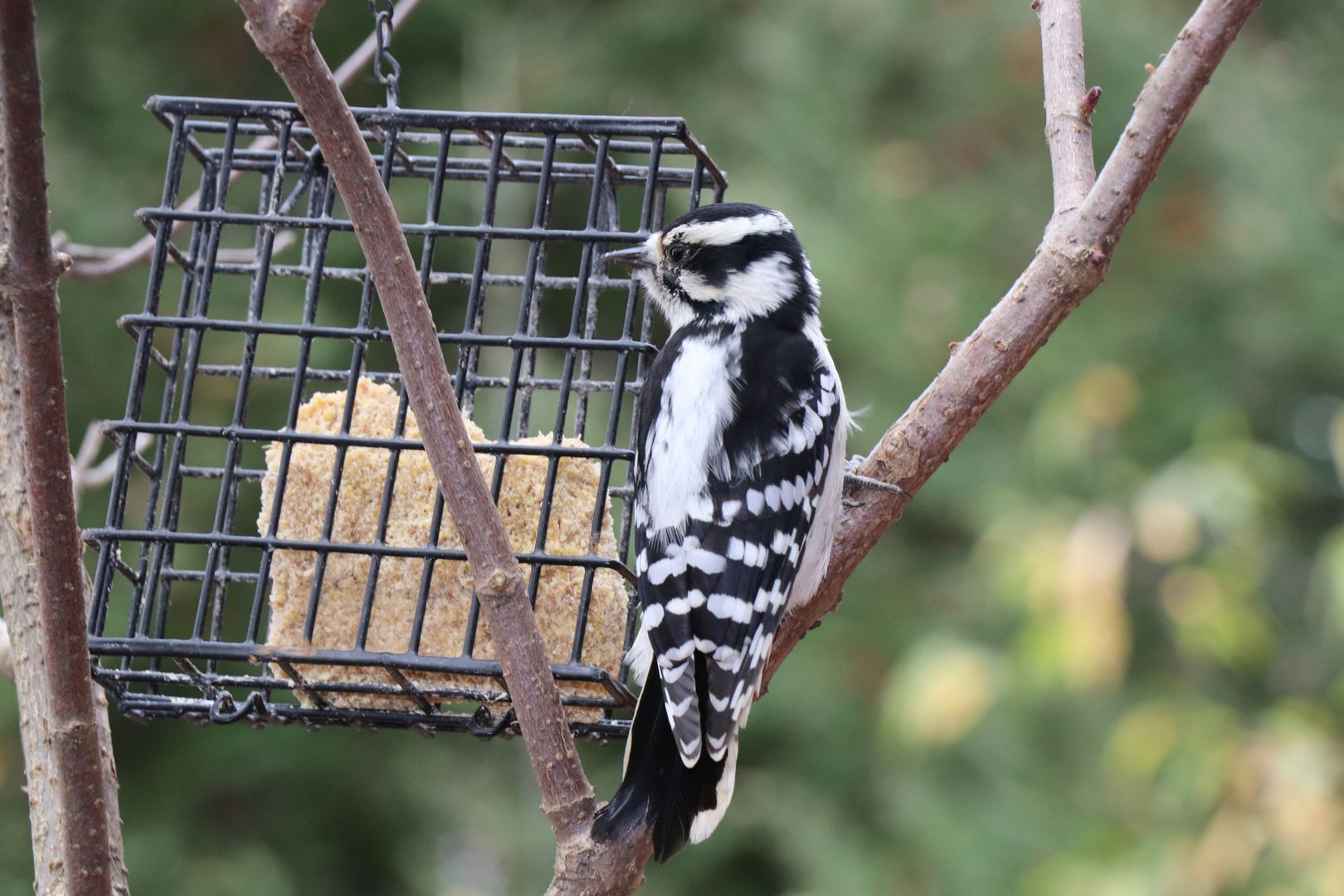
The Downy Woodpecker is an omnivorous woodpecker taking insects, larvae, and eggs from twigs and bark, plus suet and seeds at feeders. It scales small branches and weed stems deftly.
It's a small bird with a short bill and is fairly common to see when bird watching in Wisconsin. The black‑and‑white patterning and a tiny red nape patch make it stand out against other winter birds. I recall always seeing them in my grandmother’s feeders in her lilac bushes in Massachusetts.
A Downy Woodpecker call has a sharp pik note and short descending whinny trills. There are a few different sounds that you can learn to identify a Downy woodpecker call, actually. It may blend in with other Wisconsin bird sounds if you’re not familiar.
Their range is widespread across Wisconsin’ forests, edge habitats, and towns with other common winter birds in Wisconsin. You can attract them by keeping a suet feeder or mixed seed feeder.
3. European Starling
- Family – Sturnidae
- Species – Sturnus vulgaris
- Primary Activity Time – Daytime
- Diurnal
- Wisconsin Resident (Non-Native Species)
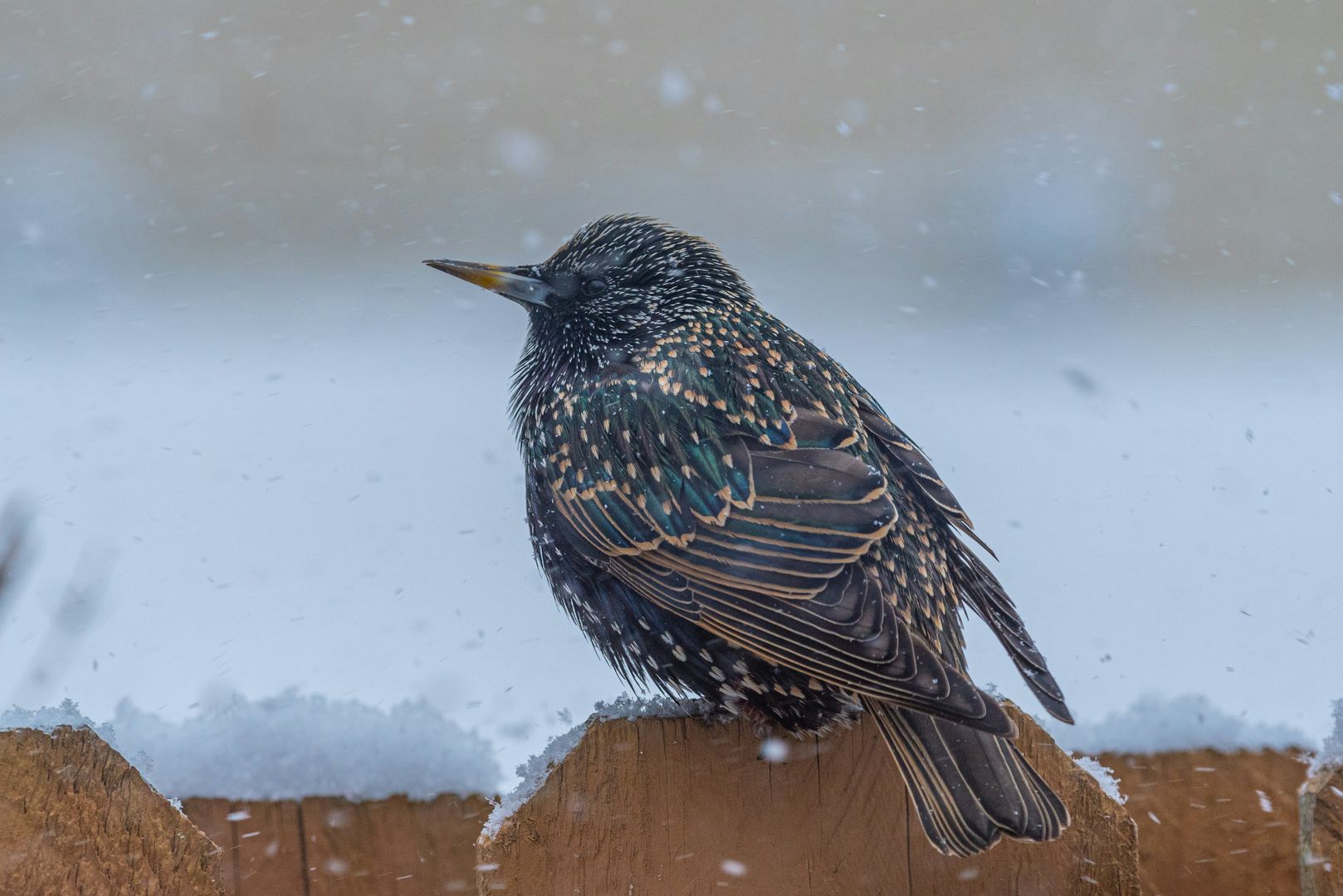
The European Starling is a highly adaptable and gregarious winter bird in Wisconsin. It maintains an omnivorous diet, foraging for kitchen scraps, waste grain, and lingering fruits, often outcompeting native species at suet feeders. They are known for their "murmuration" flights, where thousands of birds move as one in the winter sky.
Their winter plumage is dark with brilliant white "stars" or spots that wear away by spring. This vocal Wisconsin bird sounds like a complex series of whistles, clicks, and expert mimicry of other birds or even mechanical noises.
In Wisconsin winters, the European Starling range is ubiquitous across the state, though they congregate most heavily in urban centers and around livestock farms where food is abundant.
4. Bald Eagle
- Family – Accipitridae
- Species – Haliaeetus leucocephalus
- Primary Activity Time – Dawn and Dusk
- Diurnal
- Resident Wisconsin Bird & Migratory
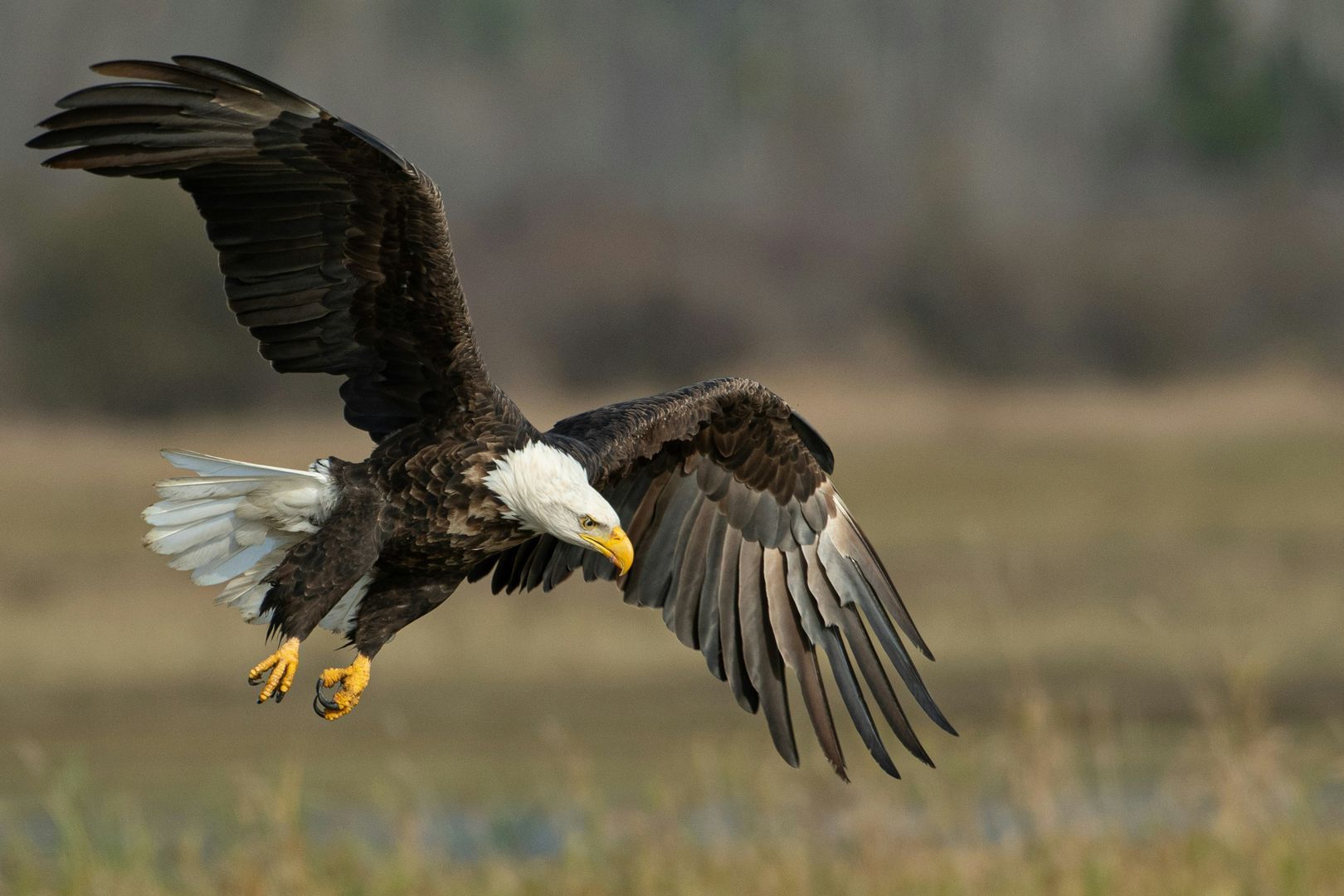
The Bald Eagle is a piscivorous raptor that also scavenges carrion and takes waterfowl when opportunities arise. It gathers near fish runs and carcass sites for feeding which is why you’ll find it near bodies of water.
It’s a large bird with a dark body, white head and tail (in adults,) and a powerful yellow bill. A Bald Eagle baby, on the other hand, is mottled and looks more like an ugly duckling.
A Bald Eagle call sounds like high‑pitched chatters. The repeating screech makes the Bald Eagle call an easy bird to ID by sound. Their wing posture is plank‑straight while soaring, and can reach over 7 feet!
These Wisconsin birds of prey are concentrated near open, ice‑free waters across Wisconsin like Lake Michigan, Lake Winnebago, and other shorelines, rivers, and dams.
- Related: Bird Watching Groups in Michigan
5. Black-capped Chickadee
- Family – Paridae
- Species – Poecile atricapillus
- Primary Activity Time – Dawn and Dusk
- Diurnal
- Resident Wisconsin Bird

The Black-capped Chickadee is a tiny omnivore that favors seeds, suet, and dormant insects, caching food in bark crevices. It adapts well to winter with high metabolism and flock foraging.
It's got a distinctive black cap and bib with white cheeks, soft gray body, and is constantly active.
The Black-capped Chickadee song sounds like chick‑a‑dee‑dee‑dee notes and a clear fee‑bee song on mild days. In fact, the Black-capped Chickadee call is highly varied and includes other sounds and phrases like "cheeseburger" and “hey sweetie” along with its trademark chick‑a‑dee song.
They’re petite stature and coloring help with bird identification despite the many Wisconsin bird species.
This chickadee is abundant statewide with other winter birds in Wisconsin in woodlands, parks, and neighborhoods– and quick to find feeders with sunflower seed and suet.
6. House Sparrow
- Family – Passeridae
- Species – Passer domesticus
- Primary Activity Time – Daytime
- Diurnal
- Resident Wisconsin Bird
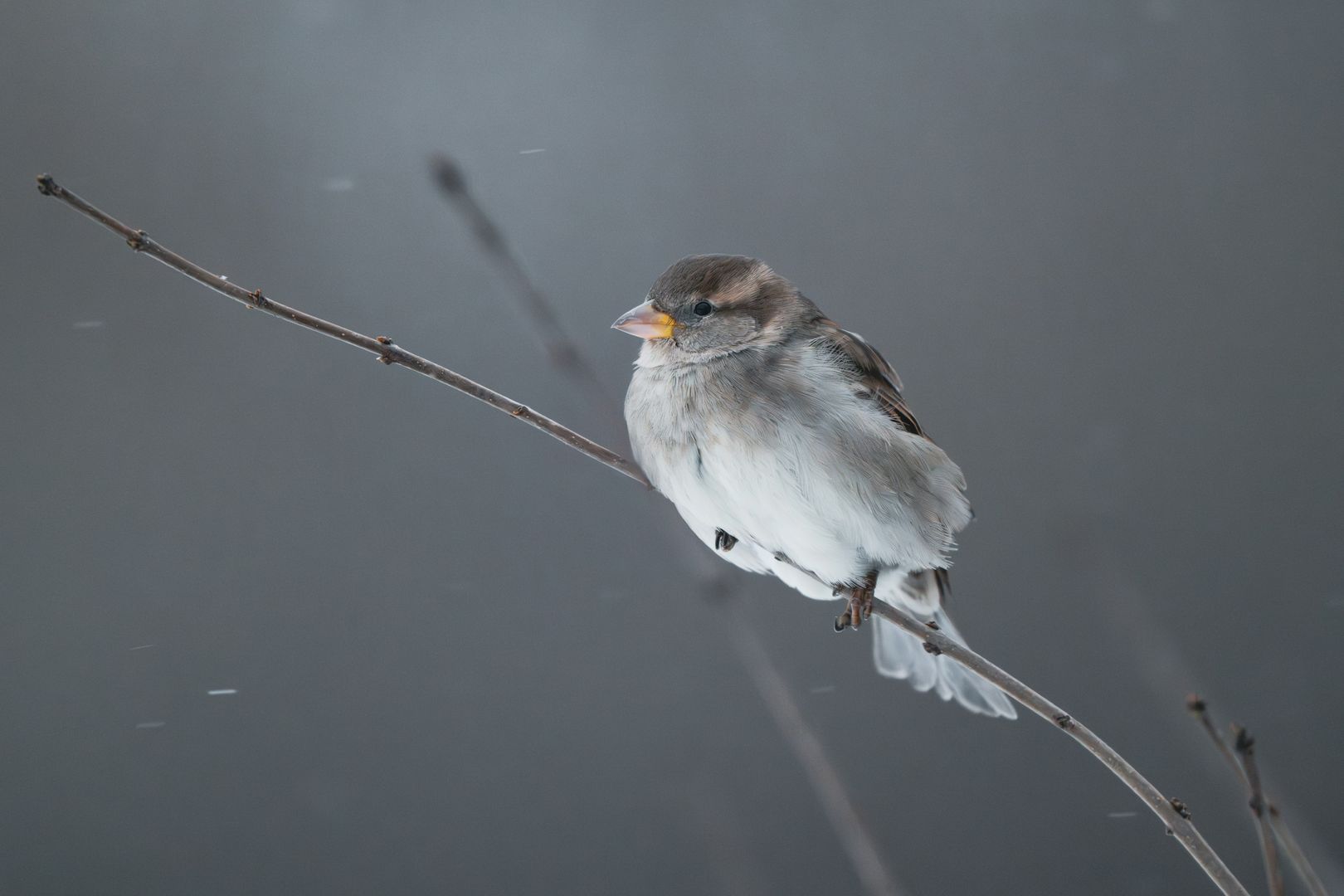
The House Sparrow is a hardy and ubiquitous winter bird in Wisconsin. It's primarily granivorous, aggressively seeking out cracked corn, millet, and sunflower seeds at backyard feeders. They're highly social and often huddle together in thick evergreens or building eaves to conserve heat.
Males possess a distinctive black "bib," gray cap, and chestnut neck, while females are a plain, streaky buff-brown. This boisterous Wisconsin bird sounds like a repetitive, metallic cheerp or churp that can be heard throughout the day.
In Wisconsin winters, the House Sparrow range is strictly tied to human habitation, found in nearly every city, town, and farmstead across the state.
7. Wild Turkey
- Family – Phasianidae
- Species – Meleagris gallopavo
- Primary Activity Time – Daytime
- Diurnal
- Resident

The Wild Turkey is resilient winter bird in Wisconsin. It's an omnivorous ground-feeder that scratches through snow to find acorns (mast), waste grain, and dried tubers. During harsh winters, they often form large "mega-flocks" of fifty or more birds to improve their chances of finding food.
They are unmistakable due to their massive size, bronze feathers, and fan-shaped tails. This vocal Wisconsin bird sounds like a series of social yelps, clucks, and the iconic, booming gobble used by males.
In Wisconsin winters, the Wild Turkey range is most common in the southern and central oak-hickory forests, though they have successfully expanded into the northern reaches of the state.
- Related: 10 Wild Turkey Facts
8. Red-bellied Woodpecker
- Family – Picidae
- Species – Melanerpes carolinus
- Primary Activity Time – Dawn and Dusk
- Diurnal
- Resident Wisconsin Bird
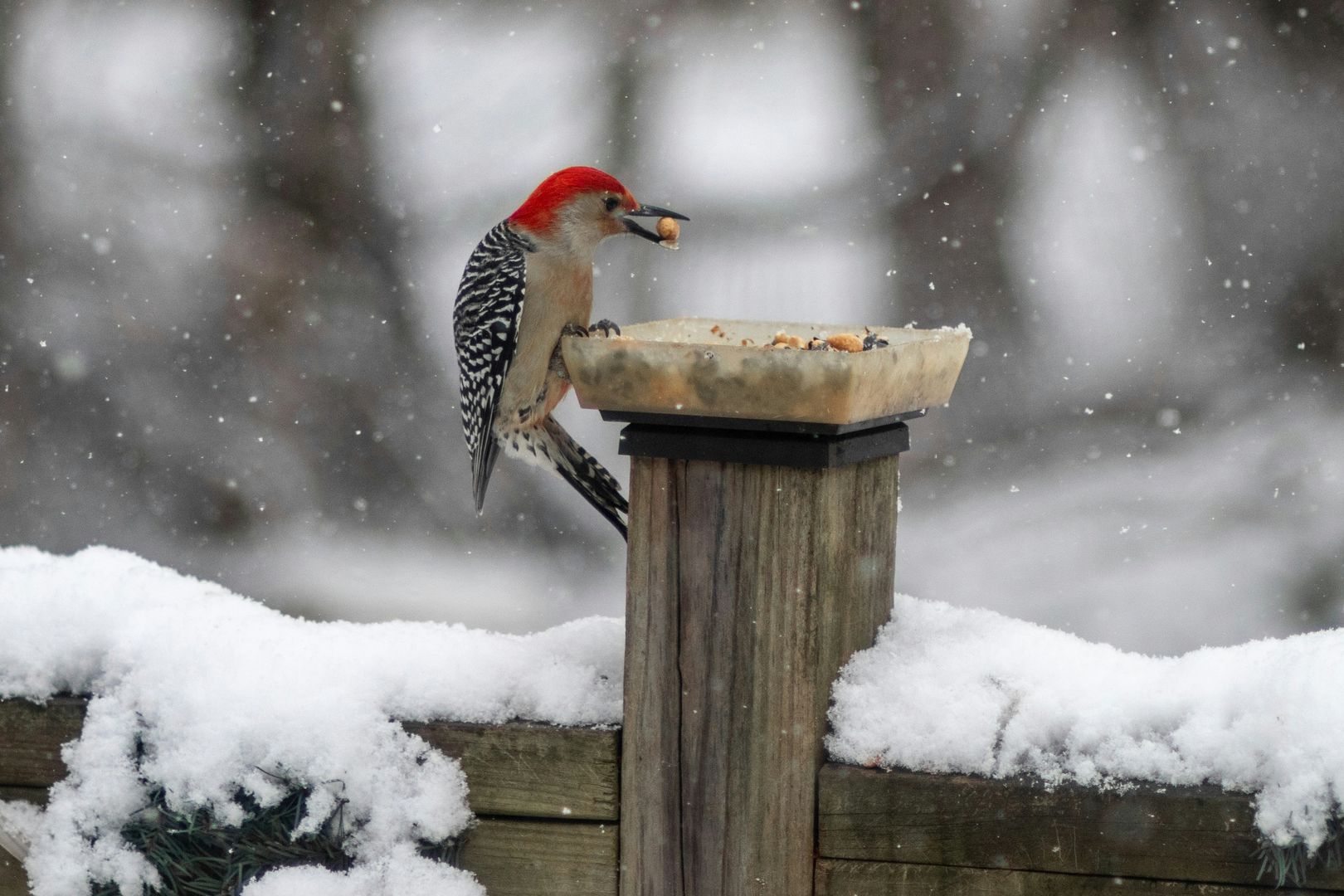
An omnivore that takes acorns, nuts, fruit, and insects. It frequently visits suet feeders and peanut feeders in winter, and caches food in bark and deadwood for lean times.
Pale gray face with a striking red crown and nape, laddered black‑and‑white back, and a faint pinkish belly. Calls are rolling chur notes and loud “kwirr” rattles.
Resident through much of Wisconsin, especially the woodlands, suburbs, and riparian corridors including Lake Mills Ledge in Faville Woods and Horicon Marsh.
9. House Finch
- Family – Fringillidae
- Species – Haemorhous mexicanus
- Primary Activity Time – Daytime
- Diurnal
- Resident Wisconsin Bird
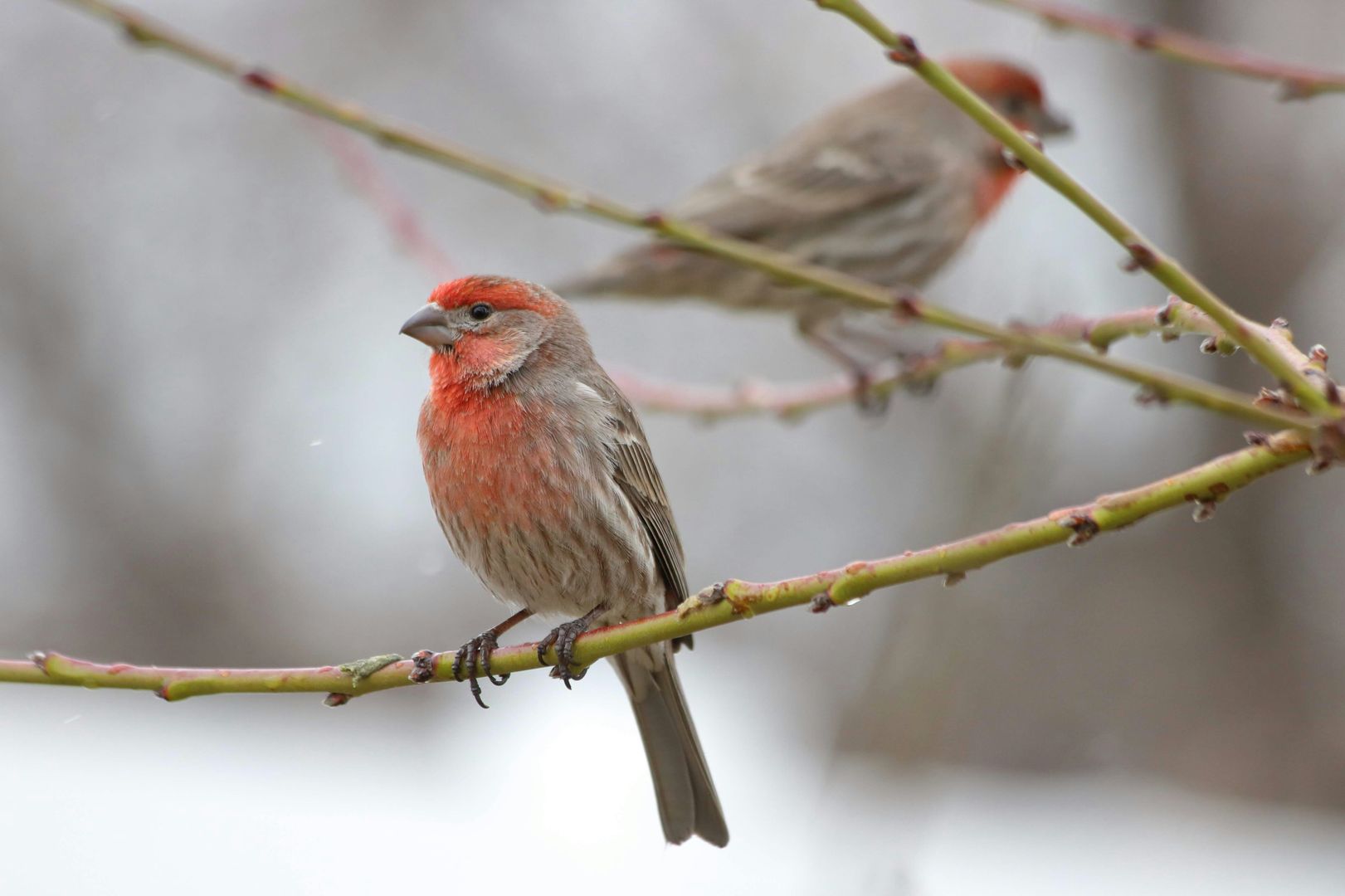
The House Finch is a common and social bird in Wisconsin. It follows a granivorous diet, primarily eating berries and small seeds. Some of these seeds widely including mustard, cactus, knotweed, poison oak, and dandelion. They're common at backyard stations, specifically seeking out tube feeders filled with black-oil sunflower or nyjer seed.
Males feature a bright rosy-red wash over the face and upper breast, while females are plain brown with blurry streaks. This social Wisconsin bird sounds like a lively, high-pitched warble that often ends in a distinctive upward-slurring note.
In Wisconsin winters, the House Finch range is most dense in southern and central suburban areas where bird feeders and ornamental shrubbery provide consistent food and shelter.
10. Blue Jay
- Family – Corvidae
- Species – Cyanocitta cristata
- Primary Activity Time – Dawn and Dusk
- Diurnal
- Resident Wisconsin Bird
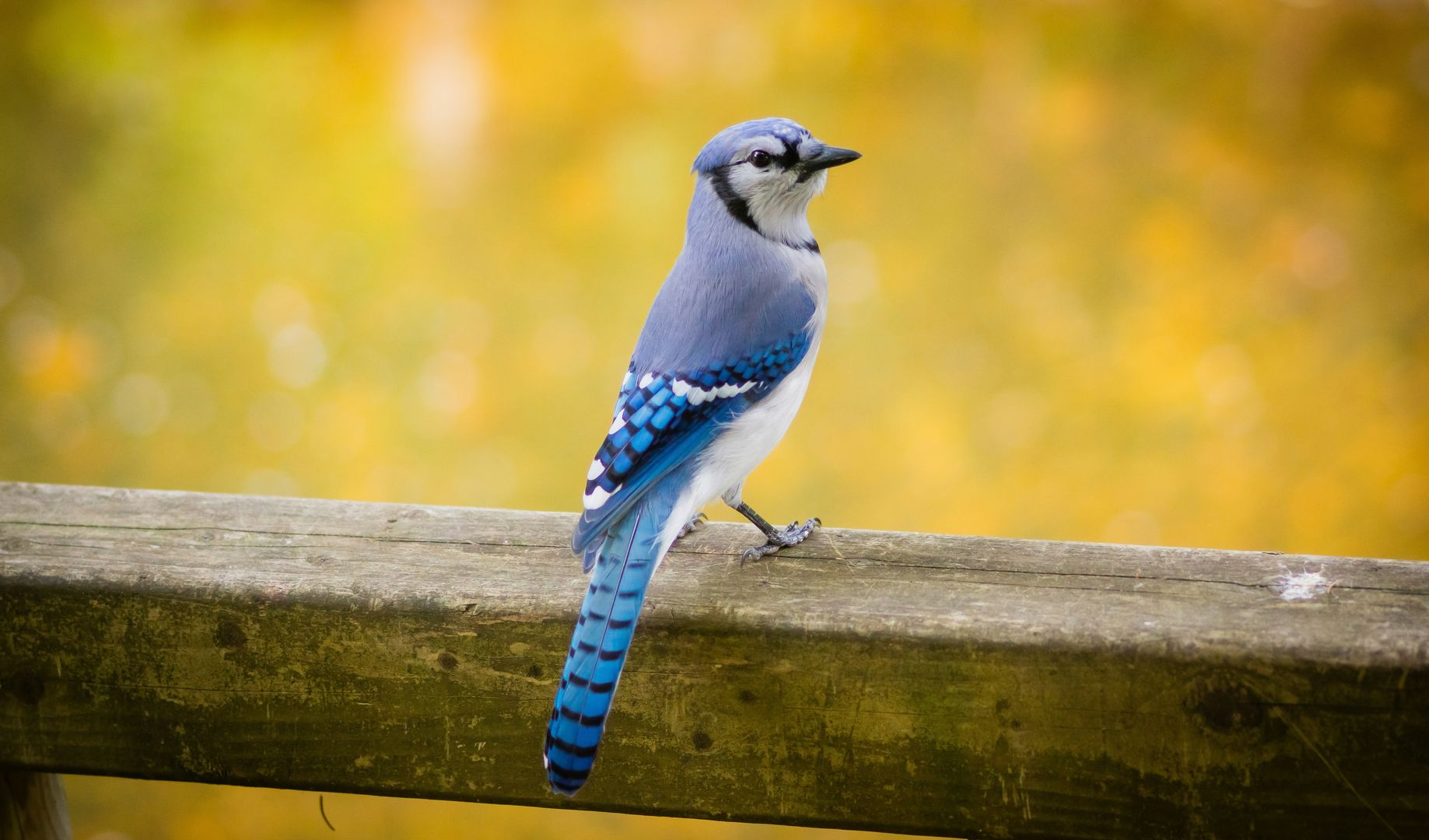
An omnivorous corvid that eats acorns, seeds, fruits, and insects. It is a regular at peanut and sunflower feeders. Jays cache nuts and broadcast alarm calls around predators.
Female vs Male Blue Jay: both are nearly identical with bold blue plumage and a black necklace with crisp white underparts. Male and female Blue Jay birds are bold, noisy, and social. One difference to tell apart the males from females is their slightly larger size. They also share domestic duties (i.e. building the nest).
A Blue Jay call ranges from jeer alarms to soft whistles and uncanny hawk imitation– all with a flat or falling call pattern. To the novice birder a Blue Jay call can sound like a crow. The Blue Jay mating call is more melodic and cheery.
This year‑round resident can be found mingling with winter birds in Wisconsin in mixed woodlands, neighborhoods, and edge habitats.
- Related: 5 Best Winter Bird Houses of 2025
11. Common Merganser
- Family – Anatidae
- Species – Mergus merganser
- Primary Activity Time – Daytime
- Diurnal
- Resident / Winter Migrant

The Common Merganser is a sleek, "saw-billed" winter bird in Wisconsin. It's a piscivorous diving duck that hunts fish in the frigid, open currents of rivers and the Great Lakes. They're often seen floating in long lines or "rafts" in the middle of moving water.
Males are striking with crisp white bodies and dark, iridescent green heads while females (often called "red-heads") have shaggy cinnamon crests. They couldn't look more opposite. This hardy Wisconsin bird's call sounds like a low, harsh croak, though they are generally silent during the winter months.
In Wisconsin winters, the Common Merganser's range is restricted to any ice-free water, particularly the Mississippi and Wisconsin Rivers and the shores of Lake Michigan and Lake Superior.
12. American Robin
- Family – Turdidae
- Species – Turdus migratorius
- Primary Activity Time – Daytime
- Diurnal
- Wisconsin State Bird (resident)
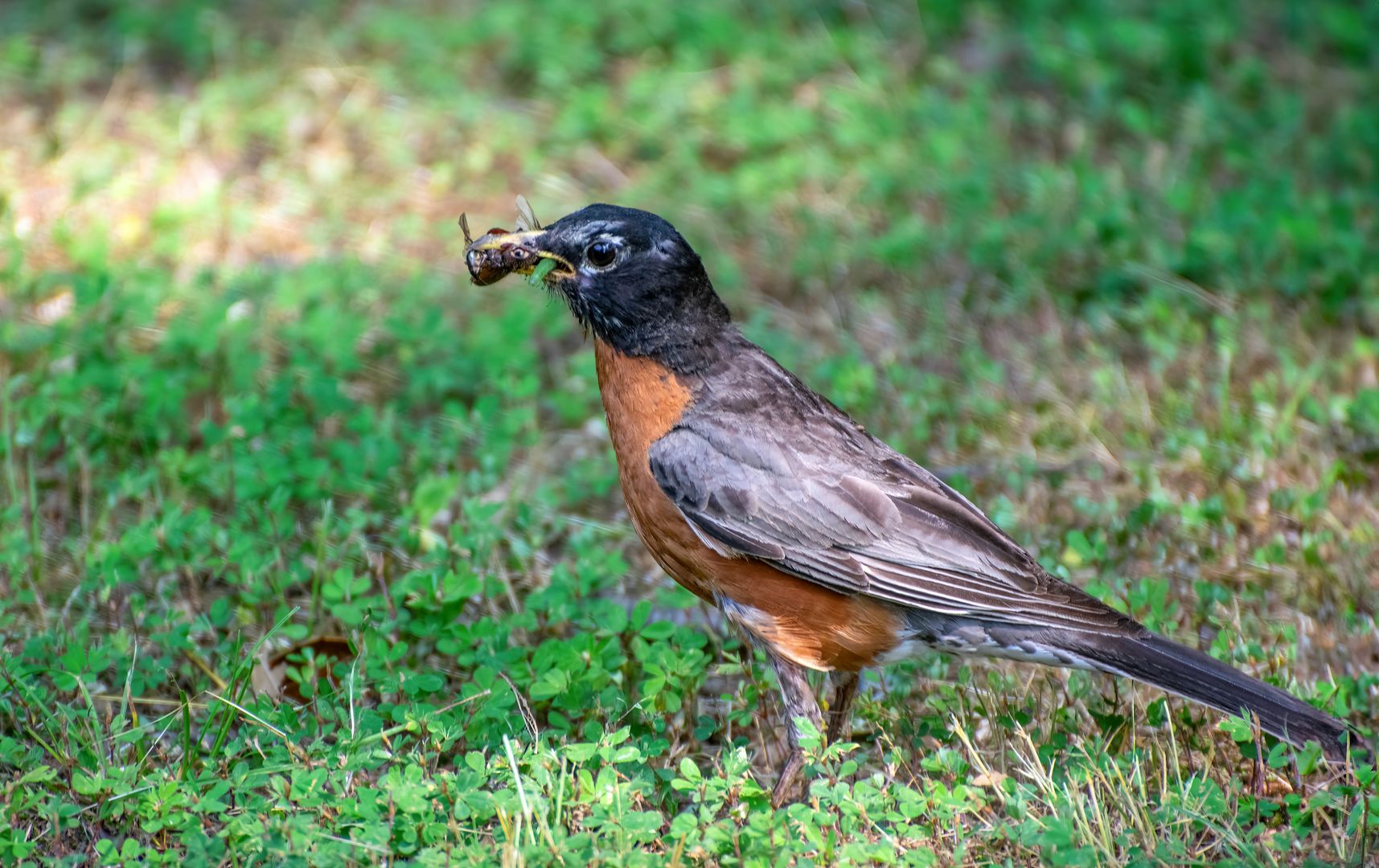
The American Robin is a surprising but regular winter bird in Wisconsin. While many migrate, those that stay shift to a strictly frugivorous diet, moving in large, nomadic flocks to find cedar berries, crabapples, and staghorn sumac. They rarely visit feeders unless offered softened raisins or hulled sunflower seeds.
American Robins are easily recognized by their warm orange breast and dark gray back. This familiar Wisconsin bird sounds like a series of low, tut-tutting alarm calls in winter, a sharp contrast to their melodic "cheerily-cheer-up" spring song.
In Wisconsin winters, the American Robin range is tied to fruit availability, often found in cedar swamps, river bottoms, and suburban neighborhoods with heavy ornamental fruit plantings. Make sure to put some fruit in your backyard feeders if you want to attract them!
13. Northern Saw-whet Owl
- Family – Strigidae
- Species – Aegolius acadicus
- Primary Activity Time – Night
- Nocturnal
- Winter Migrant / Visitor
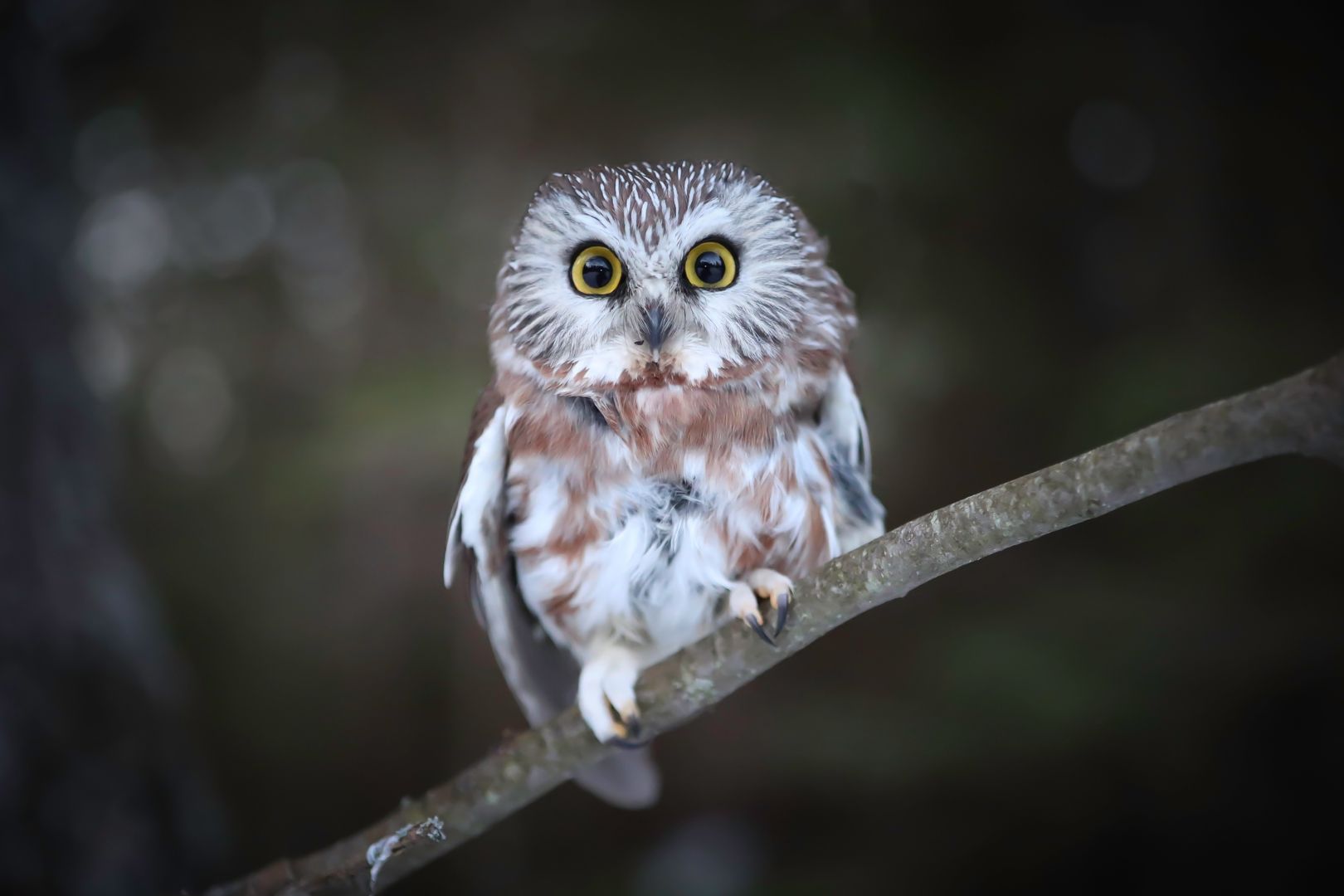
The Northern Saw-whet Owl is a tiny, secretive winter bird in Wisconsin. It's a carnivorous raptor that preys almost exclusively on small mammals and hides in dense evergreens during the day to avoid detection. Its small size and tendency to "roost" at eye level make it a prized find for winter hikers.
These birds of prey have large, yellow eyes and a white "V" between their eyes, lacking the ear tufts found on larger owls. This elusive Wisconsin bird sounds like a rhythmic high-pitched too-too-too whistle or series of short beacon beeps. They're often silent during the winter months.
In Wisconsin winters, the Northern Saw-whet Owl range is focused in dense coniferous stands and cedar swamps throughout the state, where they seek thermal cover from the wind. Read more at the Southern Wisconsin Bird Alliance.
14. Tufted Titmouse
- Family – Paridae
- Species – Baeolophus bicolor
- Primary Activity Time – Dawn and Dusk
- Diurnal
- Resident Wisconsin Bird
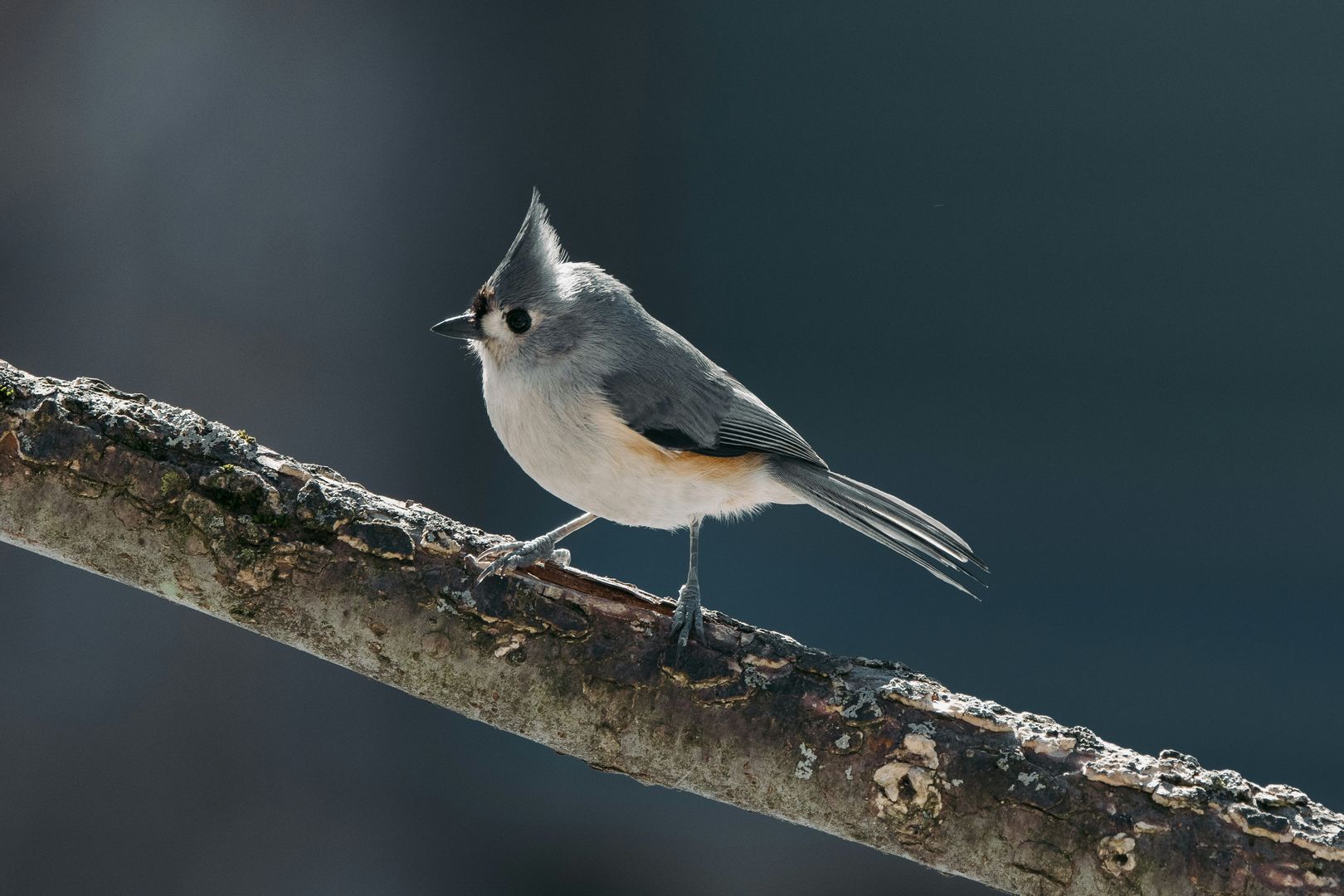
A small omnivore that feeds on seeds, nuts, and insects, frequently visiting sunflower and peanut feeders in winter. It often travels with chickadee‑led mixed flocks.
Gray with a neat crest, big black eyes, buffy flanks, and sports a gray faux-hawk / mohawk. The female Tufted Titmouse is identical to the male.
The Tufted Titmouse call is a clear peter‑peter‑peter song and the occasional scolding calls. Many people find the Tufted Titmouse song melodic and seek it out in birding. Its distinct sound makes the tufted titmouse a great bird to ID by sound.
A Tufted Titmouse nest is often in a tree cavity or birdhouse, so you can create an inviting habitat by putting out a bird house for them!
Tufted Titmouse range in Wisconsin is in parks, yards, and many wooded areas.
15. Northern Shrike
- Family – Laniidae
- Species – Lanius borealis
- Primary Activity Time – Dawn and Dusk
- Diurnal
- Migratory / Visitor
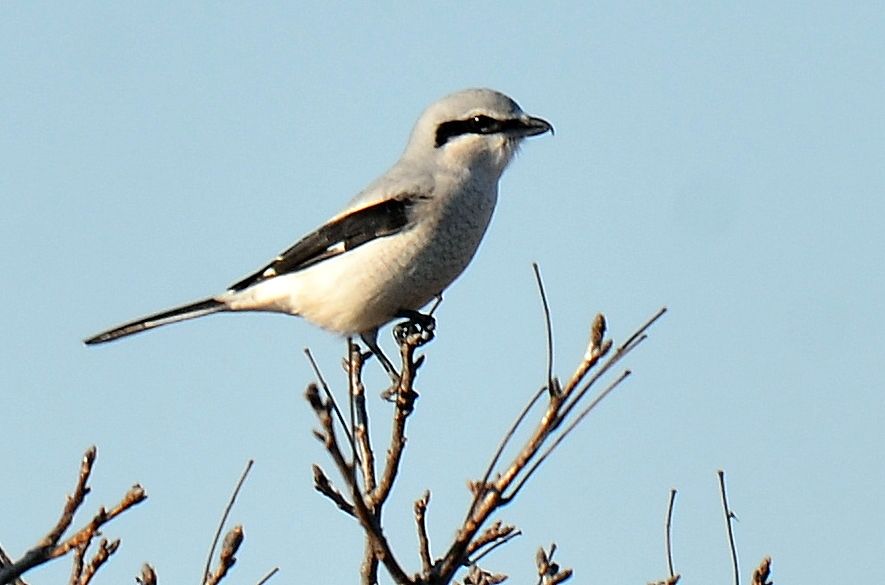
The Northern Shrike is a carnivorous songbird that hunts small birds and mammals known to impale prey on thorns for later feeding. They’re gray above with a black mask and hooked bill. Its gray-white coloring can make it difficult to tell apart from other winter birds in Wisconsin.
North Shrike calls are harsh scolds with occasional varied whistles and mimicry. Some of its’ sounds are melodic, while others are short cheeps like a squeaker toy.
It’s a regular but scarce winter visitor to Wisconsin’s open country, most frequent in wetlands and hedgerows like Faville Grove, Crex Meadows, and along the Lake Michigan shoreline in Manitowoc.
- Related: 34 Winter Birds in Michigan
16. Horned Lark
- Family – Alaudidae
- Species – Eremophila alpestris
- Primary Activity Time – Dawn and Dusk
- Diurnal
- Migratory / Visitor
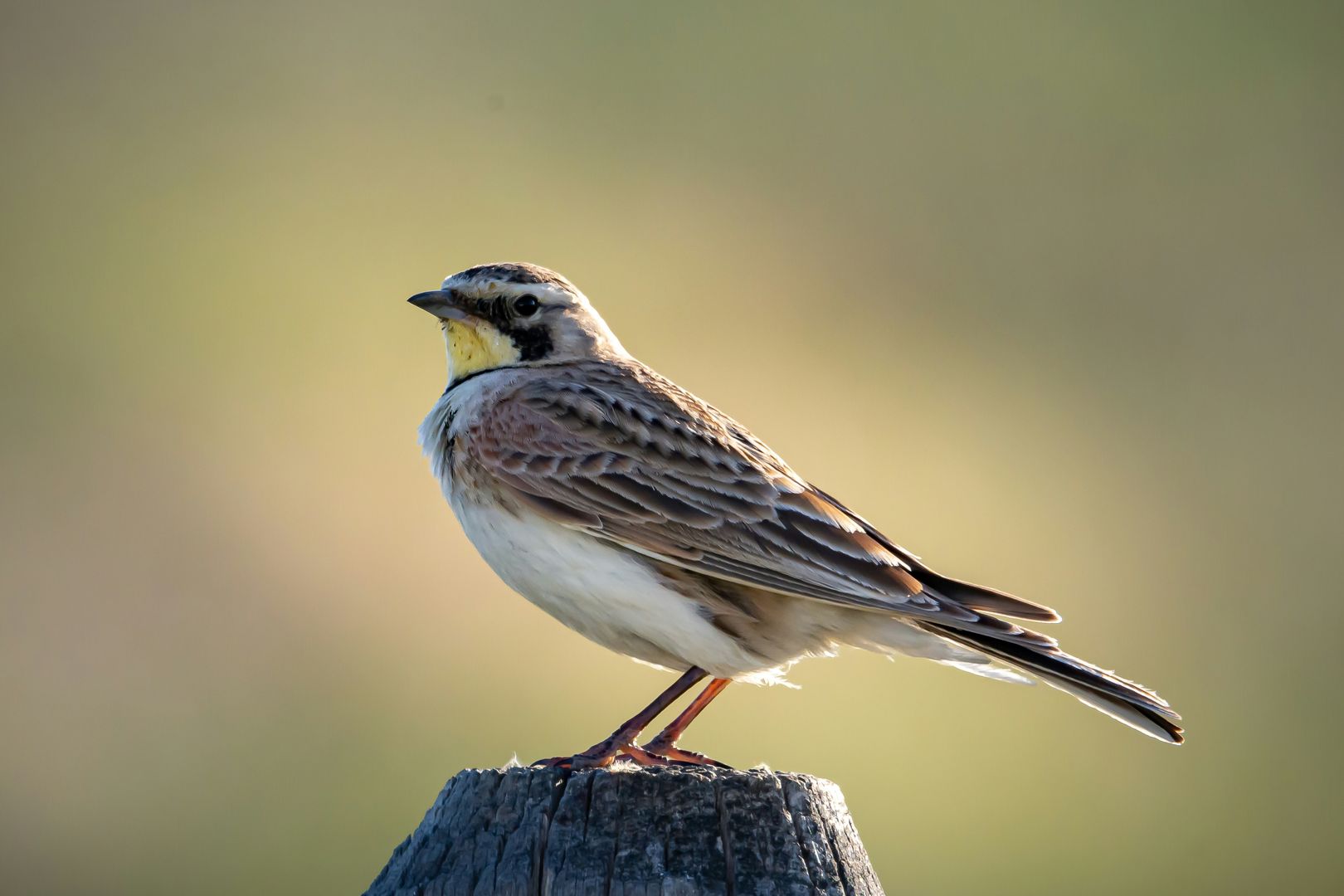
The Horned Lark is a ground‑foraging granivore that eats weed seeds, waste grain, and small insects on sunny winter days. It prefers bare, windswept terrain. They are buff‑brown above with a pale face and black mask and tiny 'horns' of feathers.
The Horned Lark call is tinkling and sweet, or piercing, depending on who you ask. It’s another bird call that’s hard to tell apart from other winter birds in Wisconsin if there are enough birds around.
Found in Wisconsin’s open, sparse habitats like airfields, dunes, stubble fields, and plowed flats. If you want to see it while bird watching in Wisconsin this winter go where snow cover is minimal.
17. American Kestrel
- Family – Falconidae
- Species – Falco sparverius
- Primary Activity Time – Daytime
- Diurnal
- Partial Migrant
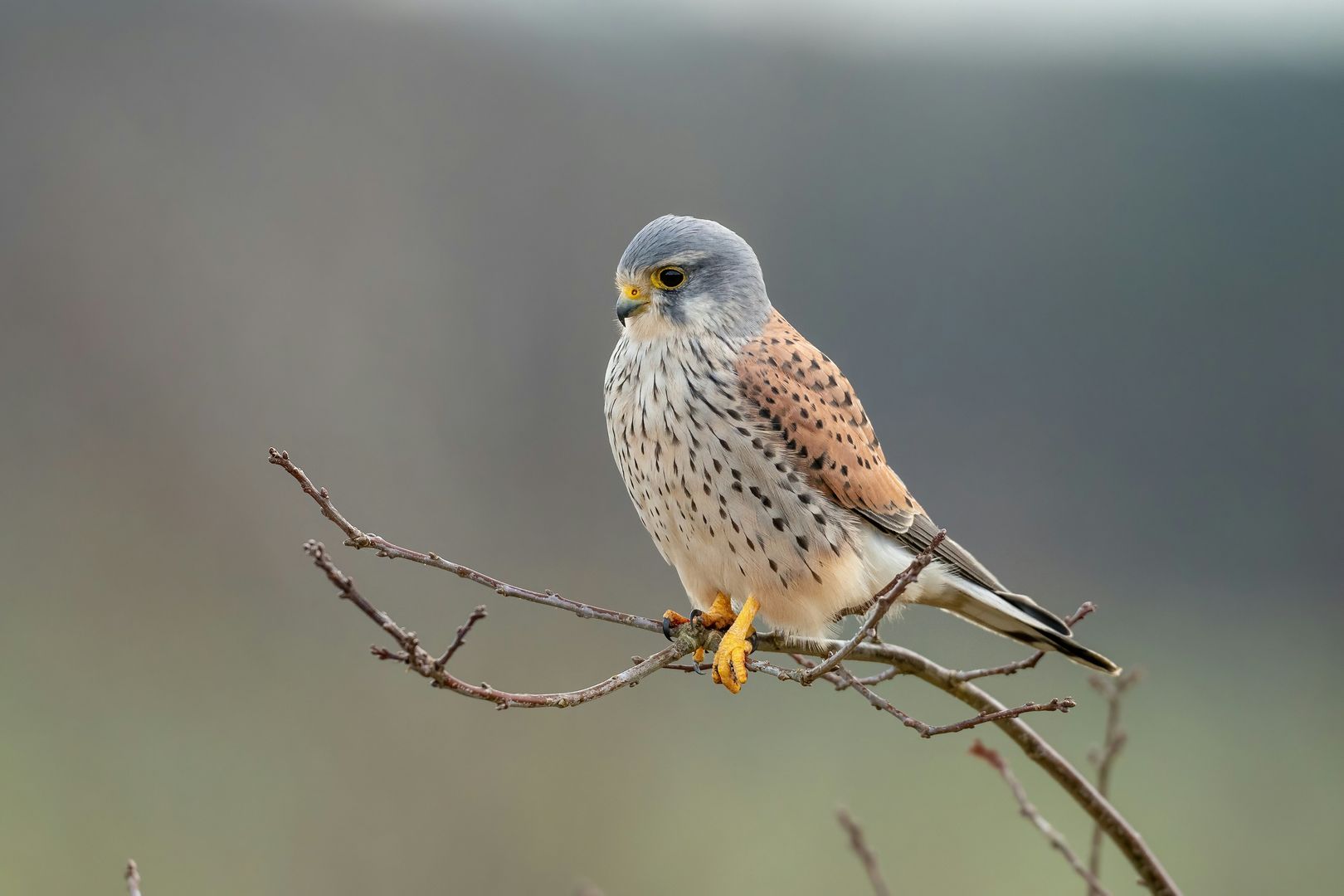
The American Kestrel is the smallest falcon and a colorful winter bird in Wisconsin. It is a carnivorous hunter that "hovers" over open ground to spot large insects and small rodents in the snow. While many migrate, some individuals remain in southern Wisconsin throughout the winter if food is available.
Males feature slate-blue wings and a rusty back, while females are reddish-brown throughout; both sexes have bold black "mustache" stripes on their faces. This tiny but fierce Wisconsin bird sounds like a rapid, shrill klee-klee-klee call.
In Wisconsin winters this bird of prey's range is most common in southern agricultural counties, often seen perched on power lines along rural roadsides.
Learn more about American Kestrels in Wisconsin through the nesting program at Southern Wisconsin Bird Alliance and Central Wisconsin Kestrel Research.
18. Snow Bunting
- Family – Calcariidae
- Species – Plectrophenax nivalis
- Primary Activity Time – Dawn and Dusk
- Diurnal
- Migratory/Visitor
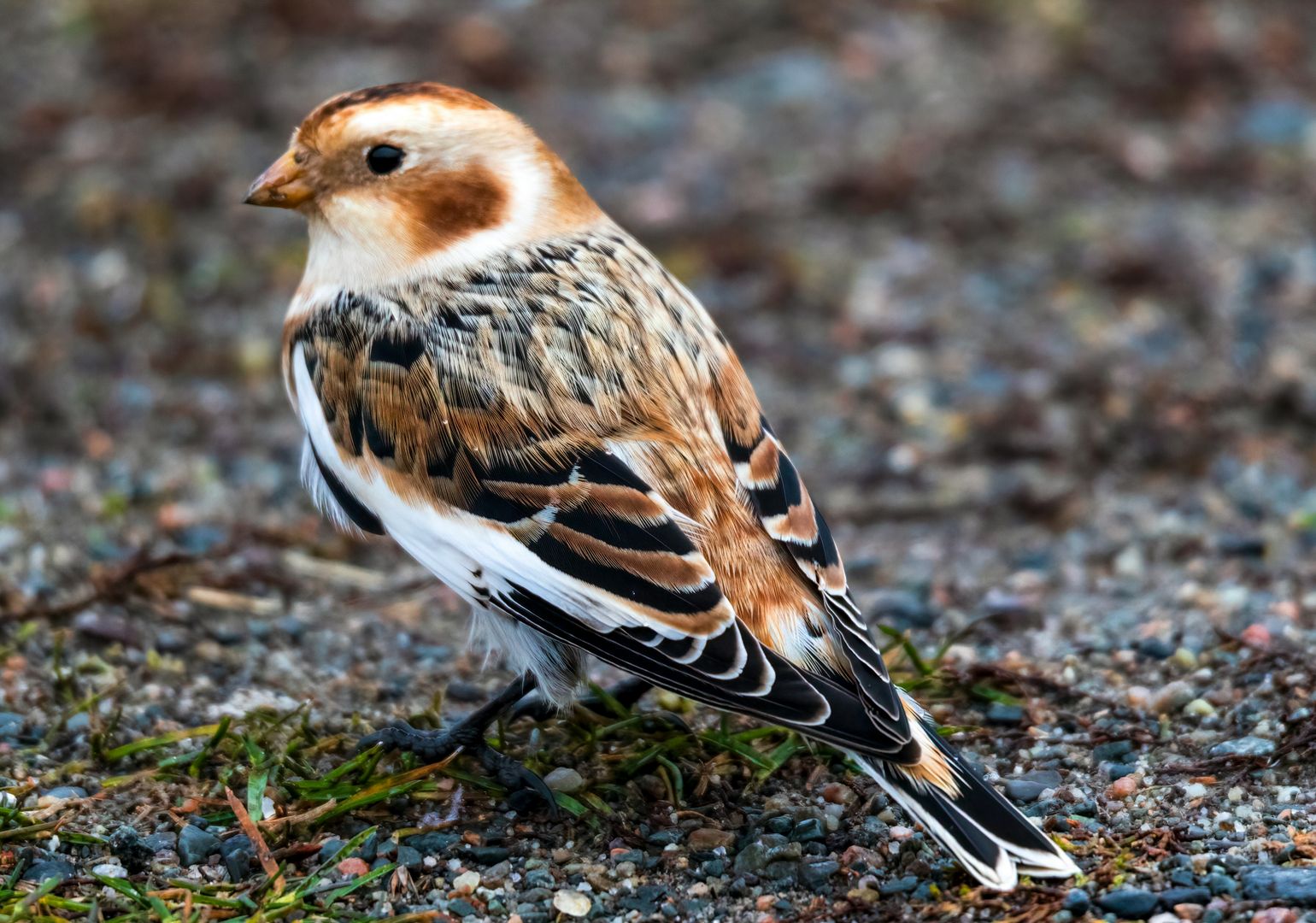
The Snow Bunting is granivorous in winter, picking grass and weed seeds on windswept ground and shorelines, but also takes small invertebrates in thaws.
It sports white and brown patterned plumage in winter with black and white in males by spring. The Snow Bunting’s coloring makes it tricky to identify among other winter birds in Wisconsin but the yellow-brown effused coloring on the female’s breast can help tell it apart.
A Snow Bunting call is mostly dry trills. Its twittering and chirps make it a more difficult bird to ID by sound alone.
The Snow Bunting likes to settle in exposed, snowy expanses forming large, conspicuous winter flocks. You can find it in southern Wisconsin in open fields, shorelines, and farm country including Faville Grove and Goose Pond Sanctuary.
19. Red-tailed Hawk
- Family – Accipitridae
- Species – Buteo jamaicensis
- Primary Activity Time – Daytime
- Diurnal
- Resident Wisconsin Bird
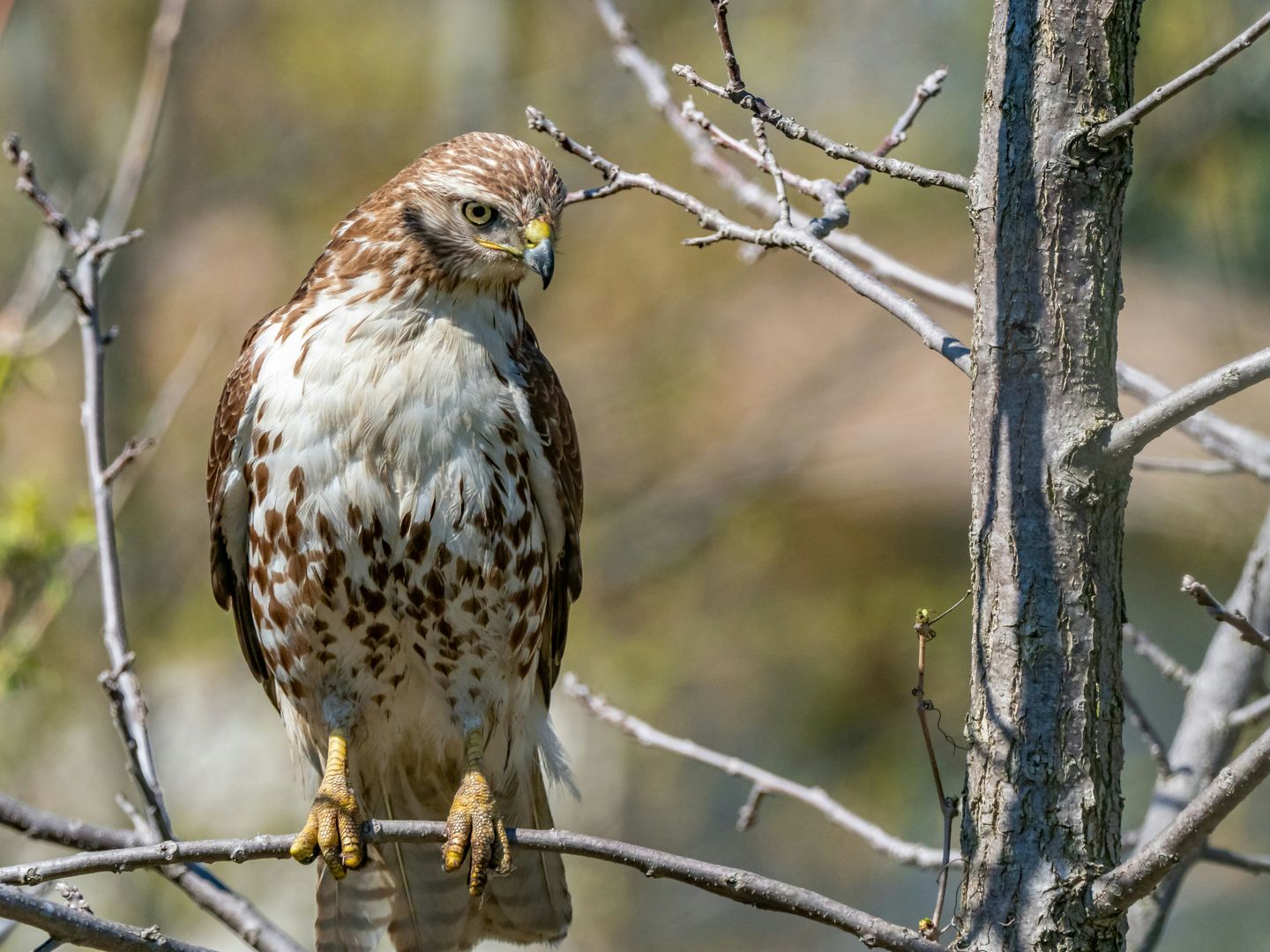
The Red-tailed Hawk is a large, conspicuous winter bird in Wisconsin. It's a carnivorous raptor, primarily hunting small mammals like voles and mice in snow covered fields. It is frequently seen perched on roadside high-tension wires or lone trees overlooking open terrain.
Adults are identified by their broad, rounded wings and a hallmark cinnamon-red upper tail. This majestic Wisconsin bird sounds like a hoarse, screaming keee-aaaaah that is often used in movies to represent eagles.
This Wisconsin bird of prey's range is most visible along highway corridors and agricultural plains where the wind sweeps snow thin making it easier to spot prey.
20. White-throated Sparrow
- Family – Passerellidae
- Species – Zonotrichia albicollis
- Primary Activity Time – Daytime
- Diurnal
- Migrant / Winter Resident
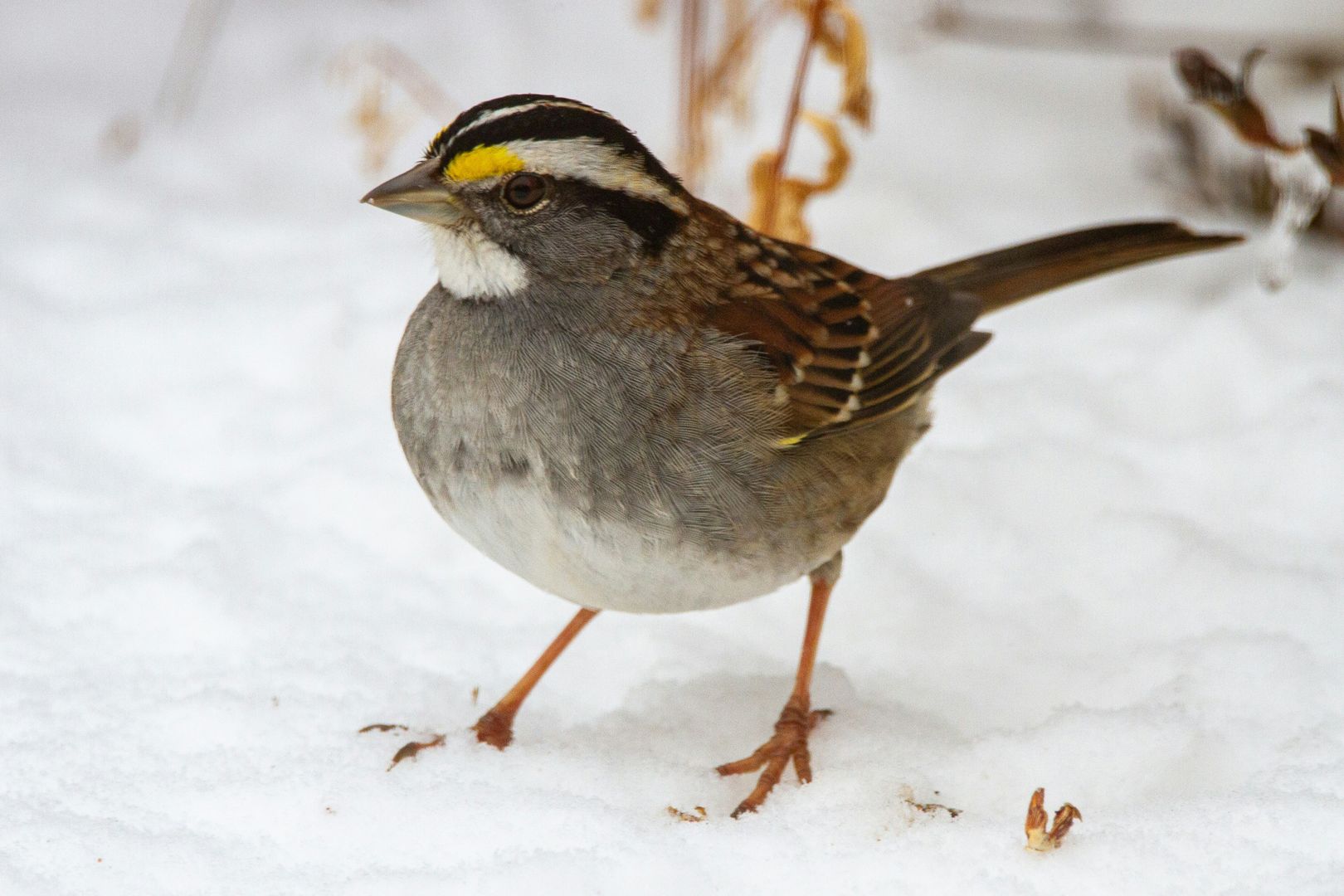
The White-throated Sparrow is a crisp-patterned winter bird in Wisconsin. It is primarily granivorous during the winter, scratching through leaf litter or snow for fallen seeds. They are frequent visitors to platform feeders or ground-feeding stations.
These birds are distinguished by a bright white throat patch and yellow "lores" (the area between the eye and beak). This melodic Wisconsin bird sounds like a clear, whistled song often described as Old-Sam-Peabody-Peabody-Peabody, or Oh sweet Canada, Canada, Canada
In Wisconsin winters, the White-throated Sparrow range is typically restricted to the southern half of the state, where they frequent brush piles and thickets that offer protection from the wind.
21. Sharp-shinned Hawk
- Family – Accipitridae
- Species – Accipiter striatus
- Primary Activity Time – Daytime
- Diurnal
- Partial Migrant
The Sharp-shinned Hawk is a small, agile winter bird in Wisconsin. It is a specialized carnivorous hunter that preys primarily on songbirds, often using the cover of backyard shrubbery to ambush birds at feeding stations. They are the smallest "accipiters" in the state, built for high-speed maneuvering through dense branches.
Adults have a dark blue-gray back and a barred orange-red breast, looking very similar to the larger Cooper’s Hawk but with a squared-off tail tip. An easy way for me to tell them apart is the sharp shinned has a short, fat, neck compared to the Cooper's hawk. This stealthy Wisconsin bird sounds like a high, thin kik-kik-kik, though it is usually silent when hunting near homes.
In Wisconsin winters, the Sharp-shinned Hawk range is widespread, though they are most frequently encountered in suburban backyards where bird feeders concentrate their prey.
22. Red-headed Woodpecker
- Family – Picidae
- Species – Melanerpes erythrocephalus
- Primary Activity Time – Daytime
- Diurnal
- Partial Migrant

The Red-headed Woodpecker is a striking and bold winter bird in Wisconsin. It is an omnivore that is unique for its habit of caching acorns and beech nuts in tree cavities to survive the winter. Unlike many other woodpeckers, its winter presence in the state depends heavily on the success of the autumn "mast" (nut) crop.
Adults are unmistakable with a completely crimson head, a snow-white belly, and large white wing patches that flash brilliantly in flight. This social Wisconsin bird sounds like a harsh, raspy kwrr or chur call that carries well through leafless winter woods.
In Wisconsin winters, the Red-headed Woodpecker range is most stable in the oak-savannas and river bottoms of the central and southern portions of the state, though it's known for irruption with mast crop loss or failure.
23. Snowy Owl
- Family – Strigidae
- Species – Bubo scandiacus
- Primary Activity Time – Dusk
- Nocturnal
- Irruptive
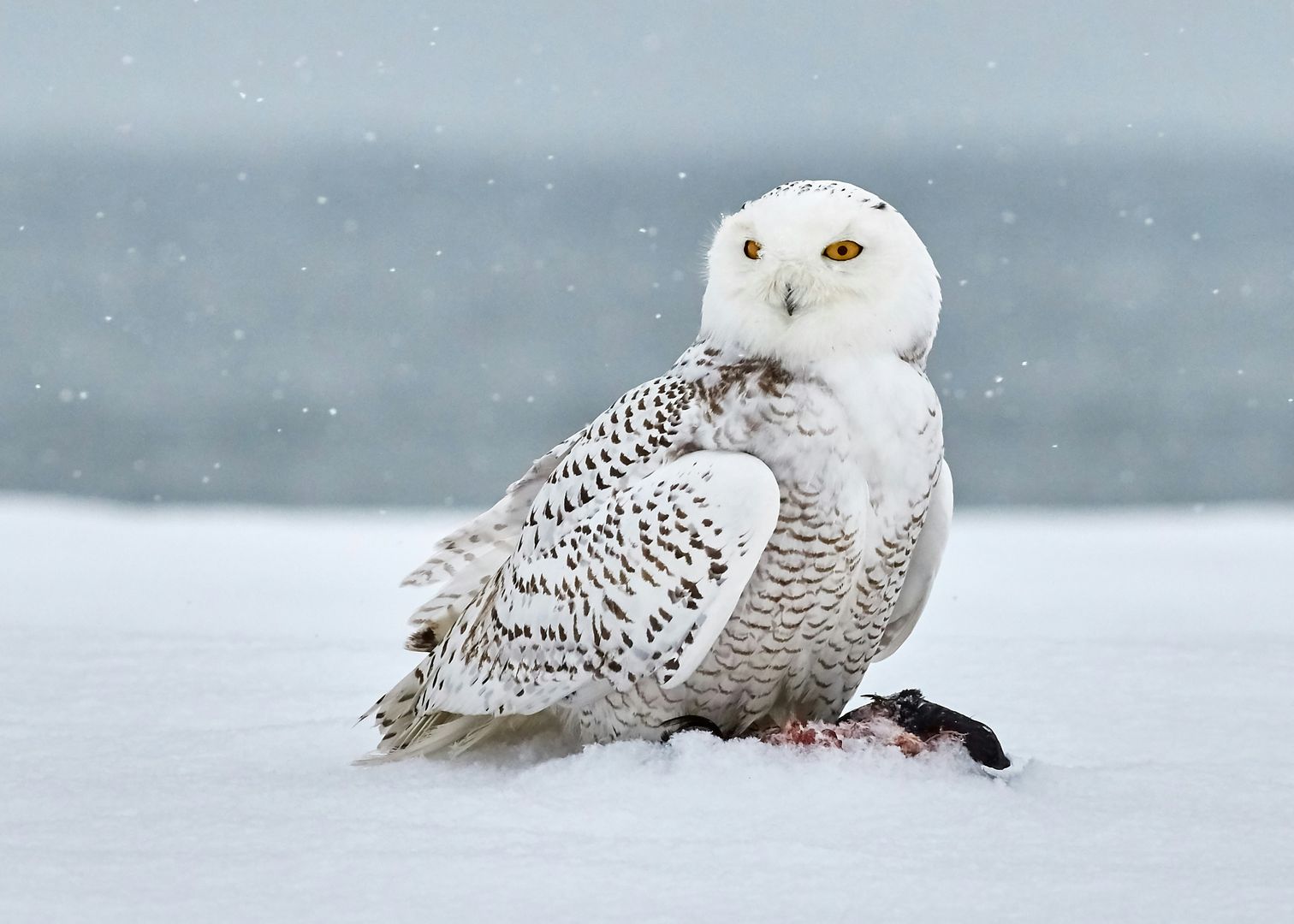
The Snowy Owl is a powerful arctic owl is a bird of prey that mainly eats small mammals especially lemming‑like rodents. Along coasts it will also take waterfowl and shorebirds but in wintering areas it hunts from open perches and ground vantage points.
They’re a large pale white owl– easy to miss against a snowy background. You may know the Snowy Owl from Harry Potter named Hedwig. Hedwig is actually a female Snowy Owl in the books but is portrayed by a male Snowy Owl in the Harry Potter movies! Young or female Snowy Owls show heavier dark barring, whereas adult males can appear nearly pure white.
Snowy Owl size varies in that females are usually larger than males, and their wingspan can reach near 5.5 feet. The call is a booming double hoot despite many winter birds being often silent and relying on visual hunting at low light.
In Wisconsin, Snowy Owl range spans the open shorelines, airports, farm fields, and coastal areas of the Great Lakes and along Lakes Michigan.
24. Red-breasted Nuthatch
- Family – Sittidae
- Species – Sitta canadensis
- Primary Activity Time – Daytime
- Diurnal
- Resident / Irruptive
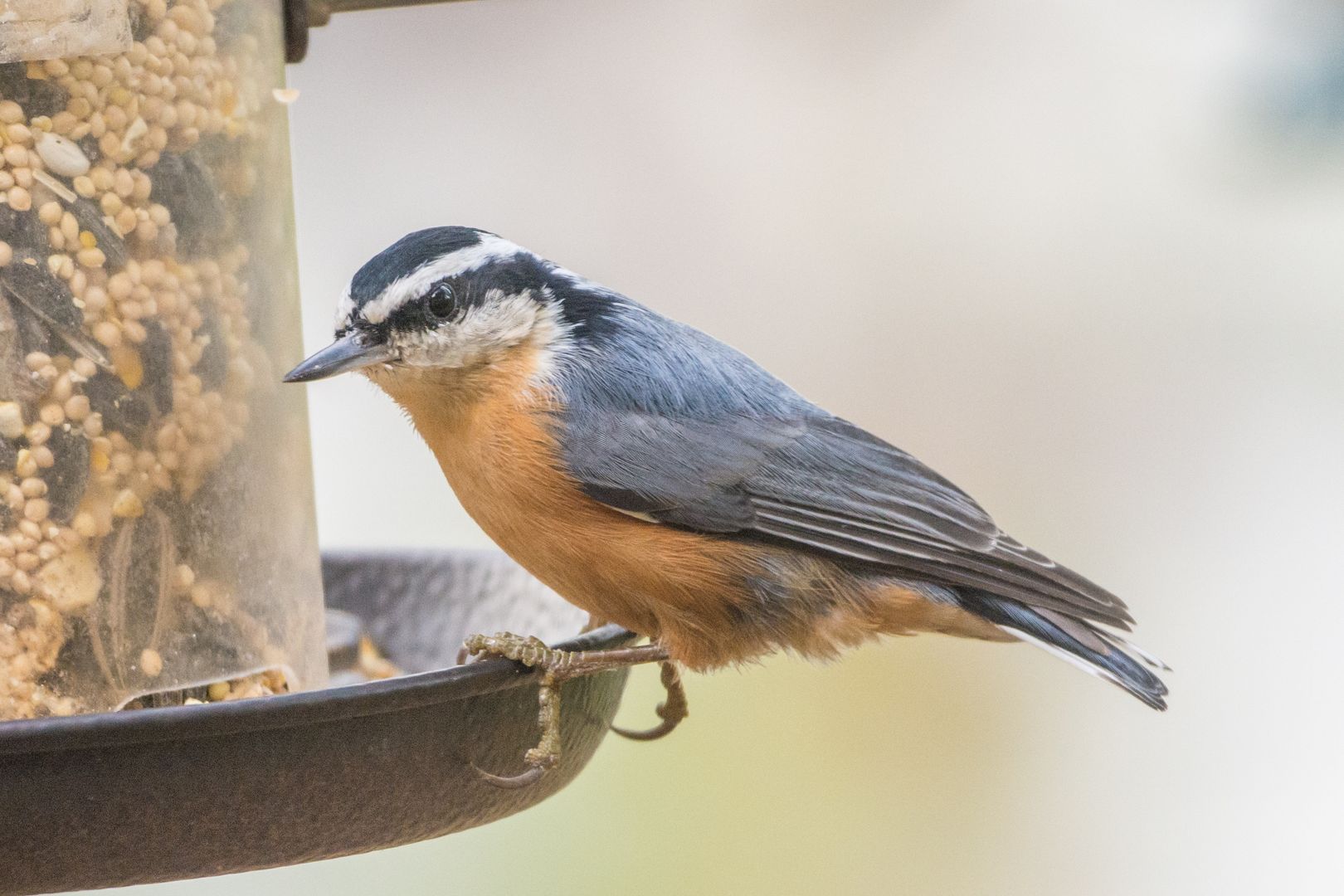
The Red-breasted Nuthatch is a small, energetic winter bird in Wisconsin. It is a granivorous and insectivorous species that favors conifer seeds and will frequently visit feeders for suet and shelled peanuts. Its tiny size and habit of crawling head-first down tree trunks make it a favorite in winter woodlots.
Males show a blue-gray back and a vibrant rusty-cinnamon breast with a sharp black eye stripe, while females are slightly duller. This active Wisconsin bird sounds like a high-pitched, nasal yank-yank, often compared to a tiny toy tin trumpet.
In Wisconsin winters, the Red-breasted Nuthatch range is widespread, though they are most concentrated in northern evergreen forests or near feeders with mature pine trees. While it's considered a year round resident, but large populations can migrate south if crops fail.
25. Pine Siskin
- Family – Fringillidae
- Species – Spinus pinus
- Primary Activity Time – Dawn and Dusk
- Diurnal
- Irruptive
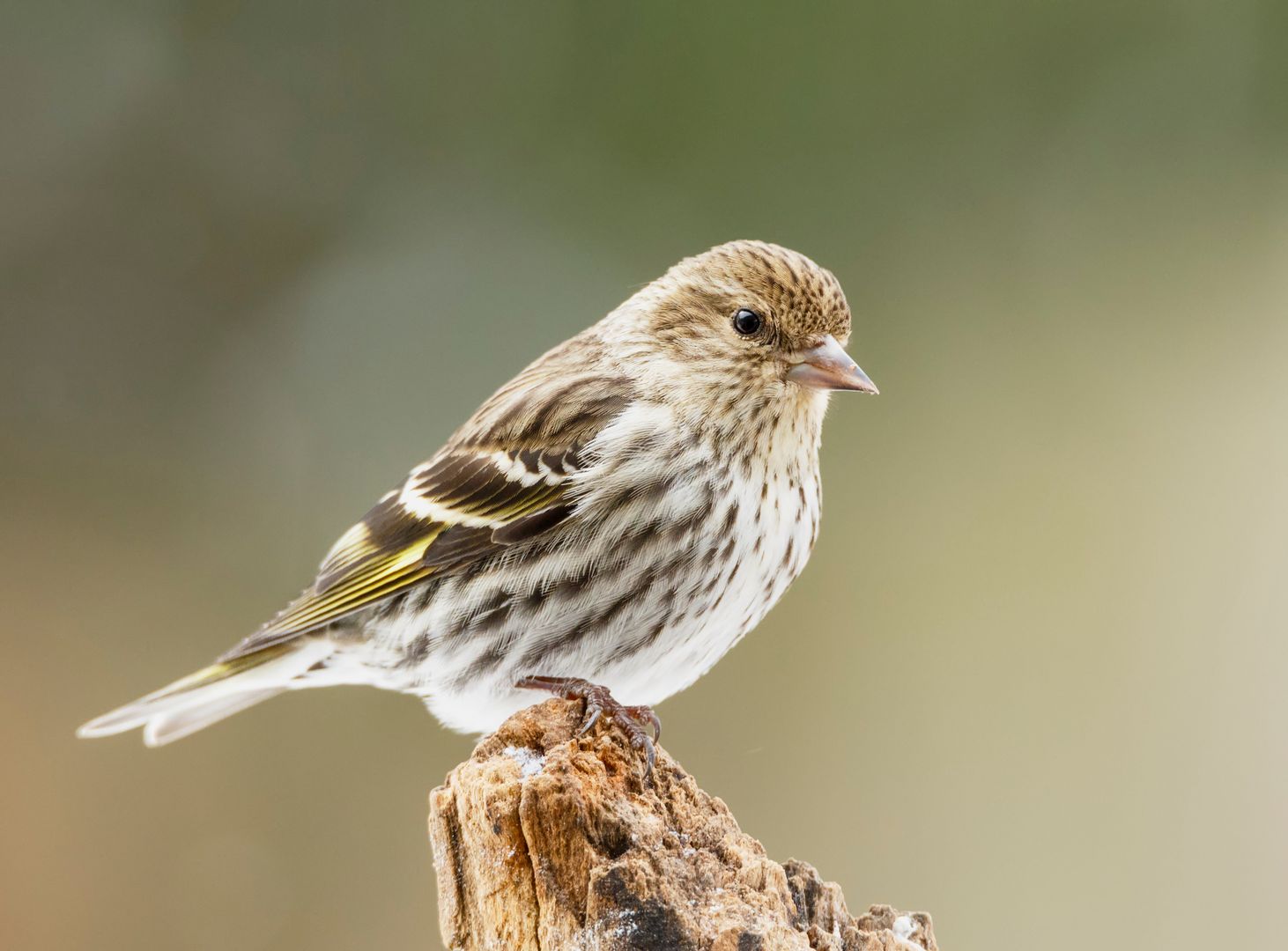
The Pine Siskin is a strongly granivorous bird with a fine bill. It often feeds on conifer seeds, alders, and birches, and readily visits nyjer seed and sunflower chips at feeders. It supplements with small insects in mild spells.

They’re streaky brown with subtle yellow flashes in the wings and tail.
A Pine Siskin call is buzzy, often giving rising “zreee” sounds and chatter. They roam widely with cone availability. Their appearance won’t make them easy amidst Michigan bird identification but their call makes them a slightly easier bird to ID by sound.
Its appearances among the winter birds in Michigan during their irruption can vary year to year. Numbers can build statewide in irruption winters making the Pine Siskin range quite expansive as they flock to conifer stands and well‑stocked feeders and can be an uncommon summer resident in Wisconsin's conifer forests.
26. Evening Grosbeak
- Family – Fringillidae
- Species – Coccothraustes vespertinus
- Primary Activity Time – Dawn and Dusk
- Crepuscular
- Irruptive
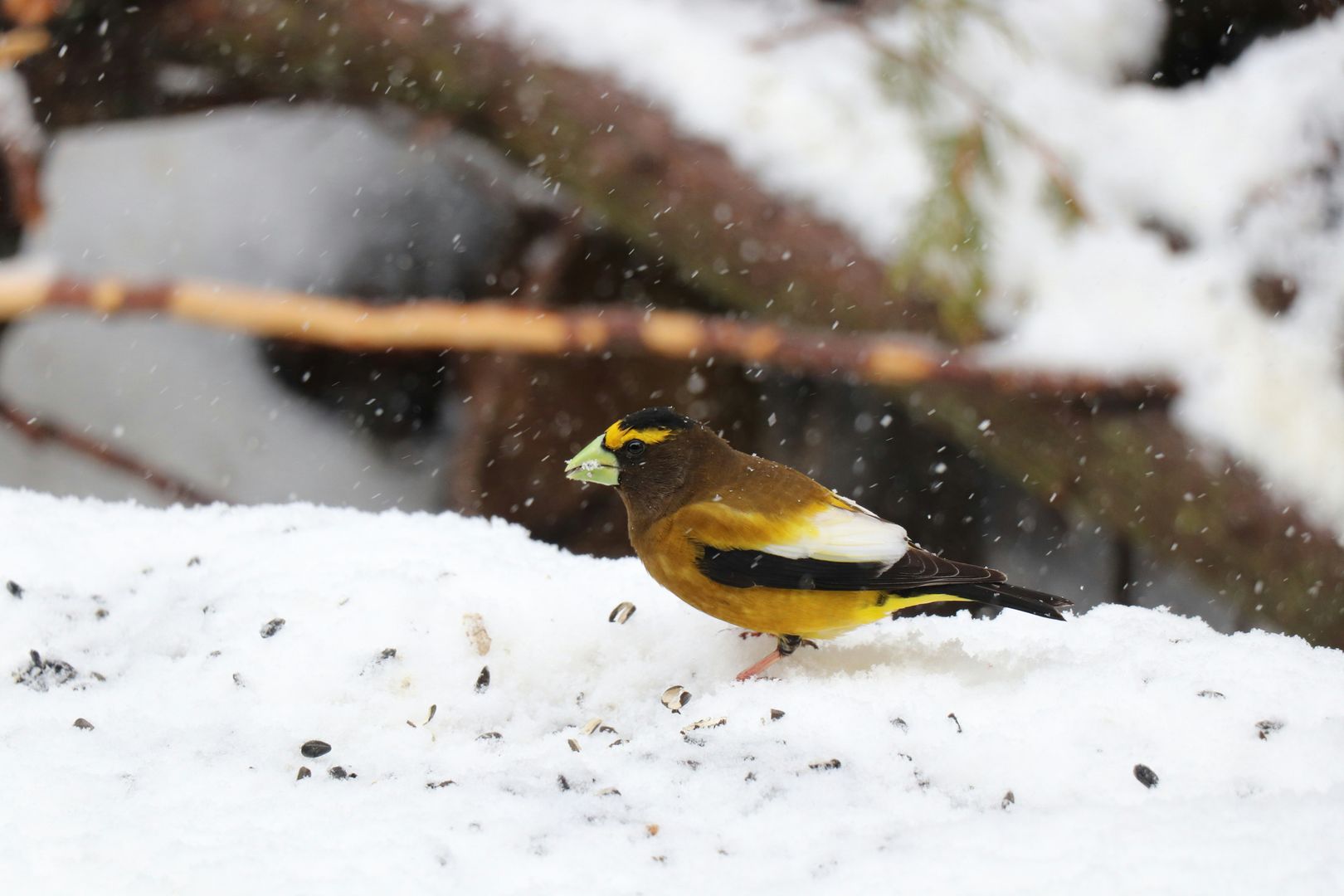
A powerful seed‑cracker with a massive conical bill, the Evening Grosbeak is chiefly granivorous and also takes buds and berries. In winter it concentrates at feeders with platform space and abundant sunflower seed. An Evening Grosbeak diet normally includes maple keys and boxelder samaras, too.
Males are boldly golden‑yellow with black wings and a crisp white wing patch while female Evening Grosbeaks are gray‑brown with softer yellow tones. The Evening Grosbeak call is one of the most standout of all Michigan bird sounds on our list– their loud, flute-like “cheer up” and “cleep” sounds make them an easy bird to ID by sound.
Irruptions bring birds widely into northern Michigan, most reliably in the north woods and towns of the Chequamegon-Nicolet National Forest.
What birds have you seen in Wisconsin lately?
Share them on the Sparkbird App! Available in the Apple App Store.
- Related: How to Use the Sparkbird App
Happy Birding!
No comments yet.