
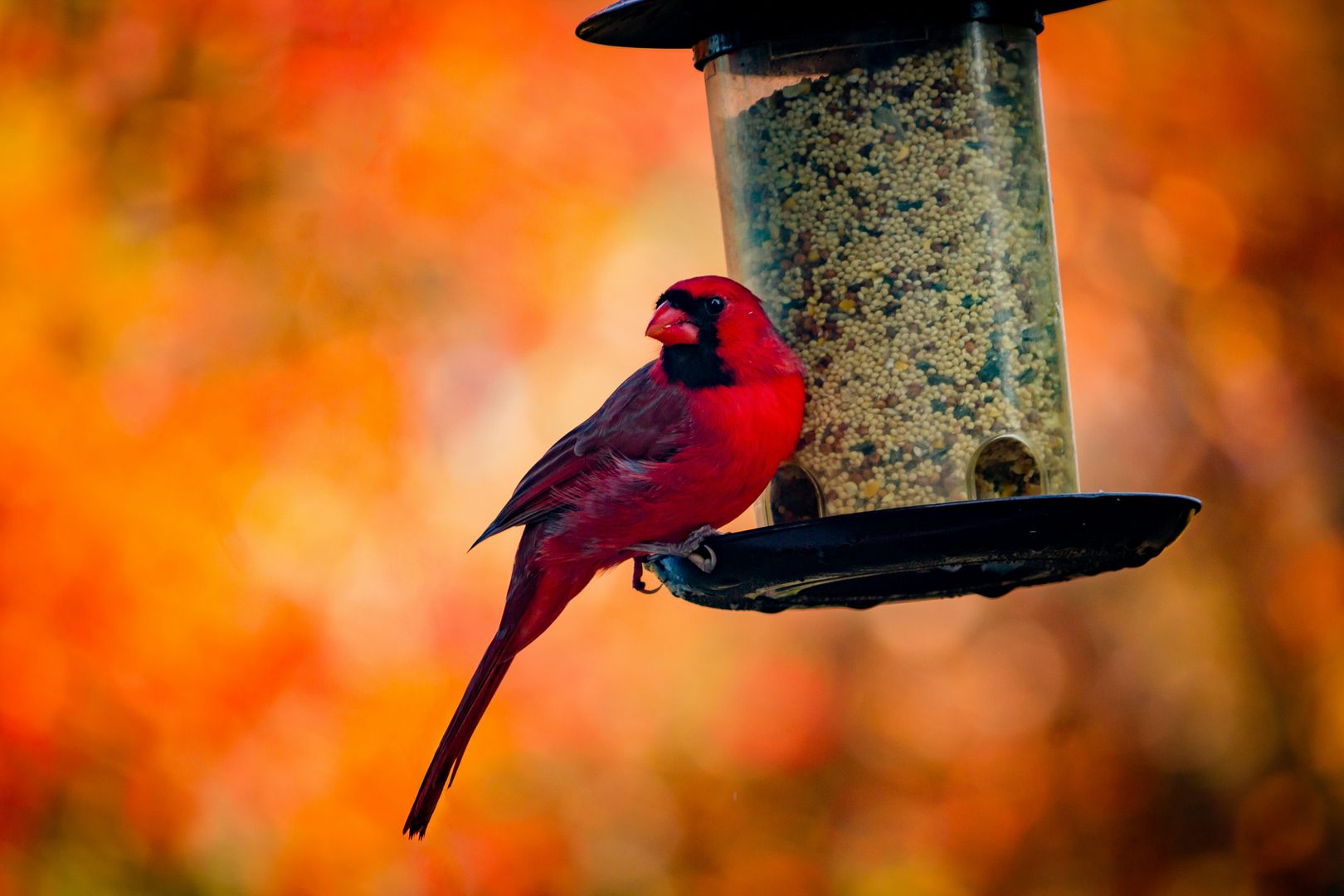
Everyone gets very excited about the leaves in autumn, which is fair, but leaves don't sing, and half the "leaves" rustling in your hedge right now are actually sparrows.
This list covers 25 fall birds worth looking for, sorted into three groups: migrants just passing through, winter arrivals settling in, and year-round birds that show up in a new outfit. Each entry notes where in the US you're most likely to see it and when.
Before You Head Out, Put the Credit Card Down
You don't need new gear to enjoy the birds of fall. Use the binoculars already in the hall closet, borrow a pair from a neighbor, or try a few at a local meetup through one of the bird watching groups in your state, where somebody always brings a spare. Borrowing is better than buying for your wallet and for the planet, and most of the birds below can be spotted with nothing more than a window and a cup of coffee.
Timing matters more than equipment. Peak fall migration in the contiguous US runs from roughly mid-September to mid-October, and you can read more about when fall migration peaks and why in our full guide.
Fall Migration Birds Passing Through
These are the birds that migrate in the fall straight past your house on their way somewhere warmer. Blink and they're in Panama.
1. Broad-winged Hawk
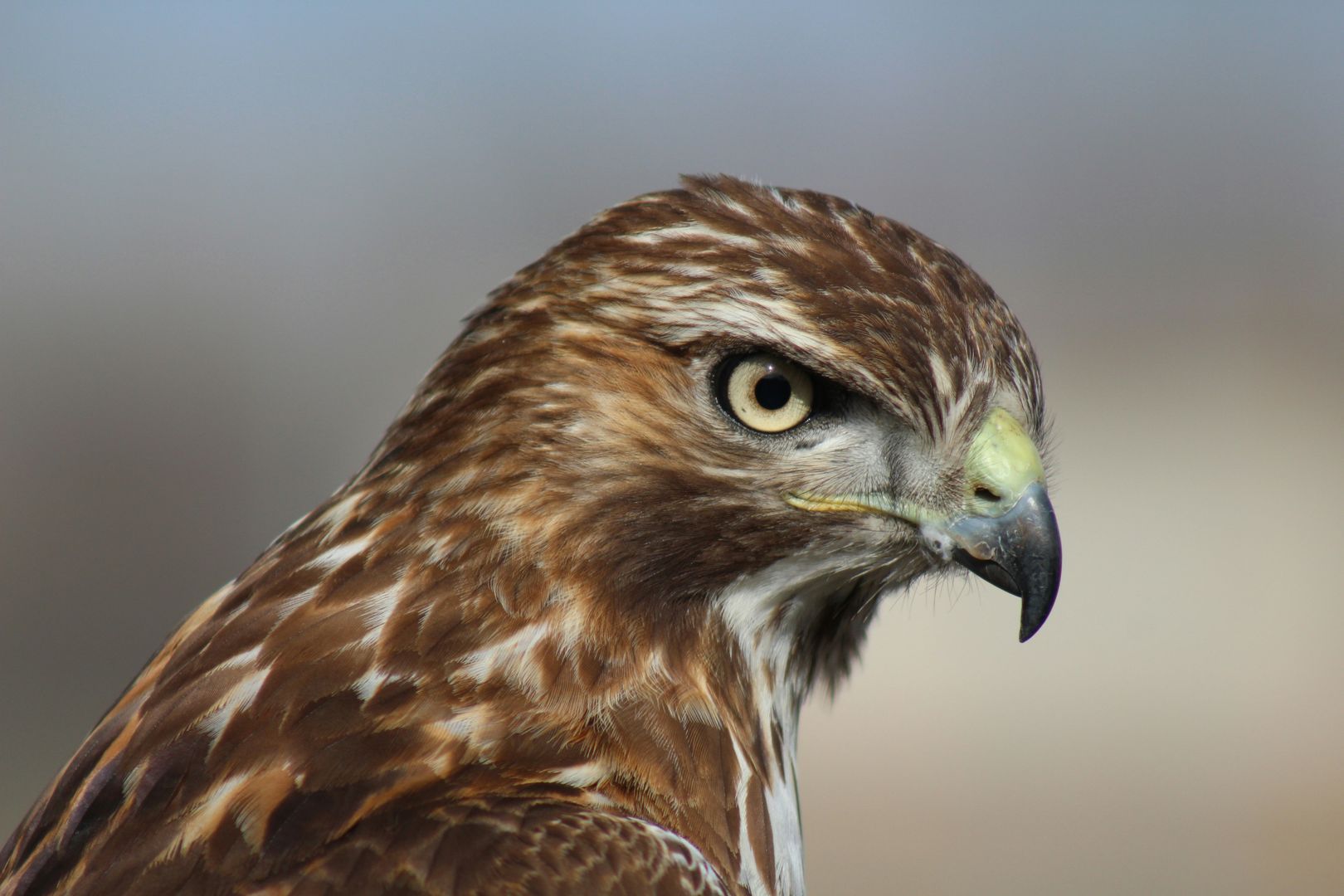
The headliner of eastern hawk-watching season. Broad-winged Hawks travel south in swirling flocks called "kettles" that can hold thousands of birds at a time, and at Hawk Mountain in Pennsylvania roughly 95% of them pass during a two-week window in mid-September. Tracked birds have flown an average of 4,350 miles to northern South America.
Where and when: The East, especially along ridgelines and at hawk-watch sites, mid-September.
2. Swainson's Hawk
The western answer to the kettle. Swainson's Hawks make one of the longest migrations of any American raptor, all the way to Argentina, in flocks that can number in the tens of thousands. Off the breeding grounds they eat almost nothing but insects, mostly grasshoppers and dragonflies, which feels like a strange diet for a hawk but who am I to judge.
Where and when: Great Plains and the West, over open country, peaking in September.
3. Blackpoll Warbler
A half-ounce bird that flies nonstop for up to three days over the Atlantic Ocean, covering more than 1,800 miles, after eating enough to double its body weight. In fall it also trades its black cap for yellow-green plumage, so the bird that looked like a tiny chickadee in May now looks like an entirely different bird. (This is why fall warblers have their own support group, and their own post: [how to tell confusing fall warblers apart](PENDING — cluster post not yet published).)
Where and when: Mostly the East and Atlantic Coast, during peak migration from mid-September to mid-October.
4. Palm Warbler
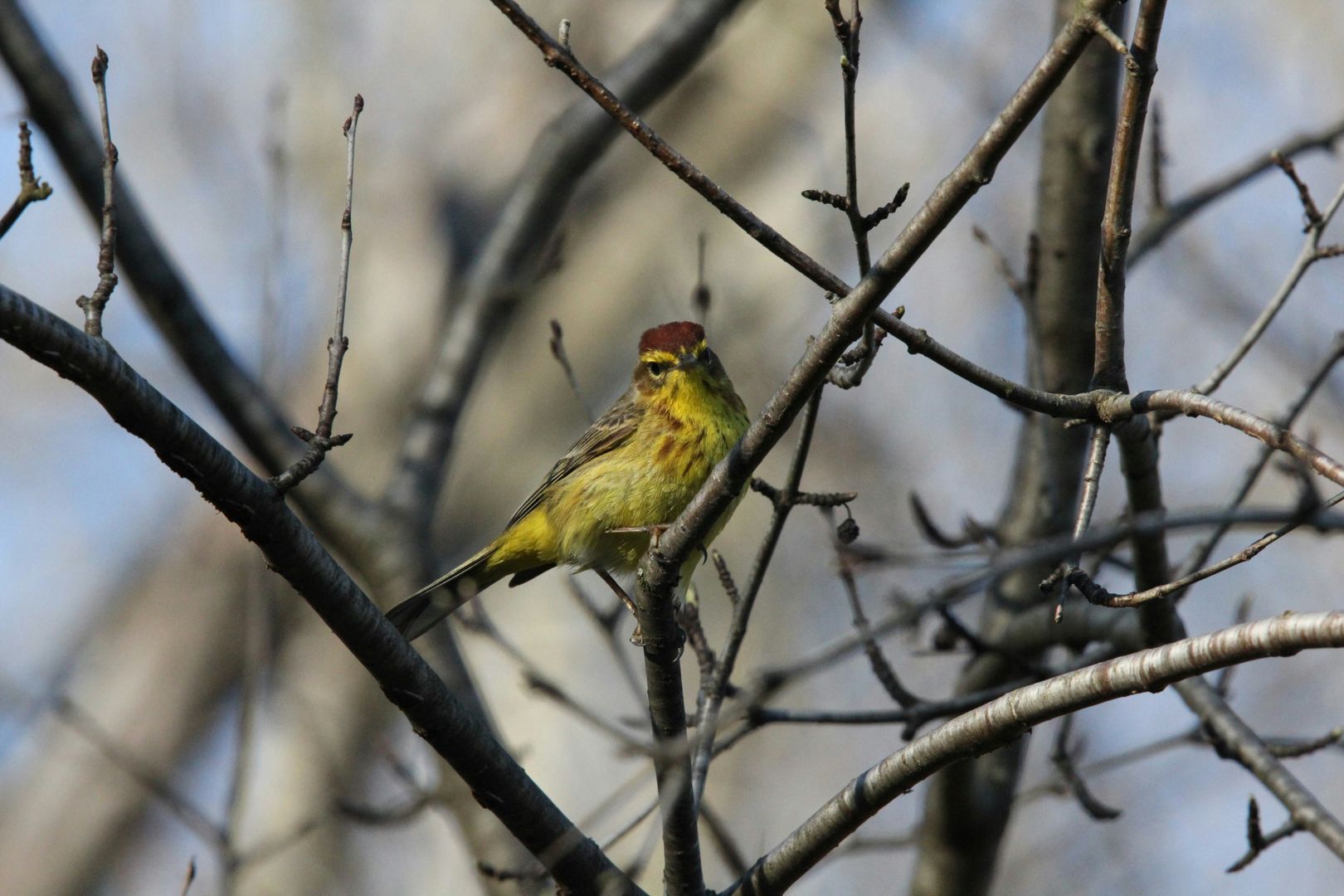
A warbler that refuses to act like one. Palm Warblers walk around on the ground and wag their tails up and down constantly, which makes them one of the easiest fall warblers to name. Despite the tropical name, they're one of the northernmost-breeding warblers on the continent.
Where and when: The "Yellow" form moves east of the Appalachians, the "Western" form through the Mississippi Valley. Look on lawns, field edges, and parking-lot shrubs during peak fall migration.
5. Swainson's Thrush
A brown thrush with buffy "spectacles" around its eyes, more often heard than seen. Like most of our songbirds it migrates at night, so listen for its soft, bell-like peeps overhead during what I'm now officially calling thrush hour. Sparkbird's CEO says that isn't a real term. I told him that it is, as of this paragraph.
Where and when: Widespread in forested areas across most of the US during fall migration.
6. Ruby-throated Hummingbird
Eastern North America's only breeding hummingbird is heading out. Males may start migrating by early August, with females and young following later. Keep your feeder up and clean into fall, since stragglers keep passing through. Our hummingbird migration guide covers the full route.
Where and when: The East, late summer into fall.
7. Rufous Hummingbird
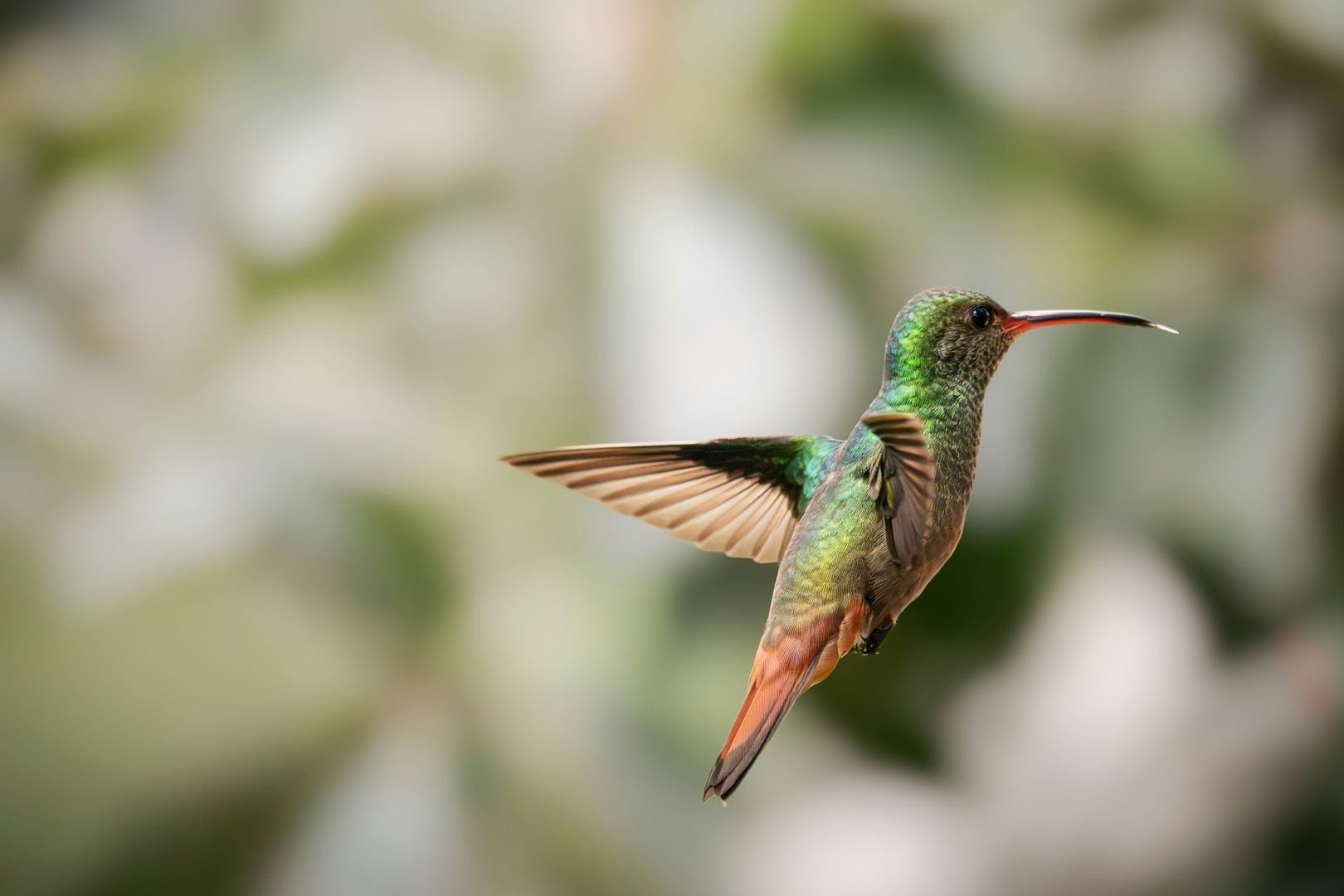
Three inches long, roughly 3,900 miles one-way from Alaska to Mexico, and extremely territorial at all times of year, attacking hummingbirds much larger than itself. It makes a clockwise loop of the West, heading south along the Rocky Mountains starting as early as July. It's also the western hummingbird most likely to turn up at an eastern feeder in fall.
Where and when: The Rockies and the West, July through September. East Coast birders, keep an eye on that late feeder.
8. Chimney Swift
Picture a cigar with wings. At the end of summer, large numbers of Chimney Swifts roost together in a single chimney, funneling down at dusk in swirling, tornado-like flocks that can reach 10,000 birds before they leave for the upper Amazon basin. On cold nights it can be 70°F warmer inside that chimney than outside.
Where and when: Towns and cities across the eastern half of the US, at dusk around old brick chimneys, late summer into early fall.
9. Sandhill Crane
You'll hear them before you see them: a loud, rolling, trumpeting call. In migration they fill the sky by the hundreds and thousands, and many winter in immense flocks at places like Bosque del Apache in New Mexico and Anahuac National Wildlife Refuge in Texas.
Where and when: The Midwest, Great Plains, and Southwest through fall, with big winter gatherings in New Mexico and Texas.
Winter Arrivals: The Autumn Birds That Stay Until Spring
These autumn birds breed up north and spend the cold months with us, which makes them the best kind of houseguest: they arrive with the weather and leave in spring without being asked.
10. Dark-eyed Junco
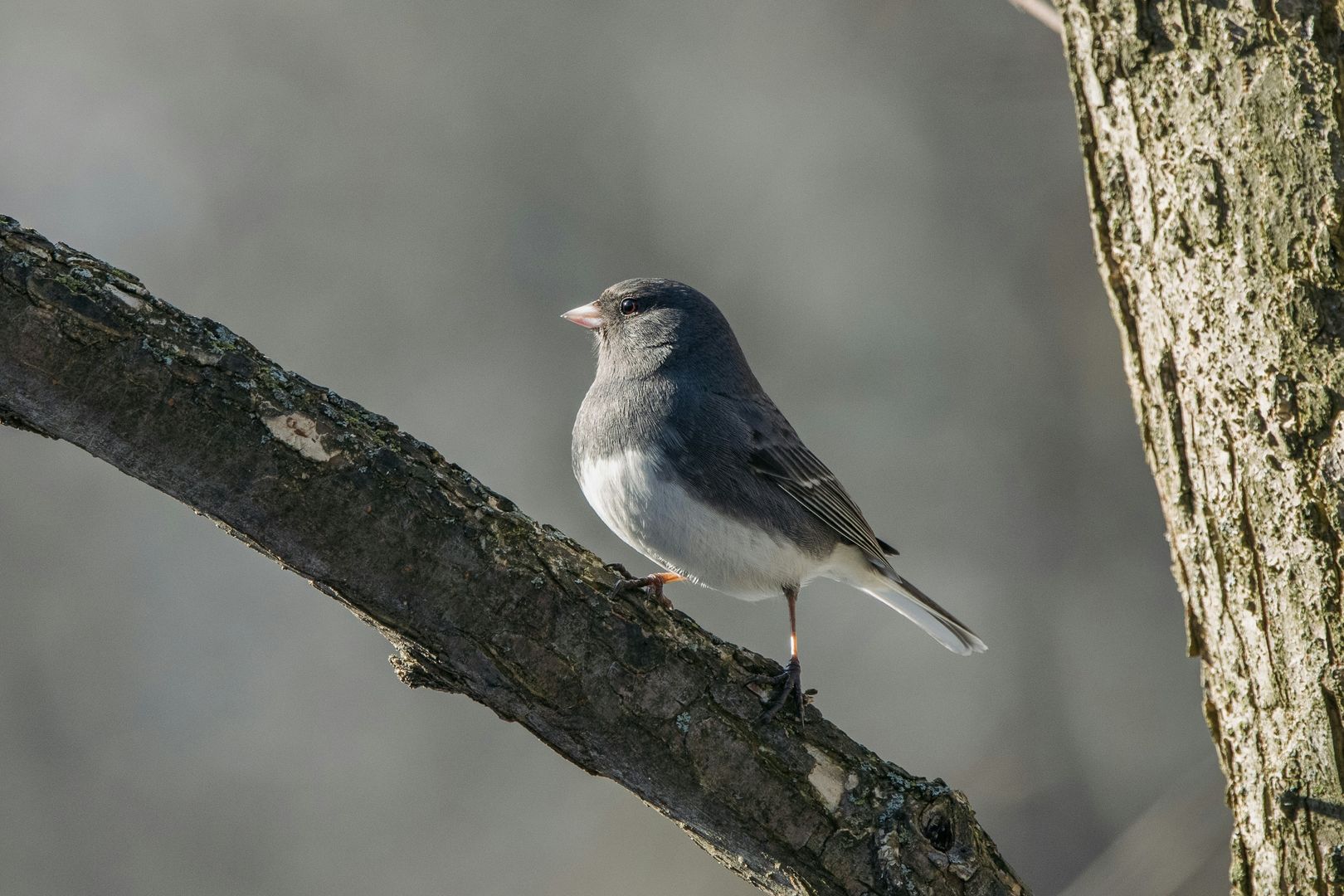
Nicknamed "snowbirds," and unlike the retirees who share that name, they fly south to New Jersey instead of Florida. Across most of the eastern US, juncos appear as winter sets in and retreat north in spring. Watch for the bright white outer tail feathers they flash as they flush from the ground.
Where and when: Nearly everywhere in winter. The gray "Slate-colored" form is the eastern bird, and the hooded "Oregon" form is the western one. Arrives as the weather turns cold.
11. White-throated Sparrow
Crisp black-and-white (or tan) head stripes, a yellow spot by the eye, and a white throat patch. Its whistled song is usually remembered as Oh-sweet-Canada, which is a lot of national pride for a sparrow. It comes in white-striped and tan-striped forms, and birds almost always pair with the opposite form.
Where and when: Most of the East and South, plus California, fall through spring. Look under feeders in leaf litter.
12. White-crowned Sparrow
Bold black-and-white crown stripes on a clean gray face. Alaskan White-crowned Sparrows migrate about 2,600 miles to winter in Southern California, and one bird was tracked moving 300 miles in a single night. Young birds have brown-and-tan stripes instead.
Where and when: Across much of the US from about September to March or April. Some western populations stay year-round.
13. Golden-crowned Kinglet
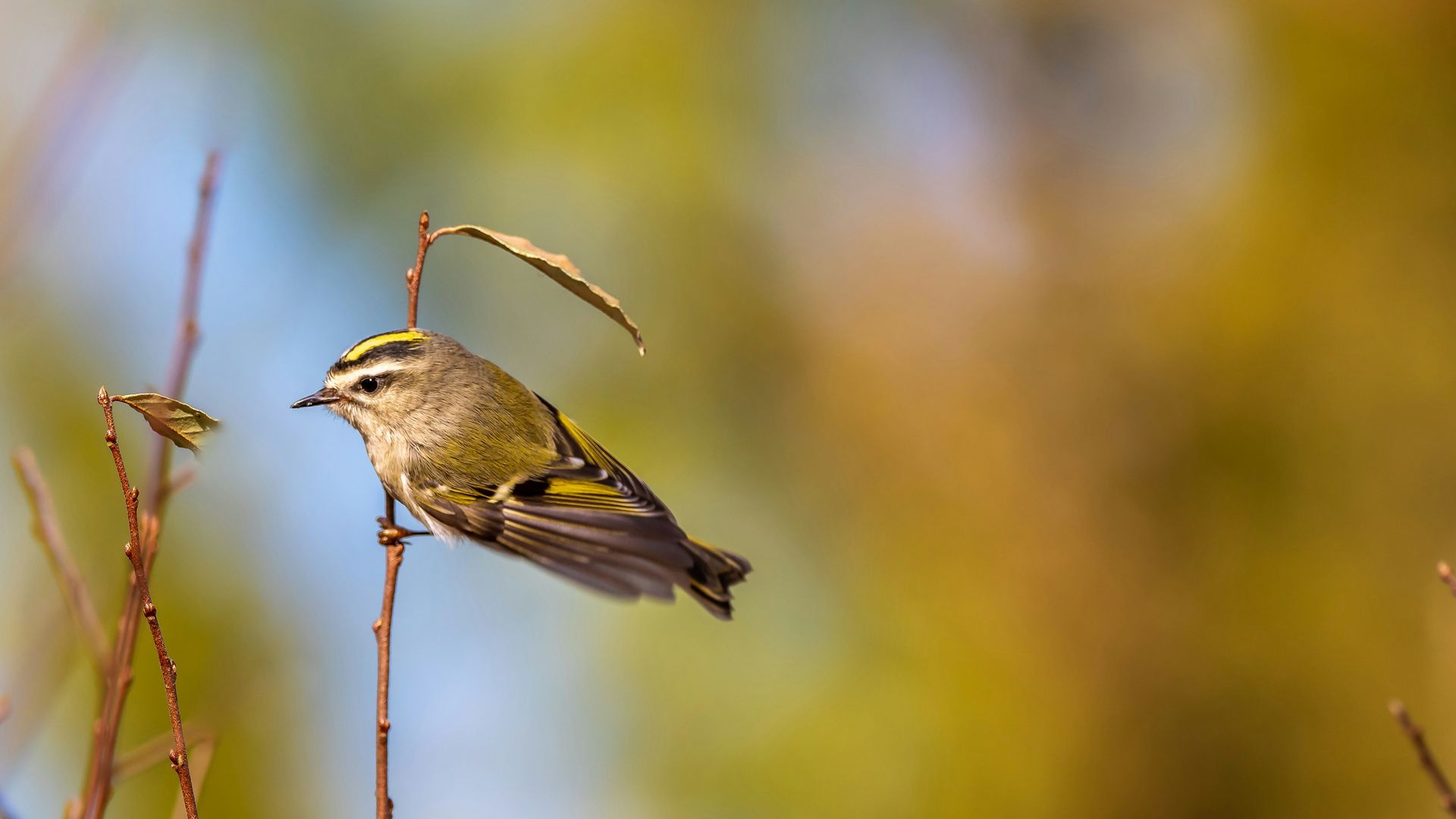
Barely bigger than a hummingbird, with a striped face and a yellow crown stripe. It routinely spends winter where nighttime temperatures fall below -40°F, and each nostril is covered by a single tiny feather. I need three blankets and a heated mattress pad. This bird needs a nose feather.
Where and when: Conifers across most of the US in fall and winter. Listen for very high, thin calls.
14. Ruby-crowned Kinglet
Tiny, green-gray, with a white eye ring and a habit of constantly flicking its wings. The male's red crown usually stays hidden, so don't feel cheated if you never see the "ruby." It's widespread and quite common in winter and on migration.
Where and when: Shrubby edges and woodlands nearly everywhere, from fall through winter.
15. Yellow-rumped Warbler
Birders call it the "butter butt," and once you see that yellow rump patch you'll never call it anything else. It is the only warbler that can digest the wax in bayberries and wax myrtles, which lets it winter much farther north than other warblers.
Where and when: Coasts and the southern US all winter, and nearly everywhere in big numbers during fall migration. The East has the white-throated "Myrtle" form and the West has the yellow-throated "Audubon's" form.
16. Hermit Thrush
A brown thrush with a spotted breast and a reddish tail that sets it apart from its look-alike cousins. It spends summer in far northern forests and becomes a frequent winter companion across much of the southern US. It's often the only brown thrush around in winter, which narrows things down nicely.
Where and when: Woodland understories across the southern and coastal US, fall through spring.
17. Red-breasted Nuthatch
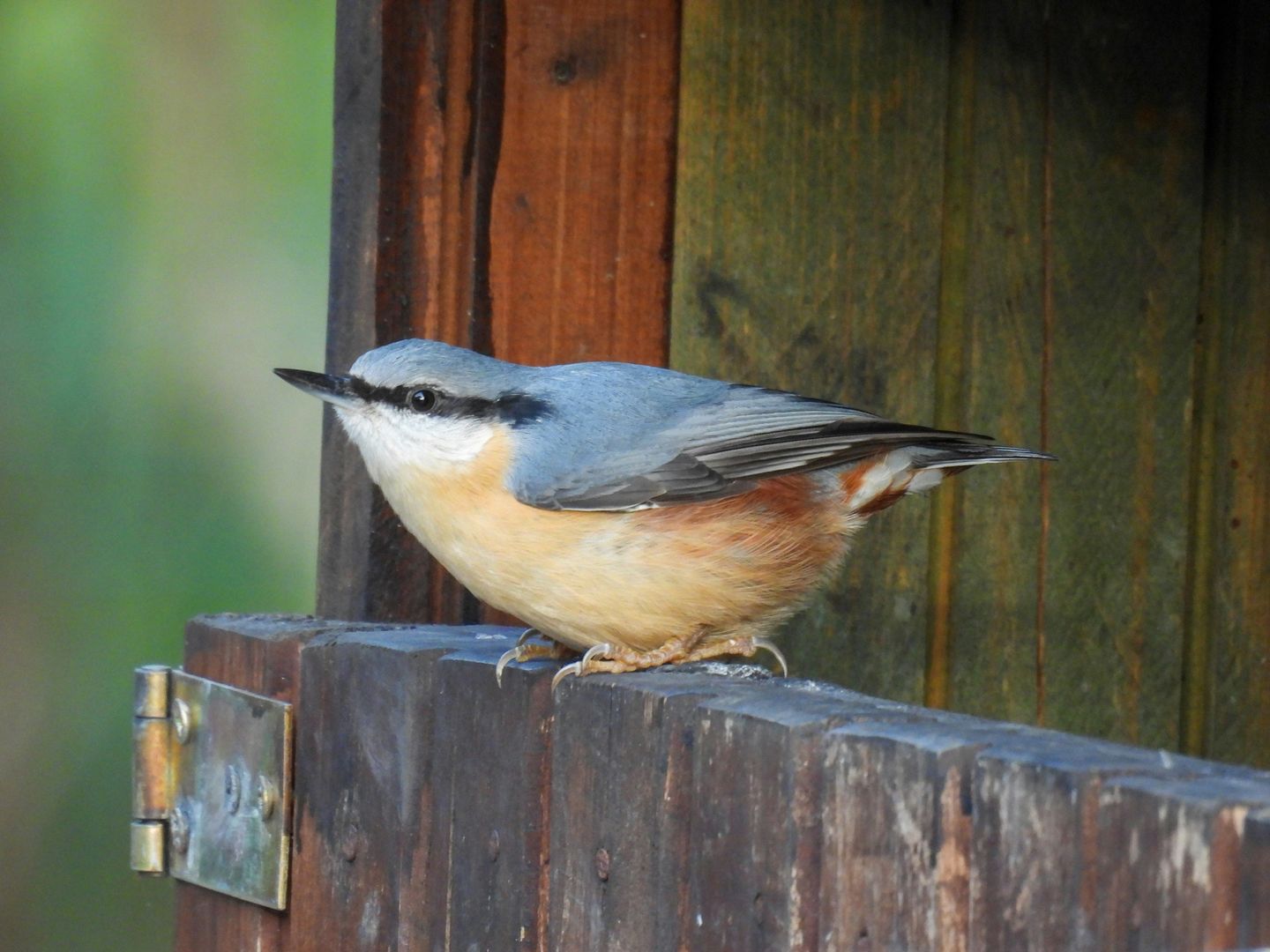
A small nuthatch with a black eye line and a rusty belly whose yank-yank call sounds like a tiny tin horn honking in the treetops. In irruption years it heads south earlier than most irruptive species, sometimes starting in July and reaching its southernmost point by September or October.
Where and when: Conifers and feeders, mainly in the northern and eastern US, more widely in irruption years.
18. Pine Siskin
A streaky little finch that flashes yellow wing stripes in flight. Siskins are nomads that may monopolize your thistle feeder one winter and skip you entirely the next, with big irruptions into the South and East every couple of years. Keep feeders clean when they show up, since they crowd together.
Where and when: Unpredictable. Northern states most winters, the South and East in irruption years.
19. Snowy Owl
The celebrity of winter birding. In some years Snowy Owls migrate to southern Canada and the northern half of the contiguous US, and in other years they barely show up at all. They hunt by day and like wide-open spaces, so scan fields, dunes, beaches, and even airport fields for a white lump on a fence post. Then read our facts about snowy owls while you wait for it to move (it'll not).
Where and when: Northern states, Great Lakes, and Atlantic shorelines, in winter, during irruption years. Please give them plenty of space.
20. Bufflehead
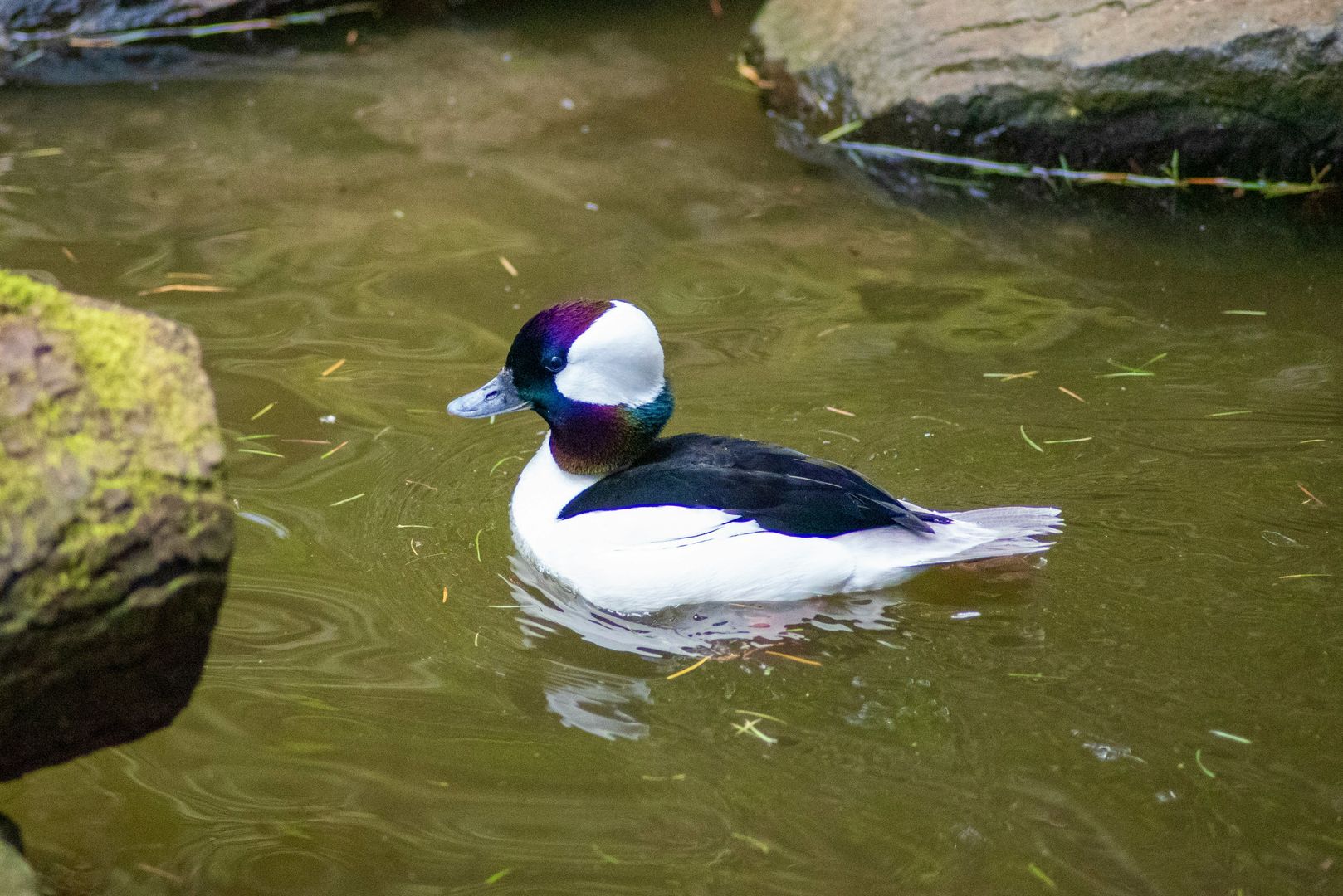
A buoyant little duck with a big head that disappears underwater and pops back up somewhere else, like a magician who only knows one trick. Males are crisp black and white with a green-purple sheen. It nests almost exclusively in old Northern Flicker holes up north and winters on bays, reservoirs, and lakes across the southern half of the continent.
Where and when: Coasts, lakes, and reservoirs across most of the US, fall through spring.
Year-Round Birds of Fall in Disguise
Some birds never leave, but they do change. If your regulars look a little off this time of year, that isn't your eyes. (For the full roster of stay-at-home species, see our upcoming post on [which birds don't migrate](PENDING — cluster post not yet published).)
21. American Goldfinch
The bright yellow bird of summer swaps to a drab, olive-brown look for winter. American Goldfinches are unusual among goldfinches in molting their body feathers twice a year, once in late summer and again in late winter. It's the bird equivalent of trading a sundress for a beige fleece. Look for the black wings and conical bill.
Where and when: Nearly everywhere in the US, all year. The color change is noticeable by early fall.
22. European Starling
In fall, starlings grow fresh feathers with bold white tips, so they look covered in white spots. Those tips wear away by spring to reveal the glossy, dark summer bird underneath. In other words, a star is worn.
Where and when: Everywhere, in big fall flocks over fields and parking lots.
23. Cedar Waxwing
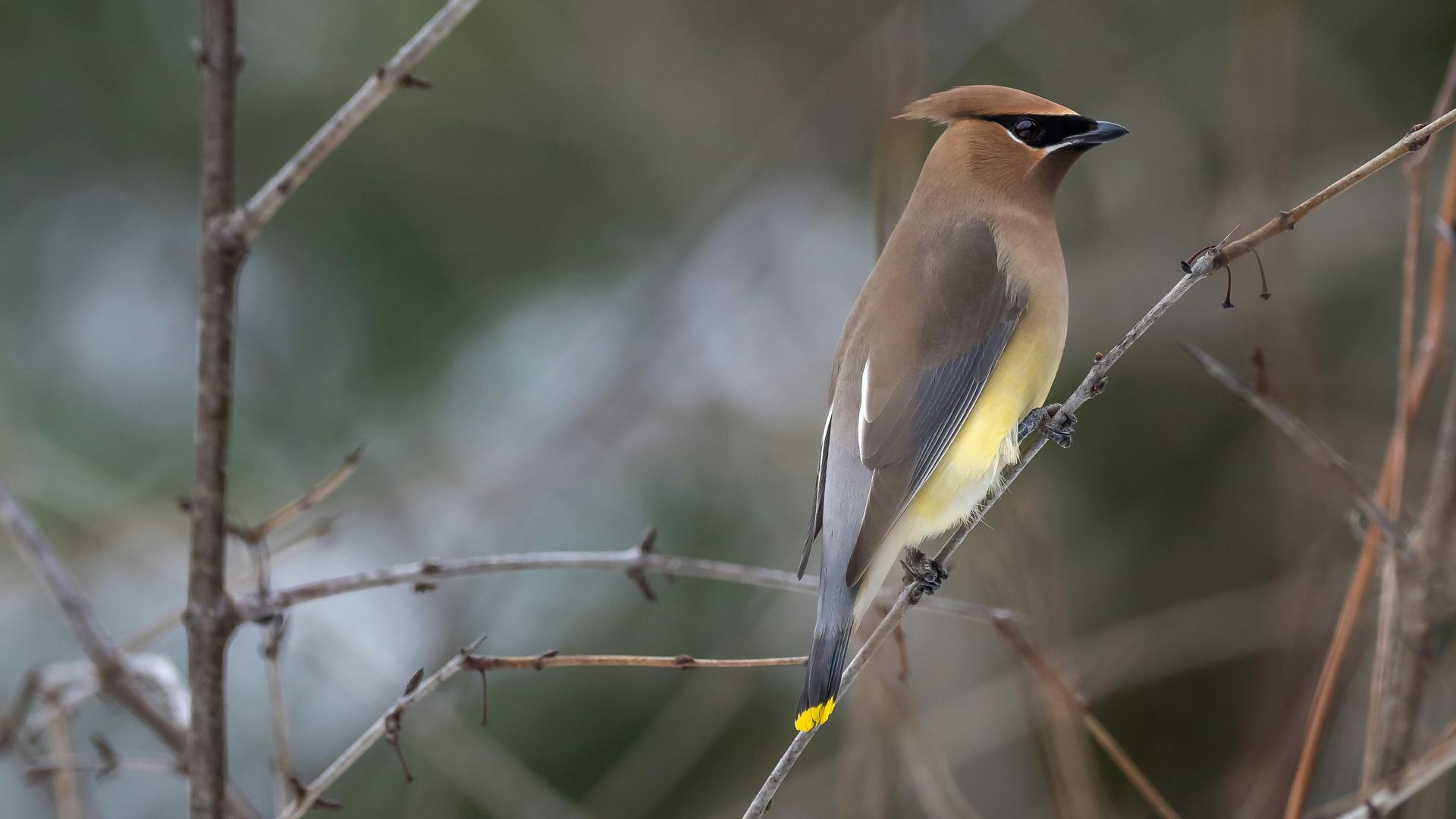
A sleek, crested bird with a black mask and waxy red wingtips that gathers by the hundreds to eat berries in fall. It can survive on fruit alone for months, and occasionally gets intoxicated on overripe, fermented berries. We've all been there...
Where and when: Anywhere with fruiting trees and shrubs, roaming in flocks through fall and winter.
24. American Robin
Robins aren't missing in fall. Many spend the whole winter in their breeding range, but switch from worms to fruit and spend more time roosting in trees than hopping on your lawn. Winter roosts can hold a quarter-million birds. Our post on facts about robins has more.
Where and when: Most of the US year-round, in berry trees rather than on lawns in fall and winter.
25. Blue Jay
Thousands of Blue Jays migrate in flocks along the Great Lakes and Atlantic coasts each fall, but some jays migrate every year, some never do, and some skip years, and nobody knows why. A loud bird with a secret is the most Blue Jay thing possible. Watch for jays carrying acorns, a habit credited with helping spread oak trees after the last ice age. More in our Blue Jay facts.
Where and when: East of the Rockies year-round, with migrating flocks moving through in fall.
And if a small brown bird hops away before you can name it, write down "fall bird" in your notes and go make a pumpkin something. Technically correct is the best kind of correct.
Got a favorite autumn bird?
Share it in the comments or on the Sparkbird App.
- Related: How to Use the Sparkbird App

No comments yet.