
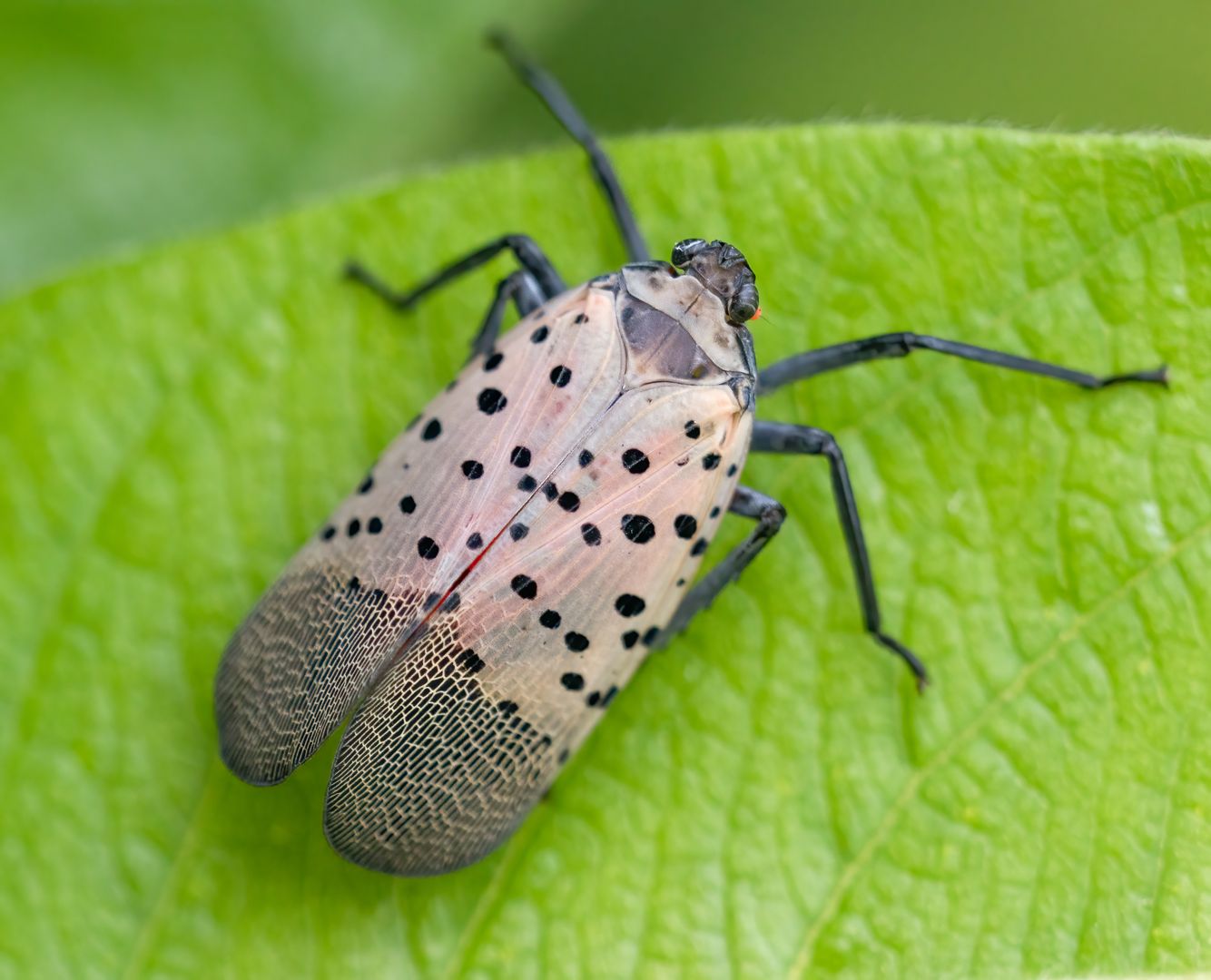
If you've ever stood on your deck at dusk with a shoe raised like you're defending your household's honor against a bug the size of a stick of gum, congratulations, you've officially entered spotted lanternfly season.
No, swatting one does not count toward your daily step goal.
If you searched how to get rid of lantern flies because you're plotting actual strategy at this point, you're in exactly the right place.
Table of Contents
- What Exactly Are Spotted Lanternflies?
- Why Bother Controlling Them at All?
- 9 Ways to Get Rid of Lanternflies, Method by Method
- Long-Term Prevention
- Why I Won't Tell You to Spray First
- Frequently Asked Questions
What Exactly Are Spotted Lanternflies?
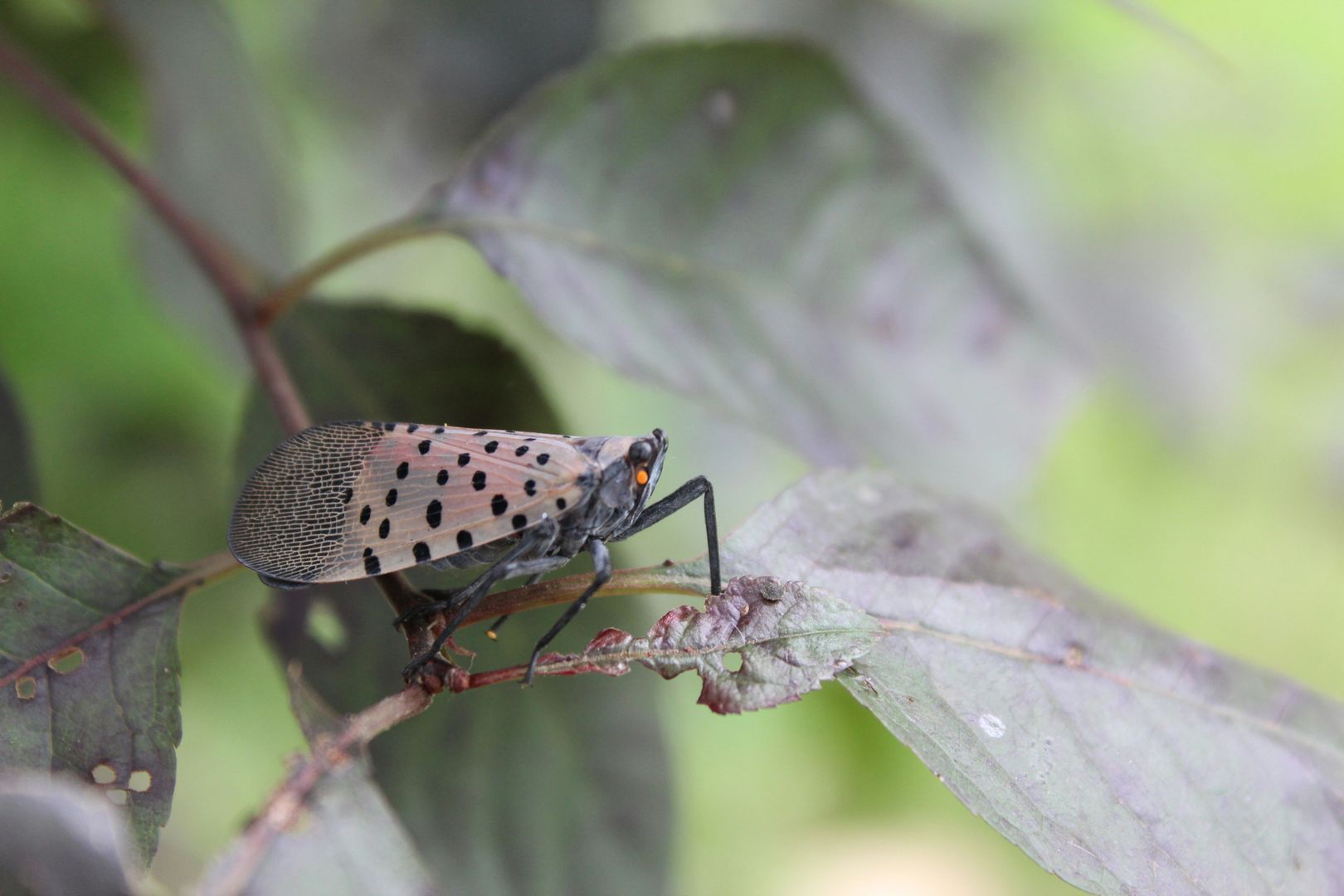
Spotted lanternflies (Lycorma delicatula) are planthoppers, not true flies.
They're native to parts of Asia and first turned up in the United States in Berks County, Pennsylvania, back in 2014. Since then they've spread across much of the eastern U.S., riding around on cars, firewood, and outdoor furniture like the world's worst carpool.
They'll feed on more than 70 plant species, but their favorite is Tree of Heaven (Ailanthus altissima), an invasive species.
If you're more worried about whether these bugs can hurt you, we cover it in full in our guide to whether spotted lanternflies are dangerous to humans, but the short version is no.
Why Bother Controlling Them at All?
Because they cause a lot of damage. Lanternflies feed by piercing plants and sucking sap, which stresses trees and vines and can kill young saplings.
They also excrete a sugary waste called honeydew as they feed, which coats everything underneath them and grows a black sooty mold that can smother leaves.
Pennsylvania's vineyards learned this the hard way. Agriculture officials across the Northeast have spent the past decade treating the spotted lanternfly as an economic threat.
How to Get Rid of Lanternflies: Method by Method
A couple of these methods deserve their own deep dive, and we'll point you there, but here's every option, roughly in the order most homeowners should reach for them.
1. Manual and Mechanical Control
Every state agriculture department dealing with spotted lanternflies, including Penn State Extension's full spotted lanternfly management guide, gives the same first piece of advice, and it is deeply unglamorous:
Squish them.
Step on them, swat them, vacuum them up with a shop vac if you're feeling efficient. It's not a sophisticated strategy, but it works, and it costs nothing.
I get the appeal of pretending you're above squashing bugs with your bare hands. But this is a war against a bug that's causing severe economic and ecological damage. Squish away.

2Pack Telescopic Fly Swatters, Plastic Fly Swatter, Extendable Flyswatter
foxany
2. Egg Mass Removal
Females lay eggs from September through December, and the masses look like a smear of gray-brown mud, an inch or two long, stuck to almost any flat outdoor surface like tree trunks, rocks, patio furniture, the underside of a grill cover, a car's wheel well. If it doesn't move, they'll consider it home.
How to Remove Eggs
Scrape each mass off with a putty knife or an old gift card into a bag or container of rubbing alcohol or hand sanitizer. This kills the eggs on contact.
Don't scrape and walk away. Dislodged eggs can survive on the ground and still hatch. One mass can hold 30 to 50 eggs, so an afternoon of scraping can meaningfully dent next year's population.
3. Soap Bucket Trap
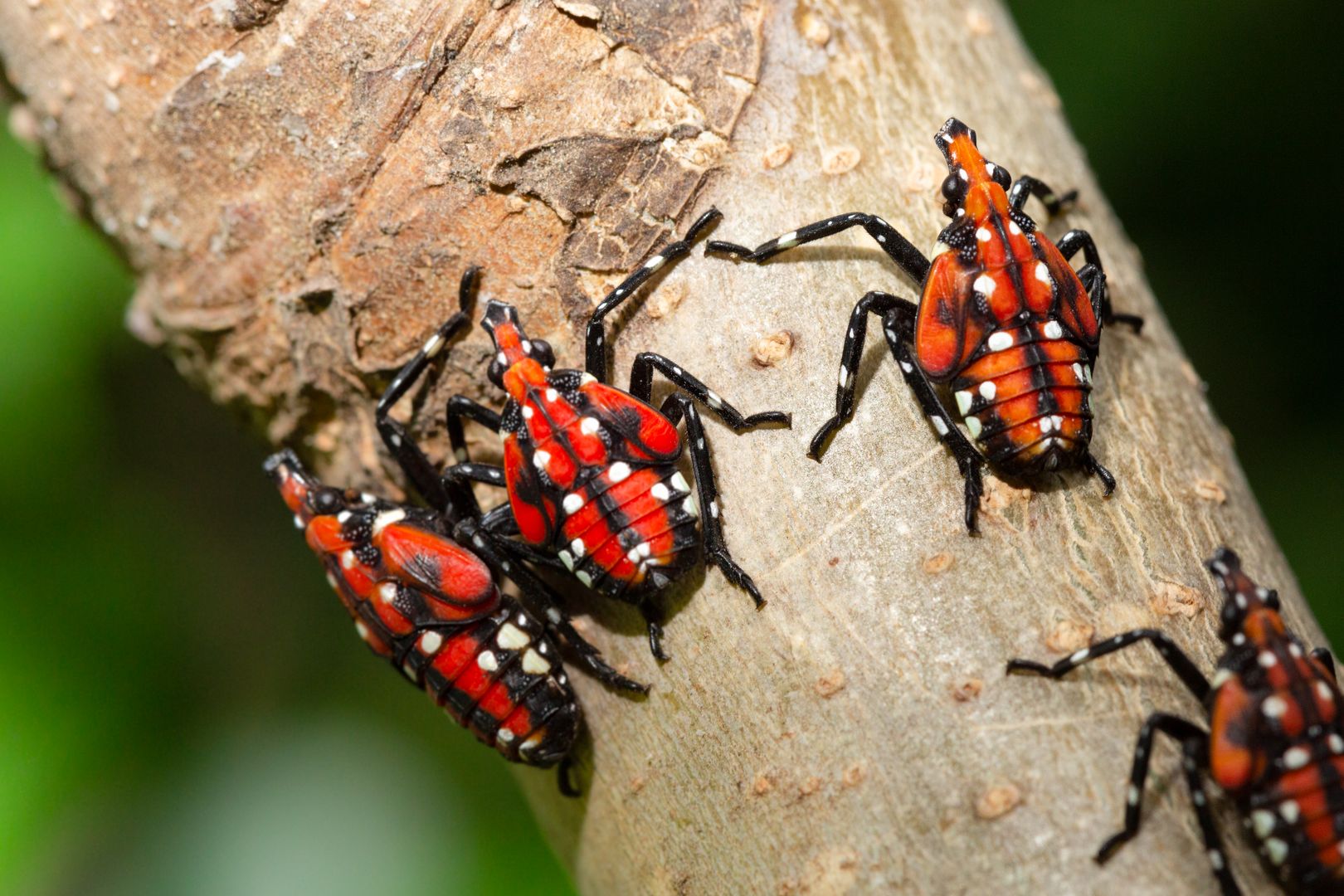
The good news is nymphs are easier to catch than you'd expect. They can't fly yet and mostly just jump, so a soapy water bucket works well.
A few drops of dish soap in water then knock or brush them in. We break down exactly what to expect at each stage in our spotted lanternfly life cycle guide, worth a bookmark if you want to know what you're looking at on any given week.
4. Lanternfly Traps: Circle Traps vs. Sticky Bands
For years, the go-to was sticky tape wrapped around tree trunks, and it does catch lanternflies. It also catches birds, squirrels, chipmunks, and other wildlife that land or climb on it and once they're stuck they usually don't survive.
Extension services now recommend circle traps, aka mesh funnels wrapped around the trunk that let lanternflies climb in but not back out. You can buy one or build one with mesh screening and a bit of patience.
Got a sticky band and aren't ready to part with it? Penn State Extension's guidance on building a wildlife barrier walks through how to screen it so it stops catching anything with feathers or fur.

Qualirey 2 Pack Spotted Lanternfly Trap Lanternfly Killer for Tree,Green
Qualirey
5. Remove the Tree of Heaven
The Tree of Heaven is a spotted lanternfly's favorite host. Remove the host and the lanternfly population dwindles. It's a necessary short and long-term strategy.
This is the most important lanternfly treatment you can do.
Most experts recommend removing it outright, ideally with an herbicide treatment that kills the root system so it doesn't just resprout. You can

6. Let the Birds Help
Birds already eat spotted lanternflies. A healthy backyard bird population is quietly doing some of this work for you right now.
We've put together a full rundown of which birds eat spotted lanternflies and how to attract more of them. It might be the most pleasant method on this entire list. The same cannot be said for boric acid in the jam jar.6.
7. Trap Trees
Some property owners instead keep a small number of Tree of Heaven and treat them with insecticide.
This is a trap tree, which is basically a buffet of poison for the lanternflies. Apply systemic insecticide to a few while removing the rest. Visiting lanternflies will be poisoned. This is furthest down on the list because birds might eat the poisoned lanternflies and get sick themselves.
However, birds aren't eating them en masse because lanternflies taste bitter due to a compound in Tree of Heaven. So removing this food source completely can encourage birds to eat them. Either approach beats leaving a stand of untouched Tree of Heaven at your property line.
8. Insecticidal Soap and DIY Sprays
For nymphs and soft-bodied adults, insecticidal soap or a homemade soapy water spray, a few tablespoons of dish soap per quart of water, can knock them down without reaching for anything heavier.
It works on contact, breaking down the waxy coating on their bodies, but it only affects what it directly hits, so expect to respray often. It can also affect other soft-bodied insects it touches and, at higher concentrations, can stress plant leaves, so spot-test a leaf before going wall-to-wall with it.

Glass Spray Bottles - 2 Pack 16 oz Clear Spray Bottles with Silicone Sleeve
Worldgsb
9. Chemical Control
Sometimes squishing, scraping, and trapping genuinely aren't enough. In those cases, contact and systemic insecticides for spotted lanternfly control are real options, and professionals often use them on Tree of Heaven "trap trees" specifically.
Because choosing the right product, timing, and application method matters enormously here, for your plants, your pets, and the birds visiting your yard, we've given this its own detailed breakdown in our comparison of the best insecticides for spotted lanternfly control.
Read that before you buy anything with "systemic" on the label.
Long-Term Prevention: How to Keep Lantern Flies Away
Killing what's already in your yard is triage. Keeping new ones from setting up shop is the actual goal, and it comes down to three habits.
Seal Up Egg-Laying Real Estate
Since females lay eggs on nearly any flat surface, a fall and winter walk-through of your property (deck furniture, firewood stacks, grills, vehicles, even kids' playsets) to scrape anything suspicious goes a long way. If you're moving firewood or outdoor gear from a known infested area, give it a once-over before it lands anywhere new. This is also, not coincidentally, how the insect has spread across state lines in the first place.
Report What You See
If you're in an area where spotted lanternflies are new or not yet established, many state departments of agriculture want to know about it, sightings included, ideally with a photo. New York's Department of Environmental Conservation reporting guidance is a good example of how detailed these forms tend to be, and most states outside the current infestation zone run something similar. It genuinely helps track the spread and target early treatment before a small problem becomes a Tree-of-Heaven-sized one.
Why I Won't Tell You to Spray First
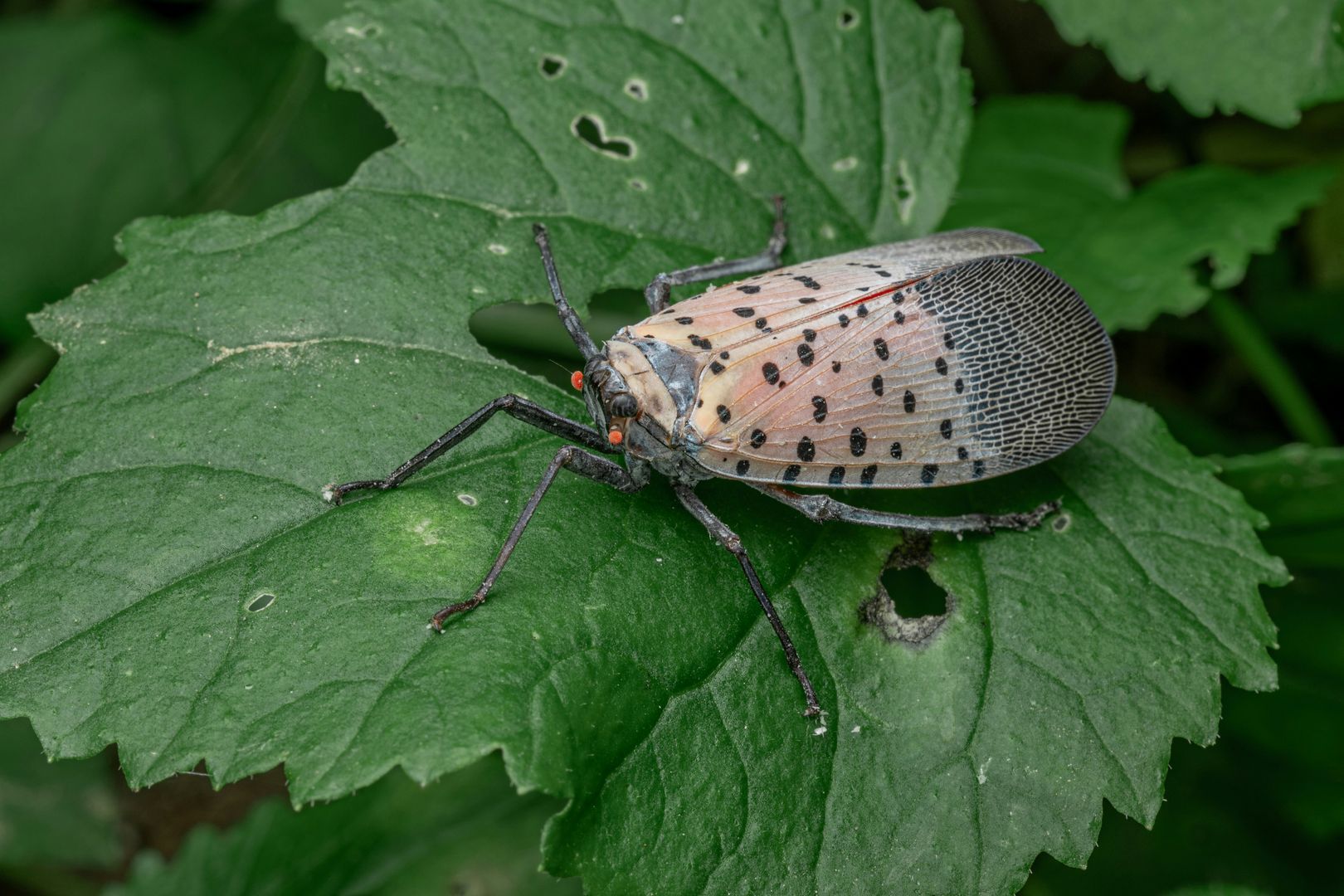
Hot take...or as hot as a take about bugs can get.
The collateral damage pesticides can do to the food chain isn't worth reaching for it right away.
That collateral damage isn't hypothetical. The American Bird Conservancy estimates that pesticides may kill as many as 67 million birds every year in the United States, and that's before counting the pollinators. Spraying your whole yard because you spotted three lanternflies on the fence post is a bit like carpet-bombing your kitchen because you saw one ant.
Save the stronger stuff for when you genuinely need it, and when you do, read up first.
Frequently Asked Questions
What kills spotted lanternflies instantly?
Direct contact with insecticidal soap or a strong spray of soapy water kills nymphs and adults quickly, as does simply crushing them. Contact insecticides work fast too, but they're best used selectively rather than as a first response to a light infestation.
Is it okay to squish spotted lanternflies?
Yes. Squishing, stepping on, or otherwise directly killing spotted lanternflies on sight is standard, recommended advice from state agriculture departments, since it's an invasive species with no natural predators keeping it in check here yet.
What is the best homemade spray for spotted lanternflies?
A simple mix of a few tablespoons of dish soap per quart of water, sprayed directly on nymphs or adults, is the most commonly recommended DIY option. It works on contact and has minimal residual effect on other insects or plants when used carefully.
Got any tips to share?
Leave a comment or share them on the Sparkbird App.
In the meantime squish what you can, scrape what you find, and let the birds pick up whatever slack is left.


No comments yet.