
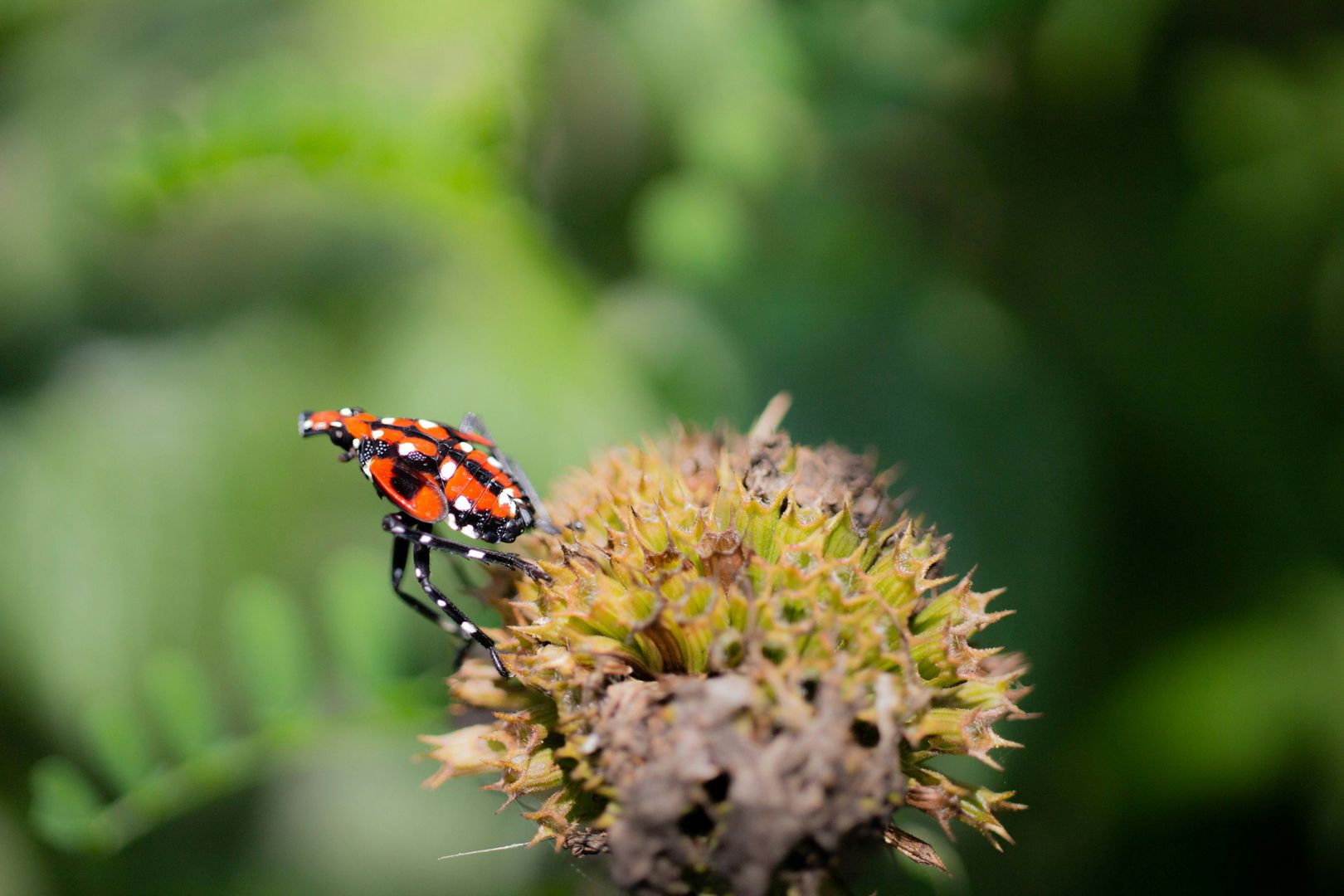
Every rebellious teenager goes through a phase or two, but the spotted lanternfly turns it up a notch.
It has four separate looks before adulthood. Understanding the spotted lanternfly life cycle is the whole key to knowing what you're looking at, and more importantly, what to do about it.
Spotted lanternflies complete one generation per year in the U.S., moving through three life stages. Eggs and early nymphs also happen to be the two stages when someone can actually do something useful about the population.
How Many Life Stages Does a Spotted Lanternfly Have?
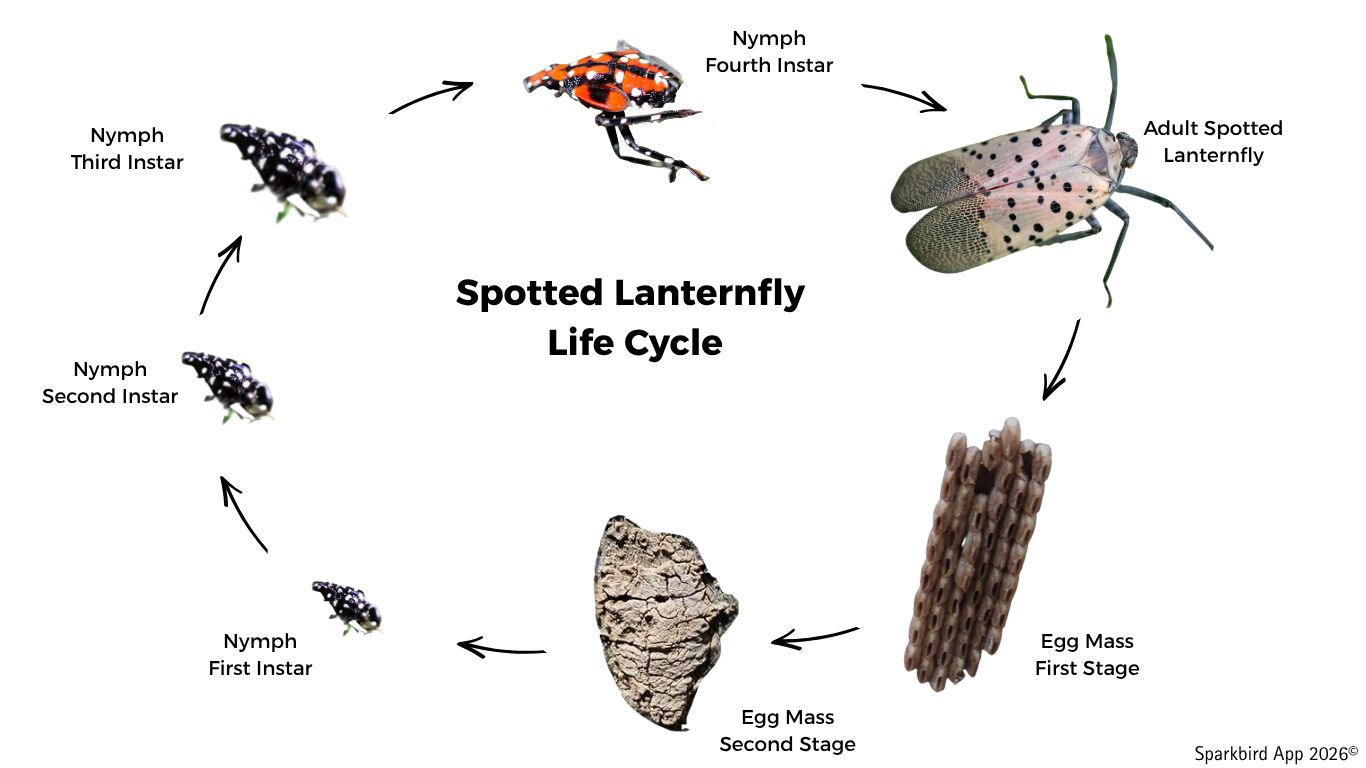
These bugs are univoltine which means birth to grave, lanternflies have one generation a year.
The life cycle of the spotted lanternfly moves through three stages: egg, nymph (itself split into four instars or growth phases), and winged adult. It's a straight line, unlike most of our twenties. Once they reach adulthood, it's downhill from there. They lay the next batch of eggs and it's time for a new generation to take over.
Here's the spotted lanternfly egg to adult progression at a glance:
| Stage | Typical Timing (varies by region) | Appearance | Approx. Size |
|---|---|---|---|
| Egg mass | Laid September–December; overwinters until hatch | Gray-brown, mud-like putty coating over 30–50 eggs; cracks like dried mud | 1–1.5 in. long |
| 1st–3rd instar nymph | Hatch late April–July | Black body, bright white spots, wingless, strong jumper | Up to 1/4 in. |
| 4th instar nymph | Roughly June–July, weeks before final molt | Black-and-white pattern + new bright red patches, still wingless | About 1/2 in. |
| Adult | Mid-to-late July through first hard frost | Gray-tan forewings with black spots; red, black, and white hindwings visible in flight | About 1 in. |
Egg Stage: The Only Way Lanternflies Survive Winter
Whether you spell it as one word or two, lantern fly life cycle questions almost always start here, since the egg is the only stage that survives winter. Adults begin laying eggs around September and continue into December, gluing them to almost any flat outdoor surface: tree bark, rocks, firewood, patio furniture, and vehicles.
This is how the species keeps hitchhiking across state lines.
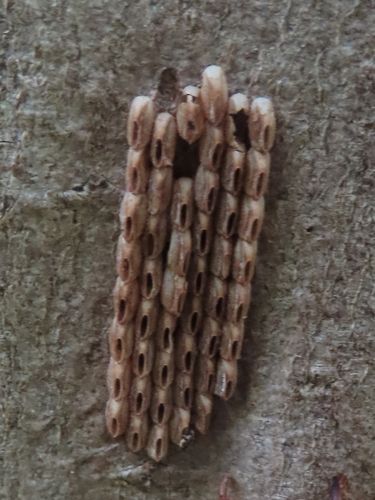
A fresh egg mass looks like a smear of wet gray putty, roughly the size of a large gummy bear stretched flat.
Give it a few weeks and it dries into something that looks uncannily like a splotch of dried mud someone tracked onto the porch rail.
Notice the difference in appearance.
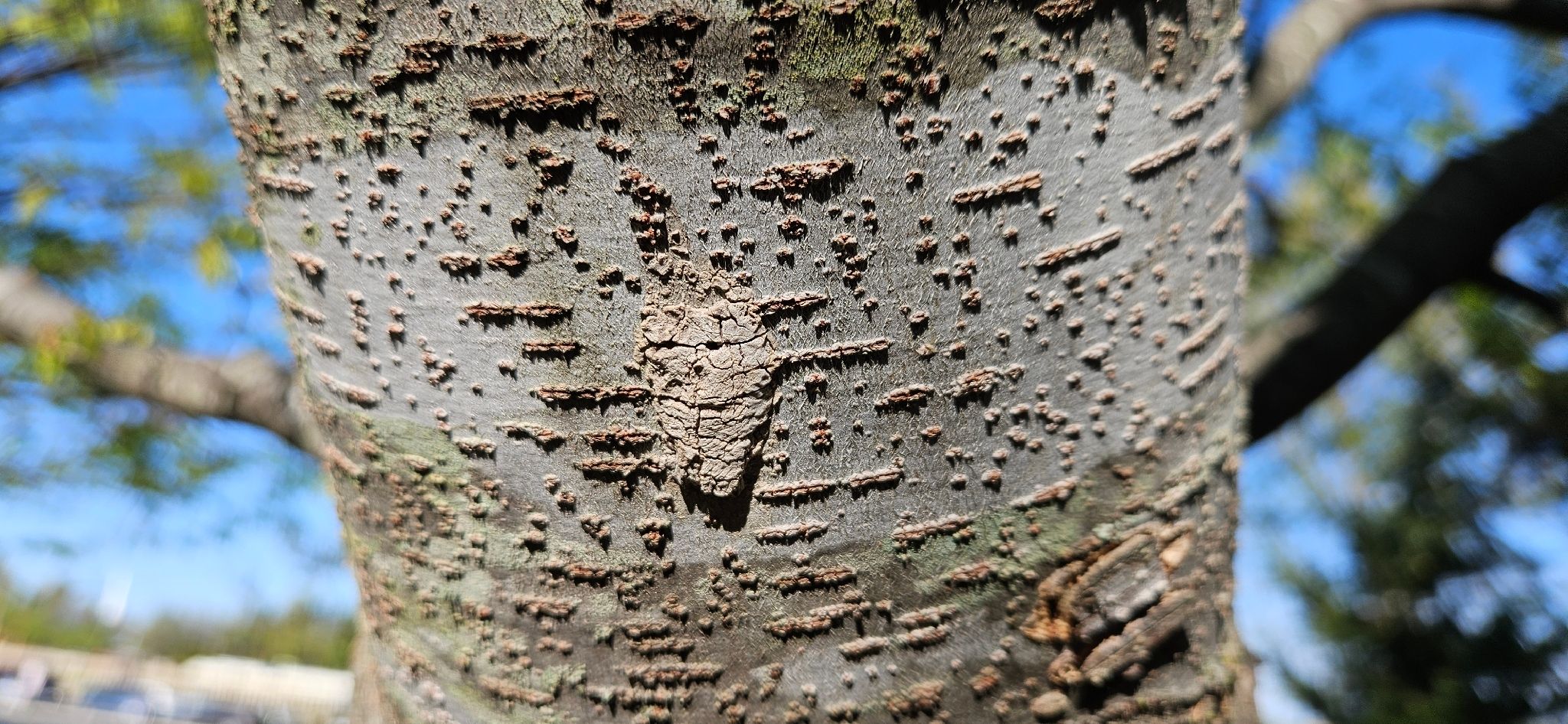
Each mass holds somewhere between 30 and 50 eggs, and the eggs stay put and viable straight through winter, hatching the following spring.
Eggs hatch typically between April and July. Late April in the mid-Atlantic and later into July further north (Virginia populations commonly emerge in early May, per Virginia Cooperative Extension).
Nymph Stage
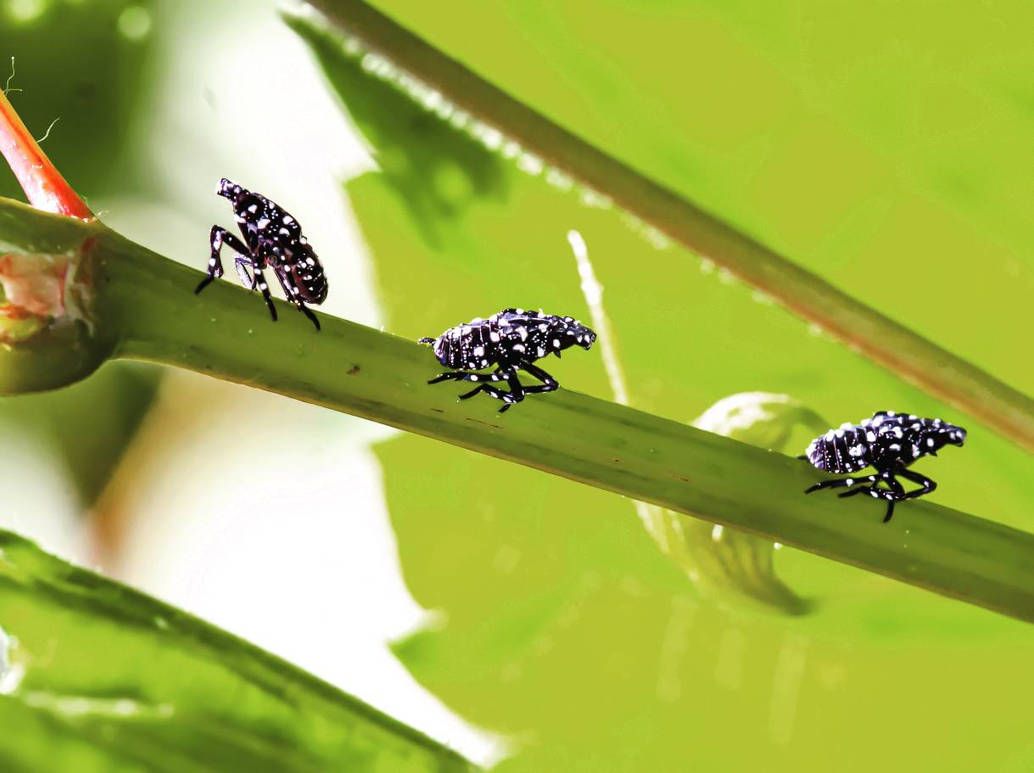
This is where most of the confusion around spotted lanternfly stages comes from. Not only do the nymphs lack wings but they go through 4 stages called instars.
Instars are the developmental phase of an arthropod before it reaches adulthood.
For the first three instars nymphs are small, wingless black beads dusted in bright white spots, topping out around a quarter inch long. They're excellent jumpers which might make them look like a flea mid-jump.
The look shifts enough across these weeks that someone unfamiliar with the species might not clock a nymph as the same insect at all, which is exactly the kind of identification confusion we cover in our guide to whether spotted lanternflies are dangerous to humans.
Then comes the fourth instar, usually a few weeks before adulthood in June or July, and the black-and-white nymph gets red patches layered in alongside the existing pattern.
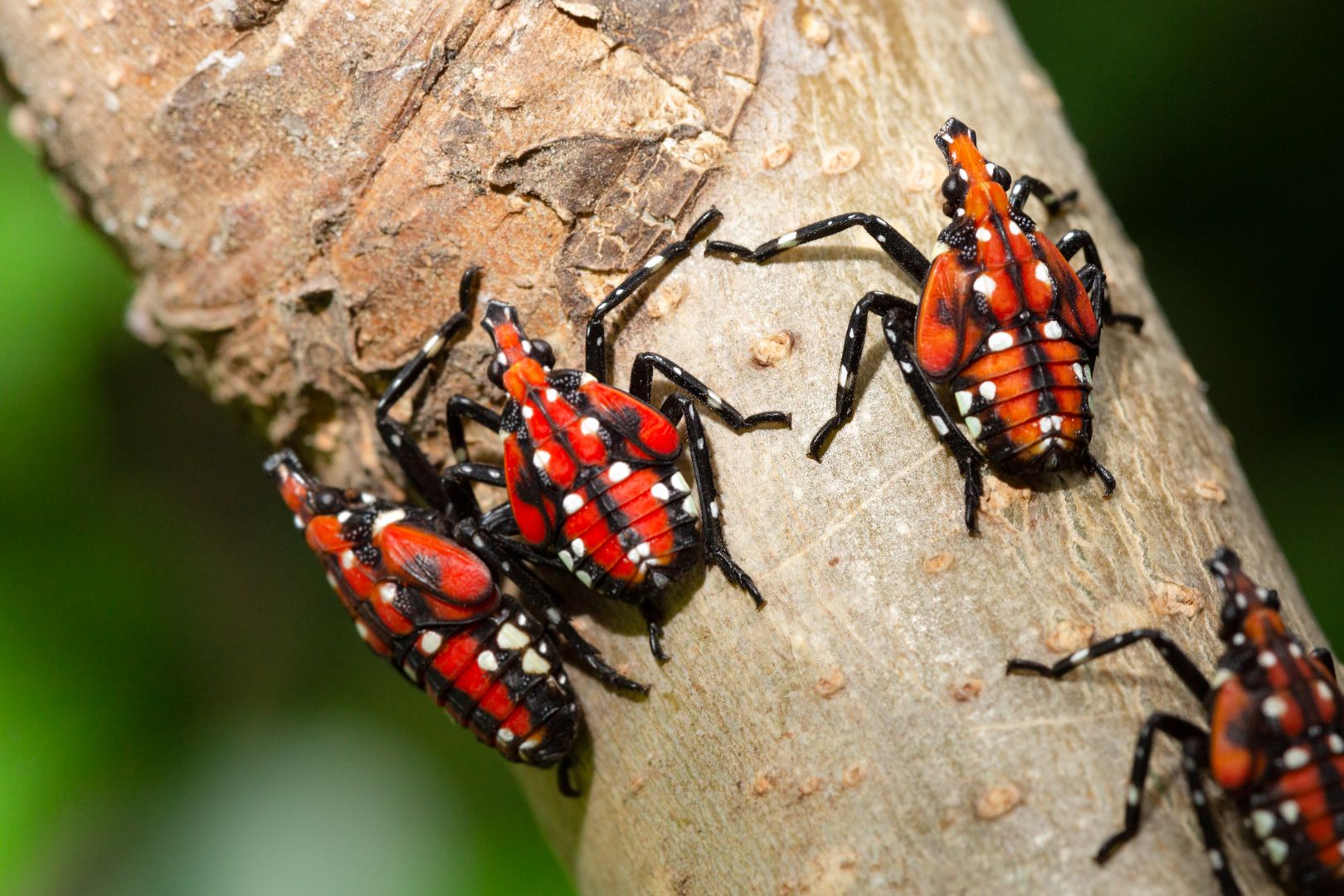
It's the closest thing an insect gets to a glow-up, and unlike most glow-ups, this one is not remotely for your benefit. The fourth instar is bigger too, closing in on half an inch, and it's still wingless and still an enthusiastic jumper right up until its final molt into a winged adult.
Nymphs, especially the earlier instars, are also a life stage birds are documented eating in meaningful numbers, worth knowing if you'd like your backyard to help; we cover which species pull their weight in our roundup of birds that eat spotted lanternflies.
Adult Stage: Wings, Flight, and Laying Eggs
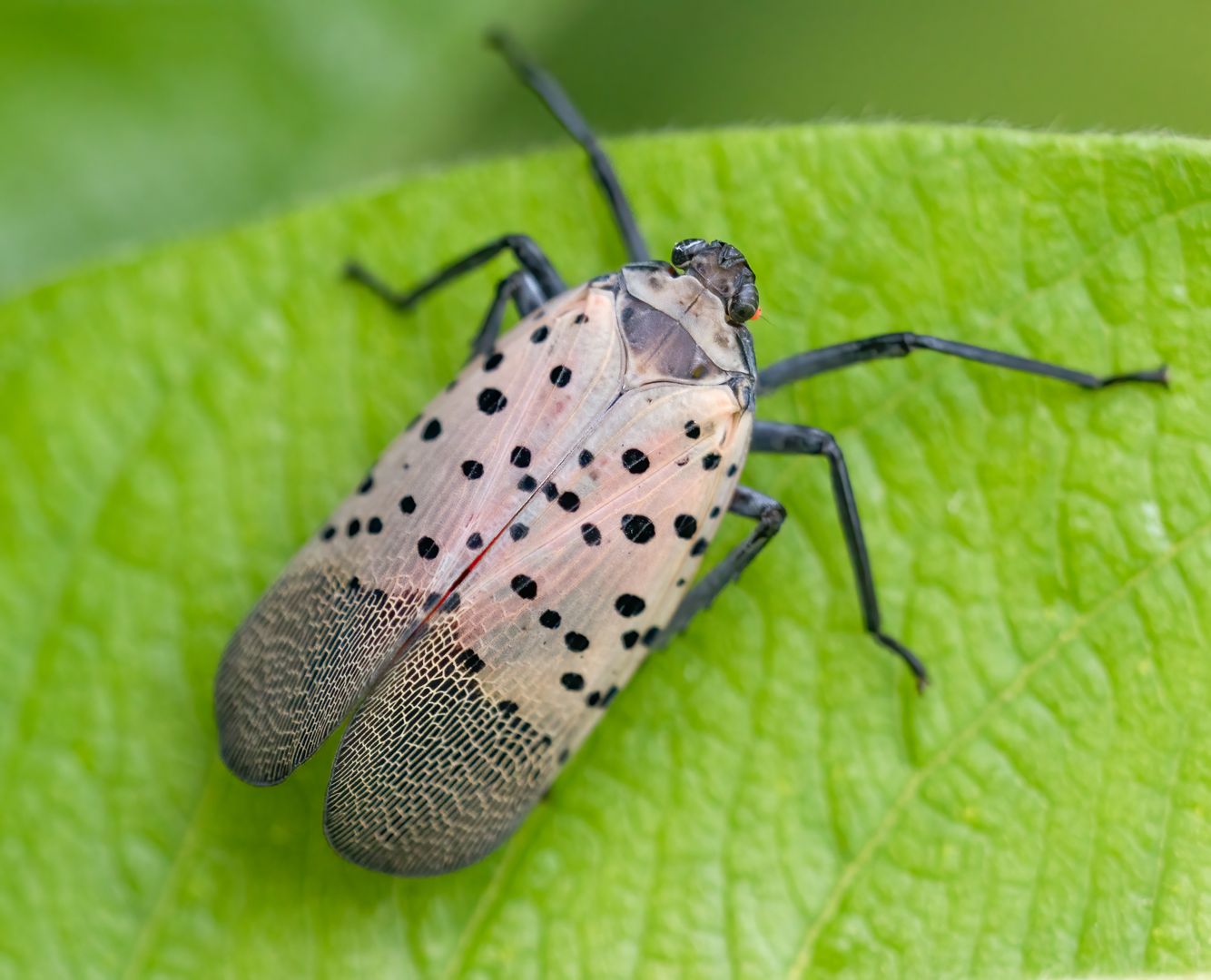
The look changes once more: gray-tan forewings speckled with black spots close over the body like a sensible cardigan.
Only in flight or when startled does the real color show, scarlet-and-black hindwings with white bars underneath. It's a lot of drama for a plant hopper.
Adults are stronger fliers than nymphs but still prefer jumping and short glides. They feed heavily on tree of heaven, grapevines, and other woody plants, and their sugary waste (honeydew) coats everything underneath in a sticky film that grows sooty mold. Adults mate and lay next year's eggs starting around September, and the population doesn't die back until a hard frost kills off whatever adults remain, usually in late fall or early winter.
Why the Egg and Early Nymph Stages are Critical
Most of what we write here leans toward leave-it-alone conservation, in line with the American Birding Association's Code of Ethics: don't disturb wildlife, don't mess with nests, let nature be.
Spotted lanternflies are an exception.
The invasive-species equivalent of breaking your own no-work-email-after-6 rule for an actual fire. They have no significant natural predators here, and they damage grapevines, hops, orchards, and hardwood trees at real economic cost.
Knowing the stages above is what makes it possible to step in responsibly instead of flailing at whatever bug happens to be nearby. Penn State Extension recommends scraping and destroying egg masses & when to do it. University of Maryland Extension backs the same fall-and-winter timing, with a simple scrape-into-a-bag-of-hand-sanitizer method.
Wait until adults show up in force and you're stuck reaching for broader tools, which is exactly what our complete guide to getting rid of spotted lanternflies walks through stage by stage.
Frequently Asked Questions
When do spotted lanternfly eggs hatch?
Typically between late April and July, depending on region & temperatures. Virginia populations commonly hatch in early May, while northern populations can lag into June or July.
Should I report them?
Yes. Reporting varies by state but we compiled a list of agencies for reporting lanternfly sighting by state.
How do I get rid of them? Are they dangerous?
Everything you need to know can be found in Spotted Lanternflies: The Complete Guide for Birders and Backyard Gardeners.
What are you tips for spotted lanterflies?
Share them in the comments and the Sparkbird community. Nothing beats local knowledge when it comes to backyard birding.


No comments yet.