
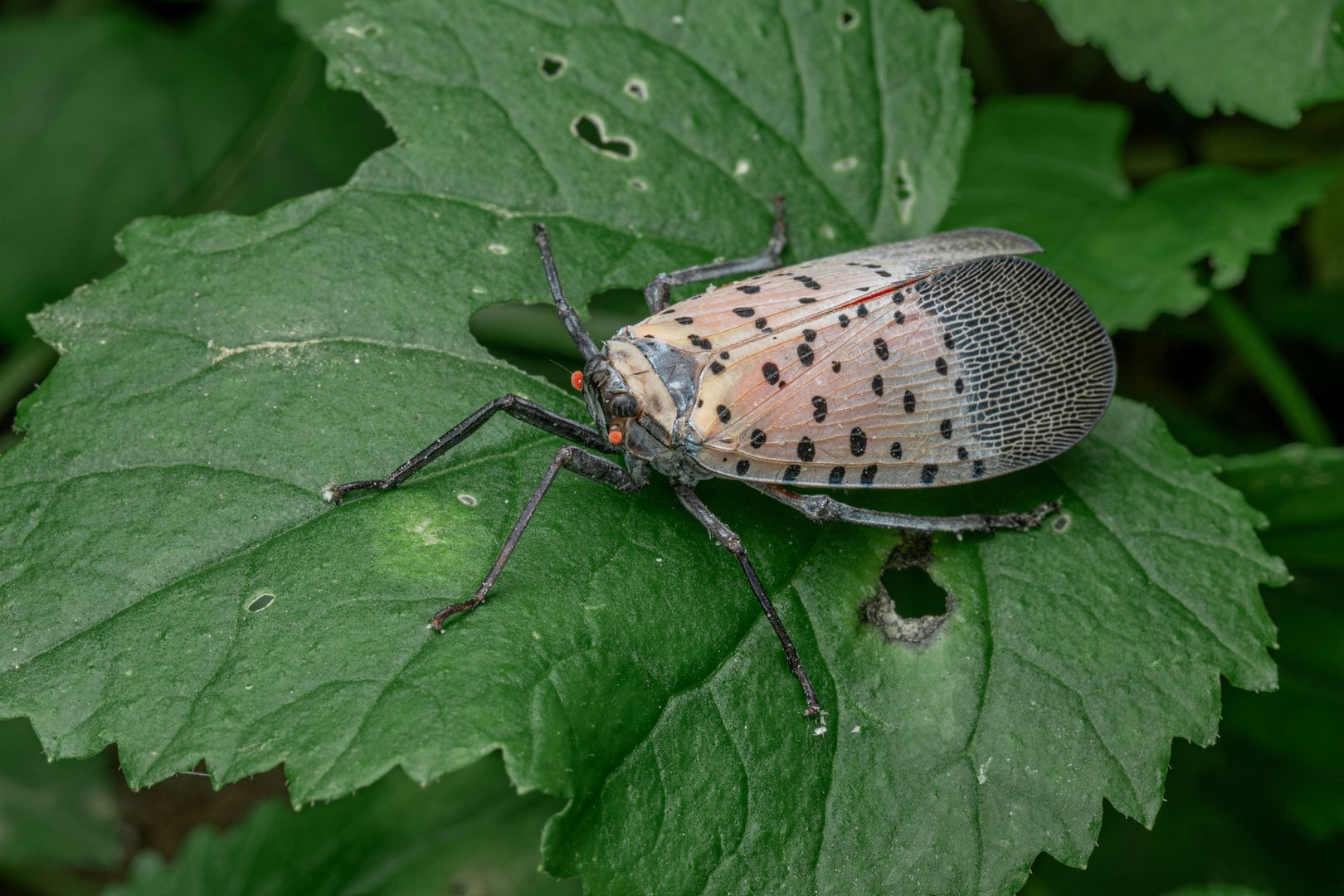
Since 2014, this inch-long invasive planthopper has spread across the eastern U.S. one tree at a time. And it's brought a whole lot of internet panic along with it.
This guide is the one-stop version: what it is, whether it can actually hurt you, how it spreads, what to do about it, and the part almost nobody else tells you.
What's in this guide
- What Is a Spotted Lanternfly?
- The Life Cycle, Egg to Adult
- Are They Dangerous?
- Where They're Spreading
- How to Get Rid of Them
- Traps, Sprays, and Insecticides Compared
- Natural Predators
- Report What You See
- Frequently Asked Questions
What Is a Spotted Lanternfly?
A spotted lanternfly is a planthopper, not a fly, moth, or beetle, despite getting compared to all three depending on who's yelling about it in your group chat. Adults are about an inch long with gray, black-spotted forewings that fold over startling red-and-black hindwings, visible mostly in flight or when they're startled off a tree trunk.
They're strong jumpers and weak fliers which makes them easy to ca†ch
They arrived from China, India, and Vietnam, first confirmed in Berks County, Pennsylvania in 2014, likely hitching a ride on imported stone. Since then they've spread through Pennsylvania, New Jersey, New York, and well beyond, feeding on more than 70 plant species but showing a clear favorite in tree of heaven.
Learning how to identifying a spotted lanternfly and its five common look-alikes can help a great deal.
The Life Cycle, Egg to Adult
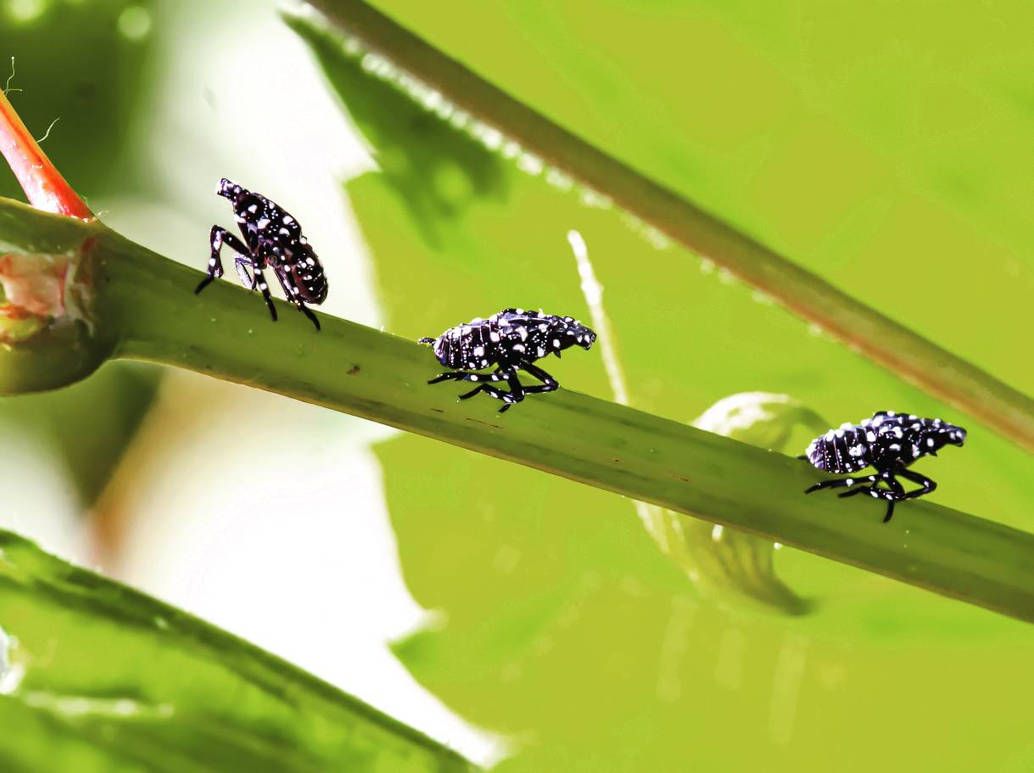
Spotted lanternflies complete exactly one generation a year, moving through three life stages that look nothing alike, which is half the reason people misidentify them constantly.
- Eggs are laid in fall on any flat outdoor surface and they're the only stage that survives winter.
- Nymphs hatch in spring, black with white spots for the first three instars, then suddenly red-accented before their final molt around midsummer and transition to adults.
- Adults stick around from roughly July until the first hard frost, mating and laying next year's eggs.
Knowing which stage you're looking at isn't trivia for its own sake, it's the whole key to timing control effectively, since egg masses and early nymphs are the two windows where a little effort goes the furthest.
Read our complete guide to the spotted lanternfly life cycle, egg to adult, to learn what nymphs look like and how to spot egg masses before they become a problem.
Are They Dangerous?
Not really. Spotted lanternflies don't bite, sting, or carry venom, and their mouthparts are built to pierce plant tissue, not skin. The worst they'll actually do to a person is startle you by jumping, or leave behind sticky, sooty honeydew that's a genuine mess but not a health hazard for most people.
The danger here is entirely to plants and crops.
That reassurance matters, because a lot of the internet's "is this dangerous" content is written to spook you into buying something rather than to actually inform you. Check out the guide on whether spotted lanternflies are dangerous to humans.
And if it's specifically the poking sensation that's got you worried, here's what that poke really is.
Where They're Spreading (and Why Tree of Heaven Matters)
Spotted lanternflies have moved fast since 2014, now confirmed across much of the mid-Atlantic, Northeast, and Midwest, with new county detections showing up most summers. Their spread tracks closely with tree of heaven (Ailanthus altissima), an invasive tree that's itself spread aggressively along roadsides and disturbed land, and that lanternflies rely on more than almost any other host.
Where tree of heaven grows unmanaged, lanternfly populations flourish.
That connection is also why tree of heaven management is a real long-term strategy, and why the damage question comes up so often. Lanternflies can stress or kill trees and vines by feeding, though not from a single season.
Lanternfly life cycles follow a pretty regular pattern but can fluctuate by region and temperature. See our current spotted lanternfly spread map and what's next to help plan your removal strategy.
How to Get Rid of Them
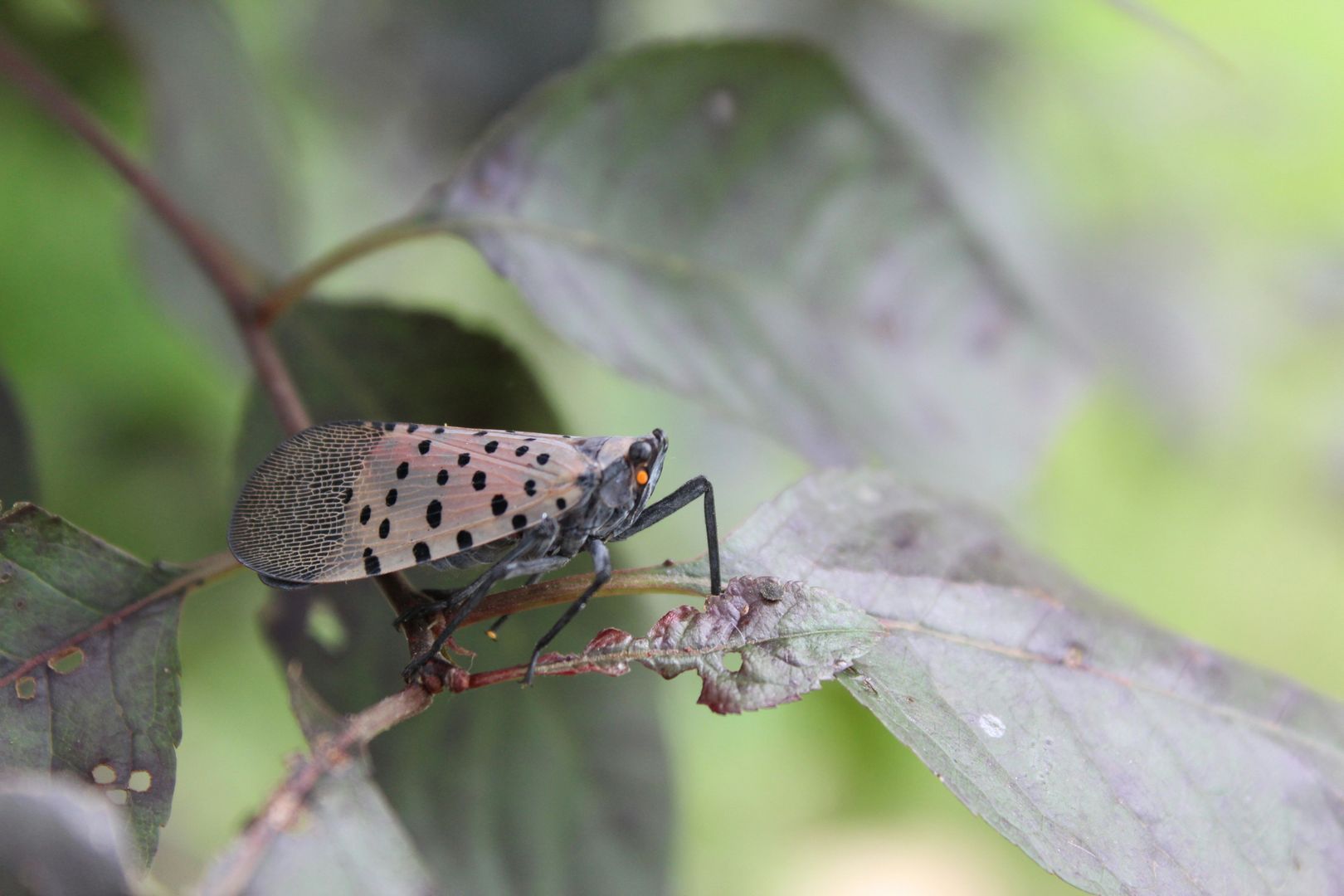
For most backyard-scale infestations, control starts with your hands, not a sprayer: squish nymphs and adults on sight, and scrape egg masses off bark and hard surfaces into a bag or container of rubbing alcohol between fall and early spring, before they hatch.
Circle traps (mesh funnel traps around a trunk) are the current recommended trap style, since older sticky-tape bands have a documented history of catching birds and squirrels along with lanternflies.
Chemical control exists too, but it's a later step not a first one.
Lanternfly methods that actually work (killing nymphs before they multiply) is one of a few long-term lanternfly strategies.
Got a furry friend?
Virginia Tech showed that dogs are great at finding lanternfly eggs. Many dog breeds can actually be trained for olfactory detection.
Pet dogs trained by their owners can detect lanternfly eggs with accuracy comparable to professional detection dogs. And, in dense vegetation, pet dogs outperform humans by finding up to three times more egg masses. -BBC by Riley Farrell
So if you're keen to train your dog on scent detection you've got another tool in your arsenal.
Encourage the Help of Natural Predators
Here's the part almost nobody else writing about lanternflies can tell you honestly, because it's not just about pest-control: birds can't solve the problem. Yet.
Some hypothesize the Tree of Heaven has compounds that are bitter or toxic to natural predators. When a bird or other animal eats a lanternfly, it learns not to reach for it as a food source. Another conundrum is that Lanternflies have next to no natural predators in the United States. This is a tale as old as time, and a difficult problem to solve.
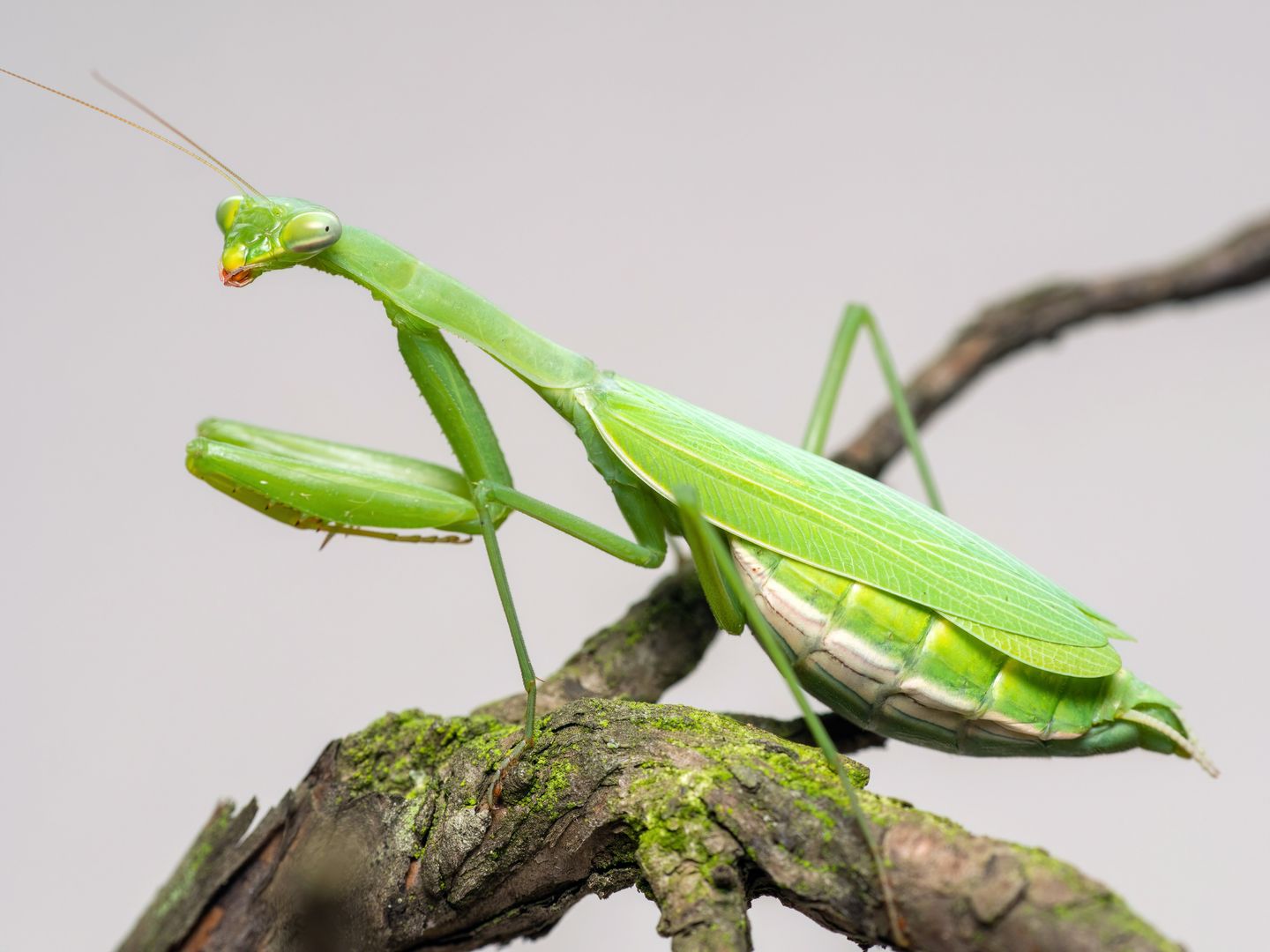
Praying mantises are still the most reliable predator overall, and native birds are still slow to adopt this unfamiliar prey. You can help by supporting the insect-eating birds you already have with a pesticide-free first line of defense.
A real (and modest) roster of backyard birds who'll eat spotted lanternflies are cardinals, catbirds, blue jays, tufted titmice, and domestic chickens. All have documented sightings eating spotted lanternflies, largely thanks to a 2020 Penn State citizen-science project.
Report What You See
Every reported sighting in a new county feeds real data that researchers and state agriculture departments use to track spread.
It's also, frankly, a better use of a Saturday than doom-scrolling about it alone. About half of American adults report regular loneliness, and Harvard researchers keep finding that shared outdoor, observation-based activities do more than solo screen time ever will.
*Find your state's lanternfly reporting path here*
They vary by state but we made it easy with a compiled list. Please leave a comment on that page if any information needs to be updated.
Frequently Asked Questions
Are spotted lanternflies here to stay?
Realistically, yes. At least in the areas they've already reached. Total eradication hasn't been achieved anywhere, but state agriculture programs have shown that consistent control & reporting can slow their spread.
Is it legal to kill spotted lanternflies?
Yes, in the states they're established. It's not only legal but actively encouraged because no true predators exist.
Will spotted lanternflies ever go away on their own?
Not on their own. Populations do fluctuate year to year based on weather, predation, and control efforts, but the realistic goal right now is management, not disappearance.
How do you manage spotted lanterflies?
Let us know in the comments and the Sparkbird community. Nothing beats local knowledge when it comes to backyard birding.


No comments yet.