
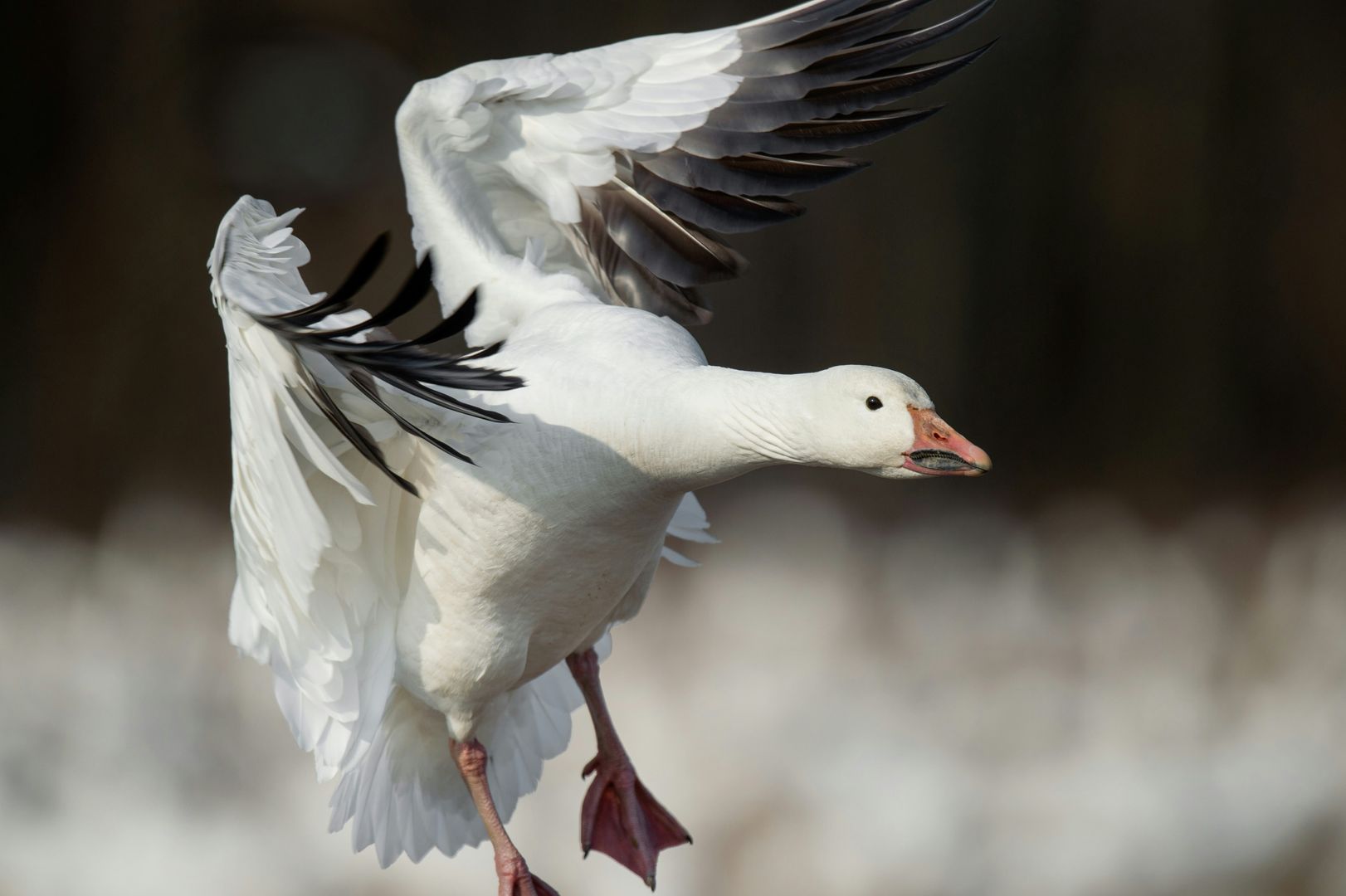
Snow goose migration is one of the few bird spectacles that makes non-birders gasp out loud.
The flocks can number in the hundreds of thousands, and the noise sounds like a stadium that just watched a field goal go wide. Here's when it happens, where they go, and the best places to see the big flocks for yourself.
Where Do Snow Geese Migrate?
Snow geese nest on the Arctic tundra of Canada, Greenland, Alaska, and even the northeastern tip of Russia, according to BBC Wildlife, with the breeding season running from late May to mid-August. When it's over, they head south along all four flyways to winter on the Atlantic coast, the Mississippi River Valley, the Gulf Coast, and California's Central Valley.
Two subspecies = two migration routes
There are two subspecies— Lesser Snow Goose and Greater Snow Goose— and they mostly take different routes. The subspecies look nearly identical but vary mostly in size.
The Pennsylvania Society for Ornithology explains that greater snow geese breed in far northeastern Canada and Greenland and winter along the Mid-Atlantic coast, while lesser snow geese are the ones you'll usually see at refuges like Sacramento and Loess Bluffs. Recent estimates put the population near one million greater snow geese and ten million lesser snow geese. That's a lot of geese and, frankly, a lot of goose-bumps.
Some of them travel remarkable distances. The snow geese that winter in Washington's Skagit Valley fuel up for a 3,000-mile spring flight back to Russia's Wrangel Island, according to Bird Watcher's Digest.
You'll also see two color types in any big flock: the classic white birds with black wingtips and the "blue" morph, which is dark gray with a white head. Cornell's All About Birds notes that the color is controlled by a single gene, with dark partially dominant over white. Same goose, different outfit.
Snow Geese in Fall: When They Arrive
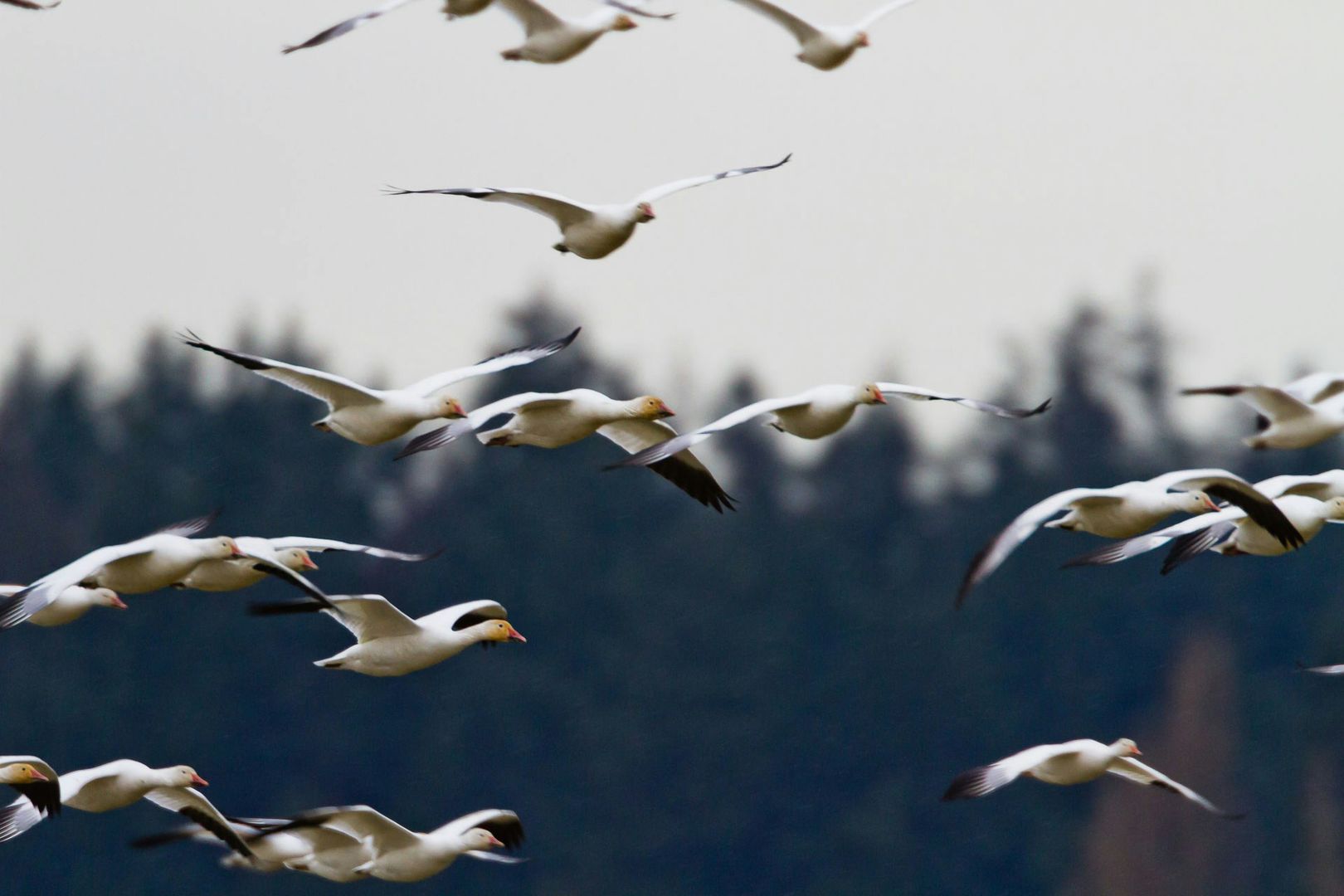
Fall snow goose migration rolls south from September into December, and arrival times vary by region.
- California's Sacramento Valley: Snow and Ross's geese begin appearing in October at Sacramento National Wildlife Refuge, where waterfowl numbers peak in November and December.
- The Mid-Atlantic: At Delaware's Bombay Hook National Wildlife Refuge, large numbers of snow and Canada geese arrive in October, with fall waterfowl migration peaking in November.
- Missouri: At Loess Bluffs National Wildlife Refuge, the action peaks in late November and early December, and the geese stay until the marshes freeze solid.
- New Mexico: Bosque del Apache sees its greatest bird numbers from early November to late January.
- Washington: Skagit Valley snow geese are around from October to April.
Best Places to See Snow Geese
These are the sites that consistently deliver, with the season to visit each.
Bosque del Apache National Wildlife Refuge, New Mexico
When: November to January
Thousands of snow geese, Ross's geese, and sandhill cranes roost in Bosque del Apache's ponds overnight to stay safe from predators, and near dawn the geese take off en masse. Get there before sunrise. Bring gloves. You'll forget you're cold for about four minutes.
Loess Bluffs National Wildlife Refuge, Missouri
When: late November to early December, + late winter
Loess Bluffs typically hosts 200,000 to 300,000 snow geese in fall, and over one million were counted there in February 2013. A 10-mile auto tour means you can watch from the car.
Sacramento National Wildlife Refuge Complex, California
When: November to January
The Sacramento National Wildlife Refuge says its waterfowl numbers regularly peak at over 500,000 ducks and 250,000 geese. Sacramento Audubon recommends Gray Lodge, Colusa, and Sacramento refuges for lesser snow geese, whose flocks can number several hundred thousand.
Skagit Valley, Washington
When: October to April
More than 50,000 snow geese migrate to Skagit Valley every winter. The Fir Island Farms Reserve, about 60 miles north of Seattle, is planted with winter wheat specifically for the geese. You'll need a Washington Discover Pass to park.
Middle Creek Wildlife Management Area, Pennsylvania
When: Spring only
Middle Creek is a spring show, not a fall one. Peak migration there has been from mid-February to mid-March, and the Pennsylvania Society for Ornithology notes that the circling, honking flocks are sometimes called a "tornado." The Pennsylvania Game Commission warns that sunny weekends can bring thousands of visitors and real traffic jams, so go on a weekday if you can.
Platte River, Nebraska
When: Spring only
BBC Wildlife says snow goose numbers on the Platte begin rising in February and can peak around 500,000 by mid-March, before the sandhill crane crowds hit their peak.
Snow Goose Migration Map: How to Track the Flocks
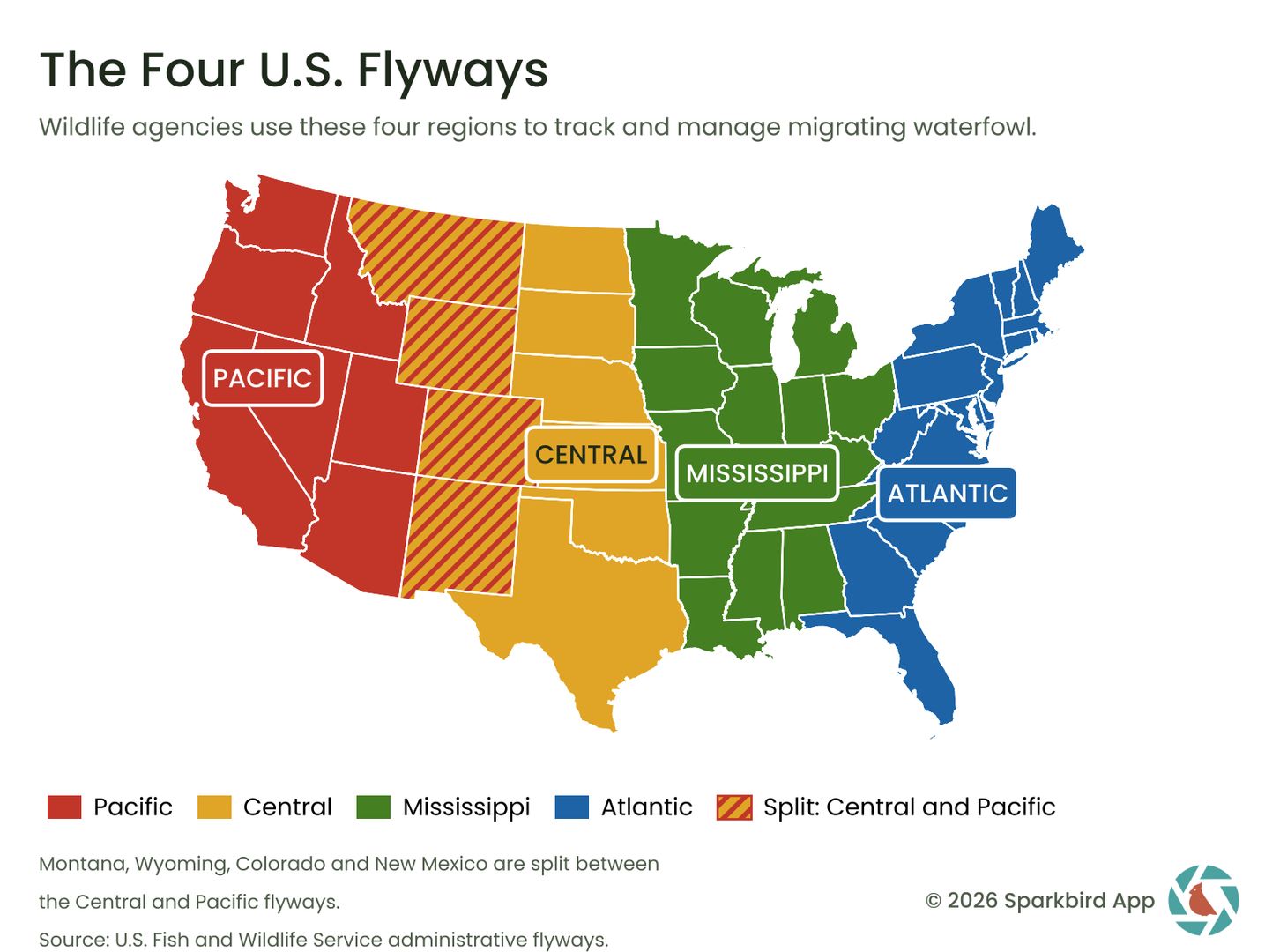
You can follow the flocks live without leaving your couch, though it's more enjoyable IRL. Our guide to waterfowl migration and the four flyways walks through the best tools, but the two you'll use most are:
- Ducks Unlimited migration map (free)n— hunters & biologists post reports
- eBird Status and Trends — abundance maps show migration changes week by week
 Waterfowl Migration: The 4 Flyways and How to Follow ThemEverything you need to know from the routes waterfowl use, when ducks and geese move by region, the live maps and reports to follow, and refuges worth the drive.(opens in a new tab)
Why Are There So Many Snow Geese?
It wasn't always this way. All About Birds says snow goose hunting in the eastern U.S. was stopped in 1916 because populations were so low, and only reopened in 1975 after they recovered. Since then, snow geese have "skyrocketed in numbers" and are now among the most abundant waterfowl on the continent. Cornell adds that some Arctic nesting areas are starting to suffer from the sheer number of hungry geese. It's a conservation comeback that worked a little too well.
If snow geese are your gateway bird, the familiar honkers are next. Here's when Canada geese migrate, plus the fall migration guide for everything else on the move this season.
Don't Buy a Spotting Scope for This
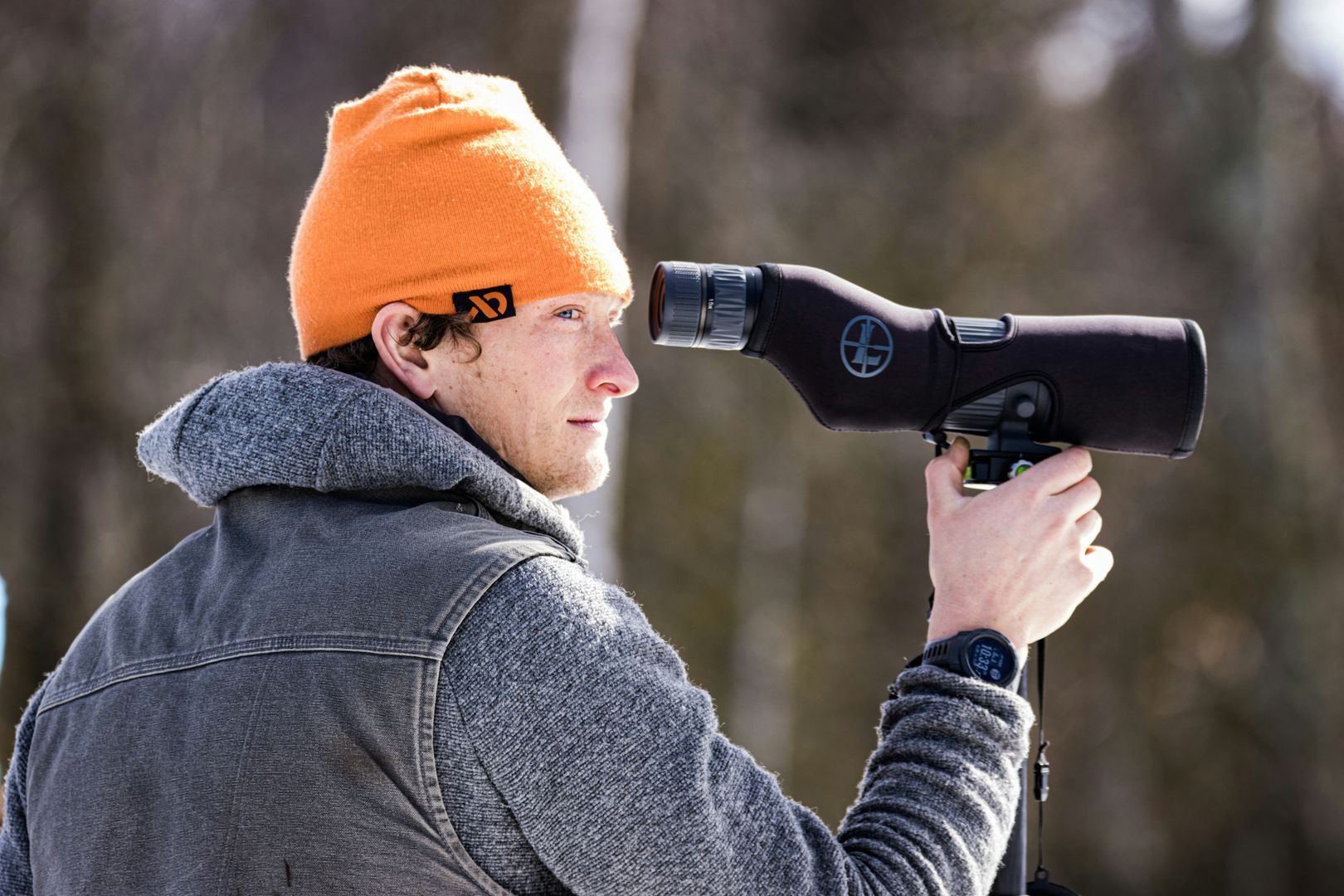
Here's my advice before your first snow goose trip: don't buy anything. Snow geese are big, white, and travel in flocks of tens of thousands. You can see them with your eyes from a mile away. A scope is a lovely thing, but it's not a requirement for watching what looks like a living blizzard.
If you want binoculars and don't own any, borrow some. Audubon found more than 100 advertised programs at libraries across the U.S. and Canada that lend birding kits with binoculars, and the Free Library of Philadelphia's birding backpacks have been checked out around 700 times.
Try before you buy, and if you love it, our guide to the best budget binoculars is here.
 The Best Budget Binoculars for Birding Our top picks, what specs actually matter, and the one piece of advice most guides never tell you(opens in a new tab)
Frequently Asked Questions
What time of year do snow geese migrate?
South September through December, and north from February through April. Fall arrivals hit California and the Mid-Atlantic in October, while spring peaks hit Pennsylvania and Nebraska from mid-February to mid-March.
How far do snow geese migrate?
Around 3,000 miles.
What's the best place to see snow geese?
Fall and winter: Bosque del Apache, Loess Bluffs, the Sacramento Valley refuges, and the Skagit Valley are all excellent. Spring: Middle Creek in Pennsylvania and the Platte River in Nebraska are famous for massive flocks.
Are snow geese and Ross's geese the same?
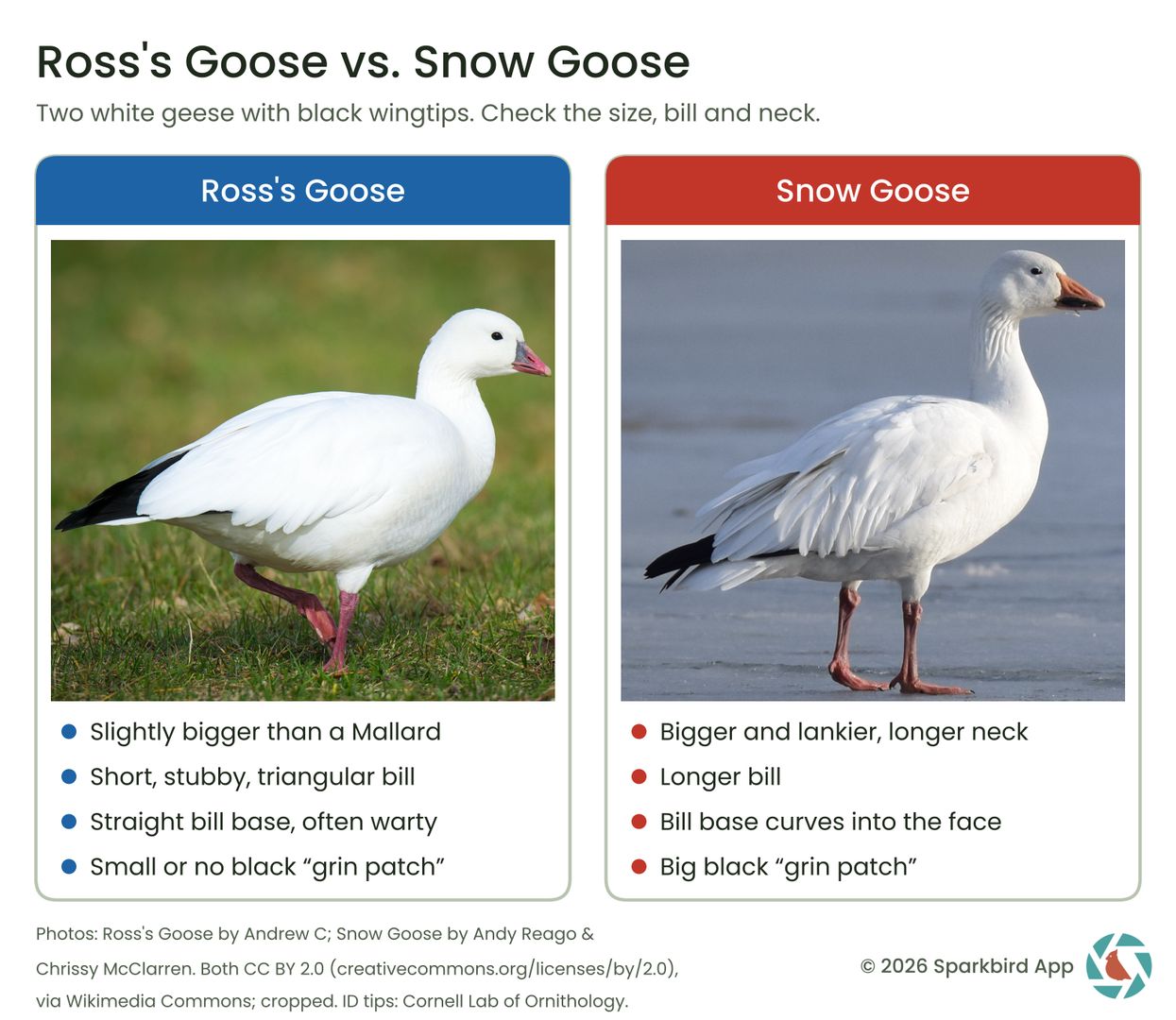
No. Cornell describes the Ross's Goose as a diminutive snow goose with a shorter neck and a stubbier, more triangular bill, and small numbers often mix into enormous snow goose flocks. If you're into tricky look-alikes, you'll love our guide to weird ducks and where to find them.
What geese have you seen this migration season?
Tell us in the comments or through the Sparkbird App, available in the Apple App Store.
- Related: How to Use the Sparkbird App


No comments yet.