
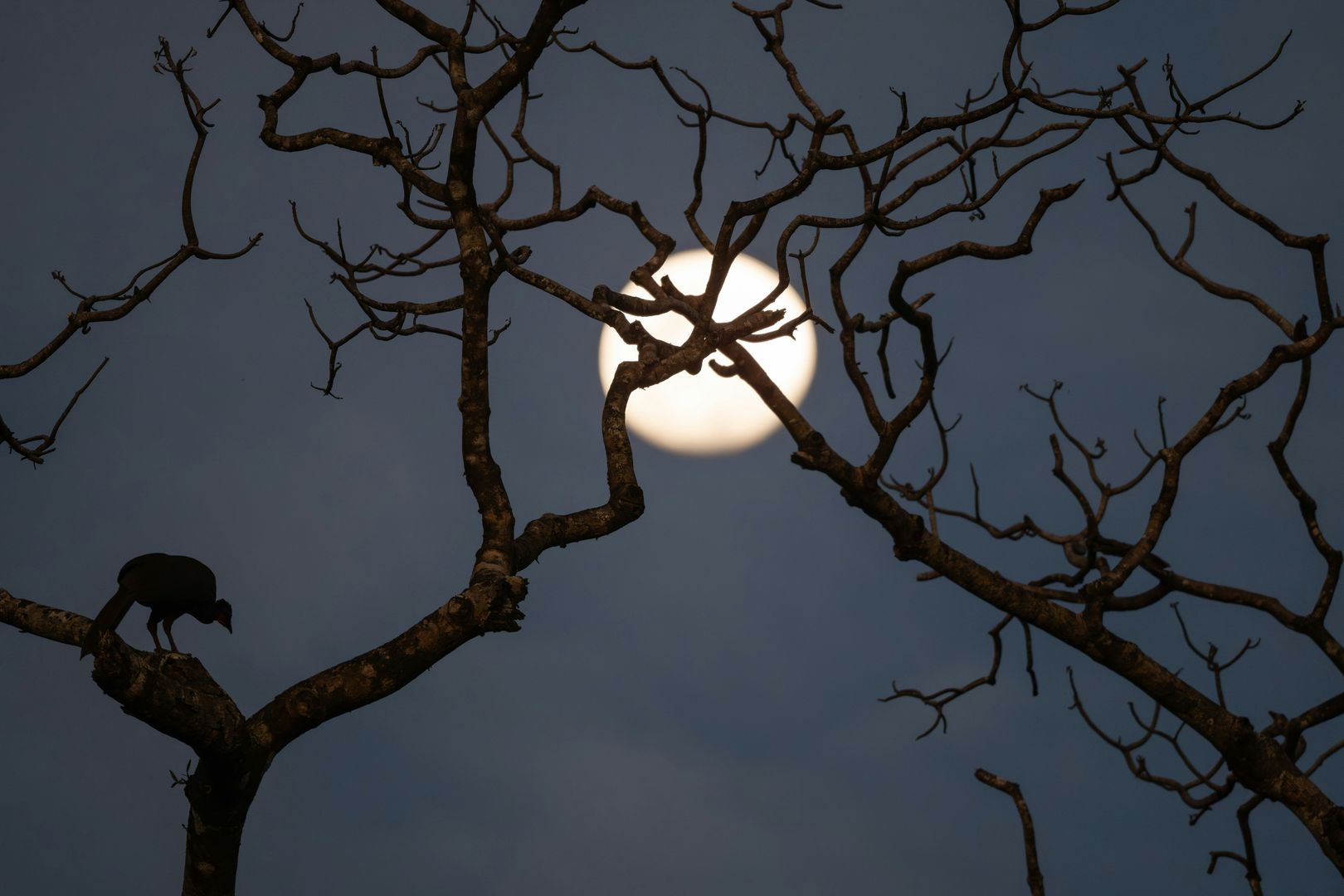
Every evening the backyard birds pull a vanishing act, and every evening I wonder where they all go. So I ask my CEO Will.
He says "to bed, Nicole." His sarcasm never gets old.
Where Do Birds Sleep at Night?
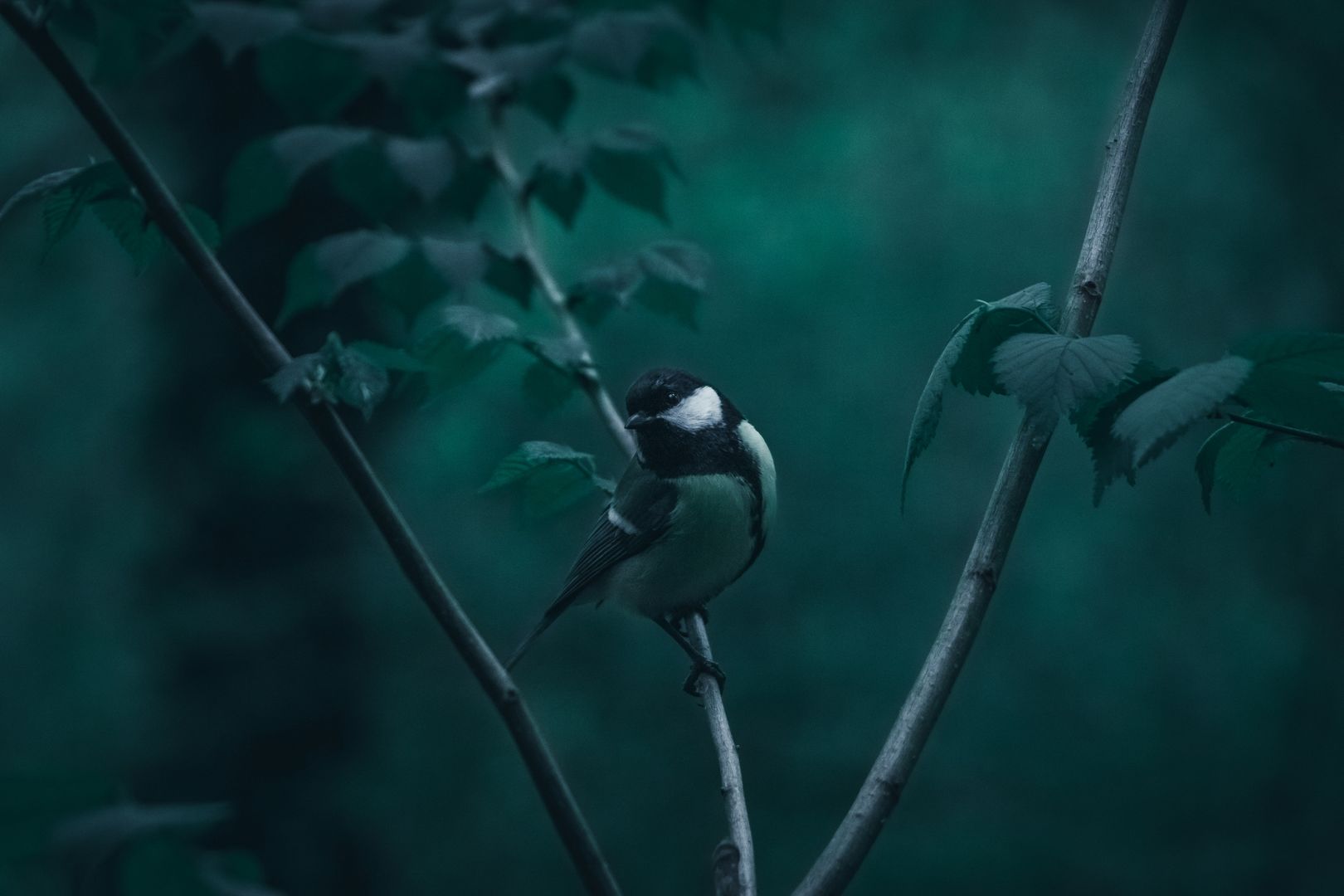
Most backyard birds keep business hours. At dusk they head for a roost, which is any safe spot to sleep. It's usually not a nest; nests are nurseries, and parents rarely sleep in them once the kids fledge.
Songbirds tuck into thick foliage, often on thin twigs that wobble if a predator climbs aboard (nature's doorbell camera). Cavity nesters like woodpeckers and bluebirds sleep in tree holes and nest boxes, and Kenn and Kimberly Kaufman at Birds & Blooms note that bluebirds, tree swallows, and pygmy nuthatches sometimes pile into one cavity to share heat. Field and shorebirds hunker down facing the wind, while ducks and herons sleep on or beside water, where ripples give away anything sneaking up.
Some go big. American Crow winter roosts sometimes number in the hundreds of thousands, which is less a sleepover than a music festival.
Do Birds Really Sleep With One Eye Open?
Yes. Metallica was right all along. Birds can rest half the brain while the other half stands guard, called unihemispheric slow-wave sleep.
In a study of mallards sleeping in a row, ducks on the ends kept their outward-facing eye open 86 percent of the time, while the middle ducks snoozed freely.
Hummingbirds have their own trick, dropping into a hibernation-like state called torpor to save energy overnight.
Do Birds Come Out at Night?
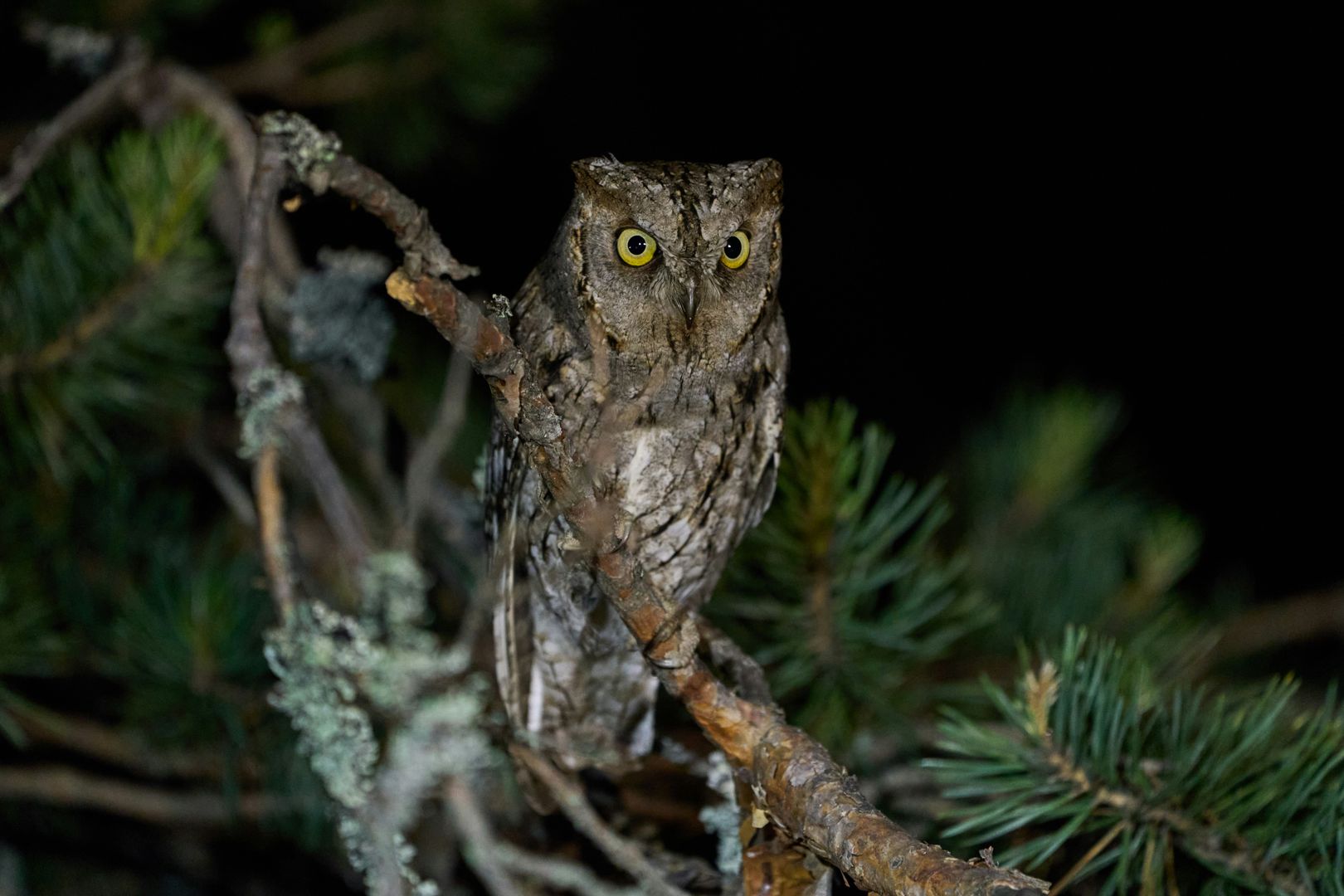
A few clock in at sunset. Owls and nightjars like the Eastern Whip-poor-will are built for low light, and the Great Horned Owl hunts mostly from dusk to dawn.
I learned that at my cousin's lake house as a kid, when a Great Horned Owl snatched a freshly caught fish right out of a friend's hand. Next morning, a huge shadow loomed on the sheer curtain over the sliding door. We decided the owl was inside holding us hostage and refused to open the door for what felt like hours, until my aunt pointed out it was a shadow from the trash bin.
If something shrieks outside tonight, try our guide to strange bird calls at night, or meet the most common birds that sing at night.
Can Birds Fly at Night? In Fall, Plenty Do
Absolutely. According to BirdCast's peak migration data, at least 80 percent of U.S. migratory species travel at night, and more than a billion birds can be aloft on a single fall night, peaking mid-September to mid-October. Here's why most fall migration happens after dark.
So, do birds fly at night time outside migration? Rarely, unless something startles them. To see who's passing over your house, check our guide to [BirdCast migration forecasts].
Let Roosting Birds Sleep
Bird welfare comes first. The ABA Code of Birding Ethics asks birders to be particularly cautious around roosts and to limit recordings used to attract birds. Keep flashlights off roosting birds. A bird flushed on a cold night burns energy it can't spare.
Frequently Asked Questions
Do birds go to the same place every night?
Often, but not always. Many return to a reliable roost, while others rotate between several spots depending on weather and predators.
Do birds sleep through the night?
Not really. Most take a series of short naps, staying partly alert.
What time do birds go to sleep?
Most roost around sunset and wake near first light, which is why the dawn chorus sounds like a group chat at 6 a.m.
Where do baby birds sleep at night?
In the nest, with a parent on top keeping them warm. After fledging, they roost in cover like the adults.
What birds do you hear at night?
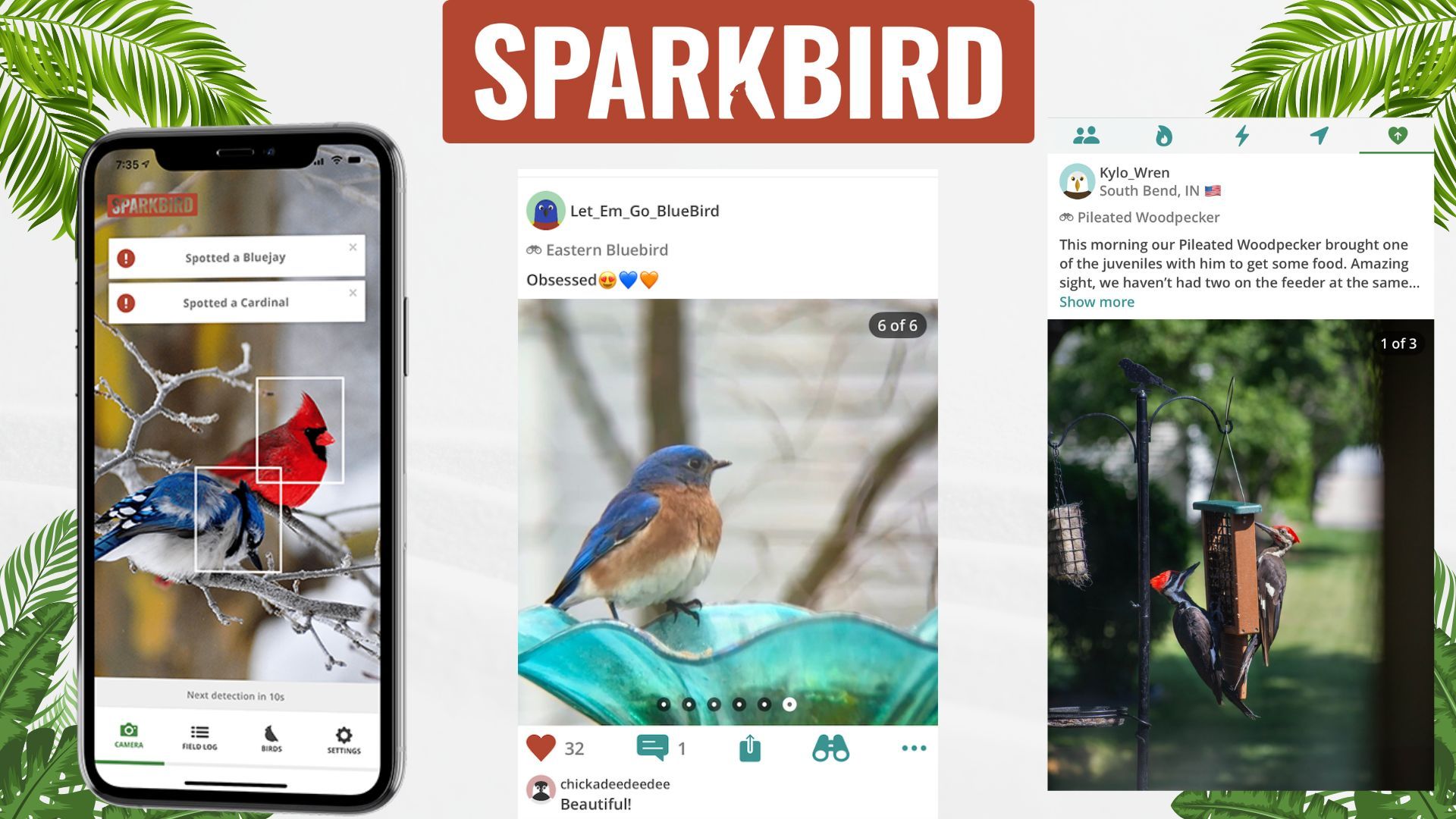
Tell us in the comments or through the Sparkbird App, available in the Apple App Store.
- Related: How to Use the Sparkbird App

No comments yet.