
California doesn't really do winter so much as it does a slightly damper version of fall (I say this as someone who owns three parkas and resents every one of them). That's exactly why winter birds in California are such a good show. Half the West seems to pack up in October and fly here, and like the song says, they check in at the Hotel California. The difference is that these guests actually leave, usually by April.
The state bird is a local. The California Quail has been the official state bird since Assembly Bill 776 passed in 1931, and it doesn't migrate, so you can find it all winter. In fact, winter is when quail are easiest to spot, because they gather in big social groups of 30 to 300 birds outside the breeding season and shuffle through the brush like a very nervous marching band.
Types of Winter Birds in California
There are 3 types of winter birds in California you'll see on this list:
- Resident California Birds – species that live here all year, like scrub-jays, towhees, and Anna's Hummingbirds, and make up the core of the backyard crowd
- Winter Migrants / Visitors – birds that breed farther north or higher up and come to the lowlands for the cold months, from crowned sparrows and kinglets to ducks, geese, eagles, and Sandhill Cranes
- Irruptive Species – birds like Varied Thrushes and Pine Siskins that show up in big numbers some winters and barely at all in others
Each entry covers ID, male vs female, calls, where to find the bird in California, and its feeder favorites if it visits feeders. If you're wondering why so many birds treat the state like a timeshare, here's where birds go in the winter.
1. Anna's Hummingbird
- Family – Trochilidae
- Species – Calypte anna
- Primary Activity Time – Daytime
- Diurnal
- Resident California Bird
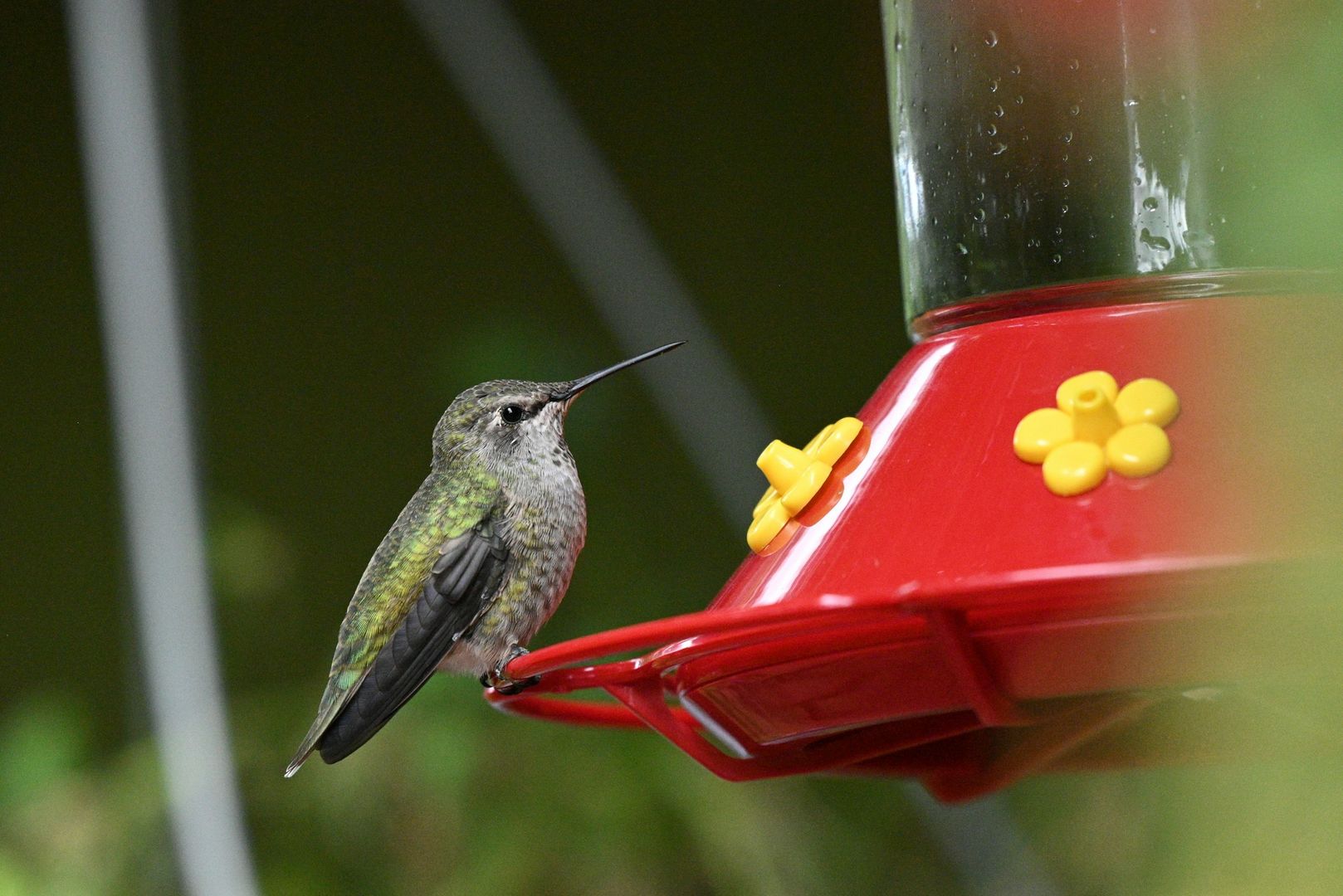
The Anna's Hummingbird is the hummingbird that never got the memo about migrating. It stays in California all year, and it's one of the most widespread feeder birds in the state: in Project FeederWatch's California rankings, it was seen at about 81% of counting sites, second only to the House Finch. It drinks flower nectar and sugar water and snaps up tiny insects to round out the menu.
Males have an iridescent rose-pink head and throat that can look black until the light hits it just right. Females are green above and grayish below, often with a small patch of pink on the throat.
The Anna's Hummingbird song is a scratchy, squeaky jumble that sounds a bit like a dial-up modem, and males sing it right through the winter. In courtship, a male climbs high and dives at a female, ending with a loud chirp made by his tail feathers.
In California winters, look for it statewide in gardens, parks, and neighborhoods, especially anywhere with winter-blooming plants or a well-kept nectar feeder.
Feeder favorites: sugar water (1 part white sugar to 4 parts water, no red dye)
2. House Finch
- Family – Fringillidae
- Species – Haemorhous mexicanus
- Primary Activity Time – Daytime
- Diurnal
- Resident California Bird
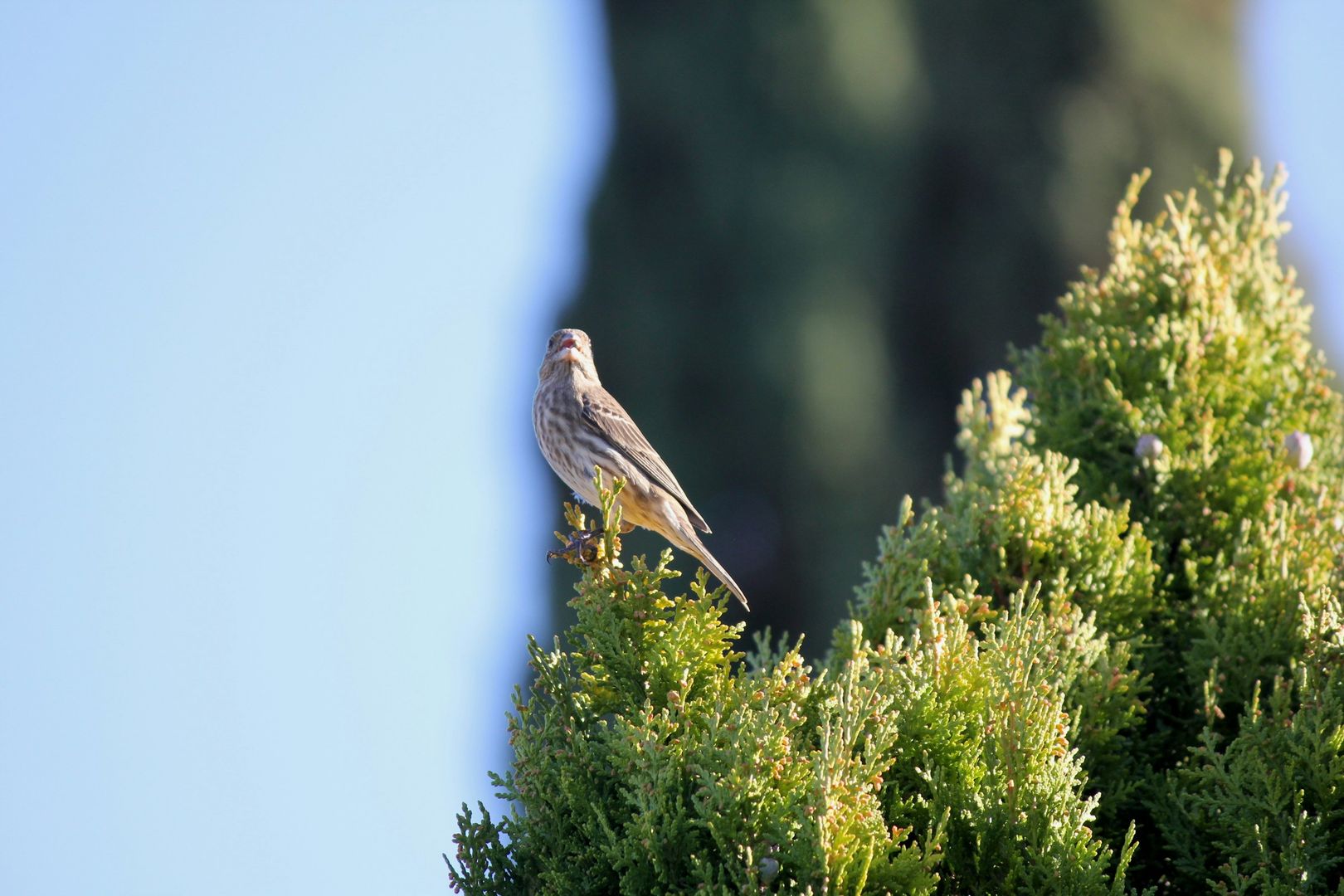
The House Finch is a native Westerner and the most widespread feeder bird in California, topping the FeederWatch list at nearly 90% of sites. It's a seed eater through and through, and it travels in chatty little flocks that can empty a tube feeder faster than I can find my reading glasses.
Males have a red head, breast, and rump, though the color ranges from deep red to orange or even yellow depending on diet. Females are plain gray-brown with blurry streaks and no red at all.
The House Finch song is a long, cheerful warble that often ends with a rising, buzzy note, and you'll hear it even on gray winter days.
In California winters, House Finches are everywhere people are: yards, farms, city parks, and desert towns, from San Diego to the Oregon border.
Feeder favorites: black oil sunflower, sunflower chips, nyjer
3. White-crowned Sparrow
- Family – Passerellidae
- Species – Zonotrichia leucophrys
- Primary Activity Time – Daytime
- Diurnal
- Winter Migrant / Visitor (with resident birds along the coast)
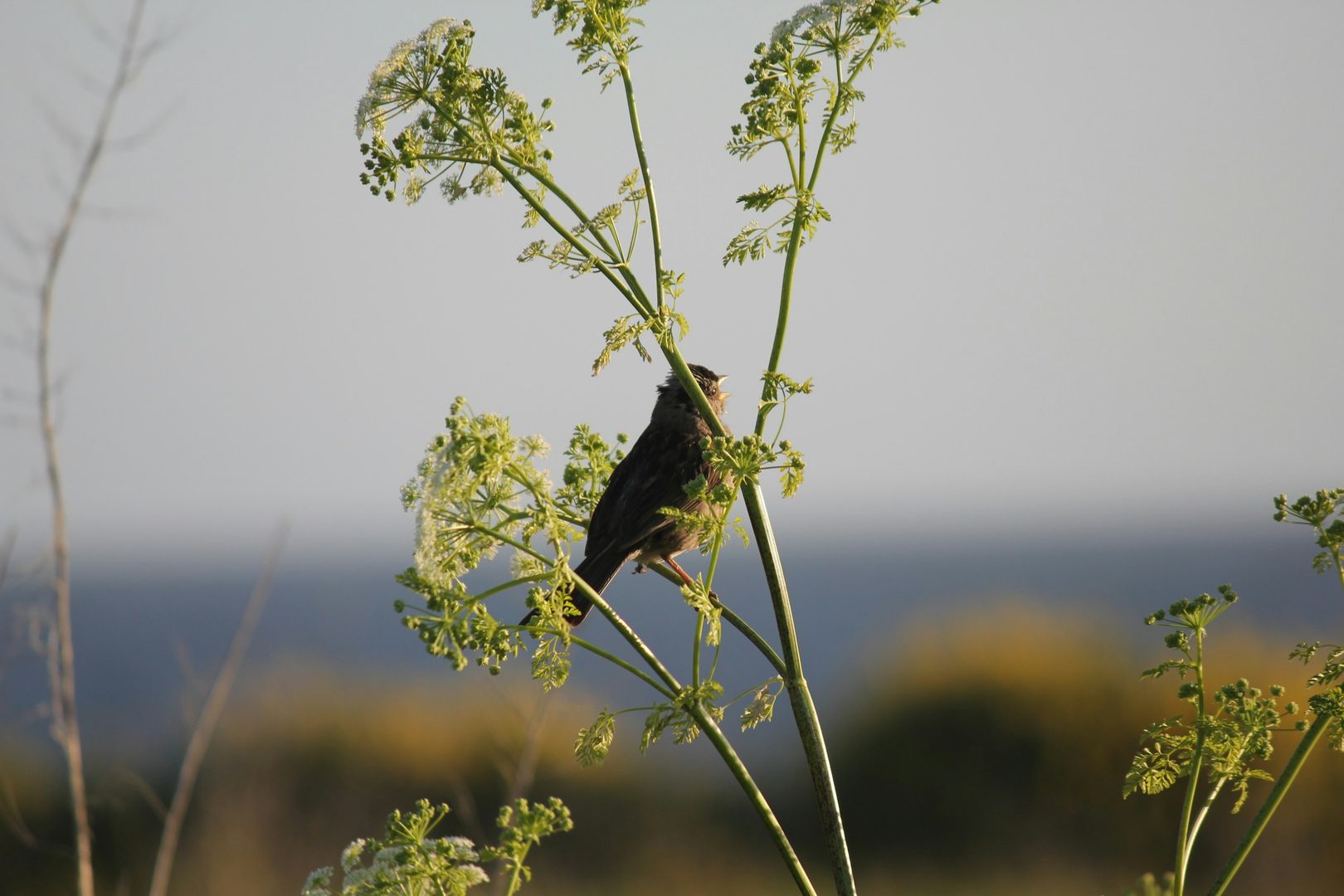
The White-crowned Sparrow is one of the headliners of a California winter. Some live year-round along the coast, but each fall a wave of northern birds arrives to fill lawns, weedy lots, and backyard brush. It ranked in the top six at California feeders, scratching on the ground for dropped seed.
Adults have a crisp black-and-white striped crown, a gray face, and a pinkish-orange to yellowish bill. Young birds wear the same pattern in brown and tan, like a rough draft. Males and females look alike.
The White-crowned Sparrow song starts with a clear whistle and breaks into buzzy trills, and they sing a lot in late winter, so they're often the soundtrack of a February morning.
In California winters, look for it statewide in open, brushy places, including farm edges, parks, and backyards with low shrubs nearby.
Feeder favorites: millet, sunflower chips, cracked corn scattered on the ground
4. Golden-crowned Sparrow
- Family – Passerellidae
- Species – Zonotrichia atricapilla
- Primary Activity Time – Daytime
- Diurnal
- Winter Migrant / Visitor
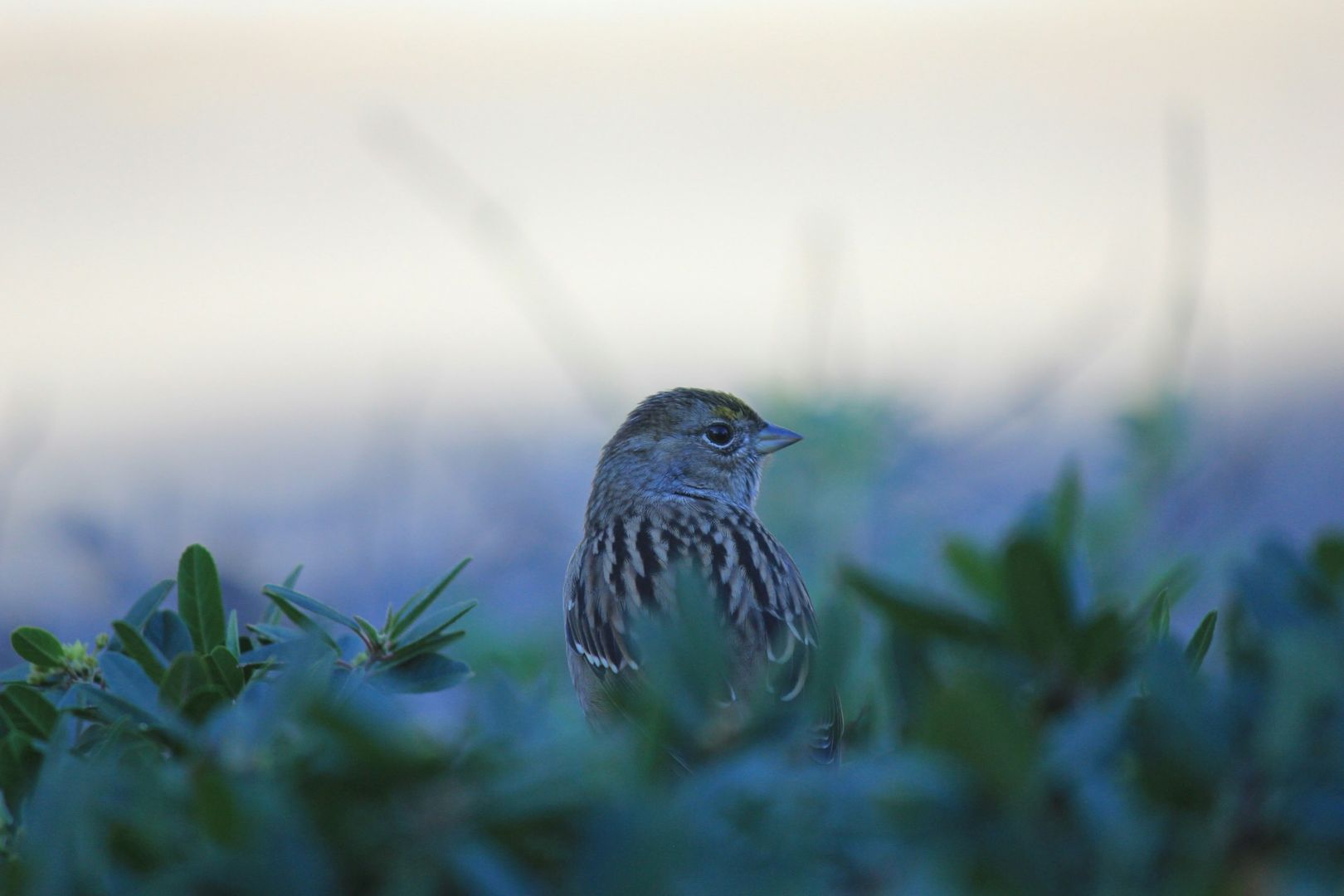
The Golden-crowned Sparrow breeds far to the north and spends its winters on the West Coast, which makes it one of the true California snowbirds. The Santa Clara Valley Open Space Authority calls it a common winter resident from September through April, and it's often mixed into flocks of White-crowned Sparrows.
It's a chunky, plain gray-brown sparrow with a golden-yellow patch at the front of the crown. In winter the black edges on the crown are duller, and by spring they turn bold and black again. Males and females look alike.
The Golden-crowned Sparrow song is a sad little run of three descending whistles that birders often write as oh dear me, which is also what I say when I open my seed receipt.
In California winters, look for it in chaparral, forest edges, parks, and backyards, mostly west of the deserts, always close to thick cover it can dive into.
Feeder favorites: millet, sunflower chips, cracked corn on the ground
5. Dark-eyed Junco
- Family – Passerellidae
- Species – Junco hyemalis
- Primary Activity Time – Daytime
- Diurnal
- Winter Migrant / Visitor (resident in the mountains)
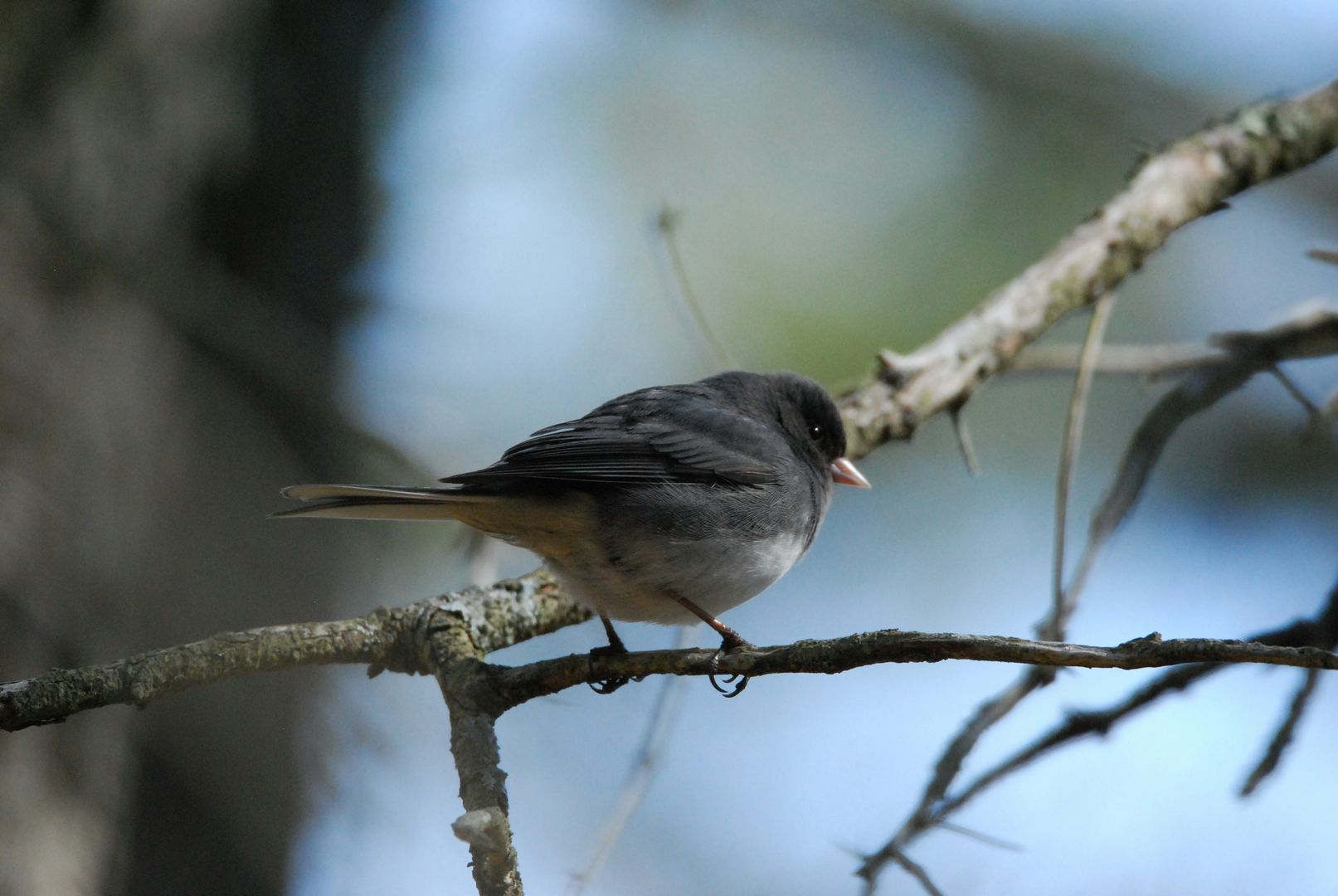
The Dark-eyed Junco breeds in California's mountains and forests, but in most of southern and central California, it's only around in winter. That's when juncos drop into the lowlands and hop around under feeders picking up what everyone else spilled.
California's juncos are mostly the "Oregon" type. Males have a black or dark gray hood, a brown back, and pinkish-buff sides. Females have a paler, grayer hood and softer colors overall. Both flash bright white outer tail feathers when they flush.
The Dark-eyed Junco call is a sharp tick or smack, and the song is a quick, musical trill on one pitch.
In California winters, juncos are common statewide in yards, parks, oak woodlands, and forest edges, usually in small flocks on the ground.
Feeder favorites: millet, cracked corn, sunflower chips on the ground or a platform
6. Yellow-rumped Warbler
- Family – Parulidae
- Species – Setophaga coronata
- Primary Activity Time – Daytime
- Diurnal
- Winter Migrant / Visitor
The Yellow-rumped Warbler is the warbler you'll actually see in a California winter. Birders lovingly call it "butter-butt" for its yellow rump. It's one of the hardiest warblers in North America because it can digest the waxy coating on berries, so it doesn't have to fly all the way to the tropics when the bugs dry up.
In winter, both sexes are mostly brownish-gray with streaks and a little yellow on the sides and that bright yellow rump. Males are a bit crisper and grayer, and by spring they turn bold gray, black, and yellow. Most California birds are the yellow-throated "Audubon's" form, with some white-throated "Myrtle" birds mixed in.
The Yellow-rumped Warbler call is a sharp chek that you'll hear from trees and shrubs all day long.
In California winters, it's common statewide in open woods, parks, and neighborhoods, and it heads back to mountain conifer forests by April.
Feeder favorites: suet, mealworms
7. Ruby-crowned Kinglet
- Family – Regulidae
- Species – Corthylio calendula
- Primary Activity Time – Daytime
- Diurnal
- Winter Migrant / Visitor
The Ruby-crowned Kinglet is a tiny, hyper bird that arrives in early fall and leaves in early spring. It eats small insects and spiders, picking them off leaves while flicking its wings nonstop, like it's had four espressos and has somewhere to be.
It's olive-green with a white eye-ring, white wing bars, and a little dark bar on the wing. Males have a red crown patch, but they keep it hidden most of the time and only flash it when they're excited or annoyed. Females have no red.
The Ruby-crowned Kinglet call is a husky, two-part ji-dit, and in late winter males start trying out their surprisingly loud, bubbly song.
In California winters, look for it statewide in woodlands, parks, shrubby yards, and riparian thickets, often traveling with chickadees and warblers.
Feeder favorites: suet, mealworms (occasionally)
8. California Quail
- Family – Odontophoridae
- Species – Callipepla californica
- Primary Activity Time – Dawn and Dusk
- Diurnal
- California State Bird (resident)
The California Quail is a plump, ground-dwelling seed eater and the reason a bush in your yard sometimes explodes into thirty birds at once. Outside the breeding season, quail live in large groups called coveys, and they rarely wander far from dense brush.
Males have a black face trimmed in white, a gray chest, a scaly belly, and a teardrop-shaped black plume that bobs over the forehead like a comma. Females are browner and plainer, with a smaller plume.
The California Quail call is a loud three-note chi-CA-go, which means our state bird spends all day shouting the name of a city in Illinois. It also gives soft clucks and pit-pit notes while feeding.
In California winters, look for coveys in oak woodlands, chaparral, farm edges, and suburban yards with shrubs, often feeding on open ground early in the morning.
Feeder favorites: millet, cracked corn scattered on the ground near cover
9. California Scrub-Jay
- Family – Corvidae
- Species – Aphelocoma californica
- Primary Activity Time – Daytime
- Diurnal
- Resident California Bird
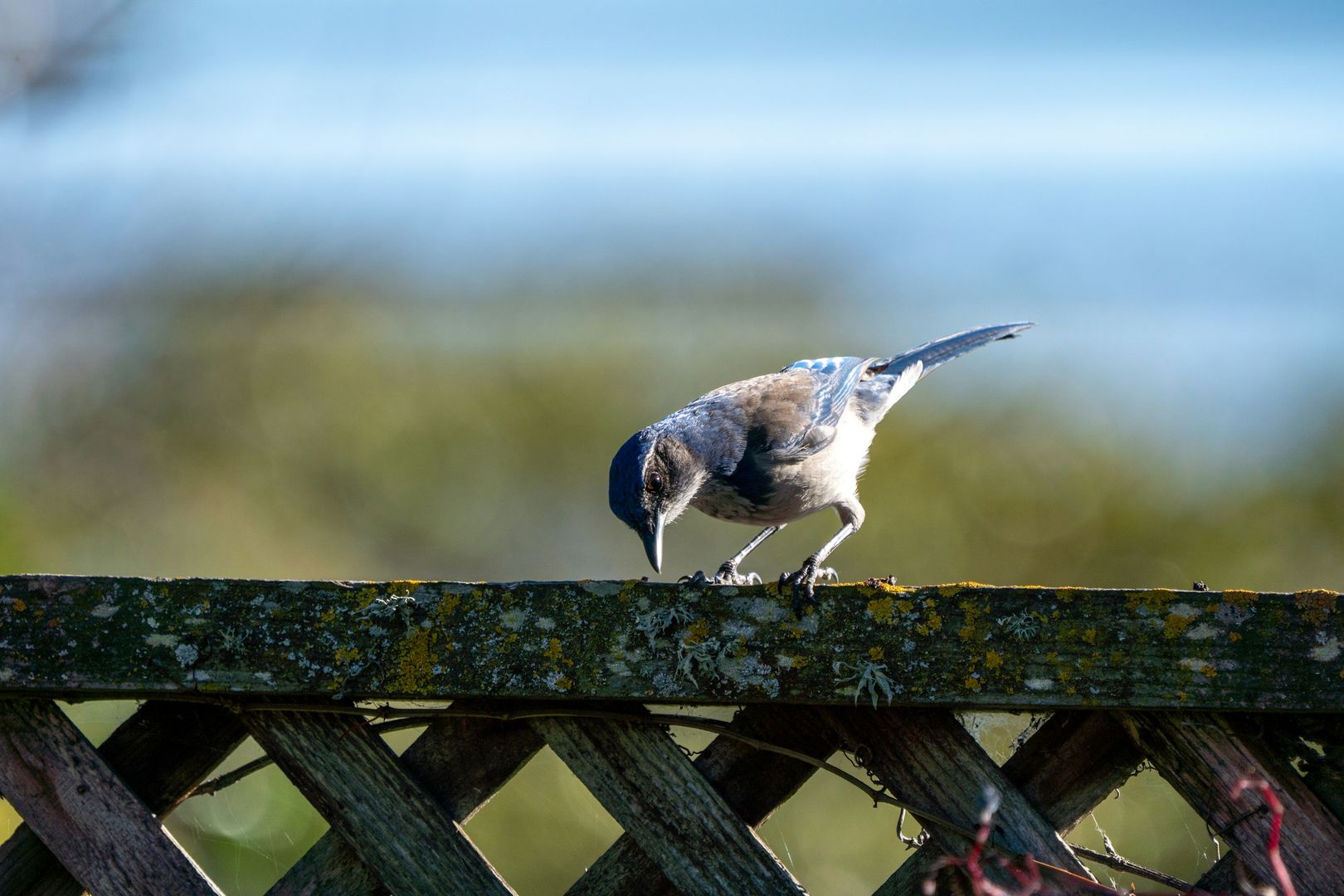
The California Scrub-Jay is the loud blue bird yelling at you from the fence. It eats insects, fruit, seeds, and acorns, and it hides food for later. One study found a single jay stored up to 5,000 acorns in a single autumn (I can't remember where I parked this morning).
It's bright blue on the head, wings, and tail, with a gray-brown back, pale underparts, and a blue necklace across the chest. It has no crest. Males and females look alike.
The California Scrub-Jay call is a harsh, raspy shreep that it repeats when it's alarmed or showing off, which is most of the time.
In California winters, it's common in oak woodlands, shrublands, and neighborhoods across most of the state outside the high mountains and open deserts.
Feeder favorites: peanuts, black oil sunflower, acorns
10. Lesser Goldfinch
- Family – Fringillidae
- Species – Spinus psaltria
- Primary Activity Time – Daytime
- Diurnal
- Resident California Bird
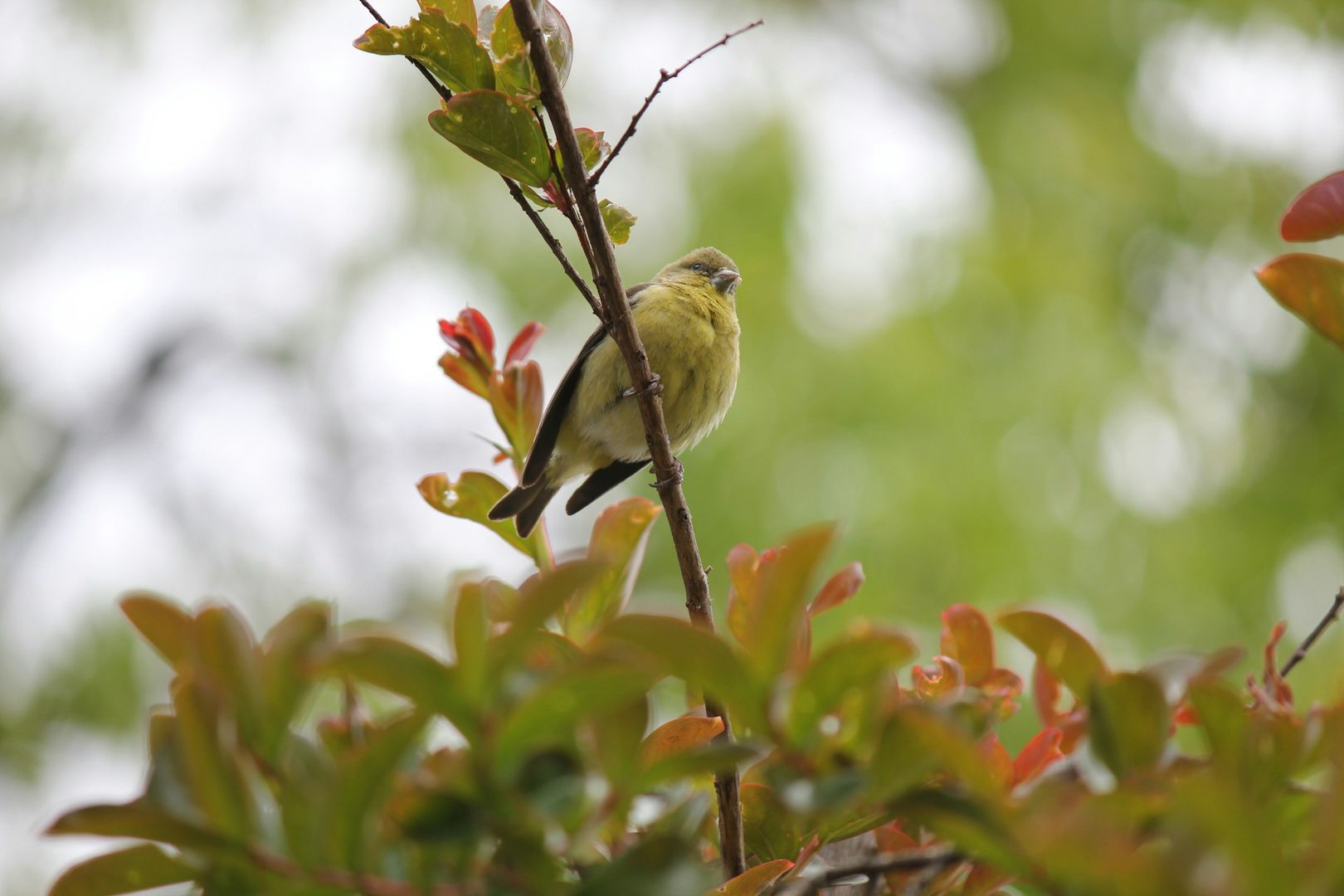
The Lesser Goldfinch is a small, bright finch that ranked seventh at California feeders. It's a seed specialist, working thistle, sunflower heads, and weedy fields in noisy little flocks.
Males are bright yellow below with a black cap and white wing patches, and most California males have a greenish back. Females are olive above and dull yellow below with no black cap.
The Lesser Goldfinch call is a plaintive, rising tee-yee, and its song is a long, jumbled warble that often mixes in imitations of other birds.
In California winters, look for it statewide below the high mountains in yards, parks, oak woodlands, and weedy edges.
Feeder favorites: nyjer, sunflower chips
11. California Towhee
- Family – Passerellidae
- Species – Melozone crissalis
- Primary Activity Time – Daytime
- Diurnal
- Resident California Bird
The California Towhee is basically found only in California, with small pockets in southwest Oregon and Baja California. It doesn't migrate, it eats seeds and insects off the ground, and it has the kind of commitment to its territory that leads males to fight their own reflection in car mirrors.
It's plain brown all over with a rusty patch under the tail and a buffy throat with fine streaks. Males and females look alike, so the bird attacking your side mirror could be either one.
The California Towhee call is a sharp, metallic chink, and pairs greet each other with a squeaky duet.
In California winters, look for it in chaparral, gardens, parks, and brushy edges west of the Sierra and the deserts, usually in pairs.
Feeder favorites: millet, cracked corn, sunflower chips on the ground
12. Spotted Towhee
- Family – Passerellidae
- Species – Pipilo maculatus
- Primary Activity Time – Daytime
- Diurnal
- Resident California Bird
The Spotted Towhee is the flashier towhee. It scratches through leaf litter with a two-footed backward hop, so you'll often hear it rustling under shrubs long before you see it.
Males have a black hood and back dotted with white spots, rusty sides, a white belly, and red eyes. Females have the same pattern, but the black is replaced with a warm, sooty brown.
The Spotted Towhee call is a raspy, rising, cat-like mew, and the song is a short buzzy trill.
In California winters, look for it statewide in brushy habitat, from coastal scrub and chaparral to woodland edges and overgrown backyards.
Feeder favorites: millet, sunflower chips, cracked corn on the ground
13. Oak Titmouse
- Family – Paridae
- Species – Baeolophus inornatus
- Primary Activity Time – Daytime
- Diurnal
- Resident California Bird
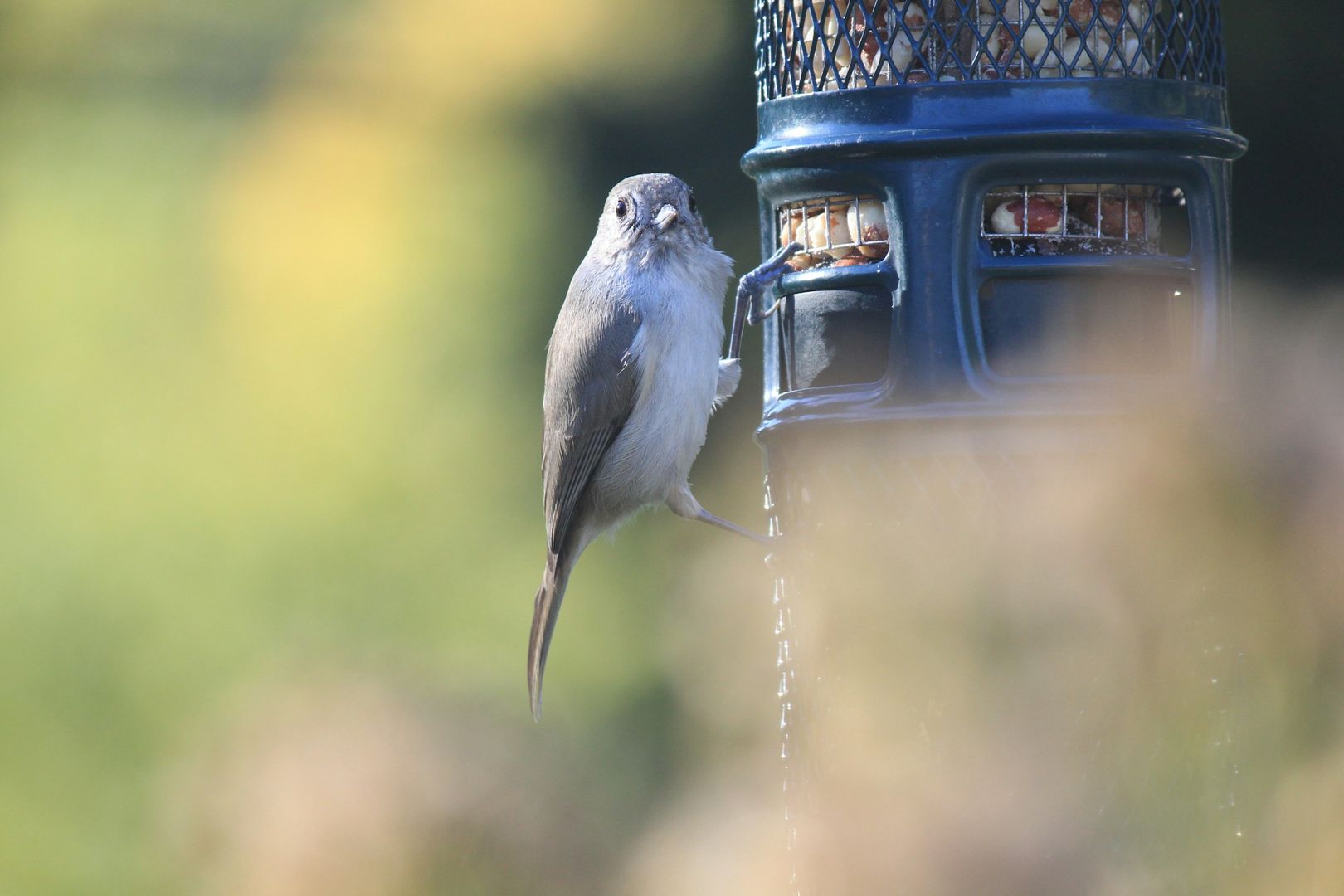
The Oak Titmouse is almost entirely a California bird, closely tied to the oak woodlands on the state's drier slopes. Pairs mate for life and defend their territory year-round, which makes it one of the most reliable birds on this list.
It's small and plain gray-brown with a short crest and dark eyes, and that's the whole outfit. (It's the birding equivalent of a capsule wardrobe.) Males and females look alike.
The Oak Titmouse call is a raspy, scolding tsicka-dee-dee, and its song is a repeated whistled phrase that carries well on still winter mornings.
In California winters, look for it in oak woodlands, foothills, and older neighborhoods with mature oaks, mostly west of the Sierra.
Feeder favorites: black oil sunflower, peanuts, suet
14. Black Phoebe
- Family – Tyrannidae
- Species – Sayornis nigricans
- Primary Activity Time – Daytime
- Diurnal
- Resident California Bird
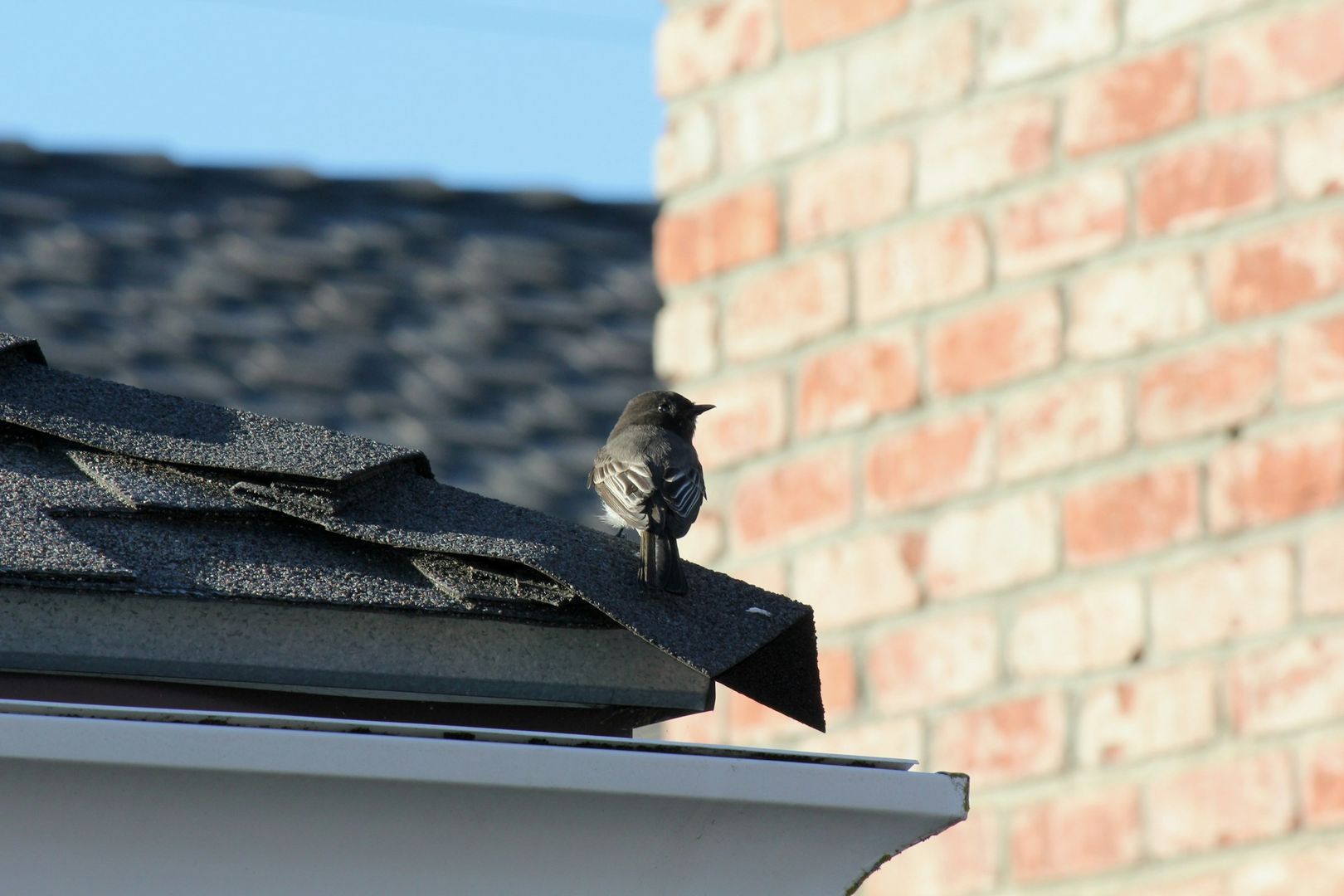
The Black Phoebe is a flycatcher that doesn't need to fly south, because California always has a few bugs buzzing somewhere. It perches low near water, pumps its tail, and sallies out to snatch insects in midair.
It's sooty black with a clean white belly, like it's dressed for a black-tie event that's only half formal. Males and females look alike.
The Black Phoebe call is a sharp tsip, and the song is a thin, alternating fee-bee, fee-bee.
In California winters, look for it statewide near creeks, ponds, fountains, and even swimming pools, often perched on a fence, railing, or low branch.
15. Bushtit
- Family – Aegithalidae
- Species – Psaltriparus minimus
- Primary Activity Time – Daytime
- Diurnal
- Resident California Bird
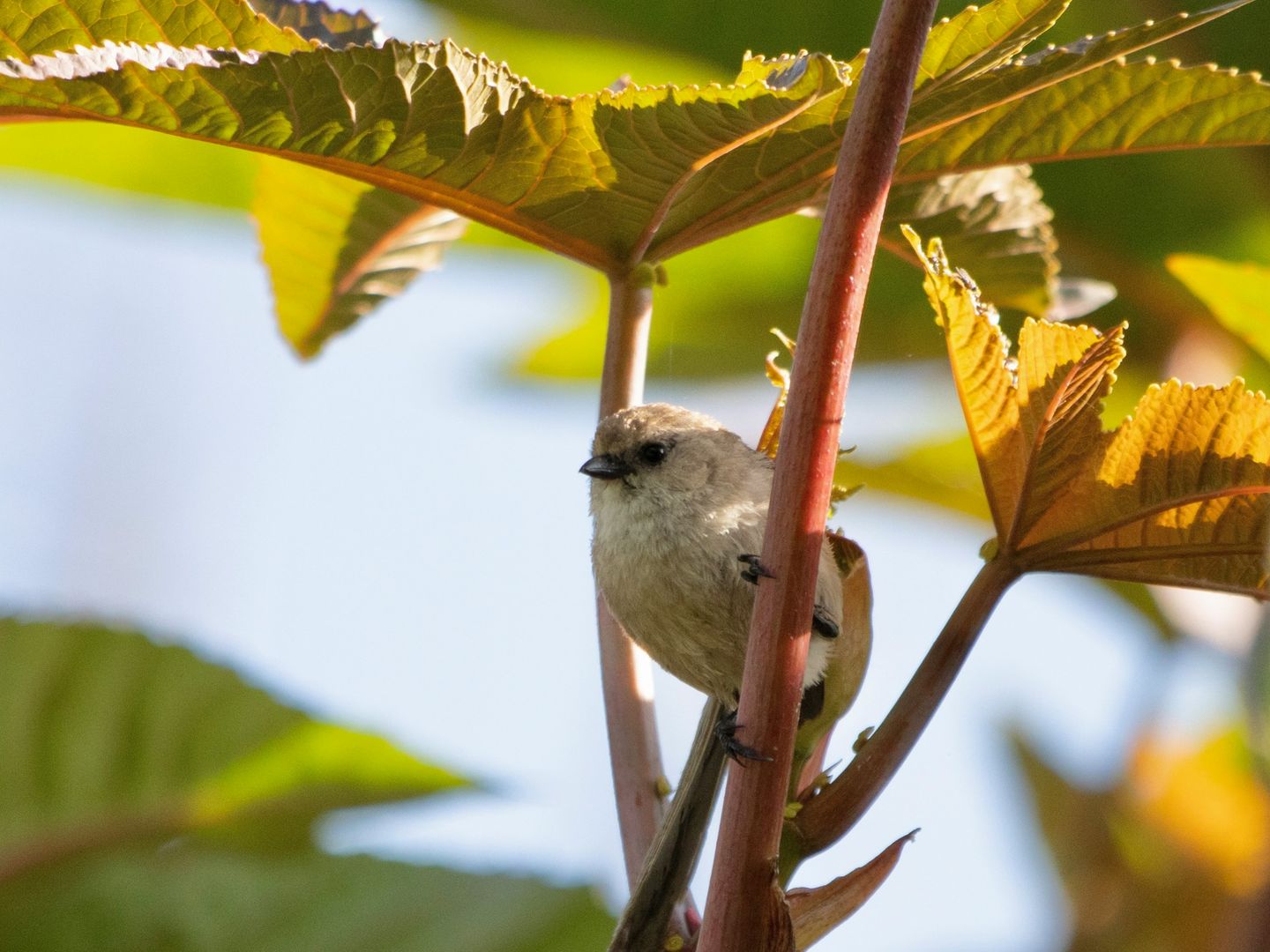
The Bushtit is a tiny gray puffball with a long tail that travels in flocks, often a dozen birds or more at once. One minute your shrub is empty, the next it's full of Bushtits, and a minute later they've all moved on.
It's plain gray-brown with a stubby bill and a long tail. The easiest way to tell the sexes apart is the eyes: males have dark eyes, and females have pale yellow ones.
The Bushtit call is a soft, constant twitter of tsit notes that keeps the flock together.
In California winters, look for it statewide in oak woodlands, chaparral, parks, and leafy yards. It's one of the most common California backyard birds that never touches a seed feeder.
Feeder favorites: suet
16. Chestnut-backed Chickadee
- Family – Paridae
- Species – Poecile rufescens
- Primary Activity Time – Daytime
- Diurnal
- Resident California Bird
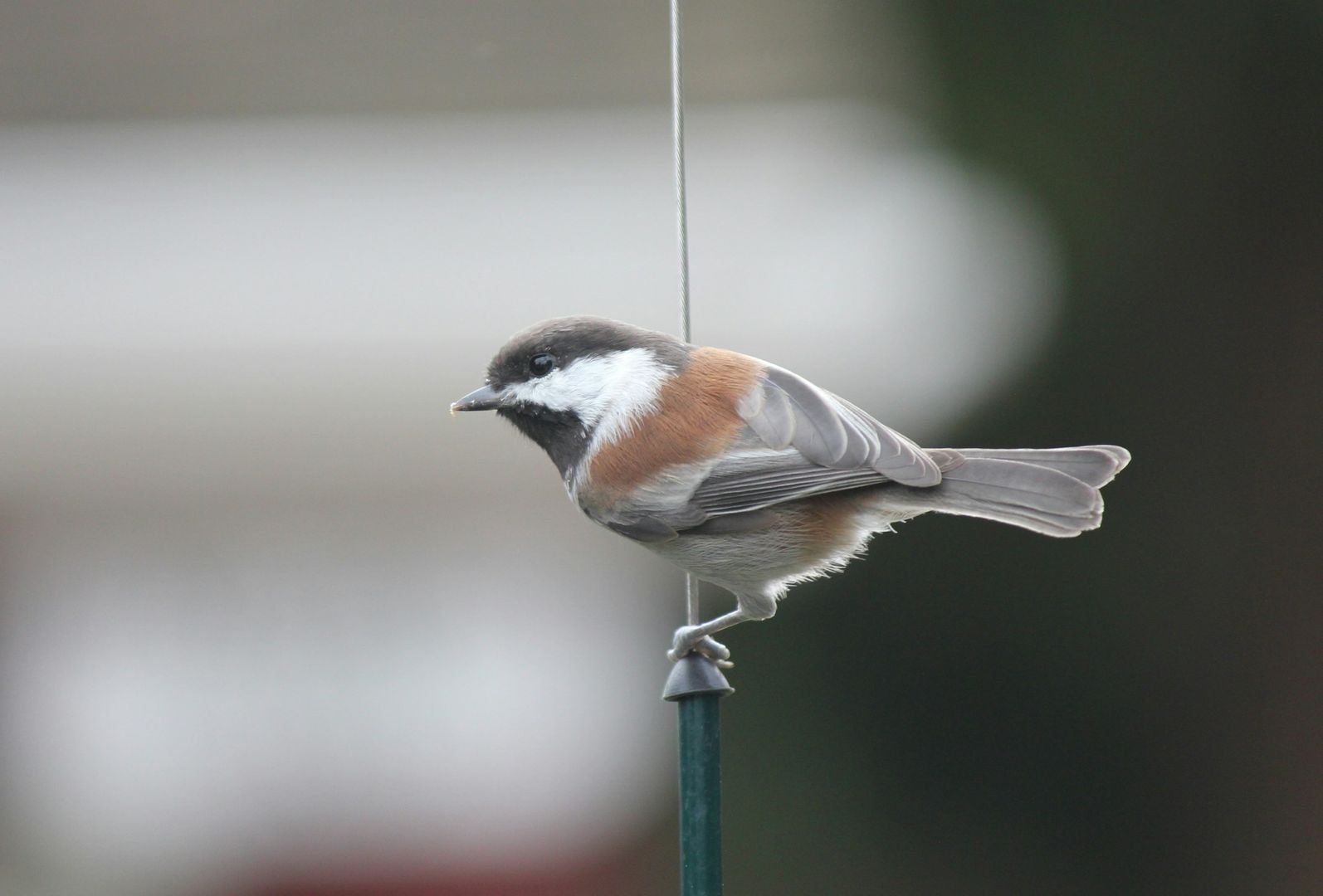
The Chestnut-backed Chickadee is the coastal chickadee, a non-migratory resident of California's damp coniferous forests. It has also spread into the central Sierra Nevada and the suburbs of the East Bay.
It has a dark cap, a black bib, white cheeks, and a rich chestnut back. Birds along the central coast show less chestnut on their sides than birds farther north. Males and females look alike.
The Chestnut-backed Chickadee call is a fast, hoarse chick-a-dee-dee, higher and buzzier than other chickadees.
In California winters, look for it along the coast from the redwoods south through the central coast, in conifers, mixed woods, and wooded neighborhoods.
Feeder favorites: black oil sunflower, suet, peanuts
17. Northern Mockingbird
- Family – Mimidae
- Species – Mimus polyglottos
- Primary Activity Time – Daytime
- Diurnal
- Resident California Bird
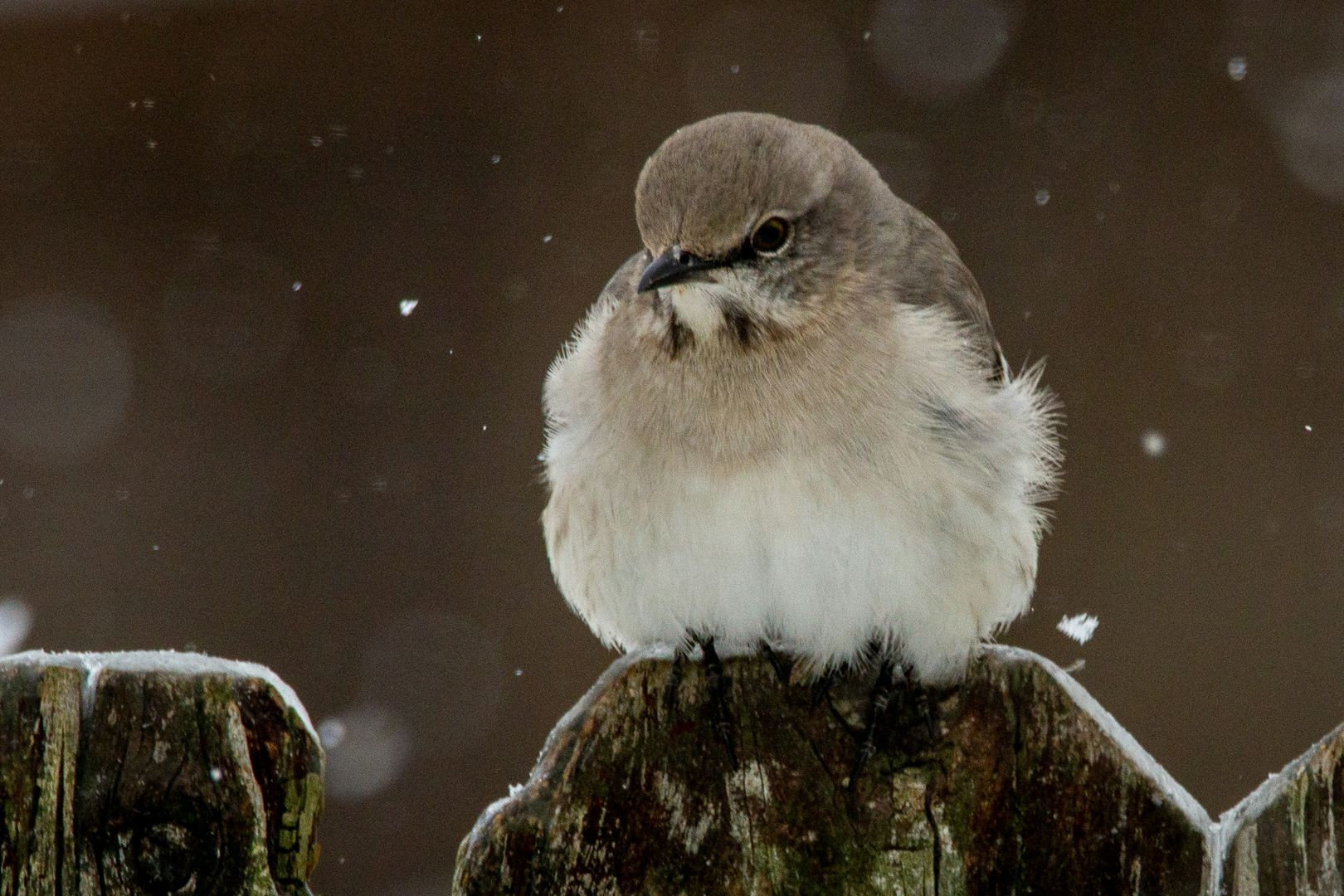
The Northern Mockingbird is the neighborhood DJ, remixing other birds' songs (and the occasional car alarm). In winter, it often claims a fruiting tree or shrub and chases away anyone else who wants a berry.
It's gray above and pale below, with a long tail and big white wing patches that flash when it flies. Males and females look alike.
The Northern Mockingbird song is a long string of borrowed phrases, each repeated a few times before it moves on to the next, and some birds sing at night.
In California winters, look for it statewide in towns, parks, farms, and desert edges, wherever there's open ground and berry-producing plants.
Feeder favorites: suet, chopped fruit
18. Mourning Dove
- Family – Columbidae
- Species – Zenaida macroura
- Primary Activity Time – Daytime
- Diurnal
- Resident California Bird
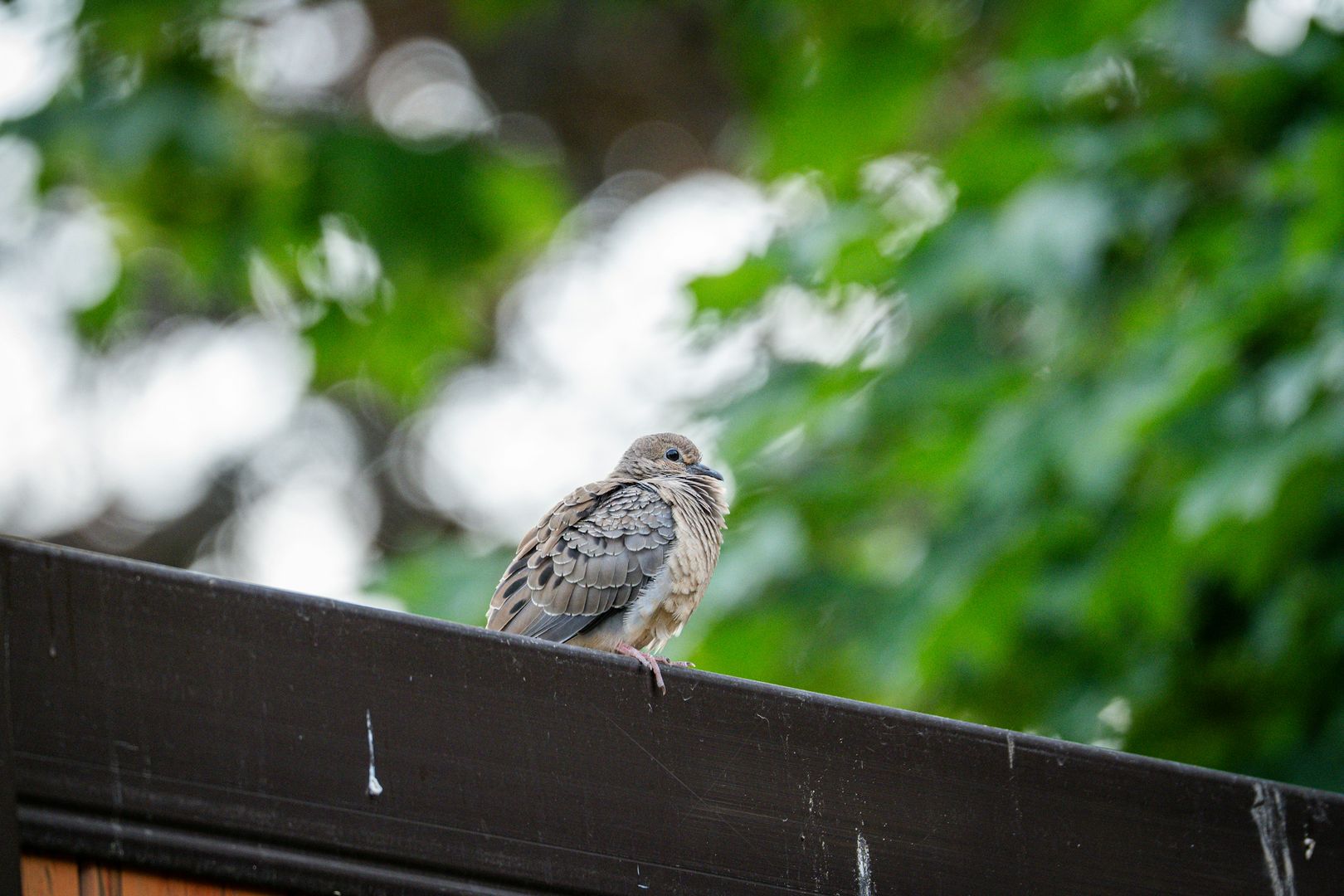
The Mourning Dove ranked third at California feeders, which tracks, since it's rarely in a hurry to leave. It's a ground-feeding seed eater that fills its crop quickly and then flies off to digest somewhere quiet.
It's slim and soft gray-brown, with black spots on the wings and a long, pointed tail edged in white. Males have a faint rosy breast and a bluish crown, while females are a bit browner.
The Mourning Dove call is a soft, sad coo-OO-oo-oo-oo that people often mistake for an owl, and its wings whistle when it takes off.
In California winters, doves are common statewide, especially in farm country and suburbs, where they gather in loose flocks.
Feeder favorites: millet, cracked corn, black oil sunflower on the ground or a platform
19. American Robin
- Family – Turdidae
- Species – Turdus migratorius
- Primary Activity Time – Daytime
- Diurnal
- Resident / Winter Migrant
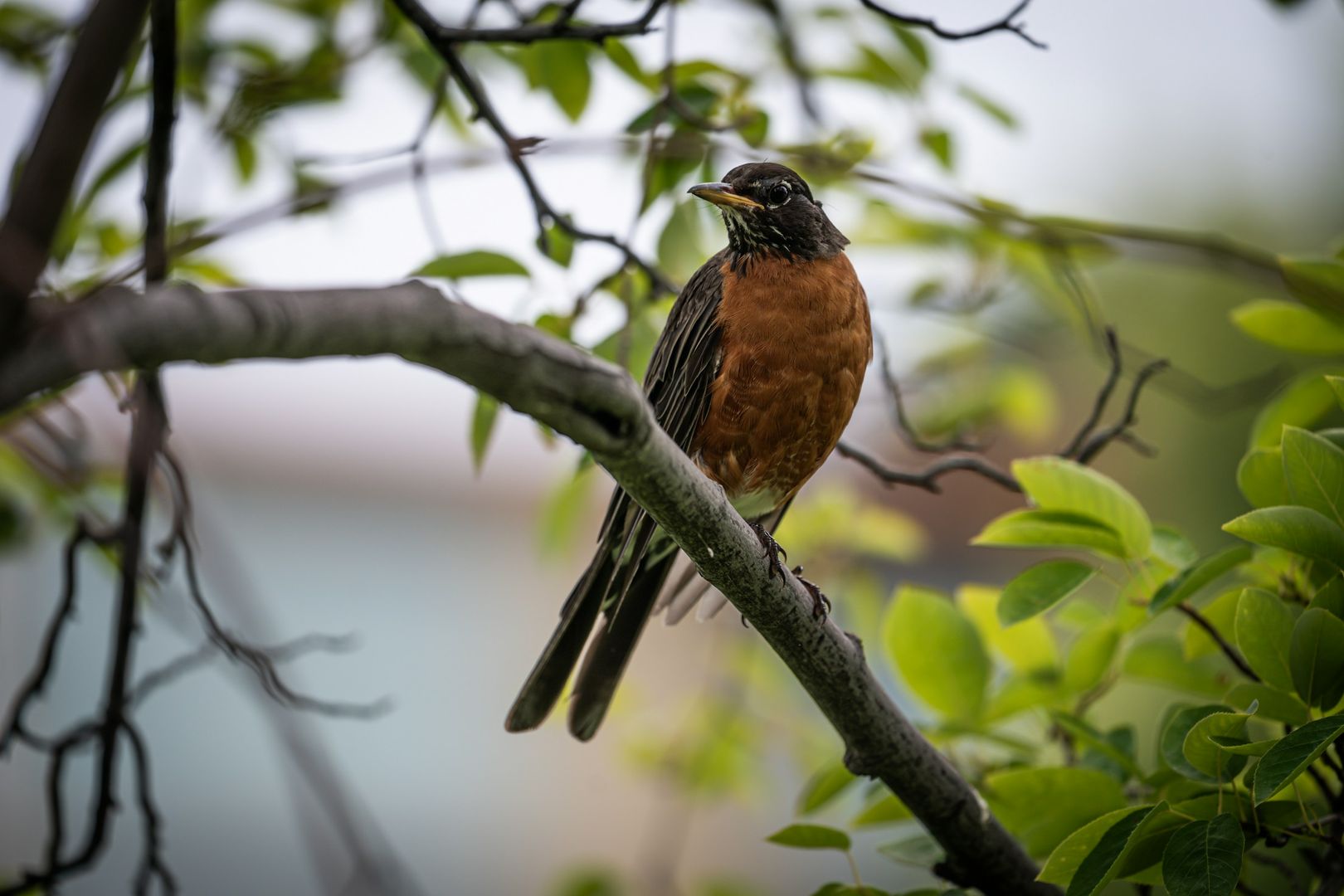
The American Robin is around all year in much of California, but in winter its behavior changes. Robins switch to fruit and roam in big flocks, sweeping through neighborhoods to strip toyon, pyracantha, and other berry bushes.
Males have a dark gray to blackish head and a rich orange breast, while females are paler, with a grayer head and a softer orange breast.
The American Robin call in winter is mostly a clucking tut-tut-tut and a high, thin tsee in flight, and you'll hear the full song again as spring gets closer.
In California winters, look for it statewide in parks, golf courses, orchards, and suburbs with fruiting trees. Sacramento Audubon notes winter flocks of robins and waxwings at William Land Park and other Sacramento winter hotspots.
Feeder favorites: chopped fruit, mealworms, and a bird bath
20. Hermit Thrush
- Family – Turdidae
- Species – Catharus guttatus
- Primary Activity Time – Daytime
- Diurnal
- Winter Migrant / Visitor
The Hermit Thrush breeds in mountain forests and comes down to the lowlands for the winter. It's a shy bird that forages on the ground for insects and berries, usually in shady spots under shrubs.
It's brown above with a reddish tail and a spotted breast, plus a thin pale eye-ring. It has a habit of raising its tail and slowly lowering it, like it's thinking things over. Males and females look alike.
The Hermit Thrush call in winter is a soft, low chuck. Its famous flute-like song is mostly saved for spring and summer in the mountains.
In California winters, look for it statewide in shady gardens, parks, oak woodlands, and riparian thickets.
Feeder favorites: mealworms, berries
21. Varied Thrush
- Family – Turdidae
- Species – Ixoreus naevius
- Primary Activity Time – Daytime
- Diurnal
- Irruptive
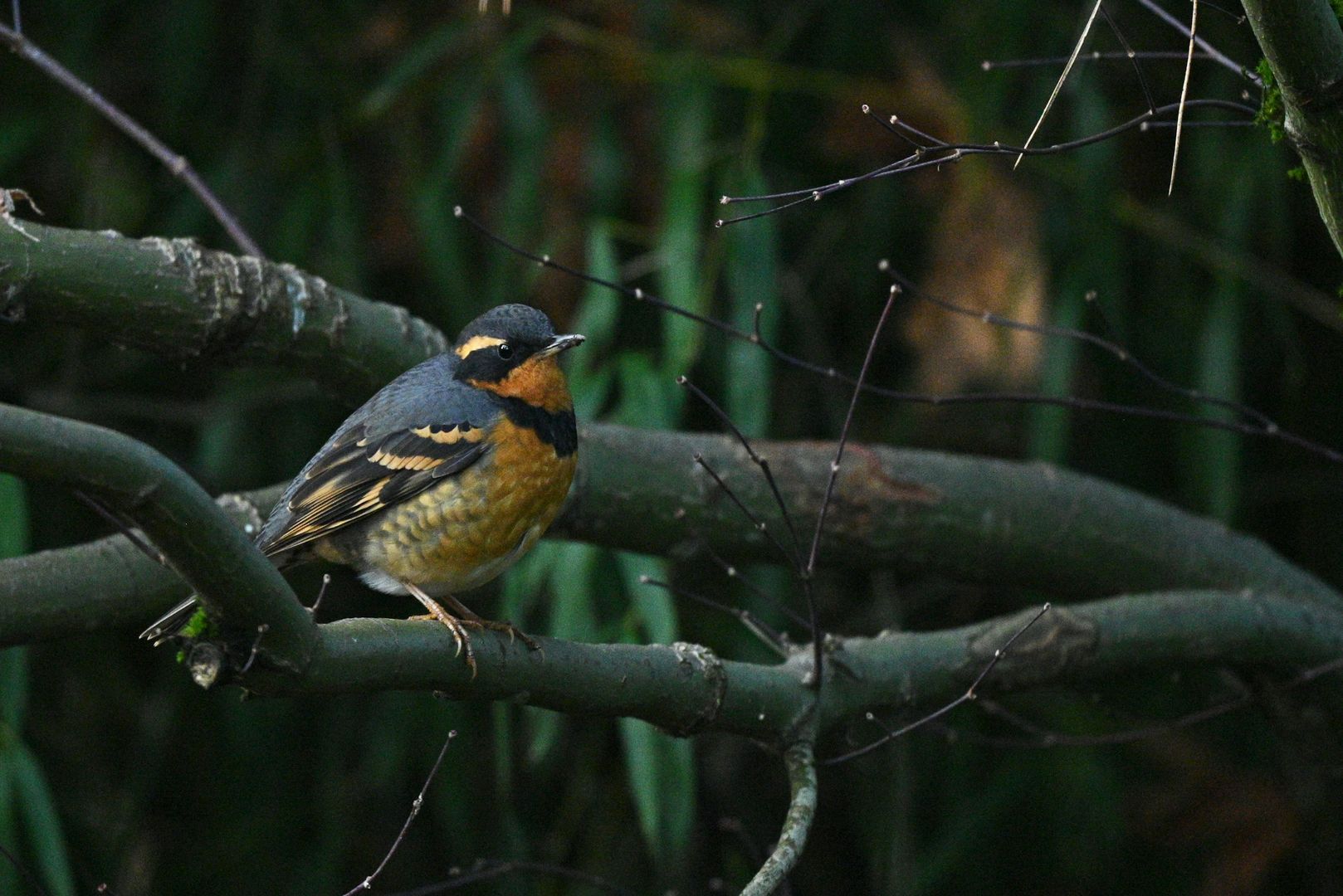
The Varied Thrush is the California winter bird that birders get a little giddy about. It breeds in the wet forests of the Pacific Northwest, and in some winters big numbers push south into California. In 2014, birders reported big flights across the state, and researchers think these irruptions are probably linked to cycles of oak masting and acorn crops, though the exact cause is still a bit unclear.
Males are slate gray above with an orange eyebrow, orange throat, orange wing bars, and a black band across the chest. Females wear a softer, brownish version with a fainter breast band.
The Varied Thrush song is one long, eerie, buzzy whistle on a single pitch, followed by another on a different pitch. It sounds like someone blowing across a bottle in a foggy forest.
In California winters, look for it on the ground under redwoods and other dense trees in coastal forests and foothills. In Sacramento, it's turned up under the redwoods at William Land Park.
Feeder favorites: millet and sunflower chips on the ground, berries
22. Cedar Waxwing
- Family – Bombycillidae
- Species – Bombycilla cedrorum
- Primary Activity Time – Daytime
- Diurnal
- Winter Migrant / Visitor
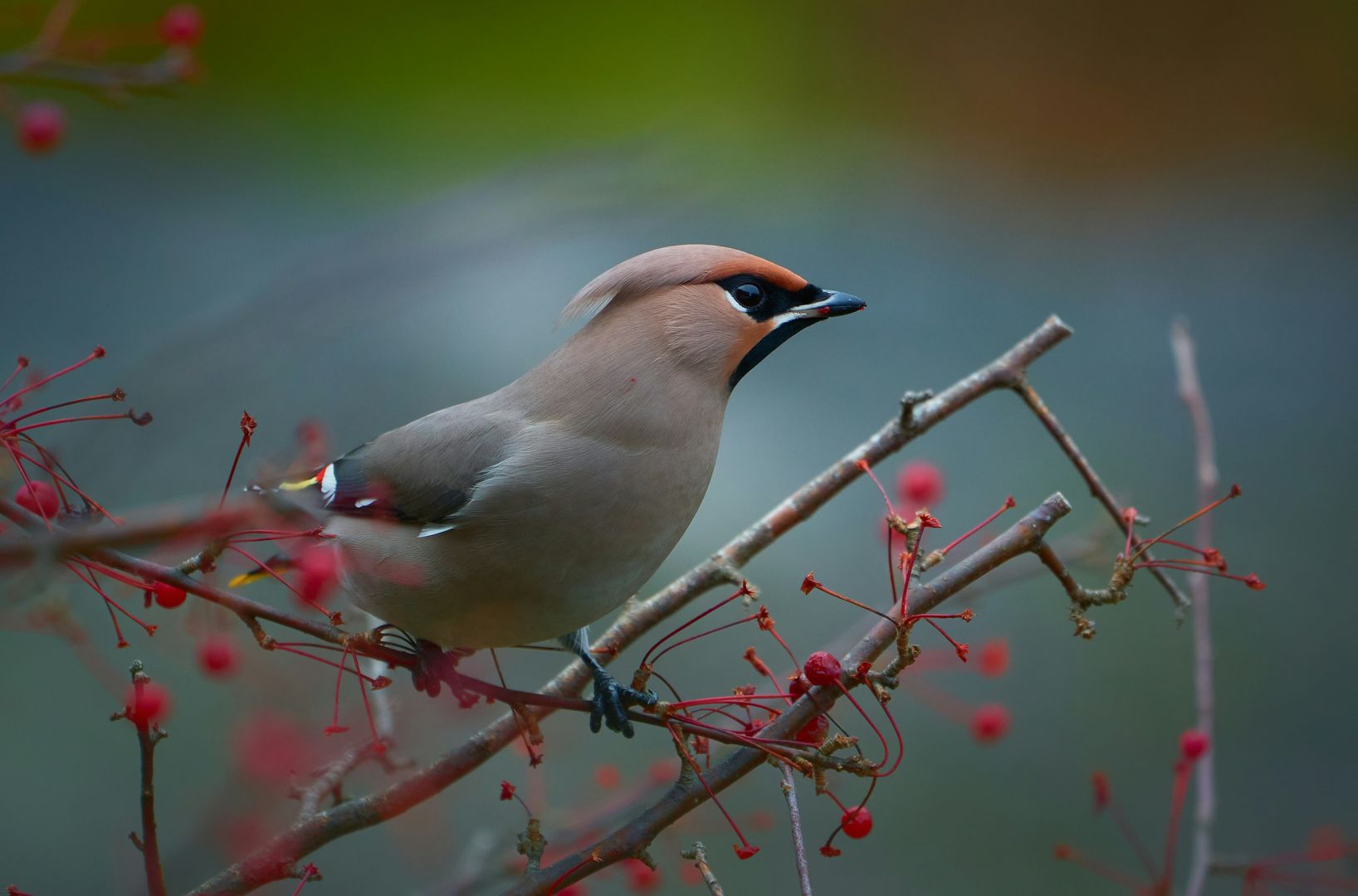
The Cedar Waxwing is a nomadic fruit eater that's seen most often in California in winter. It arrives in fall and stays until late February or early March, moving in tight flocks between toyon, elderberry, and anything else with berries. It can live on fruit alone for months, and it occasionally gets a little tipsy from fermented berries, which is relatable.
It's silky brownish-gray with a pale yellow belly, a crest, a black mask, a yellow-tipped tail, and red waxy tips on the wing feathers. Males and females look alike, though males usually have a slightly larger black chin.
The Cedar Waxwing call is a very high, thin sreee, so high that some people can't hear it at all.
In California winters, look for it statewide in parks, orchards, foothills, and neighborhoods with fruiting trees and shrubs.
Feeder favorites: berry-producing shrubs and a bird bath (they rarely visit seed feeders)
23. Pine Siskin
- Family – Fringillidae
- Species – Spinus pinus
- Primary Activity Time – Daytime
- Diurnal
- Irruptive
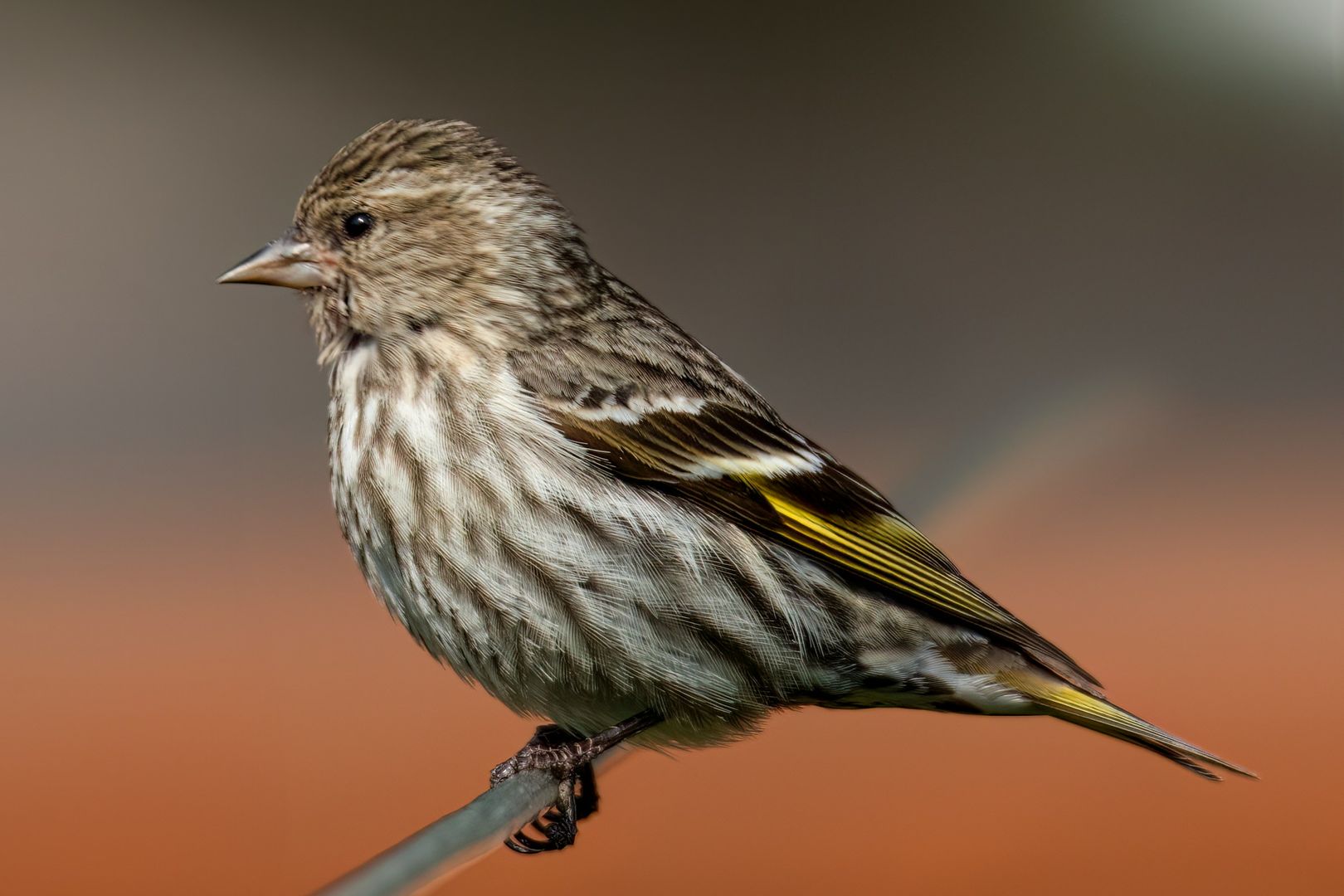
The Pine Siskin is a small, streaky finch that breeds in conifer forests and wanders widely in winter, depending on seed crops. Some years it barely shows up in the lowlands. In others it mobs feeders, and in the 2012–13 FeederWatch season it was reported at more than half of California counting sites.
It's brown and heavily streaked, with a thin, pointed bill and flashes of yellow in the wings and tail. Males tend to show more yellow than females, but the difference is subtle.
The Pine Siskin call is a rising, buzzy zreeee that sounds like someone slowly zipping a jacket, plus a lot of wheezy chatter.
In California winters, look for it in conifers, alders, and weedy fields, and at feeders anywhere in the state during irruption years.
Feeder favorites: nyjer, sunflower chips
24. Acorn Woodpecker
- Family – Picidae
- Species – Melanerpes formicivorus
- Primary Activity Time – Daytime
- Diurnal
- Resident California Bird
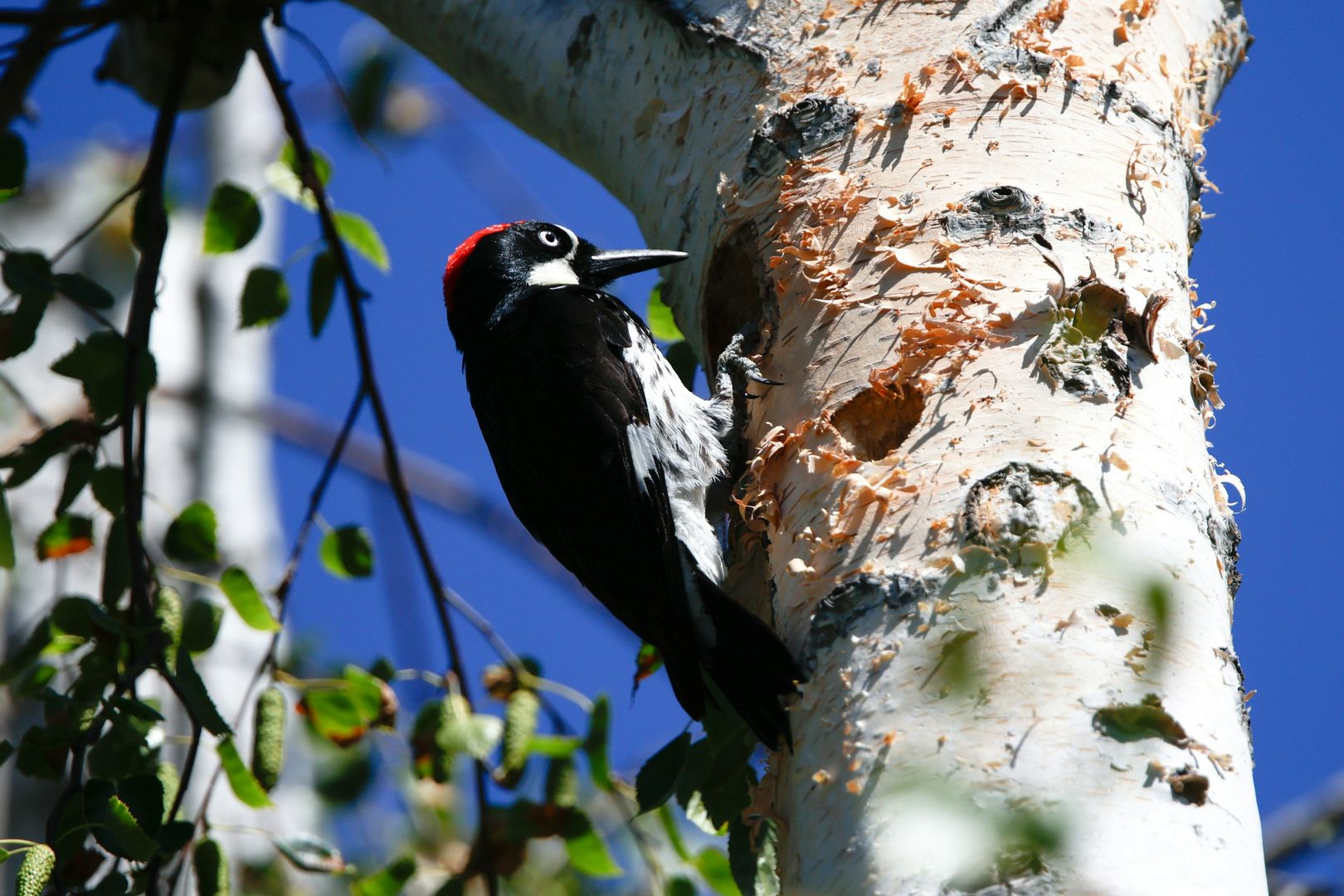
The Acorn Woodpecker lives in family groups and stores thousands of acorns in holes drilled into a single tree, telephone pole, or wooden siding, called a granary. Their pantry is more organized than mine, and they share it with the whole group.
It has a glossy black back, a white belly, white eyes, and a clown-like face of black, white, and red. Males have a red cap that touches the white forehead. Females have a black band between the white forehead and a smaller red cap.
The Acorn Woodpecker call is a loud, laughing waka-waka-waka, and a family group can make a lot of noise.
In California winters, look for it in oak woodlands, foothills, and older neighborhoods with big oaks, mostly west of the Sierra.
Feeder favorites: suet, and they'll sometimes drink from hummingbird feeders
25. Northern Flicker
- Family – Picidae
- Species – Colaptes auratus
- Primary Activity Time – Daytime
- Diurnal
- Resident California Bird
The Northern Flicker is a large woodpecker that spends a lot of time on the ground, digging for ants and beetles with its curved bill. In winter, it also eats berries and seeds.
California's flickers are mostly the "Red-shafted" type, with salmon-red under the wings and tail, a black crescent on the chest, and spotted underparts. Males have a red mustache stripe, while females don't.
The Northern Flicker call is a loud, piercing kyeer and a long, rolling wick-wick-wick.
In California winters, look for it statewide on lawns, in parks, open woodlands, and forest edges. You'll see the white rump patch first when it flies away.
Feeder favorites: suet, peanuts
26. Red-breasted Sapsucker
- Family – Picidae
- Species – Sphyrapicus ruber
- Primary Activity Time – Daytime
- Diurnal
- Resident / Winter Visitor (lowlands)
The Red-breasted Sapsucker drills neat rows of small holes in trees, then comes back to drink the sap and eat the insects that get stuck in it. It breeds in mountain and northern forests, and in winter many move down into the lowlands, where it's a regular at Sacramento-area hotspots.
It has a bright red head and breast, a black back with white bars, and a long white stripe on the wing. Males and females look alike.
The Red-breasted Sapsucker call is a nasal, mewing waah, and its drumming is an irregular pattern that slows down at the end, like Morse code from someone who's lost their place.
In California winters, look for it in parks, orchards, and neighborhoods with ornamental trees, often near rows of fresh sap wells.
27. Cooper's Hawk
- Family – Accipitridae
- Species – Astur cooperii
- Primary Activity Time – Daytime
- Diurnal
- Resident California Bird
The Cooper's Hawk is the most common mid-sized bird hawk in California, and it turns up at more than a third of FeederWatch sites. It hunts medium-sized birds by surprise, so your feeder is less a buffet for songbirds and more a food court with a hawk at the entrance.
Adults are blue-gray above with a barred, reddish breast and a long, rounded tail with dark bands. Young birds are brown above with brown streaks below. Females are about 30% larger than males.
The Cooper's Hawk call is a loud cak-cak-cak, mostly given near the nest. It's usually quiet in winter.
In California winters, look for it statewide in woods, parks, and suburbs, especially near busy feeders.
28. Red-shouldered Hawk
- Family – Accipitridae
- Species – Buteo lineatus
- Primary Activity Time – Daytime
- Diurnal
- Resident California Bird
The Red-shouldered Hawk is a noisy, adaptable raptor that's often heard before it's seen. It does just fine in parks and suburbs, and it's famously loyal to its territory. One Southern California pair held the same territory for 16 years in a row.
California adults have a rich reddish breast, checkered black-and-white wings, and a tail with bold black and white bands. Young birds are browner and streaked. Females are larger than males.
The Red-shouldered Hawk call is a loud, repeated kee-ah, kee-ah. Steller's Jays copy it so well that it can fool you.
In California winters, look for it in oak woodlands, riparian areas, parks, and neighborhoods with tall trees, mostly west of the Sierra.
29. Ferruginous Hawk
- Family – Accipitridae
- Species – Buteo regalis
- Primary Activity Time – Daytime
- Diurnal
- Winter Migrant / Visitor
The Ferruginous Hawk is the largest hawk in North America and a winter visitor to California's open country. It hunts ground squirrels, gophers, and rabbits, often from a low perch or straight from the ground.
Most are light birds: white below, with rusty upperparts and rusty legs that form a dark "V" when it flies overhead. Dark birds exist but are rarer. Males and females look alike, though females are a bit larger.
The Ferruginous Hawk call is a harsh, scream-like kree-a, but it's mostly silent in winter.
In California winters, look for it in grasslands, ranchland, and farm country, including the Central Valley and the Sierra Vista and Coyote Valley preserves near San Jose.
30. Bald Eagle
- Family – Accipitridae
- Species – Haliaeetus leucocephalus
- Primary Activity Time – Daytime
- Diurnal
- Winter Migrant (plus a resident breeding population)
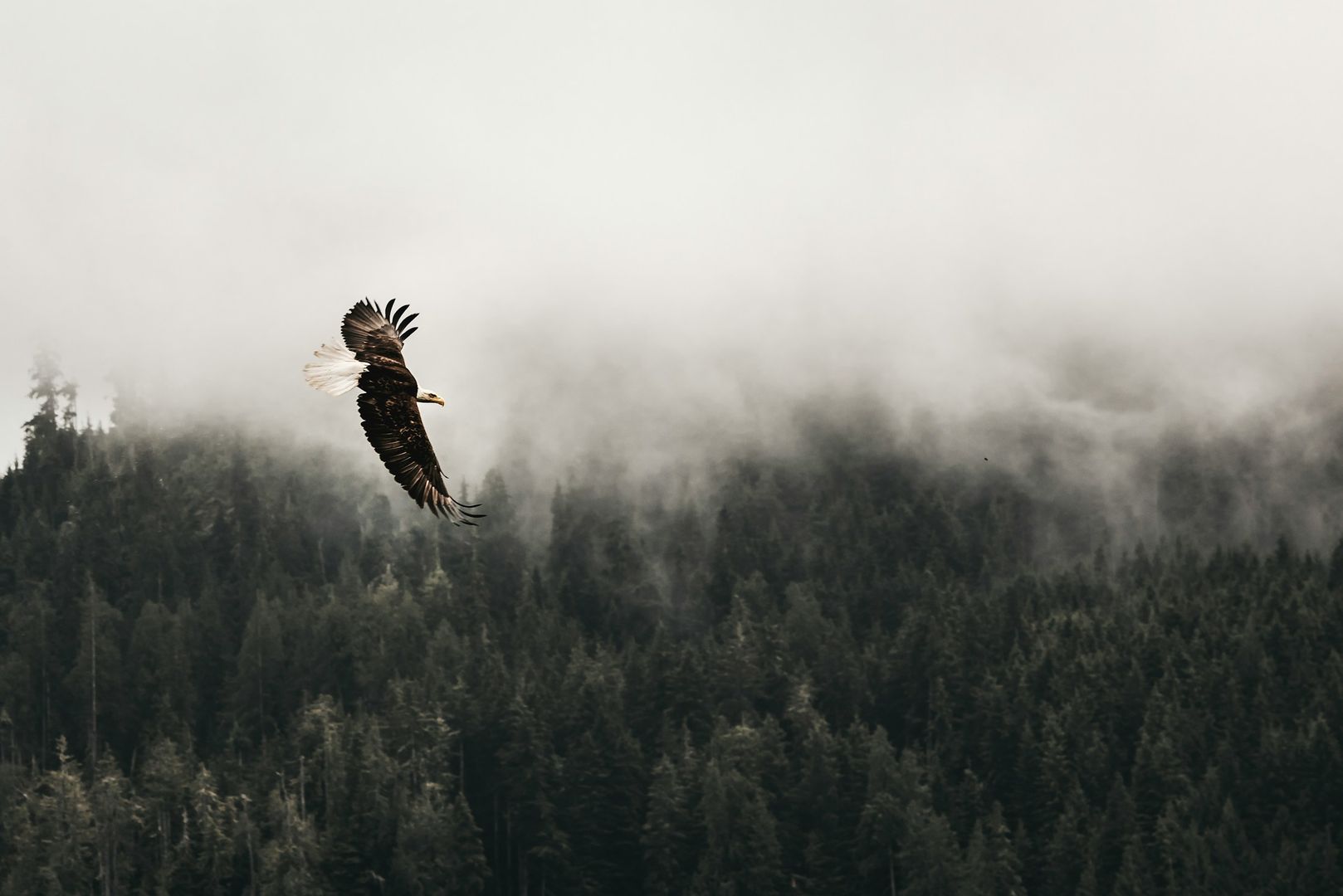
The Bald Eagle nests in California, but winter is when its numbers really jump. According to the California Department of Fish and Wildlife, hundreds of migratory eagles winter in the state, and more than 1,000 have been counted on some midwinter surveys. It eats fish and waterbirds and won't turn down a free meal of carrion.
Adults have a dark brown body, a white head and tail, and a big yellow bill. Young birds are mottled brown and white and take about five years to get the full look. Males and females look alike, though females are larger.
The Bald Eagle call is a high, weak-sounding series of chirps and whistles, which surprises everyone who's only heard the Red-tailed Hawk scream that movies dub over it.
In California winters, about half of the state's wintering eagles gather in the Klamath Basin on the Oregon border. Elsewhere, look at reservoirs and big lakes from December through March.
31. Sandhill Crane
- Family – Gruidae
- Species – Antigone canadensis
- Primary Activity Time – Dawn and Dusk
- Diurnal
- Winter Migrant / Visitor
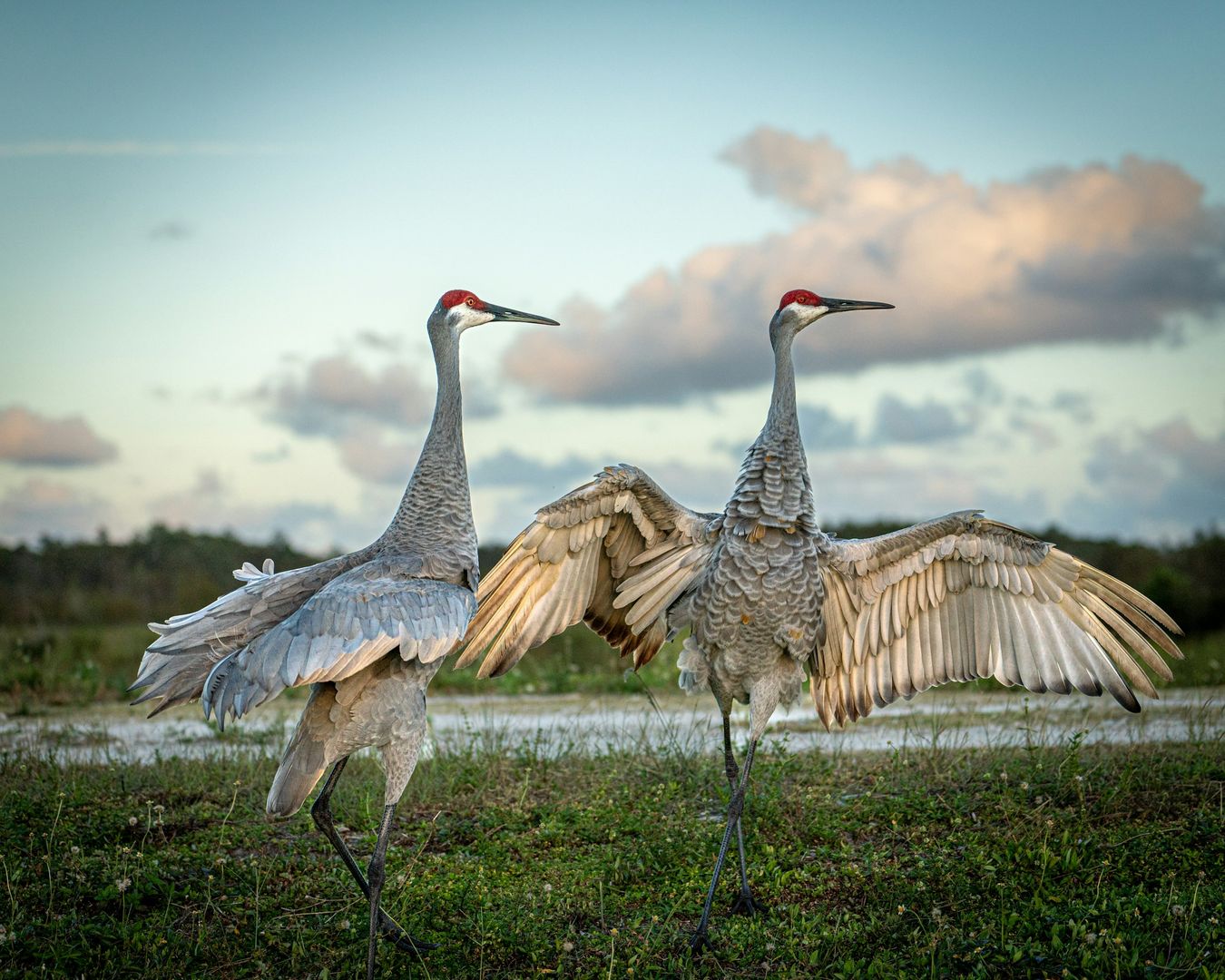
The Sandhill Crane is the reason a lot of people crane their necks at the Central Valley sky in winter. (Sorry. Not sorry.) Cranes arrive in the Delta and Central Valley around late September and stay through the winter, feeding on waste grain and small animals in fields by day and flying in to roost in shallow water at sunset.
They're tall gray birds with long legs, a long neck, and a red patch on the forehead. Many look rusty brown because they preen mud into their feathers. Males and females look alike, though males are a little larger.
The Sandhill Crane call is a loud, rolling, bugling rattle that carries for miles, and big flocks calling at sunset are one of the best sounds in California birding.
In California winters, the classic spot is the Woodbridge Ecological Reserve near Lodi, where CDFW runs docent-led sunset tours from October through February. Docents even organize the car caravan out afterward, because headlights can disturb landing birds. No photo is worth spooking a flock that just flew in from Canada.
32. Snow Goose
- Family – Anatidae
- Species – Anser caerulescens
- Primary Activity Time – Daytime
- Diurnal
- Winter Migrant / Visitor
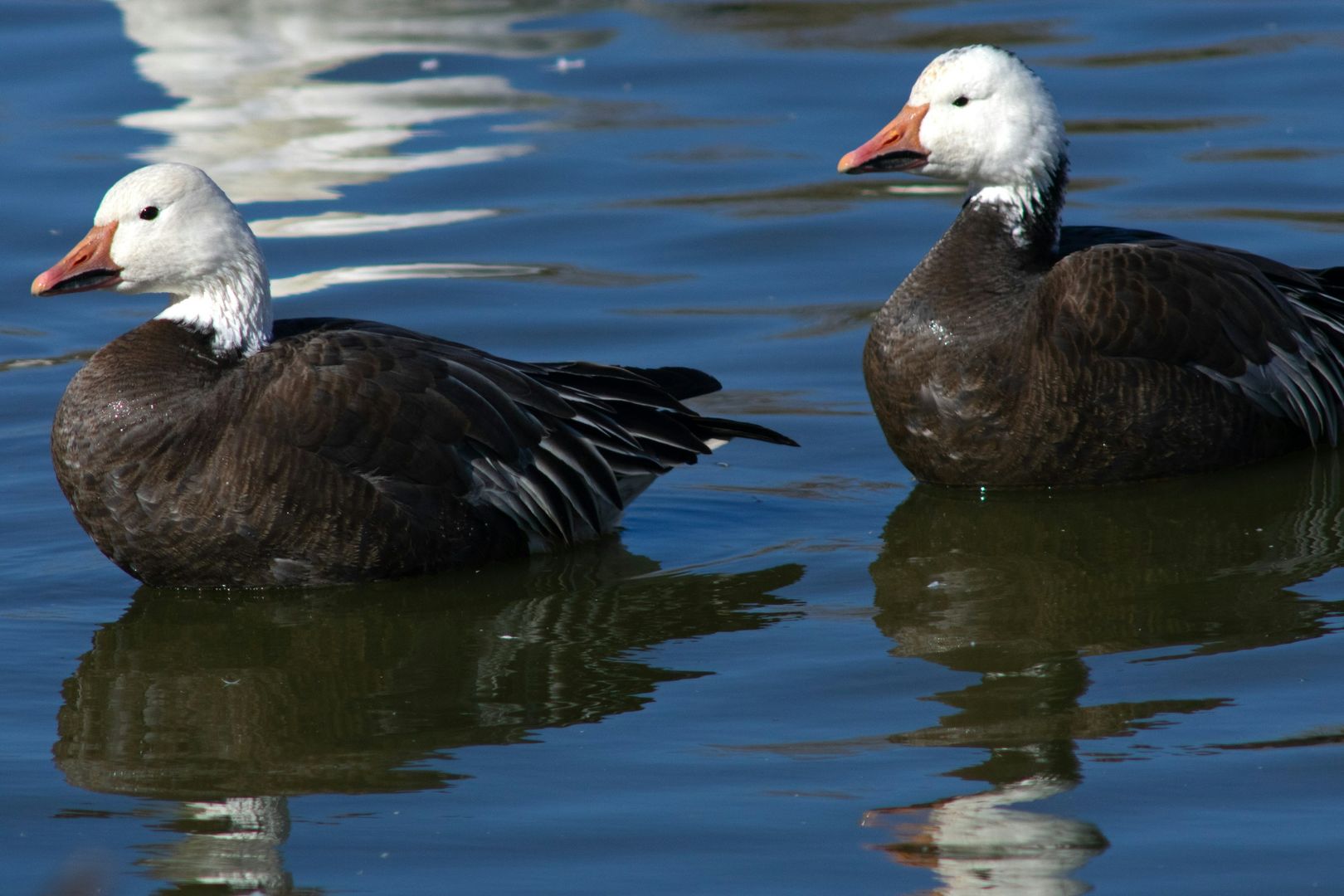
The Snow Goose arrives in the Sacramento Valley in enormous flocks, often alongside the smaller Ross's Goose, and a field full of them looks like it got hit by a very localized blizzard. They graze on grasses and waste rice in flooded fields.
They're white with black wingtips and a pink bill with a dark "grin" along the edge. Ross's Geese are smaller, with a stubby bill and no grin. Some Snow Geese are a dark "blue" form with a white head. Males and females look alike.
The Snow Goose call is a high, nasal honk, and a big flock taking off sounds like a stadium full of people with very opinionated kazoos.
In California winters, head to Sacramento Valley refuges. Colusa National Wildlife Refuge has huge waterfowl concentrations, especially December through January, and Gray Lodge Wildlife Area has what Sacramento Audubon calls the greatest concentration of Ross's Geese in the U.S.
33. Bufflehead
- Family – Anatidae
- Species – Bucephala albeola
- Primary Activity Time – Daytime
- Diurnal
- Winter Migrant / Visitor
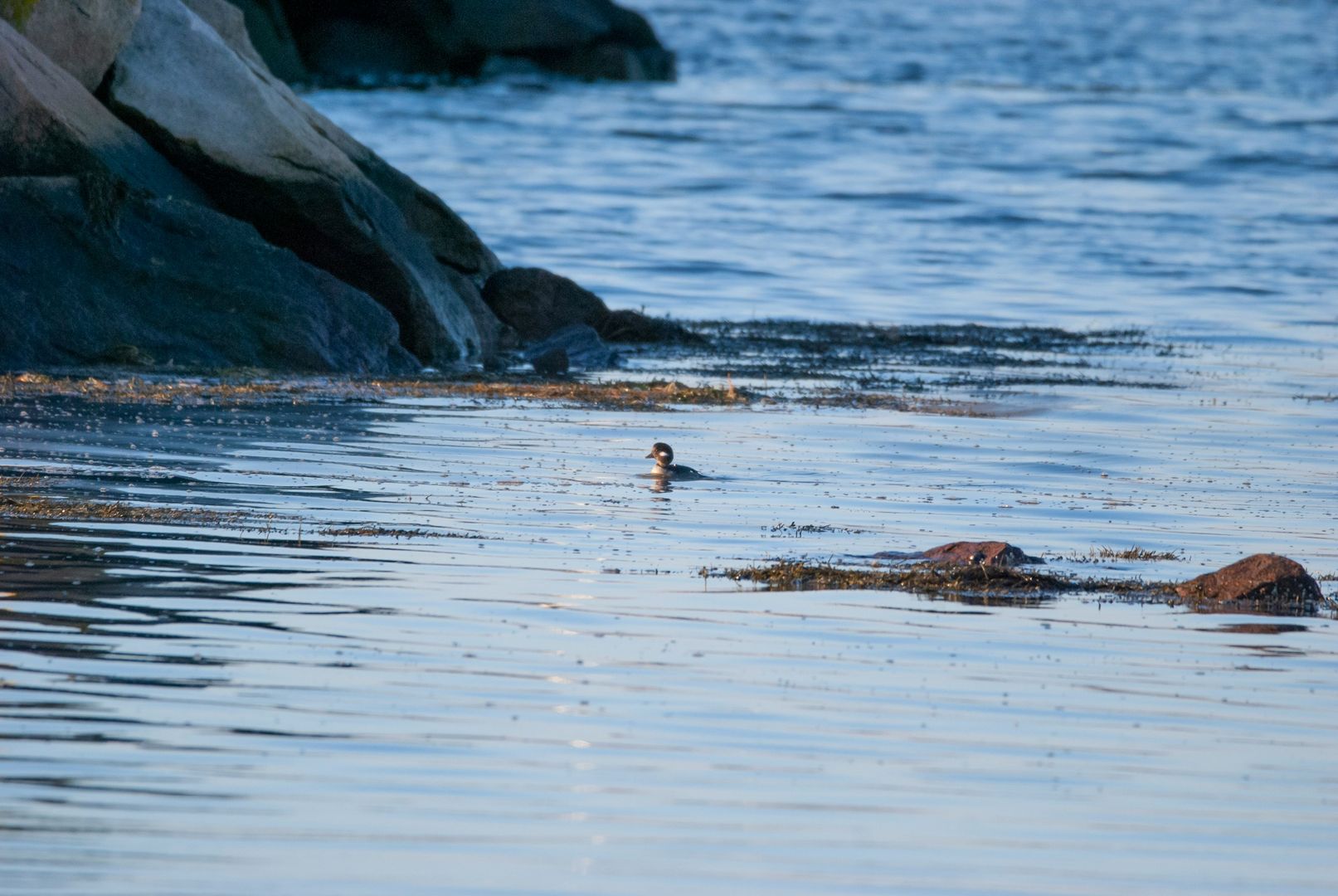
The Bufflehead is a small diving duck that comes south from Canada and Alaska along the Pacific Flyway. It dives for small invertebrates and pops back up like a cork, which is roughly how I surface from a nap.
Males are bright white and black, with a dark head that shines green and purple in good light and a big white patch on the back of the head. Females are gray-brown with a neat white patch on the cheek.
The Bufflehead is mostly quiet in winter. Males give soft squeaks, and females give low, growly notes.
In California winters, look for it on lakes, ponds, estuaries, and shallow bays all over the state, especially around San Francisco Bay and along the coast.
California Winter Birds FAQ
What birds migrate to California in the winter?
Lots of them. Songbirds like White-crowned and Golden-crowned Sparrows, Yellow-rumped Warblers, Ruby-crowned Kinglets, Hermit Thrushes, and Cedar Waxwings arrive in fall, along with huge numbers of ducks and geese, wintering Bald Eagles, Ferruginous Hawks, and Sandhill Cranes. Varied Thrushes and Pine Siskins show up in big numbers some years. For what's arriving one state north, see our guide to winter birds in Oregon.
What are the most common California backyard birds in winter?
In Project FeederWatch's California data, the top California birds at feeders were House Finch, Anna's Hummingbird, Mourning Dove, California Scrub-Jay, Dark-eyed Junco, White-crowned Sparrow, Lesser Goldfinch, and California Towhee. Add a little water: a shallow bird bath brings in robins, waxwings, and warblers that ignore seed. If you live in the mountains, here's how to keep a bird bath from freezing in winter.
Do hummingbirds stay in California in the winter?
Yes. The Anna's Hummingbird lives in California year-round and even starts nesting in winter, so keep a nectar feeder clean and filled. Allen's Hummingbirds start arriving in coastal areas as early as January, and a small population lives in Southern California year-round.
Where can you see Sandhill Cranes in California?
The Woodbridge Ecological Reserve near Lodi is the best-known spot, with sunset tours from October through February. The Sacramento Delta and Sacramento Valley refuges, including the Llano Seco Unit of the Sacramento National Wildlife Refuge Complex, are also good bets from October to February.
Where are the best places to see birds of California in winter?
For waterfowl and cranes, go to the Central Valley: Colusa and Sacramento National Wildlife Refuges, Gray Lodge Wildlife Area, the Yolo Bypass, and the Cosumnes River Preserve. For eagles, try the Klamath Basin. For songbirds, your own backyard and local park are honestly hard to beat. If you're heading east over the mountains, here's our guide to winter birds in Nevada.
What California birds have you seen this winter?
Share them on the Sparkbird App. Available in the Apple App Store.
And if a Golden-crowned Sparrow keeps singing oh dear me at you all winter, don't take it personally. It says that to everyone.
Happy Birding.
No comments yet.