
Connecticut is small enough that you can watch chickadees at a feeder in Litchfield County before breakfast and scope sea ducks on Long Island Sound by lunch (with a coffee stop in between, because I'm not an animal). That's the best thing about Connecticut winter birds: you don't have to drive far to go from backyard regulars to Arctic visitors. The Nutmeg State's feeder crowd is mostly nuts about sunflower seed, and the coast picks up loons, Buffleheads, and the occasional Snowy Owl.
The state bird is part of the winter crew, too. Connecticut made the American Robin its official bird in 1943, and plenty of them skip the trip south. According to UConn's Home and Garden Education Center, it used to be rare to see robins in Connecticut in winter, but now estimates of 40,000 or more aren't unusual. They just stop hanging out on your lawn and start hanging out in the holly.
Types of Winter Birds in Connecticut
There are 3 types of winter birds in Connecticut on this list:
- Resident Connecticut Birds – species that live here all year and either don't migrate or only shift around a bit
- Winter Migrants / Visitors – birds that breed farther north and spend the winter here. Many of them are waterbirds, which is why the shoreline from Greenwich to Stonington gets busier after the beach crowds leave
- Irruptive Species – birds that show up in big numbers some winters and hardly at all in others, usually because food ran short up north
Each entry covers ID, male vs female, calls, where to find the bird in Connecticut, and feeder favorites if it visits feeders. The feeder birds come first, in roughly the order they show up in Project FeederWatch's New England counts, followed by raptors, owls, finches, and the shoreline birds. If you're wondering where the orioles and warblers went, here's where birds go in the winter.
1. Black-capped Chickadee
- Family – Paridae
- Species – Poecile atricapillus
- Primary Activity Time – Daytime
- Diurnal
- Resident Connecticut Bird
The Black-capped Chickadee is the most reliable feeder bird in Connecticut and usually the first to find a new one. It eats seeds, suet, and insect eggs tucked into bark, and it stores seeds all fall in hundreds of hiding spots. On a 10-degree morning it can drop its body temperature overnight to save energy, which is a trick I'd love to learn for my heating bill.
It has a black cap and bib, bright white cheeks, a gray back, and buffy sides. Males and females look alike.
The Black-capped Chickadee call is its name, chick-a-dee-dee-dee, and extra dee notes mean it's more alarmed. On mild late-winter days, listen for the whistled two-note fee-bee song.
Chickadees are found in every town in the state, from hemlock ravines in the northwest hills to shoreline backyards, and they often lead little mixed flocks of titmice, nuthatches, and woodpeckers.
Feeder favorites: black oil sunflower, suet, shelled peanuts
2. Blue Jay
- Family – Corvidae
- Species – Cyanocitta cristata
- Primary Activity Time – Daytime
- Diurnal
- Resident Connecticut Bird
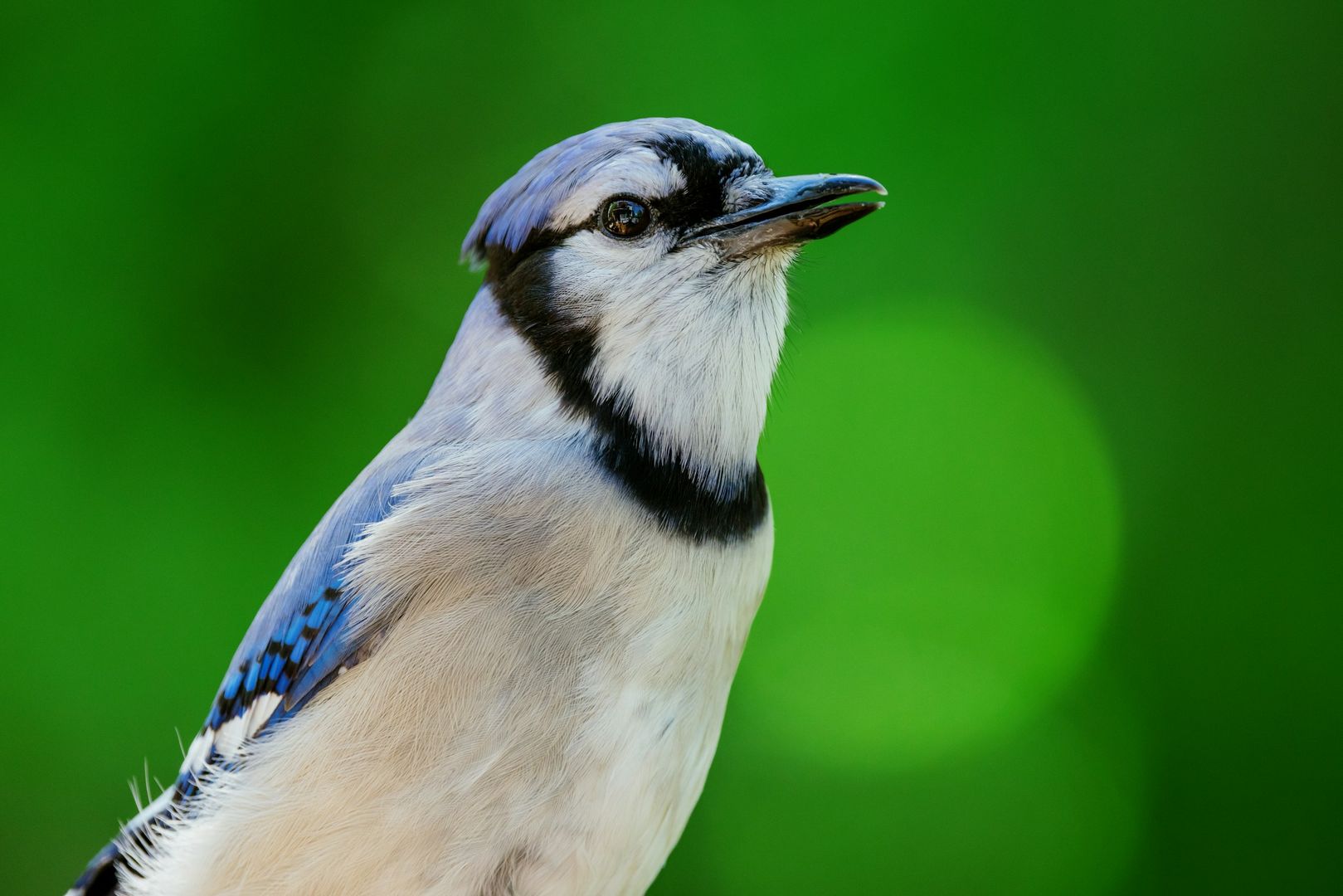
The Blue Jay is the loudest bird at most Connecticut feeders and one of the smartest. It eats acorns, seeds, and the occasional insect, and it can pack several acorns into its throat at once to bury for later. It doesn't find all of them, which makes jays some of the hardest-working unpaid foresters in New England.
Males and females look the same: a blue crest and back, white face and belly, black barring on the wings and tail, and a black necklace. Males are slightly bigger on average.
The Blue Jay call is a harsh jay-jay, plus soft clicks, a rusty-hinge queedle, and a very good Red-shouldered Hawk impression.
Blue Jays are statewide in oak woods, towns, and parks, and they rank in the top two at New England feeders.
Feeder favorites: peanuts in the shell, black oil sunflower, suet
3. Dark-eyed Junco
- Family – Passerellidae
- Species – Junco hyemalis
- Primary Activity Time – Daytime
- Diurnal
- Winter Migrant / Visitor
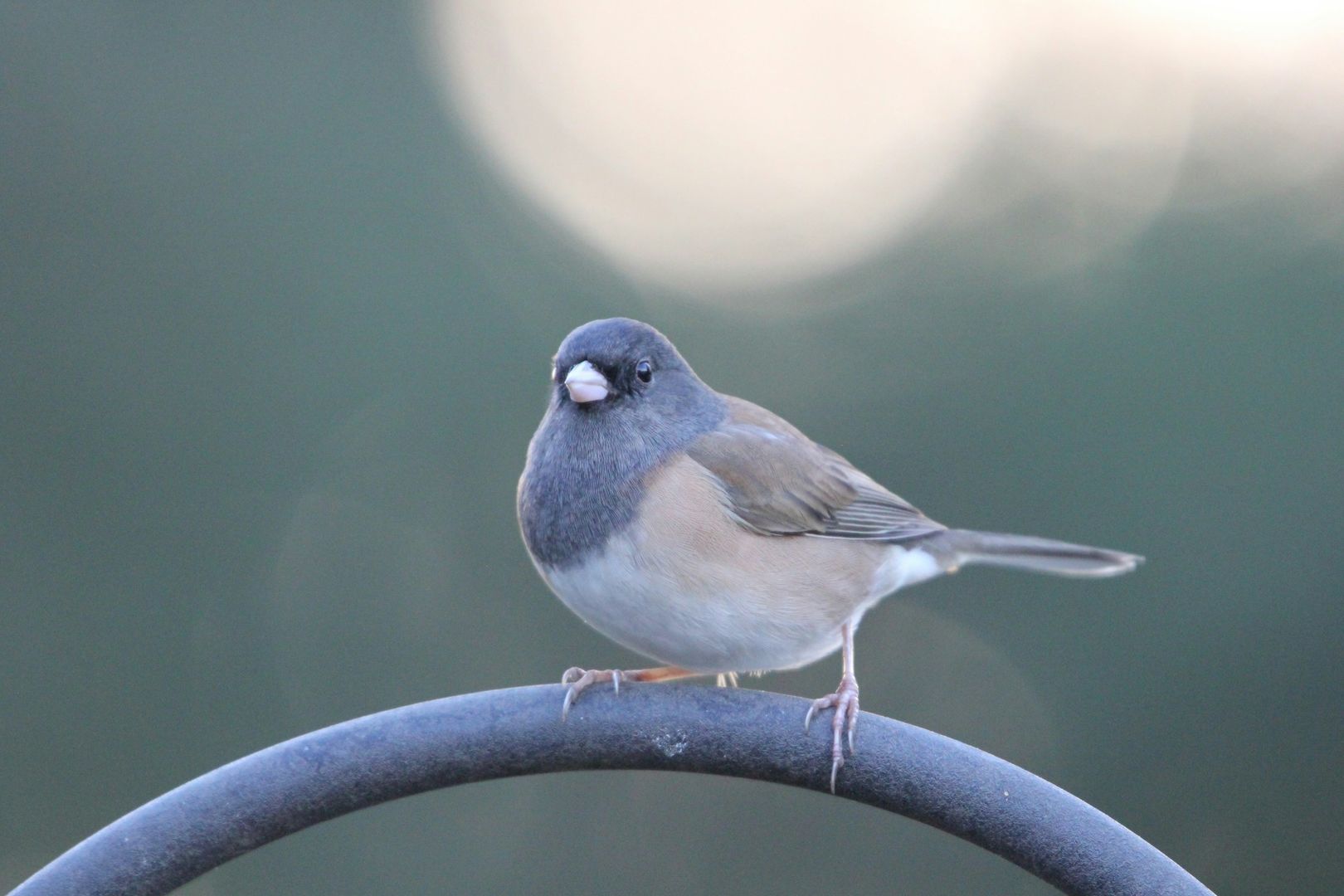
The Dark-eyed Junco is the bird people call a "snowbird," since flocks seem to arrive with the first cold snap and leave when the crocuses come up. Most of Connecticut's juncos nest in the forests of northern New England and Canada and spend roughly October through April here, hopping around under feeders.
Ours are the slate-colored kind: gray above, clean white belly, pale pink bill. Males are darker and crisper gray, while females are paler and often washed with brown. Both flash white outer tail feathers when they fly.
The Dark-eyed Junco call is a sharp tick or smack, and the song is a steady, musical trill.
Juncos turn up statewide in small flocks along woodland edges, brushy fields, and the ground below your feeder.
Feeder favorites: white millet, sunflower chips, cracked corn scattered on the ground
4. Downy Woodpecker
- Family – Picidae
- Species – Dryobates pubescens
- Primary Activity Time – Daytime
- Diurnal
- Resident Connecticut Bird
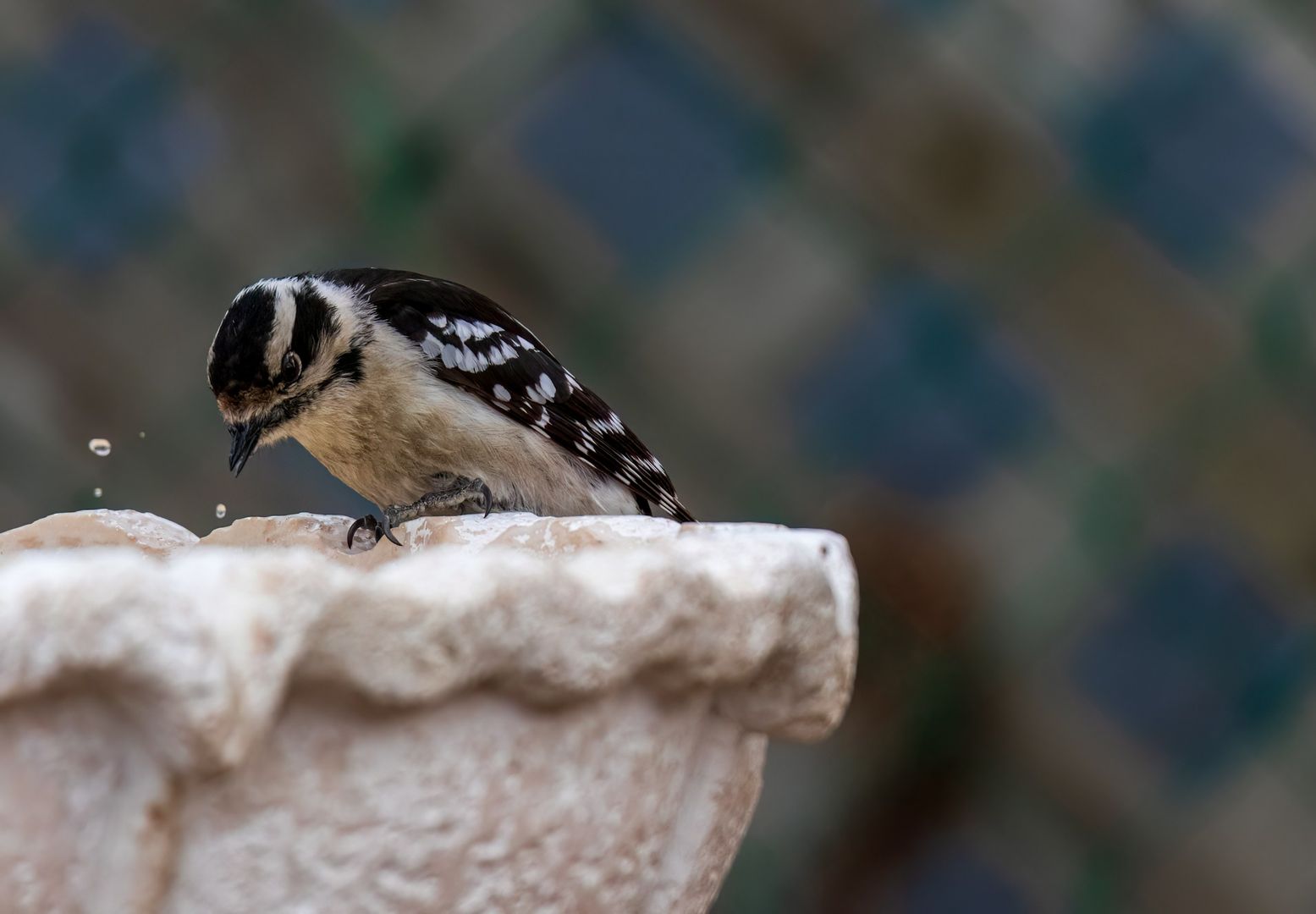
The Downy Woodpecker is the smallest woodpecker in Connecticut, light enough to forage on goldenrod stems and thin twigs. In winter it picks dormant insects and larvae out of bark and takes suet whenever it's offered.
It's black and white with a white stripe down the back, spotted wings, and a short, stubby bill. Males have a small red patch on the back of the head, and females don't.
The Downy Woodpecker call is a soft pik, plus a whinny that runs down the scale.
Downies are statewide in woodlots, parks, and leafy neighborhoods, and they're the most common woodpecker at New England feeders.
Feeder favorites: suet, black oil sunflower, peanuts
5. White-breasted Nuthatch
- Family – Sittidae
- Species – Sitta carolinensis
- Primary Activity Time – Daytime
- Diurnal
- Resident Connecticut Bird
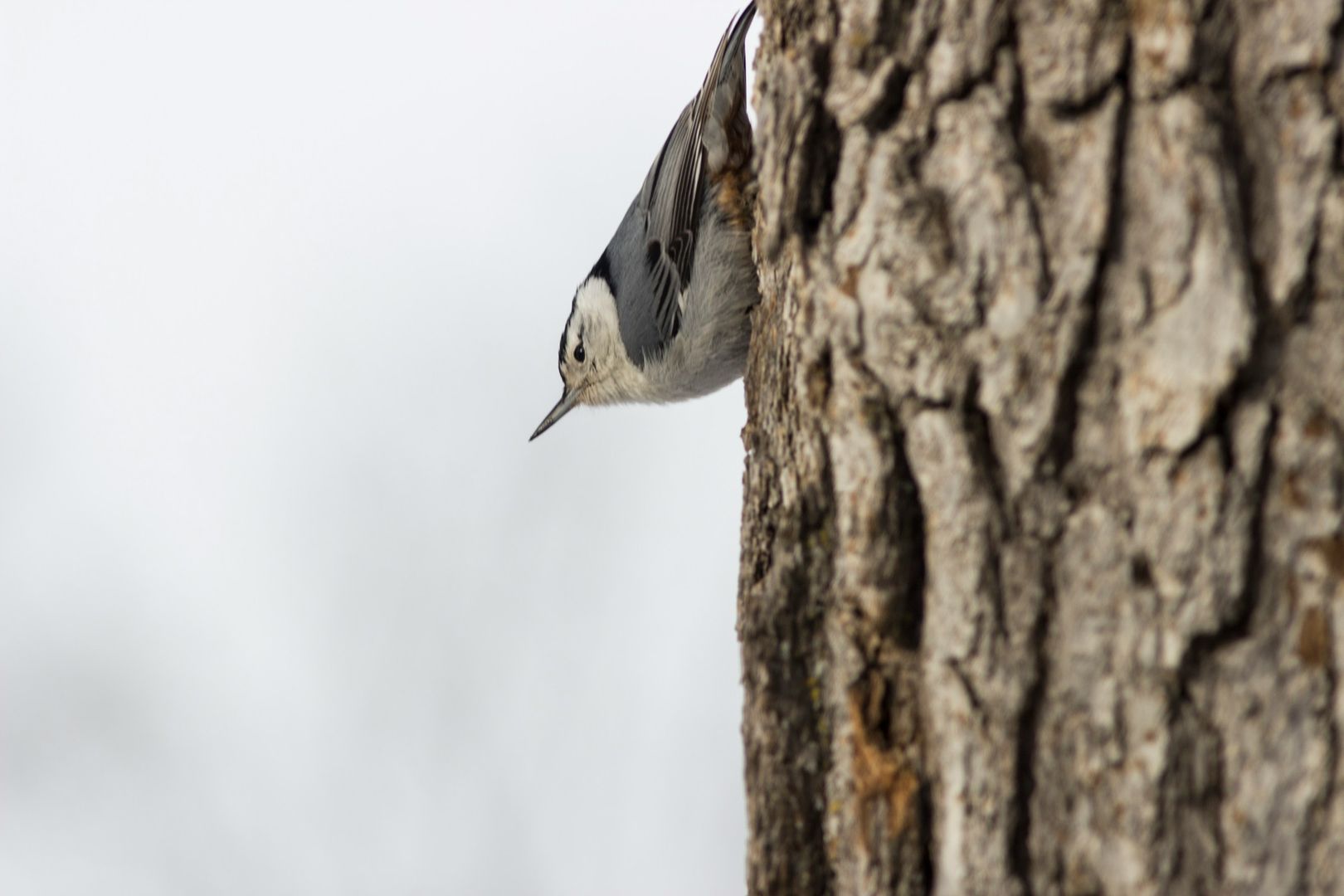
The White-breasted Nuthatch climbs down tree trunks headfirst, checking the bark from the angle woodpeckers skip. It wedges seeds and nuts into crevices and hacks them open with its bill, which is how it got the name "nut-hack," later "nuthatch."
It's blue-gray above with a white face and breast and a rusty patch under the tail. Males have a glossy black cap, and females usually have a grayer one, though it's easiest to see when a pair visits together.
The White-breasted Nuthatch call is a nasal yank, often in a fast series like a tiny car horn in Hartford traffic.
You'll find it statewide in oak and maple woods, town greens with big old trees, and backyards with feeders.
Feeder favorites: black oil sunflower, shelled peanuts, suet
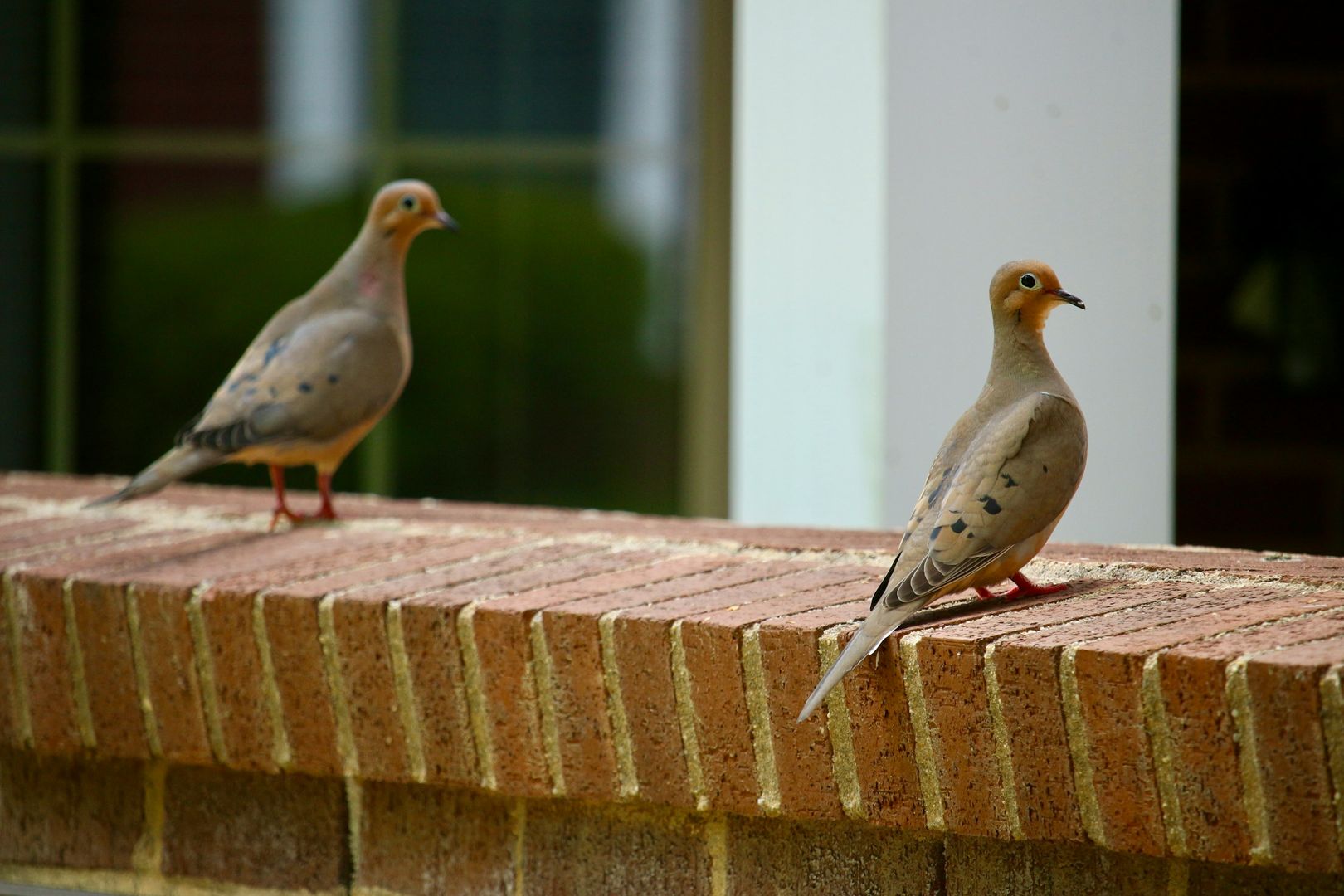
6. Mourning Dove
- Family – Columbidae
- Species – Zenaida macroura
- Primary Activity Time – Daytime
- Diurnal
- Resident Connecticut Bird
The Mourning Dove is a ground-feeding seed eater that stuffs its crop as fast as it can, then sits somewhere safe to digest. On frigid mornings you'll see a row of them fluffed up on a power line, looking like they've just been told the Metro-North train is delayed again.
It's soft tan-gray with black spots on the wings and a long, pointed tail. Males have a faint pink breast and a bluish crown, and females are a bit browner and plainer.
The Mourning Dove call is a low, slow coo-OO-oo-oo-oo that often gets mistaken for an owl. Their wings make a whistling sound when they take off.
Mourning Doves are statewide in towns, farm fields, and suburbs, and they often gather in winter flocks around feeders.
Feeder favorites: millet, cracked corn, black oil sunflower on a platform or the ground
7. Tufted Titmouse
- Family – Paridae
- Species – Baeolophus bicolor
- Primary Activity Time – Daytime
- Diurnal
- Resident Connecticut Bird
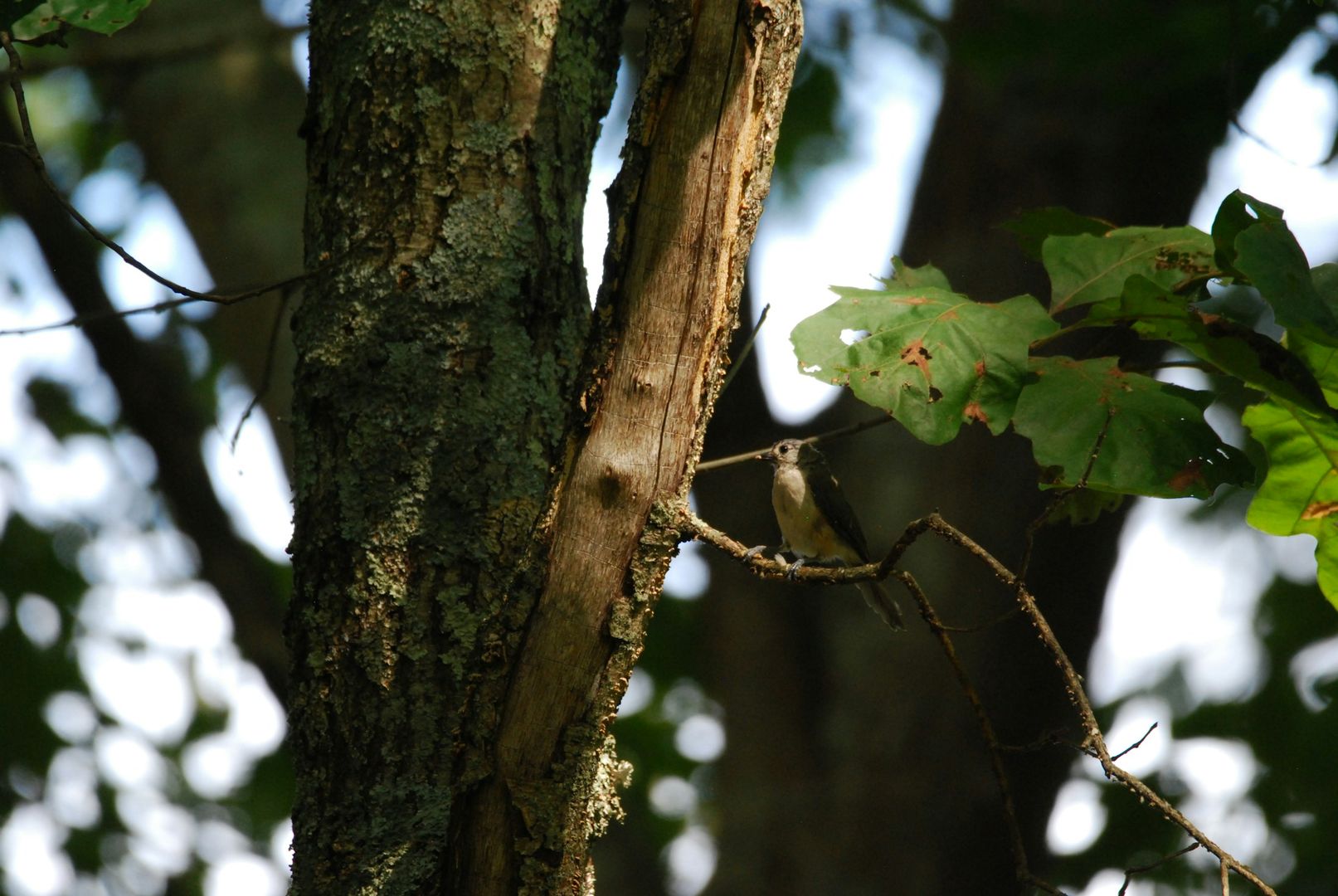
The Tufted Titmouse is a small gray songbird with a pointed crest and big, dark eyes. It eats insects, seeds, and nuts, and its feeder routine is one seed at a time: grab, fly off, hammer it open, repeat.
It's gray above and pale below, with peachy-orange flanks. Males and females look alike.
The Tufted Titmouse call is a loud, whistled peter-peter-peter, plus a raspy scold that sounds like a chickadee with a sore throat.
Titmice live across Connecticut in deciduous woods and wooded neighborhoods, usually traveling with chickadees.
Feeder favorites: black oil sunflower, peanuts, suet
8. American Goldfinch
- Family – Fringillidae
- Species – Spinus tristis
- Primary Activity Time – Daytime
- Diurnal
- Resident Connecticut Bird
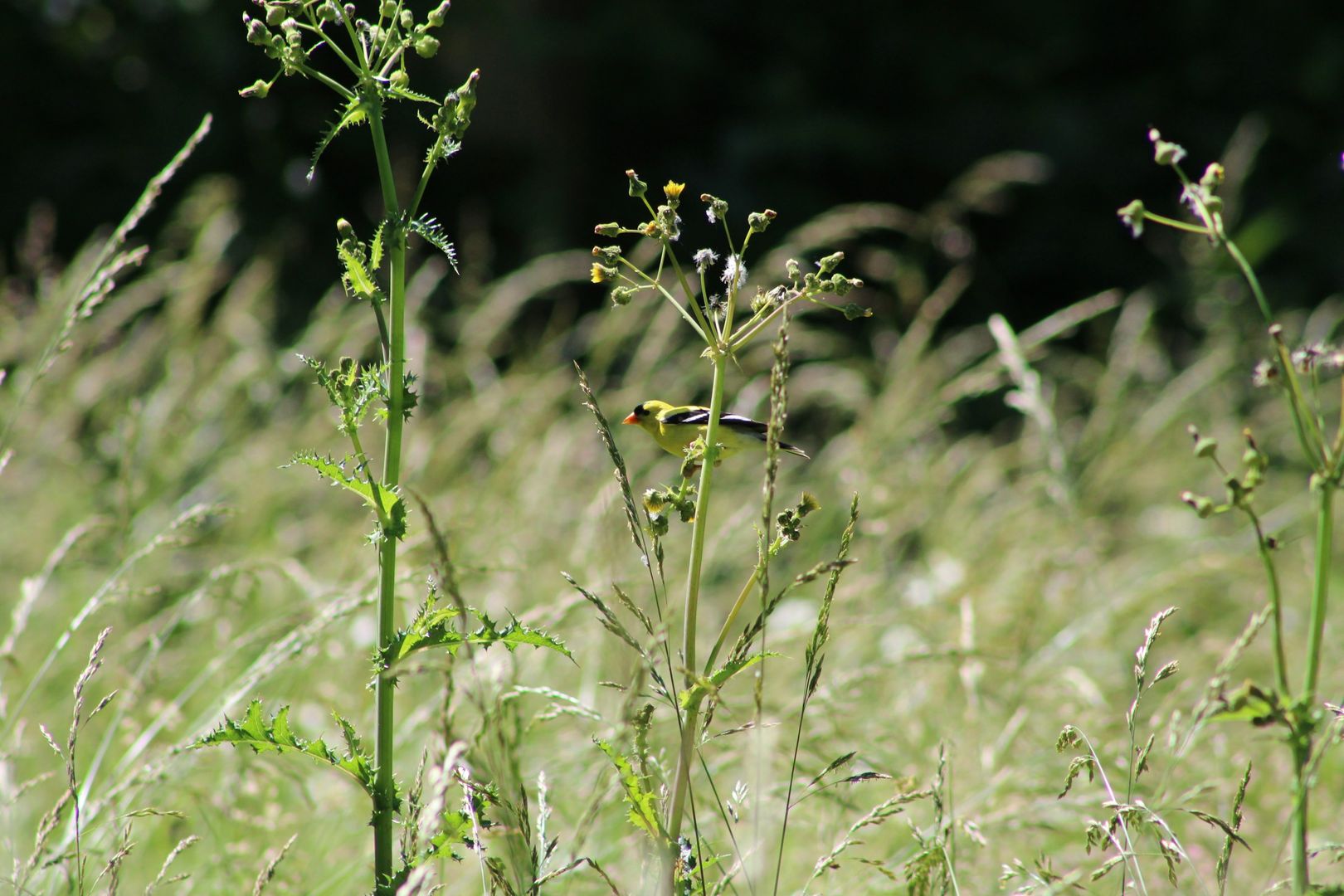
The American Goldfinch stays all winter, but it swaps its lemon-yellow summer feathers for a drab olive-brown that makes people think it left. It didn't. It's just dressed like it's going to a Seinfeld audition.
In winter, males keep some yellow on the face and throat and have jet-black wings with bold white bars. Females are grayer with browner wings. Both have a short, pale, cone-shaped bill.
The American Goldfinch call is a bouncy po-ta-to-chip, given in flight as the birds rise and dip.
Goldfinches are statewide in weedy fields, meadow edges, and yards with tube feeders.
Feeder favorites: nyjer, sunflower chips, black oil sunflower
9. Northern Cardinal
- Family – Cardinalidae
- Species – Cardinalis cardinalis
- Primary Activity Time – Dawn and Dusk
- Diurnal
- Resident Connecticut Bird
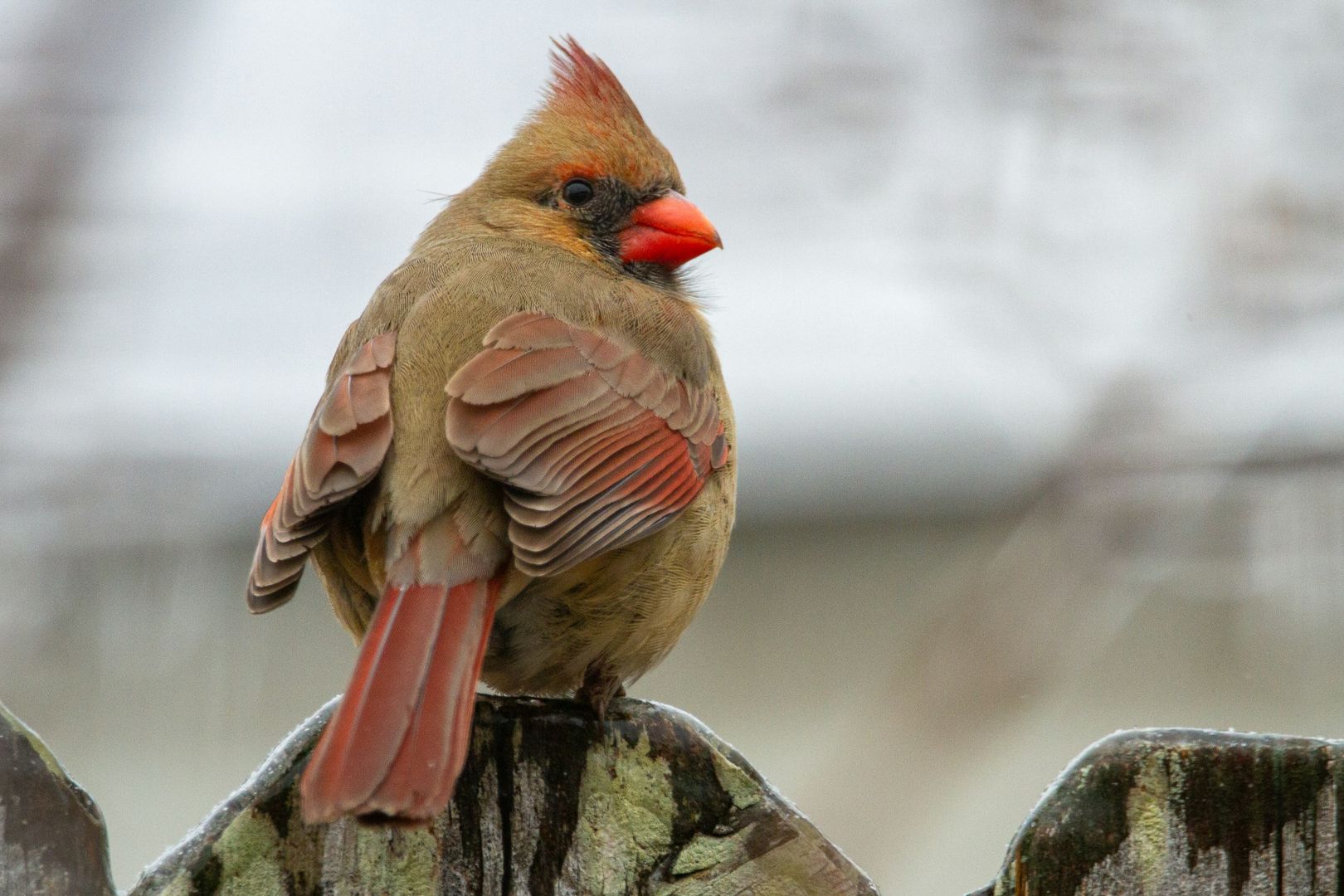
The Northern Cardinal is the bird on every Connecticut holiday card, and it's even the photo on the state's own winter feeding guide. It eats seeds and fruit in winter and is often the first bird at the feeder at dawn and the last to leave at dusk.
Males are bright red with a black mask around a thick, orange-red bill. Females are warm tan with red in the crest, wings, and tail, plus the same chunky bill.
The Northern Cardinal call is a sharp metallic chip, and on sunny days in late winter males start whistling cheer-cheer-cheer or birdie-birdie-birdie.
Cardinals are statewide in yards, thickets, and woodland edges, wherever there's dense shrubbery to hide in.
Feeder favorites: black oil sunflower, safflower, cracked corn
10. Hairy Woodpecker
- Family – Picidae
- Species – Dryobates villosus
- Primary Activity Time – Daytime
- Diurnal
- Resident Connecticut Bird
The Hairy Woodpecker is the Downy's larger look-alike, and telling them apart is a rite of passage for every Connecticut backyard birder (it took me an embarrassingly long time). It works big trunks and limbs for beetle larvae and comes to suet.
The giveaway is the bill: a Hairy's is nearly as long as its head, while a Downy's is short and stubby. Males have a red patch on the back of the head, and females don't.
The Hairy Woodpecker call is a loud, sharp peek, plus a rattle that stays on one pitch.
Hairies are statewide in mature forests and wooded suburbs, though they're less common at feeders than Downies.
Feeder favorites: suet, black oil sunflower, peanuts
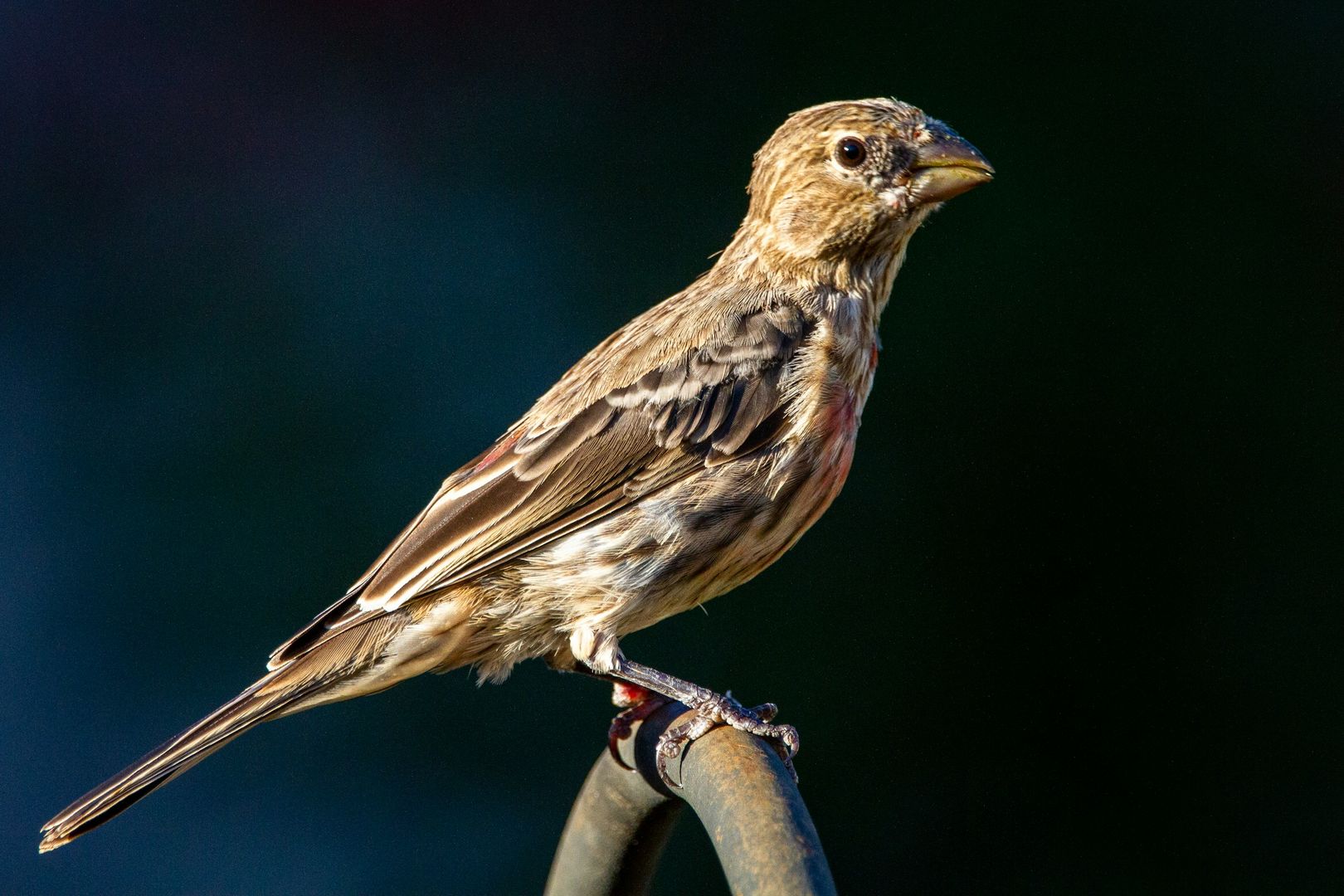
11. House Finch
- Family – Fringillidae
- Species – Haemorhous mexicanus
- Primary Activity Time – Daytime
- Diurnal
- Resident Connecticut Bird
The House Finch is originally a western bird. The eastern population started with cage birds released on Long Island in the 1940s, right across the Sound, and it's been working its way through Connecticut feeders ever since. It eats almost all plant food: seeds, buds, and berries.
Males have a rosy-red head, breast, and rump (some lean orange or yellow, depending on diet), and females are plain gray-brown with blurry streaks and no strong face pattern.
The House Finch call is a cheerful cheep, and the song is a long, jumbled warble that often ends on a rising buzz.
House Finches are most common in towns and suburbs, especially around homes with feeders and ornamental shrubs.
Feeder favorites: black oil sunflower, sunflower chips, nyjer
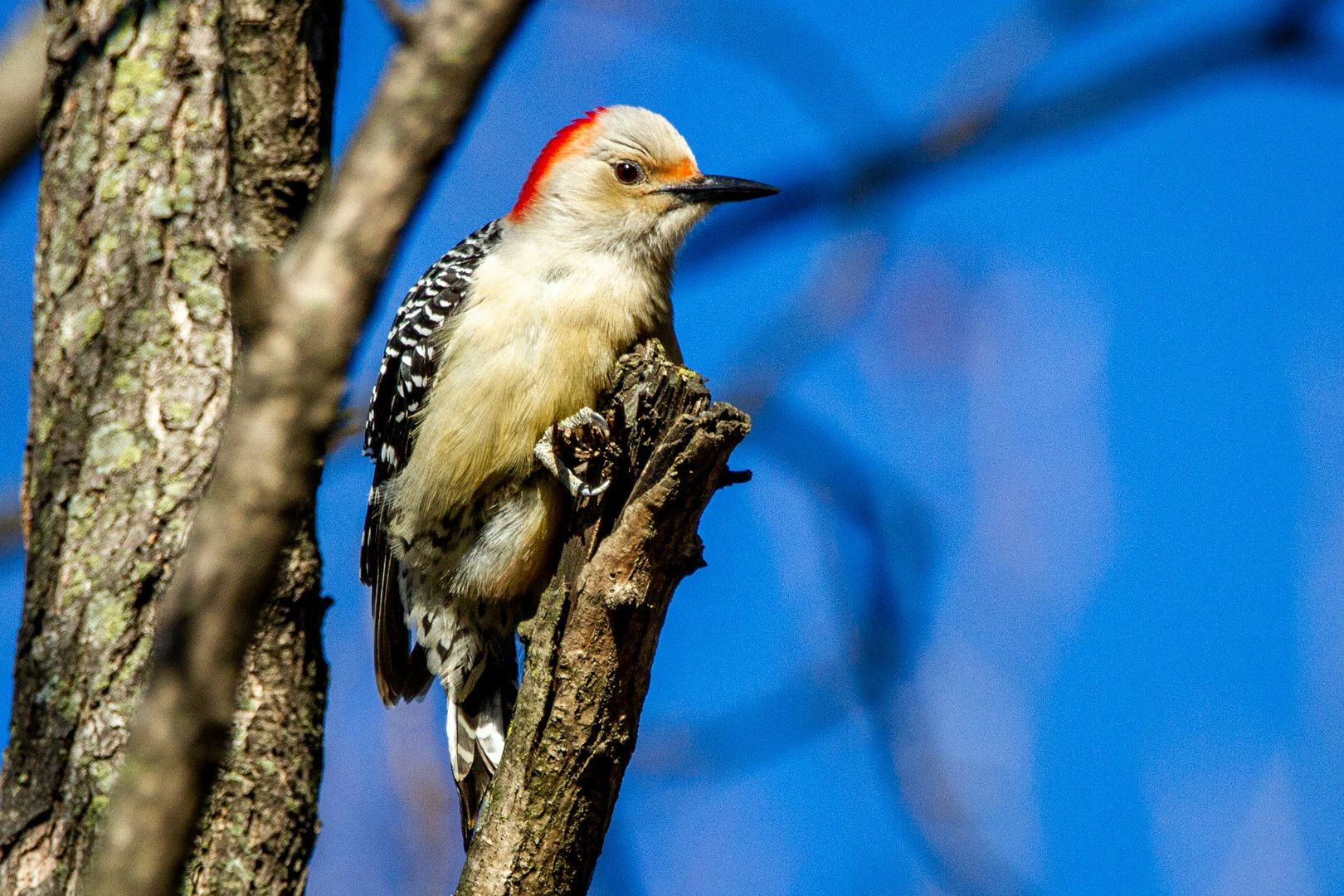
12. Red-bellied Woodpecker
- Family – Picidae
- Species – Melanerpes carolinus
- Primary Activity Time – Daytime
- Diurnal
- Resident Connecticut Bird
The Red-bellied Woodpecker has a name that sounds like a typo, since the red on its belly is a faint blush you'll almost never see. It eats acorns, nuts, fruit, and insects, and it stashes food in bark cracks to eat later.
It has a zebra-barred back and a pale tan face and chest. Males have red from the bill over the crown to the nape, and females have red only on the nape.
The Red-bellied Woodpecker call is a rolling churr or kwirr that carries through bare winter woods.
It's a southern woodpecker that spread north over the past several decades and is now a regular across Connecticut in woods and neighborhoods.
Feeder favorites: suet, peanuts, black oil sunflower
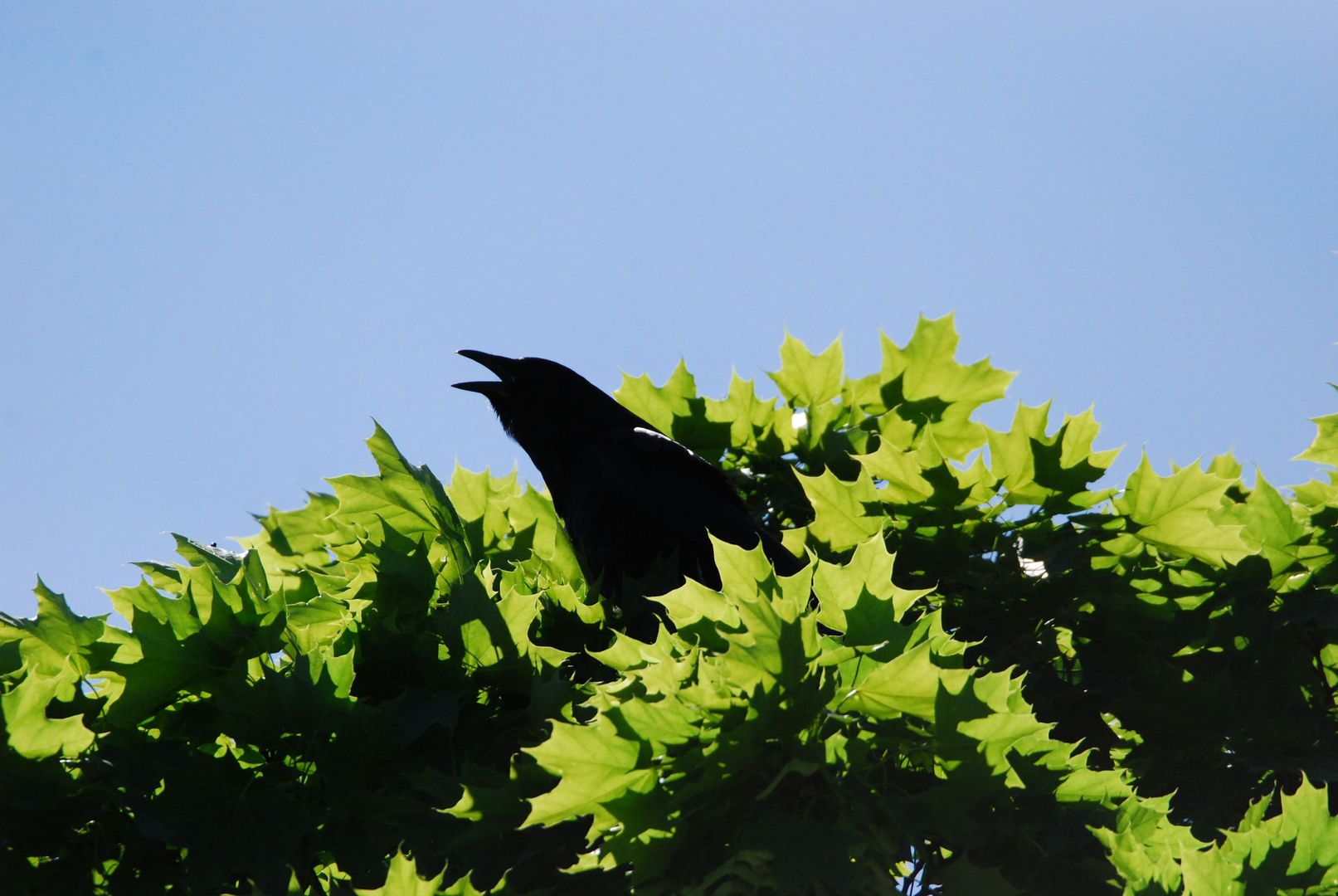
13. American Crow
- Family – Corvidae
- Species – Corvus brachyrhynchos
- Primary Activity Time – Daytime
- Diurnal
- Resident Connecticut Bird
The American Crow eats nearly anything, from waste grain and roadkill to dropped fries at a Merritt Parkway service plaza. Crows are smart, social, and fully capable of holding a grudge against a specific person, which is a skill I'd rather they didn't share with my old landlord.
They're glossy black from bill to feet with a squared-off tail. Males and females look alike.
The American Crow call is the familiar caw-caw, along with rattles, clicks, and soft coos.
Crows are statewide, and in winter they gather in big communal roosts in some cities before spreading out to feed during the day.
Feeder favorites: peanuts in the shell, cracked corn
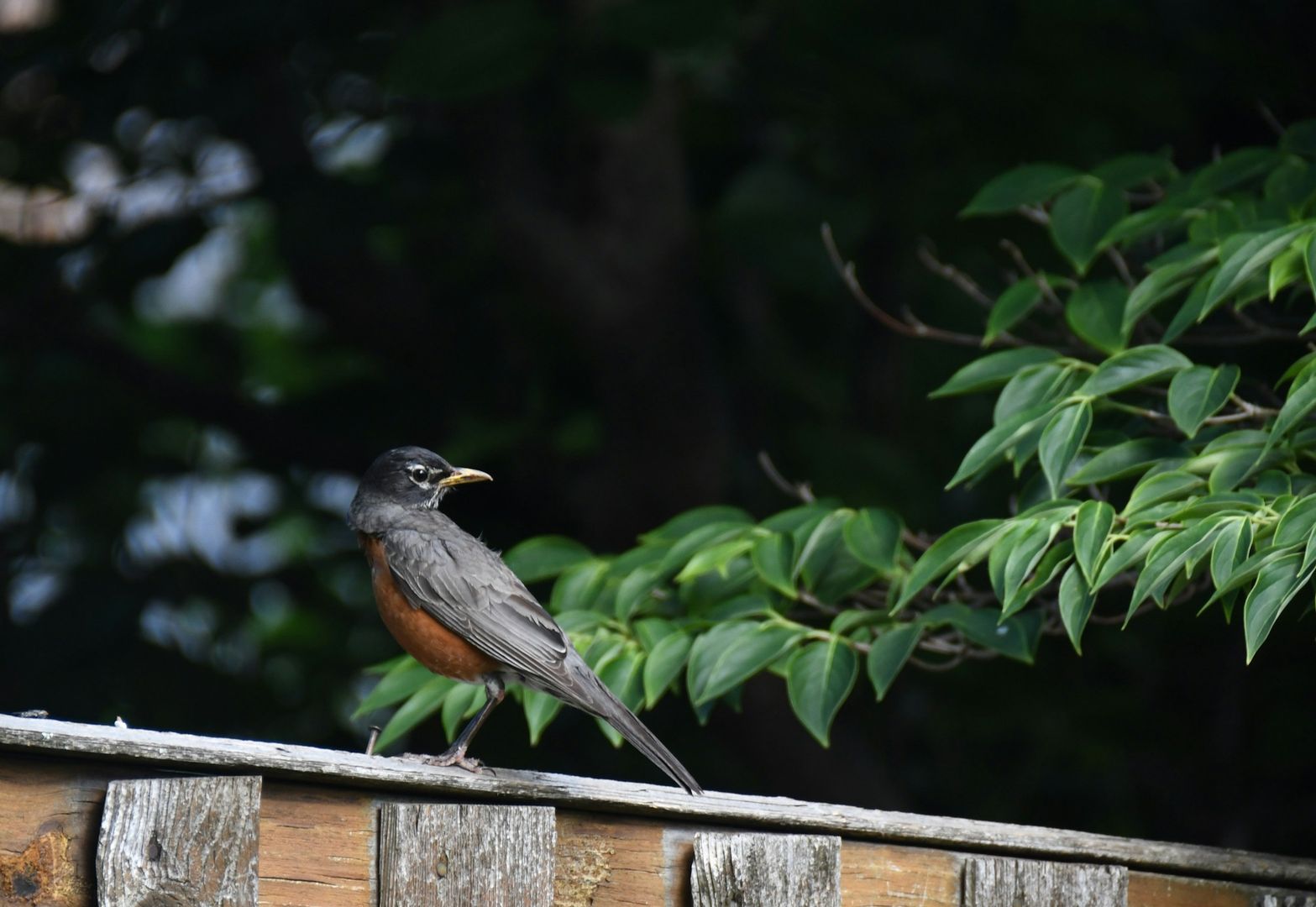
14. American Robin
- Family – Turdidae
- Species – Turdus migratorius
- Primary Activity Time – Daytime
- Diurnal
- Connecticut State Bird (resident, winter flocks)
The American Robin is Connecticut's state bird, and many stay all winter. Instead of pulling worms, winter robins switch to fruit and roam in nomadic flocks, so you'll see 50 in a holly tree one day and none the next.
Males have a deep brick-orange breast and a dark, nearly black head. Females are paler, with a grayer head and a more washed-out breast.
The American Robin call in winter is mostly a low tut-tut and a thin seee, not the caroling song you'll hear in April.
Look for winter robin flocks statewide in swamps, river corridors, and suburbs with fruiting trees and shrubs. The Connecticut DEEP's winter bird feeding guide points out that robins rarely visit feeders, so native fruit like winterberry, junipers, and viburnums is the better way to bring them in. Leaving some leaf litter helps too, since they forage in it for overwintering insects.
Feeder favorites: chopped apples, softened raisins, mealworms
15. Carolina Wren
- Family – Troglodytidae
- Species – Thryothorus ludovicianus
- Primary Activity Time – Daytime
- Diurnal
- Resident Connecticut Bird
The Carolina Wren is a southern bird that now makes itself at home in Connecticut all year. It eats mostly insects and spiders, which is why a long, snowy winter can knock local numbers down for a few years.
It's rich cinnamon-brown above and buffy below, with a bold white eyebrow and a slightly curved bill. Males and females look alike.
The Carolina Wren song is a huge, rolling teakettle-teakettle-teakettle coming from a bird about the size of a golf ball. Males sing all year, even in January.
Carolina Wrens live across most of Connecticut, in tangles, brush piles, and open garages.
Feeder favorites: suet, peanut butter suet, mealworms
16. White-throated Sparrow
- Family – Passerellidae
- Species – Zonotrichia albicollis
- Primary Activity Time – Daytime
- Diurnal
- Winter Migrant / Visitor
The White-throated Sparrow scratches through leaf litter by hopping forward and kicking back with both feet at once, like a very serious line dance. It eats seeds in winter and is a regular under feeders.
It has a bright white throat, a yellow spot between the eye and bill, and a striped head. The head stripes come in white-striped and tan-striped forms, and both forms show up in males and females.
The White-throated Sparrow song is a thin, whistled Old-Sam-Peabody-Peabody-Peabody, and its call is a sharp pink.
It's widespread across Connecticut in winter, in thickets, brushy yards, and woodland edges.
Feeder favorites: white millet, sunflower chips, cracked corn on the ground
17. Song Sparrow
- Family – Passerellidae
- Species – Melospiza melodia
- Primary Activity Time – Daytime
- Diurnal
- Resident Connecticut Bird
The Song Sparrow is the streaky brown sparrow most people mean when they say "just a sparrow." Some Connecticut Song Sparrows stay all year, and birds from farther north join them for the winter.
It's heavily streaked brown and gray, with a dark spot in the middle of the chest like it dripped coffee on itself. Males and females look alike.
The Song Sparrow call is a nasal chimp, and on mild days males sometimes sing their bright, jumbled song.
Song Sparrows are statewide, especially in salt marsh edges, hedgerows, and brushy fields.
Feeder favorites: white millet, sunflower chips, cracked corn on the ground
18. House Sparrow
- Family – Passeridae
- Species – Passer domesticus
- Primary Activity Time – Daytime
- Diurnal
- Resident Connecticut Bird (Non-Native Species)
The House Sparrow is a non-native bird from Europe and the Middle East that lives anywhere people do. It nests and roosts in eaves, signs, and vents, and it's surprisingly declining here. The updated Connecticut Bird Atlas found House Sparrows, starlings, and pigeons all dropping, which researchers called a red flag precisely because these birds are so adaptable.
Males have a gray crown, chestnut nape, and black bib, while females are plain buff-brown with a pale stripe behind the eye.
The House Sparrow call is a constant cheep or chirrup.
House Sparrows are found in every Connecticut city, town, and farm.
Feeder favorites: millet, cracked corn, sunflower
19. European Starling
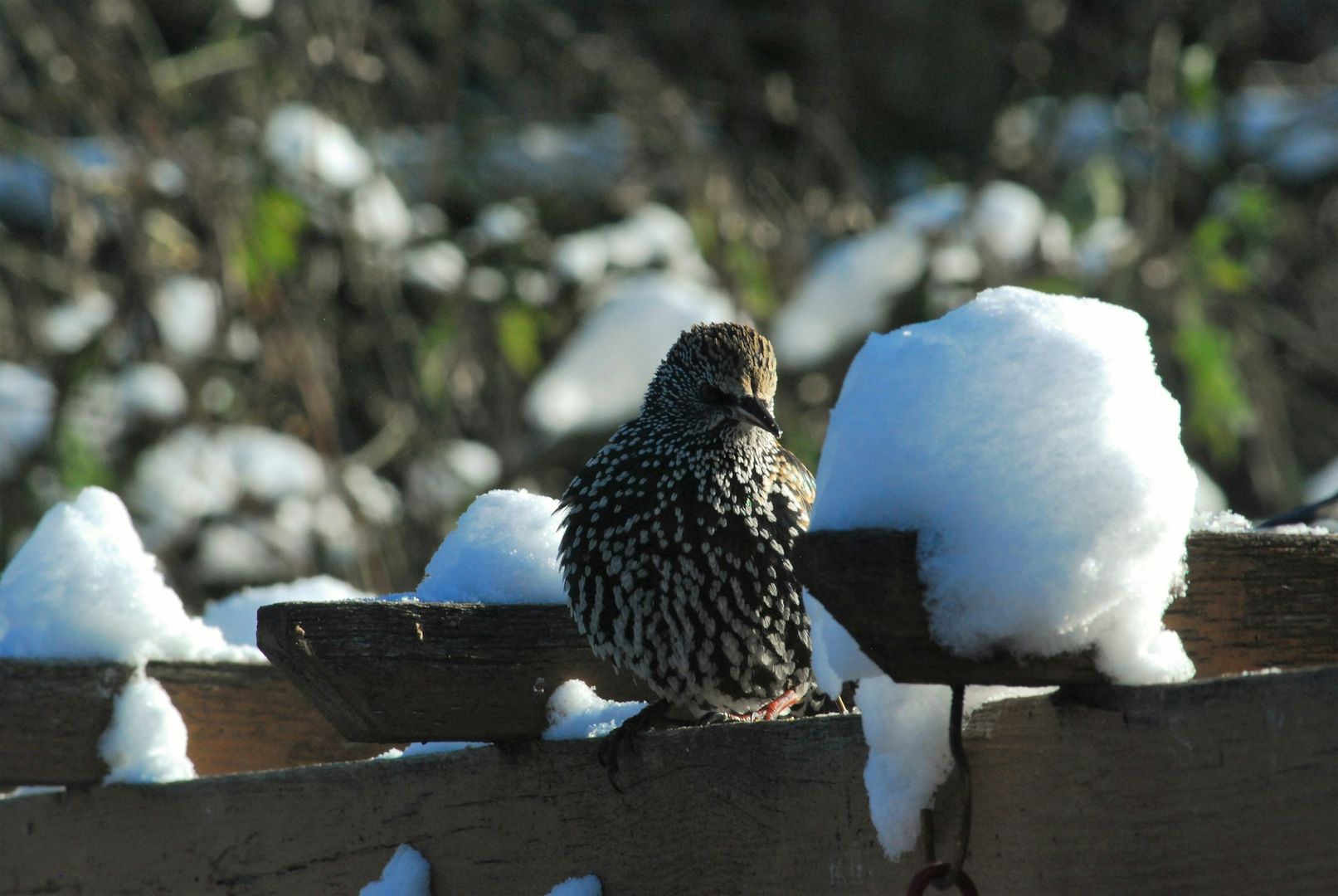
- Family – Sturnidae
- Species – Sturnus vulgaris
- Primary Activity Time – Daytime
- Diurnal
- Resident Connecticut Bird (Non-Native Species)
The European Starling is another non-native, and it travels in noisy winter flocks that can empty a suet cake faster than you can say "Die Hard is a Christmas movie." It eats insects, fruit, grain, and scraps.
In winter, starlings are glossy black covered in white star-shaped spots that wear off by spring. Males and females look similar, though in breeding season males have a bluish base to the bill and females a pinkish one.
The European Starling call is a mix of whistles, rattles, and clicks, and it's a gifted mimic.
Starlings are statewide, especially in cities, farm country, and shopping-center parking lots. DEEP notes that big platform feeders tend to attract starlings, so stick to tube feeders and caged suet if they're crowding out smaller birds.
Feeder favorites: suet, cracked corn, kitchen scraps
That's the core feeder crew. One Connecticut-specific note before you stock up: DEEP asks residents not to feed birds from spring through fall because of black bears, and recommends winter feeding only from about mid-December to late March in areas with low bear activity. If a bear shows up, take the feeders down right away and stop for the season. This is the rare case where I'll tell you not to buy that new feeder yet. Winter birds survive just fine on wild food, and a bear that learns your yard is a buffet becomes a problem for everyone. For water, a bird bath is a better winter investment anyway, and here's how to keep a bird bath from freezing in winter.
20. American Tree Sparrow
- Family – Passerellidae
- Species – Spizelloides arborea
- Primary Activity Time – Daytime
- Diurnal
- Winter Migrant / Visitor
The American Tree Sparrow nests in the far north at the edge of the tundra and comes to Connecticut for the winter, where it spends most of its time on the ground despite the name. It eats weed and grass seeds and sometimes beats its wings against seed heads to knock the seeds loose.
Look for a rusty cap, a rusty line behind the eye, a gray face, a two-toned bill (dark on top, yellow below), and a dark spot in the middle of a plain gray chest. Males and females look alike.
The American Tree Sparrow call is a high tseet, and flocks give a soft, jingling twitter.
Tree sparrows are found in weedy fields, farm edges, and brushy yards, especially inland.
Feeder favorites: millet, cracked corn scattered on the ground
21. Red-breasted Nuthatch
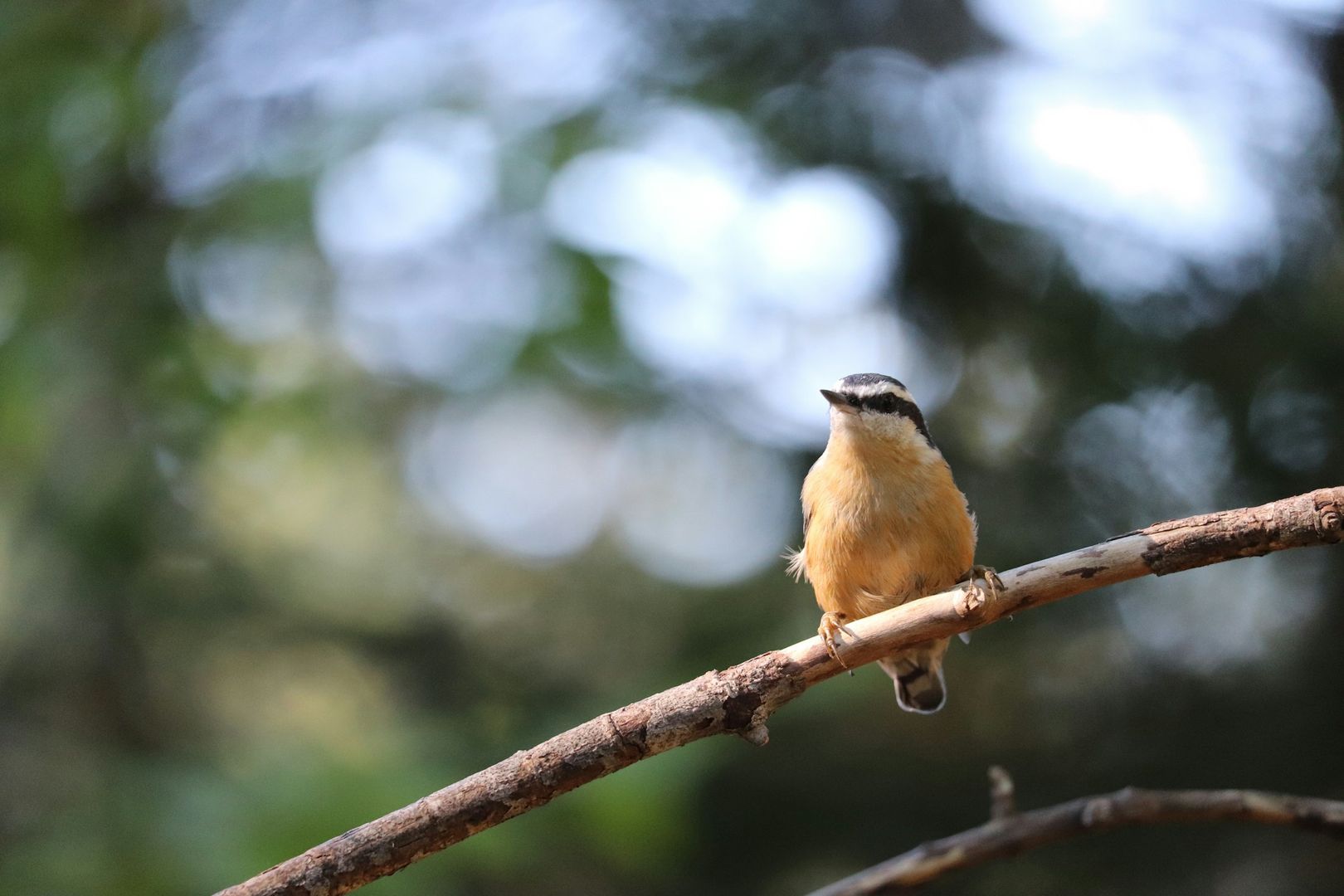
- Family – Sittidae
- Species – Sitta canadensis
- Primary Activity Time – Daytime
- Diurnal
- Resident / Irruptive Species
The Red-breasted Nuthatch is a tiny, hyper nuthatch that runs on conifer seeds. A few nest in Connecticut's evergreen woods, and in years when cone crops fail up north, many more pour south.
It has a black line through the eye, a white eyebrow, a blue-gray back, and rusty underparts. Males have a black cap and deeper rust below, while females have a grayer cap and a paler wash.
The Red-breasted Nuthatch call is a nasal yank-yank, higher and tinnier than the White-breasted, like a toy trumpet.
It's most reliable in pine, spruce, and hemlock stands, and in irruption years it can show up at feeders anywhere in the state.
Feeder favorites: suet, shelled peanuts, black oil sunflower
22. Cooper's Hawk
- Family – Accipitridae
- Species – Astur cooperii
- Primary Activity Time – Daytime
- Diurnal
- Resident Connecticut Bird
The Cooper's Hawk is the reason your feeder sometimes goes dead silent for no clear reason. It mainly hunts songbirds and doves, often with a fast, low approach through yards. If every bird freezes and then scatters at once, check the nearest branch.
Adults are blue-gray above with fine rusty barring below, a dark cap, and a long, rounded tail. Males and females look alike, but females are noticeably larger.
The Cooper's Hawk call is a rapid kek-kek-kek, mostly heard near nests, and it's usually silent around feeders.
Cooper's Hawks are statewide in wooded suburbs and towns, anywhere feeders gather small birds.
23. Red-tailed Hawk
- Family – Accipitridae
- Species – Buteo jamaicensis
- Primary Activity Time – Daytime
- Diurnal
- Resident Connecticut Bird
The Red-tailed Hawk is the big hawk on the light pole along I-84 or the Merritt Parkway, staring at the grass median like it's watching Jaws for the first time. It eats mostly mice, voles, and squirrels.
Adults have a brick-red tail, a pale chest, and a band of dark streaks across the belly. Males and females look alike, but females are larger.
The Red-tailed Hawk call is a raspy, screaming keee-arrr, the sound movies borrow for almost every eagle.
Red-tails are statewide in open country, highway edges, and city parks.
24. Bald Eagle
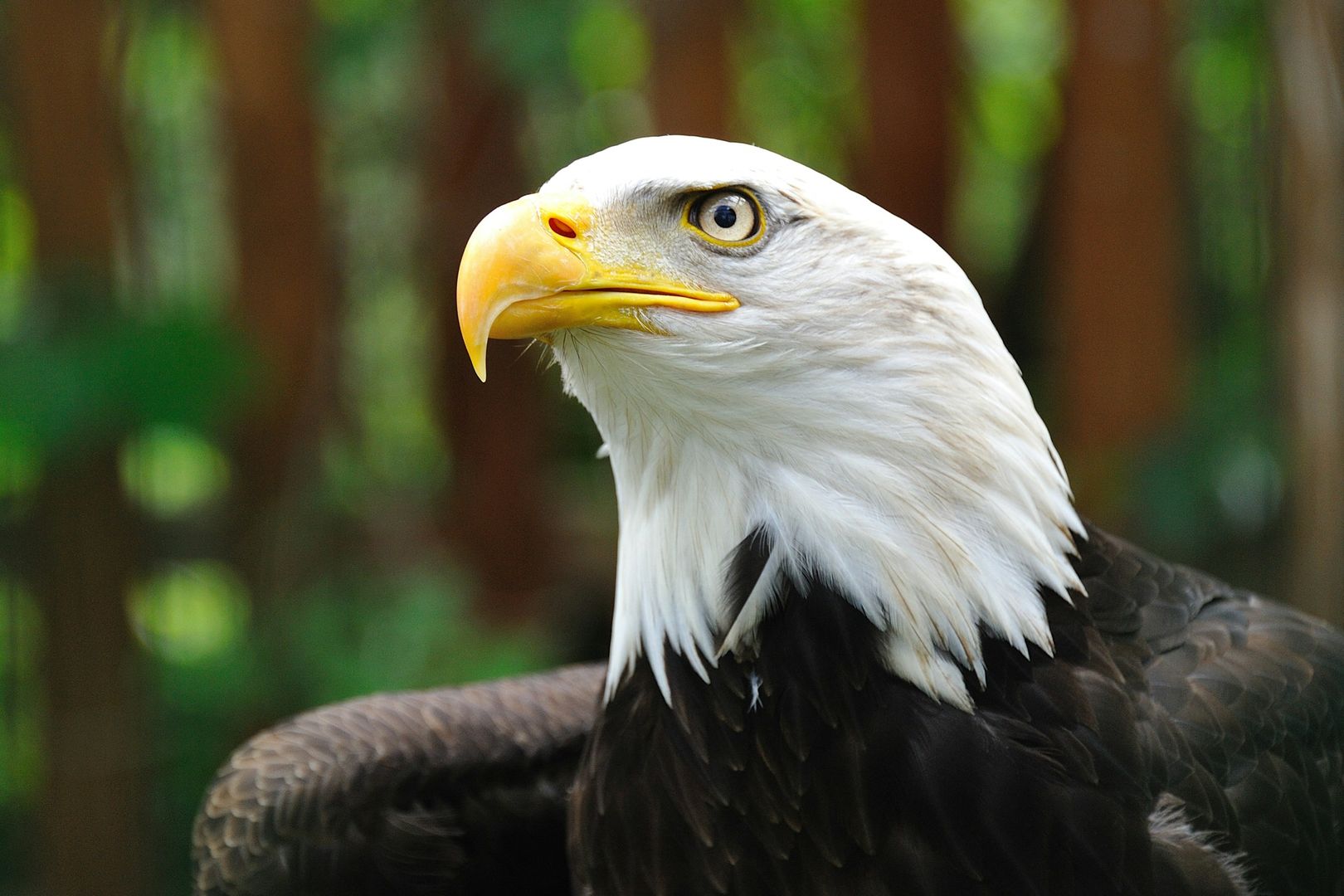
- Family – Accipitridae
- Species – Haliaeetus leucocephalus
- Primary Activity Time – Daytime
- Diurnal
- Resident Connecticut Bird / Winter Migrant
The Bald Eagle is one of Connecticut's comeback stories. After the DDT ban, the state now has more than 100 breeding pairs, and in winter eagles from farther north join them wherever rivers and reservoirs stay open. It eats fish and waterfowl and scavenges whatever it can find.
Adults have a white head and tail, a dark brown body, and a heavy yellow bill. Young birds are mottled brown and take about five years to get the white head. Males and females look alike, but females are larger.
The Bald Eagle call is a high, thin chatter that sounds way too small for a bird with a wingspan of nearly 7 feet.
Connecticut Audubon's guide to where to see Bald Eagles in Connecticut lists the Shepaug Dam in Southbury, the lower Connecticut River at Essex, Gillette Castle State Park, and Eagle Landing State Park in Haddam, plus Silver Sands State Park in Milford, which may have the best variety of winter raptors in one spot. Eagles follow the ice, so check the open water after a hard freeze.
25. Snowy Owl
- Family – Strigidae
- Species – Bubo scandiacus
- Primary Activity Time – Day and Dusk
- Diurnal
- Irruptive Species
The Snowy Owl is the bird everyone hopes to see and the one that keeps the Connecticut birding listserv busy every winter. It nests on the Arctic tundra and comes south in numbers that swing a lot from year to year. Many of the owls that reach Connecticut are young birds still learning to hunt, so they're running low on energy before you ever see them.
Adult males can be nearly pure white, while females are larger and more heavily barred. Young birds have the heaviest barring of all.
The Snowy Owl call is a deep, booming hoot, but they're mostly quiet here in winter.
Snowy Owls favor open beaches, dunes, and marshes that look like home. Connecticut Audubon has called the Milford Point Coastal Center one of the best local places to see one, and they've also turned up at Hammonasset, Stratford, and Westport. DEEP asks people to watch from a distance with binoculars or a scope. If the owl stares at you, changes perches, or freezes in place, you're too close, and every flush costs it energy it needs to survive.
26. Northern Saw-whet Owl
- Family – Strigidae
- Species – Aegolius acadicus
- Primary Activity Time – Night
- Nocturnal
- Winter Migrant / Visitor (uncommon, hard to find)
The Northern Saw-whet Owl is a tiny owl, about the size of a robin, that hunts mice at night and sleeps all day tucked into dense evergreens. Plenty of birders have walked right past one at eye level (I'm choosing to believe I've done this, which is why I haven't seen one yet).
It's brown with white streaks, a round head with no ear tufts, big yellow eyes, and a white "V" between them. Males and females look alike, though females are bigger.
The Northern Saw-whet Owl call is a steady, high too-too-too, like a truck backing up, mostly heard in late winter and spring.
Look in thick stands of pine, hemlock, and cedar. Audubon notes the Audubon Center in Greenwich is known as a wintering spot for saw-whets. If you find one, keep quiet, keep your distance, and don't post the exact location publicly.
27. Redpoll
- Family – Fringillidae
- Species – Acanthis flammea
- Primary Activity Time – Daytime
- Diurnal
- Irruptive Species
The Redpoll is the small, frosty finch you may know as the Common Redpoll or Hoary Redpoll. In 2024, the American Ornithological Society combined them into one species, so your life list just got shorter and your field guide just got out of date. Redpolls come south into Connecticut in some winters and skip it entirely in others.
It's streaky brown-gray with a bright red cap and a small black chin patch. Males have a rosy-pink wash on the chest, and females are streakier and lack the pink. Some birds are much paler and frostier than others.
The Redpoll call is a dry chit-chit-chit in flight and a rising, buzzy zweee.
In flight years, look for them on birches and alders and at nyjer feeders, especially in the northern part of the state.
Feeder favorites: nyjer, sunflower chips
28. Pine Siskin
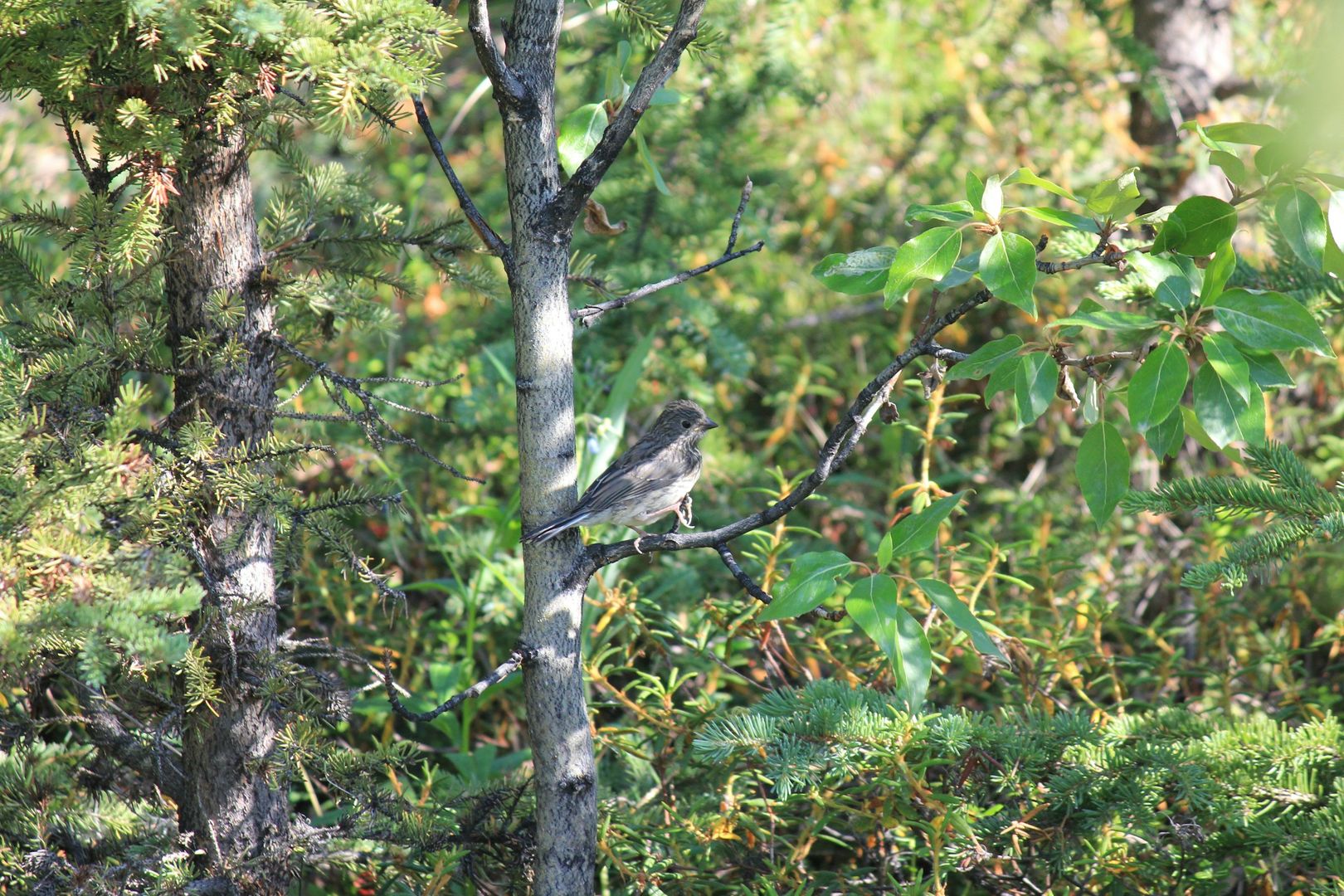
- Family – Fringillidae
- Species – Spinus pinus
- Primary Activity Time – Daytime
- Diurnal
- Irruptive Species
The Pine Siskin is a streaky little finch that follows the conifer seed crop. Some winters it drains a nyjer feeder in an afternoon, and other winters you won't see one at all.
It's brown and heavily streaked with a thin, sharply pointed bill and yellow edges on the wings and tail. Males tend to show more yellow than females, but there's a lot of overlap.
The Pine Siskin call is a rising, buzzy zreeeee, like someone slowly zipping up a parka.
Look for siskins in pine and spruce stands and at feeders statewide in irruption years.
Feeder favorites: nyjer, sunflower chips
29. Snow Bunting
- Family – Calcariidae
- Species – Plectrophenax nivalis
- Primary Activity Time – Daytime
- Diurnal
- Winter Migrant / Visitor
The Snow Bunting nests in the high Arctic and spends the winter on Connecticut beaches, eating seeds in the dunes and wrack line. When a flock lifts off together, it looks like a gust of snow that changed its mind.
In winter, both sexes are white below with warm tan on the head and back. Males show more white in the wings, and females are browner and more streaked.
The Snow Bunting call is a soft, rippling prrrt and a whistled tew, given in flight.
The Audubon guide to birding in Connecticut says the beach at Sherwood Island State Park in Westport can host winter flocks of Snow Buntings mixed with Horned Larks and American Pipits. Hammonasset Beach State Park in Madison is another good shoreline bet.
30. Horned Lark
- Family – Alaudidae
- Species – Eremophila alpestris
- Primary Activity Time – Daytime
- Diurnal
- Winter Migrant / Visitor
The Horned Lark is a ground bird of wide-open spaces, which in Connecticut means beaches, farm fields, and the occasional airport edge. It walks rather than hops and eats seeds off bare ground.
It's sandy brown above with a yellowish face, a black mask, a black chest band, and tiny black feather "horns." Males have bolder black markings and more obvious horns, while females are duller with fainter face patterns.
The Horned Lark call is a thin, high tsee-tee, and the song is a quick, tinkling jumble.
Look for them with Snow Buntings on Sherwood Island and Hammonasset beaches, and in big plowed farm fields inland.
31. Bufflehead
- Family – Anatidae
- Species – Bucephala albeola
- Primary Activity Time – Daytime
- Diurnal
- Winter Migrant / Visitor
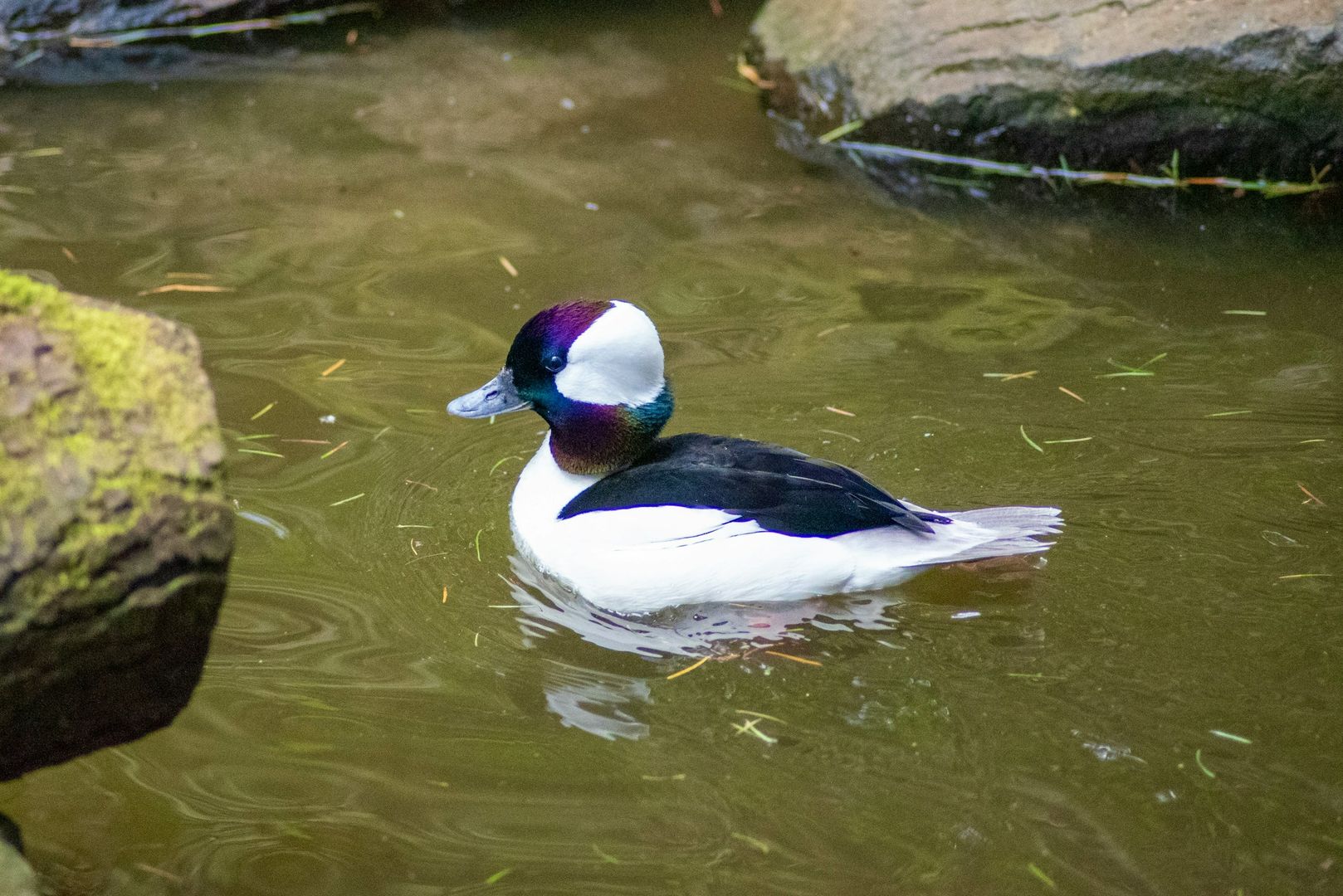
The Bufflehead is one of the smallest ducks in North America, and it's here roughly November through April. It dives for small crustaceans, snails, and aquatic insects, then pops back up like a cork. It nests in old woodpecker holes up north, which is a very small-apartment lifestyle I can relate to.
Males look black and white from a distance, with a big white patch on the back of the head, but up close the dark part of the head shines green and purple. Females are gray-brown with a neat white oval on each cheek.
The Bufflehead call isn't something you'll hear much, since they're mostly quiet in winter.
Look on ponds, reservoirs, harbors, and coves along Long Island Sound, including Greenwich Harbor and the shoreline parks.
32. Long-tailed Duck
- Family – Anatidae
- Species – Clangula hyemalis
- Primary Activity Time – Daytime
- Diurnal
- Winter Migrant / Visitor
The Long-tailed Duck is an Arctic sea duck and one of the deepest-diving ducks in the world, chasing small invertebrates and fish far below the surface. It winters on Long Island Sound, often well offshore in flocks.
Winter males are mostly white with a dark cheek patch, a dark chest, and two long, thin tail feathers. Females are brown and white with a dark crown and no long tail.
The Long-tailed Duck call is a loud, yodeling ow-owdle-ow, and a calling flock sounds like ducks who joined a barbershop quartet without auditioning.
According to Audubon, Long-tailed Ducks can be seen in winter from Sherwood Point at Sherwood Island State Park, along with scoters and mergansers, and from Meigs Point at Hammonasset. Bring a scope.
33. Common Loon
- Family – Gaviidae
- Species – Gavia immer
- Primary Activity Time – Daytime
- Diurnal
- Winter Migrant / Visitor
The Common Loon you meet in a Connecticut winter looks nothing like the checkerboard bird on a Maine postcard. It spends the winter on salt water, diving for fish, and its legs sit so far back on its body that it can barely walk on land.
In winter, adults are plain gray-brown above and white below, with a white throat and a thick, dagger-shaped bill. Males and females look alike, though males are a bit bigger.
The Common Loon call is the famous haunting wail and yodel, but loons are mostly silent in winter, so you'll have to settle for the look.
Scan Long Island Sound from Meigs Point at Hammonasset, Sherwood Point, and other shoreline parks, where loons often dive and resurface far from where they went under.
Connecticut Winter Birds FAQ
What birds stay in Connecticut in the winter?
Year-round residents like the Black-capped Chickadee, Blue Jay, Northern Cardinal, Tufted Titmouse, White-breasted Nuthatch, Downy and Hairy Woodpeckers, and many American Robins stay put. They're joined by winter visitors like Dark-eyed Juncos, American Tree Sparrows, White-throated Sparrows, Snow Buntings, and sea ducks, plus irruptive finches and Snowy Owls in some years.
What are the most common birds of Connecticut at winter feeders?
In FeederWatch's New England counts, the top five are the Black-capped Chickadee, Blue Jay, Dark-eyed Junco, Downy Woodpecker, and White-breasted Nuthatch, followed closely by Mourning Doves, titmice, goldfinches, and cardinals. Most of them will come to black oil sunflower seed, which DEEP calls the seed that attracts most feeder species.
When should I put out bird feeders in Connecticut?
DEEP recommends feeding only in winter, from about mid-December to late March, and only where bear activity is low. Take feeders down at the first sign of a bear. Native plants like winterberry, bayberry, and sumac feed birds all winter without the bear problem.
Where can I see Snowy Owls and Bald Eagles in Connecticut?
Snowy Owls show up on open beaches and marshes, such as Milford Point, Hammonasset, and Stratford, in years when they come south. For Bald Eagles, try the Shepaug Dam in Southbury, the lower Connecticut River around Essex and Haddam, and Silver Sands State Park in Milford.
Where are the best places to see Connecticut birds in winter?
The shoreline is the main event. Hammonasset Beach State Park, Sherwood Island State Park, Milford Point, and Silver Sands are good for sea ducks, loons, owls, and raptors. Inland, open water on the Connecticut and Housatonic Rivers draws eagles, and any wooded backyard with a feeder brings in the regulars. Crossing the border? See our guides to winter birds in New York and winter birds in Massachusetts.
What Connecticut Birds Have You Seen This Winter?
Share your sightings on the Sparkbird App, where you can meet other Connecticut birders and find out who's heading to Hammonasset on Saturday.
And if you spend a whole January morning scanning the Sound for a Long-tailed Duck and only find a buoy, take heart. That buoy has fooled better birders than both of us.
Happy Birding.
No comments yet.