
There are 2 types of common birds in Florida you’ll see on the list:
- Resident Florida Bird – native or non-native species that stay year-round
- Migratory / Visitor – birds that migrate to Florida for the Winter. Found in migration hot spots like Merritt Island National Wildlife Refuge and Everglades National Par
1. Great Egret
- Family – Ardeida
- Species – Ardea alba
- Active – Diurnal
- Florida Resident
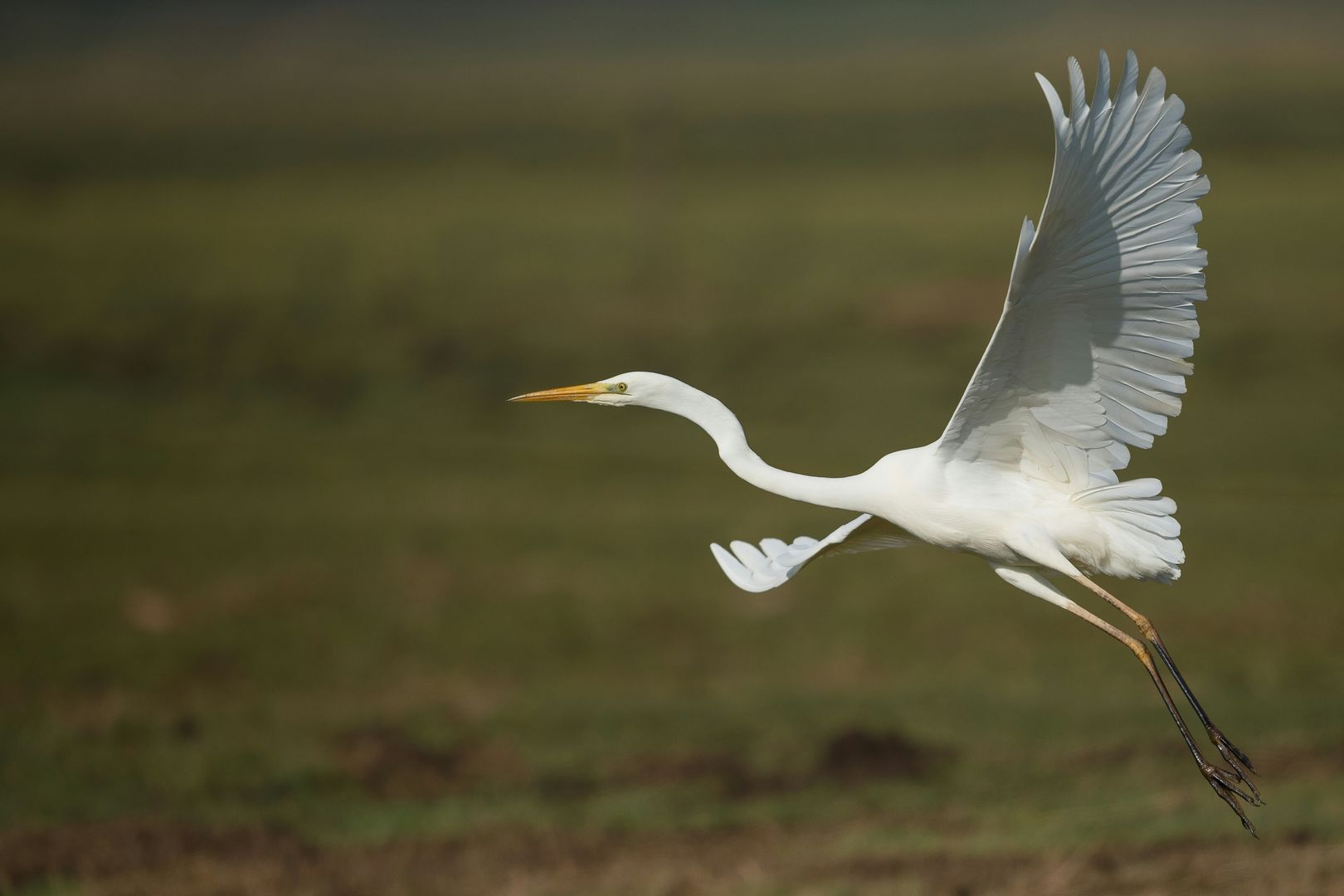
The Great Egret is a symbol of conservation in Florida, famously used as the logo for the National Audubon Society.
It's a strictly carnivorous hunter, stalking fish, frogs, and aquatic insects in both salt and freshwater.
Unlike the smaller Snowy Egret, the Great Egret usually stands still for long periods, waiting for prey to come within striking distance of its powerful neck.
They're entirely white with a sharp, yellow bill and long black legs and feet. During the breeding season, they develop long, delicate feathers on their backs called aigrettes which they fan out in spectacular displays.
A Great Egret's call are distinctive, low, and raspy croaks that sound almost like a dry rattle.
2. Osprey
- Family – Pandionidae
- Species – Pandion haliaetus
- Active– Day (Diurnal)
- Florida Resident
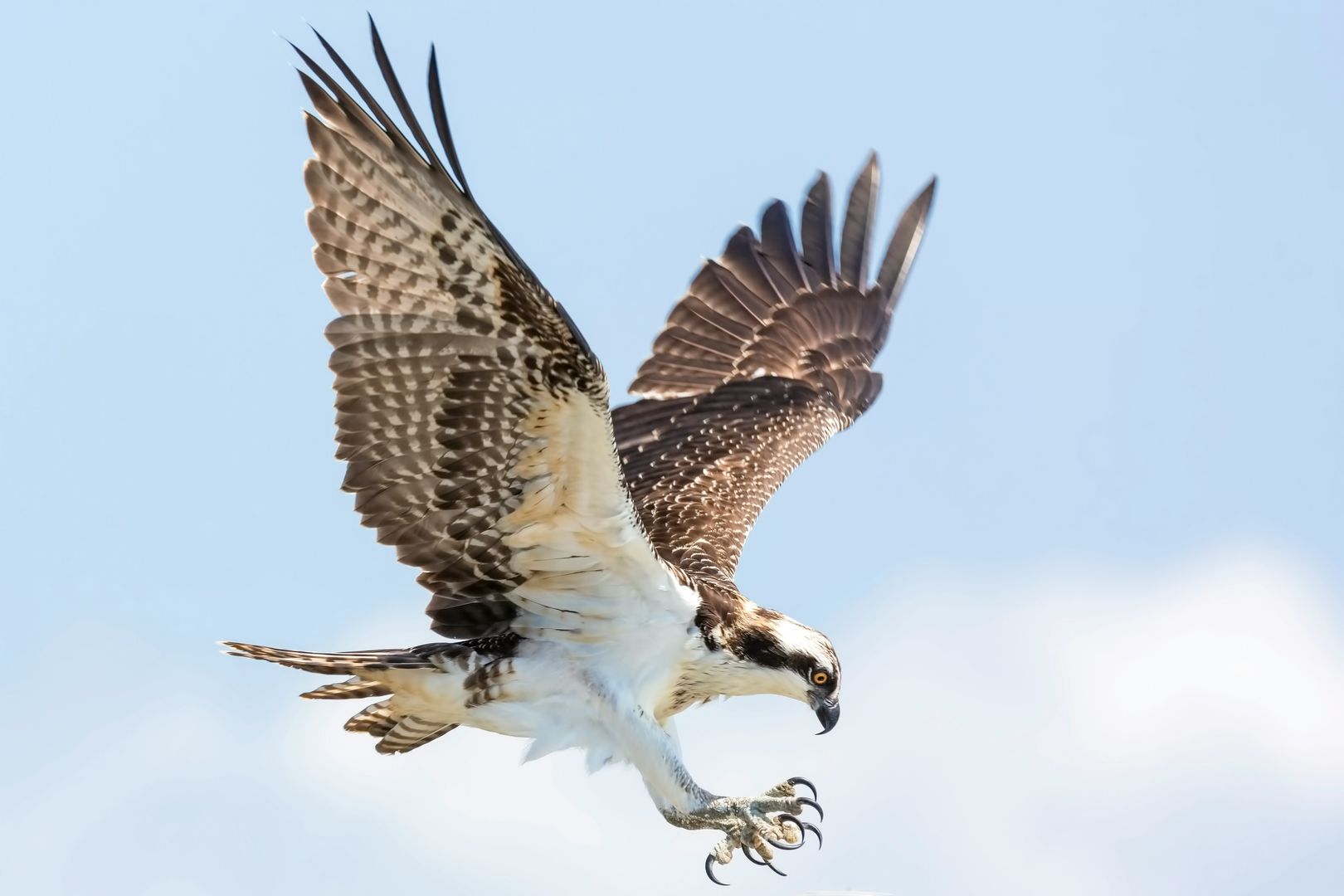
Often called the "fish hawk," the Osprey is a large raptor found near almost any body of water in Florida.
They are uniquely adapted piscivores with reversible outer toes and barbed pads on their feet to grip slippery fish. They hover high above the water before diving feet-first to snatch a fish!
They have specialized spicules (barbs) on their foot pads and a reversible outer toe to help them grip slippery prey, too.
Osprey are brown above and white below, with a distinctive black Zorro mask across the eyes.
You'll often see their massive stick nests on top of power poles and channel markers.
3. Boat-tailed Grackle
- Family – Icteridae
- Species – Quiscalus major
- Active – Day (Diurnal)
- Florida Resident
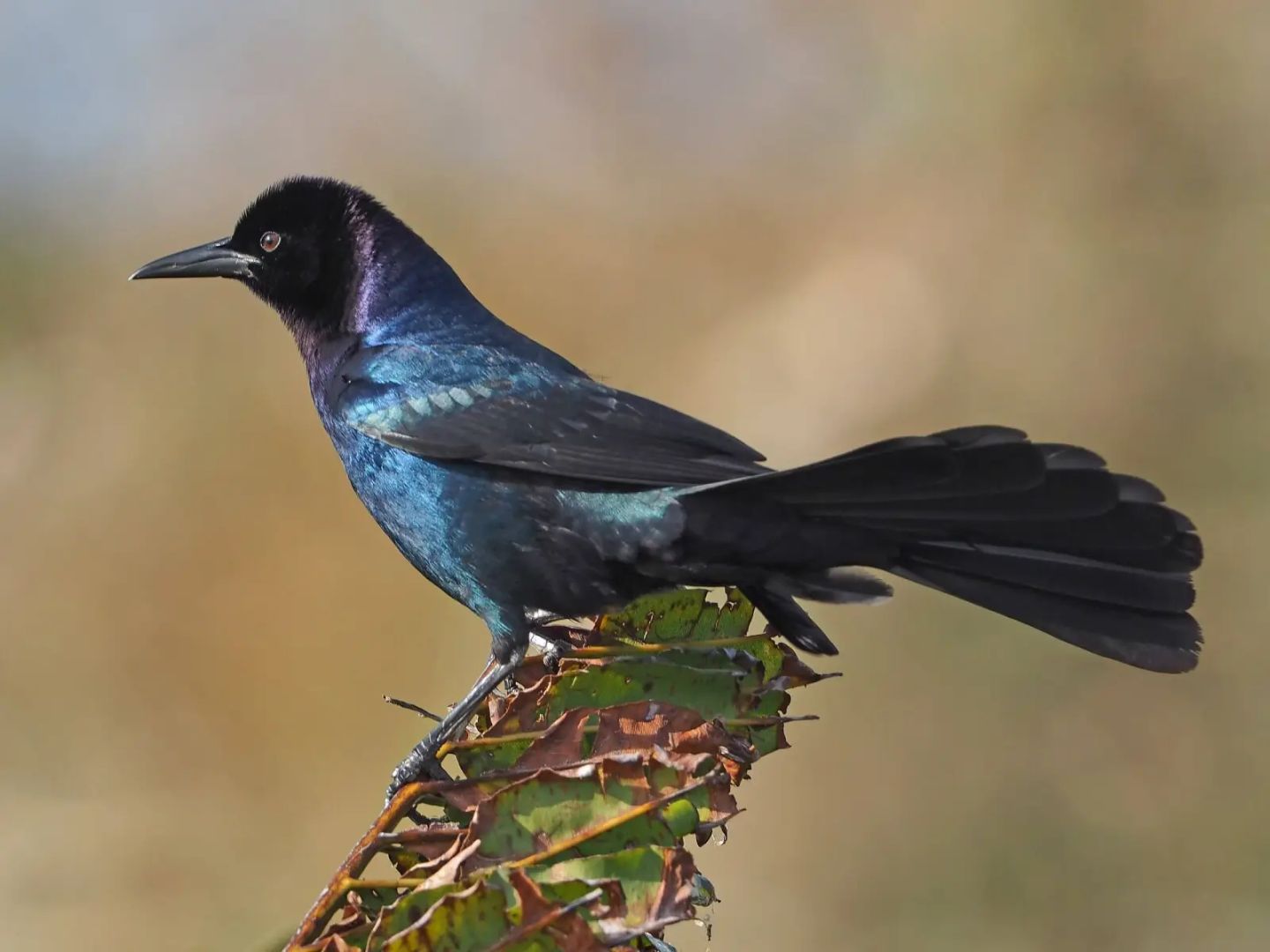
A common sight in coastal parking lots and marshes, the Boat-tailed Grackle is a large, social bird.
They're generalist omnivores, eating everything from aquatic invertebrates to French fries.
Males are iridescent black with massive, V-shaped "boat" tails, while females are significantly smaller and a warm, tawny brown.
Their sounds are a chaotic mix of harsh jeers, whistles, and clicks.
4. Common Ground Dove
- Family – Columbidae
- Species – Columbina passerina
- Active – Dawn and Dusk (Crepuscular)
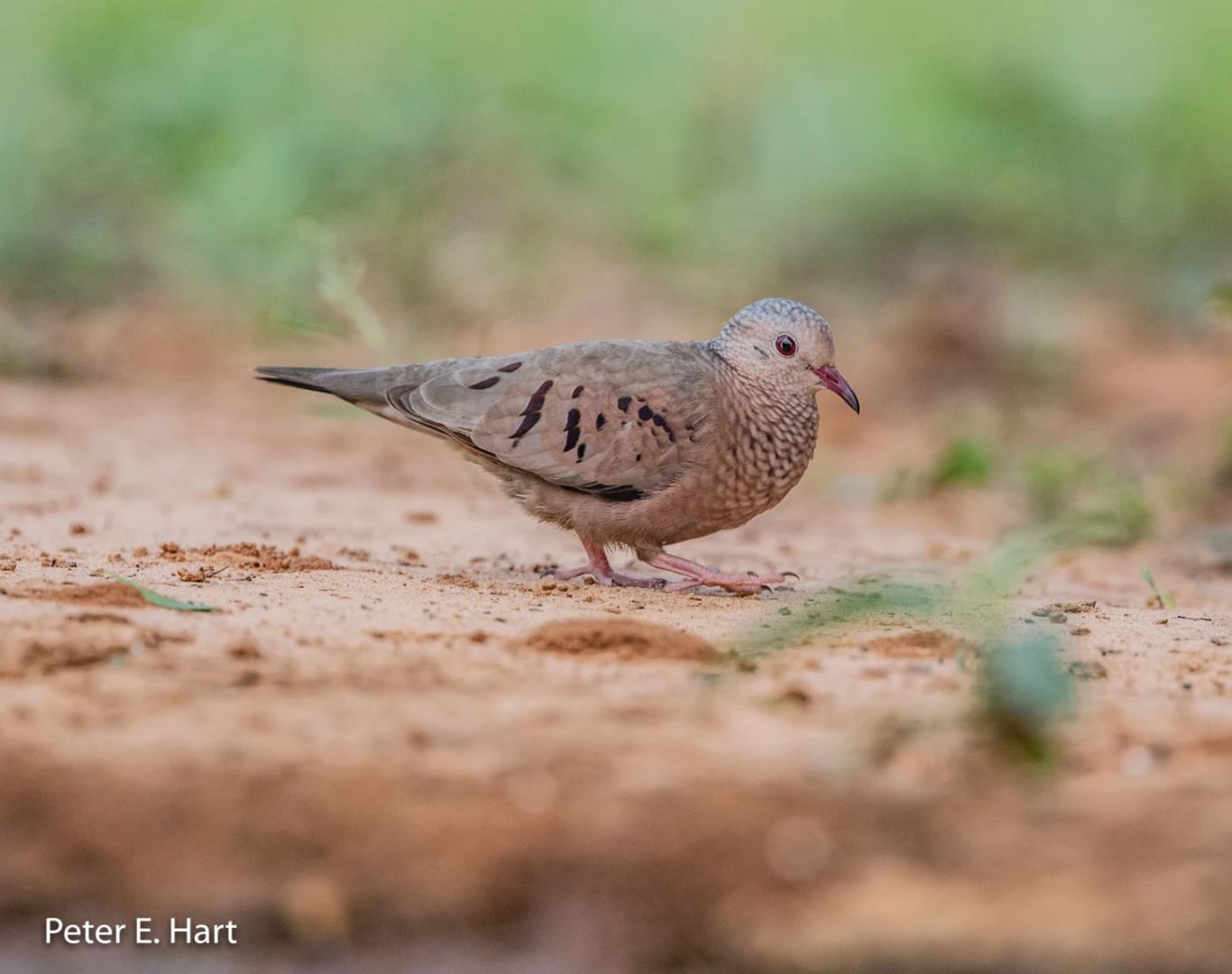
The Common Ground-Dove is one of the smallest pigeons in the world, that favors a granivorous diet, foraging for small seeds and waste grain directly on the ground.
Males and females have subtle differences, showing a sandy-brown body with pinkish tones on the chest and iridescent spots on the wings, contrasted by bright cinnamon wing patches visible in flight.
This quiet Florida bird sounds like a soft, repeating "whoop" call that is often used to establish territory in the early morning.
Their range is found in open woodlands, citrus groves, and coastal dunes, particularly in areas where sparse vegetation and bare ground are abundant.
5. White Ibis
- Family – Threskiornithidae
- Species – Eudocimus albus
- Active – Day (Diurnal)
- Florida Resident
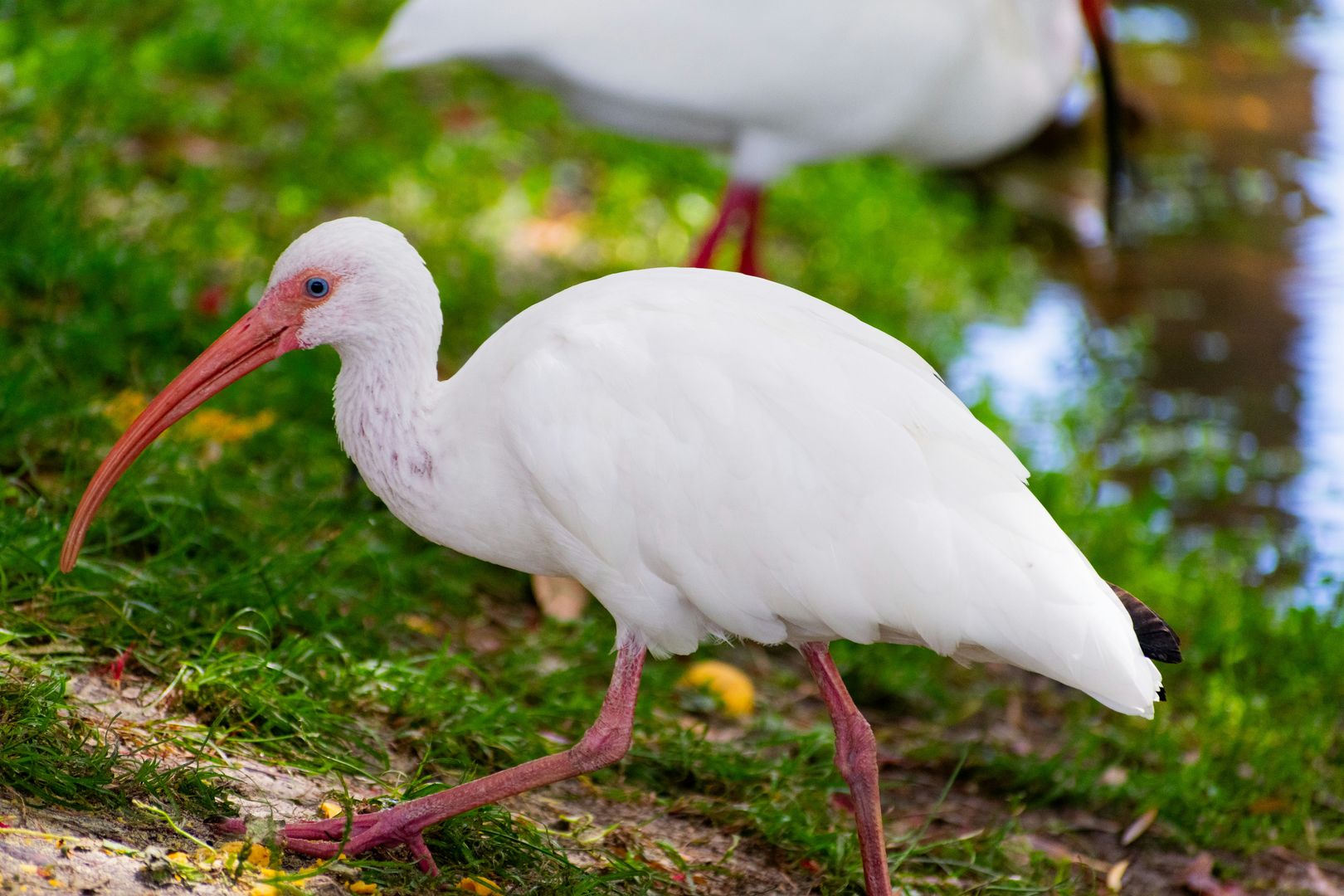
The White Ibis is a keystone species for the Everglades and Florida in general. They are carnivorous, primarily searching for crayfish, crabs, and insects.
A male and female white ibis look similar, showing a pure white body and bright red-orange skin on the face and bill. Their black wingtips are visible only when they are in flight.
This vocal Florida bird sounds like a nasal, grunting urnk-urnk that is often used to communicate with the flock while foraging.
In the Florida peninsula, the American White Ibis range covers nearly every county where moist soil and shallow water are abundant.
6. Little Blue Heron
- Family – Ardeidae
- Species – Egretta caerulea
- Active – Day (Diurnal)
- Florida Resident
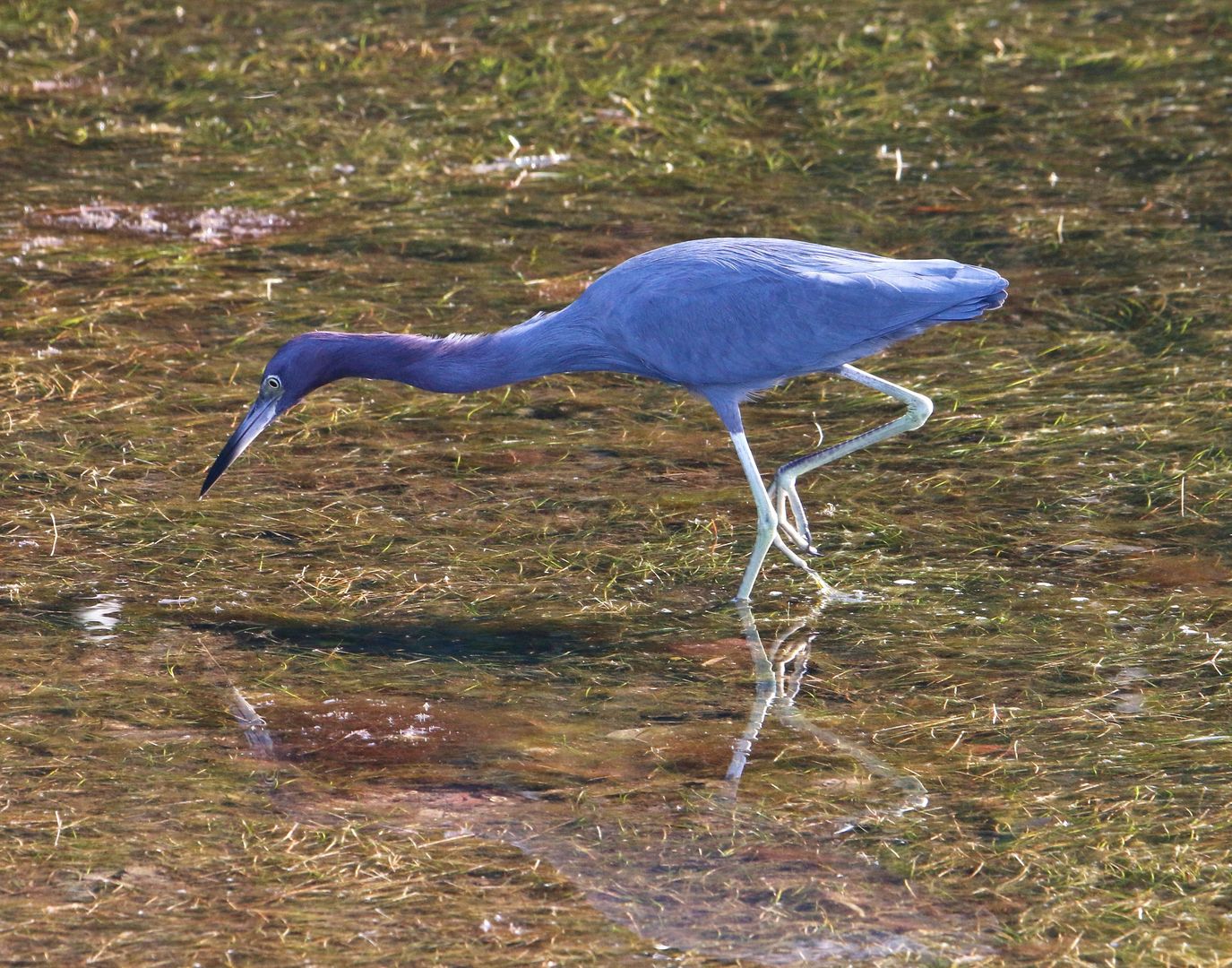
The Little Blue Heron is a slender wader known for its unique color change as it matures. It has a carnivorous diet, stalking fish, crustaceans, and amphibians.
Adults are a smokey slate-blue body with a maroon or purplish neck, while juveniles are entirely white, often confused with Snowy Egrets.
A Little Blue Heron sounds like a series of harsh screams or croaks that is often used when it is disturbed from its feeding grounds.
The Little Blue Heron range is concentrated along coastlines and inland waterways, particularly in cypress swamps and estuaries.
7. Purple Gallinule
- Family — Rallidae
- Species — Porphyrio martinica
- Active — Morning and Afternoon
- Florida Resident
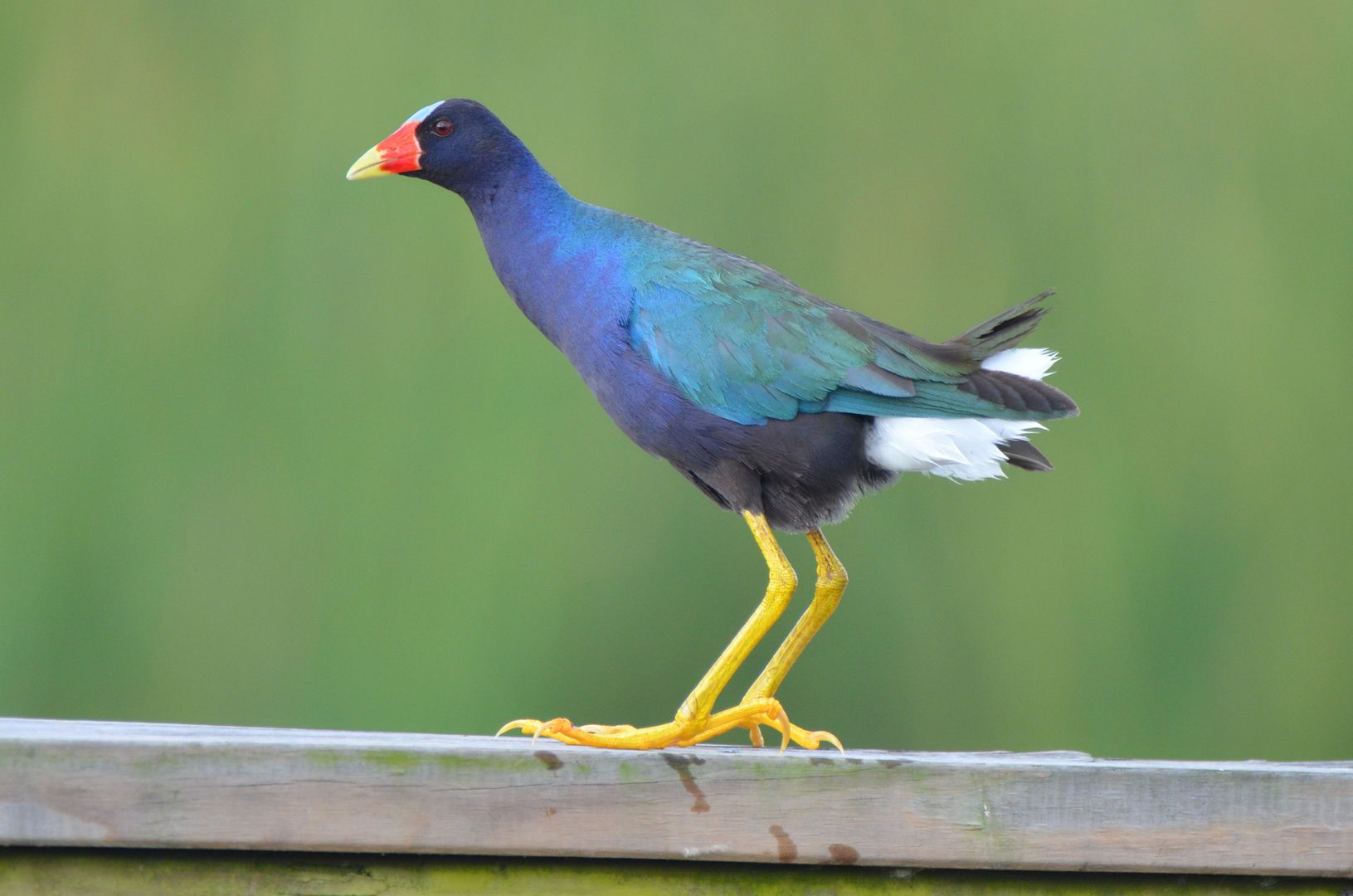
The Purple Gallinule is a vibrant, multi-colored bird that looks like a tropical jewel walking on lily pads. It’s a chicken-sized marsh bird that favors an omnivorous diet.
Males and females look similar, showing a brilliant deep purple-blue body and a lime-green back, contrasted by a bright red bill with a yellow tip.
They've got comically large feet to spread their body weight out across the lily pads.
This noisy Florida bird sounds like a series of hen-like cackles and clucks that is often used to announce its presence within the reeds.
In the Florida peninsula, the Purple Gallinule range is limited to freshwater environments, particularly in the Everglades and central lakes.
8. Downy Woodpecker
- Family – Picidae
- Species – Dryobates pubescens
- Active – Dawn and Dusk (Crepuscular)
- Florida Resident
The Downy Woodpecker is an omnivorous woodpecker taking insects, larvae, and eggs from twigs and bark, plus suet and seeds at feeders. It scales small branches and weed stems deftly.
The black‑and‑white patterning and a tiny red nape patch make it stand out against other winter birds. I recall always seeing them in my grandmother’s feeders in her lilac bushes in Massachusetts.
A Downy Woodpecker call has a sharp pik note and short descending whinny trills.
In the Florida peninsula, the Downy Woodpecker range is found in forests and suburban neighborhoods where mature trees and bird-friendly landscaping are abundant.
You can attract them by keeping a suet feeder or mixed seed feeder.
9. Florida Scrub-Jay
- Family – Corvidae
- Species – Aphelocoma coerulescens
- Active – Daytime (Diurnal)
- Florida Resident
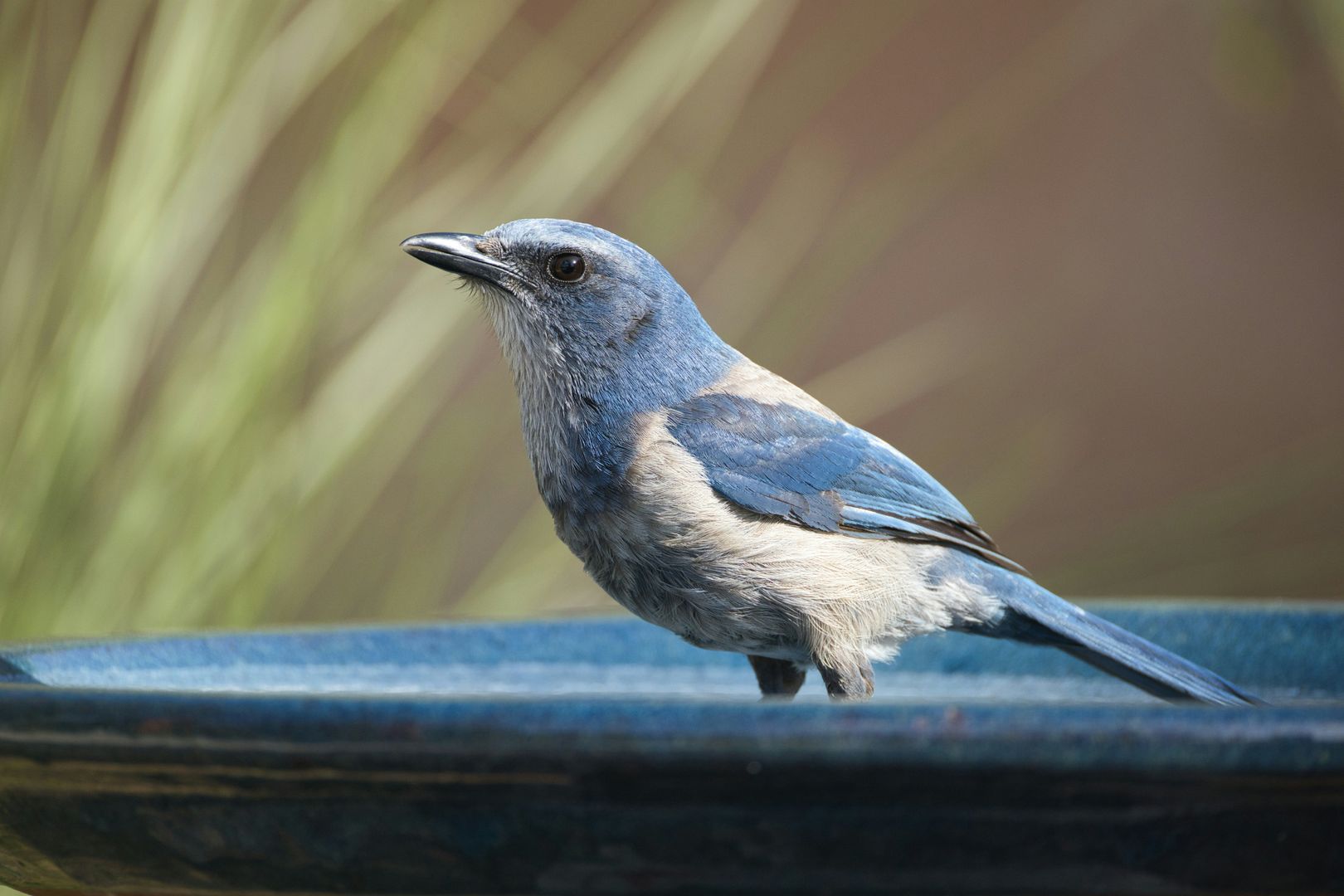
The Florida Scrub-Jay is the only species of bird entirely unique to Florida. It is a medium-sized songbird that favors a granivorous and insectivorous diet, often caching thousands of acorns in the sandy soil.
Its bold personality and curiosity make it a favorite for Florida birders.
Males and females look similar, showing a beautiful cerulean blue on the head, wings, and tail, contrasted by a soft gray back.
A Scrub Jay sounds like a raspy, rising sheerp call that is often used to warn its family group of nearby predators.
10. Carolina Wren
- Family – Troglodytidae
- Species – Thryothorus ludovicianus
- Active – Day
- Florida Resident
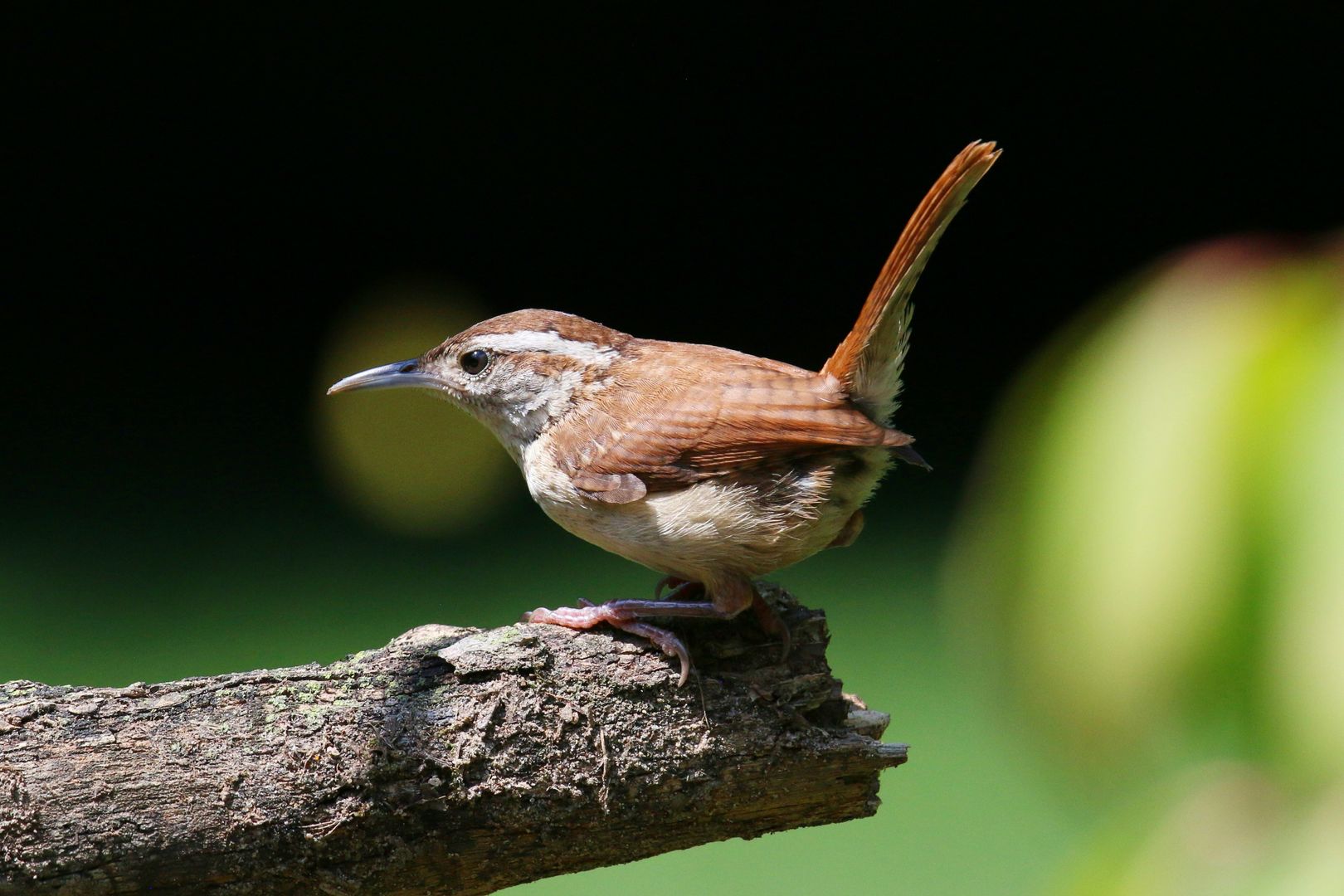
A small but incredibly loud bird, the Carolina Wren is a common resident of Florida’s thickets and garden shrubbery.
They are primarily insectivorous, hunting for spiders, caterpillars, and beetles.
They are chunky, cinnamon-colored birds with a prominent white "eyebrow" stripe.
The Carolina Wren’s call is a cheery, rapid-fire teakettle-teakettle-teakettle.
- Related: 5 Best Winter Bird Houses of 2025
11. Great Blue Heron
- Family – Ardeidae
- Species – Ardea herodias
- Active – Day (Diurnal)
- Florida Resident
The Great Blue Heron is the largest heron in North America. It's a patient hunter, often seen standing motionless in shallow water waiting for fish, amphibians, or even small mammals.
They're primarily carnivorous and use their dagger-like bills to spear prey.
They have a subtle blue-gray plumage with a wide black stripe over the eye. In flight, they tuck their necks into an "S" shape.
A Great Blue Heron call sounds like a series of harsh, prehistoric-sounding squawks or croaks.
12. Northern Mockingbird
- Family – Mimidae
- Species – Mimus polyglottos
- Active – Day and Night (Diurnal)
- State Bird of Florida
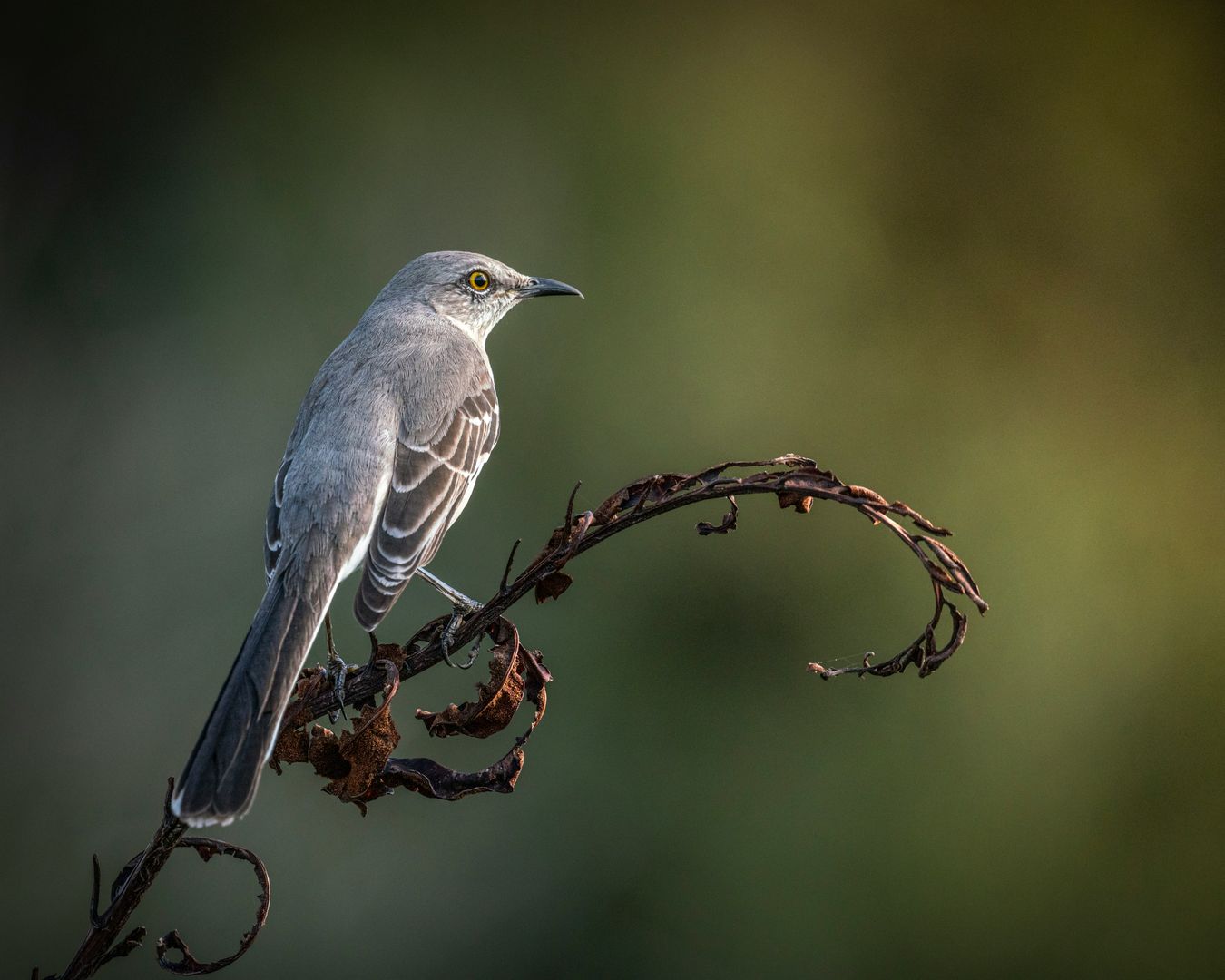
The Northern Mockingbird is a slender, gray songbird famous for its intelligence and mimicry. It has an omnivorous diet, foraging for insects on lawns during the summer and switching to berries in the winter.
They are fiercely territorial and will dive-bomb intruders to protect their nests.
They are gray-brown above with a pale belly and white wing bars that are highly visible in flight. T
The mockingbird’s song is**** legendary; they can mimic dozens of other bird species, car alarms, and even gate hinges, often repeating each phrase three or more times.
13. Sandhill Crane
- Family – Gruidae
- Species – Antigone canadensis
- Active – Day (Diurnal)
- Resident & Migratory
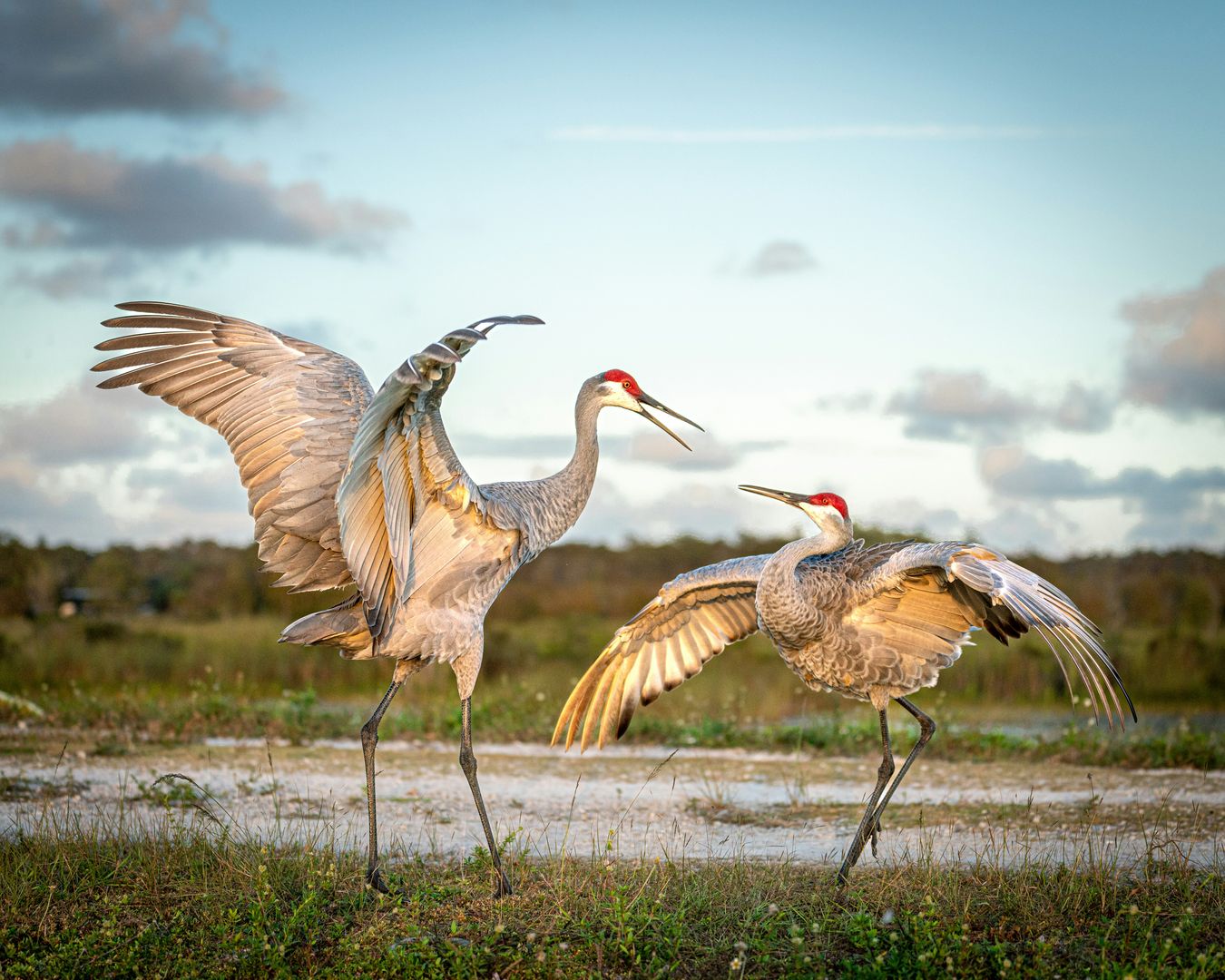
Florida is home to a unique subspecies of non-migratory Sandhill Cranes, though their numbers swell in winter with northern migrants.
They’re omnivorous, foraging in open prairies and suburban lawns for seeds, tubers, and small vertebrates.
Sandhill Cranes are tall, gray birds with a distinctive red patch on the forehead and a "bustle" of feathers over the tail.
The famous Sandhill Crane call is loud and trumpet-like, and can be heard from miles away.
14. Anhinga
- Family – Anhingidae
- Species – Anhinga anhinga
- Active – Day (Diurnal)
- Florida Resident
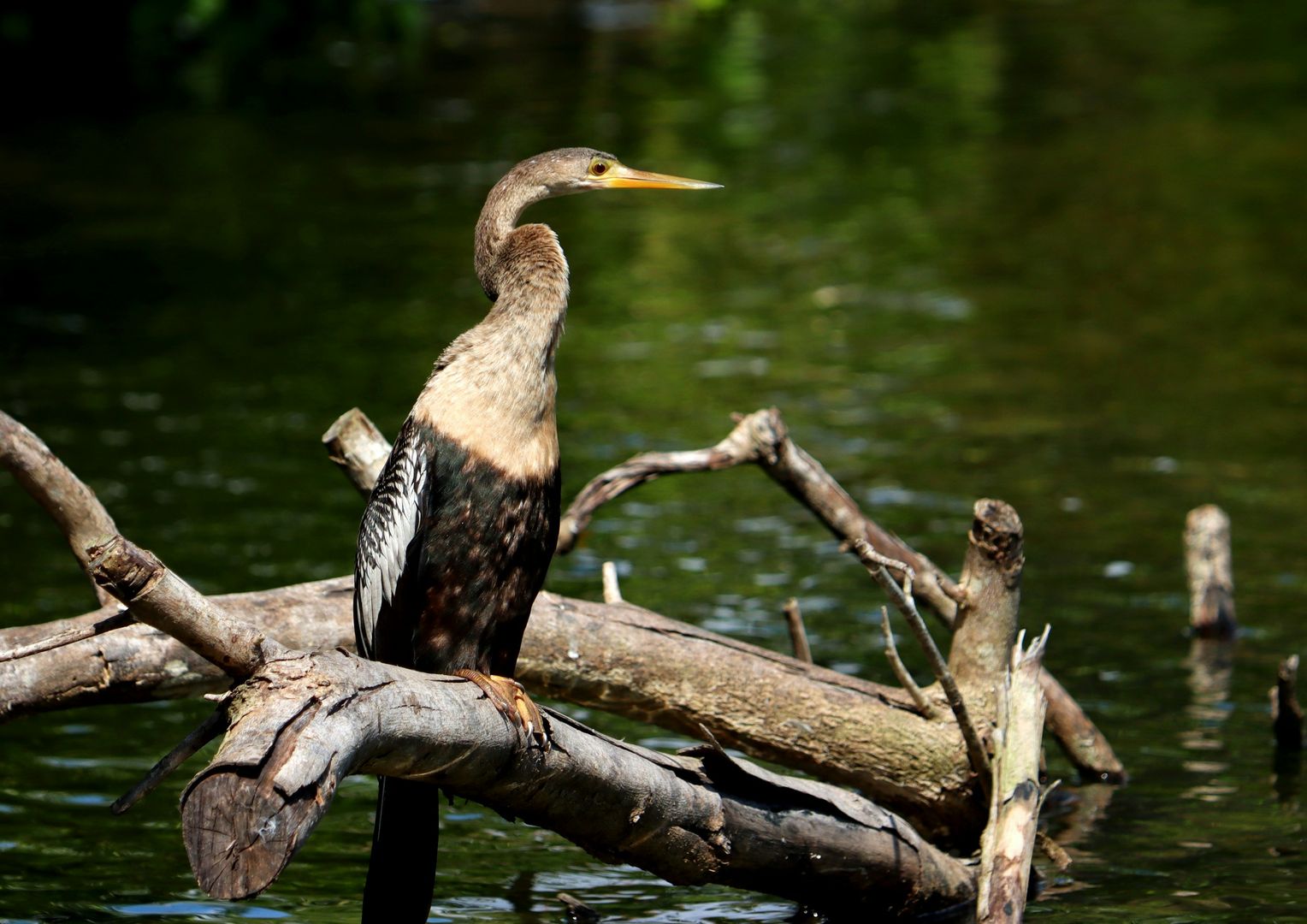
Commonly called the Snakebird because it swims with only its head and neck above water, the Anhinga is a master underwater hunter.
Unlike ducks, they lack oil glands to waterproof their feathers, which allows them to dive deeper but requires them to sun themselves with wings spread to dry out.
Males are black with silver-white wing patches while females have a tan neck and head.
Their sounds are a series of clicking or rattling grunts.
15. Brown Pelican
- Family – Pelecanidae
- Species – Pelecanus occidentalis
- Active – Day (Diurnal)
- Florida Resident
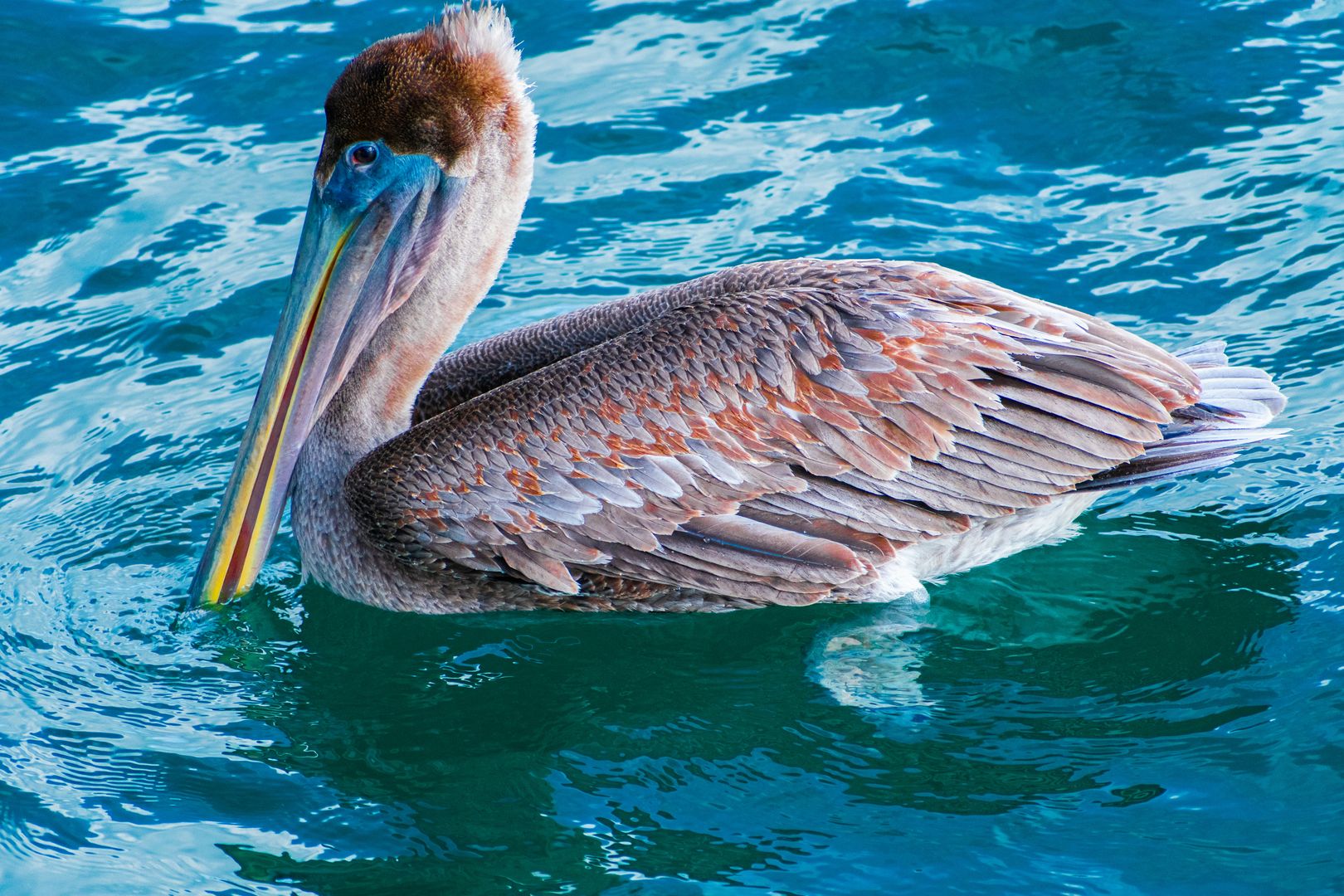
The Brown Pelican is an iconic coastal bird known for its spectacular plunge-dives into the ocean.
They are piscivorous (fish), using their massive throat pouches as nets to scoop up menhaden and mullet.
They are large, grayish-brown birds with long bills.
While they are silent as adults, they are highly social, often seen flying in single-file lines just above the wave tops.
It's impressive they can dive from such heights without breaking their neck.
16. Mourning Dove
- Family – Columbidae
- Species – Zenaida macroura
- Active – Dawn and Dusk (Crepuscular)
- Migratory
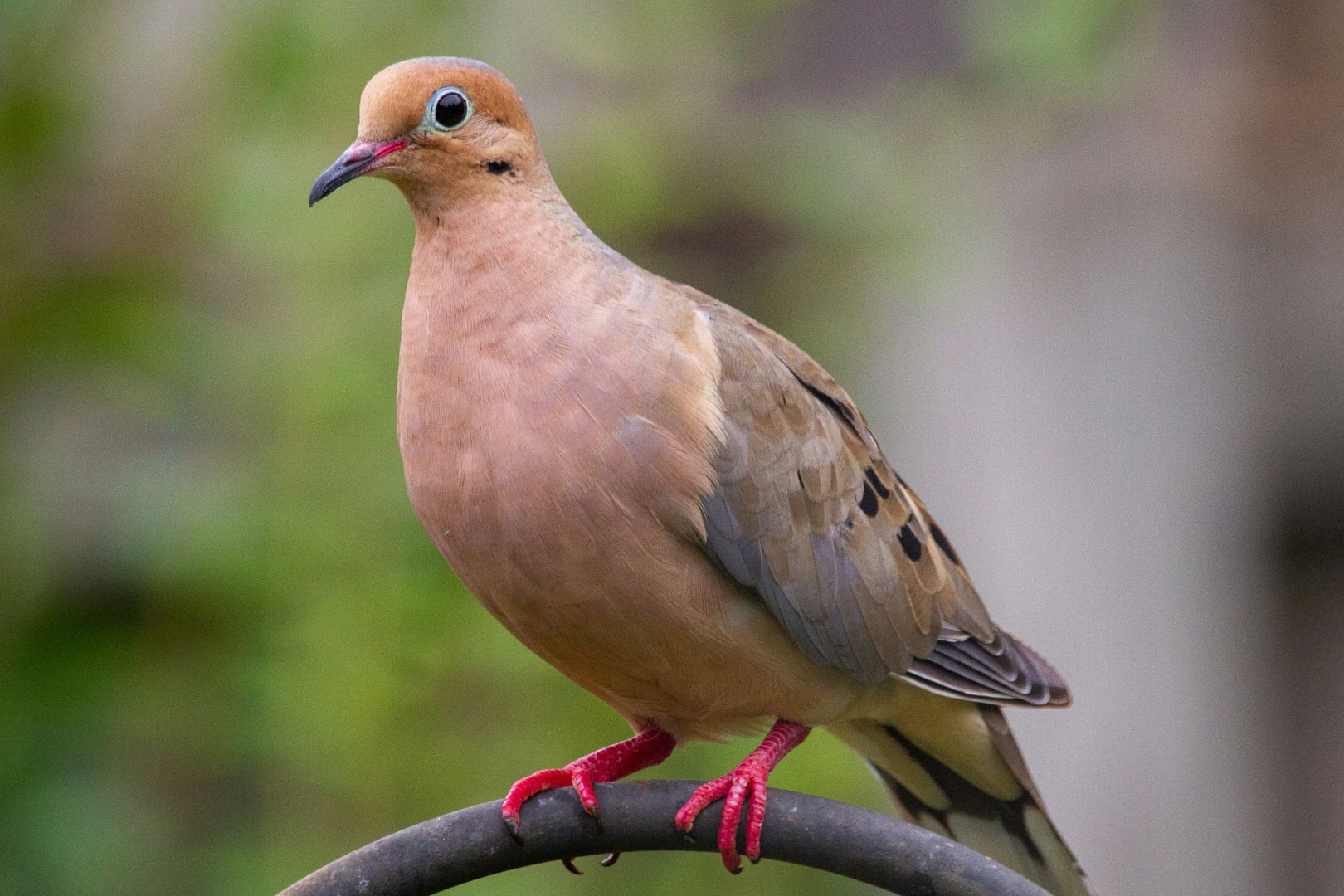
A granivorous ground‑feeder that eats waste grain and weed seeds and visits platform trays for cracked corn and millet.
Mourning Doves are slender, buff‑brown with black spots on the wings and a long pointed tail edged in white. Their wings also give a soft whistling on takeoff.
A Mourning Dove sounds like a soft, mournful coo. It’s often a couple of soft coo’s followed by louder coo’s.
I remember hearing them on early, warm spring and summer mornings in Massachusetts as a kid.
17. Red-winged Blackbird
- Family – Icteridae
- Species – Agelaius phoeniceus
- Active – Day (Diurnal)
- Florida Resident
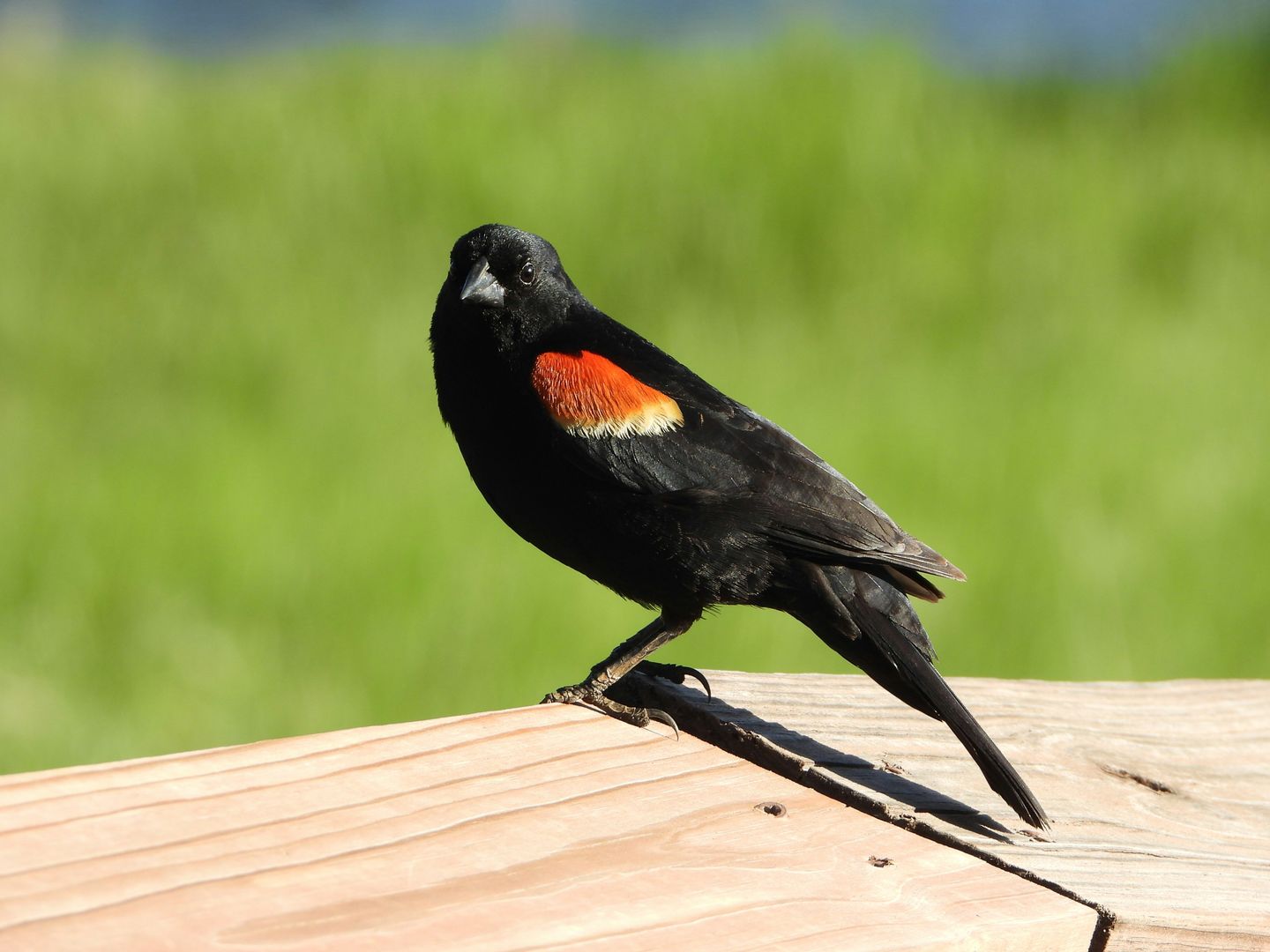
Found in nearly every Florida marsh and roadside ditch, these birds are highly territorial during breeding.
They eat insects in the summer and switch to a granivorous diet of seeds and grain in the winter.
Males are glossy black with vibrant red and yellow shoulder patches (epaulets) which they puff out when singing. Females look entirely different, resembling large, heavily streaked brown sparrows.
The Red-winged Blackbird call is a distinctive, liquid conk-la-ree!
18. Palm Warbler
- Family – Parulidae
- Species – Setophaga palmarum
- Active – Day (Diurnal)
- Migratory
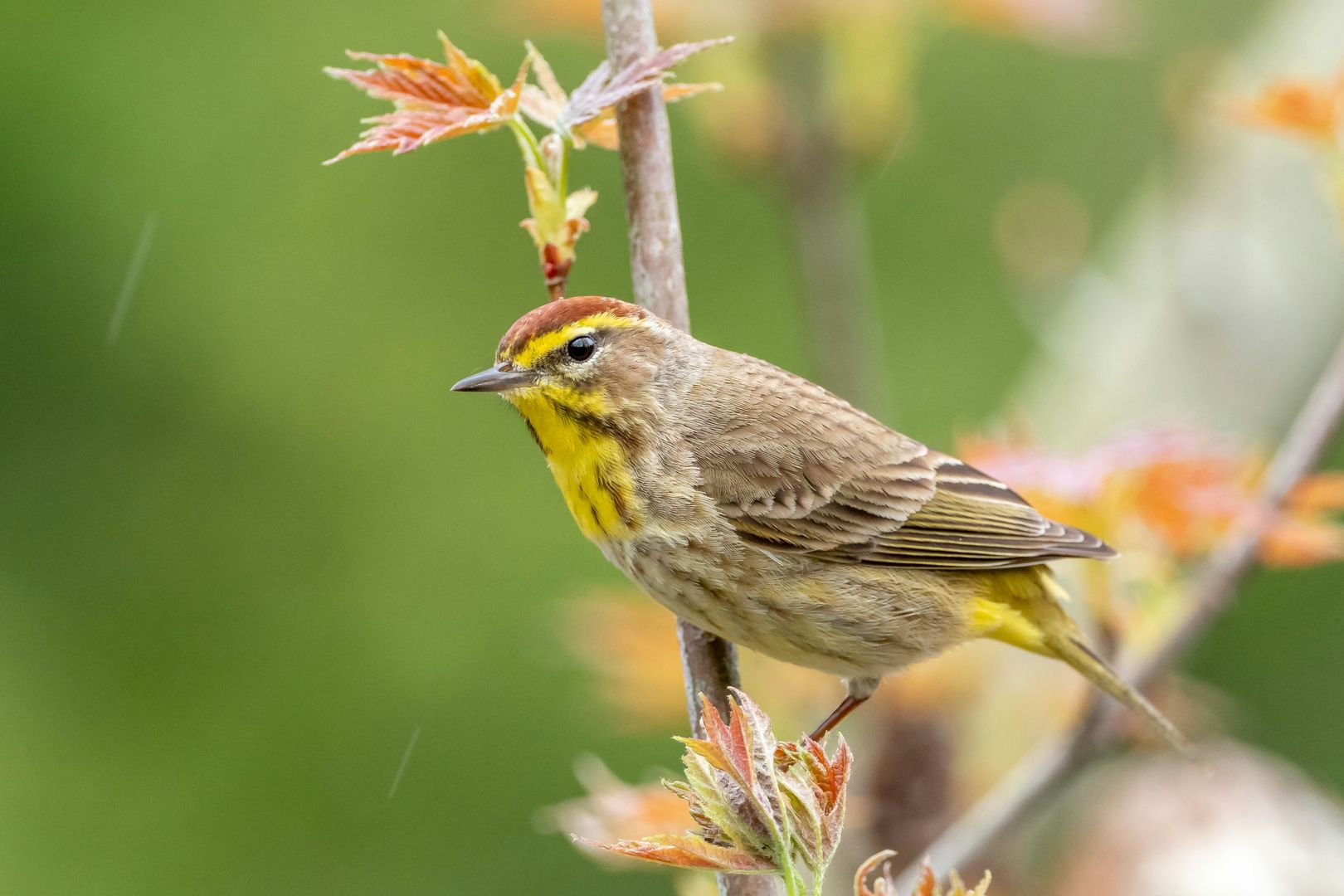
Unlike many warblers that stay high in the canopy, the Palm Warbler is a ground warbler frequently seen bobbing its tail in Florida parks and marshes.
They are insectivorous but will supplement their diet with seeds and berries during the colder months.
Palm Warblers are brownish-olive with bright yellow under-tails and rusty red caps during the breeding season.
Their presence in Florida is most notable from fall through spring before they migrate north to Canada.
19. Double-crested Cormorant
- Family – Phalacrocoracidae
- Species – Nannopterum auritum
- Active – Day (Diurnal)
- Florida Resident
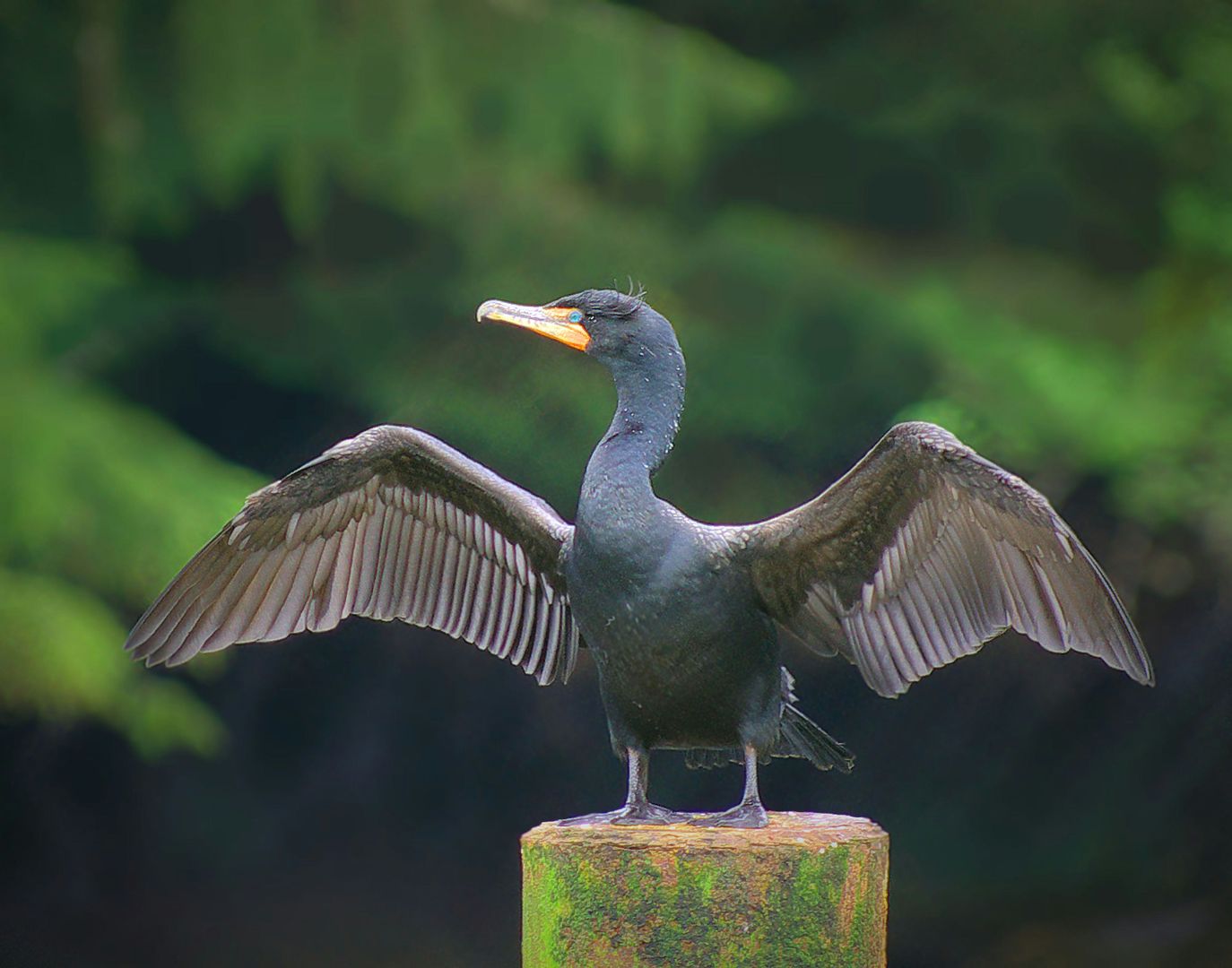
Often seen perched on piers or pilings alongside Anhingas, the Cormorant is a heavy-set waterbird with a hooked bill.
They’re expert piscivores, diving from the surface to chase fish.
They are matte black or dark brown with an orange-yellow throat patch. Unlike the Anhinga’s pointed bill, the cormorant has a noticeable hook at the tip.
Double-crested cormorant calls aren’t really calls because they’re relatively silent, occasionally making low, guttural grunts.
20. Snowy Egret
- Family – Ardeidae
- Species – Egretta thula
- Active – Day (Diurnal)
- Florida Resident
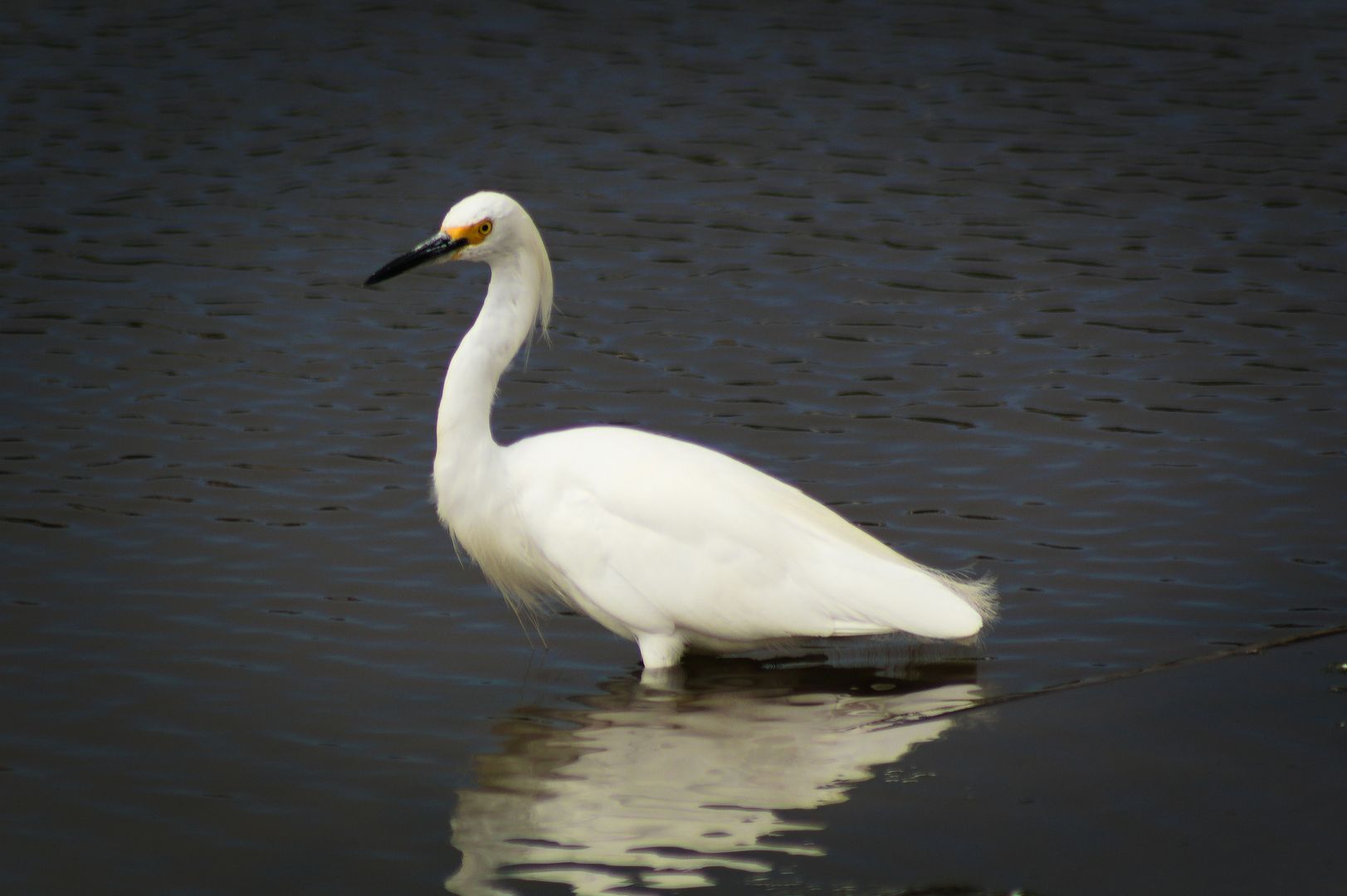
The Snowy Egret is smaller than the Great Egret and much more active when feeding. Their carnivorous eaters often "dancing" or sprinting through shallow water to flush out prey.
They are pure white with a black bill and black legs, but their most famous feature is their bright yellow feet, often called "golden slippers." Males and female are essentially identical.
Their sounds are harsh, rasping squawks.
21. Red-shouldered Hawk
- Family – Accipitridae
- Species – Buteo lineatus
- Active – Day (Diurnal)
- Florida Resident
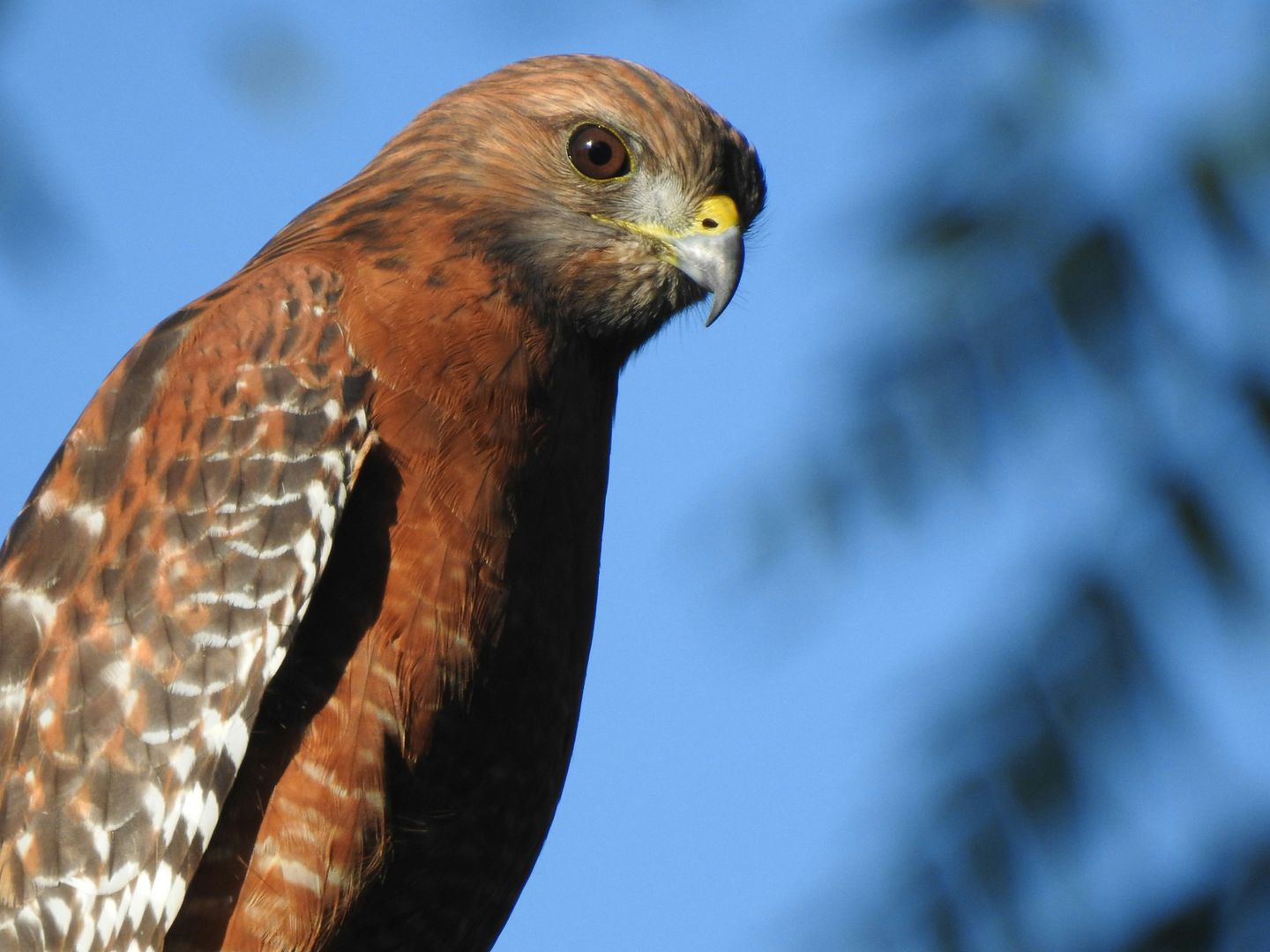
This is the most common hawk in Florida’s wooded suburbs and wetlands. They’re carnivorous, preying on lizards, snakes, and small rodents.
They feature a beautiful barred reddish-chest and a black-and-white checkered wing pattern.
Red-shouldered Hawk calls are very vocal, often giving a loud, piercing kee-aah, kee-aah scream that Blue Jays frequently mimic.
- Related: 10 Facts About Blue Jays for Kids
22. Eastern Bluebird
- Family – Turdidae
- Species – Sialia sialis
- Active – Day (Diurnal)
- Florida Resident (a few migratory)
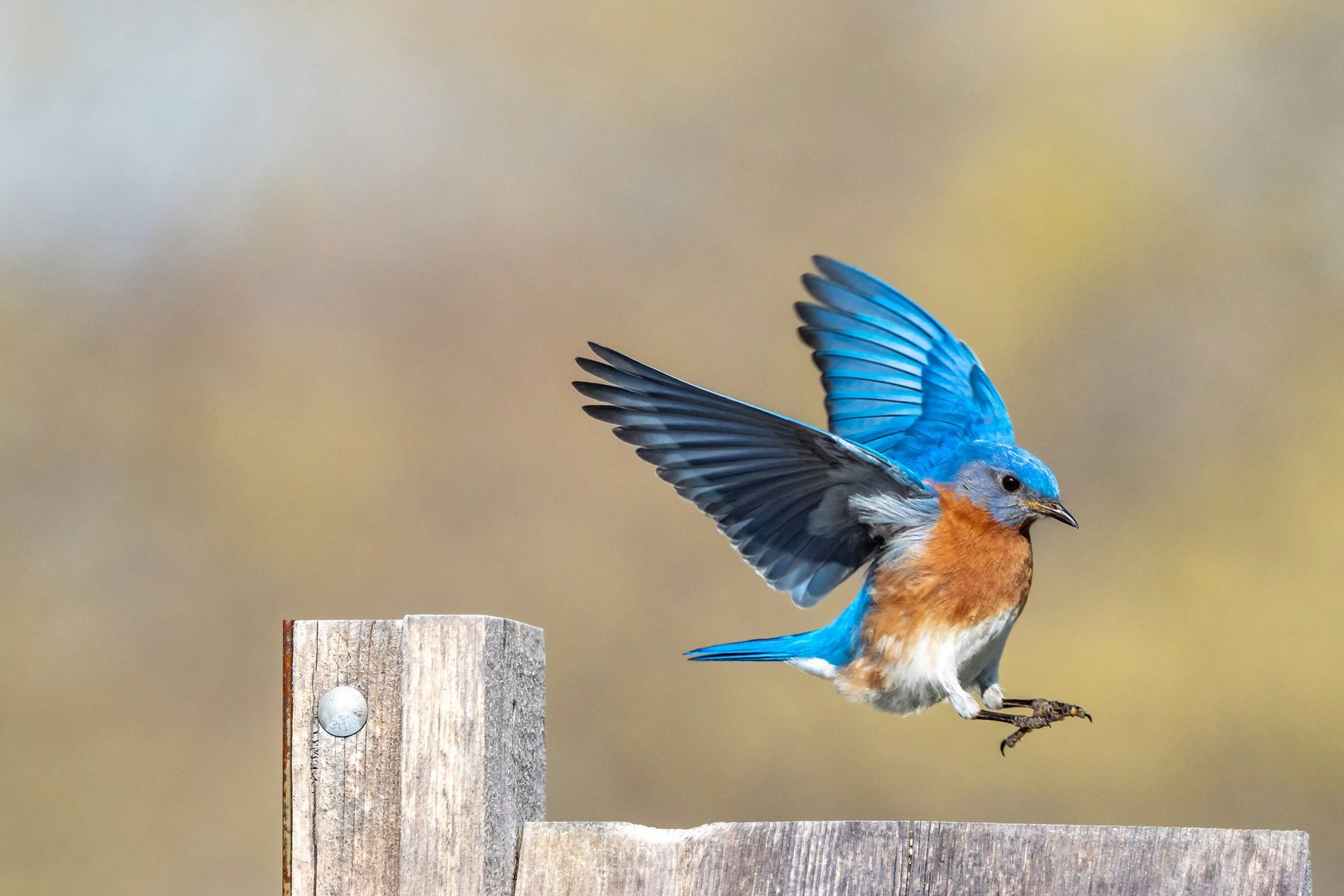
Eastern Bluebirds thrive in Florida’s open pine flatwoods and golf courses. They were almost extinct until the Petersons built them nest boxes!
They’re primarily insectivorous, "dropping" from a perch to catch insects on the ground, though they will eat berries in the winter.
Males are a vivid royal blue above with a warm rufous (reddish-brown) chest. Females are grayish brown with blue scattered along the tail.
Eastern Bluebirds calls are a soft, musical warble or a liquid tu-a-wee whistle.
23. Common Grackle
- Family – Icteridae
- Species – Quiscalus quiscula
- Active – Day (Diurnal)
- Florida Resident
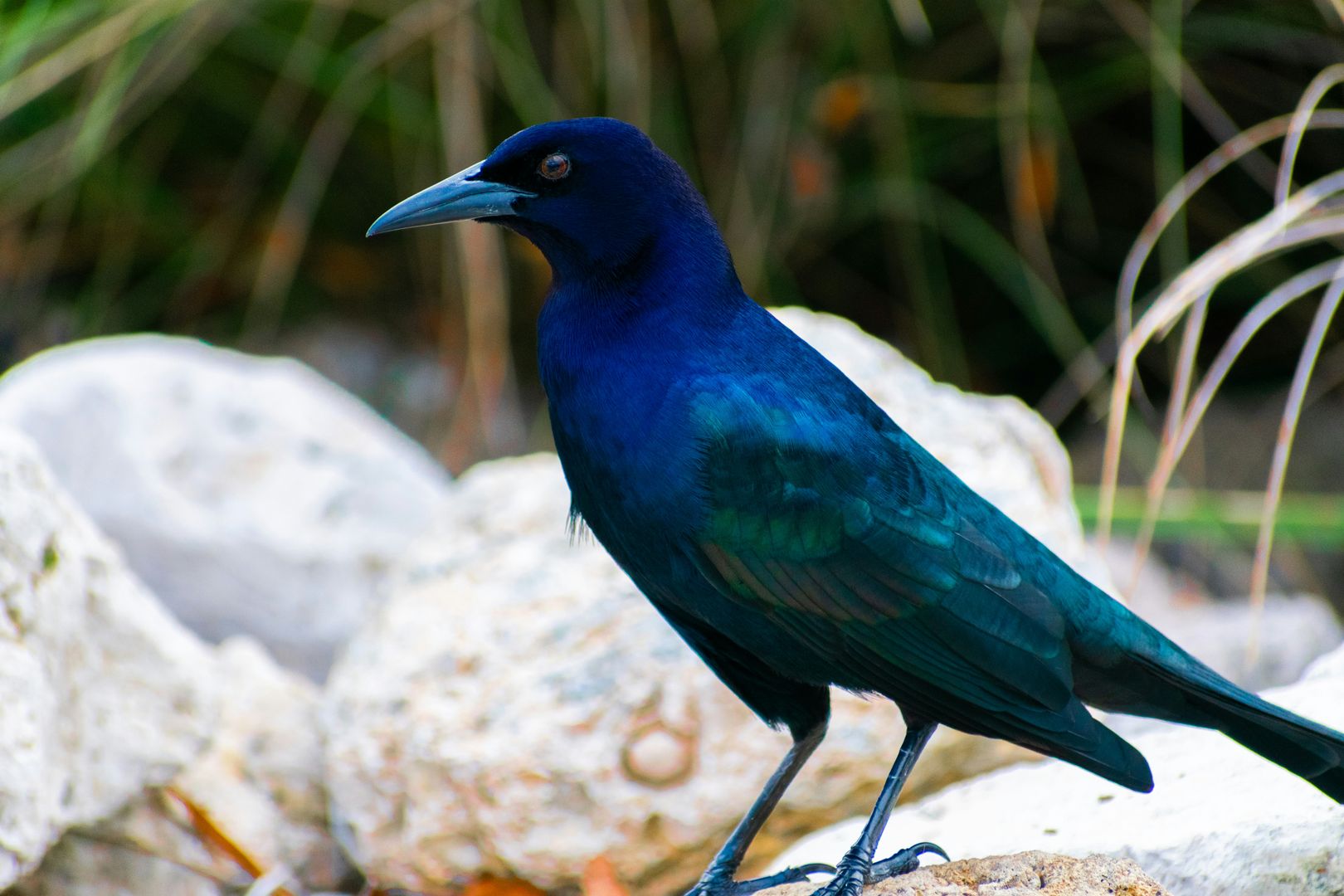
Slightly smaller than the Boat-tailed Grackle and found further inland, the Common Grackle is a social and bold bird.
They're often considered pests because they bully other birds and have been known to destroy crops.
They’re omnivores and are frequent pests at bird feeders.
They have iridescent plumage that glows purple, green, or bronze in the sun, contrasting with a bright yellow eye.
Grackle calls are a harsh, metallic squeak that sounds like a rusty gate hinge.
24. Turkey Vulture
- Family – Cathartidae
- Species – Cathartes aura
- Active – Day (Diurnal)
- Florida Resident
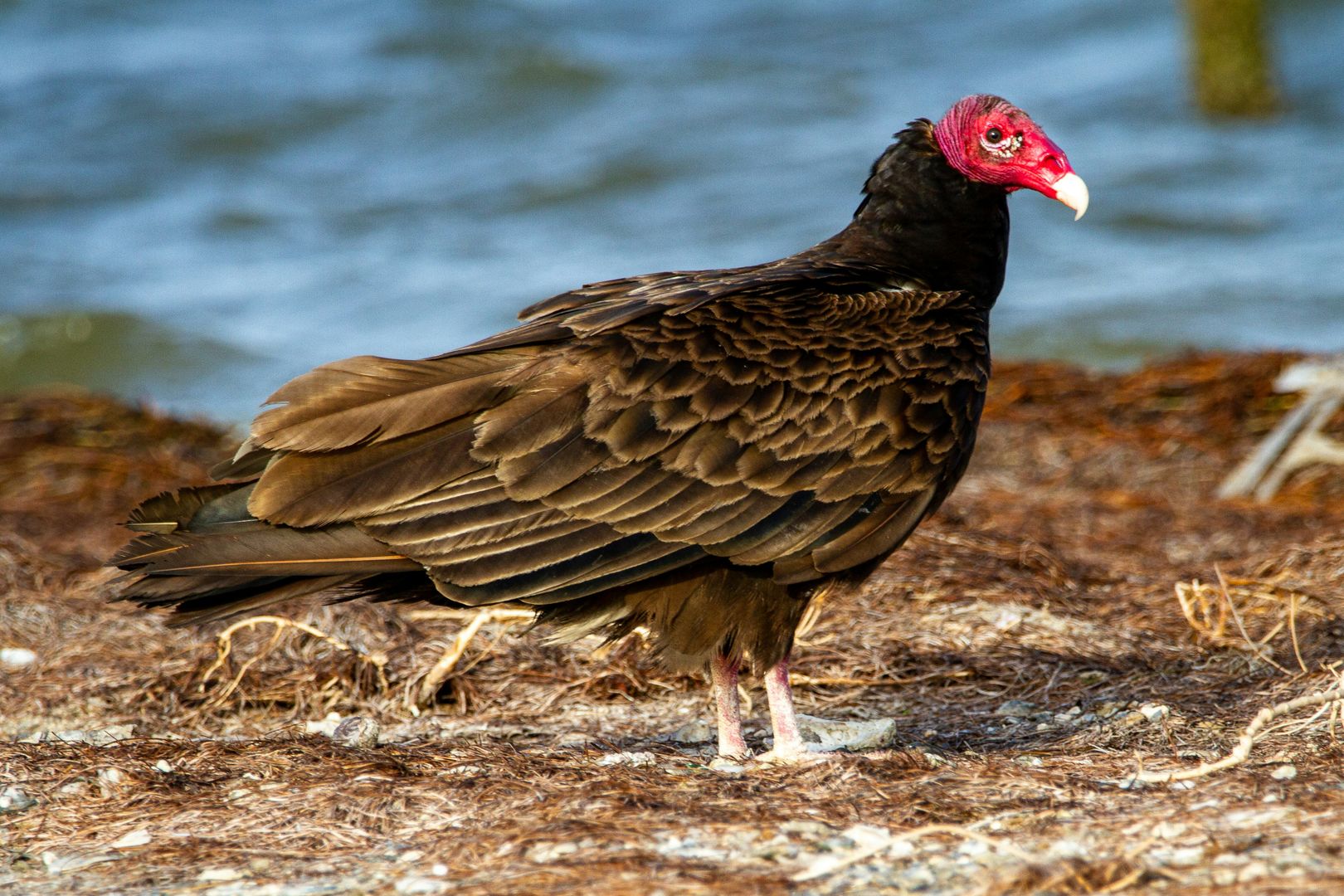
Essential to the ecosystem, Turkey Vultures are scavengers (carrion-eaters) that use their keen sense of smell—rare among birds—to find carcasses.
They are large, black-bodied birds with a featherless red head. Molting Cardinals look like them!
In flight, they hold their wings in a "V" shape (dihedral) and rock unsteadily from side to side.
Vultures are almost entirely silent, only capable of making hisses or low grunts. Here’s what they sound like.
25. Wood Stork
- Family – Ciconiidae
- Species – Mycteria americana
- Active – Day (Diurnal)
- Florida Resident
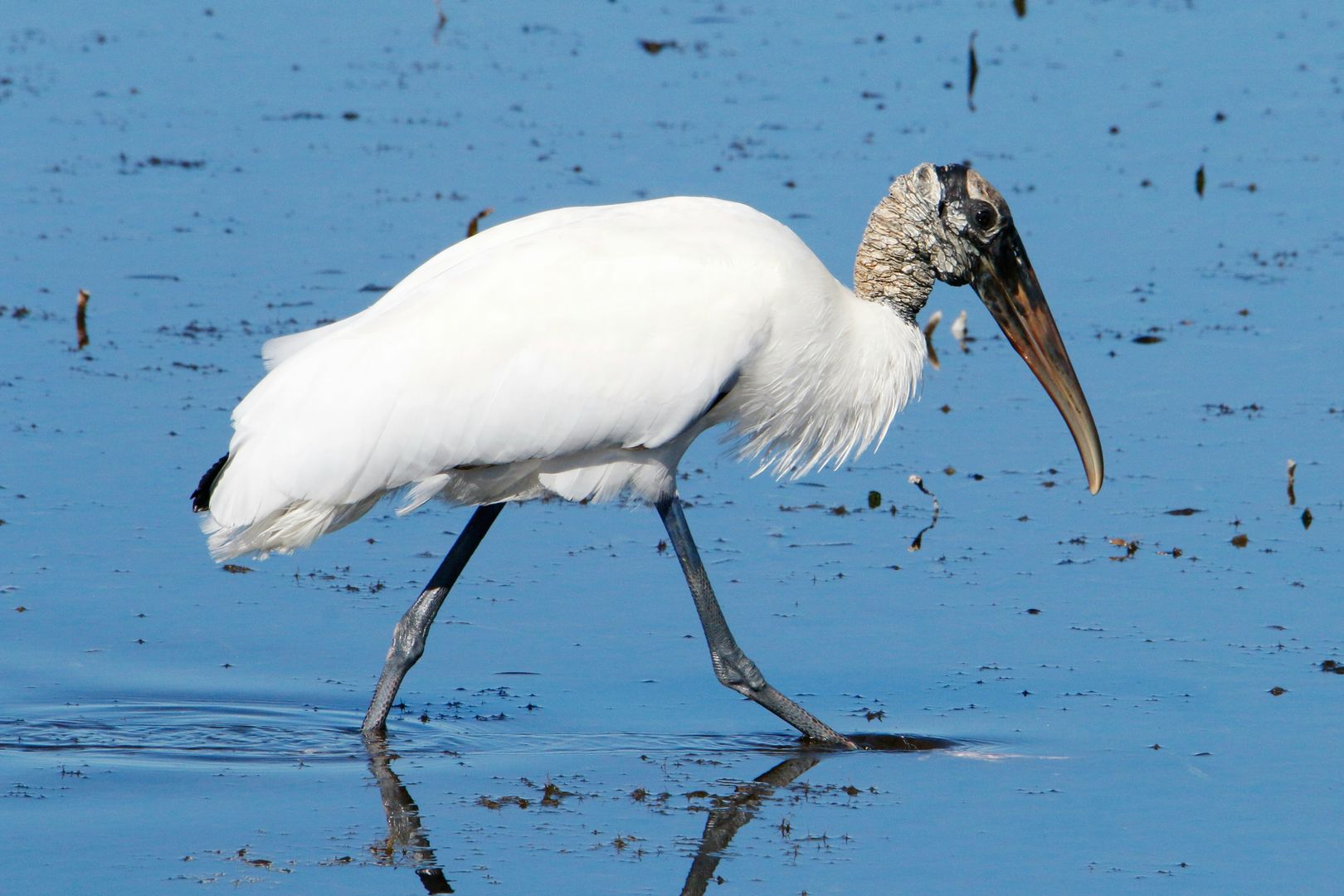
The Wood Stork is the only stork that breeds in the United States.
They’re tactile carnivores, wading with their bills open in the water and snapping them shut in milliseconds when they feel a fish.
They’re large white birds with black flight feathers and a scaly, featherless gray head and neck. Male and female Wood Storks are identical.
Wood Storks are usually silent except for nesting colonies are filled with the clattering of bills and hissing.
26. Roseate Spoonbill
- Family – Threskiornithidae
- Species – Platalea ajaja
- Active – Day, Dawn and Dusk (Crepuscular)
- Florida Resident
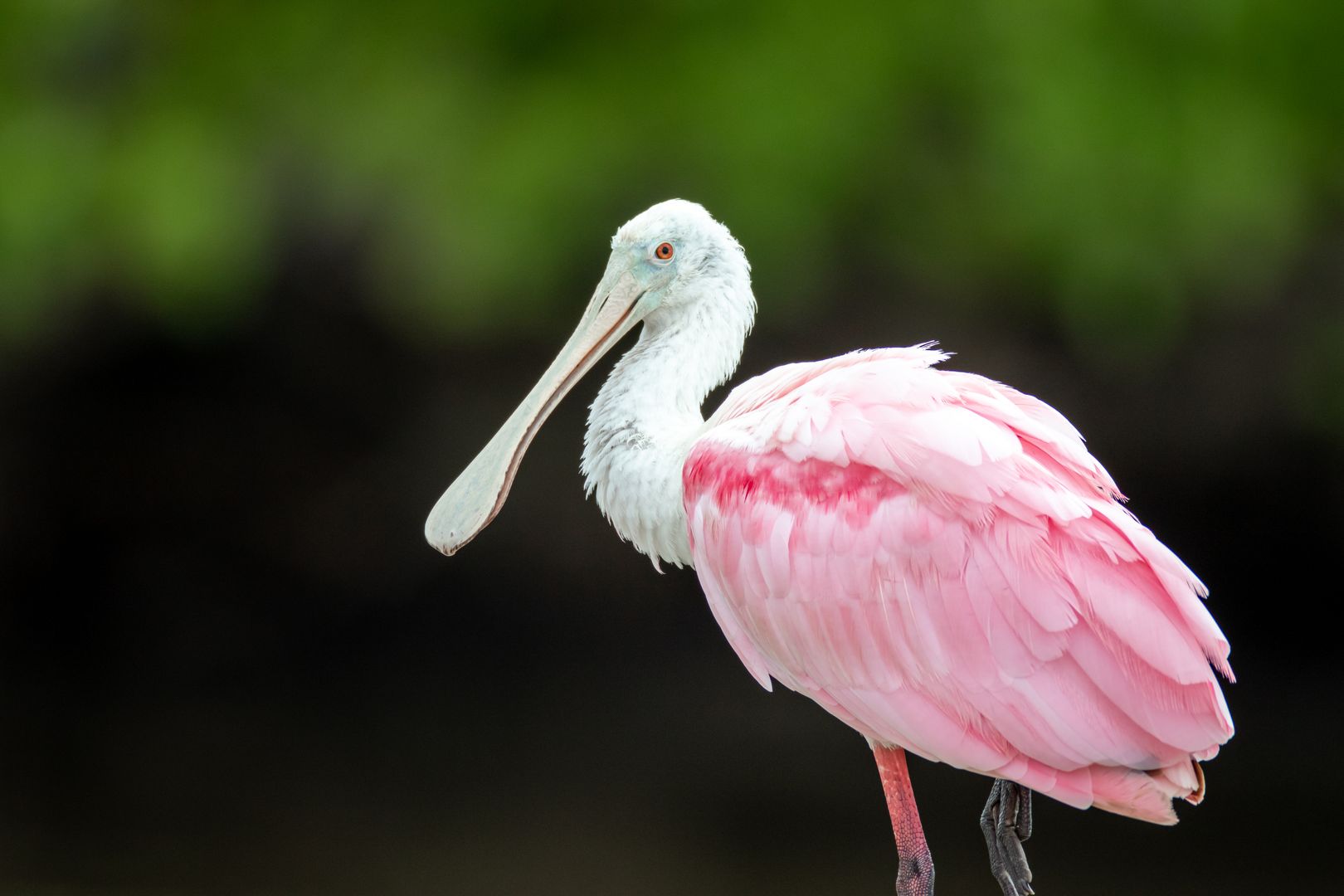
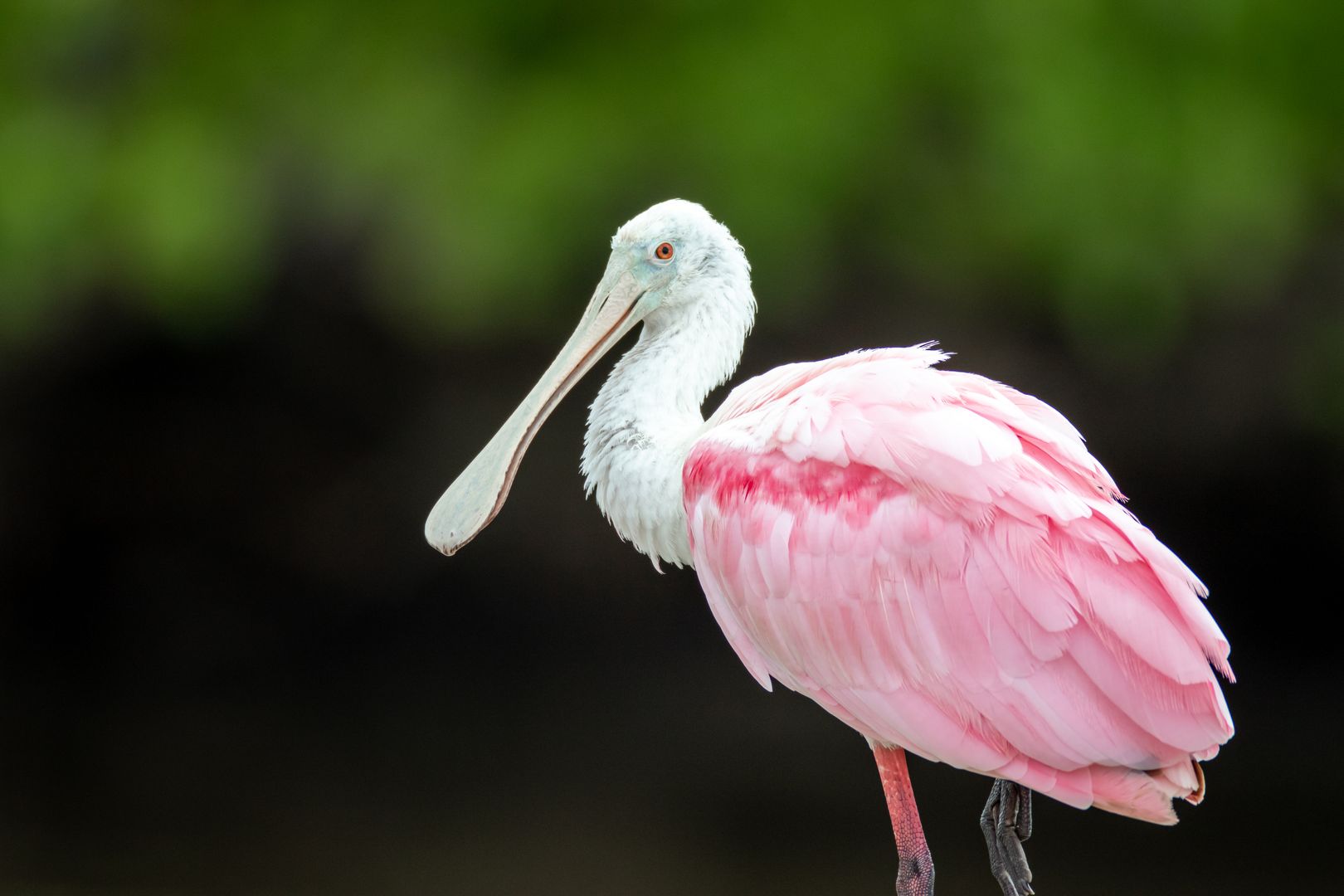
A favorite of Florida photographers, the Roseate Spoonbill gets its pink color from the crustaceans it eats.
They’re carnivorous, swinging their unique spatulate bills through shallow water to catch prey by touch.
Adults are a stunning bright pink with a white neck and a greenish, featherless head.
Their vocalizations are low, guttural croaks. They’ve uncommonly been spotted in Massachusetts!
27. Limpkin
- Family – Aramidae
- Species – Aramus guarauna
- Primary Activity Time – Day and Night
- Florida Resident (Migratory to Okefenokee Swamp in S Georgia)
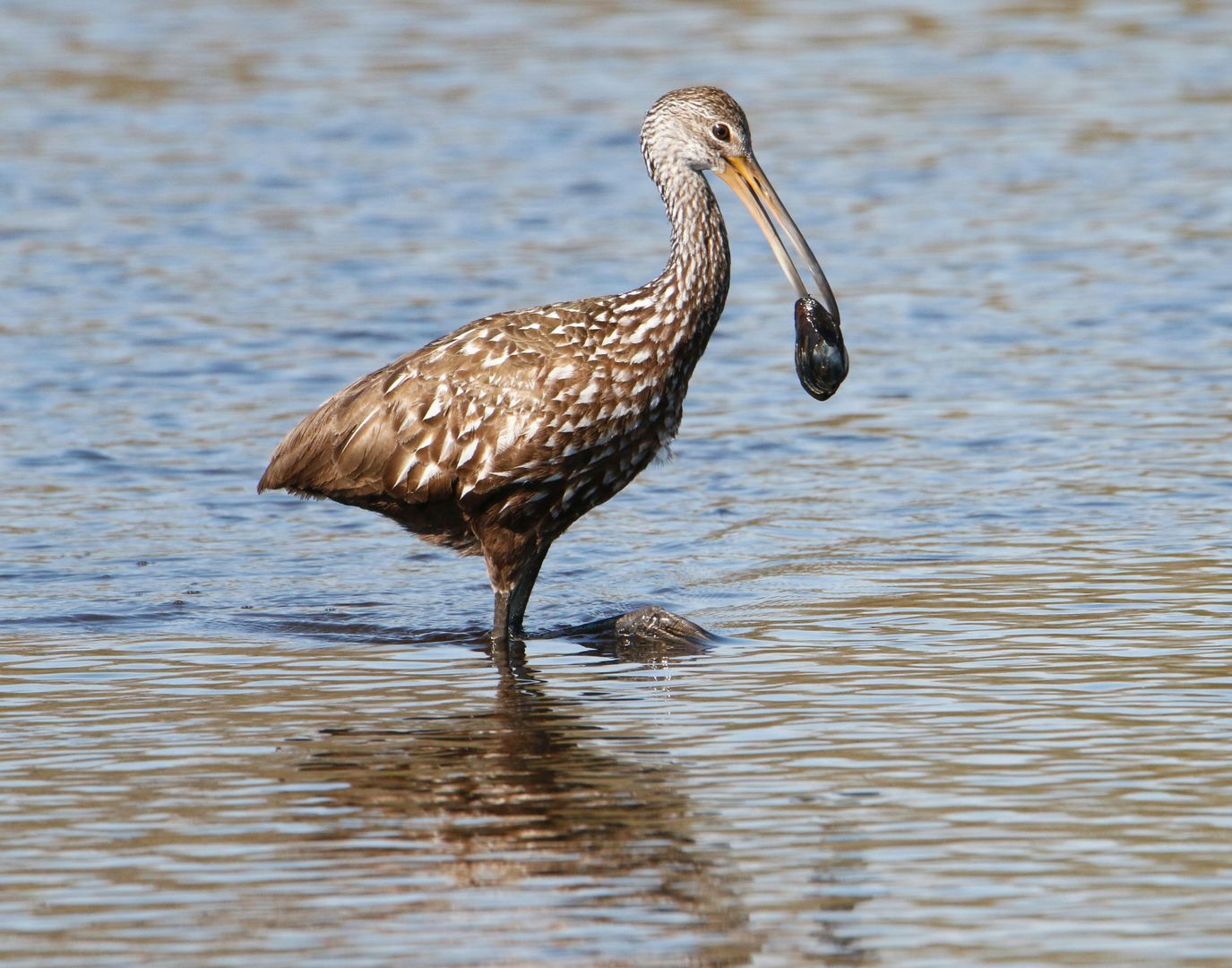
The Limpkin is a unique Florida specialty, looking like a cross between a crane and a rail.
It’s a specialist carnivore, feeding almost exclusively on large apple snails using its slightly curved bill to crack them.
They’re chocolate brown with heavy white streaking.
Limpkin calls sounds like haunting, piercing screams often heard at night in Florida swamps, described as a wailing kur-r-ee-ah!
28. Blue Jay
- Family – Corvidae
- Species – Cyanocitta cristata
- Active – Dawn and Dusk (Crepuscular)
- Florida Resident
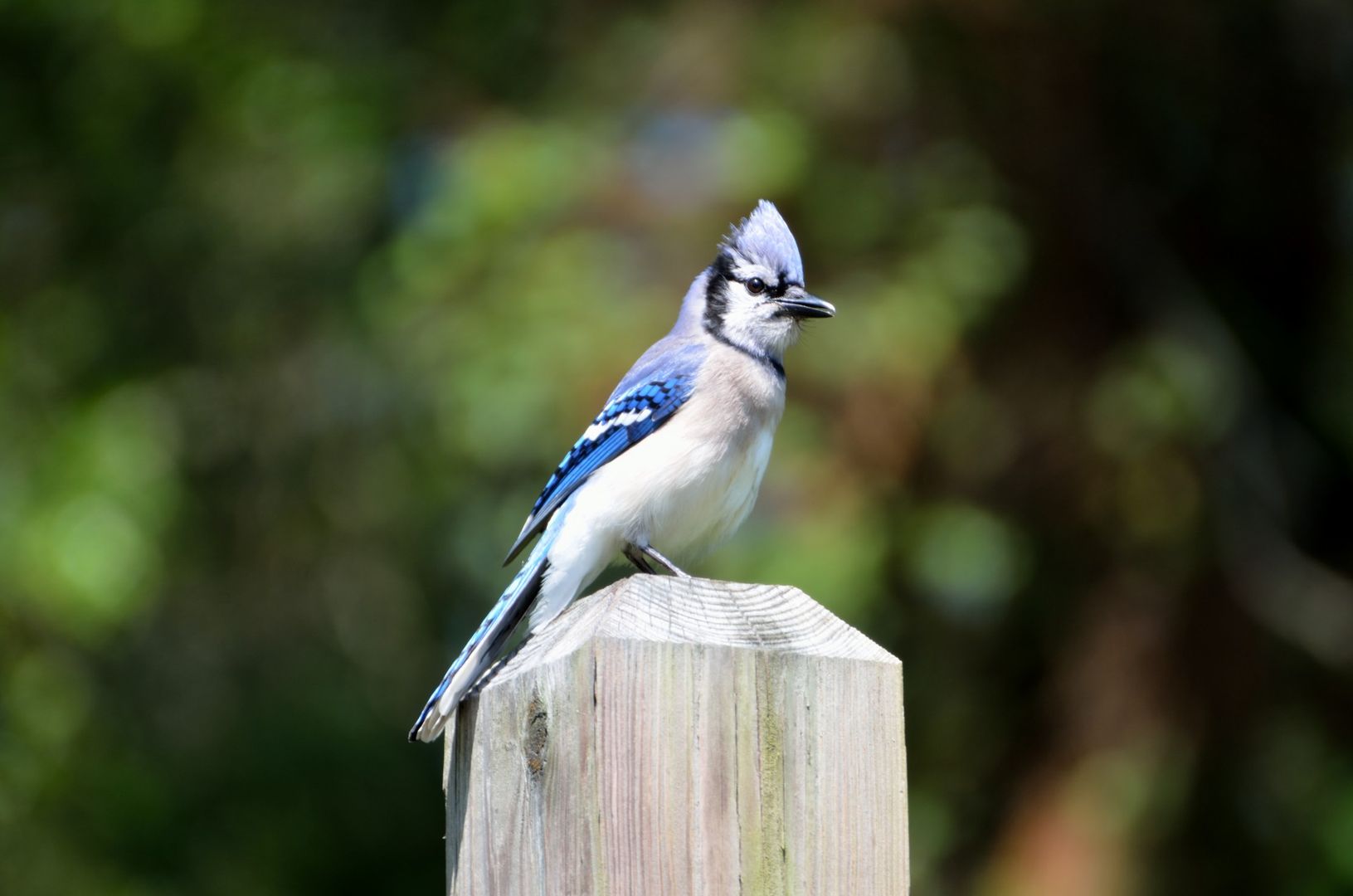
An omnivorous corvid that eats acorns, seeds, fruits, and insects. It is a regular at peanut and sunflower feeders.
Female vs Male Blue Jay: both are nearly identical with bold blue plumage and a black necklace with crisp white underparts.
One difference to tell apart the males from females is their slightly larger size.
A Blue Jay call ranges from jeer alarms to soft whistles and uncanny hawk imitation– all with a flat or falling call pattern.
29. Laughing Gull
- Family – Laridae
- Species – Leucophaeus atricilla
- Active – Day (Diurnal)
- Florida Resident
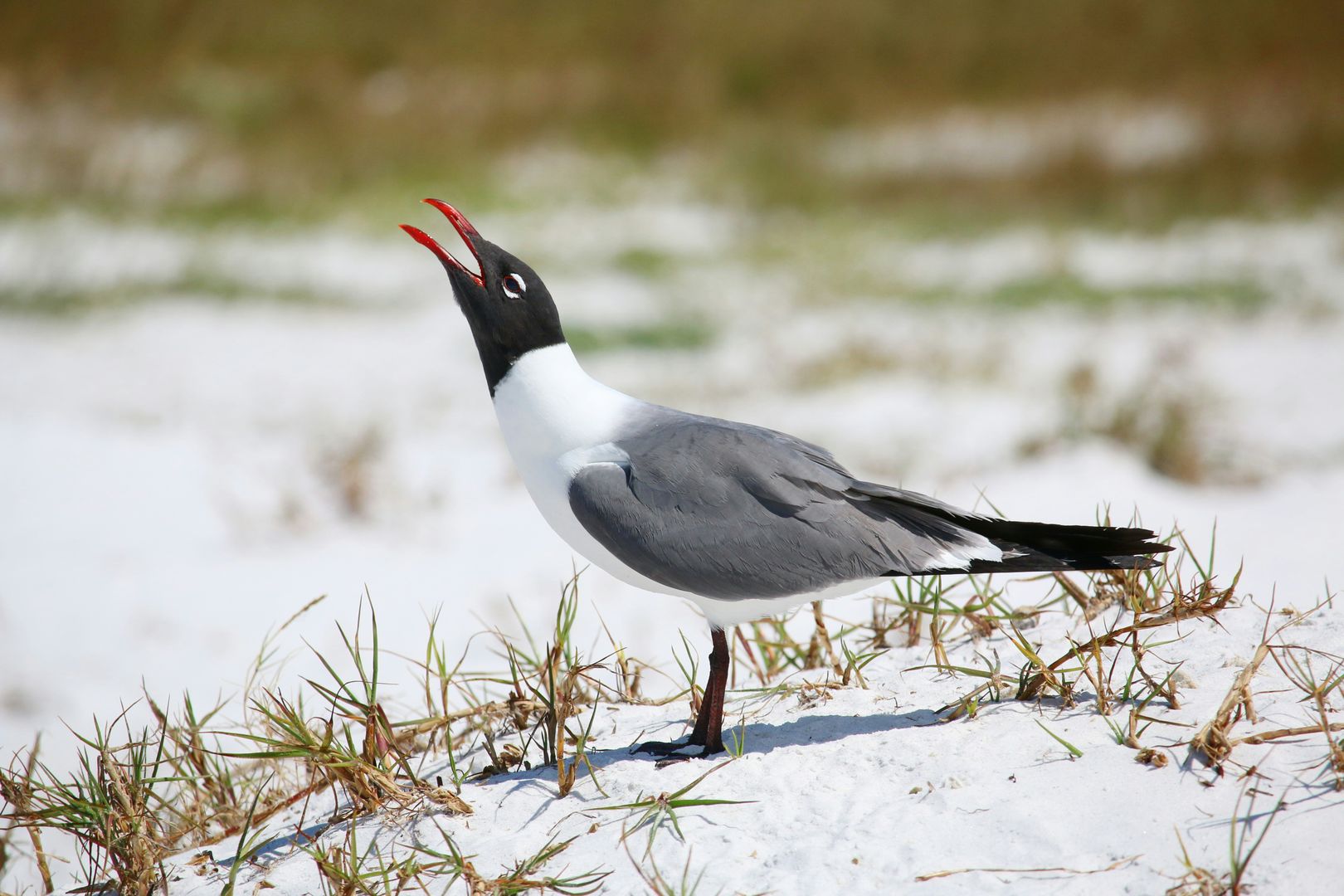
The most common gull on Florida’s beaches, the Laughing Gull is a bold scavenger and hunter. Is it as brazen as the common gull that steals the $7 slice of pizza you got at the beach? Unclear.
It's omnivorous, eating fish and insects, and frequently begs for human food.
In the summer, they have a distinctive black hood and a dark gray back. In winter, the hood disappears, leaving a white head with gray smudges.
Their call is a loud, descending series of notes that sounds like high-pitched laughter. It sounds like they’re mocking you for losing your food to a silly bird.
30. American Goldfinch
- Family – Fringillidae
- Species – Spinus tristis
- Active– Day (Diurnal)
- Migratory
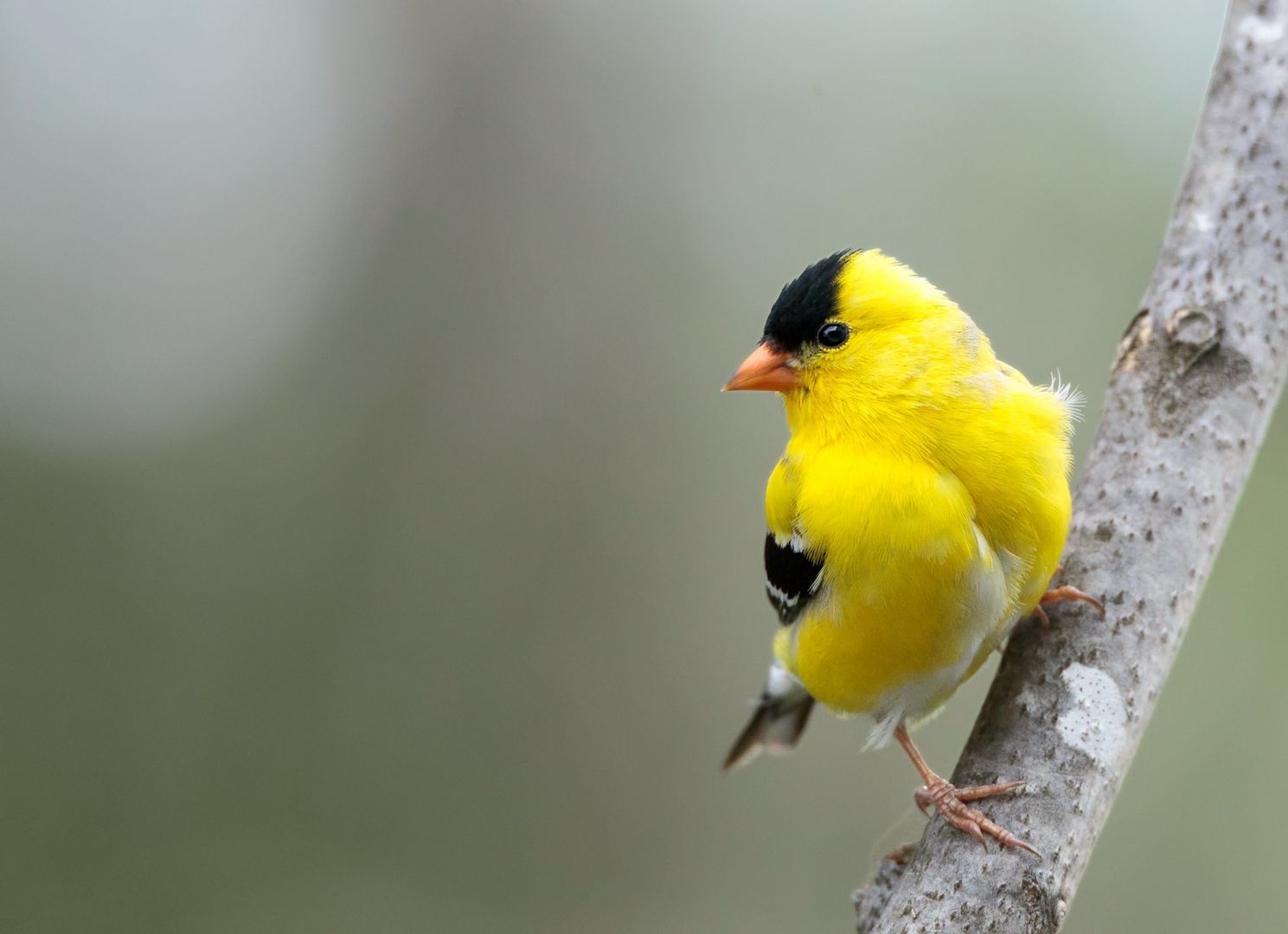
While they breed in the north, Goldfinches are common winter birds in Florida. They are strictly granivorous, specializing in small seeds from thistles and sunflowers.
In Florida winters, they appear in their "drab" plumage—an olive-brown color with black wings and white wing bars.
Their sounds are a cheerful, bouncy per-chic-o-ree given in flight.
Which is your favorite?
Let us know on the Sparkbird App! Available in the Apple App Store.
- Related: How to Use the Sparkbird App
No comments yet.