
Cardinals in winter are basically nature's holiday card: a red bird, a snowy branch, and a strong suggestion that someone should be drinking cocoa right now.

The good news is that cardinals are abundant and easy to attract. Below we'll cover where cardinals go in winter (spoiler: nowhere), what they eat, how they survive the cold, and five easy ways to get them to your feeders.
These tips are foolproof for backyard birds. They won't help the Arizona Cardinals, though. For that, we'd point them to the Buffalo Bills, who apparently love birds and could teach a thing or two about flight.
Do Cardinals Migrate? Where Cardinals Go in Winter
They don't go anywhere. Northern Cardinals are year-round residents, so the pair at your feeder in July is probably the same pair you'll see in January. As the Cornell Lab puts it, cardinals don't migrate and they don't molt into a dull plumage, so they're still brilliant red in winter's snowy backyards.
What changes is their social life. In spring and summer, cardinals pair off and defend territories. In fall and winter they relax the rules and can form flocks of a dozen to several dozen birds, often foraging alongside juncos and titmice. That's why you might suddenly see eight cardinals under one feeder in December. It's not a convention. It's just winter.
They also sing less once the breeding season ends, so your cardinals may seem quieter (but no less dramatic) until late winter, when the males start tuning up again.
How Cardinals Survive the Cold
Cardinals have a few tricks for getting through a freezing night:
- Fluffing up. Puffed-out feathers trap a layer of warm air, which is why winter cardinals look like red tennis balls.
- Shivering. Tiny muscle contractions generate heat.
- Roosting in dense cover. Cardinals sleep tucked into thick shrubs, hedges, and evergreens, out of the wind. They don't use bird houses.
- Eating a lot. High-fat, high-calorie food is what keeps that internal furnace running overnight.
What Do Cardinals Eat in Winter?
In summer, cardinals eat plenty of insects. In winter, insects are scarce, so they switch mostly to seeds and fruit: weed seeds, grains, and berries from plants like dogwood, holly, sumac, and wild grape. Cornell notes they'll eat many kinds of birdseed but black oil sunflower seed is a favorite.
That's where you come in.
5 Ways to Attract Cardinals in Winter
1. Serve the Foods Cardinals Love
The best way to attract cardinals in winter is with their favorite foods.
Black Oil Sunflower Seeds
Cardinals love this seed because it's easy to crack, and it attracts the widest variety of birds. It's high in fat and protein, which is exactly what a bird needs on a cold night.
If you're wondering how to attract cardinals this winter, black oil sunflower seeds are the best bird seed for the job.
Wagner's Black Oil Sunflower Seeds

Shelled Nuts
Shelled nuts like peanuts, pecans, and almonds make less mess, but nuts in the shell work too. Nuts are a great source of protein and fat for cardinals, especially in winter. You can also offer shelled sunflower seeds, often called sunflower hearts.
- Tip: Never feed birds or wild animals salted nuts. The salt on nuts meant for people is too much for birds.

Safflower Seeds
Safflower is the secret weapon. Cardinals love it, but squirrels and grackles tend to dislike the bitter taste, so you can cater to the birds without catering to the bullies.
Berries and Fruit
The bushes and dense shrubs that berries grow on double as natural shelter for cardinals, so planting them greatly increases your chances of cardinals sticking around. Fruiting plants that attract cardinals include arrowwood, elderberry, holly, dogwood, and beautyberry.
For a quick cardinal treat, mix blackberries, apple slices, blueberries, or mulberries in with their seed.
2. Choose a Cardinal Bird Feeder
Cardinals are foragers that naturally find seeds on the ground. They're also a bit too chunky for tiny tube-feeder perches. Tray or platform feeders and hopper feeders are the best cardinal bird feeders because they give them room to land and eat.
Platform (Tray) Feeders
Platform feeders, also called tray feeders, are shallow trays you can hang or set on the ground. Cardinals love the open space, which is close to how they forage in the wild. Ground placement does give mice and squirrels easy access, though.
DutchCrafters Amish Roof Platform Feeder
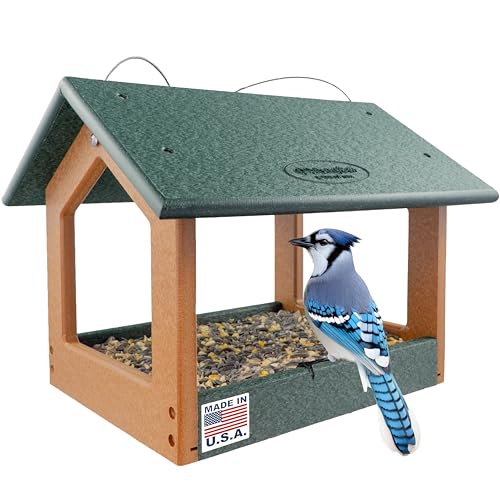
DutchCrafters Amish USA Made Recycled Plastic Large Hanging Modern Fly Through Covered Roof Open Platform Tray Bird Feeder for Outdoors, Garden, Yard (Turf Green & Bright Cedar)
DutchCrafters
This bird feeder is made in the USA (in Indiana) from durable recycled plastic that can outlast traditional wood feeders.
Hopper Feeders
Hopper feeders keep seed enclosed and dry, then dispense it onto a small tray, which is just the kind of landing pad cardinals like. Smart feeders are usually a kind of hopper feeder.

Smart Bird Feeder with 4K Camera, 3W Adjustable External Solar Panel | 1.5L Dual Seed Hopper, UHD Livestream & Videos, Easy Installation, Setup, Refilling & Cleaning, AI Bird ID & Instant Alert
Kiwibit
The Beako is a solar-powered, all-weather smart feeder with a removable battery and an IP65 waterproof rating, rated for -4°F to 122°F. The livestream doesn't require a subscription, though some features like AI species detection do.
Metal Hopper Bird Feeder with Roof

Youvip Metal Roof Bird Feeder - Chew Proof for Outdoor Hanging Wild Bird Seeds. Bronze
Youvip
A simple, sturdy hopper feeder. Reviewers call it durable, which matters when the wind knocks things around.
3. Give Cardinals a Heated Bird Bath
Unfrozen water is one of the most overlooked ways to attract cardinals in winter. Birds need water year round, and natural sources freeze.

A heated bird bath or a bird bath heater for the bath you already own keeps water open all winter. Both are thermostatically controlled, so they switch on near freezing and off again on their own. If you use a heater, keep it fully submerged.

They even make cardinal bird baths with cardinals on them. This is where I tell you not to buy one for winter: most are glass, and glass and freezing water don't get along. Save it for spring.
4. Put Your Feeder in a Safe Place
Cardinals want to feel protected while they eat. Place feeders near natural cover like shrubs, where small birds can dart for safety, but away from perches a hawk could use to ambush them.
Either keep feeders very close to windows or about 10 to 15 feet away from the house to reduce window strikes.
Did you know?
Birds can't tell what windows are, which makes them easy to crash into. If your feeders have to sit near glass, add anti-collision decals so birds can see it.
Anti-Collision Decals for Windows

WindowAlert Modern Dots UV Reflective Window Decals, 30 Pack for Birds | 30 UV-reflective window decals help deter wild birds from glass collisions and appear frosted to humans, made in the USA.
WINDOWALERT
5. Plant Natural Food and Shelter
Natural shelter is a must for cardinals because they don't use bird houses. They're open nesters that build in shrubs, thickets, and small trees, and in winter they roost in the same kind of dense cover.
Plant hedges, shrubs, and fruiting plants like holly, juniper, arrowwood, and spruce in spring once the ground thaws. They'll attract cardinals and make your yard prettier at the same time.
Cardinal "Sins" to Avoid
A pun I couldn't pass up, and a few common mistakes that keep cardinals away without you realizing it.
1. Chemicals and pesticides
Weed killers and mosquito sprays don't stay where you put them. Many harm birds directly, and they wipe out the insects cardinals feed their chicks in spring.
2. Feeders where predators (and squirrels) can reach them
The best cardinal bird feeder is one that's safe from predators. Use natural cover and predator guards, and keep feeders away from branches squirrels can launch from.
Squirrels are the feeder's natural nemesis. Growing up, ours got so bold that one dropped through the light fixture over the kitchen sink while we were doing dishes. People go to great lengths to outsmart them.
3. Unstable feeders
The second-best cardinal bird feeder is a sturdy one. If you use a pole, sink it deep and add stakes or sandbags, and bring feeders in when serious wind is on the way.
4. Frozen bird baths
A bird bath only helps cardinals in winter if it's unfrozen. A deicer is inexpensive and safe. You'll probably need an outdoor extension cord because the cords are short.
Bird Bath Deicer with Auto Shut-Off

1 Pack Upgrade Bird Bath Heater for Outdoors in Winter, Pond Deicer 60 Watts Birdbath Deicer Water Heater Thermostatically Controlled with Auto Shut off Function for Patio Lawn (Frosted Gray)
Saillong
A multipurpose deicer with an auto shut-off at 95°F. For more ideas, see how to keep a bird bath from freezing.
Cardinals in Winter FAQ
Do cardinals migrate in winter?
No. Northern Cardinals stay put all year. They do roam a little more widely in winter to find food and often join small flocks, which is why you may see more of them at once.
What do cardinals eat in winter?
Mostly seeds and fruit. In the wild, that means weed seeds, grains, and berries like dogwood and holly. At feeders, their favorites are black oil sunflower and safflower seeds, plus shelled peanuts.
Why do cardinals flock together in winter?
Once breeding season ends, they stop defending territories. Feeding in a group helps them find food and spot predators, so it's common to see a dozen or more together in winter.
Where do cardinals sleep at night in winter?
In dense shrubs, thickets, hedges, and evergreens, tucked out of the wind. They don't use bird houses or roosting boxes, so thick plantings are the best shelter you can offer.
Are cardinals still red in winter?
Yes. Cardinals don't molt into duller winter feathers, so males stay bright red all year. Females keep their warm tan color with red accents.
The Best Bird Watching App for Community
Download the Sparkbird App in the Apple App Store for more bird watching tips, local birding groups, and community. And if a cardinal keeps attacking your car mirror, don't take it personally. He's just fighting the only bird in the neighborhood who's better looking than he is.
- Related: How to Use the Sparkbird App

No comments yet.