
Bird baths are essential for attracting birds year round, and a bird bath heater is the difference between a winter water source and a very expensive ice sculpture.

Your local birds will thank you for using a bird bath heater in cold weather. (No cold plunges here. We're not running a wellness retreat for chickadees.) Below are the four heaters we'd actually buy, how to choose the right one, and how to run it safely without your electric bill doing a Jaws impression.
What Is a Bird Bath Heater?
A bird bath heater, also called a bird bath deicer, is a small heating element that sits in the bowl of the bird bath you already own. It keeps the water warm enough not to freeze but cool enough for birds to drink and bathe in safely.
Almost all of them are thermostatically controlled. A built-in sensor turns the heater on when the water nears freezing and off again once it's warm enough, so you don't have to babysit it. Some models switch on around 35°F, and most shut off well before the water gets anywhere near hot (no parboiled chickadees).
That's the whole job: keep the water liquid, not warm. As the Cornell Lab notes in its guide to attracting birds with birdbaths, many manufacturers now build thermostatically controlled heaters right into the bath, but a standalone heater lets you winterize the one you've got.
Bird Bath Heater vs. Heated Bird Bath
They solve the same problem in different ways.
- Bird bath heater (deicer): a separate unit you drop into an existing bath. It's cheaper, it moves with you, and most also work in livestock troughs, pet bowls, and duck pools.
- Heated bird bath: the heating element is built into the basin. There's no loose cord in the water and nothing to set up, but you're buying a whole new bath.
If your current bath is plastic, resin, or metal and you're happy with it, a heater is the reduce-and-reuse move. If your bath is concrete, ceramic, or glass, it may crack in a hard freeze whether it's heated or not, so it's worth reading our roundup of the best heated bird baths for winter first.
Why Use a Bird Bath Heater?
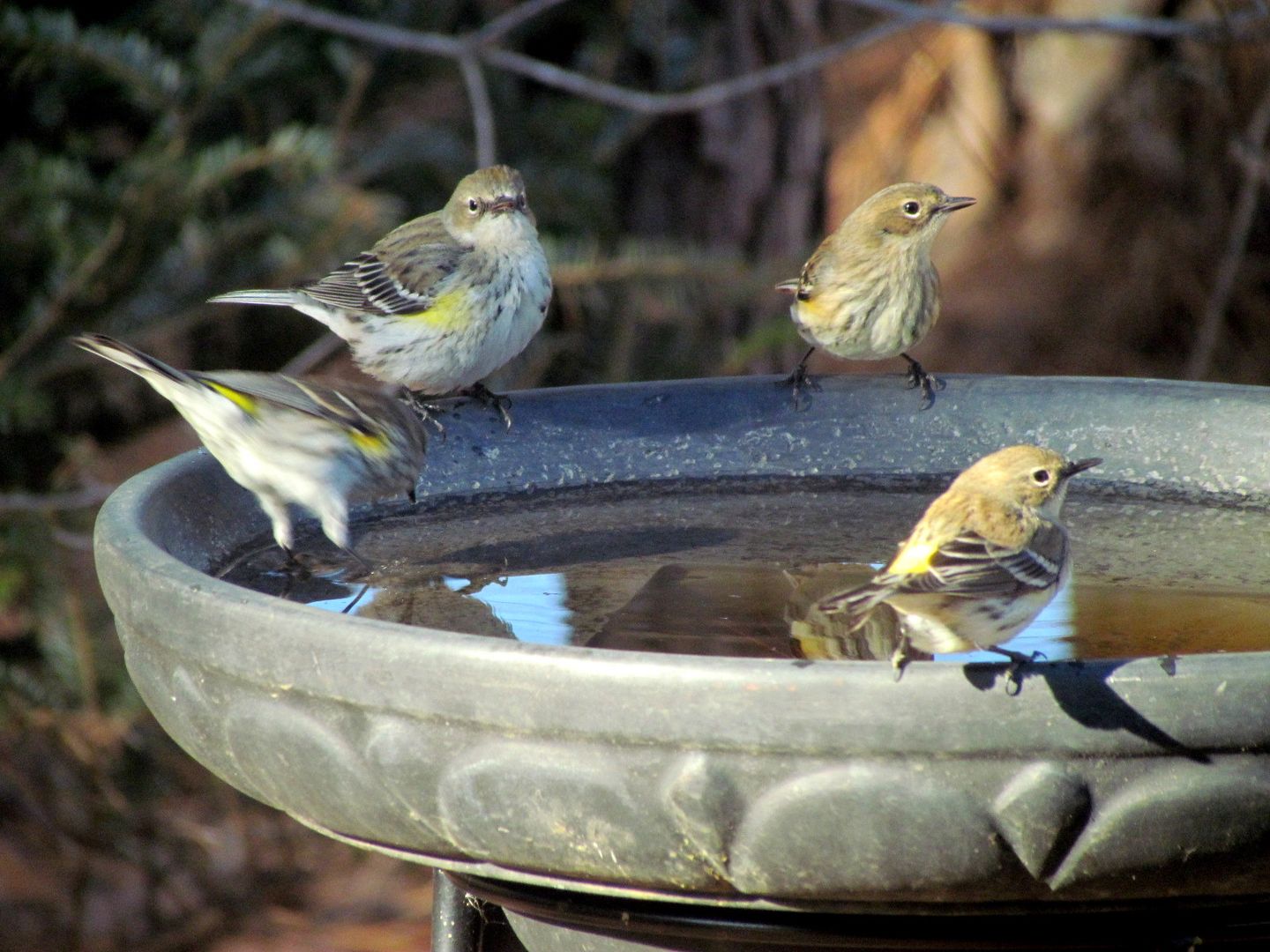
Unfrozen water is hard for birds to come by in winter, but they still need to drink. The National Wildlife Federation puts it simply: water is just as important in the cold months as it is during summer.
A bird bath with open water in a frozen yard is an oasis in a frozen desert. Limited water sources create demand, and you're the supply. It's one of the easiest ways to bring birds to your yard that skip your feeders entirely, like robins and bluebirds.
"I live in a warm climate. Should I use a bird bath heater?"
Probably not, and we'd rather you keep the money. If your water only freezes a few nights a year, a morning top-up with warm (not boiling) water does the job. A heater earns its keep where ice is a weekly event, not a novelty.
How to Choose a Bird Bath Heater
Five things matter. Everything else is marketing.
- Wattage. Most bird bath heaters run between about 50 and 150 watts. Small and shallow baths do fine at the low end; a wide basin in a windy, single-digit yard needs more.
- Thermostat range. Look for one that turns on near freezing and shuts off on its own. Check the lowest temperature it's rated for if your winters get serious.
- How it sits in the bath. Most deicers must be fully submerged to work safely. That makes depth matter: a heater needs enough water to cover it, and birds want only an inch or two. A sloped bowl handles both.
- Bath material. Check the manual. Some heaters are rated for plastic, concrete, and ceramic bowls; others say otherwise.
- Cord length and safety listing. Short cords are the norm, so plan for an outdoor-rated extension cord. A UL, CSA, or MET safety listing is a good sign the whole unit was tested, not just its parts.
4 Best Bird Bath Heaters and Deicers
1. K&H Super Ice Eliminator

K&H Bird Bath Heater, Super Ice Eliminator, Safety Listed, Natural Rock 80W | Bird Bath Heaters for Outdoors in Winter, Deicer for Wild Birds Outside in Winter, Thermostatically controlled, Paintable
K&H Pet Products
The name-brand pick, and the one we'd buy for a cold yard. It's shaped like a rock, so it looks less like an appliance someone dropped in your bird bath.
- 80 watts
- keeps water open down to about -20°F, per the maker
- thermostatically controlled
- safety certified by MET Labs, with a three-year limited warranty
- enamel finish wipes clean
2. Heavy Duty Bird Bath Deicer Heater

GESAIL Bird Bath Heater for Outdoors in Winter, Birdbaths Deicer with Thermostatically Controlled, Made of Heavy Duty Premium Cast Aluminum, Perfect for Patio Yard and Lawn Cream
GESAIL
A heavy duty, rust-free bird bath heater for metal and non-metal bird baths.
- heavy duty cast aluminum
- 25-inch cord
- must be submerged to use
- 50 watts, 120 volts
- anti-rust coating
3. Bird Bath and Pond Deicer

1 Pack Upgrade Bird Bath Heater for Outdoors in Winter, Pond Deicer 60 Watts Birdbath Deicer Water Heater Thermostatically Controlled with Auto Shut off Function for Patio Lawn (Frosted Gray)
Saillong
A multipurpose deicer with a higher auto shut-off temperature at 95°F, which makes it a good fit for ponds, ducks, chickens, and more.
- 3-foot cord
- auto shut-off at 95°F
- 5 colors
- 60 watts, 120 volts
- suitable for small animals
4. API Bird Bath De-Icer

The simple, no-nonsense option from a long-time bird bath brand.
- built-in thermostat, so it only runs when the water needs it
- designed for pottery, plastic, or concrete bird baths
- stainless steel guard over the heating element
- UL and CSA listed
- very short 15-inch cord, so you'll need an extension
Honorable Mention: Farm Innovators Heated Bird Bath Tray
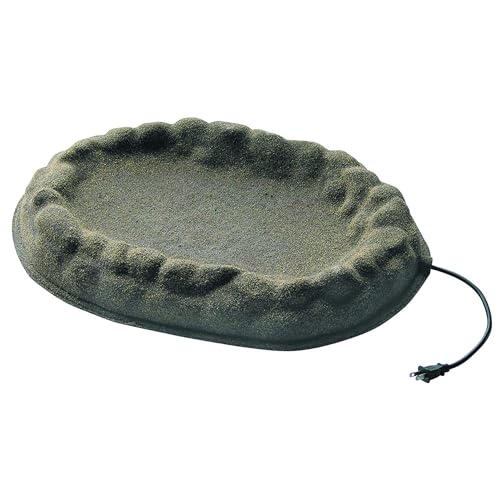
Farm Innovators Heated Bird Bath, Four Seasons Outdoor Decor Shallow Bath Tray for Birds - Backyard & Garden Birdbath with Sand Coated Design
Farm Innovators, Inc.
This is a heated bird bath, not a bird bath deicer. It earned a spot on the list because of how well it blends into a yard.
- sits on the ground
- friendly to larger birds and fowl
- decorative rock-style design
- hidden electrical connection, so you can tuck it away in spring
How to Use a Bird Bath Heater Safely
Water and electricity have a famously rocky relationship. A few rules keep it civil.
- Plug into a GFCI outlet. The Cornell Lab recommends plugging your heater into a ground-fault interrupted circuit to eliminate the chance of electric shock. Most newer outdoor outlets already are; the ones with the little "test" and "reset" buttons.
- Use an outdoor-rated extension cord, keep the plug connection out of puddles and snow, and don't daisy-chain cords.
- Never let it run dry. Heaters can overheat or malfunction without enough water. Top the bath up every morning, because heated water evaporates faster than you'd think.
- Keep the water plain. Never add antifreeze, salt, or glycerin. Cornell says antifreeze is poisonous to all animals, and glycerin can mat feathers and leave a bird open to hypothermia.
- Keep cords away from perches. Birds and squirrels will chew or stand on anything.
How Much Does a Bird Bath Heater Cost to Run?
Less than most people expect. An 80-watt heater running nonstop for a month uses about 58 kilowatt-hours.
At the U.S. Energy Information Administration's projected 2026 residential electricity price of roughly 18 cents per kilowatt-hour, that's about $10 a month, and that's the worst case. A thermostat only runs the heater when the water is near freezing, so most months come in well under that.
Keep It Clean
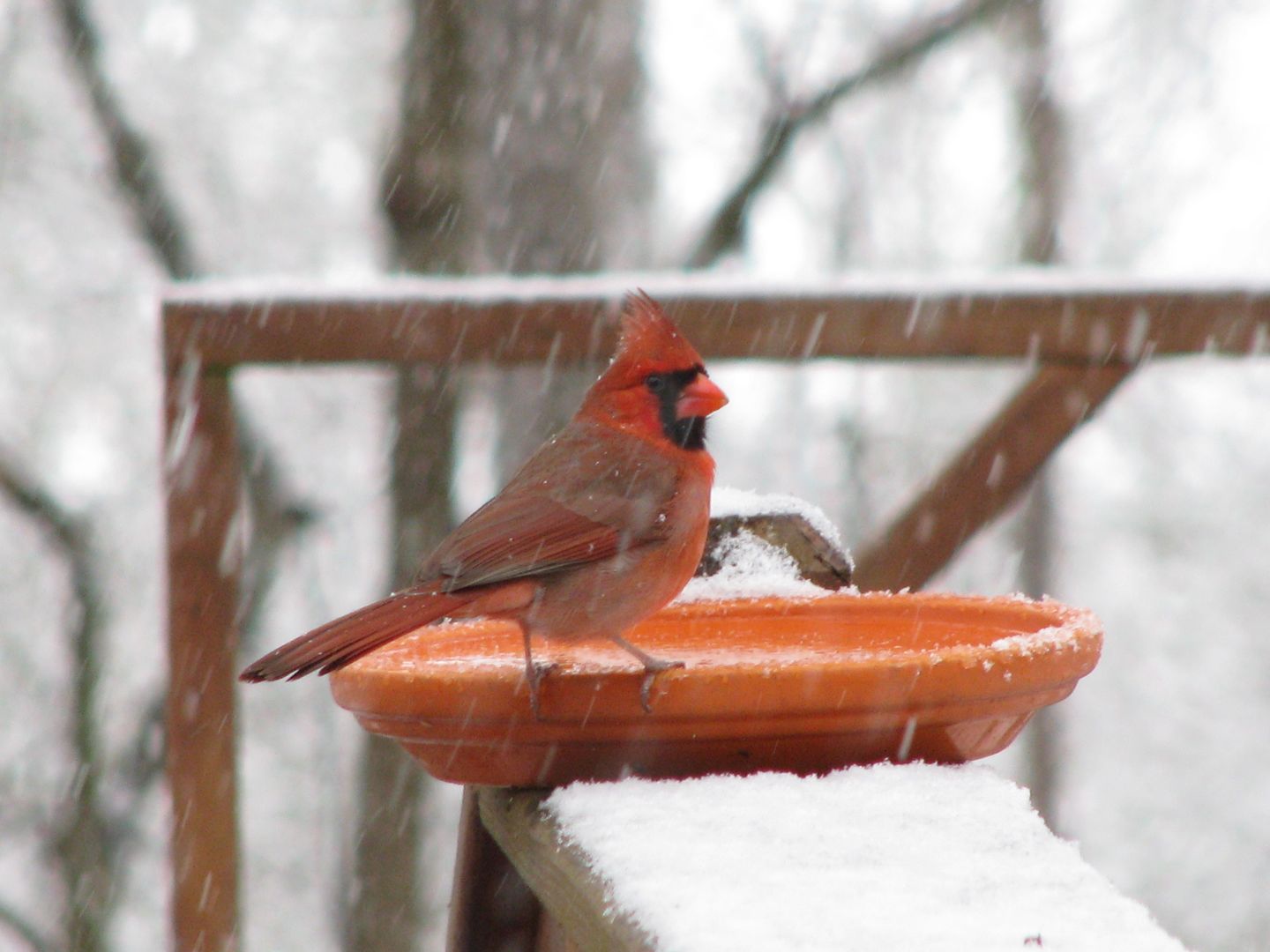
Heated water stays open, which also means it stays busy. Audubon recommends you replace bird bath water daily or every other day and give it a regular scrub with a vinegar solution. Unplug the heater before you clean, and if you need a refresher, here's how to clean a bird bath safely.
Not ready to plug anything in? Our guide on keeping a bird bath from freezing covers the free and low-tech options, and the homemade solar bird bath heater post covers the DIY ones.
Bird Bath Heater FAQ
How much electricity does a bird bath heater use?
Most bird bath heaters use between about 50 and 150 watts while they're running. It's usually a few dollars a month, and about $10 a month for an 80-watt heater even if it never shut off. You can also opt for a solar bird heater.
Can I leave a bird bath heater on all the time?
Yes, as long as it's thermostatically controlled, fully submerged, and plugged into a GFCI outlet.
How warm should bird bath water be?
Just above freezing is plenty. Birds need liquid water, not a hot tub.
Do birds use bird baths in winter?
They do, mostly for drinking. The U.S. Fish and Wildlife Service notes that birds won't bathe when it's chilly, but fresh drinking water is essential, and open water can be scarce once ponds and puddles freeze.
What's Your Bird Bath Look Like?
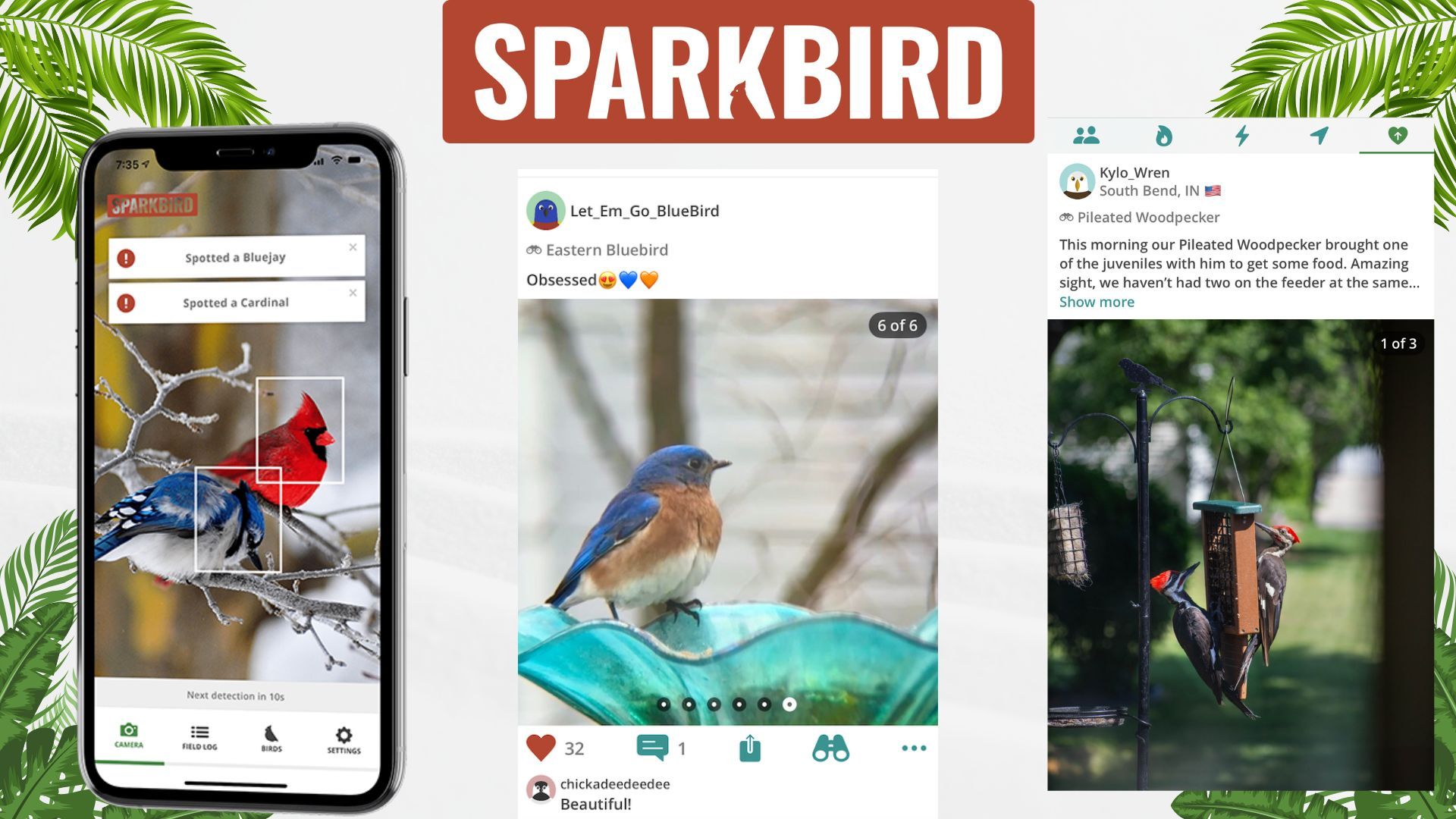
Share it on the Sparkbird App, available in the Apple App Store. Bonus points if you catch a robin looking smug about having the only open water on the block.
- Related: How to Use the Sparkbird App

No comments yet.