
Georgia has roughly a dozen standing bird clubs and 159 counties, the 2nd highest county count in the country, which means a Georgia birder can cross three county lines before the thermos runs out.
The good news is that the bird watching groups in Georgia are cheap. And the biggest organization in the state runs its field trips free and open to anyone, member or not.Whether you want Painted Buntings on a coastal refuge in June or warblers dropping into Kennesaw Mountain on a May morning, there is a group within reach.
Why Join a Bird Watching Group at All
Solo birding has obvious appeal. Nobody rushes you, nobody sees you spend nine minutes on a bird that resolves into a Northern Mockingbird, and you can leave when you want.
What a club gives you is a person who already knows where the birds were on Tuesday. That matters more in Georgia than most places, because the state stacks 6 ecoregions between the Blue Ridge and the salt marsh, and the birds move through all of them on different schedules.
Clubs are also the front door to community science. The Christmas Bird Count has been collecting data since 1900, runs December 14 through January 5 every season. Nearly every circle is organized by the clubs.
One thing to do before you spend money. A decent pair of binoculars for birding runs $150 to well over $500, and you don't need to buy any of them yet. Birds Georgia states plainly that beginners can borrow binoculars on a field trip if they arrange it with the trip leader in advance.
Statewide Bird Watching Groups in Georgia
Birds Georgia
The largest bird organization in the state, founded in 1926 as the Atlanta Bird Club and celebrating its centennial in 2026. If you are looking for Atlanta Audubon Society, this is it: the old atlantaaudubon.org address now redirects here. Birds Georgia describes itself as an independent partner of the National Audubon Society rather than a chapter, and it serves the whole state.
Field trips are free and open to the public unless a trip says otherwise, no membership required, but registration is required and opens two months before each trip because they fill. Some destinations charge their own entry or parking fee. Membership is optional and runs $15 for juniors, $25 for students, $40 individual, and $60 family. The organization also runs a six-week Master Birder Program twice a year, in spring and fall migration, and quarterly free public meetings at Manuel's Tavern in Atlanta from 3:30 to 5:30 p.m.
Georgia Ornithological Society
Founded in December 1936 by 22 members of the Atlanta Bird Club and the Georgia contingent of the American Ornithologists' Union, with Herbert Stoddard as its first president. GOS is the scientific society rather than a walk-leading club, publishing The Oriole and the GOShawk newsletter and funding graduate research and conservation grants out of a bequest from member Bill Terrell.
Worth correcting a common assumption: GOS does not hold spring meetings any more. Its recent pattern is a winter meeting at Tybee Island and a fall meeting at Jekyll Island, and both function as multi-day field trip weekends. The 2026 fall meeting is set for Jekyll Island. Dues are $20 for students, $35 individual or family, and $50 patron.
Georgia Checklist and Records Committee
The GOS committee that acts as the clearinghouse for what counts as a Georgia bird. It validates reports, keeps the permanent records, and maintains the Official State List across Regular, Provisional and Hypothetical categories. If you find something on the review list, last revised in November 2023, you submit a rare bird report form to the committee secretary rather than assuming eBird will sort it out.
Audubon in Georgia, and What Happened to It
There's no Audubon Georgia state office to join. National Audubon's own "Audubon Near You" state directory shows no Georgia state office, and the ga.audubon.org and se.audubon.org addresses no longer resolve. What Georgia's got instead is Birds Georgia operating statewide as an independent partner, plus 6 independent local Audubon societies. If you find a page telling you to contact Audubon Georgia, it is out of date.
Bird Watching Groups in Metro Atlanta
Southern Wings Bird Club - Lawrenceville / Gwinnett County
A Gwinnett County club that has met on the second Monday of the month at 7:00 p.m. at the Gwinnett Justice and Administration Center on Langley Drive, with a Zoom option. Dues were last posted as $15 individual and $20 family. Read that in the past tense on purpose: the club's old website has not been updated since December 2020, and the Georgia Ornithological Society now lists a Facebook group rather than that site as the club's home. Confirm the meeting is happening before you drive to Lawrenceville.
Greater Atlanta Gay and Lesbian Birders - Metro Atlanta
An Atlanta-area group with no website. GOS lists it on its Georgia birding clubs page with a direct email contact, which is currently the only published way in.
Chattahoochee Nature Center - Roswell / Fulton County
Not a club, but 127 acres on the Chattahoochee with trails, a wildlife clinic, and a spot on Birds Georgia's own list of metro birding sites. Admission is $20 for adults, $16 for seniors and students, and $14 for children, open Monday through Saturday 10 a.m. to 5 p.m. and Sunday noon to 5 p.m. An easy first outing if you are not ready to commit to anything.
Bird Watching Groups in North Georgia and the Blue Ridge
The mountains are the thinnest part of this directory, and it would be dishonest to pad it. There is no standing bird club with a public website between Dalton and the North Carolina line. What there is: the Blue Ridge, Dalton, Carters Lake and Amicalola Falls Christmas Bird Count circles, each with a named compiler you can email, and the two centers below.
Elachee Nature Science Center - Gainesville / Hall County
A nature center in the Chicopee Woods with trails and a "Wild Wisdom" speaker series that regularly covers birding. Admission is $10 per person for ages four and up with a $50 family maximum, and parking is a separate $5 per vehicle charged by the Chicopee Woods Area Park Commission. Open Wednesday through Friday noon to 3 p.m. and Saturday 10 a.m. to 4 p.m., closed Sunday through Tuesday. The narrow hours catch people out.
HawkTalk - Canton
A raptor-focused nonprofit on Union Hill Road that does education programming with non-releasable hawks, owls, eagles, falcons, kites and ospreys, plus hacking work for birds going back to the wild. Programs come to schools and community events rather than running as field trips, but it is the most reliable way to get close to a north Georgia raptor.
Bird Watching Groups in Middle Georgia
Ocmulgee Audubon Society - Macon
Middle Georgia's Audubon chapter, with field trips historically running to the Oconee River Greenway, Central City Park, the Wesleyan Arboretum and Lockerly Arboretum. Be aware of what you are clicking: the blog linked above is the club's own site and its last post is from September 2020. GOS now points to the club's Facebook page instead. The most current proof of life in Macon is the Macon Christmas Bird Count, run every December by the same compilers for years, listed with contact details on the GOS count page.
Bird Watching Groups in Augusta and the East
Augusta-Aiken Audubon Society
Covers the Central Savannah River Area on both sides of the state line, Augusta and Aiken together. The club states on its own site that birding and field trips are free to the public and that all are welcome, with no membership requirement to join a walk. The site's most recent visible content dates to 2024, so check the schedule before making the drive. The Augusta Christmas Bird Count runs in late December.
Oconee Rivers Audubon Society - Athens / Clarke County
Meets the first Thursday of the month at 7:00 p.m. at the Sandy Creek Nature Center on Old Commerce Road in Athens. The site carries a current copyright and an active welcome to new members. Athens also hosts its own Christmas Bird Count in December, and the State Botanical Garden of Georgia in Athens hosts the main event of Birds Georgia's Fall Flyway Festival, scheduled for September 19, 2026.

Bird Watching Groups in Columbus and the West
Columbus Audubon Society - Columbus
Listed by the Georgia Ornithological Society as covering Columbus and the surrounding area, with a Facebook page as its only published home and no independent website. We could not load that page to verify current activity, so treat it as a lead rather than a confirmed meeting schedule. The Columbus Christmas Bird Count is scheduled in the first week of January and is the surest way to find local birders.
Oxbow Meadows Environmental Learning Center - Columbus / Muscogee County
A Columbus State University center on South Lumpkin Road with trails, wetlands and live animal exhibits. Open Tuesday through Saturday 9 a.m. to 4 p.m., closed Sunday and Monday, with a suggested $5 donation. Its programming is broad nature education rather than dedicated bird walks, but it is the west Georgia venue where local naturalists actually gather.
Bird Watching Groups in South Georgia
Okefenokee Bird Club - Waycross and Southeast Georgia
A real club covering Waycross and the southeast corner of the state, listed on the GOS clubs page with a president contact email and no website. The same person compiles the Okefenokee National Wildlife Refuge Christmas Bird Count, which is invitation only, so an email is genuinely the way in here.
Albany Audubon Society - Albany
Listed by GOS as serving Albany and the surrounding area through a Facebook page. Its old albanyaudubon.org domain no longer resolves, and we could not load the Facebook page to confirm current activity. The Albany Christmas Bird Count appears on the GOS list each year as still to be scheduled, which is usually a sign somebody is still organizing it.
Georgia Southern Center for Wildlife Education - Statesboro
A university center with native raptors, waterfowl, nature trails and guided tours, open Monday through Friday 9 a.m. to 4:45 p.m. and closed weekends. Admission is $5 for adults and $3 for children, seniors and military, with annual passes at $20 and $15. Free with a Georgia Southern ID.
Bird Watching Groups on the Georgia Coast
Ogeechee Audubon Society - Savannah / Chatham County
Savannah's chapter, with monthly meetings at the Gray's Reef Ocean Discovery Center on Martin Luther King Jr. Boulevard and a calendar of guided field trips published through an embedded calendar on the site. Non-members are invited on the walks. The site's design has not been touched since 2022, so use the calendar rather than the layout to judge whether the club is active.
Coastal Georgia Audubon Society - Brunswick, St. Simons Island and the Golden Isles
The Golden Isles chapter, covering Brunswick, St. Simons and the surrounding barrier islands. Note the address: the club has moved to the site linked above, which is what GOS now lists. The old coastalgeorgiabirding.org site is still online with dues of $15 individual and $20 family and a St. Simons post office box, but it is not the club's current home and should not be treated as the live calendar.
Camden County Audubon Society - Kingsland / Camden County
Georgia's southernmost chapter, running monthly bird walks and an annual Wood Stork Birding Festival, with recent site news covering the Great Backyard Bird Count in 2026. One caveat worth knowing before you plan around it: the events calendar on the site currently reads "No events at the moment," so email before you drive down.
Little St. Simons Island - Glynn County
Not a club, and not free. A privately owned barrier island run as a small lodge with naturalist-led birding, open to overnight guests and to day trips, both of which must be booked in advance. Worth naming because the island is otherwise inaccessible and the guiding is genuinely expert.
Other Ornithology and Research Groups in Georgia
Georgia Birders Online
GABO-L, the statewide listserv, hosted by the University of Georgia and administered on behalf of GOS. It is where rare birds, trip reports and event announcements circulate, and it is still the fastest way to hear about a vagrant in Georgia. Subscription instructions are on the GOS page linked above.
Georgia DNR Wildlife Conservation Section
The state agency arm that handles species that are not hunted or fished for, which is most birds. Note the name: it is the Wildlife Conservation Section now, not the Nongame Conservation Section, and its work runs through Georgia's State Wildlife Action Plan and the Partners in Flight bird conservation program.
Georgia Birding and Wildlife Trails
The DNR's own site, built with the Georgia Nature Photographers Association, covering the Colonial Coast Birding Trail, the Southern Rivers trail and the statewide Georgia Birding Trail with checklists, seasons, maps and amenities for each site. The single most useful free planning tool for the state.
The Georgia Birding Trail
Separate and newer: Birds Georgia's centennial legacy project, launched in phase one with sites added monthly and spanning six ecoregions from the mountains to the marsh. Built in partnership with the DNR's Wildlife Resources Division, State Parks and Historic Sites, and GOS.
Jekyll Island Authority Conservation
The island's in-house conservation program, established in 2011, covering dunes, tidal marsh and shorebirds alongside the sea turtle work it is better known for. It takes wildlife incident reports and reviews research applications from outside scientists, and it runs public ranger walks.
Sparkbird App
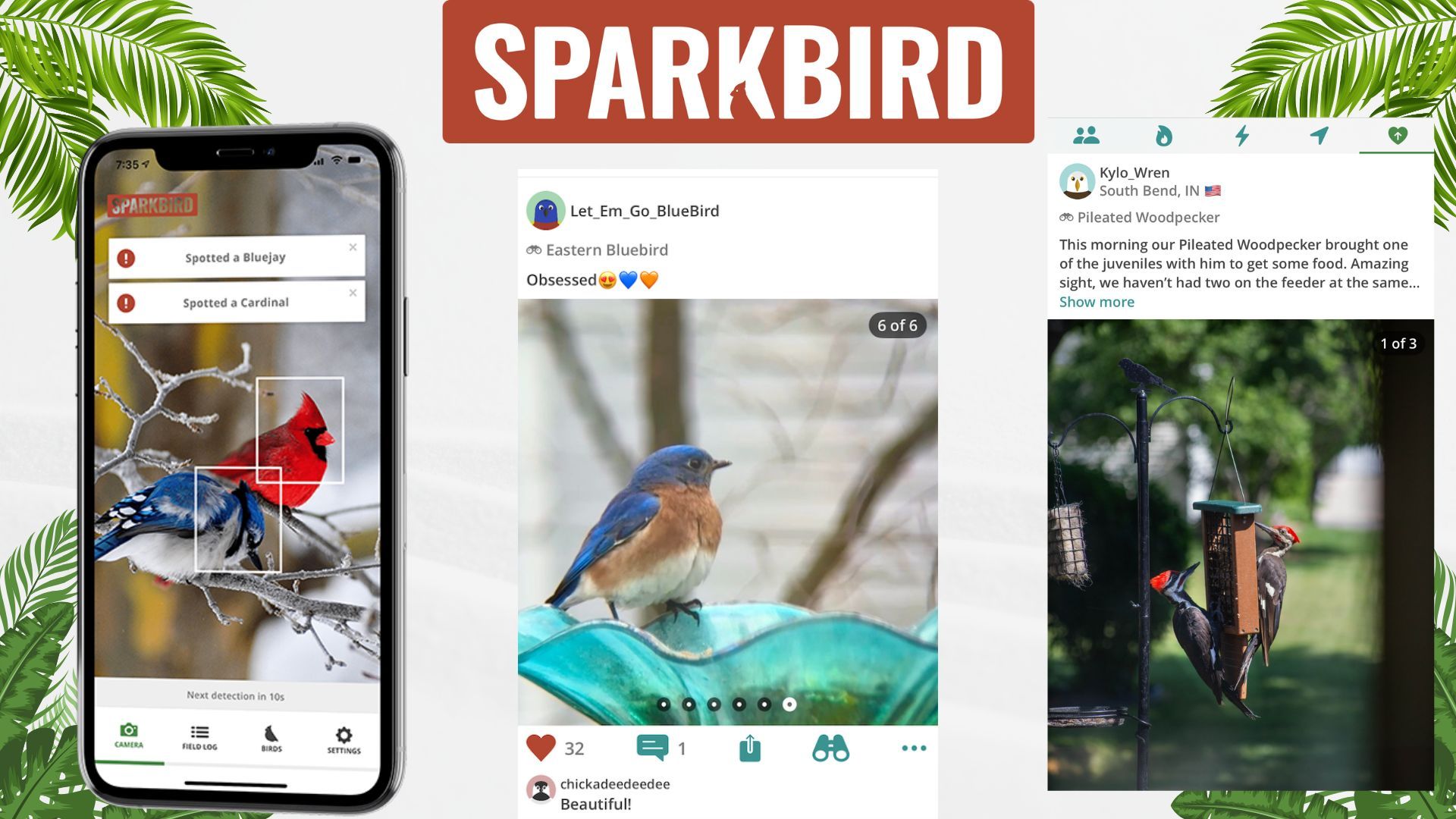
We built Sparkbird for people who want a friendly community of fellow birders. Track your life list, get help with identification, and meet people who also stop mid-sentence to look at a tree.
Where to Go Birding in Georgia
Joining a club is the fastest route to local knowledge. These are the sites that produce regardless, with what each one actually costs and what will turn you away at the gate.
- Kennesaw Mountain National Battlefield Park (Cobb County) — Metro Atlanta's spring migrant trap. A pass is required at all ten parking lots: $5 daily or $40 annual, credit or debit only, no cash, displayed on the dash or tied to your plate. Grounds open 6:30 a.m. to 6:30 p.m. in winter and to 8:30 p.m. in summer. Kennesaw Mountain Drive has been closed to personal vehicles since January 2026, with a shuttle running most weekends, so plan to walk up.
- Newman Wetlands Center (Clayton County) — A constructed wetland run by the Clayton County Water Authority with more than 170 species on its checklist and a boardwalk trail. Parking and admission are free. The learning center is open Tuesday through Saturday 9 a.m. to 5 p.m.; trails run 7 a.m. to 7 p.m. March through October and 7 a.m. to 5 p.m. November through February. No bikes, no jogging, service dogs only. Groups of ten or more should call ahead for a guided time slot.
- Panola Mountain State Park (Henry and Rockdale Counties) — A granite monadnock inside the Atlanta commute, open 7 a.m. to sunset with the office open 8 a.m. to 5 p.m. Georgia's ParkPass is required: $10 per vehicle per day or $70 for an annual pass, bought at a kiosk, by QR code, or in the office. The mountain itself is a protected conservation area reachable only on a reserved ranger-led hike, and pets are not allowed on it.
- Piedmont National Wildlife Refuge (Jones and Jasper Counties) — Endangered Red-cockaded Woodpeckers in managed longleaf and loblolly, about 25 miles north of Macon. No entrance fee, open sunrise to sunset, with a six-mile self-guided Little Rock Wildlife Drive and a 2.9-mile Red-cockaded Woodpecker Trail. The catch: the refuge closes to everyone except permitted hunters during scheduled firearm deer hunts in fall and turkey hunts in spring, and those dates are published each year by July. Check before you go.
- Okefenokee National Wildlife Refuge (Southeast Georgia) — Swallow-tailed Kites, Sandhill Cranes, Bachman's Sparrows, Prothonotary Warblers and Red-cockaded Woodpeckers across the largest blackwater swamp in North America. Entry is $5 per vehicle for a week or $15 for the year. Open daily from half an hour before sunrise to 7:30 p.m. March through October and 5:30 p.m. November through February. Drought has closed several water trails, including the Yellow, Pink, Purple and Blue routes, and camping permits are taken by phone only on Tuesday through Thursday mornings, so confirm what is open before you launch a boat.
- Harris Neck National Wildlife Refuge (McIntosh County) — Free, open sunrise to sunset seven days a week, with a four-mile wildlife drive and close to 350 species recorded. The Wood Stork colony at Woody Pond is the draw, and this is one of the most reliable Painted Bunting sites in the state. Two things are currently shut: the visitor contact station, closed indefinitely on staffing, and both fishing piers, closed after low tide revealed damage to their pilings.
- Jekyll Island (Glynn County) — Beach, marsh and maritime forest on one small island, with the north end mudflats and the Jekyll Island Authority's conservation program in the background. Parking is $10 per day for vehicles under eight feet, $15 for anything longer, and $5 more during special events. An annual pass is $100, or $150 oversized. Buy online or at the gate; the gate reads your plate.
If you would rather start from your own yard while you wait for spring, our guide to hummingbird plants for Georgia covers what actually works in the state's long, humid summer.
Georgia Bird Books and Field Guides
Start with what the state's own ornithologists publish, which is free. The state-specific Adventure Publications field guide sorted by color is the friendliest for a first-year birder. Ask your local chapter what they carry, since several sell regional checklists that never make it to a bookstore.
The Sibley Field Guide to Birds of Eastern North America
The most authoritative portable guide to eastern birds; the second edition is the one you want.

The Sibley Field Guide to Birds of Eastern North America: Second Edition (Sibley Guides)
Knopf
The Georgia State Checklist
The Georgia Ornithological Society's 2023 checklist of the state's birds, the descendant of the Annotated Checklist of Georgia Birds, organized taxonomically with scientific names. The companion review list, revised November 2023, tells you which roughly hundred species need documentation if you find one.
Peterson Field Guide to Birds of Eastern and Central North America
The seventh edition, 2020. Peterson's arrows pointing at the field marks that matter remain one of the best teaching devices in birding, and it pairs with Sibley rather than competing.

Peterson Field Guide To Medicinal Plants & Herbs Of Eastern & Central N. America: Third Edition―A Field Guide to Discovering Nature's Remedies in Eastern and Central North America
Mariner
Georgia Birding and Wildlife Trails site checklists
The DNR's site publishes a checklist, seasonal abundance chart and map for individual birding locations across the state. More useful on a specific morning than a general field guide.
Merlin Bird ID
Free from the Cornell Lab of Ornithology, with sound identification that works offline and local lists built from eBird data. It is the single best thing to have in your pocket in a state where you will hear far more birds than you see.
Georgia Bird Rescue and Rehabilitation
Always call first. Capacity, permits and hours vary enormously, and a center licensed for songbirds is often not licensed for hawks.
Georgia DNR Licensed Wildlife Rehabilitator Directory
The official list, published by Georgia DNR Law Enforcement as an interactive map you can search by county. This is the correct starting point, especially outside metro Atlanta, where most licensed rehabbers are individuals with a permit and a phone rather than an organization with a website.
Georgia DNR: Sick, Injured or Orphaned Wildlife
The agency's own triage guidance, including a flowchart for baby birds and the general wildlife assistance line at 1-800-366-2661. Its blunt first message is worth repeating: most wild animals recover on their own, and in most cases the right move is to leave them alone.
Birds Georgia: Injured and Orphaned Birds
A short, bird-specific referral page maintained by the state's largest bird organization.
AWARE Wildlife Center - Metro Atlanta
Licensed for all native Georgia wildlife, birds included. Contact runs through their Animal Help Desk, which is staffed every day of the year from 10 a.m. to 7 p.m. Use the website rather than turning up.
Wild Nest Bird Rehab - Metro Atlanta
Birds only, and specific about which ones: almost any native bird except owls, hawks, vultures, geese, ducks, pets, exotics, and species Georgia DNR classes as invasive. Volunteer-run with no rescue or transport service, so start with their quick help tool or live chat rather than a phone call.
Chattahoochee Nature Center Wildlife Clinic - Roswell / Fulton County
Licensed for raptors, reptiles and amphibians, handling more than 750 animals a year. Drop-off hours are Monday through Saturday 10 a.m. to 4 p.m. and Sunday noon to 4 p.m. at Willeo Road, and the number is 770-992-2055.
HawkTalk - Canton
Raptors only: hawks, owls, eagles, falcons, kites and ospreys, including hacking for birds ready to go back out. Reachable at 770-720-1847.
Wildlife Center of North Georgia - North Metro Atlanta
Songbirds, and currently unavailable. The center posted that it is temporarily closed as of May 2026 and refers callers to Animal Help Now to find an alternative. Listed here specifically so you do not drive there.
Animal Help Now
A nationwide referral tool that finds the nearest wildlife rehabilitator by zip code. The backstop when the county map comes up empty at 7 a.m.
Frequently Asked Questions
What happened to Atlanta Audubon Society?
It became Birds Georgia. The old atlantaaudubon.org address redirects to birdsgeorgia.org. The organization has been through several names since it was founded as the Atlanta Bird Club in 1926, and it now works statewide as an independent partner of the National Audubon Society rather than as a chapter. There's no separate Audubon Georgia state office to join.
Where can you see Painted Buntings in Georgia?
On the coast, in the breeding season.
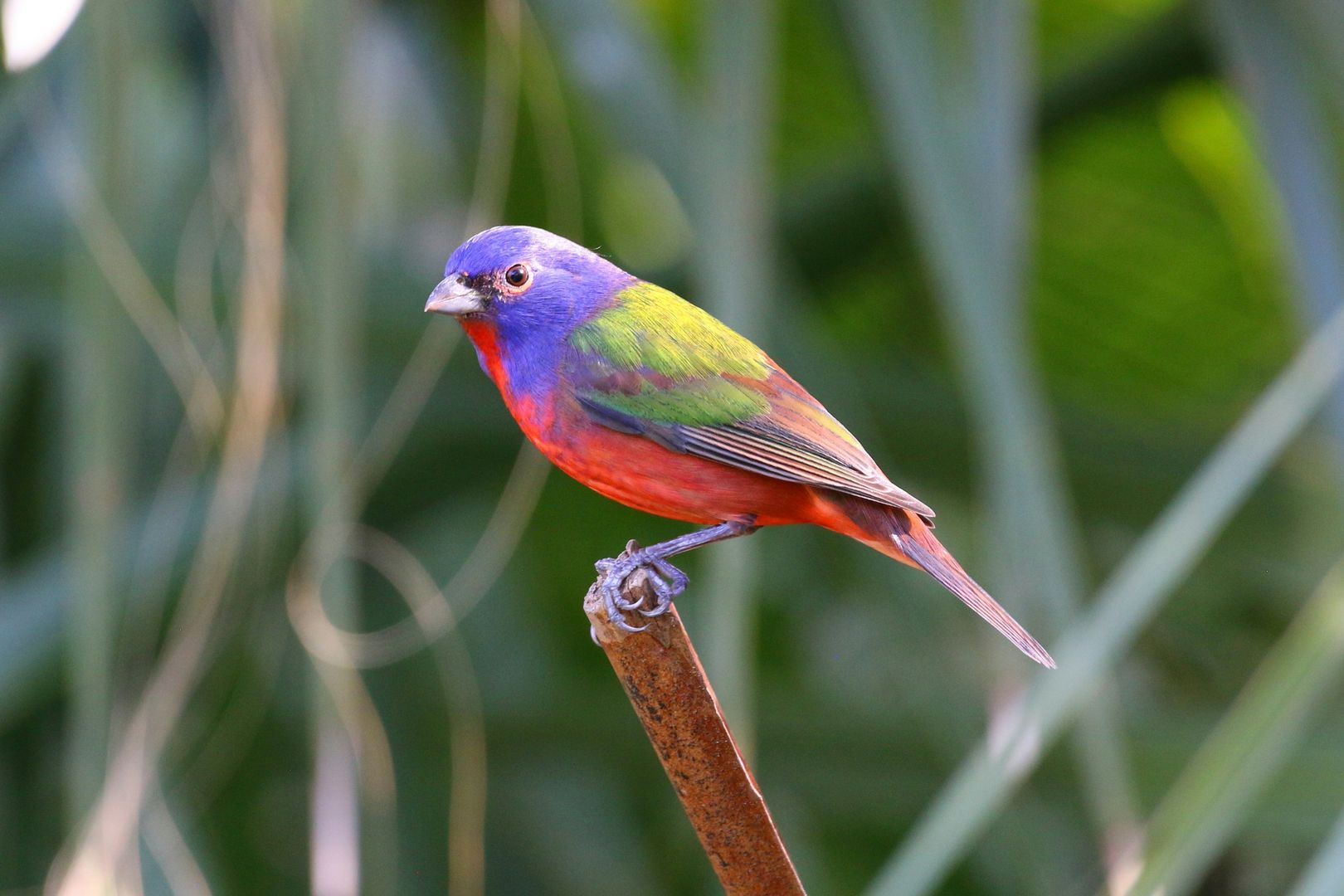
Harris Neck National Wildlife Refuge in McIntosh County names the Painted Bunting among its signature birds, its free and its four-mile wildlife drive is open sunrise to sunset. The barrier islands and coastal refuges from Savannah south to Camden County all hold them from roughly May into July, and coastal chapters like Ogeechee Audubon and Coastal Georgia Audubon build walks around them.
Is Kennesaw Mountain worth it for bird watching?
It is metro Atlanta's best-known spring migration site. And it is cheap at just $5 for a day pass or $40 for the year, valid at all ten parking lots. 2 things to plan around: the park takes cards only (no cash) and Kennesaw Mountain Drive has been closed to personal vehicles since January 2026, with a shuttle running most weekends. Park at the visitor center and walk, which is what you wanted to do anyway.
Got a Georgia birding group to recommend?
Georgia is missing a mountain bird club and probably always has been, so if you are in Blue Ridge or Dahlonega reading this and feeling personally called out, consider that a nudge.
Tell us about your group in the comments or on the Sparkbird App, available in the Apple App Store. We would rather update this page than be right about the gap.
- Related: How to Use the Sparkbird App

No comments yet.