
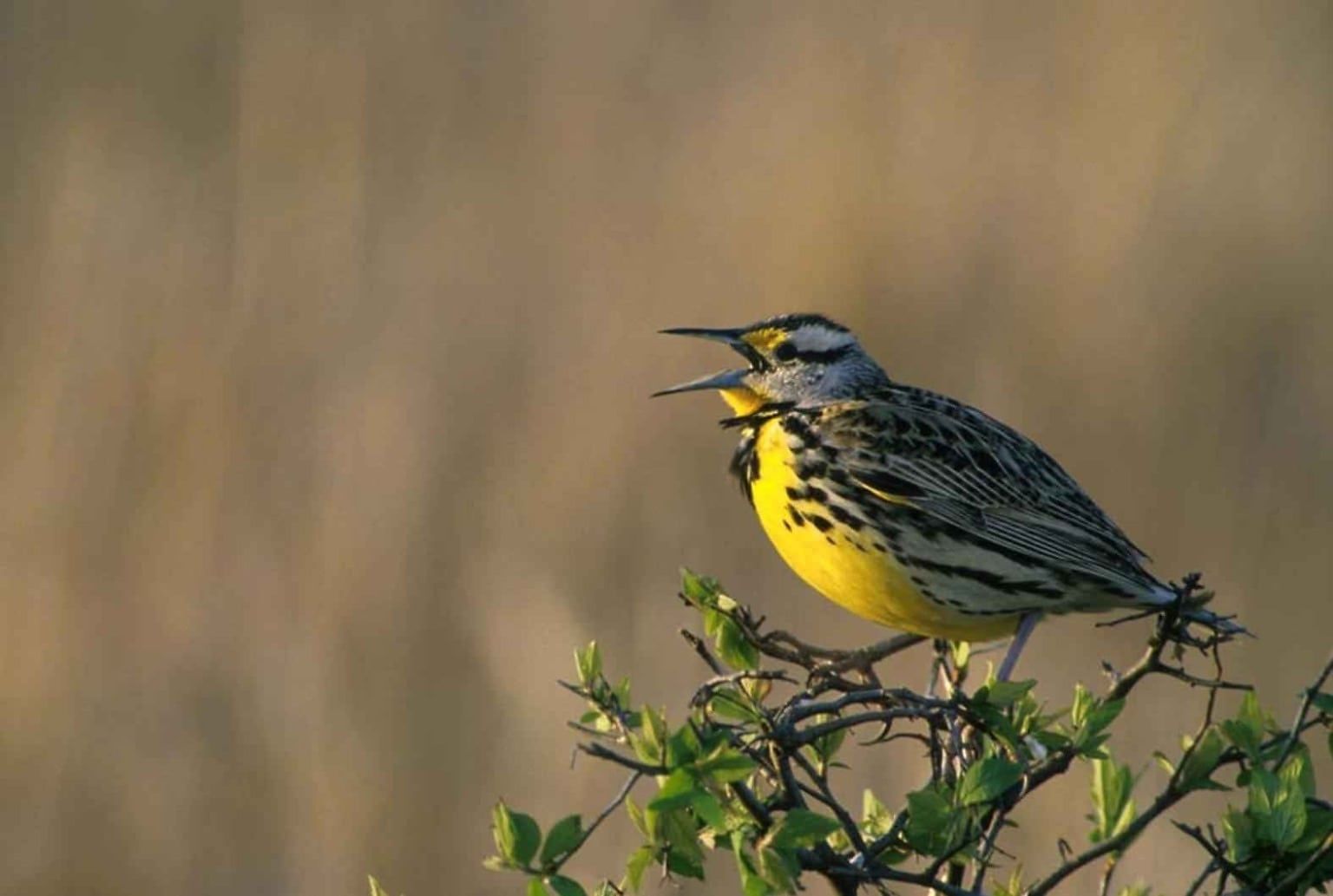
Kansas has seven local bird clubs with working websites and two statewide organizations, a shorter list than the state deserves. The highest point in Kansas is a gentle rise in a Wallace County pasture, and it takes most of a day's driving to notice you gained any elevation at all.
That flatness is why one shallow marsh in Barton County can hold a significant share of a continent's shorebirds at once. The bird watching groups in Kansas are cheap and unfussy. Most chapters hold monthly programs free and open to anyone who walks in, field trips run at no charge, and local dues sit around $20 a year.
Why Join a Bird Watching Group at All
Birding alone is fine. You stop when you want, and nobody watches you spend six minutes deciding that a distant lump is a fence post.
What a club gives you is a person who knows what the water's doing. Where the best sites are managed wetlands, the difference between a spectacular morning and an empty drive is whether a given pool got filled this month. That lives in people who go every week, not in a database. Clubs are also the front door to community science like the Christmas Bird Count. Beginners get paired with someone experienced, and no one expects you to identify anything.
FYI— don't buy binoculars first. Go on 3 free walks and look through whatever the trip leader hands you.Decent budget binoculars for birding start around $150 and good ones run past $500. There's no reason to guess. We couldn't confirm a formal loaner program at any Kansas chapter, so ask rather than assume. In practice somebody on a Kansas field trip is carrying a spare pair.
Statewide Bird Watching Groups in Kansas
One thing to clear up first, because several directories get it wrong: the National Audubon Society has no state office in Kansas. Its regional Great Plains office covers Nebraska and the Dakotas only.
Kansas chapters affiliate directly with the national organization. The coordination other states get from a state office comes here from the ornithological society and from an independent nonprofit that isn't part of National Audubon at all.
Kansas Ornithological Society
The state ornithological body, founded in 1949, and the closest thing Kansas has to a central birding organization. KOS publishes the peer-reviewed Bulletin and a newsletter called The Horned Lark, maintains county checklists and birding location accounts, and hosts two meetings a year that move around the state.
Spring 2026 was based in Chanute. The fall meeting runs September 25 to 27, 2026 at Southwestern College in Winfield. These are the best value in Kansas birding. Note that the membership page hasn't been updated since 2019, so confirm current dues first.
Audubon of Kansas
An independent grassroots nonprofit based in Manhattan, not a National Audubon chapter and not a state office, which trips up a lot of people. AOK protects roughly 5,287 acres across three sanctuaries, places Nature Adventurepacks in libraries statewide, and advocates on water, energy siting, and prairie-chickens. It also runs the state's biggest organized birding event, below.
Kansas Bird Records Committee
The KOS committee that reviews and archives rare bird records. Its review list tells you which species need documentation and where in Kansas that applies, last revised March 31, 2026. Find something unusual and this is where the report goes.
Christmas Bird Count in Kansas
Kansas count circles run inside the national December 14 to January 5 window and are organized by the local chapters below rather than centrally. Free, beginners welcome. Contact the nearest chapter in autumn to be assigned to a party.
Bird Watching Groups in Wichita and South Central Kansas
Wichita Audubon Society - Wichita / Sedgwick County
The largest and most active chapter in the state. Monthly programs on the third Tuesday at 7 p.m., September through May, free and open to everyone, with recordings posted afterward.
Field trips run year round, from short city park walks to multi-day expeditions out of state, and everyone's welcome from beginners to experts. Wichita Audubon also operates Chaplin Nature Center on the Arkansas River, whose trails are open at no charge from sunrise to sunset.
Great Plains Nature Center - Wichita / Sedgwick County
Not a club, but a cooperative project of the U.S. Fish and Wildlife Service, KDWP, the City of Wichita, and a friends group inside Chisholm Creek Park.
It hosts Wichita Audubon, and its paved trails are the easiest first outing in the city. Access note as of mid-2026: the building's closed for foundation repairs, though the park, trails, and some programs continue.
Bird Watching Groups in the Kansas City Metro
Burroughs Audubon Society - Greater Kansas City
The National Audubon chapter for the Kansas City metro on both sides of the state line. General meetings run six times a year over Zoom, and guided field trips run year round for all experience levels.
Worth knowing before you set out: the chapter's nature center is at Lake Jacomo in Blue Springs, on the Missouri side, and much of the field trip schedule is Missouri-side too. It does keep area birding notes for Johnson County towns including Shawnee, Olathe, and Overland Park.
Bird Watching Groups in Topeka and Lawrence
Topeka Audubon Society - Topeka / Shawnee County
A long-established chapter, recently past its 75th anniversary, running monthly programs, field trips, a bird seed sale, the Shunga Bioblitz, and a standing social called Birds and Beer. It organizes the local Christmas Bird Count and a breeding bird count.
Dates live on the chapter's calendar rather than the activities page. One caution: its birding links page still lists several Kansas groups under old names and dead URLs.
Lawrence Bird Alliance (formerly Jayhawk Audubon Society) - Lawrence / Douglas County
The National Audubon chapter for Lawrence, Douglas County, and surrounding eastern Kansas, renamed from Jayhawk Audubon Society. The chapter says it directly: meetings and field trips are always open to the public and all resources are free.
Presentations run monthly except June, July, and December, fourth Monday at 7 p.m., hybrid from the Baker Wetlands Discovery Center and on Zoom. Monthly field trips are led by Dr. Roger Boyd. Membership is $20 a year and buys you nothing you can't already attend, which is rather the point.
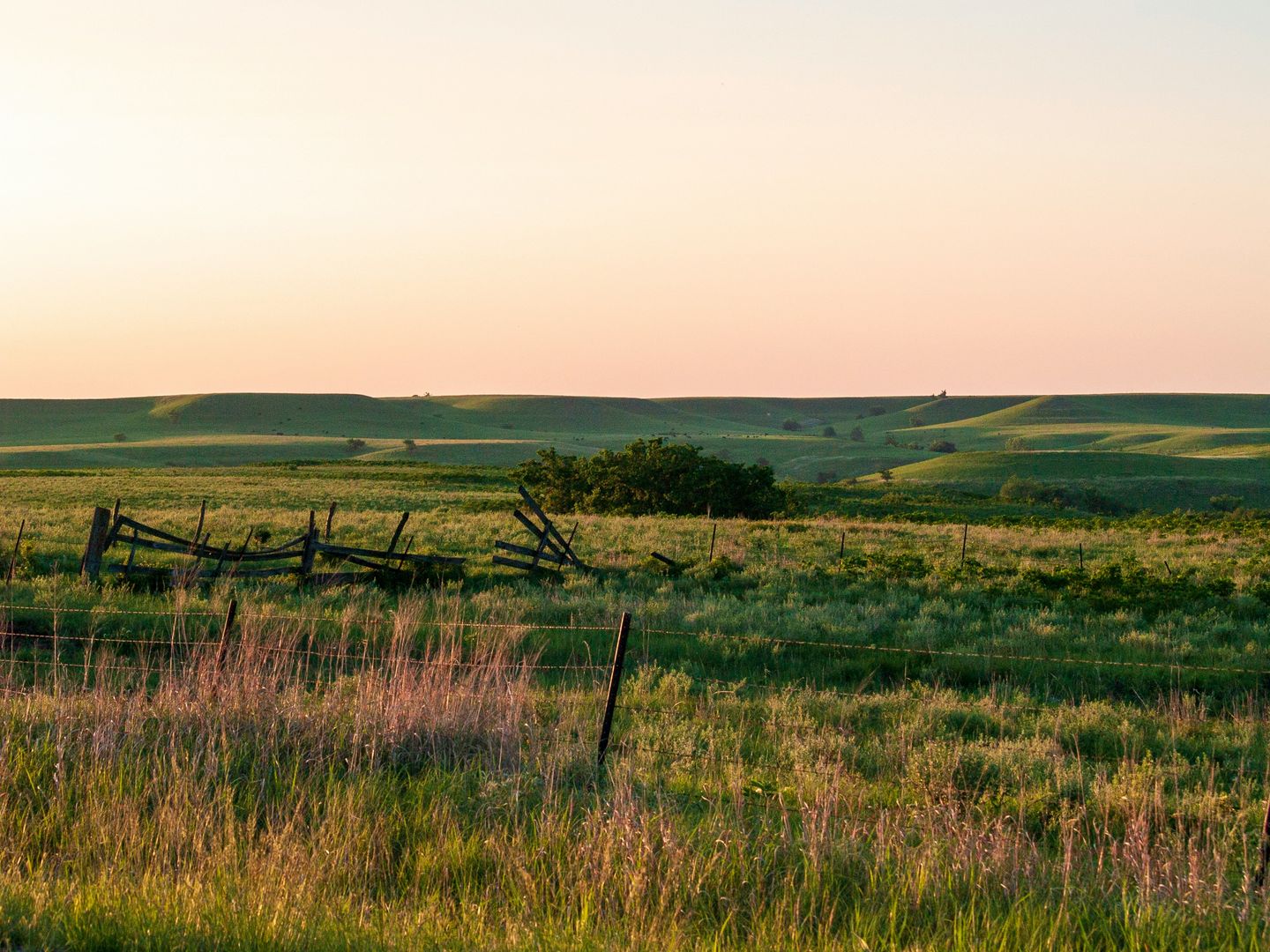
Bird Watching Groups in Manhattan and the Flint Hills
Northern Flint Hills Audubon Society - Manhattan / Riley County
The chapter for the northern Flint Hills, active through 2026 with a Birdathon, a Celebration of Cranes event, and field trips that include long hauls west to Quivira and Cheyenne Bottoms.
Its newsletter is The Prairie Falcon, and the site keeps a useful Where to Look page and a Kansas Bird by Month reference. Local membership with the newsletter is $20 a year. The chapter's Christmas Bird Count page hasn't been updated past 2021, so email rather than assume a count is still on your date.
Milford Nature Center - Junction City / Geary County
A free KDWP nature center below Milford Reservoir, open Tuesday through Saturday 9 a.m. to 5 p.m. and Mondays by appointment, with live raptor exhibits including bald and golden eagles, hawks, kestrels, and owls.
Worth correcting a common error: several rescue directories list Milford as a rehabilitator. It isn't, and its staff say so plainly. Don't drive an injured bird there.
Bird Watching Groups in Central and Western Kansas
Smoky Hills Audubon Society - Salina / Saline County
The chapter for the Smoky Hills, with the stated goal of making Salina a premier birding destination. Monthly meetings September through May, third Thursday at 7:30 p.m. at Kansas Wesleyan University's Peters Science Hall.
It also stewards the Harold Lear Wildlife Habitat on West Stimmel Road, roughly 67 acres of prairie, woodland, and a five-acre pond with 2.5 miles of mowed trails, open dawn to dusk. This chapter's old homestead-hosted address is dead; the site above is the current one.
Kansas Wetlands Education Center - Great Bend / Barton County
Operated by Fort Hays State University as an annex of the Sternberg Museum, on KDWP land at the southeast corner of Cheyenne Bottoms. Free admission, a 2,000 square foot exhibit gallery, and an accessible half-mile nature trail.
Listed hours April 1 through October 31 are Monday to Saturday 9 a.m. to 5 p.m., Sunday 1 to 5 p.m. Its Recent Bird Sightings page, current through August 2026, is the best free source on what's at the Bottoms right now.
Honest note on the far west: we couldn't verify a single standing bird club with a live website in the High Plains counties beyond Hays. Western Kansas birding runs on events and refuges rather than chapters, and the statewide organizations plus the festival below are the practical way in.
Bird Watching Groups in Southeast Kansas
Sperry-Galligar Audubon Society - Pittsburg / Crawford County
The southeast Kansas chapter, based at Pittsburg State University. Meetings are the last Thursday of the month, which isn't always the fourth, at 7 p.m. in Room 102 of Yates Hall, with a break June through August.
The program schedule is posted a season ahead and ran through a May 2026 picnic, and the chapter keeps a bluebird trail with published nest box results. The website looks like it was built during the Clinton administration, because it more or less was. The content is current, which is the part that matters.
Other Ornithology and Research Groups in Kansas
Kansas Lek Treks Prairie-Chicken Festival - Hays and surrounding counties
Run by Audubon of Kansas and the main organized way to see a Greater or Lesser Prairie-Chicken display in Kansas. Two formats. Popup blinds hold four people at 100 to 200 feet from the birds, which means five or more hours sitting still in the cold and a minimum age of 12.
The other is heated van viewing from a quarter to half a mile out, the option that can get you both species in one morning. Registration is $100, viewing mornings $125, photography spots $250 to $350. The 2027 festival is listed for April 7 to 11 out of Hays. Book early; the blinds are the constraint.
Electronic Ornithological Information and KSBIRD-L
Kansas has an active statewide birding listserv, KSBIRD-L, hosted at Kansas State University and reachable through the KOS links page above. It's where rare bird reports circulate first here. A mailing list, not an app, which filters the audience in mostly good ways.
Sparkbird App - Community
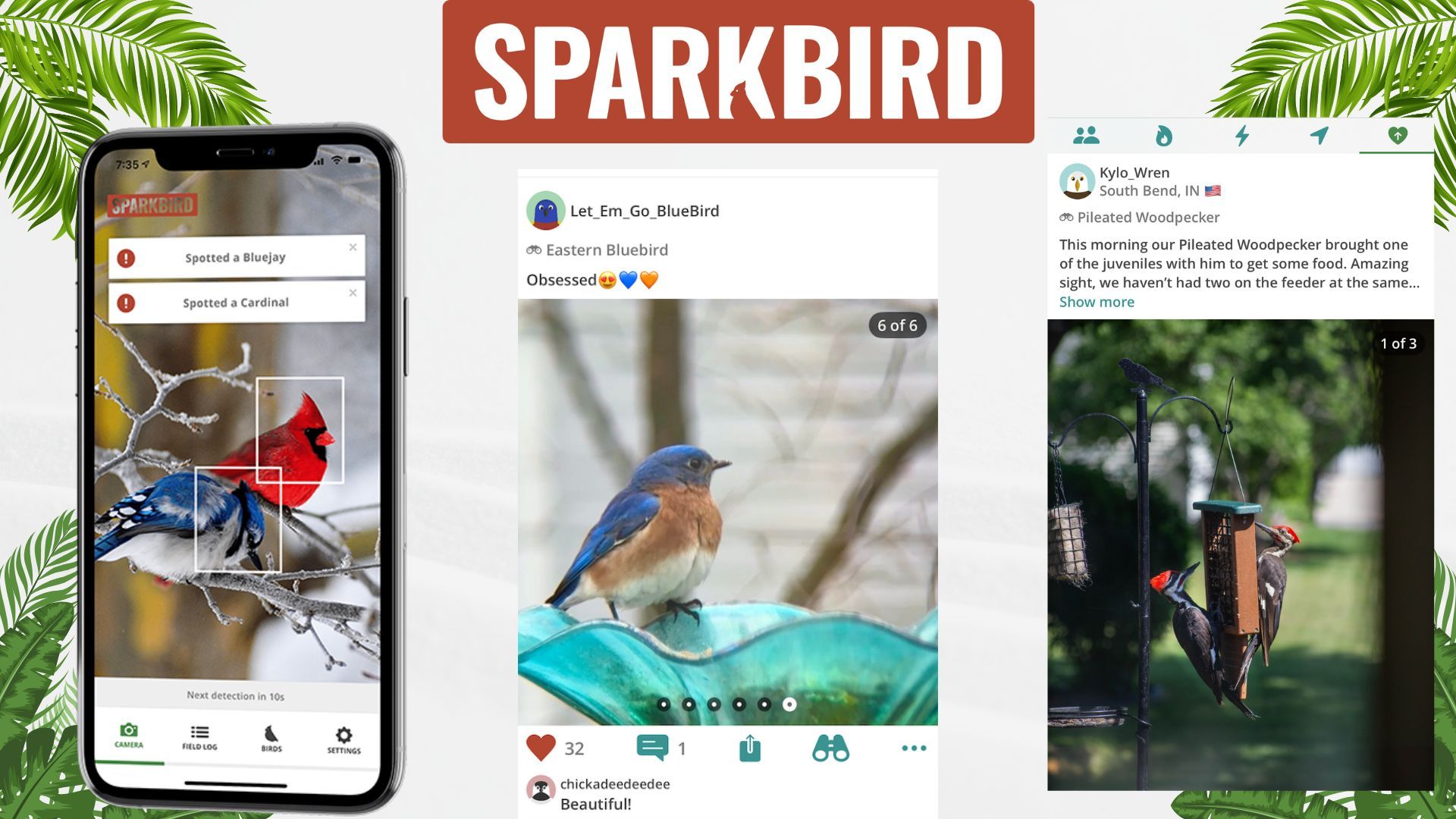
We built Sparkbird for people who want a friendly community rather than a leaderboard. Track your life list, get identification help, and meet people who also brake hard for a roadside pole. Like Instagram for bird watchers, minus the algorithm.
Where to Go Birding in Kansas
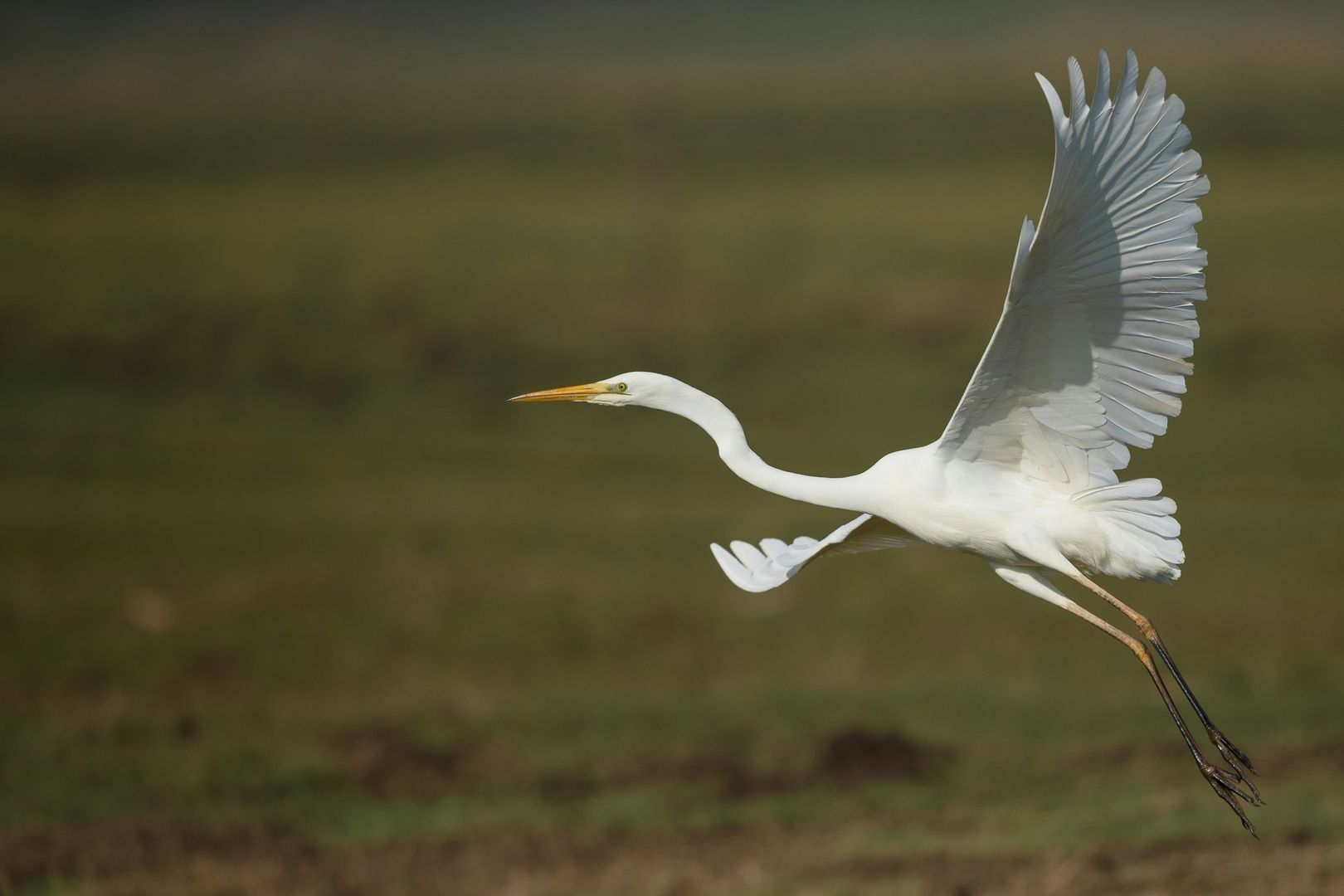
Cheyenne Bottoms deserves a paragraph of its own. It's the largest inland marsh in the United States, a Ramsar Wetland of International Importance, and one of the most significant shorebird stopovers in the Western Hemisphere. A substantial share of some species' entire migrating populations passes through in a single spring.
It's also a shallow basin fed by unreliable water. In drought years it goes dry and the spectacle doesn't happen. Two properties cover it: the roughly 19,857-acre state wildlife area run by KDWP and The Nature Conservancy's adjoining 8,018-acre preserve.
Before you drive, call the KDWP 24-hour conditions line at 620-793-7730 and check the education center's sightings page. That call is the difference between the best morning of your birding life and cracked mud.
- Cheyenne Bottoms Wildlife Area (Barton County) — Five miles north of Great Bend on US-281, then two miles east. Free, no entry permit, but vehicles must stay on established roads and parking areas, and Pools 1 and 5 plus part of Pool 2 are refuge areas closed to all activity. Area office open weekdays 8 a.m. to 4:45 p.m.
- Quivira National Wildlife Refuge (Stafford County) — 22,135 acres of rare inland salt marsh and sand prairie, over 340 species recorded, and the reliable Kansas site for Whooping Cranes on passage. No entrance fee. Open daily from 90 minutes before sunrise to 90 minutes after sunset, visitor center weekdays 7:30 a.m. to 4 p.m. Drive the auto tour around Big Salt Marsh. Hiking allowed unless posted, no boats or kayaks, no drones, dogs leashed March 1 through August 31.
- Konza Prairie Biological Station (Riley and Geary Counties) — Native tallgrass prairie and a working research station, which is the part to get right. Most of the site is off limits and visitors are restricted to the Nature Trail system from the McDowell Creek Road trailhead, where routes of 2.6, 4.6, and 6.2 miles share a start. Sunrise to sunset, $2 suggested donation, no dogs, no bikes, no drones, stay on the trail. Trails close for prescribed burns and flooding.
- Baker University Wetlands (Douglas County) — 927 acres of wetland, prairie, and riparian habitat on the south edge of Lawrence, over 11 miles of trails, 278 species recorded, and a Discovery Center that doubles as the Lawrence Bird Alliance meeting place. Open daily sunrise to sunset, no fee.
- Clinton State Park and Wildlife Area (Douglas County) and Perry State Park (Jefferson County) — The two northeast Kansas reservoirs, both good for waterfowl, gulls, and wintering eagles. Bald eagles have nested in Clinton's Deer Creek arm since 1989, and Perry's wildlife area covers nearly 11,000 acres including about 1,000 acres of marsh. Both state parks require a vehicle permit, $5 daily or $25 annual at the most recently published rates, and camping reservations do not include it. The surrounding wildlife areas are free.
- Marais des Cygnes National Wildlife Refuge (Linn County) — 7,500 acres protecting bottomland hardwood forest that exists almost nowhere else in Kansas, which is why this is the place for Prothonotary Warbler and Red-headed Woodpecker. About 2,500 acres are closed to visitation for wildlife protection, so read the posted boundaries. Public roads and designated trails only.
- Kirwin National Wildlife Refuge (Phillips County) — The north-central refuge on the North Fork of the Solomon River, one of the few sites in this directory that lists Greater Prairie-Chicken among its resident birds, no blind booking involved. Auto tour gates open April 1 through October 1. Current alert: reservoir levels are more than six feet below last year and boat access is down to one low-water ramp, which is bad for boating and good for shorebirds on the exposed flats.
If you'd rather start from a window while you wait for the marsh to fill, our guide to hummingbird plants for Kansas covers what actually survives a Kansas summer.
Kansas Bird Books and Field Guides
Kansas has one standard book, one good beginner's guide, and a pile of free state material that most people never find. Download the free ones before you spend anything.
The Guide to Kansas Birds and Birding Hot Spots
Bob Gress and Pete Janzen's guide, the one KDWP itself recommends. Species accounts plus the hotspot directions, which is the combination nobody else has managed for this state.

Birds of Kansas Field Guide
Stan Tekiela's Kansas guide, sorted by color rather than taxonomy. The book to keep by the kitchen window rather than in the scope bag.

Kaufman Field Guide to Birds of North America
Kenn Kaufman's photographic guide, digitally edited so the birds sit on the page the way they sit in the field. Kansas straddles the line where the eastern and western guides both stop being enough, so a single continental volume earns its weight here.

Kaufman Field Guide To Birds Of North America: A compact, easy-to-use field guide with official names and range maps for fast bird identification in North America
Mariner
Great Plains Nature Center Pocket Guides
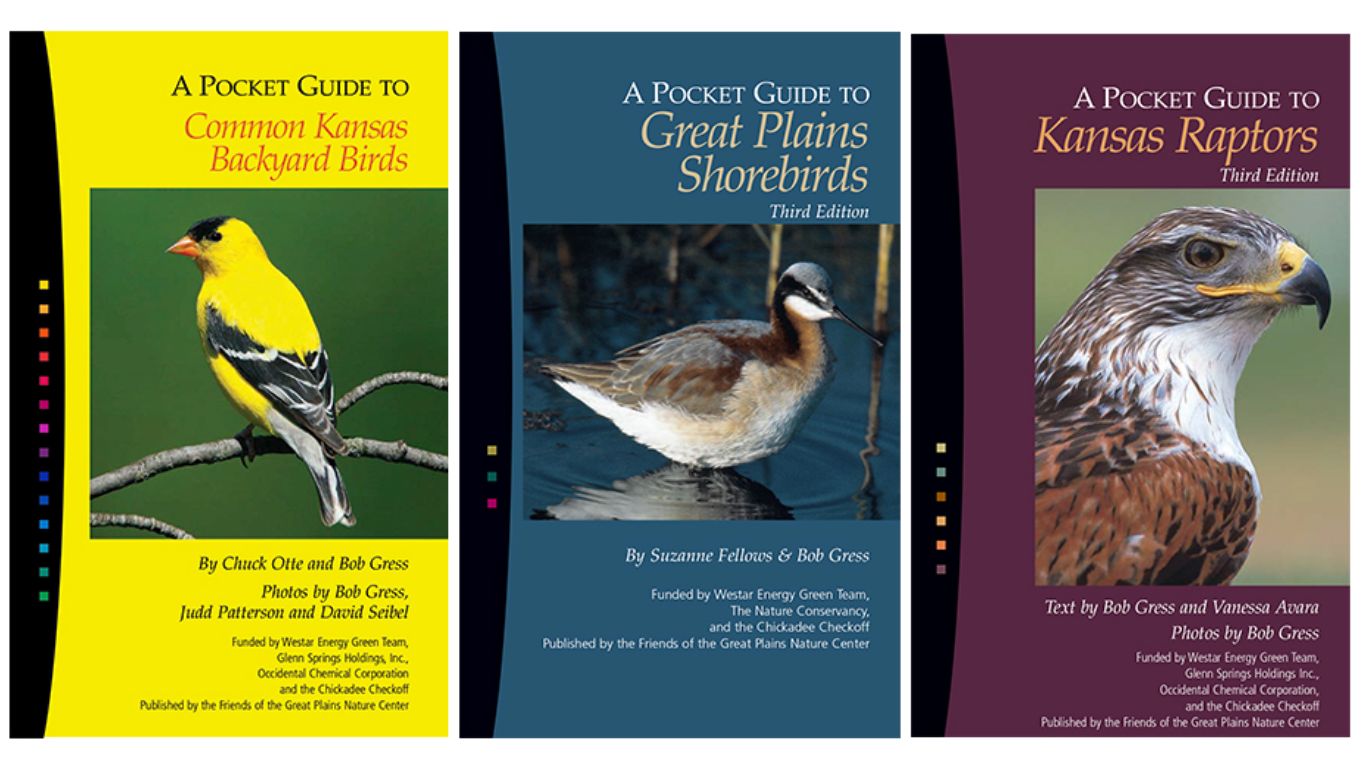
Sixteen free illustrated PDF pocket guides, four of them directly useful here: Common Kansas Backyard Birds, Kansas Raptors, Great Plains Shorebirds, and Great Plains Waterbirds. The shorebird guide alone will do more for your Cheyenne Bottoms morning than a general North American guide. Printed copies are not shipping until renovations finish.
Kansas Ornithological Society Publications
The state checklist, the Horned Lark newsletter, and the peer-reviewed Bulletin. The county checklist project covers all 105 counties and will tell you whether the bird you're looking at has any business being where it is.
Kansas Bird Rescue and Rehabilitation
Always call first. Kansas rehabilitators are permitted for specific species groups, and a center licensed for raptors may not be able to take your songbird, or the reverse.
KDWP Wildlife Rehabilitation Permit Holders
Kansas does have an official list. KDWP publishes the 2026 permit holders document, showing each rehabilitator's name, the counties they cover, and the species they may accept. A searchable version is listed as coming soon and isn't live, so the document is the real directory.
KDWP's Pratt office is 620-672-5911, weekdays 8 a.m. to 4:45 p.m. For the Wichita area, the Great Plains Nature Center keeps referral guidance on who's taking intakes.
Operation Wildlife - Linwood, northeast Kansas and the Kansas City metro
The largest rehabilitation clinic in eastern Kansas, taking federally protected species and native Kansas wildlife with a few exclusions. Monday to Friday 9 a.m. to 5 p.m., Saturday 9 a.m. to 1 p.m., drop-off by appointment only, 785-542-3625.
Their guidance: keep pets and children away, call immediately, don't feed or water it. This is a working clinic, not an attraction, and tours aren't permitted.
Great Bend Zoo and Raptor Center - Great Bend / Barton County
The raptor rehabilitation operation for central Kansas, at 2123 Main Street in Great Bend, open 9 a.m. to 4:30 p.m. daily except Thanksgiving and Christmas, on 620-793-4226 or 620-791-5001. Their site has a plain-language page on what to do if you've found a bird in need, worth reading before you touch anything.
One warning for this section specifically. At least one well-known Kansas raptor center's old web address now resolves to an offshore gambling site. If a rescue link you found looks strange when it loads, close it and work from the KDWP permit list instead.
Frequently Asked Questions
When does shorebird migration peak at Cheyenne Bottoms?
Spring passage is the headline event, roughly late April through mid-May, when the marsh can hold enormous numbers of sandpipers, plovers, godwits, and dowitchers moving north. A second, longer, less concentrated southbound push runs July into September. It all depends on water, so call the KDWP conditions line at 620-793-7730 first.
How do you see a prairie-chicken lek in Kansas?
Almost always by booking a blind in advance. Leks sit on private ranch land, and the birds abandon a display ground if people walk up on it. The practical route is the Kansas Lek Treks festival, run by Audubon of Kansas out of Hays each April. Blind sessions run about $125 a morning.
Is Kansas actually good for birding?
Yes, and more than most people expect. Kansas sits in the Central Flyway and holds two wetlands of international importance within an hour of each other. Cheyenne Bottoms and Quivira together concentrate migrating shorebirds at a scale with few equals in the hemisphere. The honest catch is that Kansas rewards planning more than wandering.
Do Kansas state parks and wildlife areas charge a fee?
They're treated differently, and this catches visitors out. Kansas state parks require a vehicle permit, most recently published at $5 daily or $25 annually. Wildlife areas, state fishing lakes, and the federal refuges here, including Cheyenne Bottoms and Quivira, charge no entry fee at all.
Got a Kansas birding group to recommend?
Kansas is under-served by this list and we'd rather fix that than pad it. If your county has a group we missed, or you're thinking about starting one, tell us in the comments or on the Sparkbird App, available in the Apple App Store.
Bird watching groups are unusually good at connecting people. Everyone faces the same direction, everyone whispers, and the only social obligation is to point when you see something.
- Related: How to Use the Sparkbird App

No comments yet.