
Kentucky has roughly 8 organized bird clubs with a public presence, which is fewer than you'd expect from a state that spans two time zones. Pikeville and Fulton keep different clocks, so when a Kentucky club posts a 7 a.m. start, somebody always asks which 7.
The bird watching groups in Kentucky cluster around Louisville, Lexington, Frankfort, Owensboro and the northern suburbs of Cincinnati. Almost all let you show up without joining first, and where dues exist they usually run $20 a year. One thing to settle first: the state park named after John James Audubon in Henderson isn't a chapter of any Audubon society.
Why Join a Bird Watching Group at All
Birding alone is fine. You stop when you want, and nobody watches you spend six minutes deciding that a distant lump is a fence post.
What a club gives you is a person who knows what the water's doing. Where the best sites are managed wetlands, the difference between a spectacular morning and an empty drive is whether a given pool got filled this month. That lives in people who go every week, not in a database. Clubs are also the front door to community science like the Christmas Bird Count. Beginners get paired with someone experienced, and no one expects you to identify anything.
FYI— don't buy binoculars first. Go on 3 free walks and look through whatever the trip leader hands you.Decent budget binoculars for birding start around $150 and good ones run past $500. There's no reason to guess. We couldn't confirm a formal loaner program at any Kansas chapter, so ask rather than assume. In practice somebody on a Kansas field trip is carrying a spare pair.
Statewide Bird Watching Groups in Kentucky
Kentucky Ornithological Society (KOS)
The statewide body, and the only organization that pulls birders from every corner of Kentucky into the same room. KOS holds meetings in spring and fall that work as statewide field trip weekends, publishes the journal The Kentucky Warbler, maintains the official state checklist and keeps a page of birding locations by region.
Membership is open to anyone, and both the Beckham Bird Club and the Northern Kentucky Bird Club point their members here. It's the first place to look if your county has no club.
Kentucky Bird Records Committee (KBRC)
The KOS standing committee that reviews rare bird records and maintains the official state list. Find something genuinely unusual and the documentation goes here. The review list and report forms live on the KOS site linked above.
Kentucky Audubon Council
Not a club you join, but a council of delegates from Kentucky's Audubon chapters that coordinates advocacy and education statewide. Its chapter page is the closest thing Kentucky has to an official chapter list. A couple of its links now point at dead pages, so treat it as a starting point rather than gospel.
National Audubon Society in Kentucky
Worth stating plainly, because it trips people up. The National Audubon Society operates no state office and no Audubon nature center in Kentucky. Its presence here is the local chapters, each an independent nonprofit, plus the Kentucky Audubon Council. National's own Kentucky birding guide names no state office either.
Bird Watching Groups in Louisville and the Ohio River
Beckham Bird Club - Louisville / Jefferson County
The most active club in the state. Meetings are the second Tuesday of most months at 7 p.m. at St. Mark's Episcopal Church, 2822 Frankfort Ave, with March given over to the annual dinner and June to the picnic.
Field trips run all year apart from the mid June to mid August lull, recently to Tom Sawyer Park, Turkey Run Park and Mammoth Cave. The club states outright that guests, non-members and out of town visitors are welcome at both.
It also runs three Christmas Bird Count circles, Louisville, Otter Creek and Bernheim Forest, plus Global Big Day and Breeding Bird Survey routes.
Louisville Audubon Society - Louisville Metro
The National Audubon chapter for the Louisville area, and more conservation shop than walking club. Its signature programme is Lights Out Louisville, the campaign to get downtown buildings to cut lighting during migration.
The events calendar mixes free public sessions such as Birding 101 at library branches with ticketed Bernheim evenings priced separately for members. Membership starts at $20 and includes Audubon magazine. Some events, including the annual meeting, are members only, so check the listing before you drive out.
Bird Watching Groups in Lexington and the Bluegrass
Central Kentucky Audubon Society (formerly Buckley Hills Audubon Society) - Lexington and central Kentucky
The Bluegrass chapter, covering ten central Kentucky counties. It changed its name from Buckley Hills Audubon Society in 2014, so older directories still list the old one.
Membership is $20 a year and includes Audubon magazine, free admission to National Audubon centers elsewhere, and a monthly chapter e-newsletter. Outings are posted to the events page and Facebook rather than a fixed calendar, so take the newsletter if you want reliable notice.
Frankfort Audubon Society - Frankfort / Franklin County
An independent 501(c)(3) and National Audubon chapter working the capital area. Membership is a minimum of $20 for an individual or family and includes the newsletter and National Audubon enrolment. Past public walks have been free, open to anyone and stocked with loaner binoculars, at Josephine Sculpture Park, Cove Spring Park and the Pfeiffer Fish Hatchery.
Current events go out by Facebook and a free email newsletter. The activities page on its own site hasn't been refreshed since 2022, so email before planning a trip around a listed date.
Bird Watching Groups in Northern Kentucky and the Cincinnati Metro
Northern Kentucky Bird Club (NKBC) - Boone, Bracken, Campbell, Gallatin, Grant, Kenton and Pendleton Counties
Founded in 1986 and still the busiest club in the northern counties, with a genuinely full field trip and events calendar: walks at Big Bone Lick State Park and the Boone County Arboretum, woodcock watches, owl prowls, shorebird watches, Christmas Bird Counts and a Family Nature Day at Boone Woods Park.
The club brings a study skin collection to public events, which beats any book for learning sparrow plumage. Dues and meeting times aren't published on the site, so email the club before you go.
Bird Watching Groups in Bowling Green and South Central Kentucky
South central Kentucky is the thinnest part of the state for organized clubs. No standing bird club between Louisville and the Tennessee line keeps a website of its own. That's a shame, given the region holds both Mammoth Cave and the state's largest Sandhill Crane concentration.
Little River Audubon Society - Christian County / Hopkinsville
Listed as a chapter by the Kentucky Audubon Council and still running an annual Christmas Bird Count around Hopkinsville.
It has no working website of its own, and the National Audubon chapter page older directories link to now returns a 404. Contact goes through the Council or the chapter's Facebook page. It's here because the chapter is real and active, not because there's a link to give you.
If you're based around Bowling Green, Glasgow or Elizabethtown, the practical answer is to join the Kentucky Ornithological Society, travel to its spring and fall meetings, and watch the crane counts at Barren River Lake in January.
Bird Watching Groups in Western Kentucky and Land Between the Lakes
Daviess County Audubon Society (DCAS) - Owensboro / Daviess County
The Ohio River chapter for far western Kentucky. Programmes run monthly at 7 p.m., typically the first Tuesday, at the Owensboro Museum of Science and History, and the chapter states that all DCAS programmes are open to the general public, as are its monthly field trips to state parks and wildlife management areas.
There's a picnic each June and a Christmas Bird Count in December. Fair warning: the field trip page hasn't been updated in years even though the programme year has, so confirm a date by email before driving.
Woodlands Nature Station - Trigg County / Land Between the Lakes
Not a club, but the best staffed public bird programme in western Kentucky. The station keeps resident birds of prey including Bald Eagles, runs guided hikes and canoe trips, hosts an annual Hummingbird Festival and sits inside an 8,500 acre Nature Watch area.
Open daily 10 a.m. to 5 p.m. April through October, Wednesday to Sunday in March and November, closed December through February. Admission $7 for ages 16 and up.
Bird Watching Groups in Eastern Kentucky and Appalachia
There's no bird club with its own website anywhere in eastern Kentucky. That's the honest answer. Padding this section with a defunct chapter would help nobody standing in Hazard with new binoculars.
What eastern Kentucky does have is habitat the rest of the state can't match. The Kentucky Ornithological Society holds meetings in the eastern counties, which is the simplest way to bird the region alongside people who know it.
The Daniel Boone National Forest covers more than 700,000 acres of it, including the Red River Gorge Geological Area, where the hardwood ridges hold breeding warblers, vireos and tanagers from late April. Some developed sites charge a day use fee payable by envelope on site or through Recreation.gov, so carry a few dollars.
Other Ornithology and Research Groups in Kentucky
These don't run field trips, but each is worth knowing about.
Kentucky Department of Fish and Wildlife Resources Bird Program
The agency's bird pages cover Bald Eagle identification and reporting, peregrine and owl conservation, songbirds and nightjar surveys. This is also the agency behind the public lands search and the wildlife management areas most western Kentucky birding depends on.
Office of Kentucky Nature Preserves
Manager of more than sixty state nature preserves and natural areas, many the last intact examples of their habitat type in Kentucky.
Its Find a Natural Area directory gives directions, acreage, trail mileage and access rules for each site. It's the most useful birding map in the state that nobody thinks of as one.
Friends of Audubon State Park - Henderson County
The nonprofit formed in 1984 that supports John James Audubon State Park and acquired the Tyler Collection of original Audubon artwork from the artist's descendants. Again: a park support group, not an Audubon Society chapter.
Sparkbird App - Community
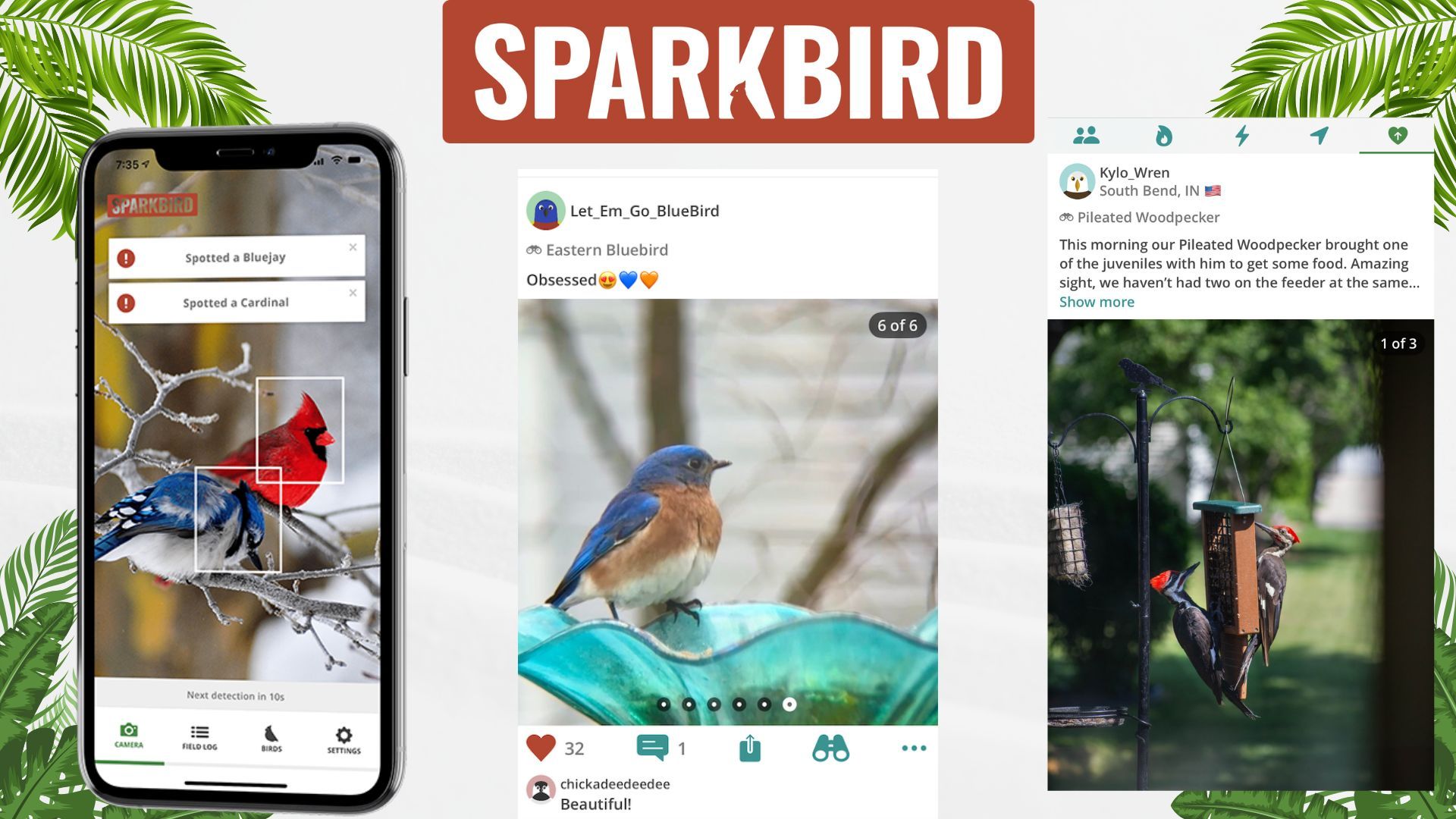
We built Sparkbird for people who want a friendly community of fellow birders. Track your life list, get help identifying birds, and meet people who also stop mid-conversation to look at a tree. It's like Instagram but for bird watchers, without the shady algorithms.
Where to Go Birding in Kentucky
These are the sites that reliably produce, with the access terms that decide whether the trip works.
- John James Audubon State Park and Nature Preserve (Henderson County) — 1,003 acres on the Ohio River bluffs where Audubon lived and worked: 6.5 miles of trail open dawn to dusk, an accessible boardwalk through the 650 acre wetlands, 169 recorded species, a Bald Eagle nest and a heron rookery. Trails and park entry are free. The museum and nature center charges $10 adults, $8 seniors and military, $6 ages 6 to 17, free under 5 and free to all on Wednesdays, open 10 a.m. to 5 p.m. daily in summer.
- Sloughs Wildlife Management Area (Henderson and Union Counties) — 11,173 acres of bottomland and marsh ten miles west of Henderson, and the best winter waterfowl and Bald Eagle site in the state. Read the closures first: the Sauerheber Unit is closed to public access November 1 through March 15 except to waterfowl quota permit holders, and Jenny Hole restricts boat access from Thanksgiving to January 31. The viewing trail along Highway 268 stays open, with towers at the Woods Tract, Pond Creek Marsh and an accessible one at Anderson Pond. It floods, so call (270) 827-2673 for conditions.
- Land Between the Lakes National Recreation Area (Lyon and Trigg Counties) — 170,000 acres of Forest Service land between Kentucky Lake and Lake Barkley, open 24 hours with no general entrance fee. Facilities charge separately: Woodlands Nature Station $7 for ages 16 and up, and the Elk and Bison Prairie $5 per vehicle for a 3.5 mile loop, sunrise to sunset, everyone required to stay inside an enclosed vehicle. Winter is the season for eagles.
- Bernheim Arboretum and Research Forest (Bullitt County) — 16,000 acres and 40 miles of trails half an hour south of Louisville, open daily 7 a.m. to 8 p.m., visitor center 10 a.m. to 4 p.m. The visitor page lists a $15 per car recommended admission, waived for members and separate from ticketed evenings. Forest interior species in summer, a Christmas Bird Count circle in December.
- Mammoth Cave National Park (Edmonson County) — Nearly 53,000 acres holding some of the largest unbroken forest left in south central Kentucky, with more than 170 recorded species. There is no fee to enter the park; cave tours and camping are the paid parts and you need neither to bird the surface trails. Warblers, vireos and flycatchers in late spring.
- Bad Branch State Nature Preserve (Letcher County) — 2,829 acres on the south face of Pine Mountain, held jointly with The Nature Conservancy, holding one of Kentucky's only known nesting pairs of Common Ravens plus Peregrine Falcons. Five miles of trail, free and open to the public, gravel parking for about ten vehicles, no facilities at all. Reach it from U.S. 119 southeast of Whitesburg, then KY 932 east two miles.
- Falls of the Ohio State Park (Clark County, Indiana) — Ten minutes from downtown Louisville and worth the bridge, with more than 270 species over the Devonian fossil beds and shorebirds when the river drops from August through October. Be clear on the geography: the park and its interpretive center sit on the Indiana shore at Clarksville, not the Kentucky one. Grounds 7 a.m. to 11 p.m., parking $2, interpretive center $9 for ages 12 and up and $7 for ages 5 to 11.
If you'd rather start from your own back garden while you wait for spring, our guide to hummingbird plants for Kentucky covers what actually works here.
Kentucky Bird Books and Field Guides
Kentucky identification starts with a guide narrow enough to be useful.
Birds of Kentucky Field Guide
Stan Tekiela's second edition, Kentucky species organized by color. See a yellow bird, turn to the yellow section. Hard to beat as a first guide, and small enough to carry.

Birds of Kentucky Field Guide (Bird Identification Guides)
Adventure Publications
The Sibley Field Guide to Birds of Eastern North America
The second edition, and the guide most Kentucky trip leaders have in a vest pocket. Buy it when the color-sorted guide starts failing you on fall warblers, which will happen in your second September.

The Sibley Field Guide to Birds of Eastern North America: Second Edition (Sibley Guides)
Knopf
The Birds of Kentucky
Burt L. Monroe Jr. and William Zimmerman's state reference, the distributional record rather than a field book. Monroe spent a career on Kentucky's avifauna and this is where it landed. A used hardcover for the kitchen table, not the trail.

Mammoth Cave Area Birds
A free online photographic guide to the birds of the Mammoth Cave region, built by Steve Kistler with support from the Friends of Mammoth Cave National Park, with notes on where in the park to find each species. The Park Service points visitors here, plus it's the best regional resource for south central Kentucky.
Annotated Checklist of Kentucky Birds
Maintained by the Kentucky Ornithological Society, with the official state list, seasonal status for each species and the records committee review list. Free to consult.

Kentucky Bird Rescue and Rehabilitation
Always call first. Hours and intake capacity vary, and several Kentucky centers take mammals only or raptors only, so arriving unannounced with a shoebox helps nobody.
Kentucky Fish and Wildlife Rehabilitator Locator
The official state directory, searchable by county and animal type with separate categories for raptors and songbirds. It returns each rehabilitator's name, county, phone number and permitted species. Start here, always.
Raptor Rehabilitation of Kentucky - Louisville / Jefferson County
Birds of prey only: owls, hawks, falcons, vultures, eagles, kites and ospreys. They explicitly don't take songbirds, waterfowl or mammals. Rescue line (502) 491-1939.
RAPTOR Inc. - Milford, Ohio, serving Northern Kentucky
The nearest raptor center for the northern counties, taking close to 400 birds of prey a year across Ohio and Kentucky. Rescue line (513) 825-3325. Free open houses on the last Sunday of the month March through November, 1 to 4 p.m.
Louisville Audubon Society injured bird guidance - Louisville Metro
The most practical page any Kentucky chapter publishes: how to contain an injured bird, where to take it and who's open.
It names Shively Animal Clinic, 2401 Dixie Hwy in Louisville, open 24 hours on (502) 778-8317, for injured songbirds, and links the dBird reporting tool and the Animal Help Now finder.
Report sick or dead wild birds to Kentucky Fish and Wildlife
Birds swimming in circles, unable to fly, lethargic or showing head tremors may have avian influenza, and the agency wants to hear about them on 1-800-858-1549, weekdays 8 a.m. to 4:30 p.m. Eastern. Detections in Kentucky waterfowl were confirmed as recently as December 2025. Don't handle those birds.
One note: Second Chances Wildlife Center in Louisville is excellent, but its emergency line is for mammals. For a bird, use the state locator.
Frequently Asked Questions
Are there beginner-friendly bird watching groups in Kentucky?
Yes. The Beckham Bird Club in Louisville says in writing that guests, non-members and out of town visitors are welcome at trips and meetings. The Northern Kentucky Bird Club runs family nature days and beginner walks at Big Bone Lick. Nobody will quiz you.
Is John James Audubon State Park connected to the Audubon Society?
No. It's a Kentucky State Park, named for the artist because he lived and worked in Henderson, and supported by the Friends of Audubon State Park. There's no organizational connection to the National Audubon Society or any chapter. Trails and the nature preserve are free; the museum charges $10 for adults.
Where can you see Bald Eagles in Kentucky in winter?
December through March, near open water. Kentucky Fish and Wildlife names Land Between the Lakes as a winter eagle hot spot, with western Kentucky holding the densest nesting population. Sloughs is the classic Henderson County site, though the Sauerheber Unit closes November 1 to March 15, so use the Highway 268 towers.
Where do Sandhill Cranes winter in Kentucky?
Mostly at Barren River Lake in south central Kentucky, with a second concentration in Hardin County. Kentucky Fish and Wildlife's winter ground counts recorded a peak of 6,942 cranes at Barren River Lake Wildlife Management Area in late January 2024. Numbers build through January and February, and depend on whether the roosts are holding water.
Got a Kentucky birding group to recommend?
Kentucky has more good habitat than it has clubs. If your county has nothing, the bar for starting something is roughly one email list and a willingness to stand in a parking lot at dawn. Tell us about your group in the comments or on the Sparkbird App.
Our goal is to build a birding community that connects people to nature and to each other. Bird watching groups turn out to be very good at this, largely because everyone faces the same direction and nobody has to make eye contact.
- Related: How to Use the Sparkbird App

No comments yet.