
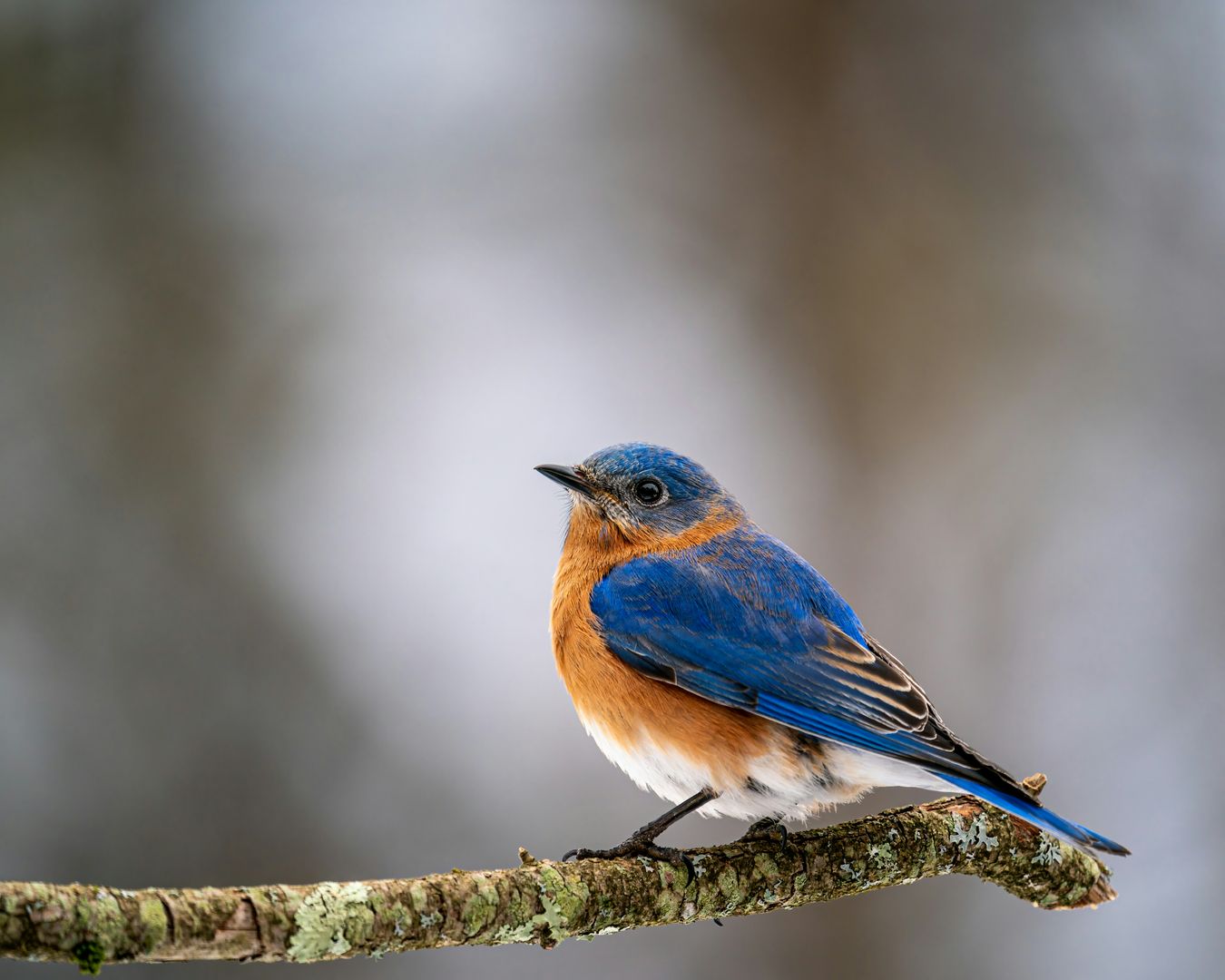
Bluebirds are the cheerful ones. It's hard not to be a little bummed when they vanish from your yard in October.
There are three kinds of bluebirds and all of them have their preferences.
There's No One Answer
Bluebirds are partial migrants, which is a polite way of saying they can't agree on anything. Whether a given bluebird leaves depends on which species it is, how far north it breeds, and what the winter food supply looks like.
The Georgia Department of Natural Resources sums up the Eastern Bluebird situation nicely: birds from the far north migrate more consistently, while plenty of southern birds stay put. Bluebirds also migrate during the day, unlike most songbirds, which travel at night.
Even the experts admit there's a lot we don't know. The bluebird-focused site Sialis puts it plainly: some bluebirds in some areas migrate, and others don't, and the "whys" are still fuzzy. Bluebirds, it turns out, are true blue to nobody's schedule but their own.
If you want the wider view of who's moving in autumn and when, our guide to [fall bird migration] covers the big picture.
Eastern Bluebirds Migrate
According to the Audubon field guide to the Eastern Bluebird Eastern bluebirds are a "permanent resident in many southern areas. In the north, arrives quite early in spring, and lingers late in fall."
Here's the low down:
- Northern birds (New England, the upper Midwest, southern Canada) are the most likely to leave. Georgia DNR notes that Minnesota birds head out anywhere from September to early December, with October as the peak, and come back between late February and mid-May.
- Southern birds often stay home all year and get a lot of houseguests. Georgia DNR reports that thousands of Eastern Bluebirds winter in Georgia each year, mixing in with the locals, and one Florida study found the local bluebird population jumped 100 percent when the northern migrants arrived. (Imagine your in-laws arriving for the holidays, times two, for four months.)
- Middle-latitude birds are a coin flip. Some stay, some go, and a hard freeze can push "resident" birds south for a while.
The Cornell Lab's Eastern Bluebird page has a great example of how far they can travel with the oldest known Eastern Bluebird, at least 10 years and 6 months old, was banded in New York in 1989 and found in South Carolina about a decade later.
What Eastern Bluebirds Eat in Winter
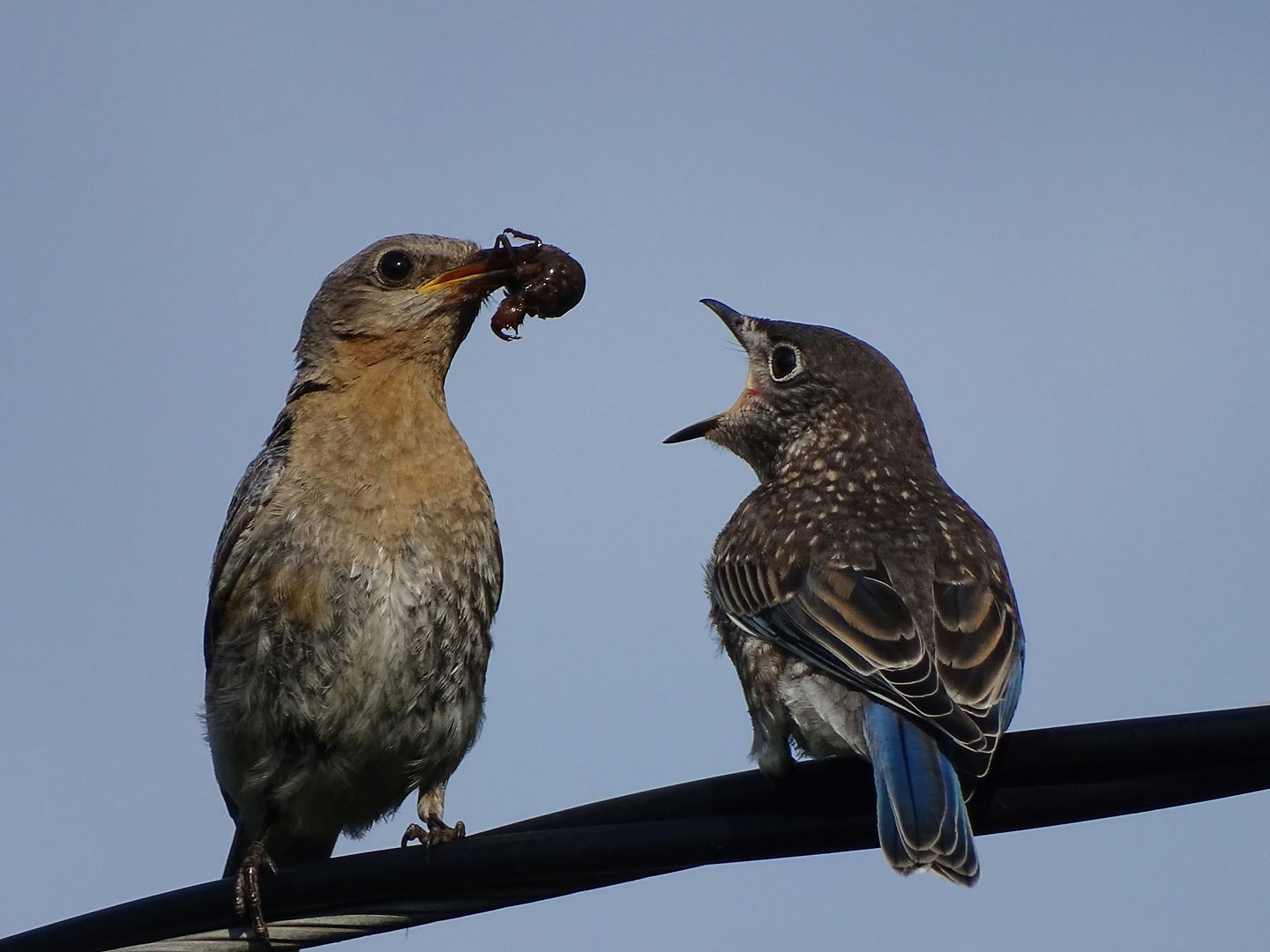
Bluebirds are insect hunters in summer, but bugs are scarce in January. So they switch to fruit. Cornell's Eastern Bluebird life history lists mistletoe, sumac, black cherry, wild holly, dogwood berries, hackberries, pokeweed, and juniper berries among their fall and winter foods.
If you've got a holly or dogwood in the yard, you've already got a bluebird pantry.
Do Western Bluebirds Migrate?
Western Bluebirds play by similar rules. The Audubon field guide to the Western Bluebird calls it "a permanent resident in some southern areas; it is migratory in the north, arriving rather early in spring and lingering late in fall."
In winter, they move into semi-open country, brush, and especially pinyon-juniper woodlands, where they eat the fruits of mistletoe, juniper, and elderberry. So if you live in the Southwest or along the Pacific Coast, you may have Western Bluebirds all year. If you're in the northern part of their range, expect them to clear out for the season.
Western Bluebirds have had a tougher go of it lately. Audubon notes their numbers have declined over much of their range in recent decades, and that putting up birdhouses "probably has not kept pace with the loss of natural nest sites."
Do Mountain Bluebirds Migrate?
Yes, more reliably than the other two. The Audubon field guide to the Mountain Bluebird says they migrate relatively late in fall and early in spring, and their winter range "varies from year to year, depending on food supplies."
Mountain Bluebirds are also the party animals of the family. In winter, Audubon says they often gather in large flocks, "even by the hundreds," sometimes with Western Bluebirds. They hang out in pinyon-juniper woods, grasslands, desert, farmland, and even plowed fields. Some flocks wander east onto the Great Plains, and lone strays have shown up as far away as the Atlantic Coast.
The good news: Audubon describes Mountain Bluebird numbers as apparently stable, partly because they nest in remote areas with less competition from starlings.
Where Do Bluebirds Go in the Winter?
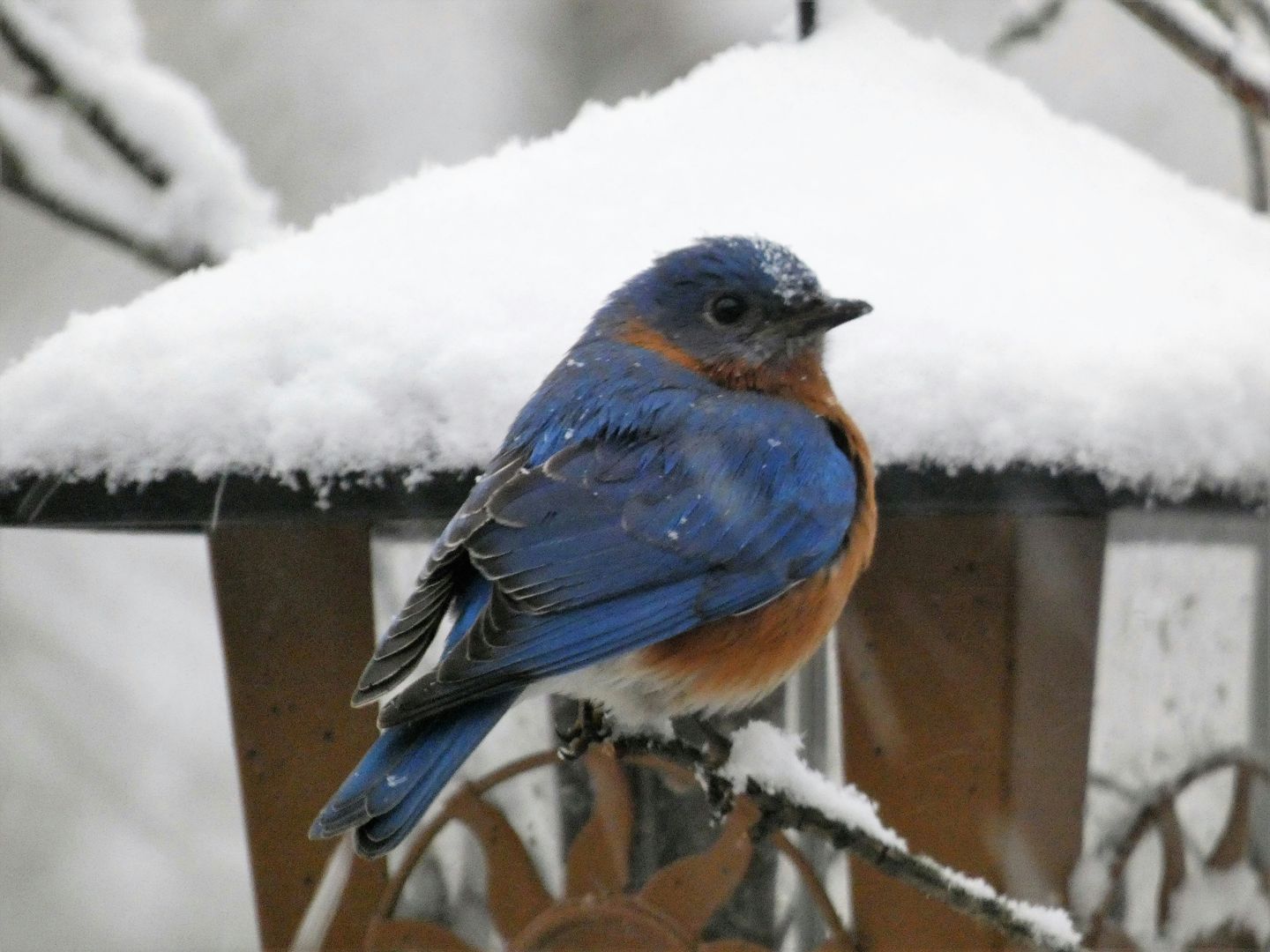
Not very far.
Northern Eastern Bluebirds generally shift into the southeastern U.S., where Georgia DNR says they mix with resident birds all winter. Western and Mountain Bluebirds move down out of the northern parts of their range into the warmer West and Southwest, following the berries.
Wherever they land, winter bluebirds are social. They flock up, travel together, and go wherever the fruit is. Georgia DNR notes that migrating flocks can number in the hundreds and often stay together all winter.
Roosting Boxes and Huddling
Bluebirds that stay north for the winter have a very cozy survival trick. On cold nights, they pile into a cavity together. According to Sialis's roosting page, bluebirds and chickadees can drop their body temperature by 10 to 15 degrees overnight to save energy, and when multiple bluebirds share a box, they fan their heads out toward the center.
One observer counted 21 birds leaving a single roost box one morning. Twenty-one, like a clown car.
You Probably Don't Need to Buy a Roost Box
Sialis notes that bluebirds often roost in a regular nest box, especially in northern states, and that it may be best to just leave your boxes up all winter. So if you already have a bluebird house, leave it up, make sure it's clean and dry, and you're done.
If you don't have one yet, our guide to the best bird houses for bluebirds covers the features that matter, and our roundup of the best winter bird houses can help if your winters are serious. Water helps too. Our winter bird bath tips explain how to keep it from turning into a skating rink.

SISTERBIRD 2 Pack Bluebird Houses for Outside, Warming Gifts Bluebird House
SISTERBIRD
3 Tips to Help Bluebirds This Winter
Bluebirds are one of birding's great comeback stories, and it happened because regular people did something. Cornell explains that Eastern Bluebird populations fell in the early 1900s as introduced House Sparrows and European Starlings took over their nest holes, and that bluebird trails and nest box campaigns helped them recover.
Skip the single-serve plastic tubs of dried mealworms and the novelty feeders wrapped in three layers of plastic this winter. Containers and packaging made up 82.2 million tons, or about 28 percent, of all U.S. municipal waste in 2018, and only 13.6 percent of plastic containers and packaging got recycled that year, according to the EPA's containers and packaging data.
- Buy in bulk
- Choose paper or reusable packaging
- Plant a berry-producing shrub instead of buying something shiny
Bluebirds aren't the only backyard regulars who look different or act strangely in winter. Goldfinches basically go undercover, as explained in our post on [whether goldfinches migrate]. And for the full list of birds that stick around all year, see our guide to [the year-round birds at your feeder].

PICKY NEB Dried Mealworms Non-GMO 5 Lb High-Protein for Chickens & Birds
PICKY NEB
Frequently Asked Questions
Do bluebirds stay all winter?
Many do, especially in the southern U.S. and parts of the West and Southwest. Northern populations of Eastern and Western Bluebirds usually leave, and Mountain Bluebirds are the most migratory of the three.
Do bluebirds use their houses in winter?
Yes. Bluebirds often roost in regular nest boxes on cold nights, sometimes in groups, so it's a good idea to leave your boxes up all winter.
Do bluebirds come back to the same house every year?
Many do. Georgia DNR reports that 30 to 50 percent of Eastern Bluebirds return to the same place where they nested the year before.
Do bluebirds migrate at night?
No. Bluebirds migrate during the day, often in flocks, unlike most songbirds.
Have you seen any bluebirds this migration season?
Tell us in the comments or through the Sparkbird App, available in the Apple App Store.
- Related: How to Use the Sparkbird App

No comments yet.