
Every fall, the robins on my block vanish like Batman and Robin after a rooftop rescue. Every spring, someone posts a photo of the "first robin," and everyone celebrates like the bird just flew in from Mexico.
So, do robins migrate? It's more complicated, and honestly more interesting, than the greeting-card version.
Why It Looks Like Robins Disappear in Fall
A lot of the robins you "lose" in October never actually leave. They just stop acting like the robins you know.
In spring and summer, robins are lawn birds. They hop across the grass, cock their heads, yank up earthworms, and sing from the rooftops to defend their territories. They're basically the extroverted neighbor who's always out mowing.
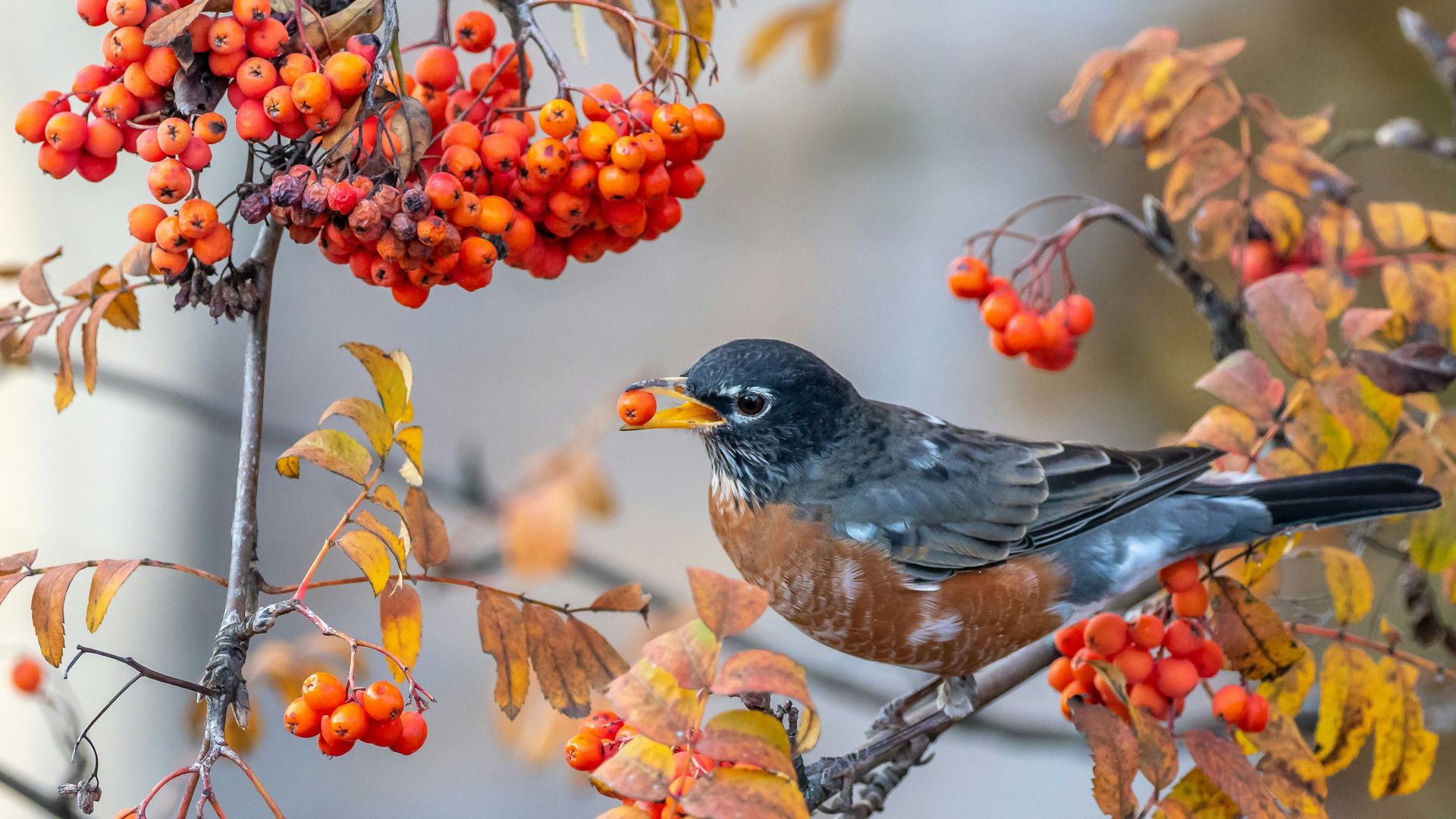
In fall and winter, they drop the territory, stop singing much, and move to moist woods, thickets, and berry-filled trees. According to Cornell's article on American Robins in the middle of winter, robins switch from territorial to nonterritorial behavior in winter and form nomadic flocks that can number from hundreds to thousands of birds, showing up wherever fruit is plentiful on trees and shrubs. So the robin that used to stare at your lawn like it owed him money is now somewhere in the treeline with 200 of his closest friends, eating crabapples and keeping a low profile.
That's why the yard goes quiet.
Robin Bird Migration: Who Goes and Who Stays
Robin bird migration isn't one big exodus. It's a lot of individual decisions, and robins make them differently than you'd expect.
Journey North, which has tracked robins with help from citizen scientists for decades, reports that males are far more likely than females to stay in the north. That's partly real estate. A male that stays close to his breeding grounds can claim a good territory early in spring. Females, who need excellent nutrition to produce eggs, tend to travel farther south to find reliable winter food. Journey North also notes that the same individual robin may winter in Texas one year, Florida the next, and Wisconsin the year after that.
Birds from northern Canada clear out almost entirely, since there isn't enough winter fruit up there to feed them. Meanwhile southern states like Texas and Florida fill up with winter flocks. In between, across much of the U.S., you'll have a shifting mix of local birds that stayed, northern birds that moved in, and some of your summer regulars that slid a little south.
The key point is that cold isn't what drives them. Robins can handle very cold temperatures. They shiver to generate heat, and they grow extra down feathers for insulation. What drives them is food.
Why Robins Migrate: It's All About the Worms
Robins migrate because the ground freezes, which locks them out of their favorite food. When the soil goes hard, the earthworm buffet closes.
In fall they shift from earthworms and insects to fruit. The American Bird Conservancy and Cornell both point to winter fruits like juniper, holly, crabapple, and hawthorn, and the University of Minnesota's Season Watch program adds sumac berries to the menu. Fruit is high in energy and still hanging on branches when the ground is frozen solid.
The problem is supply. In the far north, there just isn't enough fruit to feed every robin that lived there all summer, so some have to move south to find it. If your area has plenty of fruiting trees and some open water, odds are good that robins will stick around. If the crop runs out or deep snow buries everything for days, flocks will pick up and move on, sometimes overnight.
Before they head out, robins also molt into fresh feathers, which gives them both better flight feathers for the trip and better insulation if they stay.
Where Do Robins Go in the Winter?
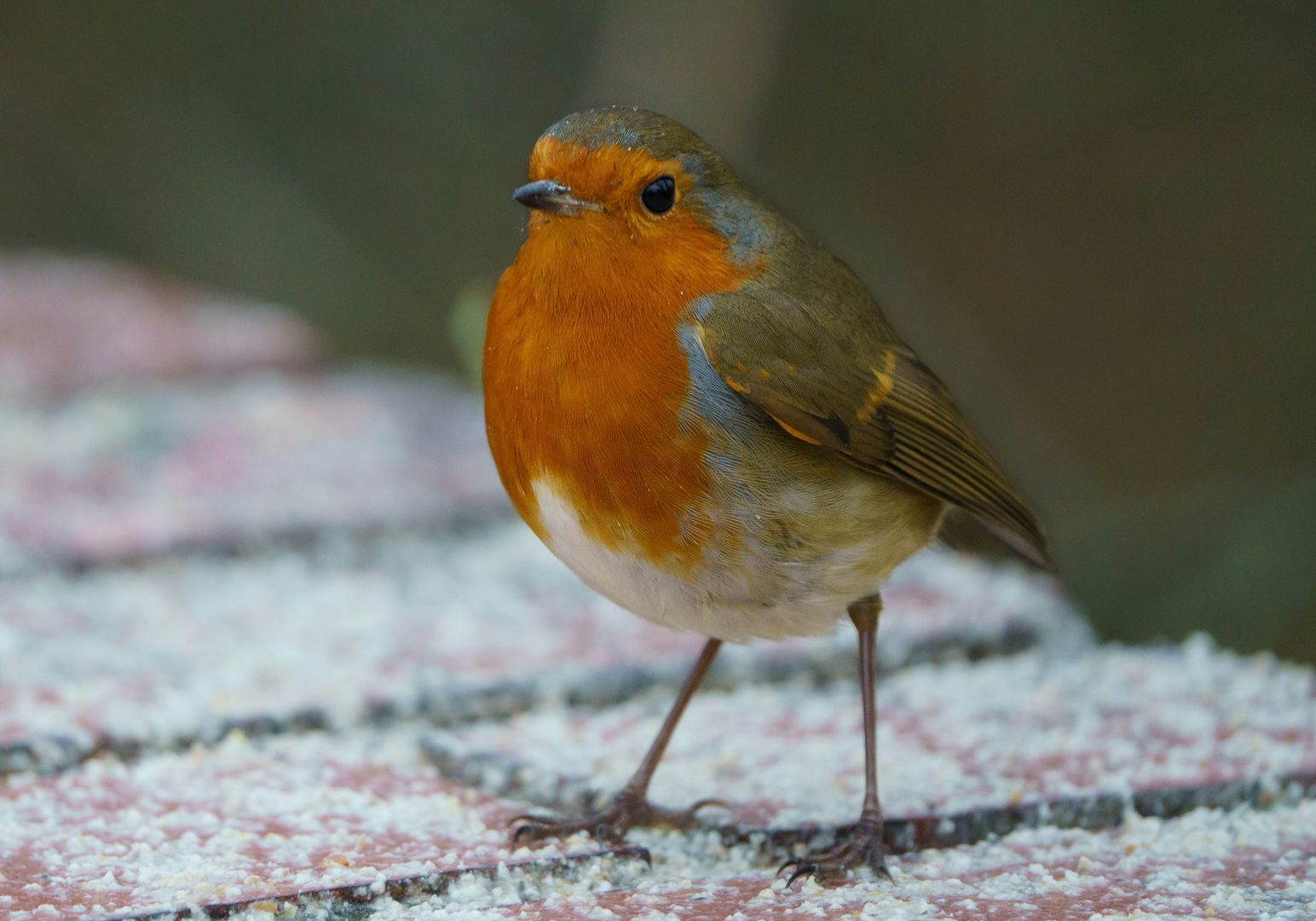
Robins from the far north move into the U.S., and many U.S. robins shift south or simply shift habitat. Big winter flocks gather across the Southeast and along the Gulf, including Florida and Texas. Plenty of robins also stay in northern states, as long as they have fruit and water. Cities help, too. Season Watch notes that cities are warmer than the undeveloped land around them, which can make urban parks and neighborhoods with fruiting trees surprisingly good winter robin habitat.
Within their winter range, robins are nomads. They follow the fruit, which means a flock might strip a holly hedge in your neighborhood in an afternoon and then not come back for weeks.
Fall migration in the U.S. covers the whole season, and our upcoming guide to [where birds go in winter](PENDING — cluster post not yet published) digs into the destinations.
Winter Roosts: Robins Know How to Throw a Party
At night, winter robins gather in communal roosts in sheltered stands of trees and shrubs, where more eyes and ears can watch for predators. They learn this young. Journey North describes how, in summer, a male robin leads his fledglings to a well-sheltered stand of trees to sleep, where other robin families gather too.
Some winter roosts are enormous. In February 2010, Tampa Bay birders counted an estimated 1.45 million robins at a single roost near St. Petersburg, Florida during the Great Backyard Bird Count. According to Audubon Florida, that was the largest winter roost in North America that year, and more than the 400,321 robins tallied in the rest of the U.S. combined. That's not a roost. That's Woodstock with feathers.
Do Robins Stay All Winter?
Plenty do. If there's enough food and open water, yes, and Cornell notes that many robins remain in the same place year-round.
You're most likely to spot winter robins near fruiting trees and shrubs, along wooded streams, in parks, and around neighborhoods with crabapples and hollies. Open water matters too, especially once ponds and puddles freeze, so a heated birdbath can make your yard a winter hot spot.
Robins do visit feeders, but on their own terms. They're fruit-and-worm birds, so a hopper full of sunflower seed isn't the draw. Our guide to bird feeders for robins covers what to offer and how. For the long game, our tips on how to attract robins explain which native fruiting plants keep robins coming back. (Spoiler: plant the berries and they'll come. Field of Dreams, but for thrushes.)
If you're curious which other backyard birds tough it out with them, [which birds don't migrate](PENDING — cluster post not yet published) has the list.
The "First Robin of Spring" Myth
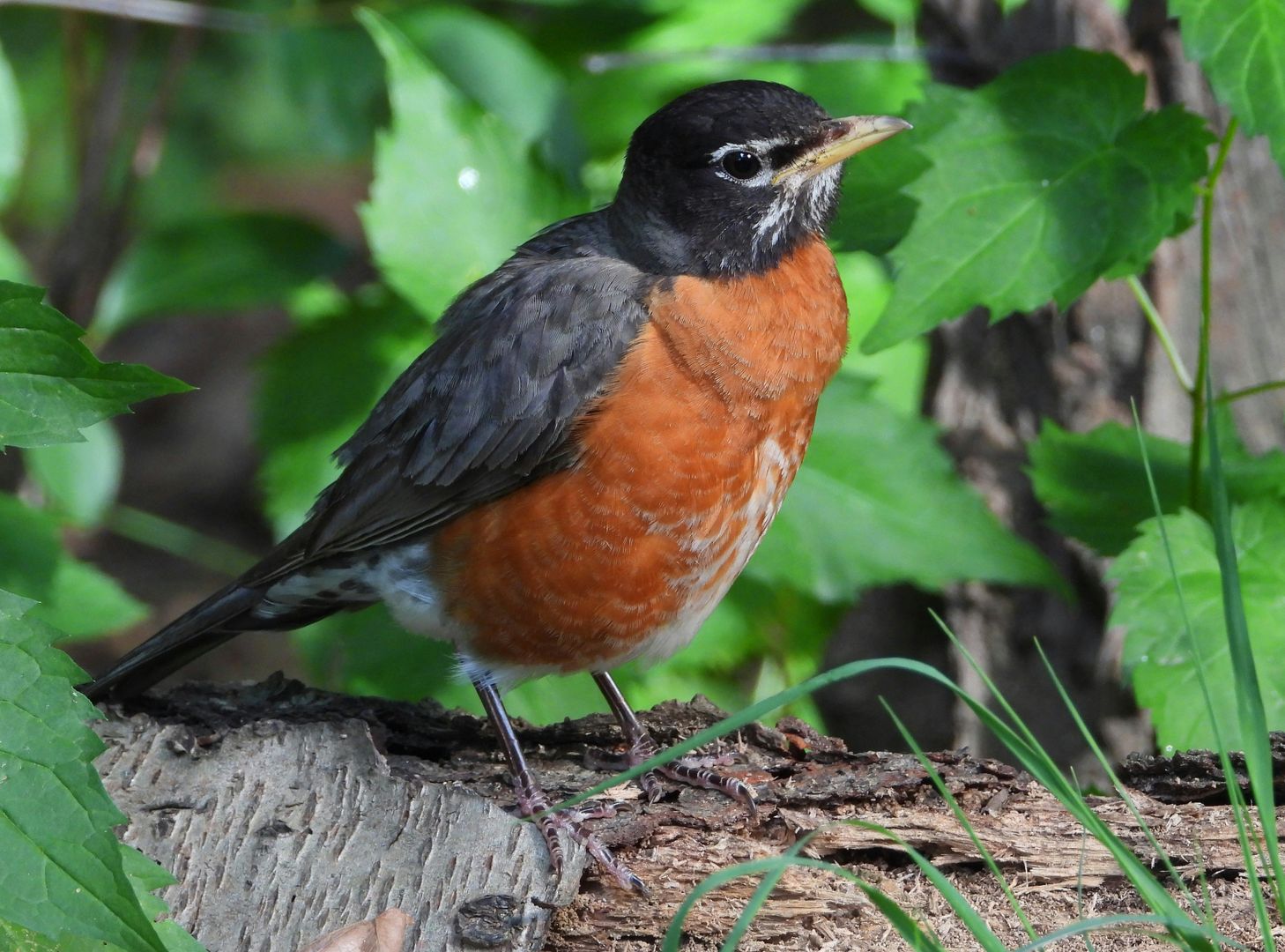
It's on calendars, in poems, and in every local news segment in March. The problem is that the robin you see on the lawn in March may have been around all winter, quietly eating berries in the woods behind the grocery store.
Journey North puts it neatly: there's no one single moment when a robin changes from a wintering bird to a migrant. Robins drift back and forth between winter behavior (flocking, eating fruit) and spring behavior (singing, eating worms, defending territory). A late ice storm can even send a singing robin right back into a winter flock.
So what does mark real spring arrival? Journey North considers a singing robin to be a spring bird, even though it's not a perfect signal. They also track a neat temperature pattern: male robins tend to arrive about when the average daily temperature reaches 37 degrees Fahrenheit, which is roughly when the ground thaws and the worms come back. Males show up first, generally a few days to two weeks ahead of females, to stake out territories.
In other words, that "first robin" isn't necessarily a sign that spring has arrived. It's a sign the ground has thawed enough to make lawn worms worth the trouble. Less romantic, but still lovely. If you want more robin trivia to win your next bird-nerd argument, our facts about robins roundup has plenty.
Robin Migration Map: Watch the Movement Live
If you want to watch robin migration happen in real time, a robin migration map is the way to go.
Journey North's American Robin map collects sightings from people across North America and plots them as the season unfolds. You can report your own robin sightings and see how they fit into the bigger picture. In spring, it's especially fun to watch reports roll north as the ground thaws.
For a longer view, the University of Minnesota's Season Watch program features a robin migration animation built from eBird data covering 2006 to 2020, showing how robin populations shift across the continent through the year. It's a great way to see that robins never fully leave most of the U.S.; they just reshuffle.
And if you'd rather share your sightings with actual humans, your local birding group would love to hear about that 300-robin flock in the park. Robins are a great excuse to get outside together in the quieter months.
Your Lawn Is a Robin Buffet. Keep It Clean.
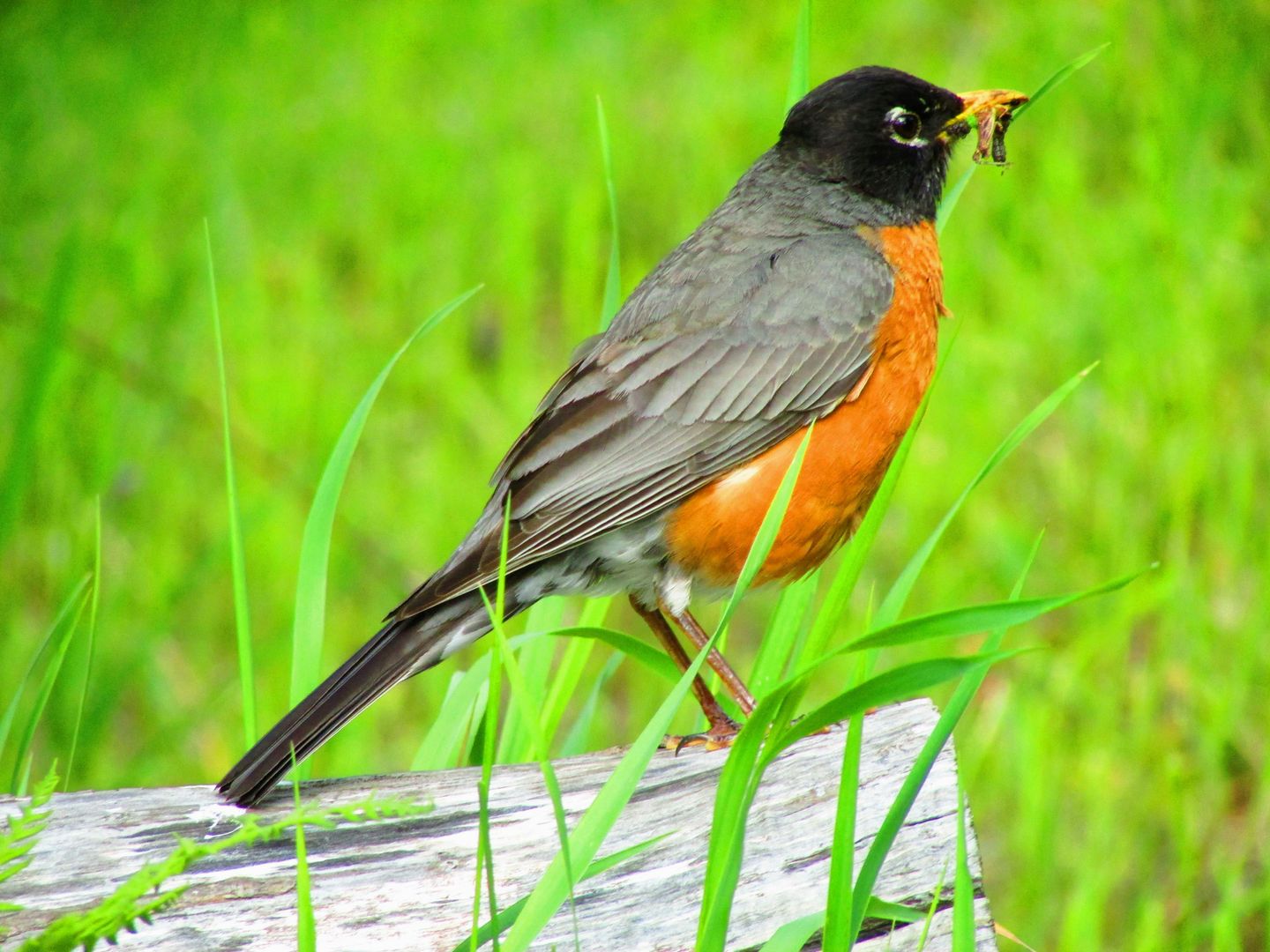
If you love robins, the most important thing you can do for them happens on your own lawn.
Robins forage on lawns more than almost any other backyard bird, which is exactly what makes them vulnerable. The American Bird Conservancy warns that pesticide poisoning is a major threat to robins because they feed on lawns and open spaces that are often sprayed. DDT is long banned, but ABC notes that chemicals like neonicotinoids, chlorpyrifos, and glyphosate are still in use, and that pesticides can also hit earthworm populations, the robin's main food. Cornell even describes the robin as a possible indicator of chemical pollution because it spends so much time foraging on lawns.
Skip the weed-and-feed, the grub killer, and the "perfect lawn" spray program. No traditional pesticides, insecticides, or chemical weed killers. Pull the worst weeds by hand, let some clover and dandelions be, and leave fallen leaves in your garden beds where they feed the worms and insects robins depend on. Use what you already have. A slightly scruffy lawn full of earthworms is a five-star restaurant to a robin.
It's a small change, but robins are watching your yard closely. Literally.
When's the last time you saw a robin?
Tell us in the comments or on the Sparkbird App.
- Related: How to Use the Sparkbird App

No comments yet.