
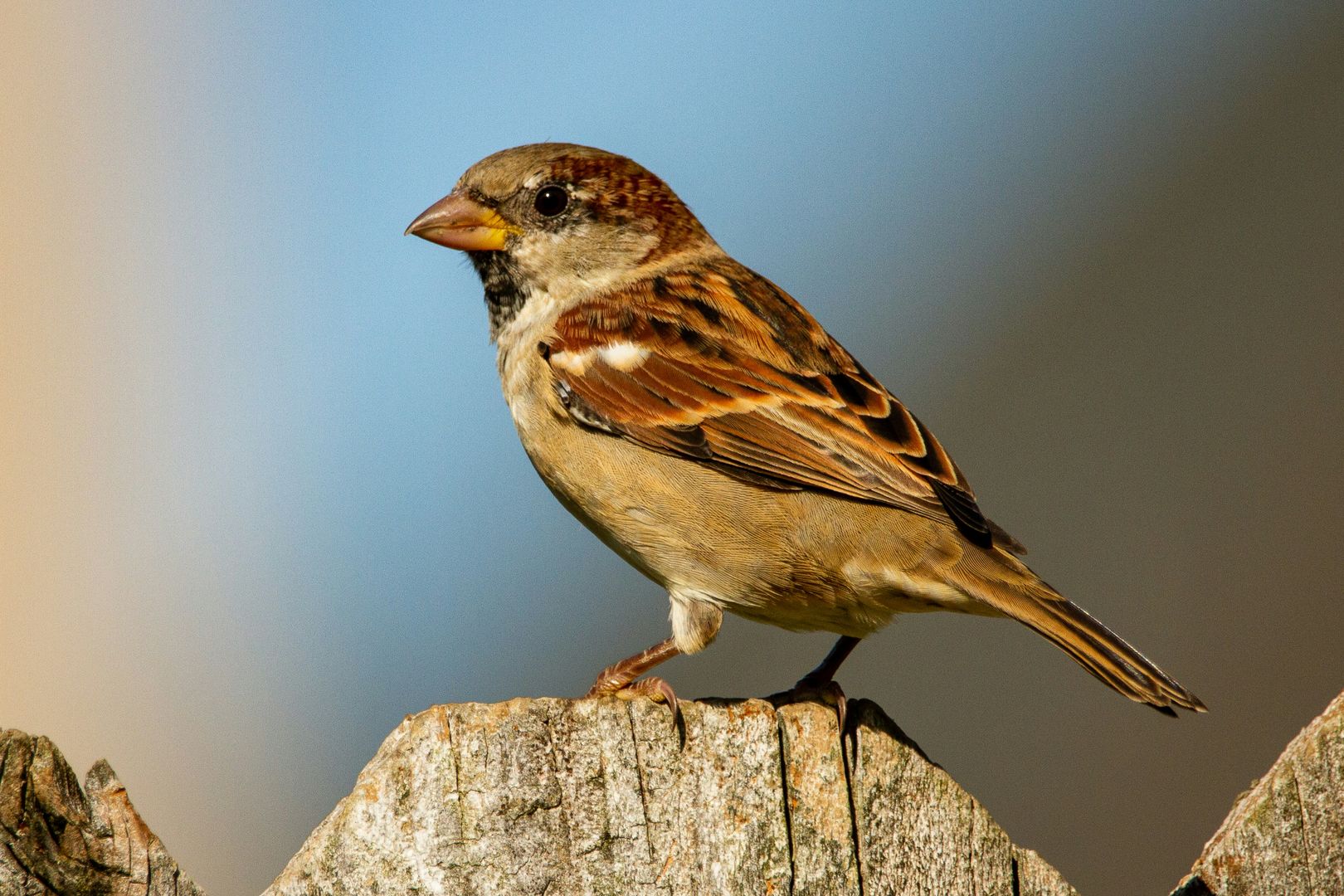
If you've ever typed "does sparrows migrate" into a search bar at 6 a.m. while staring at a feeder full of little brown birds, welcome. Don't worry, I can't identify half these birds before coffee either.
The short answer is some sparrows do, some don't.
Two Kinds of Sparrows, Two Different Answers
Part of the confusion is that "sparrow" covers two unrelated families. The house sparrow is an Old World sparrow, a European import. The rest of the sparrows you see in North America (song, chipping, white-throated, juncos, and dozens more) belong to a separate family of New World sparrows. They're less like cousins and more like coworkers in the same brown cardigan.
Do House Sparrows Migrate?
No. House sparrows are year-round residents wherever they live. According to the Cornell Lab's House Sparrow page, they arrived in North America in Brooklyn, New York, in 1851 and had spread to the Rocky Mountains by 1900. Today they're nearly continent-wide, and they stay put all year.
Why leave? House sparrows eat grain, seed, livestock feed, and in cities, our discarded food. They're the Captain Jack Sparrow of birds: no fixed itinerary, always turning up wherever the food and drama are, and somehow doing just fine.
Which Native Sparrows Migrate?
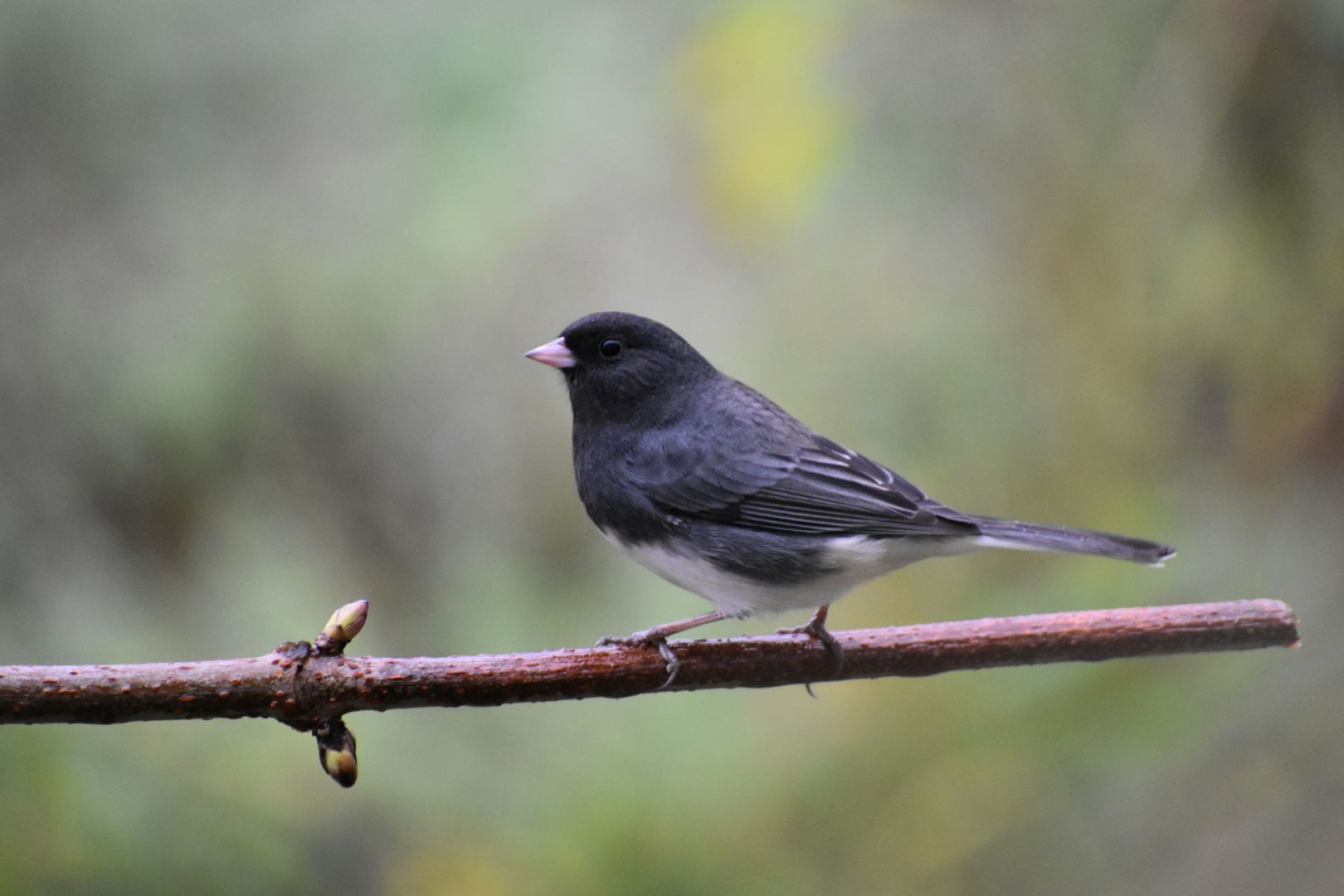
Many of your winter sparrows traveled to get to you. Here are the regulars.
White-throated sparrows breed mostly in Canadian forests and spend winter in eastern woodlots and brushy suburban parks. Audubon says they migrate mostly at night and move south relatively late in fall. Their whistled song is often rendered "Sweet sweet Canada, Canada, Canada," which is very on-brand for a bird that just left there.
White-crowned sparrows on parts of the Pacific Coast are year-round residents, but northern and mountain birds are strongly migratory. The Cornell Lab's White-crowned Sparrow page says one migrating bird was tracked covering 300 miles in a single night, and Alaska birds travel roughly 2,600 miles to winter in Southern California.
Chipping sparrows that breed in the northern U.S. and Canada head south to places like Mexico, Baja California, and Florida, while southern populations tend to stay. The Missouri Department of Conservation puts it nicely: they migrate far enough south that snow won't keep them from finding seeds on the ground.
Song sparrows are partial migrants. Audubon notes they're present all year in many places, but birds from the northern interior move to the southern U.S. or extreme northern Mexico for winter. So your song sparrow might be a lifelong local or a seasonal transplant.
Dark-eyed juncos are sparrows too, and they're the ones most people notice. Cornell calls them the "snowbirds" of the middle latitudes, showing up in the eastern U.S. in winter and heading back north in spring.
For more fall arrivals, see our list of [birds to look for this autumn](PENDING — Fall Birds: 25 Birds to Look For This Autumn), and for timing, [the fall migration guide](PENDING — Fall Bird Migration in the U.S.: When It Happens, What to Look For, and How to Watch) covers the whole season.
Do Sparrows Migrate for the Winter, or Just Shuffle Around?
Both. Many native sparrows truly migrate, others shift a few hundred miles, and some juncos simply move up or down a mountain. Your summer chipping sparrows may be gone, replaced by white-throats and juncos who think your yard is Florida. (Call it the changing of the guard. Or, if you're me, the sparrow-ing of the guard. Will has asked me to stop.)
What to Expect at Your Feeder
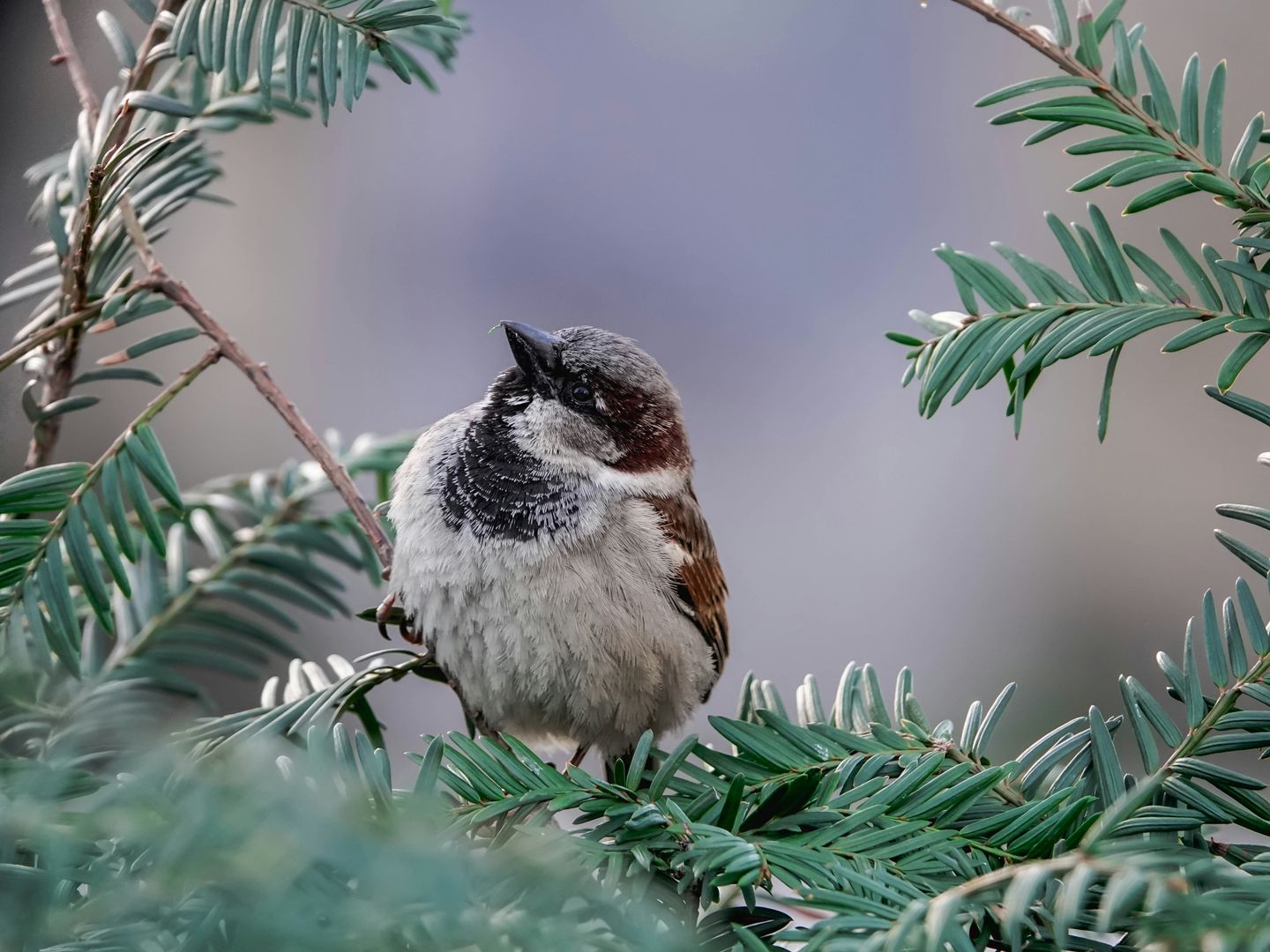
Sparrows in winter are mostly ground feeders, happily picking up seed under a feeder or off a flat tray. House sparrows will crowd any feeder going.
Here's my advice on what not to buy: skip the cheap, filler-heavy seed mixes. Cornell's winter bird feeding guide says standard mixes of sunflower, milo, millet, oats, wheat, flax, and buckwheat are often wasteful, because birds eat the sunflower and leave the rest. Black-oil sunflower and white proso millet go a lot further. Our bird food 101 guide breaks down which seeds attract which birds, and everything you need to know about bird feeders covers setups that cut down on spillage.
Leave No Mess
All that leftover seed doesn't just go to waste. It invites guests you didn't put on the list. Growing up, my mom kept her wine on the back porch, and a raccoon figured that out before we did. Around the same time, a squirrel fell through the light fixture over the kitchen sink, and the rest of its family moved into the attic. Easy food has a way of turning into permanent tenants.
Project FeederWatch warns that seed scattered on the ground can attract rodents, and that leftover seed and hulls can harbor pathogens that make birds sick. So rake or sweep under your feeders regularly, clean feeders every week or two, and only put out what your birds will finish.
Curious which other birds stay home all winter? Our guide to [the year-round birds at your feeder](PENDING — What Birds Don't Migrate? The Year-Round Birds at Your Feeder) covers cardinals, chickadees, and the rest of the homebodies.
So, do sparrows migrate? Some do, some don't, and one species moved to Brooklyn in 1851 and never left, which honestly makes it the most New York bird there is.

No comments yet.