
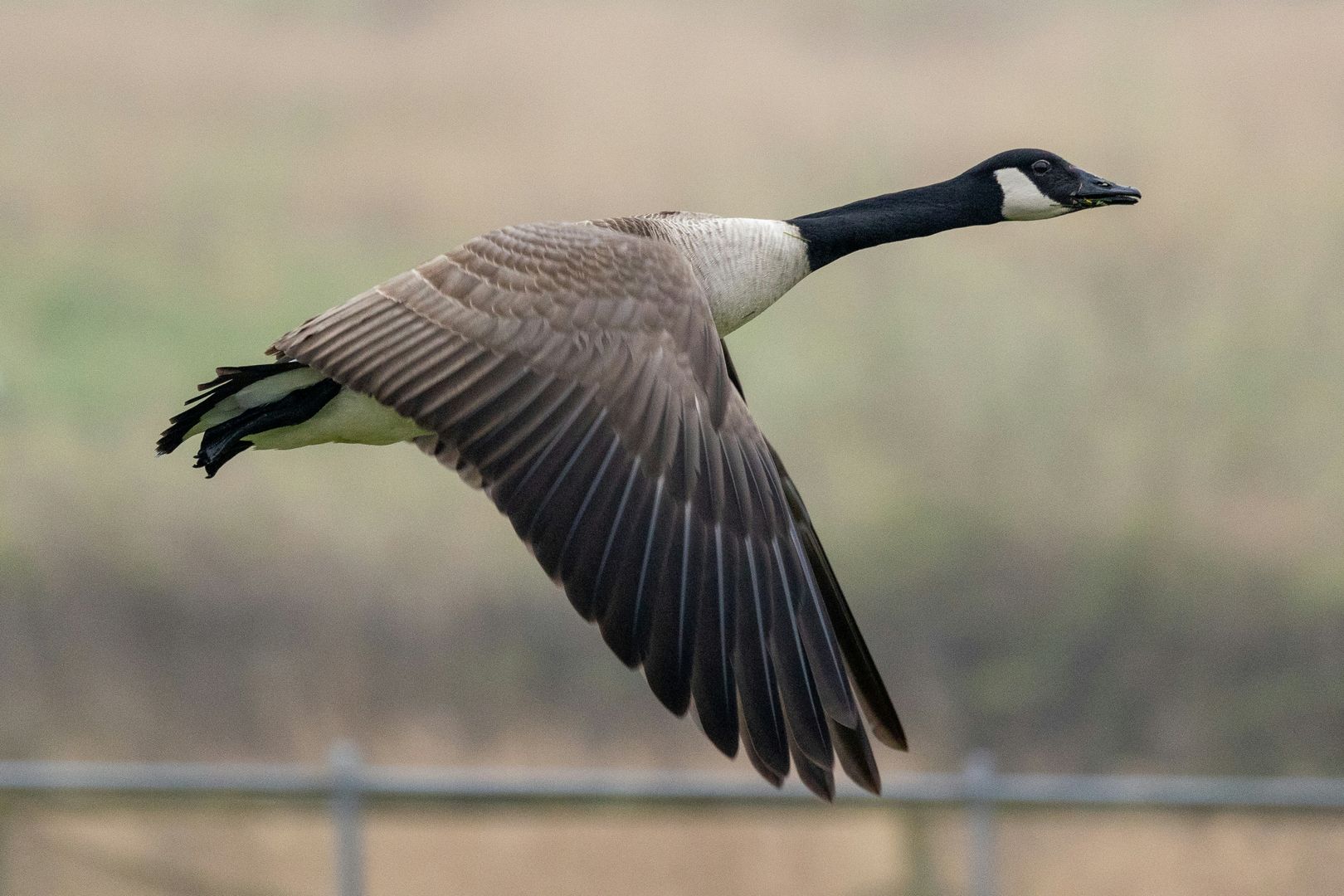
There's a specific sound that means fall has officially started, and it isn't a pumpkin spice latte being made. No hate, the geese are just louder.
When do geese migrate, exactly? And why does the goose at your office pond never seem to leave? The answer depends on which Canada goose you're looking at.
Fall Geese Migrate Timeline
Canada goose migration runs on a mix of daylight and weather. Here's roughly how the season plays out.
Late August to September. Northern Woodlands explains that decreasing day length in late August and September cues geese to begin congregating at staging areas. Families that spent the summer apart from the big flocks start bunching up on lakes and fields, and the honking volume goes up noticeably.
September to October: the main event. This is peak fall migration for Canada geese. Northern Woodlands says geese breeding in northern Canada typically reach their wintering grounds by late October, so the long-distance travelers are mostly moving in these two months. As with most fall migrants, the biggest flights tend to follow cold fronts, when north winds give the flocks a free push south.
November to December. Geese still moving around late in the season are often shorter-distance birds. Northern Woodlands notes that in the Northeast, geese moving around in November and December are likely residents traveling shorter distances, shuffling to wherever the water stays open.
Late winter to spring. Cornell's All About Birds says the bulk of spring migration moves north behind the retreating snow line, where temperatures average about 35 degrees. In much of the U.S., that means late February through April.
Do Canada Geese Migrate? Yes and no.
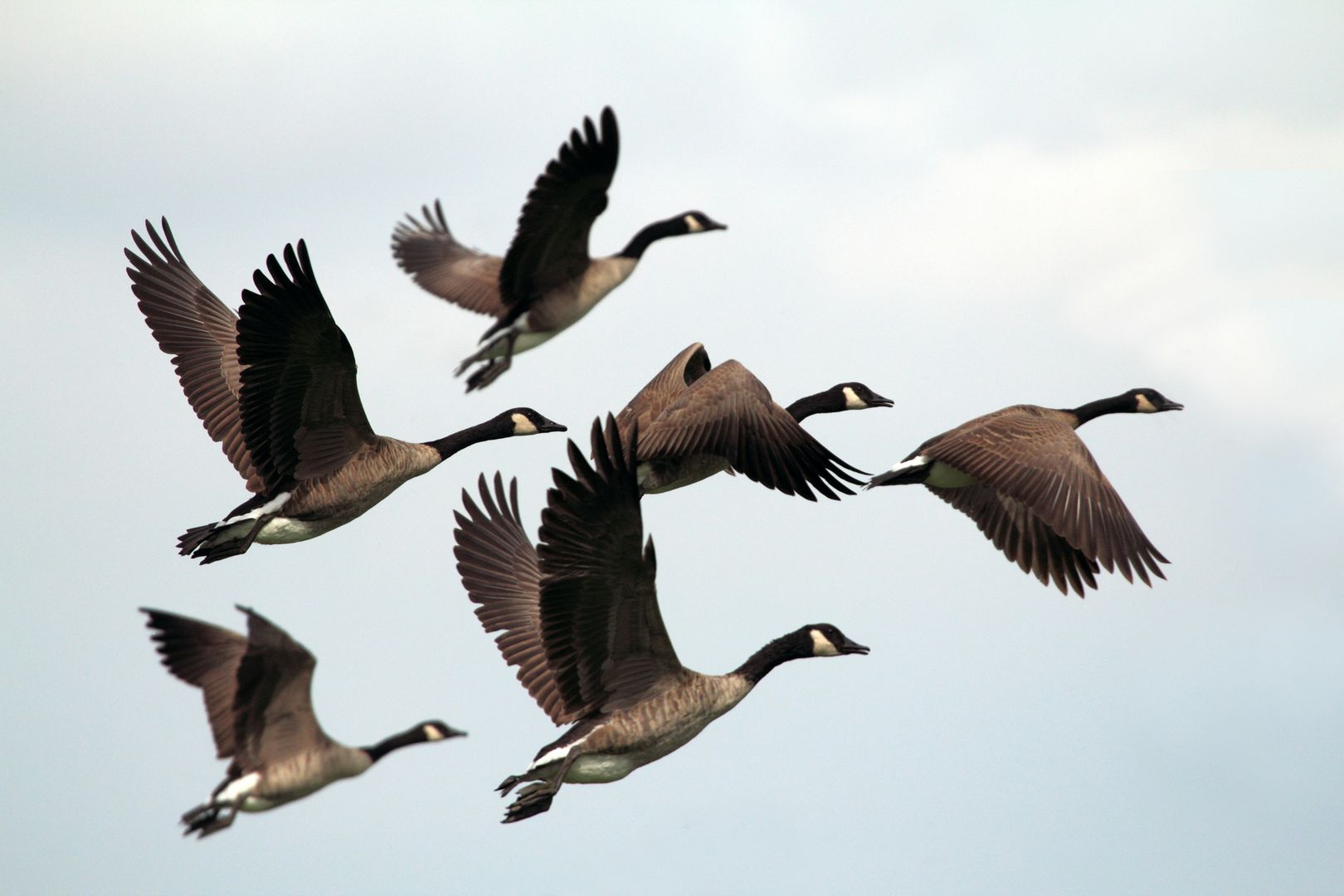
Canada geese are partial migrants, which means some populations migrate and others don't.
Geese in northern migrate the traditional long distances, while geese breeding in southern Canada and the lower 48 migrate shorter distances or not at all. So the geese flying over a Minnesota in October might have started near Hudson Bay, while the geese on your local golf course may have been born three fairways over.
How resident geese happened
The resident goose boom has a surprisingly dramatic backstory. The "giant" Canada goose, Branta canadensis maxima, once bred from central Manitoba to Kentucky but, according to Cornell, was nearly driven extinct in the early 1900s. Turns out they had made a comeback in 1962 as the Indiana DNR recounts.
Cornell noted that the proliferation of lawns, golf courses, and parks offered such reliable habitat that Canada geese now stay year-round instead of migrating. The species' population grew by more than 7 percent per year between 1966 and 2019.
Just an FYI
They're called Canada goose, not the Canadian goose. That said, plenty of people search for Canadian geese migration.
Why Are Geese Flying North in the Fall?
Cornell's explanation comes down to three things. First, once goslings can fly, whole families take off from nesting areas to find better feeding spots, in any direction.
Second, there's the molt migration. Young and non-breeding geese fly anywhere up to hundreds of miles in late spring and summer to big bodies of water where they can safely replace their flight feathers. They return in September and October from wherever they went.
Third, resident geese make daily flights between roosts and feeding fields all year. The Black Swamp Bird Observatory notes that it's mostly two-year-olds, plus a few failed breeders, and that it ramps up in late May and wraps by mid-June.
And here's a fun fact: migrating Canada geese travel as families.
Why Do Geese Fly in a V?
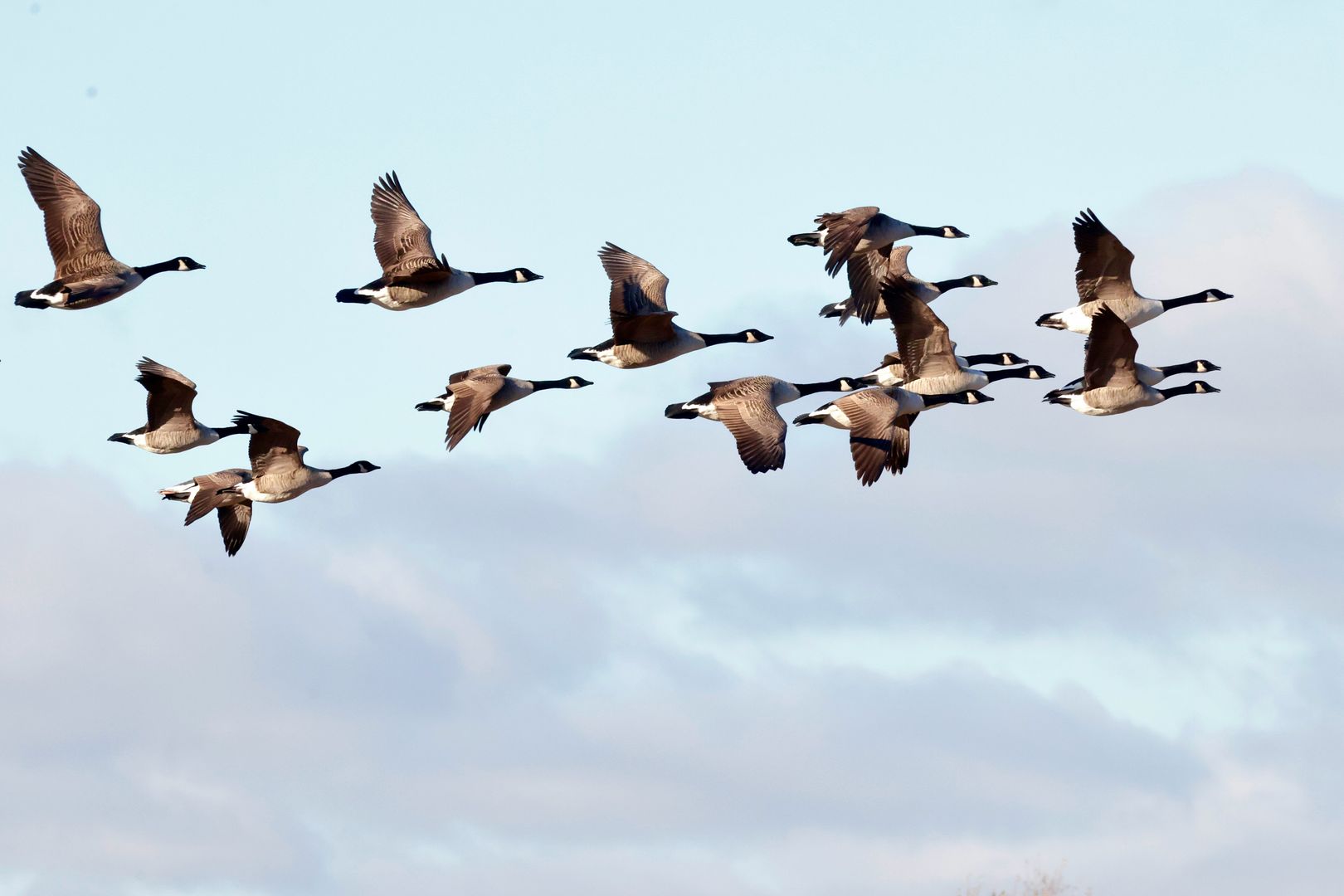
The V formation is the most famous thing about goose migration, and the science behind it is genuinely cool.
The energy savings
As a bird flaps, air spills off the tips of its wings and swirls upward behind it. A goose flying slightly behind and to the side of the bird ahead catches that rising air, called upwash, and gets a little free lift. Northern Woodlands cites the classic estimate that geese flying in a V can fly as much as 71 percent farther than they could alone.
That 71 percent number came from a 1970 aerodynamic model, so researchers wanted real-world proof. A 2001 study fitted pelicans with heart-rate monitors and found that birds flying in formation had heart rates 11.4 to 14.5 percent lower than birds flying solo, as Mental Floss summarizes. V is for very efficient.
They time their wingbeats
In 2014, researchers strapped tiny GPS loggers to Northern Bald Ibises (a cousin-in-spirit to the goose in this department) and found something wild. As National Geographic reported, birds flew about a meter behind and a meter to the side of the one in front, roughly a 45-degree angle, and flapped in phase with it to trace the same path through the air. When a bird ended up directly behind another, in the downwash, it switched to flapping out of sync to avoid the sinking air.
They take turns at the front
The lead position doesn't get the free lift, so it's the hardest job in the flock. All About Birds says experienced geese take turns leading. It's the bird version of cycling in a peloton, or of a very polite Die Hard where everyone takes turns being John McClane.
There's a social bonus too. Researchers have suggested that a V angle of about 29 degrees or more lets every bird see every other bird, which helps a flock stay together over hundreds of miles of featureless sky.
Where Do Geese Go in Winter?
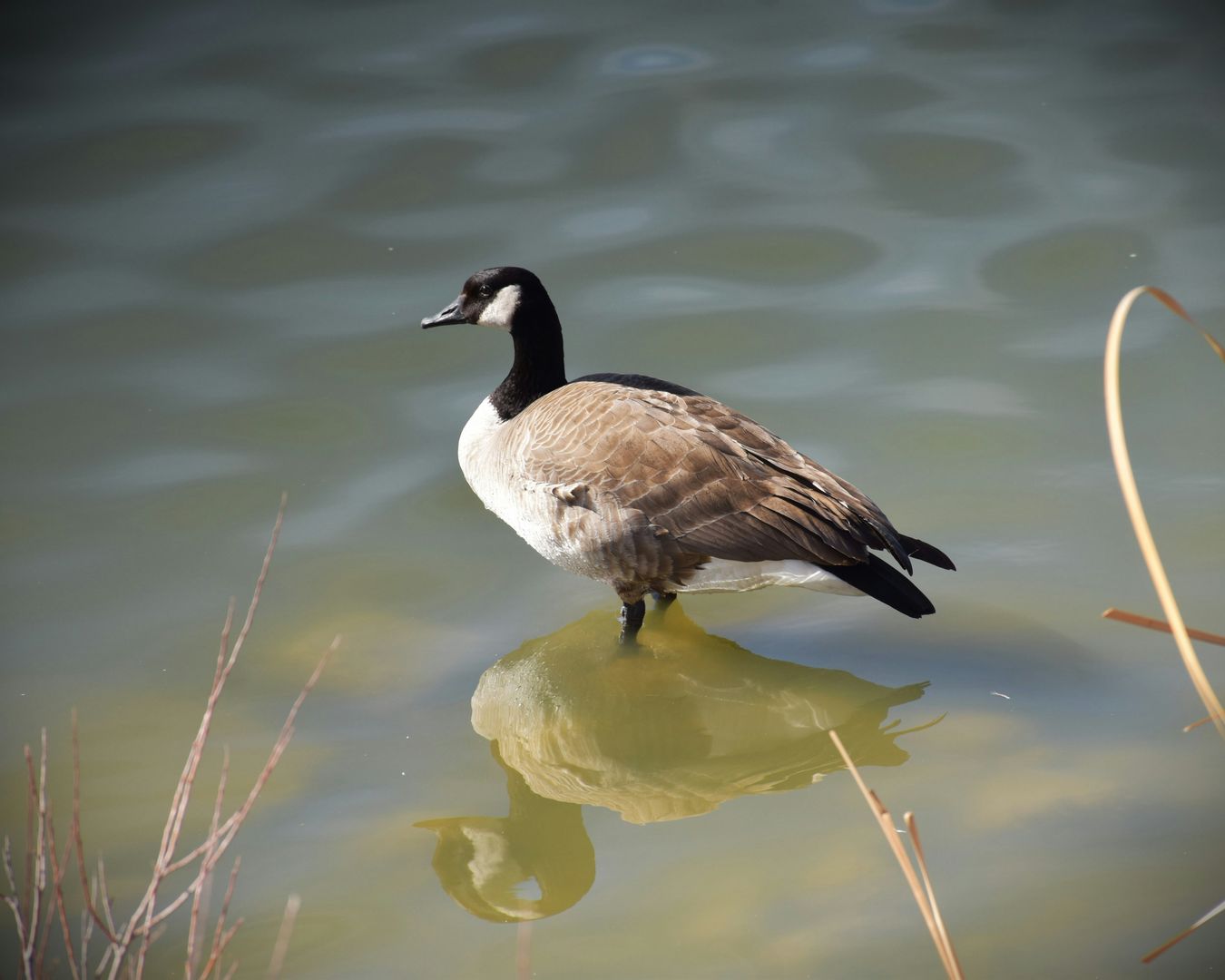
It depends on where they started. Northern Woodlands says migratory Canada geese generally settle in coastal areas with slow-moving rivers, bays, marshes, and tidal flats near agricultural fields, where they feed on grasses and waste grain. That's why spots like the Chesapeake Bay and the Carolinas, which HuntWise lists among the Atlantic Flyway's prime waterfowl zones, fill up with wintering flocks.
Their range shifts by population. Cornell notes that some migratory Canada goose populations aren't going as far south in winter as they used to. Resident geese, meanwhile, just stay put wherever the water doesn't freeze. Indiana's banding records show how far geese can roam, though: Indiana-banded Canada geese have been harvested in at least 40 states and provinces.
If you want to see where the flocks are this week, our guide to waterfowl migration and the four flyways covers the live maps and state reports worth bookmarking.
How to Watch Fall Goose Migration
You don't need a plane ticket or a spotting scope for this one. Canada geese are big, loud, and gloriously obvious. A few tips:
- Listen first. You'll often hear a flock before you see it. That's your cue to look up.
- Watch dawn and dusk. Geese leave roosts on open water at first light to feed in fields, then come back in the evening.
- Check after cold fronts. The day after a front with north winds is often the busiest.
- Visit a refuge. Coastal and river refuges fill up with geese in October and November, and many have auto tours.
- Go for the full show. Geese are a big part of fall migration's last big act. For the whole season, see our guide Fall Bird Migration in the U.S.: When It Happens, What to Look For, and How to Watch. And if you've got the travel bug, our guide to snow goose migration covers flocks that make Canada geese look like a quiet dinner party.
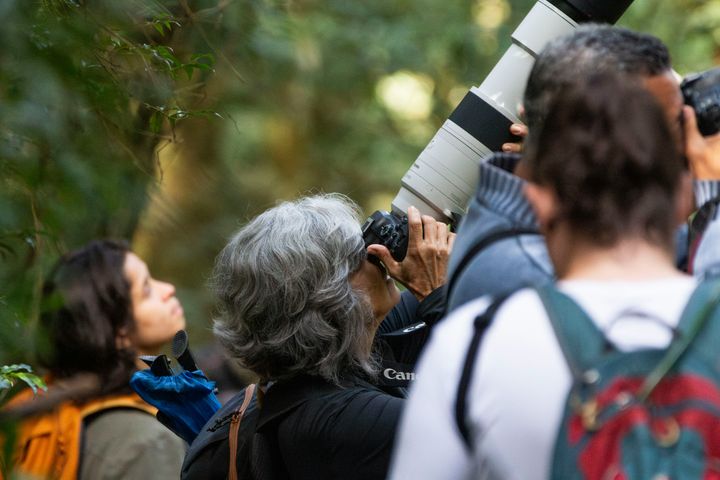
If you're brand new to this, our guide on how to start bird watching covers the basics, and you'll find people who know the local goose hangouts through bird watching groups in your state.
 Bird Watching Groups Near Me: Directories for All 50 StatesFind bird watching groups near you. Pick your state for a full directory of local birding clubs, Audubon chapters, hotspots and bird rescue.(opens in a new tab)
Geese and The Litter Problem
Resident geese spend a lot of time at city ponds, park lakes, and stormwater basins, which also happen to be where our trash ends up. In Edmonton, a wildlife rescue group freed five ducks tangled in plastic debris at a single neighborhood lake in one summer, with its rescue manager saying the trash people leave around shorelines "has a serious impact on wildlife."
Picking your recycling in a bin is better than leaving it outside. but it's not a real fix. Smithsonian reports that the U.S. recycled only about 5 to 6 percent of its plastic waste in 2021, while about 85 percent went to landfills.
Recycling is mostly a feel-good ritual.
What actually helps is using less of it. Bring a reusable bottle, skip the single-use snack packs, and if you see a plastic ring or bag near the water, pick it up and take it home to toss in the trash.
What geese have you seen lately?
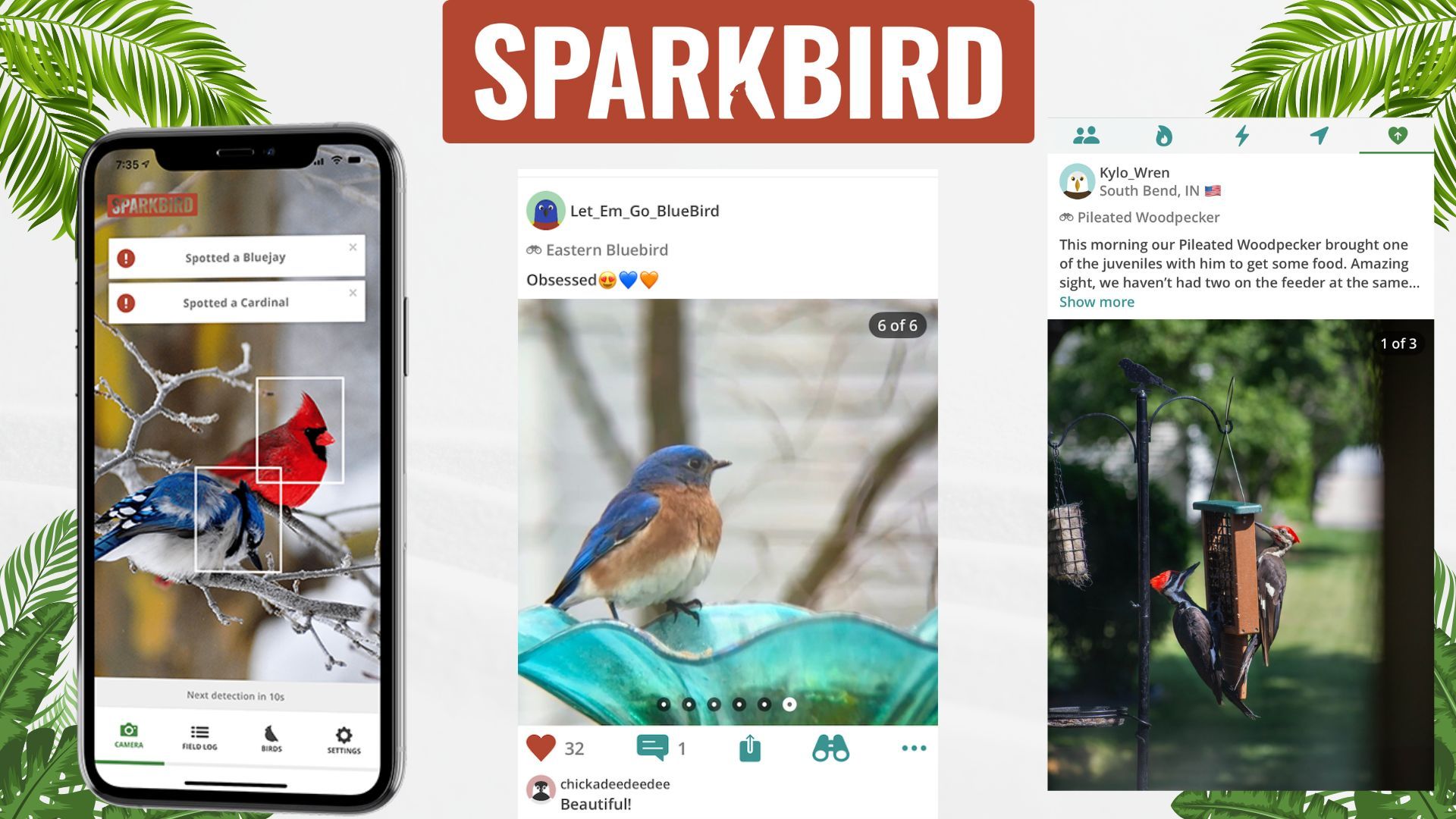
Tell us in the comments or through the Sparkbird App, available in the Apple App Store.
- Related: How to Use the Sparkbird App

No comments yet.