
An Alaska winter gives you about five hours of daylight and asks you to spend them looking at a chickadee (I would, happily, and then complain about it for the other nineteen). The surprise is how many winter birds in Alaska actually stay. The birds that tough it out here are built differently, and plenty of them will show up at a feeder in Anchorage, Fairbanks, or Juneau if you give them a reason.
The state bird is one of them. The Willow Ptarmigan was picked by Alaska's schoolchildren in 1955, and the territorial governor's signing statement said it best: "It does not fly south in the fall." It turns white instead, which is a much better winter plan than mine.
Because Alaska is the size of a small continent, this list covers three regions: Southeast (Juneau, Sitka, Ketchikan, Haines), where winters are wet and mild, Southcentral (Anchorage, the Mat-Su, and the Kenai Peninsula), and the Interior (Fairbanks and the boreal forest), where it gets cold enough that the chickadees deserve hazard pay.
Types of Winter Birds in Alaska
The winter birds of Alaska fall into 3 types you'll see on this list:
- Irruptive Species – birds whose numbers swing wildly from year to year depending on cone, seed, or prey crops. Some winters they're everywhere, some winters you won't find one
- Resident Alaska Birds – birds that stay all year, from the backyard regulars to the grouse and owls of the boreal forest
- Winter Migrants / Visitors – birds that move into a region of Alaska for the cold months, usually from the Arctic or the mountains, or that arrive on the milder Southeast coast while the rest of the state freezes
Each entry covers ID, male vs female, calls, where to find the bird in Alaska, and its feeder favorites if it visits feeders. For the millions that left in September, here's where birds go in the winter.
1. Black-capped Chickadee
- Family – Paridae
- Species – Poecile atricapillus
- Primary Activity Time – Daytime
- Diurnal
- Resident Alaska Bird
The Black-capped Chickadee weighs less than half an ounce and still gets through a Fairbanks January, which is the kind of overachievement I find personally motivating and a little rude. Alaska's chickadees add around 10% of their body weight in fat each day, then shiver through the night to burn it, dropping into a torpor-like state to save energy.
Look for a black cap and bib, white cheeks, a gray back, and buffy sides. Males and females look the same.
The call is the classic chick-a-dee-dee-dee, and the song is a clear, whistled fee-bee.
Black-capped Chickadees are common across Southcentral and the Interior, in birch and spruce woods, parks, and neighborhoods. They're one of the most numerous birds on Anchorage's Christmas Bird Count every year.
Feeder favorites: black oil sunflower, suet, peanut butter mixed with fat
2. Redpoll
- Family – Fringillidae
- Species – Acanthis flammea
- Primary Activity Time – Daytime
- Diurnal
- Resident Alaska Bird (nomadic, numbers vary by year)
You may know it as the Common Redpoll or the Hoary Redpoll, but in 2024 the American Ornithological Society merged them into one species, the Redpoll. In Alaska it doesn't need to irrupt anywhere. It's already home. In Project FeederWatch's top feeder birds for the Alaska and northern Canada region, redpolls were reported at more feeder sites than any other bird.
It's a small, streaky finch with a red cap and a black chin. Males have a pink wash on the breast, while females are streakier and lack the pink. Some birds are much paler and frostier than others, which is where the old Hoary name came from.
Redpolls give a dry, rattling chit-chit-chit and a rising, buzzy zweee. They also stuff seeds into a pouch in the throat and keep digesting after dark, which is basically a midnight snack with a biological excuse.
Look for flocks in birch and alder statewide, especially in Southcentral and the Interior.
Feeder favorites: nyjer, sunflower chips, black oil sunflower
3. Boreal Chickadee
- Family – Paridae
- Species – Poecile hudsonicus
- Primary Activity Time – Daytime
- Diurnal
- Resident Alaska Bird
The Boreal Chickadee is the Black-capped Chickadee's spruce-forest counterpart, a little scruffier and a lot quieter about it. It caches seeds and insects in conifer bark through fall and spends winter retrieving them.
It has a brown cap, a black bib, gray cheeks, a gray-brown back, and rich brown flanks. Males and females look alike.
Its call is a slower, wheezier, more nasal chick-a-dee-dee than the Black-capped version, like the same song played on a kazoo.
Boreal Chickadees live in spruce forests across the Interior and Southcentral, and they come to feeders near conifers in Fairbanks, the Mat-Su, and Anchorage's wooded neighborhoods.
Feeder favorites: suet, black oil sunflower, peanuts
4. Black-billed Magpie
- Family – Corvidae
- Species – Pica hudsonia
- Primary Activity Time – Daytime
- Diurnal
- Resident Alaska Bird
The Black-billed Magpie is a long-tailed, clever omnivore that eats insects, carrion, berries, and anything you leave on the deck. ADF&G suggests putting out apple halves or table scraps to keep jays and magpies busy, so the small birds get a turn at the feeder.
It's black and white with a very long tail, and in good light the wings and tail flash iridescent blue-green. Males and females look alike, though males are slightly larger.
Magpies give a harsh, chattering shek-shek-shek and a questioning mag? call.
They're a fixture of Southcentral, from Anchorage and the Mat-Su to the Kenai Peninsula, and they range west along the Alaska Peninsula. They're far less common in most of Southeast.
Feeder favorites: suet, peanuts, kitchen scraps
5. Pine Grosbeak
- Family – Fringillidae
- Species – Pinicola enucleator
- Primary Activity Time – Daytime
- Diurnal
- Resident Alaska Bird
The Pine Grosbeak is a big, plump, slow-moving finch with a stubby bill, and it's one of the most rewarding birds at an Alaska feeder. It eats buds, seeds, and mountain ash berries, and it's tame enough that you can sometimes get very close.
Males are rosy red with gray sides and two white wing bars. Females and young birds are gray with an olive-yellow or russet head.
The call is a soft, whistled tee-tew, and flocks keep up a mellow chatter as they feed.
Pine Grosbeaks live in spruce and birch forests across Southcentral, the Interior, and Southeast. Around Homer they're year-round residents with a soft spot for black oil sunflower.
Feeder favorites: black oil sunflower on a platform feeder
6. Common Raven
- Family – Corvidae
- Species – Corvus corax
- Primary Activity Time – Daytime
- Diurnal
- Resident Alaska Bird
The Common Raven is Alaska's unofficial mascot of winter grocery-store parking lots. It's a huge, smart omnivore that eats carrion, trash, and anything dropped near a dumpster. In Anchorage, ravens roost in the Chugach Mountains and commute into town each morning, which is a better commute than most of us have.
It's all black with a heavy bill, shaggy throat feathers, and a wedge-shaped tail in flight. Males and females look alike.
Ravens give a deep, croaking gronk plus a whole library of knocks, gurgles, and bell-like notes.
You'll find them statewide, from Utqiagvik to Ketchikan, and they're especially easy to see in towns.
Feeder favorites: suet, kitchen scraps (they'll empty a feeder fast, so offer it separately)
7. Canada Jay
- Family – Corvidae
- Species – Perisoreus canadensis
- Primary Activity Time – Daytime
- Diurnal
- Resident Alaska Bird
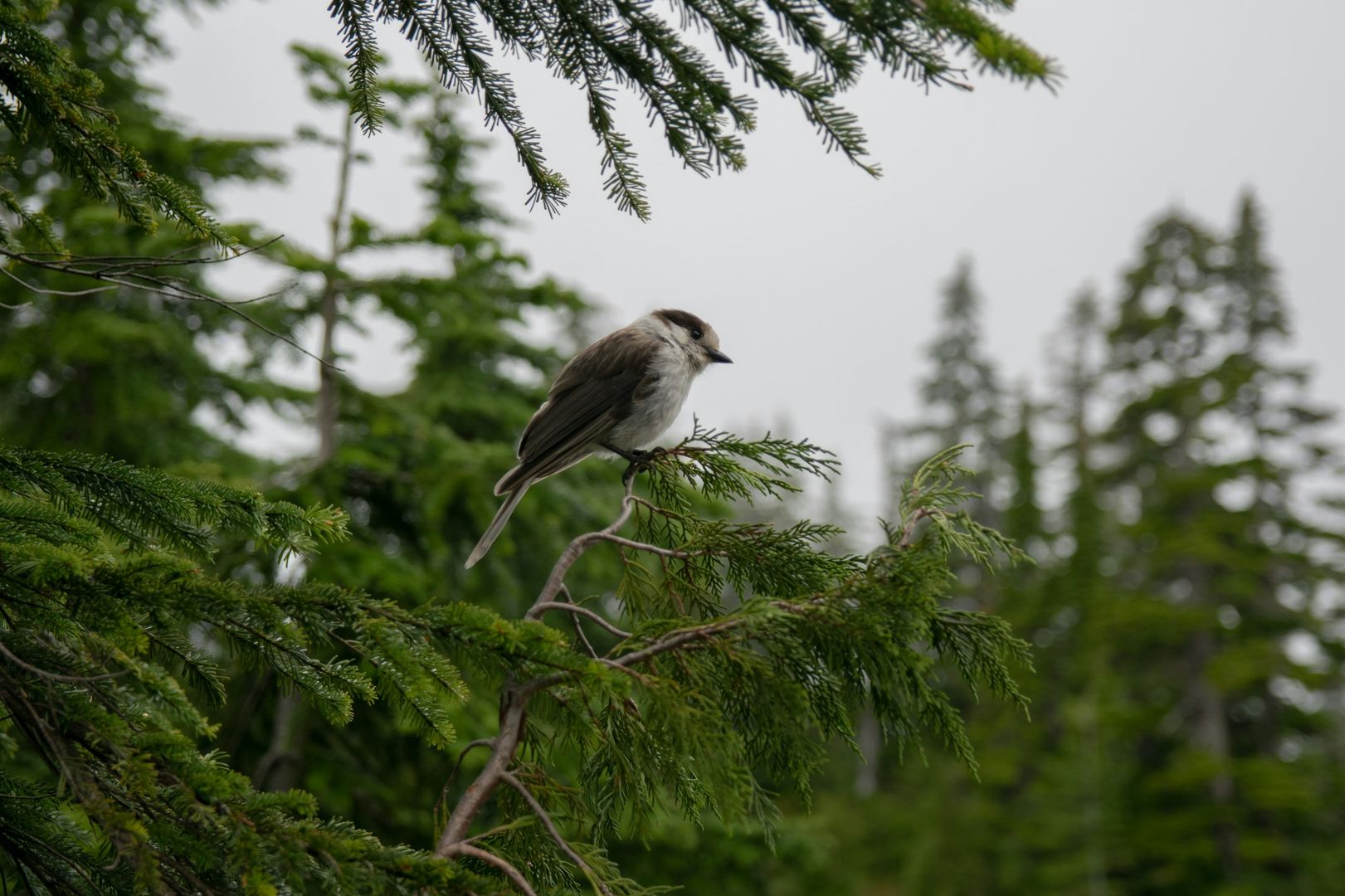
The Canada Jay, long known as the Gray Jay or "camp robber," is a fluffy boreal jay that will land on your sandwich if you hold still for a second. It survives winter on food it cached in summer, sticking bits of food into bark with its saliva.
It's soft gray with a white face and a dark gray nape, and it looks like an oversized chickadee. Males and females look alike.
Canada Jays are quiet for jays, giving soft whistles, a gentle wheeoo, and occasional mimicry of hawks.
They live in spruce forests across the Interior and Southcentral, and they're regulars at feeders and trailheads near the woods.
Feeder favorites: suet, peanuts, black oil sunflower
8. Red-breasted Nuthatch
- Family – Sittidae
- Species – Sitta canadensis
- Primary Activity Time – Daytime
- Diurnal
- Resident Alaska Bird
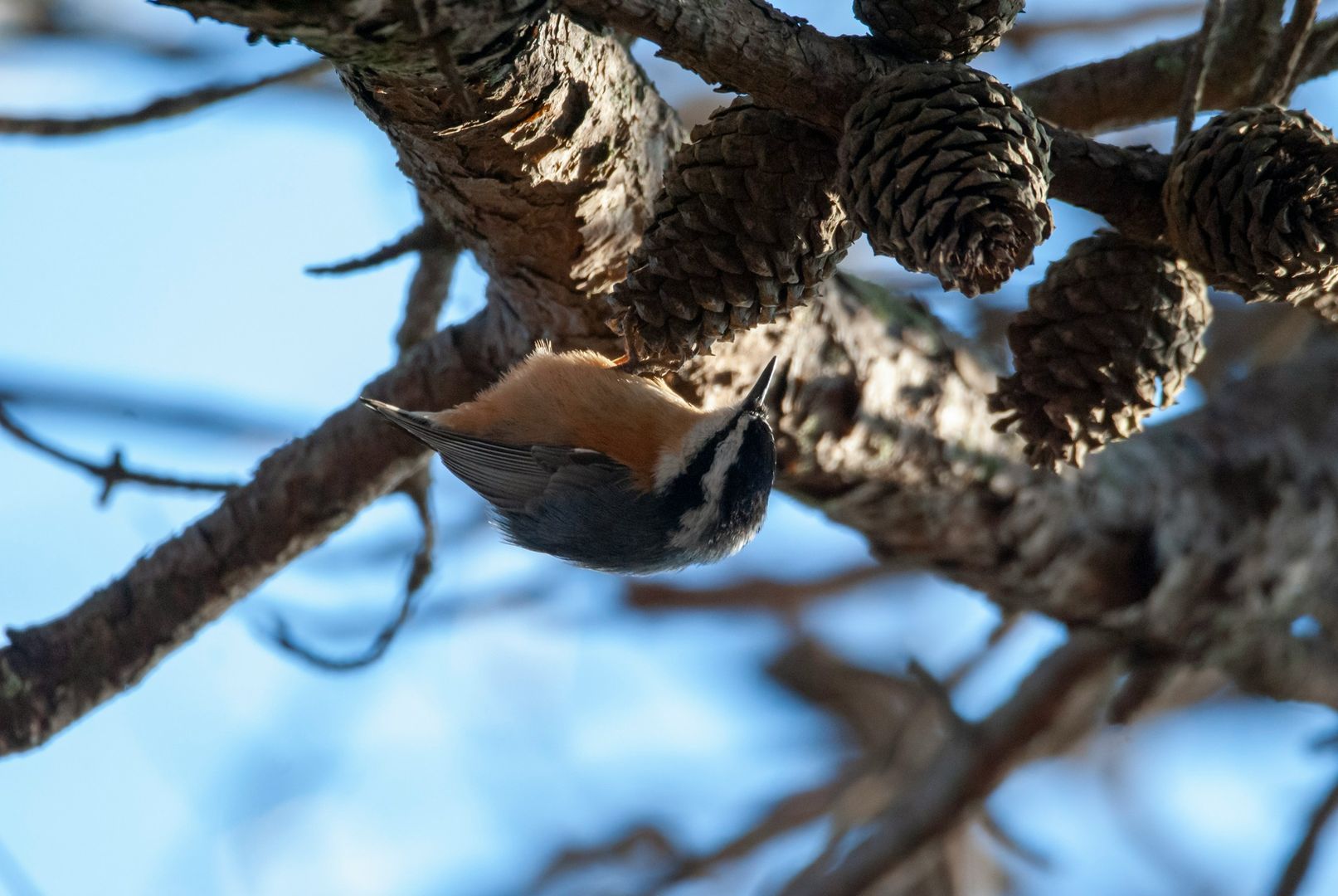
The Red-breasted Nuthatch is a tiny conifer specialist that crawls headfirst down spruce trunks looking for seeds and dormant insects. It wedges food into bark to hack it open.
It's blue-gray above with a black eye stripe, a white eyebrow, and a rusty-cinnamon breast. Males have a black cap and a richer breast, while females have a grayer cap and paler underparts.
The call is a nasal, tinny yank-yank, like a toy horn.
Red-breasted Nuthatches live in spruce and hemlock forests in Southeast and Southcentral, and in smaller numbers in the Interior. Numbers rise and fall with the cone crop.
Feeder favorites: suet, shelled peanuts, black oil sunflower
9. Dark-eyed Junco
- Family – Passerellidae
- Species – Junco hyemalis
- Primary Activity Time – Daytime
- Diurnal
- Resident in Southeast / Uncommon in Winter Elsewhere
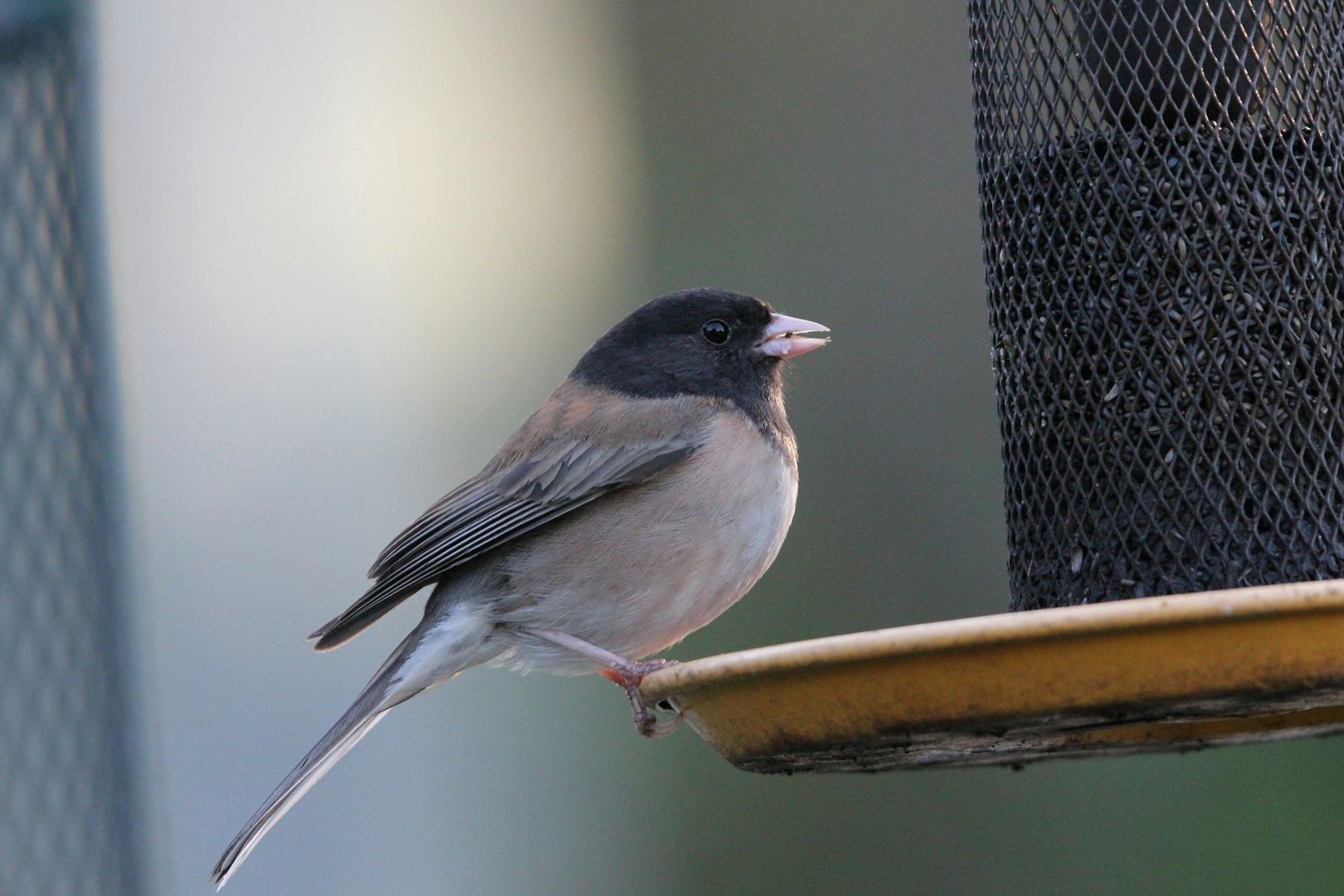
The Dark-eyed Junco is a small sparrow that breeds across much of Alaska, but most of them leave for winter. The ones that stay tend to be in Southeast and at Anchorage feeders, hopping around on the ground under the seed.
Interior and Southcentral juncos are mostly the "slate-colored" type, gray above with a white belly. In Southeast, look for "Oregon" juncos with a dark hood and brown back. Males are darker and crisper, females browner. Both flash white outer tail feathers in flight.
The call is a sharp tick, and the song is a quick, musical trill.
Look for juncos in Juneau, Sitka, and Ketchikan yards, and in smaller numbers around Anchorage.
Feeder favorites: millet, sunflower chips scattered on a tray
10. Hairy Woodpecker
- Family – Picidae
- Species – Dryobates villosus
- Primary Activity Time – Daytime
- Diurnal
- Resident Alaska Bird
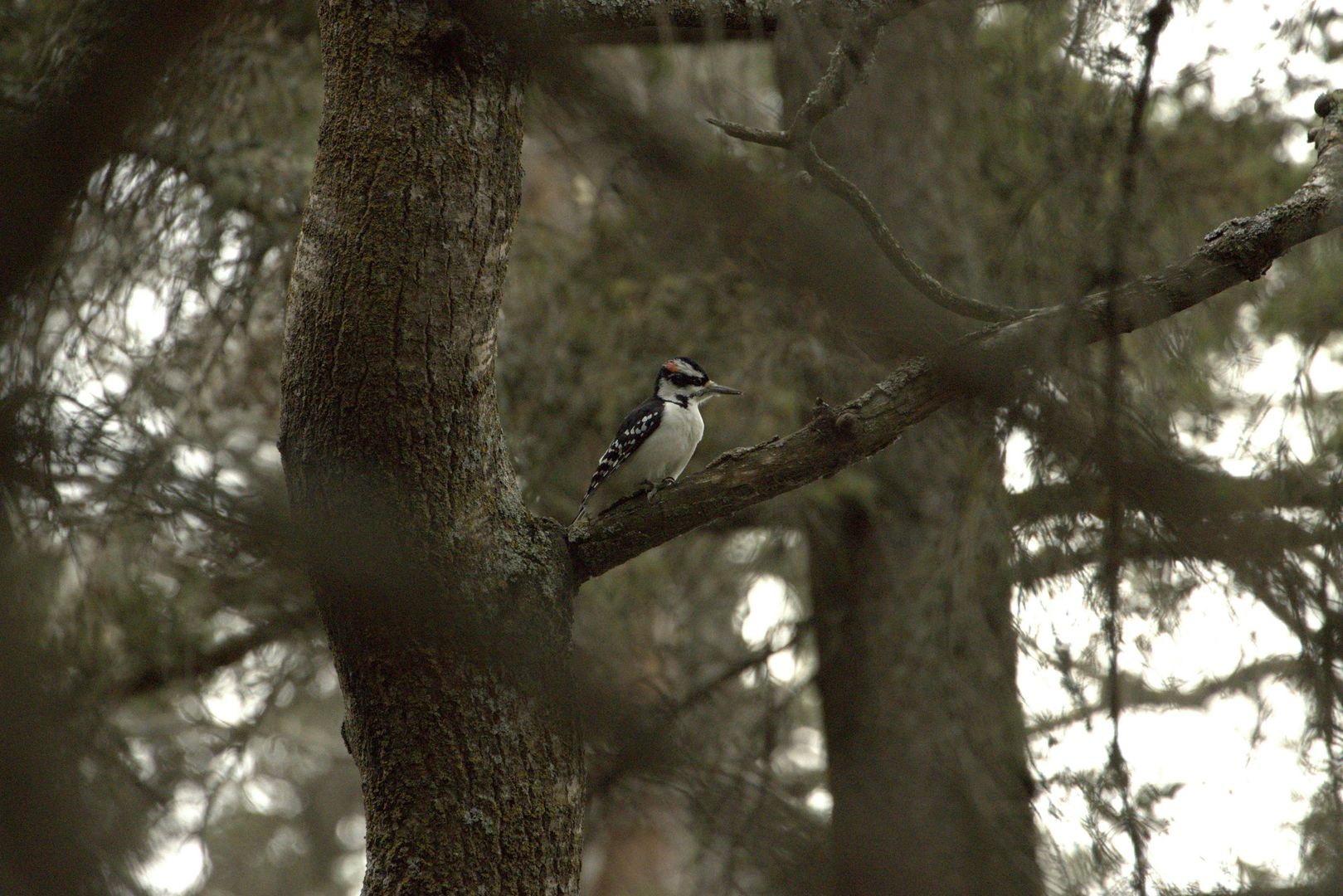
The Hairy Woodpecker is the larger of Alaska's two look-alike woodpeckers and digs insects and larvae out of bark all winter.
It's black and white with a white back and a bill nearly as long as its head. Males have a red patch on the back of the head, and females don't.
The call is a loud, sharp peek, plus a rattling whinny.
Hairy Woodpeckers live in forests statewide, from Southeast rainforest to Interior spruce and birch, and come readily to suet.
Feeder favorites: suet, peanuts, black oil sunflower
11. Downy Woodpecker
- Family – Picidae
- Species – Dryobates pubescens
- Primary Activity Time – Daytime
- Diurnal
- Resident Alaska Bird
The Downy Woodpecker is the Hairy's smaller twin, which is the bird equivalent of buying the same coat in the petite section. It works small branches and weed stems for insects and visits feeders all winter.
The easiest tell is the bill: short and stubby, much shorter than the head. Males have a small red patch on the nape, while females don't.
The call is a soft pik and a descending whinny.
Downy Woodpeckers are found in Southcentral and the Interior, in birch, alder, and willow, and are scarcer in Southeast.
Feeder favorites: suet, black oil sunflower, peanuts
12. Bohemian Waxwing
- Family – Bombycillidae
- Species – Bombycilla garrulus
- Primary Activity Time – Daytime
- Diurnal
- Resident / Nomadic
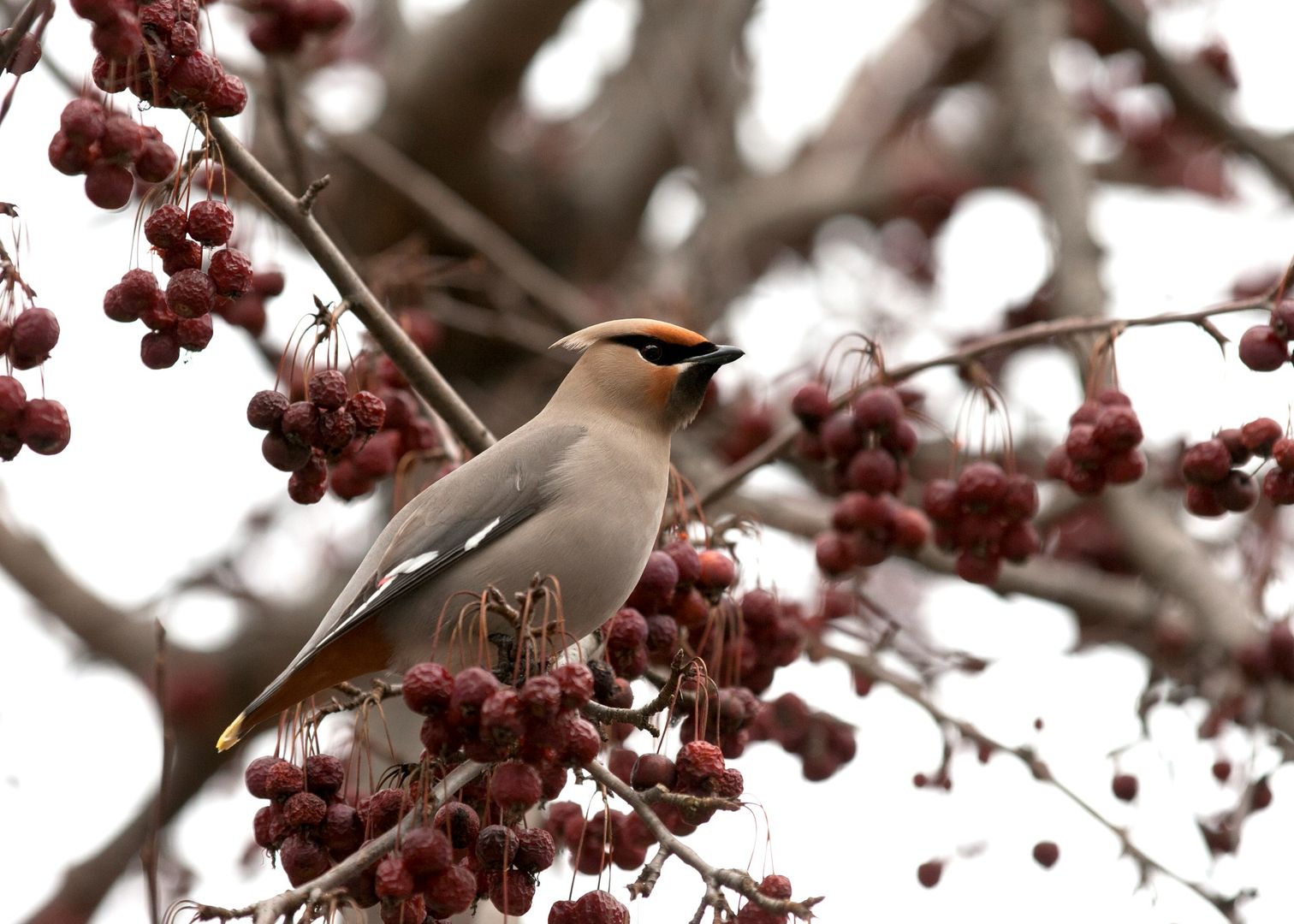
The Bohemian Waxwing travels in winter flocks that can strip a mountain ash tree in an afternoon, then vanish. They live almost entirely on berries through the cold months and eat snow to get water.
They're soft gray-brown with a crest, a black mask, rusty undertail feathers, and waxy red and yellow tips on the wings. Males and females look nearly identical, though females show less yellow on the wing tips.
The call is a high, buzzy trill given constantly by the whole flock.
Anchorage is waxwing headquarters in a big year. The city's Christmas Bird Count once tallied more than 22,000 waxwings in a single day, and in the 2025 Anchorage count they were again the most abundant bird. Look in any neighborhood with fruiting trees in Southcentral and the Interior.
Feeder favorites: they rarely visit, but chopped fruit or thawed berries may catch a flock's eye
13. Steller's Jay
- Family – Corvidae
- Species – Cyanocitta stelleri
- Primary Activity Time – Daytime
- Diurnal
- Resident Alaska Bird
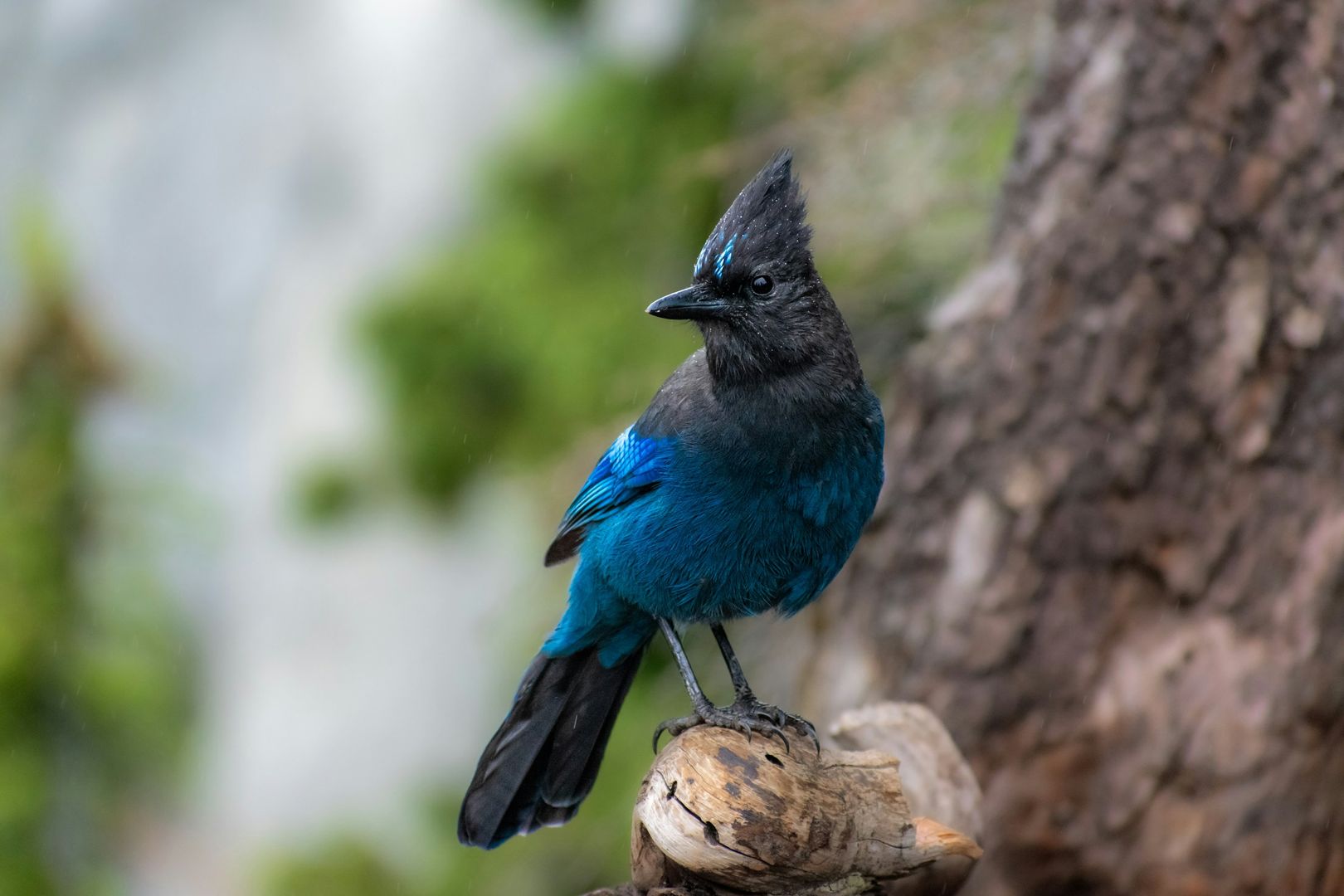
The Steller's Jay is a loud, crested jay of the coastal rainforest that eats seeds, nuts, insects, and the occasional egg. It hoards peanuts with a confidence I've only ever seen at a hotel breakfast buffet.
It's charcoal-black on the head and crest, shading to deep blue on the body, wings, and tail. Males and females look alike.
The call is a harsh shook-shook-shook, and it does a convincing Red-tailed Hawk scream.
Steller's Jays are year-round in Southeast and along the coast to Prince William Sound and the Kenai Peninsula, and they show up in Anchorage too.
Feeder favorites: peanuts in the shell, black oil sunflower, suet
14. Chestnut-backed Chickadee
- Family – Paridae
- Species – Poecile rufescens
- Primary Activity Time – Daytime
- Diurnal
- Resident Alaska Bird (coastal)
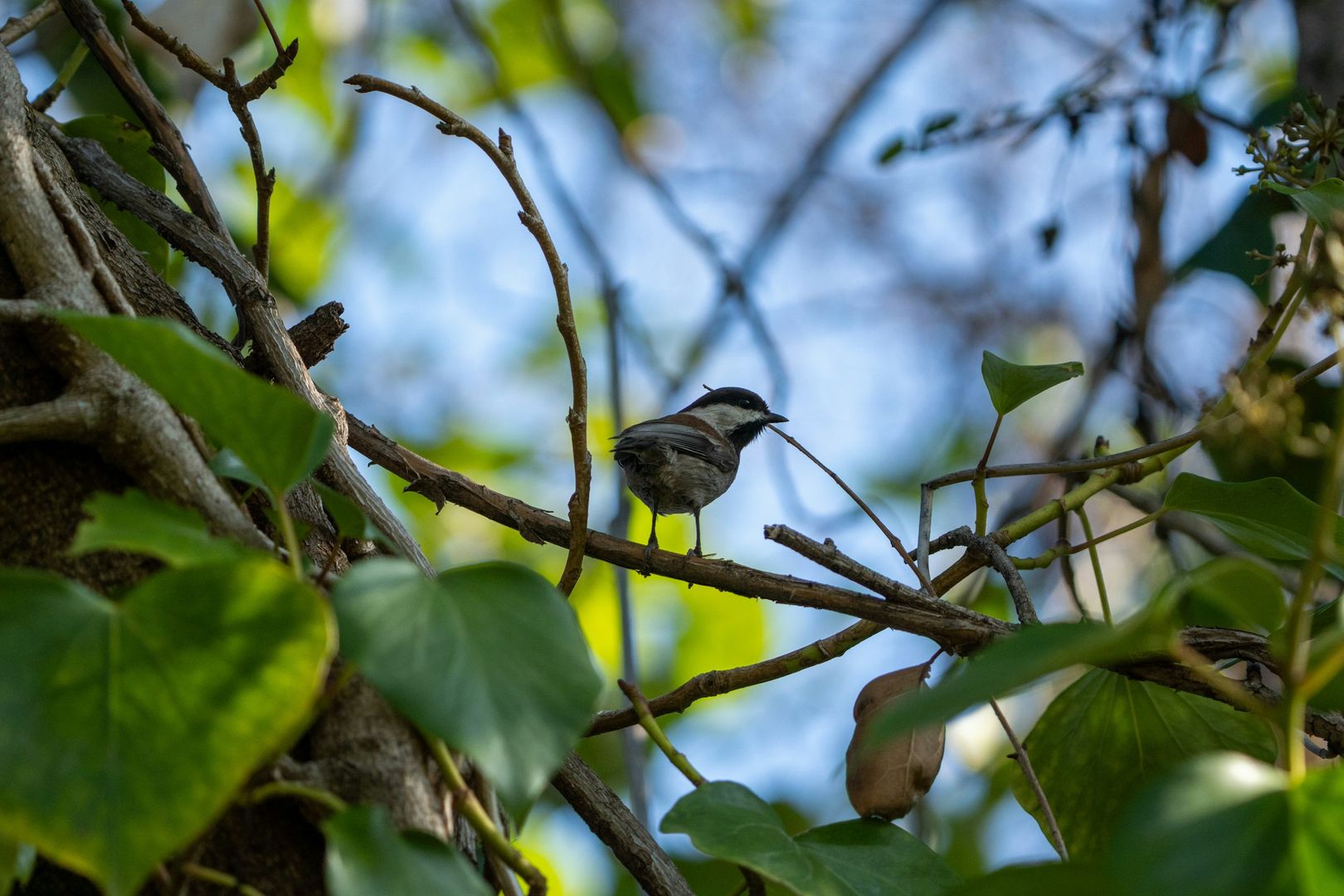
The Chestnut-backed Chickadee is the rainforest chickadee, at home high in Sitka spruce and western hemlock where it picks insects off needles all winter.
It has a sooty brown cap, black bib, white cheeks, and a rich chestnut back and sides. Males and females look the same.
Its call is a higher, raspier, faster tsick-a-dee-dee than the Black-capped's.
Look for it in Southeast towns like Juneau, Sitka, and Ketchikan, and along the coastal forests of Prince William Sound and the outer Kenai Peninsula.
Feeder favorites: suet, black oil sunflower, peanuts
15. Varied Thrush
- Family – Turdidae
- Species – Ixoreus naevius
- Primary Activity Time – Daytime
- Diurnal
- Partial Resident (mostly Southeast)
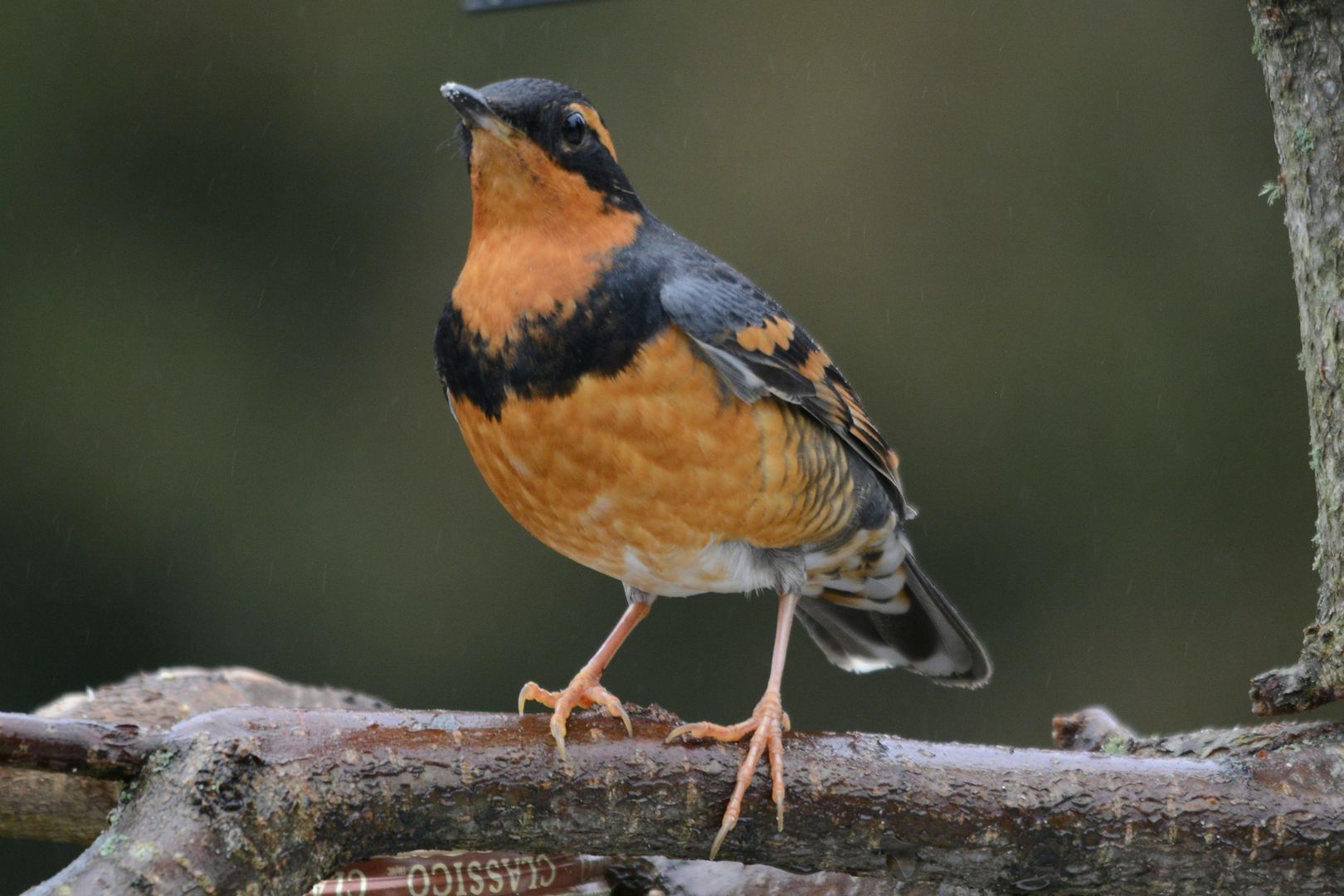
The Varied Thrush looks like a robin that got dressed for a gala. It forages on the ground in wet forests for insects, seeds, and berries, and in snowy spells it comes into yards.
Males are slate blue-gray above with an orange eyebrow, orange throat and wing bars, and a black band across the chest. Females are browner with a fainter, grayer band.
The song is a single long, buzzy whistle on one pitch, eerie in a foggy forest.
Most leave the state in fall, but some winter in Southeast, and FeederWatch counters there report them regularly. A few linger at Southcentral feeders.
Feeder favorites: millet and chopped fruit on the ground or a low tray, suet
16. Song Sparrow
- Family – Passerellidae
- Species – Melospiza melodia
- Primary Activity Time – Daytime
- Diurnal
- Resident Alaska Bird (coastal)
The Song Sparrow comes in many regional versions, and Alaska's coastal birds are some of the biggest and darkest anywhere, especially out in the Aleutians. They pick seeds and small invertebrates from beach wrack and brushy edges all winter.
Coastal Alaska birds are dusky gray-brown with heavy, smudged streaks on the chest. Males and females look alike.
The call is a husky chimp, and even in winter they'll try a few bars of their bright, jumbled song.
Look along beaches, harbors, and brushy yards in Southeast, Kachemak Bay, Kodiak, and the Aleutians.
Feeder favorites: millet, cracked corn, and sunflower chips on the ground
17. Pine Siskin
- Family – Fringillidae
- Species – Spinus pinus
- Primary Activity Time – Daytime
- Diurnal
- Irruptive
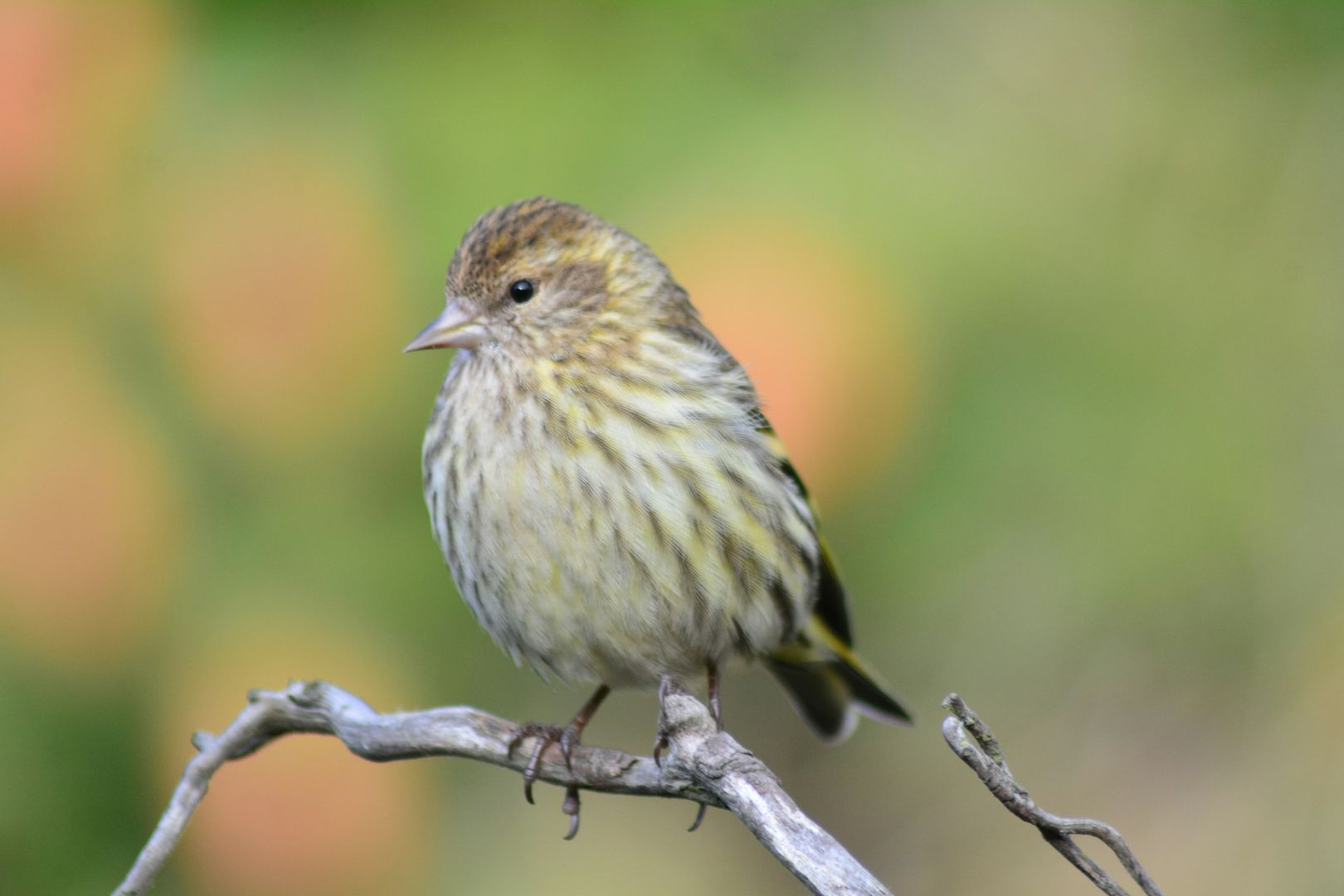
The Pine Siskin is a small, streaky finch that follows the conifer seed crop. Some winters they swarm Southeast and Southcentral feeders, other years they're barely there.
It's brown and heavily streaked, with a thin, pointed bill and yellow flashes in the wings and tail. Males tend to show more yellow than females.
Siskins give a rising, buzzy zreeee, like someone slowly unzipping a jacket.
They're most likely in the coastal forests of Southeast and around Anchorage and the Kenai, mixed in with redpolls.
Feeder favorites: nyjer, sunflower chips
18. White-winged Crossbill
- Family – Fringillidae
- Species – Loxia leucoptera
- Primary Activity Time – Daytime
- Diurnal
- Irruptive
The White-winged Crossbill has a bill whose tips cross like broken scissors, and it uses that bill to pry spruce cones open. It's nomadic, going wherever the spruce cones are good, and it'll nest in the middle of winter if the crop allows.
Males are pinkish-red with black wings and two bold white wing bars. Females are olive-yellow and streaky with the same white bars.
Flocks give dry chet-chet notes and long, canary-like trills.
Look up in spruce tops in Southcentral, the Interior, and Southeast. ADF&G notes that a salt block can attract crossbills, since they're drawn to minerals.
Feeder favorites: black oil sunflower, salt or mineral blocks
19. Willow Ptarmigan
- Family – Phasianidae
- Species – Lagopus lagopus
- Primary Activity Time – Daytime
- Diurnal
- Alaska State Bird (resident)
The Willow Ptarmigan is Alaska's state bird and the reason "white bird in white snow" is a legitimate ID challenge. It eats willow buds and twigs all winter and spends cold nights buried in snow for insulation.
In winter it's white with a black tail, and its feet are feathered to the toes like built-in snowshoes. Males and females look similar in winter, though males are slightly larger. In summer, they're mottled brown.
Males give a loud, rattling go-back, go-back, go-back, which has always felt like solid advice from a bird.
Willow Ptarmigan live statewide in willow thickets, muskeg, and tundra near timberline. Winter flocks gather in the willows of the Chugach foothills above Anchorage, Hatcher Pass, and the passes along the road system.
20. Spruce Grouse
- Family – Phasianidae
- Species – Canachites canadensis
- Primary Activity Time – Daytime
- Diurnal
- Resident Alaska Bird
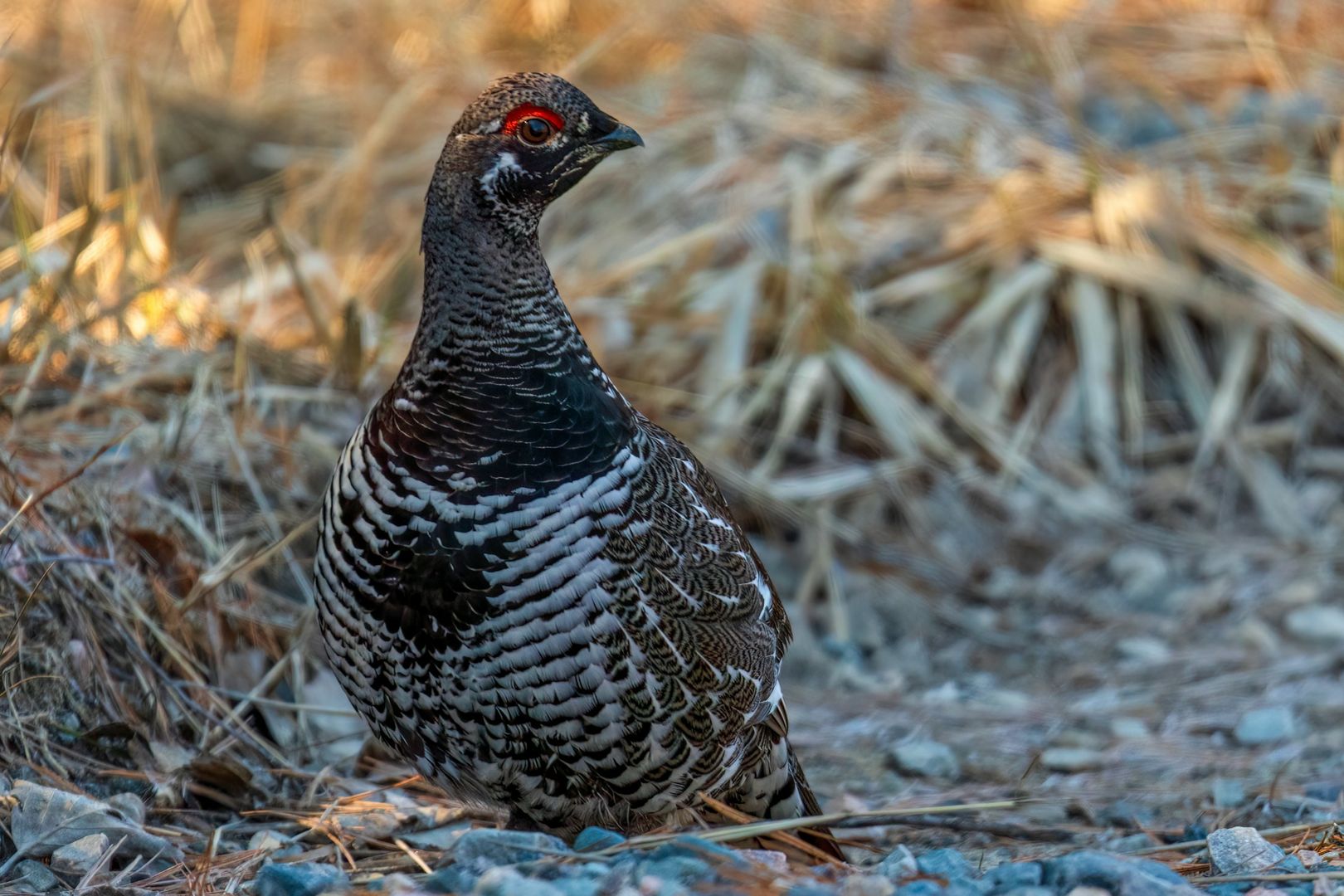
The Spruce Grouse survives winter on a diet of conifer needles, which sounds like a wellness trend I would not survive. It's famously tame and will often let you walk right up to it on a trail.
Males are gray and black with a black throat and a bright red comb over the eye. Females are mottled brown or gray with heavy barring.
They're mostly quiet, with soft clucks. In spring, males make a deep drumming flutter with their wings.
Look in spruce forests across the Interior and Southcentral, along quiet roadsides and trails where they pick up grit.
21. American Three-toed Woodpecker
- Family – Picidae
- Species – Picoides dorsalis
- Primary Activity Time – Daytime
- Diurnal
- Resident Alaska Bird
The American Three-toed Woodpecker is a quiet boreal woodpecker that flakes bark off dead and dying spruce to get at beetle larvae. If you hear soft tapping and see bark chips falling in the snow, look up.
It's black and white with a barred back and barred sides. Males have a yellow cap, and females don't.
The call is a soft pik, quieter than the Hairy's.
Look in Interior and Southcentral spruce forests, especially stands with beetle-killed or burned trees.
Feeder favorites: suet, now and then
22. American Dipper
- Family – Cinclidae
- Species – Cinclus mexicanus
- Primary Activity Time – Daytime
- Diurnal
- Resident Alaska Bird
The American Dipper is a songbird that walks underwater in fast, freezing streams to catch insect larvae and small fish. Meanwhile I won't put my hand in the dog's water bowl after November.
It's a chunky, slate-gray bird with a short tail and white eyelids that flash when it blinks. Males and females look alike.
Dippers sing a loud, ringing, bubbling song even in midwinter, and they bob up and down constantly on rocks.
Look for them on ice-free creeks and rivers across Southeast, Southcentral, and the Interior, including the creeks that run through Anchorage.
23. Golden-crowned Kinglet
- Family – Regulidae
- Species – Regulus satrapa
- Primary Activity Time – Daytime
- Diurnal
- Resident Alaska Bird
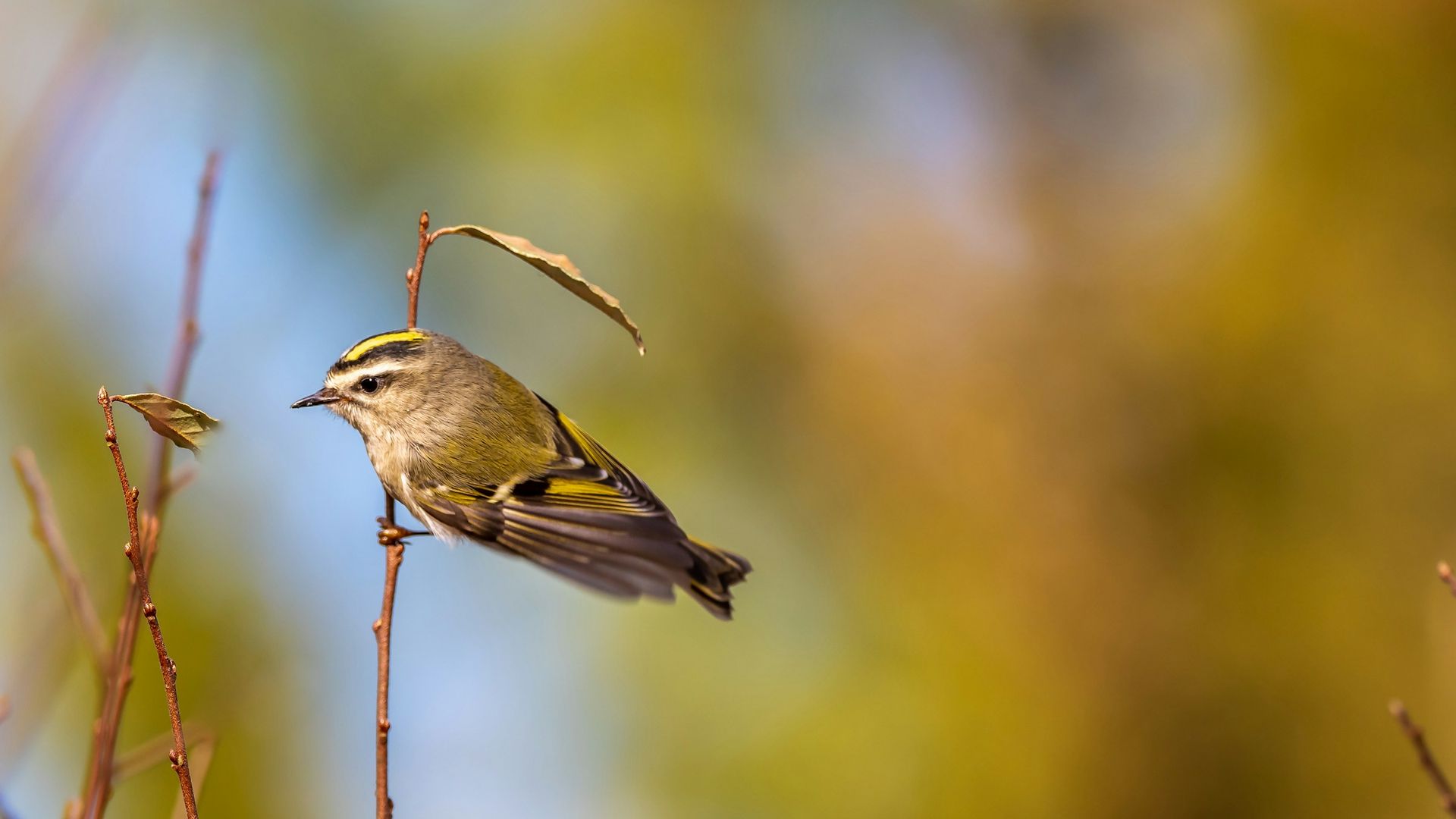
The Golden-crowned Kinglet is one of the smallest songbirds in Alaska and somehow spends the whole winter here gleaning tiny insects from spruce needles.
It's olive-gray with a bold black-and-white face and a bright crown. Males have an orange center to the yellow crown, while females have a plain yellow crown.
Its call is a very high, thin tsee-tsee-tsee, often the first clue one is overhead.
Look for small flocks in the spruce-hemlock forests of Southeast and Southcentral, often traveling with chickadees.
24. Bald Eagle
- Family – Accipitridae
- Species – Haliaeetus leucocephalus
- Primary Activity Time – Daytime
- Diurnal
- Resident Alaska Bird
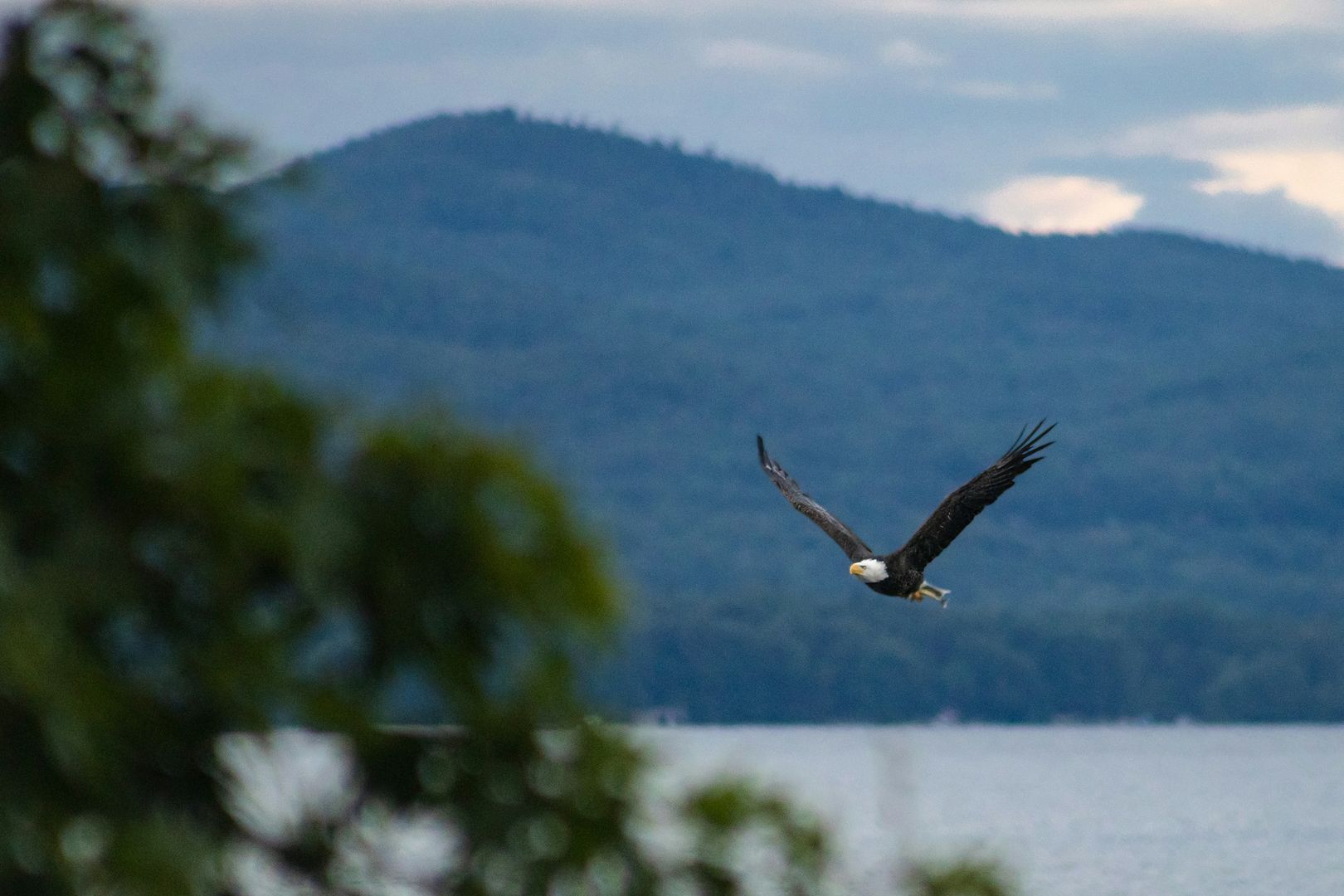
The Bald Eagle is everywhere in coastal Alaska, scavenging salmon carcasses, fish waste at harbors, and anything else it can steal from a gull.
Adults have a dark brown body, white head and tail, and a big yellow bill. Young eagles are mottled brown and white for several years. Females are larger than males.
The call is a high, thin chattering whistle, not the movie scream (that's the Red-tailed Hawk doing voiceover work).
The Alaska Chilkat Bald Eagle Preserve near Haines holds one of the world's largest eagle gatherings in late fall and early winter, with viewing pullouts between miles 18 and 21 of the Haines Highway. The state asks visitors to stay in the designated areas so the eagles can feed and roost undisturbed, and that's the rule I'd follow everywhere: the bird's winter matters more than the photo. Eagles are also common in Juneau, Kodiak, Homer, and Anchorage.
25. Mallard
- Family – Anatidae
- Species – Anas platyrhynchos
- Primary Activity Time – Daytime
- Diurnal
- Resident / Winter Visitor (open water)
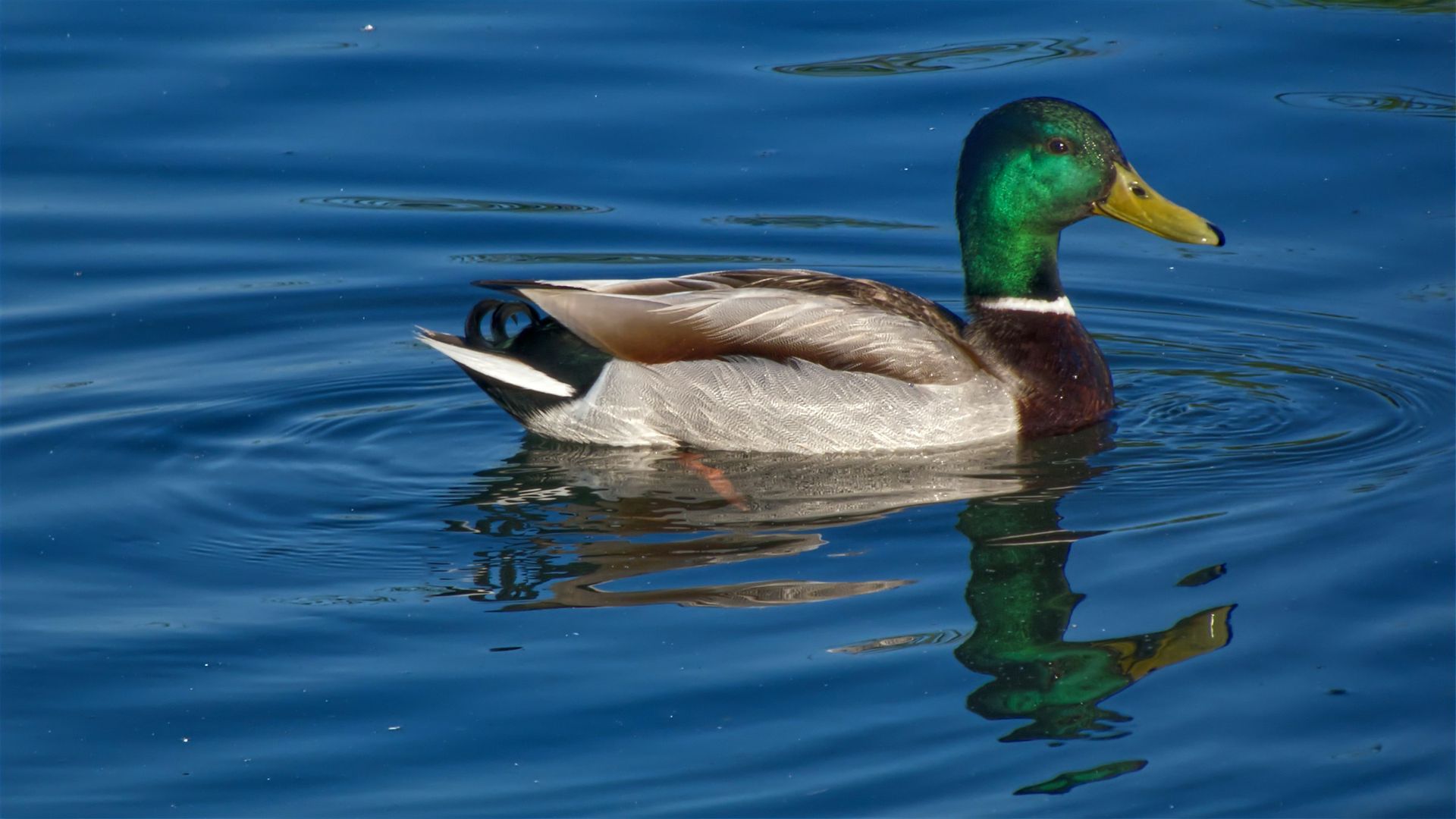
The Mallard is the duck that refuses to leave. Wherever there's open water in an Alaska winter, there are Mallards.
Males have a glossy green head, white neck ring, and chestnut breast. Females are mottled brown with an orange-and-black bill.
Females give the classic loud quack, while males make a softer, raspy note.
Hundreds winter on the open stretch of the Chena River in Fairbanks, and Anchorage's open creeks and lagoons held more than 2,000 on the 2025 Christmas Bird Count. Southeast's harbors and estuaries have them too.
26. Barrow's Goldeneye
- Family – Anatidae
- Species – Bucephala islandica
- Primary Activity Time – Daytime
- Diurnal
- Winter Migrant / Visitor (coast)
The Barrow's Goldeneye breeds on lakes in the Interior and mountains, then moves to the coast to dive for mussels and crustaceans in winter.
Males have a dark, purple-glossed head with a white crescent in front of the eye and a black back with a row of white spots. Females have a brown head and an orange-yellow bill.
They're mostly quiet in winter, though their wings whistle in flight.
Look in sheltered bays and harbors in Southeast, Kachemak Bay, Seward, and Kodiak, often near Common Goldeneyes.
27. Harlequin Duck
- Family – Anatidae
- Species – Histrionicus histrionicus
- Primary Activity Time – Daytime
- Diurnal
- Winter Migrant / Visitor (rocky coast)
The Harlequin Duck spends the summer on rushing mountain streams and the winter in crashing surf, which tells you everything about its taste in real estate. It dives for crabs, snails, and other invertebrates along rocky shores.
Males are slate blue with chestnut sides and bold white stripes and spots outlined in black. Females are dark brown with white spots on the face.
They give high, squeaky calls that earned them the nickname "sea mice."
Look along rocky coastlines in Southeast, Kodiak, Kachemak Bay, Resurrection Bay, and the Aleutians.
28. Northern Shrike
- Family – Laniidae
- Species – Lanius borealis
- Primary Activity Time – Daytime
- Diurnal
- Uncommon Winter Resident
The Northern Shrike is a songbird that hunts like a hawk, catching small birds and voles and sometimes impaling them on thorns or twigs. It's the kind of coworker you're polite to.
It's pale gray above with a black mask, black wings and tail, and a hooked bill. Males and females look similar, though young birds are browner.
The call is a harsh, grating rasp, and it sometimes gives quiet, varied song in late winter.
Look for one perched on a treetop or wire over open brushy areas in Southcentral and Southeast. FeederWatch counters in the region report them at feeders, where they're there for the birds, not the seed.
29. Great Horned Owl
- Family – Strigidae
- Species – Bubo virginianus
- Primary Activity Time – Night
- Nocturnal
- Resident Alaska Bird
The Great Horned Owl is a big, powerful owl that hunts snowshoe hares, grouse, and rodents. It starts courting in the depths of winter, so January and February nights are the time to listen.
It's mottled gray-brown with long ear tufts, yellow eyes, and a white throat. Alaska's Interior birds tend to be noticeably pale. Females are larger, but their hoots are higher-pitched than males'.
The hoot is a deep, rhythmic hoo-h'HOO-hoo-hoo, and pairs often duet.
Great Horned Owls live in forests across most of the state, from the Interior's spruce and birch to Southcentral neighborhoods.
30. Northern Hawk Owl
- Family – Strigidae
- Species – Surnia ulula
- Primary Activity Time – Daytime
- Diurnal
- Uncommon Resident
The Northern Hawk Owl is the owl for people who don't want to stay up late. It hunts by day, perched on the very tip of a spruce, and drops on voles like a falcon.
It has a long tail, a gray-white face framed in black, yellow eyes, and fine barring across the breast. Males and females look alike.
The call is a long, rolling trill, and the alarm is a sharp, chattering scold.
Look in the Interior, especially in burns and open spruce forest along the Parks, Steese, and Elliott highways around Fairbanks, and less often in the Mat-Su. Numbers vary with the vole crop.
31. Snowy Owl
- Family – Strigidae
- Species – Bubo scandiacus
- Primary Activity Time – Daytime, Dawn and Dusk
- Diurnal
- Resident on the Arctic coast / Rare elsewhere
The Snowy Owl is the bird Harry Potter fans hope to see, and Alaska is one of the few places in the US where it nests. It hunts lemmings and voles, plus ptarmigan and waterfowl.
It's a large white owl with yellow eyes. Adult males are nearly pure white, while females and young birds have heavy dark barring. Females are larger.
Snowy Owls are mostly silent in winter. On the breeding grounds males give a deep, booming hoot.
Look on the open tundra of the North Slope and western Alaska, around Utqiagvik and Nome. In Southcentral, a Snowy Owl is a rare winter treat and usually turns up on mudflats or open fields.
32. Gyrfalcon
- Family – Falconidae
- Species – Falco rusticolus
- Primary Activity Time – Daytime
- Diurnal
- Uncommon Resident / Winter Visitor
The Gyrfalcon is the largest falcon in the world, and in Alaska it lives largely on ptarmigan. Seeing one is the birding equivalent of spotting a celebrity in an airport: quick, startling, and you'll tell everyone.
It comes in white, gray, and dark forms, with broad, pointed wings and a long tail. Females are noticeably larger and heavier than males.
The call is a harsh, repeated kak-kak-kak, usually given near the nest.
Look in open mountain and tundra country, such as the Denali Highway, the Dalton Highway, and the Seward Peninsula. In winter, some move to the coast and open lowlands of Southcentral where ptarmigan and waterfowl gather.
33. Snow Bunting
- Family – Calcariidae
- Species – Plectrophenax nivalis
- Primary Activity Time – Daytime
- Diurnal
- Winter Migrant / Visitor
The Snow Bunting breeds in the Arctic and moves to the southern coast for winter, picking seeds from beach grass and windblown flats. A flock lifting off a gray beach looks like a handful of snow tossed into the wind.
In winter, birds are white below with warm tan on the head and back. Males show more white in the wings and more orange on the head, which fades as they head into breeding season.
The call is a soft, rolling rattle and a clear tew in flight.
The Center for Alaska Coastal Studies recommends the Homer Spit for Snow Buntings and other winter visitors from the north, and flocks also visit open coastlines around Anchorage and the Kenai.
Feeder favorites: millet and cracked corn scattered on the ground near the coast
34. Anna's Hummingbird
- Family – Trochilidae
- Species – Calypte anna
- Primary Activity Time – Daytime
- Diurnal
- Uncommon Winter Resident (Southeast)
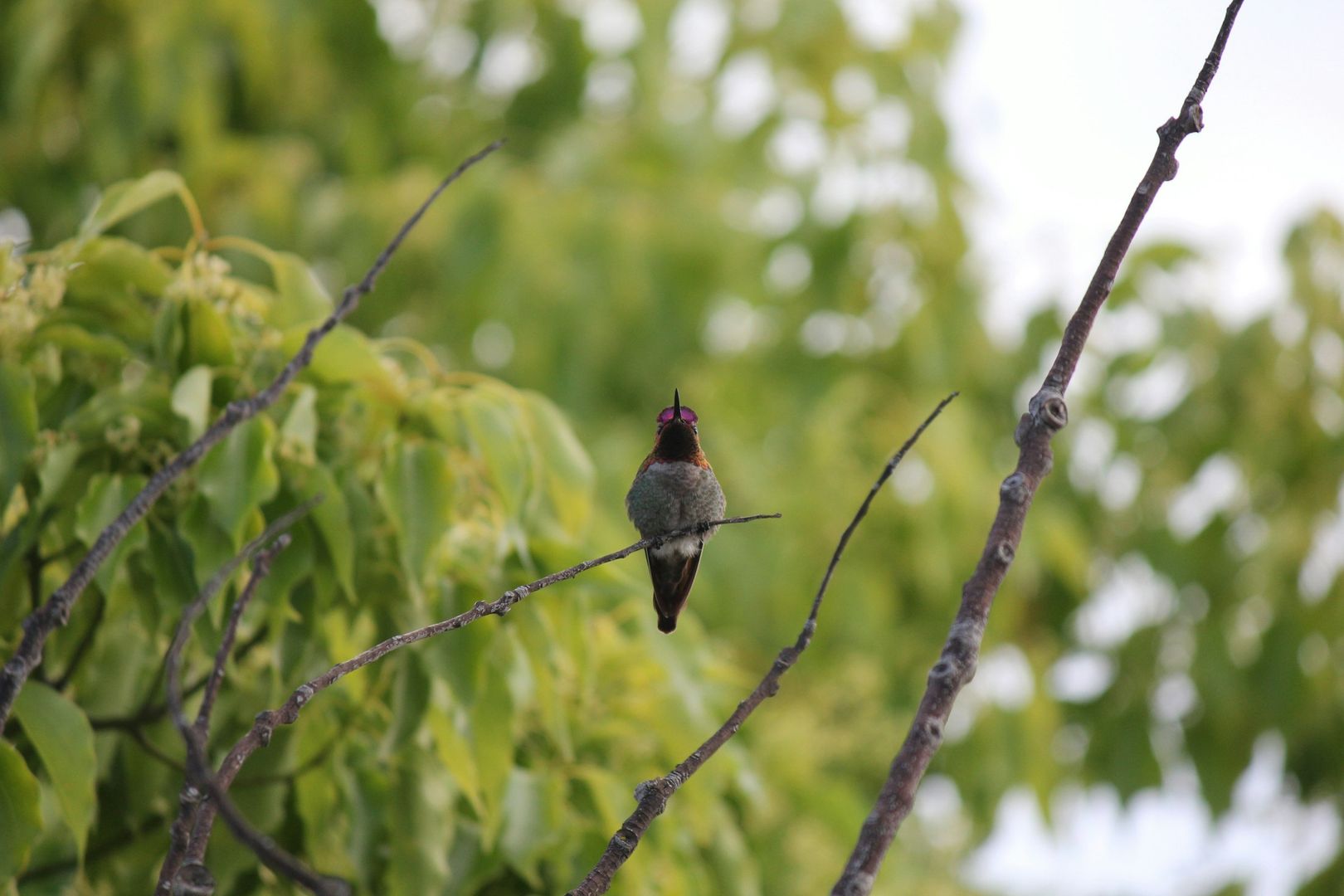
The Anna's Hummingbird is the bird nobody expects on a list of winter birds in Alaska, and yet here it is. In recent years, Anna's Hummingbirds have been recorded spending the winter in Juneau and Sitka, surviving on feeders, tree sap, and tiny insects, and dropping into torpor on cold nights.
Males have an iridescent rose-pink crown and throat that look black until the light hits. Females are green above and gray below with a small pinkish spot on the throat.
The call is a sharp chip, and the male's song is a scratchy, buzzy squeak.
Look for them at feeders in Southeast towns. If you're thinking of hosting one, our guide to hummingbirds in Alaska, with arrival dates and when to put out feeders covers timing, and a winter feeder needs to be kept from freezing.
Feeder favorites: sugar water (1 part white sugar to 4 parts water), kept thawed
Alaska Birds in Winter: FAQ
What birds stay in Alaska in the winter?
More than you'd think. Black-capped and Boreal Chickadees, Redpolls, Pine Grosbeaks, Black-billed Magpies, Common Ravens, Canada Jays, woodpeckers, and the Willow Ptarmigan all stay. Southeast's milder coast also keeps Steller's Jays, Chestnut-backed Chickadees, Song Sparrows, and a few Varied Thrushes and Anna's Hummingbirds. If you're curious how the list changes down the coast, see our guide to winter birds in Washington.
What are the most common Alaska winter birds at feeders?
In Project FeederWatch's rankings for Alaska and northern Canada, Redpoll, Black-capped Chickadee, Boreal Chickadee, Black-billed Magpie, and Pine Grosbeak top the list, followed by Dark-eyed Junco, Red-breasted Nuthatch, and Hairy Woodpecker. In Southeast, add Steller's Jay and Chestnut-backed Chickadee.
When should I put out bird feeders in Alaska?
The Alaska Department of Fish and Game recommends waiting until bears are in their dens, around November 1, and taking feeders down by mid-March before they wake up. Low-water fats like suet work best in deep cold, and ADF&G also advises against spreading food on the ground and asks you to keep feeders clean. Once you start, keep them stocked, since birds come to depend on them.
Do birds need water in an Alaska winter?
Yes, though many Alaska winter birds get by eating snow. A heated bird bath is a real help when everything is frozen solid, and our guide on how to keep a bird bath from freezing in winter covers the options. If you live where moose wander through, skip anything they'll want to investigate.
Which owls can you see in Alaska in winter?
Great Horned Owls are widespread, Northern Hawk Owls hunt by day in the Interior, and Snowy Owls stay on the Arctic coast and western tundra. Boreal Owls and Great Gray Owls also live in Alaska's forests but are hard to find, and the best bet is listening on calm late-winter nights.
What birds have you seen in Alaska lately?
Caught a Pine Grosbeak on your Fairbanks feeder or a waxwing flock clearing out a mountain ash in Anchorage? Share it with other birders on the Sparkbird App, where your sightings help the next person know where to look.
And if you spend all winter trying to spot a Willow Ptarmigan in a snowfield, it's not your binoculars. The bird is winning on purpose.
Happy birding.
No comments yet.