
Arizona has two kinds of snowbirds: the ones that arrive in RVs and the ones that arrive with feathers. Arizona winter birds follow the same logic as the retirees.
Why spend January in a snowbank when you could spend it in a mesquite thicket at 65 degrees
Types of Winter Birds in Arizona
There are 3 types of winter birds in Arizona you'll see on this list:
- Resident Arizona Birds – desert regulars like Cactus Wrens, Gambel's Quail, Gila Woodpeckers, and Abert's Towhees that live here all year and make up the core backyard crowd
- Winter Migrants / Visitors – birds that breed farther north or higher up the mountains and spend the cold months in Arizona's lowlands, from White-crowned Sparrows and kinglets to ducks, Bald Eagles, and the Sandhill Cranes at Whitewater Draw Wildlife Area
- Irregular Winter Visitors – nomads like Lark Buntings and Mountain Bluebirds that can show up in big flocks one winter and be hard to find the next
One thing that makes Arizona different: elevation matters as much as latitude. Flagstaff gets real snow, while Phoenix and Tucson stay mild, so plenty of "migrants" here only travel a few thousand feet downhill. Each entry covers ID, male vs female, calls, where to find the bird in Arizona, and its feeder favorites if it visits feeders. If you're curious why so many birds move at all, here's where birds go in the winter.
1. Cactus Wren
- Family – Troglodytidae
- Species – Campylorhynchus brunneicapillus
- Primary Activity Time – Daytime
- Diurnal
- Arizona State Bird (Resident Arizona Bird)
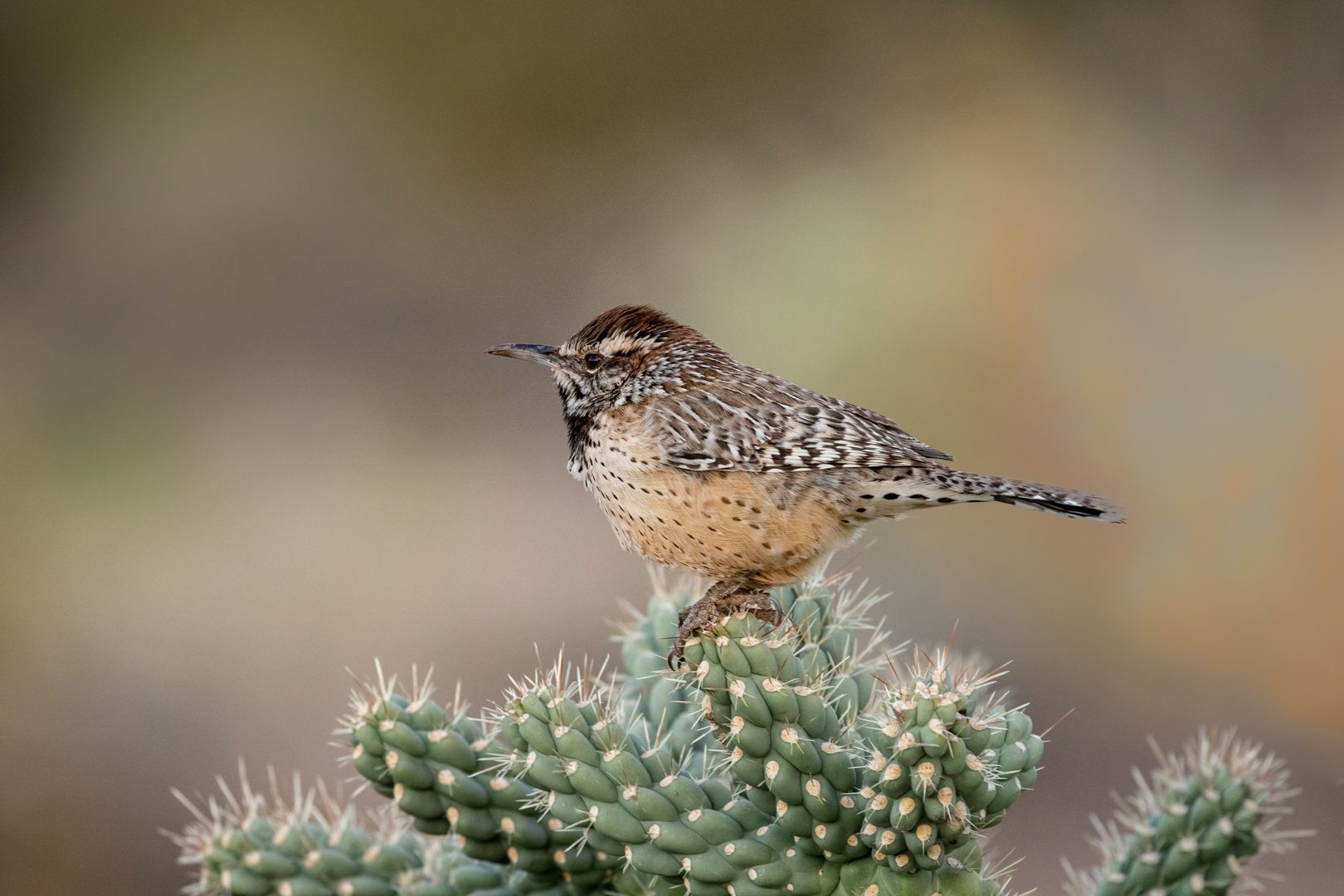
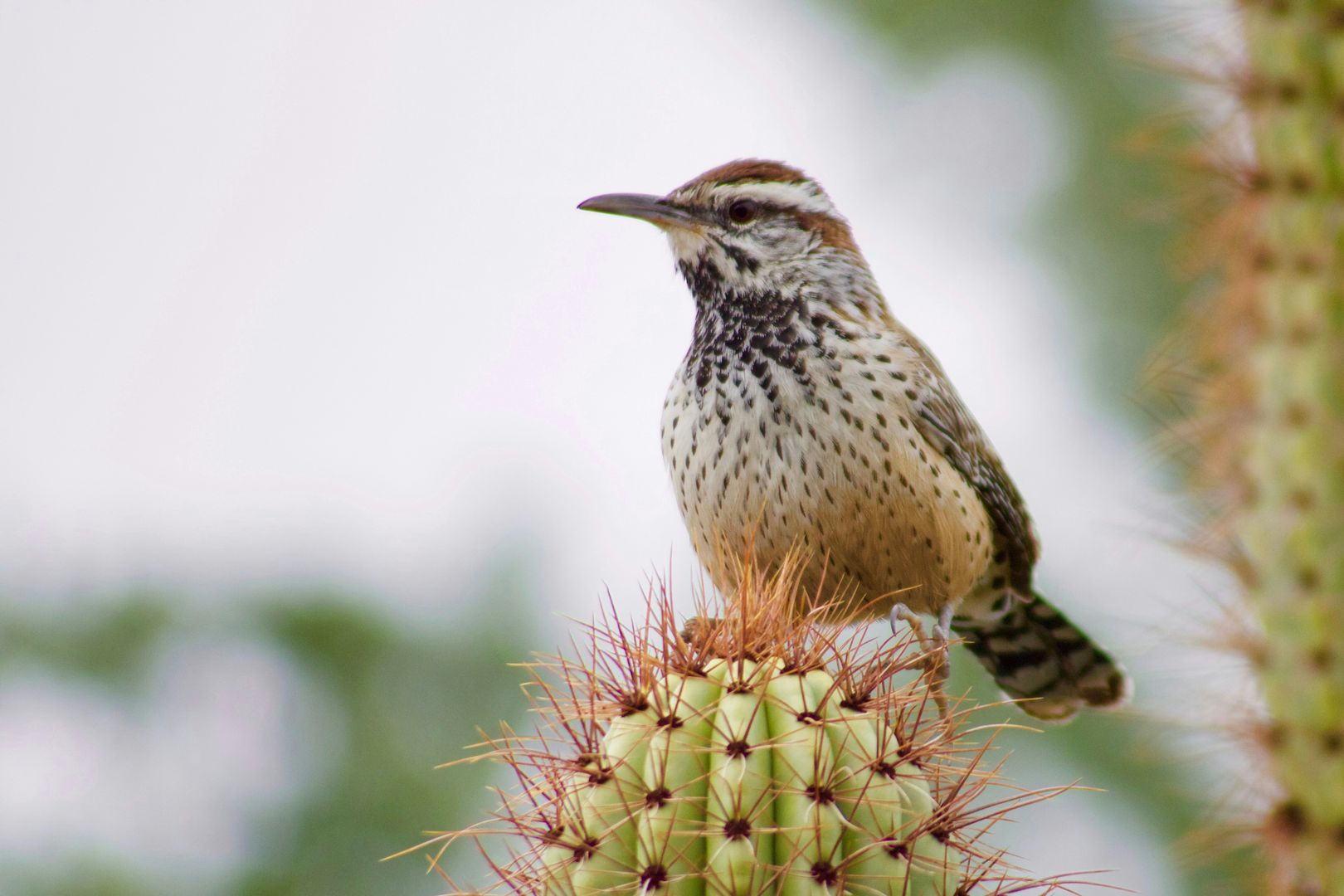
The Cactus Wren is the largest wren in the United States, which is a bit like being the tallest hobbit, but it carries itself like a much bigger bird. It eats mostly insects, plus some seeds and fruit, and does nearly all of its foraging on the ground, flipping over leaves and debris with real determination.
Males and females look alike: a rusty-brown crown, a bold white stripe over the eye, a heavily spotted breast, and black-and-white barring on the wings and tail. It often builds its football-shaped nest in cholla cactus and uses nests as roosts, so you can find them tucked in among the spines in winter, too.
The Cactus Wren call is a harsh, low, rhythmic char-char-char that sounds a lot like a car engine that won't turn over. Once you know it, you'll hear it in every desert neighborhood.
In Arizona winters, look for it across the deserts of the south, west, and center of the state, wherever there's cholla, mesquite, ironwood, or other thorny cover.
2. Gambel's Quail
- Family – Odontophoridae
- Species – Callipepla gambelii
- Primary Activity Time – Daytime
- Diurnal
- Resident Arizona Bird
The Gambel's Quail is a plump, ground-dwelling seed eater that runs everywhere it can and flies only when it absolutely has to. In winter they gather in coveys and move through yards and desert scrub together, which makes them much easier to see than in the breeding season.
Both sexes have a forward-curling topknot that looks like a question mark that wandered off a keyboard. Males have a black face, chestnut crown, and a black patch on a creamy belly. Females are plainer gray-brown with a smaller topknot and no black face.
The Gambel's Quail call most people learn first is a loud, three-part chi-CA-go-go that birds use to keep the covey together.
In Arizona winters, look for it in the deserts of the southern half of the state, especially in washes, desert neighborhoods, and anywhere with brushy cover near seed on the ground.
Feeder favorites: millet, cracked corn, mixed seed scattered on the ground
3. Anna's Hummingbird
- Family – Trochilidae
- Species – Calypte anna
- Primary Activity Time – Daytime
- Diurnal
- Resident Arizona Bird
The Anna's Hummingbird is the one hummingbird you can count on at an Arizona feeder in January. Arizona State Parks notes it can be seen year-round in most of its Arizona range. It drinks nectar and sugar water and picks off tiny insects for protein.
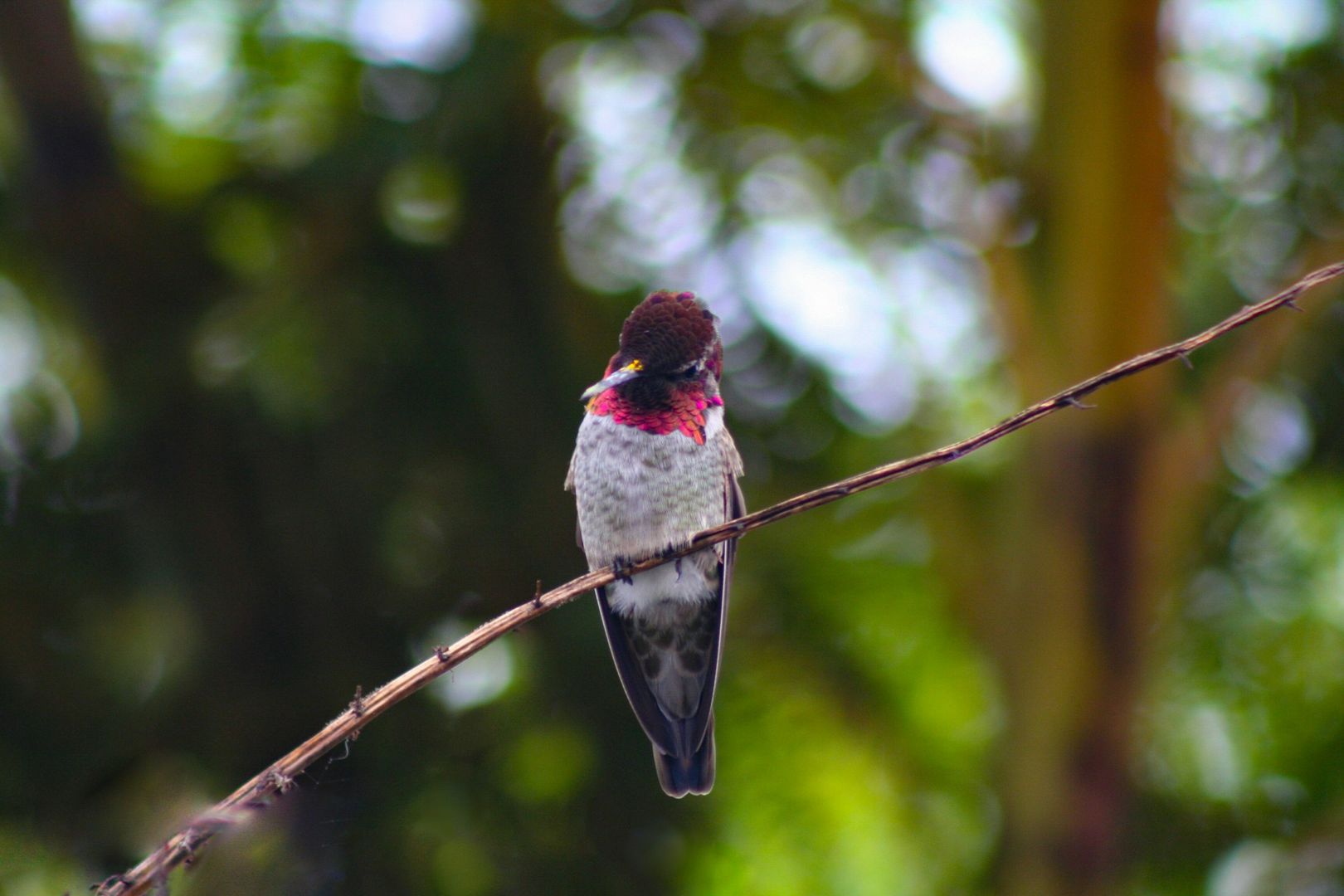
Males have an iridescent rose-pink crown and throat that can look nearly black until they turn toward the sun. Females are green above and gray below, often with a small smudge of pink in the center of the throat.
The Anna's Hummingbird song is a scratchy, buzzy string of squeaks that males sing even in winter. Their courtship dive ends with a sharp chirp made by the tail feathers rather than the voice.
In Arizona winters, look for it in neighborhoods, parks, and desert gardens across the low and middle elevations, especially in Phoenix and Tucson.
Feeder favorites: sugar water (1 part white sugar to 4 parts water, no red dye)
4. Costa's Hummingbird
- Family – Trochilidae
- Species – Calypte costae
- Primary Activity Time – Daytime
- Diurnal
- Resident / Partial Migrant (low deserts)
The Costa's Hummingbird is a tiny desert specialist, and some of them spend the winter right here instead of heading to Mexico. Project FeederWatch reports Costa's wintering in the Phoenix area and farther south. It feeds on desert flowers like chuparosa and visits nectar feeders.
The male has a purple crown and a purple throat patch that flares out along the sides of the neck like an overgrown mustache (a look I've seen at every craft brewery in America). Females are green above and pale below, with no purple.
The Costa's Hummingbird song is a very high, thin, rising whistle, and its call is a light tik.
In Arizona winters, look for it in the Sonoran Desert lowlands, especially around flowering desert shrubs in washes, desert botanical gardens, and backyards in the southern and western parts of the state.
Feeder favorites: sugar water
5. Gila Woodpecker
- Family – Picidae
- Species – Melanerpes uropygialis
- Primary Activity Time – Daytime
- Diurnal
- Resident Arizona Bird
The Gila Woodpecker is the default woodpecker of southern Arizona and a loud, confident omnivore. It eats insects, cactus fruit, berries, and seeds, and it isn't shy about visiting feeders or sipping from hummingbird feeders when nobody's looking.
It's buff-tan on the head and underparts with a black-and-white barred back. Males have a small, round red cap on top of the head, while females have no red at all.
The Gila Woodpecker call is a rolling churr and a sharp, repeated pip, and you'll hear it long before you see the bird.
In Arizona winters, look for it in saguaro deserts, where it excavates its nest holes in the cactus, as well as in desert towns, parks, and mesquite washes.
Feeder favorites: suet, peanuts, halved oranges
6. Curve-billed Thrasher
- Family – Mimidae
- Species – Toxostoma curvirostre
- Primary Activity Time – Daytime
- Diurnal
- Resident Arizona Bird
The Curve-billed Thrasher is a gray-brown desert bird that digs in the dirt with its long, down-curved bill for insects, seeds, and fruit. It's a fixture in desert neighborhoods year-round.
Look for a long tail, a faintly spotted breast, and a startling orange eye. Males and females look alike.
The Curve-billed Thrasher call is a sharp, two-note whit-wheet, which sounds exactly like someone wolf-whistling at you from a cholla. Don't take it personally.
In Arizona winters, look for it in the southern and central deserts, in cholla flats, desert washes, and yards with native plantings.
Feeder favorites: seed on the ground, mealworms
7. Verdin
- Family – Remizidae
- Species – Auriparus flaviceps
- Primary Activity Time – Daytime
- Diurnal
- Resident Arizona Bird
The Verdin is a tiny, restless gray bird that gleans insects from desert shrubs and also takes nectar and berries. It's one of the smallest songbirds you'll see in the desert, and it builds round, thorny stick nests that it also uses as winter roosts.
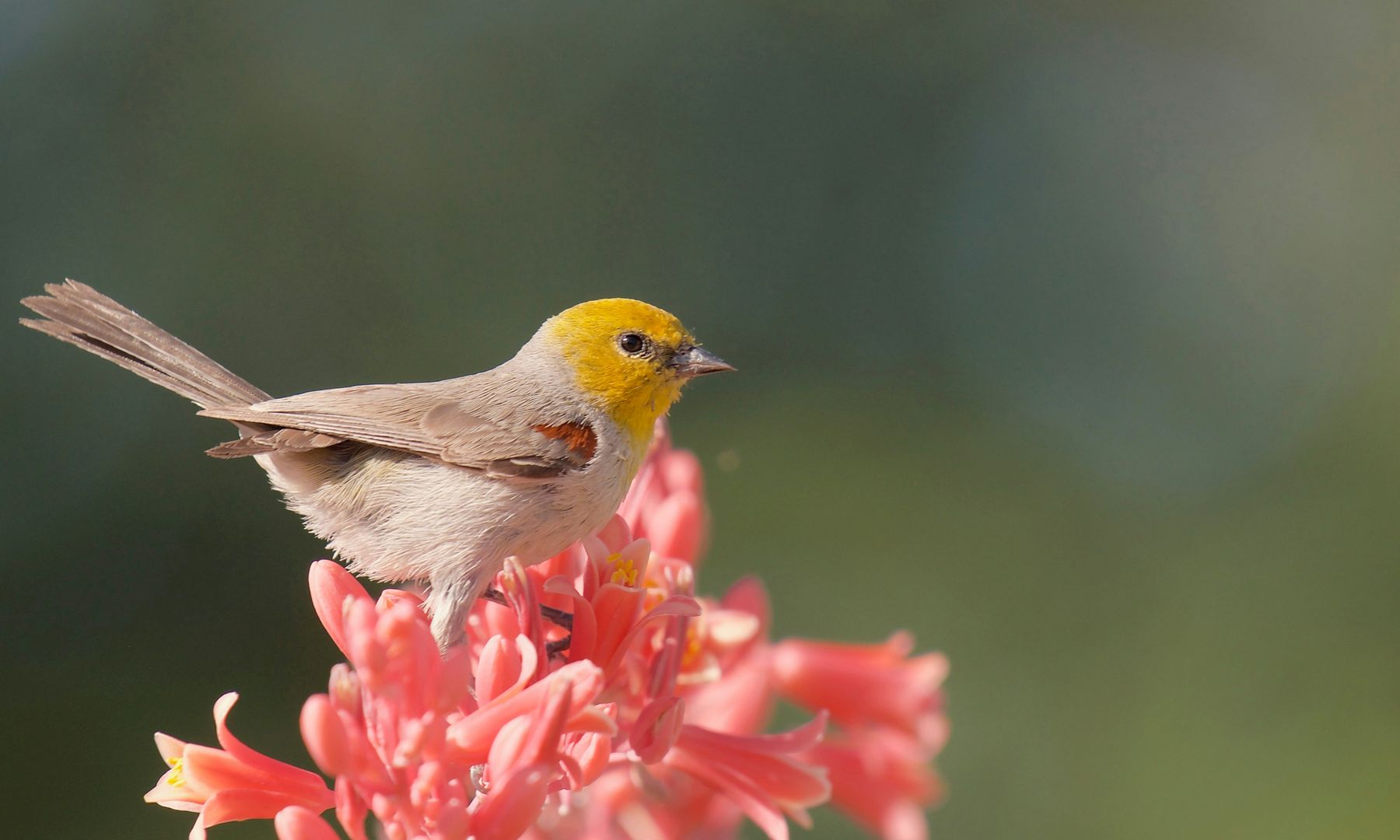
Adults are gray with a yellow face and a small rusty patch on the shoulder that's often hard to see. Females look like males, just with a slightly duller yellow head.
The Verdin call is a sharp, piercing tsee and fast chips, and its song is a simple series of clear whistles.
In Arizona winters, look for it in desert scrub, mesquite washes, and desert yards across the southern and western lowlands.
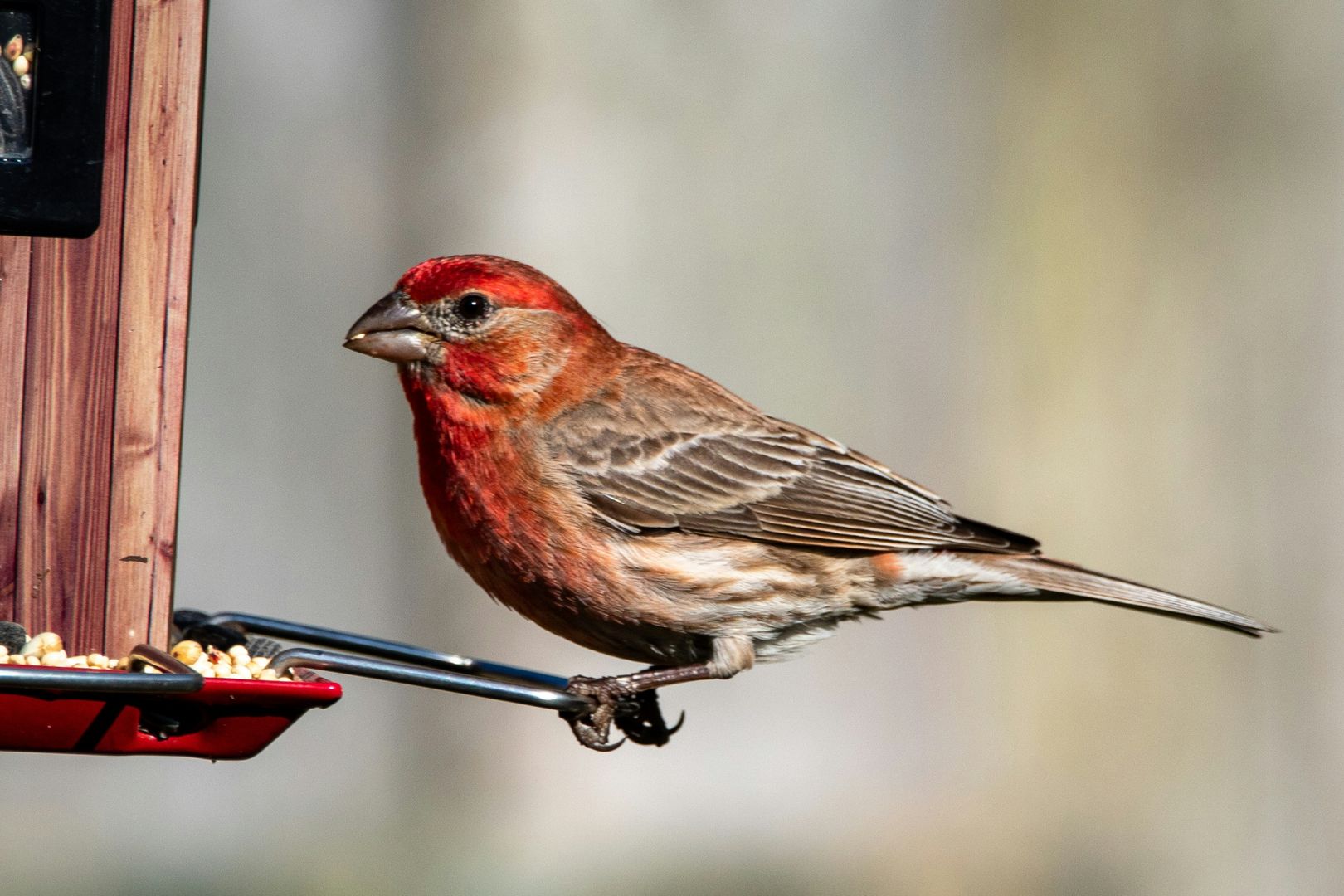
8. House Finch
- Family – Fringillidae
- Species – Haemorhous mexicanus
- Primary Activity Time – Daytime
- Diurnal
- Resident Arizona Bird
The House Finch is a native of the Southwest and the most dependable feeder bird in the region. In Project FeederWatch's Southwest rankings, it showed up at about 94% of counting sites, more than any other species. It eats seeds, buds, and fruit, and it's happy to nest in a cactus or a hanging planter.
Males have a red to orange-red head, breast, and rump, with brown streaking on the sides. Females are plain brown-gray with blurry streaks and no red.
The House Finch song is a long, bright warble that usually ends with a buzzy, rising note.
In Arizona winters, look for it statewide in towns, farms, and desert neighborhoods, anywhere people put out seed.
Feeder favorites: black oil sunflower, sunflower chips, nyjer
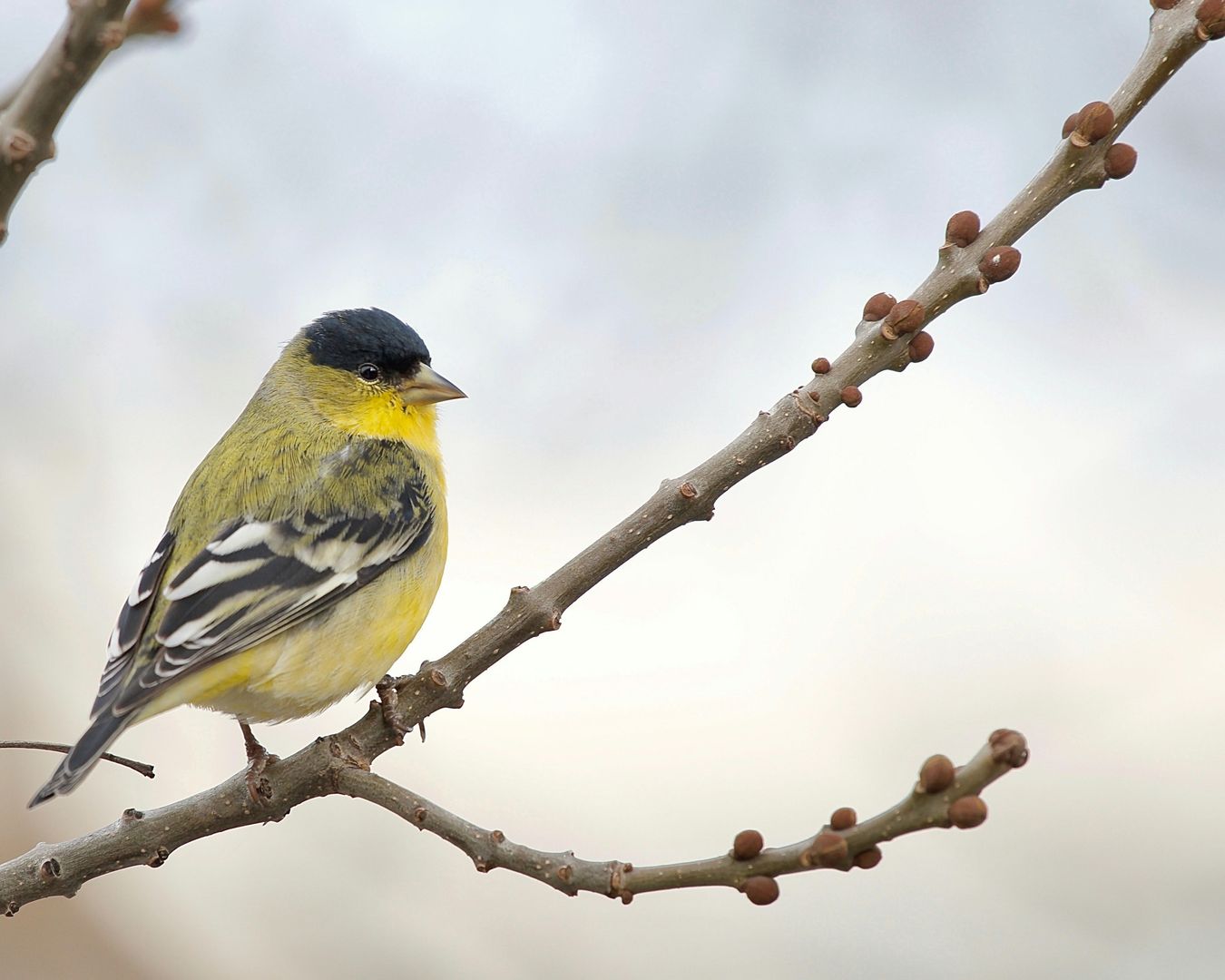
9. Lesser Goldfinch
- Family – Fringillidae
- Species – Spinus psaltria
- Primary Activity Time – Daytime
- Diurnal
- Resident Arizona Bird
The Lesser Goldfinch is a small, bright seed eater that stays colorful all winter, unlike its paler eastern relative. It feeds on weed seeds like sunflowers and thistles and gathers at feeders in noisy little groups.
Males have a black cap, bright yellow underparts, and either a black or greenish back, with white patches in the wings. Females are olive above and yellowish below, with no black cap.
The Lesser Goldfinch call is a sweet, plaintive, rising tee-yee, and the song is a jumbled, twittering run that often includes bits copied from other birds.
In Arizona winters, look for it in towns, desert edges, and streamside woods across much of the state, especially at nyjer feeders.
Feeder favorites: nyjer, sunflower chips
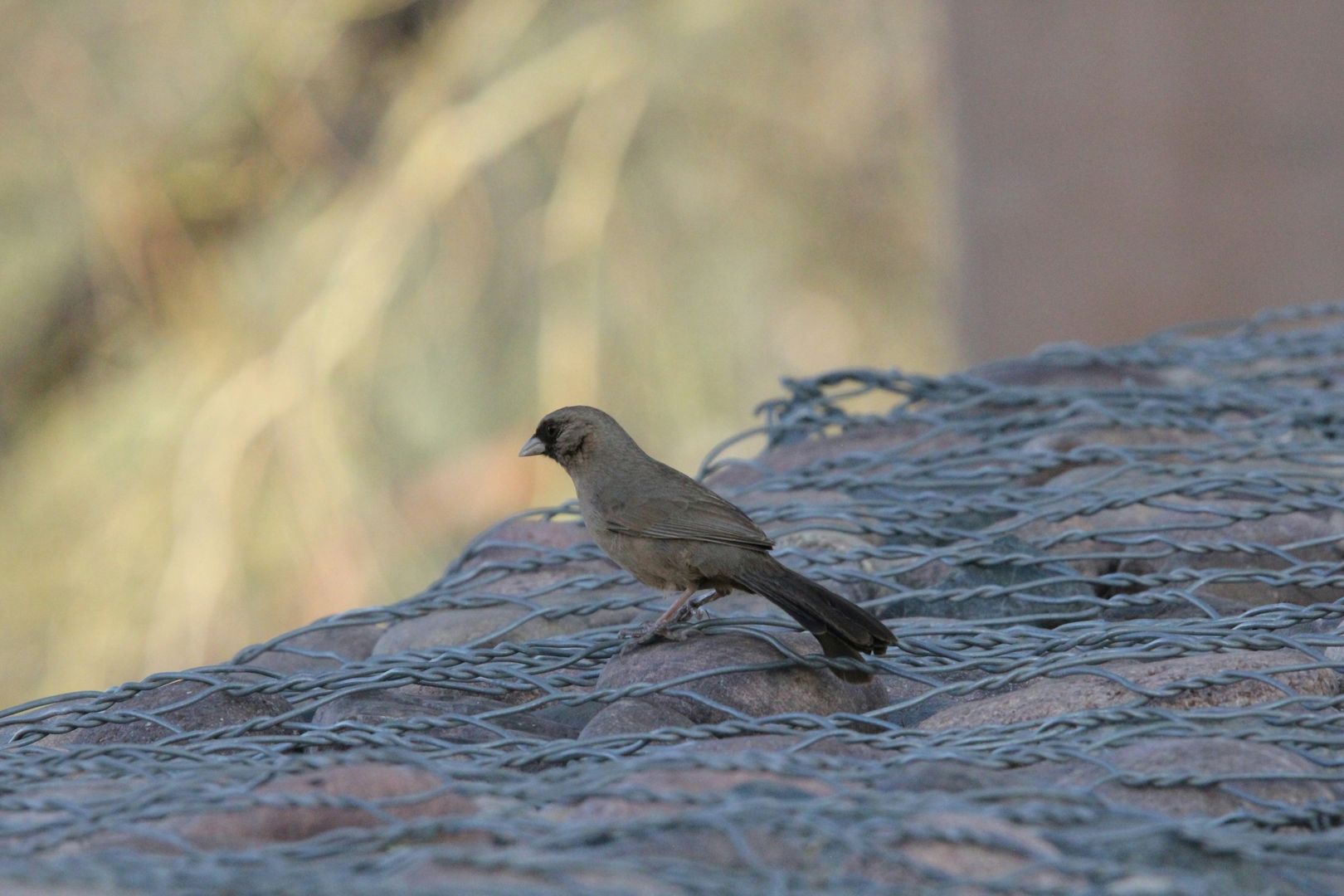
10. Abert's Towhee
- Family – Passerellidae
- Species – Melozone aberti
- Primary Activity Time – Daytime
- Diurnal
- Resident Arizona Bird
The Abert's Towhee is about as Arizonan as a bird gets, since its range barely extends past the state line. It's a ground forager that scratches under shrubs for seeds and insects, usually in pairs that stick close together all year.
It's a warm, plain buffy-brown with a black face around the base of a pale bill and a cinnamon patch under the tail. Males and females look alike.
The Abert's Towhee call is a sharp, high peek, and pairs often greet each other with an excited squealing duet.
In Arizona winters, look for it in dense brush along rivers and washes in the southern and central lowlands, including suburban yards in Phoenix and Tucson that have thick shrubs.
Feeder favorites: millet and mixed seed scattered on the ground near cover
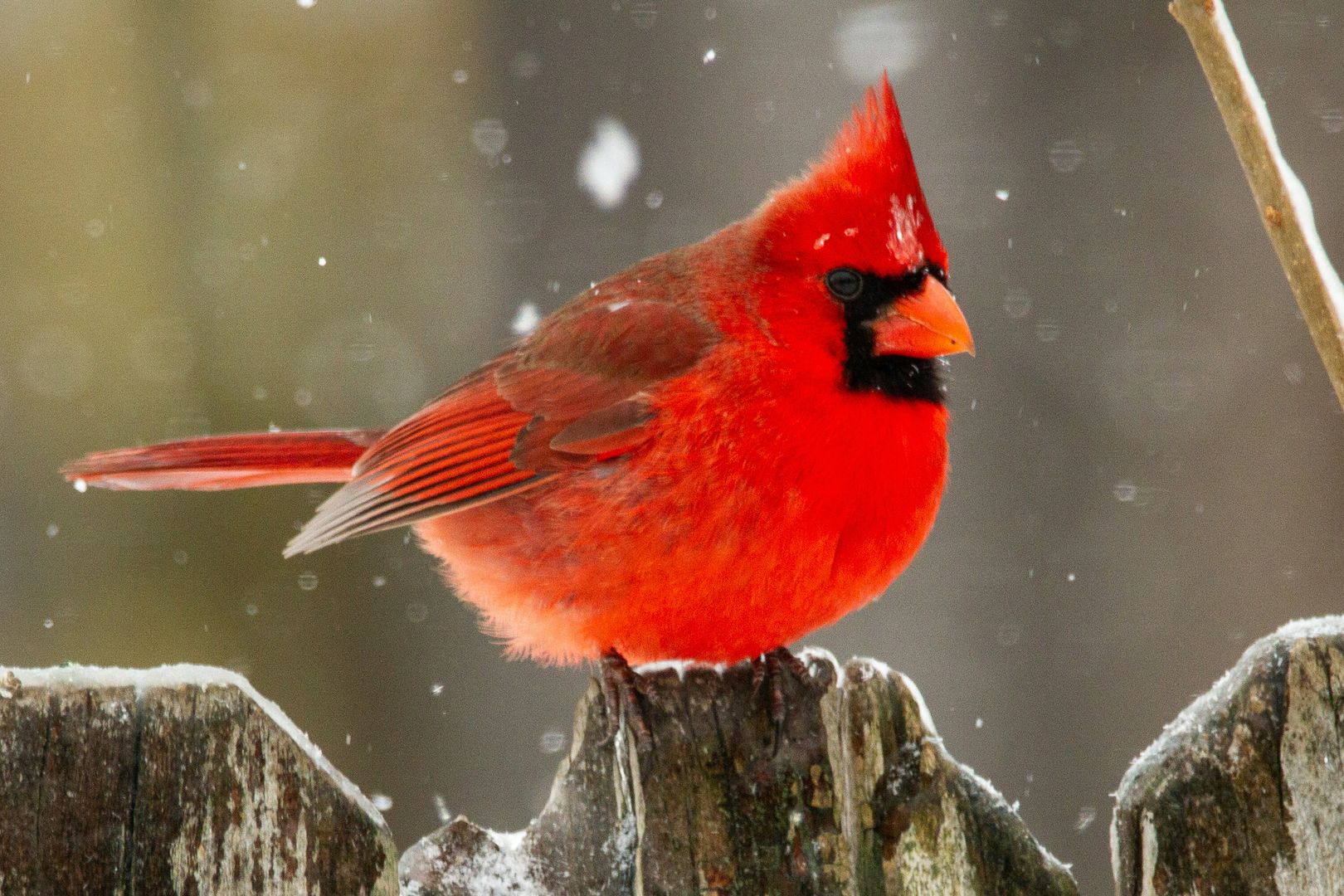
11. Northern Cardinal
- Family – Cardinalidae
- Species – Cardinalis cardinalis
- Primary Activity Time – Dawn and Dusk
- Diurnal
- Resident Arizona Bird
The Northern Cardinal in Arizona lives mostly in the southern deserts and river corridors, far from the snowy holiday cards it's famous for. It eats seeds, fruit, and insects, foraging low in thickets.
Males are bright red with a black face and a red crest. Females are warm tan with red tinges on the wings, tail, and crest, plus the same thick orange-red bill.
The Northern Cardinal song is a loud, clear series of whistles, often written as cheer-cheer-cheer or birdie-birdie-birdie, and its call is a sharp metallic chip.
In Arizona winters, look for it in mesquite thickets, riparian areas, and desert neighborhoods in the southern part of the state. For more on what cardinals need this time of year, see Cardinals in Winter: Where They Go, What They Eat, and How to Attract Them.
Feeder favorites: black oil sunflower, safflower
12. Pyrrhuloxia
- Family – Cardinalidae
- Species – Cardinalis sinuatus
- Primary Activity Time – Dawn and Dusk
- Diurnal
- Resident Arizona Bird
The Pyrrhuloxia is the cardinal's desert cousin, and you'll need a few tries to pronounce it (I still say it like I'm sneezing politely). It eats seeds, insects, and fruit, and in winter it often forms small flocks that roam mesquite scrub together.
Males are gray with a red face, red crest tip, and a red stripe down the breast, plus a stubby yellow bill shaped like a parrot's. Females are gray-buff with just a hint of red in the wings, tail, and crest.
The Pyrrhuloxia song is a series of whistles similar to a cardinal's but thinner, and its call is a metallic chink.
In Arizona winters, look for it in the desert scrub and mesquite grasslands of southeastern Arizona, including Patagonia Lake State Park and feeders around Patagonia.
Feeder favorites: black oil sunflower, millet
13. White-crowned Sparrow
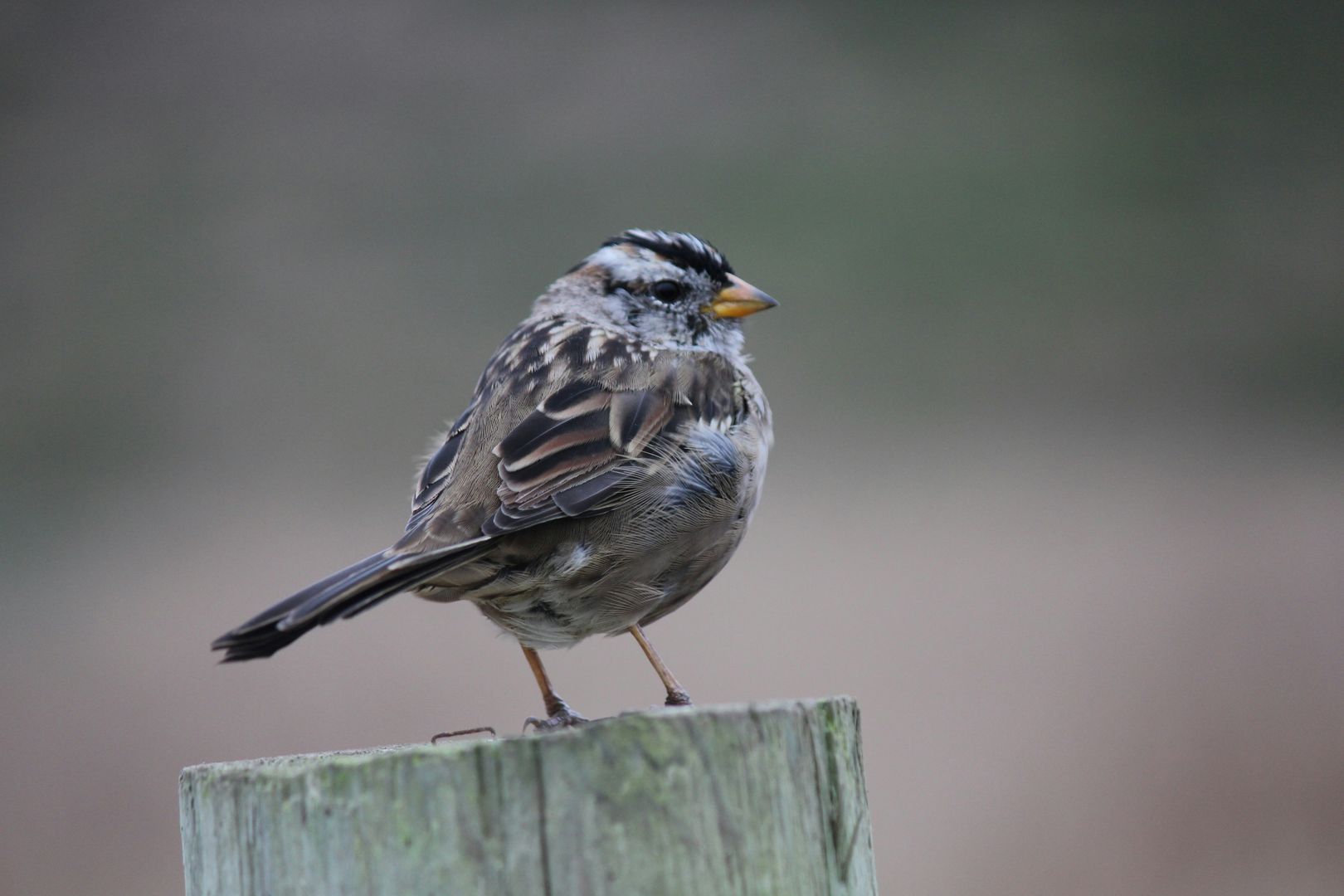
- Family – Passerellidae
- Species – Zonotrichia leucophrys
- Primary Activity Time – Daytime
- Diurnal
- Winter Migrant / Visitor
The White-crowned Sparrow is the sparrow most Arizonans meet in winter. It's usually among the first winter visitors to arrive in fall, and flocks spread across the lowlands to eat weed seeds until they head north again in spring.
Adults have a bold black-and-white striped crown, a gray face, and a pinkish-orange bill. Young birds wear the same pattern in brown and tan. Males and females look alike.
The White-crowned Sparrow song is a clear whistle followed by buzzy trills, and its call is a sharp pink.
In Arizona winters, look for it statewide below the high mountains, in desert washes, farm edges, parks, and backyards with low brush.
Feeder favorites: millet, sunflower chips scattered on the ground
14. Dark-eyed Junco
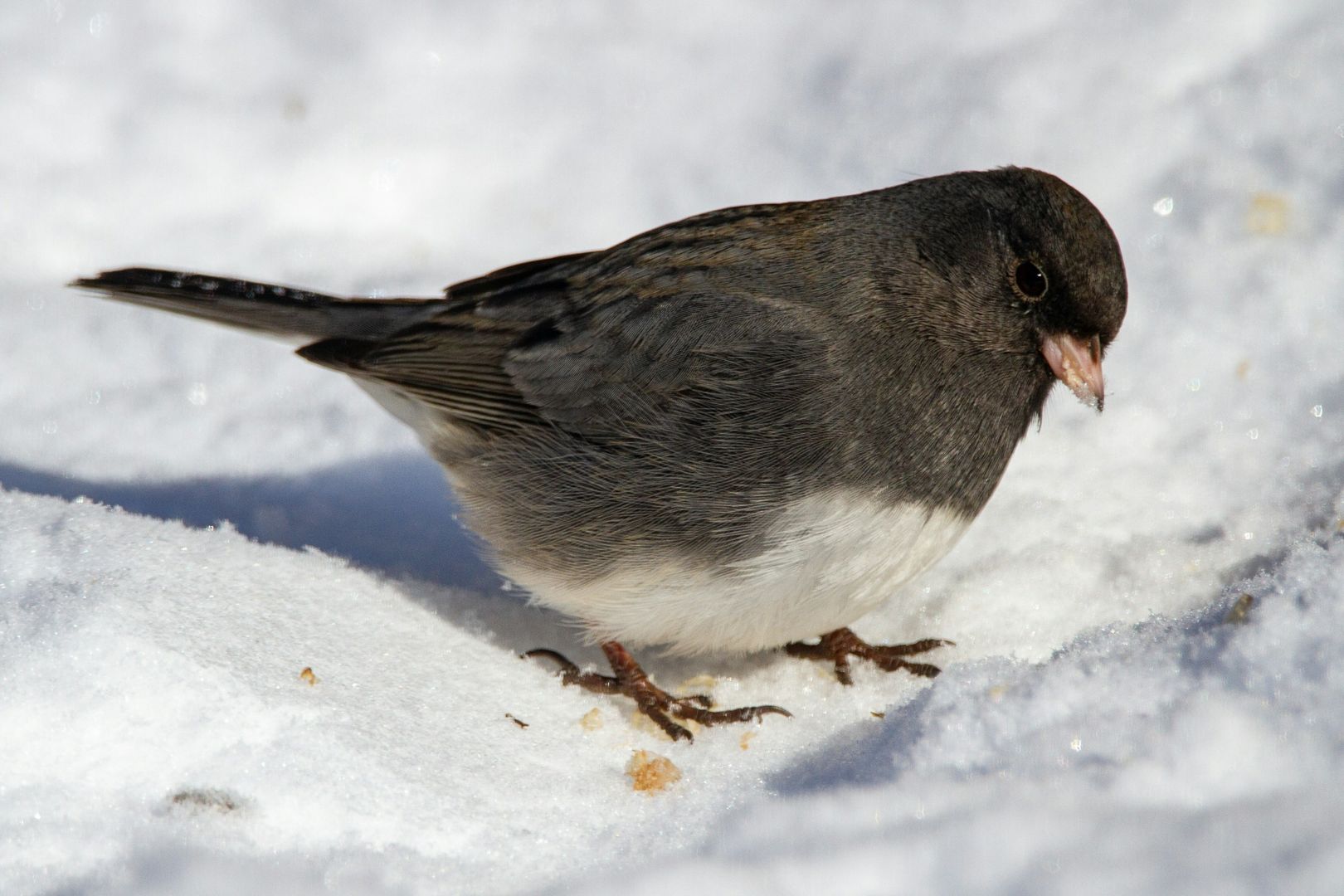
- Family – Passerellidae
- Species – Junco hyemalis
- Primary Activity Time – Daytime
- Diurnal
- Winter Migrant / Visitor (resident in the mountains)
The Dark-eyed Junco ranked second in Project FeederWatch's Southwest region, behind only the House Finch. It's a ground-feeding seed eater that hops under feeders and shrubs in small flocks.
Arizona is a great place to see several junco forms in one winter, including Oregon, Gray-headed, and Pink-sided juncos. All have a pale pink bill and white outer tail feathers that flash when they fly. Males are usually darker and crisper than females, which tend to look browner and softer.
The Dark-eyed Junco call is a sharp tick or smack, and the song is a quick, musical trill.
In Arizona winters, look for it in pine and oak woodlands, canyon edges, and mountain towns, and down into the lowlands in smaller numbers. Don't mix it up with the Yellow-eyed Junco of the southeastern mountains, which is its own species with a very intense stare.
Feeder favorites: millet, sunflower chips, cracked corn on the ground
15. Chipping Sparrow
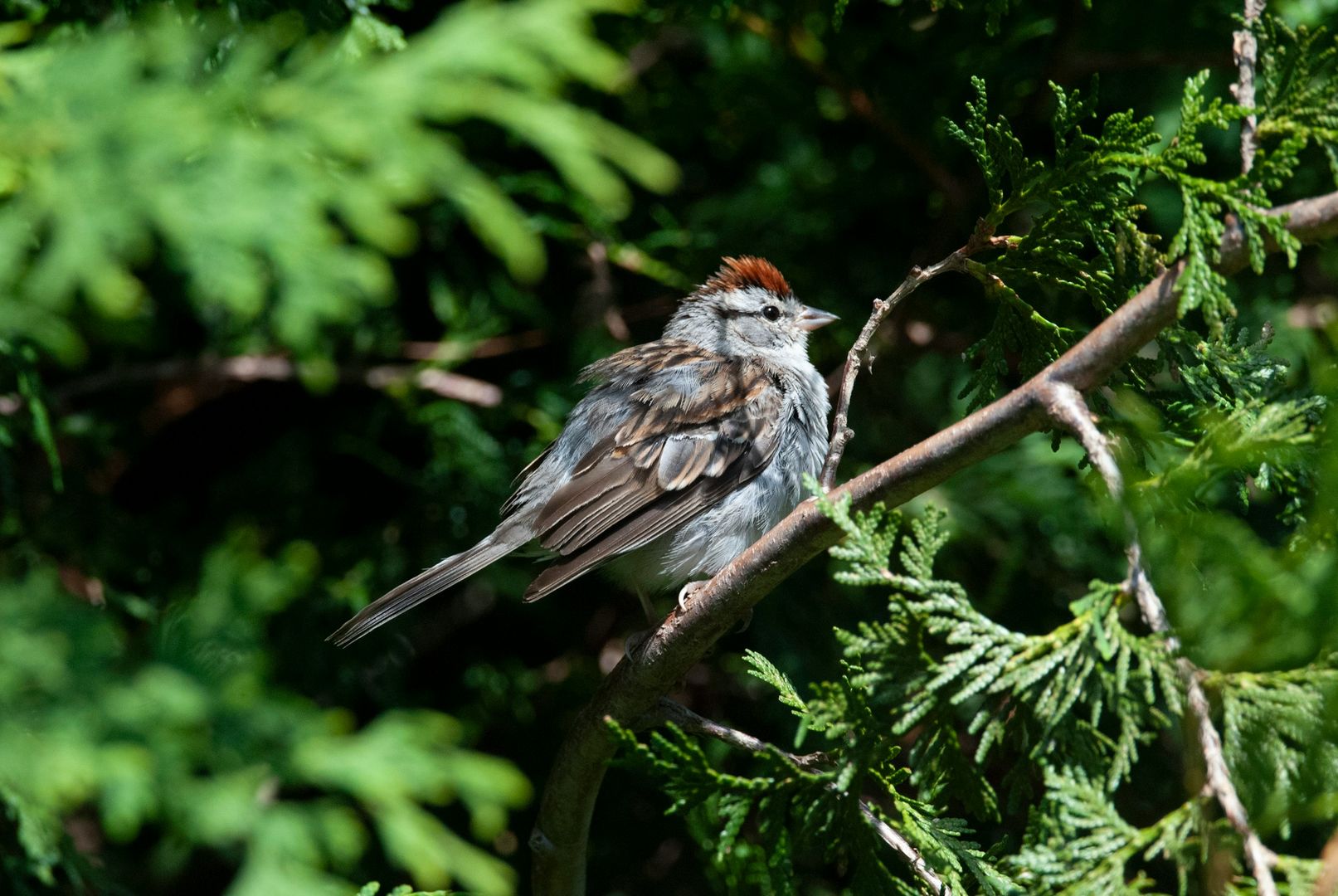
- Family – Passerellidae
- Species – Spizella passerina
- Primary Activity Time – Daytime
- Diurnal
- Winter Migrant / Visitor
The Chipping Sparrow is a small, slim sparrow that spends winter in loose flocks in Arizona's lowlands and grasslands. It eats grass and weed seeds on the ground.
Summer's bright rusty cap fades in winter, when adults look buffier with a brownish crown, a dark line through the eye, and a plain gray-buff breast. Males and females look alike.
The Chipping Sparrow call is a thin tsip, and its song is a dry, even trill.
In Arizona winters, look for it in open woodlands, grassy desert edges, parks, and golf courses, often mixed in with other sparrows.
Feeder favorites: millet, sunflower chips on the ground
16. Lark Bunting
- Family – Passerellidae
- Species – Calamospiza melanocorys
- Primary Activity Time – Daytime
- Diurnal
- Irregular Winter Visitor
The Lark Bunting is Colorado's state bird, and it spends the winter in Arizona, which I think says a lot about Colorado in January. It's a stocky, seed-eating grassland bird that travels in flocks, and numbers can swing a lot from one winter to the next.
In winter, both sexes are streaky brown with a pale wing patch, and they can look a lot like large sparrows. Males start molting toward their black breeding plumage by late winter and often look patchy, like they got halfway through getting dressed.
The Lark Bunting call is a soft, whistled hoo-ee, often given by flocks in flight.
In Arizona winters, look for it in the open grasslands and farm fields of southeastern Arizona, including the Sulphur Springs Valley.
17. Yellow-rumped Warbler
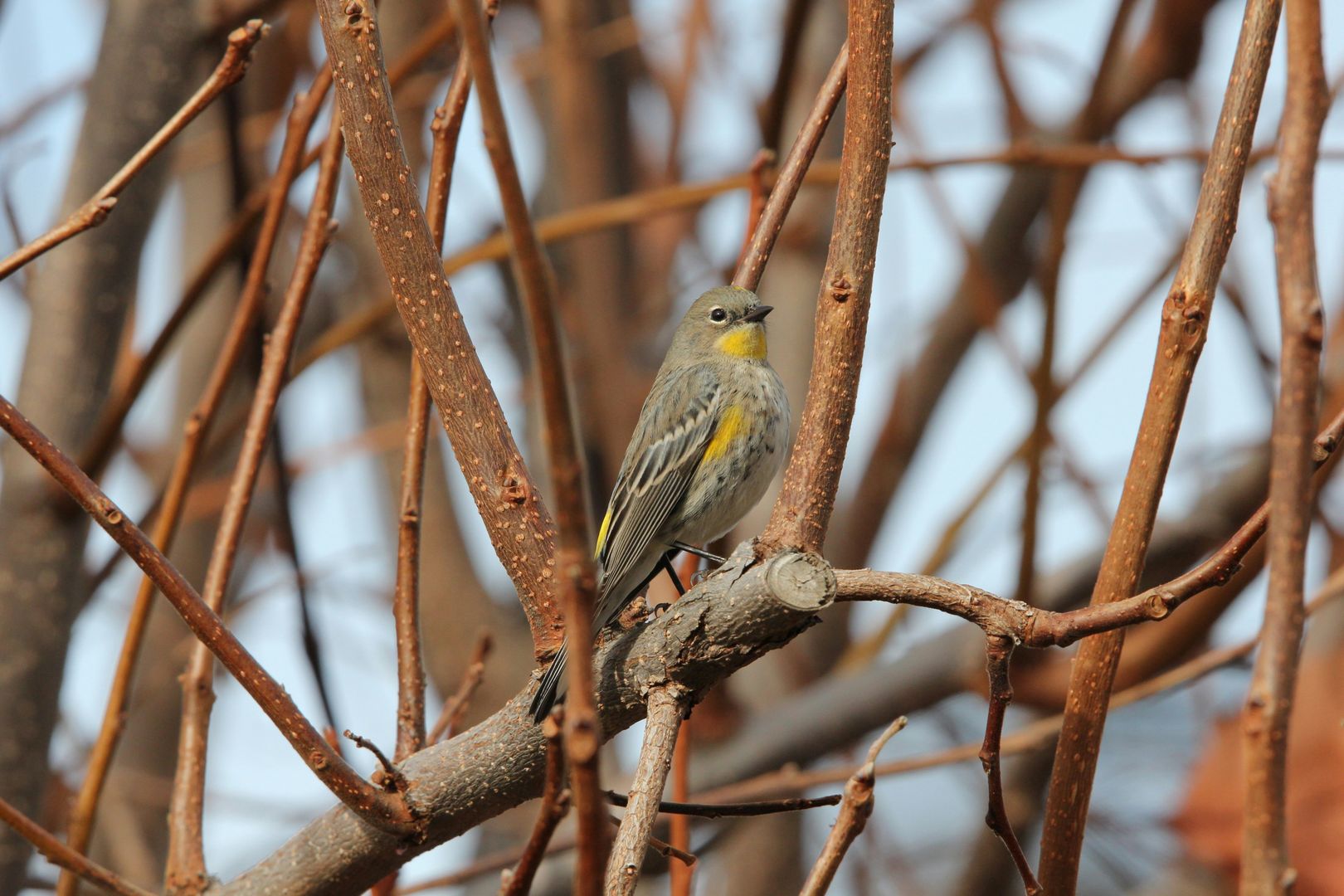
- Family – Parulidae
- Species – Setophaga coronata
- Primary Activity Time – Daytime
- Diurnal
- Winter Migrant / Visitor
The Yellow-rumped Warbler is the winter warbler of Arizona, and the most likely warbler to land in your yard. Tucson Bird Alliance notes that birds from the Rockies and western Canada arrive in the lowlands around October and spend the winter in urban Tucson. It eats insects and switches to berries when bugs are scarce.
Birders call it the "butter butt" for its yellow rump patch. Arizona's wintering birds are mostly the Audubon's form, with a yellow throat. Males are blue-gray with black streaks and yellow on the sides, throat, and crown, while females and winter birds are browner and duller.
The Yellow-rumped Warbler call is a flat, distinctive chek that you'll hear all winter.
In Arizona winters, look for it statewide in the lowlands, in washes, parks, wetlands, and backyard trees.
Feeder favorites: suet
18. Ruby-crowned Kinglet
- Family – Regulidae
- Species – Corthylio calendula
- Primary Activity Time – Daytime
- Diurnal
- Winter Migrant / Visitor
The Ruby-crowned Kinglet is a tiny olive-green insect eater that never stops moving. It flicks its wings almost constantly while it searches branches for small insects and eggs, which is honestly the energy I'm hoping to bring to the new year.
It's olive above with a white eye ring and white wing bars. Males have a red crown patch that's usually hidden and only flares when they're excited. Females have no red.
The Ruby-crowned Kinglet call is a dry, two-note ji-dit. The song is surprisingly loud for such a small bird.
In Arizona winters, look for it in the lowlands statewide, in mesquite, cottonwoods, parks, and backyard trees.
19. Say's Phoebe
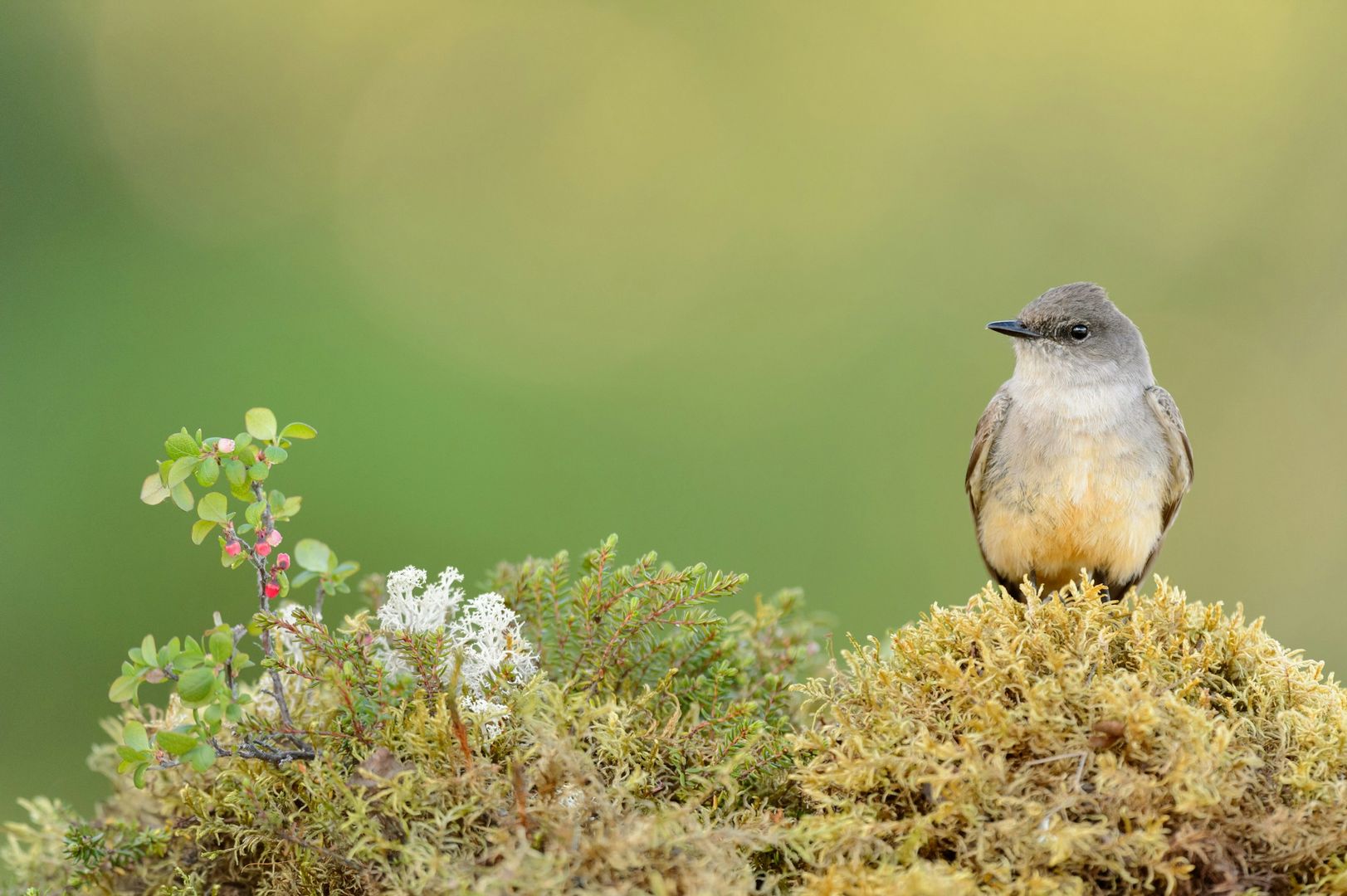
- Family – Tyrannidae
- Species – Sayornis saya
- Primary Activity Time – Daytime
- Diurnal
- Resident / Winter Migrant
The Say's Phoebe is a flycatcher that stays in Arizona's deserts through the winter, catching insects from low perches like fences, shrubs, and rooftops. It pumps its tail while it waits.
It's soft gray-brown above with a peachy-rust belly and a black tail. Males and females look alike.
The Say's Phoebe call is a soft, plaintive, down-slurred pee-ur.
In Arizona winters, look for it in open country across the state's lower elevations, including farm fields, desert edges, and around buildings.
20. Vermilion Flycatcher
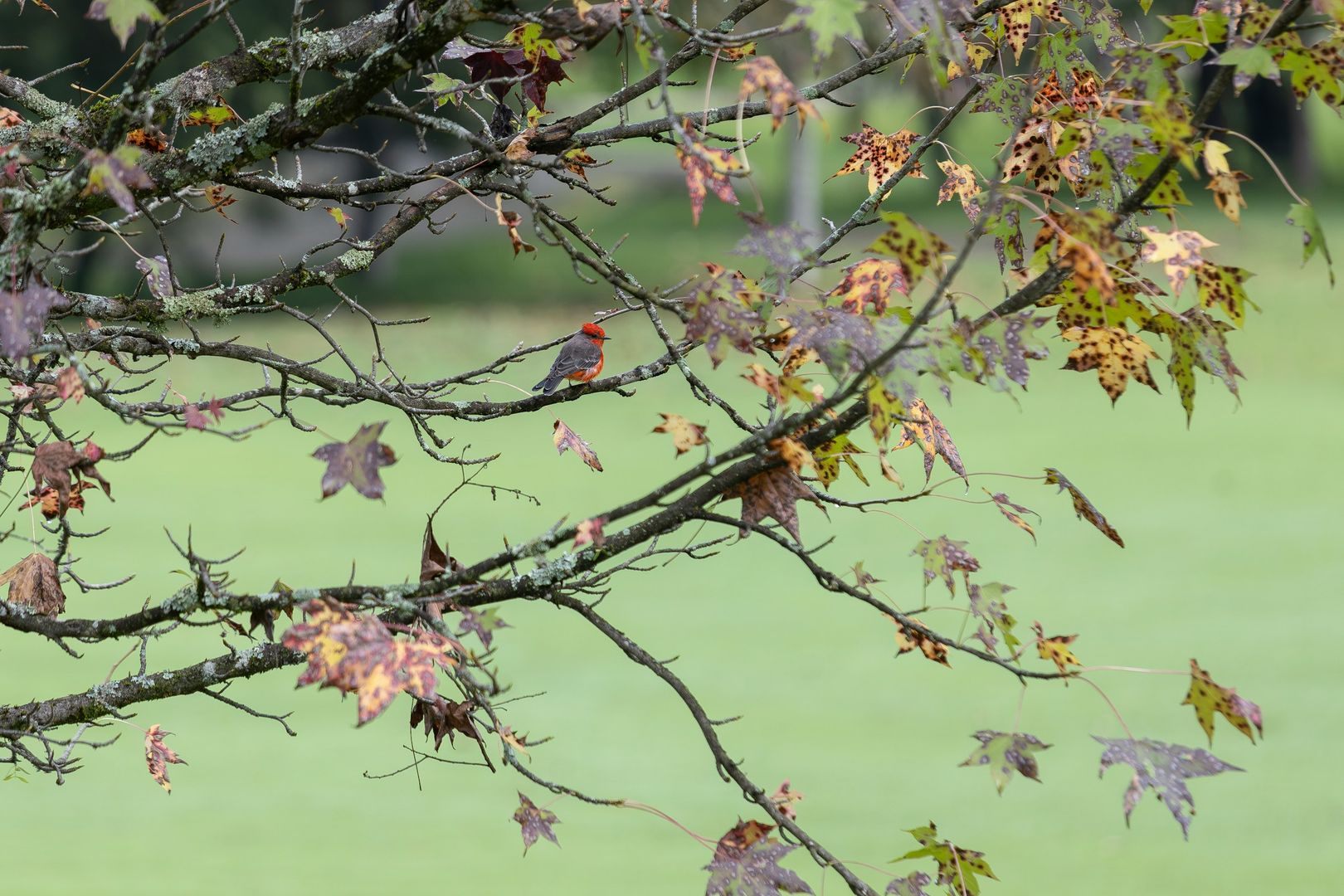
- Family – Tyrannidae
- Species – Pyrocephalus obscurus
- Primary Activity Time – Daytime
- Diurnal
- Resident (southern Arizona, near water)
The Vermilion Flycatcher is the bird that makes people visiting from out of state stop the car. It catches flying insects from low perches and often returns to the same branch over and over.
Males are brilliant red below and on the crown, with a dark brown mask, back, and tail. Females are gray-brown above with a lightly streaked breast and a salmon-pink wash on the belly.
The Vermilion Flycatcher call is a sharp peent, and males give a tinkling song.
In Arizona winters, look for it near water in the southern half of the state: ponds, parks, golf courses, and river corridors, including the Willcox area.
21. Phainopepla
- Family – Ptiliogonatidae
- Species – Phainopepla nitens
- Primary Activity Time – Daytime
- Diurnal
- Resident / Winter Visitor (desert washes)
The Phainopepla is a slender, crested bird with a name that sounds like an allergy medication. In winter it lives largely on mistletoe berries in the desert, and a single bird will often guard a whole clump of mistletoe like it's the last parking spot at Costco.
Males are glossy black with a red eye, and they flash big white wing patches in flight. Females are gray with a red eye and paler gray wing patches.
The Phainopepla call is a soft, low wurp, a little like a question.
In Arizona winters, look for it in desert washes with mesquite, palo verde, and ironwood trees hung with mistletoe, across the southern and western deserts.
22. Greater Roadrunner
- Family – Cuculidae
- Species – Geococcyx californianus
- Primary Activity Time – Daytime
- Diurnal
- Resident Arizona Bird
The Greater Roadrunner is a ground-dwelling cuckoo that would much rather run than fly. It eats lizards, insects, scorpions, small rodents, and the occasional small bird, so it's less cartoon and more apex predator of the backyard.
It's streaky brown and white with a shaggy crest, a long tail, and a patch of bare blue and orange skin behind the eye. Males and females look alike.
The Greater Roadrunner call is not beep beep. It's a slow, descending series of dove-like coos, plus clattering sounds made with the bill. (This was a bigger letdown than the Seinfeld finale.)
In Arizona winters, look for it in desert scrub, grasslands, and desert neighborhoods at low and middle elevations statewide.
23. Mourning Dove
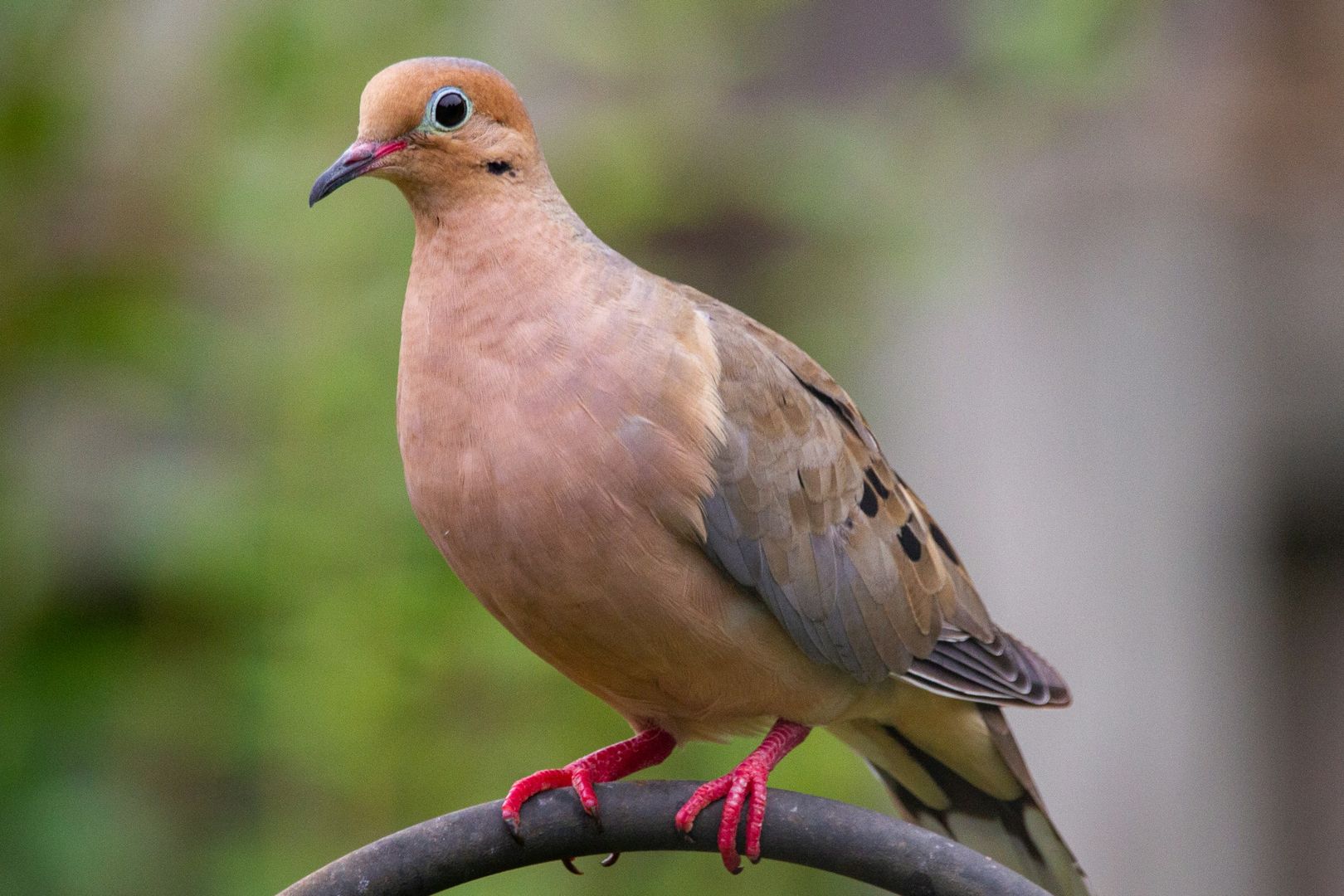
- Family – Columbidae
- Species – Zenaida macroura
- Primary Activity Time – Daytime
- Diurnal
- Resident Arizona Bird
The Mourning Dove is a slim, quiet seed eater and one of the most common birds at Southwest feeders. It eats almost entirely seeds, picked up from the ground.
It's soft tan-gray with black spots on the wings and a long, pointed tail edged in white. Males have a pinkish breast and bluish-gray crown, while females are a bit browner overall.
The Mourning Dove call is a soft, mournful coo-OO-oo-oo-oo, and its wings whistle when it takes off.
In Arizona winters, look for it statewide in towns, farm fields, and desert edges, often gathering near water.
Feeder favorites: millet, cracked corn, black oil sunflower on a platform or the ground
24. Northern Flicker
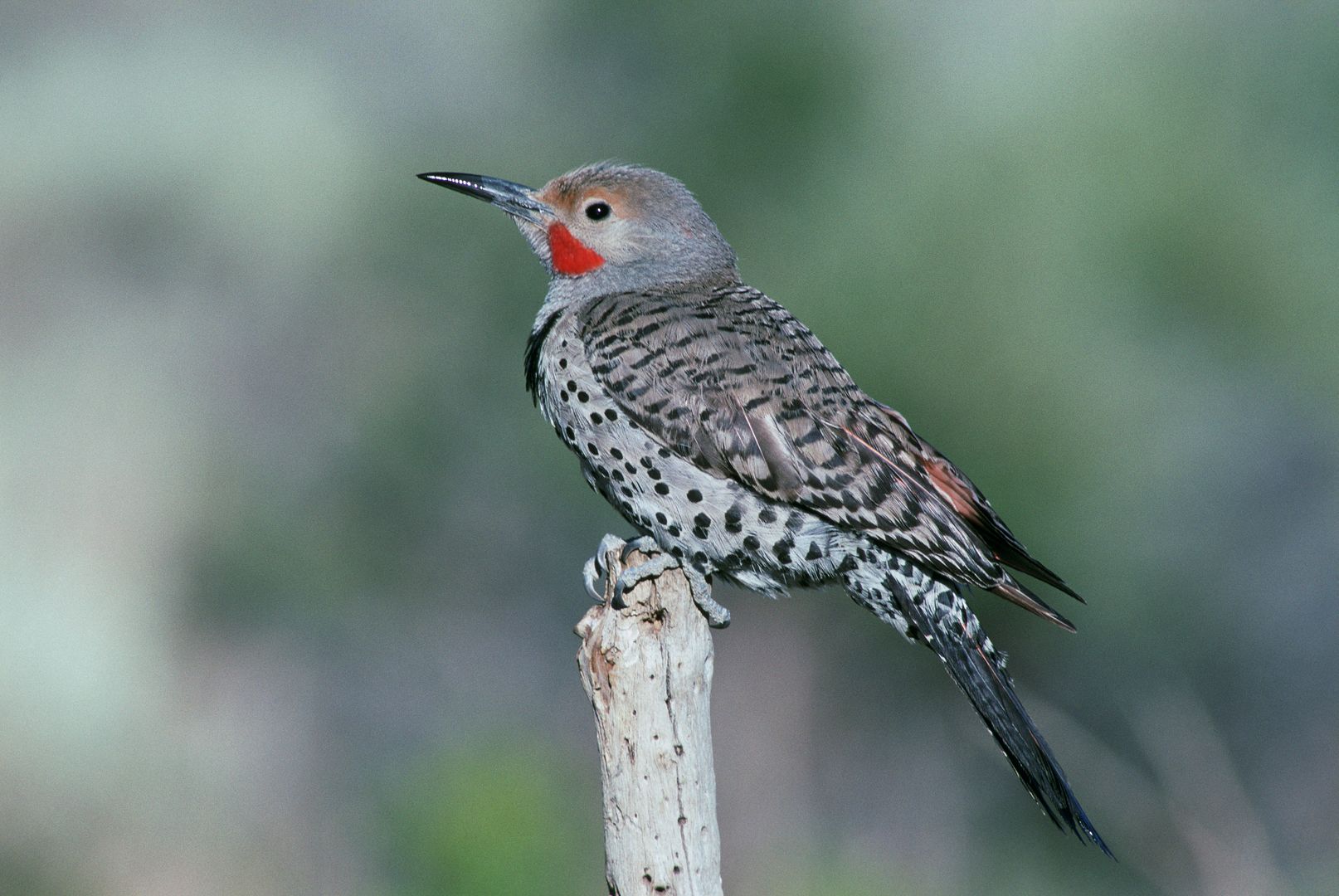
- Family – Picidae
- Species – Colaptes auratus
- Primary Activity Time – Daytime
- Diurnal
- Resident (mountains) / Winter Migrant (lowlands)
The Northern Flicker ranked third in Project FeederWatch's Southwest region, which surprises people who think of woodpeckers as tree-only birds. Flickers spend a lot of time on the ground eating ants and beetles, and in winter they add berries and seeds.
Arizona's Northern Flickers are the "red-shafted" kind, with salmon-red under the wings and tail. Look for a brown, barred back, a black crescent on a spotted chest, and a white rump in flight. Males have a red mustache stripe, while females don't.
The Northern Flicker call is a loud kyeer and a long, rolling wick-wick-wick-wick.
In Arizona winters, look for it in mountain forests and moving down into lowland parks, golf courses, and towns. In saguaro country, also watch for the closely related Gilded Flicker, which has yellow under the wings.
Feeder favorites: suet
25. Red-naped Sapsucker
- Family – Picidae
- Species – Sphyrapicus nuchalis
- Primary Activity Time – Daytime
- Diurnal
- Winter Migrant / Visitor
The Red-naped Sapsucker drills neat rows of small holes in tree bark, then comes back to drink the sap and eat the insects that get stuck in it. It basically runs its own little restaurant, and hummingbirds and warblers are happy to eat there too.
It has a bold black-and-white face, a red forehead, and a small red patch on the back of the head. Males have a fully red throat, while females have a white chin above the red.
The Red-naped Sapsucker call is a nasal, cat-like mew, and its drumming is a slow, uneven tapping that speeds up and then stutters to a stop.
In Arizona winters, look for it in lowland and mid-elevation trees, including riparian woods, orchards, and parks, such as the trees around Patagonia.
26. Mountain Bluebird
- Family – Turdidae
- Species – Sialia currucoides
- Primary Activity Time – Daytime
- Diurnal
- Irregular Winter Visitor
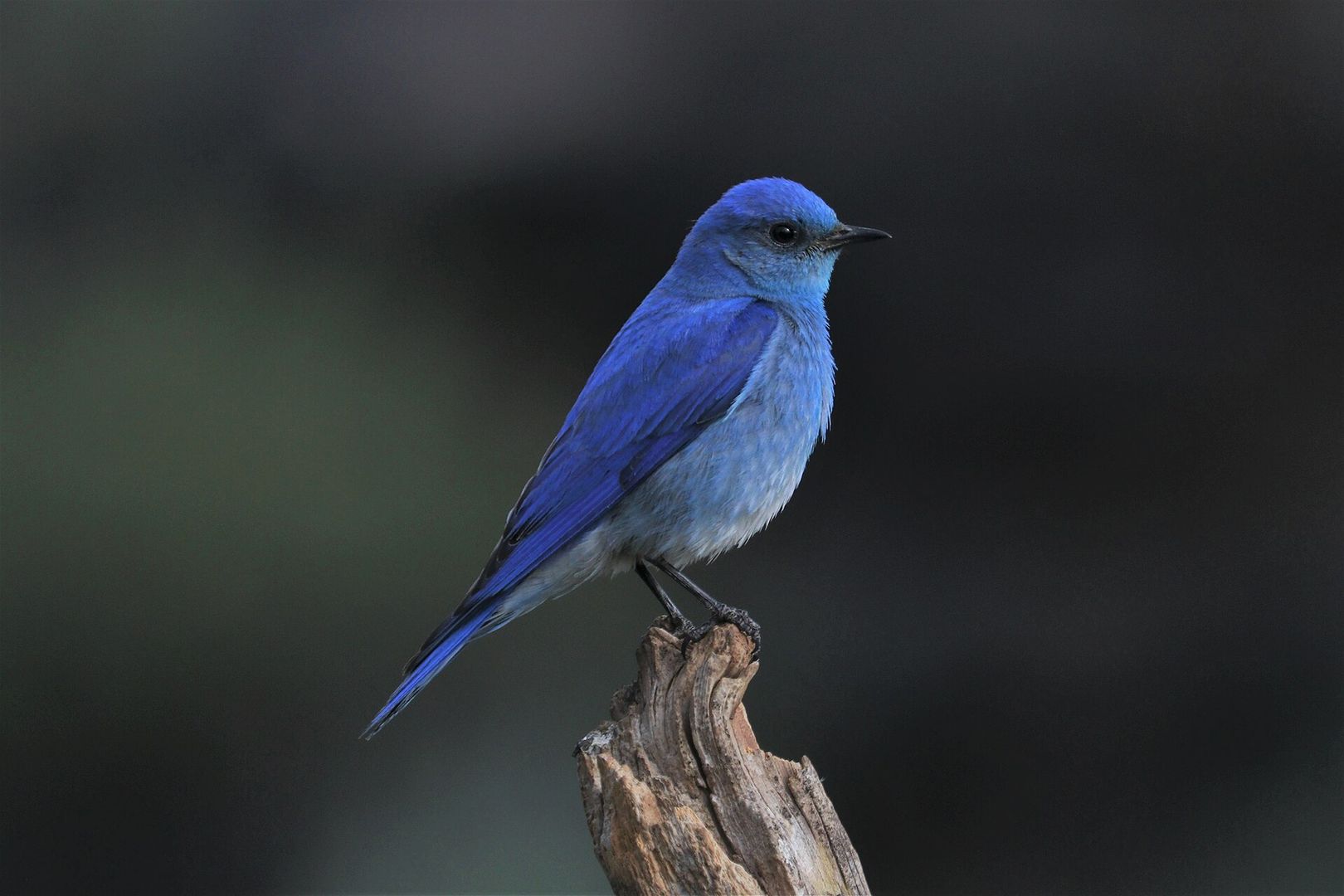
The Mountain Bluebird is a nomad in winter, wandering in flocks to wherever there are insects and berries. It often hovers low over open ground before dropping down to grab an insect.
Males are an all-over sky blue, paler below. Females are gray-brown with blue in the wings and tail, and they're easy to overlook until the light hits that blue.
The Mountain Bluebird call is a soft, low few, and flocks keep up a quiet chatter.
In Arizona winters, look for it in open grasslands, farmland, and juniper country, where flocks may be common one year and scarce the next.
27. Harris's Hawk
- Family – Accipitridae
- Species – Parabuteo unicinctus
- Primary Activity Time – Daytime
- Diurnal
- Resident Arizona Bird
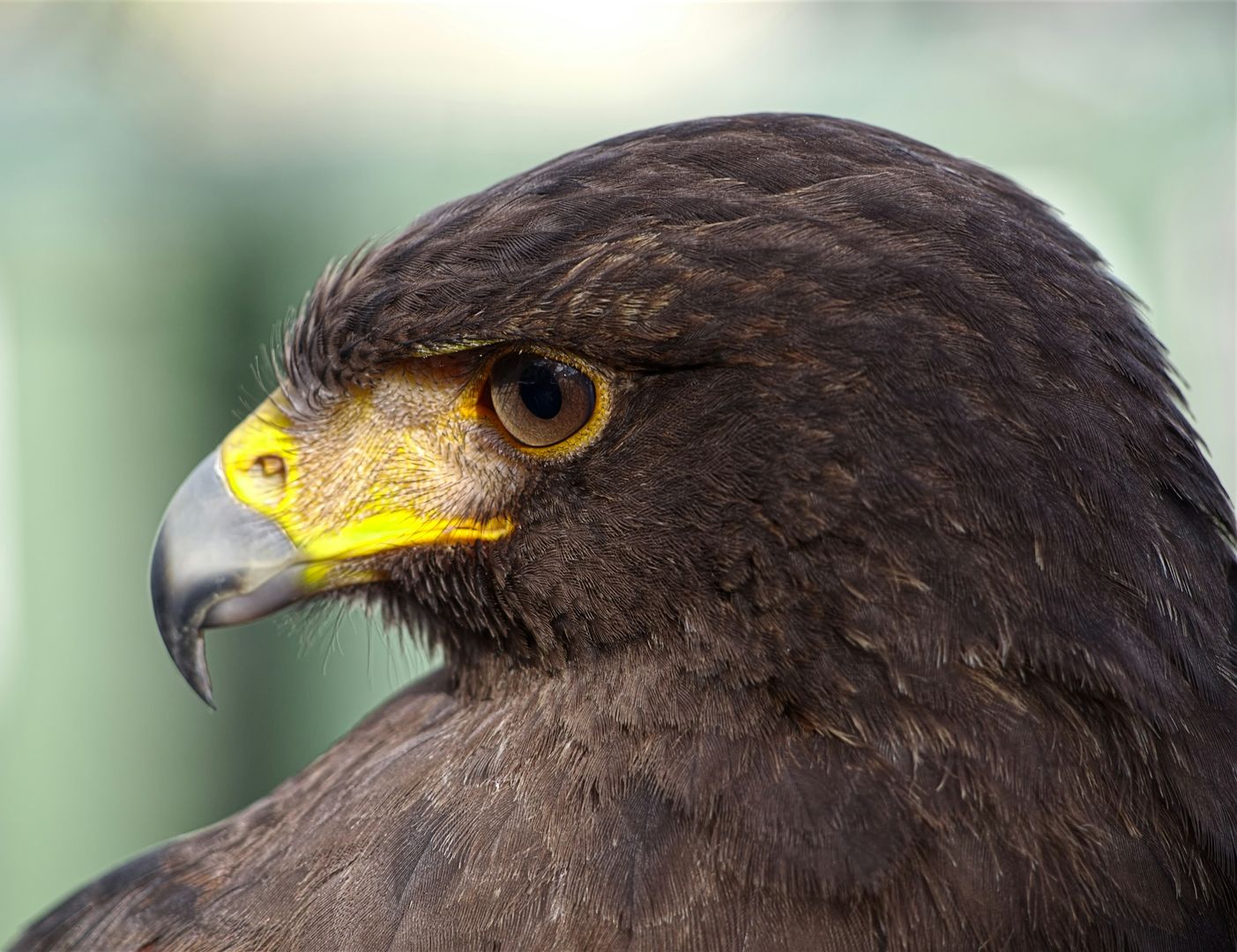
The Harris's Hawk is famous for hunting in family groups, working together to flush and catch rabbits and other prey. It's the rare group project where everyone actually does their part.
Adults are dark chocolate brown with chestnut shoulders and thighs and a long black tail with white at the base and tip. Females are noticeably larger than males but look alike otherwise.
The Harris's Hawk call is a harsh, grating scream, often given when other birds or people get too close.
In Arizona winters, look for it in the Sonoran Desert of southern and central Arizona, often perched on saguaros, utility poles, and light posts, including on the edges of Tucson and Phoenix.
28. Red-tailed Hawk
- Family – Accipitridae
- Species – Buteo jamaicensis
- Primary Activity Time – Daytime
- Diurnal
- Resident / Winter Migrant
The Red-tailed Hawk is the most common big hawk in Arizona, and winter migrants from the north add to the year-round birds. It hunts mostly rodents and rabbits from high perches.
Adults have a brick-red tail and usually a pale chest with a dark belly band, though plumage varies a lot in the West. Females are larger than males.
The Red-tailed Hawk call is a hoarse, descending kee-eeeer, the scream Hollywood loves to dub over eagles.
In Arizona winters, look for it statewide along roadsides, farm fields, and open desert, perched on poles and tall saguaros.
29. Cooper's Hawk
- Family – Accipitridae
- Species – Astur cooperii
- Primary Activity Time – Daytime
- Diurnal
- Resident / Partial Migrant
The Cooper's Hawk is the hawk most likely to visit your feeder, though not for the seed. It hunts mainly birds, especially doves, with fast, surprise attacks through yards and trees. It appeared at about a third of Southwest FeederWatch sites.
Adults are blue-gray above with fine orange barring below, red eyes, and a long, rounded tail with a white tip. Young birds are brown with streaks. Females are much larger than males.
The Cooper's Hawk call is a fast, harsh cak-cak-cak, mostly heard near nests.
In Arizona winters, look for it statewide in towns and wooded areas, including desert neighborhoods where doves gather.
30. Bald Eagle
- Family – Accipitridae
- Species – Haliaeetus leucocephalus
- Primary Activity Time – Daytime
- Diurnal
- Resident / Winter Migrant
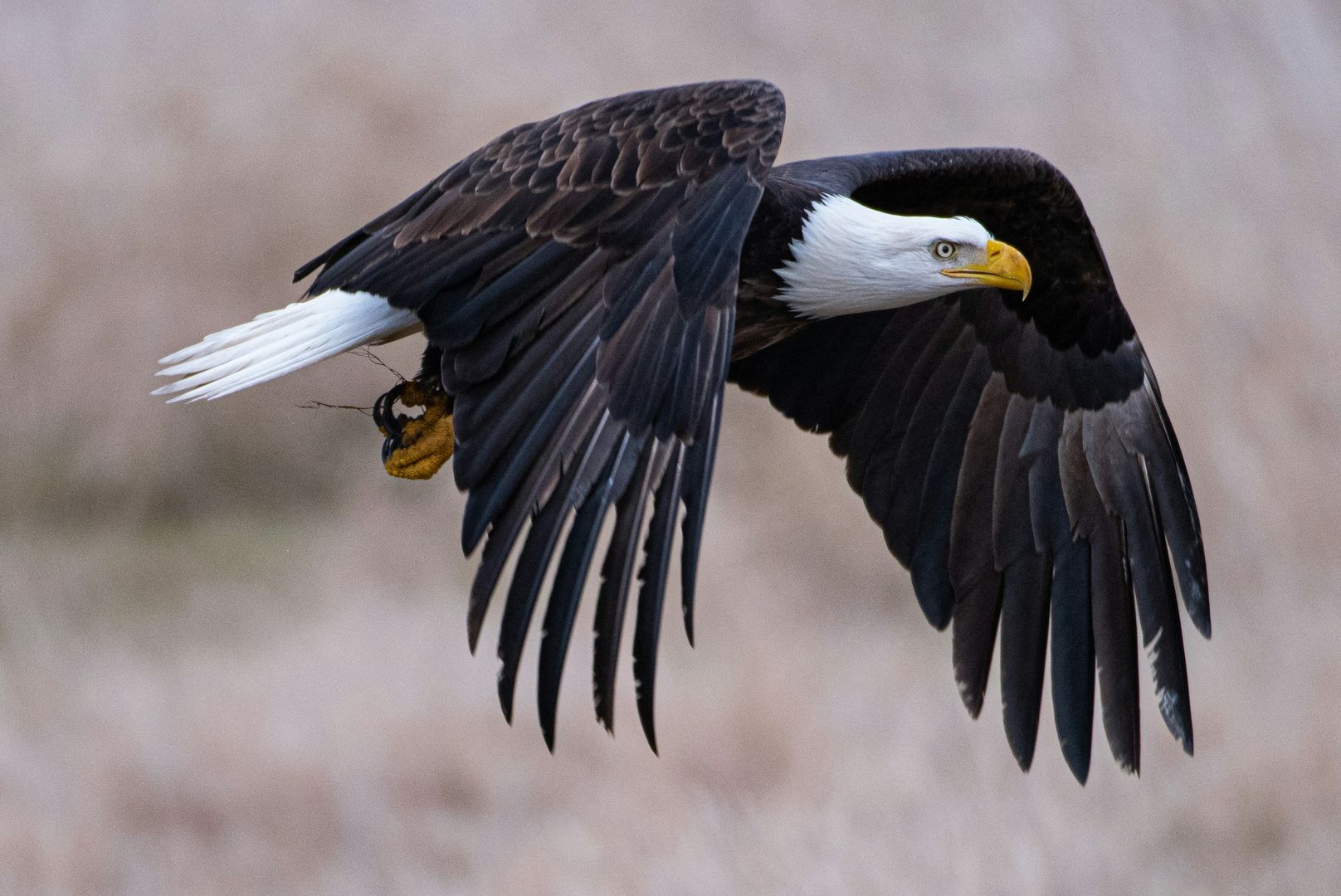
The Bald Eagle in Arizona comes in two groups: a small population that nests in the desert, and wintering eagles from the north. The U.S. Forest Service says wintering birds arrive around October, peak in February, and leave by late April. They eat fish, waterfowl, and carrion.
Adults have a white head and tail, a dark brown body, and a big yellow bill. Young eagles are mottled brown and white for several years. Females are larger than males.
The Bald Eagle call is a high, weak-sounding series of chirps and whistles, which is not the voice anyone expects from a national symbol.
In Arizona winters, look for it around lakes and rivers, especially in central and northern Arizona, including the lakes and forests around Flagstaff.
31. Ferruginous Hawk
- Family – Accipitridae
- Species – Buteo regalis
- Primary Activity Time – Daytime
- Diurnal
- Winter Migrant / Visitor
The Ferruginous Hawk is one of the largest hawks in North America, big enough that people sometimes mistake it for an eagle. It hunts rabbits, ground squirrels, and other rodents in open grasslands, often from a perch or even from the ground.
Most adults are pale-morph birds: white below, rusty above, with rusty leg feathers that form a V under the body in flight. "Ferruginous" means rust-colored, so at least this one's name makes sense. Females are larger than males.
The Ferruginous Hawk call is a harsh, descending scream, though it's usually quiet in winter.
In Arizona winters, look for it in grasslands and farm country, including the Sulphur Springs Valley and the open country southwest of Phoenix.
32. Sandhill Crane
- Family – Gruidae
- Species – Antigone canadensis
- Primary Activity Time – Dawn and Dusk
- Diurnal
- Winter Migrant / Visitor
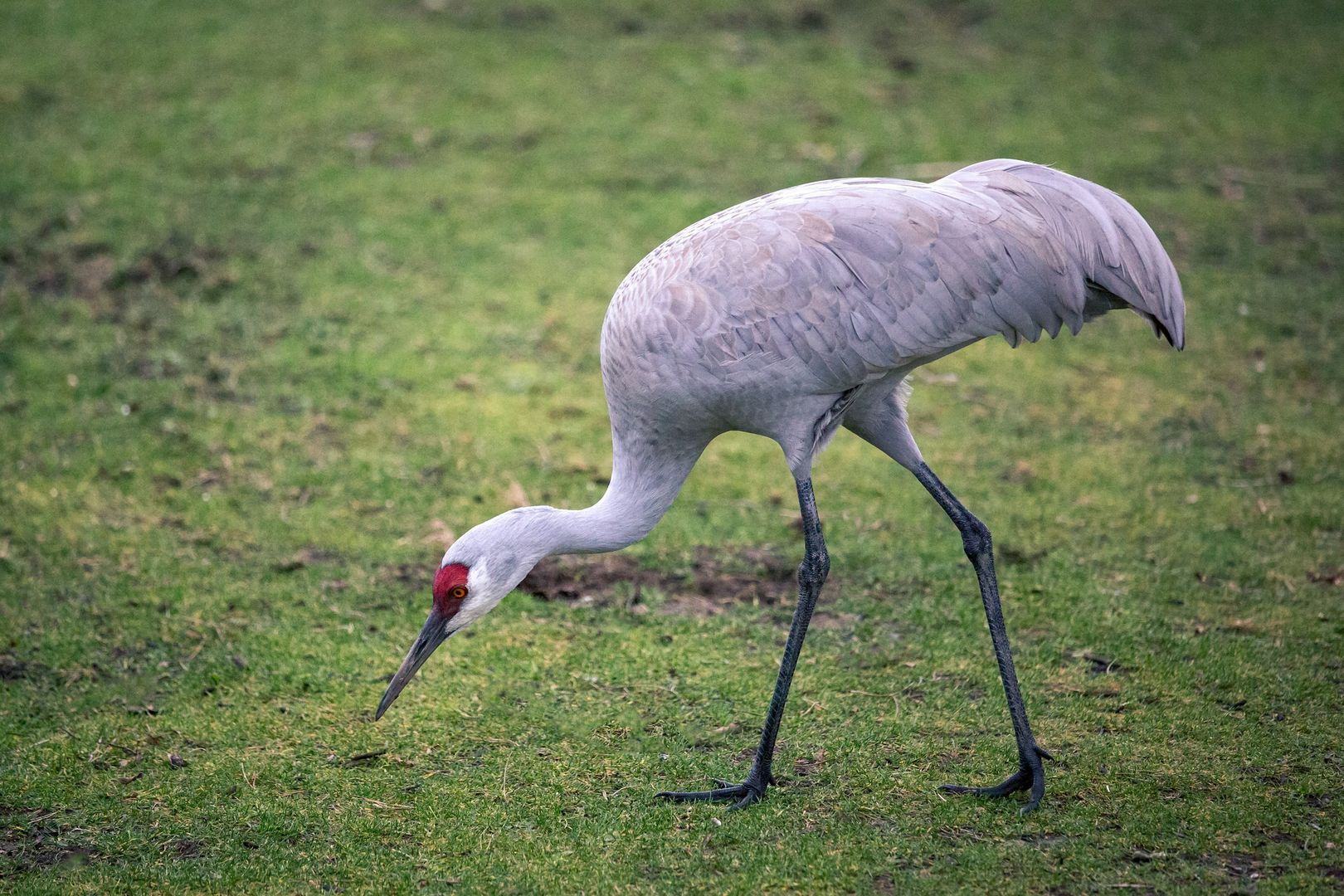
The Sandhill Crane is the headliner of an Arizona winter. Arizona Game and Fish says more than 20,000 Sandhill Cranes winter at Whitewater Draw Wildlife Area near McNeal, along with ducks, geese, and other wetland birds. They feed on waste grain in the surrounding fields and come back to the water to rest.
Adults are tall and gray with a red crown and a long neck, and some look rusty from staining their feathers with iron-rich mud. Males and females look alike, though males average a bit larger.
The Sandhill Crane call is a loud, rolling, bugling rattle that carries for miles, and thousands of them at once is a sound you'll never forget.
In Arizona winters, look for it at Whitewater Draw and around Willcox in southeastern Arizona. The best viewing is about 30 minutes before and after sunrise, when the cranes leave to feed, and they usually return before noon. They start leaving between late February and mid-March.
Give the cranes some room. They're wary birds that pick wide-open spaces so they can see danger coming, according to Arizona Game and Fish, so stay on the trails and viewing areas, keep your voice down, and let a scope or binoculars do the work. You'll have to crane your neck either way.
33. American Wigeon
- Family – Anatidae
- Species – Mareca americana
- Primary Activity Time – Daytime
- Diurnal
- Winter Migrant / Visitor
The American Wigeon is a dabbling duck that grazes on plants in shallow water and on lawns, and it's one of the most common winter ducks at Arizona wetlands. Tucson Audubon describes hundreds of American Wigeon at Sweetwater Wetlands in winter, mixed in with teal, Mallards, and Northern Pintails.
Males have a white stripe on the crown, a green patch behind the eye, and a pinkish-brown body. Females are gray-brown on the head with warm rusty sides.
The American Wigeon call is a male's three-note whistle, whee-whee-whew, which sounds a lot like a squeaky dog toy. (My dog would like a word.)
In Arizona winters, look for it at ponds, lakes, and wetlands across the state, including Sweetwater Wetlands in Tucson and the Riparian Preserve at Water Ranch in Gilbert.
Where to See Arizona Birds in Winter
Winter is prime birding season here, mostly because you can be outside at noon without melting. A few spots are worth the drive:
- Whitewater Draw Wildlife Area (McNeal) – the state's big Sandhill Crane show, plus Snow Geese, ducks, and raptors. Arizona Game and Fish also runs a live crane webcam if you'd rather watch from the couch
- Sweetwater Wetlands (Tucson) – ducks, rails, blackbirds, and wintering warblers inside the city
- Riparian Preserve at Water Ranch (Gilbert) – ponds full of winter ducks, plus herons, egrets, and Burrowing Owls
- Patagonia Lake State Park and Patagonia – waterbirds, Pyrrhuloxias, and feeder-watching in a small town that takes birds seriously
- Sulphur Springs Valley – hawks, Lark Buntings, and grassland birds. Many roads are unpaved, so check conditions after rain
You don't need a new spotting scope to enjoy any of these. Cranes are big, loud, and very easy to find, and many local Audubon chapters and nature centers run winter walks where someone will happily let you look through theirs.
Arizona Winter Birds FAQ
Which Arizona birds stay all year?
Many of the most familiar Arizona birds are residents: the Cactus Wren, Gambel's Quail, Gila Woodpecker, Curve-billed Thrasher, Verdin, Abert's Towhee, Greater Roadrunner, Harris's Hawk, and Anna's Hummingbird. That's why desert backyards stay busy all winter.
What are the most common birds of Arizona at feeders in winter?
In Project FeederWatch's Southwest region, the top feeder birds include House Finch, Dark-eyed Junco, Northern Flicker, House Sparrow, American Robin, Mourning Dove, and Lesser Goldfinch. In the low deserts, add Gambel's Quail, Gila Woodpeckers, White-crowned Sparrows, and Anna's Hummingbirds.
Do hummingbirds stay in Arizona in winter?
Yes. Anna's Hummingbirds stay year-round in most of their Arizona range, and some Costa's Hummingbirds winter in the Phoenix area and farther south. FeederWatch notes that keeping nectar feeders up year-round may increase winter sightings, so if you already own one, keep it clean and filled rather than buying anything new.
When do Sandhill Cranes come to Whitewater Draw?
They arrive in fall and stay for several months, then start leaving between late February and mid-March.
What is the state bird of Arizona?
The Cactus Wren.
What birds have you seen in Arizona lately?
Share your sightings on the Sparkbird App, and see what other Arizona birders are finding this winter.
Happy Birding.

No comments yet.