
In Florida, winter is the week the iguanas get too cold to hold onto the trees and somebody at Publix breaks out a puffer jacket (I say this with deep, seasonal-affective envy). Florida winter birds aren't here to tough anything out. Most of them are northern birds that looked at a map in October and made a very good decision.
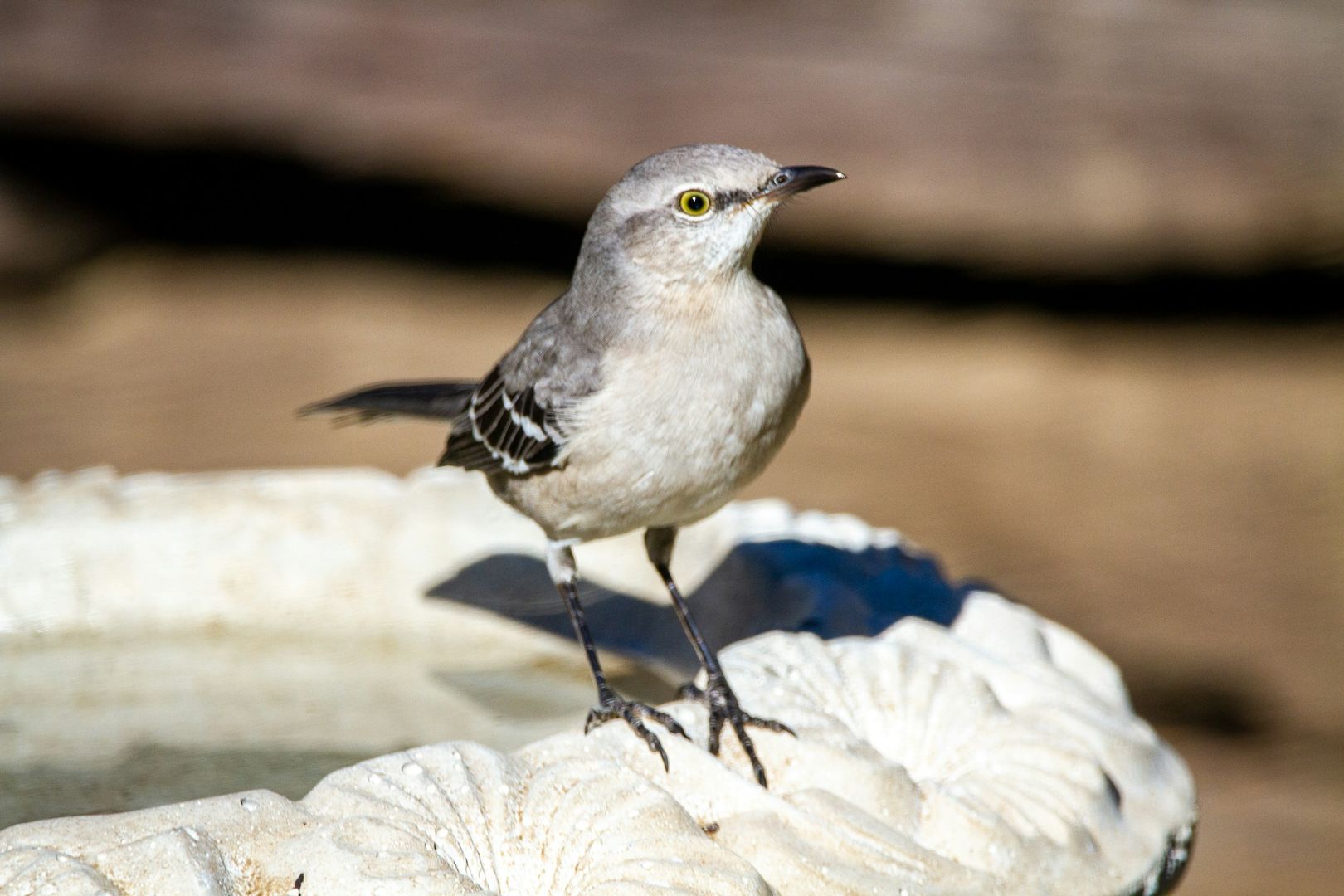
The state bird is a local, though. The Northern Mockingbird has been Florida's official state bird since 1927, and it lives here year-round. In winter it switches from courting to guarding, and a single mockingbird will defend a fruiting holly or beautyberry bush from every robin and catbird in the zip code.
Types of Florida Birds in Winter
There are 3 types of winter birds in Florida you'll see on this list:
- Resident Florida Birds – species that live here all year, from cardinals and Red-bellied Woodpeckers to the state's own non-migratory Sandhill Cranes
- Winter Migrants / Visitors – the big story in Florida. Warblers, sparrows, kinglets, ducks, cranes, pelicans, and raptors that breed farther north and arrive for the cold months. Panhandle spots like St. Marks National Wildlife Refuge are at their best for ducks and geese from December through February
- Uncommon or Rare Visitors – birds like the Rufous Hummingbird and Whooping Crane that turn up in small numbers some winters, so finding one is a genuine event
Each entry covers ID, male vs female, calls, where to find the bird in Florida, and what it eats at feeders if it visits them. If you've ever wondered who decides to fly south and who doesn't, here's where birds go in the winter.
1. Northern Mockingbird
- Family – Mimidae
- Species – Mimus polyglottos
- Primary Activity Time – Daytime
- Diurnal
- Florida State Bird (resident)
The Northern Mockingbird eats insects in summer and leans hard on berries and fruit in winter. That diet shift is why it turns so territorial this time of year, staking out one good fruiting shrub and chasing off anything that tries to share.
It's a slim, long-tailed gray bird with a paler belly and big white wing patches that flash when it flies or "wing-flashes" on the ground. Males and females look alike, so you can't tell them apart by plumage.
The Northern Mockingbird song is a long medley of other birds' songs, car alarms, and whatever else it's overheard, usually with each phrase repeated three or more times before it moves on. Its call is a harsh chack. Unpaired males are known to sing at night, which is either romantic or the reason your neighbor isn't sleeping.
Mockingbirds are found statewide in Florida, from Pensacola to Key West, in yards, parks, roadsides, and anywhere with open lawn and a few berry bushes.
Feeder favorites: suet, chopped apples, raisins, and fruiting native shrubs like beautyberry and holly
2. Northern Cardinal
- Family – Cardinalidae
- Species – Cardinalis cardinalis
- Primary Activity Time – Dawn and Dusk
- Diurnal
- Resident Florida Bird
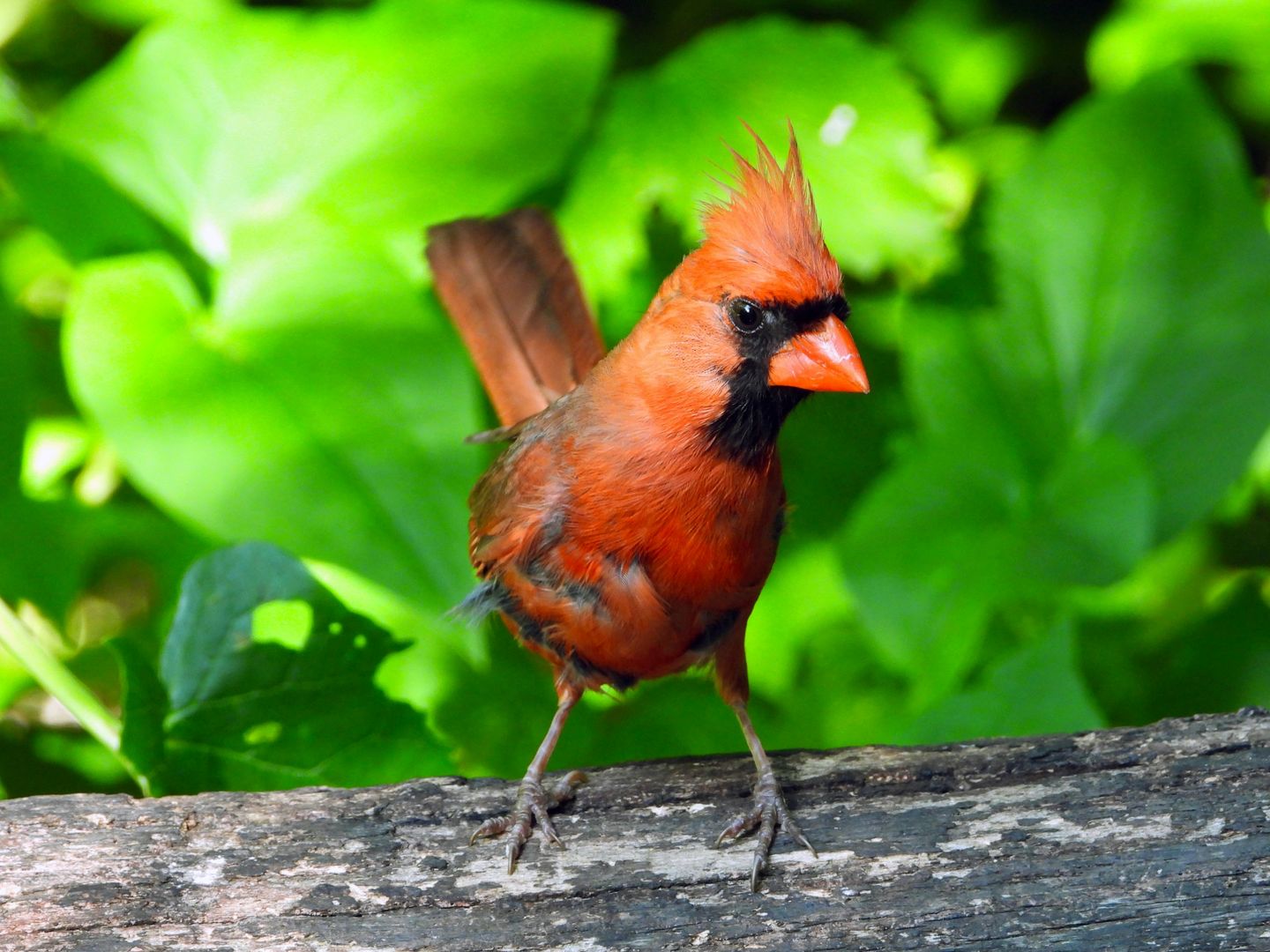
The Northern Cardinal was the top feeder bird in Project FeederWatch's Southeast rankings, seen at nearly 98% of counting sites in the region, and it's the easiest of all Florida backyard birds to attract. It cracks seeds with a thick, cone-shaped bill and adds fruit and insects when it can.
Males are bright red with a black face around an orange-red bill. Females are warm tan with red edges on the wings, tail, and crest. Both wear that pointed crest like they've just left a salon that doesn't take walk-ins.
The Northern Cardinal song is a loud whistled cheer-cheer-cheer or birdie-birdie-birdie, and the females sing too. The call is a sharp, metallic chip.
Cardinals live across the whole state, in yards, hammocks, thickets, and the edges of pine flatwoods. For more on keeping them around, see Cardinals in Winter: Where They Go, What They Eat, and How to Attract Them.
Feeder favorites: black oil sunflower, safflower, cracked corn on a platform
3. Mourning Dove
- Family – Columbidae
- Species – Zenaida macroura
- Primary Activity Time – Daytime
- Diurnal
- Resident Florida Bird
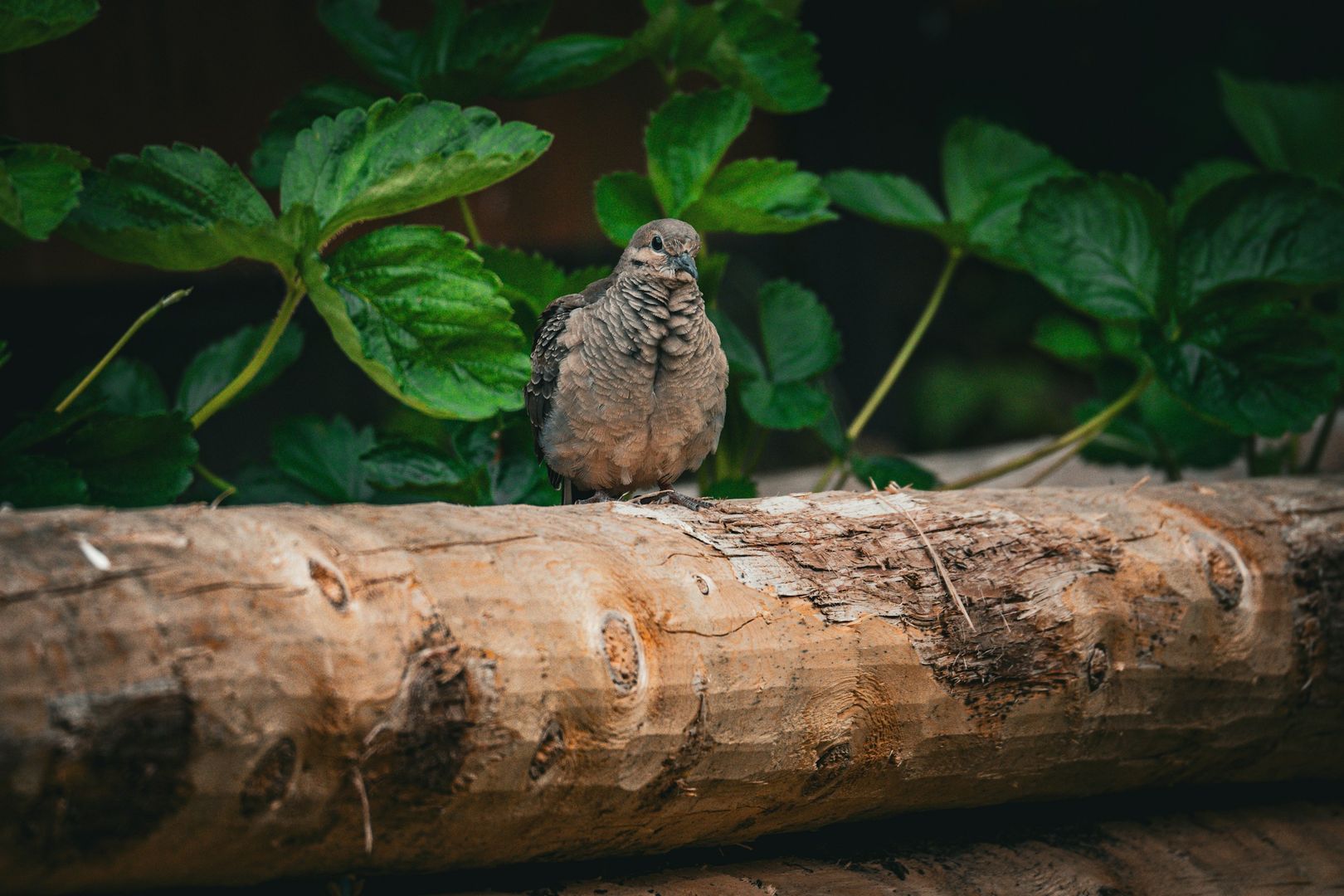
The Mourning Dove is a ground-feeding seed eater that stuffs its crop fast and flies off to digest somewhere quieter. It ranked second in FeederWatch's Southeast list, right behind the cardinal.
It's a slim, gray-brown dove with black spots on the wings and a long, pointed tail edged in white. Males have a soft rosy wash on the breast and a bluish-gray crown, while females are a little browner and plainer.
The Mourning Dove call is a soft, mournful coo-OO-oo-oo-oo that gets mistaken for an owl more than any dove deserves. Their wings make a thin whistle when they take off.
In Florida winters, Mourning Doves are statewide in farm fields, suburbs, and along roadsides, often lined up on power lines.
Feeder favorites: millet, cracked corn, black oil sunflower on the ground or a platform
4. Common Ground Dove
- Family – Columbidae
- Species – Columbina passerina
- Primary Activity Time – Daytime
- Diurnal
- Resident Florida Bird
The Common Ground Dove is the dove you'd get if you hit "shrink" on a Mourning Dove. It's a tiny, stocky seed eater that shuffles around on short legs, picking up seeds from bare ground and under feeders.
It's sandy gray-brown with scaly-looking markings on the head and breast and dark spots on the wings. When it flies, it flashes bright rufous on the wings, which is the giveaway. Males have a pinkish wash on the face and breast and a blue-gray crown, while females are plainer and browner.
The Common Ground Dove call is a soft, rising woo-oop repeated over and over, slow enough to put you to sleep if you're sitting on the porch.
They're found across Florida in sandy, open areas: yards, field edges, citrus groves, dunes, and the scrub. They often feed in pairs.
Feeder favorites: millet and cracked corn scattered on the ground
5. Red-bellied Woodpecker
- Family – Picidae
- Species – Melanerpes carolinus
- Primary Activity Time – Dawn and Dusk
- Diurnal
- Resident Florida Bird
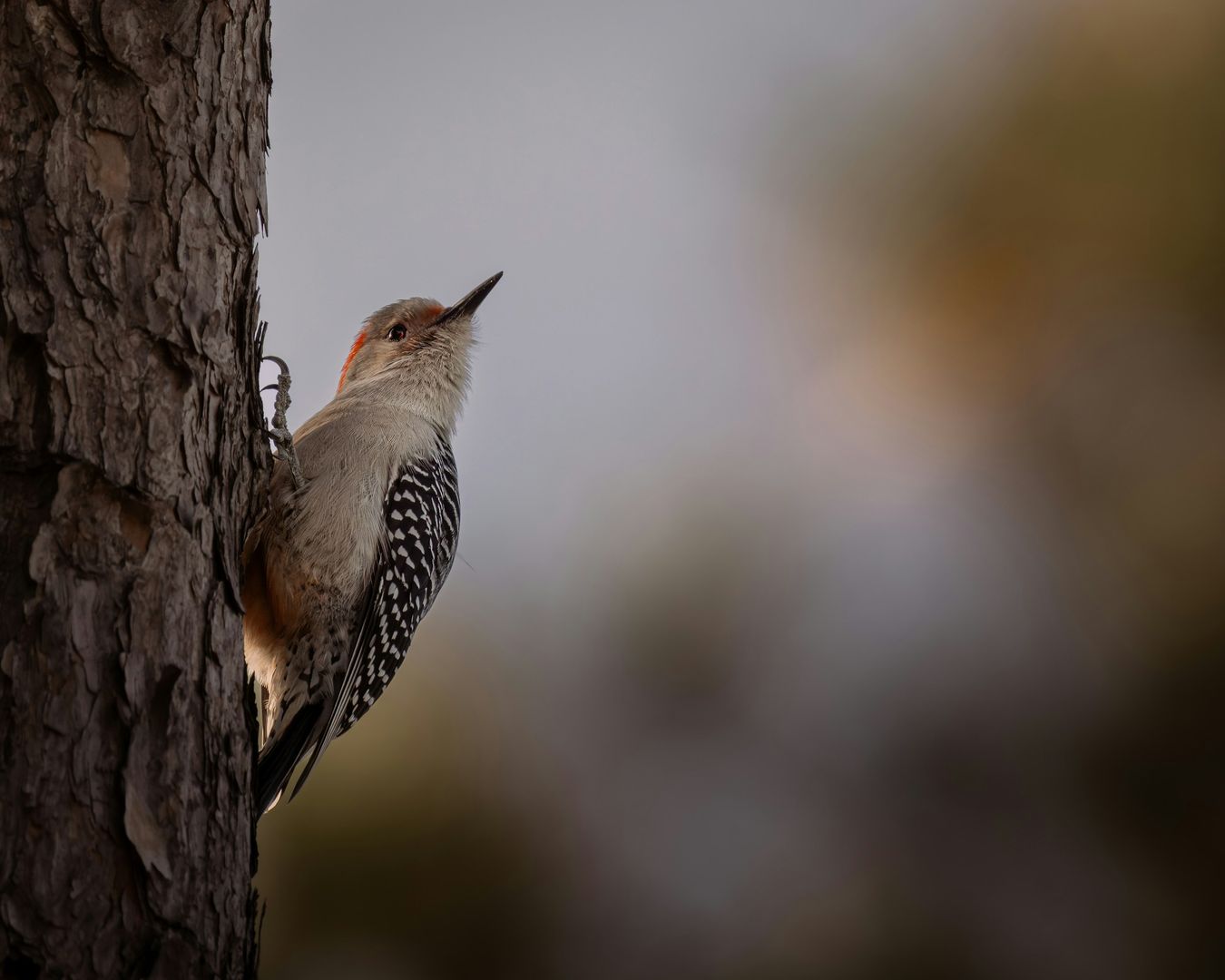
The Red-bellied Woodpecker is one of the loudest and most common Florida backyard birds. It's an omnivore that eats insects, acorns, nuts, and fruit, and it's not shy about going after an orange left on a feeder.
It has a black-and-white barred back, a pale gray face and belly, and a red cap. The "red belly" is a faint pinkish wash you'll rarely see (the person who named it must have been holding the bird). Males are red from the bill all the way to the back of the neck, while females are red only on the nape.
The Red-bellied Woodpecker call is a rolling churr or kwirr that carries through the whole neighborhood.
It lives statewide, in hardwood hammocks, pine woods, swamps, and suburbs with mature trees.
Feeder favorites: suet, peanuts, black oil sunflower, and orange halves
6. Blue Jay
- Family – Corvidae
- Species – Cyanocitta cristata
- Primary Activity Time – Dawn and Dusk
- Diurnal
- Resident Florida Bird
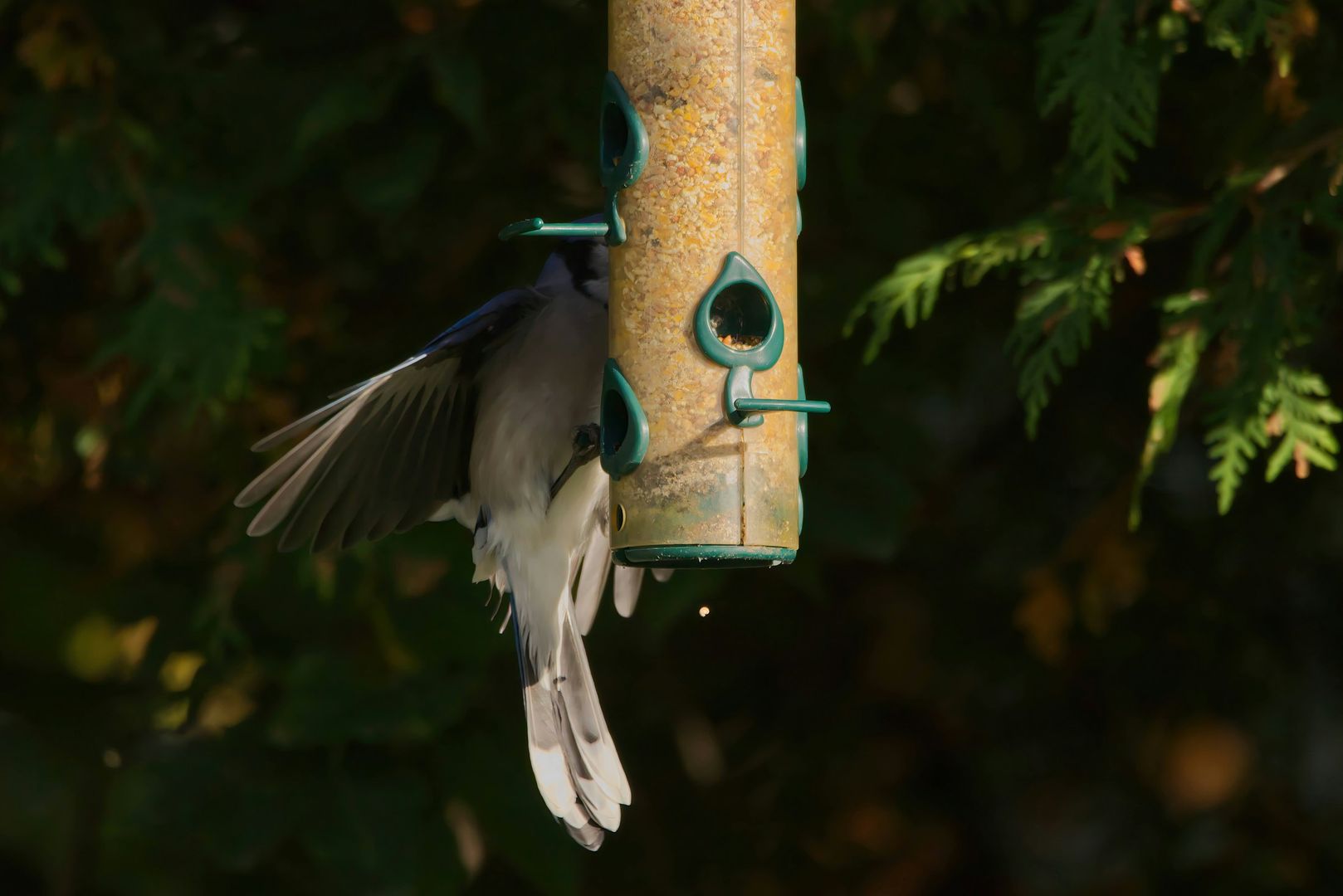
The Blue Jay is a loud, clever omnivore that eats acorns, seeds, insects, and the occasional egg from someone else's nest. It buries acorns to eat later, and the ones it forgets help plant new oaks.
Bright blue above with black and white wing bars, a white face, and a black necklace. Males and females look alike, though males can be slightly bigger.
The Blue Jay call is a harsh jay-jay, plus quieter clicks, whistles, and a solid impression of a Red-shouldered Hawk that has fooled better birders than me.
Blue Jays are found throughout Florida in oak woods, parks, and neighborhoods. Don't confuse it with the Florida Scrub-Jay, which has no crest and lives only in Florida's oak scrub.
Feeder favorites: peanuts, black oil sunflower, suet
7. Carolina Wren
- Family – Troglodytidae
- Species – Thryothorus ludovicianus
- Primary Activity Time – Daytime
- Diurnal
- Resident Florida Bird
The Carolina Wren is a small, round, insect-eating bird with the volume knob broken off. It hunts spiders and insects in brush piles, leaf litter, and the gaps around porches and garages.
It's warm reddish-brown above and buffy below, with a bold white eyebrow and a tail it often cocks upward. Males and females look alike, and pairs stay together all year.
The Carolina Wren song is a ringing teakettle-teakettle-teakettle, loud enough that people go looking for a much bigger bird.
They live statewide in Florida, in thickets, swamps, wooded yards, and overgrown corners of gardens. Leave a brush pile in the back of the yard and you've basically built one a house.
Feeder favorites: suet, mealworms, peanut pieces
8. Tufted Titmouse
- Family – Paridae
- Species – Baeolophus bicolor
- Primary Activity Time – Dawn and Dusk
- Diurnal
- Resident Florida Bird
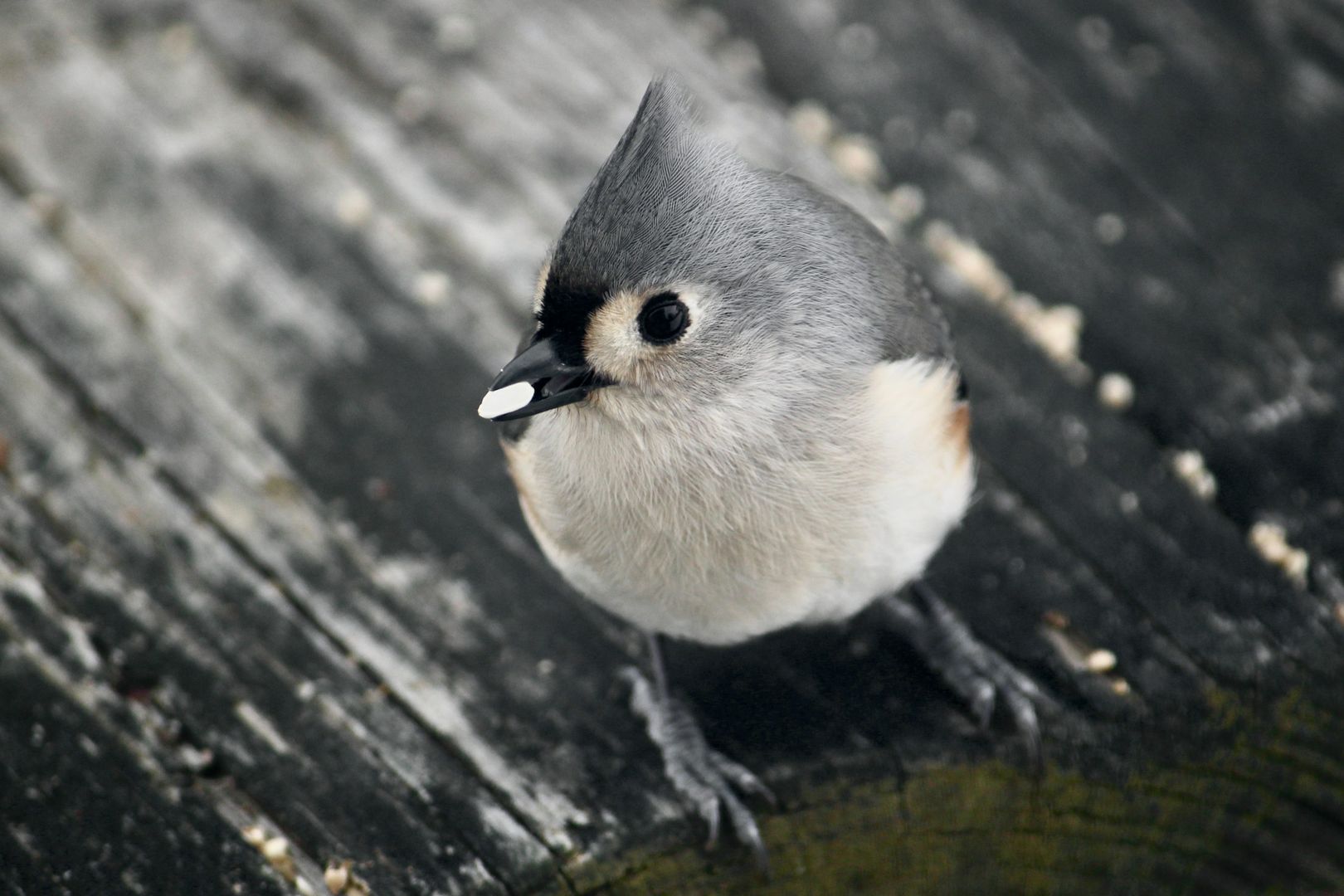
The Tufted Titmouse is a small, gray, crested songbird that eats insects, seeds, and nuts. It often travels with Carolina Chickadees and warblers in winter's mixed flocks, which makes it a good bird to follow when you're looking for something rarer.
It's soft gray above and pale below with rusty-peach flanks, big black eyes, and a neat gray crest. Males and females look alike.
The Tufted Titmouse song is a clear, whistled peter-peter-peter, and its scolding call sounds like a grumpy chickadee.
In Florida, titmice are most common in the oak and mixed woods of the north and central part of the state and thin out toward the far south.
Feeder favorites: black oil sunflower, peanuts, suet
9. Brown Thrasher
- Family – Mimidae
- Species – Toxostoma rufum
- Primary Activity Time – Daytime
- Diurnal
- Resident Florida Bird (winter visitor in the south)
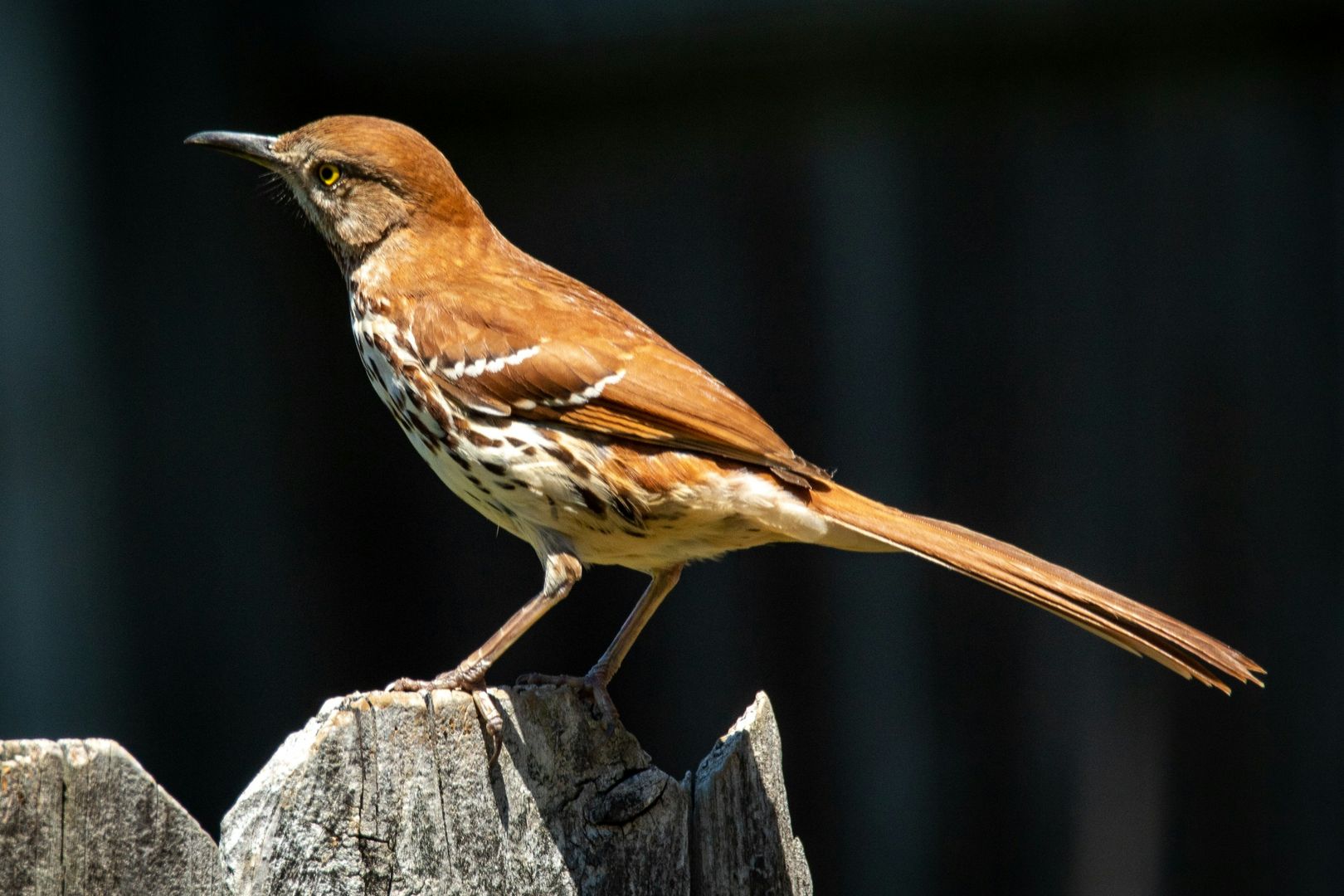
The Brown Thrasher is a ground forager that flips leaves with its long, curved bill to find insects, then switches to berries and seeds in colder months. It's the mockingbird's shy cousin, and it'd much rather rummage under a shrub than sit on a fence.
It's bright rufous above with heavy dark streaks on a pale breast, two white wing bars, and a striking yellow eye. Males and females look alike.
The Brown Thrasher song is a long string of phrases, each usually sung twice. The call is a loud smack, often the first clue one is hiding nearby.
In Florida, Brown Thrashers live year-round in the north and central regions, and northern birds push farther south in winter. Look in thickets, hedges, and the brushy edges of yards.
Feeder favorites: suet, cracked corn, and seed scattered under shrubs
10. Gray Catbird
- Family – Mimidae
- Species – Dumetella carolinensis
- Primary Activity Time – Daytime
- Diurnal
- Winter Migrant / Visitor
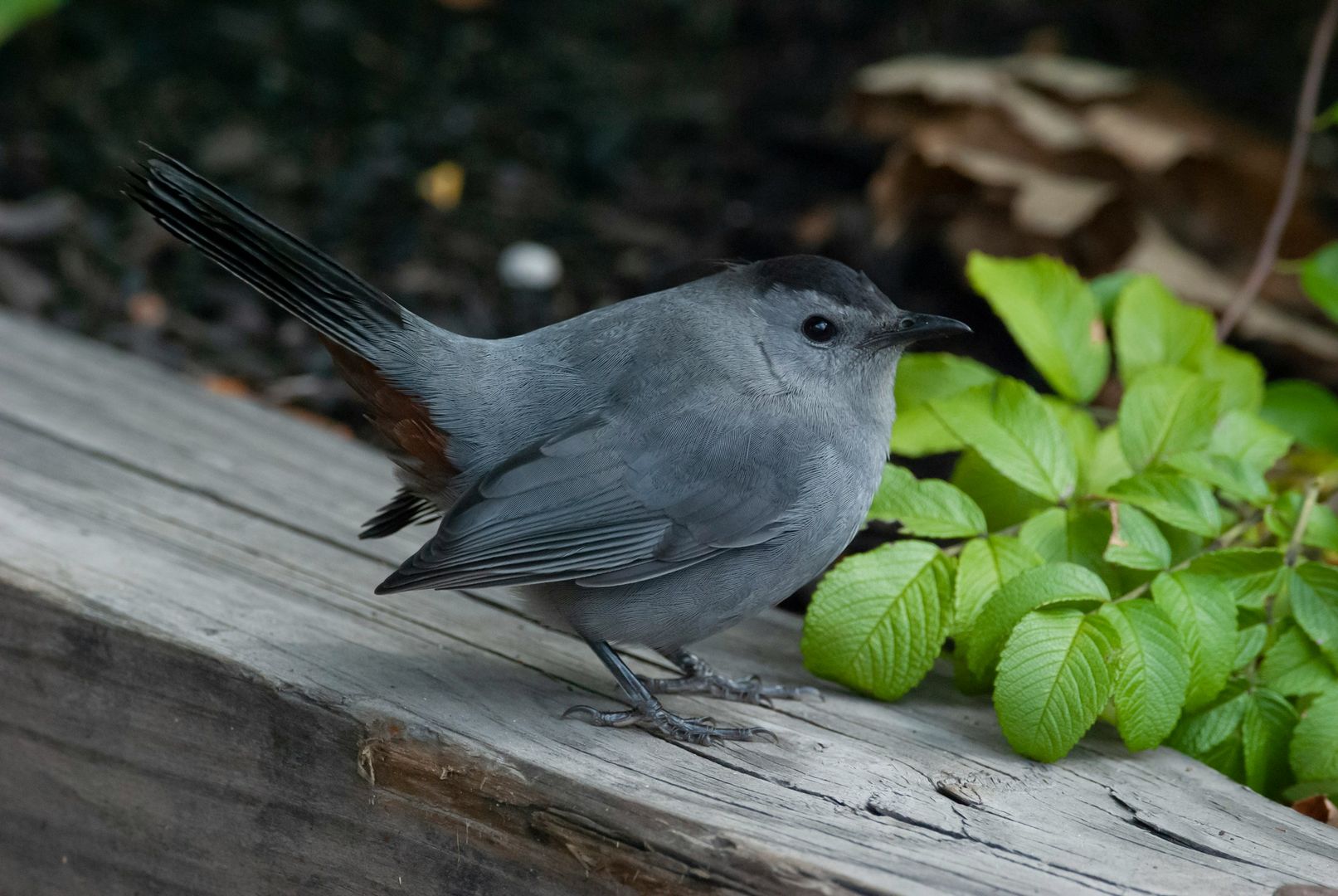
The Gray Catbird is a winter guest in most of Florida, eating berries and insects deep in tangles and hedges. It's the third mimic on this list, and yes, Florida has a lot of birds that talk back.
It's sleek, slate gray all over with a black cap and a rusty patch under the tail that you'll only see if it turns around. Males and females look alike.
The Gray Catbird call is a nasal, cat-like mew, which is exactly as confusing as it sounds if you have an actual cat. Its song is a rambling run of squeaks, whistles, and borrowed phrases, without the repeats a mockingbird uses.
In Florida winters, catbirds are found statewide in dense shrubs, thickets, hammocks, and backyard hedges with berries.
Feeder favorites: chopped fruit, jelly, mealworms, and berry shrubs like beautyberry and firebush
11. Palm Warbler
- Family – Parulidae
- Species – Setophaga palmarum
- Primary Activity Time – Daytime
- Diurnal
- Winter Migrant / Visitor
If there's a bird bobbing its tail on your lawn in January, it's probably this one. St. Lucie Audubon ranks the Palm Warbler as Florida's most common winter warbler, found in the shrubs around nearly every home in the state. It eats insects on the ground and in low bushes.
In winter it's a plain, brownish warbler with a pale eyebrow, faint streaks, and bright yellow under the tail. The rusty cap of breeding season fades in winter and returns by spring. Males and females look alike.
The Palm Warbler call is a sharp chip. You'll ID it faster by the constant tail-pumping than by sound.
In Florida winters, Palm Warblers are everywhere: lawns, golf courses, parking lot medians, farm fields, and marsh edges.
12. Yellow-rumped Warbler
- Family – Parulidae
- Species – Setophaga coronata
- Primary Activity Time – Daytime
- Diurnal
- Winter Migrant / Visitor
The Yellow-rumped Warbler is the other big winter warbler in Florida. It can digest the waxy berries of wax myrtle and bayberry, which lets it eat well when insects are scarce. That's a superpower most warblers would kill for.
In winter it's a streaky gray-brown bird with a bright yellow rump patch (birders call it "butter butt," and I refuse to apologize for that), plus small yellow patches on the sides. Females are browner and duller than males. Florida's are the eastern "Myrtle" form with a white throat.
The Yellow-rumped Warbler call is a flat check, usually heard before you see the bird.
In Florida winters, look along woods edges, marshes, roadsides, and anywhere wax myrtle grows, often in loose flocks.
Feeder favorites: suet, peanut butter mixes, mealworms
13. Pine Warbler
- Family – Parulidae
- Species – Setophaga pinus
- Primary Activity Time – Daytime
- Diurnal
- Resident Florida Bird
The Pine Warbler is one of the few warblers that will actually eat seeds, which makes it one of the only warblers you'll see on a Florida feeder. It also picks insects off pine needles and bark.
Males are olive above with a yellow throat and breast and two white wing bars. Females are duller and grayer, and young birds can be very plain. Its look barely changes through the year.
The Pine Warbler song is a musical, even trill, a little softer than a Chipping Sparrow's. Pine Warblers sing on warm winter days, which is a nice preview of spring.
They're found statewide in pine flatwoods and wooded yards with tall pines. More northern birds join the residents in winter.
Feeder favorites: suet, sunflower chips, peanut pieces
14. Ruby-crowned Kinglet
- Family – Regulidae
- Species – Corthylio calendula
- Primary Activity Time – Daytime
- Diurnal
- Winter Migrant / Visitor
The Ruby-crowned Kinglet is a tiny insect eater that flicks its wings constantly as it hops through shrubs. It weighs about as much as a couple of paper clips, and it never sits still.
It's olive-green with a white eye-ring and a white wing bar framed by a dark patch. Males have a red crown patch that's usually hidden and only flares up when they're excited. Females don't have the red.
The Ruby-crowned Kinglet call is a husky, two-note ji-dit.
In Florida winters, kinglets are found throughout the state in woods, hammocks, and yard shrubs, often in mixed flocks with titmice and warblers.
Feeder favorites: suet, mealworms
15. Eastern Phoebe
- Family – Tyrannidae
- Species – Sayornis phoebe
- Primary Activity Time – Daytime
- Diurnal
- Winter Migrant / Visitor
The Eastern Phoebe is a flycatcher that spends the winter in Florida because the bugs never fully shut off here. It sits on low perches, then sallies out to grab insects in midair.
It's gray-brown above and whitish below, with a darker head and no strong wing bars. Its best tell is the constant downward tail wag. Males and females look alike.
The Eastern Phoebe says its own name, a raspy fee-bee, though in winter you'll mostly hear a soft chip.
In Florida winters, look for phoebes near water, along fences, under bridges, and in yards with open lawn and a perch.
16. White-throated Sparrow
- Family – Passerellidae
- Species – Zonotrichia albicollis
- Primary Activity Time – Daytime
- Diurnal
- Winter Migrant / Visitor (mostly north Florida and the Panhandle)
The White-throated Sparrow is a seed-eating ground sparrow that scratches through leaf litter under shrubs, usually in small flocks.
It has a crisp white throat and yellow spots between the eye and bill. It comes in two forms, white-striped and tan-striped heads, and that difference isn't about sex. Males and females in either form look alike.
The White-throated Sparrow song is a clear, whistled Oh sweet Canada, Canada, Canada, and the call is a sharp pink.
In Florida, White-throated Sparrows are most common in the Panhandle and north Florida and get scarcer as you go south. Look in thickets, woods edges, and brushy yards.
Feeder favorites: millet, sunflower chips, cracked corn scattered on the ground
17. Chipping Sparrow
- Family – Passerellidae
- Species – Spizella passerina
- Primary Activity Time – Daytime
- Diurnal
- Winter Migrant / Visitor
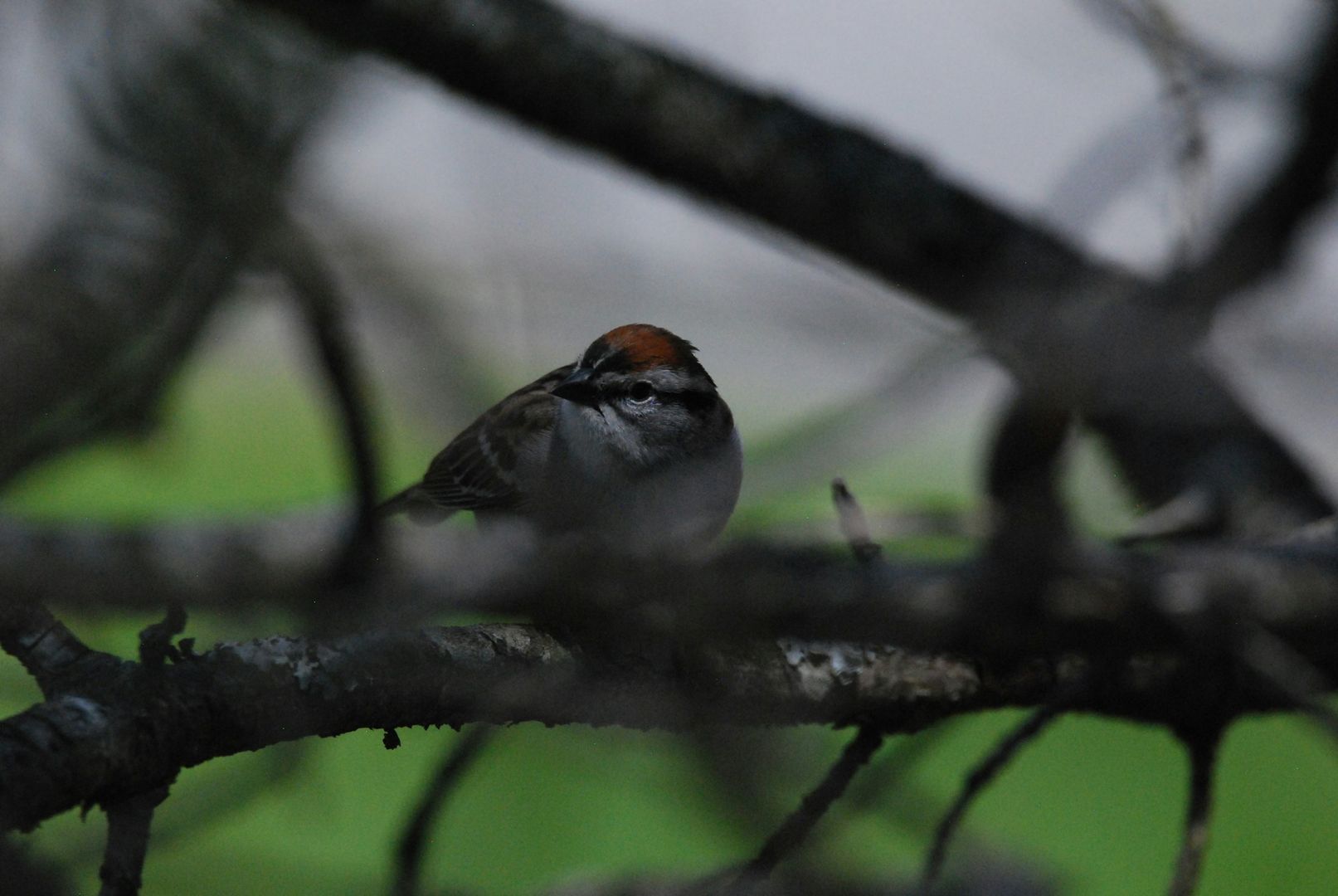
The Chipping Sparrow is a small, slim sparrow that eats seeds on lawns and open ground, usually in flocks in winter.
In winter it's a lot plainer than its summer look, with a brownish, streaked cap instead of bright rufous, a gray face, and a dark line through the eye. Males and females look alike.
The Chipping Sparrow call is a high tsip, and its song is a dry, rapid trill.
In Florida winters, Chipping Sparrows are most common in the north and central parts of the state, in open pine woods, parks, cemeteries, and lawns with trees nearby.
Feeder favorites: millet, sunflower chips, cracked corn on the ground
18. Savannah Sparrow
- Family – Passerellidae
- Species – Passerculus sandwichensis
- Primary Activity Time – Daytime
- Diurnal
- Winter Migrant / Visitor
The Savannah Sparrow is a streaky field sparrow that eats seeds and insects on the ground. (It's named for Savannah, Georgia, where an early specimen was collected, not for the grassland it actually lives in. Bird names are a mess.)
It's brown and heavily streaked with a short, notched tail and a yellow wash over the eye. Males and females look alike.
The Savannah Sparrow call is a thin, high tsip, and it often pops up from the grass and drops right back down.
In Florida winters, look in open grassy places like pastures, farm fields, airport edges, and the grassy margins of marshes.
19. American Goldfinch
- Family – Fringillidae
- Species – Spinus tristis
- Primary Activity Time – Daytime
- Diurnal
- Winter Migrant / Visitor
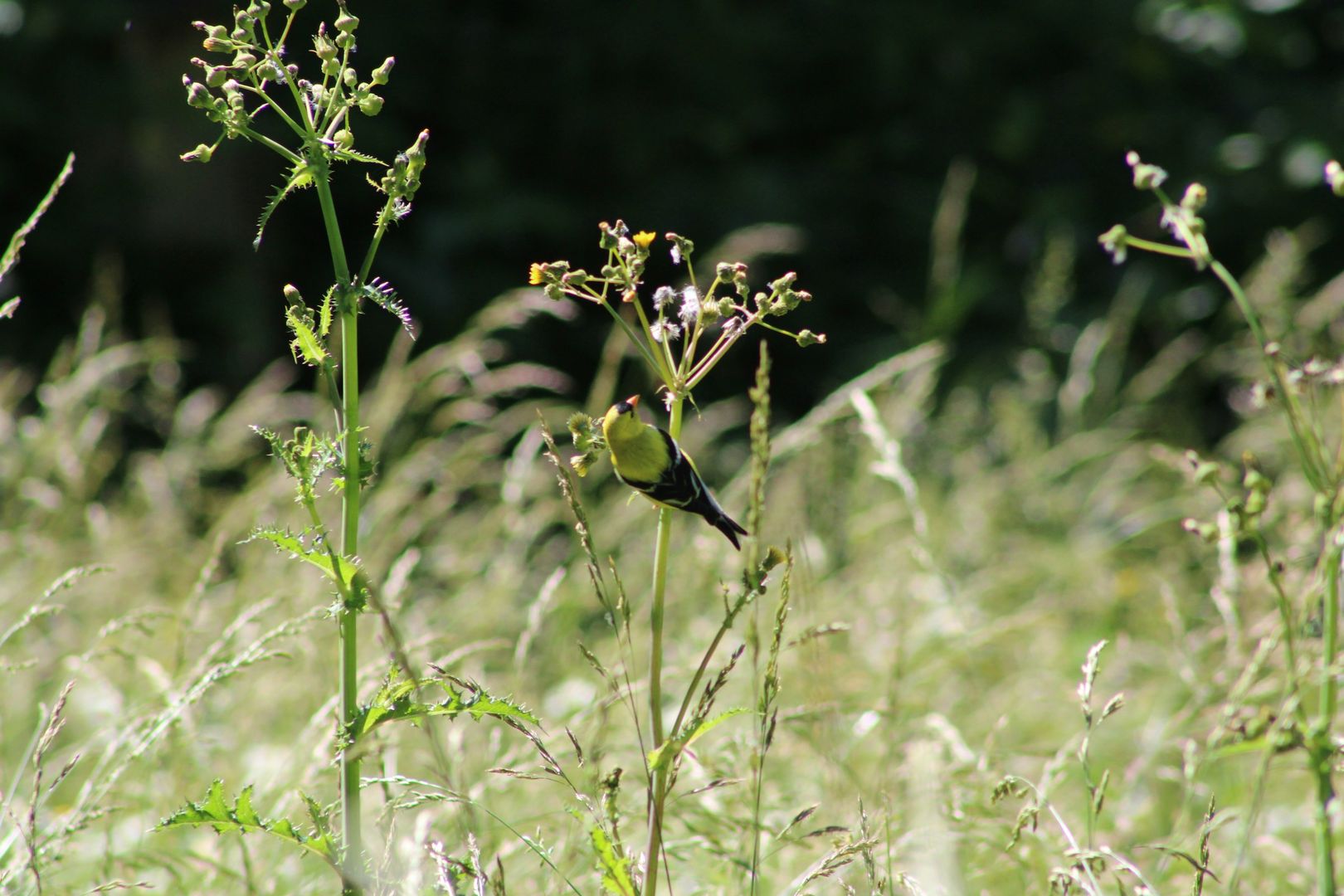
The American Goldfinch doesn't nest in Florida, so the ones at your feeder are winter guests. Numbers swing a lot from year to year, and some winters they barely show.
In winter they've swapped summer yellow for a dull olive-brown outfit. Males keep a yellow wash on the face and bold black wings with white bars, while females are grayer and duller. Both have a small, pale, cone-shaped bill.
The American Goldfinch call is a bouncy po-ta-to-chip given in flight as they dip up and down.
In Florida winters, goldfinches are most common in north and central Florida, around weedy fields, woods edges, and tube feeders.
Feeder favorites: nyjer, sunflower chips
20. Painted Bunting
- Family – Cardinalidae
- Species – Passerina ciris
- Primary Activity Time – Daytime
- Diurnal
- Winter Migrant / Visitor (central and south Florida), breeds in northeast Florida
The Painted Bunting is the bird that gets people to buy their first feeder. According to the Florida Fish and Wildlife Conservation Commission, Florida is the only state with both a breeding and a wintering population of the eastern Painted Bunting. They breed along the coast in the north and spend the winter mainly in south Florida.
Adult males look like a kid was given a crayon box: blue head, red underparts and rump, and a bright green back. They don't get that full color until about two years old. Females are yellowish green, and young males look like females.
The Painted Bunting call is a soft, sharp chip. The song is a bright, warbled jumble, but you won't hear much of it in winter.
In Florida winters, look along brushy edges near feeders in central and south Florida, often low in the shrubs, where they stay close to cover.
One thing I feel strongly about: enjoy these birds at the feeder and nowhere else. FWC says poachers still trap Painted Buntings in Florida to sell them, and owning one is illegal under the Migratory Bird Treaty Act. If someone offers you one as a pet, report it.
Feeder favorites: white millet in a feeder near dense shrubs
21. Ruby-throated Hummingbird
- Family – Trochilidae
- Species – Archilochus colubris
- Primary Activity Time – Daytime
- Diurnal
- Uncommon in Winter (south Florida)
The Ruby-throated Hummingbird is Florida's most common hummingbird. Most leave for Mexico and Central America in fall, but some stay through winter in south Florida, feeding on flower nectar and tiny insects.
Males have an iridescent red throat (it can look black in bad light) and a forked tail. Females have a white throat, a rounded tail with white tips, and green above.
The Ruby-throated Hummingbird call is a fast, squeaky chatter, and its wings make a soft hum.
In Florida winters, look in south Florida gardens with firebush, salvia, or other winter-blooming flowers, and at nectar feeders.
Feeder favorites: plain sugar water (one part sugar to four parts water), changed often in warm weather
22. Rufous Hummingbird
- Family – Trochilidae
- Species – Selasphorus rufus
- Primary Activity Time – Daytime
- Diurnal
- Uncommon Winter Visitor (mostly the Panhandle and north Florida)
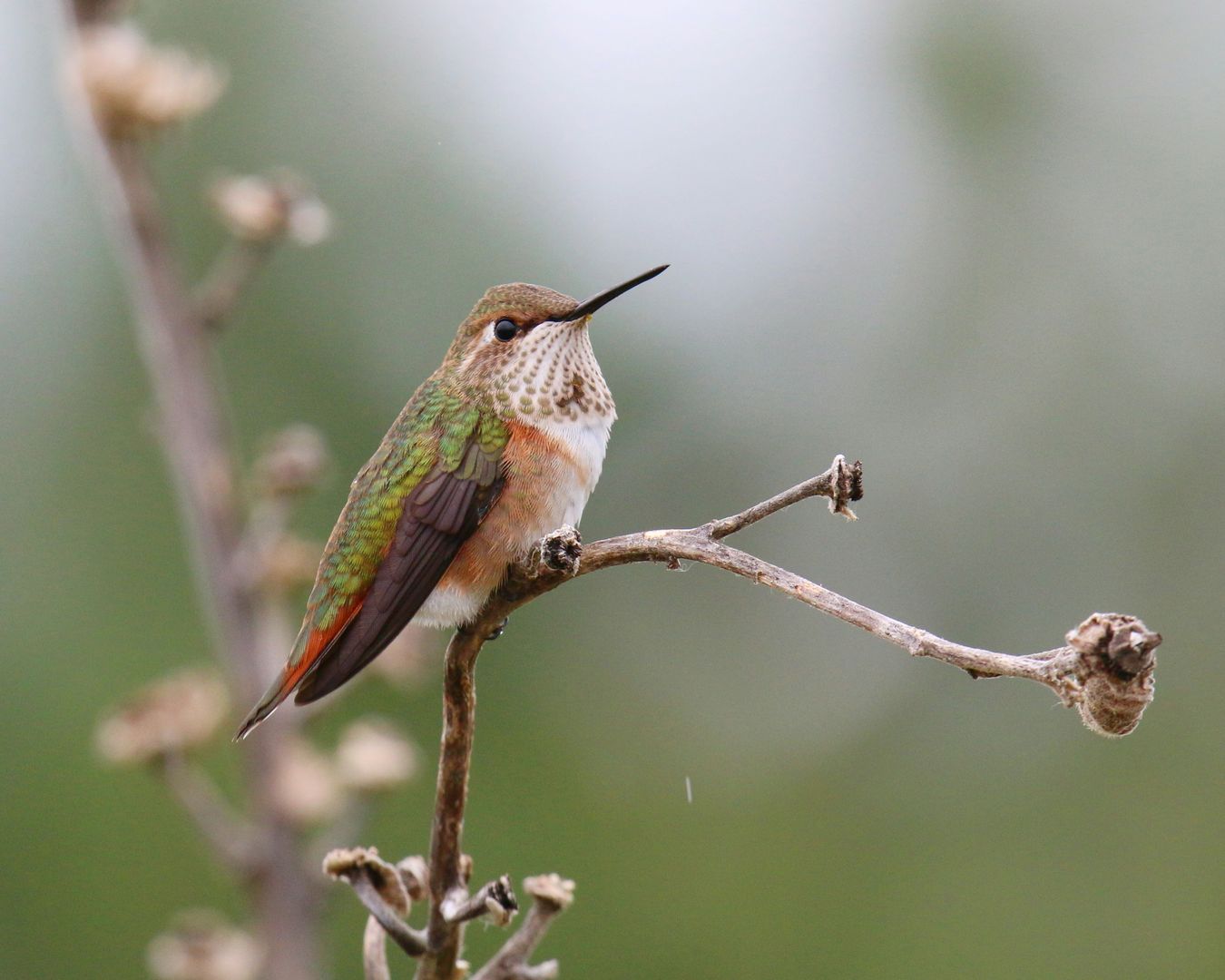
If you see a hummingbird in north Florida in January, don't assume it's a Ruby-throated. Project FeederWatch says the Rufous Hummingbird is the most likely winter hummingbird along the Gulf Coast and in the Southeast. It's a western bird that has decided the scenic route is the only route.
Adult males are bright orange-rufous with a glowing red-orange throat. Females are green above with rufous on the sides and tail and a spotted throat with a small orange patch.
The Rufous Hummingbird call is a hard chewp or chip, and males make a buzzy whine with their wings.
In Florida, most winter reports come from the Panhandle and north Florida, at nectar feeders and gardens with winter blooms.
Feeder favorites: sugar water. Keep one feeder up through winter for a chance at one
23. American Robin
- Family – Turdidae
- Species – Turdus migratorius
- Primary Activity Time – Daytime
- Diurnal
- Winter Migrant / Visitor
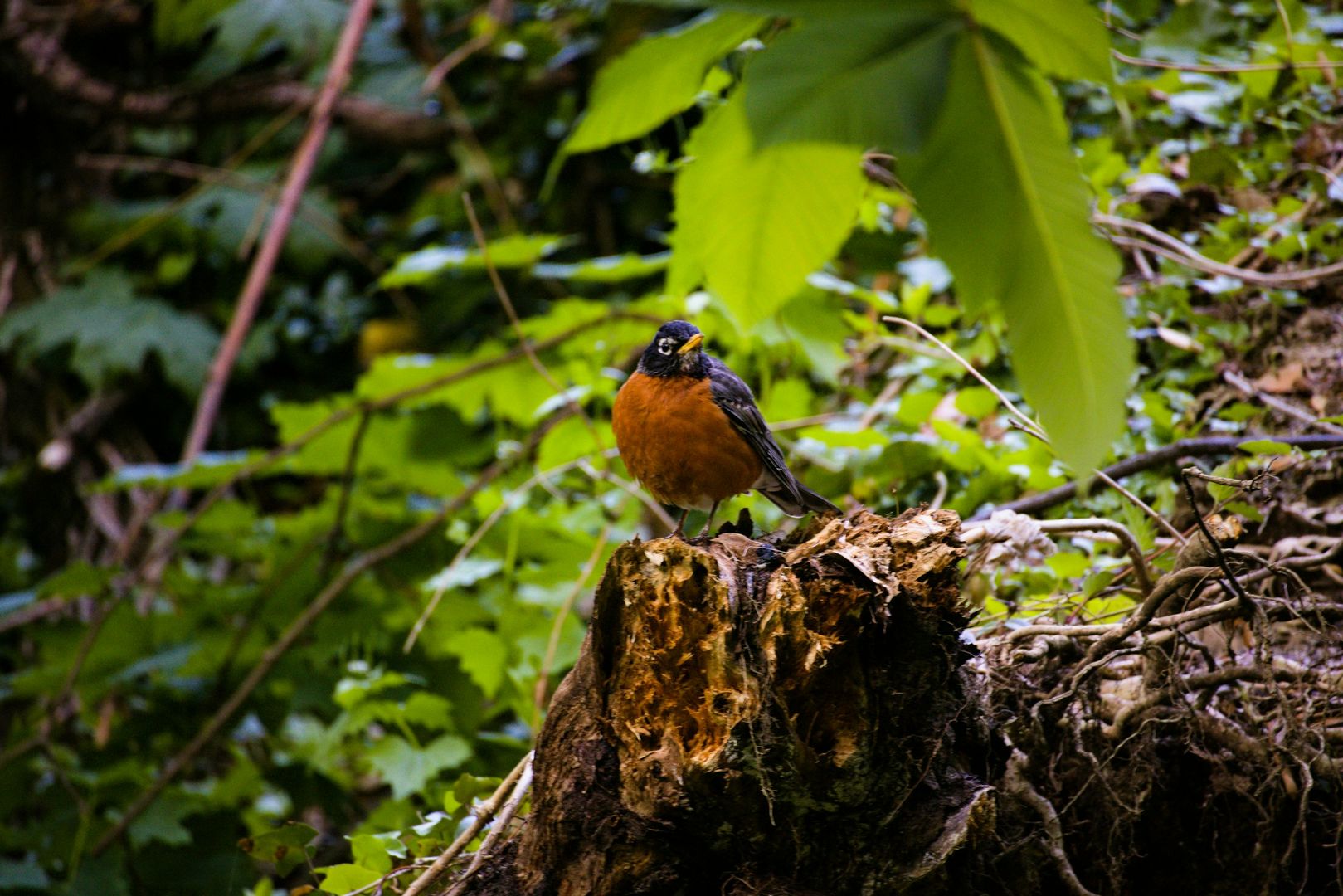
The American Robin is a classic winter arrival in Florida. Robins form big, roving flocks in winter and gather wherever there's food, eating insects, earthworms, and plenty of berries.
It has a warm orange breast, gray-brown back, and a yellow bill. Females are a little paler and grayer than males.
The American Robin call in winter is a low tut-tut and a high, thin seee from flocks overhead. Their full cheerily-cheer-up song mostly waits for spring.
In Florida winters, robins can show up anywhere, on lawns and golf courses or in fruiting trees, then vanish once the berries are gone.
Feeder favorites: chopped apples, softened raisins, mealworms, and fruiting trees like holly
24. Cedar Waxwing
- Family – Bombycillidae
- Species – Bombycilla cedrorum
- Primary Activity Time – Daytime
- Diurnal
- Winter Migrant / Visitor
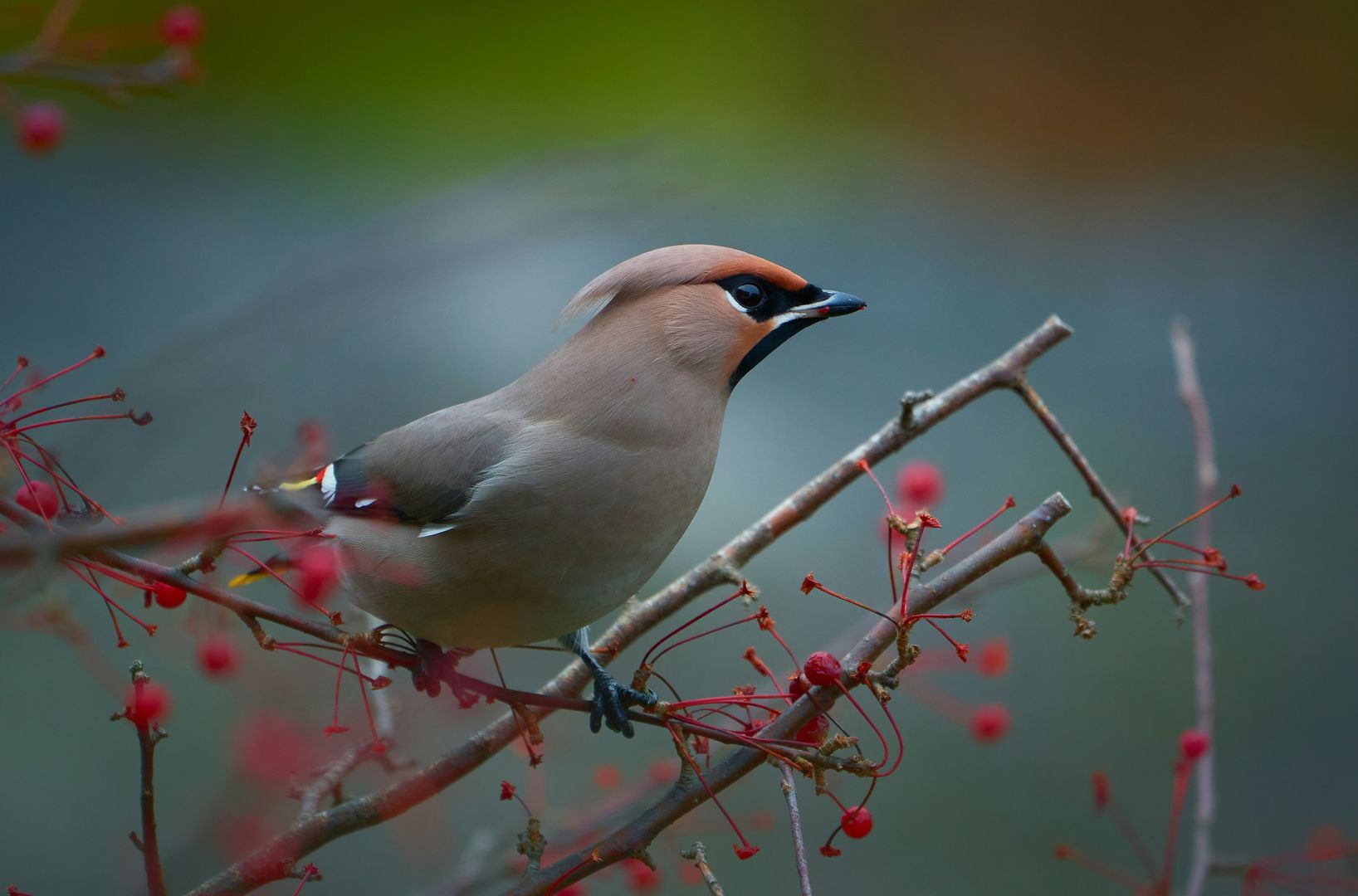
The Cedar Waxwing is a sleek, crested fruit eater that travels in flocks of dozens to hundreds. UF/IFAS notes they're nomadic, so where they show up changes every year, and their timing in Florida overlaps with fruit season (sorry, blueberry farmers).
It's soft brown and gray with a black mask, a pale yellow belly, and a yellow-tipped tail. Some have small red, waxy tips on the wing feathers. Males and females look alike.
The Cedar Waxwing call is a very high, thin bzee, so high some people can't hear it at all.
In Florida winters, look for flocks in any tree loaded with berries, from hollies and cedars to yard plantings.
Feeder favorites: berries and chopped fruit, though fruiting native trees will do more than any feeder
25. Yellow-bellied Sapsucker
- Family – Picidae
- Species – Sphyrapicus varius
- Primary Activity Time – Daytime
- Diurnal
- Winter Migrant / Visitor
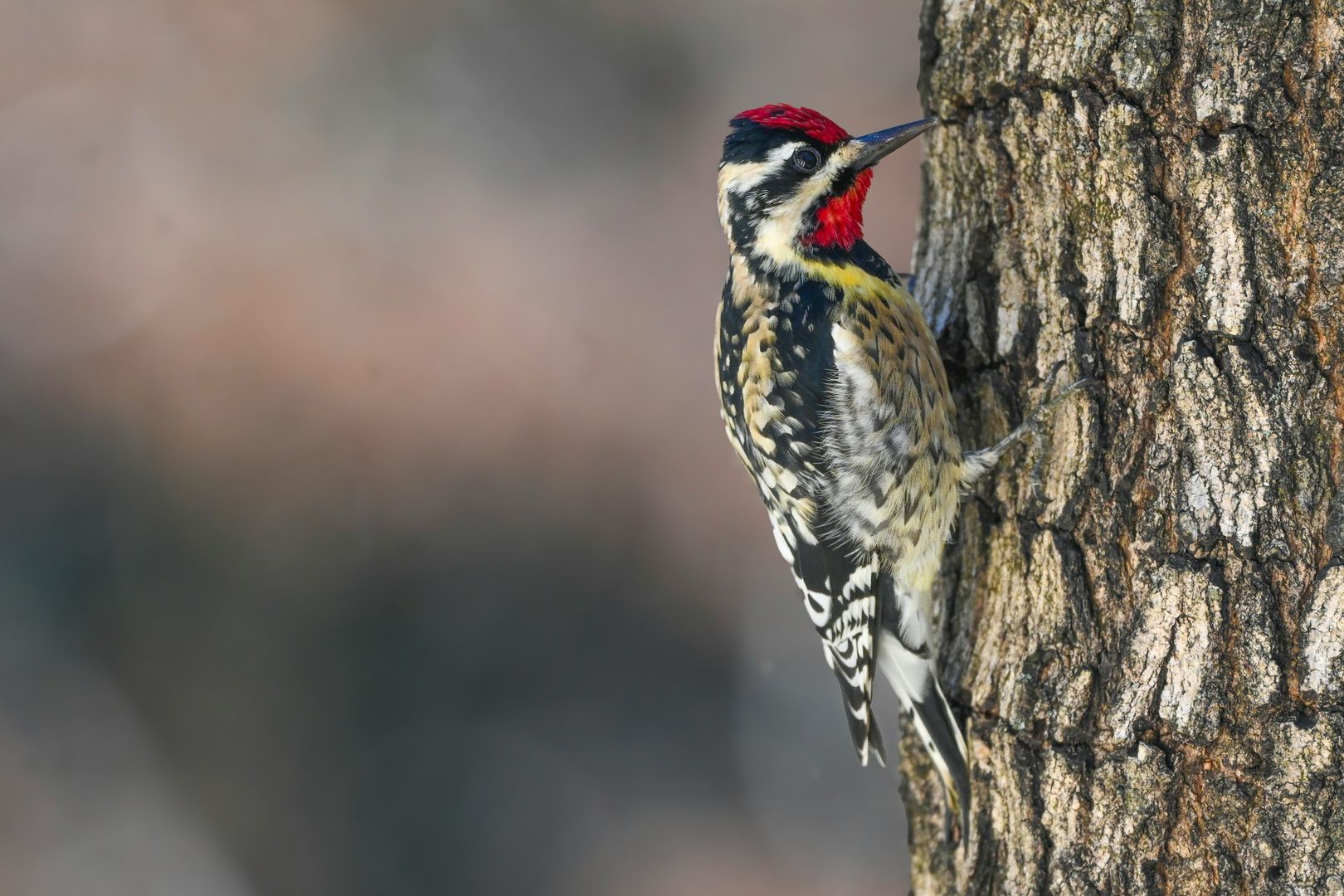
The Yellow-bellied Sapsucker is a winter woodpecker that drills neat rows of small holes in tree bark, then returns to drink the sap and eat the insects that get stuck in it. If you've seen tidy lines of holes in a tree trunk, that was one of these.
It's black and white with a long white stripe on the folded wing, a red forehead, and a pale yellowish belly. Males have a red throat, while females have a white one. Young birds in their first winter are browner and messier looking.
The Yellow-bellied Sapsucker call is a nasal, cat-like mew. Its drumming is uneven, with a few fast taps and then some slow ones, like someone who just learned Morse code.
In Florida winters, sapsuckers are found statewide in woods, parks, and yards with mature trees.
Feeder favorites: suet
26. Tree Swallow
- Family – Hirundinidae
- Species – Tachycineta bicolor
- Primary Activity Time – Daytime
- Diurnal
- Winter Migrant / Visitor
The Tree Swallow winters farther north than most swallows because it can digest wax myrtle and bayberry fruit when insects run low. In Florida that means huge winter flocks swirling over marshes, lakes, and coastal wetlands.
Adult males are glossy blue-green above and bright white below. Females are duller and browner, and first-year birds can be mostly brown.
The Tree Swallow call is a liquid, chirping twitter from the flock.
In Florida winters, look over open water, marshes, and wetlands statewide, especially on cool mornings when they gather to feed.
27. Sandhill Crane
- Family – Gruidae
- Species – Antigone canadensis
- Primary Activity Time – Daytime
- Diurnal
- Resident Florida Bird & Winter Migrant
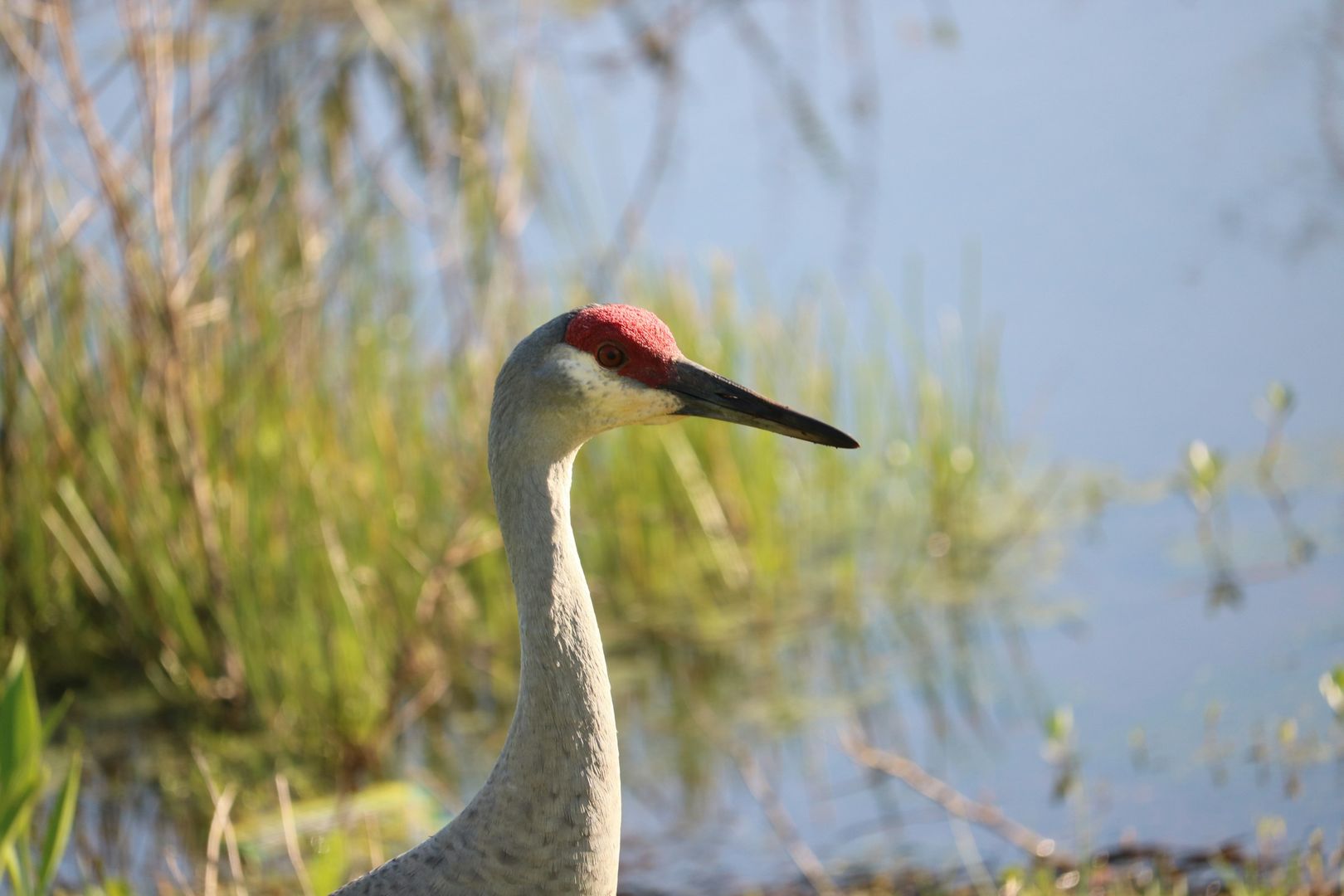
The Sandhill Crane is a tall gray crane that eats seeds, roots, insects, and small animals in open fields and marshes. Florida gets two groups. UF/IFAS estimates about 4,000 to 5,000 non-migratory Florida Sandhill Cranes, plus around 25,000 larger Greater Sandhill Cranes that arrive each winter.
It's gray (sometimes stained rusty from iron-rich mud) with a white cheek and a red patch on the crown. That red patch is bare skin, not feathers. Males and females look alike, though males are usually a bit larger.
The Sandhill Crane call is a loud, rolling bugle that can carry about half a mile. Pairs call together in a duet.
In Florida winters, Paynes Prairie Preserve State Park near Gainesville is a top spot for migrating cranes from December through February. Residents are found year-round in central Florida pastures and, yes, suburban lawns and retention ponds.
28. Whooping Crane
- Family – Gruidae
- Species – Grus americana
- Primary Activity Time – Daytime
- Diurnal
- Rare Winter Visitor
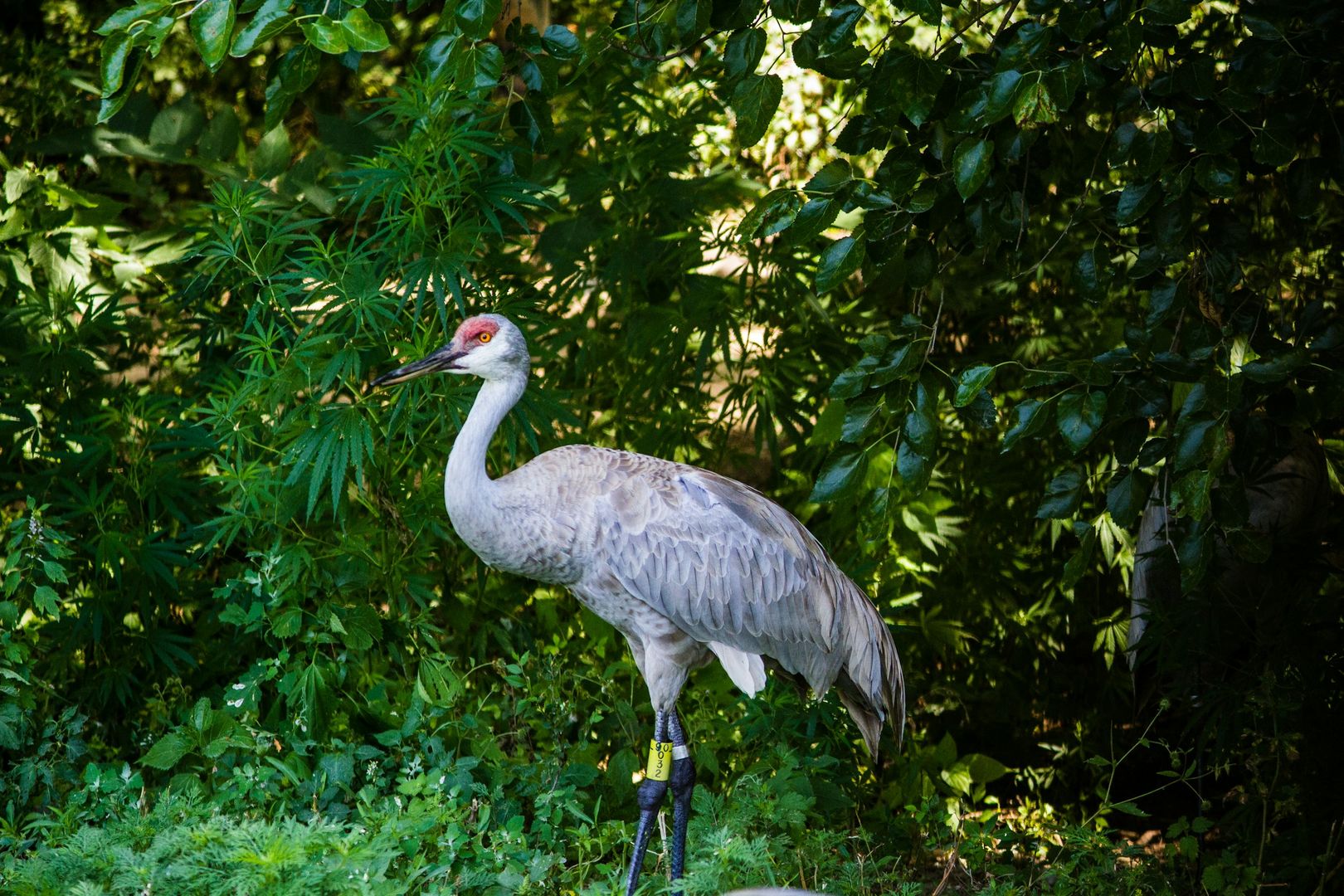
The Whooping Crane is the tallest bird in North America and one of the rarest. Florida was once a key winter home for the reintroduced eastern flock, but most of those birds now winter farther north. The International Crane Foundation's February 2026 update counted 64 birds in the eastern population, with only two confirmed in Florida, including one in Lake County traveling with Sandhill Cranes.
It's bright white with black wingtips you'll see only in flight, a red crown, and a black "mustache." Males and females look alike, and young birds are mottled cinnamon and white.
The Whooping Crane call is a loud, trumpeting whoop, higher and clearer than a Sandhill's.
In Florida, check flocks of Sandhill Cranes in central Florida pastures. If you find one, keep your distance and report it, since every bird matters to this population.
29. American White Pelican
- Family – Pelecanidae
- Species – Pelecanus erythrorhynchos
- Primary Activity Time – Daytime
- Diurnal
- Winter Migrant / Visitor
The American White Pelican is Florida's other snowbird, and it's huge, with a wingspan of about 9.5 feet. Unlike the Brown Pelican, it doesn't dive. White pelicans swim in groups, herding fish into shallow water and scooping them up together.
It's bright white with black flight feathers that show when it flies, plus a big orange-yellow bill and pouch. Males and females look alike. In late winter, breeding adults grow a flat "horn" on the top of the bill, which falls off after nesting season. (Nature's version of a seasonal hat.)
The American White Pelican is mostly silent away from its breeding colonies, so you'll see it long before you'll hear it.
In Florida winters, look on large lakes, coastal bays, and refuges, including J.N. "Ding" Darling National Wildlife Refuge on Sanibel and Merritt Island's Black Point Wildlife Drive.
30. Blue-winged Teal
- Family – Anatidae
- Species – Spatula discors
- Primary Activity Time – Daytime
- Diurnal
- Winter Migrant / Visitor
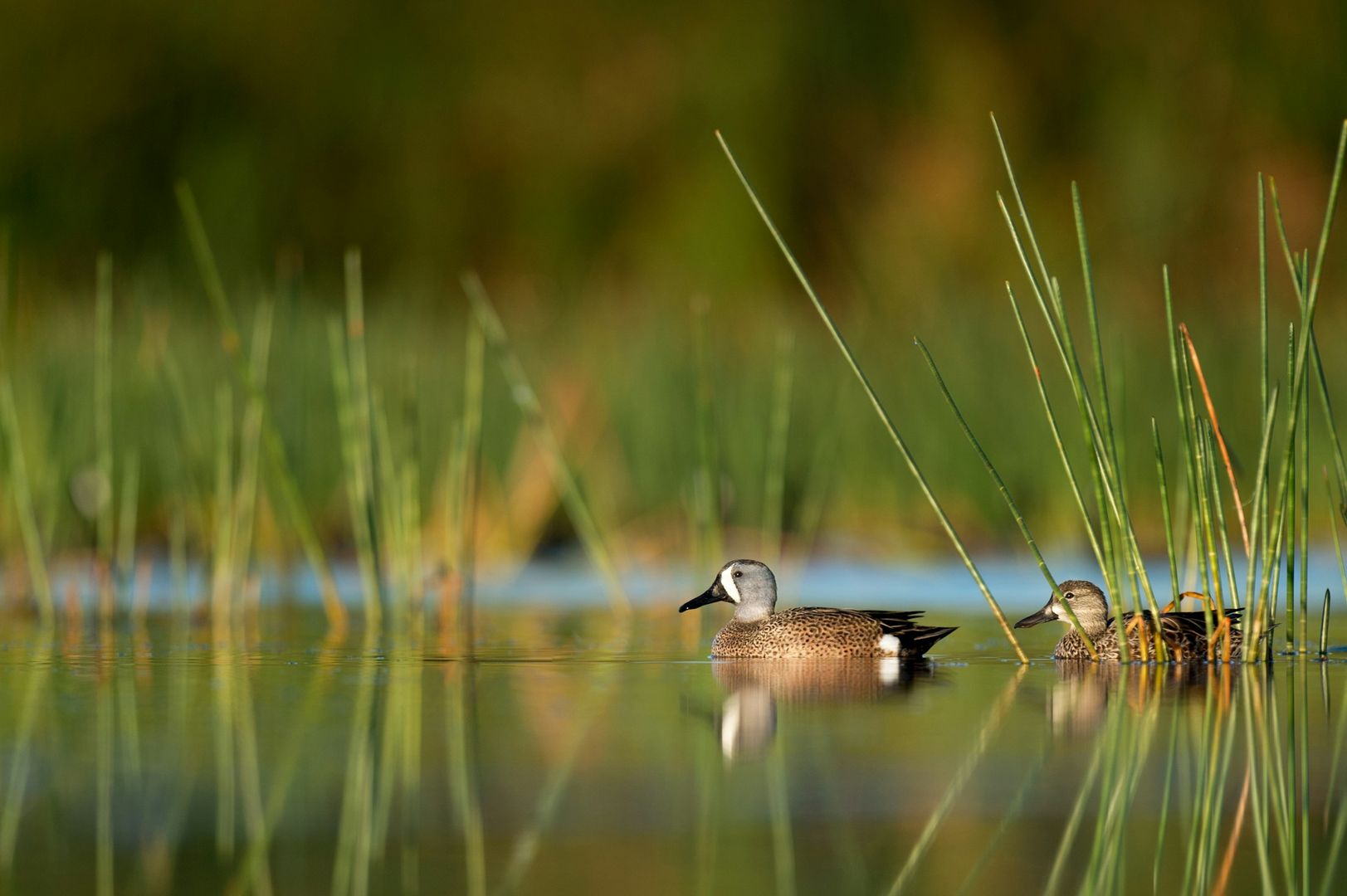
The Blue-winged Teal is a small dabbling duck and one of the first ducks to arrive in Florida each fall. It feeds on seeds, plants, and tiny invertebrates in shallow water.
Males have a gray-blue head with a bold white crescent in front of the eye and spotted tan bodies. Females are mottled brown with a dark eye line. Both flash a powder-blue patch on the forewing in flight.
The Blue-winged Teal call is a thin, whistled peep from males and a soft quack from females.
In Florida winters, look in shallow marshes, impoundments, and flooded fields statewide, including the Black Point Wildlife Drive and Lake Apopka.
31. Lesser Scaup
- Family – Anatidae
- Species – Aythya affinis
- Primary Activity Time – Daytime
- Diurnal
- Winter Migrant / Visitor
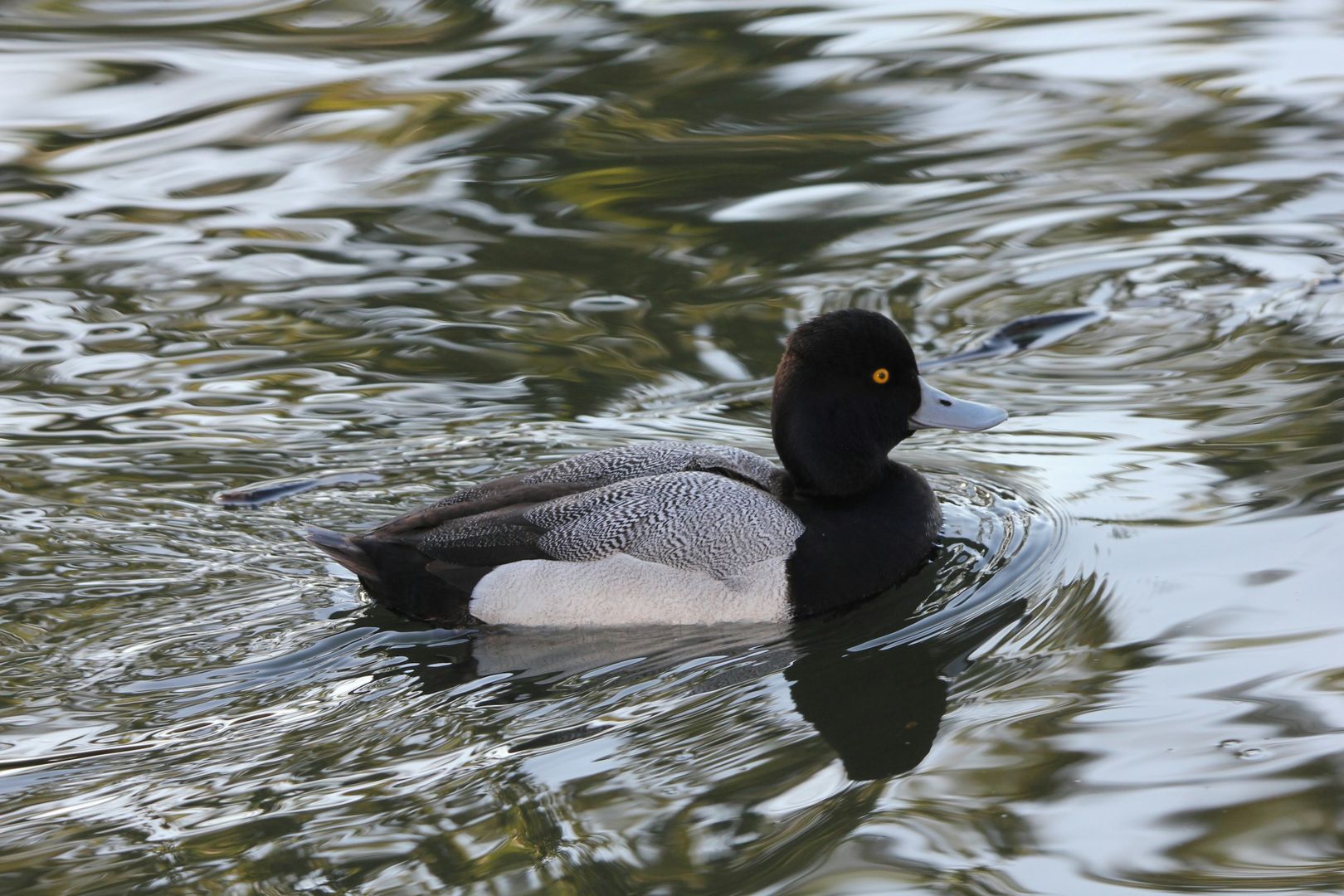
The Lesser Scaup is a diving duck that winters in big rafts on Florida's bays and lakes, eating clams, snails, and plants it finds underwater.
Males have a dark head with a purple gloss, a gray back, and white sides, so they look black-and-white from a distance. Females are brown with a white patch at the base of the bill.
The Lesser Scaup is mostly quiet in winter, aside from soft grunts and purrs.
In Florida winters, look for rafts on large lakes, coastal bays, and estuaries. St. Marks NWR regularly hosts around 19 duck species in winter, including scaup, so it's a good place to compare them all.
32. Bald Eagle
- Family – Accipitridae
- Species – Haliaeetus leucocephalus
- Primary Activity Time – Daytime
- Diurnal
- Resident Florida Bird
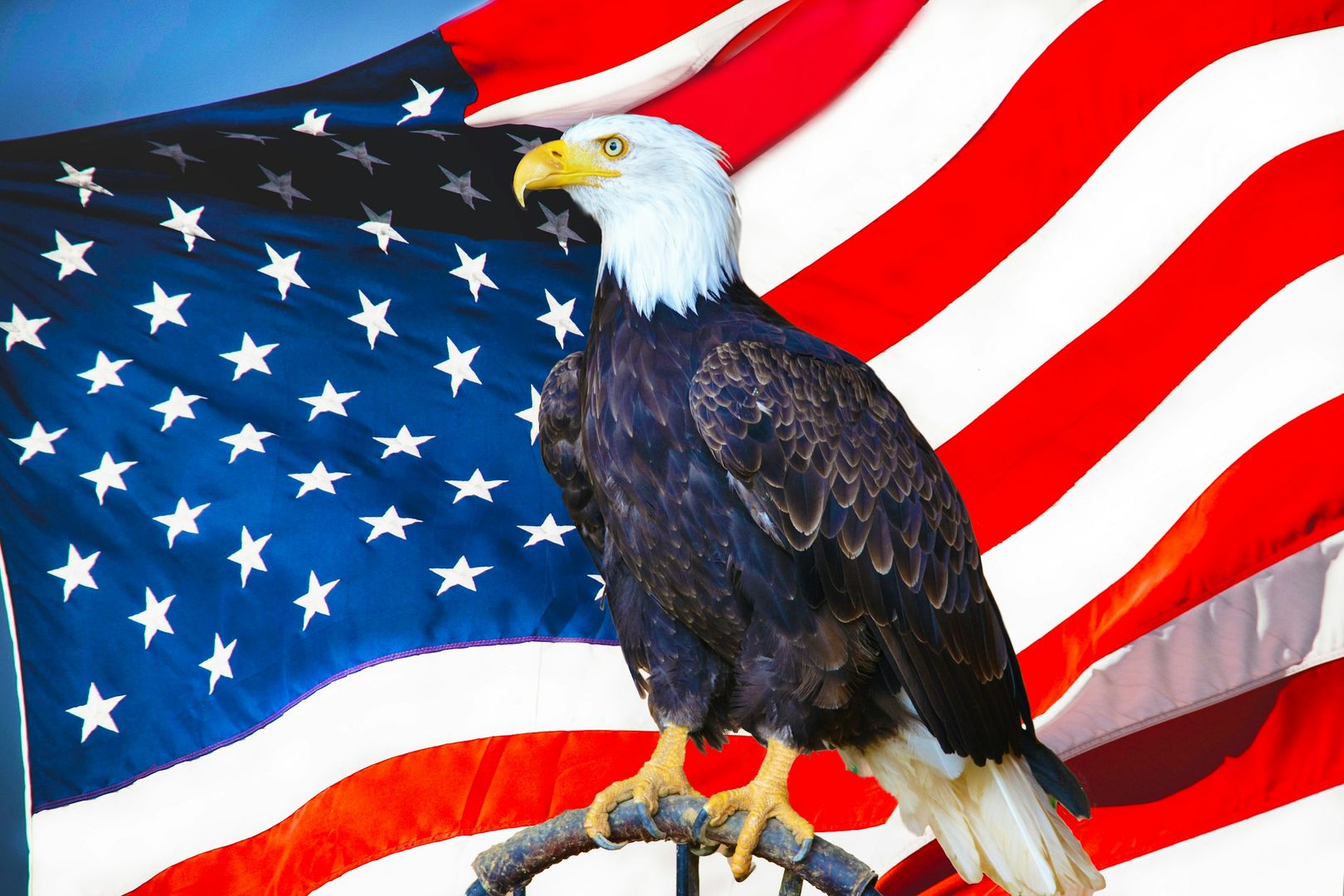
Most states see more eagles in winter. Florida's eagles are actually nesting in winter. The Florida Fish and Wildlife Conservation Commission estimates about 1,500 nesting pairs in the state, and nesting season starts in October, with eggs usually by December or early January. The Bald Eagle eats mostly fish, plus waterbirds and carrion.
Adults have a dark brown body, a white head and tail, and a big yellow bill. Young eagles are mottled brown and white and take about five years to get the full white head. Females are larger than males.
The Bald Eagle call is a weak, high whistled chatter, which is a letdown if you've only heard the Red-tailed Hawk dubbed over eagles in movies.
In Florida winters, look near lakes, rivers, and coasts statewide, especially central Florida's big lakes. Please give nests plenty of room.
33. Northern Harrier
- Family – Accipitridae
- Species – Circus hudsonius
- Primary Activity Time – Daytime
- Diurnal
- Winter Migrant / Visitor
The Northern Harrier is a slim, long-tailed hawk that glides low over marshes and fields hunting mice, voles, and small birds. It uses an owl-like face to hear prey in tall grass.
Adult males are pale gray with black wingtips (birders call them the "gray ghost"). Females are brown above with streaked underparts. Both have a bright white rump patch that's the easiest field mark to spot.
The Northern Harrier is usually silent in winter.
In Florida winters, look over marshes, pastures, and prairies statewide, including Paynes Prairie, St. Marks NWR, and Lake Apopka.
34. American Kestrel
- Family – Falconidae
- Species – Falco sparverius
- Primary Activity Time – Daytime
- Diurnal
- Winter Migrant & Resident
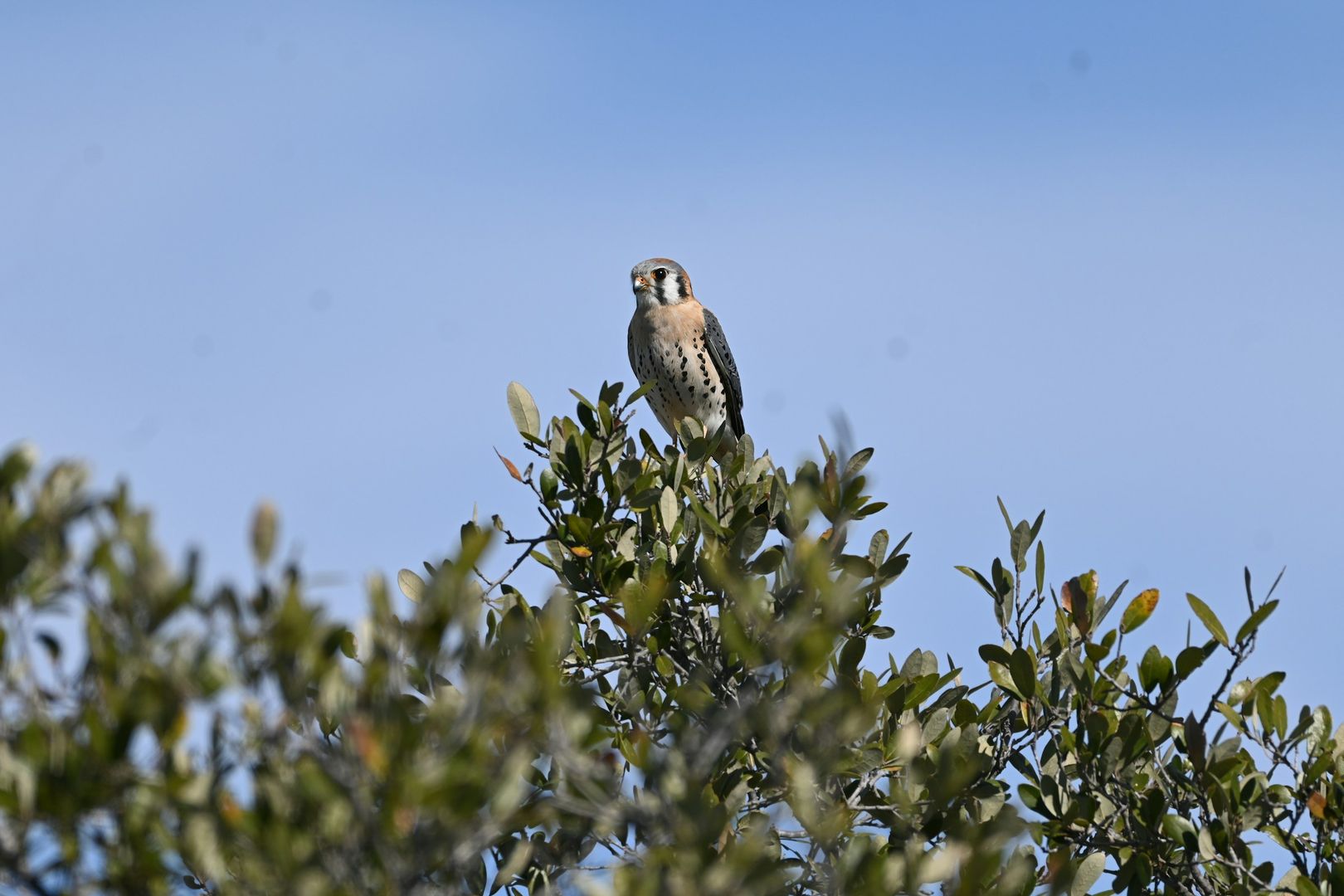
The American Kestrel is North America's smallest falcon. It eats large insects, lizards, and small rodents, hunting from power lines or hovering in place over grass.
Males have blue-gray wings and a rusty back and tail. Females have rusty wings and backs with dark barring. Both sexes have two black stripes on the face.
The American Kestrel call is a rapid klee-klee-klee.
In Florida winters, migrant kestrels from the north are common on roadside wires along fields and pastures. A smaller, non-migratory group, the Southeastern American Kestrel, lives here year-round.
Florida Winter Birds FAQ
What birds come to Florida for the winter?
Florida's big winter arrivals are warblers like Palm and Yellow-rumped Warblers, Ruby-crowned Kinglets, Eastern Phoebes, sparrows, American Robins, Cedar Waxwings, ducks like Blue-winged Teal and Lesser Scaup, Greater Sandhill Cranes, American White Pelicans, and raptors like the Northern Harrier. If you're heading north, see our guides to winter birds in Georgia and winter birds in Alabama.
What are the most common Florida birds in winter?
The most common birds in Florida in winter are a mix of residents and visitors. The Northern Cardinal, Mourning Dove, Red-bellied Woodpecker, Blue Jay, Northern Mockingbird, and Carolina Wren live here year-round, while Palm Warblers and Yellow-rumped Warblers show up everywhere once fall arrives. For Florida backyard birds, black oil sunflower and suet will bring in most of them, plus white millet if you're hoping for a Painted Bunting.
Do hummingbirds stay in Florida in the winter?
Some do. A few Ruby-throated Hummingbirds stay all winter in south Florida, and Rufous Hummingbirds from the West show up in small numbers, mostly in the Panhandle and north Florida. Keep at least one nectar feeder up through winter.
What is Florida's state bird, and does it stay in winter?
The Northern Mockingbird has been Florida's state bird since 1927. It lives here all year and spends the winter guarding berry bushes from other birds.
When do Sandhill Cranes come to Florida?
Migrating Greater Sandhill Cranes arrive in fall and are easiest to see from December through February, at places like Paynes Prairie. Florida's own non-migratory Sandhill Cranes stay all year, so you can see cranes here in any month.
What Florida Winter Birds Have You Seen?
Winter is the best time of year to go birding in Florida, since the weather's mild and the visitors are all in town. Share what's showing up at your feeders, lakes, and local refuges on the Sparkbird App, and find other birders near you to compare notes with.
And if the only bird you've seen this winter is a Palm Warbler on the lawn, congratulations. You've seen Florida's most common winter warbler, and it's not going anywhere until April.
No comments yet.