
Mississippi has 5 Audubon chapters and 1 statewide ornithological society. That's a short club list for a state that shelters a sandhill crane found nowhere else on earth, so local knowledge travels by listserv and boat ramp more than by newsletter.
Almost every bird watching group in Mississippi lets you show up for nothing, and Pine Woods Audubon requires no membership at all.
Why Join a Bird Watching Group at All
Solo birding has obvious appeal. Nobody hurries you, and nobody sees you study a distant brown bird for nine minutes before conceding it's a lost sock.
What a club gives you is a person who knows what the birds did last Tuesday. In Mississippi that matters more than usual, because so much of the best birding here happens on catfish ponds, sewage lagoons, and working timberland where access depends on someone having already made the phone call. The Mississippi Coast Audubon Society schedule is the proof. It sends people to the Seaman Road lagoons in Jackson County at 7:15 in the morning, which isn't a place you'd find alone.
Clubs are also the front door to community science. The Christmas Bird Count runs December 14 through January 5 every season, and Mississippi's circles are organized by the chapters below.
Borrow before you buy.
One word before you spend money. A decent pair of binoculars for birding runs from about $150 to well past $500. Borrow or rent before you commit.The Pascagoula River Audubon Center rents binoculars when its building is open, and Jackson Audubon asks walk participants to bring their own, so check with the trip leader first.
Statewide Bird Watching Groups in Mississippi
Mississippi Ornithological Society (MOS)
The main statewide body, founded in 1955 to encourage ornithological research and promote the conservation of native birds. MOS holds a spring and a fall meeting each year, and its meeting schedule is where the state's birders actually gather.
The 2026 spring meeting ran May 1 to 3 in Jackson County. The fall meeting is set for September 11 to 13 in Natchez, jointly with Jackson Audubon and built around wading birds at St. Catherine Creek National Wildlife Refuge.
Membership runs $5 for juniors under 14, $10 for students, $25 individual, $35 family, and $350 for life, and buys discounted registration plus the society's publications: the peer-reviewed journal The Mississippi Kite, most recent issue December 2023, and a twice-yearly newsletter.
Mississippi Bird Records Committee
The MOS committee that keeps the archive of rare bird records and the official state checklist, chaired by Gene Knight and meeting annually to vote on records. Document anything unusual with field notes, photographs, or recordings and file a Review Species Report Form. The state checklist there was last updated in June 2022, and an annotated Gulf Coast counties checklist was revised in 2019.
Audubon Delta
The National Audubon Society's regional office covering Arkansas, Louisiana, and Mississippi. It's not a walk-leading club. What it runs here are the two Audubon centers, Strawberry Plains in Holly Springs and Pascagoula River in Moss Point, plus coastal conservation work across the flyway. Follow it for habitat and policy news, not for a Saturday outing.
Bird Watching Groups on the Mississippi Gulf Coast
Mississippi Coast Audubon Society (MCAS) - Six Coastal Counties
Founded in 1976 and covering Hancock, Harrison, Jackson, George, Stone, and Pearl River counties, this is the most active field trip program in the state.
MCAS posts a seasonal trip schedule with named leaders and specific meeting points: the Seaman Road lagoons, Pascagoula Wildlife Management Area out of the ranger station on Wade-Vancleave Road, a kayak trip from the Pascagoula River Audubon Center. Guests are welcome, and a few trips require registration, so read the listing before you drive.
The chapter also maintains the Mississippi coastal bird checklist, compiled by Ned Boyajian and last revised in September 2019.
MCAS Christmas Bird Counts - Hancock and Jackson Counties
The chapter sponsors two circles, one in south Hancock County and one in Jackson County. Read this before you sign up: MCAS says in writing that its counts are not for beginners, and asks for solid birding skills and a willingness to stay out all day in whatever weather arrives. That's unusually blunt and worth respecting. Start with a regular field trip.
Audubon Mississippi Coastal Bird Stewardship Program - Coastwide
Volunteer stewardship, citizen science, and monitoring of coastal birds, run with federal, state, and local agencies. Contact this one if you want to do something about the state's beach-nesting terns and skimmers rather than only look at them.
Pascagoula River Audubon Center - Moss Point, Jackson County
An Audubon center at 5107 Arthur Street with nature trails, a bayou pier, feeders, exhibits, kayak rentals, and a gift shop. Check before you drive: the building is temporarily closed for structural and cosmetic repairs, a closure expected to run up to twelve months, though programming continues out in the community. Phone (228) 475-0825.
Bird Watching Groups in Jackson and Central Mississippi
Jackson Audubon Society (JAS) - Hinds, Rankin, Madison, Warren, Yazoo
A National Audubon chapter established in 1971 and based in Clinton, serving the five counties around the capital. Chapter meetings are quarterly, always on the fourth Tuesday, at the Clinton Community Nature Center on Dunton Road.
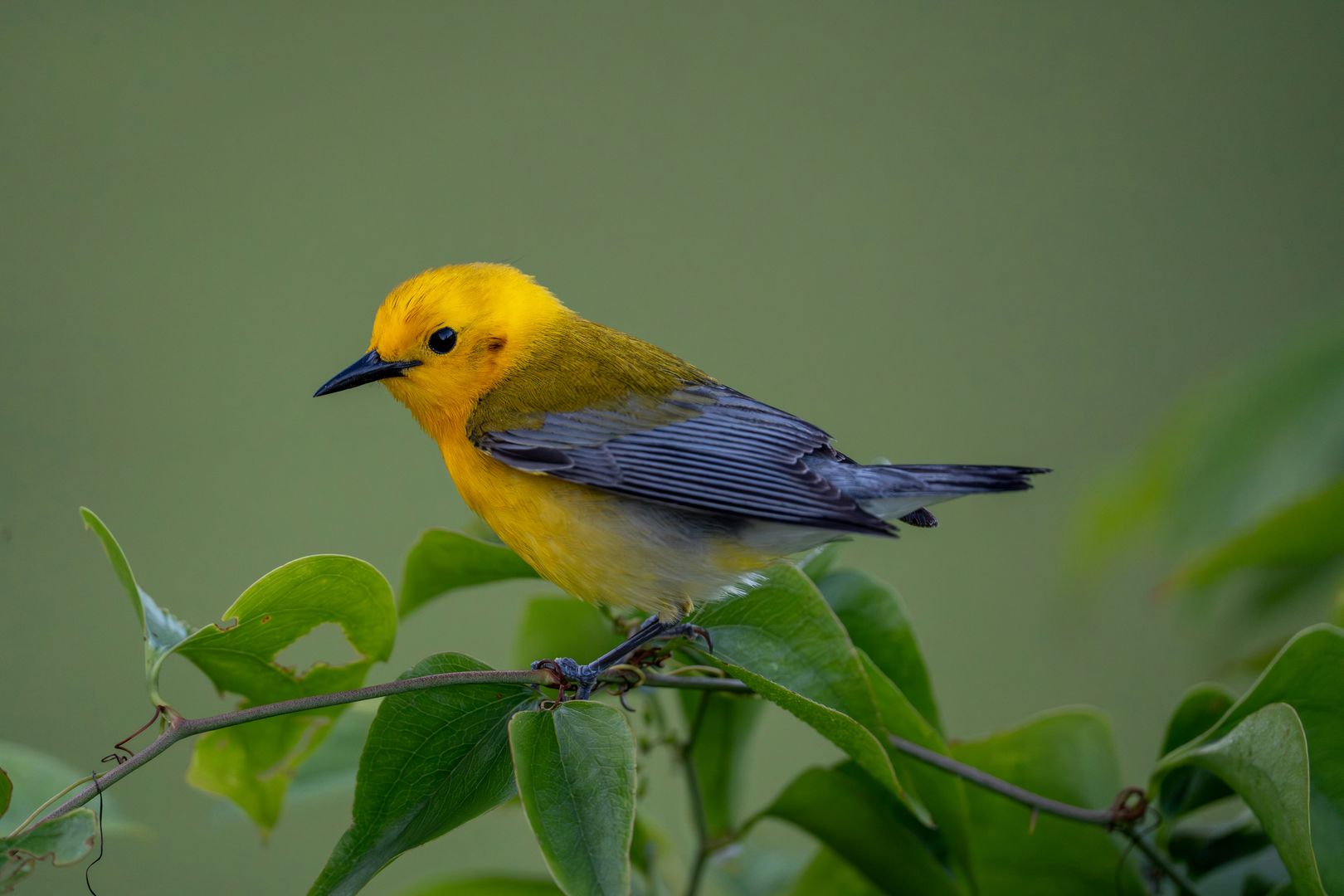
The chapter runs a kids' bird camp, a prothonotary warbler research project, and trips to nearby wildlife management areas and refuges, plus the Jackson and Vicksburg Christmas Bird Counts, which compiler Mary Stripling frames as a tradition worth starting rather than a test to pass.
All JAS activities, meetings, and field trips are free and open to the public, and membership isn't required to attend anything. First-year dues start at $20 if you do want to join, using chapter code M51.
First Saturday Family Bird Walks at LeFleur's Bluff - Jackson, Hinds County
The easiest entry point to birding in central Mississippi, running since 2000. First Saturday of the month, 8:00 to 10:00 a.m., except January, July, and August.
Meet in the picnic and pavilion parking lot inside LeFleur's Bluff State Park at 3315 Lakeland Terrace, entering through the Mayes Lakes campground gate. The walk is free and open to families, beginners, and experts; the park charges $3.00 per person. Bring your own binoculars and water.
Bird Watching Groups in Northeast Mississippi
Oktibbeha Audubon Society (OAS) - Starkville, Columbus, West Point, Macon
The Golden Triangle chapter, covering a seven-county area from a base in Starkville. Meetings are 7:00 p.m. on the second Thursday of the month on the Mississippi State University campus, and the chapter says visitors are welcome. Outings center on Sam D. Hamilton Noxubee National Wildlife Refuge.
One caveat, stated plainly because it will save you a drive: the newest thing on the chapter's website is a February 2016 newsletter. National Audubon still lists OAS as an active chapter, but confirm the date and venue before you plan an evening around it.
National Audubon's chapter directory also lists the Okatibbee Creek Audubon Society in Meridian. It has no website we could load, so we're naming it rather than linking it; in Lauderdale County, National Audubon is the way to reach them.
Bird Watching Groups in Hattiesburg and the Pine Belt
Pine Woods Audubon Society (PWAS) - Hattiesburg, Forrest County
The Pine Belt chapter, meeting monthly from September through May at 7:00 p.m. at the Kamper Park Education Center in Hattiesburg. Its own wording is about as welcoming as it gets: there are no charges associated with attending meetings, and no membership is required to attend meetings or other PWAS events. For a beginner in south Mississippi, this is the lowest-friction option in the state.
Bird Watching Groups in Oxford, North Mississippi, and the Delta
There's no formal bird club in the Mississippi Delta, and none in Oxford or Tupelo either. That isn't a research failure. It's the shape of the state.
North Mississippi birding runs through one very good Audubon center and a string of national wildlife refuges rather than through chapters. Use the MOS meetings and the MISSBIRD listserv to find people.
Strawberry Plains Audubon Center - Holly Springs, Marshall County
A National Audubon center on 3,000 acres of restored hardwood forest, wetland, and native grassland, created in 1998 when sisters Ruth Finley and Margaret Shackleford donated their 2,400-acre family property to National Audubon.
It's the biggest birding asset in north Mississippi, and home to the annual Hummingbird Migration and Nature Celebration, banding demonstrations included, one of the largest birding events in the state.
Check the visitor page first: admission is $3 per person, hours are Monday to Friday 9:00 a.m. to 4:00 p.m., and at present only the trails are open. The center had no festival dates or ticket price posted when we checked, so call (662) 252-1155 before booking a weekend around it.
Other Ornithology and Research Groups in Mississippi
The MISSBIRD Listserv
A free email list for reporting sightings, organizing field trips, and asking the sort of question that gets three answers before lunch. In a state with five chapters spread across 48,000 square miles, this is the closest thing Mississippi has to a statewide rare bird alert. Subscription details are on the MOS get-involved page.
University of Mississippi Field Station - Lafayette County
A 740-acre research site eleven miles northeast of the Oxford campus, built around a scenic three-mile valley and used as a natural laboratory for research and education. It's a working field station, not a public park, and publishes no visitor hours or access policy, so call before turning up with binoculars.
Sparkbird App - Community
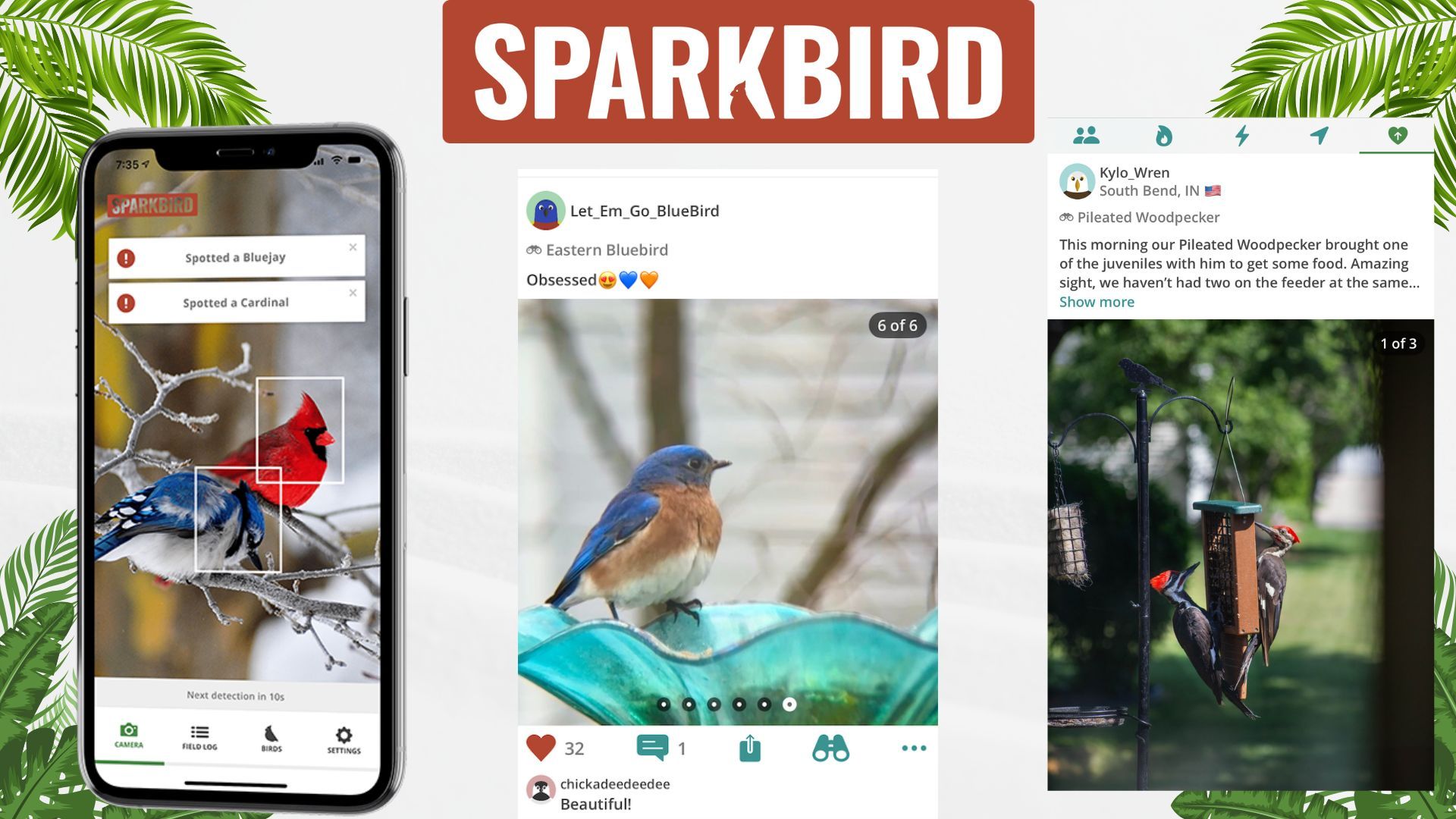
We built Sparkbird for people who want to connect with a friendly community of fellow birders. Track your life list, get help identifying birds, and meet people who also stop mid-sentence to look at a tree. It's like Instagram for bird watchers, without the shady algorithms.
Where to Go Birding in Mississippi
A club is the fastest route to local knowledge, but these seven sites carry the state on their own. Access terms are what each managing agency publishes, and they change, so treat a phone call as part of the trip.
FYI "the Coast" refers to the Mississippi Sound counties.
- Mississippi Sandhill Crane National Wildlife Refuge (Gautier, Jackson County) — The reason to bird Mississippi. The refuge protects the Mississippi sandhill crane, a critically endangered non-migratory subspecies that fell to roughly 30 to 35 birds and now stands at about 200, in wet pine savanna that exists almost nowhere else. Address is 7200 Crane Lane, phone (228) 497-6322. Trails and grounds are open sunrise to sunset daily with no entrance fee, but the visitor center opens only Thursday and Friday, 9:00 a.m. to noon, excluding federal holidays. The C.L. Dees Trail is three quarters of a mile, the Fontainebleau Trail a mile. Cranes show best in fall and winter, and guided crane tours generally run late fall through late winter depending on staffing. Call ahead: those tours are the main public access to the crane areas.
- Gulf Islands National Seashore, Davis Bayou (Ocean Springs, Jackson County) — The mainland Mississippi district of the national seashore, at 3500 Park Road, with bayou boardwalks, a fishing pier, a campground, and the William M. Colmer Visitor Center. The gate is open 8 a.m. to sunset, the boat launch from 6 a.m., the visitor center 9 a.m. to 4 p.m. Worth knowing: the park's entrance fees apply only to the Fort Pickens, Opal Beach, and Johnson Beach areas in Florida, so Davis Bayou costs nothing to enter. The park takes no cash anywhere.
- Sam D. Hamilton Noxubee National Wildlife Refuge (Noxubee, Oktibbeha, and Winston Counties) — Renamed in 2012 from plain Noxubee NWR, which is why older directories disagree with the sign at the gate. Restored from farmed and over-grazed ground into bottomland hardwood, it holds red-cockaded woodpeckers and ranks as one of five globally important bird areas in Mississippi. Visitor center at 13723 Bluff Lake Road, Brooksville, open Monday to Friday 7:30 a.m. to 4:00 p.m., closed weekends. No entrance fee. Trails are daylight hours only; in winter and spring some flood.
- Yazoo National Wildlife Refuge (Hollandale, Washington County) — The oldest national wildlife refuge in Mississippi and the anchor of Delta waterfowl birding, 28 miles south of Greenville at 595 Yazoo Refuge Road. It's managed primarily as wintering waterfowl habitat, which is exactly why you go between November and February. Plan around two things: every property in the Theodore Roosevelt National Wildlife Refuge Complex, refuge roads and boat ramps included, closes from an hour and a half after sunset until 4 a.m., and the visitor contact station is currently closed. A public use permit is required for hunting and fishing, not for birding.
- Strawberry Plains Audubon Center (Holly Springs, Marshall County) — Three thousand acres of hardwood forest, wetland, and native grassland at 285 Plains Road, and the best single stop in north Mississippi. Admission is $3 per person, hours are Monday to Friday 9:00 a.m. to 4:00 p.m., and only the trails are open at present, with the buildings closed.
- Tishomingo State Park (Tishomingo County) — Northeast Mississippi's oddity: moss-covered boulders, fern-filled crevices, and rock formations in the foothills of the Appalachians, with the Natchez Trace Parkway running through it. Bear Creek and the 45-acre Haynes Lake add water birds to a hardwood-slope list you won't match elsewhere in the state. Entrance is $2.00 per person, free for ages five and under.
- LeFleur's Bluff State Park (Jackson, Hinds County) — A city park in all but name, with warblers, woodpeckers, and herons inside the Jackson city limits at 3315 Lakeland Terrace. Entry is $3.00 per person. The first-Saturday Jackson Audubon walk here is the least intimidating guided birding in the state.
One gap worth naming: the Mississippi Coastal Birding Trail no longer has a working web home. The MCAS links list still points to a URL that gives an error message. Use the MCAS checklist and trip schedule instead until someone rehouses it.
If you'd rather start from your own yard, our guide to attracting hummingbirds in Mississippi covers the plants that actually work in this climate.
Mississippi Bird Books and Field Guides
Mississippi has fewer state-specific titles than most states, so the working kit is one regional guide plus one continental guide.
Birds of Louisiana and Mississippi Field Guide
Stan Tekiela's second edition, Adventure Publications, 2022, covering 146 species and organized by color: see a blue bird, turn to the blue section. Buy this one first.

Birds of Louisiana & Mississippi Field Guide (Bird Identification Guides)
Adventure Publications
Shorebirds of the Southeast and Gulf States
A spiral-bound, tear-resistant pocket guide to 72 shorebirds of the Gulf and Southeast. Shorebirds are where most new birders quietly give up, and 22 pages you can hold in one hand beat another 800-page book.

Shorebirds of the Southeast & Gulf States: Your Way to Easily Identify Shorebirds (Adventure Quick Guides)
Adventure Publications
The Sibley Field Guide to Birds of Eastern North America
The second edition, Knopf, 2016. The most authoritative portable guide to eastern birds, and the one most trip leaders have in a pocket.

The Sibley Field Guide to Birds of Eastern North America: Second Edition (Sibley Guides)
Knopf
Peterson Field Guide to Birds of Eastern and Central North America
The seventh edition, 2020. Peterson's little arrows pointing at field marks are still one of the best teaching devices in birding.

Peterson Field Guide To Birds Of Eastern & Central North America, Seventh Ed.: The Classic Birdwatching Guide with Updated Range Maps
Mariner
Mississippi Bird Rescue and Rehabilitation
Always call first. Capacity, hours, and accepted species vary, and a bird that's sat in a box in a warm car for two hours is worse off than one that waited ten minutes for the phone call.
Mississippi Department of Wildlife, Fisheries and Parks - Statewide
Start here, and know what you're getting. Unlike many states, MDWFP doesn't publish a searchable online directory of licensed rehabilitators. What it offers is a referral: call the Jackson office at (601) 432-2199 during business hours and ask for wildlife rehabilitation contacts.
The agency also says plainly that it cannot conduct general wildlife rehabilitation and cannot pick up injured wildlife, apart from certain threatened and endangered species. Save that number now rather than hunting for it while holding a shoebox.
Mississippi Wildlife Rehabilitation, Inc. - Coldwater, Tate County
The state's main option for injured birds, a nonprofit founded in 1995 and still visibly active, with a July 2026 newsletter posted. Birds and reptiles go through the avian and reptile hotline at (662) 612-6455, which takes calls and texts; the general line is (662) 292-6133.
It's building the Arkabutla Lake Wildlife Rehabilitation and Nature Center at 3905 Arkabutla Dam Road, and it passes along a second north Mississippi contact, North Mississippi Wildlife Rehab, at (662) 469-1646.
Wild Again in Mississippi - Tallahatchie County
Licensed nonprofit rehabilitation in north Mississippi, and the referral partner for mammals. Listed here so you don't lose an hour calling them about a bird: they take mammals, not birds, at (662) 707-0228. On the coast, the Institute for Marine Mammal Studies in Gulfport handles stranded marine mammals and sea turtles at (888) 767-3657.
Frequently Asked Questions
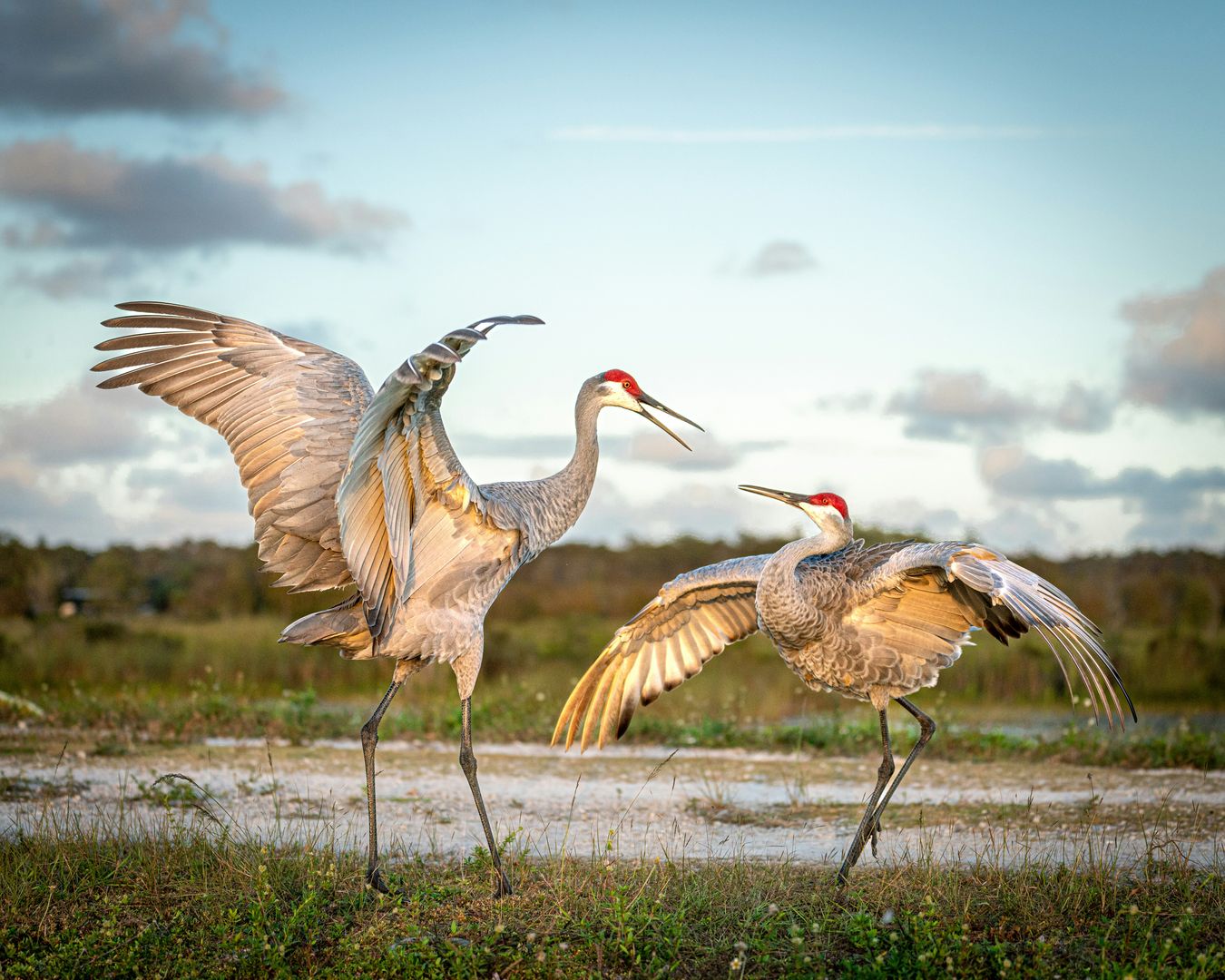
Where can you see a Mississippi Sandhill Crane?
Only in Jackson County, at the Mississippi Sandhill Crane National Wildlife Refuge in Gautier. The subspecies is critically endangered, non-migratory, and numbers roughly 200 birds after bottoming out near 30. Trails are open sunrise to sunset, and guided crane tours generally run late fall through late winter. Call (228) 497-6322 first.
When do hummingbirds migrate through Mississippi?
Ruby-throated hummingbirds push north in spring and stream back south from roughly late July into October, with the heaviest passage in late August and September. That window is why Strawberry Plains built its Hummingbird Migration and Nature Celebration around it. Our guide to hummingbird migration covers the timing.
Is the Mississippi Gulf Coast worth birding in winter?
Yes, and it's arguably the best time. Wintering shorebirds, waterfowl, gulls, and terns pile onto the Mississippi Sound while the rest of the country is frozen, and the cranes at Gautier are most visible in fall and winter. Mississippi Coast Audubon runs trips right through the season.
Are there beginner-friendly bird watching groups in Mississippi?
Yes, though pick carefully. The Jackson Audubon first-Saturday family walks at LeFleur's Bluff are built for beginners, and Pine Woods Audubon in Hattiesburg asks nothing of visitors at all. The one place to hold back is the coastal Christmas Bird Count, which Mississippi Coast Audubon says outright is not for beginners.
Got a Mississippi birding group to recommend?
5 chapters, for a state with this much coastline, this much river, and a crane of its very own, feels like a state that's due a few more. Starting one's less work than it sounds, and the listserv will find you an audience inside a week. Tell us about your group in the comments or on the Sparkbird App.
Our goal is to build a birding community that connects people to nature and to each other. Bird watching groups in Mississippi make that easy.
- Related: How to Use the Sparkbird App
No comments yet.