
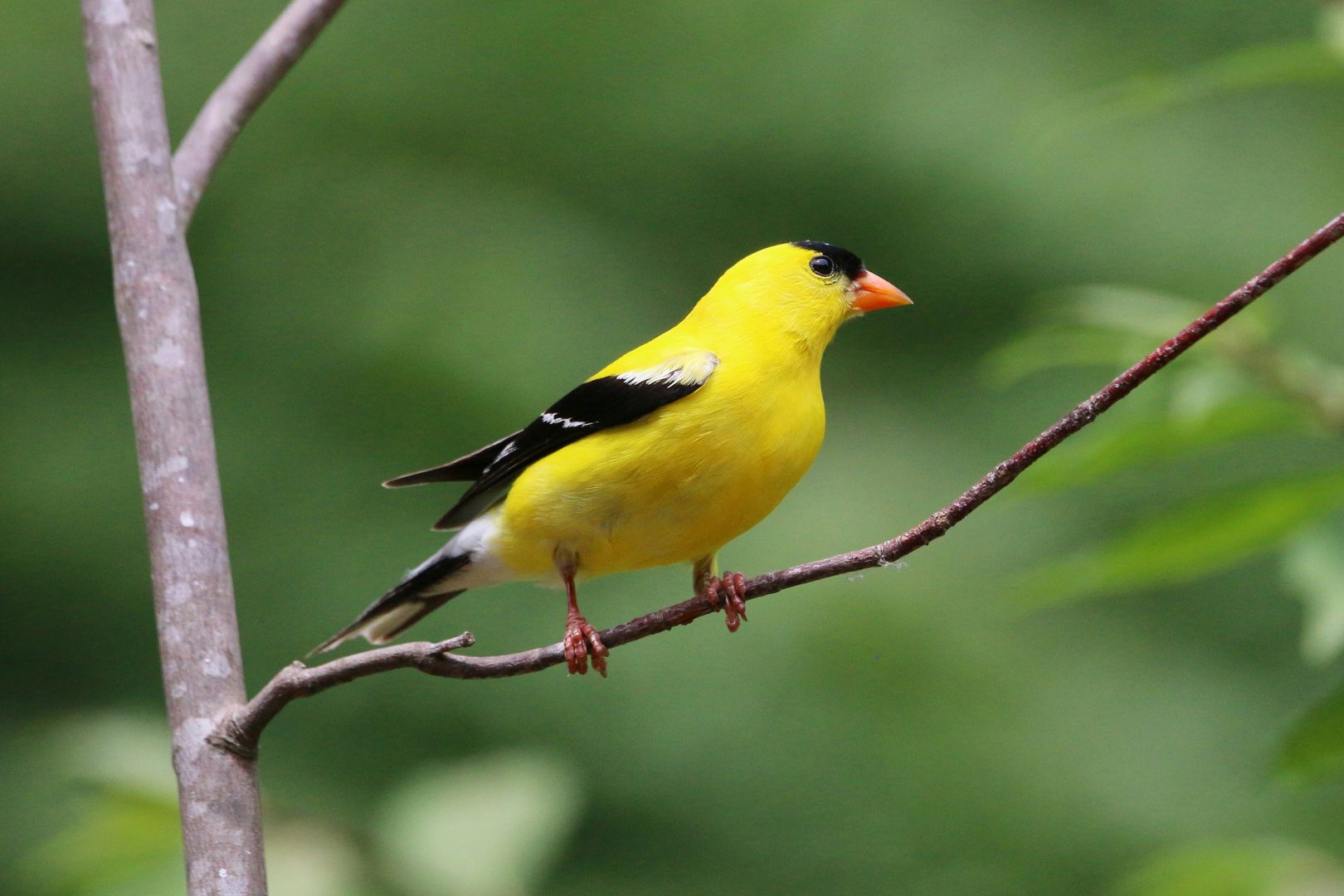
Every fall, someone looks out their kitchen window and thinks the goldfinches have been replaced by a gang of beige sparrows.
Some have, some haven't.
Do Goldfinch Birds Migrate, or Just Disappear?
Goldfinches are irregular migrants. The Cornell Lab's range map for the American Goldfinch labels the species a short-distance migrant, and the Audubon field guide calls it "irregular in migration, with more remaining in the North in winters with good food supply."
It's more like they'll migrate if the vibe's right. Weedy fields, feeders, and seed heads up north look good? Goldfinches stay. If they don't, more birds slide south. It's partial migration with an irregular streak, and it changes year to year.
There's a twist.
A Saint Paul Audubon Society spotlight points out that the goldfinches in your yard in winter may not be the same ones you had in summer. Some local adults move south and are replaced by goldfinches coming down from farther north, while many young birds just wander around like nomads in their first year. The flock looks the same, but it might be different birds.
If you want the big-picture version of who leaves, who stays, and when the main waves move through, the fall migration guide covers it.
Why Your Goldfinches Suddenly Look Different
This is the real reason people Google "do goldfinches migrate" every October. The birds didn't leave. They changed clothes.
American goldfinches are unusual among goldfinches because, per Cornell's American Goldfinch overview, they molt their body feathers twice a year, once in late winter and again in late summer. In spring, the males go full highlighter yellow. In late summer and fall, they molt again and come out looking like a beige throw pillow.
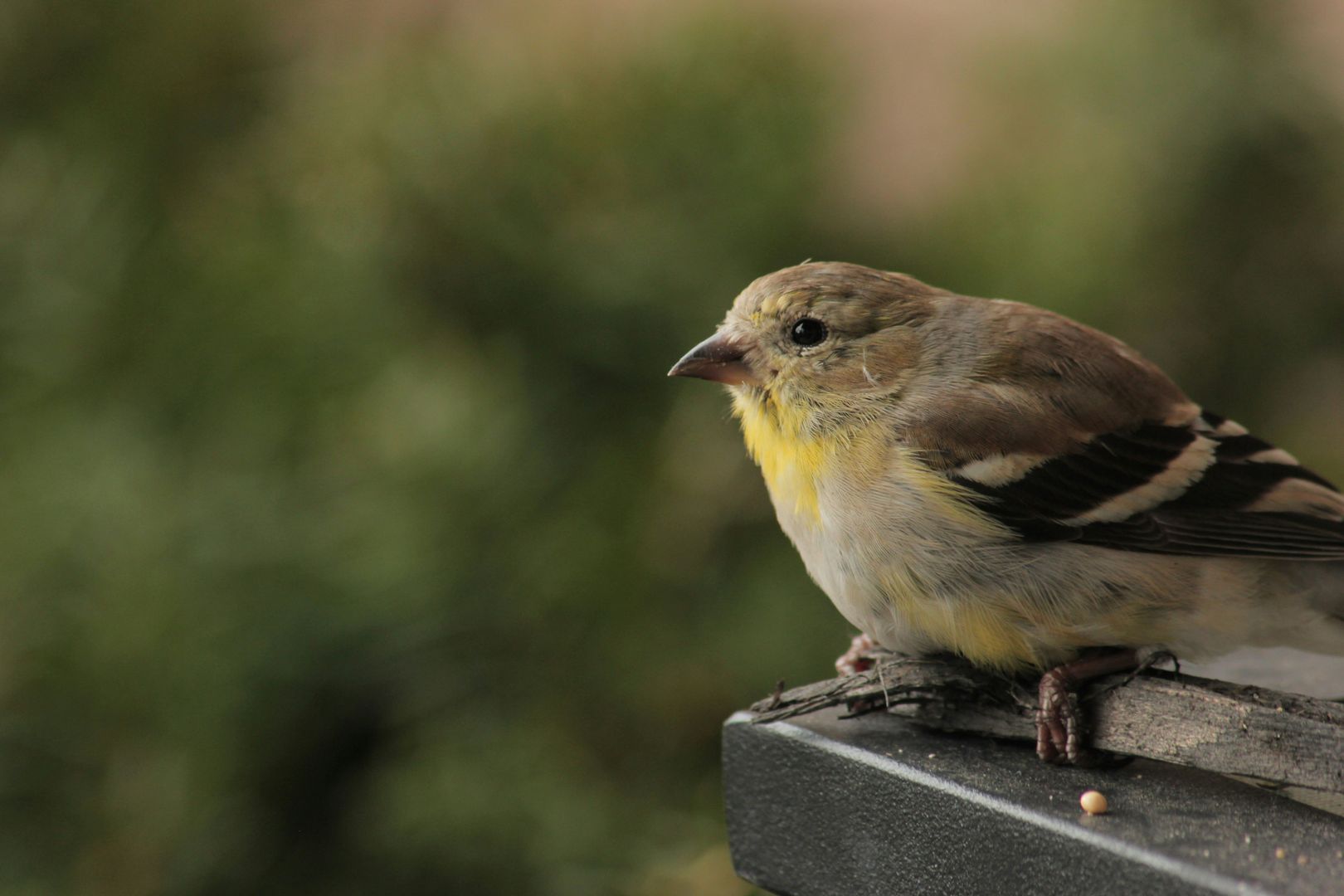
What American Goldfinch Winter Plumage Looks Like
A winter male is a drab, unstreaked brown with blackish wings and two pale wingbars."Females look similar year-round: duller yellow below, olive above. During the molt itself, Cornell's life history page notes they can look "bizarrely patchy," like a bird halfway through a bad home dye job.
To pick out American goldfinch winter plumage at the feeder, look for three clues:
- The wings. Black or blackish wings with bold pale wingbars. Most little brown birds don't have that crisp contrast.
- No streaks. Winter goldfinches are plain on the chest. House finches and most sparrows are streaky.
- The bill and the call. A small, cone-shaped seed-cracking bill, plus that bouncy flight and the "po-ta-to-chip" call.
When Do Goldfinches Migrate?
Audubon notes that peak goldfinch movement happens in mid-fall and early spring, mostly during the day. That makes them different from most songbirds, which migrate at night.
Goldfinches are also late bloomers in general. Cornell says they wait to nest until June or July, when milkweed, thistle, and other plants have produced the fibrous seeds they use to line their nests and feed their young. Audubon puts most nesting activity in July and August. That late schedule means many goldfinches are still feeding fledglings when other birds are already packing for the trip south, and it pushes their fall movement later too.
Goldfinch Migration Map: Where They Show Up
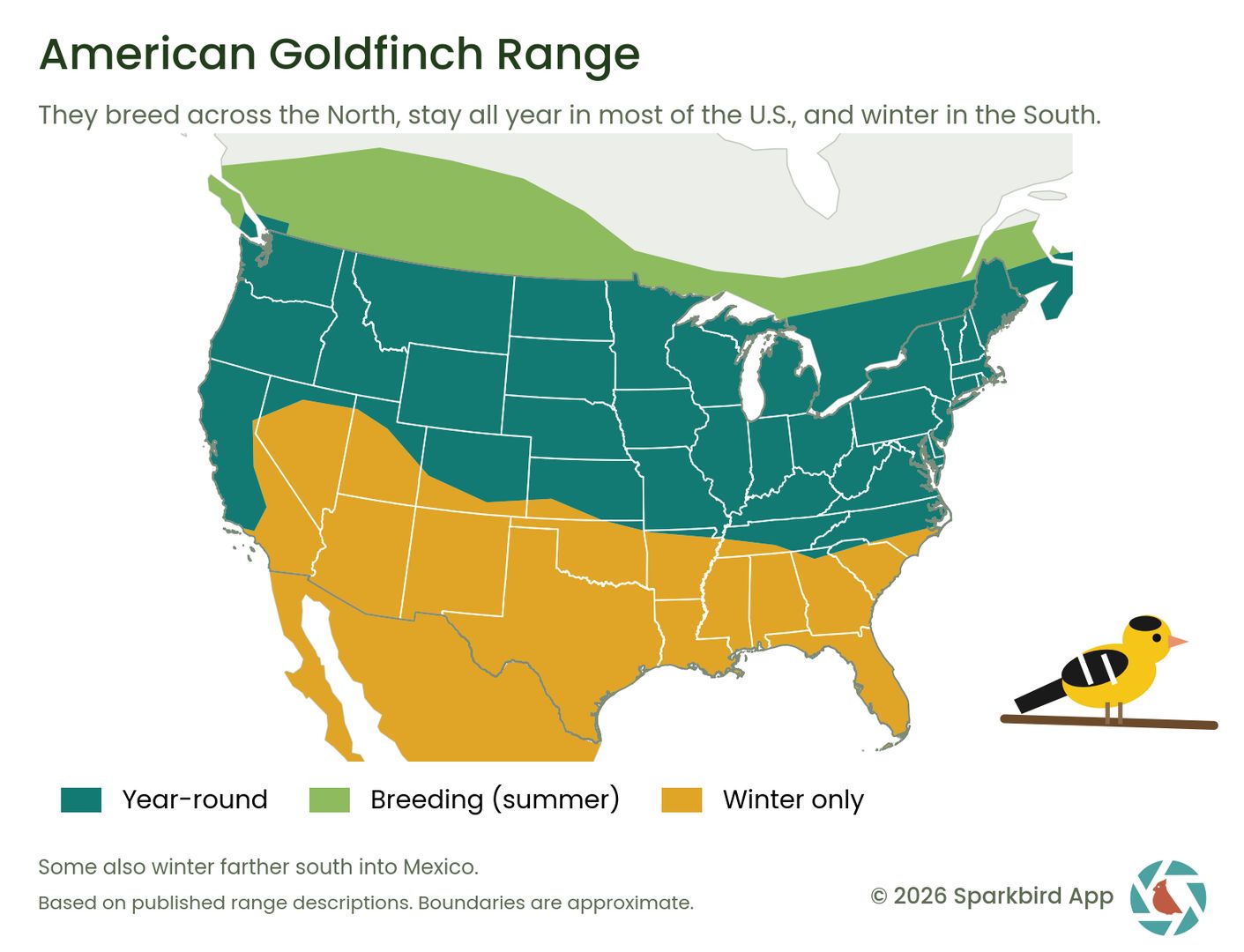
If you want a goldfinch migration map, start with Cornell's American Goldfinch range map. It shows a huge band of year-round range across the middle of the U.S., a breeding-only zone along the northern tier and southern Canada, and a nonbreeding zone stretching across the South and into Mexico.
That middle band is the key. Across much of the country, you can see goldfinches in every season. They just don't look like the same birds in every season.
There are plenty of them to go around, too. Audubon puts the population at roughly 44 million birds, and Cornell notes the goldfinch is the state bird of New Jersey, Iowa, and Washington. Three states picked it as their mascot, and it still spends half the year dressed like it's hiding from its ex.
Where Do Goldfinches Go in the Winter?
Not far, in most cases. Goldfinches that leave the northern edge of the range tend to land in the southern U.S. and northern Mexico, and lots of birds stay well north of that.
Goldfinches move south in winter following a pattern that seems to match regions where the average minimum January temperature is no colder than 0°F. Basically, if your winter nights routinely sit below zero, expect fewer goldfinches. If they don't, you might keep a crowd all winter.
Where they go within your neighborhood matters too. In winter, Audubon says goldfinches gather in weedy fields and at feeders. Saint Paul Audubon also notes that in early fall, when sunflowers, coneflowers, coreopsis, asters, and thistles are loaded with seed, goldfinches often ditch feeders for a few weeks to eat in the wild. So a quiet feeder in September isn't always a migration story.
Are Goldfinches Irruptive?
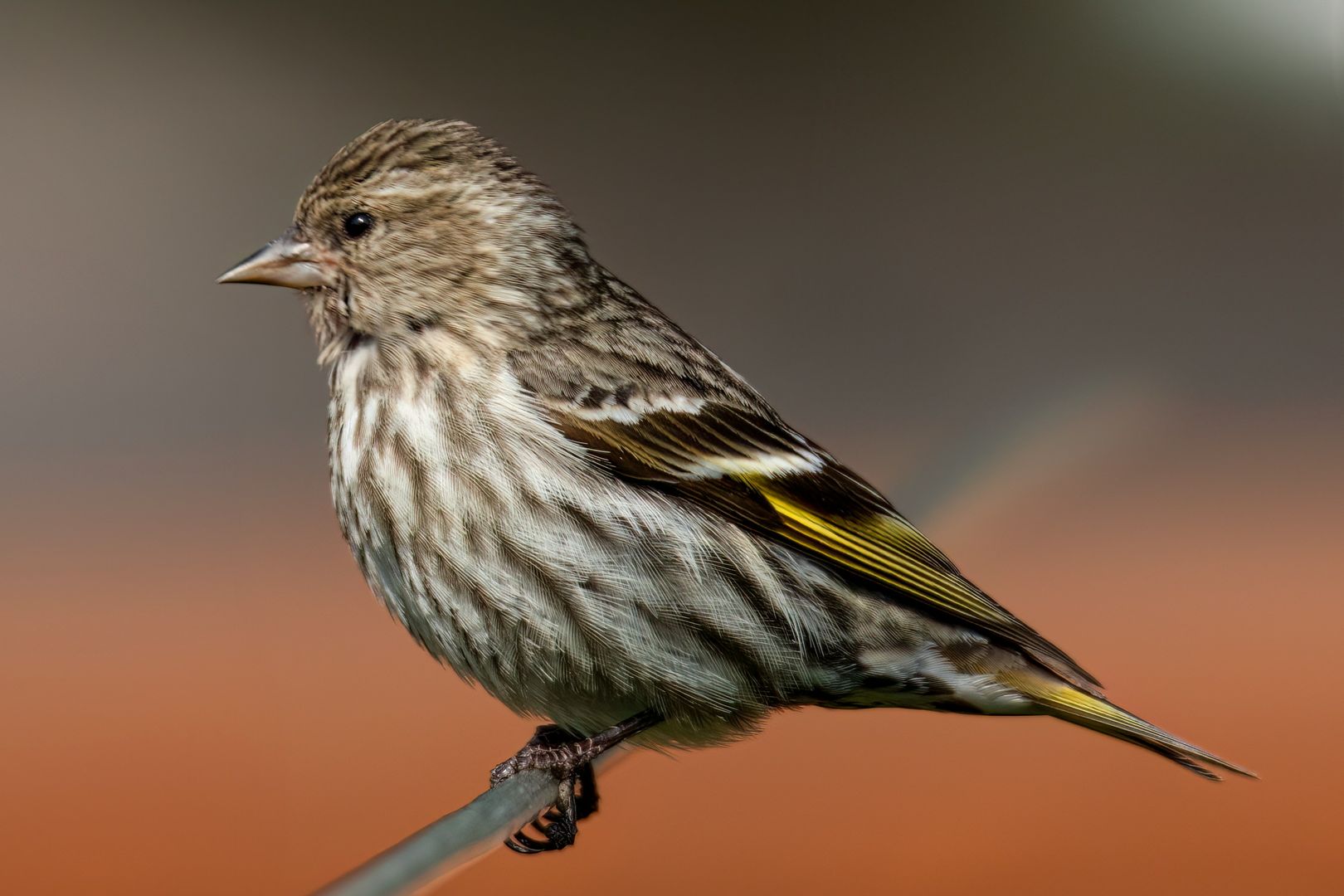
Not really. Irruptive birds make big, irregular pushes south in some winters and barely move in others, usually because seed crops up north failed or boomed. Pine siskins, redpolls, and crossbills are the classic winter finches that irrupt.
Goldfinches are somewhere in between. They're irregular (Audubon's word) and food-driven, but they don't do the boom-and-bust invasions siskins are famous for. That's worth knowing because goldfinches often flock with pine siskins in winter, and a feeder that suddenly fills with streaky "goldfinches" may actually be hosting siskins.
This could be one of those winters. The Finch Research Network's 2026–2027 winter finch forecast says good cedar and hemlock seed crops should hold a sizable pine siskin irruption in the Northeastern states, with a possible small to moderate flight into the Southeast.
Fair warning, though: the same forecast notes that with forests this well stocked, siskins may be easier to find in the woods than at feeders.
Goldfinches aren't the only backyard regulars with weird migration habits. Blue jays are even weirder about it, as you'll see in our post on whether blue jays migrate.
How to Keep Goldfinches Around This Winter
Goldfinches eat seeds almost exclusively. Cornell calls them "among the strictest vegetarians in the bird world." That's great news, because seed is easy to provide.
What to Feed Them
Cornell's winter bird feeding guide calls nyjer (thistle) seed "a delicacy for small finches such as goldfinches, siskins, and redpolls," and black-oil sunflower is the all-around crowd-pleaser. Sunflower hearts work too, and they leave less mess. For a refresher on seeds, our bird food 101 guide breaks down what each one attracts.
A tube or sock feeder with small ports is all you need. If you already own a tube feeder, you're done. You don't need a $60 "goldfinch station" shaped like a sunflower. Our guide to everything you need to know about bird feeders covers which styles are worth it and which ones are just décor.

Don't Buy More Plastic Than You Need
Here's my one soapbox moment. Nyjer and sunflower hearts usually come in plastic bags, and it's tempting to think the recycling bin will absolve us. It won't. NPR reported that recycling plastic is practically impossible, with only around 5 percent of U.S. plastic actually getting turned into new products. So buy the biggest bag you'll actually finish (store it somewhere cool and dry so it doesn't spoil), look for paper sacks, and reuse the containers you already own.
Reduce and reuse do the heavy lifting. Recycling is mostly a participation trophy.
The Free Option: Leave the Seed Heads
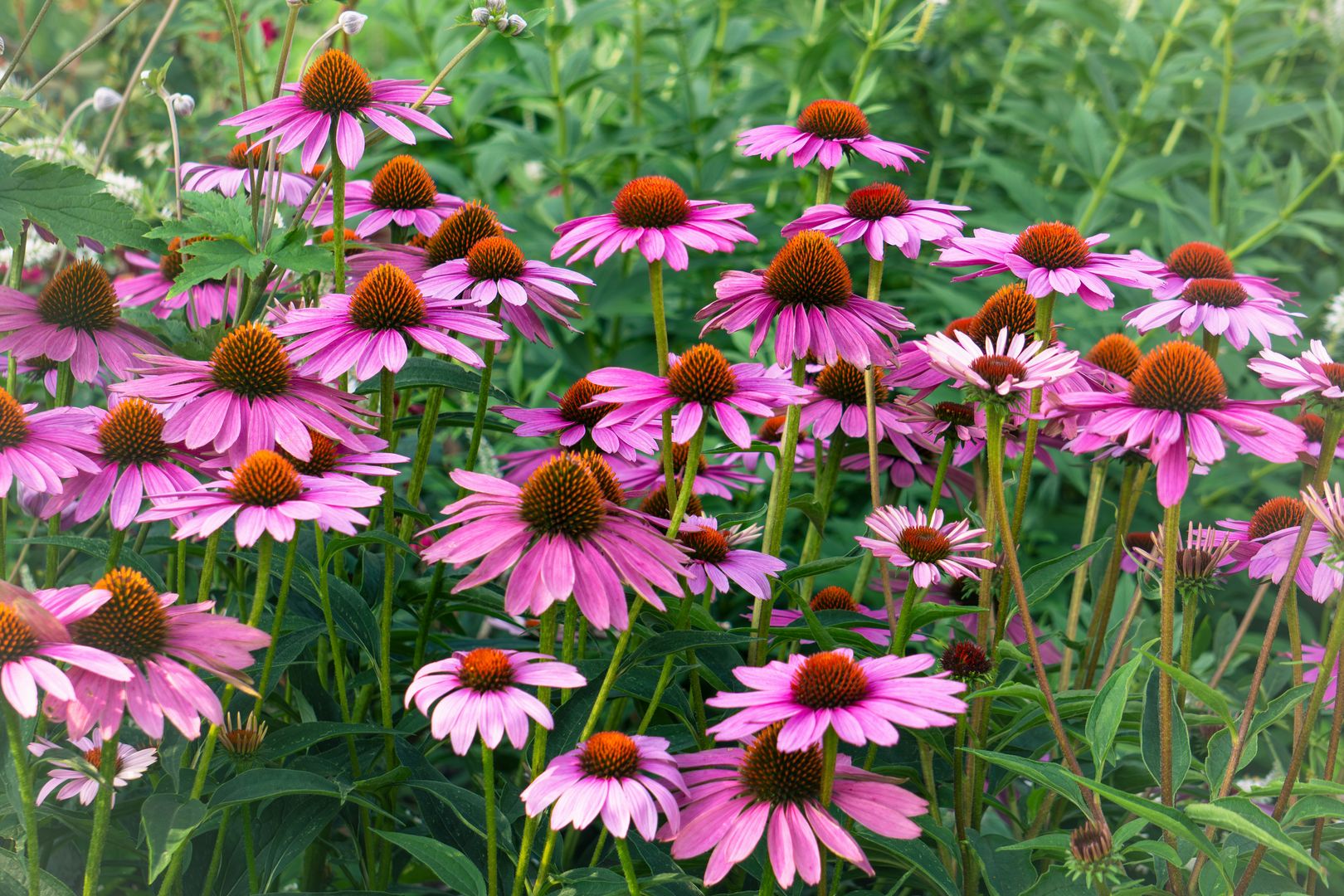
The cheapest goldfinch feeder on earth is the garden you were going to "tidy up" anyway. Leave coneflowers, sunflowers, asters, and thistles standing through fall and winter. Goldfinches will hang upside down to pick them clean, which is a better alternative than TV.
Frequently Asked Questions
When do goldfinches turn yellow again?
Males begin brightening during their late-winter molt and are usually in full yellow by spring. If you see blotchy yellow-and-brown birds at the feeder in March, that's the molt in progress, not a new species.
Do goldfinches migrate at night?
No. Goldfinches migrate during the day, which sets them apart from most songbirds, which travel after dark.
Do goldfinches come back to the same feeder every year?
Not necessarily the same individual birds. Your winter flock may include birds from farther north, and young goldfinches wander quite a bit, so the faces change even when the numbers don't.
Why did my goldfinches disappear in late summer?
Usually they don't. They're busy with their late nesting season, eating wild seed in nearby fields, or molting into duller feathers that make them easy to overlook.
What have you seen this migration season?
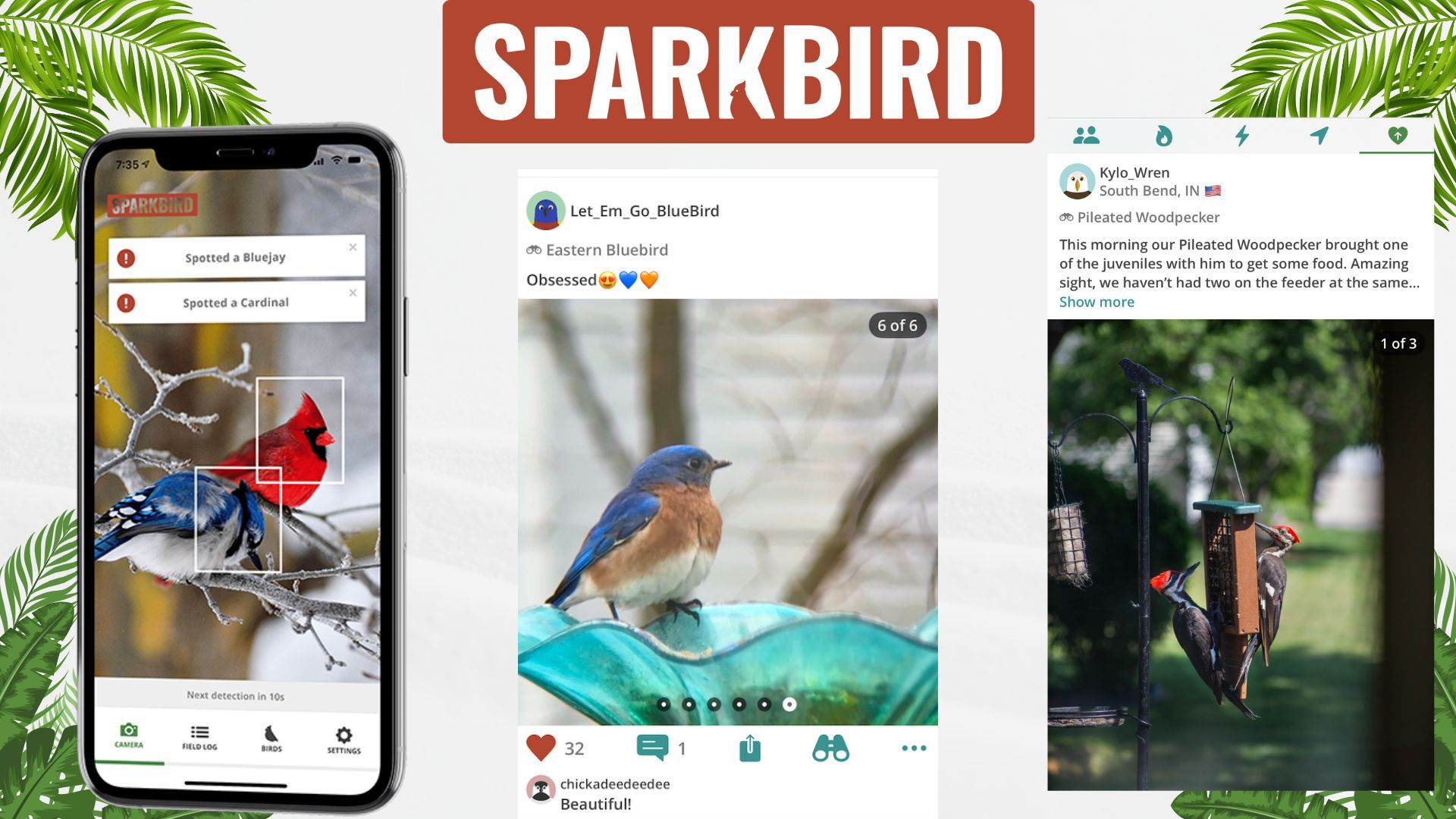
Tell us in the comments or through the Sparkbird App, available in the Apple App Store.
- Related: How to Use the Sparkbird App

No comments yet.